


How to Build Body Awareness Using Your Smart Ring Feedback
How to use smart ring feedback to build better body awareness.
How to use smart ring feedback to build better body awareness.
%402x.svg)
Have you ever woken up feeling exhausted after eight hours in bed? Or noticed your stress levels spiking for "no reason" during a calm workday? You’re not alone. In our hustle-driven culture, we’ve become experts at ignoring our bodies’ signals. We power through fatigue, normalize constant low-grade stress, and accept restless sleep as just part of life. We’re living disconnected from our most fundamental source of wisdom: our own physiology.
But what if you could decode those silent signals? What if you had a personal, 24/7 biofeedback coach, quietly observing your heart’s rhythm, your skin’s temperature, and your nervous system’s state, then translating it into a language you can understand? This is no longer science fiction. The rise of the smart ring—a discreet, wearable device packed with sensors—has ushered in a new era of hyper-personalized health insight. It’s not just about counting steps or tracking sleep stages; it’s about forging a profound connection between the data on your screen and the felt experience in your body.
This article is your comprehensive guide to building genuine, actionable body awareness using the feedback from your smart ring. We’ll move beyond passive tracking to active listening. You’ll learn how to interpret the subtle cues hidden in your heart rate variability (HRV), your overnight temperature fluctuations, and your resting heart rate. You’ll discover how to correlate a late-night spike in your stress metric with that second glass of wine, or how a poor sleep quality score can explain your afternoon brain fog. This is about creating a dialogue with yourself, using objective data to validate and refine your subjective feelings.
The ultimate goal? To graduate from being a passive passenger in your own body to becoming its skilled pilot. By the end of this guide, you’ll be equipped to use your smart ring not as a gadget that generates anxiety over numbers, but as a mirror that reflects your inner state, empowering you to make precise, effective adjustments to your sleep, stress, activity, and recovery. Let’s begin the journey inward.

Body awareness, or proprioception, is your nervous system’s conscious perception of your body’s position, movement, and internal state. It’s the sense that lets you touch your nose with your eyes closed, but on a subtler level, it’s the ability to notice a clenched jaw, shallow breathing, a flutter of anxiety in your chest, or the deep calm of true relaxation. In Eastern practices, this is often called “interoception”—the sensing of internal signals. It’s your body’s native language.
Yet, for most modern adults, this channel of communication is full of static. We’re distracted by screens, numbed by chronic low-grade stress, and conditioned to prioritize productivity over presence. The consequence is a profound disconnection. We eat when we’re not hungry, miss early signs of burnout, and can’t pinpoint why we feel “off.” This disconnect has real costs. Research consistently links poor interoception with heightened anxiety, depression, poor emotional regulation, and difficulty managing stress. Your body is constantly speaking—through heart rate, muscle tension, breath patterns, and gut feelings—but without awareness, you can’t listen, let alone respond effectively.
This is where your smart ring transforms from a tracker to a translator. It acts as an objective bridge to your subjective experience. Think of it as learning a new language. At first, you need a phrasebook (the raw data: HRV, heart rate, temperature). With practice, you start to understand sentences (“my HRV is low and my resting heart rate is high this morning—my body is struggling to recover”). Eventually, you achieve fluency, where the data simply confirms what you already feel intuitively. The ring provides the concrete evidence that helps you trust your gut feelings and discern real physiological patterns from passing thoughts.
Building this awareness is your foundational superpower for health. It shifts you from reactive to proactive care. Instead of waiting for illness or exhaustion to force you to stop, you learn to read the early-warning signals and adjust course. You learn what optimal recovery truly feels like for you, not just what a textbook says. You become the expert on your own wellbeing, making empowered decisions based on a union of data and direct experience.
To harness this power, it’s essential to understand what your smart ring is—and what it isn’t. Unlike a smartwatch focused on outward activity (steps, active minutes, pace), a smart ring is uniquely positioned as a tool for measuring inward state. Its placement on your finger provides access to a rich arterial blood flow, allowing its sensors to capture high-fidelity physiological data passively and continuously, even while you sleep.
Let’s break down the core metrics that form the language of your body awareness practice:
The magic isn’t in any single number, but in the trends and correlations. Your smart ring’s app synthesizes this data into accessible scores—like a Readiness Score, a Sleep Score, or a Stress Score. These are your daily conversation starters. A low readiness score isn’t a failing grade; it’s a message from your body saying, “Take it easy today. I’m working hard on repair.” By learning to heed these messages, you stop working against your biology and start working with it. For a deeper dive into how this technology unlocks insights traditional methods miss, especially for sleep, consider exploring how smart rings measure sleep quality more accurately.
Your morning routine just got a high-tech upgrade. Upon waking, instead of just groggily checking the weather, you now have a personalized physiological report card: your Readiness (or Recovery) Score. This composite metric, calculated by your smart ring’s algorithm, integrates your overnight data—HRV, RHR, sleep quality, and temperature—to answer one critical question: How prepared is your body to handle stress today?
A high readiness score (often color-coded green) is a thumbs-up. It suggests your nervous system is resilient, recovery is solid, and you have the physiological capacity to tackle a tough workout, a demanding work project, or social engagements. A middling (yellow) score is a cue for mindfulness. It suggests you’re on the edge—perhaps not fully recovered. It’s a day for moderate activity, good nourishment, and stress management. A low (red) score is a clear recommendation for restoration. Your body is signaling that resources are depleted. Ignoring this and pushing through with intense exercise or high stress is like driving a car with the engine warning light on.
But the real power lies not in blindly obeying the score, but in investigating the “why” behind it. Tap into the detailed breakdown. Did a low score stem primarily from:
Use this 60-second morning review as a ritual of body awareness. Before your mind fills with the day’s to-dos, connect with your physical state. “My score is 72/100, mainly pulled down by low sleep depth. I feel that foggy feeling. I’ll prioritize an earlier bedtime tonight and keep my workout light.” This practice transforms an abstract number into a concrete, compassionate check-in, setting the tone for a day lived in greater alignment with your body’s true needs.
Sleep is not a passive state; it’s your body’s most intensive nightly rehabilitation program. Your smart ring provides a front-row seat to this critical process, moving far beyond simple duration to measure the architecture and quality of your sleep. This data is the bedrock of recovery and, by extension, body awareness.
Your sleep score typically deconstructs your night into several key components, each telling a part of the recovery story:
Connecting this data to how you feel is the essence of building awareness. That groggy, heavy feeling despite 8 hours in bed? Your ring likely shows poor sleep stability with many awakenings—you were in bed for a long time, but your body never sunk into sustained, deep restoration. That irritable, forgetful mood? Check your REM sleep percentage; it might be low.
Furthermore, metrics like nighttime Skin Temperature and SpO2 are revelatory. A hot, restless night will show in your temperature graph. Repeated SpO2 drops are a direct indicator of breathing disturbances that you are likely unaware of but which are severely impacting your sleep’s restorative power. By correlating these graphs with your subjective morning feeling, you build a precise map of what “good sleep” truly means for your body. This insight is invaluable for troubleshooting; for example, if you consistently wake up tired, our analysis on why you wake up tired and the sleep quality connection can help you decode your specific data patterns.
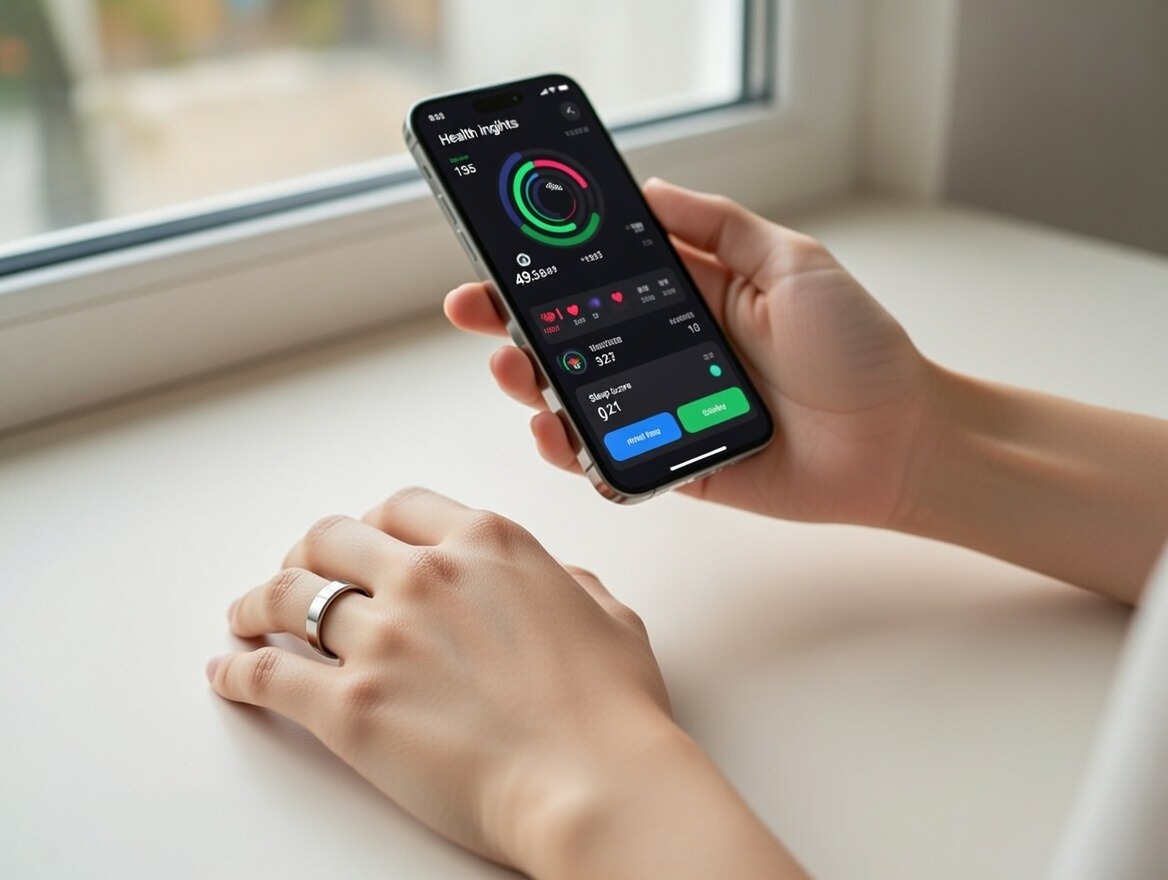
If you take one metric from your smart ring to heart, let it be HRV. It is the most sensitive, real-time biomarker of your autonomic nervous system’s (ANS) balance and your body’s capacity to handle stress. The ANS has two main branches: the sympathetic (“fight or flight”) and the parasympathetic (“rest and digest”). HRV reflects the dynamic interplay between them.
A high HRV indicates a strong, agile nervous system. Your heart can rapidly and efficiently vary its rhythm in response to your environment—speeding up when needed and slowing down quickly when the stressor passes. This is a sign of good recovery, fitness, and resilience. An athlete in peak condition will typically have a high HRV.
A low or declining HRV signals that your sympathetic nervous system is dominant or that your system is fatigued. Your heart is beating in a more monotonous, rigid rhythm, suggesting your body is under strain and lacks the flexibility to adapt. This can be caused by physical overtraining, emotional stress, poor sleep, illness, or dehydration.
For body awareness, the trend is everything. Don’t fixate on a single day’s number. Instead, watch the line graph over weeks and months.
To use HRV proactively, establish your personal baseline. Observe it during a period you feel relaxed, well-slept, and healthy. Then, treat deviations as feedback. A low morning HRV after a hard workout is normal; if it’s still low after two days, you need more recovery. A low HRV after a stressful workday is data, not destiny—it’s a cue to employ a parasympathetic-activating practice like deep breathing or a gentle walk. By responding to your HRV, you train your nervous system’s resilience, literally building your body’s capacity to withstand stress without breaking down.
Modern stress is often insidious. It’s not just the acute panic of a missed deadline; it’s the chronic, low-grade simmer of email notifications, financial worries, relationship tensions, and information overload. This type of stress can become your physiological background noise, something you stop consciously noticing—but your smart ring doesn’t.
The stress metric (or its equivalent, like a daytime nervous system load score) uses a combination of heart rate and HRV data to estimate moments of sympathetic activation throughout your day. The output is often a graph that shows your stress level fluctuating across hours. This visualization is a game-changer for body awareness.
You can now move from a vague sense of being “stressed” to precise observation:
This objective feedback allows for powerful experiments. Let’s say you notice a post-lunch stress spike. You hypothesize it’s related to a heavy carb meal. The next day, you try a lighter, protein-and-veg based lunch and observe if the spike diminishes. Did a 10-minute meditation at 3 PM visibly lower your stress line? That’s concrete evidence of its effectiveness for your nervous system.
Most importantly, the stress metric highlights your recovery patterns. True recovery isn’t just the absence of stress; it’s the active engagement of your parasympathetic nervous system. Can you identify moments on your graph where your stress level drops into a deep, calm state? These are your recovery troughs. By identifying the activities that create them—a walk in nature, deep breathing, listening to music, a warm bath—you can intentionally schedule more of them into your life. This turns stress management from a guessing game into a data-informed practice of self-regulation.
While heart-based metrics get most of the attention, the continuous skin temperature data from your smart ring is a silent sleeper agent of profound insight. Your peripheral temperature isn’t static; it follows a circadian rhythm (cooler at night to facilitate sleep, warming toward morning) and responds to internal and external events.
Tracking your baseline temperature trend can provide early warning signs long before you feel symptoms:
For women and people with menstrual cycles, temperature tracking is revolutionary for cycle awareness. The biphasic pattern of the menstrual cycle is clearly visible in basal body temperature (BBT). Your ring automates this tracking with far more ease and accuracy than manual methods. You’ll see a clear temperature shift after ovulation (a rise of about 0.5–1.0°F) sustained until your period begins. This isn’t just for fertility tracking; it’s a masterclass in body awareness.
By syncing your temperature graph with your cycle phase, you can finally understand the physiological underpinnings of your energy, mood, and performance fluctuations. That week of low energy and higher resting heart rate? It’s during your luteal phase, when temperature is higher and metabolism increases. Your peak workout performance and sense of well-being? Likely aligned with your follicular phase. This data empowers you to plan your life and training in harmony with your cycle, not in conflict with it, reducing frustration and enhancing self-compassion.
Body awareness isn’t just about stillness and recovery; it’s also about intelligent, sustainable movement. Your smart ring helps you reframe activity from a simple calorie-burning pursuit to a dialogue about energy expenditure and renewal. The goal is to balance strain (productive stress) with adequate recovery to create a positive adaptation, not burnout.
Key activity metrics to integrate into your awareness practice include:
The art lies in cross-referencing activity with recovery data. This is where you learn your personal thresholds.
Use your ring to experiment. After a tough training session, note how long it takes for your HRV and resting heart rate to return to baseline. That’s your personal recovery window. Try a “maximum recovery day” after a hard week—prioritizing sleep, nutrition, and gentle movement like walking or yoga—and watch how your metrics respond. This feedback loop teaches you to distinguish between the “good hurt” of productive training and the “bad fatigue” of systemic overload, allowing you to move with wisdom and prevent injury and burnout. This balance is also intrinsically tied to how well you restore each night; often, the key to better performance lies in improving your sleep quality for maximum results.
This is the most critical, liberating step in your body awareness journey: defining your normal. The internet is full of averages—“optimal” HRV ranges, “ideal” sleep durations, “perfect” resting heart rates. These are meaningless compared to your personal baseline. Your body is unique, with its own genetics, lifestyle, and history. Comparing your data to someone else’s (or a population average) is a recipe for anxiety and misinterpretation.
Your personal baseline is the range of values for each metric where you feel and function at your best. It’s discovered through observation, not imposed by an external standard.
Here’s how to establish it:
You will start to see your patterns emerge. You might discover that your personal optimal sleep duration is 8 hours 15 minutes, not 7.5. You might find your HRV naturally sits lower than the “athletic” range, but when it drops 15% below your average, you consistently feel off. You might see that even one glass of wine pushes your nighttime heart rate up by 5 beats per minute.
This personalized baseline becomes your true north. It turns abstract data into a deeply personal language. A deviation is no longer “bad”; it’s a meaningful signal. “My HRV is 20% below my baseline this morning, and I did feel that stressful conversation yesterday in my gut. I’ll take it easy.” This self-referenced framework fosters self-compassion and precise, effective action, moving you from generic health advice to truly personalized well-being.
Data without context is just noise. The final, transformative step in building body awareness is closing the loop between the objective data from your ring and your subjective, lived experience. This is done through mindful journaling and what we can call “N-of-1 Experiments”—scientific testing on a sample size of one: you.
Journaling for Connection: Don’t just look at your app. Spend 5 minutes each morning or evening writing.
This simple practice builds the neural pathways connecting the internal sensation (“tightness in chest”) with the physiological event (“stress spike”) and your behavioral response (“breathing break”). Over time, you’ll need the data less because you’ve internalized the awareness.
Intentional N-of-1 Experiments: Use your ring to test hypotheses and find what works for you.
The ring provides the objective measure of success. Did the intervention move your metrics toward your personal baseline and make you feel better? If yes, you’ve discovered a powerful, personalized tool. If not, you’ve saved yourself from blindly following generic advice that doesn’t suit your biology. This iterative process of action, measurement, and refinement is the core of empowered, self-directed health.

As with any powerful tool, using a smart ring for body awareness comes with potential pitfalls. Falling into these traps can create stress and obsession, defeating the very purpose of the device. Here’s how to navigate them wisely:
The antidote to all these pitfalls is to cultivate a mindset of curiosity over criticism. Approach your data as a scientist exploring the fascinating subject of you. Ask “What is this telling me?” rather than “Is this good or bad?” Frame decisions as experiments: “Let’s see what happens if I prioritize sleep this week.” This shift turns potential anxiety into empowered discovery, ensuring your smart ring remains a partner in well-being, not a source of stress. Remember, the goal isn't a perfect graph; it's a deeper, kinder, and more responsive relationship with the one body you have.
You now understand the language of your metrics. You have your personal baseline. The next critical phase is to bridge the digital dashboard with the living, breathing reality of your physical self. This is where the ancient practice of the body scan meets modern biometrics, creating a powerful ritual for integrated awareness.
A body scan is a mindfulness practice where you mentally sweep through your body, part by part, noting sensations without judgment. Paired with your smart ring data, it becomes a calibration tool. The goal is not to achieve a blank mind, but to cultivate a precise, curious attention to physical signals.
How to Perform Your Data-Informed Body Scan:
This 5-minute ritual does something profound: it trains your interoceptive accuracy. Over time, you'll begin to feel a low HRV as a specific type of heaviness or mental drag. You'll recognize the sensation of a high resting heart rate as a subtle, internal hum of agitation. The data validates the feeling, and the feeling gives rich context to the data. You stop seeing numbers and start understanding states.
The Evening Scan for Wind-Down: Perform a shorter version at night. Check your stress graph for the day. Where were the peaks? As you scan your body, can you locate where that stress is still held as physical tension? Use this awareness to choose a targeted wind-down activity—stretching for tight shoulders, diaphragmatic breathing for a clenched core. This moves recovery from a passive hope to an active process of release, directly informed by your day's physiological story.
Nutrition advice is notoriously contradictory. What is a "superfood" for one person can be an inflammatory trigger for another. Your smart ring provides a real-time, personalized biofeedback loop to cut through the noise and discover how food truly affects your body, not just your waistline, but your nervous system and recovery capacity.
Food impacts your core metrics in several measurable ways:
Conducting a Food Awareness Experiment:
You might discover that your "healthy" post-workout smoothie spikes your blood sugar and causes an HRV dip you feel as afternoon fatigue. Or that your 8 PM snack, though small, is the culprit behind your restless light sleep. The ring provides objective proof, helping you make dietary choices that truly serve your unique physiology, optimizing for recovery and resilience, not just calorie math. This is especially powerful for understanding the surprising connection between sleep quality and weight, as your food choices directly influence the restorative sleep necessary for metabolic health.
Few things offer such a clear, immediate lesson in cause-and-effect physiology as observing how stimulants and depressants paint your biometric data. This isn't about moral judgment; it's about empowering, informed choice. You can decide if the short-term pleasure of a late espresso or a nightcap is worth the physiological cost for you, as measured by your own body.
The Caffeine Story: Caffeine blocks adenosine receptors, delaying feelings of tiredness. But its half-life is 5-6 hours, meaning it has a long tail. Your ring can show you its hidden impact:
Experiment: Try moving your caffeine cut-off time from 3 PM to 12 PM for a week. Compare your sleep scores and morning readiness. The data often reveals that the afternoon pick-me-up comes at the expense of nighttime restoration, creating a vicious cycle. For a detailed look at this mechanism, the research on how caffeine ruins your sleep quality aligns perfectly with what you'll observe in your own metrics.
The Alcohol Narrative: Alcohol is a sedative, but it is not a sleep aid. Its effect on biometrics is stark and educational:
Experiment: After a night with 2-3 drinks, don't just note your hangover. Open your app. You will likely see a story of a high resting heart rate, a flatlined HRV, minimal REM sleep, and a poor sleep score. This visual proof can be a powerful motivator for mindful consumption, encouraging you to save alcohol for nights where the next day's recovery is not a priority.
For the fitness enthusiast, the smart ring is a paradigm shift from tracking external output (weight, reps, pace) to monitoring internal response. It answers the most important training question: "Am I recovering enough to benefit from this stress?" This is the key to sustainable progress and avoiding the plateau or injury that comes from chronic overtraining.
Using Your Morning Readiness Score for Daily Exercise Prescription:
Tracking the Training Effect: Post-workout, observe the acute response. A tough workout should cause a temporary dip in HRV and a rise in resting heart rate the next morning. This is normal. The critical question is: How quickly do you rebound?
Identifying Overtraining Syndrome (OTS) Early: OTS is a state of prolonged fatigue and performance decline caused by an imbalance between training and recovery. Your ring provides the early warning signs long before performance plummets:
By watching these trends, you can periodize your training intelligently—inserting deload weeks, prioritizing sleep, and adjusting intensity before you break down. This turns training from a brute-force endeavor into a sophisticated dialogue with your body's adaptive capacity.
The wellness world is full of stress-management suggestions: meditation, breathwork, cold plunges, nature walks. But which one is most effective for you? Subjective feeling can be biased ("I should feel calm after meditating"). Your smart ring's stress metric and HRV provide objective, immediate feedback on your nervous system's response, allowing you to build a personalized toolkit of proven practices.
The "Stress Test" Protocol: Use your ring to run a simple experiment with any stress-management technique.
You might make surprising discoveries:
Building Your Proven Toolkit: After testing various methods, you'll have a shortlist of techniques that reliably move your metrics toward calm (increased HRV, lower stress reading). Log these in your journal. When you see your stress score creeping up during the day, you can now deploy a technique you know works for your biology, not just one you think you should do. This transforms stress management from a vague concept into a precise, actionable skill, strengthening your emotional resilience by first strengthening your physiological resilience. This is a critical component of breaking the hidden link between poor sleep quality and mental health, as daily stress management protects your nighttime recovery.
Travel is one of the greatest disruptors of body awareness. It throws off circadian rhythms with time zones, introduces unfamiliar foods, increases stress, and breaks sleep routines. It's also the perfect opportunity to use your smart ring as an anchor, providing continuity and insight when everything else is in flux.
Pre-Travel Preparation: In the days before a trip, especially across time zones, prioritize sleep and recovery. A high readiness score and strong sleep bank give you a resilience buffer. Your ring can confirm you're starting from a place of strength.
During Travel – Using Data to Mitigate Jet Lag:
The Return Home – Guided Recovery: The post-trip recovery is often harder than the trip itself. Your ring provides a compassionate guide back to baseline.
By staying connected to your data during disruption, you maintain a thread of self-awareness. The ring becomes a non-judgmental companion that says, "Yes, this is hard on your body. Here’s how hard. Now, here’s how to find your way back." For strategies tailored to life on the move, explore our guide on maintaining sleep quality during travel.
The true power of body awareness unfolds over months and years, not days and weeks. While daily scores guide immediate choices, the macro-trends visible in your monthly and yearly data reveal the deeper story of your health trajectory and how your body evolves through different life phases. This long-view turns your smart ring into a personal health historian.
Identifying Lifestyle Impact: Zoom out on your HRV, sleep, and readiness graphs to quarterly or six-month views.
These correlations provide undeniable evidence of what truly moves the needle for your wellbeing. They reinforce positive habits by showing their tangible, physiological reward and help you identify chronic, low-grade stressors that might otherwise be invisible in the daily grind.
Navigating Lifecycle Changes: Our bodies are not static. Hormones shift, metabolism changes, and recovery needs evolve. Your ring’s data provides an objective dashboard for these transitions.
The Empowerment of Longitudinal Data: This historical record is empowering during doctor’s visits. Instead of saying “I’ve been tired for months,” you can say, “My resting heart rate has trended up by 8 BPM and my average sleep score has dropped 15 points over the last 4 months, despite my efforts.” This objective, tracked data facilitates more productive healthcare conversations and focused investigations.
Data is inert without action. The culmination of this body awareness journey is the creation of a dynamic, personalized lifestyle blueprint—a set of guidelines and rules-of-thumb, informed by your unique data, that helps you make consistent choices supporting your wellbeing. This is not a rigid set of commands, but a flexible framework for living in tune with your physiology.
Constructing Your Blueprint: Based on all your experiments and observations, create a list of personalized insights. For example:
Implementing the Blueprint with Flexibility: The goal is to follow this blueprint 80-90% of the time. The other 10-20% is for life, spontaneity, and joy—enjoying a wedding, a late night with friends, or a decadent meal. The key difference is you now engage in these moments consciously. You know the physiological cost, you accept it willingly for the experience, and you have a data-informed plan to return to your baseline afterwards. There is no guilt, only choice.
This blueprint turns body awareness from an interesting hobby into an operating system for a vibrant, resilient life. You are no longer guessing. You are orchestrating your habits based on a deep, evidence-based understanding of how your one precious body works. It is the ultimate form of self-respect and the foundation for lasting health and performance. For those ready to begin this transformative process, a great starting point is our guide on where to start for maximum sleep quality improvement, a cornerstone of any effective lifestyle blueprint.
As you deepen your relationship with your smart ring data, it’s vital to navigate the psychological and ethical landscape that comes with constant self-quantification. This journey isn't just about optimizing numbers; it's about fostering a healthy, balanced relationship with the data itself. Without this mindfulness, the very tool meant to empower can become a source of anxiety, obsession, or even a diminished sense of self-trust.
The Risk of "Quantified Self" Anxiety: The phenomenon of "analysis paralysis" or "data anxiety" is real. Checking your sleep score the moment you wake up and feeling your mood swing with the number is a sign the balance is off. When a low readiness score creates more stress than it alleviates, the tool is backfiring. The data is supposed to serve your wellbeing, not become its master.
Cultivating a Healthy Data Mindset:
The Ethical Use of Your Own Data: You are the steward of your most personal information. Consider:
The goal is to reach a point where the data has helped you internalize the awareness so profoundly that you need to check it less frequently. You begin to trust the feeling in your body because the data has repeatedly validated it. The ring becomes a periodic calibration tool, not a constant crutch. This psychological safety is the foundation for sustainable, long-term body awareness.
Your smart ring provides a powerful, data-driven stream of insight, but it is not the whole story. True body awareness is holistic. It integrates the objective biometrics from your ring with the subjective wisdom of other practices and the professional insight of healthcare providers. This multi-layered approach creates a rich, complete picture of your wellbeing.
Syncing with Mindfulness and Somatic Practices:
Working with Health and Fitness Professionals:
The Hub-and-Spoke Model: Think of your smart ring data as the central hub of your self-knowledge. The spokes are these other modalities—mindfulness, movement, therapy, professional care. The ring provides the common, objective language that connects them all, allowing you to see how a change in one area (nutrition) affects another (sleep), which impacts a third (readiness for training). This integrated view is the pinnacle of proactive, personalized health care.
Even the most advanced sensor technology can present puzzling data. Learning to troubleshoot these moments—rather than immediately panicking or dismissing the device—is a key skill. Often, the "weird" reading is your body communicating something unusual, or it’s a simple technical artifact.
Common Scenarios and How to Investigate:
The Rule of Thumb: Trend Over Anomaly. A single bizarre data point is almost always an artifact (technical or physiological). A new, sustained trend over 3-7 days is meaningful data. When in doubt, default to your subjective feeling and use the anomaly as a prompt for a gentle body scan, not for alarm.

The current suite of smart ring metrics—HRV, HR, temperature, SpO2—is just the beginning. The field of biometric sensing is advancing rapidly, promising to deepen our body awareness in profound ways. Understanding these horizons helps contextualize your current device and anticipate the future of personalized health.
Metrics on the Near-Term Horizon:
The Future: Predictive Analytics and True Prevention: As algorithms improve with more aggregated, anonymized data, the focus will shift from descriptive to predictive and prescriptive insights.
This future underscores the importance of starting your body awareness practice now. The foundational skill of interpreting data, correlating it with sensation, and taking mindful action will only become more valuable as the technology provides ever-richer layers of insight. You are learning the literacy for a new era of health sovereignty.
Humans are social creatures, and growth is often fostered in community. While body awareness is an intimate, personal journey, sharing experiences within a trusted, like-minded community can accelerate learning, provide support, and combat the isolation that sometimes comes with deep self-work. The key is to cultivate a community focused on shared curiosity, not competitive comparison.
The Perils of Comparison: Comparing your HRV, sleep score, or readiness number with others is a futile and often demoralizing exercise. Genetics, age, lifestyle, and even the specific algorithm of your device create massive variations. A person with an HRV of 100ms is not "healthier" than someone with an HRV of 40ms; they are different. Comparison steals the joy of your own progress and can lead to unhealthy behaviors as you try to "beat" someone else's biology.
Principles of a Healthy Data-Sharing Community:
Finding or Forming Your Community: This could be a dedicated group within your smart ring's app platform, a small circle of health-minded friends who also use trackers, or an online forum focused on biohacking or wellness with a positive, scientific culture. The goal is to move from "My score is higher than yours" to "That's an interesting pattern you noticed. What do you think caused it?" In this space, the collective wisdom grows, and the smart ring becomes a tool not just for self-discovery, but for connected learning. For instance, discussing the common myths about sleep quality in such a community can help everyone move past unhelpful beliefs and focus on what truly works.
The initial months with a smart ring are often filled with exciting discoveries—the "aha!" moments where data perfectly explains a feeling. But like any practice, the novelty can wear off. The challenge then becomes integrating body awareness into the fabric of your life as a sustained, lifelong practice, not a temporary tech experiment.
Preventing Burnout on Tracking:
Evolving with Your Awareness: As you become more adept, the questions you ask of your data will evolve.
The ultimate sign of mastery is when the external technology fades into the background, and the awareness becomes internal. The ring becomes like a highly skilled assistant who only speaks up when something significant deviates from the well-understood plan. You live with a quiet, confident attunement to your energy, your need for rest, your optimal times for focus, and your emotional states as they manifest physically.
This lifelong practice is the art of self-respect in action. It is a commitment to honoring the complex, intelligent, and communicative organism that you are. Your smart ring is merely the catalyst—the mirror that showed you how to see yourself clearly. The real work, and the real reward, is in the ongoing, compassionate conversation you cultivate with the miracle of your own body. By committing to this, you don't just add years to your life; you add life to your years, with a presence and vitality that comes from truly being at home within yourself. And as you continue, you'll find that all aspects of well-being are connected, including the profound impact of truly restorative rest, which is explored in the science of what happens when you sleep well.
Your Trusted Sleep Advocate: Sleep Foundation — https://www.sleepfoundation.org
Discover a digital archive of scholarly articles: NIH — https://www.ncbi.nlm.nih.gov/
39 million citations for biomedical literature :PubMed — https://pubmed.ncbi.nlm.nih.gov/
Experts at Harvard Health Publishing covering a variety of health topics — https://www.health.harvard.edu/blog/
Every life deserves world class care :Cleveland Clinic - https://my.clevelandclinic.org/health
Wearable technology and the future of predictive health monitoring :MIT Technology Review — https://www.technologyreview.com/
Dedicated to the well-being of all people and guided by science :World Health Organization — https://www.who.int/news-room/
Psychological science and knowledge to benefit society and improve lives. :APA — https://www.apa.org/monitor/
Cutting-edge insights on human longevity and peak performance:
Lifespan Research — https://www.lifespan.io/
Global authority on exercise physiology, sports performance, and human recovery:
American College of Sports Medicine — https://www.acsm.org/
Neuroscience-driven guidance for better focus, sleep, and mental clarity:
Stanford Human Performance Lab — https://humanperformance.stanford.edu/
Evidence-based psychology and mind–body wellness resources:
Mayo Clinic — https://www.mayoclinic.org/healthy-lifestyle/
Data-backed research on emotional wellbeing, stress biology, and resilience:
American Institute of Stress — https://www.stress.org/


