


The Complete Beginner-Friendly Guide to Building Wellness Habits Your Ring Will Validate
A complete beginner's guide to building habits that will be reflected in improved ring metrics.
A complete beginner's guide to building habits that will be reflected in improved ring metrics.
%402x.svg)
You know the feeling. You read the article, download the app, and buy the ring. You’re ready. This time, you will start meditating daily, you will sleep eight hours, and you will hit 10,000 steps. The motivation is electric. For three days, you’re a paragon of wellness. Then, life happens. A late work night shreds your sleep schedule. A rainy day cancels your walk. That buzzing motivation fades into a quiet guilt, and the smart ring on your finger shifts from a beacon of hope to a silent judge, blinking with data that confirms what you already feel: you’ve fallen off track.
This cycle isn’t a personal failing; it’s a design flaw in the way we approach habit change. We set goals based on outcomes we can’t fully see or feel in the moment, making our progress feel abstract and disconnected. We lack the immediate, validating feedback that tells our brains, “Yes, that worked. Do more of that.” This is where modern technology, specifically the advanced biometric smart ring, transforms from a mere tracker into the ultimate habit-formation partner.
This guide is not about chasing arbitrary metrics or punishing yourself for missing a target. It’s about building a sustainable, personalized wellness system where your intentional actions and your body’s objective data join forces. Your smart ring becomes your validation engine, translating subtle daily choices into clear, credible feedback. It closes the loop between effort and evidence, making the invisible visible and turning aspiration into automatic action.
We’ll move beyond generic advice and into a structured, beginner-friendly framework. You’ll learn how to select “ring-validated habits”—behaviors that directly influence the precise metrics your device tracks. You’ll understand how to interpret the data not as a score, but as a conversation with your body. And most importantly, you’ll build a resilient practice where your habits and your ring work in concert, providing the proof and positive reinforcement needed to make wellness stick, for good.
Let’s begin by understanding the revolutionary tool on your finger and the fundamental psychology that will make this time different.
We’ve been sold a myth: that building better habits is a test of character, a battle of willpower against temptation. We glorify the “grind” and blame a lack of discipline when we fail. This mindset is not only discouraging—it’s scientifically inaccurate. Willpower is a finite resource, like a muscle that fatigues with use. Relying on it to power through every desired change is a guaranteed path to burnout.
Lasting habit formation operates on a different engine: the neurological loop. At its core, every habit, good or bad, follows a three-part cycle:
The problem with traditional wellness goals is that the reward is often delayed and intangible. The reward for skipping dessert is a hypothetical future weight loss. The reward for an early workout is potential fitness weeks from now. Our brains are wired for immediate gratification; delayed rewards are weak teachers.
This is the critical failure point that your smart ring is designed to solve. It provides the missing, immediate, and objective reward. When you finish a mindfulness session, you don’t have to guess if it helped—you can see a tangible drop in your heart rate and an increase in your Heart Rate Variability (HRV) on your dashboard within minutes. When you prioritize a consistent bedtime, you don’t just hope you slept better; you see the quantified increase in your deep sleep stages and a higher Sleep Score the next morning. This data transforms an abstract “good for me” feeling into a concrete, validated “that worked” signal.
Your ring acts as a powerful feedback amplifier. It takes the subtle, internal consequences of your actions—consequences your conscious mind might miss—and makes them explicit. This process leverages operant conditioning, where behaviors followed by positive reinforcement (seeing a great sleep score) are strengthened and likely to be repeated. The ring provides the reinforcement your brain craves to solidify the new loop.
Therefore, the first step isn’t mustering more willpower; it’s strategically engineering your habit loops to make the cue obvious, the routine easy, and the reward satisfying and immediate. Your smart ring is your ultimate reward-delivery system, turning the slow process of habit building into a responsive, evidence-based dialogue with your own physiology. By aligning your desired routines with the biometric rewards your ring can validate, you build a system that works with your brain’s wiring, not against it.
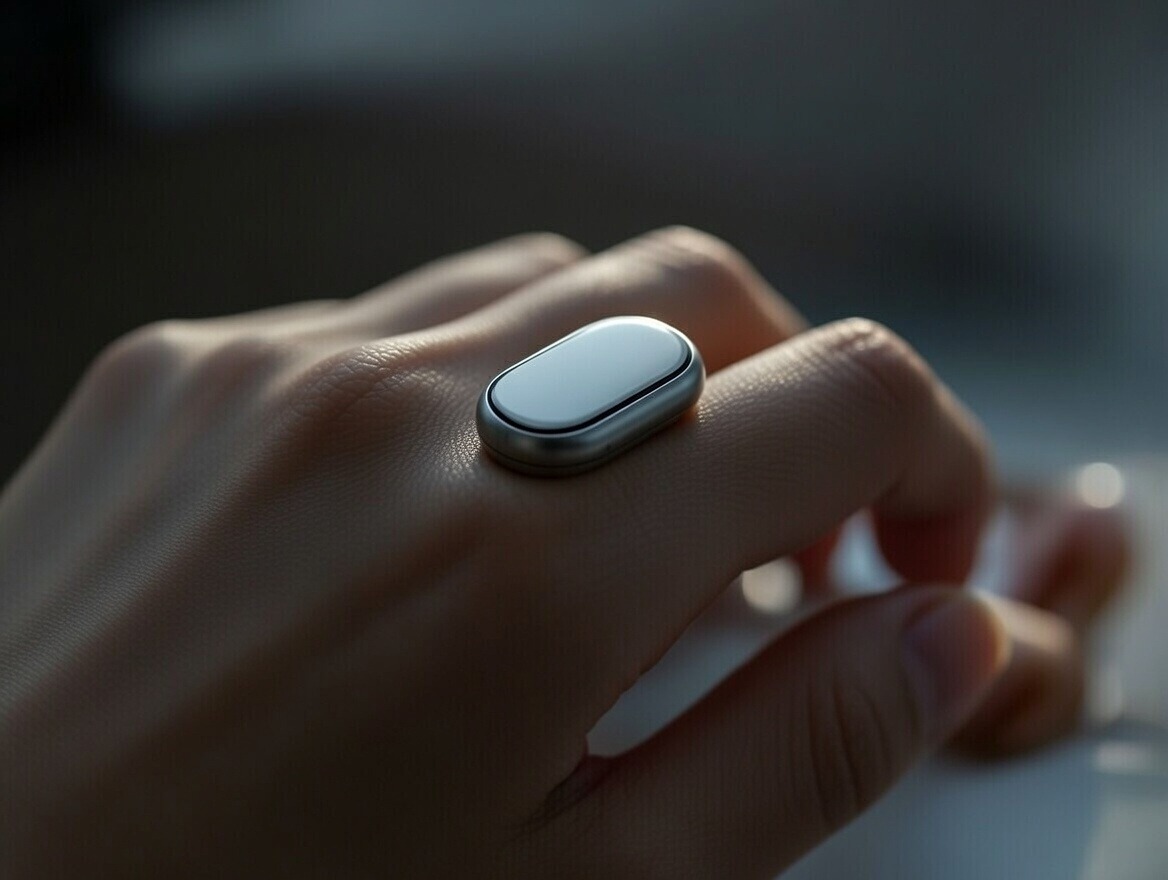
To partner effectively with your device, you must move from seeing it as a mysterious black box that spits out scores to understanding it as a sophisticated biofeedback interpreter. It’s not just counting steps; it’s listening to the silent language of your autonomic nervous system. Let’s decode the core metrics that form the foundation of ring-validated habit building.
1. Heart Rate Variability (HRV): Your Body’s Resilience Score
HRV is arguably the most important holistic metric your ring tracks. Contrary to what the name suggests, it’s not about your heart rate itself. HRV measures the subtle, millisecond variations in the time intervals between each heartbeat. A higher, more variable HRV generally indicates a more resilient, adaptable nervous system—one that can efficiently switch from stress (sympathetic “fight or flight”) to recovery (parasympathetic “rest and digest”). It’s a powerful biomarker for overall fitness, recovery status, and stress resilience. When you see your HRV trend upward, your ring is validating that your lifestyle habits—like quality sleep, effective stress management, and proper recovery—are strengthening your body’s foundational resilience.
2. Resting Heart Rate (RHR): Your Metabolic & Fitness Thermometer
Your Resting Heart Rate is the number of times your heart beats per minute while you are fully at rest. A lower RHR typically indicates better cardiovascular fitness and more efficient heart function. It’s sensitive to lifestyle factors: it can elevate due to illness, dehydration, poor sleep, high stress, or overtraining. Observing your RHR trend helps validate habits related to cardiovascular health, recovery, and overall physiological stress load.
3. Sleep Architecture: Beyond Just Hours in Bed
Modern smart rings move far beyond simple sleep duration. They analyze sleep staging—the cycles of light, deep, and REM sleep you move through each night. Each stage serves a critical purpose:
4. Blood Oxygen (SpO2) & Skin Temperature: The Silent Signals
Nocturnal blood oxygen saturation (SpO2) and subtle shifts in skin temperature are powerful diagnostic metrics. Consistently low overnight SpO2 can signal breathing disturbances. Skin temperature trends can indicate the onset of illness, hormonal changes, or the quality of your body’s thermoregulation during sleep. These metrics provide a deeper layer of validation, showing how habits affect your body’s most fundamental processes.
5. Activity & Recovery Balance: The Movement Equation
This isn’t just step counting. It’s about understanding the relationship between activity strain (the cardiovascular load from exercise and daily movement) and your body’s readiness to perform (based on HRV, RHR, and sleep). Your ring helps answer the vital question: “Did I move enough to stimulate adaptation, but not so much that I hindered my recovery?” This validates the balance between your workout habits and your rest habits.
By understanding what these metrics represent, you can select habits that directly influence them. You’re no longer “trying to be healthier.” You’re executing a specific behavior with the confident expectation of seeing a specific, quantifiable result. This turns habit formation into a targeted, evidence-based experiment.
Before you can build a skyscraper of new habits, you must honestly and non-judgmentally survey the landscape of your current life. Jumping straight into ambitious changes without understanding your starting point is like setting off on a road trip without a map or a known origin. You’ll quickly get lost and discouraged.
This audit is not an opportunity for self-criticism. Its sole purpose is to gather objective intelligence. Think of yourself as a scientist observing a fascinating subject: you. For the next 5-7 days, your mission is to simply observe and record, using two parallel streams of data.
Stream 1: The Biometric Baseline from Your Ring
Do not change any behaviors during this period. Live your normal life. Your goal is to capture what “normal” looks like for your body. Pay close attention to:
Document these in a simple journal. The aim is to see the unvarnished story your body is telling. You might discover your “normal” sleep is more fragmented than you realized, or that your HRV dips predictably on days after intense meetings. For a structured approach to this self-assessment, consider a simple self-test to evaluate your current sleep patterns.
Stream 2: The Lifestyle & Context Log
Simultaneously, keep a brief daily log of your lifestyle context. This doesn’t need to be exhaustive. Note:
After this observation period, lay the two streams side-by-side. This is where powerful correlations emerge. You may see that on nights you had a glass of wine, your deep sleep percentage plummeted. You might notice your morning HRV is consistently higher on days you didn’t look at your phone after 9 PM. Or that your RHR is elevated on days following poor sleep.
This baseline audit is the most crucial step most beginners skip. It replaces assumptions with evidence and guilt with curiosity. It reveals your personal, unique leverage points—the specific habits that, if changed, will have the most dramatic and validated impact on your biometrics. With this intelligence in hand, you are now ready to build from a place of knowledge, not guesswork.
With your baseline audit complete, you’ll likely see several areas for potential improvement. The instinct is to tackle them all at once—a recipe for overwhelm and failure. The strategic approach is to identify and focus on a single “Keystone Habit.”
A Keystone Habit, a concept popularized by Charles Duhigg, is a foundational routine that has the power to start a chain reaction, shifting other patterns in your life without direct focus. It creates a structure that makes other good habits easier to adopt. For our purposes, a Ring-Validated Keystone Habit is one that has a direct, measurable, and relatively quick impact on multiple core biometrics tracked by your device.
Prime Candidates for a Ring-Validated Keystone Habit:
How to Choose Yours:
Look back at your audit. What was the most glaring disconnect between your lifestyle and your biometrics? Did poor sleep underpin everything else? Did stress seem to be the main lever? Choose the habit that:
By focusing all your initial energy on one Keystone Habit, you create a “win” that is powerfully validated by your ring. This success builds momentum, confidence, and a data-driven belief in the process, setting the stage for the next habit. For a comprehensive look at how to structure your first month of focusing on such a foundational habit, the principles in your first 30 days of prioritizing sleep health provide an excellent parallel framework.

You’ve chosen your Keystone Habit. Now, how do you make it stick without relying on fading motivation? The answer lies in one of the most effective techniques in behavior design: Habit Stacking. Coined by author S.J. Scott and rooted in behavioral psychology, habit stacking leverages the existing, automatic routines already wired into your brain.
The formula is simple: After/Before [CURRENT HABIT], I will [NEW HABIT].
You are not adding a new item to your mental to-do list; you are attaching it to an existing “trigger” that you already perform without thought. The existing habit provides the reliable cue for the new one. This method is infinitely more effective than trying to remember to do something at an arbitrary time of day.
Creating Your Ring-Validated Habit Stacks:
Let’s say your Keystone Habit is a consistent weekday bedtime of 10:30 PM. That’s the anchor. Now, build a stack leading up to it, where each habit validates and supports the next, culminating in a high Sleep Score.
By the time you reach 10:30 PM, you haven’t used an ounce of willpower. You’ve simply completed a chain of small, linked actions triggered by the one before it. Your ring then provides the final, crucial piece: the reward. Waking up to a high Sleep Score, elevated HRV, and low RHR validates the entire stack. This positive reinforcement makes you more likely to run the sequence again the next night.
Start with a tiny stack of 2-3 habits anchored to your Keystone. As the stack becomes automatic, you can lengthen it or add parallel stacks to other parts of your day (e.g., a morning stack anchored to drinking your first glass of water).
Your willpower is weak. Your environment is strong. This is not an insult; it’s a fundamental principle of behavior change championed by thinkers like James Clear. You will not maintain habits that are difficult to start in the context of your daily surroundings. Conversely, you will struggle to break habits that are effortlessly cued by your environment.
Therefore, the most profound step you can take after defining your habits is to redesign your physical and digital spaces to make the right action the default, easy action. This is where you move from fighting against your environment to letting it work for you.
Physical Environment Design for Ring-Validated Habits:
Digital Environment Design:
This is critical for habits like a Digital Sunset or focused work.
By designing your environment, you are pre-committing to your future self. You are reducing the number of decisions required to do the right thing. When the cue for your habit arrives, the path of least resistance now leads you directly into the routine you want. Your ring then validates that this frictionless system is working, creating a self-reinforcing cycle of ease and positive feedback. For a deeper understanding of how your sleep environment fits into the bigger picture, reviewing the core principles of good sleep health can provide valuable context.
Here lies the potential pivot point: data can be your greatest coach or your most relentless critic. The difference lies in your framework for interpretation. The wrong approach is to fixate on daily scores as a pass/fail test, leading to “score anxiety” and abandoning the process after a “bad” night or day. The right approach is to adopt a trend-based, curious mindset, where data is a source of insight, not judgment.
Your ring is not grading you. It is translating your body’s signals. Your job is to learn its language.
How to Build a Healthy Validation Loop:
By engaging in this Validation Loop, you create a continuous conversation. You act, your ring provides feedback, you learn and adjust, then act again. This dynamic, responsive process is the essence of building intelligent, personalized wellness habits that last.

No journey of change is a straight, upward line. You will hit plateaus—weeks where your biometrics seem to stagnate despite your consistent efforts. You will face setbacks—life events, travel, illness, or stress that completely derail your routines and send your data into a temporary tailspin. This is not failure; it is an expected and valuable phase of the process. Your response to these moments will determine your long-term success.
Navigating the Plateau: When Consistency Stops Showing Gains
A plateau is a sign that your body has adapted to the current stimulus. Your initial Keystone Habit has done its job, bringing you to a new baseline. This is actually a success! To move forward, you need a slight, strategic variation—not a wholesale overhaul.
Managing the Setback: When Life Intervenes
A setback is a acute disruption, often outside your full control. A sick child, a work deadline, a vacation—these can shatter your carefully built stacks.
Setbacks test your system’s resilience. Successfully navigating them—by relying on your minimal protocol and returning without self-flagellation—proves your habits are not fragile rituals, but adaptable components of your life. For a deeper exploration of common hurdles, the insights on sleep health mistakes beginners make and how to avoid them are directly applicable to any wellness habit journey.
Once your first Keystone Habit and its supporting stack feel automatic—typically after 6-8 weeks—you have built a powerful foundation of self-trust and validated success. Your ring data shows a new, stable baseline. This is the time to intentionally introduce a second complementary habit. The goal is not to double your workload, but to create synergy, where Habit 1 and Habit 2 multiply each other’s positive effects, creating a compound return validated across your biometric dashboard.
The Principle of Synergistic Habits:
Choose a second habit that directly enhances or is enhanced by your first. Their combined effect should be greater than the sum of their parts, and this should be visible in your data.
Examples of Powerful Synergistic Pairs:
Integration Method:
Do not start the second habit from scratch. Use your now-solid first habit as the anchor. Habit stack the new one onto the old.
This method leverages the automaticity of your first habit to effortlessly launch the second. Your ring will then show you how the two habits work together, providing a richer, more comprehensive validation of your growing wellness system.
Wellness is often portrayed as a solitary pursuit—a lone individual against their own impulses. This is a flawed and lonely model. Humans are inherently social creatures, and our behaviors are profoundly influenced by those around us. This is the principle of social contagion: behaviors, both healthy and unhealthy, can spread through social networks like a virus. You can harness this power to accelerate and reinforce your ring-validated habits.
Your smart ring provides a unique, data-backed entry point into community that moves beyond vague encouragement (“You can do it!”) into specific, shared validation (“Look at how our HRV improved this week!”).
Strategies for Social Habit-Building:
The Critical Caveat: Avoid Comparison Toxicity.
Social motivation can easily tip into detrimental comparison. Remember: Biometrics are deeply personal. Your friend’s HRV of 80 and your HRV of 50 are not a measure of who is “healthier”; they are individual baselines. The only valid comparison is you vs. your former self. Use the community for shared energy, creative ideas, and empathetic support—not as a leaderboard. Celebrate each other’s trends and personal discoveries, not just absolute numbers.
By integrating a social dimension, you add a layer of positive reinforcement that exists outside your own head and your ring’s app. You create a micro-culture that values and understands the language of biometric validation, making your habits more resilient, more enjoyable, and embedded in the fabric of your relationships.
Once your foundational habits of sleep, stress management, and mindful movement are solid and automatically validated by your ring, you may feel ready to explore more nuanced optimization. This is the realm of personalized biohacking—using your biometric data to run precise, n-of-1 experiments on how specific, granular inputs affect your unique system.
This stage is not about chasing marginal gains out of obsession. It’s about deepening the conversation with your body to solve specific puzzles or enhance specific areas of performance that matter to you.
Framing Your Advanced Experiments:
Adopt the scientific method:
Interpreting Complex Correlations:
At this level, you’re looking for subtle interactions.
Exploring Advanced Modalities with Ring Validation:
You can use your ring to test the real-time impact of various wellness tools:
This advanced work turns you into the expert of your own biology. The ring is your lab instrument. The goal is empowerment through knowledge, leading to hyper-personalized habits that serve your specific life, goals, and physiology. It’s the ultimate expression of moving from generic wellness advice to a truly custom-built operating system.
The final, and most profound, stage of this journey is the transition from external validation to internal wisdom, and from performing habits to embodying an identity. This is where the technology, having served its purpose as a teacher and validator, begins to recede into the background. The habits are no longer something you do; they become part of who you are.
From Data to Embodied Sensation:
After months of correlation, you begin to develop what we might call “bio-intuition.” You no longer need to check your ring to know your sleep was poor; you can feel the subtle grogginess and mental fog. You can sense when your nervous system is edgy and needs calming breathwork, not because your HRV is low, but because you’ve learned to recognize the internal feeling that correlates with it. The ring’s data has trained your own interoceptive awareness—your ability to perceive internal bodily states. You start to trust the “software” of your own senses, which was calibrated by the “hardware” on your finger. For a holistic view of how this awareness impacts everything, consider how sleep health affects every aspect of your life.
The Identity Shift:
This is the core of lasting change. James Clear articulates it perfectly: “Every action you take is a vote for the type of person you wish to become.”
When your identity aligns with your habits, the behaviors flow naturally. Decision fatigue evaporates. The question is no longer “Do I feel like doing this?” but “What would a person like me do in this situation?” Your ring’s historical data becomes the biography of this new identity—a long-term record proving that you are, in fact, that person.
The Evolving Role of Your Ring:
In this stage, your smart ring transitions from a daily coach to a periodic audit tool and an early-warning system.
Building wellness habits with a smart ring is not a story of human versus machine. It is a story of partnership. The ring provides the objective clarity; you provide the subjective experience and intention. It offers the “what”; you explore the “why.” Together, you close the feedback loop that has been open for all of human history, finally allowing you to see the direct consequences of your daily choices and to build a life that is not just lived, but intelligently and joyfully designed. This is the promise of the complete guide: not just a set of habits, but a new, validated, and deeply trusting relationship with yourself.
If there is one domain where your smart ring transitions from a helpful tool to a non-negotiable guide, it is sleep. Sleep is the ultimate keystone habit and the foundation upon which all other wellness ambitions are built. It is also the most complex, influenced by a dizzying array of factors from light exposure and meal timing to stress management and circadian rhythm. Your ring cuts through this complexity, offering an unparalleled, objective look at your sleep architecture—not just how long you slept, but how well you slept across its crucial stages.
This deep dive moves beyond "get 8 hours" into building a Sleep-Wellness Feedback Loop, where your daytime habits directly predict your nighttime data, and your nighttime data explicitly informs your next day's choices.
The Loop in Action:
Day (Action) → Night (Measurement) → Morning (Insight) → Next Day (Adjusted Action)
Phase 1: Evening Behaviors & Predictable Outcomes
Your ring will show you, with remarkable consistency, how specific evening choices map to specific sleep metrics.
Phase 2: Morning Data as Your Day-Briefing
Waking up is not just about feeling groggy or refreshed. It's about receiving a detailed report card on your body's restoration. Your morning ritual should include a quick review of key data points:
Phase 3: Translating Insights into Action
This is where the loop closes and becomes proactive. Your morning data dictates your daytime habits.
By living within this feedback loop, you stop guessing and start responding. Your sleep is no longer a passive state you hope for, but an active physiological process you can influence and optimize with precision. Your ring provides the undeniable cause-and-effect evidence that makes fine-tuning not just possible, but intuitive.
The fitness world is plagued by the "more is better" mentality. Your smart ring shatters this myth by introducing a crucial, missing variable: your body's readiness to perform. It moves you from arbitrary workout schedules (e.g., "lift weights Monday, Wednesday, Friday") to a responsive, body-led approach that balances strain with recovery to maximize adaptation and minimize injury or burnout.
Decoding the Strain vs. Recovery Dashboard:
Your ring provides two primary data streams for movement:
The magic is in the relationship between the two.
Building a Ring-Validated Movement Protocol:
Step 1: Establish Your Baselines.
On a day with no formal exercise and good sleep, note your "resting" Activity Strain and your Recovery score. This is your calm baseline.
Step 2: Test and Observe.
Perform your typical workout. The next morning, observe:
Step 3: Identify Your "Productive Strain" Zone.
The goal is to find the level of exertion that challenges your body enough to stimulate positive adaptation (improved fitness, strength) without crashing your recovery metrics for multiple days.
Step 4: Let Recovery Guide Your Schedule.
This is the paradigm shift. Instead of planning your week's workouts on Sunday, plan them one day at a time, guided by your morning Recovery score.
Validating Different Modalities:
Your ring can help you understand which types of movement serve you best.
This approach turns movement from a purely performance-based endeavor into a dialogue about holistic health. You are not just building fitness; you are building resilience. The ring validates that you are stimulating your body enough to grow stronger, but not so much that you break down its recovery capacity. It’s the ultimate tool for sustainable, lifelong fitness.

Stress is not the enemy. It’s a physiological response essential for survival and growth. The enemy is chronic, unmanaged stress—a constant, low-grade activation of the sympathetic nervous system that your ring detects as a depressed HRV, an elevated RHR, and restless sleep. The goal of a ring-validated habit system is not to eliminate stress, but to build resilience: the ability to healthfully engage the stress response and then efficiently return to a calm, recovered state.
Your smart ring is your biofeedback monitor for your nervous system, showing you in real time whether you’re in "fight or flight" (stress) or "rest and digest" (recovery).
Habits That Directly Improve Your Stress Biomarkers:
Using Your Ring for Stress Detection & Triage:
Beyond building habits, use your ring as an early-detection system.
By training your nervous system with these validated habits, you don't just manage stress reactively; you proactively raise your baseline of calm. Your ring provides the objective proof that your mental and emotional practices are creating tangible, physiological change, turning the abstract concept of "resilience" into a daily, measurable reality. For those navigating high-stress periods, understanding how to prioritize sleep health when life gets busy is an essential component of this resilience framework.
A common and confusing point in the journey occurs when your subjective experience and your objective data seem to tell conflicting stories. You wake up feeling fantastic, but your ring shows a poor Sleep Score and low HRV. Or, you feel tired and sluggish, but your data indicates a great night of sleep and high recovery. These moments are not failures of the technology or your perception; they are rich opportunities to deepen your understanding.
Scenario 1: "I Feel Great, But My Ring Says I'm Wrecked."
This is often a case of adrenaline masking fatigue.
Scenario 2: "I Feel Terrible, But My Ring Says I Recovered Well."
This disconnect often points to factors your ring doesn't measure directly.
These disconnects are not evidence that the system is broken. They are proof that you are integrating two vital streams of information: the objective (data) and the subjective (feeling). The wisdom lies in knowing when to let one guide you over the other. Typically, for acute physical recovery, trust the ring. For chronic, mood-based fatigue, trust the feeling and use the ring to rule out physiological causes. This nuanced approach makes you the informed integrator of your total well-being.
The era of walking into a doctor's office with only vague symptoms ("I'm tired all the time") is over. Your smart ring turns you into an informed patient with actionable data, capable of having a more productive, evidence-based conversation with healthcare providers. You are no longer just describing how you feel; you are presenting a recorded history of how your body has been functioning.
How to Use Your Ring Data in Healthcare Settings:
Potential Use Cases with Different Specialists:
A Note of Caution: Present your data as a tool for conversation, not a diagnosis. Say, "This is what I've observed, and I'd like your clinical perspective on what it might mean." A good healthcare provider will see this as valuable adjunctive information that makes their job easier and leads to more personalized care.
By integrating ring data with professional healthcare, you bridge the gap between daily life and the clinical snapshot. You empower your providers to see a more complete picture of your health, leading to better-targeted testing, more accurate diagnoses, and treatment plans that you can actively monitor and validate. You transition from a passive recipient of care to an active, collaborative partner in your own well-being.
Your habits and their validation aren't just for perfect, routine-driven days at home. Their ultimate test—and greatest value—comes during life's inevitable disruptions: travel across time zones, hectic work projects, family visits, or holidays. These are the moments when the old you would have thrown all wellness intentions out the window, only to spend weeks recovering. The new, ring-validated approach is different. You don't abandon the framework; you flex and adapt it, using your ring as a compass to navigate the disruption with minimal damage and a faster return to baseline.
The Strategy: The Minimal Viable Habit (MVH) Stack
When your normal routine is impossible, you default to a pre-defined, stripped-down version of your keystone habits. This maintains the identity of being someone who cares for their well-being, even in chaos.
For Jet Lag & Cross-Time-Zone Travel:
For Stressful Busy Periods (Work Crunch, Family Events):
The goal during disruptions is damage limitation and identity preservation, not perfection. Your ring provides the honest assessment of the impact and the clear signal for when it's time to shift from survival mode back to optimization mode. By having an MVH plan, you navigate chaos with agency, reducing the physiological and psychological cost of life's adventures.
As you deepen your reliance on biometric feedback, a crucial meta-habit must be developed: the habit of relating to your data healthily. Without this, the very tool meant to empower you can become a source of anxiety, obsession, or a distorted self-image. Cultivating a balanced, ethical relationship with your data is the final, non-negotiable component of a sustainable practice.
Principles for a Healthy Data Relationship:
The Ultimate Goal: From Dependence to Empowerment
The arc of a healthy journey with a smart ring should move from:
Novelty → Dependency → Integration → Empowerment.
You start curious (novelty), then may over-rely on it for every decision (dependency). Through practice, you learn to weave it into your life without letting it rule your emotions (integration). Finally, you reach a state where the data is a trusted, but not dominant, advisor. You have internalized its lessons. You can make wise choices with or without it. The ring has empowered you with knowledge about your body that you now carry within you.
This mindful approach ensures that your wellness journey enhances your life rather than adding a new layer of performance anxiety to it. It keeps the technology in its proper place: as a remarkable servant to your well-being, never its master. For those seeking to solidify this balanced foundation, the concepts in the beginner's sleep health toolkit emphasize the blend of tools and mindset needed for success.
Your Trusted Sleep Advocate: Sleep Foundation — https://www.sleepfoundation.org
Discover a digital archive of scholarly articles: NIH — https://www.ncbi.nlm.nih.gov/
39 million citations for biomedical literature :PubMed — https://pubmed.ncbi.nlm.nih.gov/
Experts at Harvard Health Publishing covering a variety of health topics — https://www.health.harvard.edu/blog/
Every life deserves world class care :Cleveland Clinic - https://my.clevelandclinic.org/health
Wearable technology and the future of predictive health monitoring :MIT Technology Review — https://www.technologyreview.com/
Dedicated to the well-being of all people and guided by science :World Health Organization — https://www.who.int/news-room/
Psychological science and knowledge to benefit society and improve lives. :APA — https://www.apa.org/monitor/
Cutting-edge insights on human longevity and peak performance:
Lifespan Research — https://www.lifespan.io/
Global authority on exercise physiology, sports performance, and human recovery:
American College of Sports Medicine — https://www.acsm.org/
Neuroscience-driven guidance for better focus, sleep, and mental clarity:
Stanford Human Performance Lab — https://humanperformance.stanford.edu/
Evidence-based psychology and mind–body wellness resources:
Mayo Clinic — https://www.mayoclinic.org/healthy-lifestyle/
Data-backed research on emotional wellbeing, stress biology, and resilience:
American Institute of Stress — https://www.stress.org/


