


The Complete Beginner-Friendly Guide to Lifestyle Change Using Daily Ring Insights
A complete beginner's guide to using daily ring insights as a roadmap for lifestyle improvement.
A complete beginner's guide to using daily ring insights as a roadmap for lifestyle improvement.
%402x.svg)
For decades, the pursuit of a healthier, more balanced life has felt like navigating a dark room. We stumble towards generic advice—"sleep more," "stress less," "exercise regularly"—armed with little more than guesswork and how we "feel." But feelings are deceptive. You might feel like you slept eight hours, but was it restorative? You might feel relaxed, but is your nervous system quietly in overdrive? This gap between perception and biological reality is where well-intentioned resolutions go to die, leaving us frustrated and stuck in a cycle of trial and profound error.
Enter the era of the smart ring—a silent, continuous, and deeply personal biometrical narrator for your life. Unlike bulky wearables or easily forgotten apps, this sleek piece of technology lives on your finger, your body’s most accessible point for accurate physiological data. It measures what truly matters: your heart rate variability (HRV), a direct window into your nervous system’s balance; your skin temperature, a subtle indicator of health trends; your blood oxygen levels; and your sleep architecture, breaking down your night into light, deep, and REM stages.
But data alone is just noise. The transformative magic lies in the insights—the daily, actionable feedback that connects the dots between your choices and your body’s responses. This is your objective truth. Did that late-night espresso truly cost you deep sleep? Did that 20-minute meditation practice actually calm your nervous system? Did a challenging work meeting trigger a stress response that lingered for hours? For the first time, you don’t have to wonder. You can know.
This guide is your map to this new frontier of self-knowledge. We are moving beyond simply tracking metrics to cultivating awareness and, ultimately, agency. This isn't about biohacking for elite performers; it’s a beginner-friendly, compassionate, and sustainable approach to lifestyle change for anyone who has ever wanted to feel better but didn't know where to start. By learning to interpret your ring’s daily insights, you will begin a conversation with your own body. You'll learn its unique language—what energizes it, what depletes it, what helps it recover, and what throws it off balance.
We will walk step-by-step through the core pillars of wellness—sleep, stress, activity, and recovery—through the unparalleled lens of your biometric data. You’ll learn how to set realistic, data-informed goals, spot patterns over time, and make micro-adjustments that lead to macro transformations. This is a journey from guessing to knowing, from frustration to empowerment. Let’s begin by turning on the lights in that dark room. Your body is ready to talk. It’s time to listen.
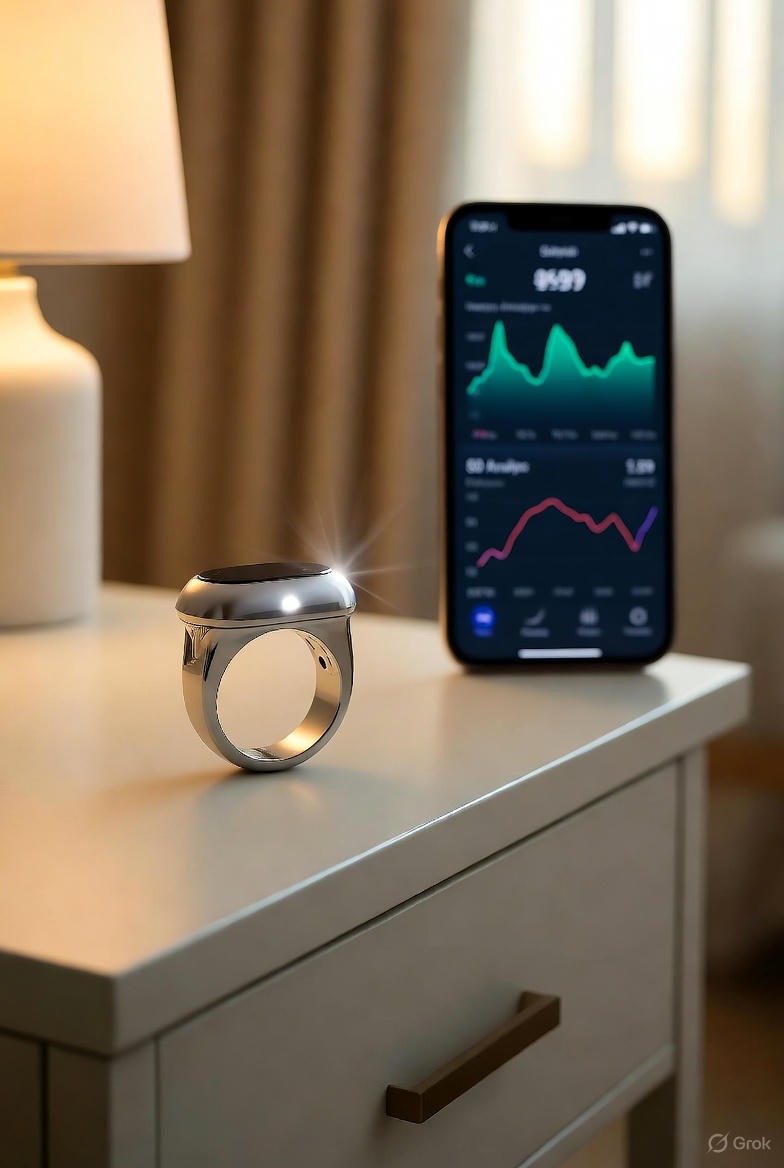
Before you can change your life with data, you need to understand what that data is telling you. A smart ring isn't a magic piece of jewelry; it's a sophisticated biosensor. Its value isn't in the raw numbers it collects, but in the story those numbers weave about your autonomic nervous system (ANS)—the automatic control center for every vital function in your body. Think of your ANS as the conductor of your body’s orchestra, managing heartbeat, digestion, breathing, and hormonal responses without you ever thinking about it. It has two main branches: the sympathetic ("fight-or-flight") and the parasympathetic ("rest-and-digest"). Your health and daily vitality are a direct reflection of which branch is leading the symphony at any given time. Your smart ring provides the sheet music, showing you the score.
The most critical metric your ring provides is Heart Rate Variability (HRV). Contrary to what you might assume, a healthy heart doesn't beat with the monotonous regularity of a metronome. The time between beats should have subtle, millisecond variations. Higher HRV generally indicates a strong, resilient parasympathetic nervous system—your body is adaptable, recovered, and ready to handle stress. Lower HRV suggests your sympathetic system is dominant; your body is under strain, fatigued, or potentially fighting illness. It’s your single best daily readiness score. Waking up with a higher HRV than your baseline? You're likely well-recovered. A sharp drop? It’s a clear signal to take it easy, even if you feel fine.
Next is Resting Heart Rate (RHR). This is your heart's idle speed. A lower RHR typically indicates better cardiovascular fitness and efficient heart function. Tracking its trends is key. A sudden, unexplained increase over several days can be an early warning sign of overtraining, impending illness, dehydration, or chronic stress. It’s your body’s fundamental vital sign, always whispering its status.
Sleep Staging is where the ring truly outshines basic trackers. It doesn't just guess you're "asleep." Using movement, heart rate, and HRV patterns, it estimates your time in Light, Deep, and REM sleep. Each stage is non-negotiable:
Seeing the breakdown is revolutionary. You might be in bed for 8 hours, but if your deep sleep is consistently low, you’ll wake up unrefreshed. This data is the foundation for building a truly effective nighttime wellness routine that transforms your sleep quality.
Skin Temperature is a subtle but powerful trend metric. Your ring tracks your temperature relative to your own baseline. A sustained elevated temperature trend can indicate the onset of illness, inflammation, or hormonal changes like ovulation. A lower trend might signal metabolic slowdown or poor circulation. It’s a slow-moving compass pointing to internal shifts.
Finally, Blood Oxygen (SpO2) monitoring, especially during sleep, can alert you to significant dips (desaturations) that might point to breathing disturbances, like sleep apnea, or respiratory issues.
Why This Beats "How You Feel": You cannot subjectively feel your HRV. You cannot accurately perceive how much REM sleep you got. This data cuts through the noise of your conscious mind—the excuses, the biases, the sheer lack of internal perception—and gives you an objective biological report card. It moves you from asking "Why am I so tired?" to discovering "My deep sleep was 30% lower last night because my HRV was depressed from that late, heavy meal." This is the end of mystery and the beginning of empowered change.
The most common mistake beginners make is getting their ring, seeing a "poor" sleep score or a "low" readiness metric, and immediately trying to fix everything at once. This leads to overwhelm, unsustainable changes, and quick abandonment. Instead, your only job for the first two weeks is to be a curious, non-judgmental scientist observing a fascinating subject: you.
Step 1: Wear It and Forget It. Put the ring on your index or middle finger (following the manufacturer's fit guide) and go about your life as you normally would. Don't try to "perform" or be your healthiest self. The goal is to capture your authentic baseline, warts and all. Eat your usual meals, keep your existing sleep schedule, maintain your regular workout routine (or lack thereof). This honest data is priceless.
Step 2: The Morning Review Ritual. Make it a habit to spend just 2-3 minutes each morning with your companion app. Don't fixate on individual scores as "good" or "bad." Instead, practice observing and asking open-ended questions:
Step 3: Logging Life’s "Tags" or "Moments". Use the journaling feature in your app relentlessly. This is how you create context. Tag the following:
Step 4: Spot Early Patterns (Without Jumping to Conclusions). By the end of the first week, you might start to see whispers of correlation. Perhaps you'll notice that on days you logged "evening workout," your sleep graph shows elevated nighttime heart rate. Maybe "late caffeine" consistently appears on nights with less deep sleep. Don't act on these yet! The goal of the baseline phase is pattern recognition, not intervention. You are gathering evidence.
This 14-day baseline establishes your personal normal. Everyone's numbers are different. A "good" HRV for one person is a "poor" HRV for another. Your ring’s insights are only meaningful in the context of your own trends. You are building a personalized benchmark against which all future changes will be measured. This phase cultivates the most important skill for long-term success: data-aware mindfulness. You are learning to see yourself clearly, without story or shame, setting the stage for intelligent, targeted action. Remember, you cannot optimize what you do not first measure and understand.
Armed with your two-week baseline, you can now begin the most impactful change most people can make: upgrading their sleep. Society obsesses over the 8-hour mantra, but your ring data will quickly show you that duration is just one part of the equation. Quality is king. You can spend 9 hours in bed and get poor sleep if the architecture is wrong. The goal is to maximize the restorative power of the time you are asleep.
Start by analyzing your baseline sleep data. Look beyond the single Sleep Score and dive into the trends:
Your first and most powerful intervention is sleep schedule consistency. Your body’s circadian rhythm thrives on predictability. Based on your baseline, choose a realistic bedtime and wake time that you can adhere to within a 30-minute window, even on weekends. This single habit does more to regulate your internal clock than anything else. Use your ring to track its effect. You’ll likely see improvements in sleep latency and overall score within days.
Next, use your tagged data to become a sleep detective. Cross-reference your lowest-quality sleep nights with your activity log. Common culprits your ring will help you identify:
This is where you begin to build your personal, data-backed science-backed nighttime routine for better sleep. Instead of following generic tips, you tailor your wind-down based on what your data says disrupts your sleep. If late meals are a problem, institute a firm kitchen closing time. If stress is the thief, introduce a 10-minute breathing exercise or gratitude journaling 60 minutes before bed.
Finally, pay attention to your Body Battery or Readiness Score upon waking. Does it align with how you feel? Does a high score after 7 hours of great sleep predict a fantastic day? This feedback loop reinforces positive behavior. You are no longer "trying to sleep better." You are engineering your environment and habits for optimal sleep architecture, guided by daily, undeniable feedback. The ring turns sleep from a passive state into an active, optimized pillar of health.

Stress isn't just a feeling; it's a measurable physiological state. Your smart ring captures it in real-time through three primary lenses: elevated heart rate, depressed Heart Rate Variability (HRV), and often, a slight increase in skin temperature. Unlike a journal where you record how stressed you think you were, your ring shows your body’s actual stress response, which can be startlingly different. You might have a "calm" day at your desk but see a chronically elevated heart rate. This is your body whispering (or shouting) that it's in a sustained low-grade "fight-or-flight" mode.
Your first task is to learn to read your Daily Stress Signature. Open your app's stress graph throughout the day. It typically shows periods marked as "restorative" (high HRV, parasympathetic), "normal," and "stress" (elevated heart rate, low HRV, sympathetic). Don't judge it—observe it. When do the "stress" blocks typically appear? Is it during your morning commute, in the hour before a standing meeting, during focused work sessions, or in the chaotic evening family hours? This graph is a mirror reflecting how your nervous system navigates your day.
Now, become a stress detective by tagging events. When you see a pronounced stress block, pause and log what was happening:
Conversely, tag the "restorative" moments:
After a week of tagging, powerful patterns will emerge. You may discover that certain people, tasks, or digital behaviors are far more physiologically taxing than you realized. You might also find that simple, intentional acts are powerfully restorative. This knowledge is power. It moves stress management from a vague concept ("I should meditate more") to a targeted, data-informed strategy ("I need a 5-minute breathing exercise before my weekly planning session, which consistently spikes my stress").
This is where you build micro-interventions. You don't need to find an extra hour in your day. You need 1-5 minute resets strategically placed before or during your predictable stress peaks. Techniques proven to improve HRV and prompt a parasympathetic shift include:
By implementing these micro-practices, you are not avoiding stress; you are increasing your stress resilience. Your ring provides the proof. You’ll see the stress blocks become shorter, less intense, or you’ll see yourself recover to a "restorative" state more quickly after a stressor. This is the tangible definition of building resilience. It transforms you from a passive victim of your day's demands into an active regulator of your own nervous system. For those whose minds race at night, this daytime practice is the cornerstone of a nighttime wellness routine for anxious minds, helping to calm the system long before bed.
Nutrition advice is notoriously conflicting and generic. What works for one person can backfire for another. Your smart ring provides personalized, post-meal feedback that cuts through the dogma, helping you discover how your body responds to different foods, meal timings, and hydration levels. It turns nutrition from a guessing game into a science experiment where you are both researcher and subject.
The primary metrics to watch are nighttime heart rate, HRV, and sleep quality. This is your body's report card on your daily diet. While continuous glucose monitors (CGMs) provide direct sugar-level data, a smart ring captures the downstream systemic effects of your nutritional choices. A meal that causes a significant blood sugar spike and crash will trigger an inflammatory and stress response, which your ring will detect.
The Evening Meal Experiment: This is your most powerful lever. After establishing your baseline, run a simple weekly experiment.
Compare the data from each following morning. You will likely see dramatic differences. The heavy/late meal may show:
The balanced, early meal will likely show the opposite: a lower, smoother nighttime heart rate, higher HRV, and more deep sleep. This isn't theory; it's your personal physiology voting on your food choices. The ring provides non-negotiable feedback that a "healthy" meal you didn't enjoy might still be suboptimal for your digestion and sleep.
Hydration is Visible. Chronic mild dehydration is incredibly common and subtly detrimental. Your ring can spot its signs. Dehydration increases heart rate (as your blood volume drops, your heart has to work harder) and can lower HRV. It can also disrupt thermoregulation, affecting skin temperature. If you see an unexplained dip in your daily readiness or a higher RHR, your first question should be: "Did I drink enough water yesterday?" Track your water intake for a few days alongside your metrics. You may find a clear correlation between higher fluid intake and better recovery scores.
Caffeine and Alcohol: The Delayed Cost. You know these affect sleep, but your ring quantifies the cost with brutal honesty. Tag your afternoon coffee or evening drink. The next morning, look beyond just "sleep score." Check how long it took you to fall asleep, your deep/REM sleep balance, and your morning HRV. For many, caffeine after 2 PM can fragment sleep, and even one drink can slash deep sleep by 30-50%. Seeing this data graphically makes the trade-off conscious. It doesn't mean you can never have a glass of wine; it means you make an informed choice, knowing the exact biometric price you’ll likely pay. This objective feedback is far more motivating than any generic warning.
In the fitness world, the mantra has long been "more is better." But your smart ring introduces a crucial, often-ignored variable: recovery. It helps you answer the essential question: "Did that workout make me stronger, or just more tired?" Overtraining is as big an obstacle to health as undertraining, and it’s invisible until you get injured or burnt out. Your daily Readiness or Recovery score—primarily based on HRV, RHR, and sleep—is your guide to applying the Goldilocks Principle to movement.
Stop Guessing, Start Measuring. Instead of following a rigid weekly workout schedule, learn to let your morning readiness score guide your intensity.
Tracking the Training Effect. Your work doesn't end when the workout is over. The true impact is seen in the 12-48 hours following exercise. Tag your workouts and observe the data trail:
Different Stress, Different Signals. Your ring can also help you understand how your body responds to different types of stress.
By aligning your movement with your recovery data, you move from a mindset of forced consistency to intelligent periodization. You learn to push when you are resilient and pull back when you are vulnerable. This not only maximizes fitness gains and minimizes injury but also makes your relationship with exercise sustainable and joyful. It’s the end of the "no pain, no gain" guesswork and the beginning of a collaborative dialogue with your body about what it needs to grow stronger. For athletes or dedicated fitness enthusiasts, this approach is the core of a nighttime routine for athletes focused on maximizing recovery while you rest.
Modern culture glorifies busyness, treating rest as a reward for exhaustion or a sign of laziness. Your smart ring data will quickly expose this as a harmful myth. Recovery is not the absence of work; it is an active, physiological process where adaptation and strengthening occur. If stress (workouts, work, life) is the trigger for growth, recovery is the necessary environment where that growth actually happens. Without it, you are just breaking yourself down. Your ring provides the hard evidence that intentional recovery is a non-negotiable pillar of health, as important as sleep or nutrition.
Define Recovery Broadly. Recovery happens across multiple dimensions, all measurable:
Your job is to use your ring’s insights to build recovery periods into your day and week, not just hope they happen by accident.
Daily Recovery Rituals: Look at your daily stress graph. Is it a solid block of "normal" or "stress" from wake-up to bedtime? This is a sure path to burnout. Use your data to identify natural lulls (e.g., mid-morning, post-lunch, early evening) and deliberately schedule 5-15 minutes of a recovery practice. This could be:
After a week of practicing this, check your stress graph. You should see more "restorative" dips and a smoother transition into the evening. This practice of "stress wave modulation" prevents the cumulative load from becoming overwhelming.
Weekly Recovery Planning: Your weekly readiness trend is your guide. Most people operate on a 7-day cycle of accumulating fatigue. Use your ring to plan a true recovery day each week. This isn't a day of chores and errands. It's a day with:
Track the effect. A successful recovery day should lead to a notable bump in your readiness score the following morning. It’s a reset button for your nervous system.
The Ultimate Recovery Biofeedback Tool: Use your ring in real-time during a recovery practice. Sit quietly for 5 minutes of coherent breathing (5-sec inhale, 5-sec exhale) and watch your live heart rate in the app. You will likely see it begin to drop and stabilize within minutes. This is instant, visual proof that you are actively shifting your physiological state. It turns an abstract concept like "relaxation" into a tangible, controllable skill. This practice is especially powerful in the evening as part of a minimal nighttime wellness routine with just 5 essential steps to bridge the gap between a busy day and restorative sleep.
After several weeks of observation and small experiments, you will have accumulated a rich dataset of your life. This is where the profound "aha!" moments happen. Lifestyle change stops being about following rules and starts being about understanding your unique cause-and-effect relationships. Your ring app’s long-term trends and correlation features are your best friends here. You are looking for the recurring patterns that connect your inputs (habits, choices, events) to your outputs (sleep scores, readiness, stress).
The Process of Pattern Detection:
Common Triggers (The "Depleters") Your Ring Will Likely Reveal:
Common Boosters (The "Enhancers") You'll Discover:
This detective work transforms self-improvement from a scattergun approach to a laser-targeted strategy. You stop wasting energy on changes that don't move the needle for you and double down on the few habits that have an outsized positive impact. You are writing your own personalized wellness manual, one chapter at a time. This knowledge also helps you anticipate challenges. If you know a stressful work period is coming, you can proactively ramp up your boosters (more nature, stricter sleep hygiene) to armor your nervous system against the known triggers.
Armed with knowledge of your personal triggers and boosters, it’s time to build sustainable change. The biggest pitfall is ambition. Seeing a slew of "needs improvement" metrics can make you want to overhaul your entire life overnight. This is a recipe for failure. The key is the 1% Improvement Strategy: using your ring's feedback to make one tiny, hyper-targeted change at a time, validate it with data, and lock it in as a habit before moving to the next.
The Framework:
Example in Action:
This method turns your smart ring into a personal habit laboratory. Every change is a hypothesis ("I think X will improve Y"), and the biometric data is your objective result. This eliminates the frustration of sticking to a difficult habit for months with no perceived benefit. You get rapid, clear feedback. Success breeds motivation. You learn to trust the process and, more importantly, trust yourself.
This iterative, data-led approach is the antidote to rigid, one-size-fits-all wellness programs. It respects your individuality and creates a compounding effect. One successful 1% change leads to another. Over months, these micro-habits stack into a completely transformed lifestyle, built steadily and sustainably on a foundation of personal evidence. It is the ultimate application of the beginner-friendly guide: start small, use your data, and let your body's responses be your guide.

Your journey will not be a straight, upward line on a graph. There will be nights of terrible sleep for no apparent reason, weeks where your readiness is stubbornly low despite "doing everything right," and periods where you feel you've hit a plateau. This is not failure; it is an inherent part of the process of living in a human body. Your smart ring, when used with the right mindset, is the perfect tool to navigate these phases with grace and intelligence, rather than frustration and abandonment.
First, Normalize the Noise. Human physiology is complex and influenced by countless invisible variables: subtle hormone cycles, undetected immune system activity, changes in weather and barometric pressure, subconscious emotional stressors. Your ring shows you the output of this complex system. A single "bad" data point is just noise. Always focus on trends, not daily numbers. A low score is just one data point in your long-term story. Zoom out to the weekly or monthly view to maintain perspective.
Second, Become a Compassionate Detective, Not a Harsh Judge. When you hit a prolonged low-recovery period or a sleep plateau, engage your curiosity, not your criticism.
The Plateau Protocol: If you've been consistent with your habits for 6-8 weeks and see no further improvement in your target metrics, it's time to strategically change a variable.
Using the Ring for Resilience, Not Rigidity. The ultimate goal is not to have perfect scores every day. That is impossible. The goal is to develop biometric literacy—the ability to listen to and respond to your body's signals with appropriate action. A low readiness score becomes useful information to take a rest day, not a personal failing. A high stress reading is a cue to breathe, not a reason to panic. This flexible, responsive approach is what creates true, lasting health—a dynamic equilibrium rather than a fragile state of "perfection." It prepares you for life's inevitable disruptions, from travel and holidays to illness and personal crises, giving you the tools to navigate back to balance.
To make lifestyle change with a smart ring sustainable, you must move from sporadic checking to a built-in, ritualized review process. This ritual transforms data from a novelty into a cornerstone of your self-awareness and daily planning. It should be quick, insightful, and action-oriented. Here is a framework for creating your own personalized review ritual.
The 3-Minute Morning Review (Daily):
This is not about dwelling; it's about setting an intention for the day.
The 10-15 Minute Weekly Review (Sunday Evening or Monday Morning):
This is your strategic planning session. It’s where you connect dots and plan the week ahead.
The Monthly Reflection:
Once a month, review your 30-day trend. This is for celebrating progress and spotting macro-patterns. Have your averages improved? What is your most stable metric? What is your most volatile? This big-picture view reinforces that you are on a long-term journey, insulating you from daily fluctuations.
By embedding these short rituals into your life, the smart ring ceases to be a tracking device and becomes a consciousness- raising tool. It fosters a proactive, intentional, and compassionate relationship with your health. The data becomes a conversation starter with yourself, guiding you not with rigid commands, but with insightful questions that only you can answer for your own, uniquely wonderful body. This is the essence of a truly beginner-friendly, sustainable path to change.
Your physiology does not exist in a vacuum. It is in constant dialogue with your environment—the light, temperature, noise, and even the emotional climate of your spaces. Your smart ring’s data provides the feedback loop to show you exactly how your surroundings are influencing your nervous system. By learning to read these signals, you can become an architect of environments that actively support your well-being, turning your home and workspace into sanctuaries for recovery.
Light: The Primary Zeitgeber. Light is the most powerful cue for your circadian rhythm. Your ring’s sleep timing and quality metrics are directly tied to your light exposure. Use your data to audit your light environment:
Temperature: The Sleep Switch. Your core body temperature must drop to initiate and maintain sleep. Your ring’s skin temperature trend and sleep graph are brilliant tools for thermal optimization.
Sound and The Stress Graph: Noise is a non-conscious stressor. Even if you don’t fully wake up, traffic, a partner’s snoring, or sudden sounds can trigger micro-arousals, elevating heart rate and shifting you into lighter sleep stages. Review your sleep graph for periods of restlessness or elevated heart rate. Correlate these with environmental sound. The fix might be as simple as white noise, earplugs, or a fan, and your ring will validate the improvement with a smoother, deeper sleep graph.
The Digital Atmosphere: Your phone and computer are not just sources of light; they are portals to cognitive and emotional stimulation—the antithesis of a restful environment. Pay close attention to your stress graph in the hour before bed when you are scrolling social media, reading work emails, or watching stimulating content. Compare it to a night spent with an analog wind-down. The difference in your physiological state at bedtime will be stark, directly impacting how quickly you fall asleep. Creating a buffer zone is not pseudoscience; it’s a data-backed necessity for nervous system downregulation, a principle thoroughly explored in our guide on nighttime routine mistakes that ruin your sleep.
By systematically testing and adjusting these environmental levers and using your ring to measure the outcome, you move from being a passive occupant to an active designer of your spaces. You stop fighting your environment and start letting it work for you, creating a holistic ecosystem that nudges your biology toward balance every single day.

Humans are social creatures, but our interactions exist on a spectrum from deeply nourishing to energetically draining. Your smart ring, by measuring your nervous system state, can provide an objective read on the physiological impact of your social world. This isn’t about labeling people as "good" or "bad"; it’s about understanding how different types of interaction affect your unique system, allowing you to make conscious choices about your social energy budget.
Mapping Your Social Stress and Recovery:
The Solitude Signal: Equally important is your body’s response to alone time. For introverts, solitude is essential recharge. For others, too much isolation can be a stressor. Tag periods of intentional solitude. Does a quiet Saturday morning reading lead to a calmer stress graph and higher afternoon HRV? Does a full day without meaningful interaction lead to agitation and poorer sleep? Your data will reveal your personal need for the balance between social sync and solo time.
Applying the Insights: The Social Energy Budget.
This biometric feedback fosters profound self-awareness and self-compassion. It removes guilt from the equation. You’re not "antisocial" for needing time alone after a work conference; your HRV shows your nervous system is in overdrive and needs quiet to recalibrate. You’re not "needy" for craving connection; your data shows that positive social interaction is a legitimate recovery modality for you. By understanding your social fingerprint, you can curate a social life that supports, rather than sabotages, your overall well-being.
Life is not a controlled laboratory. Travel, holidays, deadlines, and unexpected events will disrupt your best-laid plans. This is where a smart ring shifts from an optimization tool to an essential navigation system. It provides a stable, objective read on your state amid the chaos, helping you mitigate damage and recover faster.
The Travel Protocol:
Navigating Holidays and Special Events: These are often landmines of sleep deprivation, rich food, alcohol, and social overload.
Managing Unexpected Stress (Illness, Crisis): When you get sick or face a personal crisis, your ring becomes a medical-grade monitoring tool.
In all disruptions, the ring’s value is context and compassion. It shows you the "why" behind feeling awful when off-routine, which normalizes the experience. More importantly, it provides a clear map back to balance, showing which levers (sleep, light, quiet) most effectively pull your unique physiology out of dysregulation and back toward homeostasis.
Once you are fluent in the core language of HRV, RHR, and sleep stages, you can begin to explore the more nuanced dialects your smart ring offers. These advanced metrics provide deeper layers of insight, helping you fine-tune your understanding of recovery, performance, and long-term health trends.
Respiratory Rate (RR): This is the number of breaths you take per minute, typically measured at rest and during sleep. It’s a remarkably stable metric in healthy adults.
Blood Oxygen (SpO2) During Sleep: This measures the percentage of oxygen-saturated hemoglobin in your blood. While less clinical than a medical device, the ring’s trend data is valuable.
Heart Rate Variability (HRV) Balance & Trends: Beyond the daily score, deep dive into your HRV data.
Temperature Trends & Menstrual Cycle Insights: For women, the continuous skin temperature data is a game-changer for cycle awareness.
Engaging with these advanced metrics moves you from a general understanding of "health" to a sophisticated awareness of your systemic function. You become an expert in your own physiological rhythms, capable of predicting dips, optimizing for peaks, and catching subtle signs of imbalance long before they become major issues. This is the frontier of truly personalized, preventive wellness.
By this point, you’ve learned to optimize individual pillars. The final, master-level understanding is seeing these pillars not as separate silos, but as an interconnected, dynamic system—a Synergy Cycle. In this cycle, each element directly influences the others, creating either a virtuous upward spiral of health or a vicious downward spiral of depletion. Your smart ring’s comprehensive dashboard is the only tool that can make this interconnectedness visible in real-time.
The Vicious Cycle (The Downward Spiral):
The Virtuous Cycle (The Upward Spiral):
Using Your Ring to Steer the Cycle: Your daily review is now a systems check.
This systemic view fosters true wisdom. It prevents you from making the classic mistake of "I slept poorly, so I’ll skip the gym and work late," which only feeds the vicious cycle. Instead, you learn to ask: "Given my current state, what action will best support the entire system?" Sometimes the most productive thing you can do for your long-term health is to take a nap. Your ring gives you the confidence to make that counterintuitive but correct choice.
The ultimate goal of this entire journey is not to achieve a perfect sleep score of 90 every night. It is to cultivate self-knowledge and agency. The ring is a tool, but the transformation happens in your mind and your relationship with your own body. To avoid the pitfalls of obsession, anxiety, or becoming a slave to the numbers, you must develop a compassionate data mindset.
Data as Dialogue, Not Dictator: The numbers are not a verdict on your worth. They are one side of a conversation. Your feelings, intuition, and lived experience are the other side. The art is in synthesizing both. If your readiness score is low but you feel fantastic, still take it as a gentle caution, but trust your lived experience. Conversely, if you feel terrible but your scores are green, consider non-physiological causes (emotional, spiritual, mental). The data informs; it does not command.
Embrace the "Why" Over the "What": When you see a disappointing metric, immediately shift from "This is bad" to "I wonder why?" This simple reframe engages curiosity—a positive, open state—instead of judgment—a closed, stressful state. Curiosity leads to learning. Judgment leads to shame and abandonment.
Practice Periodization in Tracking: It is healthy to occasionally take a break from daily scrutiny. Once your habits are firmly established, you might decide to check your data only every other day, or simply wear the ring for a week each month as a "check-up." This prevents analytics fatigue and reminds you that the goal is to live your life, not just optimize it.
Celebrate Trends, Not Daily Wins: Anchor your sense of progress to the monthly or quarterly trend line. A rising average HRV over six months is a monumental success, even if it contains many low-score days. This long-view perspective builds resilience and keeps you focused on sustainable change.
Share and Connect: Discuss your insights with a trusted friend, partner, or a community. Sharing the story behind the data ("See this HRV dip? That was the week of my big presentation") makes it human. It can also provide accountability and shared learning. You might even inspire others to start their own journey of awareness.
In the end, the smart ring’s greatest gift is the restoration of somatic trust—the ability to trust the wisdom of your body because you have learned its language. You move from ignoring or fighting your body’s signals (fatigue, stress, hunger) to respecting them as vital communication. You no longer need an article to tell you if you’re recovered; you can feel it and see it confirmed. This deep, embodied self-knowledge is the foundation for a lifetime of intelligent, adaptable, and compassionate self-care. You have graduated from being a beginner to being the authoritative expert on the one subject that matters most: you.
Your Trusted Sleep Advocate: Sleep Foundation — https://www.sleepfoundation.org
Discover a digital archive of scholarly articles: NIH — https://www.ncbi.nlm.nih.gov/
39 million citations for biomedical literature :PubMed — https://pubmed.ncbi.nlm.nih.gov/
Experts at Harvard Health Publishing covering a variety of health topics — https://www.health.harvard.edu/blog/
Every life deserves world class care :Cleveland Clinic - https://my.clevelandclinic.org/health
Wearable technology and the future of predictive health monitoring :MIT Technology Review — https://www.technologyreview.com/
Dedicated to the well-being of all people and guided by science :World Health Organization — https://www.who.int/news-room/
Psychological science and knowledge to benefit society and improve lives. :APA — https://www.apa.org/monitor/
Cutting-edge insights on human longevity and peak performance:
Lifespan Research — https://www.lifespan.io/
Global authority on exercise physiology, sports performance, and human recovery:
American College of Sports Medicine — https://www.acsm.org/
Neuroscience-driven guidance for better focus, sleep, and mental clarity:
Stanford Human Performance Lab — https://humanperformance.stanford.edu/
Evidence-based psychology and mind–body wellness resources:
Mayo Clinic — https://www.mayoclinic.org/healthy-lifestyle/
Data-backed research on emotional wellbeing, stress biology, and resilience:
American Institute of Stress — https://www.stress.org/


