


How Your Wellness Ring Proves Consistent Evening Routines Matter
Consistent evening routines matter for health, a fact proven by your wellness ring.
Consistent evening routines matter for health, a fact proven by your wellness ring.
%402x.svg)
The final email is sent. The last notification is silenced. You’ve officially ended your day, yet a familiar, low-grade hum of anxiety persists. Your body is on the couch, but your mind is racing through tomorrow’s tasks, replaying today’s conversations, and compiling a mental grocery list. You tell yourself you’re “winding down,” but your nervous system tells a different story. This dissonance between our intentions and our internal state is the modern-night paradox. We crave rest, yet we’re perpetually primed for action.
Enter your wellness ring. This unassuming piece of technology, silently circling your finger, has been gathering data while you’ve been gathering stress. And tomorrow morning, when you sync it with its app, it will deliver a verdict not in words, but in metrics: a sleep score lowered by poor sleep latency, a resting heart rate that didn’t dip as expected, a heart rate variability (HRV) graph that looks more like rocky terrain than a smooth, restorative valley. It’s feedback that can feel impersonal, even judgmental. But what if we’re reading it wrong?
Your ring isn’t a critic; it’s the most honest biographer you’ve ever had. It doesn’t see your to-do list or your worries. It sees their profound physiological echoes. It quantifies the cost of that “just one more episode” binge, the late-night doomscroll, the argument you had before bed, or the “productive” work email sent from your pillow. More importantly, it holds the key to a revolutionary idea: the hours before you fall asleep don’t just influence your sleep—they orchestrate your entire next day. Your evening routine is the launch sequence for your tomorrow.
This isn’t about rigid, Instagram-perfect routines of jade rolling and gratitude journals. This is about forensic self-care, using the objective data from your wearable to engineer an evening ritual that actually works for your unique biology. We will move beyond generic advice and into the realm of personalized, data-driven optimization. Your wellness ring is the proof—the undeniable, graphical evidence—that consistent evening routines are not a wellness cliché. They are the fundamental bedrock of emotional resilience, cognitive performance, and physical health. Let’s decode what your ring is trying to tell you and build a nightly practice that turns its red warnings into green checkmarks.

You wake up and check your app. The “Readiness” or “Recovery” score stares back at you—a single number meant to encapsulate your body’s preparedness for the day ahead. A low score can feel like a poor report card, a signal to pull back. But to truly benefit from this metric, we must dissect its origins. This score is not a random assessment; it’s a sophisticated algorithm primarily built on the physiological data collected overnight, which is itself a direct product of your evening.
Think of your evening as the preparation phase for a major physiological renovation project: sleep. If you start construction in a state of chaos—with tools scattered, blueprints missing, and the crew stressed—the work will be sloppy, inefficient, and incomplete. Your readiness score is a quality inspection of the night’s renovation work. Let’s break down the core pillars it assesses and trace them back to their pre-sleep triggers.
Heart Rate Variability (HRV): The Evening's Signature. HRV is arguably the most sensitive non-invasive metric for autonomic nervous system (ANS) balance. A higher HRV generally indicates a resilient, adaptable system with strong parasympathetic (“rest-and-digest”) tone. Your ring measures HRV during sleep, and a dip is a clear flag. What suppresses HRV? Evening stressors. An intense late workout (physical stress), a heated discussion (emotional stress), consuming a large meal or alcohol (metabolic stress), or even engrossing, stimulating content (cognitive stress) all signal to your ANS that it needs to stay on alert, suppressing the very recovery you seek. Your ring shows you the consequence: a lowered HRV and a reduced readiness score.
Resting Heart Rate (RHR): The Baseline of Calm. Your sleeping RHR is your body’s true baseline. A consistent or elevated RHR overnight suggests your cardiovascular system isn’t fully downshifting. The culprits are often found in the hours prior: caffeine’s long tail, dehydration, an elevated core body temperature from a hot shower too close to bed, or lingering anxiety. Your ring provides the hard evidence that these factors aren’t just theoretical—they’re actively keeping your engine idling too high all night.
Sleep Architecture: The Blueprint of Restoration. Beyond just duration, your ring analyzes sleep stages—light, deep, and REM. Each is crucial. Deep sleep is for physical repair and immune function; REM is for memory consolidation and emotional processing. A disruptive evening can sabotage this architecture. Alcohol, for instance, may help you fall asleep faster (improving “sleep latency”) but it notoriously fragments the second half of the night, demolishing REM sleep. Your ring will show you the awakenings and the lack of deep, restorative cycles. Similarly, blue light from screens can delay melatonin release, pushing back your entire sleep cycle and shortening precious REM in the early morning hours before you wake.
The Data-Backed Conclusion: Your morning readiness score is, in large part, an evening score in disguise. It answers the question: “How well did I prepare my nervous system for restoration?” A consistently low score isn’t a life sentence; it’s a diagnostic tool pointing squarely to the 2-3 hours before bed. By viewing your ring’s data as a feedback loop from your evenings, you shift from passive observation to active experimentation. The goal is to run evening “trials” and observe the morning “results” on your dashboard, creating a personalized map of what truly prepares your body for recovery. This process of linking cause and effect is foundational to building interoceptive awareness—the ability to sense your internal state, which is the first step toward regulating it.
We often frame a bad night’s sleep in terms of physical cost: fatigue, brain fog, a craving for caffeine. But your wellness ring’s data opens a window into a far more significant impact: the erosion of your emotional equilibrium. The connection between poor sleep and poor mood isn’t just anecdotal; it’s physiological, and your HRV and sleep stage data are the proof.
When your evening routine fails to adequately downregulate your nervous system, you enter sleep with a sympathetic (“fight-or-flight”) bias. This sets off a cascade that compromises the very neural processes responsible for emotional stability.
The REM-Emotion Processing Link. REM sleep is where the brain processes emotional experiences, stripping away the sharp, visceral intensity from memories while preserving the lesson. It’s like a nocturnal therapy session. When your evening is dysregulating—perhaps filled with stressful news or social media conflict—you not only risk delaying REM but also feed your brain more potent emotional material to process. The result, as seen in fragmented REM cycles on your ring’s graph, is that you wake with the emotional residue of yesterday still clinging to you. You’re primed for overreaction. A minor morning annoyance can feel catastrophic because your brain hasn’t completed its emotional detox.
HRV as a Predictor of Emotional Resilience. A lower overnight HRV, a direct result of a charged evening, indicates a nervous system with less “bandwidth” to handle stress. Think of it as your emotional shock absorber being worn thin. Studies consistently show that lower HRV correlates with higher emotional reactivity, reduced frustration tolerance, and a greater propensity for anxiety. Your ring’s low HRV reading isn’t just a fitness metric; it’s a forecast for your day’s emotional weather, predicting a higher likelihood of storms.
The Cortisol Awakening Response (CAR) Misfire. A well-regulated body experiences a natural, sharp spike in cortisol within 30 minutes of waking. This CAR is essential for feeling alert, motivated, and ready to engage with the day. However, a chaotic evening and poor sleep can flatten or distort this curve. You might wake with a groggy, low-cortoxin haze or, conversely, feel a jolt of anxiety—a maladaptive, dysregulated stress response. Your ring’s measure of restless sleep and low recovery often precedes this flawed awakening.
The takeaway is profound: your evening routine is a preemptive strike against next-day emotional chaos. By using your ring’s data to craft a routine that fosters deep, structured sleep and high HRV, you are directly investing in your emotional capital for the following 16 waking hours. You are building what experts call emotional regulation skills—the foundational abilities that should be taught early but that we often must cultivate ourselves through practices like these. For those in demanding roles, this isn’t optional; it’s critical for maintaining emotional balance in high-stress professions.
To engineer a better evening, we must become fluent in the language our ring speaks. It provides more than just a final score; it offers real-time and near-time signals about your state of regulation. Learning to read these signals during your evening wind-down transforms your ring from a post-mortem analyst into an active guide.
Resting Heart Rate (RHR) Trends Before Bed. Don’t just watch your nightly average. Open the app during your wind-down. Is your RHR sitting 5-10 BPM above your true baseline as you read a book or watch TV? This is a live signal that your body is still in a state of elevated arousal. A successful wind-down routine should manifest as a visible, gradual downtrend in your live RHR over the 60-90 minutes before you attempt sleep. If the line is flat or jagged, your chosen activities aren’t serving their purpose.
Body Temperature: The Sleep Switch. Your core body temperature needs to drop to initiate sleep. Many advanced rings now track this. Observe the trend. A late, heavy meal or vigorous exercise within 2-3 hours of bed can raise core temperature, fighting this natural drop. Conversely, a warm bath 1-2 hours before bed can be brilliant—it raises surface temperature, prompting a compensatory drop in core temperature as blood moves to the skin to dissipate heat, facilitating sleep onset. Your ring’s temperature data can help you time these interventions perfectly.
Daytime Stress Metrics as Evening Predictors. The “Stress” or “ANS Balance” score your ring provides during the day is a powerful predictor of your evening potential. A day filled with high, unremitting stress scores means your nervous system is carrying a significant debt into the evening. This tells you that your wind-down may need to be longer, more deliberate, and more immersive to pay down that debt. It shifts the evening routine from a standard protocol to a necessary corrective measure.
The "Relax" or "Mindfulness" Guided Session Feedback. Many companion apps offer guided breathing or meditation sessions. Use them and pay attention to the physiological feedback they provide. Does a 5-minute breathing exercise lower your live heart rate by 4-5 BPM? Does a 10-minute body scan meditation smooth your heart rate line? This is direct biofeedback training. It teaches you which specific practices are most effective for your physiology, allowing you to build a personalized, high-efficacy self-soothing toolkit.
By actively engaging with this data, you move from guesswork to precision. You learn that for you, a yoga nidra session drops your RHR more effectively than reading fiction. Or that drinking a certain tea correlates with a smoother temperature decline. This is the essence of data-driven self-care: turning anecdotes into evidence, and habits into healing.
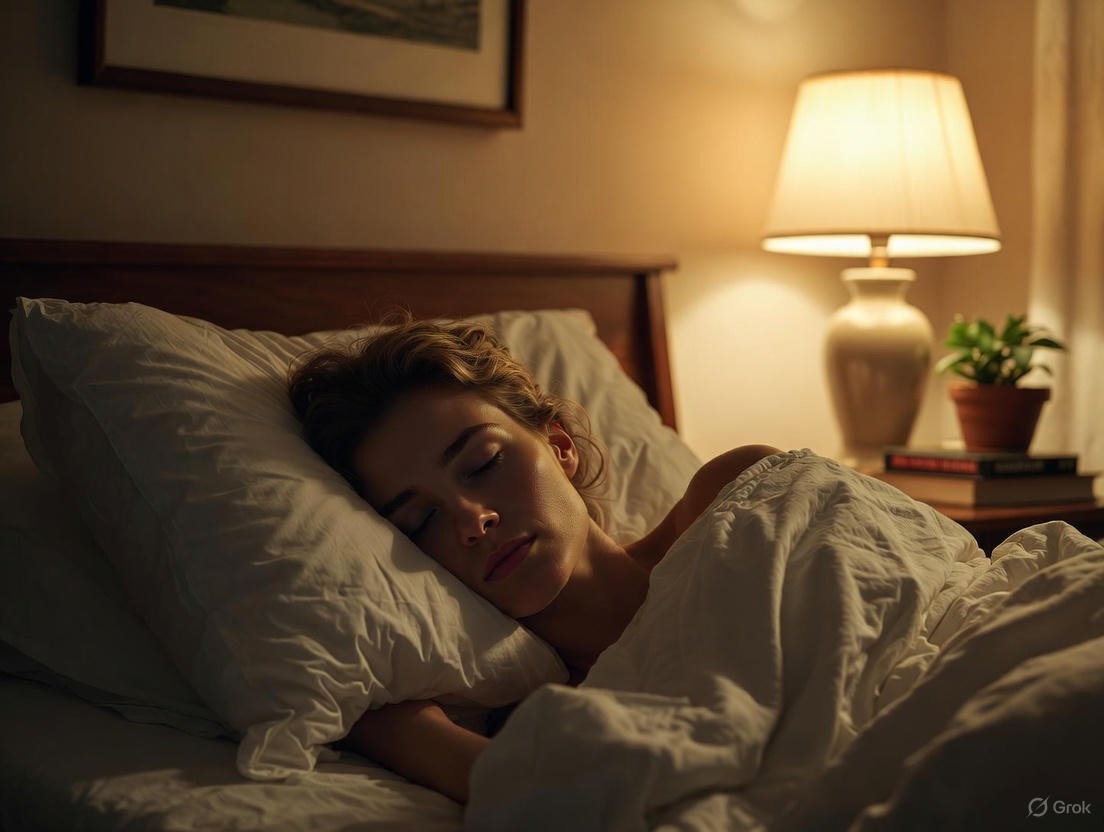
Armed with an understanding of what we’re measuring, we can now construct the evening routine itself. The most effective approach is not a single activity but a phased transition—a deliberate “landing sequence” that guides your nervous system from the high-altitude alertness of the day down to the grounded calm required for sleep. We’ll structure this as a 90-minute protocol, divisible into three distinct 30-minute phases.
Phase 1: The Digital Sunset (T-90 to T-60 minutes). This phase is about severing the tentacles of external demands and simulated reality.
Phase 2: Sensory Anchoring (T-60 to T-30 minutes). Now, we actively engage the parasympathetic nervous system through deliberate, soothing sensory input.
Phase 3: Cognitive Quieting (T-30 minutes to Bedtime). The final phase is about transitioning from external focus to internal quiet.
Even with the best intentions, certain ubiquitous habits can undermine our entire wind-down effort. Your wellness ring acts as a forensic tool, revealing the hidden cost of these choices. Let’s connect the dots between common evening “saboteurs” and their data signatures.
Late Alcohol Consumption: The Deceptive Depressant. Perhaps the most culturally ingrained saboteur. Alcohol is a sedative, not a sleep aid. It suppresses REM sleep, dehydrates you (raising RHR), and as it metabolizes, it causes mini-withdrawals that fragment the second half of your sleep.
The "Doomscroll": Cortisol in Your Pocket. Engaging with stressful, negative, or highly stimulating content on your phone is like injecting small doses of cortisol directly into your evening.
Late, Heavy Meals & Hidden Caffeine: The Metabolic Marathon. Digesting a large meal requires significant energy and raises core temperature. Similarly, the half-life of caffeine is 5-6 hours, meaning a 3 PM coffee can still be 25% active at 9 PM.
Lingering Conflict & Unresolved Stress: The Unseen Weight. Carrying an argument, work anxiety, or general worry to bed is perhaps the most potent saboteur, as it engages both mind and body.
Seeing these cause-and-effect relationships in your own data is the most powerful motivator for change. It transforms abstract health advice into a personal, quantifiable truth.
Data informs, but ritual transforms. The goal is to evolve your wind-down from a clinical protocol into a series of meaningful, self-reinforcing habits—a ritual you crave because of how it makes you feel, validated by how it makes your data look. Ritual provides the consistency that turns sporadic gains into permanent change.
Start Small and Anchor New Habits. Don’t attempt a full 90-minute overhaul on day one. Choose one Phase 3 activity, like 5 minutes of breathing with your ring’s app, and anchor it to an existing, unbreakable habit—like brushing your teeth. The sequence “brush teeth -> sit in bed -> do breathing exercise” creates a powerful cue-routine-reward loop. The reward is both the feeling of calm and the positive data trend you’ll see over time.
Create a Sensory Identity. Your wind-down should have a distinct sensory fingerprint that signals safety to your brain. This could be a specific scent (lavender or sandalwood in a diffuser), a specific sound (the same playlist of ambient music or white noise), or a specific texture (a weighted blanket). Consistency in these cues builds a powerful Pavlovian response, where the scent alone begins to lower your heart rate.
The Journaling Bridge: From Rumination to Resolution. For those whose saboteur is a racing mind, journaling is a non-negotiable ritual. But not just any journaling. Use these two powerful, data-backed methods:
Embrace the "No." The most potent part of your ritual may be what you consistently refuse. Protecting your wind-down time is an act of self-respect. This might mean setting an auto-responder on email, having a gentle script for late-night calls (“Can we connect tomorrow when I’m more focused?”), or leaving your phone to charge in another room. Your ring’s data gives you the justification you need to set these boundaries without guilt.
A single night of perfect routine is a pleasant experiment. Thirty consecutive nights are a transformative journey. Consistency is where the magic—and the science—truly happens. This is the compound interest of sleep and recovery.
Circadian Rhythm Resynchronization. Your body thrives on predictability. By performing your wind-down ritual at roughly the same time each night, you reinforce your circadian rhythm. This internal clock begins to anticipate sleep, releasing melatonin at the optimal time. Your ring will show this as a consistent improvement in “sleep latency” (faster sleep onset) and more stable, predictable sleep stage cycles. You are programming your biology for efficiency.
Autonomic Nervous System Retraining. Chronic stress trains your ANS to be hyper-vigilant. A consistent wind-down is the counter-training. Night after night, you are teaching your nervous system that it is safe to deeply relax. This is reflected in a trending increase in your average overnight HRV and a decrease in your average RHR over weeks and months. You are not just recovering from today’s stress; you are building a more resilient system for tomorrow’s challenges.
The Feedback Loop of Success. This is the psychological powerhouse. You follow your ritual, you see a higher readiness score and feel better, which motivates you to do it again. The data provides objective proof that your efforts matter, breaking the discouraging cycle of “I tried it once and it didn’t work.” You become a student of your own patterns, noticing, for example, how your emotional balance across the menstrual cycle interacts with your sleep needs, allowing you to adapt your routine accordingly.
From Discipline to Desire. Initially, the routine takes discipline. But as the benefits compound—sharper focus, stable mood, more energy—the ritual stops being something you should do and becomes something you need and want to do. The evening becomes a sanctuary, not a chore. Your ring’s data chronicles this entire evolution, from erratic baselines to stable, optimized rhythms.
Even with dedication, you will have off-nights and puzzling data. This is not failure; it’s a deeper layer of learning. Your ring provides the clues to diagnose what went wrong.
Scenario 1: You followed the routine, but sleep latency was still high.
Scenario 2: You slept 8 hours, but your deep/REM sleep is low and readiness is poor.
Scenario 3: Your HRV is consistently low, despite a good routine.
Scenario 4: You wake up consistently at 3 AM.
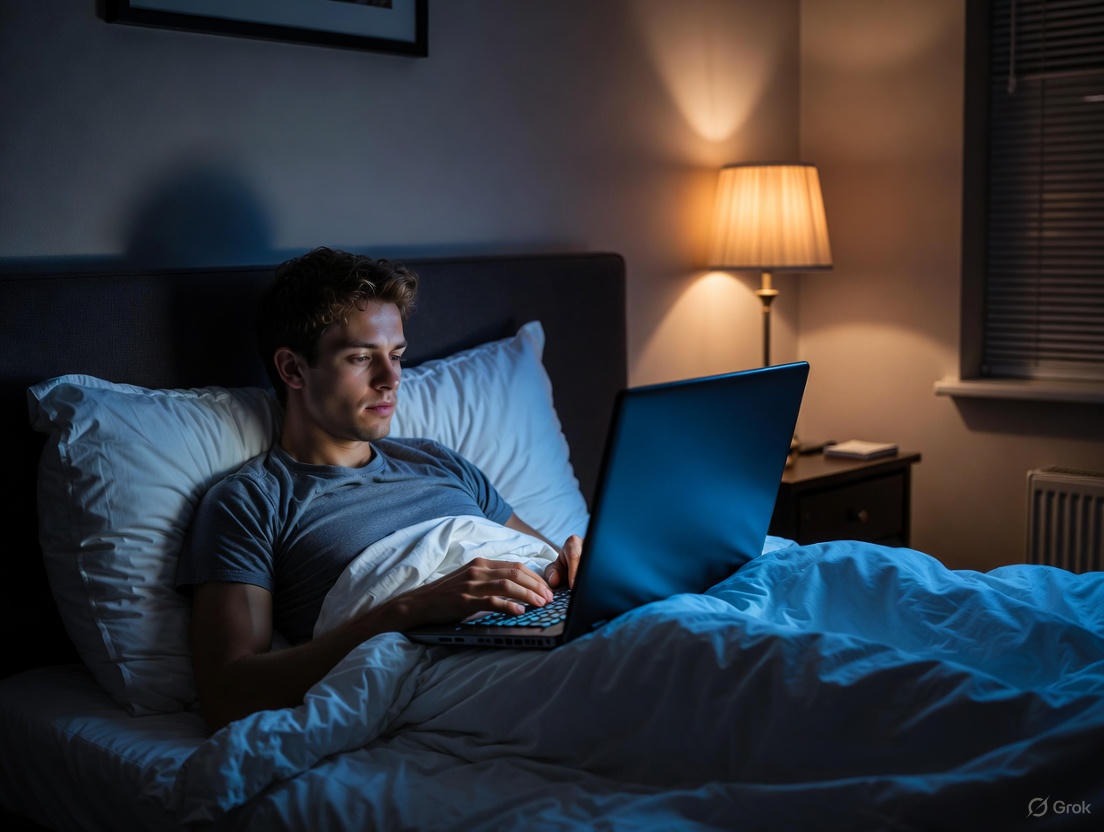
The payoff of a mastered evening extends far beyond the bedroom. The stability and recovery it provides create positive ripples across every domain of your life, turning your wellness ring into a tracker of holistic success.
Cognitive & Professional Performance. High-quality sleep, particularly rich in deep and REM cycles, is directly linked to improved memory consolidation, learning, problem-solving creativity, and decision-making accuracy. When your readiness score is high, you are not just “not tired”—you are operating with optimized neural hardware. You’ll notice clearer thinking, better focus, and an enhanced ability to manage complex tasks.
Emotional & Relational Harmony. As discussed, a regulated nervous system is a patient, responsive system. You become less reactive and more resilient. This transforms your interactions. You’re better equipped to listen, to offer empathy, and to navigate conflict without being hijacked by stress. You are actively creating the foundation for emotional balance and relationships and engaging in healthy co-regulation with others.
Physical Health & Longevity. Consistently good sleep lowers inflammation, supports immune function, regulates hunger hormones (aiding weight management), and improves metabolic health. Your ring’s positive HRV trend is correlated with better cardiovascular outcomes. You are investing in your long-term health with every consistent evening.
The Mastery Feedback Loop. Perhaps the most profound effect is on your sense of agency. You are no longer a passive victim of poor sleep and bad moods. You have a protocol and the data to prove its efficacy. This builds self-trust and mastery, reducing anxiety about sleep itself (a condition called “orthosomnia”). You learn that you have powerful levers to pull for your own well-being, a lesson that helps children develop emotional balance early but is equally empowering for adults at any stage, including during major life transitions and aging.
The framework provided is a blueprint, not a prison. The ultimate goal is to use your ring’s data to tailor the blueprint to your unique physiology, preferences, and life circumstances. Personalization is the final step in moving from a user of a device to an expert on yourself.
Chronotype Alignment: Owls vs. Larks. Are you a natural night owl or morning lark? Fighting your chronotype is a losing battle. An owl forcing a 9 PM wind-down may fail. Instead, use the relative structure. An owl’s “90-minute wind-down” might start at 11 PM, but the phased sequence remains the same. The goal is consistency within your natural rhythm, which will show as strong, regular sleep patterns in your data.
The Active vs. Sedentary Adjustment. If you have a physically demanding job or train intensely, your Phase 2 “sensory anchoring” should emphasize gentle mobility, hydration, and perhaps targeted nutrition for muscle repair. If your day is cognitively demanding but sedentary, your wind-down may need more vigorous physical release earlier in the evening (e.g., a walk after work) so you can be physically tired enough to relax.
Navigating Caregiving & Unpredictable Schedules. For parents, caregivers, or shift workers, a rigid 90-minute block may feel impossible. The principle here is modular consistency. Identify 2-3 non-negotiable “micro-rituals” that total 20-30 minutes (e.g., 5 mins of breathing, 10 mins of reading, 5 mins of hygiene). Perform these in the same order, even if they’re squeezed in later or interrupted. The predictability of the sequence itself can anchor your nervous system amidst chaos. This skill is vital for maintaining balance during periods like grief, where routine provides a stabilizing scaffold.
Using Data for Iteration, Not Judgment. Make one small change per week (e.g., “this week, I’ll stop caffeine at 2 PM” or “I’ll introduce a warm bath”) and observe the trend in your core metrics over 5-7 days. Look for improvements in Sleep Score, HRV, or RHR. This neutral, curious approach—treating yourself as a fascinating experiment of one—removes emotional baggage from the process. It’s how you build a resilient system capable of breaking cycles of dysregulation and building lasting health.
Your wellness ring is more than a sleep tracker. It is a mirror reflecting the profound truth that how we end our day dictates how we begin our next one. It provides the empirical evidence that our evening choices are not trivial; they are the keystone habit upon which daily performance, emotional health, and long-term vitality are built. By engaging with its data thoughtfully and consistently, we can move beyond chasing sleep to architecting recovery, transforming our nights from a time of stress and struggle into a foundation for a truly thriving life.
The journey toward mastering your evening doesn't end with ritual; it deepens with integration. The most profound leaps in recovery and readiness come when we consciously unite mental practices with the physiological feedback our ring provides. This is where meditation, breathwork, and biofeedback cease to be separate wellness trends and become a precise, personalized technology for nervous system regulation.
Modern meditation is often approached as a purely mental discipline—a battle to quiet thoughts. This mindset can create frustration, as the harder we try to "clear the mind," the more elusive calm becomes. Your wellness ring offers a revolutionary reframe: stop focusing on the mind, and start focusing on the body. The data it provides—your real-time heart rate, heart rate variability, and even respiratory rate—gives you a tangible, immediate target. Meditation becomes less about achieving a thoughtless state and more about consciously guiding your physiology toward a state of coherence.
Biofeedback: Closing the Loop. This is the cornerstone of integrated practice. Use a guided breathing or mindfulness session within your ring’s companion app. As you follow the prompts, watch the physiological readout. Are you doing a "calming" exercise but your heart rate line remains spiky? This is invaluable feedback. It tells you that while you're going through the motions, your nervous system hasn't bought in. Instead of judging, get curious. Adjust your posture. Deepen or soften your breath. Imagine warmth spreading from your chest. Watch as these subtle internal shifts create immediate changes in the data line. This is biofeedback: you act, the ring shows you the result, you learn. It turns an abstract practice into a concrete skill, accelerating the development of self-regulation in a way that silent practice alone cannot match.
The "Physiological Sigh" and Ring-Validated Calm. Research from Stanford has highlighted the "physiological sigh"—a pattern of two quick inhales through the nose followed by a long, extended exhale through the mouth—as the fastest known method to reduce physiological arousal. Try this during your wind-down. Perform 3-5 cycles of this breath while watching your ring’s live heart rate display. You will likely see a rapid, stair-step decline in your BPM. This direct visual confirmation is powerfully reinforcing. It proves, in real-time, that you have an on-demand tool to lower your arousal. File this away for those nights when anxiety spikes; you have a data-validated emergency protocol.
From Data to Felt Sense: Building Interoceptive Muscle. The ultimate goal of this integrated practice is to develop such a refined interoceptive awareness that you no longer need the ring’s screen to know your state. You begin to correlate the felt sense of calm—a specific softening in the chest, a warmth in the hands, a quieting of internal chatter—with the objective data of a low, steady heart rate and high HRV. Over time, you can cultivate that felt sense intentionally. This skill is transformative, allowing you to regulate your emotions not just during your evening routine, but in stressful moments throughout the day. It’s a foundational skill that supports every other aspect of emotional health, from navigating relationships with healthy dynamics to managing stress in demanding careers.
Your body does not unwind in a vacuum. It is in constant dialogue with its environment. The data on your wellness ring is the product of you interacting with your space. An often-overlooked lever for improving your readiness score is conducting a forensic audit of your sleep and wind-down environment. Small, evidence-based tweaks can yield disproportionately large improvements in your metrics.
Light: The Master Zeitgeber. Light is the primary cue for your circadian rhythm. Your evening routine must manage it aggressively.
Temperature: The Goldilocks Zone. As mentioned, core body temperature must drop to initiate and maintain sleep. Your ring’s temperature sensor provides personal evidence for the ideal setting.
Sound and Vibration: Consistency Over Silence. Complete silence can be unsettling, while unpredictable noises are disruptive. The solution is consistent, masking noise.
Order and "Visual Quiet." Clutter is visual noise. A bedroom dominated by laundry piles, work materials, or disarray can subconsciously signal chaos and unfinished business. Dedicate five minutes of your wind-down to creating "visual quiet": putting clothes away, clearing surfaces, making the bed inviting. This external order can promote internal order, reducing pre-sleep cognitive load. It’s a physical manifestation of the dialectical approach—accepting the day’s mess while taking a small action to change your environment for the better.
The old adage "you are what you eat" takes on a new, temporal dimension in the evening: "you recover based on when and what you eat." Your evening meal and any snacks are not just fuel; they are pharmacological interventions that will actively promote or hinder your physiological downshift. Your ring’s HRV, RHR, and temperature data are exquisite detectors of dietary missteps.
The Timing Principle: The 3-Hour Gap. The goal is to enter bed with digestion largely complete. A large meal within 3 hours of sleep forces your body to prioritize metabolic work over restorative work, raising core temperature and diverting energy. This often appears as suppressed HRV and a higher RHR for the first half of the night.
Macronutrient Balance for Sleep Chemistry.
The Strategic Pre-Bed Snack. For those prone to nighttime hunger or blood sugar swings, a specific type of mini-snack 30-60 minutes before bed can be therapeutic.
The Dehydration Deception. Many people are chronically mildly dehydrated, which stresses the cardiovascular system. A low water intake throughout the day, especially if coupled with diuretics like caffeine or alcohol, will elevate your resting heart rate. Your ring’s elevated overnight RHR can be a hydration meter. The fix isn’t chugging water before bed (which will cause disruptive trips to the bathroom), but consistent hydration throughout the afternoon. This simple change alone can lower baseline RHR over time.
The Inflammatory Culprits. For some, even "healthy" foods like nightshades (tomatoes, peppers), spicy foods, or high-histamine foods can trigger subtle inflammation that disrupts sleep architecture. If your data shows unexplained restlessness or low HRV, consider an elimination diet experiment, removing one potential irritant for a week and observing the trends in your recovery metrics. This deep dive into the food-mood connection is advanced personalization, using your body’s own data as the guide.
Humans are social creatures, and our interactions are potent modulators of our nervous system. A comforting conversation can lower cortisol; a conflict can spike it for hours. Your evening routine exists within a social ecosystem—partners, family, roommates, friends. Managing this ecosystem is critical, as social stress is a top saboteur of sleep metrics, while social connection can be its greatest enhancer.
The Co-Regulation Evening. If you live with a partner, your evenings are a dance of mutual regulation. Your physiological states can literally sync up—a phenomenon visible in data if you both wear wellness trackers.
Digital Social Detox. Social media and messaging apps are social interactions, but they are often asynchronous, performative, and laden with comparison or conflict.
Setting Boundaries with Kindness. Protecting your wind-down time may require saying "no" to late-night calls, last-minute social invites, or a partner who wants to watch an action movie in bed.
Solitude as a Sacred Space. For many, especially parents or caregivers, the only true solitude comes in the evening. This time is not selfish; it is a necessary reset for a nervous system that has been in constant "giving" mode. Guard this time fiercely. Use it for the practices that most deeply restore you, whether that’s reading, a bath, or simply sitting in silence. This restoration is what allows you to show up fully for others the next day, breaking any unhealthy cycles of resentment or depletion that can strain relationships and lead to patterns of emotional dysregulation.
Your wellness ring is a sophisticated piece of technology. Moving beyond the basic scores into its advanced features and companion app analytics can unlock a deeper layer of personalization and insight. This is where you transition from a casual user to a skilled operator of your own bio-data.
Establishing Your True Baselines. The "average" numbers in the app are helpful, but your true baseline is personal. Don't compare yourself to population averages. Instead, use the ring's trend-view feature to establish your healthy ranges.
Tagging and Correlation Analysis. Most advanced apps allow you to "tag" your day or night with specific activities, moods, or dietary choices.
The Daytime Stress Snapshot. Many rings now provide a continuous "stress" or "ANS load" score throughout the day. This is a powerful predictor for your evening needs.
Respiratory Rate: The Underrated Metric. Your sleeping respiratory rate is a remarkably stable and sensitive metric. A sustained increase of just 1-2 breaths per minute can be an early, subtle sign of onsetting illness, elevated stress, or overtraining—often before you feel symptoms. Monitoring this trend in your app provides a crucial early warning system, prompting you to prioritize rest and recovery before a full-blown crash impacts your readiness score for days.
Syncing with Other Data Streams. For the true biohacker, consider if your ring's app integrates with other health platforms (like Apple Health or Google Fit). Syncing data can reveal powerful correlations. For example, correlating your sleep data with daytime step count or workout intensity from other apps can help you pinpoint your ideal activity level for optimal recovery. It creates a holistic dashboard of your well-being.
The "What If" Game. Use the data to play with variables. "What if I stop caffeine at noon instead of 2 PM?" "What if I take my magnesium supplement 30 minutes earlier?" "What if I use a red light in my bedroom instead of a lamp?" Make one change, observe the data trend over 5-7 days, and let your body's objective response guide your permanent habits. This empirical approach is the ultimate application of technology for self-knowledge.
Adherence to a perfect evening routine is not linear. Life happens. Holidays, travel, illness, periods of intense work, or emotional upheavals will disrupt your rhythm. The danger is not the disruption itself, but the all-or-nothing thinking that often follows: "I missed my routine, my data is bad, I've failed." Your wellness ring is the perfect tool to combat this and foster a resilient, long-term mindset.
The 80/20 Rule for Consistency. Aim for adherence to your wind-down protocol 80% of the time. This allows for 1-2 nights per week of social events, late nights, or simple laziness without guilt or a sense of systemic collapse. The power is in the cumulative trend over months, not the perfection of any single night. Your ring's long-term trend graphs are designed to highlight this overall trajectory, smoothing out the individual spikes and dips.
The "Recovery Ritual" for Setbacks. When you have an unavoidable late night or a period of poor sleep, don't just jump back into your normal routine. Implement a specific Recovery Ritual the next evening.
Redefining "Progress." Progress is not just a higher readiness score. It can be:
When Data Causes Anxiety ("Orthosomnia"). Ironically, an intense focus on perfect sleep data can itself become a source of performance anxiety that ruins sleep. If you find yourself obsessing over scores, feeling defeated by a "poor" night, or losing sleep over your sleep data, it's time to step back.
The Seasonal and Lifecycle Shift. Your ideal routine is not static. It will change with the seasons (more darkness in winter may require different cues), with age, and with life circumstances. A new parent's routine will look nothing like a retiree's. A person navigating emotional balance during grief will need different evening supports than someone training for a marathon. Use your ring's data to guide these adaptations. Let it tell you what your body needs now, not what worked six months ago. This flexible, responsive approach is key to managing life transitions gracefully.
The current capabilities of wellness rings are impressive, but they represent just the beginning. The near future of this technology points toward even more seamless, predictive, and integrated systems for optimizing our evenings and our recovery. Understanding this trajectory helps us use today's tools more effectively while anticipating tomorrow's possibilities.
Multimodal Sensing and Predictive Analytics. Future devices will incorporate more sensors—perhaps for blood glucose trends (via non-invasive methods), advanced hydration status, or even neurotransmitters like cortisol levels. With this data, your ring's app won't just tell you how you slept; it will predict your sleep quality based on your afternoon activities and suggest micro-interventions. A notification at 4 PM might say: "Your stress load is high and glucose is dipping. A 10-minute walk and a protein snack will improve tonight's deep sleep by a predicted 22%." This moves from descriptive to prescriptive analytics.
Closed-Loop Environmental Integration. Imagine your ring communicating directly with your smart home.
Advanced Sleep Staging and Disorder Screening. Current sleep staging, while good, is an estimate based on movement and heart rate patterns. Next-gen sensors using technologies like near-infrared spectroscopy (NIRS) to measure brain blood flow could provide EEG-like accuracy from a ring. This could enable earlier, at-home screening for sleep disorders like sleep apnea or REM sleep behavior disorder, with your ring prompting you to seek a professional evaluation based on aberrant patterns it detects over time.
Personalized "Neural Entrainment" Guides. Using the principle of brainwave entrainment (using sound or light pulses to guide brainwaves into specific frequencies), future apps could generate personalized audio tracks based on your real-time data. If you're struggling to enter deep sleep, it might play a frequency to promote delta waves. If you're waking with anxiety, a track to enhance theta-wave calm before bed. This would be biofeedback on a neural level.
The Ethical Data Sanctuary. With this depth of intimate data comes profound responsibility. The future must include user-owned, encrypted data vaults where you control who accesses your physiological biography. The true power lies in you owning this data long-term, allowing you to see decades-long trends and correlations with major life events, potentially offering insights into your health trajectory that no single doctor's visit ever could. This long-term view could illuminate how childhood experiences shape adult patterns of sleep and stress, offering a path to deeper healing.
Embracing these future possibilities starts with mastering the tools we have today. By diligently using your current ring to build consistent evening routines, you are not just improving your sleep; you are training yourself to be an adept interpreter of your own biology, preparing for a future where this literacy will be the cornerstone of personalized health and sustained well-being.
Data provides the map, but mindset fuels the journey. The final, and perhaps most crucial, component of making your evening routine an unshakable pillar of your life is internal. It’s the psychology that transforms a health “task” into a non-negotiable act of self-respect. Without the right mindset, the most beautifully crafted ritual will crumble under the pressure of a busy week, a tempting invitation, or simple exhaustion. Your ring’s data becomes the ultimate accountability partner in this psychological shift.
From “Should” to “Must”: The Identity Shift. The most powerful motivator is identity. The person who should go to bed early is in a constant battle with temptation. The person who is someone who prioritizes recovery no longer debates it; it’s simply what they do. Your ring accelerates this shift by providing immediate, positive reinforcement for the “must” behavior.
Reframing the “Missed Opportunity” Cost. Society often frames evening relaxation as laziness or a missed opportunity for productivity or fun. We need to reframe the cost. The real “missed opportunity” is waking up with a 65 Readiness Score—a day of foggy thinking, emotional reactivity, poor decisions, and low energy.
Embracing the "Monotony" of Mastery. Viral wellness culture promises novelty and quick fixes. True transformation is built on the “boring” consistency of repeated action. James Clear, in Atomic Habits, writes that “you do not rise to the level of your goals, you fall to the level of your systems.” Your evening routine is your system. The power isn’t in any single perfect night; it’s in the compound interest of hundreds of good-enough nights. Your ring’s long-term trend graphs are the visual proof of this compound effect—a slowly rising HRV baseline, a slowly falling RHR. This visual proof makes the monotony meaningful.
Self-Compassion as a Data Point. The mindset of mastery is not one of rigid perfectionism. It is one of curious self-compassion. When your data dips, the master’s question is not “Why am I so bad at this?” but “What is this data trying to teach me?” This is where the scientific mindset meets self-care. You become a compassionate researcher of your own life. This approach is essential for navigating complex emotional landscapes, as explored in our piece on emotional balance for highly sensitive people, where self-judgment can be particularly damaging.
Abstract principles are compelling, but stories and data make them stick. Let’s examine hypothetical but data-realistic case studies that illustrate the profound, measurable ripple effects of a mastered evening routine. These scenarios show how the nightly ritual, validated by wearable tech, catalyzes change across life domains.
Case Study 1: The Anxious Professional – From Reactivity to Leadership.
Case Study 2: The Fitness Plateaud Athlete – From Overtraining to Optimized Performance.
Case Study 3: The New Parent – From Survival to Sustainable Nurturing.
These cases illustrate that the ROI of an evening routine is not confined to sleep metrics. It pays dividends in career advancement, athletic performance, and relational harmony—all quantifiable through both subjective experience and objective biometrics.
We’ve covered the science, the psychology, the environment, and the stories. Now, it’s time to build your protocol. This is not a prescription, but a step-by-step guide for assembling your own evidence-based, ring-validated evening routine. Follow these steps over the next 4-6 weeks.
Week 1-2: The Observation Phase (Collect Your Baseline).
Week 3-4: The Experiment Phase (Implement One Keystone Habit).
Week 5-6: The Optimization Phase (Expand and Personalize).
Ongoing: The Mastery Phase (Refine and Integrate).
We have journeyed through the first critical act of the daily cycle: the evening. We’ve seen how your wellness ring transforms from a simple sleep tracker into a biofeedback device, a personal science lab, and a mirror reflecting the profound truth that how we end our day is the single greatest predictor of how we begin the next.
The consistent evening routine, validated and refined by your own biometric data, is far more than a sleep hack. It is the foundational practice for:
You now possess the framework. You understand the phases of the wind-down, the saboteurs to avoid, the environment to curate, and the mindset to cultivate. You have seen the potential ripple effects in every domain of life. Most importantly, you have a partner in this process: the ring on your finger, offering objective, compassionate feedback.
This is not the end of the story, but the essential beginning. The evening routine sets the stage. It prepares the soil. In the next portion of our exploration, we will turn our attention to the day itself. We will examine how the morning routine—informed by the previous night’s readiness score—can be optimized to leverage that recovery fully. We will explore how daytime habits either support or sabotage your evening potential, creating a virtuous or vicious cycle. We will delve into how to use your ring’s live daytime data to make micro-adjustments that keep your nervous system in balance, preventing the accumulation of stress that makes the evening wind-down so crucial.
Your Trusted Sleep Advocate: Sleep Foundation — https://www.sleepfoundation.org
Discover a digital archive of scholarly articles: NIH — https://www.ncbi.nlm.nih.gov/
39 million citations for biomedical literature :PubMed — https://pubmed.ncbi.nlm.nih.gov/
Experts at Harvard Health Publishing covering a variety of health topics — https://www.health.harvard.edu/blog/
Every life deserves world class care :Cleveland Clinic - https://my.clevelandclinic.org/health
Wearable technology and the future of predictive health monitoring :MIT Technology Review — https://www.technologyreview.com/
Dedicated to the well-being of all people and guided by science :World Health Organization — https://www.who.int/news-room/
Psychological science and knowledge to benefit society and improve lives. :APA — https://www.apa.org/monitor/
Cutting-edge insights on human longevity and peak performance:
Lifespan Research — https://www.lifespan.io/
Global authority on exercise physiology, sports performance, and human recovery:
American College of Sports Medicine — https://www.acsm.org/
Neuroscience-driven guidance for better focus, sleep, and mental clarity:
Stanford Human Performance Lab — https://humanperformance.stanford.edu/
Evidence-based psychology and mind–body wellness resources:
Mayo Clinic — https://www.mayoclinic.org/healthy-lifestyle/
Data-backed research on emotional wellbeing, stress biology, and resilience:
American Institute of Stress — https://www.stress.org/


