


Modern Health Monitoring: Empowering Patients With Real-Time Data
Describes how giving patients access to their own data empowers them to take charge of their health.
Describes how giving patients access to their own data empowers them to take charge of their health.
%402x.svg)
Imagine waking up and, before your first sip of coffee, understanding the intricate story your body told overnight. Not a vague feeling of being "rested" or "drained," but a precise narrative: your heart rate variability increased by 18% during deep sleep, your skin temperature dipped perfectly to facilitate cellular repair, and your blood oxygen levels remained stable, signaling efficient respiratory health. This isn't science fiction; it's the reality for a growing number of individuals empowered by modern health monitoring. We have moved beyond the annual check-up—a snapshot in time—and entered the era of continuous, real-time health data, shifting the paradigm from reactive sick care to proactive, personalized wellness.
This seismic shift is fueled by a convergence of technological breakthroughs: miniaturized sensors, advanced biometric algorithms, ubiquitous connectivity, and sophisticated data analytics. At the forefront of this revolution are wearable devices, with smart rings like Oura, Circular, and Ultrahuman leading a discreet yet powerful charge. Nestled on your finger, these unassuming gadgets collect a torrent of physiological data 24/7, transforming passive wearers into engaged participants in their own health journeys. The goal is no longer merely to track, but to understand and act.
Real-time data empowerment fundamentally redefines the patient-provider relationship. You are no longer a passive recipient of medical directives but an informed partner equipped with objective evidence about your body’s unique rhythms and responses. This data-driven dialogue enables earlier detection of anomalies, more personalized treatment plans, and a profound sense of agency over one’s own well-being. This article will delve deep into the architecture of this revolution, exploring the technologies that make it possible, the profound implications for chronic disease management, mental health, and preventive care, and the ethical landscape we must navigate. We begin by understanding the very foundation: the biometric signals that whisper our body’s secrets and the devices that listen.
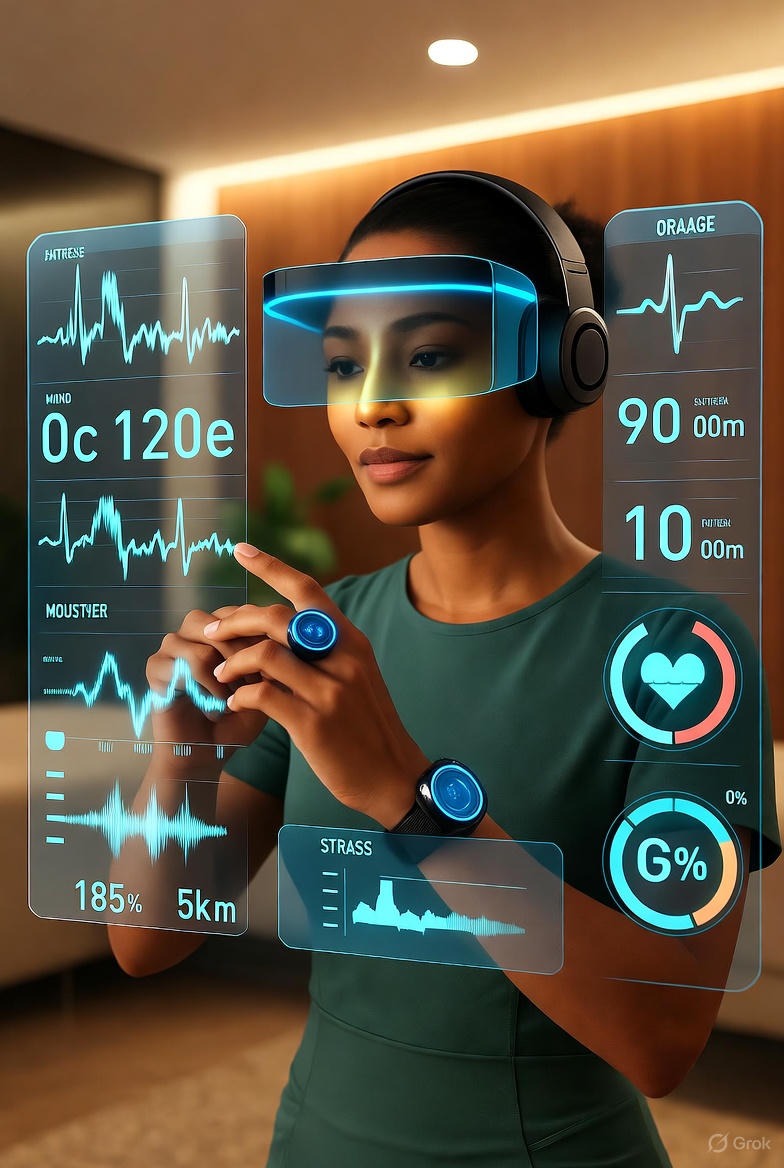
Our bodies are in constant conversation, broadcasting a symphony of physiological signals that reflect our health, stress, recovery, and readiness. For centuries, we could only hear the loudest notes—a rapid pulse, a feverish brow. Modern health monitoring gives us the tools to listen to the entire orchestra, interpreting subtle harmonies and early, faint discords. This begins with decoding the core biometrics that form the bedrock of real-time health data.
Heart Rate Variability (HRV): The Ultimate Metric of Resilience
Perhaps the most insightful of these signals is Heart Rate Variability. Contrary to popular belief, a healthy heart does not tick with the monotonous regularity of a metronome. The time interval between heartbeats fluctuates minutely, controlled by the constant tug-of-war between the sympathetic ("fight-or-flight") and parasympathetic ("rest-and-digest") branches of the autonomic nervous system. High HRV indicates a flexible, resilient system capable of adapting to stress. Low HRV can signal chronic stress, overtraining, illness, or poor recovery. Continuous HRV monitoring, especially during sleep, provides an unparalleled window into your nervous system’s balance and your body’s readiness to perform. It’s your internal stress score, available every morning.
Resting Heart Rate (RHR) & Blood Oxygen (SpO2): Vital Signs, Reimagined
Resting Heart Rate has long been a classic indicator of cardiovascular fitness. When monitored continuously, its trends become exponentially more valuable. A creeping elevation in your overnight RHR can be one of the earliest signs of impending illness, dehydration, or systemic inflammation—often before symptoms appear. Similarly, nocturnal blood oxygen saturation (SpO2) monitoring moves this vital sign from the clinic to the bedroom. Consistent dips (nocturnal desaturation) can be a critical indicator of sleep-disordered breathing like sleep apnea, prompting earlier intervention than might otherwise occur.
Skin Temperature & Sleep Architecture: The Rhythms of Restoration
Circadian rhythm, our body’s master 24-hour clock, governs everything from hormone release to cell repair. Two key proxies for this rhythm are core body temperature (approximated via skin temperature) and sleep stages. The body’s core temperature naturally dips at night to initiate and maintain sleep. A smart ring tracking distal skin temperature can detect this dip and its timing, revealing if your circadian rhythm is aligned or disrupted. Paired with detailed sleep stage analysis—pinpointing time spent in light, deep, and REM sleep—it paints a complete picture of sleep quality, not just duration. This is crucial, as deep sleep is for physical restoration and REM for cognitive and emotional processing. Understanding your personal sleep architecture is the first step toward improving it, a foundational element of any wellness strategy.
Activity & Recovery: Completing the Feedback Loop
Finally, these nocturnal metrics must be interpreted in the context of daily activity. Modern devices synthesize data from accelerometers and other sensors to measure active calorie burn, step count, and, more importantly, metabolic intensity throughout the day. This creates a powerful feedback loop: your daytime activity levels directly influence your nighttime recovery metrics (HRV, deep sleep). By observing these relationships, you can learn your personal thresholds. Did that intense evening workout spike your skin temperature and impair deep sleep? Did a day of high stress crush your HRV? This biofeedback enables truly personalized lifestyle adjustments.
These signals form the vocabulary of the body’s silent language. In the next section, we explore the translators: the wearable devices, particularly smart rings, that have made continuous, clinical-grade data collection not just possible, but comfortable and accessible.
The journey to real-time health data began with a fundamental relocation: moving measurement from the episodic, sterile environment of the clinic into the dynamic, messy reality of daily life. This is the wearable revolution—a multi-stage evolution that has progressively made health monitoring more continuous, more comprehensive, and less obtrusive.
The First Wave: Fitness Trackers and the Step-Count Phenomenon
The revolution ignited with the humble pedometer, evolving into wrist-worn fitness trackers. These devices democratized activity data, making step counts, calorie estimates, and basic sleep tracking ubiquitous. They introduced millions to the concept of quantified self, creating awareness around daily movement goals. However, this first wave was largely focused on output—what you did—with limited, often inaccurate, insight into your body’s response and internal state. The data was motivational but not deeply diagnostic.
The Smartwatch Era: Integration and Expansion
Smartwatches amplified capabilities, adding larger displays, notifications, and more sensors like optical heart rate monitors and ECGs. They became powerful hubs for fitness and connectivity. However, their form factor presents limitations for certain types of data. Wrist-based optical heart rate can struggle with accuracy during high-intensity movement. Perhaps more critically, for sleep tracking, a wristwatch can be bulky, potentially disruptive to sleep, and prone to motion artifact. The quest for seamless, 24/7 data collection demanded a more subtle approach.
The Rise of the Smart Ring: Unobtrusive, Continuous Insight
This is where smart rings have carved out a decisive niche. By moving to the finger, they solve several key problems. The vasculature at the finger (particularly the palmar digital arteries) can provide a strong, consistent signal for photoplethysmography (PPG)—the optical technique used to measure heart rate, HRV, and SpO2. The ring form factor is inherently less obtrusive for sleep, leading to higher compliance and more natural data. It’s always on, always collecting, without the need to charge daily or remember to wear it.
But the true advantage lies in data continuity and sensor fusion. A smart ring like those powered by advanced platforms doesn’t just measure one thing; it uses a constellation of sensors—PPG, skin temperature, a 3D accelerometer—to build a multi-layered, cross-validated picture of your physiology. The temperature sensor validates sleep onset. The accelerometer identifies movement, distinguishing restful sleep from quiet wakefulness. The PPG confirms heart rate dips during deep sleep. This sensor fusion is what elevates the data from interesting to insightful and actionable.
Furthermore, the continuous nature of this collection is revolutionary. Unlike a once-a-year EKG in a doctor’s office, a smart ring can capture infrequent cardiac irregularities when they happen. It can track the trend of your nocturnal SpO2 over months, not just a single spot check. This longitudinal data is the key to personal baselines; the system learns what is normal for you, making deviations from your personal norm far more significant than deviations from a population average.
The wearable revolution has thus delivered the hardware. But raw data streams are just noise without intelligent interpretation. This brings us to the critical, invisible engine of modern health monitoring: the algorithms and artificial intelligence that transform billions of data points into personalized, actionable wisdom.
The raw biometric data streaming from a wearable is vast, complex, and, on its own, overwhelming. A single night’s sleep can generate millions of data points. The true magic—the transformation of data into insight—happens in the digital realm, powered by sophisticated algorithms and artificial intelligence. This invisible engine is what separates modern health monitoring from simple data logging.
From Raw Signal to Clean Metric: The Signal Processing Challenge
The first job of the algorithm is signal processing. The PPG signal from your finger, for instance, is messy. It’s affected by motion artifact (you moving your hand), ambient light, and poor fit. Advanced signal processing algorithms must first clean this data, identifying and discarding unreliable segments, and then extract the fundamental pulse wave. From this clean wave, secondary metrics like heart rate, HRV, and respiration rate are derived. This requires not just computational power, but validated, medically-informed techniques to ensure accuracy.
Machine Learning and Pattern Recognition: Finding What Matters
Once clean metrics are established, machine learning (ML) models go to work. These models are trained on massive, anonymized datasets encompassing millions of hours of biometric data from diverse populations. Through this training, they learn to recognize complex patterns. An ML model doesn’t just identify that you’re asleep; it analyzes hundreds of features—heart rate decline, body movement reduction, temperature change, HRV patterns—to precisely pinpoint sleep onset, differentiate between light, deep, and REM sleep stages, and detect micro-arousals. It can identify the subtle signature of a restless night due to stress versus one due to alcohol consumption.
The Power of the Personal Baseline: You vs. You
This is the most transformative aspect of algorithmic analysis. Population averages are of limited use. Is an HRV of 45 ms good or bad? The answer is entirely individual. Advanced systems establish a personal baseline for each user over an initial period (typically 2-4 weeks). It learns your unique rhythms: your typical HRV range, your normal skin temperature curve, your average sleep architecture.
Once this baseline is set, the system’s primary function becomes monitoring deviations from your norm. An algorithm can alert you that last night’s HRV was 30% below your personal baseline, a far more meaningful flag than being "below average." It can correlate a spike in resting heart rate and a drop in HRV with a self-logged symptom like "scratchy throat," providing powerful, objective evidence of your body fighting something off. This shift from population comparison to intra-individual analysis is the cornerstone of personalized health.
Predictive Analytics and Proactive nudges
The frontier of this technology lies in predictive analytics. By analyzing longitudinal trends against your baseline, AI can begin to offer proactive insights. It might detect a gradual, week-long trend of declining sleep efficiency and rising nighttime heart rate, prompting a suggestion to review wind-down habits or stress management techniques before it culminates in a full-blown period of poor recovery or illness. This moves the model from descriptive ("this is what happened") to prescriptive ("this is what might happen, and here’s what you can do").
The algorithms are the translators and the guides. They make the data comprehensible and contextual. Yet, for all their sophistication, their ultimate value is realized only when they empower tangible action. This leads us to the critical application of this technology: the management of chronic conditions, where continuous data can be life-changing.

For the hundreds of millions living with chronic conditions like hypertension, diabetes, heart disease, and sleep apnea, management is a daily, lifelong endeavor. Traditionally, this has relied on intermittent snapshots: a blood pressure reading at the doctor’s office, a quarterly HbA1c test, a one-night sleep study. Modern health monitoring, with its continuous data stream, is dismantling this episodic model and building a new paradigm of dynamic, day-by-day management.
Hypertension and Cardiovascular Health: Beyond the Cuff
Hypertension is often called the "silent killer" because it frequently presents no symptoms. A once-daily cuff reading can miss critical patterns like nocturnal hypertension (high blood pressure at night) or "white coat hypertension" (elevated readings only in clinical settings). While smart rings do not directly measure blood pressure (yet), they provide powerful correlative and contextual data. Trends in resting heart rate, HRV, and even pulse wave velocity (a metric some advanced sensors are exploring) can offer insights into cardiovascular strain and autonomic nervous system balance. For patients, observing how lifestyle factors—a salty meal, a stressful day, poor sleep—directly impact their physiological markers creates powerful motivation for adherence to treatment plans. It turns abstract advice into concrete, personal cause-and-effect.
Diabetes and Metabolic Health: Observing the Ripple Effects
For individuals with diabetes, glucose monitoring has already seen a revolution with Continuous Glucose Monitors (CGMs). The next step is integrating CGM data with the broader physiological context provided by a smart ring. How does a glucose spike affect sleep architecture? Does poor sleep (as indicated by low deep sleep and high nighttime heart rate) lead to poorer glucose control the next day? Does exercise improve insulin sensitivity, reflected in both glucose stability and improved HRV? By layering these data sets, patients and providers can identify unique, personalized triggers and optimize the timing of medication, diet, and activity in a holistic feedback loop.
Sleep Apnea and Respiratory Health: Continuous Screening
The traditional diagnostic path for sleep apnea is a burdensome, one-night in-lab polysomnography. Smart rings with reliable SpO2 and movement sensors act as powerful, continuous screening tools. They can track blood oxygen saturation throughout the night, identifying repetitive desaturation patterns characteristic of obstructive sleep apnea. While not a formal diagnostic replacement, this data can be the compelling evidence needed to seek a clinical evaluation. Post-diagnosis, for those using CPAP therapy, ring data can help verify therapy effectiveness by showing normalized SpO2 levels and improved sleep stage distribution, moving beyond simple machine usage hours to actual physiological outcomes.
The Patient-Provider Partnership: Data-Driven Dialogue
Across all conditions, the greatest impact may be on the clinical relationship. A patient arrives not just with symptoms, but with weeks or months of objective data. They can show their doctor precisely how a new medication affected their sleep and resting heart rate. They can demonstrate the physiological impact of a meditation practice on their HRV. This transforms appointments from subjective symptom reviews into collaborative data analysis sessions. The provider becomes a coach and interpreter, helping the patient understand their unique data story and co-create a more responsive, personalized management plan. This empowered partnership improves adherence, patient satisfaction, and potentially, long-term outcomes.
Managing existing conditions is one pillar; preventing them is another, even more powerful one. The proactive potential of real-time data shines brightest in the realm of early detection and preventive health, moving us firmly from a sick-care to a well-care system.
The pinnacle of modern health monitoring's promise is its shift from disease management to disease prevention and early interception. By establishing a deep, continuous understanding of an individual’s unique physiological baseline, these tools become an early warning system, capable of detecting subtle deviations that may signal the onset of illness or imbalance long before clinical symptoms emerge. This transforms the user from a passive patient into a proactive guardian of their own health.
The "Silent" Early Warning Signs
Many health issues begin not with pain or obvious dysfunction, but with subtle, systemic disturbances in autonomic nervous system balance, inflammation, and recovery. A smart ring, monitoring 24/7, is exquisitely positioned to detect these whispers:
Building a Lifestyle Feedback Loop for Long-Term Health
Beyond acute warnings, this technology excels at providing feedback on daily lifestyle choices, the true building blocks of long-term health. It answers questions with data:
This feedback loop is the essence of preventive health. It allows for incremental, informed experimentation. You become the scientist of your own body, testing hypotheses and observing the objective results, gradually refining a lifestyle that optimally supports your unique physiology. For those with hectic schedules, this doesn't require hours of focus. As explored in nighttime wellness for busy professionals: realistic routines, even small, consistent changes informed by data can yield significant results.
The logical progression from understanding one's own body is sharing that understanding with the professionals who guide our care. However, this influx of patient-generated health data (PGHD) presents both immense opportunity and novel challenges for the traditional healthcare system, which we must now examine.
The proliferation of consumer health wearables has created a new, potent source of information: Patient-Generated Health Data (PGHD). This flood of continuous, real-world data holds the potential to revolutionize clinical decision-making, but it also presents a formidable challenge: how does this data responsibly and effectively cross the bridge from the consumer's smartphone into the electronic health record (EHR) and the clinician's workflow?
The Promise: From Episodic to Continuous Care
The current clinical model is largely episodic. A physician sees a patient for 15-20 minutes and must make assessments based on a snapshot of vitals, patient recall of symptoms, and intermittent lab tests. PGHD from wearables fills the vast gaps between these visits with contextual, longitudinal data. It can answer critical questions: Is the new antihypertensive medication controlling blood pressure throughout the night? Is the patient's reported fatigue correlated with objectively poor sleep or low HRV? Are the palpitations they feel occasionally captured as arrhythmias on a continuous rhythm tracker? This transforms care from reactive to proactive and continuous.
The Challenges: Data Overload, Validation, and Standardization
The integration is not simple. Clinicians are already burdened with administrative tasks and information overload. A raw, unsynthesized data dump of 30 days of heart rate graphs is more hindrance than help. The data must be:
Emerging Models and the Future of Hybrid Care
Despite challenges, integration models are emerging:
The successful bridge will be built on collaboration. Device manufacturers must prioritize clinical validation and clinician-friendly reporting. Healthcare systems must invest in digital infrastructure and workflow redesign. Clinicians must be open to this new data source while developing the literacy to interpret it critically. Patients, the central node in this network, must be educated on how to collect and present their data meaningfully.
This fusion of consumer technology and clinical medicine is perhaps the most profound change in healthcare delivery in a century. Yet, as we delegate more monitoring to algorithms and devices, we must grapple with a fundamental human question: what is the impact on our psychology and our intrinsic connection to our own bodily sensations?
The constant stream of health data promises empowerment, but it also enters a complex psychological landscape. Engaging with this quantified self can be a double-edged sword, fostering either enlightened agency or debilitating anxiety. Understanding this psychological dimension is crucial for using these tools to enhance well-being, not undermine it.
Empowerment and Agency: The "Aha!" Moment
For many, the initial experience is profoundly empowering. Seeing tangible data validates subjective feelings. That sense of being "wired but tired" is confirmed by a high resting heart rate and low HRV. The benefit of a relaxing vacation is quantified in a 25% increase in deep sleep. This creates powerful "aha!" moments, fostering a sense of control and self-efficacy. You are no longer guessing; you are knowing. This evidence-based approach can motivate positive behavior change more effectively than vague advice. When you see a direct correlation between a 10-minute evening meditation and a higher sleep score, the practice becomes self-reinforcing. For those prone to anxiety, particularly about health or performance, having an objective metric can be calming, replacing catastrophic imagination with manageable data. The nighttime wellness routine for anxious minds delves into how structured, data-informed evening rituals can specifically address this.
The Perils of Obsession and Orthosomnia
The shadow side of quantification is the risk of obsession and data-driven anxiety, sometimes termed "orthosomnia" (an unhealthy preoccupation with achieving perfect sleep data). When scores become the goal rather than the feeling of well-being, it can backfire. Checking your sleep score immediately upon waking can set the tone for your entire day—elation from a 92, frustration from a 78. This can create performance anxiety around sleep itself, which is a surefire way to impair it. Chasing an arbitrary HRV number can lead to compulsive behavior and ignoring other holistic needs. The data, meant to be a guide, becomes a tyrant.
Navigating the Middle Path: Data as a Guide, Not a Gospel
The key to psychological health in the quantified era is cultivating a mindful relationship with data. This involves several strategies:
The goal is to use data to deepen your body awareness, not replace it. It should answer the question "How does my body respond?" not dictate the command "You must achieve this." This balanced approach ensures that technology serves our humanity, rather than subverting it.
As we manage this personal relationship with data, we must also confront the collective societal implications. Who owns this incredibly intimate information? How is it protected? And how do we ensure this powerful technology promotes equity rather than exacerbates disparity? This brings us to the critical frontier of ethics, privacy, and the digital divide.
The intimate nature of the data collected by modern health monitors—your sleep patterns, stress levels, potential illness signs, and location—makes it perhaps the most sensitive personal information imaginable. As we embrace the benefits of this technology, we must simultaneously grapple with formidable ethical questions around data ownership, security, and the potential for misuse. Navigating this frontier responsibly is non-negotiable for the industry and for informed users.
The Data Goldmine: Who Owns Your Physiology?
When you use a wearable, you generate data, but you typically license its use to the company under terms of service agreements. This creates a complex ownership landscape. While reputable companies anonymize and aggregate data for improving algorithms and conducting population health research—a potentially enormous public good—the line between anonymized and identifiable can be thin. The core ethical principle must be user sovereignty. Users should have clear, transparent options regarding:
Security Imperatives: Guarding the Vault
Health data is a high-value target for cybercriminals. A breach is not just a leak of credit card numbers; it's an exposure of your most private biological rhythms. Companies must implement state-of-the-art, end-to-end encryption for data both in transit and at rest. Security must be a foundational design principle, not an afterthought. This includes regular penetration testing, clear vulnerability disclosure policies, and transparency with users about security practices. As a user, employing strong, unique passwords and enabling two-factor authentication on associated accounts is a basic necessity.
The Threat of Discrimination and the "Quantified Worker"
Perhaps the most dystopian risk is the use of biometric data for discrimination. Could health or life insurance premiums be adjusted based on your sleep data or stress trends? Could employers make hiring, promotion, or firing decisions based on "productivity" or "resilience" scores derived from wearables? Some wellness programs already offer incentives for activity tracking, raising concerns about coercion and penalization of those with disabilities or health conditions. Robust legal frameworks are urgently needed to prevent such discrimination. Data collected for personal wellness must never be allowed to become a tool for social or economic exclusion without explicit, voluntary, and fully-informed user consent.
Informed Consent in a Complex Ecosystem
True informed consent is challenging when technology and data use policies are complex and frequently updated. Companies have an ethical obligation to communicate their data practices in clear, accessible language—not in legalese buried in a 50-page document. Consent should be an ongoing dialogue, not a one-time checkbox.
As users, we must be digital citizens. This means reading privacy policies, adjusting privacy settings to the most restrictive levels we are comfortable with, and supporting legislation that enshrines digital health rights. The promise of modern health monitoring cannot be realized on a foundation of mistrust and exploitation. It requires a covenant of transparency, security, and user empowerment.
Having established this ethical framework, we can look forward. The technology we see today is merely the foundation. What emerging innovations are set to redefine the boundaries of personal health monitoring in the coming years?

The current capabilities of smart rings and wearables are impressive, but they represent just the first chapter in the story of personal biosensing. The frontier of this field is being pushed by breakthroughs in sensor miniaturization, non-invasive molecular analysis, and seamless integration. The road ahead points toward a future where health monitoring is even more comprehensive, predictive, and intimately woven into the fabric of our lives.
Non-Invasive Molecular Sensing: The Holy Grail
The next quantum leap will be moving beyond physiological signals to continuous, non-invasive biochemical monitoring. Imagine a sensor that can estimate glucose, lactate, cortisol (the stress hormone), creatinine (for kidney function), or alcohol levels from your sweat, saliva, or interstitial fluid—no needles, no blood draws. Research in this area is exploding. Devices using techniques like Raman spectroscopy or electrochemical sensors in contact with the skin are in development. A smart ring or patch that could track glucose trends or cortisol rhythms throughout the day would unlock unprecedented personalization in nutrition, stress management, and metabolic health.
Continuous Blood Pressure Monitoring
Direct, cuffless, continuous blood pressure monitoring remains a major technical challenge but a coveted goal. Several approaches are being explored, including using PPG signals to derive pulse wave velocity (PWV), which correlates with blood pressure, and employing bioimpedance sensors. Success here would revolutionize hypertension management, providing a true 24/7 picture of vascular health and medication impact.
Advanced Sleep and Respiratory Analysis
Future devices will move from describing sleep to diagnosing sleep disturbances with greater precision. More advanced analysis of breathing patterns via the PPG or microphone (for snoring detection), coupled with SpO2 and movement, could provide highly detailed reports on sleep apnea severity, periodic limb movement, and sleep quality disruptions. Integration with smart home systems could even adjust room temperature or lighting based on your sleep stage, optimizing the environment in real-time.
Multi-Modal Sensing and the "Digital Twin"
The future is not a single device, but an ecosystem. Your smart ring, a CGM patch, smart clothing with embedded EMG sensors, and even your smart toilet analyzing waste will form a multi-modal sensor network. All this data would feed into a secure, personal health platform, building what some call a "Digital Twin"—a dynamic, virtual model of your physiology. This model could be used to run simulations: "What would happen to my recovery metrics if I changed my workout schedule?" or "How might this new medication affect my sleep based on my historical data?" This moves health management from observation to prediction and personalized experimentation.
True AI Health Coaches
With richer data and more powerful AI, the passive app will evolve into an interactive, contextual health coach. This AI would not just tell you your sleep was poor; it would analyze the potential causes from your data (late caffeine, high stress, irregular bedtime) and offer tailored, actionable recommendations. It could nudge you to take a walk after noticing prolonged inactivity, or guide you through a breathing exercise when it detects stress signatures in your HRV. It would learn what interventions work best for you.
These advancements promise a future of unparalleled personal health insight. However, their ultimate success hinges not just on technology, but on universal accessibility. The final section of our exploration must therefore address the crucial imperative of democratizing this powerful tool, ensuring it serves all of humanity, not just the privileged few.
The transformative potential of modern health monitoring is undeniable. Yet, if this technology remains a luxury commodity for the affluent and tech-savvy, it risks exacerbating one of society's most pernicious problems: health disparity. True progress demands a conscious, concerted effort to democratize access, ensuring that the benefits of real-time health data can improve outcomes across all socioeconomic, geographic, and demographic lines.
The Cost Barrier and the Imperative for Affordability
High-end smart rings and wearables can cost hundreds of dollars, putting them out of reach for lower-income individuals and families—the very populations often burdened with higher rates of chronic disease and less access to consistent medical care. Democratization requires:
Designing for Inclusivity: Beyond the "Default" User
Many wearable technologies have suffered from a design bias. Early optical heart rate sensors were notoriously inaccurate on darker skin tones and certain wrist structures. Form factors have often been designed for a narrow range of body types. True equity requires inclusive design from the outset: sensors validated across diverse skin pigmentations and body compositions, rings and bands available in a wide range of sizes and styles, and user interfaces that are accessible to those with visual or motor impairments.
Bridging the Digital Literacy and Connectivity Divide
Access to a device is meaningless without the ability to use it effectively. This requires digital literacy—the skills to interpret data, adjust settings, and understand privacy implications. Furthermore, in many rural and low-resource settings globally, reliable smartphone connectivity or consistent electricity for charging can be barriers. Solutions may include devices with longer battery life, low-energy local data processing, and interfaces designed for low-bandwidth environments.
Global Health and Remote Care: A Tool for Empowerment
In low- and middle-income countries with severe shortages of healthcare professionals, wearable technology could play a revolutionary role. Community health workers equipped with simple, durable devices could screen for conditions like atrial fibrillation or sleep-disordered breathing in remote villages. Pregnant women could be monitored for signs of pre-eclampsia. This decentralized model of care, powered by data, could extend the reach of strained health systems and empower local communities.
Culturally Competent Health Interpretation
Data does not exist in a cultural vacuum. Sleep norms, dietary patterns, and concepts of wellness vary globally. Algorithms and health recommendations must be adaptable and sensitive to these differences. A "good" sleep score in one culture might look different in another. Democratization means not just distributing hardware, but ensuring the software and insights are relevant and respectful to diverse ways of life.
The journey toward democratization is as critical as the technological innovation itself. By prioritizing affordability, inclusive design, and global relevance, we can steer the ship of modern health monitoring toward a future where it acts as a great equalizer in health, rather than another wedge of inequality. This concludes our foundational exploration of the landscape, technologies, and implications of real-time health monitoring. The following sections will delve into the practical application of this knowledge, beginning with the cornerstone of all health: sleep. We will explore how to leverage data to master this fundamental pillar of wellness, building routines that translate insight into tangible, restorative rest.
If health is a symphony, sleep is its conductor. It orchestrates hormonal release, consolidates memories, repairs tissues, modulates the immune system, and resets metabolic function. For decades, we measured sleep in one crude metric: duration. "I got eight hours" was the gold standard, regardless of how those hours were spent. Modern health monitoring has shattered this simplistic view, revealing sleep as a complex architecture of cyclical stages, each with distinct physiological purposes. Optimizing sleep is no longer about merely logging more time in bed; it's about engineering the quality of that time, and real-time data is the ultimate blueprint.
Deconstructing Sleep Architecture: Beyond "Time Asleep"
Your nightly journey is a series of approximately 90-minute cycles, each composed of four stages:
A smart ring or advanced wearable doesn't just track when you're asleep; it estimates time spent in each of these vital stages. This reveals your personal architecture. Do you get sufficient deep sleep to support your active lifestyle? Does your schedule allow for adequate REM? The data provides answers.
The Core Levers of Sleep Quality: Data-Informed Adjustments
Armed with this granular understanding, you can move from guesswork to precision tuning. The data highlights which levers to pull:
The Recovery-Sleep Feedback Loop: Interpreting the Data
One of the most powerful insights comes from observing the dialogue between your day and your night. Your wearable creates a closed feedback loop:
By reading this feedback loop, you move from generic sleep advice to personalized sleep strategy. You learn your unique caffeine cutoff time, your ideal last meal timing, and the type of evening activity that truly quiets your mind. This process of building an effective routine is explored in depth in how to build a nighttime routine that actually sticks.
Mastering sleep through data is the most direct path to elevating daily well-being. Yet, our bodies are not static. They are dynamic systems constantly responding to another fundamental force: stress. The next frontier of personal data is learning to navigate our stress response, not with avoidance, but with intelligent management and recovery.
Stress is not the enemy. It is an essential, evolutionarily-hardwired physiological response that heightens our focus, energy, and reaction time in the face of challenge. The enemy is chronic, unmanaged stress—the kind that lingers, with no recovery phase, keeping the body's defensive systems perpetually engaged. Modern health monitoring provides the objective biomarkers to distinguish between productive and destructive stress, allowing us to navigate our load with precision and cultivate resilience.
HRV: The North Star of Nervous System Balance
As established, Heart Rate Variability is the premier non-invasive window into your autonomic nervous system (ANS). Think of your ANS as a seesaw. The sympathetic side (SNS) is the "accelerator," preparing for action. The parasympathetic side (PNS) is the "brake," promoting rest and digestion. HRV reflects the fine-tuned interplay between them.
Tracking your HRV trend, especially your morning resting HRV, is like taking the temperature of your nervous system. A sustained downward trend is a clear, objective flag that your total stress load (physical, emotional, environmental) is exceeding your capacity to recover.
Resting Heart Rate (RHR) and Sleep: Corroborating Evidence
HRV rarely tells the full story in isolation. It must be interpreted alongside its partners:
From Measurement to Management: Data-Driven Stress Interventions
The power of biomarkers is that they move stress management from the abstract to the empirical. You can test interventions and see their direct impact on your physiology.
By using HRV, RHR, and sleep data as a guide, you learn to dance with stress. You learn when to push, when to rest, and how to build a system that is not fragile, but anti-fragile—one that grows stronger from intelligent challenge. This foundational work on sleep and stress creates the platform for the ultimate expression of human vitality: optimized physical performance and recovery.
For athletes and fitness enthusiasts, the line between progress and regression is razor-thin. It's the delicate balance between applying a training stress and allowing for adaptation—a process that happens not during the workout, but during the recovery that follows. For generations, this balance was managed by intuition, rigid schedules, and often, the painful lessons of overtraining. Modern health monitoring injects objective, personalized data into this process, transforming fitness from an art into a science of the self.
Moving Beyond Volume: The Readiness-Based Training Model
Traditional training plans are prescriptive: Monday is strength, Tuesday is intervals, etc. They assume your body is equally ready to perform each day, which is rarely true. Readiness-based training flips this model. Instead of asking "What does my plan say today?", you ask "What is my body ready for today?". This is determined by a combination of metrics, often distilled into a single "Readiness" or "Recovery" score by advanced wearables.
This score synthesizes:
A high readiness score suggests your body is primed for a challenging session. A low score is a recommendation to pivot: swap a high-intensity interval day for a gentle recovery session, mobility work, or even complete rest. This dynamic approach reduces injury risk, prevents burnout, and ensures you apply hard effort when your body is most likely to benefit from it.
Personalizing Recovery Windows: How Long Do You Need?
One of the most valuable insights is learning your personal recovery timeline. After a maximal effort (e.g., a heavy leg day, a long run, a competitive event), how long does it take for your HRV to return to baseline? For some, it's 24 hours; for others, 48 or even 72. The data reveals this clearly. You can see that your RHR remains elevated and your HRV suppressed for two full days after a particular type of workout. This isn't failure; it's information. It tells you that you need 48 hours before taxing that system again, allowing you to space out similar sessions optimally.
Nutrition, Hydration, and Physiological Strain
Biometric data also provides feedback on fueling and hydration strategies:
The Athlete's Night: Specialized Sleep for Recovery
For athletes, sleep is the primary performance-enhancing drug. Data allows for hyper-optimization of this period. The nighttime routine for athletes: maximizing recovery while you rest details how to tailor the wind-down. The goal is to maximize deep sleep (for physical repair and growth hormone release) and REM sleep (for neural recovery and skill consolidation). Data confirms the impact of strategies like contrast therapy, targeted nutrition (e.g., casein protein), and ensuring the sleep environment is cool enough to facilitate the body's natural temperature drop.
This data-driven approach cultivates a sustainable, lifelong relationship with fitness. It replaces blind grinding with intelligent effort, fostering longevity and preventing the all-too-common cycle of injury and burnout. As we harness data to optimize our physical vessel, we must also turn its lens inward, to the complex and equally critical domain of mental and emotional well-being.

The dichotomy between mental and physical health is an artificial one. Anxiety, depression, and chronic stress are not just "in your head"; they manifest in measurable, physiological disturbances. Conversely, physical states like poor sleep or inflammation can directly precipitate or worsen mental health symptoms. Modern health monitoring bridges this perceived gap, offering tangible biomarkers for emotional states and creating new pathways for self-awareness and management.
Biomarkers of Emotional Burden: The Physical Footprint of Feelings
Our emotional experiences leave a clear signature in our autonomic nervous system data:
Seeing these patterns objectively can be profoundly validating for individuals. It counters the harmful notion that their struggle is "not real" or "all in their mind." It provides an external, measurable correlate to internal experience.
Data as a Tool for Emotional Awareness and Regulation
This objective feedback enables a more mindful relationship with one's emotional landscape:
Sleep as the Foundation of Mental Resilience
The bidirectional link between sleep and mental health is undeniable, and data makes it explicit. Poor sleep (low deep/REM, high fragmentation) is a potent driver of emotional volatility, reduced stress tolerance, and negative cognitive bias. Conversely, periods of depression or anxiety actively sabotage sleep quality. Breaking this cycle starts with prioritizing sleep hygiene as a non-negotiable pillar of mental health care. By using data to improve sleep, you directly bolster your emotional resilience. A practical approach to this, even with a busy mind, is found in how to build a nighttime routine that actually sticks.
The Limits and Ethical Considerations
It's crucial to state that biometric wearables are not diagnostic tools for mental health conditions. They are tools for self-awareness and daily management. They cannot replace professional diagnosis or therapy from a qualified mental health provider. However, they can empower individuals to be more informed, active participants in their care and provide clinicians with valuable adjunctive data about a patient's day-to-day functioning between sessions.
By illuminating the mind-body connection, this technology fosters a more integrated view of health. It allows us to care for our emotional well-being with the same empirical attention we apply to our physical fitness, leading to a more holistic state of vitality. This holistic approach extends naturally to the rhythms of our daily lives, where the concept of the circadian rhythm reigns supreme.
Every cell in your body operates on a roughly 24-hour cycle, guided by a master clock in the brain's hypothalamus. This circadian rhythm dictates the optimal timing for virtually every physiological process: hormone secretion, metabolism, cellular repair, cognitive function, and, of course, sleep-wake cycles. Fighting this innate rhythm is a losing battle for health; aligning with it is a powerful strategy for optimization. Modern health monitoring provides the personal data needed to discover your unique chronotype and harmonize your life with your internal clock.
Your Chronotype: Not an Early Bird or Night Owl, But a Measurable Rhythm
Chronotype is your genetically influenced predisposition for sleep and activity timing. It's not a personality trait but a biological one. Wearable data helps you identify yours not by a label, but by your physiological signals:
The Cost of Misalignment: Social Jet Lag
When your social or work schedule forces you to live out of sync with your chronotype, you experience "social jet lag." This is the chronic misalignment between your internal biological clock and your external social clock. The data reveals its toll: poorer sleep efficiency on workdays, larger weekend catch-up sleep, lower HRV during forced early mornings, and a higher resting heart rate. Over time, social jet lag is associated with increased risks for metabolic disorder, cardiovascular issues, and mental health struggles.
Data-Driven Synchronization: Living in Phase
The goal is to reduce this misalignment. Your biometric data guides you:
By using data to honor your chronotype as much as life allows, you reduce internal friction. You expend less energy fighting your biology and more energy thriving within it. This synchronization is the ultimate foundation for sustained energy, stable mood, and metabolic health. It also prepares us to address a modern epidemic that disrupts these very rhythms: digital overload and its impact on our nervous systems.
Our hyper-connected existence is a double-edged sword. While technology empowers us with tools like health monitors, it also bombards our nervous systems with a constant stream of information, notifications, and blue light—a state often termed "digital overload." This chronic low-grade stimulation has measurable physiological consequences. Fortunately, the same wearable technology that tracks our health can also provide the evidence and motivation we need to establish healthier digital boundaries.
The Biometric Impact of Digital Stimulation
Excessive screen time, particularly in the evenings, isn't just a bad habit; it's a physiological disruptor. The data proves it:
Using Data to Design Digital Boundaries
Armed with this objective evidence, you can move from guilt-driven resolutions to data-informed design:
Intentional Technology for Balance
The goal isn't Luddism, but intentionality. Use technology as a deliberate tool, not a default state. Schedule blocks for email, use website blockers during focused work, and leverage the "Do Not Disturb" function aggressively. Your wearable becomes the accountability partner, showing you the tangible health return on your investment in digital quiet.
Furthermore, you can leverage technology for digital wellness. Many devices now offer "relaxation" or "mindfulness" breathing guides that use your real-time heart rate to pace your breaths, actively engaging the parasympathetic nervous system. This is a perfect example of using tech to counter the negative effects of tech.
By mitigating digital overload, we reclaim our nervous system's capacity for calm and focus. This sets the stage for the final, integrative piece of the puzzle: weaving all these data-informed practices—sleep optimization, stress navigation, performance fueling, circadian alignment, and digital hygiene—into a sustainable, personalized lifestyle that evolves with you over the long term. This is the art of building a lifelong health system.


