


How Smart Ring Features Provide Personalized Recommendations
Describes how rings use your data to offer custom suggestions for sleep, activity, or recovery.
Describes how rings use your data to offer custom suggestions for sleep, activity, or recovery.
%402x.svg)
In an age of information overload, where generic health advice floods our screens, a quiet revolution is happening at our fingertips. The smart ring, a minimalist piece of wearable technology, is evolving from a simple sleep tracker into a profoundly personal wellness advisor. It doesn’t just collect data; it interprets the unique story of your body—your rhythms, your stressors, your recoveries—and transforms that narrative into actionable, personalized recommendations. This is a shift from one-size-fits-all wellness to a truly bespoke health experience.
Unlike bulkier wearables, the smart ring’s power lies in its seamless, 24/7 presence and its focus on the most reliable physiological signals. It taps into the gold standard of biometrics: your pulse, the temperature of your skin, the subtle movements of your hand, and the electrical conductivity of your skin. From this continuous, intimate data stream, sophisticated algorithms build a dynamic baseline of you. The result? Recommendations that don’t feel like a scolding from a fitness magazine, but rather a gentle nudge from a coach who knows you better than you know yourself.
This article delves deep into the intricate mechanisms behind this personalization. We will explore how raw biometric data is transformed into insights about your sleep, recovery, activity, and stress, and how these insights are carefully curated into recommendations that fit your life. This is the beginning of understanding how a device that weighs mere grams can carry the weight of guiding you toward a healthier, more balanced, and ultimately, more restful existence.
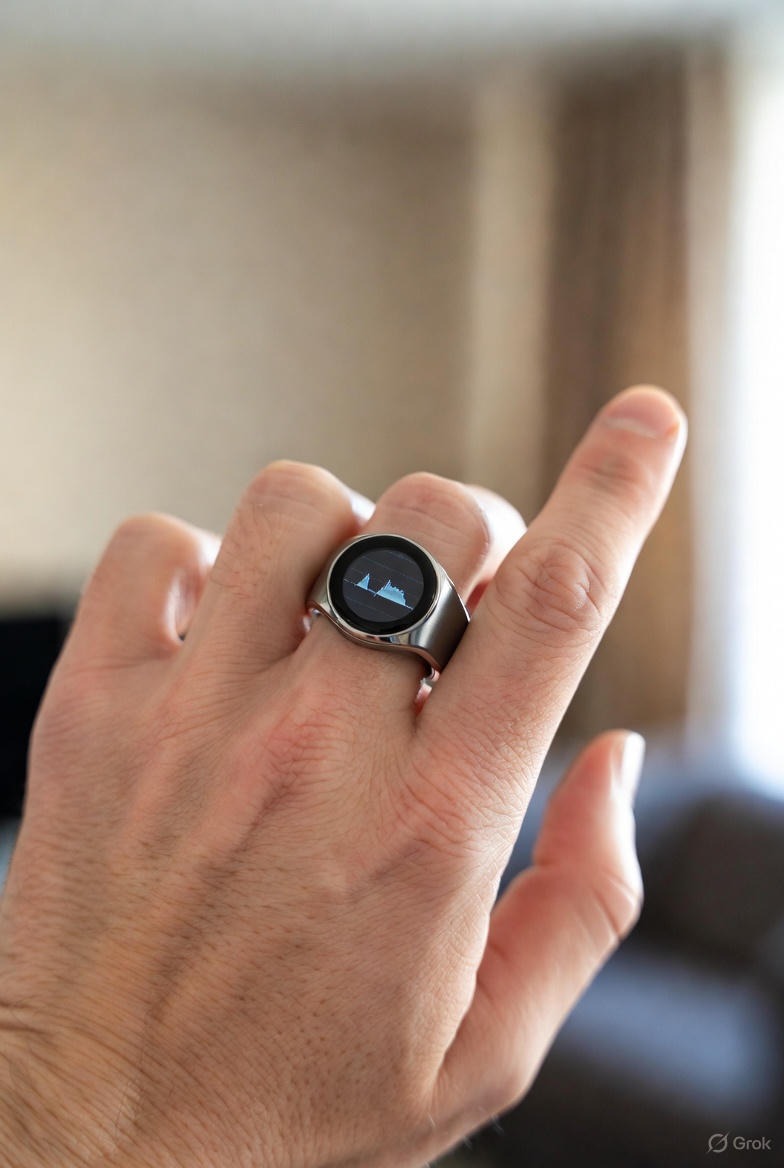
Before a smart ring can suggest a bedtime or recommend a rest day, it must first become an expert on you. This expertise is built on a foundation of core biometric sensors, each telling a critical part of your physiological story. This isn't about counting steps in a vacuum; it's about understanding the body's autonomic nervous system—the subconscious control center for stress (sympathetic) and rest (parasympathetic) states.
The most pivotal sensor is the photoplethysmogram (PPG). Using tiny LEDs, it shines light into the capillaries in your finger and measures how light absorption changes with each pulse of blood. This provides a continuous read of your heart rate and, more importantly, your Heart Rate Variability (HRV). HRV, the subtle variation in time between heartbeats, is considered the single most powerful metric for assessing your nervous system balance and recovery status. A higher HRV typically indicates a more resilient, rest-ready state, while a lower HRV can signal stress, fatigue, or illness. Your ring learns your personal HRV baseline, making deviations profoundly meaningful.
Complementing the PPG is a skin temperature sensor. Your peripheral temperature fluctuates throughout the day and night in predictable patterns, but also in response to illness, hormonal changes, and sleep cycles. A sustained elevation might indicate your body is fighting an infection before you feel symptoms, or it could reflect the progesterone surge of a woman’s menstrual cycle. The ring contextualizes this with other data.
A 3-axis accelerometer tracks movement and sleep. But beyond simply counting steps, it analyzes the quality of movement and the stillness of sleep. It detects the subtle tosses and turns of light sleep versus the profound stillness of deep sleep. Finally, an electrodermal activity (EDA) sensor measures minute changes in the skin’s sweat, a direct indicator of sympathetic nervous system arousal. This allows the ring to detect moments of stress or excitement, even if you're sitting perfectly still.
The magic isn't in any single sensor but in sensor fusion. By layering heart rate, HRV, temperature, and movement data in real-time, the ring’s algorithms can discern whether an elevated heart rate is from a good workout, a stressful work call, or the onset of a cold. This creates a multi-dimensional portrait of your body’s state, forming the undeniable truth upon which all personalized recommendations are built. To understand how this data ultimately supports a calmer life, you can explore the concept of restful living and its connection to longevity.
A generic recommendation engine compares you to population averages. A personalized system, however, compares you to yourself. This is the cornerstone of smart ring intelligence: the creation and continuous refinement of your dynamic personal baseline. Your ring doesn’t just know that your HRV is 50 milliseconds tonight; it knows that for you, a reading of 50 ms is 15% below your 30-day rolling average, which is a significant deviation worthy of attention.
This process begins with an initial learning phase, often lasting a week or more. During this time, the ring passively observes your life—your sleep patterns, your daily activity peaks, your typical stress responses, and your nighttime physiology. It answers questions like: What is your normal bedtime? What does a "good" night of sleep look like for your body? What HRV do you typically register after a day of meetings versus a day off?
Over time, this baseline becomes incredibly sophisticated. It learns your circadian rhythm and ultradian rhythms (the 90-120 minute cycles of alertness and fatigue throughout the day). It begins to recognize patterns related to your menstrual cycle if you’re female, creating a separate, phase-aware baseline that acknowledges the profound physiological shifts across a month. It understands how alcohol, a late meal, or an intense evening workout impacts your sleep architecture, not just "sleep" in general.
This self-referential model is what makes recommendations feel eerily accurate. Instead of telling every user to "get 8 hours of sleep," your ring might say, "Based on your elevated resting heart rate and low HRV, aiming for 8.5 hours tonight would support better recovery." It’s a recommendation rooted in your body’s current needs versus a textbook ideal. This personalized baseline is the algorithm's definition of "normal" for you, and deviations from it become the triggers for specific, contextual advice, guiding you back toward your personal equilibrium.
Sleep is where smart rings truly shine, moving far beyond simple duration tracking to become architects of sleep quality. Personalized sleep recommendations are derived from a deep analysis of your sleep stages (light, deep, REM), timing, latency (how long it takes to fall asleep), and consistency, all measured against your personal baseline.
A core feature is the Sleep Score or Readiness Score, which synthesizes last night’s data into a single, actionable number. But the true value lies in the "why" behind the score. The ring’s recommendations become your personalized sleep coach. For instance, it might notice that on nights when your skin temperature is slow to drop, you have less deep sleep. Its recommendation could be: "Consider cooling your bedroom by 2°C. Your data shows you sleep best at 19°C."
It can provide hyper-specific advice on sleep timing. By analyzing your circadian rhythm via body temperature and movement data, it can identify your ideal bedtime window. You might get a notification: "Your body temperature is beginning to drop, indicating your natural sleep window is opening in 30 minutes." Conversely, if you consistently toss and turn for 45 minutes before falling asleep, it might recommend moving your bedtime 30 minutes later to match your natural chronotype.
Perhaps most powerfully, it links daytime behavior to nighttime outcomes. The ring might generate a weekly insight like: "On days you have more than two caffeinated drinks after 2 PM, your deep sleep decreases by an average of 12%. Try limiting afternoon caffeine." Or, "Your 7 PM yoga sessions correlate with a 15% faster sleep onset. Keep it up!" This creates a powerful feedback loop, transforming sleep from a passive state into an active, optimizable pillar of health, a fundamental practice for those seeking a life of restful living through the seasons, adapting your approach as needed.
In a culture obsessed with more—more miles, more weight, more intensity—the smart ring introduces the critical concept of less. It acts as an objective recovery coach, using biomarkers like HRV, resting heart rate (RHR), and sleep data to determine if your body is ready for strain or in need of repair.
The central metric here is often a Recovery or Readiness Score, calculated each morning. A high score, stemming from high HRV, low RHR, and good sleep, is a green light for intense training. A low score is a clear recommendation to prioritize rest, stretching, or gentle movement. This prevents the common pitfall of training hard on a body that is already stressed or fighting illness, which leads to diminishing returns and injury.
Personalization comes from how your ring interprets these signals for you. An athlete might have a baseline RHR of 38 and an HRV of 120ms. A 10% increase in RHR for them is a major red flag. For someone else with a baseline RHR of 65, the same percentage change might be normal daily variation. The ring knows this difference.
It provides nuanced recommendations within workout days. For example: "Your recovery score is 85%. Your body is primed for a high-intensity session today." Or, "Your recovery score is 42%, and your resting heart rate is elevated. Consider a light walk or yoga instead of your planned run. Your body needs restorative activity." It can even suggest optimal workout times based on your historical data, noting when you tend to have the strongest physiological responses to exercise.
By honoring these data-driven recommendations, you learn to balance stress and recovery—the fundamental law of adaptation. This turns fitness from a guessing game into a precise science, ensuring you build resilience without burning out, a key principle for restful living for high-achievers who seek performance through genuine rest.
Stress is an inevitable part of life, but chronic, unmanaged stress is corrosive. Smart rings move stress tracking from retrospective journaling to real-time, physiological detection. Using a combination of heart rate, HRV, and EDA (electrodermal activity), the ring can identify sympathetic nervous system spikes—those "fight or flight" moments—as they happen, even if you're mentally acclimated to them.
This is revolutionary for personalization. The ring learns what physiologically stresses you. It might reveal that your weekly team meeting, which you think is boring but harmless, consistently causes a 25% spike in your heart rate and a sharp EDA response. Or it might show that your "relaxing" scroll through social media is keeping your nervous system on alert.
Based on these insights, the recommendations are twofold: awareness and intervention. First, the ring sends a gentle, silent notification: "Noticed signs of stress. Take a moment?" This biofeedback interrupts the automatic stress cycle, bringing subconscious arousal into conscious awareness.
Second, it can recommend specific, personalized de-stressing actions. If it detects an afternoon stress pattern, it might suggest a 5-minute breathing exercise, knowing that guided breathwork has historically lowered your RHR. It could recommend a short walk, as your data shows a 10-minute walk after a stress event speeds your physiological recovery. By creating a log of "stress events" and your responses to them, it helps you build a personalized toolkit for resilience, teaching you not just to manage stress, but to understand its unique triggers in your life. This proactive management is a cornerstone of creating calm, even in demanding environments, much like the strategies discussed in our guide on restful living at work and creating calm in stressful jobs.

While fitness trackers shout "10,000 steps!", the smart ring whispers a more sophisticated question: "What kind of movement does your body need today?" Personalized activity recommendations are about quality, type, and timing, aligned with your recovery state and life patterns.
Instead of a generic step goal, your ring might set a dynamic daily movement target based on your recent activity levels and sleep. If you’ve been sedentary for two days, it might nudge you to hit a higher target. If you’re in a low-recovery state, it might lower the target and emphasize gentle movement.
Its most powerful role is in activity balance. It analyzes the relationship between your activity strain (a composite of workout intensity and duration) and your recovery metrics. You might receive an insight like: "Your activity strain has been high for 4 consecutive days, and your HRV trend is declining. A rest day tomorrow would help maintain long-term progress." This prevents overtraining.
It also personalizes recommendations for activity timing. By cross-referencing your historical workout data with sleep and recovery scores, it can identify patterns. For example: "You consistently sleep better on days you exercise before 7 PM. Try scheduling your workouts earlier." Or, "Morning walks correlate with higher afternoon focus for you. Consider a 15-minute walk after breakfast."
For the non-athlete, these recommendations are just as valuable. It might notice prolonged sedentary periods and prompt you with: "You’ve been inactive for 90 minutes. A 3-minute stretch could reduce stiffness." This turns the ring into a partner for holistic, sustainable movement, encouraging you to listen to and respond to your body’s unique needs for activity and rest.
This is where personalization becomes truly holistic. Smart rings excel at identifying correlations between your lifestyle choices and your physiological outcomes. It connects the dots between what you do and how you feel, with hard data as proof.
Through simple logging (often integrated with the ring's app) or even passive detection, the ring tracks potential lifestyle influencers: caffeine intake, alcohol consumption, meal timing, hydration, meditation, and screen time before bed. It then runs this against your sleep, recovery, and stress data.
The resulting recommendations are powerfully specific and evidence-based for you:
These aren't guesses; they are personalized insights derived from your own body's responses. It turns abstract health advice ("limit alcohol," "stay hydrated") into quantified, personal cause-and-effect statements. This empowers you to make informed trade-offs and understand the real, physiological cost or benefit of your daily choices. It highlights how even dietary choices can be optimized for calm, aligning with principles of the restful living diet and foods that calm your nervous system.
For women, the one-size-fits-all health model is particularly flawed, as physiology changes dramatically across the menstrual cycle. Advanced smart rings offer cycle tracking that goes far beyond calendar predictions, using biometrics to actually confirm ovulation and map phases.
The ring uses the clear biphasic pattern of basal body temperature (BBT)—a slight dip at ovulation followed by a sustained rise in the luteal phase—detected by its skin temperature sensor overnight. Combined with resting heart rate trends (which often rise in the luteal phase) and HRV patterns, it can pinpoint ovulation and identify your unique cycle phases with remarkable accuracy.
The recommendations here are transformative. Your ring adjusts its baseline expectations and advice based on your phase. In the follicular phase (post-period), when energy is typically higher, it might encourage more intense workouts. In the luteal phase, when the body is under more metabolic stress and progesterone is high, it might recommend more strength-focused training over endurance, prioritize recovery, and suggest a slightly earlier bedtime.
It can provide alerts: "Your temperature shift indicates you entered your luteal phase. You may notice a higher resting heart rate—this is normal." This personalization combats the frustration of seeing unexplained dips in recovery scores and teaches women to work with their cycles, not against them. It validates the experience of cyclical living and provides a data-driven framework for adjusting activity, nutrition, and rest for hormonal harmony, a natural form of restful living through the seasons of your own body.
Your body does not exist in a vacuum. The final layer of personalization comes from integrating environmental data, providing context for your biometrics. Many smart ring apps allow you to connect to local weather data or enable location services (with strict privacy controls).
This integration allows for recommendations that account for external factors. For example:
Furthermore, by understanding your location context (e.g., "at home" vs. "at the office" vs. "traveling"), the ring can tailor its nudges. It might be less likely to suggest an intense workout if it knows you’re traveling across time zones, instead focusing on recovery and circadian reset tips. This environmental awareness makes the ring’s guidance more empathetic and contextually intelligent, especially useful for maintaining routines while away, as outlined in the restful living travel guide for maintaining calm on the go.
Beyond daily recommendations, the smart ring’s greatest gift may be its long-term view. By aggregating months or years of data, it becomes a longitudinal health analyst, spotting subtle trends that could signify larger shifts in your health or opportunities for improvement.
This analysis moves from "how did you sleep last night?" to "how has your sleep architecture changed over the last six months?" It can identify trends like a gradual increase in your resting heart rate or a slow decline in your average HRV—potential early signs of overreaching, chronic stress, or other health issues. Conversely, it can show the positive impact of a lifestyle change, like a sustained HRV improvement after starting a regular meditation practice.
Personalized recommendations at this level are strategic. You might receive a monthly report with an insight like: "Your deep sleep has increased by 12% since you started your consistent 10 PM bedtime. This is excellent for long-term recovery." Or a cautionary note: "Your stress events have increased 30% month-over-month, primarily during work hours. Consider evaluating your workload or stress management techniques."
This turns the ring into a preventative health tool. It empowers you to have informed conversations with healthcare providers, bringing hard data about your daily life to appointments. It shifts the focus from treating illness to actively cultivating and preserving wellness over a lifetime, providing a data-backed path toward sustainable restful living and its profound connection to longevity.
In an era of data concerns, the deeply personal nature of smart ring data raises valid questions. True personalization must be built on a foundation of trust and robust privacy. Users must understand how their intimate biometric data is used, stored, and protected.
Reputable smart ring companies employ on-device processing for initial data analysis, meaning raw PPG and temperature data is processed directly on the ring into summary metrics (like heart rate and HRV) before being sent to your phone. This minimizes the transmission of the most sensitive raw data.
Furthermore, clear user controls are essential. This includes the ability to view, export, and delete your data. Personalization should not come at the cost of opacity. The best platforms are transparent about their algorithms in general terms and allow users to opt-in or out of features like environmental data integration or community benchmarking.
The recommendation engine itself should be designed with privacy in mind. Insights are generated from the synthesis of your data on your device or in your private, encrypted cloud account. The goal is for you to own your narrative. The ring is a tool for self-knowledge, not for external surveillance. This respect for personal boundaries is, in itself, a form of digital wellness, a practice aligned with how digital detox enhances restful living by ensuring technology serves you, not the other way around.
The journey from raw biometrics to the personalized recommendations we've explored is already transformative. Yet, this is merely the foundation. The future of smart ring personalization lies in the deepening integration of artificial intelligence, the expansion into broader digital health ecosystems, and the move towards predictive—rather than reactive—guidance. This next phase will see our silent advisors evolve into proactive health partners, capable of nuanced conversation with our bodies and other devices.
At the heart of this evolution is machine learning (ML) and, more specifically, deep learning algorithms. Current systems excel at pattern recognition against a personal baseline. Future systems will engage in causal inference and complex scenario modeling. Imagine an AI that doesn't just note that alcohol disrupts your sleep, but can model the differential impact of one glass of wine at 6 PM versus 9 PM, or red wine versus white, based on your unique metabolism and sleep physiology. This level of granularity turns recommendations from general advice into precise, predictive simulations of choices.
Furthermore, the integration of Generative AI and natural language processing will revolutionize how we interact with our data. Instead of scrolling through charts, you could ask your wellness app, "Why did I feel so tired yesterday afternoon?" The AI would analyze your sleep, morning workout, caffeine log, stress events, and recent recovery trends to synthesize an answer: "Your deep sleep was 20% lower than usual two nights ago, likely due to your late work finish. Combined with a high-intensity morning workout and only one cup of water before 2 PM, this created a cumulative energy deficit. For tomorrow, prioritizing hydration and considering a moderate workout instead might help." This conversational interface makes personalized insights instantly accessible and actionable, breaking down the barrier between complex data and daily life.

A smart ring's true potential is unlocked not in isolation, but as the central, biometric hub of a connected health ecosystem. Personalization multiplies when your ring’s physiological data converses with other apps and devices you already use.
Seamless Integration with nutrition apps like MyFitnessPal or Cronometer allows for powerful correlations. The ring could identify that meals higher in certain macronutrients (for you, personally) lead to better sleep stability or improved next-day recovery scores. It might recommend, "Your post-lunch energy crashes are correlated with high-glycemic meals. Try adding more protein and fat to your lunch tomorrow and see how your afternoon HRV responds."
Connection with Fitness Platforms like Strava, Apple Health, or Google Fit creates a complete stress-recovery picture. The ring provides the "internal load" (how hard the workout was on your nervous system via HRV and RHR), while the fitness tracker provides the "external load" (distance, pace, weight). Merging these data sets yields the truest measure of training effectiveness and personal capacity. A recommendation could become: "Your 5K run today had a high external load, but your internal load (low HRV strain) was minimal. You're adapting well. You could increase pace slightly next time."
Smart Home and Calendar Integration points to a future of ambient personalization. If your ring detects a prolonged stress event at 3 PM, it could automatically dim your smart lights and play a calming soundscape via your connected speakers. Seeing a late-night meeting on your calendar, it could send an afternoon reminder to get sunlight to bolster your circadian rhythm, or suggest a power nap beforehand. This moves recommendations from your phone into your environment, creating a world that responds to and supports your physiological state in real time.
The ultimate goal of personalized health technology is to shift from diagnostics to predictive analytics. Today's smart rings are brilliant historians and insightful analysts. Tomorrow's will be forecasters. By leveraging long-term trend data and comparing it to vast, anonymized population datasets (while strictly preserving individual privacy), algorithms can begin to identify risk trajectories and opportunities for intervention before you experience symptoms.
This could manifest in several ways. Illness Prediction is a prominent area. By analyzing subtle deviations in resting heart rate, heart rate variability, and skin temperature—a combination far more sensitive than any single metric—the ring could detect the body's earliest immune response to a pathogen. You might receive an alert 24-48 hours before feeling ill: "Your biometrics show signs of your body mounting a defense. Prioritize sleep, hydration, and reduce stress to potentially mitigate severity." This isn't about diagnosing a specific disease, but about recognizing a generalized state of physiological distress that often precedes feeling sick.
Performance Forecasting is another frontier. For an athlete, the ring could predict the optimal week for a personal record attempt based on recovery trends, sleep consistency, and historical performance data. For a knowledge worker, it might forecast your peak cognitive windows for the week every Monday morning, suggesting you schedule demanding creative work during those high-focus periods and administrative tasks during your lower-energy lulls.
This predictive model turns wellness from reactive to proactive. Instead of recovering from burnout, you prevent it. Instead of fighting a full-blown cold, you support your immune system at the first sign of trouble. This forward-looking guidance is the pinnacle of personalization, empowering you to act with foresight, a principle that aligns perfectly with creating a sustainable weekly restful living plan for structure and balance.
To crystallize these concepts, let's follow a hypothetical user, "Alex," through a month with their smart ring. Alex is a 38-year-old project manager with a moderate fitness routine.
This narrative shows how personalization evolves from observation to specific, context-aware guidance that helps Alex navigate real-life demands while protecting their health, embodying the practice of setting restful living boundaries to protect your energy.
The choice between a smart ring and a smartwatch is often framed as style or battery life. But from a personalization standpoint, it's a fundamental strategic decision about data quality, user psychology, and lifestyle integration.
The Smart Ring's Personalization Advantages:
The Smartwatch's Complementary Strengths:
For the user whose primary goal is deep, personalized wellness insight derived from physiological baselines, sleep, recovery, and stress—the domains where consistent, high-fidelity data is king—the smart ring holds a distinct advantage. It is a specialized tool for holistic health personalization, while the smartwatch is a brilliant generalist. Many users ultimately find they complement each other, with the ring as the continuous biometric foundation and the watch as the interactive daily tool.
Receiving a brilliant, personalized recommendation is one thing. Consistently acting on it is another. The final challenge—and opportunity—is behavior change. The most advanced smart ring is only as good as the sustainable habits it helps you build. Here’s how to bridge the gap between insight and action.
Start with One Change: When you begin, you’ll be flooded with insights. Resist the urge to overhaul your life overnight. Use the ring's data to identify your biggest leverage point. Is it sleep consistency? Post-dinner caffeine? Chronic afternoon stress? Pick the one recommendation that, if addressed, would have the greatest cascading positive effect. Perhaps it's simply moving your bedtime 20 minutes earlier. Master that before adding another.
Embrace the "N of 1" Experiment: Treat recommendations as hypotheses to test. Your ring says, "Try a 15-minute walk after lunch to reduce afternoon stress." Do it for three days and see what your afternoon stress metrics and focus feel like. This turns compliance into curiosity. You are a scientist experimenting on your own biology, with the ring as your lab instrument. This mindset fosters engagement and personal ownership.
Focus on Trends, Not Daily Numbers: Do not become a slave to a single day's Sleep Score or Recovery Score. These numbers have natural variability. Instead, look at the weekly average and the direction of the trend. Is your average HRV trending up over the last month? That's a major win, even if today's score is low. This long-view perspective prevents discouragement and aligns with sustainable habit formation.
Use the Data for Reflection, Not Judgment: The data is feedback, not a report card. A poor recovery score isn't a "failure"; it's valuable information that your body needs rest. Reframe it as: "My body is communicating a need. How can I support it today?" This compassionate approach, guided by data, is the essence of intelligent self-care and is key to how restful living improves relationships and your overall mood.
While current smart rings don't directly analyze food, they are becoming powerful partners for personalized nutrition through integration and correlation. This is one of the most exciting frontiers for recommendation engines.
By allowing your ring's app to read data from a food-tracking app, the algorithms can search for patterns. It's not about counting calories, but about understanding biochemical individuality. You might discover:
Future integrations could be more direct. Imagine a connected continuous glucose monitor (CGM) sharing data with your smart ring. The ring could then see how your blood sugar spikes and crashes affect your stress response (via EDA), sleep quality, and next-day recovery. A recommendation might be: "Your glucose dropped rapidly 60 minutes after your breakfast smoothie, coinciding with a stress spike. Try adding a tablespoon of nut butter tomorrow to slow the release."
This moves nutrition from dogma ("eat this, not that") to a personalized exploration of how specific foods and meal timings impact your unique energy, sleep, and stress physiology. It empowers you to craft a diet that truly fuels your best self, directly supporting the goals of a restful living diet designed to calm the nervous system.

Personalized recommendations are expanding beyond the physical to encompass mental and emotional well-being. Smart rings, with their ability to objectively measure the physiological correlates of mental states, are becoming tools for "mental fitness."
The EDA sensor is key here, detecting subtle stress arousal. When paired with a meditation or mindfulness app, the ring can provide biofeedback. You might start a 10-minute meditation session in your app, and afterward, receive a report: "Your meditation session correlated with a 35% reduction in electrodermal activity and a 5 BPM drop in heart rate. Physiological calm was achieved within 4 minutes." This reinforces the practice with hard data.
Over time, the ring can personalize your mindfulness recommendations. It might learn that breathwork is particularly effective for you: "Your 5-minute box breathing exercise at 3 PM consistently lowers your stress metrics more than other techniques. Use this when you feel afternoon tension building." It could even prompt you: "Noticed signs of stress. Would you like to start a 4-7-8 breathing exercise?" This creates an on-ramp to calm exactly when you need it most, embodying the principles of how breathwork supports restful living on a daily basis.
Furthermore, by tracking "stress recovery time"—how long it takes your HRV to return to baseline after a stress event—the ring can quantify your emotional resilience. You can then test which practices (a walk, talking to a friend, deep breathing) most effectively shorten your personal recovery time, building a data-backed mental fitness regimen.
The most profound application of smart ring personalization may be its role in longevity science—not just adding years to life, but adding healthy, vibrant life to years. This turns the ring into a lifelong companion in the quest for healthspan.
The concept is to establish a multi-decade baseline. How do your vital metrics—resting heart rate, HRV, sleep architecture, temperature rhythms—change as you move from your 30s to your 40s, 50s, and beyond? What is "normal" aging for you versus a deviation that could indicate a need for intervention?
Personalized recommendations become longitudinal strategies. For example:
This transforms the ring from a wellness tracker into a personalized aging dashboard. It provides an early warning system for subtle declines in physiological resilience, allowing for proactive, personalized interventions to maintain function and vitality decade after decade. It operationalizes the science of the connection between restful living and longevity into a daily practice.
As personalization grows more powerful, navigating its ethical landscape becomes imperative. We must ensure these tools empower individuals without creating new anxieties or perpetuating systemic biases.
Algorithmic Bias is a critical concern. If training data for recommendation engines comes from narrow demographic slices (e.g., young, male, athletic), the algorithms may perform poorly for women, older adults, or people with different physiologies. The industry must prioritize diverse data sets and transparent, auditable algorithms. Personalization must work for every body.
The Risk of Over-Reliance and Anxiety is real. A device meant to reduce stress could paradoxically cause "quantified-self" anxiety, where users become obsessive over daily scores. The design of recommendations must emphasize trends, context, and self-compassion. They should be framed as invitations, not commands. The human must remain the ultimate decision-maker, with the ring as an informant.
Data Privacy and Ownership reach a new level of sensitivity with long-term health prediction. Who owns your predictive health trajectory? How is it protected from insurers or employers? Robust encryption, clear user ownership rights, and transparent data use policies are non-negotiable foundations for trust.
Ultimately, the most ethical personalization system will be one that enhances human autonomy and wisdom. It should give you deeper knowledge of yourself, freeing you to make more informed choices, not outsourcing your intuition to an algorithm. The goal is a partnership where technology handles the complex pattern recognition, leaving you with greater clarity and agency to live well, supporting a balanced life that values both connection and necessary digital detox for enhanced restful living.
We have journeyed from the fundamental biometric sensors to the ethical frontiers of AI-driven personalization. We've seen how a smart ring builds a dynamic model of you, uses it to tailor recommendations for sleep, recovery, stress, and activity, and how it is poised to become a predictive, integrated, and lifelong health companion.
This technology represents a paradigm shift: from generic wellness advice to a dialogue with your own body. It replaces noisy, external "shoulds" with quiet, internal signals amplified by intelligence. The recommendations are not about achieving a societal ideal, but about returning to your personal equilibrium, your unique state of vitality and balance.
The promise of the smart ring is not a perfectly optimized life stripped of spontaneity. It is the opposite: it is the freedom that comes with resilience. By providing a clear, personalized map of your physiological terrain, it allows you to navigate life's stresses, joys, and challenges with more energy, better recovery, and deeper self-knowledge. It offloads the guesswork, so you can focus on living.
The final portion of this exploration will provide a practical roadmap: how to choose the right smart ring for your personalization goals, implement its insights into a sustainable weekly plan, and weave this technology into a holistic philosophy of modern wellness that honors both our human nature and our technological potential.
We have explored the intricate mechanics and future potential of how smart rings deliver hyper-personalized recommendations. Now, we arrive at the most crucial phase: integration. How do you, as an individual, translate this stream of personalized data and insights into a tangible, sustainable, and improved quality of life? This final section is your practical roadmap—a guide to choosing your tool, building your system, and cultivating a mindset where technology serves your deepest wellness goals.
The journey with a smart ring is not about becoming a perfect specimen optimized by an algorithm. It is about cultivating a profound sense of agency over your well-being. Armed with personalized insights, you move from being a passive recipient of health trends to an active author of your own story. You learn the specific language of your body—what true fatigue feels like versus procrastination, what restorative sleep actually looks like for you, and which activities genuinely fuel versus drain you. This self-knowledge is the ultimate goal, and the smart ring is the most articulate translator you've ever had.
Selecting a smart ring is a commitment to a particular ecosystem and philosophy of personalization. With the market expanding, your choice should be guided by which device’s approach to recommendations best aligns with your primary wellness intentions. Here are the critical factors to consider, moving beyond mere specs to the quality of personalization.
1. The Biometric Foundation: Sensor Quality is Everything.
Personalized insights are only as good as the raw data. Prioritize rings with:
2. The Intelligence: App Algorithms and the "Why."
The hardware collects data; the software delivers wisdom. Evaluate the companion app:
3. The Ecosystem: Integration and Compatibility.
Your ring shouldn’t be a data island. Check its compatibility:
The right ring feels less like a gadget and more like a seamless extension of your intention to know yourself better. It becomes the foundational piece for building a structured yet flexible approach to wellness, much like the framework suggested in The Weekly Restful Living Plan for structure and sustainability.
With your ring providing daily insights, the next step is to structure a weekly routine that honors those insights. This isn't a rigid schedule, but a flexible rhythm that uses your ring's data as its tempo. Here’s a template for integrating personalized recommendations into a 7-day cycle.
Morning (The Assessment):
Throughout the Day (The Engagement):
Evening (The Preparation):
Weekly Review (The Strategic Pivot):
A sustainable personalized plan must be resilient, bending without breaking during life's inevitable disruptions—travel, busy work cycles, and social engagements. Your smart ring is your anchor during these times.
For Travel and Jet Lag:
For Demanding Work Periods:
For Social and Family Engagements:
To avoid the trap of quantification anxiety, a fundamental mindset shift is required. The purpose of personalized recommendations is not to optimize you into a machine of perfect scores. The purpose is to cultivate biochemical harmony—a state where your nervous system is resilient, your energy is sustainable, and your body’s signals are clear and trusted.
Embrace "Good Enough" Metrics: Chasing a perfect 90+ Sleep Score every night is a recipe for stress. Aim for consistency within your personal range. Did you get enough sleep within your ideal window most nights this week? That’s success.
View Data as Conversation, Not Judgment: When your ring shows a poor recovery score, ask, "What is my body trying to tell me?" not "What did I do wrong?" This reframes the data as a compassionate dialogue. This empathetic approach is foundational to how restful living improves relationships and your mood, starting with your relationship with yourself.
Trust Your Subjective Feelings: The data is one input. Your felt sense of energy, joy, and presence is another. If your ring says you're recovered but you feel exhausted, listen to your exhaustion. The ring may be missing a context (like emotional strain). Use the data to inform your intuition, not replace it.
This harmonious approach is akin to the philosophy of minimalism enabling restful living—stripping away the noise of generic advice and compulsive tracking to focus on the few, powerful, personalized signals that truly matter for your well-being.
Your relationship with your smart ring and its recommendations will evolve. The first few months are a discovery phase, full of "aha!" moments. After a year, it becomes a maintenance and early-warning system. Over years, it becomes a longitudinal health diary of unparalleled value.
Phases of the Journey:
Creating a Health Legacy: Consider granting secure, encrypted access to your long-term data trends to your trusted healthcare provider. This objective record of your sleep, stress, and recovery over years can inform better preventive care and more personalized medical advice, turning the abstract concept of "lifestyle" into a concrete, discussable dataset.
We have traversed the entire landscape of smart ring personalization—from the tiny LEDs on your finger to the philosophical shift towards a more harmonious life. This technology represents a watershed moment in personal health: the end of guessing and the beginning of knowing.
Smart ring features provide personalized recommendations by doing what no human, book, or generic app can: they listen to the uninterrupted story of your unique physiology, translate it into clear insights, and offer context-aware guidance to bring you back to your personal center. They teach you that rest is not idleness, but a required phase for growth. They show you that stress is not a badge of honor, but a biological state to be managed with skill. They prove that the most effective wellness plan is the one written by your own body.
The ultimate recommendation these devices provide is not about sleep or steps. It is an invitation to a more restful way of living—a life where you are no longer at war with your own body, trying to force it into ill-fitting molds, but are instead in a respectful partnership with it. You move from striving against yourself to flowing with your own rhythms.
This is the promise fulfilled: a smart ring doesn't just give you data. It gives you back your attention, your energy, and the profound confidence that comes from truly understanding the one body and mind you have been given to navigate this life. It is a tool, yes, but in its best use, it becomes a catalyst for a quieter mind, a more resilient body, and a deeper, more restful existence.
Your Trusted Sleep Advocate: Sleep Foundation — https://www.sleepfoundation.org
Discover a digital archive of scholarly articles: NIH — https://www.ncbi.nlm.nih.gov/
39 million citations for biomedical literature :PubMed — https://pubmed.ncbi.nlm.nih.gov/
Experts at Harvard Health Publishing covering a variety of health topics — https://www.health.harvard.edu/blog/
Every life deserves world class care :Cleveland Clinic - https://my.clevelandclinic.org/health
Wearable technology and the future of predictive health monitoring :MIT Technology Review — https://www.technologyreview.com/
Dedicated to the well-being of all people and guided by science :World Health Organization — https://www.who.int/news-room/
Psychological science and knowledge to benefit society and improve lives. :APA — https://www.apa.org/monitor/
Cutting-edge insights on human longevity and peak performance:
Lifespan Research — https://www.lifespan.io/
Global authority on exercise physiology, sports performance, and human recovery:
American College of Sports Medicine — https://www.acsm.org/
Neuroscience-driven guidance for better focus, sleep, and mental clarity:
Stanford Human Performance Lab — https://humanperformance.stanford.edu/
Evidence-based psychology and mind–body wellness resources:
Mayo Clinic — https://www.mayoclinic.org/healthy-lifestyle/
Data-backed research on emotional wellbeing, stress biology, and resilience:
American Institute of Stress — https://www.stress.org/


