


The Beginner-Friendly Guide to Energy Drains: What Your Smart Ring Reveals
Twelve principles for daily energy management are proven by your ring data.
Twelve principles for daily energy management are proven by your ring data.
%402x.svg)
We live in an era that glorifies the grind, where burnout is a badge of honor and "I'll sleep when I'm dead" is a twisted mantra. We meticulously track our output—steps taken, calories burned, emails sent, tasks completed—yet we remain startlingly ignorant of our most fundamental input: our energy. Not just the motivational, coffee-fueled kind, but the deep, cellular, neurological energy that powers every thought, movement, and emotion. We are energy managers running a multimillion-dollar biological corporation on intuition and guesswork, with no access to the balance sheet.
But what if you could see that balance sheet? What if, instead of crashing at 3 PM or waking up exhausted despite eight hours in bed, you could strategically invest in rest to compound your energy, creativity, and resilience? This is no longer a philosophical ideal; it is a data-driven possibility. The emerging frontier of personal wellness technology, epitomized by the advanced smart ring, is shifting the paradigm from reactive recovery to proactive energy management. By decoding the biometric language of rest and recovery, these devices provide an objective, real-time audit of your body's energy systems.
This article is your masterclass in Daily Energy Management Through Strategic Rest. We will move beyond generic advice about "getting more sleep" and dive into the nuanced science of how your body generates, spends, and—critically—recovers its energy. We'll explore how data from sensors like those in a wellness ring—tracking Heart Rate Variability (HRV), resting heart rate, skin temperature, and sleep architecture—transforms subjective feelings of "tiredness" into an actionable recovery score. This isn't about tracking for tracking's sake; it's about learning your body's unique dialect of stress and restoration. It's about using that knowledge to make intentional decisions: Should I push through this workout or take a walk? Can my nervous system handle a difficult conversation today? Is this lingering fatigue a sign of illness or simply a need for specific, deep recovery?
The journey begins with a fundamental shift: viewing rest not as lost productive time, but as the most strategic investment you can make in your capacity for everything else. Your Ring Recovery Data is the key to executing that strategy with precision. Let’s learn to speak its language.

We are experiencing a silent, global energy crisis. It’s not about fossil fuels, but human fuel. The World Health Organization recognizes burnout as an occupational phenomenon, characterized by feelings of energy depletion, increased mental distance, and reduced professional efficacy. But this crisis extends far beyond the workplace. It permeates our home lives, our social interactions, and our internal sense of well-being. We are a society perpetually running a deficit.
This isn't merely psychological; it's physiological. Our bodies operate on ancient rhythms clashing violently with modern demands. The constant ping of notifications triggers micro-surges of cortisol, the stress hormone. The blue light from our screens at night confuses our pineal gland, suppressing melatonin and disrupting the circadian rhythm that governs our energy restoration. We substitute slow, energy-liberating aerobic activity for frantic, stress-inducing bursts of busyness. We fuel ourselves with energy-dense but nutrient-poor foods that create inflammatory spikes and crashes, rather than steady metabolic burn.
The result is a population functioning in a chronic state of sympathetic nervous system dominance—the "fight or flight" mode. This state is designed for short-term survival, not long-term thriving. It elevates heart rate, increases blood pressure, and shunts energy away from long-term repair processes like digestion, immune function, and cellular regeneration. When we live here, even sleep becomes less restorative. We might be physically still, but our nervous system is still on high alert, preventing us from dipping into the deep, restorative stages of sleep where true energy rebooting occurs.
The fundamental problem is a disconnect. We’ve lost the ability to listen to the subtle signals our bodies send about their energy state. A low-grade headache, a shortened temper, a craving for salt, a sense of mental fog—these are not random annoyances. They are precise communications from a complex system reporting its operational status. Ignoring them is like ignoring the check-engine light in your car and simply pouring in more fuel. Eventually, the system breaks down.
This is where the promise of biometric data shines. It bridges the disconnect. It translates those subtle, often-ignored somatic signals into clear, objective metrics. Before you can manage your energy, you must first become aware of its true state. This foundational skill of interpreting your body's language is what we call body awareness, and it is the critical first step out of the energy crisis. As explored in our guide on body awareness basics: understanding the body's language, learning to decode these signals is the bedrock of intelligent self-care. A smart ring doesn't just give you data; it accelerates this learning by providing immediate, objective feedback on your internal state, turning vague feelings into actionable insights.
When you hear the word "rest," what comes to mind? For many, it's an image of collapse on the couch, scrolling through a phone, or the blissful but passive state of sleep. While these activities have their place, this limited view is at the heart of our energy management failures. Strategic rest is not a single, monolithic state of "not working." It is a portfolio of active, intentional practices designed to replenish specific energy systems.
Think of your body not as a single battery, but as a complex power grid with multiple generators and reservoirs. You have physical energy (muscles, cardiovascular system), mental energy (focus, decision-making), emotional energy (resilience, patience), and spiritual/creative energy (inspiration, sense of purpose). Each of these "grid sectors" is depleted by different activities and recharged by different forms of rest.
Strategic rest means diagnosing which of your energy reservoirs is low and selecting the precise restorative activity to fill it. Burning mental energy on a work project won't be solved by a vigorous gym session (which depletes physical energy). In fact, that mismatch can deepen fatigue. This requires a nuanced mind-body connection, a skill you can develop by understanding the body basics of the mind-body connection explained. Your recovery data acts as a diagnostic tool. A low recovery score paired with high resting heart rate might indicate you need deep physical and nervous system rest (think meditation, sleep hygiene). A good score but high stress levels might point to a need for emotional or sensory rest.
Rest, therefore, becomes an active skill and a strategic investment. It's the deliberate pause that increases the power and sustainability of the next effort. It's the space where adaptation occurs. As the data will show, when you invest in the right kind of rest, your body doesn't just return to baseline—it builds capacity. This is the principle of supercompensation, and it applies to your cognitive and emotional systems just as it does to your muscles.
To manage anything, you must be able to measure it. The advanced sensors in a modern wellness ring provide a 24/7 dashboard of your autonomic nervous system (ANS) and overall physiological state. The ANS is the unconscious control center for your energy allocation, governing your heart, digestion, respiration, and stress response. By monitoring its outputs, we get a direct readout of your recovery status. Let's break down the core metrics that form your Ring Recovery Data.
Heart Rate Variability (HRV): The Gold Standard of Resilience
If you learn only one metric, let it be HRV. Contrary to what the name might imply, HRV is not about your heart rate being variable in an erratic, unhealthy way. It measures the subtle, millisecond variations in the time interval between each heartbeat. A higher, more variable HRV generally indicates a healthier, more resilient nervous system. It means your body can swiftly and efficiently adapt to stress—elevating heart rate when needed and calming it down effectively afterward. It is the signature of a strong "rest and digest" (parasympathetic) tone. A trend of declining HRV is one of the clearest early warnings of overtraining, impending illness, or chronic stress accumulation. Tracking HRV teaches you which behaviors (e.g., late meals, intense evening workouts, stressful arguments) negatively impact your recovery resilience.
Resting Heart Rate (RHR): Your Metabolic Idle Speed
Your resting heart rate is exactly that—the number of times your heart beats per minute when you are completely at rest, typically during sleep or upon first waking. A well-recovered body operates efficiently, requiring fewer beats to circulate blood. Therefore, a lower RHR (within a healthy, individual range) often indicates better cardiovascular fitness and recovery. An elevated RHR, especially a spike from your personal baseline, is a red flag. It can signal dehydration, illness, high stress, or inadequate recovery from prior exertion. Your ring tracks this throughout the night, giving you a pure measure free from daytime activity influences.
Sleep Architecture: The Quality Behind the Quantity
Sleep is not a binary state. It's a cyclical journey through light sleep (N1, N2), deep sleep (N3, or Slow-Wave Sleep), and REM (Rapid Eye Movement) sleep. Each stage has a distinct recovery function:
Your ring uses movement and heart rate patterns to estimate your time in each stage. Waking up feeling unrefreshed despite adequate time in bed often points to disrupted or insufficient deep or REM sleep. This data moves you beyond chasing a generic "8 hours" and toward optimizing for quality sleep architecture. Understanding this body awareness basics of the sleep-body connection is foundational to using this data effectively.
Skin Temperature & Respiratory Rate: The Subtle Clues
Nocturnal skin temperature is a finely tuned variable regulated by your circadian rhythm. Deviations from your personal norm can be an early signal of inflammation, the onset of illness (like a fever), or hormonal fluctuations. Similarly, your breathing rate during sleep is a stable metric; increases can indicate sleep disturbances (like apnea) or stress on the respiratory system.
Together, these metrics are synthesized into a Recovery Score—a single, user-friendly number that aggregates the complex story. A high score suggests your body is primed for stress (physical, mental, or emotional). A low score is a recommendation to prioritize restorative practices. This score turns abstract biology into a daily decision-making tool. For a deeper dive into what each specific metric means, our complete ring data dictionary provides an extensive reference.
The Recovery Score presented by your ring isn't a simple average or a random algorithm. It is the product of sophisticated data science and physiological modeling, designed to answer one critical question: How prepared is your body to handle stress today? Understanding the science behind this score empowers you to trust it and use it wisely.
The process begins with data fusion. Throughout the night, the ring's photoplethysmography (PPG) sensor, accelerometer, and temperature sensor collect millions of data points on your heartbeats, movement, and skin temperature. This raw data is cleaned and processed to filter out noise (like movement artifacts) and extract the clean signal of your physiology at rest.
Next, the algorithms establish your personal baseline. This is crucial. There is no universal "good" HRV of 60 ms or "good" RHR of 55 BPM. A 25-year-old elite athlete and a 50-year-old executive will have vastly different normal ranges. Over an initial period (typically 1-2 weeks), your ring learns your norms. It calculates your rolling averages for HRV, RHR, sleep duration, and other metrics. All future scores are contextualized against this personalized baseline. Is your HRV 10% above your baseline this morning? That's an excellent sign of supercompensation. Is it 20% below? That's a strong recovery warning, even if the absolute number might look "fine" to someone else.
The scoring model then weights the various metrics based on their physiological importance and reliability. While the exact formulas are proprietary, the general principles are known:
The final score—often on a scale of 1-100 or categorized as Poor, Fair, Good, Excellent—is a synthesis. It's a probabilistic assessment of your physiological readiness. A high score indicates a robust parasympathetic tone, low systemic stress, and adequate restoration. It suggests your body has the resources to adapt positively to new stressors, making it a good day for a hard workout, an important presentation, or learning a new skill.
This objective readout is revolutionary because it cuts through perceptual flaws. You might feel motivated to train hard, but if your score is low, that motivation could be driven by residual stress hormones (like cortisol), not true capacity. Pushing through based on feeling alone often leads to injury, illness, or burnout. The score provides a "reality check" from your body, helping you align your actions with your actual biological state. It's a powerful tool for building body awareness using smart ring feedback, teaching you to correlate internal feelings with objective data.
Data is inert without interpretation. A Recovery Score of 62 is just a number. The transformative power lies in weaving that number into the narrative of your life—connecting the dots between your daily choices and their physiological consequences. This is the art of becoming a student of your own body.
Your first task is to observe without judgment. For the first few weeks, simply wear your ring and live your life. Note your scores each morning, but resist the urge to immediately change everything. The goal is to collect a baseline and start seeing patterns. Use the ring's journaling feature (if available) or your own notes to log contextual factors: "Late work dinner, heavy meal," "60-minute intense interval training," "Meditated for 20 minutes before bed," "Had difficult conversation with partner," "Drank two glasses of wine."
After this observation period, begin the detective work. Look for correlations:
This process transforms the data from an external report card into an internal conversation. You start to validate your intuition. That gut feeling that a certain friend drains your energy? You might see a data dip the next day. The sense that you sleep better after a day spent outdoors? The deep sleep numbers will confirm it. As discussed in how a wellness ring validates body awareness intuition, this feedback loop is incredibly powerful for building self-trust.
You'll also discover your unique stress profile. Not all stress is equal, and people have different physiological sensitivities. One person's nervous system might be highly sensitive to caffeine after noon, while another's is unaffected but is deeply impacted by irregular sleep schedules. Another might see massive data swings from emotional stress, while physical overexertion is their primary lever. Your ring data reveals your personal vulnerability points—the chinks in your recovery armor. This knowledge is empowering; you can't manage what you don't measure.
Finally, this narrative-building fosters self-compassion. On a day with a low score, instead of berating yourself for being "lazy" or "unproductive," you can view it with curiosity: "My body is signaling a need for recovery. What does it need today?" The data provides a non-judgmental reason to prioritize rest, freeing you from the guilt our productivity-obsessed culture often attaches to it. It moves recovery from an optional luxury to a non-negotiable component of sustainable performance.
We've introduced Heart Rate Variability as the cornerstone metric, but its role as a real-time biofeedback monitor deserves its own deep dive. HRV is uniquely powerful because it is both a trait and a state measure—it reflects your underlying resilience capacity while also fluctuating minute-to-minute with your thoughts, emotions, and environment.
At its core, HRV is a measure of the interplay between your two branches of the autonomic nervous system (ANS):
A high HRV indicates a strong, responsive "brake"—your body can engage the SNS when needed (to handle a stressor) and then efficiently re-engage the PNS to recover. It's a sign of flexibility and adaptability, known as autonomic flexibility. A low HRV suggests a nervous system that is either stuck "on" (chronically stressed, with a dominant SNS) or, less commonly, stuck "off" (in a state of exhaustion or depression).
Your ring tracks HRV in two primary ways:
Using HRV for Daily Energy Management:
HRV data makes the invisible visible. It shows you the physiological cost of an argument, the restorative value of laughter with a friend, the impact of a mindful meal versus a rushed one. It teaches you that stress is not just a feeling—it's a measurable biological event with a recovery time. By learning to modulate your HRV through breath and lifestyle, you are not just managing energy; you are upgrading your nervous system's fundamental operating system for greater resilience. For athletes and active individuals, this insight is directly tied to how body awareness skills improve athletic performance, by precisely guiding training intensity to match recovery capacity.
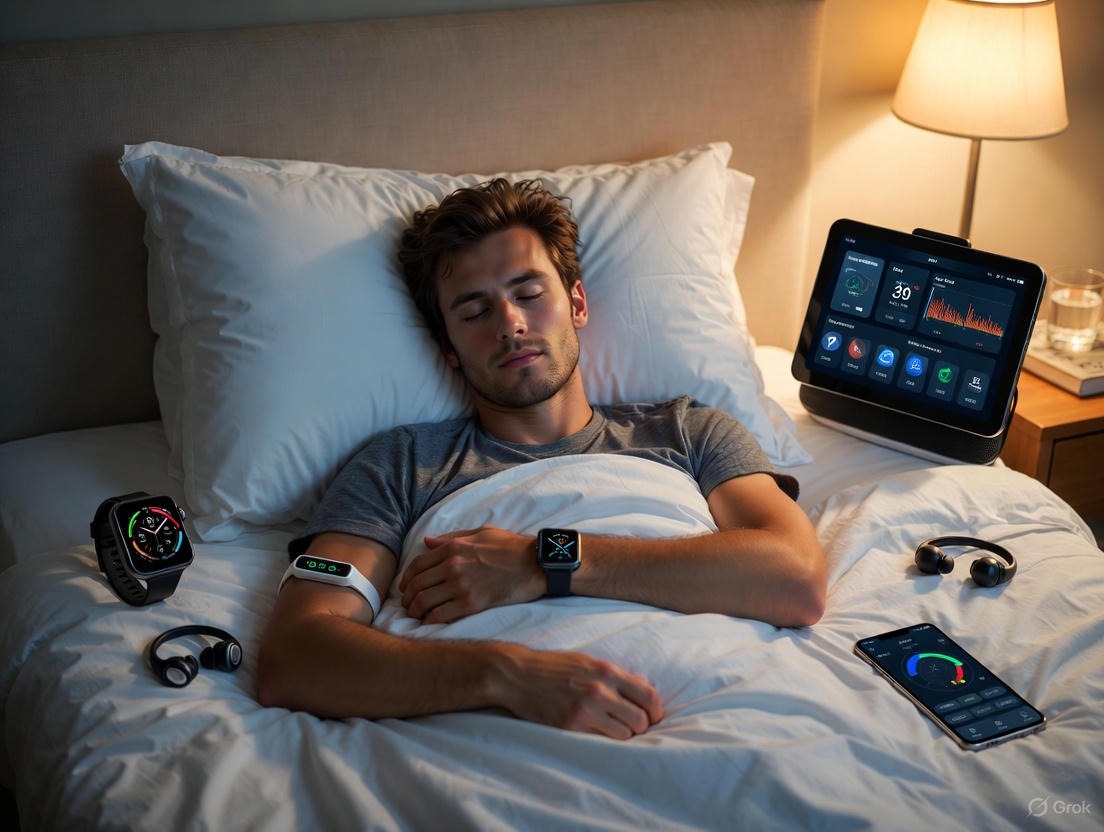
The cultural obsession with "8 hours" has done us a disservice. It has created a binary pass/fail metric that ignores the profound complexity of sleep. You can spend 9 hours in bed and wake up exhausted if those hours were fragmented and lacked deep sleep stages. Conversely, a solid 6.5 hours of high-efficiency, architecturally sound sleep can be profoundly restorative. Your ring data shifts the focus from the clock to the architecture and continuity of your sleep.
Interpreting Your Sleep Stages Data:
Key Sleep Metrics Beyond Stages:
Actionable Insights from Sleep Data:
Ultimately, sleep optimization is about creating the conditions for your body to execute its natural, cyclical process uninterrupted. Your ring provides the audit. It tells you not just that you slept, but how well the restoration machinery operated. This deep understanding of your personal sleep patterns is a core body awareness skill that improves sleep quality, moving you from guessing to knowing.
While HRV and sleep stages take center stage, skin temperature and respiratory rate are the supporting actors that often deliver the most critical plot twists. These metrics are exceptionally stable in healthy individuals at rest, so when they deviate, it's worth paying close attention.
Nocturnal Skin Temperature: The Silent Sentinel
Your core body temperature follows a clear circadian rhythm, dropping by 1-2 degrees Fahrenheit (0.5-1 degree Celsius) in the evening to initiate sleep and reaching its nadir in the early morning hours. Your peripheral skin temperature reflects this rhythm. Your ring establishes your personal nightly temperature curve.
Deviations from this curve are highly informative:
Actionable Insight: A sudden, unexplained temperature elevation paired with a low recovery score is your body's "yellow alert." It's a strong signal to prioritize immune-supportive behaviors: extra sleep, hydration, nutrient-dense foods, zinc and vitamin C, and certainly to avoid intense stress or exercise that could further compromise your immune system. It allows you to act proactively, potentially shortening the duration or severity of an illness.
Respiratory Rate (Breaths Per Minute): The Rhythm of Restoration
During restful sleep, your breathing should be slow, steady, and regular. The normal adult range is 12-20 breaths per minute (BPM), often dipping to the lower end during deep sleep. Your ring tracks this rate throughout the night.
Why it matters:
Using These Signals Together:
The true power emerges when you cross-reference. Imagine this scenario:
These subtle metrics transform your ring from a fitness tracker into a true health monitoring system. They provide the early warning system that allows you to practice preventative health, a key aspect of how body awareness skills can detect illness early. By heeding these signals, you move from being a passive victim of sickness to an active manager of your health defenses.
Energy management is not confined to the night. The demands of the day constantly draw down your reservoirs, and strategic micro-investments in recovery can prevent you from hitting zero before bedtime. This is where the concept of "strategic rest" meets real-time application, and your ring can be a guide even during waking hours.
Understanding Your Ultradian Rhythms:
Just as you have a 24-hour circadian rhythm, your body operates on 90-120 minute ultradian rhythms throughout the day. These are cycles of alertness followed by natural dips in energy and focus. Pushing through these dips with caffeine or willpower leads to a debt paid later in stress, irritability, and poorer nighttime recovery. The strategic approach is to synchronize with these rhythms.
How to Use Your Ring for Daytime Recovery Cues:
The Art of the Strategic Nap:
Not all naps are created equal. Their structure and timing determine whether they are an energy asset or a liability that disrupts nighttime sleep.
Your Ring as a Nap Coach:
Non-Sleep Rest (NSR): These are conscious, awake periods of low stimulation that allow your brain to enter a restorative, default-mode state. This includes:
The goal of daytime recovery is to prevent the accumulation of a massive recovery deficit by the evening. By using your awareness of your body's signals, potentially guided by snapshot data, you can make real-time corrections—choosing a walk over a coffee, a breathing break over scrolling social media. This practice of integrating mini-rests is a powerful body awareness practice to reduce anxiety and sustain energy, creating a smoother, more resilient arc to your day.
While often discussed in relation to women's health, hormonal fluctuations are a universal human experience that profoundly impacts energy. Cortisol, testosterone, estrogen, progesterone, and thyroid hormones all play critical roles in regulating metabolism, stress response, recovery, and vitality. Your smart ring cannot measure hormone levels directly, but it acts as a supremely sensitive barometer to their daily and monthly tides, revealing predictable energy patterns tied to your endocrine rhythm.
For Menstruating Individuals: The menstrual cycle is a prime example of a predictable, yet often overlooked, energy blueprint. The data patterns are distinct:
For Men and Non-Menstruating Individuals: Hormonal cycles are not absent; they are subtler and often follow a 24-hour (circadian) and seasonal pattern. Testosterone, for instance, peaks in the morning and dips in the evening. Chronic stress can flatten this rhythm, leading to low energy. Your ring can detect the effects of hormonal imbalance through persistent, unexplained trends: chronically low HRV, elevated RHR, poor sleep, and a flattened temperature rhythm that doesn't respond to standard lifestyle fixes.
Your smart ring story (Cycle-Aware): You notice that for one week each month, your readiness scores are consistently lower, your sleep is lighter, and your exercise performance drops. Instead of self-criticism ("Why am I so lazy this week?"), you check your cycle tracker and see you're in the luteal phase. The data tells the story: "This is a predictable, physiological pattern. My body is working harder due to hormonal shifts. This is not a failure but a phase. I can adjust my expectations, prioritize rest, and focus on maintenance rather than peak performance during this time."
This knowledge is liberating. It allows you to plan for energy drains instead of being blindsided by them. You can schedule demanding projects during your high-energy phases and plan for more recovery during your natural dips. It transforms your cycle from a monthly inconvenience into a strategic energy map. Understanding this body awareness basics of the hormone-body connection is a game-changer for anyone seeking to harmonize with their physiology.
The gut is often called the "second brain," and for good reason. The vagus nerve, a major information superhighway of the parasympathetic (rest-and-digest) nervous system, runs directly from your brain to your digestive organs. A distressed gut can send constant stress signals to the brain, draining energy. Conversely, a stressed brain can shut down optimal digestion. Your smart ring provides key insights into this two-way street, highlighting inflammation and digestive strain as silent energy thieves.
Key Data Indicators of Gut-Brain Distress:
Connecting the Dots to Lifestyle: The power of the ring is in linking these data patterns to your habits.
Your smart ring story: You have a weekend of indulgent eating—rich restaurant meals, drinks, and desserts. By Sunday night, your sleep is restless. Monday morning's data shows a RHR 10 bpm above your baseline and an HRV in the "poor" zone. You feel foggy and sluggish. The story? "The dietary choices created significant digestive and inflammatory load. My body spent the night in firefighting mode, not recovery mode. My nervous system is stressed from the internal turmoil, leaving me with a profound energy deficit to start the week."
This feedback makes the abstract concept of "eating for energy" concrete. It moves you from vague advice to personalized truth: "When I eat this, my body responds this way. To protect my energy, I will choose that." It fosters a profound body awareness of the gut-brain connection, where you learn to listen to your gut's signals not just for comfort, but for vitality.
Our environment is not a passive backdrop; it's an active participant in our physiology. Subtle environmental factors we've learned to tune out can be constant, low-grade stressors that cumulatively drain our energy. Your smart ring, sensitive to nervous system arousal, can detect these "leeches" even when your conscious mind has adapted to them.
1. The Light Factor (Beyond Blue Light):
2. The Noise Pollution Drain: Constant, unpredictable low-level noise—traffic, office chatter, household appliances—triggers micro-stress responses. Your brain's threat detection centers are subconsciously activated, keeping your nervous system slightly "on." This manifests as a higher average daytime heart rate and a less resilient HRV, even if you don't feel consciously annoyed.
3. The Thermal Stress of Wrong Temperatures:
Your smart ring story: You work in a modern office with no windows, constant fluorescent light, and aggressive air conditioning. You get home feeling a peculiar, drained fatigue. Looking at your day's data, you see your heart rate graph is unusually flat and high—it never dipped into true rest during your "calm" work periods. Your readiness score the next morning is mediocre despite adequate sleep hours. The story? "My environment—the lack of natural light, constant artificial climate, and subtle noise—required my nervous system to maintain a low level of constant adjustment and defense. This environmental drag created a steady energy expenditure that left me depleted."
Armed with this insight, you can take corrective action: use a light therapy lamp in the morning, take walking breaks outside, use noise-canceling headphones, or adjust your bedroom thermostat. The ring helps you engineer an environment that supports, rather than sabotages, your energy. It reveals the invisible ways our modern world taxes our biology, allowing us to reclaim control. This is a practical application of how wellness rings amplify our senses to perceive what was previously hidden.
In the information economy, our primary work is cognitive. We mistake sitting at a desk for being "at rest," but intense mental labor—problem-solving, creative work, managing complex projects, learning new skills—has a direct and measurable physiological cost. This is cognitive load, and it's a massive, often unrecognized, energy drain. Your smart ring brilliantly quantifies the physical price of mental work.
How Mental Fatigue Shows Up in Biometrics:
Differentiating Types of Mental Work:
Your smart ring story: You spend 8 hours at your desk planning a complex strategy. You didn't move much, but by 5 PM you feel utterly spent—headachy and foggy. Your day's heart rate graph shows it averaged 75 bpm (compared to your physical rest day average of 65 bpm), with spikes during intense planning sessions. That night, your deep sleep is reduced. The story? "The cognitive demand of my work required significant physiological resources—increased cardiac output and nervous system engagement. My body expended real energy on thinking, leaving me with mental exhaustion and compromising my physical recovery overnight."
This awareness validates the need for cognitive recovery practices. It argues for deliberate breaks, "deep work" blocks without interruptions, and the intentional separation of work from personal time. Seeing the data makes you respect mental work as the legitimate, energy-intensive labor it is, and encourages you to fuel and recover from it accordingly. Managing this cognitive tax is a core part of a holistic body awareness approach to stress management.

Water is the medium of every metabolic process in your body. Even mild dehydration—as little as 1-2% loss of body water—can impair cognitive function, mood, and physical performance. Electrolytes (sodium, potassium, magnesium) are the spark plugs that allow for nerve transmission and muscle contraction. An imbalance here creates a cellular-level energy crisis. Your smart ring provides clever, indirect clues that this basic need is going unmet.
Biometric Signs of Fluid & Electrolyte Issues:
It’s Not Just About Water: The "I drink a gallon of water but still feel drained" paradox often points to electrolytes. Flushing your system with plain water without sufficient electrolytes, especially sodium, can dilute your blood's electrolyte balance, causing fatigue, headaches, and continued thirst.
Your smart ring story: You have a busy travel day—dry airplane air, coffee instead of water, salty snacks. By evening, you have a headache and feel sluggish. You check your app and see your heart rate has been trending up all afternoon and is now 12 bpm above your normal resting rate. Your readiness score for tomorrow is already trending low. The story? "The combination of dehydration and electrolyte imbalance from travel has stressed my cardiovascular system. My body is working harder to perform basic functions, creating a preventable energy drain that will affect my next day unless I consciously rehydrate with electrolytes."
This turns hydration from a generic health tip into a precise energy-management strategy. You learn to "drink to your data"—using a rising RHR as a prompt. You experiment with adding electrolytes to your water on hot days or after intense sweat sessions and observe the positive impact on your recovery scores. It's a foundational habit, validated in real-time. Maintaining this balance supports all other body awareness skills that improve athletic and daily performance.
While over-exertion is a clear energy drain, its opposite—chronic under-movement or passive rest—can be equally depleting over time. The human body is designed for movement. Physical activity stimulates circulation, lymphatic drainage, mitochondrial health (your cellular energy factories), and robust circadian rhythms. A sedentary lifestyle doesn't just miss these benefits; it actively contributes to dysregulation that manifests as low energy. Your smart ring helps you identify this "rest paradox."
How "Too Little" Shows Up in Your Data:
Differentiating Rest from Stagnation:
Your smart ring story: You have a lazy Sunday—mostly on the couch watching movies. You feel lethargic by evening. That night, you struggle to fall asleep and your sleep graph is mostly light sleep. Monday morning, you feel groggy. Your data shows a very low activity count for Sunday and poor sleep efficiency that night. The story? "My body didn't receive the movement signals it needs to regulate my sleep-wake cycle and metabolic health. The inactivity led to poor sleep architecture, which in turn created an energy deficit for the start of the week. My 'rest' day was actually counterproductive."
This insight reframes movement as a non-negotiable input for energy, not just an output for fitness. It encourages you to see gentle movement—a walk, some stretching—as an energy-generating activity, not an energy-costing one. The ring helps you find the sweet spot between strain and stagnation, ensuring your rest is truly restorative. This is a key lesson in understanding your body's daily energy patterns.
We've touched on social stress, but there's a more nuanced layer: the direct transfer of physiological states between people, often called "emotional contagion" or "limbic resonance." We literally sync up with those around us. Spending time with a chronically anxious, negative, or energetically draining person can pull your own physiology into a stressed state. Conversely, time with calm, positive people can have a harmonizing effect. Your smart ring provides objective evidence of these interpersonal energy exchanges.
Identifying "Energy Vampires" in Your Data:
Look for a distinct biometric signature after specific interactions or time spent with certain individuals:
The Mirror of Relationships: This isn't about blame, but about awareness. Some relationships are inherently taxing (e.g., caregiving for an ill loved one). Others are toxic. The data helps you distinguish and measure the cost.
Your smart ring story: You have a weekly dinner with a family member whose conversations are predictably negative—grievances, worries, criticisms. You leave feeling heavy. Later, you check your stress timeline and see a major "stress" event flagged during that dinner, with elevated heart rate. Your sleep that night is restless. The story? "This interaction triggered a significant and prolonged stress response in my body. My nervous system absorbed and mirrored the agitated state of the other person, costing me measurable physiological energy and impairing my recovery."
This data is powerful for setting boundaries. It moves the conversation from "I don't like being around them" (which can feel subjective or unkind) to "This interaction has a demonstrably negative impact on my physiological health and energy reserves." It empowers you to limit exposure, change the dynamics, or ensure you schedule extra recovery after necessary draining interactions. Protecting your energy field becomes an act of self-care validated by science. Honing this discernment is part of recognizing your body's most fundamental needs.
The quality of the air you breathe is a direct input for your cellular energy production (ATP). Issues with oxygenation—whether from sleep apnea, environmental pollution, or high altitude—force your body to work harder for the same result, creating a silent energy tax. Your smart ring’s blood oxygen (SpO2) sensor and heart/respiratory rate data are critical windows into this domain.
1. Sleep-Related Breathing Disturbances:
2. Environmental Air Quality:
3. Altitude Effects:
Your smart ring story: You've been feeling groggy for months despite "good" sleep. You check your historical SpO2 graph and notice a pattern: nearly every night, between 2 AM and 4 AM, your blood oxygen drops to 92% for short periods, accompanied by spikes in heart rate. Your deep sleep during those periods is near zero. The story? "I am experiencing regular sleep-disordered breathing. Each event is a mini-crisis that fragments my sleep and prevents deep restoration. This is the primary cause of my chronic daytime fatigue and energy drain."
This insight can be life-changing, prompting a conversation with a doctor about a sleep study. It can also make you more mindful of your environment—using an air purifier, opening windows, or being aware of pollution levels. The ring turns the invisible act of breathing into a measurable pillar of energy health. Understanding these signals is part of building the body awareness skills that can detect illness early.
We often use substances to manipulate our energy state: caffeine to borrow from tomorrow, alcohol to force relaxation, sugar for a quick spike. These create dramatic, easily visible signatures in your biometrics. The ring reveals not just the acute effect, but more importantly, the rebound or withdrawal effect—the real energy drain that comes after the artificial boost.
The Biometric Signature of Common Substances:
Your smart ring story: You have two glasses of wine with dinner. You fall asleep quickly but wake at 3 AM. Your sleep data shows almost no REM sleep, a heart rate that stayed 10-15 bpm above your normal all night, and an HRV in the "very poor" range. The next morning, your readiness score is 30/100. The story? "The alcohol severely disrupted my sleep architecture, prevented crucial brain recovery (REM), and placed a significant detoxification burden on my body. The 'relaxation' it provided was an illusion, resulting in a massive net energy loss and a recovery-deficient day ahead."
This feedback is transformative. It shifts your relationship with these substances from a vague sense of "it might not be good for me" to a precise, personal cost-benefit analysis. You can see that the perceived energy gain from a 3 PM coffee is offset by the sleep cost and next-morning withdrawal. This concrete cause-and-effect empowers more mindful consumption. Observing these patterns is a core part of using a smart ring to bridge objective data with your subjective body awareness.
The final, and perhaps most critical, insight your smart ring provides is the concept of allostatic load—the cumulative wear and tear on the body from chronic stress and unresolved energy drains. No single late night, stressful day, or poor meal is catastrophic. But the ring shows you how they stack. It reveals that energy management isn't about perfection; it's about preventing debt from accumulating to a breaking point.
How Your Ring Tracks Cumulative Load:
The "Perfect Storm" Scenario: The ring helps you see how different drains synergize into a crash.
Your ring’s trend lines would have shown the rising RHR and falling HRV through all of this, serving as an early warning system to intervene before the crash.
Your smart ring story: Reviewing your 90-day trends, you notice a clear, steady downward slope in your average HRV. Your average RHR has climbed 5 bpm. Your sleep scores have become more variable. Subjectively, you feel you've "lost your edge" and are more irritable. The story? "Over the last quarter, the cumulative load of my lifestyle—likely a combination of stress, inconsistent recovery, and dietary slips—has increased my allostatic load. My system is under chronic strain and is losing its resilience. This is not about one bad day; it's a trend that requires a systemic review and correction."
This is the ultimate value proposition: prevention. The smart ring shifts healthcare from reactive (treating illness) to proactive (preserving vitality). It gives you the tools to manage your energy capital over a lifetime, not just get through the week. Learning to read these long-term patterns is the culmination of using a wellness ring to validate your body awareness and insights, creating a powerful partnership between your intuition and the data.
Your Trusted Sleep Advocate: Sleep Foundation — https://www.sleepfoundation.org
Discover a digital archive of scholarly articles: NIH — https://www.ncbi.nlm.nih.gov/
39 million citations for biomedical literature :PubMed — https://pubmed.ncbi.nlm.nih.gov/
Experts at Harvard Health Publishing covering a variety of health topics — https://www.health.harvard.edu/blog/
Every life deserves world class care :Cleveland Clinic - https://my.clevelandclinic.org/health
Wearable technology and the future of predictive health monitoring :MIT Technology Review — https://www.technologyreview.com/
Dedicated to the well-being of all people and guided by science :World Health Organization — https://www.who.int/news-room/
Psychological science and knowledge to benefit society and improve lives. :APA — https://www.apa.org/monitor/
Cutting-edge insights on human longevity and peak performance:
Lifespan Research — https://www.lifespan.io/
Global authority on exercise physiology, sports performance, and human recovery:
American College of Sports Medicine — https://www.acsm.org/
Neuroscience-driven guidance for better focus, sleep, and mental clarity:
Stanford Human Performance Lab — https://humanperformance.stanford.edu/
Evidence-based psychology and mind–body wellness resources:
Mayo Clinic — https://www.mayoclinic.org/healthy-lifestyle/
Data-backed research on emotional wellbeing, stress biology, and resilience:
American Institute of Stress — https://www.stress.org/


