


Travel Wellness Tips: How Your Wellness Ring Guides Hotel Room Setup
Guiding hotel room setup for wellness with a ring.
Guiding hotel room setup for wellness with a ring.
%402x.svg)
There's a peculiar paradox that plagues modern travelers. We escape our daily routines seeking adventure, relaxation, or professional growth, yet we often return home feeling depleted, disoriented, and desperately in need of a vacation from our vacation. The hotel room—that temporary sanctuary we trust to restore us—frequently becomes ground zero for disrupted sleep, erratic energy, and compromised wellness. But what if your hotel room could become smarter than your home setup? What if the key to unlocking travel wellness wasn't in the hotel amenities guide, but wrapped around your finger?
Welcome to the new frontier of travel wellness, where your wellness ring transforms from a passive data collector into an active participant in your hotel room setup. This isn't about turning your temporary quarters into a sterile biohacking lab. It's about understanding that every hotel room presents a unique physiological challenge—different light spectrums, unfamiliar bedding, variable air quality, and time zone shifts—and using your ring's biometric intelligence to create a personalized recovery environment wherever you go.
The modern traveler faces a cascade of wellness obstacles that we often normalize until they accumulate into something more significant. There's the dehydration that begins the moment you step into a pressurized aircraft cabin, continuing unnoticed in the climate-controlled hotel room that sucks moisture from your skin and respiratory system throughout the night. There's the blue light exposure from hotel room LEDs and televisions that disrupts your melatonin production hours before you intend to sleep. There's the unfamiliar mattress that alters your spinal alignment and the pillow that forces your neck into positions your cervical spine has never agreed to. And there's the cognitive load of navigating unfamiliar environments that keeps your nervous system in a state of low-grade alert, preventing the deep parasympathetic rest required for genuine recovery.
Your wellness ring sees all of this. While you're distracted by travel logistics and itinerary excitement, your ring is quietly documenting every physiological perturbation—the elevated heart rate during hotel check-in, the declining HRV as you watch television in bed, the restless movements as you toss on an unfamiliar mattress, the reduced deep sleep from suboptimal room temperature. The data doesn't lie, and it doesn't take vacations.
What makes the wellness ring revolutionary for travelers is its ability to translate invisible physiological states into actionable intelligence. You might feel "fine" after a day of meetings or sightseeing, but your ring knows your autonomic nervous system is working overtime. You might think you slept "okay" in the hotel bed, but your ring reveals you spent more time in light sleep than deep recovery. This gap between perception and reality is where most travel wellness breakdowns occur—and it's exactly where your ring becomes indispensable.
The concept of using your wellness ring to guide hotel room setup represents a fundamental shift in how we approach travel health. Rather than applying generic wellness tips that may or may not work for your unique physiology, you're creating a data-informed environment tailored to your specific needs on that particular night. Your ring becomes the architect of your temporary sanctuary, using your own biometric feedback to design the conditions for optimal recovery.
Consider how your daily energy management using your smart ring readiness score strategically transforms when you travel. At home, you have the luxury of consistency—the same bed, the same light exposure patterns, the same morning routine. But in a hotel, every variable is in flux. Your readiness score becomes your anchor, the one consistent metric that tells you how your body is handling the travel chaos. When you wake with a low readiness score in a hotel, your ring isn't just giving you bad news—it's telling you that yesterday's travel demands exceeded your physiological capacity and that today's hotel room setup needs to prioritize recovery above all else.
This article will guide you through the comprehensive process of transforming any hotel room into a wellness-optimized environment using your ring's biometric intelligence. We'll explore how to decode your ring's morning data to set daily intentions, how to manipulate hotel room variables based on your sleep stage requirements, how to use temperature and humidity tracking to optimize your recovery environment, and how to maintain your wellness routines even when your surroundings change dramatically. You'll learn to see your hotel room not as a generic space but as a dynamic system you can tune based on real-time physiological feedback.
The beauty of this approach is that it scales with your travel style. Whether you're a business traveler crashing in airport hotels, a digital nomad setting up shop in unfamiliar cities, or a leisure traveler exploring new destinations, your wellness ring provides the same objective feedback regardless of location. The hotel room in Tokyo speaks the same data language as the hotel room in Toronto. Your physiology becomes the universal translator, and your ring is the interpreter.
As we dive into the specific strategies for hotel room optimization, remember that the goal isn't perfection—it's awareness. You won't always have control over every variable. Sometimes you'll be in a room with windows facing a bright street, or a heating system you can't adjust, or a mattress that feels like concrete. But armed with your ring's insights, you'll know exactly what compromises you're making and how to compensate through other variables you can control. This is the essence of intelligent travel wellness: working with what you have while always knowing where you stand.
Let's begin our journey into the data-informed hotel room, where every pillow adjustment, thermostat setting, and blackout curtain decision is guided by the wisdom of your own physiology, translated through the sophisticated sensors wrapped around your finger.
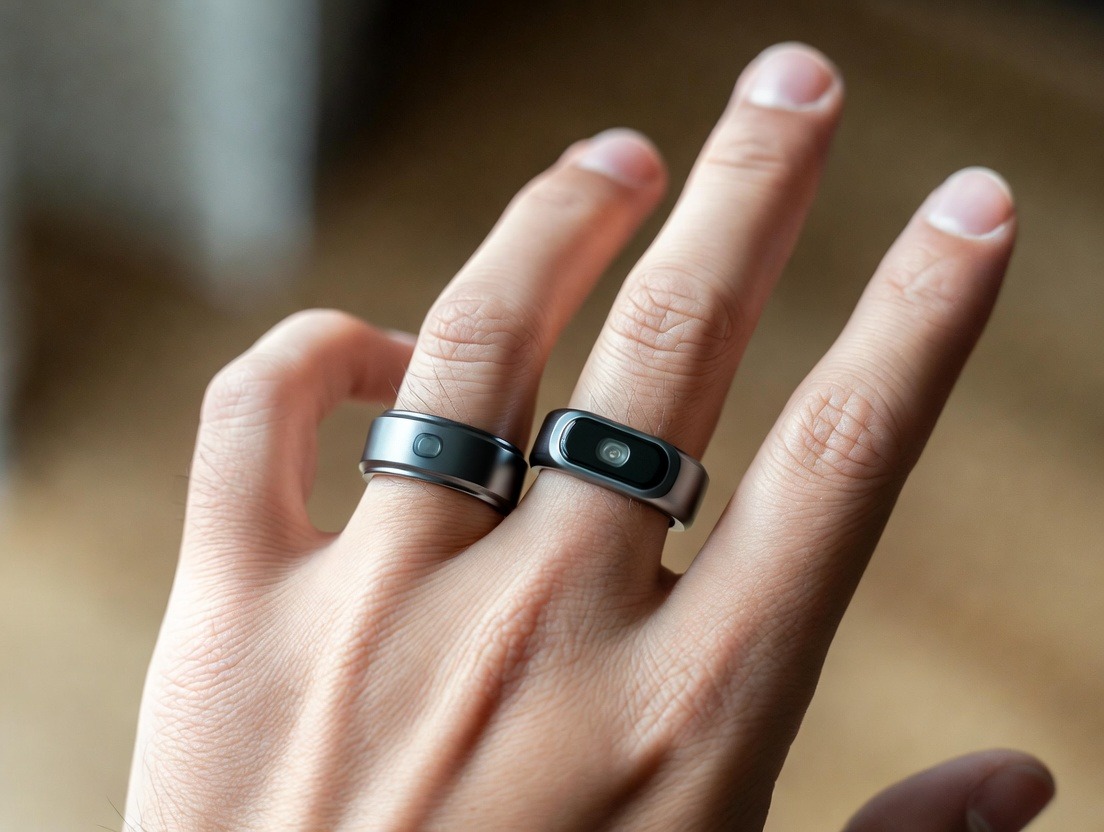
The moment you wake in a hotel room, your wellness ring has already done more work than you realize. While you were navigating unfamiliar dreams on an unfamiliar mattress, your ring was silently documenting every physiological response to your new environment. The morning data session—that thirty-second ritual of syncing your ring to your phone—becomes exponentially more important when you're traveling. This isn't just about checking your sleep score out of curiosity; it's about conducting a diagnostic assessment of how your body handled the first night in a new environment and using that intelligence to shape everything from your room setup to your daily itinerary.
Your ring's morning report becomes your travel wellness compass, and learning to read it properly transforms how you approach each day on the road. The sleep score, that aggregate number you've become familiar with at home, takes on new dimensions when viewed through the travel lens. A sleep score that would be merely "fair" at home might actually represent a victory in a new environment, while a "good" score might conceal issues that will compound over multiple nights if left unaddressed.
Let's break down what your morning data reveals about your hotel room and what it tells you about necessary adjustments. The heart rate during sleep deserves particular attention. When you're at home, your sleeping heart rate follows predictable patterns based on your evening activities and stress levels. But in a hotel, an elevated sleeping heart rate often signals that your nervous system hasn't fully relaxed into the new environment. This could be due to environmental noise, an uncomfortable bed, or simply the evolutionary alertness that comes with sleeping in unfamiliar territory. If your ring shows a sleeping heart rate five or more beats above your home baseline, your hotel room needs immediate attention to safety and comfort signals.
Your HRV tells an even more nuanced story about your hotel experience. Heart rate variability, that sophisticated measure of your autonomic nervous system balance, often takes a hit during the first night in a new location. This is normal—your body is processing novelty even while you sleep. But the degree of HRV suppression tells you how much physiological work your body is doing to adapt. A slight dip suggests your room is basically compatible with your needs. A significant drop—especially one that persists beyond the first night—indicates that something in your environment is keeping your sympathetic nervous system engaged when it should be resting deeply.
Perhaps the most actionable morning data for hotel room optimization is your sleep stage breakdown. Your ring doesn't just tell you that you slept; it tells you how you slept across the different stages that comprise genuine recovery. Light sleep, deep sleep, REM sleep—each occurs in your hotel room just as they do at home, but the distribution reveals the environmental factors working for or against you.
If your morning report shows adequate total sleep time but minimal deep sleep, your hotel room likely has issues with physical comfort or temperature regulation. Deep sleep, that elusive stage where physical recovery occurs, requires complete muscular relaxation and stable core temperature. An unfamiliar mattress that prevents you from fully relaxing, or a room that fluctuates in temperature throughout the night, will compress your deep sleep disproportionately. Your ring's data gives you permission to adjust—perhaps requesting a different pillow, adjusting the thermostat more aggressively, or even asking for a room change if the mattress truly doesn't work for your body.
If REM sleep is suppressed despite adequate sleep duration, your room likely has light or noise issues that your conscious mind isn't registering but your brain absolutely notices. REM sleep, the stage of emotional processing and memory consolidation, is particularly sensitive to environmental disturbances. Those flashing hotel smoke detector lights, the streetlight seeping through inadequate curtains, the occasional elevator sounds—your brain registers these micro-disturbances even when you don't fully wake, and REM sleep pays the price. Your ring's data tells you that your blackout strategy needs upgrading, or that white noise becomes non-negotiable rather than optional.
The recovery time metric—how quickly your heart rate drops when you fall asleep—offers another window into your hotel room's suitability. At home, you might fall asleep and achieve resting heart rate within fifteen minutes. In a hotel, if your ring shows extended time to recovery, your nervous system is having difficulty transitioning from travel alertness to sleep readiness. This tells you that your pre-sleep routine needs more intentional wind-down, or that your room environment isn't providing sufficient safety signals to your ancient brain.
Your how your wellness rings morning data shapes daily energy management becomes the foundation for every decision you make about your hotel room and your day. That morning sync session isn't just data collection—it's a conversation between your physiology and your conscious mind about what last night's environment did to your body and what today's environment needs to provide.
Consider creating a simple morning protocol for travel days. Before you even get out of bed, before you check your email or think about your itinerary, open your ring app and review your sleep data with these specific questions in mind: Did my heart rate stay low throughout the night, or did it elevate during certain periods? Was my HRV significantly lower than my thirty-day average? Did I get sufficient deep sleep and REM sleep relative to my total time in bed? How long did it take me to achieve deep recovery after falling asleep?
The answers to these questions guide your immediate actions. Low HRV with good sleep stages tells you that yesterday's travel demands were high but your room supported recovery—today you can be slightly more ambitious with your itinerary while maintaining good sleep hygiene. Good HRV but poor sleep stage distribution tells you that your room environment needs modification before tonight—you'll need to address whatever compromised your deep sleep or REM sleep. Poor numbers across the board tell you that today needs to be a recovery-focused day, with minimal demands and maximum attention to creating a sleep sanctuary for the coming night.
This morning assessment also informs how you interact with hotel staff. When you understand what your body needs, you can make specific, reasonable requests rather than vague complaints. "I'm noticing I'm not getting deep sleep—do you have any rooms on a higher floor with less street noise?" or "My sleep tracker shows temperature fluctuations are affecting my rest—could I get an additional blanket and also have someone check if the thermostat is working properly?" These informed requests are more likely to be taken seriously and addressed effectively.
Your ring's morning data also helps you distinguish between travel fatigue that's simply part of the experience and environmental problems that you can and should fix. There's a tendency when traveling to attribute all discomfort to "just being away from home" and accept suboptimal sleep as inevitable. But your ring reveals that not all travel sleep issues are created equal. Some are genuine adaptation requirements that your body will handle over a night or two. Others are fixable environmental factors that you can address immediately. The data helps you invest your energy where it will yield the greatest return.
As you travel more with your ring, you'll begin to notice patterns that inform future hotel choices. You might discover that you consistently sleep better in rooms with eastern exposure for morning light, or that you need rooms away from elevators regardless of floor, or that certain hotel chains' bedding consistently supports better deep sleep for your physiology. Your ring becomes not just a tool for optimizing your current stay but a data source for making smarter choices about future travel.
Of all the environmental variables in a hotel room, none exerts more influence over your sleep quality than temperature. Yet temperature is also the variable most travelers set and forget, choosing a number that seems reasonable based on vague preferences rather than physiological intelligence. Your wellness ring transforms thermostat adjustment from guesswork into precision science, revealing exactly how your body responds to different thermal environments and guiding you toward the temperatures that support your deepest recovery.
The relationship between temperature and sleep is ancient and hardwired. Your body's core temperature must drop by about one to two degrees Fahrenheit to initiate and maintain sleep. This isn't optional—it's a physiological requirement. When your environment is too warm, your body struggles to achieve this necessary temperature drop, and your sleep architecture pays the price. When your environment is too cold, your body diverts energy to temperature regulation that should be directed toward cellular repair and memory consolidation.
Your wellness ring tracks this thermal dance continuously, even if you don't have a dedicated temperature sensor in the ring itself. The clues are everywhere in your data. An elevated sleeping heart rate often indicates that your body is working to cool itself. Reduced deep sleep frequently correlates with rooms that run warm. Restlessness, detected through your ring's movement sensors, often spikes when room temperature drifts outside your optimal range.
The challenge with hotel rooms is that you're walking into a thermal environment designed for the mythical "average guest" rather than for your specific physiology. Hotels typically set default temperatures to energy-saving modes when rooms are unoccupied, meaning you arrive to a room that's either too warm or too cool. Your first task upon entering is to override these defaults based on your ring's accumulated wisdom about your thermal preferences.
But what if you don't yet know your optimal sleep temperature? Your ring can help you discover it. The process requires a few nights of intentional experimentation, ideally starting at home before you travel. For several nights, set your thermostat to different temperatures within the generally recommended sleep range of 65 to 69 degrees Fahrenheit. Each morning, review your sleep data alongside the temperature you selected. You'll quickly notice patterns—perhaps you achieve deepest sleep at 67 degrees, or maybe your physiology prefers the cooler end of the range at 65. This baseline knowledge becomes invaluable when you're standing at a hotel thermostat, trying to decide what number to set.
Once you know your optimal temperature, the hotel implementation requires strategy. Hotel thermostats are notoriously unreliable, often displaying numbers that bear little relationship to actual room temperature. Your ring's data becomes your verification system. If you set the thermostat to 67 degrees but your sleep data shows the physiological signatures of a warmer room—elevated heart rate, reduced deep sleep—you know the thermostat is lying and you need to adjust downward based on feel rather than readout.
The timing of temperature adjustment matters as much as the target temperature. Your body begins its cooling process well before you intend to sleep, typically starting in the evening as melatonin rises. If you wait until you're getting into bed to adjust the thermostat, you've missed the optimal window for supporting your body's natural temperature cascade. The ideal approach is to set your hotel room temperature to your sleep target at least an hour before bed, giving the room time to stabilize and your body time to begin its cooling process in an environment that supports rather than fights it.
For travelers who struggle with hotel temperature consistency, your ring's movement and heart rate data can reveal problems you might otherwise miss. Perhaps the hotel's HVAC system cycles on and off aggressively, creating temperature swings that repeatedly pull you out of deep sleep. Your conscious mind may not register these brief awakenings, but your ring's data will show the disruptions. If you notice patterns of restlessness at regular intervals throughout the night, temperature cycling is a likely culprit. The solution might involve setting the fan to "on" rather than "auto" to maintain more consistent air movement, or requesting a room with more stable temperature control.
Humidity interacts with temperature in ways that significantly affect your sleep quality and your ring's data. Hotel rooms, particularly in modern buildings with aggressive HVAC systems, often become excessively dry. Low humidity accelerates fluid loss through respiration and skin, concentrating your blood and increasing the workload on your cardiovascular system. Your ring may show this as elevated heart rate or reduced HRV, even if the temperature itself is appropriate. The solution involves either requesting a humidifier from the hotel (many now offer them) or creating your own humidity through strategic bathroom practices—leaving the bathroom door open after a shower, or even running a hot shower briefly before bed to introduce moisture into the air.
Conversely, hotel rooms in humid climates may struggle with excessive moisture, which interferes with the body's evaporative cooling mechanisms. When humidity is high, sweat doesn't evaporate efficiently, and your body's cooling system becomes less effective. Your ring may show the physiological signatures of overheating even at reasonable temperatures. In these environments, aggressive air conditioning becomes essential, and you may need to set temperatures lower than your usual preference to compensate for reduced evaporative cooling.
Your ring's recovery metrics the morning after provide the ultimate feedback on your temperature strategy. If you achieved your target temperature and maintained it throughout the night, your sleep stages should reflect it—robust deep sleep, stable heart rate, appropriate HRV. If your data shows compromises, your temperature strategy needs refinement. Perhaps you need to pre-cool the room more aggressively before bed. Perhaps you need to adjust based on the specific bedding materials (hotel comforters are often excessively warm). Perhaps you need to sleep with fewer layers to allow your body's natural cooling to proceed unimpeded.
The relationship between temperature and your daily energy management for remote workers ring optimized schedules extends beyond sleep. When you're working from a hotel room, temperature affects your cognitive performance, your energy levels, and your stress physiology throughout the day. A room that's too warm induces drowsiness and reduces cognitive function. A room that's too cool diverts energy to temperature regulation and can increase muscle tension. Your ring's continuous monitoring throughout the day reveals these effects—notice how your heart rate and HRV respond when you adjust the thermostat during work hours. You'll discover that optimal daytime temperatures may differ from your sleep temperature, and you can adjust accordingly.
Light is the master conductor of your body's internal orchestra, setting the tempo for every physiological process from hormone secretion to cellular repair. When you travel, you subject your circadian rhythms to a brutal assault—different light schedules, unfamiliar light spectrums, and exposure to light at times your body never evolved to handle. Your wellness ring reveals the consequences of this light chaos, but it also empowers you to reconstruct healthy light architecture in any hotel room.
The problem with hotel lighting begins the moment you check in. Hotel rooms are designed for aesthetics and functionality, not for circadian health. The lighting is typically bright, blue-enriched, and positioned to illuminate every corner of the room. This might be excellent for finding your suitcase or applying makeup, but it's disastrous for your evening wind-down. Your ring's evening data often shows elevated heart rates and reduced HRV during the hours when you're exposed to hotel room lighting, even if you feel relaxed and comfortable.
Understanding light's effect on your physiology requires grasping the concept of melanopic response—the specific way your eyes' non-visual photoreceptors detect blue-wavelength light and signal your suprachiasmatic nucleus about whether it's day or night. When these photoreceptors detect blue light in the evening, they suppress melatonin production, delay sleep onset, and reduce sleep quality. Your ring's sleep data the next morning tells you exactly how effective your previous evening's light management was.
Your hotel room light hacking strategy should begin before you ever turn on a light. Upon entering your room for the first time, conduct a light audit. Identify every light source—overhead fixtures, bedside lamps, bathroom lights, task lighting, and the dreaded television standby light. Note which lights are on separate switches and which are controlled together. Notice whether the room has dimmers. Observe the blackout quality of the curtains. This audit takes three minutes but pays dividends in sleep quality throughout your stay.
The ideal hotel room lighting setup creates distinct zones and intensities for different functions. You need bright, alerting light for morning routines and daytime work. You need dim, warm light for evening wind-down. You need complete darkness for sleep. And you need a pathway of low-level light for middle-of-the-night bathroom visits that won't disrupt your sleep architecture. Your ring's sleep data helps you refine each of these zones based on your physiological responses.
For morning light, your goal is to signal wakefulness to your circadian system as effectively as possible. If your hotel room has good natural light, open those curtains immediately upon waking to flood your eyes with the full spectrum of daylight. If you're in a room with poor natural light or you wake before dawn, you may need to use the brightest available artificial light to simulate morning conditions. Your ring's morning readiness score benefits from this light exposure—it helps consolidate your sleep drive for the coming night and anchors your circadian rhythm to the local time zone.
The evening transition requires more sophisticated light management. Ideally, you begin dimming lights at least two hours before your target bedtime. If your room has dimmers, use them aggressively—reduce overhead lights to the lowest functional level. If you lack dimmers, create zones of light by using only specific lamps rather than overhead fixtures. Your ring's evening data will show you whether your light management is sufficient. If your heart rate remains elevated or your HRV doesn't begin its evening rise, you may need even more aggressive light reduction.
The color temperature of your evening light matters enormously. Blue-enriched light (typical of most hotel LED bulbs and all electronic screens) is the enemy of sleep preparation. Many hotel rooms now have adjustable color temperature lighting—if yours does, shift it to the warmest setting (around 2700K or lower) for evening hours. If your room lacks adjustable lighting, you may need to create your own warm light environment using portable solutions like a red light travel bulb or even just using your phone's flashlight with a red filter app for navigation after your main lights are off.
Blackout curtains are the most critical light management feature for hotel sleep, yet they're also the most variable. Some hotels invest in high-quality blackout curtains that genuinely eliminate outside light. Others have curtains that are merely decorative, allowing streetlights and morning sun to penetrate. Your ring's sleep data reveals the truth about your curtains. If you consistently wake during early morning hours or show reduced REM sleep in the second half of the night, light leakage is a likely culprit. The solution ranges from requesting a different room to using emergency blackout measures like clipping curtains together with binder clips or using a sleep mask.
Electronic standby lights deserve special attention because they're the most overlooked light polluters. Your television, alarm clock, smoke detector, and even the mini-fridge may emit small but significant lights that your conscious mind ignores but your circadian system registers. Your ring's data may show micro-arousals throughout the night that correspond to no obvious disturbance—these are often caused by light exposure during sleep. Covering these lights becomes a nightly ritual. A piece of electrical tape, a sticky note, or even a strategically placed towel can eliminate these hidden disruptors.
Your phone and other devices present a dual light challenge. First, they emit their own blue light that affects your physiology directly. Second, they're often the last thing you look at before sleep and the first thing you look at upon waking. Your ring's data on sleep onset latency and morning grogginess often correlates directly with pre-sleep screen time. Creating a device curfew—perhaps 60 minutes before bed—can dramatically improve your sleep metrics. If you must use devices in the evening, enable night mode settings that reduce blue light, and hold devices farther from your face than you naturally would.
The relationship between light management and your how your wellness ring shows which habits increase your vitality becomes particularly clear during travel. At home, your light exposure follows relatively consistent patterns. In a hotel, every day presents new light variables. Your ring's continuous monitoring reveals exactly how different light conditions affect your physiology, allowing you to make real-time adjustments and develop a personalized light architecture that works across any environment.
Hotel beds present a fascinating paradox. They're designed to be universally comfortable, yet they're rarely optimized for any specific individual. The mattress that feels like a cloud to one traveler feels like a swamp to another. The pillows that support one neck perfectly leave another with morning stiffness. Your wellness ring transforms this bedding lottery into a data-informed optimization process, revealing exactly how different bedding configurations affect your sleep architecture and guiding you toward the setup that supports your deepest recovery.
The first night in any hotel bed is inherently a data collection night. You're not just sleeping; you're conducting a physiological assessment of the mattress, pillows, and bedding materials. Your approach to this first night should be systematic and intentional. Rather than accepting the bed as presented, you should begin with a neutral setup and observe how your body responds, then adjust subsequent nights based on your ring's feedback.
Let's start with the mattress, the foundation of your sleep experience. Hotel mattresses span the full spectrum from gloriously supportive to tragically worn. Your ring's movement data tells you more about mattress quality than your subjective experience might. Frequent position changes throughout the night often indicate that you're unconsciously seeking pressure relief that the mattress isn't providing. If your ring shows high movement counts despite feeling like you slept okay, your mattress may be compromising your deep sleep without your conscious awareness.
The pressure point assessment happens through your ring's heart rate variability data during specific sleep stages. When you lie on a mattress that creates pressure points—typically at shoulders and hips for side sleepers, or at the lower back for back sleepers—your nervous system remains subtly engaged, preventing the complete muscular relaxation required for deep sleep. Your HRV during the first half of the night, when deep sleep should predominate, reveals whether your mattress is allowing genuine physical release. Low HRV during these hours, despite adequate sleep duration, points to physical discomfort that needs addressing.
If your first night's data suggests mattress issues, you have options beyond simply suffering through it. Many hotels offer mattress toppers upon request—these can transform an overly firm mattress into something more accommodating. Some travelers now travel with compact mattress toppers precisely for this reason. Even a request for extra blankets can help; layering blankets on top of the mattress can create additional cushioning for pressure points. Your ring's data the following morning tells you whether your interventions worked or whether you need to escalate to a room change.
Pillows present an even more complex optimization challenge because they're so variable and so critical for spinal alignment. Your cervical spine's position during sleep affects everything from breathing to muscle tension to nervous system activation. The wrong pillow can suppress your HRV, increase nighttime movement, and leave you with morning headaches or neck stiffness that your ring's data reveals before you consciously feel it.
The ideal pillow height depends on your sleeping position and body proportions, but your ring's data helps you fine-tune beyond general guidelines. If your sleep data shows frequent position changes focused around your head and neck, or if your HRV drops during specific sleep periods, your pillow may be forcing your neck into misalignment. The solution often involves pillow customization—most hotel rooms have multiple pillows available, and you can stack or combine them to achieve optimal height and firmness.
For side sleepers, the goal is to fill the space between your ear and shoulder, keeping your spine straight from neck to tailbone. If your ring data shows shoulder discomfort or arm numbness (often visible as movement spikes when you shift to restore circulation), your pillow stack is likely too low or too high. Experiment with different combinations—perhaps a firmer pillow underneath and a softer one on top, or two pillows of different firmnesses to achieve the perfect height.
For back sleepers, the goal is minimal support that maintains the natural curve of your neck without pushing your head too far forward. Your ring's data on breathing patterns and snoring (if your ring tracks these) reveals whether your pillow is compromising your airway. If your data shows breathing irregularities or reduced oxygen saturation, your pillow may be too high, flexing your neck forward and narrowing your airway.
For stomach sleepers—the position most spine specialists discourage—your ring's data often shows the consequences through reduced deep sleep and increased movement. If you must sleep on your stomach, the thinnest possible pillow (or no pillow) typically works best, but your ring's feedback may motivate you to experiment with side sleeping during travel when sleep quality matters most.
Beyond pillows and mattresses, the bedding materials themselves affect your sleep physiology. Hotel comforters are often excessively warm, filled with synthetic materials that trap heat and moisture. Your ring's temperature-related data—elevated heart rate, reduced deep sleep, increased movement—often correlates with overheating from bedding that's too warm for your physiology. The solution involves creating a layered bedding system even if the hotel doesn't provide one. Use the flat sheet as your primary cover, add the comforter only as needed, and don't hesitate to request lighter blankets if the provided options don't work for your temperature regulation.
Your how your wellness ring shows which habits increase your vitality extends to your pre-sleep bedding preparation. Many travelers overlook the importance of bed preparation rituals that signal readiness to their nervous system. Taking a moment to smooth sheets, arrange pillows intentionally, and create a visually calm sleeping environment sends powerful safety signals to your ancient brain. Your ring's data on sleep onset latency—how long it takes you to fall asleep—reveals whether these preparation rituals are working or whether your nervous system remains alert despite physical comfort.
Modern hotels are engineered environments, sealed against outside air and conditioned to precise specifications. This engineering creates comfort and efficiency, but it also creates unique challenges for your respiratory system and, by extension, your entire physiology. Your wellness ring doesn't directly measure air quality, but it brilliantly reveals the physiological consequences of poor air through your heart rate, HRV, sleep quality, and recovery metrics. Learning to read these indirect signals transforms how you approach hotel room air management.
The air in hotel rooms accumulates a complex mixture of compounds that affect your body in ways you rarely notice consciously. There's off-gassing from new furniture and carpet, carrying volatile organic compounds that your liver must process. There's accumulated carbon dioxide from previous guests and from your own breathing in a sealed space. There's particulate matter from HVAC systems that may not be optimally maintained. There's often low humidity from aggressive air conditioning that dries your mucous membranes and concentrates your blood. Each of these factors influences your physiology, and your ring captures the cumulative effect.
The most immediate air quality impact appears in your heart rate data. When carbon dioxide accumulates in a sealed room—which happens surprisingly quickly in modern tightly sealed hotels—your body responds by increasing your heart rate to maintain oxygen delivery. If your ring shows a resting heart rate that's elevated beyond your normal range, and other factors like temperature and stress are accounted for, poor air circulation may be the culprit. This effect becomes most pronounced during sleep, when you're breathing continuously in the same space for hours.
Your HRV provides even more subtle information about air quality. The autonomic nervous system is exquisitely sensitive to respiratory challenges. When air quality degrades, your sympathetic nervous system activates subtly to compensate, reducing the parasympathetic tone that supports high HRV. If you notice your HRV declining over multiple nights in the same hotel room, despite consistent sleep habits and temperature management, air quality deserves investigation.
The solution begins with understanding your room's ventilation options. Most hotel rooms have HVAC systems that can be set to bring in outside air, though this feature isn't always obvious. Look for settings like "fan" versus "auto," or options that mention fresh air. Setting your fan to "on" rather than "auto" ensures continuous air movement and filtration, even when the cooling or heating isn't actively running. This simple adjustment can dramatically improve air circulation and reduce carbon dioxide accumulation.
Opening windows represents the ultimate air quality intervention, though it's not always possible or practical. In rooms where windows open, even a brief daily airing—perhaps while you're at breakfast—can flush accumulated compounds and refresh the room's air. Your ring's data the following morning may show the benefits through improved HRV and more stable heart rate. If windows don't open, maximizing time outside the room becomes more important—your body can recover some of its respiratory burden during outdoor hours.
Portable air purifiers have become essential travel gear for many wellness-focused travelers, and your ring's data explains why. These devices continuously filter particulate matter and can significantly reduce the respiratory load on your body. If you travel frequently and notice patterns of reduced sleep quality in hotels, investing in a compact travel air purifier may yield measurable improvements in your ring's metrics. The data doesn't lie—if your HRV improves and your heart rate stabilizes when you use one, you have objective confirmation of its value.
Humidity management intersects with air quality in ways that significantly affect your physiology. Hotel air conditioning aggressively removes humidity, often leaving rooms drier than the Sahara. This dry air dehydrates you through respiration and skin, concentrating your blood and increasing cardiovascular workload. Your ring may show this as elevated heart rate, reduced HRV, and morning fatigue that doesn't match your sleep duration. The solution involves active humidification—requesting a humidifier from the hotel, or creating your own humidity through strategic bathroom practices.
The relationship between air quality and your vitality and wellness for busy professionals ring-guided energy management becomes particularly important when you're working from hotel rooms. Poor air quality affects cognitive function, energy levels, and stress resilience throughout the day, not just during sleep. If you notice afternoon energy crashes that seem disproportionate to your activities, check whether you've been in your room continuously. Getting outside for even brief periods can reset your respiratory system and restore cognitive function in ways your ring's continuous monitoring will confirm.
Travel creates a perfect storm of dehydration risks. Aircraft cabins have humidity lower than the Sahara Desert. Hotel air conditioning continuously wicks moisture from your body. Changes in water quality may reduce your willingness to drink adequate amounts. Increased caffeine and alcohol consumption—common travel indulgences—act as diuretics. And the cognitive load of navigating unfamiliar environments increases your metabolic water requirements. Your wellness ring tracks the physiological consequences of this dehydration cascade, offering real-time feedback that should guide your hotel room hydration strategy.
The cardiovascular effects of dehydration appear clearly in your ring's data. As you become dehydrated, your blood volume decreases and your blood concentrates, forcing your heart to work harder to maintain circulation. This shows up as elevated resting heart rate and reduced heart rate variability. If you notice your heart rate creeping up during travel days, or your HRV declining despite adequate rest, dehydration is a likely contributor that deserves immediate attention.
Your ring's sleep data reveals dehydration effects that you might otherwise miss. Dehydration reduces blood flow to your extremities, which can affect temperature regulation during sleep. You might find yourself waking with cold hands and feet even in a warm room—a sign that your circulation is compromised. Dehydration also thickens mucosal secretions, potentially increasing snoring and sleep-disordered breathing. If your ring shows breathing irregularities or reduced oxygen saturation during sleep, your hydration status should be part of your investigation.
The hotel room hydration strategy begins with water access. Upon checking in, identify your water sources and plan for continuous access throughout your stay. Many travelers find that having multiple water sources—a large bottle for the bedside, a portable bottle for daytime, and access to refill stations—removes barriers to adequate intake. Your ring's data helps you determine whether your strategy is working. If your morning heart rate remains elevated despite good sleep, you may need to front-load hydration earlier in the evening rather than relying on nighttime intake that disrupts sleep.
The quality of hotel water varies dramatically and affects your willingness to drink adequate amounts. Some travelers are put off by tap water taste or safety concerns, leading to reduced intake. If this describes you, developing a reliable water strategy becomes essential. This might involve requesting bottled water from the hotel, bringing your own filtration bottle, or identifying nearby stores where you can purchase water you trust. Your ring's hydration-related metrics—heart rate, HRV, and recovery scores—provide objective feedback about whether your water strategy is sufficient.
Electrolyte balance interacts with hydration in ways that your ring's data may reveal. Plain water hydrates, but electrolyte-containing fluids hydrate more effectively, particularly when you're sweating or experiencing digestive changes from travel. If your ring shows persistent cardiovascular signs of dehydration despite adequate water intake, you may need to incorporate electrolytes into your hydration strategy. This is particularly important in hot destinations or when you're more active than usual.
The timing of hydration matters as much as the total volume. Drinking large amounts immediately before bed inevitably leads to nighttime bathroom trips that disrupt sleep architecture. Your ring's sleep continuity data reveals the cost of this mistimed hydration. The better strategy involves front-loading hydration earlier in the day, tapering intake in the evening, and keeping only minimal water at the bedside for true thirst. Your sleep stage distribution the next morning tells you whether your timing strategy is working or needs adjustment.
Your ring's morning data provides the ultimate feedback on your previous day's hydration. A well-hydrated traveler wakes with heart rate at baseline, HRV in expected range, and readiness scores that reflect actual sleep quality rather than dehydration-compromised metrics. A dehydrated traveler wakes with elevated heart rate, suppressed HRV, and readiness scores that understate their true recovery because the cardiovascular system is still working to compensate for fluid deficits.
The relationship between hydration and your daily energy management through strategic rest ring recovery data becomes clear when you track patterns over multiple travel days. Dehydration on day one creates a deficit that compounds on day two, making recovery increasingly difficult. Your ring's trend data helps you catch this cascade before it significantly affects your performance. If you notice a multi-day decline in your metrics, intensified hydration becomes your primary intervention.
Hotel noise presents one of the most unpredictable and disruptive variables in travel wellness. Unlike temperature or light, which you can adjust with some precision, noise arrives unbidden from sources you cannot control—hallway conversations, elevator machinery, street traffic, neighboring rooms, and the mysterious creaks and groans of unfamiliar buildings. Your wellness ring reveals exactly how these auditory intrusions affect your sleep architecture, often detecting disruptions your conscious mind never registers.
The relationship between noise and sleep is not binary—it's not simply about whether noise wakes you up. Your brain processes auditory information continuously during sleep, and sounds that don't reach your conscious awareness can still trigger micro-arousals that fragment your sleep architecture. These micro-arousals may last only seconds, too brief for you to remember in the morning, but they're long enough to interrupt sleep cycles and reduce the restorative depth of your rest.
Your ring's movement data provides the clearest window into noise disruption. When a sound triggers a micro-arousal, your body often responds with a small movement—a shift in position, a tensing of muscles—that your ring's accelerometer detects. If you review your night's data and see clusters of movement at regular intervals, you're likely experiencing periodic noise disruptions. The timing of these movement clusters often correlates with identifiable noise sources—perhaps every time the elevator cycles, or whenever the room above flushes their toilet.
Heart rate variability during sleep offers even more subtle information about noise effects. Even when noise doesn't trigger visible movement, it can activate your sympathetic nervous system enough to reduce HRV. If your HRV during specific sleep periods is significantly lower than during other periods, despite consistent sleep stage distribution, noise may be the invisible culprit. This pattern often appears in the first few hours of sleep, when you're in deeper stages that should show highest HRV.
The hotel room noise mapping process begins during your first hours in the room, ideally before your first sleep attempt. Spend time simply sitting quietly, listening to the soundscape. Identify every recurring noise—the HVAC cycling, the elevator, the ice machine, the street below, the neighboring room's television. Note which sounds are constant (like white noise from the HVAC) and which are intermittent (like doors closing). This auditory assessment gives you the information you need to develop your noise management strategy.
White noise emerges as the most versatile tool for hotel room acoustic optimization. Continuous, broad-spectrum sound masks intermittent disruptions by raising the ambient noise floor, making sudden sounds less perceptible to your brain. Your ring's data validates the effectiveness of white noise by showing reduced movement clusters and more stable HRV on nights when you use it. The specific type of white noise matters less than consistency—what works is raising the ambient level enough to cover disruptive peaks without being so loud that it becomes its own disturbance.
For travelers who find white noise unpleasant, nature sounds or pink noise (which has more energy in lower frequencies) offer alternatives. The key principle remains the same: consistent background sound masks intermittent disruptions. Your ring's sleep stage distribution across multiple nights with different sound strategies reveals which approach works best for your unique auditory processing.
Earplugs represent another essential tool, though they require careful selection and use. The ideal travel earplugs reduce disruptive sounds without completely blocking your ability to hear important alerts (like fire alarms). Your ring's data helps you calibrate earplug use—if you notice that earplugs correlate with reduced movement but also with slightly elevated heart rate, you may be experiencing some anxiety from reduced environmental awareness. In this case, combining earplugs with white noise often provides the optimal balance of disruption reduction without complete sensory isolation.
The location of your bed within the room affects your noise exposure more than you might think. If you have flexibility in your room assignment, beds positioned against interior walls typically experience less external noise than those against exterior walls. Beds farther from the door experience less hallway noise. Your ring's data across different room configurations helps you develop preferences for future bookings—perhaps you consistently sleep better in rooms away from elevators, or on higher floors with less street noise.
Your how your wellness ring helps you manage daily energy intelligently extends to your daytime noise environment. Working from a noisy hotel room increases cognitive load and stress physiology, even if you don't consciously notice the distraction. Your ring's continuous HRV monitoring during work hours reveals this effect—notice how your metrics change when you move from a quiet corner to an area with more ambient noise. This feedback helps you make informed decisions about where to work within your room or whether to relocate to quieter hotel spaces.
The modern hotel room is an electromagnetic ecosystem, filled with Wi-Fi routers, cellular signals, Bluetooth devices, and electrical wiring that create fields your body didn't evolve to navigate. While scientific consensus on the biological effects of electromagnetic fields remains debated, your wellness ring offers personalized data about how your specific physiology responds to this invisible environment. Whether or not you believe in electromagnetic sensitivity, your ring's objective metrics may reveal patterns worth investigating.
The physiological mechanisms by which EMFs might affect sleep and recovery center on calcium channel activity and cellular communication. Some research suggests that electromagnetic fields can influence voltage-gated calcium channels in cell membranes, potentially affecting everything from neurotransmitter release to muscle function. If your body is particularly sensitive to these effects, you might see patterns in your ring data that correlate with your electromagnetic environment.
Your sleep data offers the most accessible window into potential EMF effects. If you notice that your sleep quality consistently suffers in specific hotels or specific room locations, and you've ruled out other variables like noise, temperature, and bedding, electromagnetic environment becomes worth investigating. The pattern to look for is difficulty achieving deep sleep despite feeling tired, combined with normal or elevated movement throughout the night, in rooms where other variables seem optimized.
Heart rate variability provides another potential indicator. Some individuals show reduced HRV in high-EMF environments, suggesting increased sympathetic activation even during rest. If you notice that your evening HRV fails to rise appropriately in certain hotel rooms, despite good relaxation practices, electromagnetic factors may be contributing to your nervous system's alert state.
The practical response to potential EMF effects begins with distance. Electromagnetic field strength decreases dramatically with distance from the source—the inverse square law means that doubling your distance from a source reduces exposure to one-quarter. If you're concerned about EMF exposure, positioning your bed as far as practical from Wi-Fi routers (often located in hallways or adjacent rooms), smart televisions, and major appliances reduces your exposure significantly.
Creating distance from your own devices matters even more. Your phone, tablet, and laptop all emit electromagnetic fields, and keeping them near your head during sleep maximizes your exposure. Your ring's sleep data may show improvements when you adopt the habit of placing devices across the room or in another room entirely during sleep. Even if you're not convinced about EMF effects, this practice reduces the likelihood of nighttime notifications disrupting your sleep and eliminates the temptation to check devices during the night.
Some travelers find that turning off the room's Wi-Fi router (if accessible) or requesting a room farther from hotel routers improves their sleep metrics. While you can't control all sources, every reduction in exposure potentially benefits those who are sensitive. Your ring's data across multiple stays with different configurations provides personalized evidence about what matters for your specific physiology.
The relationship between EMF considerations and your vitality and wellness for different life stages ring adapted strategies becomes relevant as you age. Some research suggests that cumulative effects of environmental exposures may be more significant for older adults or those with compromised recovery systems. Your ring's longitudinal data helps you track whether your sensitivity changes over time and adjust your environmental strategies accordingly.
Your arrival day in a new hotel room sets the trajectory for your entire stay. The decisions you make in those first hours—when to eat, when to expose yourself to light, how to structure your activities—create physiological ripples that affect your sleep, recovery, and energy for days afterward. Your wellness ring transforms arrival day from a chaotic transition into a strategic opportunity, using your real-time data to guide decisions that align with your body's needs.
The chronobiology of travel begins with your circadian phase at the moment of arrival. Your body has an internal clock that expects certain cues at certain times. When you travel across time zones, you disrupt this expectation, creating a mismatch between your internal time and local time. Your ring's data reveals the magnitude of this disruption through your temperature rhythm, heart rate patterns, and hormone-sensitive metrics like HRV.
Upon entering your hotel room, your first task should be assessing where your body is in its circadian cycle relative to local time. Your ring's continuous monitoring gives you this information—you can see whether your heart rate and temperature are following your home time zone or have begun adapting. This assessment guides your initial light exposure decisions. If you arrive in the morning local time but your body thinks it's evening, you need bright light exposure to advance your clock. If you arrive in the evening but your body thinks it's morning, you need dim, warm light and perhaps melatonin to support sleep initiation.
The timing of your first hotel room actions matters enormously. Unpacking, organizing your space, and creating order sends powerful safety signals to your nervous system. Your ring's heart rate data during this settling-in period reveals how effectively these actions are calming your system. If your heart rate remains elevated despite completing your unpacking, you may need additional grounding practices—perhaps a few minutes of intentional breathing or a brief period of sitting quietly before moving on to other activities.
Meal timing on arrival day deserves careful attention based on your ring's data. Your digestive system has its own circadian rhythms, and eating at times that conflict with your internal clock can disrupt both digestion and sleep. If your ring shows elevated heart rate after eating at a particular time, your digestive system may be working harder than necessary. Using your historical data about optimal meal timing at home, you can make informed decisions about when to eat on arrival day, even if local customs suggest different timing.
The decision to nap on arrival day represents one of the most debated travel strategies. Your ring's data provides personalized guidance. If your sleep debt is significant and your HRV is suppressed, a strategic nap (limited to 20-30 minutes, ending at least six hours before local bedtime) can restore function without compromising nighttime sleep. If your sleep debt is manageable and your HRV is adequate, pushing through until local bedtime may accelerate circadian adaptation. Your ring's real-time readiness score helps you make this decision based on current physiology rather than general rules.
Light exposure timing becomes your most powerful tool for circadian adaptation on arrival day. Your ring's data on your typical melatonin onset at home helps you calculate when your body expects darkness. By manipulating light exposure—seeking bright light when you need to advance your clock, avoiding light when you need to delay it—you can accelerate adaptation significantly. Your ring's temperature data the following morning reveals whether your light strategy worked; a temperature minimum that's shifting toward local time confirms successful adaptation.
Your the complete beginner-friendly guide to energy management across tasks applies particularly to arrival day, when your cognitive resources are already depleted by travel demands. Rather than attempting to be productive immediately upon arrival, use your ring's energy insights to allocate your limited cognitive capacity to essential tasks only. Unpacking, orienting yourself to the room, and establishing basic routines should take priority over work or exploration. Your ring's data the following morning will validate whether this conservative approach supported better recovery.
Your hotel room morning ritual determines whether you spend the day reacting to circumstances or intentionally shaping your experience based on physiological intelligence. The moments after waking, before you've engaged with the outside world, offer a precious window for alignment between your body's needs and your day's demands. Your wellness ring provides the objective data that transforms this morning ritual from habit into strategy.
The optimized hotel morning begins before you open your eyes. Lie still for a moment, taking inventory of how you feel—not just your subjective sense of rest, but any physical sensations that might inform your day. Then check your ring's data with specific questions in mind. What was your total sleep time versus your time in bed? How did your sleep stages distribute? What was your lowest heart rate during the night? How does your HRV compare to your baseline? Each data point offers a clue about what last night's hotel environment did to your body and what today's environment needs to provide.
Your readiness score synthesizes these individual metrics into a single number that guides your daily intention. A high readiness score suggests your body handled the hotel environment well and has capacity for more demanding activities. A moderate score suggests you need to be strategic about energy allocation, prioritizing essential tasks while protecting recovery time. A low score demands a recovery-focused day, with minimal demands and maximum attention to optimizing tonight's sleep environment.
The specific sleep stage distribution informs your morning actions more precisely than the aggregate score. If you achieved adequate total sleep but minimal deep sleep, your morning needs to include movement and light exposure that support physical recovery during the day. If you achieved adequate total sleep but minimal REM sleep, your morning might benefit from creative or emotional processing activities that compensate for reduced overnight emotional regulation. If both deep and REM sleep were suppressed, your entire day needs to be structured around reducing demands and prioritizing early bedtime.
Your morning heart rate provides immediate feedback about your recovery status. If your waking heart rate is elevated above your baseline, your cardiovascular system is still working to compensate for something—dehydration, poor air quality, or an uncomfortable sleeping position. This information should guide your immediate actions. Drink water before coffee. Open windows or adjust ventilation. Stretch specifically to address any positions that might have created tension during sleep.
Your ring's temperature data from the night before informs your thermostat adjustments for the coming night. If your data shows periods of elevated heart rate that correlate with room temperature changes, you have specific information about when and how to adjust. Perhaps you need to pre-cool the room more aggressively before bed. Perhaps you need different bedding layers that allow more precise temperature regulation throughout the night.
The morning optimization ritual extends to your interaction with hotel staff based on your data. If your sleep was compromised by specific environmental factors, you have objective information to guide your requests. "I noticed my sleep tracker showed disruptions around 2 AM—is there construction happening nearby that I should know about?" or "My data suggests the room might be running warmer than the thermostat shows—could someone check the HVAC system?" These informed requests are more likely to be addressed effectively than vague complaints.
Your the complete beginner-friendly guide to managing energy for multiple roles becomes particularly relevant when you're traveling for work. Your morning data helps you allocate your limited energy across professional demands, personal needs, and social obligations. If your readiness is high, you might schedule that challenging meeting or networking event. If your readiness is moderate, you might protect focused work time while declining social invitations. If your readiness is low, you might work remotely and prioritize early recovery.
The final piece of the hotel room optimization puzzle involves creating a portable wellness kit that travels with you, filled with items your ring's data has validated as effective for your specific physiology. This isn't about packing everything you might possibly need—it's about curating a strategic collection of interventions that address the specific vulnerabilities your ring has revealed across multiple trips.
Your travel kit should begin with items that address your most common sleep disruptors as shown by your ring's historical data. If your data consistently shows temperature-related disruptions in hotels, your kit needs temperature management tools—perhaps a compact fan for white noise and air movement, or specialized sleep clothing that regulates temperature more effectively than hotel-provided options. If your data shows light-related disruptions, your kit needs blackout solutions—maybe a high-quality sleep mask, binder clips for securing inadequate curtains, or portable blackout panels.
The specific items in your kit should evolve based on accumulating ring data. After each trip, review what worked and what didn't based on your sleep metrics. Did the portable white noise machine correlate with improved HRV? Add it permanently to your kit. Did the specialized pillow fail to improve your sleep stage distribution? Remove it to save space. Your ring transforms your travel kit from a static collection into an evolving system that continuously optimizes based on real-world performance.
Essential items for many travelers include a high-quality sleep mask (tested for complete blackout), compact white noise source (either a dedicated device or a phone app with verified effectiveness), portable water filtration, electrolyte packets, and a small selection of supplements that support sleep in unfamiliar environments (melatonin, magnesium, or others your ring's data has validated). Each item earns its place through demonstrated impact on your sleep metrics.
Your travel kit should also include items that support your morning optimization ritual based on ring insights. If your data shows that morning light exposure accelerates your circadian adaptation, a portable light therapy lamp might earn a place. If your data shows that morning movement improves your readiness score, compact exercise equipment (resistance bands, a yoga mat) might travel with you. If your data shows that specific morning nutrition improves your energy stability, travel-sized portions of your optimized breakfast might be worth packing.
The relationship between your travel kit and your 12 daily energy management principles proven by your wellness ring becomes clear over multiple trips. Each item in your kit supports one or more principles—temperature management supports recovery, light management supports circadian rhythm, hydration supports cardiovascular function. Your kit becomes a physical manifestation of your energy management principles, always ready to implement regardless of your location.
As you travel more with your ring, you'll develop personalized checklists based on destination type. A business trip to a city hotel requires different kit contents than a beach vacation or a mountain retreat. Your historical data from similar trips guides these decisions—you know from experience that city hotels need more noise management, that beach destinations need more hydration support, that mountain locations need more temperature flexibility. Your ring transforms each trip into a learning opportunity that informs future packing decisions.
The ultimate goal of your portable wellness kit is to make every hotel room feel like your optimized sleep sanctuary, regardless of its inherent characteristics. When you can walk into any room and deploy your personalized interventions based on your ring's accumulated wisdom about your physiology, you've achieved true travel wellness freedom. Your hotel room becomes not a compromise you endure but an environment you actively create, guided by the most reliable source of wellness intelligence available—your own body, speaking through your wellness ring.
Your Trusted Sleep Advocate: Sleep Foundation — https://www.sleepfoundation.org
Discover a digital archive of scholarly articles: NIH — https://www.ncbi.nlm.nih.gov/
39 million citations for biomedical literature :PubMed — https://pubmed.ncbi.nlm.nih.gov/
Experts at Harvard Health Publishing covering a variety of health topics — https://www.health.harvard.edu/blog/
Every life deserves world class care :Cleveland Clinic - https://my.clevelandclinic.org/health
Wearable technology and the future of predictive health monitoring :MIT Technology Review — https://www.technologyreview.com/
Dedicated to the well-being of all people and guided by science :World Health Organization — https://www.who.int/news-room/
Psychological science and knowledge to benefit society and improve lives. :APA — https://www.apa.org/monitor/
Cutting-edge insights on human longevity and peak performance:
Lifespan Research — https://www.lifespan.io/
Global authority on exercise physiology, sports performance, and human recovery:
American College of Sports Medicine — https://www.acsm.org/
Neuroscience-driven guidance for better focus, sleep, and mental clarity:
Stanford Human Performance Lab — https://humanperformance.stanford.edu/
Evidence-based psychology and mind–body wellness resources:
Mayo Clinic — https://www.mayoclinic.org/healthy-lifestyle/
Data-backed research on emotional wellbeing, stress biology, and resilience:
American Institute of Stress — https://www.stress.org/


