


The Complete Beginner-Friendly Guide to Energy Management Across Tasks
Incorporating strategic rest into your day for energy management, guided by ring recovery data.
Incorporating strategic rest into your day for energy management, guided by ring recovery data.
%402x.svg)
Imagine this: it’s 2:17 PM on a Tuesday. Your to-do list glares from the screen, but your mind feels like fog. You reach for another coffee, you scroll, you try to "push through," but it’s like wading through mental molasses. The work gets done, eventually, but it’s a draining, joyless grind. You end the day feeling spent, not accomplished.
Now, picture an alternative. You notice that mid-afternoon slump coming on—not with frustration, but with recognition. You know it’s your body’s signal for a specific type of break, not more stimulation. You step away for ten minutes of genuine renewal. You return to your desk, and the task that seemed insurmountable now feels focused, even engaging. You finish your day with energy left for your life.
The difference between these two scenarios isn’t time management. It’s energy management.
For decades, we’ve been obsessed with hacking our time. We’ve color-coded calendars, adopted productivity systems, and tried to cram more into every waking minute. But time is a finite resource; there are only 24 hours in a day. Energy, however, is renewable and expandable. It’s the fuel in your tank. You can have all the time in the world, but without the energy to use it effectively, you’ll just be exhausted for longer.
This guide is your roadmap to moving from time-centric to energy-centric living. It’s a beginner-friendly, practical system for understanding your unique energy rhythms, aligning your tasks with them, and systematically renewing your physical, mental, emotional, and spiritual fuel. We’ll move beyond generic advice and into the realm of personalized insight, especially by exploring how modern tools like smart rings can provide the objective data you need to master this new skill. Let’s begin the journey from chronic depletion to sustainable vitality.

Time management operates on a simple, industrial-age premise: input equals output. Allocate enough minutes to a task, and it will be completed. This model treats you like a machine—consistent, predictable, and separate from your work. But you are not a machine. You are a complex, biological organism with rhythms, cycles, and states that dramatically influence your capacity for focus, creativity, and perseverance.
Energy management acknowledges a more nuanced truth: the quality of your time is infinitely more important than the quantity. One hour spent in a state of deep focus (often called "flow") can produce more value than four hours spent in a distracted, fatigued haze. Therefore, the primary goal shifts from "How do I schedule my time?" to "How do I cultivate and deploy my best energy?"
This shift is liberating. It means a well-spent 20-minute break is not "wasted time" but a critical investment in your next productive cycle. It means that listening to your body's need for movement, nourishment, or rest is not a sign of weakness but a core strategy for high performance. It transforms self-care from an occasional luxury into the essential foundation of your effectiveness.
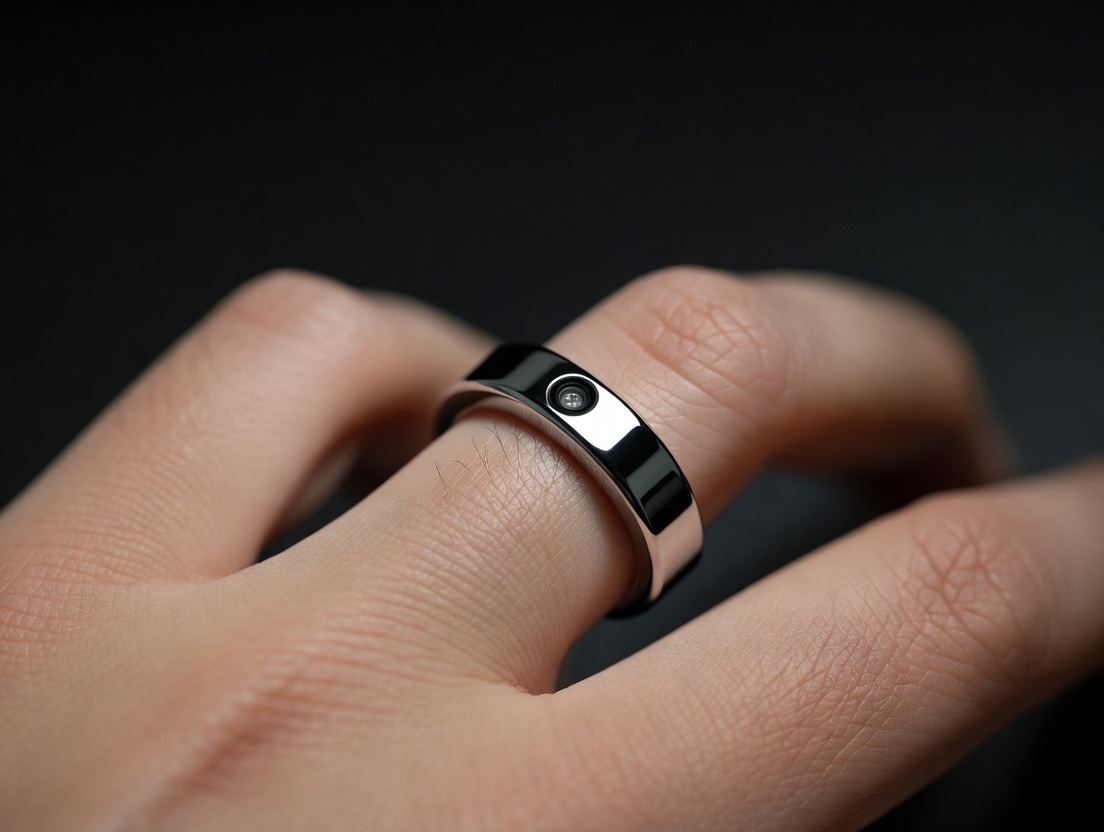
The challenge, of course, is that our energy is invisible and subjective. It’s easy to ignore a subtle signal from your body when a deadline is shouting at you. This is where the new frontier of personal biometrics comes in. Devices like the Oxyzen smart ring act as an external nervous system, giving you an objective, 24/7 readout of your energy-generating and energy-depleting states. By tracking metrics like heart rate variability (HRV), resting heart rate, skin temperature, and sleep architecture, these tools make the invisible visible. They can show you, for instance, that your "afternoon slump" is preceded by a distinct dip in your HRV two hours prior—a concrete signal you can learn to recognize and act upon.
Before you can manage your energy, however, you must first learn to see it. This begins with the foundational skill of body awareness. Building body awareness using smart ring feedback is like learning a new language—the language of your own physiology. It’s the critical first step in moving from guessing about your energy to knowing.
Think of your total energy like a four-cylinder engine. If only one or two cylinders are firing, you’ll sputter along, inefficient and strained. True vitality requires all four cylinders—or dimensions—to be optimally fueled and maintained. These dimensions, as defined by renowned performance expert Jim Loehr and others, are: Physical, Mental, Emotional, and Spiritual.
1. Physical Energy: This is the most fundamental dimension. It’s the quantity of your energy. It determines your basic capacity for everything else. Key drivers include:
A smart ring is particularly powerful for auditing physical energy. By analyzing your sleep stages, nighttime heart rate, and understanding your body's circadian signals (https://oxyzen.ai/blog/body-awareness-basics-understanding-circadian-signals), it provides an undeniable report card on your physical recovery. You can't argue with data showing you got only 12 minutes of deep sleep.
2. Mental Energy: This is the quality and focus of your energy. It’s your capacity to concentrate, learn, problem-solve, and think creatively. Mental energy is depleted by constant task-switching, distraction, and information overload. It’s renewed through focused work blocks, learning new skills, and mindful practices that calm the "monkey mind."
3. Emotional Energy: This is the tone of your energy. It’s how you feel while you are doing what you’re doing. Positive emotions like joy, confidence, and connection are energy multipliers. Negative emotions like frustration, anxiety, and resentment are powerful energy drains. Managing this dimension involves cultivating emotional awareness and regulation. Learning to recognize your body's stress signals early—through a clenched jaw, shallow breath, or a rising heart rate—is a crucial skill for preventing emotional energy spills.
4. Spiritual Energy: This is the purpose of your energy. It’s the connection to a purpose larger than yourself. This dimension is fueled by acting in alignment with your core values, contributing to others, and engaging in activities that give you a sense of meaning. When this dimension is full, you have incredible resilience and motivation. When it’s empty, even simple tasks can feel futile.
Your first task is to conduct a simple, subjective audit. On a scale of 1-10, how full is each of your energy dimensions right now? Where are the biggest leaks? The goal of energy management is not to have all four at a constant "10," but to develop the awareness and rituals to replenish each one before it hits empty.
Your body is always communicating its energy status. The problem is, we’re often taught to ignore it, to "power through." This leads to a dangerous pattern: we become fluent only in the language of crisis, ignoring the gentle whispers until they become screams.
Energy Signals are the gentle, proactive cues your body sends when it’s approaching a depletion point in a specific dimension. They are invitations for strategic renewal. For example:
Exhaustion Alarms are the blaring, reactive signals that you’ve blown past your limits. They demand immediate shutdown and come with a high recovery cost. For example:
The art of energy management is to become a master interpreter of the signals, thereby avoiding the alarms. This requires tuning in. Practices that enhance interoception—your inner sense—are key. A wellness ring accelerates this learning. When you feel that mid-morning mental dip, you can check your data and see a corresponding shift in your heart rate pattern or HRV. This objective feedback validates your subjective feeling, teaching you to trust your body's wisdom. As this article explains, a wellness ring validates body awareness intuition by bridging the gap between felt sense and measurable data.
You cannot manage what you do not measure. While your subjective feelings are vital, they can be biased by your mood, stress, or self-criticism. Biometric data from a smart ring provides an unbiased, 24/7 companion that reveals patterns you might completely miss.
Here’s how a device like the Oxyzen ring translates raw data into actionable energy insights:
1. It Quantifies Your Recovery (Physical Energy Tank): Your readiness score each morning isn't a guess; it's an algorithm analyzing your sleep (duration, deep sleep, REM, disturbances) and nocturnal physiological markers (HRV, resting heart rate, temperature). A low score is a clear message: your physical tank is low. Today is for maintenance tasks, not intense creative sprints. You can learn more about what these metrics mean in our complete health metrics data dictionary.
2. It Maps Your Daily Rhythm (Mental & Physical Cycles): Are you truly a "morning person"? The ring knows. By tracking your heart rate and temperature trends across weeks, it can identify your personal peaks and troughs in energy. You may discover your focus peak is actually from 10 AM to 12 PM, not right at dawn, or that you have a secondary creative window in the early evening.
3. It Flags Stress Accumulation (Emotional Energy Drain): Elevated daytime resting heart rate, low HRV, and increased skin temperature can all be indicators of sympathetic nervous system activation (stress). Seeing this data can prompt you to ask, "What's causing this physiological reaction?" Is it a specific meeting, a type of task, or unprocessed anxiety? This turns the ring into a tool for understanding the heart rate and emotion connection.
4. It Measures the Impact of Your Habits: That extra glass of wine, the late-night scrolling, the intense workout, the 20-minute meditation—how do they actually affect your system? The ring shows you the direct impact on your sleep and next-day recovery. This turns every choice into a data-informed experiment in energy management.
In essence, the smart ring bridges the gap between data and body awareness, creating a powerful feedback loop. You feel something, you check the data. You see a data pattern, you connect it to a feeling. Over time, this builds profound self-knowledge, allowing you to work with your biology, not against it.
We all know the concept of "morning larks" and "night owls," but our natural energy rhythms are more nuanced. Dr. Michael Breus's chronotype model provides a helpful framework for understanding your biological predisposition. Aligning your task schedule with your chronotype is one of the most powerful energy management hacks.
How a Smart Ring Helps: Your wearable data is the ultimate chronotype detective. It doesn't rely on your self-assessment, which can be flawed. By analyzing weeks of data on when you fall asleep, your sleep quality, and your daytime heart rate patterns, it can objectively identify your natural rhythm. You might think you're a Bear trying to live like a Lion, and your perpetually low readiness scores are the proof. Embracing your true chronotype reduces the constant energy drain of fighting your own biology.
Not all tasks are created equal, and not all energy is the same. The core practice of energy management is consciously aligning the type of task with the type of energy you have available. This requires categorizing both.
Categorize Your Tasks:
Assess Your Energy State:
Use a simple scale (High, Medium, Low) for each dimension (Physical, Mental, Emotional). Be honest. This assessment can be informed by both feel and data—like a low "Readiness" score on your smart ring app.
Now, Align Them:
This system turns your daily schedule from a static list of demands into a dynamic energy investment portfolio. You become the manager of your most precious resource.
Our culture glorifies the marathon work session—the "hustle" that goes for hours without a break. Neuroscience and physiology reveal this to be profoundly inefficient. Our brains and bodies operate in natural cycles called ultradian rhythms. Approximately every 90 minutes, our bodies send subtle signals for a break—fidgeting, hunger, loss of focus, yawning.
Ignoring these rhythms leads to a rapid decline in performance and a faster drain on energy reserves. Honoring them through strategic renewal is the secret to sustaining high performance.
The 90-Minute Work Block & The 20-Minute Renewal:
How a Smart Ring Informs This: You can use your ring’s stress or activity tracking to see these natural dips. You might notice your heart rate variability drops after a long period of focused screen time. That’s a physiological cue for a break. By taking it, you allow your nervous system to reset, often bringing your HRV back up, ready for the next cycle. This practice is a direct application of understanding your body's tension-release cycle.
If energy management is a house, sleep is the foundation. Everything else—nutrition, focus, emotional regulation—crumbles on a weak sleep foundation. This isn't just about duration; it’s about quality and consistency.
Sleep's Role in Energy Management:
Actionable Sleep Hygiene for Energy:
The Smart Ring as Your Sleep Coach: This is where wearables shine. A smart ring tracks what you can't feel: the precise breakdown of your light, deep, and REM sleep cycles. It shows you your sleep latency (how long it takes to fall asleep) and sleep efficiency (time asleep vs. time in bed). Most importantly, it shows you the impact of your choices. You can see the direct correlation between a late dinner, a stressful day, or an evening workout and your sleep graph. This feedback loop is essential for improving your sleep quality through body awareness skills. It turns the abstract goal of "better sleep" into a series of data-informed experiments.
Food is literally metabolized into cellular energy (ATP). What you eat, and when, is a direct lever on your energy supply. The goal is to provide steady fuel, not create rollercoaster spikes of glucose that lead to crashes, brain fog, and irritability.
Principles of Energy-Centric Nutrition:
Listening to Your Body's Signals: Nutrition is highly individual. Some thrive on three square meals, others on smaller, more frequent snacks. A smart ring can provide clues here, too. Do you see a pattern of elevated resting heart rate or poor sleep after certain foods? This could indicate inflammation or poor digestion, both massive energy drains. This is part of developing awareness of the gut-brain connection, where your digestive state directly impacts your mental and emotional energy.
This is a paradigm shift: movement isn't just for fitness or calorie burning; it's a primary tool for generating and regulating energy. The right kind of movement at the right time can clear brain fog, boost mood, and enhance creativity.
1. Movement for Acute Energy Renewal (The Micro-Break):
2. Movement for Capacity Building (The Exercise Session):
3. Movement for Mind-Body Integration:
Using Data to Inform Movement: Your smart ring helps you distinguish between beneficial stress (eustress from a good workout) and harmful strain. If your HRV is chronically low and your resting heart rate is high, your data is telling you your body is in recovery mode. Pushing through with intense exercise would be an energy withdrawal, not a deposit. Learning your body's signals for recovery is critical for using movement wisely.
Your physical energy can be full, but if your mind is cluttered with worries, to-dos, and unresolved emotions, you'll still feel drained. Managing this invisible load is non-negotiable.
Mental Load Management:
Emotional Load Management:
Your smart ring provides crucial biofeedback here. A spike in your stress graph during a specific task or time of day is a red flag pointing to an invisible drain. It asks you to investigate: "What thought pattern or emotional trigger is causing this physiological stress response?" This turns the device into a tool for emotional and somatic awareness, helping you catch energy leaks at their source.
Knowledge without a system is just trivia. Now that we understand the dimensions, signals, and foundational habits, it’s time to build your personalized, actionable Energy Blueprint. This is your operating manual—a dynamic set of guidelines that tells you what to do, and when, based on your energy state. It turns theory into daily practice.
Step 1: Establish Your Non-Negotiables (The Keystone Habits)
These are the 3-5 daily practices that form the bedrock of your energy, non-dependent on how you feel. They are your first line of defense against depletion. Examples:
The Role of Data: Use your smart ring to defend these non-negotiables. When you see your sleep score plummet after skipping your wind-down routine, or your stress graph spike on days you work through lunch, the data reinforces why these habits are non-negotiable. They are the proven foundation of your energy system.
Step 2: Map Your Ideal Energy Day
Using your identified chronotype and task-energy alignment principles, sketch your ideal day. Don’t worry about current reality; design from first principles.
Step 3: Create Your "If-Then" Energy Protocols
This is the core of your responsive blueprint. It’s a set of pre-decided actions for specific energy signals.
Writing these down removes decision fatigue in the moment. The protocol runs automatically.
Step 4: Build Your Energy Renewal Menu
Have a go-to list of renewal activities for each energy dimension. When you’re depleted, you lack the mental energy to invent a solution. A menu makes choice easy.
A smart ring helps you refine this menu. Try a renewal activity and see if your physiological markers (HRV, heart rate) improve afterwards. This is how you use a smart ring to build effective body awareness habits—by testing what truly works for your unique system.
Our energy is not an island; it is constantly exchanged in our interactions. Meetings, conversations, family dynamics, and even social media can be tremendous sources of renewal or profound drains. Learning to navigate this social dimension is critical.
Identify Your Social Energy Dynamics:
Strategies for Social Energy Management:
Using Your Biometric Feedback: Your body often knows before your conscious mind does. If you notice your heart rate steadily climbing or a sharp dip in your HRV during or after a specific type of interaction, pay attention. This biofeedback can highlight relationships or social contexts that are subconsciously stressful, allowing you to adjust your approach or set firmer boundaries. This is a practical application of learning to recognize your body's needs in real-time social contexts.
Technology promises efficiency and connection, yet it is often the primary saboteur of our energy. The constant notifications, the blue light, the infinite scroll, and the pressure to be "always on" fracture our attention and deplete our mental and emotional reserves. The goal is not to reject technology, but to wield it with intention.
The Energy Costs of Tech:
Creating an Energy-Positive Tech Environment:
Your Smart Ring as a Tech Detox Monitor: One of the most powerful correlations you can discover is between evening screen time and your sleep score. The ring provides undeniable proof of the cost. You can run experiments: one week with a strict 9 PM phone-in-another-room rule, and one week with your usual habits. The data will show you the impact, creating powerful motivation for change and helping you understand the deep sleep-body connection that technology disrupts.

Managing your existing energy is Phase 1. Phase 2 is about expanding your overall capacity—building a bigger energy "tank" so that life's inevitable stresses and demands deplete a smaller percentage of your total reserves. This is resilience.
Resilience is not about avoiding stress; it’s about adapting to it and recovering from it more efficiently. It’s the difference between a shallow pond that is muddied by a single stone and a deep lake that absorbs the ripple and remains clear.
How to Systematically Build Resilience:
Tracking Resilience with Data: Resilience shows up in your biometrics. Over months of consistent practice, you should see a positive trend: higher average HRV (indicating better autonomic nervous system balance), lower resting heart rate, and more consistent sleep scores even during moderately stressful periods. You recover faster. Seeing this data is incredibly validating and proves that your energy management work is paying off at a foundational, physiological level. It shows you are developing body awareness skills that can prevent illness and injury by building a more robust system.
No one operates at peak capacity every day. Life has cycles: hormonal cycles, seasonal cycles, project cycles, and emotional cycles. A rigid system will break. Your Energy Blueprint must have flexibility built in for low-capacity days and strategic plans for high-demand periods.
Strategy for Low-Capacity Days (When your data says "rest"):
These are days when your readiness score is low, you're fighting off a bug, you're emotionally drained, or you simply woke up on the wrong side of the bed.
Strategy for High-Demand Periods (Launch week, finals, a big event):
These are known, intense sprints that require extra output.
The Role of Objective Data: On a low-capacity day, your smart ring's score validates your feeling, giving you permission to rest without guilt. During a high-demand period, it acts as an early warning system. If you see your recovery scores trending down for multiple days despite the "sprint," it's a data-backed signal that you need to insert a recovery day now, before you crash. It teaches you to understand your body's unique energy patterns and fluctuations under pressure.
Your breath is the remote control for your nervous system. It is the most direct, always-available tool you have for shifting your energy state in real-time. Learning to use it consciously is a superpower.
The Physiology: Shallow, rapid chest breathing activates the sympathetic nervous system (fight-or-flight), burning energy. Deep, slow diaphragmatic breathing stimulates the vagus nerve and activates the parasympathetic nervous system (rest-and-digest), conserving and renewing energy.
Four Breath Protocols for Energy Management:
Pairing Breath with Biofeedback: Use your smart ring's real-time heart rate or stress graph feature as a mirror. Sit quietly and practice one of these breathing techniques for two minutes. Watch how your heart rate dips and your graph line smooths. This visual feedback powerfully reinforces the mind-body connection, showing you that you have direct agency over your physiological state. It’s a practical lesson in the breath-body connection.
Let’s see how these principles weave together in a practical, realistic week for "Sam," a knowledge worker with a Bear chronotype.
Sunday Evening (Preparation):
Monday (High-Readiness Day - Score 85):
Wednesday (Lower-Readiness Day - Score 62):
Friday (End of a Demanding Week):
Throughout the Week:
This integrated approach transforms energy management from a concept into a lived experience. It’s a dynamic dance of planning, responding to data, and honoring the body’s wisdom.
Mastering energy management for a week or a month is an achievement. Maintaining it for a lifetime is the true goal. This requires moving beyond rigid discipline and towards a fluid, compassionate, and adaptable practice that evolves with you. Sustainability is about creating a system that is resilient to life's inevitable disruptions—illness, travel, family demands, career changes, and personal loss.
From Discipline to Ritual:
Discipline is forcing yourself to do something you don’t want to do. A ritual is a practice you cherish because of the value it provides. The shift happens when you internalize the cause and effect. You no longer meditate because you "should"; you meditate because you’ve seen on your biometric data how it lowers your stress graph and improves your sleep. The action becomes intrinsically rewarding. Your non-negotiables become sacred rituals that you protect because you feel their absence.
Embracing Seasons and Cycles:
Your energy blueprint is not a static document. It must have seasonal settings.
The 80/20 Rule of Energy Sustainability: Aim to follow your blueprint and listen to your signals 80% of the time. The other 20% is for life—the spontaneous dinner, the late-night project with a passionate team, the vacation where sleep schedules go out the window. Guilt and rigidity are energy drains in themselves. The 80% foundation is strong enough to support the 20% of deviation, and your growing awareness will help you return to center more quickly.
Even with the best system, you will encounter roadblocks. Anticipating them reduces their power.
1. "I don't have time for breaks or rituals."
2. "My workplace culture doesn't support this."
3. "I'm inconsistent. I start strong but then fall off."
4. "The data from my ring is stressful or confusing."
Once you are comfortable observing your patterns, you can enter the powerful phase of deliberate experimentation. This is where you move from being a passenger to being a scientist of your own energy.
The N=1 Experiment Framework:
Example Experiment: Caffeine Timing.
This experimental mindset is the pinnacle of using a smart ring to develop deep body awareness. It empowers you to create a lifestyle that is uniquely optimized for your biology.
As you become proficient in managing your own energy, you naturally begin to influence the energy of the spaces and people around you. This is energy leadership—creating conditions where others can also access their best energy.
In Your Home:
In Your Workplace or Teams:
Leading with energy awareness creates psychological safety and boosts collective resilience. It shows that you value people as human beings, not just human doings.
Ultimately, the goal is for energy awareness to cease being a "practice" you do and become simply who you are. It integrates into your identity. You are no longer a person who gets tired and grumpy; you are a person who skillfully manages energy. This shift is profound.
Signs of Integration:
In this state, the smart ring or journal becomes less of a daily crutch and more of a periodic audit tool—a check-in to ensure you're still on track or to troubleshoot when something feels off. The external device has successfully trained your internal compass.
We have covered vast territory—from the four dimensions of energy to biometric feedback, from circadian rhythms to social dynamics. It can feel overwhelming. But remember, every master was once a beginner. Your journey starts with a single, simple step.
Your 7-Day Energy Awakening Challenge:
Day 1: Observe. Carry a notepad or use your phone. Just notice your energy. When do you feel a lift? A drop? What triggers it? No judgment, just data collection.
Day 2: Breathe. Three times today, when you transition between activities, stop and take three deep, conscious breaths. Feel your feet on the floor.
Day 3: Hydrate. Start your day with a large glass of water before any caffeine. Notice how it feels.
Day 4: Move. Schedule one 10-minute walk, ideally outside. Don't make it about exercise; make it about sensation—the air, the light, the movement.
Day 5: Protect. Identify one 60-minute focus block. Turn off all notifications and work on one thing.
Day 6: Wind Down. Start your bedtime ritual 30 minutes earlier than usual. Read a book (physical or e-ink), listen to calm music, or do gentle stretches.
Day 7: Reflect. Look back on your week. What one insight about your energy stands out? What one small habit do you want to carry forward?
This challenge requires no special tools, just intention. It is the seed from which your entire energy management practice can grow.
For those ready to accelerate their learning with objective data, a tool like the Oxyzen smart ring can be a powerful ally. It can help you see the patterns you can't feel and provide the validation needed to trust this new way of being. Whether you use technology or your own keen observation, the principles remain the same.
You are not a machine to be optimized until breakdown. You are a living, pulsing, rhythmic being. Your energy is your life force. Managing it isn't a productivity hack; it is the practice of stewardship over your one precious life. It is the way you show up fully—for your work, your creativity, your relationships, and your own quiet moments of joy.
Begin today. Listen to that subtle signal. Take that first conscious breath. You have everything you need to start. The path to sustainable vitality is not about adding more to your life, but about awakening to the intelligent, renewable energy that is already within you, waiting to be understood and wisely used.
Your Trusted Sleep Advocate: Sleep Foundation — https://www.sleepfoundation.org
Discover a digital archive of scholarly articles: NIH — https://www.ncbi.nlm.nih.gov/
39 million citations for biomedical literature :PubMed — https://pubmed.ncbi.nlm.nih.gov/
Experts at Harvard Health Publishing covering a variety of health topics — https://www.health.harvard.edu/blog/
Every life deserves world class care :Cleveland Clinic - https://my.clevelandclinic.org/health
Wearable technology and the future of predictive health monitoring :MIT Technology Review — https://www.technologyreview.com/
Dedicated to the well-being of all people and guided by science :World Health Organization — https://www.who.int/news-room/
Psychological science and knowledge to benefit society and improve lives. :APA — https://www.apa.org/monitor/
Cutting-edge insights on human longevity and peak performance:
Lifespan Research — https://www.lifespan.io/
Global authority on exercise physiology, sports performance, and human recovery:
American College of Sports Medicine — https://www.acsm.org/
Neuroscience-driven guidance for better focus, sleep, and mental clarity:
Stanford Human Performance Lab — https://humanperformance.stanford.edu/
Evidence-based psychology and mind–body wellness resources:
Mayo Clinic — https://www.mayoclinic.org/healthy-lifestyle/
Data-backed research on emotional wellbeing, stress biology, and resilience:
American Institute of Stress — https://www.stress.org/


