


Body Awareness Basics: The Interoception Connection
The connection between body awareness and interoception (sensing internal states).
The connection between body awareness and interoception (sensing internal states).
%402x.svg)
Have you ever eaten an entire bag of chips without tasting a single one, driven home on autopilot with no memory of the trip, or snapped at a loved one only to realize—hours later—that you were just profoundly hungry? In our hyper-connected, productivity-obsessed world, we’ve become masters of outsourcing our attention. We track our steps with watches, our calories with apps, and our schedules with digital assistants. Yet, we remain strangers in our own skin, disconnected from the most vital data stream of all: the nuanced, real-time language of our body.
This isn't just about "listening to your gut" as a vague metaphor. It's about accessing a fundamental, science-backed sense called interoception—your brain's ability to perceive, interpret, and integrate the signals originating from inside your body. It’s the silent narrator of your heartbeat, the subtle map of your breath, the complex feedback loop of hunger, thirst, temperature, and tension. Interoception is the foundation of body awareness, and it is the missing link between modern biohacking and true, holistic well-being.
For decades, wellness has been an external pursuit: counting macros, logging miles, hitting targets. But what if the ultimate performance hack, the key to resilient mental health, profound rest, and peak daily functioning, lies not in pushing harder but in perceiving more deeply? This is where the journey inward begins. By mastering the basics of body awareness through the lens of interoception, we don't just become better at managing stress; we fundamentally change our relationship with ourselves. We move from being passengers in our bodies to becoming skilled, compassionate navigators.
In this deep exploration, we will demystify this hidden sense, uncover why so many of us have lost touch with it, and provide a practical, science-guided roadmap to reawakening it. The destination is a life lived with more clarity, calm, and conscious control. And as we’ll see, emerging tools like advanced smart rings are providing an unprecedented bridge, translating our body's silent whispers into a language we can finally understand and act upon. Let's begin by exploring the very fabric of this internal sense.

Close your eyes for a moment. Can you feel your heartbeat without placing a hand on your chest? Are you aware of the rhythm of your breath, whether it’s shallow or deep? Can you distinguish between the pang of anxiety and the flutter of excitement in your stomach? This conscious awareness of internal bodily sensations is the essence of interoception. Often described as the "sixth sense," it is the continuous, subconscious process by which your nervous system monitors the internal state of your body.
Scientifically, interoception involves a network of receptors throughout your viscera (organs like your heart, lungs, gut, and bladder) that send signals via neural pathways to a region in your brain called the insula cortex. Think of the insula as the body's internal dashboard. It receives raw data—"blood pressure rising," "blood sugar dipping," "muscle tense in right shoulder"—and integrates it to create your subjective feeling of being you. This process is fundamental to every aspect of your life:
Poor interoception, on the other hand, manifests as a disconnect. It’s the inability to recognize you're stressed until you have a migraine. It’s eating when bored, not hungry. It’s feeling suddenly, overwhelmingly fatigued because you missed your body's earlier cues for rest. In extreme cases, chronically low interoceptive awareness is linked to conditions like anxiety disorders, depression, eating disorders, and addiction, where internal signals become chronically misread or ignored.
Why does this matter for modern wellness? Because you cannot manage what you cannot measure. If your only metric for exhaustion is collapsing into bed, you’ve missed a hundred subtler signals. By cultivating interoception, you gain access to high-resolution data about your needs, enabling proactive—not reactive—health choices. This internal awareness is the bedrock upon which quality sleep, effective stress management, and optimal performance are built. For instance, understanding the hidden link between sleep quality and mental health starts with recognizing your body’s pre-sleep tension signals.
The relationship between your mind and body is not a one-way street. It’s a constant, dynamic conversation—a feedback loop where thoughts influence physical states and physical states dictate thoughts. Interoception is the channel through which this conversation flows. To master body awareness, you must understand this loop, as it explains why a worried thought can knot your stomach and why a deliberate deep breath can calm your mind.
Imagine this scenario: You're about to give a big presentation. The thought ("This is high-stakes; I might fail") triggers a subconscious threat response. Your brain, via the amygdala, sends a distress signal to your body, activating the sympathetic nervous system—your "fight-or-flight" mode. Physiological changes occur instantly: your heart rate accelerates (pumping more blood to muscles), your breath becomes shallow and rapid (increasing oxygen), and your muscles tense (preparing for action). These are real, measurable bodily events.
Now, here’s where interoception completes the loop. Those physical changes—the racing heart, the tight chest—are sent back to your brain as interoceptive data. Your insula cortex receives this data and, depending on your awareness and context, interprets it. If you have low interoceptive awareness, you might simply feel a wave of undefined panic. The brain, receiving strong "alarm" signals from the body, reinforces the initial worried thought, creating a vicious cycle: Thought → Body Alarm → Sensation → Catastrophic Thought → More Body Alarm.
However, with trained interoceptive awareness, you can interrupt this loop. You notice the early sensation of a quicker heartbeat not as "panic" but as "my body’s natural energy mobilization for a challenge." You can consciously engage the parasympathetic nervous system—your "rest-and-digest" mode—through a tool like paced breathing. A few deliberate, slow breaths directly alter the physiological state, sending new, calmer data back to the brain. The brain then updates its emotional assessment. The loop becomes virtuous: Sensation → Conscious Recognition → Calming Action → Altered Physiology → Calmer Thought.
This principle is the engine behind mind-body practices like mindfulness meditation, yoga, and tai chi. They are, in essence, interoceptive training programs. By focusing on the breath or bodily sensations without judgment, you strengthen the neural pathways to your insula, increasing the resolution and accuracy of your internal dashboard. You learn that sensations are just data, not destiny. This skill is profoundly protective. It allows you to spot the early signs of chronic stress before they erode your health and is a critical component in understanding how poor sleep quality affects your health, backed by research. The mind-body loop doesn't stop during the day; it plays a crucial role in how you wind down at night, directly impacting your ability to achieve restorative sleep.

Our ancestors didn't need lessons in interoception; survival depended on it. Noticing subtle hunger cues meant finding food. Sensing a shift in energy meant seeking shelter. Feeling the somatic markers of trust or danger was crucial for tribal living. So why, with all our modern advantages, have we become so profoundly disconnected from our bodies? The answer lies in a perfect storm of cultural, technological, and lifestyle factors that chronically pull our attention outward and numb our sensitivity inward.
1. The Cult of Productivity and "Pushing Through": Modern society glorifies ignoring the body's signals. "No days off," "crushing it," and "hustle culture" implicitly teach us to override fatigue, hunger, and stress. Taking a break for a body signal is often framed as weakness, not wisdom. This conditions us to treat our body like a machine to be driven, not a partner to be heard.
2. Digital Distraction and the "Always-On" Brain: Our smartphones are interoception kryptonite. The constant ping of notifications creates a state of chronic, low-grade alertness that pulls our conscious awareness away from internal sensations and into a digital realm. We scroll when bored, anxious, or tired, using external stimulus to drown out internal cues. This not only disconnects us but also trains our brain to seek external regulation, weakening our innate ability for internal self-regulation.
3. Comfort Overload and Sensation Dulling: We live in climate-controlled environments, eat highly palatable foods designed to overwhelm natural satiety signals, and often move from chair to car to couch. This sensory monotony—a lack of natural variations in temperature, physical challenge, and even taste—can dull our interoceptive sensitivity. If your body is never truly cold, hungry, or physically exerted in a natural way, the subtle gradations of those sensations become harder to perceive.
4. The Intellectualization of Health: Wellness has become another cognitive task. We track macros in an app instead of noticing how foods make us feel. We force ourselves through rigid workout schedules regardless of energy levels. We chase 8 hours of sleep as a number, oblivious to whether the sleep was truly restorative. This externalizes authority, teaching us to trust a algorithm or a guru over our own embodied experience. We become more concerned with the metric of sleep quality vs. sleep quantity as a data point, rather than tuning into our own feeling of refreshment upon waking.
5. Discomfort Avoidance: Modern life is engineered to minimize discomfort. Yet, interoceptive awareness is built by leaning into mild discomfort with curiosity—noticing the burn in muscles during exercise, the mild hunger before a meal, the initial resistance to getting off the couch. By constantly avoiding these sensations, we lose the vocabulary of our body.
This disconnect creates a costly gap. We miss early warning signs of burnout, misinterpret emotional hunger for physical hunger, and struggle to relax because we've forgotten what true physiological calm feels like. Rebuilding body awareness is, therefore, a act of cultural and personal rebellion. It’s about reclaiming the authority of your direct experience. The first step back is learning the language your body speaks, which begins with recognizing its most fundamental signals.
To rebuild interoception, you must first learn the alphabet of your internal world. These are the core, universal sensations that serve as the basic building blocks of your body's language. They are often simple, physical, and neutral. The goal is not to judge them as "good" or "bad," but to notice them with curiosity, like a scientist collecting data. By naming them, you bring them into conscious awareness and begin to decipher their messages.
The Foundational Five Sensations:
How to Practice Sensation-Spotting:
Set a timer for 2 minutes, 3 times a day. Pause whatever you’re doing. Close your eyes if possible. Silently scan from your head to your toes and ask:
You might find, "There's a pressing tightness in my forehead," or, "I feel a warm, soft heaviness in my stomach." That’s it. No need to change it. Just notice and name it.
This practice builds your interoceptive vocabulary. Over time, you'll start to see patterns. You'll learn that a specific flutter in your stomach precedes creative ideas, or that a certain tightness in your chest is your early warning sign for stress. This granular awareness is the prerequisite for making intelligent, body-informed choices about everything from when to take a break to how to prepare for optimal sleep, helping you identify the morning signs of good sleep quality based on how you actually feel, not just how long you were in bed.
Of all the interoceptive sensations available to us, the breath is uniquely powerful. It is the only autonomic (automatic) bodily function that we can also control voluntarily. This dual nature makes it the perfect bridge between the conscious and subconscious mind, and the most accessible tool for regulating the mind-body feedback loop. By learning to anchor your awareness in your breath, you train your interoceptive muscles and gain a direct lever to influence your nervous system.
Why Breath Works:
Your breath is a live feed of your emotional and physiological state. Anxiety shortens it. Relaxation deepens it. By changing the feed—consciously slowing and deepening your breath—you send a powerful, counteracting signal back to your brain. This triggers the parasympathetic nervous system, slowing your heart rate, lowering blood pressure, and promoting a state of calm. In essence, you use an interoceptive tool (noticing the breath) to create a physiological change, which in turn alters your emotional and mental state.
Practical Breath Awareness Techniques:
1. The Noticing Practice (Foundation): For one minute, several times a day, simply observe your breath without trying to change it. Ask: Where do I feel it most? In my nostrils, my chest, or my belly? Is it deep or shallow? Fast or slow? Smooth or ragged? This pure observation, without judgment, is the core of interoceptive training. It cultivates the "observer self" that can witness sensations without being hijacked by them.
2. The Physiological Sigh (For Instant Calm): This is a fast-acting tool for reducing acute stress. Inhale deeply through your nose until your lungs are full. Then, take one more short, sharp "sip" of air to fully expand the lungs. Exhale slowly and completely through your mouth with a sighing sound. Repeat 2-3 times. This pattern maximally reinflates the alveoli (air sacs) in your lungs, improving oxygen exchange and rapidly promoting relaxation.
3. 4-7-8 Breathing (For Sleep and Anxiety): This pattern is designed to quiet the nervous system. Place the tip of your tongue against the ridge behind your upper front teeth. Exhale completely through your mouth. Then, close your mouth and inhale quietly through your nose for a count of 4. Hold your breath for a count of 7. Exhale slowly through your mouth, making a "whoosh" sound, for a count of 8. This is one cycle. Repeat for 4 cycles. It’s a potent tool for quieting a racing mind before bed, directly contributing to better sleep quality through the formula of timing and rhythm.
Integrating Breath Awareness: The goal is not to meditate for hours, but to weave micro-moments of breath awareness into your day. Before you check your phone in the morning, take three conscious breaths. When you feel a wave of frustration at work, pause for a physiological sigh. When you lie down to sleep, begin with 30 seconds of simple breath noticing. Each of these acts strengthens your interoceptive pathway and gives you agency over your state. As you become more adept at using breath to manage daily stress, you create a positive ripple effect that sets the stage for more restorative sleep, breaking the cycle described in why you wake up tired: the sleep quality connection.
While breath is a universal anchor, true body awareness requires expanding your sensitivity to other critical life-sustaining signals: hunger, fullness, and energy. In a world of scheduled meals, diet trends, and caffeine-driven productivity, these natural cues are often overridden, leading to poor digestion, energy crashes, and weight management struggles. Re-learning this language is a revolutionary act of self-care.
Deconstructing "Hunger":
True physiological hunger is a specific interoceptive signal. It comes on gradually, often accompanied by physical sensations like stomach rumbling, a slight emptiness or gnawing in the abdomen, a dip in energy, or even mild lightheadedness. It is patient and can be satisfied by a variety of foods.
Contrast this with emotional or mind hunger, which is sudden, specific (e.g., "I need chips NOW"), often located in the mouth or mind rather than the stomach, and tied to an emotion like boredom, stress, or sadness. It is insatiable by food.
The Practice: Before you eat, pause. Place a hand on your stomach. On a scale of 1 (ravenous) to 10 (stuffed), where are you? What physical sensations tell you that? If the answer is vague or mentally driven ("It's noon," "I'm stressed"), drink a glass of water and wait 10 minutes. Reassess.
Understanding "Fullness" (Satiety):
Fullness signals are subtler and slower to arrive than hunger signals (it takes about 20 minutes for satiety hormones to reach the brain). Interoceptive eating involves checking in mid-meal. The goal is to eat to a point of comfortable satisfaction (around a 6 or 7 on the scale), not to a point of distension or discomfort (8-10).
The Practice: Eat without distractions (no TV, phone). Slow down. Put your utensil down between bites. Halfway through your meal, do a full-body scan. Has the emptiness sensation changed? Do you feel warmth, contentment, or a slight pressure in your stomach? This practice alone can transform your relationship with food.
Decoding Energy Cues (Not Just Sleepiness):
Fatigue isn't just about sleep. Your energy ebbs and flows in 90-120 minute ultradian rhythms throughout the day. Interoception helps you catch the natural dip before you crash.
Physical energy cues: A slight heaviness in the limbs, drooping eyelids, decreased concentration, or a desire to fidget or stretch.
Mental energy cues: Irritability, difficulty focusing, making small errors.
When you notice these cues, it’s your body’s signal for a brief restorative pause—not another cup of coffee. A 5-minute walk, some deep breathing, or even looking out a window can honor this rhythm and sustain your energy more effectively than pushing through.
Mastering these cues creates a foundational harmony in your daily biology. This harmony is essential for maintaining consistent energy and managing stress, which are prerequisites for good sleep. When you eat in alignment with true hunger and honor your energy rhythms, you prevent the late-night digestive issues and cortisol spikes that are among the 10 factors that destroy sleep quality most people ignore. This self-awareness is the first and most important step in any wellness journey.
Ask someone where they feel sadness, and they might point to their chest or throat. Ask about anxiety, and they may indicate a fluttering in the stomach or tension in the shoulders. Emotions are not abstract concepts that live solely in the mind; they are full-body experiences with distinct somatic signatures. This is the emotion-sensation link, a core principle of interoceptive awareness. By learning to map your feelings in your body, you gain a powerful tool for emotional intelligence—you can identify, process, and release emotions before they become overwhelming.
The Science of Embodied Emotion: Research, including large-scale studies creating "body maps" of emotions, consistently shows that different emotional states activate distinct patterns of bodily sensation. Happiness often floods the body with warm, energetic sensations. Sadness can create a sense of heaviness or hollow ache in the chest. Anger might manifest as heat, pressure, and tension in the upper body. Anxiety frequently shows up as tightness in the chest, a churning stomach, and cold extremities.
Why This Matters: When you can identify an emotion by its physical sensation first, you create a crucial gap between stimulus and reaction. Instead of being hijacked by "anger," you notice "heat in my face and clenching in my fists." This subtle shift allows you to respond thoughtfully rather than react impulsively. It also demystifies emotions, making them feel more manageable and less scary.
How to Practice Emotion Mapping:
This practice builds emotional granularity—the ability to distinguish between, say, irritation, rage, and resentment—each of which will have slightly different somatic profiles. This skill is invaluable for mental health. It allows you to process emotions in real-time, preventing the kind of chronic, bottled-up stress that directly sabotages your nervous system's ability to relax, directly impacting the science of sleep quality and what happens when you sleep well. A calm, processed emotional landscape is the foundation of a calm, restful night.
Stress is not a binary on/off switch. It's a spectrum, ranging from a mild, motivating alertness to a state of debilitating, chronic overwhelm. Most people only recognize they're stressed when they're near the breaking point—the pounding headache, the snapped response, the night of staring at the ceiling. Interoceptive awareness allows you to detect stress in its earliest, mildest forms, when it's easiest to address. Think of it as your body's early-warning radar system.
Your body has a unique signature for stress. Learning yours is a critical component of self-preservation. Common early somatic warning signs include:
Creating Your Personal Stress Profile: Over one week, use your sensation-spotting skills. Every time you later identify you are stressed (e.g., after a tense meeting, a deadline), retrospectively ask: "What was the very first physical sign my body gave me?" Journal these. You'll start to see your personal pattern emerge. For one person, the first sign is a tight jaw. For another, it's a slight hollowness in the chest.
The Interoceptive Stress Intervention: Once you know your early sign, you can intervene proactively. The moment you detect that first jaw clench or stomach flutter, that is your cue to deploy a regulation tool immediately.
This is stress management at the source, rather than crisis management after the fact. It prevents the cascade of stress hormones from gaining momentum and wreaking havoc on your system. This proactive approach is especially crucial in the evening, as unresolved daytime stress is a primary driver of poor sleep. Learning to down-regulate your nervous system with these micro-interventions can be more effective than any sleep aid, directly addressing the core issues behind 7 signs your sleep quality is poor and how to fix it. You transition from managing sleep to managing the stress that prevents it.
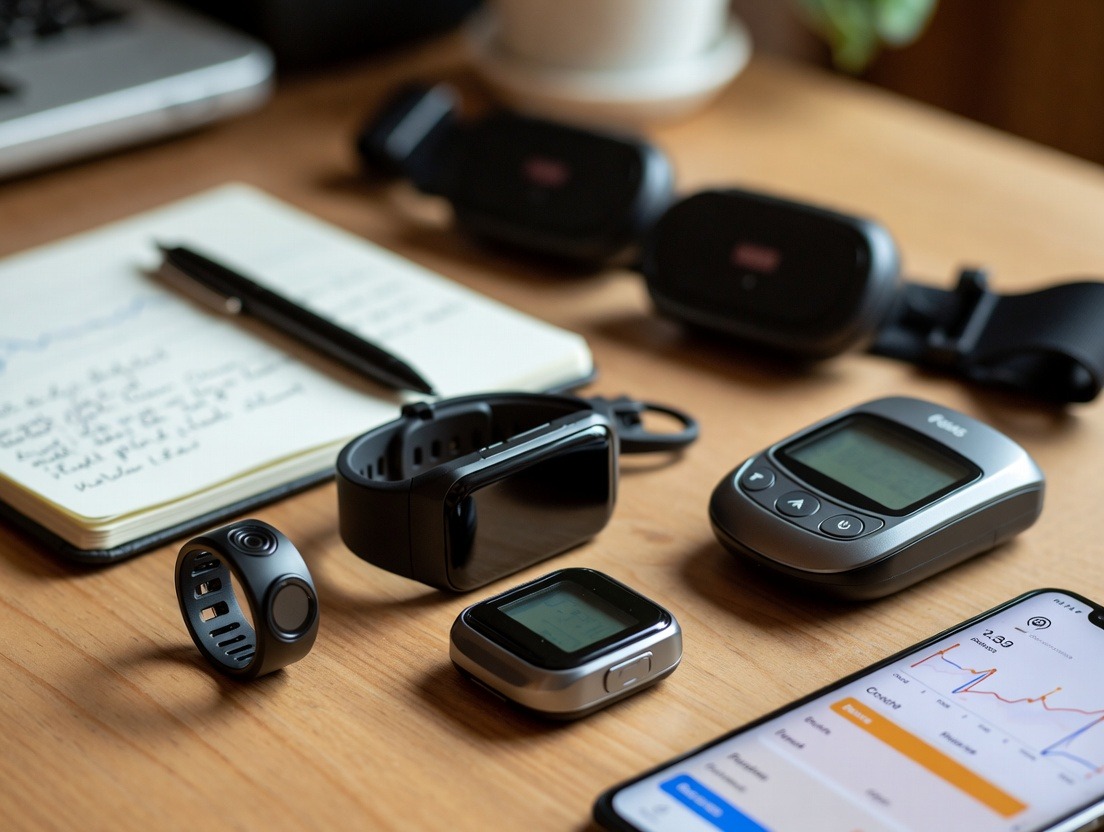
In our quest for quantified health, we've strapped on devices that track our every step, heartbeat, and sleep cycle. This presents a fascinating paradox: Does external data from a smart ring or watch enhance our internal, interoceptive awareness, or does it further externalize our sense of self, making us reliant on a device to tell us how we feel? The answer is nuanced. Technology is neither savior nor villain; it is a tool whose value depends entirely on how we use it.
The Potential Pitfall: The Outsourcing of Authority. The danger lies in becoming a passive consumer of data. You glance at your smart ring and see a "high stress" alert and then realize you feel anxious. You see a poor sleep score and then decide you're tired. This reinforces the disconnect, teaching you to trust the algorithm over your own lived experience. It can create anxiety ("my HRV is low today, I'm doomed") or foster a compulsive, numbers-chasing mentality that is the antithesis of mindful body awareness.
The Powerful Potential: The Bridge to Embodied Insight. Used wisely, advanced wearable technology can be a profound ally in cultivating interoception. It acts as a biofeedback mirror, providing objective, correlative data that helps you interpret your subjective sensations.
The key is to use the technology as a consultant, not a commander. The final authority must always reside within you. The data is a piece of the puzzle, but your felt sense is the picture on the box. This synergistic approach, where technology informs intuition, represents the future of personalized wellness, allowing for incredibly precise tracking of interventions, as explored in guides on the best sleep quality tracking methods compared for beginners.
Cultivating interoception is not about adding another hour-long meditation to your already busy day. It's about weaving tiny, consistent threads of awareness into the fabric of your existing routine. Sustainability is key. The goal is to make checking in with your body as habitual as checking your phone—but far more rewarding. Here is a framework for building a seamless, daily body awareness practice.
The Micro-Habit Stacking Method: Attach your practice to an existing, automatic daily behavior (a "trigger"). After the trigger, perform a very small interoceptive action.
The Weekly "Body Scan" Deep Dive: Once a week, dedicate 5-10 minutes to a guided body scan. Lie down in a quiet space. Starting at your toes and moving slowly to the top of your head, mentally visit each part of your body. Simply notice what is there—tingling, warmth, tension, coolness, numbness, anything. The instruction is not to relax, but to notice. This is the foundational practice for increasing interoceptive resolution.
Journaling for Pattern Recognition: Keep a simple log. 2-3 times a day, note:
Over time, this journal will reveal your personal lexicon and your triggers. You’ll see the direct link between certain situations, your body’s response, and what helps. This self-knowledge is power. It turns wellness from a generic concept into a personalized operating manual. This practice is the ultimate starting point for anyone wondering about sleep quality improvement: where to start for maximum results, because it begins with understanding the baseline state of the system that needs to sleep—you.
The connection between interoception and sleep is profound and bidirectional. A calm, well-regulated nervous system—achieved through high interoceptive awareness—is the absolute prerequisite for falling asleep easily and cycling through the restorative stages of deep and REM sleep. Conversely, poor sleep blunts interoceptive sensitivity, creating a vicious cycle of dysregulation. You can't hack your way to good sleep with supplements and gadgets if your body is screaming with unprocessed tension and stress.
How Interoception Prepares You for Sleep:
The transition from wakefulness to sleep requires a massive shift from sympathetic (fight-or-flight) to parasympathetic (rest-and-digest) dominance. Interoceptive skills are the controls for this transition.
How Smart Rings Provide the Missing Feedback: This is where the interoceptive-technology synergy shines for sleep. You practice your evening body scan and breathwork, subjectively feeling calmer. When you wake up, your smart ring provides objective feedback on how that practice actually affected your physiology overnight.
This feedback loop is transformative. It moves you from guessing to knowing. It turns abstract sleep advice into personalized, proven rituals. You learn which of your interoceptive practices directly translate into higher-quality rest, as measured by the nuanced metrics in a sleep quality score explained: what your number really means. This empowers you to become the architect of your own recovery, night after night.
Understanding the science of interoception is one thing; living it is another. The true power of this practice is revealed not in quiet meditation rooms, but in the messy, unpredictable flow of daily life. It’s in the moment you choose a walk over a snack when you recognize stress eating cues. It’s in catching a rising tone of voice because you feel heat in your chest, and softening it. It’s in honoring a dip in energy with a five-minute break instead of a third coffee. This is where interoception transitions from a concept to a superpower—a real-time guidance system for wiser decisions, healthier reactions, and a more authentic life.
Consider the common afternoon slump. The default reaction is often external: caffeine, sugar, scrolling. An interoceptively-aware person pauses first. They might identify: "My energy feels low and heavy. My eyes are tired. My posture is slumping." This data leads to a targeted response: a brisk walk (to increase circulation and alertness), a glass of water (addressing potential dehydration), or a few minutes of looking out the window (resting the eyes and mind). The action addresses the actual need, not just a habitual craving.
The same applies to social interactions. In a heated discussion, instead of being swept away by the torrent of words, you can anchor in the physical. "My face is hot. My breath is shallow. I feel a defensive clenching in my gut." Naming this gives you a split second of choice. You can take a breath, feel your feet on the floor, and respond from a place of slightly more regulation. This doesn't mean you don't feel anger; it means you are not a puppet to its somatic strings.
This embodied awareness also enriches positive experiences. When you feel joy, you can locate it—perhaps as a lightness in your chest or a warmth spreading through you—and savor it fully, strengthening that neural pathway. You become an active participant in your life, not just a passive experiencer. This conscious participation is the ultimate goal, and it has a direct, measurable impact on your long-term health, influencing everything from your cardiovascular resilience to your sleep quality and aging: what changes and what you can control.
While breathwork and body scans are accessible entry points, structured movement practices are the gym for your interoceptive capacity. Disciplines like yoga, tai chi, qigong, and even certain forms of mindful weightlifting or walking are not merely physical exercises; they are sustained, dynamic trainings in listening to and cooperating with the body. They force you into a continuous dialogue between intention, sensation, and movement.
Yoga: The Laboratory of Sensation. A yoga mat is a controlled environment to explore your internal landscape. Each pose (asana) presents a unique constellation of sensations—stretch, strength, balance, compression, release. The instruction to "listen to your body" is a direct command to engage interoception. Should that hamstring stretch be a sharp pain (a warning signal) or a steady pull (a growth signal)? Is that shake in your quadriceps fatigue or fear? Yoga teaches discernment. The practice of holding a pose and breathing into sensations builds tolerance for discomfort and an intimate knowledge of your unique structure and its limits. This translates off the mat into a better ability to differentiate between types of physical and emotional discomfort.
Tai Chi and Qigong: The Flow of Energy. These Chinese "internal arts" are explicitly designed to cultivate awareness of qi or life force, which many modern practitioners interpret as the subtle interoceptive sense of internal energy flow. The slow, deliberate, flowing movements are performed with acute attention to weight shifts, balance, and the sensation of movement originating from the core. The focus is less on achieving a shape and more on feeling the continuous, wave-like motion of energy and intention through the body. This hones your sensitivity to the most subtle shifts in tension and relaxation, training you to maintain a calm, alert center even while in motion—a skill invaluable for managing stress in motion.
Conscious Walking or Running: Turning a daily commute or workout into an interoceptive practice is remarkably simple. Instead of tuning out with music or podcasts, tune in. Feel the sensation of your foot striking the ground, the rhythm of your stride, the swing of your arms, the wind on your skin. Notice how your breath synchronizes with your pace. When your mind wanders (as it will), gently bring it back to the physical symphony of movement. This transforms exercise from a chore focused on external outcomes (calories burned, miles logged) into a moving meditation that grounds you in the present and reconnects neural pathways.
These practices do more than increase flexibility or strength; they re-pattern your relationship with your physical self from one of command and control to one of dialogue and partnership. This harmonious partnership is critical for winding down at night; a body that has been listened to and respected throughout the day is far more likely to surrender peacefully to sleep, setting the stage for the processes explained in the science of sleep quality: what happens when you sleep well.
If daily interoceptive moments are like doing sporadic push-ups, mindfulness meditation is like committing to a full strength-training regimen. It is the dedicated, formal practice of cultivating a non-judgmental awareness of present-moment experience, which includes—fundamentally—the constant flow of bodily sensations. By regularly sitting in stillness and turning attention inward, you are doing heavy-duty reps for your anterior insula, the brain's interoceptive hub.
How Meditation Builds Interoceptive Muscle: In a typical mindfulness-of-breath or body-scan meditation, the instruction is to notice sensations as they arise, observe them with curiosity, and let them pass without attachment or aversion. This sounds simple but is neurologically profound. Each time you notice your mind has wandered to a thought and gently return your attention to the sensation of your breath, you are strengthening two key faculties:
This training directly increases what scientists call interoceptive accuracy—the precision with which you can detect internal signals like your heartbeat. More importantly, it builds interoceptive sensibility—your confidence in and tendency to attend to these signals.
Beyond the Cushion: Informal Mindfulness. The goal of formal practice is to infuse your entire life with this quality of awareness. This is "informal mindfulness." It’s washing the dishes and feeling the warmth of the water on your hands. It’s listening to a friend and noticing the empathetic tug in your own heart. It’s being stuck in traffic and observing the frustration as a set of clenched sensations in your belly, rather than becoming those sensations. This is interoception in its most applied form.
Research consistently shows that mindfulness meditation reduces activity in the brain's default mode network (the "monkey mind" responsible for rumination about the past and future) and increases connectivity with the insula. This literally rewires your brain to be more present in your body and less lost in narrative. For sleep, this is revolutionary. The primary obstacle to falling asleep is often a mind racing with thoughts about the past day or tomorrow's worries. A trained, mindful mind can notice those thoughts, acknowledge them, and disengage, returning the focus to the dark, quiet safety of the body in bed. It is the antidote to the anxiety that fuels 7 signs your sleep quality is poor and how to fix it, particularly the signs related to a restless, worried mind at bedtime.

A major hurdle in developing body awareness is our deeply ingrained cultural aversion to discomfort. We see pain and discomfort as system errors to be silenced immediately with medication, distraction, or avoidance. Interoception invites a radical reframe: Sensations, including uncomfortable ones, are data, not defects. Learning to approach discomfort with curiosity, rather than fear, is a cornerstone of resilience and a profound application of interoceptive skill.
Differentiating Between Pain Signals: Not all discomfort is equal. Interoceptive awareness helps you become a better diagnostician of your own body.
The Practice of "Sitting With": For informational discomfort, the practice is to "sit with" it. This doesn't mean endure suffering masochistically. It means turning toward the sensation with mindful curiosity to understand its message, rather than reflexively trying to escape it.
Often, this simple act of acknowledgment causes the sensation to shift or lessen. Even if it doesn't, you have changed your relationship to it. You are no longer a victim of the pain; you are an observer of a sensation. This reduces secondary suffering—the anxiety and fear about the pain—which is often worse than the primary sensation.
This skill is invaluable for managing chronic conditions, stress, and even the discomfort of fatigue. When you feel tired, instead of a mental story of "I can't cope," you might find a physical sensation of "heaviness in my limbs." The heaviness is manageable; the catastrophic story is not. This approach is critical for populations like shift workers, who must manage their energy and sleep amidst unnatural rhythms, as outlined in strategies for sleep quality for shift workers: strategies that actually work. It allows for intelligent pacing and self-care based on direct sensation, not just the clock.
For athletes, performers, and anyone operating at the edge of their capacity, interoception is the ultimate competitive edge. It moves training from external metrics (speed, weight, reps) to internal governance (perceived exertion, recovery status, technical efficiency). This is often called "embodied cognition" or "kinesthetic awareness," and it's what separates good performers from truly great, resilient ones.
Beyond "No Pain, No Gain": The old adage glorifies ignoring the body. The new paradigm is "Smart Pain, Real Gain." An interoceptively-aware athlete can distinguish between the productive burn of muscular fatigue and the sharp, stabbing signal of impending injury. They can push to the true edge of their capacity without tumbling over it. This dramatically reduces injury rates and extends careers.
Optimizing Training and Recovery: Heart rate monitors provide data, but interoception provides context. An athlete with high awareness might notice their resting heart rate is normal, but they feel "heavy" and their movements feel sluggish—a sign of systemic fatigue or impending illness that the numbers haven't yet captured. They can then adjust a training session from high-intensity to restorative before performance drops or injury occurs. This is proactive recovery. Similarly, they can accurately gauge their readiness to perform, entering a competition with confidence because they are tuned into a state of "calm alertness" rather than jittery anxiety.
Flow State Access: The psychological state of "flow"—being completely immersed and performing effortlessly—is strongly linked to interoceptive awareness. Flow requires a perfect match between challenge and skill, and a loss of self-consciousness. This loss is not a blank mind, but a merger of action and awareness. The athlete becomes the jump shot, the piano sonata, the mountain trail. This state is accessed by being so fully present in the sensory feedback of the activity that the chattering, evaluating mind quietens. The feedback is not cognitive; it's felt in the perfect arc of a throw, the resonance of a note, the fluidity of a stride.
For the non-professional, these principles apply to any high-stakes situation: a critical presentation, a creative project, or managing a team. The ability to stay grounded in your body's signals under pressure prevents choking and enables grace under fire. It also ensures that high performance is sustainable, as it is built on a foundation of listening to recovery needs, which is the only way to maintain high-level functioning without burning out—a key factor in long-term sleep quality and weight: the surprising connection explained, as both performance and metabolism rely on hormonal balance driven by recovery.
Interoception is not a solitary journey; it is the biological foundation of empathy and deep social connection. Our ability to understand what others are feeling—to "feel with" them—is rooted in our own capacity to feel ourselves. This happens through a remarkable neurological system involving mirror neurons and, you guessed it, the interoceptive insula.
The Mirror Neuron-Insula Pathway: When you see someone stub their toe, you might wince. When you watch a loved one cry, you might feel a pang in your own chest. This isn't just imagination; it's neural simulation. Your brain's mirror neuron system activates patterns similar to those of the person you're observing. This information is then sent to your insula, which generates the corresponding feeling in your own body. In essence, you use your own interoceptive landscape to map and understand the emotional states of others.
The Quality of Your Connection Depends on Your Self-Connection: If your own interoceptive signals are blurry or overwhelming (as in alexithymia, a condition marked by difficulty identifying feelings), your ability to accurately read others is compromised. You might misread anxiety as anger, or miss subtle cues of sadness. Conversely, high interoceptive awareness allows for more nuanced and accurate empathy. You don't just intellectually know someone is upset; you can sense the quality of their distress through subtle changes in your own somatic state as you engage with them.
Regulating Together: This shared somatic space is why co-regulation is so powerful. A calm, present parent can soothe an anxious child through touch and tone, literally regulating the child's nervous system through the connection. In a conversation, if you can stay grounded in your own body while listening to someone in distress, your physiological calm can become a stabilizing anchor for them. This is "holding space" in a literal, biological sense.
Furthermore, interoceptive awareness helps you set healthy boundaries. You can notice the physical sensation that arises when someone oversteps—a tightening in your gut, a closing in your chest—and honor that as a signal to assert a limit. Your body becomes a trustworthy guide in navigating social complexity, telling you who and what truly aligns with your well-being. This social harmony reduces relational stress, which is a significant and often overlooked contributor to sleep disruptions, highlighting the importance of managing all forms of stress discussed in the hidden link between sleep quality and mental health.
As with any worthwhile skill, the path to greater body awareness is not linear or without obstacles. Recognizing these common challenges beforehand can prevent frustration and help you navigate them with self-compassion. Here are the typical roadblocks and how to move through them.
1. The "I Don't Feel Anything" Wall: When you first start scanning your body, you may encounter blankness or numbness, especially in areas that hold chronic tension or trauma. This is not failure; it's valuable data. It indicates dissociation—a protective disconnection from that area.
2. Judgment and Frustration: The mind's job is to evaluate, and it will bring this habit to your practice. "I should feel more relaxed." "This isn't working." "I’m bad at this." These judgments pull you out of direct sensation and into a story.
3. Overwhelm and Emotional Flooding: Turning inward can sometimes unlock a flood of pent-up emotion or sensation that feels overwhelming, especially if you have a history of trauma or chronic stress.
4. Inconsistency and "Falling Off": Life gets busy. The practice gets forgotten.
5. Confusing Sensation with Story: It's easy to slip from noticing a sensation ("tightness in my chest") into a story about it ("This means I'm going to have a panic attack").
Navigating these challenges is part of the training. It builds psychological flexibility—the ability to stay present with a wide range of experiences. This flexibility is precisely what protects your sleep. When you can meet nighttime worries or physical restlessness with curiosity instead of frustration, you prevent the escalation that leads to insomnia, directly applying the principles in can you improve sleep quality in just one week? we tested it, where the first step is always changing your relationship to the sleep process itself.
How do you know this practice is working? The changes are often subtle and cumulative, not dramatic overnight transformations. Look for these signs in your daily life—they are the true metrics of success, far more telling than any app score.
Early Signs (Weeks to a Few Months):
Intermediate Signs (Several Months In):
Advanced Signs (Long-Term Integration):
This progress directly translates to sleep. The early sign of catching cues sooner means you notice sleepiness and act on it. The reduced anxiety about sensations means you don't catastrophize a restless leg or a waking moment at 3 a.m. The intuitive self-care leads you to create a sleep environment that truly works for you. You become the expert on your own rest, moving beyond generic advice and into a personalized practice, capable of using tools like a sleep quality checklist: are you getting truly restful sleep? not as a test, but as a confirmatory guide.
Sleep hygiene—the set of behaviors and environmental controls that promote good sleep—is often presented as a list of external "do's and don'ts." Don't use screens. Do keep it cool. Don't have caffeine. While valuable, this approach can feel rigid and divorced from your lived experience. Interoception breathes life into sleep hygiene, transforming it from a rulebook into a responsive, intuitive practice. It allows you to customize universal principles to your unique, ever-changing internal state.
Dynamic, Not Dogmatic, Routines: A standard rule is "have a consistent bedtime." Interoception refines this: "Have a consistent wind-down ritual that begins when you notice your body's first signals of sleepiness." Some nights that might be 9:30 PM, other nights 10:15 PM. The ritual itself becomes an interoceptive inquiry: "What does my body need to unwind tonight?" Some nights it's gentle stretching to release physical tension from a workout; other nights it's reading fiction to calm a busy mind; other nights it's a warm bath to soothe anxiety. You choose based on the somatic data of the day.
The Interoceptive Bedroom Audit: Instead of just setting your thermostat to 65°F, you use interoception to fine-tune. As you lie in bed, you ask: "Do I feel cool, warm, or just right?" You notice if the sheets feel pleasant or irritating on your skin. You notice if ambient noise feels jarring or if silence feels unnerving. You adjust your environment in real-time based on your felt sense, creating the perfect personalized sleep cave, embodying the principles in the sleep quality formula: temperature, light, and timing.
Managing Night Wakings: This is where interoception shines brightest. You wake at 3 a.m. The old pattern: spiral into anxious thoughts ("I'll be ruined tomorrow!"). The interoceptive response:
This approach breaks the anxiety-insomnia cycle. You are no longer trying to "force" sleep, which activates the striving, sympathetic nervous system. You are simply being present with your body in a kind, attentive way, which is the state that sleep naturally emerges from. This skill turns you from a victim of sleep into a skilled facilitator of it, addressing the core issue in why you wake up tired: the sleep quality connection.
As we look ahead, the convergence of neuroscience, wearable technology, and personal wellness is poised to create a revolution in interoceptive literacy. We are moving from the era of simple fitness tracking (steps, calories) into the era of somatic intelligence, where devices act as high-fidelity mirrors, reflecting our internal state with startling accuracy and helping us build a richer dialogue with ourselves.
Next-Generation Biofeedback: Future wearables, like advanced smart rings, will move beyond reporting numbers to providing contextual, integrated somatic feedback. Imagine:
Personalized Nudges Based on Physiology: Technology will move from generic reminders ("Time to stand!") to interoceptively-informed suggestions. It could analyze a dip in your HRV and rising body temperature mid-afternoon and suggest: "Your body shows signs of system fatigue. A 10-minute walk outside in cool light would be more restorative than caffeine." This turns the device into a coach that helps you interpret and act on your body's language.
Democratizing Deep Awareness: Currently, high-quality interoceptive feedback often requires clinical biofeedback setups or long-term therapy. Wearable technology will bring this into daily life, making somatic awareness training accessible to everyone. This has profound implications for public health, potentially reducing the burden of stress-related illnesses, improving mental health, and helping people optimize their sleep and recovery in a fundamentally natural way, moving beyond guesswork into the kind of precision explored in how smart rings measure sleep quality more accurately.
The future is not about technology replacing self-awareness, but about amplifying it. The device provides the objective "what," and your cultivated interoception provides the subjective "why" and "how." Together, they form a closed-loop system for thriving—a system where you are always the conscious, empowered decision-maker, supported by the most sophisticated personal dashboard ever conceived: your own awakened body, and the technology that helps you understand its profound language. This journey inward, as we have seen, is not a retreat from the world, but the only reliable path to engaging with it from a place of wholeness, resilience, and deep, restorative peace.


