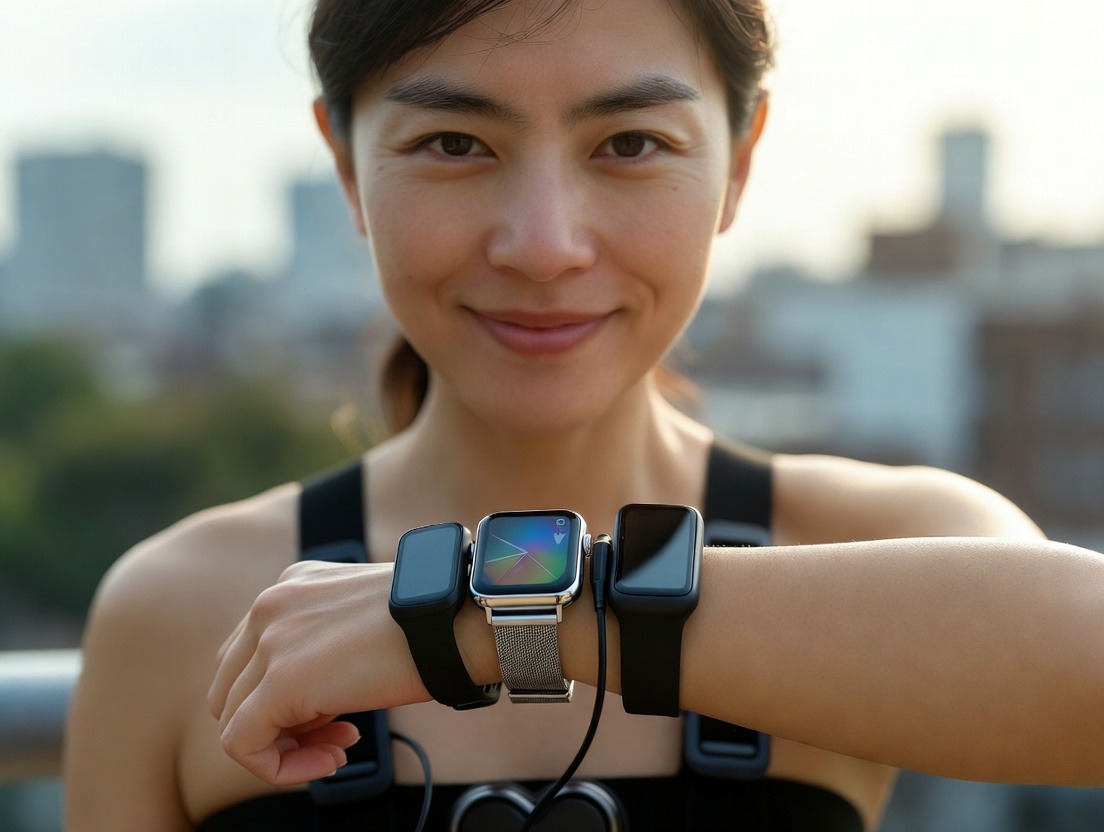
Wearable Wellness 101: Privacy and Data Security Basics
Basic information on how to keep your health data private and secure when using wearables.
Wearable Wellness 101: Privacy and Data Security Basics
In the quiet revolution of personal health, a new generation of guardians sits on our fingers. Smart rings, unassuming bands of titanium and ceramic, now pulse with the intimate rhythm of our lives. They track the quiet whisper of our heartbeats through the night, the silent symphony of our sleep cycles, and the subtle cadence of our daily stress. This is wearable wellness—a paradigm where cutting-edge technology meets the deepest layers of our personal biology. It promises a future of unprecedented self-knowledge and proactive health.
But with this profound intimacy comes a equally profound question: who else is listening to these whispers?
The data collected by these devices doesn't just describe your sleep; it sketches a portrait of your vulnerabilities. Your resting heart rate can indicate stress or illness. Your sleep patterns can hint at mental health states. Your activity levels and physiological trends form a unique biometric signature—a blueprint of you. This information is invaluable for personal insight, but in the wrong hands, it becomes a vulnerability. The convenience of a connected device is a double-edged sword, creating a data trail that extends from your finger to vast cloud servers, passing through apps, algorithms, and potentially, third-party entities.
This article is your essential guide to navigating this new terrain. We will move beyond the glossy marketing of "optimization" and "insights" to examine the foundational, and often overlooked, pillars of this technology: privacy and data security. You will learn not just what your device is collecting, but where that data travels, who can access it, and how it is protected. We will demystify terms like end-to-end encryption, data anonymization, and biometric ownership. This knowledge is not meant to inspire fear, but to empower you with discernment. True wellness in the digital age isn't just about understanding your body's data; it's about securing your right to own and control it. Let's begin by understanding the very nature of the treasure these devices are mining: your biometric data.
What Exactly is Your Wearable Collecting? The Data Landscape
Before we can secure something, we must first understand its value and composition. Your smart ring or wearable is far more than a pedometer; it is a sophisticated biometrical data acquisition device. The data it gathers falls into several distinct but interconnected categories, each revealing a different layer of your physiological and behavioral profile.
Core Biometric Data Streams:
Heart Rate & Heart Rate Variability (HRV): This is your body's direct telegraph. Continuous heart rate monitoring paints a picture of your cardiovascular exertion, rest, and recovery. HRV—the subtle variation in time between each heartbeat—is a premier, non-invasive window into your autonomic nervous system. It’s a powerful indicator of stress resilience, recovery status, and overall nervous system balance. A consistently low HRV can signal chronic stress or poor recovery, data that is deeply personal and sensitive.
Sleep Architecture: Your wearable doesn't just know you're asleep; it maps the architecture of your night. By combining movement, heart rate, and sometimes temperature, it estimates time spent in Light, Deep, and REM sleep stages. This data can reveal sleep disorders, the impact of lifestyle choices on recovery, and correlations with mental health. It’s a nightly diary of your subconscious repair processes.
Body Temperature: Continuous peripheral temperature sensing, especially for women, can provide insights into menstrual cycles, ovulation, and overall metabolic health. Basal body temperature trends are incredibly private health data.
Blood Oxygen Saturation (SpO2): Nocturnal SpO2 monitoring can screen for potential sleep apnea events, where breathing repeatedly stops and starts. This is direct health diagnostic-adjacent data.
Activity & Movement: This includes steps, active minutes, calories burned (estimated), and specific exercise recognition. While seemingly less sensitive, when combined with biometrics, it creates a pattern of your lifestyle and capacity.
The Power of Derived Insights & Contextual Data: The raw data streams above are synthesized by proprietary algorithms to generate the "insights" you see in your app:
Readiness or Recovery Scores: A composite score, often based on HRV, sleep, and activity, advising you on your body's capacity for strain.
Stress Metrics: Ongoing assessment of your sympathetic (fight-or-flight) nervous system activity.
Reproductive Health Predictions: For devices with temperature sensing, predictions about menstrual cycles and fertile windows.
Behavioral Patterns: Your device learns your normal. It knows when you typically go to bed, when you wake, and when you are most active. This contextual data turns isolated data points into a recognizable pattern of life.
Critically, this data is rarely stored solely on the device. It is synchronized to a companion smartphone app and, in virtually all cases, transmitted to the manufacturer's cloud servers. This is where storage, advanced processing, and long-term trend analysis occur. The cloud is essential for the functionality but marks the point where your personal data leaves your direct physical control. This transmission and storage is the first major juncture where security and privacy protocols must be rock-solid.
Understanding this landscape is the first step. As we explore how this data should be protected, consider that this isn't just "fitness data." It's a continuous, digital embodiment of your physical self. This realization underpins the entire discussion on privacy, much like understanding your personal needs underpins a philosophy of restful living and creativity, where protecting your time and mental space is paramount to wellbeing.
Why Biometric Data is Uniquely Sensitive
A step count can be reset. A logged meal can be deleted. But your heartbeat pattern, your sleep architecture, your temperature rhythm—this data is fundamentally different. It is not merely about you; it is a digital extraction of you. This uniqueness elevates biometric data to a category of sensitivity far beyond a password or even a credit card number, for several compelling reasons.
1. It Is Immutable and Inherently Identifying. You cannot change your foundational biometric patterns the way you change a password. Your unique combination of heart rate variability, sleep cycles, and even walking gait (detected by motion sensors) forms a biometric signature. This signature is perpetual and uniquely yours. While not yet as commonly used as fingerprints or facial recognition for identification, the potential is clear. This data could theoretically be used to identify you across different databases or track your presence if sensor data were accessed in public spaces—a profound privacy concern.
2. It Reveals Health Conditions and Vulnerabilities. This data is a pre-diagnostic tool. Trends in your biometrics can reveal conditions before you experience overt symptoms. Consistently elevated nocturnal heart rate could suggest infection or metabolic issues. Poor sleep architecture and low HRV can indicate high stress or anxiety. Abnormal temperature curves can point to hormonal imbalances. In the wrong hands—such as a malicious actor or an entity with a vested interest—this data could be used to infer health conditions, potentially leading to discrimination, targeted advertising for pharmaceuticals, or even manipulation.
3. It Provides a Continuous, Unfiltered Narrative of Your Life. Unlike social media posts or emails you consciously create, biometric data is passively collected. It is an honest, unfiltered stream of your physiological state. It can reveal when you are awake with anxiety at 3 AM, when you are sick, when you are recovering from a strenuous workout, or when your body is under unusual stress. This creates an intimate timeline of your private life that is not meant for public consumption. Protecting this narrative is as crucial as protecting a private journal, but far more complex because it is generated automatically and transmitted digitally.
4. It Has Long-Term Predictive Value. Aggregated over months and years, this data becomes a powerful predictor of future health trajectories. It can indicate risks for chronic conditions like cardiovascular disease, mental health episodes, or metabolic syndrome. The long-term storage and security of this aggregated data is therefore critical. A breach wouldn't just expose a snapshot; it could expose a forecast of your future health vulnerabilities.
5. Legal and Regulatory Recognition of Sensitivity. Governments worldwide are recognizing this unique sensitivity. Regulations like the European Union's General Data Protection Regulation (GDPR) and the California Consumer Privacy Act (CCPA), along with its stronger successor the CPRA, classify biometric data as a special category of "sensitive personal information." This classification mandates a higher standard of care, requiring explicit user consent for processing and imposing strict rules on its storage and sharing. This legal framing underscores what we intuitively feel: this data is in a league of its own.
Understanding this inherent sensitivity is the bedrock of demanding better protection. It shifts the question from "What data do I have to give up for this service?" to "How is my uniquely sensitive biological data being honored and safeguarded?" This mindset is a form of digital self-care, parallel to the intentional protection of your mental space discussed in The Restful Living Assessment: How Calm Is Your Life?. Just as you audit your stress, you must learn to audit your data footprint.
The Journey of Your Data: From Finger to Cloud
Your data’s path from the sensor on your finger to the insights on your screen is a multi-stage journey. Visualizing this pipeline is essential to identifying where vulnerabilities could exist and what questions you must ask of any wearable company. Let's trace the typical pathway.
Stage 1: Capture & On-Device Processing (Your Finger) The journey begins with the sensors on the ring—optical photoplethysmography (PPG) sensors for heart rate and SpO2, accelerometers for movement, and temperature sensors. These collect raw, analog signals. Immediately, a small microprocessor inside the device begins initial processing. This "on-device" processing is crucial for privacy and battery life. It converts raw signals into usable data points (e.g., identifying a heartbeat from the PPG signal) and may perform basic aggregation (e.g., calculating a 5-minute average heart rate) before temporarily storing it.
Stage 2: Local Synchronization (To Your Phone) Periodically, usually when you open the companion app or when the ring is on its charger, the device establishes a short-range connection via Bluetooth Low Energy (BLE) to your smartphone. The processed data packets are encrypted and transmitted to your phone. This local transfer is generally secure if using modern BLE protocols, but the phone itself becomes a new storage point. The security of your phone's lock screen and the app's local storage permissions are now part of the security chain.
Stage 3: The Critical Uplink (To the Cloud) Once the data is on your phone, the app will, in almost all cases, transmit it to the manufacturer's cloud servers over an encrypted internet connection (HTTPS). This is the most critical transit point. The data leaves your personal sphere of control and enters the vendor's infrastructure. The strength of this encryption (is it end-to-end?) and the security of the servers receiving it are paramount.
Stage 4: Cloud Storage & Advanced Processing (The Vendor's Servers) In the cloud, your data is stored in databases. Here, the more complex, computationally heavy algorithms run. The cloud compares your last night's sleep to your 90-day sleep average, calculates your readiness score by analyzing trends across multiple metrics, and prepares your long-term health graphs. This is where your data is most valuable for the company—for providing you service, but also potentially for internal R&D or aggregated analytics.
Stage 5: Insight Delivery & Long-Term Archiving (Back to You) The processed insights are then sent back from the cloud to your phone app, where you view them. Your raw and processed data is archived in the cloud, often indefinitely, to fuel long-term trend analysis.
Key Vulnerabilities in This Pipeline:
The Bluetooth Handshake: While encrypted, a theoretically sophisticated "man-in-the-middle" attack could intercept data during sync, though this is highly complex and unlikely to target individuals.
The Phone as a Weak Link: If your phone is compromised with malware, or if the app has poor security practices (like storing data in an unencrypted form), data on the device can be exfiltrated.
The Cloud Uplink & Storage: This is the highest-risk area. Is the data encrypted end-to-end (encrypted on your phone in a way only you can decrypt) or just in transit (encrypted during transfer but stored in a readable format on the vendor's servers)? A breach of the vendor's servers is the most likely large-scale threat.
Third-Party Sharing: Once data is in the cloud, does the vendor share it with third parties for advertising, research, or "partnership" integrations? This is often detailed (or obscured) in the Privacy Policy.
Understanding this journey demystifies the abstraction of "the cloud." It makes clear that your most private data resides on physical servers owned and operated by a company whose security practices you must trust. This need for trust in systems beyond our control mirrors the need to establish supportive systems in our personal lives, such as how to teach restful living to your family, creating a shared environment of security and wellbeing.
Encryption & Security Protocols: The Technical Shields
With the data's journey mapped, we can now examine the primary technical defenses that should be in place at every stage. These are not mere buzzwords but essential engineering practices that form the barrier between your data and those who should not see it. Let's decode the key terms.
Encryption: The Art of Scrambling Data Encryption is the process of converting readable data (plaintext) into an unreadable format (ciphertext) using a cryptographic key. Only with the correct key can the ciphertext be decrypted back to plaintext.
Encryption at Rest: This means your stored data—on the ring, in your phone's app database, and on the vendor's cloud servers—is encrypted. If a server is physically stolen or hacked, the data files should be inaccessible without the decryption keys, which should be stored separately and securely. Strong, industry-standard algorithms like AES-256 are the benchmark.
Encryption in Transit: This protects data as it moves. When your ring sends data to your phone via BLE, that connection should be encrypted. When your app sends data to the cloud over the internet, it should use HTTPS/TLS (the same lock-icon protocol used by banks). This prevents "eavesdropping" on your data as it travels across networks.
The Gold Standard: End-to-End Encryption (E2EE) This is the most secure model for data privacy. In a true E2EE system:
Data is encrypted on your smartphone using a key that only you possess (often derived from your account password).
This encrypted data is then sent to the vendor's servers.
The vendor cannot decrypt your data. They store it as an encrypted "blob."
When you want to see your data, it is sent back to your phone, where your local key decrypts it.
Under E2EE, even if the vendor's servers are completely compromised, the hackers only get encrypted data they cannot read. The trade-off is that some advanced cloud-based features (like complex, server-side trend analysis) may be limited, as the server cannot "see" the data to process it. Some companies use a hybrid model, where highly sensitive data (like raw HRV) is E2EE, while less sensitive, aggregated data is not.
Authentication & Access Controls: The Digital Locks Encryption is useless if unauthorized people can log in as you. Strong authentication ensures that you are you.
Strong Passwords & 2FA: The bare minimum is a strong, unique password for your wearable account. Two-Factor Authentication (2FA) is a critical add-on. With 2FA, logging in requires not just your password but a second, time-sensitive code from an app or SMS. This makes account takeover via stolen passwords vastly more difficult.
Biometric Locks on the App: The companion app on your phone should offer the option to lock behind your phone's native biometrics (Face ID, Touch ID) or a passcode. This prevents someone who picks up your unlocked phone from accessing your intimate health dashboard.
Data Minimization & Local Processing A privacy-forward design philosophy involves collecting only the data necessary for the stated function and processing as much data as possible locally on the device or your phone. For example, a ring that calculates your "stress" score entirely on-device and only sends the final score to the cloud, rather than all the raw heart rate data, is practicing data minimization. This reduces the amount of sensitive data in transit and in cloud storage, shrinking the "attack surface."
When evaluating a wearable, these are the technical details to investigate. Look for clear language in their security whitepapers: "end-to-end encryption," "AES-256 encryption at rest," "TLS 1.2+ for data in transit," and "support for two-factor authentication." The presence of these features demonstrates a company that invests in security as a core feature, not an afterthought. This technical diligence is a form of preventative care, similar to how restful living for students involves creating systems (like study schedules and sleep hygiene) to prevent burnout before it happens.
Privacy Policies Decoded: What You're Really Agreeing To
The Terms of Service and Privacy Policy are the legal foundation of your relationship with a wearable company. While notoriously dense, understanding key sections is non-negotiable for the privacy-conscious user. You are not just agreeing to use a device; you are agreeing to a specific data governance framework. Let's break down what to look for (and be wary of).
1. Data Collection & Use: The "What" and "Why" This section should clearly list the categories of data collected. Go beyond the marketing fluff. Look for specifics:
"We collect continuous heart rate, heart rate variability, skin temperature, movement data, and SpO2 readings."
"We collect device identifiers, IP address, and app usage logs."
Crucially, examine the stated purposes for each type of data. Legitimate purposes include: "to provide the core service of health metrics," "to improve our algorithms," and "for customer support." Be cautious of overly broad language like "for product development and marketing," "to personalize your experience," or "for third-party research." These can be catch-alls for data sharing.
2. Data Sharing & Third-Party Disclosures: The "Who Else" This is the most critical section. It outlines when and with whom your data may be shared.
Service Providers: Legitimate sharing with "processors" like cloud hosting providers (e.g., Amazon AWS, Google Cloud) is standard. The policy should state that these partners are contractually bound to protect your data and use it only for the service provided.
Affiliates & Parent Companies: Does the wearable company share data within a larger corporate family? For what purposes?
For Legal Reasons: Companies will share data if required by law, which is standard.
For "Business Transfers": In the event of a merger, acquisition, or bankruptcy, your data is considered an asset and may be transferred. This is a often-overlooked future risk.
Third-Party Partners for Marketing/Research: Scrutinize this closely. Does the company sell or share anonymized or aggregated data for research or advertising? Do they allow third-party trackers (like Facebook Pixel, Google Analytics) in their app that can track your behavior? An ethical policy will either prohibit this or give you a clear opt-out.
3. Data Ownership & Your Rights: The "Who Controls" A good policy will explicitly state, "You own your personal data." This is a powerful principle. It means the data is yours, and the company is a custodian. The policy should then clearly outline the rights you have, often dictated by regulations like GDPR and CCPA:
Right to Access: You can request a copy of all data the company holds on you.
Right to Deletion: You can request your data be deleted (though there may be exceptions for legal compliance).
Right to Correction: You can correct inaccurate data.
Right to Data Portability: You can request your data in a common, machine-readable format to take it to another service.
Right to Opt-Out of Sale/Sharing: If applicable, how to opt-out.
4. Data Retention: The "How Long" How long does the company keep your data after you stop using the service? Is it deleted after 30 days, or do they "anonymize" and keep it indefinitely for research? A clear retention schedule ("we delete account data 90 days after cancellation") is a sign of good data hygiene.
5. International Data Transfers: The "Where" If the company is based in one country and you are in another, your data may cross borders. The policy should explain the legal mechanism (like Standard Contractual Clauses) that protect your data under different jurisdictions.
How to Audit a Policy:
Use "Find in Page": Search for keywords: "sell," "share," "third-party," "research," "affiliate," "retention," "delete."
Look for a "Privacy Center" or "Dashboard": Progressive companies provide a user-friendly portal to manage your privacy settings, see connected apps, and download your data.
Compare: Pull up policies from two different wearable companies and compare their "Data Sharing" sections side-by-side. The differences can be stark.
Reading the privacy policy is the single most effective act of due diligence you can perform. It transforms you from a passive user to an informed participant. This proactive engagement with the systems that shape your life is a theme that extends beyond data, into areas like the restful living checklist: daily non-negotiables, where consciously designing your daily routine protects your mental and emotional space.
Common Threats & Vulnerabilities in the Wearable Ecosystem
Awareness of potential threats is the first step in mitigating risk. The wearable ecosystem, like any connected technology, faces a range of threats from large-scale, sophisticated attacks to more common, opportunistic exploits. Understanding these threats helps you appreciate the security measures in place and identify potential weak spots in your own digital hygiene.
1. Cloud Server Data Breaches This is the "worst-case scenario" and the most significant threat. It involves attackers gaining unauthorized access to the wearable company's databases. If data is not properly encrypted at rest (or if E2EE is not used), this breach can expose the personal and biometric data of millions of users at once. Attackers may seek this data for identity theft, blackmail, targeted phishing ("spear-phishing") using health information, or to sell on the dark web. The reputation and security investment of the company are your primary defense here.
2. Insecure Mobile Applications The companion app is a major target. Vulnerabilities can include:
Poor Local Storage: Storing sensitive data on the phone in an unencrypted or poorly encrypted database file that other apps or malware could access.
Insecure Communication: Failing to properly validate security certificates, making the app susceptible to "man-in-the-middle" attacks on public Wi-Fi where an attacker intercepts the data stream between your app and the cloud.
Excessive Permissions: Why does a sleep tracking app need access to your contacts or SMS? Overreaching app permissions can be a gateway for data leakage.
3. Account Takeover (ATO) Attacks If you reuse passwords across multiple sites, a breach of one unrelated service can give attackers the credentials to log into your wearable account (a "credential stuffing" attack). Without 2FA, they gain full access to your health dashboard, personal details, and potentially connected payment methods. This threat underscores the critical importance of unique passwords and enabling two-factor authentication everywhere it is offered.
4. Third-Party Integrations & Data Leakage Many wearables offer to sync data with other apps like Apple Health, Google Fit, Strava, or MyFitnessPal. While convenient, this creates a data propagation risk. You must now trust the security and privacy policies of all these interconnected services. A vulnerability in a connected fitness app could expose the health data it pulled from your wearable. Always audit what data you share and with whom in these integrations.
5. Physical Device Tampering & Theft While less common for individual targeting, a lost or stolen wearable device itself could pose a risk. Modern devices typically require a connection to a paired, authenticated phone to sync new data, and data on the device is usually encrypted. However, an unpaired device could potentially be exploited if it has undiscovered hardware vulnerabilities. The primary risk from theft is the loss of the hardware itself.
6. Inferential Privacy Attacks This is a more subtle, long-term threat. Even if data is "anonymized" (with names and emails removed), a sophisticated actor could potentially re-identify individuals by correlating unique biometric patterns or activity timelines with other publicly available data. For example, a unique pattern of late-night activity combined with a public social media post about working night shifts could de-anonymize a dataset.
The Human Factor: The Weakest Link Ultimately, many of these threats are exploited through human error. Clicking a phishing email, using weak passwords, ignoring software updates, or granting unnecessary app permissions all increase risk. Your own security hygiene is the final, and often most important, layer of defense.
This landscape of threats may seem daunting, but knowledge is power. It allows you to make informed choices and take practical steps to secure your digital self. Just as understanding the sources of stress allows you to build preventative habits, as explored in how restful living prevents decision fatigue, understanding digital threats allows you to build preventative digital habits.
Your Rights: GDPR, CCPA, and Biometric Privacy Laws
In the digital age, privacy is not just a preference; it is increasingly a legally protected right. A web of regulations across the globe aims to give individuals control over their personal data. For wearable users, understanding these rights is a powerful tool for holding companies accountable and making informed choices.
The European Standard: General Data Protection Regulation (GDPR) The GDPR, enacted in 2018, is one of the world's strongest data privacy frameworks. It applies to any company processing the data of individuals in the European Union, regardless of where the company is based. For wearable users, the GDPR provides several key rights:
Lawful Basis for Processing: Companies must have a valid legal reason to process your sensitive biometric data. The most relevant for wearables is explicit consent—a clear, affirmative action you take after being fully informed. They cannot hide data practices in legalese.
Right to Access & Portability: You can request a copy of all your personal data in a structured, commonly used format.
Right to Erasure ("Right to be Forgotten"): You can request the deletion of your personal data under certain circumstances.
Right to Rectification: You can have inaccurate data corrected.
Right to Object & Restrict Processing: You can object to your data being used for certain purposes, like direct marketing or automated decision-making.
Data Protection by Design & by Default: This principle requires companies to build privacy and security into their products from the ground up, not as an add-on.
The California Landmark: CCPA/CPRA The California Consumer Privacy Act (CCPA), strengthened by the California Privacy Rights Act (CPRA), sets a high standard in the United States. It grants California residents similar rights:
Right to Know: You can know what personal information is collected, used, shared, or sold.
Right to Delete: Similar to GDPR's erasure right.
Right to Opt-Out of Sale/Sharing: You can direct a company to stop "selling" or "sharing" your personal information (including for cross-context behavioral advertising).
Right to Correct: You can correct inaccurate personal information.
Right to Limit Use of Sensitive Information: This is crucial for wearables. You can limit a company's use of your sensitive personal information—a category that explicitly includes "precise geolocation," "contents of mail, email, and text messages," and "health information" and "biological or behavioral characteristics." Biometric data from a wearable clearly falls under this.
Biometric-Specific Laws: BIPA and Others Some jurisdictions have laws specifically targeting biometrics. The most prominent is the Illinois Biometric Information Privacy Act (BIPA). It is exceptionally strict and has resulted in major lawsuits against tech companies. BIPA requires:
Informed Written Consent: Before collecting biometric data, a company must inform you in writing about what is being collected, for how long, and the purpose. You must provide written consent.
A Publicly Available Retention Policy: The company must have a published schedule for destroying the biometric data.
Prohibition on Sale/Profit: Companies cannot sell, lease, or trade your biometric data.
How to Exercise Your Rights:
Look for a "Privacy Request" or "DSAR" Form: Reputable companies have a dedicated web form or email address (e.g., privacy@company.com) for Data Subject Access Requests.
Use Your Account Dashboard: Many companies now provide privacy controls within your account settings to download your data or adjust preferences.
Be Specific: When making a request, specify the right you are exercising (e.g., "I wish to exercise my right to access under GDPR").
Know the Timelines: GDPR requires a response within one month; CCPA within 45 days.
These laws empower you to be an active participant, not a passive data subject. They force transparency and accountability. Leveraging these rights is a critical component of managing your digital wellbeing, just as managing your financial wellbeing is a component of holistic health, a connection explored in restful living and financial wellness: the stress-money link.
Best Practices for the Privacy-Conscious User
Armed with knowledge of the threats and your rights, you can now adopt a set of practical, proactive habits to maximize your privacy and security while enjoying the benefits of wearable technology. Think of this as a personal privacy protocol.
1. Conduct a Pre-Purchase Security Audit. Before you buy, research the company's security posture.
Read the Security/Privacy Whitepaper: Serious companies publish a dedicated document outlining their security architecture, encryption standards, and data practices.
Search for News: Look up "[Company Name] data breach" or "[Company Name] privacy lawsuit." See how they responded to past incidents.
Check for Independent Audits: Do they undergo regular third-party security audits (e.g., SOC 2 Type II)? This is a strong positive indicator.
2. Fortify Your Account.
Use a Unique, Strong Password: Create a password used only for this wearable account. Use a passphrase or a password manager.
Enable Two-Factor Authentication (2FA): This is non-negotiable. If the company doesn't offer 2FA, consider it a major red flag.
Use a Dedicated Email: Consider using a separate email address for your wearable account, not your primary personal or work email.
3. Harden Your Mobile Device.
Keep Your OS and Apps Updated: Updates patch security vulnerabilities.
Use a Phone Passcode/Biometric Lock: This is your first line of defense.
Enable App-Specific Lock: Use the wearable app's own biometric lock feature if available.
Review App Permissions: Go to your phone's settings and ensure the wearable app only has permissions it absolutely needs (e.g., Bluetooth, maybe notifications). It should not need contacts, location (unless for GPS workouts), or camera.
4. Manage Your Data and Integrations.
Periodically Review Connected Apps: Go into your wearable account settings and review any third-party apps you've authorized (Apple Health, Strava, etc.). Revoke access to anything you no longer use.
Limit Data Sharing in Integrations: When connecting to another service, often you can choose what data types to share. Share the minimum necessary.
Exercise Your Deletion Rights: Consider periodically downloading your data archive and then requesting the deletion of old raw data from the company's servers, if their policy allows.
5. Adopt Smart Network Habits.
Avoid Public Wi-Fi for App Login/Sync: If you must use public Wi-Fi, use a reputable Virtual Private Network (VPN) to encrypt all your traffic.
Secure Your Home Wi-Fi: Ensure your home router uses strong encryption (WPA2/WPA3) and a unique password.
6. Stay Informed and Be Skeptical.
Re-read Privacy Policies After Major Updates: Companies must notify you of material changes. When they do, review what's new.
Be Wary of Phishing: No legitimate company will email you asking for your password or 2FA code. Be suspicious of urgent messages about "suspicious activity" with links to log in. Go directly to the app or website yourself.
Implementing these practices creates a layered defense, significantly reducing your risk profile. It turns abstract concerns into concrete actions. This process of creating a secure, intentional environment for your data is analogous to the restful living workspace: designing for focus and calm, where you consciously shape your physical space to support and protect your mental state.
The Future of Wearable Data: AI, Predictive Health, and Privacy Crossroads
As sensor technology and artificial intelligence advance, the capabilities of wearables are poised for a quantum leap. This future promises incredible benefits for personalized health but also presents unprecedented privacy challenges that we must begin grappling with today. We are approaching a crossroads where the value of the data and the risks of its misuse will both skyrocket.
The AI-Powered Predictive Health Horizon Future wearables will move beyond descriptive analytics ("you slept poorly") to prescriptive and predictive insights.
Early Disease Detection: Algorithms trained on massive, aggregated datasets could identify subtle biomarkers signaling the early onset of conditions like atrial fibrillation, diabetes, or even certain infections, potentially days before symptoms appear.
Mental Health Monitoring: By analyzing patterns in sleep, HRV, activity, and possibly voice/speech cues (from connected devices), AI could provide insights into stress, anxiety, or depressive episodes, prompting early intervention.
Hyper-Personalized Interventions: Your device won't just tell you to "reduce stress"; it will analyze your data in real-time to suggest a specific breathing exercise, a walk, or a break when it detects your physiological stress markers rising.
The Expanding Data Universe To fuel these AI models, the scope of collected data will expand:
Continuous Glucose Monitoring (CGM) Integration: Non-invasive or minimally invasive glucose sensing combined with existing metrics.
Environmental Sensors: Measuring exposure to pollutants, allergens, or noise.
Advanced Biometrics: Possibly even blood pressure monitoring or electrolyte levels.
Contextual Data Fusion: Deeper integration with your calendar, location, and even purchasing data to understand the "why" behind the physiological "what."
The Privacy Implications at Scale This future amplifies every privacy concern discussed earlier:
Incredibly Sensitive Predictions: Data doesn't just reveal your current state; it predicts your future medical fate. A leak or misuse could lead to discrimination by employers, insurers, or even in personal relationships.
The Algorithmic "Black Box": As AI models become more complex, it may be impossible to understand why a prediction was made. This challenges our right to explanation and correction.
The Aggregation Dilemma: The power of AI comes from vast, aggregated datasets. How do we contribute to medical research while preserving individual anonymity when the data is so uniquely identifying?
Insurance & Employer Dynamics: Will access to lower insurance premiums be tied to sharing wearable data? Will employers mandate or incentivize wearables for "wellness programs," creating coercive pressure to surrender privacy?
Navigating the Crossroads: Potential Frameworks The path forward requires new ethical and technical frameworks:
Federated Learning: A paradigm where AI models are trained on your device using your data, and only the model updates (not the raw data) are sent to the cloud and aggregated. Your raw data never leaves your possession.
Differential Privacy: A mathematical technique that adds statistical "noise" to aggregated datasets, making it virtually impossible to identify any individual while preserving the overall utility of the data for research.
User-Centric Data Sovereignty: Platforms where you, the individual, hold the keys to your own encrypted health data vault. You grant time-limited, granular access to apps or researchers for specific purposes, revocable at any time.
Stronger Legal Safeguards: Laws must evolve to explicitly protect predictive health data and prohibit its use for discriminatory practices.
The choices made by companies, regulators, and users in the coming years will define this landscape. As consumers, we must support companies that pioneer privacy-preserving technologies like federated learning and demand transparency in how AI is applied to our most intimate data. This forward-looking vigilance is essential, much like understanding the foundational role of environment in wellbeing, as discussed in how music and sound support restful living, where what we allow into our sensory space shapes our internal state.
How to Choose a Wearable with Privacy in Mind
With a comprehensive understanding of the risks, rights, and future landscape, you are now equipped to make a discerning choice. Selecting a wearable should be a holistic evaluation where privacy and security features are weighted as heavily as sensor accuracy or battery life. Use this checklist as your guide during your research and decision-making process.
The Privacy & Security Due Diligence Checklist
1. Investigate the Company's Core Philosophy.
Transparency: Do they have a dedicated, easy-to-find "Privacy" or "Trust" center on their website? Is their privacy policy written in relatively clear language, or is it impenetrable legalese?
Data Ownership: Do they explicitly state "You own your data" in their terms or marketing materials? This is a foundational principle.
Public Track Record: Search for the company's history. Have they been involved in privacy scandals? How did they respond? A company that has faced issues but responded with transparency and improved practices can sometimes be more trustworthy than one with no history at all.
2. Scrutinize the Technical Security Specifications.
Encryption: Look for explicit statements about:
End-to-End Encryption (E2EE): Is it offered for all data, or just certain types? This is the gold standard.
Encryption at Rest & in Transit: The policy should mention "AES-256" for data at rest and "TLS" (1.2 or higher) for data in transit.
Authentication: Non-negotiable: The service must offer Two-Factor Authentication (2FA). If it doesn't, walk away.
Data Processing Model: Does the company emphasize on-device processing or local processing on your phone? Phrases like "your data is processed locally on your smartphone before syncing" indicate a design that minimizes cloud exposure.
Security Audits: Do they mention undergoing independent third-party security audits (e.g., SOC 2, ISO 27001)? This is a strong positive signal.
3. Dissect the Privacy Policy & Data Practices.
Use the "Find" Function: Search the policy PDF for key terms:
"Sell" or "Share": What does it say? The ideal policy states they do not sell your personal data. Under CCPA/CPRA, "sharing" for cross-context behavioral advertising is a major concern.
"Third-Party" & "Affiliate": Under what specific circumstances is data shared? Is it limited to essential service providers, or is it vague?
"Research" or "Product Improvement": If they use data for research, is it aggregated and anonymized? Do they seek separate consent for this?
"Retention" or "Delete": What is their data retention schedule? How can you request deletion?
Granular Controls: Does the app or web dashboard give you fine-grained controls over what data is collected and shared? Can you easily toggle off specific metrics or data-sharing integrations?
4. Evaluate the User Experience of Privacy.
Privacy Dashboard: The best companies provide a clean, user-friendly interface where you can see all your connected apps, download your data, and adjust privacy settings without having to email support.
Clear Consent Flows: When you set up the device, are you asked for explicit, granular consent for different data uses, or is it one blanket "Agree to All" button?
Transparent Integrations: When connecting to Apple Health or Google Fit, does the app clearly show you what data types it plans to read and write?
5. Consider the Business Model. This is a critical, often overlooked factor. Ask yourself: How does this company make money?
Hardware Sale Model: The company makes its revenue primarily from selling you the physical device. Their incentive is to protect your data to maintain their brand reputation and ensure you buy their next product. This model is generally more aligned with user privacy.
Subscription-Software Model: The company sells the device at cost (or a loss) and relies on a monthly subscription fee for advanced insights and app features. Their core asset is your ongoing engagement and data, but the subscription revenue can align incentives if it means keeping you as a paying, happy customer.
Data-Monetization Model (The Red Flag): If the device is suspiciously cheap and there is no subscription, be extraordinarily cautious. The business model may be to collect, aggregate, and sell user data or insights. This is the least desirable model for privacy.
Asking the Right Questions: Before purchasing, don't hesitate to contact a company's support or privacy team with questions like:
"Is my biometric data encrypted end-to-end?"
"Can you provide a summary of your data sharing practices with third parties?"
"How do I permanently delete my account and all associated data?"
Choosing a privacy-conscious wearable is an active process of voting with your wallet for the future you want. It supports companies that view security not as a cost, but as a core feature of wellbeing technology. This intentional selection process mirrors the mindful approach required to build a sustainable lifestyle, much like the principles behind restful living for entrepreneurs: sustainable business building, where foundational health supports long-term success.
Case Studies: A Comparative Look at Industry Approaches
To move from theory to practice, let's examine how different approaches to privacy and security manifest in the wearable market. These are not endorsements but illustrative examples of the philosophies and trade-offs at play. We'll look at three hypothetical models based on real-world trends.
Case Study 1: The "Fortress" Approach – Privacy as the Primary Feature
Philosophy: This company positions itself as the privacy-first alternative. Their marketing centers on "Your data belongs to you. Period." They often use open-source software and publish detailed security architecture papers.
Key Practices:
True End-to-End Encryption (E2EE): All sensitive biometric data is encrypted on your phone before it ever leaves. The company cannot decrypt it. Advanced insights that require cloud processing are either limited or use advanced cryptographic techniques like homomorphic encryption.
Local-First Processing: The companion app performs most analysis on your smartphone. The cloud acts primarily as an encrypted backup and sync service.
Minimal Data Collection: They collect only the data absolutely necessary for core functionalities. No social features, no optional surveys that feed marketing databases.
Transparent Business Model: They charge a premium for the hardware and/or a clear subscription for software development and cloud storage, explicitly stating they do not monetize data.
Trade-Offs: The E2EE model may limit some "magic" cloud-based AI features and seamless social sharing. The product might feel more utilitarian. It often appeals to a tech-savvy, privacy-focused niche.
User Experience: Setup involves creating a strong recovery key. If you lose this key, even the company cannot recover your data. This places a high degree of responsibility on the user but ensures ultimate control.
Case Study 2: The "Integrated Ecosystem" Approach – Convenience with Guardrails
Philosophy: This is a large tech company (e.g., Apple, Google, Samsung) where the wearable is one component of a broader hardware/software/cloud ecosystem. Privacy is managed within the framework of the company's overall platform policies.
Key Practices:
On-Device & Secure Enclave Processing: A hallmark of this approach. The wearable and its paired smartphone perform intense processing on the device itself using a dedicated security chip (e.g., Apple's Secure Enclave). Health data synced to the cloud is encrypted and, in cases like Apple Health, not easily accessible for advertising or even by Apple itself in a readable format.
Granular Platform Permissions: You have system-level control over which apps can read or write to your central health data repository (e.g., Apple Health, Google Fit).
Comprehensive Privacy Labels & Dashboards: These companies often provide detailed "privacy nutrition labels" and user-accessible privacy dashboards showing which apps have requested access to your data.
Trade-Offs: You are committing to a specific ecosystem. The overall privacy of your data is tied to the platform's security and the permissions you grant to third-party apps within it. The company's broader business (advertising, services) may create complex incentives.
User Experience: Seamless integration and convenience are high. Privacy controls are robust but are part of a larger, sometimes complex, system settings menu.
Case Study 3: The "Wellness Platform" Approach – Data for Personalized Insights
Philosophy: This company focuses on providing deep, AI-driven health insights and coaching. Their value proposition is advanced analytics derived from aggregating user data to train their models.
Key Practices:
Cloud-Centric Processing: For advanced features (like personalized sleep coaching or stress trend analysis), data is sent to the cloud for processing. They may use a hybrid model where raw data is E2EE, but derived insights are processed on their servers.
Emphasis on Anonymized Aggregation: Their privacy policy will heavily emphasize using "anonymized and aggregated data" to improve algorithms and conduct health research. They may seek separate consent for this.
Third-Party Integrations: They often promote a wide range of connections to other wellness, fitness, and nutrition apps to create a holistic picture.
Trade-Offs: The desire for rich insights can conflict with the "Fortress" model's strict local-only rule. You must deeply trust the company's anonymization techniques, internal access controls, and policies against selling individual-level data. The risk of data propagation through numerous integrations is higher.
User Experience: The app feels intelligent and proactive, offering detailed advice. Privacy settings may be extensive, requiring careful management of data sharing and research participation opt-ins.
The Lesson: There is no one-size-fits-all "best" approach. The "Fortress" model offers maximum control with some feature trade-offs. The "Integrated" model offers robust security within a walled garden. The "Platform" model offers deep insights but requires the highest trust in the company's data stewardship. Your personal risk tolerance, desired features, and willingness to manage settings will guide your choice. This nuanced evaluation is akin to personalizing your recovery, as explored in the restful living weekend: true recovery in two days, where the optimal plan depends on your individual needs and circumstances.
Taking Control: A Step-by-Step Guide to Auditing Your Current Wearable
If you already own a wearable, it’s not too late to take control. Conducting a personal privacy audit empowers you to understand your current exposure, tighten settings, and make an informed decision about whether to continue using the device or switch. Follow this actionable guide.
Step 1: Locate and Re-Read Your Wearable’s Privacy Policy.
Action: Go to the company’s website. Find the "Legal," "Privacy," or "Trust" section. Download the current Privacy Policy and Terms of Service.
Goal: Don't just skim. Use the knowledge from earlier sections. Focus on: Data Collection, Use, Sharing, Retention, and Your Rights. Has the policy changed since you first agreed?
Step 2: Dive Into Your Account Privacy Dashboard.
Action: Log into your wearable’s account via its website or app. Navigate to "Settings," "Account," "Privacy," or "Security."
Goal: Explore every submenu. You are looking for:
Connected Apps & Services: A list of all third-party applications (Strava, MyFitnessPal, Apple Health, etc.) that have access to your wearable data. Revoke access for any you no longer use or recognize.
Data & Permissions: Controls over what data is collected (e.g., can you turn off specific metrics?) and how it is used (e.g., opt-out of "research," "product improvement," or "marketing").
Two-Factor Authentication (2FA): Find it. Enable it immediately if it is off.
Data Export/Download: Use this feature. Download a copy of all your data. This serves two purposes: you have a personal backup, and you see exactly what the company has stored about you.
Step 3: Harden Your Mobile App Security.
Action: Go to your phone’s main Settings, then "Apps" or "App Management," and select your wearable app.
App Permissions: Review each permission (Location, Contacts, Microphone, etc.). Disable any that are not absolutely essential for core functionality. A health tracker typically needs Bluetooth and maybe Notifications. It does not need Contacts, SMS, or Location (unless you use GPS workouts).
App-Specific Lock: Within the wearable app’s own settings, enable biometric/passcode lock if available.
Action (iOS): Go to Settings > Privacy & Security > Health. Review which apps have read/write access to your Apple Health data. Ensure only necessary apps have access.
Action (Android): Permissions are managed per-app, but also review any connections in Google Fit if you use it.
Step 4: Audit Your Network and Account Hygiene.
Action: Change your wearable account password to a new, strong, unique password generated by a password manager.
Action: If you use public Wi-Fi frequently, consider investing in a reputable VPN service to encrypt your traffic when syncing data on the go.
Action: Ensure your phone’s operating system and the wearable app itself are updated to the latest versions.
Step 5: Exercise Your Legal Rights (If Desired).
Action: If, after your audit, you are uncomfortable with the practices, you can exercise your rights.
Opt-Out of Sale/Sharing (CCPA/CPRA): Look for a "Do Not Sell or Share My Personal Information" link at the bottom of the company’s website and use it.
Submit a Data Deletion Request: Use the company’s designated process (often a form in the privacy section) to request the deletion of your account and all associated data. Be aware this is often irreversible.
Submit a Data Access Request: Request a full copy of your data for your records before deletion.
Step 6: Make a Conscious Decision. After this audit, you will be in one of three positions:
Comfortable: The company’s practices align with your standards, and you’ve locked down your settings. Continue using the device with greater peace of mind.
Uncomfortable but Tolerating: You’ve found issues but have mitigated what you can. You may decide to use the device with reduced functionality (turning off features) while researching alternatives.
Unacceptable: The practices are egregious, or a critical feature like 2FA is missing. You may decide to stop using the device, delete your data, and seek a more privacy-respecting alternative.
This process of auditing and taking control is a powerful act of digital self-advocacy. It transforms you from a passive data source into an active manager of your digital identity. This proactive management is a critical skill for modern wellbeing, similar to how tracking physiological markers is part of how restful living enhances physical health markers, where awareness leads to informed action and improvement.
Conclusion of Part One: Building a Foundation of Informed Trust
We have journeyed from the intimate sensors on your finger to the vast cloud servers that store your biological narrative, and through the complex legal and technical landscapes that govern this exchange. This first portion of our deep dive has laid an essential foundation: wearable wellness is inseparable from digital privacy and security.
The core realization is that the quest for self-knowledge through technology requires a parallel quest for informed trust. You cannot outsource your wellbeing to a device without understanding the ecosystem that device operates within. The data these rings collect is not inert; it is a vivid, continuous stream of your lived experience, with immense value both to you and, potentially, to others.
We’ve learned that threats exist at multiple levels—from large-scale server breaches to the simple reuse of a password—but that powerful defenses, from end-to-end encryption to robust privacy laws, are available. The difference between vulnerability and security often lies in the choices made by the company you buy from and the habits you cultivate as a user.
Choosing and using a wearable with privacy in mind is not an act of paranoia; it is an act of prudence and self-respect. It is the understanding that true wellness in the 21st century is holistic. It encompasses not just physical recovery and mental calm, but also digital integrity. You cannot be fully well if a fundamental aspect of your identity—your biological data—is exposed, exploited, or used in ways you did not consent to.
This journey towards secure self-knowledge mirrors the broader journey of intentional living. It requires the same discernment you apply to other areas of life: questioning assumptions, reading the fine print, and setting boundaries. It is connected to the permission you must grant yourself to prioritize security and peace of mind, a concept explored in restful living without guilt: permission to rest. Just as you must give yourself permission to disconnect and recharge, you must give yourself permission to demand transparency and control from the technologies you invite into your life.
In the next portion of this comprehensive guide, we will build upon this foundation of knowledge and move into actionable strategy and future-gazing. We will explore the specific settings you must configure, delve into the world of open-source and decentralized alternatives, examine the role of cybersecurity insurance, and confront the ethical dilemmas posed by employer-sponsored wellness programs. We will also provide templates for communicating with companies about your privacy concerns and outline a vision for a healthier, more user-empowered future for wearable technology.
The path to empowered wearable wellness is a continuous one, built on the foundation we've established here: awareness, understanding, and the conscious exercise of your rights. Your data is your story. You have the right, and the responsibility, to decide who gets to read it.
The Human Element: Social Engineering and Your Wearable Data
While firewalls and encryption protect against digital intrusion, the most persistent threat often bypasses technology entirely: the human being. Social engineering—the psychological manipulation of people into performing actions or divulging confidential information—is a potent tool that can be uniquely effective against wearable users. Your intimate health data can be a compelling lure for these attacks, making awareness your strongest shield.
Why Wearable Users Are Prime Targets The data from your device is not just sensitive; it’s emotionally charged. Attackers can leverage this to create highly convincing, personalized scams.
Urgency and Fear: A phishing email might spoof your wearable brand, warning of "suspicious activity" on your health account or a "critical security patch" needed to protect your data. The fear of having your sleep patterns or heart data exposed can prompt hasty clicks.
Personalization: With data breaches from other services being common, attackers may already have your name, email, and even know you own a specific wearable brand. An email that says, "John, your Oura sleep score has been locked," feels credible.
The Wellness Hook: Scams may be disguised as "exclusive wellness reports," "personalized health consultations," or "research studies" offering insights in exchange for your login credentials or data access.
Common Social Engineering Tactics to Recognize
Phishing Emails & SMS (Smishing): Messages that impersonate your wearable company, your health insurer, or a related wellness service. They often contain:
A dire warning or too-good-to-be-true offer.
A link to a fake login page that mimics the real site.
Poor grammar, generic greetings ("Dear User"), or slight misspellings in the sender's email address (e.g., support@oura-ring.com vs. support@oura.com).
Pretexting: An attacker creates a fabricated scenario to engage you. They might call posing as tech support from the wearable company, claiming they need your account password or 2FA code to "resolve a sync issue." Legitimate companies will never ask for your password or 2FA code over the phone or email.
Baiting with Fake Apps: In unofficial app stores or through web ads, attackers promote fake companion apps that promise "enhanced features" or "free premium unlocks." Downloading these grants them direct access to your data or injects malware onto your phone.
Quid Pro Quo: "Give us your data for a better insight." This can be a seemingly legitimate survey or research request that asks for excessive permissions or raw data uploads without clear oversight.
Building Your Human Firewall: Defensive Best Practices
Verify, Don’t Trust: If you receive an urgent message, do not click any links. Open your web browser manually and navigate directly to the company's official website to log in and check for alerts.
Scrutinize Sender Details: Hover over links (on desktop) to see the true destination URL. Check the sender's email address meticulously.
Adopt a Zero-Trust Policy for Credentials: No legitimate service will ask for your password via email, text, or phone. Anyone who does is an attacker.
Download Apps Only from Official Stores: Only install your wearable's companion app from the official Apple App Store or Google Play Store. Check the developer name listed on the app page.
Educate Your Household: If you share data with family (like a partner viewing your sleep stats), ensure they also understand these risks. A shared account is only as strong as its least security-aware user.
Protecting yourself from these human-centric threats completes the security circle. It combines the technical safeguards we've discussed with vigilant, educated behavior. This holistic approach to security is a critical life skill, much like building the restful living community: finding your support system, where surrounding yourself with the right people creates a resilient environment for overall wellbeing.
Open Source, Decentralization, and the Future of Private Wearables
For those whose privacy assessment leads them to find mainstream options lacking, a burgeoning frontier offers a different paradigm: open-source software and decentralized data architectures. This movement, rooted in transparency and user sovereignty, presents a radical alternative for the most privacy-committed users.
The Open-Source Philosophy: Trust Through Transparency In open-source projects, the software code (including the companion app and firmware) is publicly available for anyone to inspect, audit, and improve.
No Hidden Backdoors: The community can verify there are no secret data exfiltration channels. Security vulnerabilities can be spotted and patched by anyone, often faster than in closed, proprietary systems.
User Empowerment: Tech-savvy users can modify the software to suit their needs, disabling features they don't want or enhancing privacy controls.
The Challenge: Open-source hardware (the ring itself) is rare and complex. While projects exist, they often lack the polished sensors, battery life, and industrial design of commercial products. The user experience can be technical and require DIY setup.
Decentralization: Taking the Cloud Out of the Equation Decentralized systems aim to eliminate the central point of failure—and control—represented by the manufacturer's cloud server.
Personal Server (Self-Hosting): The most private model. You run the server software on hardware you control (like a home server or a virtual private server). Your wearable syncs data only to your server. You have absolute physical and legal control over the data storage. Services like Bitwarden (for passwords) have pioneered this model successfully.
Peer-to-Peer (P2P) Syncing: Data syncs directly between your devices (phone, computer) without passing through a central server. This is technologically challenging for continuous data streams but represents the ultimate in disintermediation.
Blockchain & Encrypted Data Vaults: An emerging concept where your encrypted health data is stored on a decentralized network (like a blockchain) or in a personal, encrypted "vault" (like Solid pods). You then grant specific, time-limited access keys to apps or researchers you choose. This embodies the principle of user-centric data sovereignty.
Current State and Pioneering Projects While no mainstream consumer wearable fully embraces this model yet, the landscape is evolving:
Open-Source Firmware Projects: Some enthusiasts work on reverse-engineering commercial devices to run community-built, privacy-focused firmware.
Privacy-First Apps for Generic Hardware: Open-source apps exist that can pull data from simple, Bluetooth-enabled devices (like basic heart rate monitors) and store it locally, refusing to send it anywhere.
The "Right to Repair" Movement: This allied movement fights for the ability to fix and modify our own devices. It aligns with open-source principles, as it requires access to schematics and software, reducing planned obsolescence and retaining user control.
The Trade-Offs and The Promise Adopting these alternatives currently requires a significant trade-off in convenience, aesthetics, and sometimes, accuracy. You become your own system administrator. However, this space represents the vanguard of digital privacy. It proves that user-controlled, transparent technology is possible. As demand grows and technology matures, we may see more hybrid models: commercial devices that offer an "open-source mode" or the ability to choose your own server endpoint.
Supporting and following these developments is crucial for a healthier tech ecosystem. They provide competitive pressure on mainstream companies to improve their practices and offer a vision of a future where technology serves the individual, not the data extractor. Engaging with these concepts requires a shift in mindset about our relationship with technology, similar to how restful living changes your relationship with time, moving from a resource to be exploited to a space to be consciously shaped and owned.
Employer Wellness Programs & Wearables: Navigating Coercion and Consent
A rapidly growing channel for wearable adoption is the employer-sponsored wellness program. Companies, seeking to reduce healthcare costs and boost productivity, often subsidize or provide devices like Fitbits, Apple Watches, or Oura Rings to employees. While framed as a benefit, this practice sits at a complex intersection of health, privacy, and employment law, raising critical questions about voluntary participation and data boundaries.
The Potential Pitfalls: From Incentive to Coercion The fundamental issue is the power imbalance between employer and employee. What is presented as "optional" may not feel that way.
Financial Incentives as Pressure: Tying wearable participation to reductions in health insurance premiums, contributions to Health Savings Accounts (HSAs), or cash bonuses can create significant financial pressure to enroll. For some, opting out is economically unfeasible.
Social Pressure & Perception: In team-based challenges or public leaderboards, non-participation can be seen as a lack of engagement or team spirit. Managers may (explicitly or implicitly) view participants more favorably.
Data Aggregation and Group Risk: Even if data is "anonymized" at the individual level, aggregated team or company data (e.g., "Department A has 20% higher stress scores") could influence management decisions about workload, deadlines, or resource allocation, indirectly affecting all employees.
What Data Can Your Employer See? This varies wildly by program and the vendor's platform. Scrutinize the agreement carefully. Models include:
Fully Aggregated & Anonymized: The employer only sees high-level, anonymized statistics about the group (e.g., "70% of participants met sleep goals"). This is the most privacy-protective model.
De-Identified Individual Data: The employer receives individual data but with direct identifiers (name, email) removed. However, given the uniqueness of biometric patterns and combined with other employment data, true de-identification is challenging.
Individual Data with Identifiers (The Red Flag): In some programs, employers or their third-party wellness administrators may have access to identifiable individual data. This is highly invasive and risky, potentially leading to discrimination.
Your Rights and How to Protect Them
The Americans with Disabilities Act (ADA) & GINA: In the U.S., the ADA requires that wellness programs be voluntary. The Equal Employment Opportunity Commission (EEOC) has rules on what incentives can be offered. The Genetic Information Nondiscrimination Act (GINA) protects your genetic data, which could be implicated by certain biomarker analyses.
Ask Detailed Questions Before Enrolling:
"What exact data will my employer or their administrator see? Can I see a sample report?"
"Is the data individually identifiable, de-identified, or only aggregated?"
"What is the privacy policy of the third-party wellness platform managing this program?"
"What are the specific consequences, financial or otherwise, of not participating or withdrawing later?"
Consider Using a Separate Device: If you feel pressured to enroll but are concerned, consider using the provided device only for the minimum required activity, maintaining your personal, private wearable for your actual health journey.
Know Your "Right to Delete": Understand the process for having your data deleted from the wellness platform if you leave the company or the program.
Employer programs represent a critical test case for the ethics of wearable data. They demand the highest level of transparency, the strictest data firewalls, and truly voluntary participation. Navigating this requires the same assertive boundary-setting that protects your personal time, a skill highlighted in the discussion of restful living and hormone balance: the recovery connection, where protecting your biological rhythms from external disruption is essential for health.
Cybersecurity Insurance and Data Breach Protocols: Preparing for the Worst
Despite our best efforts, breaches happen to even the most secure companies. While you can't prevent a vendor's server from being hacked, you can have a plan for how to respond. This involves both personal protocols and understanding the role of emerging services like cybersecurity insurance.
If You Receive a Breach Notification Letter... If your wearable company suffers a breach, they are legally obligated (in most jurisdictions) to notify you. The letter should detail what was compromised (email addresses, encrypted health data, etc.) and the timeframe.
Don’t Panic, But Do Act: A breach notice is serious, but not all breaches lead to identity theft. Your response should be measured and swift.
Follow the Company’s Guidance: They should offer specific steps, which often include:
Changing your password immediately (on the wearable site and on any other site where you used the same password).
Enabling 2FA if it wasn't already on.
Monitoring your accounts for suspicious activity.
Go Beyond Their Advice:
Place a Fraud Alert/Credit Freeze: Contact one of the three major credit bureaus (Equifax, Experian, TransUnion) to place a free fraud alert (lasts one year) or a more stringent credit freeze. This makes it hard for anyone to open new credit in your name.
Monitor Financial & Health Statements: Scrutinize bank, credit card, and even health insurance Explanation of Benefits (EOB) statements for unfamiliar charges or services.
Beware of Follow-On Phishing: Breaches are often followed by a wave of highly targeted phishing emails pretending to be from the company offering "credit monitoring" or "identity protection." Only use services linked directly from the company's official breach notification website.
The Role of Cybersecurity/Identity Theft Insurance This is a growing category of insurance, sometimes bundled with home insurance or offered as a standalone product.
What It May Cover:
Financial Loss Reimbursement: Costs incurred due to identity theft (legal fees, lost wages for time spent resolving the issue, funds stolen from your accounts).
Recovery Services: Access to a case manager or "concierge" service that helps you navigate the process of freezing credit, contacting creditors, and restoring your identity.
Monitoring Services: Credit monitoring, dark web scanning for your personal info, and sometimes monitoring of bank accounts or social security number use.
What It Typically Does NOT Cover:
The "value" of your stolen biometric data itself. There is no market price for your sleep data.
Future harm from the exposure of your health data (e.g., potential discrimination).
Direct reimbursement for emotional distress.
Is It Worth It? For individuals deeply invested in digital life and holding significant amounts of sensitive data, it can be a valuable safety net for the financial fallout of identity theft. Read the policy exclusions carefully.
Ultimately, your best insurance is prevention: choosing a secure vendor, practicing impeccable digital hygiene, and using unique passwords with 2FA. But having a response plan, just like having a plan to measure and track your calm, turns a potential crisis into a manageable situation. It moves you from reactivity to prepared, empowered action.
Building a Long-Term Data Archive: Ownership and Legacy
Your wearable data accumulates into a longitudinal health record more detailed than anything in your doctor's file. What happens to this asset over the long term? Thinking about data ownership isn't just about today's privacy; it's about stewardship of a digital legacy that could have immense value for your future self and even your descendants.
The "Digital Health Vault" Concept Beyond simply downloading CSV files, a proactive approach involves creating your own structured, secure archive.
Regular Data Exports: Use your wearable company's "download your data" feature quarterly or annually. Don't wait until you leave their platform.
Standardized Formats: Look for exports in interoperable formats like FHIR (Fast Healthcare Interoperability Resources), which is becoming the global standard for electronic health records. This ensures future usability.
Local & Encrypted Storage: Store these archives on an encrypted external hard drive or in a secure, encrypted cloud storage service you control (e.g., using Cryptomator or VeraCrypt for an extra layer of security). Maintain multiple backups.
Metadata and Context: Keep a simple journal or digital note alongside each export. Note major life events, illnesses, or changes in medication that contextualize the data (e.g., "Data from Q3 2023 – during marathon training," or "Data from Q4 – after starting new job").
Long-Term and Posthumous Considerations
Data in Estate Planning: Who should have access to your lifelong health dataset after you're gone? It could be invaluable for family medical history. Consider including instructions in your digital estate plan about where this archive is stored and how to access it (e.g., instructions in a will for your digital executor).
Research Donation: You may wish to donate your anonymized data to medical research after your death. Organizations like the All of Us Research Program in the U.S. are building frameworks for this. Look for ethical, consent-based programs.
Platform Mortality: Wearable companies can go out of business or discontinue products. Your proactive personal archive ensures you don't lose years of data if their servers are shut down.
The Philosophical Shift: From User to Curator This practice reframes your role. You are no longer just a user generating data for a platform; you are the curator and archivist of your own biological history. This is the ultimate expression of data ownership. It requires discipline but grants unparalleled autonomy and creates a resource that no third party can take away.
This long-term, legacy-minded thinking is a hallmark of intentional living. It connects to the deeper practices that sustain us over a lifetime, such as how gratitude practices support restful living, where consistently acknowledging the good builds a resilient psychological foundation for the future.
Advocacy and the Path Forward: Shaping a Healthier Digital Ecosystem
Individual action is powerful, but collective advocacy is what drives systemic change. As consumers of wearable technology, we have a voice that can demand higher standards, support ethical legislation, and shape the future of the industry towards a model that truly prioritizes human wellbeing over data extraction.
How to Be an Effective Advocate for Digital Health Privacy
Vote with Your Wallet and Your Reviews: Choose companies with strong privacy practices. Leave detailed app store and review site feedback praising good privacy features or criticizing poor ones. Companies monitor this.
Use Your Voice with Companies: When you contact support with a feature request, ask for privacy enhancements. "I would love a local-only processing mode" or "When will you implement proper E2EE?" signals market demand.
Support Digital Rights Organizations: Donate to or follow the work of nonprofits like the Electronic Frontier Foundation (EFF), the Center for Digital Democracy, or Consumer Reports' Digital Lab. They litigate, research, and lobby for stronger privacy protections.
Engage with Policymakers: Support legislation that strengthens biometric privacy laws at state and federal levels. Comment on proposed rules from agencies like the FTC regarding health data and unfair/deceptive practices.
Educate Your Circle: Share your knowledge. Help friends and family understand the privacy implications of their wearables. A more informed user base raises the bar for everyone.
A Vision for the Future: The "Wellness-by-Design" Manifesto We should advocate for an industry standard built on principles that could be called "Wellness-by-Design":
Privacy as a Default Setting: The most private option should be the standard, with users opting into sharing, not out of it.
Interoperability without Exploitation: Your data should be easily portable between services in open formats, but the transfer should be user-initiated and governed by clear consent, not hidden data pipes.
Algorithmic Transparency: Users have a right to know the general logic behind scores and insights, especially when they influence health decisions.
Bans on Certain Uses: Legislation should explicitly prohibit the use of biometric data for insurance underwriting, employment decisions (outside of strictly voluntary wellness programs with strong firewalls), and predatory advertising.
Security as a Certified Feature: Independent, standardized security certifications for wearable devices and their ecosystems should become as common as energy star ratings.
The path to this future requires us to be not just consumers, but citizens of the digital health landscape. It requires the same deliberate community-building and environmental shaping that turns a house into a sanctuary, a concept explored in restful living for remote workers: home as sanctuary. We must build a digital ecosystem that feels just as safe, supportive, and respectful.
Conclusion: Towards Integrated Wellbeing in a Digital Age
We have traversed a comprehensive landscape—from the micro-level of sensor data to the macro-level of industry ethics and future advocacy. The central, unifying thread is that wearable wellness cannot be divorced from digital self-defense. The device that offers to illuminate the inner workings of your body must itself be scrutinized with a clear and discerning eye.
True integrated wellbeing in the 21st century is a three-legged stool:
Physical & Mental Wellness: Understanding and optimizing your sleep, stress, recovery, and activity.
Digital Hygiene: Practicing secure habits, managing permissions, and understanding the flow of your data.
Informed Advocacy: Choosing technologies that align with your values and supporting systems that protect collective rights.
Your wearable is a powerful tool, but it is just that—a tool. Its value is determined by the wisdom with which you use it and the context of security you place around it. The insights it provides should reduce anxiety, not create new vectors for it. The control it promises over your health should not come at the cost of losing control over your data.
Embrace wearable technology, but do so with agency. Let the knowledge you’ve gained here guide you to:
Ask the hard questions before you buy.
Configure the strictest settings once you do.
Practice continuous vigilance as you use it.
Plan for the long-term stewardship of your data.
In doing so, you harmonize the promise of technology with the timeless need for personal sovereignty. You move beyond being tracked, to truly understanding yourself. You ensure that the journey inward, guided by light on your finger, remains a private, secure, and ultimately empowering path—a fundamental component of a rested, resilient, and fully realized life.



%402x.svg)