


How Your Wellness Ring Reveals Daily Health Optimization Opportunities
How a wellness ring identifies daily opportunities for health improvement.
How a wellness ring identifies daily opportunities for health improvement.
%402x.svg)
In the quiet hum of modern life, a silent revolution is unfolding on our fingers. The unassuming wellness ring—a sleek band of titanium or ceramic—is more than a piece of smart jewelry. It is a personal health oracle, a continuous biometrical narrator of your body's most intimate story. While fitness trackers of the past shouted about steps taken and calories burned, today's advanced smart rings whisper profound insights about your readiness, resilience, and recovery. They translate the subtle language of your physiology—heart rate variability, skin temperature, blood oxygen, and nocturnal movement—into a daily map of optimization opportunities. This isn't about generic health advice; it's about hyper-personalized, data-driven intelligence that reveals exactly when to push, when to rest, what to eat, and how to live in deeper harmony with your biological rhythms. Forget one-size-fits-all wellness. Your ring is the key to a truly optimized life, tailored uniquely to you. In this deep exploration, we will decode how this powerful device uncovers the hidden levers of your daily health, transforming raw data into actionable wisdom for a more vibrant, balanced, and high-performing existence.

Beneath its minimalist exterior, your wellness ring houses a sophisticated array of sensors acting as a 24/7 biometrical surveillance outpost. To truly harness its power, you must first understand the core physiological signals it captures and the profound stories they tell.
Heart Rate (HR) & Resting Heart Rate (RHR): Your continuous pulse is a foundational vital sign. Beyond just beats per minute, its patterns are revelatory. A lowering Resting Heart Rate over time typically indicates improved cardiovascular fitness and efficient autonomic nervous system function. Your ring tracks this diligently, establishing your personal baseline. A sudden, sustained elevation in your RHR, however, can be an early warning system—often signaling oncoming illness, excessive stress, dehydration, or insufficient recovery. It’s your body’s first, quiet whisper that something is amiss.
Heart Rate Variability (HRV): This is the crown jewel of recovery metrics for many experts. HRV measures the subtle variations in time between each heartbeat. Contrary to intuition, a higher HRV is generally superior. It indicates a robust, resilient autonomic nervous system with a strong "vagal tone," meaning your body can smoothly transition between stress (sympathetic) and rest (digest-and-repair, parasympathetic) states. A low or dipping HRV suggests your system is under strain—perhaps from physical overtraining, emotional stress, poor sleep, or even dietary triggers. Your ring uses overnight HRV averages to score your readiness for the day ahead.
Skin Temperature (Thermography): A continuous dorsal temperature sensor tracks deviations from your personal norm. A elevated nighttime skin temperature is a remarkably consistent biomarker for the onset of inflammation, often preceding a full-blown cold or flu by 1-2 days. For women, it’s also a core component of fertility and cycle tracking, mapping the subtle thermal shift that confirms ovulation. This data turns your ring into a predictive health sentinel.
Blood Oxygen Saturation (SpO2): Primarily measured during sleep, this metric reveals how well your body is oxygenating. Consistent nocturnal dips below a certain threshold (e.g., below 90%) can be indicative of sleep apnea or other breathing disturbances that fragment sleep and strain the cardiovascular system. Even for those without apnea, tracking SpO2 can reveal how factors like alcohol, heavy meals, or allergies impact your nighttime oxygenation.
Sleep Staging & Movement: Using accelerometers and pulse oximetry, the ring estimates your time in Light, Deep, and REM sleep stages. It quantifies sleep latency (how long it takes to fall asleep), efficiency (time asleep vs. time in bed), and disturbances. This objective sleep data is revolutionary, moving you beyond subjective "I slept okay" feelings to a concrete analysis of your sleep architecture—the true foundation of daily health.
Together, these metrics form an interdependent symphony. A poor night's sleep (low deep sleep) will depress next-day HRV. An evening of alcohol might show a spike in nighttime heart rate and a temperature elevation, leading to poor sleep quality. The ring doesn't just report isolated numbers; it reveals the complex, causal relationships within your biology, providing the first and most crucial step: awareness. You cannot optimize what you do not measure.
A number in isolation is meaningless. Is an HRV of 45 ms good or bad? Is 16% deep sleep sufficient? The absolute power of the wellness ring lies not in comparing your stats to population averages, but in establishing and tracking your own unique baselines over time. This is the process of moving from generic data to personal insight.
The Critical Burn-In Period: The first 1-2 weeks of wearing your ring are not about actionable insights, but about data collection. During this time, the algorithm learns you—your normal resting heart rate, your typical sleep architecture, your personal HRV range. It observes your rhythms during a period of your "regular" life. Trying to make significant changes during this phase is counterproductive. You must first know your starting point.
Understanding Dynamic Ranges: Your body is not a machine set to one perfect number; it operates within healthy ranges that fluctuate with your life. Your baseline isn't a single line but a "corridor" of normal variation. For instance, your HRV baseline might be a range of 50-70 ms. Seeing it at 65ms is normal fluctuation. Seeing it consistently dip to 40ms for three days is a significant deviation that demands attention. The ring's true genius is in flagging these meaningful deviations from your normal.
Context is King: The most advanced rings allow you to add manual tags or pull in data from other apps (like your calendar or a food log). Did your HRV crash the night after a high-intensity workout? Tag it. Did your sleep score plummet after a late, heavy dinner? Note it. Did your readiness score stay high despite a poor night's sleep, perhaps because you were on vacation and stress-free? Context turns correlation into causation. You begin to see clear, personal cause-and-effect relationships: "For me, alcohol = terrible deep sleep." "For me, a 90-minute afternoon walk = a higher next-day HRV."
The Trend is Your Friend: Daily obsessing over single data points leads to anxiety, not optimization. The goal is to watch the trends over weeks and months. Is your average resting heart rate slowly descending as you maintain a consistent running habit? That's a powerful indicator of improved fitness. Is your sleep efficiency gradually improving after you implemented a strict natural sleep routine? That's validated behavior change. These long-term positive shifts are the ultimate markers of health optimization, and your ring provides the undeniable proof.
By dedicating time to establish your personal baselines and diligently adding context, you transform the ring from a fancy gadget into a mirror reflecting your unique biological identity. It becomes the foundational tool for a self-knowledge journey that no generic health article or doctor's questionnaire could ever provide.
Sleep is the single most potent performance enhancer, health regulator, and cognitive sharpener at your disposal. Your wellness ring turns this mysterious, third-of-our-lives process into a transparent, analyzable, and optimizable event. Think of each night's data as a detailed report card on your body's repair and rejuvenation efforts.
Beyond Duration: The Architecture of Sleep: The old adage of "getting 8 hours" is hopelessly outdated. Your ring breaks sleep into its essential structural components:
The Culprits of Disruption: Your ring acts as a forensic detective, identifying what sabotaged your sleep.
Actionable Optimization: This is where data becomes transformation. Your sleep report isn't a judgment; it's a diagnosis.
By treating each night as an experiment and each morning's report as feedback, you can systematically hack your way to consistently better sleep. The ring removes the guesswork, providing clear direction for where to focus your optimization efforts for maximum restorative payoff.
You wake up. Do you crush a high-intensity interval training (HIIT) session, or opt for a gentle yoga flow? Should you tackle that high-stakes presentation today, or schedule it for tomorrow when your mind might be sharper? This is the domain of your ring's "Readiness" or "Recovery" score—a composite metric designed to answer one simple, critical question: How much stress can my body and nervous system handle today?
Deconstructing the Score: Most rings synthesize data from your previous night (sleep quality, HRV, resting heart rate, temperature) into a single, digestible number or percentage. A high score indicates a well-recovered, resilient system primed for physical and mental challenge. A low score is a yellow flag, suggesting your resources are depleted and you would benefit from a focus on recovery, not strain.
The HRV Anchor: While the algorithm is proprietary, HRV is typically the most weighted component in a readiness score. It's the clearest direct measure of your autonomic nervous system's balance. A significant drop in HRV from your baseline, even with decent sleep, is a strong signal that something—non-physical stress, diet, an impending bug—is taxing your system.
How to Use It Wisely (And Avoid Misuse):
The readiness score transforms you from a reactive to a proactive health manager. Instead of wondering why you feel burnt out, you can see the depletion accumulating and take a strategic rest day before you crash. It’s the ultimate tool for sustainable, injury-free, and burnout-avoidant performance in all areas of life.
We often think of stress as a mental event—a feeling of anxiety, overwhelm, or pressure. But stress is, at its core, a full-body biological response. Your wellness ring, through HRV and sleep metrics, makes your invisible physiological stress load visible and quantifiable. It reveals the "total stress burden" you carry, which includes not just emotional worries, but also physical strain, dietary inflammation, and environmental toxins.
HRV as a Stress Barometer: As your body's "fight-or-flight" (sympathetic) system is activated, heart rate increases and the intervals between beats become more uniform—HRV drops. Chronic low HRV is a validated biomarker of chronic stress and is linked to increased risk of burnout, anxiety, and cardiovascular issues. By tracking your HRV trends, you're effectively tracking your nervous system's stress burden in near real-time.
Sleep as the Stress Spillover: Stress that isn't processed during the day doesn't vanish; it spills into the night. High cortisol or an activated nervous system directly fragments sleep, reducing deep sleep and increasing awakenings. You may fall into bed exhausted but find, via your ring's data, that your sleep was light and unrefreshing. This is classic stress-sleep interference. The ring doesn't just tell you you slept poorly; it offers evidence that unresolved stress is likely the culprit, prompting you to address the root cause, not just the sleep symptom.
Uncovering Non-Obvious Stressors: This is where the ring shines as a detective. You might have a calm, uneventful day, yet see your nightly HRV plummet and sleep score drop. This prompts a search for the non-mental stressor:
By correlating these dips with your daily logs, you build a personalized "Stress Blueprint." You learn that, for you, a contentious work meeting doesn't hurt your numbers, but a missed lunch and subsequent blood sugar crash tanks your HRV. Or that a hard workout is fine, but a hard workout plus less than 7 hours of sleep sends your system into a multi-day recovery deficit.
This data empowers you to manage your total load. If you see your HRV trending down over a week, you can proactively insert a recovery day, double down on natural ways to combat sleep deprivation, or practice breathing exercises before the cumulative stress manifests as illness, injury, or emotional overwhelm. The ring gives you an early warning system, allowing you to discharge stress before it becomes pathological.
You are what you eat—and your wellness ring provides startlingly clear feedback on that statement. Beyond calorie counting, the ring's biometrics can reveal how your dietary choices directly impact your recovery, energy, and metabolic health. It turns nutrition from a game of external rules into a personalized experiment in internal feedback.
The Post-Meal Physiology Spike: One of the most direct correlations is between late or heavy meals and disrupted sleep. A large dinner, particularly one high in fat or protein, requires significant digestive effort, raising metabolism and core body temperature. Your ring will often show an elevated nighttime heart rate and reduced HRV following such meals. It may also show more restless sleep and less deep sleep. This objective data is a powerful motivator to experiment with earlier, lighter evening meals, aligning with the principles of a natural sleep diet.
Hydration’s Clear Signal: Dehydration has an immediate and measurable impact on your physiology. Even mild dehydration increases heart rate as your body works harder to maintain blood pressure and circulation. You’ll often see a higher resting heart rate and lower HRV on days you haven't drunk enough water. Tracking this can help you establish your personal hydration needs, which vary wildly based on activity, climate, and body size.
Inflammation & Skin Temperature: As mentioned, a sustained elevation in nocturnal skin temperature is a key marker of systemic inflammation. While illness is a common cause, dietary triggers are frequent contributors. By logging your food and cross-referencing it with temperature spikes, you might identify personal inflammatory triggers—be it gluten, dairy, sugar, or certain processed oils—that you were previously unaware of.
Caffeine’s Long Shadow: You know caffeine affects sleep, but your ring shows you how much and for how long in your body. An afternoon coffee might be the reason your sleep latency was 40 minutes instead of your usual 15. The data provides a concrete cutoff time for your last caffeine dose, personalized to your metabolism.
Actionable Nutritional Optimization:
This process moves you away from dogmatic diets and towards a data-informed, intuitive eating style where you understand your body's unique language and can fuel it for optimal recovery and daily performance.
In the age of "more is better" fitness culture, your wellness ring introduces a crucial, balancing narrative: the story of recovery. It helps you answer the perennial question, "Am I doing too much, or too little?" by showing how your body is actually responding to your activity, not just how much activity you logged.
The Workout Stress Response: Every exercise session is a controlled dose of stress intended to trigger a positive adaptation (like stronger muscles, better endurance). Your ring measures this stress response. A hard workout will typically cause a temporary dip in HRV and an elevation in resting heart rate that night and into the next morning. This is normal and expected. The optimization question is: How quickly do you bounce back?
Tracking the Recovery Curve: This is the key insight. After a hard training day, your readiness score may drop. You should see it climb back towards your baseline over the next 24-48 hours. If it takes 3 or 4 days to recover, that's a sign the workout's volume or intensity was too high for your current fitness and recovery capacity. This data helps you avoid the common pitfall of chronic under-recovery, which leads to plateaus, injuries, and burnout.
Different Stressors, Different Signatures: Not all movement creates the same biometric signature.
Using Data to Periodize Training: Athletes call this "periodization"—strategically varying training load. Your ring brings this concept to everyone.
The Sedentary Trap: The ring also illuminates the cost of inactivity. A day of sitting and low step count can sometimes correlate with poorer sleep quality, as the body hasn't accumulated enough physical sleep pressure. Seeing this link can be the nudge you need to incorporate more natural movement throughout your day, not just for fitness, but for better sleep itself.
By aligning your activity with your body's readiness signals, you train smarter, not just harder. You maximize the benefit of each workout while minimizing the risk of overtraining. The ring becomes your personal coach, telling you when to go for a personal record and when to take a walk in the park.
Your body runs on a master internal clock—the circadian rhythm—that governs everything from hormone release and metabolism to cognitive performance and sleep propensity. Disrupting this rhythm (through irregular sleep, eating at odd hours, or late-night light exposure) is profoundly damaging to health. Your wellness ring provides the data to see if you are in sync or in conflict with your biology's natural timetable.
Sleep Consistency as a Foundation: The single biggest cue for your circadian clock is consistent light exposure and sleep/wake times. Your ring's sleep log creates an unassailable record of your consistency (or lack thereof). Do you go to bed at 10 p.m. on weekdays and 1 a.m. on weekends? This "social jet lag" will show up as poorer sleep quality and lower readiness on Monday morning, even if you slept in. The data makes the case for a more regular schedule undeniable.
The Temperature Rhythm: Your core body temperature follows a daily cycle, dipping to its lowest point in the early morning hours (around 4-5 a.m.) and rising throughout the day. Your ring's skin temperature sensor can indirectly reflect this. A disrupted or flattened temperature rhythm can indicate circadian misalignment, often seen in shift workers or those with highly irregular schedules. For those struggling with such patterns, specific strategies for better sleep naturally for night shift workers can be life-changing.
Performance & Alertness Windows: While not measured directly, your sleep and readiness data can infer your personal chronotype (whether you're naturally a morning lark or night owl). If you consistently get your highest readiness scores and deepest sleep on nights you fall asleep later and wake later, you may have a delayed chronotype, fighting an early schedule. Conversely, if you crash hard by 9 p.m. and sleep best with a 5 a.m. wake-up, you're likely an early type. This self-knowledge allows you to schedule demanding cognitive work or important meetings during your personal biological peak times.
Meal Timing Insights: As discussed, late meals disrupt sleep. But your ring can also show you the effect of meal timing on next-day energy. Does skipping breakfast lead to a mid-morning crash that shows as low energy and maybe a higher resting heart rate? Does a large lunch make you sluggish? While not a glucose monitor, the ring's stress and recovery metrics can offer clues about how your eating schedule impacts your overall physiological balance.
Actionable Chrono-Optimization:
By aligning your life schedule with the biological rhythms your ring reveals, you reduce internal friction. You stop fighting your body and start working with it, leading to more energy, better health, and a profound sense of daily ease.
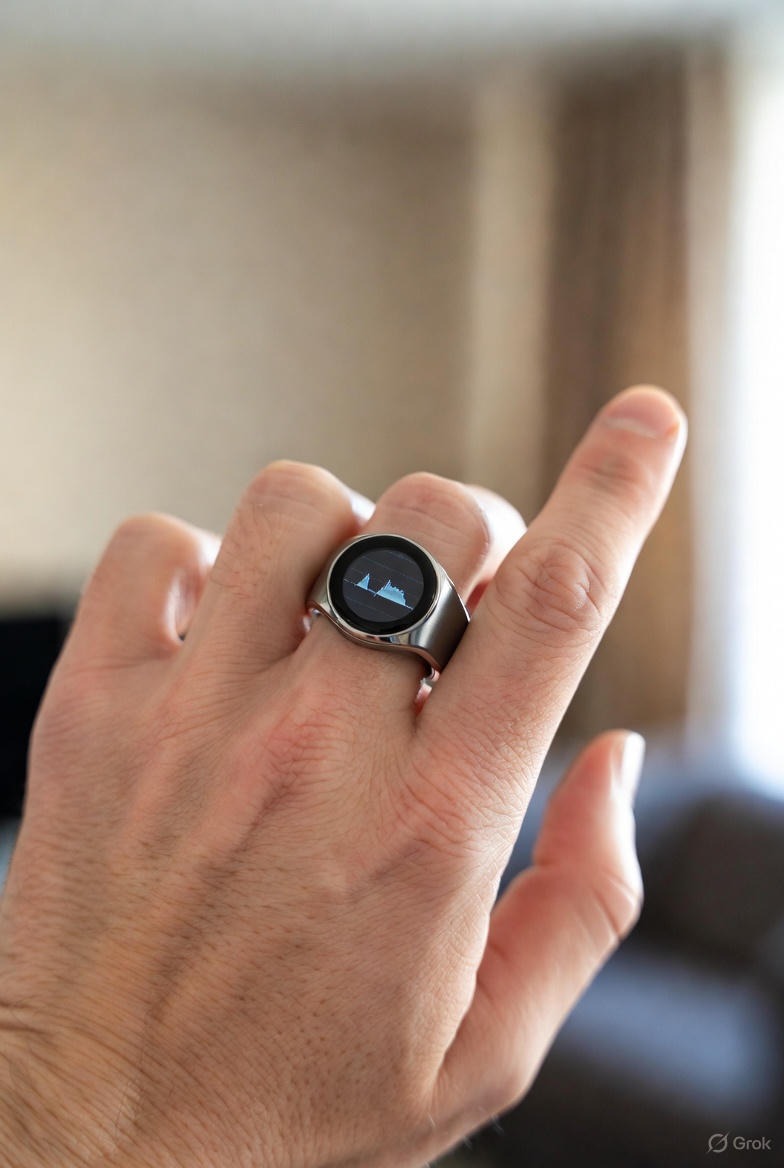
Our health is not created in a vacuum. It is in constant dialogue with our surroundings. Your wellness ring, often without specific environmental sensors, can act as a canary in the coal mine, detecting when something in your external world is throwing your internal world off balance.
The Thermostat in Your Finger: The skin temperature sensor is your first-line environmental detective. A consistently elevated nighttime temperature despite a cool room could point to an overly warm duvet or non-breathable pajamas. Conversely, you might discover you sleep more soundly and with better HRV when your bedroom is a degree or two cooler, as your body needs a slight drop in core temperature to initiate sleep. This makes a compelling case for optimizing your natural sleep environment.
Noise & Sleep Fragmentation: While it doesn't have a microphone, your ring's sleep tracking is exquisitely sensitive to disturbances. Frequent, unexplained "awake" periods or light sleep bouts during the night can often be correlated with environmental noise pollution—a snoring partner, street traffic, or a noisy HVAC system. This objective data provides the justification to invest in solutions like white noise machines, earplugs, or soundproofing. You can even test solutions like using natural sounds for deeper sleep and see if your sleep efficiency metric improves.
Travel & Altitude Effects: Travel is a perfect storm of circadian, environmental, and dietary disruption. Your ring documents it all.
Allergens & Air Quality: Exposure to allergens or poor air quality can create low-grade systemic inflammation and stress on the respiratory system. This may manifest as a slight elevation in skin temperature, a higher resting heart rate, and poorer sleep quality. If you notice a pattern of worse scores on high-pollen days or after spending time in a moldy or dusty environment, your ring has helped you identify a significant health saboteur.
Social & Emotional Environments: This is more subtle but profoundly important. A stressful day with difficult people, or conversely, a joyous day with loved ones, leaves a biometric signature. You may see that time with certain people consistently lowers your HRV, while other activities or companions leave you in a more recovered state. This isn't about judging relationships, but about understanding their physiological impact so you can manage your energy and recovery accordingly.
By learning to read these environmental signatures, you gain the power to audit and curate your surroundings. Your ring provides the evidence you need to create a truly supportive habitat for health—be it adjusting your bedroom climate, managing travel recovery, or understanding the hidden costs of your daily environments.
In a world obsessed with scale weight and aesthetics, the wellness ring redefines what true health progress looks like. It provides a dashboard of internal metrics that are often more meaningful and motivating than external, appearance-based goals. This is the data of vitality, resilience, and longevity.
The Metrics That Matter for Longevity:
Breaking Plateaus & Finding Motivation: When the scale won't budge during a fitness journey, it's easy to get discouraged. But your ring data can show you are still making profound progress where it counts. Maybe your RHR has dropped 5 beats, and your HRV is up 10 points. That's undeniable evidence your body is becoming fitter and more resilient, even if weight loss has paused. This data can renew motivation and keep you committed to healthy habits.
Aging with Intelligence: As we age, our physiological patterns naturally change. Sleep becomes more fragile, recovery takes longer. Your ring helps you navigate this with grace and intelligence. It allows you to track these changes objectively and adapt your lifestyle proactively—perhaps by prioritizing sleep even more, adjusting workout intensity, or focusing on recovery. For those over 40, understanding what your body needs now for better sleep naturally becomes a data-informed journey, not guesswork.
Creating a Health Legacy: Over years, the data in your ring's app becomes a unique, longitudinal health journal. You can look back and see how major life events—a new job, the birth of a child, a change in diet, a consistent meditation practice—altered your biometrics. This isn't just data; it's the story of your body's life, providing insights you can use forever and even share with healthcare providers to give them a unprecedented view of your health history.
By focusing on these internal benchmarks, you cultivate a healthier relationship with your body—one based on respect for its signals, appreciation for its resilience, and a commitment to nurturing its long-term function over its short-term appearance.
The true transformative potential of wellness rings extends far beyond the individual user. When millions of people contribute anonymized, aggregated biometric data, a powerful new tool for public health, medical research, and product development emerges. Your personal data, in concert with others', is helping to build a more precise and proactive future for global wellness.
The Power of the Population Dataset: Imagine being able to see, in near real-time, how a seasonal flu wave moves through a population not by reported symptoms, but by a precursor rise in average resting heart rate and skin temperature across thousands of users in a geographic area. This is early warning system potential at a societal level. Researchers can study how major events (like a pandemic or a natural disaster) affect population-level stress and sleep patterns.
Personalized Health Norms & Early Detection: Currently, medical norms are based on population averages. But what is "normal" for a 50-year-old female athlete versus a sedentary peer? Aggregated smart ring data, segmented by demographics and lifestyles, can help establish more precise, personalized health baselines. Furthermore, by identifying subtle, long-term deviations in an individual's data compared to their own past and their cohort, these devices hold promise for the early detection of conditions like atrial fibrillation, sleep apnea, or the onset of chronic illnesses.
Optimizing Interventions & Products: For wellness companies and even healthcare providers, this data is gold. It provides objective evidence of what works. Does a new sleep meditation app actually improve deep sleep for its users? Does a particular supplement formula move the needle on HRV or recovery scores? This allows for rapid iteration and the creation of truly effective solutions, moving beyond marketing claims to proven outcomes. For instance, research into natural sleep supplements can be grounded in actual biometric feedback from users.
The Ethical Imperative: This future comes with significant responsibility. Data privacy, security, and user consent are paramount. Reputable companies are transparent about how they anonymize and use aggregate data. As a user, it's empowering to know that your journey of self-discovery is also contributing, in a small way, to a broader understanding of human health. You are both a beneficiary and a citizen-scientist in this new era of biometric intelligence.
This collective data stream is quietly building the most detailed map of human health ever conceived—not in a sterile lab, but in the messy, beautiful reality of daily life. It promises a future where healthcare is predictive, personalized, and participatory, and your humble wellness ring is on the front lines of that revolution.
One of the most fascinating, and sometimes confusing, experiences with a wellness ring is when the data tells a story that seems to contradict your subjective feelings. You wake up feeling refreshed and energetic, only to see a low readiness score and poor sleep metrics. Or conversely, you feel sluggish and foggy, but your ring reports a high score and excellent recovery. Navigating this dissonance is not a flaw in the technology; it's a critical step toward deeper self-awareness and a more sophisticated understanding of your health.
Understanding the "Feeling vs. Data" Dissonance:
There are several physiological and psychological reasons for this apparent contradiction:
What to Do When Data and Feelings Clash:
This dissonance is an invitation to investigate, not to blindly obey one source over the other.
The Synthesis: Creating Your Integrated Health Index: The ultimate goal is not to robotically follow the ring, nor to ignore it in favor of fleeting feelings. It is to synthesize both into a wiser, more nuanced decision-making process. Over time, you learn the specific meaning of your data patterns. You learn that a "low score with good feelings" for you usually means you can do a moderate workout just fine. Or that "high score with fatigue" for you is a sure sign you need to check your hydration and caffeine intake. The ring becomes a conversation partner, providing an objective second opinion in your daily health council.
Armed with continuous data and a clear understanding of your baselines, your wellness ring transforms you from a passive consumer of health trends into an active biohacker—a personal scientist running n-of-1 experiments. This is where the journey moves from insight to transformation. You can now test hypotheses about what truly optimizes your biology with precision and proof.
The Framework for a Personal Experiment:
Advanced Experimentation Ideas:
This empirical approach cuts through the noise of conflicting health advice. You no longer have to wonder if ashwagandha or meditation "works." You can fund out with data specific to you. It fosters a sense of agency and curiosity, turning health optimization into a lifelong, engaging experiment in living better. You become the world's leading expert on one subject: yourself.
The dark side of any quantification tool is the potential for obsession, anxiety, and a phenomenon often called "orthosomnia"—an unhealthy preoccupation with achieving perfect sleep scores. When the tool designed to reduce stress becomes a source of it, its purpose is defeated. Cultivating a mindful, balanced relationship with your ring's data is as important as interpreting the data itself.
Recognizing the Signs of Data Anxiety:
Strategies for a Balanced Approach:
The wellness ring is a powerful mirror, but it is not the full picture of your health. Your joy, your connections, your sense of purpose, and your intuitive sense of well-being are unquantifiable yet vital components. The ring's data is one voice in the choir of your health—an expert voice, but not the only one. Listen to it, learn from it, but never let it drown out the quiet wisdom of your own lived experience.
While sleep and readiness are the primary lenses, the consistent biometric monitoring of a wellness ring can cast revealing light on other, often surprising, areas of your life. By correlating data with events and states, you can uncover hidden connections between your physiology and your broader existence.
Cognitive Performance & Creativity: While it can't measure IQ, your ring's readiness and sleep scores are strongly correlated with cognitive function. You may start to notice a pattern: on days with high readiness scores, you breeze through complex problem-solving at work. On low-score days, you struggle to concentrate. This can help you strategically schedule your most demanding mental work for your biological prime times. Furthermore, REM sleep is crucial for creativity and memory consolidation. By tracking REM, you can see if your lifestyle supports creative thinking and learning.
Emotional Regulation & Mood: The link between physiological state and emotional resilience is profound. A low HRV is scientifically linked to reduced emotional regulation and higher reactivity. You might find that days following poor sleep (low HRV) are the days you are more irritable, anxious, or easily overwhelmed. This isn't a character flaw; it's a physiological state. Seeing this connection can help you depersonalize mood swings and take physiological action—like prioritizing rest, calming strategies for an anxious mind, or gentle movement—instead of spiraling into negative self-talk.
Social Dynamics & Relationships: As hinted earlier, social interactions leave a biometric footprint. You might discover that certain types of socializing (large, noisy parties) drain you, showing up as a lower score the next day, while deep one-on-one conversations or time with close family leave you recovered or even energized. This data can guide you to invest your social energy more intentionally, fostering relationships that are truly nourishing on a physiological level.
Fertility & Hormonal Health (For Women): For those who menstruate, the wellness ring is a powerful tool for cycle syncing. The basal skin temperature shift is a key natural marker of ovulation. By tracking your temperature curve alongside heart rate trends (which often rise in the luteal phase), you can identify your unique cycle phases with high accuracy. This allows you to tailor your training, nutrition, and work commitments to your hormonal energy patterns—planning intense projects for the high-energy follicular phase and prioritizing recovery and introspection in the luteal phase.
Travel Optimization: We touched on travel as a disruptor, but the ring can also be used to optimize it. You can test different jet lag protocols (timed light exposure, melatonin) and see which one helps your sleep and readiness metrics stabilize fastest in the new time zone. It can tell you how many days it truly takes you to acclimate, helping you plan important meetings or activities accordingly.
The Mind-Body Connection in Real-Time: Perhaps the most profound unexpected insight is the tangible, visible proof of the mind-body connection. When you log a meditation session and see your real-time heart rate drop on the ring's app, it's a powerful reinforcement. When you see that a day of vacation, even with less sleep, results in a higher HRV because of reduced stress, it validates the importance of mental rest. The ring makes the abstract concept of "stress affecting the body" a concrete, measurable reality.
By staying open to these broader correlations, you move from using the ring as a sleep coach to using it as a holistic life optimization consultant. It provides a physiological narrative for your entire lived experience, helping you design a life that supports your biology in every domain.
As the technology and clinical validation advance, the data from your wellness ring is transitioning from a wellness curiosity to a potentially valuable adjunct in professional healthcare. When used thoughtfully, it can facilitate richer conversations with your doctor, therapist, or coach and contribute to more personalized care.
Preparing for a Productive Conversation: Walking into your doctor's office and dumping three months of raw data graphs is not helpful. To make the data actionable for a healthcare professional, you need to curate and contextualize it.
Potential Use Cases in Healthcare:
Important Caveats & Responsibilities:
By bridging the gap between daily life tracking and clinical care, the wellness ring has the potential to democratize health data and foster a more collaborative, data-informed model of healthcare where patients are empowered, engaged partners in their own well-being.
The current capabilities of smart rings are impressive, but they represent just the first chapter. Rapid advancements in sensor miniaturization, battery technology, and AI are poised to make the next generation of devices even more powerful, intuitive, and integrated into our health ecosystems. Here’s a glimpse at the near future of this technology.
Non-Invasive, Continuous Blood Glucose Monitoring (CGM): This is the holy grail for many. Several companies are developing optical sensors that can estimate glucose trends through the skin without needles. While not intended for diabetic management initially, this would provide phenomenal insights into metabolic health, personal food responses, and energy crashes for the general population. Seeing how your body responds to different meals in real-time would revolutionize personalized nutrition.
Advanced Stress and Emotion Sensing: Future sensors may measure electrodermal activity (EDA) or subtle blood flow patterns to detect moments of acute stress or emotional arousal more directly. Combined with AI, the ring could learn to recognize your unique stress signatures and prompt you with a breathing exercise or mindfulness reminder in real-time.
True Blood Pressure Monitoring: Some prototypes are exploring photoplethysmography (PPG) and pulse wave analysis to estimate blood pressure trends. While challenging to make accurate on a small form factor, even trend data on relative changes would be a massive win for cardiovascular awareness.
Environmental Sensors: Future rings may include tiny sensors for UV exposure, air quality (PM2.5), or even specific allergens. This would complete the picture, showing not just how your body is reacting, but to what potential environmental triggers.
Seamless Ecosystem Integration & AI Coaching: The ring will fade into the background as a sensor, and the intelligence will live in the AI. Imagine an AI health coach that synthesizes data from your ring, your calendar, your food logs, and even your smart fridge. It could say: *"You have a big presentation at 3 pm tomorrow. Your current recovery trajectory is low due to two short sleep nights. I recommend a 20-minute nap today at 2 pm, a dinner rich in magnesium and complex carbs, and starting your natural wind-down routine by 9:30 pm to optimize your cognitive performance."* The ring becomes the data source for a truly proactive, 360-degree health management system.
Longer Battery Life & New Form Factors: Expect batteries lasting 7-10 days or more, and even more diverse, fashionable designs that look less like tech and more like fine jewelry, encouraging 24/7 wear.
The Ethical Frontier: With greater power comes greater responsibility. The future will demand rigorous standards for data accuracy (especially for health-significant metrics), ironclad privacy and security, and clear ethical guidelines on how AI-driven health recommendations are generated and delivered. The goal must remain empowering the user, not creating dependency or anxiety.
The wellness ring is on a path to becoming the central, unobtrusive hub of our digital health identity. It promises a future where preventing illness, optimizing daily performance, and extending our healthspan is guided by a continuous stream of personal data, turning the dream of truly personalized, predictive health into an everyday reality, all from a device that fits quietly on your finger.
You’ve mastered the basics: you prioritize sleep, manage workouts, and eat well. Yet, inexplicably, your readiness score plunges or your sleep graph shows mysterious disturbances. Often, the culprits are not the obvious stressors but subtle, ingrained habits—silent disruptors—that have a disproportionate impact on your autonomic nervous system. Your wellness ring, with its objective eye, is perfect for unmasking these saboteurs.
The Weekend Rebound Effect (Social Jet Lag 2.0): You sleep in gloriously on Saturday and Sunday. Subjectively, it feels like recovery. But your ring’s data often tells a different story: your sleep efficiency might be lower on those "catch-up" nights, and your Sunday night sleep is often fitful as your body struggles to readjust to an earlier Monday alarm. The resulting low Monday readiness isn't just "Monday Blues"; it's a measurable circadian disruption. The solution isn't to abandon weekend rest, but to aim for consistency within a 60-90 minute window, even on days off. Let the data convince you that a 10 am wake-up after a 2 am bedtime is a net negative, not a recharge.
The "Wind-Down" That Wires You: You know screens are bad before bed. So you switch to reading a gripping thriller on your tablet or watching an intense drama. While avoiding blue light via filters helps, the cognitive and emotional arousal from the content itself can be just as damaging. Your ring may show elevated heart rate and low HRV during this "wind-down" period, leading to extended sleep latency. The metric to watch here is your sleep onset time. If it's consistently long despite a screen curfew, experiment with truly calm activities: listening to natural sounds for deeper sleep, gentle stretching, or reading light, non-stimulating material.
Dehydration by Stealth: You drink water, but is it enough? And when? Chronic, low-grade dehydration doesn't always scream with thirst. It manifests as a slightly elevated resting heart rate, higher perceived effort during exercise, and sometimes, more frequent nighttime awakenings. Your ring can't measure fluid intake, but a persistent, unexplained creep in your RHR can be a clue. Try a two-week experiment of intentional, scheduled hydration and watch if that baseline heart rate trend bends downward.
The Perfectionist’s Paradox: This is a meta-disruptor: the anxiety caused by the ring itself. Worrying about achieving a perfect sleep score can release cortisol, making perfect sleep impossible. You might see this as a vicious cycle: anxious about sleep -> poor sleep score -> more anxiety. If your data shows poor sleep despite excellent habits, check your mental state around bedtime. Are you pressing "start sleep" on the app with a sense of performance pressure? The solution may be a ring holiday or a conscious reframing of the data as neutral information, not a report card. Remember, the goal is to work with your biology, not against it.
Temperature Spikes from Unsuspected Sources: That relaxing hot bath or sauna session 90 minutes before bed? For many, it aids sleep by mimicking the natural drop in core temperature afterward. But for others, if timed too close to bed, it can raise core temperature too much, leading to a night of restless, light sleep. Your ring’s skin temperature graph will show this. Similarly, an electric blanket left on all night or a overly warm duvet can create micro-awakenings. Let your nocturnal temperature graph guide your thermal environment.
By treating your ring as a detective, you can move beyond generic advice and pinpoint the exact, personal habits that are holding you back. It turns self-optimization into a precise exercise in subtraction, removing the subtle drains on your system one by one.
While a wellness ring provides a phenomenal 24/7 foundation of core biometrics, its power multiplies when synergistically combined with data from other specialized tracking tools. This creates a holistic, multi-layered picture of your health that is greater than the sum of its parts.
Continuous Glucose Monitor (CGM): The Metabolic Layer. A CGM provides a real-time view of your blood glucose responses to food, stress, and exercise. Pairing this with your ring data is revolutionary. You can now see the direct chain of causation:
Whoop Strap or Chest Strap HR Monitor: The Strain Layer. While rings measure resting metrics superbly, dedicated fitness devices often provide more accurate real-time heart rate during high-intensity or wrist-movement-heavy exercises (like weightlifting or cycling). You can use a Whoop or a chest strap to capture precise workout strain and heart rate zones, and then see how that strain impacts your ring’s recovery metrics (HRV, RHR) that night and the next day. This creates a perfect closed loop: precise strain measurement in, precise recovery measurement out.
Oura Ring & Temperature: The Women’s Health Layer. For those tracking fertility or hormonal health, the combination of a ring like Oura (with its superior temperature accuracy) and a dedicated app like Natural Cycles creates a powerful, natural family planning or cycle-syncing system. The ring provides the core biometrics (temperature, RHR, HRV), and the app provides the predictive algorithm and cycle insights. You can see how your workout performance, food cravings, and sleep quality ebb and flow with your hormonal phases.
Sleep Tracking Pad (Withat, Eight Sleep): The Environmental Layer. These pads go under your sheet and track sleep stages, heart rate, and respiration through ballistocardiography. They also often control bed temperature. Comparing this data with your ring’s can validate sleep stage accuracy and, more importantly, show how adjusting the bed’s temperature directly affects your ring’s reported sleep quality and skin temperature. It adds a layer of environmental control and feedback.
Mindfulness & Stress Apps (Calm, Headspace): The Subjective Layer. Use the session-tracking feature in apps like Calm. After a meditation or breathing exercise, note how you feel. Then, check your ring’s live heart rate during the session or your HRV trend after a week of consistent practice. This creates powerful biofeedback, proving the tangible physiological impact of mental training. It answers the question, “Is this meditation app actually lowering my stress?” with hard data.
How to Manage the Data Stream Without Overwhelm:
This synergistic approach moves you from single-metric tracking to true systems thinking. You see how nutrition, exercise, environment, and mind all weave together to create your daily state of health, with your wellness ring as the central, unifying data hub.
Theory is helpful, but concrete stories illuminate the path. Let’s walk through hypothetical but data-backed case studies showing how individuals used their wellness ring to identify a problem and implement a targeted solution.
Case Study 1: The "Always Tired" Executive
Case Study 2: The Overtraining Athlete
Case Study 3: The Stress-Eater in a Vicious Cycle
Case Study 4: The Perimenopausal Transition
These cases illustrate the universal process: Identify a disconnect (feeling vs. function), investigate the data for clues, form a hypothesis, run a personal experiment, and use the data to validate results. The ring is the compass, map, and validation tool for the entire journey.
To wield a tool effectively, you must understand its boundaries. An over-reliance on any single data source can lead to blind spots. A clear-eyed understanding of the limitations of consumer wellness rings prevents misuse and sets appropriate expectations.
1. It’s a Proxy, Not a Direct Measure.
2. It Measures "What," Not "Why."
The ring is spectacular at telling you that your HRV is low, your sleep is fragmented, or your temperature is up. It is not designed to diagnose the cause. A low score is a starting flag for investigation, not a finish line with a label. Is the low HRV from overtraining, an incoming virus, emotional grief, or a food sensitivity? The ring can’t differentiate; that’s your job, in partnership with a professional if needed.
3. It Can Miss Key Health Markers.
4. The Algorithm is a Black Box (Sometimes).
Your readiness or sleep score is generated by a proprietary algorithm. Companies don’t reveal the exact weightings of HRV vs. RHR vs. temperature, etc. This means you are somewhat trusting the company’s interpretation of your physiology. It’s why learning to interpret the raw metrics (HRV, RHR graphs) yourself is a vital skill—it gives you back control and understanding.
5. It Can’t Quantify Joy, Purpose, or Connection.
This is the most important limitation. You could have a perfect 90-readiness score with immaculate sleep graphs but be miserable, lonely, or feel your life lacks meaning. Conversely, you might have a low score after a night of poor sleep spent caring for a sick child or celebrating a milestone with friends—and your life is profoundly richer for it. The ring measures the health of the body’s systems, not the health of the human spirit. Never let the pursuit of perfect metrics come at the cost of lived experience, love, and spontaneous joy.
Embracing a Balanced View: Knowing these limitations frees you to use the ring appropriately—as an incredibly powerful indicator and guide within its domain. It is one instrument in the orchestra of your health. Listen to it closely, but also listen to the sound of your own laughter, the wisdom of your intuition, and the advice of qualified human experts. The goal is to use technology to become more human, not to outsource your humanity to an algorithm.
Ultimately, the endgame of living with a wellness ring is not to become a data analyst, but to build a seamless, intuitive, and highly effective Personal Health Operating System (H-OS). This is a dynamic set of rules, habits, and feedback loops—informed by your biometric data—that runs in the background of your life, automatically steering you toward better decisions and optimal states.
Components of Your H-OS:
How to Iterate and Refine Your H-OS:
Your Personal Health Operating System, powered by your ring, turns insight into automatic action. It reduces decision fatigue around health by creating smart defaults. You move from thinking about health to simply living it, confident that your invisible, data-informed architecture is supporting you, freeing your conscious mind to focus on creativity, connection, and the sheer experience of being alive.
Your Trusted Sleep Advocate: Sleep Foundation — https://www.sleepfoundation.org
Discover a digital archive of scholarly articles: NIH — https://www.ncbi.nlm.nih.gov/
39 million citations for biomedical literature :PubMed — https://pubmed.ncbi.nlm.nih.gov/
Experts at Harvard Health Publishing covering a variety of health topics — https://www.health.harvard.edu/blog/
Every life deserves world class care :Cleveland Clinic - https://my.clevelandclinic.org/health
Wearable technology and the future of predictive health monitoring :MIT Technology Review — https://www.technologyreview.com/
Dedicated to the well-being of all people and guided by science :World Health Organization — https://www.who.int/news-room/
Psychological science and knowledge to benefit society and improve lives. :APA — https://www.apa.org/monitor/
Cutting-edge insights on human longevity and peak performance:
Lifespan Research — https://www.lifespan.io/
Global authority on exercise physiology, sports performance, and human recovery:
American College of Sports Medicine — https://www.acsm.org/
Neuroscience-driven guidance for better focus, sleep, and mental clarity:
Stanford Human Performance Lab — https://humanperformance.stanford.edu/
Evidence-based psychology and mind–body wellness resources:
Mayo Clinic — https://www.mayoclinic.org/healthy-lifestyle/
Data-backed research on emotional wellbeing, stress biology, and resilience:
American Institute of Stress — https://www.stress.org/


