


How Your Wellness Ring Shows the True Cost of Poor Work-Life Balance
Demonstrates the physiological cost of poor work-life balance as shown by your wellness ring data.
Demonstrates the physiological cost of poor work-life balance as shown by your wellness ring data.
%402x.svg)
You check your phone. Another 7 PM email from your boss pings into existence. You’ll just send a quick reply from the couch. It’s fine. You’re “always on,” but that’s just modern work, right? You scroll through social media, watching reels of serene sunrises and mindful morning routines, feeling a familiar, low-grade guilt. You know you should sleep more, move more, stress less. But between deadlines, dinner, and the endless to-do list, your own well-being feels like a luxury you can’t afford—or a problem you can postpone.
Meanwhile, on your finger, a silent witness is tallying the receipts. Your wellness ring, a sleek band of titanium and sensors, is not just counting steps or tracking sleep. It is compiling a biometric audit of your lifestyle, a real-time ledger of the physical and mental costs your work-life imbalance is incurring. It sees what you rationalize away. It measures what you ignore. The data it collects is more than numbers on a screen; it is the unvarnished truth of your body’s response to the relentless pressure of being perpetually “productive.”
For decades, the consequences of burnout and chronic stress were intangible—felt as exhaustion, irritability, and a vague sense of depletion, but easily dismissed. Today, technology has given those consequences a concrete, quantifiable form. Your wellness ring transforms subjective fatigue into graphs of plummeting heart rate variability (HRV). It turns restless nights into charts of fragmented sleep patterns. It converts the “I’m just busy” excuse into elevated resting heart rates and erratic activity scores.
This article is a deep dive into that data-driven truth. We will explore how the metrics on your wellness app are not random readings but a direct financial statement of your health capital. We will decode the signals, connect the dots between your work habits and your body’s cries for help, and ultimately, learn how to use this powerful tool not just to track a problem, but to architect a solution. The age of guessing is over. Your wellness ring is showing you the bill. It’s time to understand what it says—and more importantly, what you can do about it.
The journey towards understanding the true cost of imbalance begins with a paradigm shift. We must move from seeing our wearables as simple fitness gadgets to recognizing them as sophisticated biometric accountants. This ring on your finger is the equivalent of a corporate CFO for your personal health, tasked with auditing the income and expenditures of your body’s most vital resources.
Every decision, from that late-night work sprint to the skipped lunch, is a transaction. The “income” comes in the form of recovery-oriented behaviors: deep, restorative sleep; nutritious food; physical movement; and genuine psychological detachment from work. The “expenditures” are the demands we place on our system: cognitive load, emotional labor, sedentary stress, and, most insidiously, the constant state of low-grade alertness fueled by digital connectivity.
Your wellness ring tracks the key performance indicators (KPIs) of this fragile economy. Heart Rate Variability (HRV) is perhaps the most telling metric—a direct measure of your autonomic nervous system’s flexibility and resilience. A high HRV indicates a system that can easily switch from stressed (sympathetic) to relaxed (parasympathetic) states, like a well-managed company with ample cash flow. A consistently low or declining HRV is a red flag, signaling that your body is stuck in “fight-or-flight” overdrive, depleting its reserves.
Resting Heart Rate (RHR) is another fundamental metric. While fitness can lower your RHR, a sudden or sustained increase often points to systemic stress, inflammation, or inadequate recovery. It’s your body’s engine idling higher than it should, burning more fuel just to keep the lights on.
Then there is sleep, the night shift where the body performs its most critical repair work. A wellness ring doesn’t just track duration; it analyzes architecture—the balance of light, deep, and REM sleep. This is where the first, most glaring invoices from a poor work-life balance are issued. As we’ll explore, the connection between daytime stress and nighttime turmoil is direct and measurable.
Finally, activity and readiness scores synthesize these data points into actionable insights. They are the summary statements, the bottom line telling you whether you have a surplus to invest in a tough workout or a deficit that demands a day of strategic rest.
This is biometric accounting. And for the modern professional living in the blur, the first quarterly report is often a sobering revelation of runaway spending and dwindling assets. The following sections will dissect each line item on this statement, starting with the most glaring deficit: the sabotage of sleep.

If your work-life balance is deteriorating, your sleep data will be the first to sound the alarm. Sleep is not a passive state but an active, vital process of physical repair, memory consolidation, and metabolic regulation. Your wellness ring’s sleep analysis is a non-negotiable audit of this process, and when work encroaches on life, the report is rarely positive.
The most obvious metric is duration, and the “I’ll sleep when I’m dead” mentality is quickly refuted by the data. Consistently logging less than 7 hours is correlated with a host of issues, from impaired cognition to a compromised immune system. But the ring reveals subtler, more damning evidence than just a short night.
Look at your sleep latency—the time it takes you to fall asleep. A person at peace with their day typically drifts off within 15-20 minutes. If your data shows a consistent struggle of 30, 45, or 60 minutes, it’s a clear sign your mind is still “at the office.” The cognitive rumination over unfinished tasks or anxiety about tomorrow’s meetings activates the sympathetic nervous system, directly opposing the state needed for sleep onset.
Next, examine your sleep consistency. Your ring likely shows you a graph of your bedtime and wake time. Is it a jagged mountain range, with wildly different times each night? This inconsistency, often caused by working late during the week and trying to “catch up” on weekends, confuses your internal circadian clock. It creates a form of internal jet lag, a phenomenon known as social jet lag, which leaves you perpetually fatigued no matter how many hours you log.
The most profound insights, however, come from the breakdown of your sleep stages. Deep sleep (slow-wave sleep) is crucial for physical restoration and cellular repair. REM sleep is essential for emotional processing and creativity. Chronic stress and an overactive mind are notorious for robbing you of both. You might see a night with adequate total hours but a shocking lack of deep sleep, or frequent awakenings that fragment your REM cycles. This is your body trying and failing to complete its essential maintenance work because the “work day” never truly ended.
This data is the canary in the coal mine. It’s the earliest, most sensitive indicator that the pressures of your professional life are crossing a biological boundary. Ignoring these signals doesn’t just mean feeling groggy; it means operating with a brain that hasn’t cleared its metabolic waste, a body that hasn’t repaired its tissues, and an emotional center that hasn’t processed the previous day’s stressors. As we’ll see next, this nocturnal disruption doesn’t stay confined to the night—it unleashes a cascade of dysfunction that defines your entire day.
The poor sleep revealed by your ring is not an isolated event; it is the catalyst for a destructive biochemical cascade that hijacks your entire waking day. This is where the cost of poor work-life balance compounds, moving from a sleep deficit to a systemic stress overload.
At the heart of this cascade is cortisol, your body’s primary stress hormone. In a healthy rhythm, cortisol follows a beautiful, predictable curve: it peaks shortly after you wake (helping you feel alert and energized), gradually declines throughout the day, and reaches its lowest point at night, allowing melatonin—the sleep hormone—to rise and usher you into rest. This is the cornerstone of your circadian rhythm.
When work stress bleeds into the evening and disrupts your sleep, this elegant system breaks down. A night of poor or short sleep is perceived by your body as a major stressor. In response, your adrenal glands pump out excess cortisol the next morning. But this isn’t the clean, alertness-boosting peak of a well-rested person. It’s an anxious, jittery surge. You may recognize this as waking up tired yet “wired,” reaching instinctively for caffeine just to function, which further disrupts the delicate hormonal balance. Understanding how caffeine timing affects your sleep pattern is crucial here, as that 3 PM coffee can become both a symptom and a cause of the cycle.
This dysregulated cortisol rhythm has a domino effect. Your elevated morning cortisol bluntly signals to your body that it is in a state of threat. This suppresses other vital systems—digestion, immune function, and even reproductive hormones take a backseat to the perceived “crisis.” As the day progresses, instead of smoothly declining, cortisol levels often remain erratic or flat, leaving you in a state of persistent, low-grade physiological anxiety. Then, when evening comes, the high cortisol stubbornly blocks the release of melatonin. You feel exhausted but cannot unwind, leading to the same poor sleep latency you saw in your data, and the cycle begins anew.
Your wellness ring captures the downstream effects of this chaos. Your Resting Heart Rate (RHR) will often be elevated, as cortisol increases heart rate and blood pressure. Your Heart Rate Variability (HRV) will be suppressed, showing your nervous system has lost its resilience and is stuck in “fight-or-flight.” Your activity data may show you’re paradoxically more sedentary during the day—chronic stress is exhausting—or it may reveal frantic, unstructured movement without true exercise.
This self-perpetuating loop is Circadian Chaos. It’s a state where your internal biological rhythms are no longer aligned with the natural day-night cycle or the demands of your life. Your ring’s data is a map of this disarray, showing you the tangible outcome of ignoring boundaries. The consequence isn’t just feeling “stressed”; it’s a fundamental rewiring of your body’s operating system toward survival mode, leaving no resources for growth, repair, or joy.
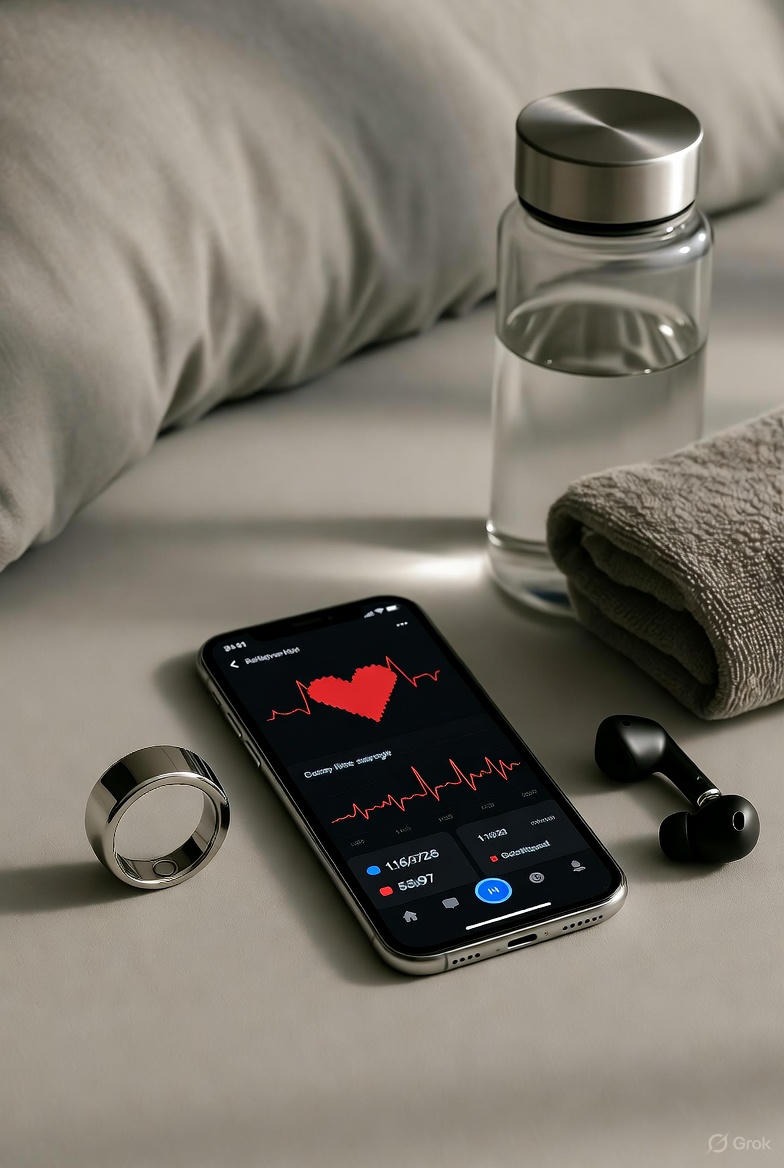
While sleep tells the story of your recovery, and cortisol illustrates the hormonal turmoil, two metrics serve as the ultimate summary balance sheets of your internal economy: Heart Rate Variability (HRV) and Resting Heart Rate (RHR). Think of HRV as your resilience capital and RHR as your operational overhead. Your wellness ring tracks these with precision, and in the context of work-life imbalance, they deliver the most unambiguous verdict on your health’s bottom line.
Heart Rate Variability (HRV): The Resilience Capital
Contrary to what you might assume, a healthy heart does not beat with the monotonous regularity of a metronome. The time interval between beats is constantly fluctuating, increasing slightly as you inhale and decreasing as you exhale. This variability is a sign of a robust, adaptable autonomic nervous system. A high HRV indicates a strong parasympathetic (“rest-and-digest”) tone, meaning your body can easily downshift into a state of calm and recovery. It is a reservoir of resilience.
When you are trapped in a cycle of chronic work stress and poor recovery, HRV plummets. This is because the sympathetic (“fight-or-flight”) nervous system becomes dominant, creating a more rigid, predictable heart rhythm—the cardiac signature of being constantly on alert. A consistently low or downward-trending HRV is one of the clearest biometric signs of overtraining in athletes and, by perfect analogy, overworking in professionals. It signals that your resilience capital is depleted. You have no buffer left for additional stress, be it a demanding project, a family obligation, or even a tough workout. Your ring’s HRV trendline is, quite literally, a graph of your adaptive capacity draining away.
Resting Heart Rate (RHR): The Operational Overhead
Your Resting Heart Rate is the number of times your heart beats per minute while you are completely at rest. For a fit, relaxed individual, this number can be in the 50s or low 60s. Like the idle speed of an engine, a lower RHR is generally more efficient, meaning your heart doesn’t have to work as hard to maintain basic bodily functions.
Chronic stress and poor sleep cause your RHR to creep up. Elevated cortisol, increased inflammation, and a revved-up sympathetic nervous system all force your heart to work harder, even when you’re doing nothing. This is an increase in your body’s operational overhead. It’s spending more energy just to keep the lights on, leaving less available for everything else. A sustained elevation of 5-10 beats per minute above your personal baseline is a significant red flag your ring will detect, often before you consciously feel any different.
Together, HRV and RHR form a powerful duo. In an ideal state of balance, you have high HRV (ample resilience) and low RHR (efficient operation). Under the strain of poor work-life balance, you see the inverse: low HRV and elevated RHR. This is the biometric equivalent of a company running on massive debt (no resilience) with skyrocketing fixed costs (high overhead)—a precarious and unsustainable position. Monitoring these trends is not about vanity metrics; it’s about performing a real-time fiscal health check on your most important asset: your body.
In the narrative of overwork, “busyness” is often worn as a badge of honor. The calendar packed with back-to-back meetings, the constant motion, the 10,000 steps accrued pacing during phone calls—it all feels productive. Your wellness ring, however, is adept at spotting the difference between healthy activity and the frenetic, stress-driven movement that masks a deeper dysfunction. This is the Activity Paradox: you can be perpetually in motion while your health metrics are in clear decline.
Your ring’s activity score is not just a step counter. It synthesizes data on movement volume, intensity, and variety. When dissected, the activity patterns of someone with poor work-life balance are often revealing:
Your ring exposes this paradox. It allows you to see that “busy” is not a synonym for “active” in a health-promoting sense. True physical wellness requires intentional, balanced movement coupled with dedicated rest. The data from a life out of balance shows the opposite: punishment of the body through stillness at a desk, punctuated by frantic, often ill-timed bouts of exercise, all underlaid by a nervous system begging for reprieve. This disjointed approach to activity doesn’t build health; it merely burns through your remaining energy reserves, accelerating the drain on your resilience capital.
The smartphone is the ultimate tool of modern work-life blur, and its impact is etched directly into your biometric data. The “digital leash”—the expectation of perpetual availability via email, Slack, and messaging apps—does more than just annoy you; it actively prevents your nervous system from entering a state of genuine recovery. Your wellness ring quantifies this sabotage in real-time.
The mechanism is rooted in neurobiology. Every ping, notification, or “quick check” of your work email triggers a micro-shot of cortisol and dopamine. Cortisol because your brain interprets the notification as a potential threat or demand (Is it the boss? Is there a problem?). Dopamine because there’s the novelty and reward of having new information. This potent chemical cocktail creates a state of chronic, intermittent stress that is incredibly corrosive. You are never fully off; you are always in a state of low-grade readiness to re-engage.
Your ring’s stress score or ANS (Autonomic Nervous System) balance metric is exquisitely sensitive to this. You can perform a simple experiment: sit quietly for five minutes, then open your work email. Watch the graph on your accompanying app. It’s common to see an immediate spike in stress measurements or a shift toward sympathetic dominance. This is your body’s quantifiable stress response to a digital stimulus.
Now, extrapolate this across an evening. The “harmless” habit of scrolling through emails from the couch at 9 PM isn’t harmless at all. It:
The data will show this as elevated stress scores during your supposed downtime, higher nighttime resting heart rates, and poor sleep quality. The ring doesn’t know you checked your email; it only knows that during a period when your body should be winding down, your physiology remained in a state of heightened alert. This is the true cost of the digital leash: it systematically erodes the very boundaries that allow for recovery. It turns your home into a satellite office and your nervous system into a permanent employee on call. To reclaim your health metrics, you must first learn to sever this tether, creating digital boundaries that your biometrics will thank you for.
A common refrain in the unbalanced life is: “I’ll just catch up on sleep this weekend.” It’s a comforting idea—that the deep, restorative sleep lost over five nights of work-induced burn can be deposited back into your biological bank account over a 48-hour period. Your wellness ring’s longitudinal data, however, demolishes this myth. It shows that “weekend recovery” is often an illusion, and sometimes, it can even make the problem worse.
First, the data on sleep debt is clear. While you can partially recover from short-term sleep loss, the recovery is not linear or perfectly efficient. The deep, restorative slow-wave sleep you missed on Tuesday night is not simply added back on Saturday. The body prioritizes certain functions, but some cognitive deficits and metabolic disruptions from cumulative sleep loss may persist. Your ring may show you slept 10 hours on Saturday, but your HRV on Sunday morning might still be depressingly low, indicating your nervous system is not yet reset.
Second, and more critically, is the issue of circadian disruption. This is where the practice of “social jet lag” comes into full, data-driven view. During the week, you might force yourself to sleep from 1 AM to 7 AM. On Friday and Saturday, you “crash” from exhaustion at 10 PM and sleep until 10 AM. This is a 5-hour shift in your sleep schedule—the equivalent of flying from New York to London. Your ring’s sleep consistency graph will look like a dramatic zigzag.
This erratic schedule confuses your master circadian clock (the suprachiasmatic nucleus). The clock relies on consistent cues, especially light exposure and sleep/wake times, to stay synchronized. When you shift your weekend schedule, you essentially give your body whiplash. Come Sunday night, trying to fall asleep at 1 AM again is a struggle because your body, based on the last two days, thinks it’s only 10 PM. This leads to the classic Sunday-night insomnia, starting the new week with yet another sleep deficit. You can explore this in detail in our analysis of how to reset unhealthy sleep patterns, which addresses this exact cycle.
Furthermore, the weekend often involves other “recovery” behaviors that can backfire: overconsumption of alcohol (which destroys sleep architecture), late-night socializing, and irregular meal times. Your ring’s data will capture all of this: the increased nighttime restlessness after drinks, the elevated RHR, the poor sleep stage distribution.
The wellness ring reveals “weekend recovery” for what it often is: a desperate, dysregulated binge on rest that fails to address the root cause and often exacerbates the underlying circadian disorder. It’s a volatile, unsustainable pattern that your biometrics clearly flag as a sign of a deeply misaligned lifestyle, not a solution to one.
Burnout is not a mythical state of being “a little tired.” It is a clinical syndrome characterized by emotional exhaustion, cynicism, and reduced professional efficacy. While diagnosed through psychological assessment, its roots are profoundly physiological. Your wellness ring tracks several key metrics that serve as emotional biomarkers—physical proxies for your mental and emotional state. When work-life balance fails, these biomarkers paint an objective picture of a system sliding toward burnout.
The Continuous Stress Score: Many advanced rings now calculate a continuous stress score throughout the day by analyzing heart rate data and its variability. This is not measuring psychological feelings, but the physiological state of stress—sympathetic nervous system arousal. A healthy pattern shows peaks (during work, exercise) and clear troughs (during breaks, meals, relaxation). In a state of chronic imbalance, this graph flattens into a high, anxious plateau. There are no true troughs. Even during leisure, the score remains elevated, showing your body never fully disengages from a state of threat. This is the biometric signature of being “always on.”
Skin Temperature and Its Nocturnal Dip: Your core body temperature follows a circadian rhythm, cooling down by 1-2 degrees Fahrenheit at night to initiate and maintain sleep. This nocturnal dip is critical. Your ring, by monitoring subtle changes in skin temperature at the wrist, can infer this cycle. Chronic stress and poor sleep hygiene can blunt or delay this temperature drop. A consistently shallow nocturnal temperature dip, as seen in your data, is strongly correlated with difficulty falling asleep, fragmented sleep, and overall circadian misalignment. It’s a physical sign that your body’s internal thermostat is broken, unable to execute the basic program for rest.
Restlessness and Sleep Disturbance: As mentioned, sleep architecture reveals emotional turmoil. But the frequency of “awake” or “restless” periods logged by your ring is a direct emotional biomarker. Tossing and turning, mid-sleep awakenings (especially with a racing mind), and early morning awakening where you can’t fall back asleep are classic physiological correlates of anxiety and depressive rumination—hallmarks of burnout. Your sleep is not just short; it’s fractured by the unresolved tensions of the day.
The Loss of Diurnal Variation: In a healthy individual, there is a beautiful, wave-like rhythm to many of these metrics—HRV, RHR, stress, temperature. They have a predictable up and down aligned with the day. Burnout and chronic stress flatten these waves. The data becomes monotonous, arrhythmic. HRV is stuck low. RHR is stuck high. The stress line is a flat, red highway. This loss of variation is perhaps the most telling biomarker of all. It indicates a system that has lost its dynamism, its adaptability, its very life. It is running on a single, stressed frequency until it breaks. Recognizing this flattened pattern in your own data is a critical, early warning to intervene before full-blown burnout takes hold.
The cost of poor work-life balance isn’t paid only in sleep graphs and heart rate data; it’s extracted directly from your cognitive capital—your ability to think, create, and lead. We often believe that working longer hours equates to greater output, but your body’s data tells a different story. The state of physiological dysregulation we’ve detailed imposes a severe “cognitive tax” on every mental task, eroding the very skills needed to excel professionally.
The Prefrontal Cortex Hijack: The prefrontal cortex (PFC) is your brain’s executive center. It manages focus, complex decision-making, emotional regulation, and creative problem-solving. This region is incredibly energy-intensive and neurologically “fragile.” It is the first to suffer under conditions of stress, fatigue, and poor recovery. When your wellness ring shows low HRV and elevated RHR, it’s a sign your body is in survival mode. In this state, neural resources are diverted away from the sophisticated PFC and toward older, more reactive brain regions (like the amygdala) that prioritize quick, threat-based responses.
The result? You may find yourself:
The Illusion of Productivity: You may be putting in 12-hour days, but your ring’s data correlates with a decline in cognitive efficiency. You’re spending more time to accomplish less, making more errors, and needing to re-do work. This is the cognitive tax at work. Your brain is operating with high friction and low bandwidth. Research into sleep patterns and productivity clearly demonstrates that performance is tied to biological rhythms, not sheer hours logged. Forcing cognitive work during a biological trough, which is more frequent when you’re depleted, yields minimal returns.
Your wellness ring doesn’t measure ideas per hour, but it measures the foundational state required to have good ideas. By revealing your nervous system’s instability and your sleep’ inadequacy, it is indirectly reporting on the degraded condition of your most important professional tool: your mind. Investing in recovery, as guided by your ring’s data, isn’t slacking off; it’s the most strategic thing you can do to protect and enhance your cognitive performance. You are not logging off; you are rebooting the system.
The data on your finger is profoundly personal, but it is not created in a vacuum. It is, in many ways, a mirror reflecting the culture of your team, your department, and your company. Chronic poor readings are rarely just a personal failing; they are often a biometric indictment of a dysfunctional work environment. When entire teams are silently suffering from elevated RHR, suppressed HRV, and shattered sleep, the problem is systemic.
The Always-On Culture: If your stress scores spike every time you get a Slack message after 6 PM, or if your sleep data consistently shows you’re awake and restless after a late-night email from your manager, your personal data is capturing a cultural norm. A culture that implicitly or explicitly rewards constant availability creates a collective physiological state of hyper-vigilance. Your ring’s data becomes a proxy for the company’s failure to establish healthy boundaries. You can see how this manifests in the clash between human biology and work demands in our article on sleep pattern mismatch.
Meeting and Workload Bloat: Does your activity data show you sitting for 8 hours straight on days packed with back-to-back video calls? This is a cultural artifact of poor meeting discipline and unrealistic workload expectations. The physical stagnation and cognitive drain of endless meetings are captured in your sedentary metrics and your inability to recover (low HRV) even after work ends. Your body is paying the price for organizational inefficiency.
The Lack of Psychological Safety: Stress related to fear of failure, harsh criticism, or political maneuvering is particularly toxic. This kind of threat-based stress is potent and long-lasting. It can lead to the most severe dysregulation seen in the data: sustained, multi-week declines in HRV, significant sleep disruption, and a flatlined stress score that never drops. Your biometrics can signal an environment where you don’t feel safe, long before you articulate it or decide to leave.
The Collective Rhythm: Imagine if a whole team shared their (anonymous) aggregate wellness data. You might see a collective crash every quarter after a product launch, or a team-wide degradation in sleep scores during budget season. This isn’t coincidence; it’s a cultural rhythm of burnout and recovery. Smart leaders are beginning to understand that team performance is not the sum of individual hours worked, but the product of collective energy, focus, and recovery. High-performing teams in sustainable cultures would likely show data with clear rhythms—periods of high intensity followed by clear signals of collective recovery.
By viewing your personal data through this wider lens, it transforms from a source of personal guilt into a powerful piece of diagnostic evidence. It begs the question: “Is my physiological state solely my responsibility to manage, or is it also a consequence of the system I operate within?” The answer, as your ring subtly indicates, is both. True, lasting change often requires not just personal interventions, but courageous conversations and cultural shifts within your workplace.

Reading your biometric data can feel overwhelming—a stark ledger of deficit. But this is where the power truly lies. Your wellness ring is not just a diagnostic tool; it is a prescriptive guide. The same data that reveals the cost of imbalance provides the roadmap to reclaiming balance. It moves you from a vague sense of being “tired and stressed” to having specific, actionable levers you can pull to improve your health capital. This is about turning insight into action.
1. Let Data Define Your “Non-Negotiables.”
Your sleep consistency graph is pleading for a stable bedtime. Your stress score flatlines during evening screen time. Use this data to set non-negotiable boundaries with the authority of science.
2. Practice Biometric- Informed Scheduling.
Your body has natural rhythms. Use your data to work with them, not against them.
3. Use the Readiness Score as Your Daily Guide.
Instead of forcing a rigid workout schedule, let your ring’s daily readiness or recovery score dictate your activity.
4. Conduct Personal Experiments.
The ring allows you to be a scientist of your own life.
By engaging with your data in this proactive, experimental way, you shift from being a passive victim of your work-life imbalance to an active architect of your recovery. The ring provides the feedback loop. You try an intervention (a boundary), and the data shows you the result (improved metric). This positive reinforcement cycle is the foundation of sustainable change. It turns abstract wellness advice into a personalized, data-driven protocol for thriving in a demanding world.
The journey from diagnosis to prescription is empowering, but it is only the first step in a longer arc of transformation. The previous sections equipped you with the ability to read the biometric ledger and identify the key pressure points. Now, we move into the master phase of this process: the strategic, data-informed recalibration of your lifestyle to not just halt the damage, but to systematically rebuild your health capital. This is where your wellness ring transitions from a whistleblower to a chief optimization officer, guiding you to craft a life where work and well-being are not adversaries, but aligned forces.
Building sustainable health in the face of modern demands is not about adding more to your plate—more workouts, more superfoods, more productivity hacks. It is about intelligently and ruthlessly prioritizing the foundational pillars of human performance that your ring measures: Sleep, Stress Management, Nutrition, Movement, and Connection. The data you now understand allows you to prioritize these not by guesswork, but by empirical need. When your HRV is low, stress management becomes your top priority. When your deep sleep is lacking, sleep hygiene is your most important project. This section is your guide to that nuanced, responsive approach.
You know your sleep is broken. Now, let's rebuild it with the precision of an engineer, using your ring’s data as the blueprint. "Sleep hygiene" often feels like a list of vague don'ts. Strategic Sleep Engineering is a proactive, data-driven doing protocol designed to maximize the restorative quality of every hour you spend in bed.
1. Reverse-Engineer Your Perfect Night.
Start with your wake-up time, which is often more fixed than bedtime. Using your ring’s historical data, identify the amount of sleep that leaves you feeling most refreshed (look for mornings with high readiness scores). Let’s say it’s 7.5 hours. Count back from your wake-up time to establish a target bedtime. Your initial mission is to protect that bedtime with the same urgency as a flight departure.
2. Craft a Pre-Sleep "Power-Down" Protocol.
Your sleep latency data shows how long it takes you to shut off. Design a 60-90 minute ritual that systematically lowers physiological arousal. This is non-negotiable. A sample protocol:
Track the impact of this protocol on your sleep latency and restlessness metrics. The goal is to see both numbers drop consistently.
3. Optimize Your Sleep Environment with Data.
Your ring’s skin temperature and restlessness data are direct feedback on your environment.
4. Master Your Chronotype, Don't Fight It.
You may be trying to live on a schedule that is fundamentally at odds with your biology. Your ring data over time can reveal your natural chronotype. Do you have more restful sleep and higher readiness when you go to bed later and wake later? You might be a night owl forced into an early bird’s world. While you can’t fully override your genetics, you can match your sleep pattern to your lifestyle with less friction. Use the data to advocate for flexible start times or to schedule your most demanding work during your biological peak, which your ring can help identify.
Engineering your sleep is the single most effective investment you can make in reversing the cost of imbalance. It is the foundation upon which every other recovery process is built.
If sleep is the foundation, then detachment is the protective wall around it. True recovery—the kind that rebuilds HRV and lowers RHR—requires periods where you are not just physically away from work, but mentally and emotionally disengaged. This "psychological detachment" is a proven buffer against burnout. Your ring’s stress score is the ultimate lie detector for whether you’re achieving it. Let’s build boundaries that the data will respect.
1. Implement a "Closing Ceremony" for Your Workday.
The end of your workday should be a deliberate ritual, not a slow fade into exhaustion. A 10-minute closing ceremony signals to your brain that work is done. This might include:
Watch your stress score in the hour after this ceremony. The goal is to see a steeper, faster decline than on days when you just slump away from your desk.
2. Create Physical and Digital Firewalls.
Boundaries need physical form.
3. Cultivate "Flow State" Hobbies.
The antidote to work rumination is not passive consumption (like TV), but active engagement in an activity that induces a state of "flow"—complete absorption where you lose track of time and self. This could be playing an instrument, woodworking, gardening, painting, or a sport like rock climbing. Flow activities are profoundly restorative because they demand your full attention, leaving no cognitive space for work worries. Notice how your stress score remains low and steady during and after these activities, unlike the jagged spikes of passive scrolling.
4. Practice "Single-Tasking" in Leisure.
Multitasking has bled from our work into our leisure, fracturing our attention and preventing deep relaxation. Commit to single-tasking during your recovery time. If you’re having dinner with your partner, put the phone in another room. If you’re reading, just read. If you’re on a walk, leave the headphones out and observe your surroundings. Your ring’s stress data will reflect the calming effect of a unified, present mind. This practice of focused attention is a direct reprieve for your overtaxed prefrontal cortex.
Strategic detachment is not about working less; it’s about recovering better so that the hours you do work are more focused and effective. By creating these clear divisions, you give your nervous system the predictable downtime it needs to reset, making you more resilient during the uptime.
We often eat for energy to power through the next task, relying on sugar and caffeine to bridge energy gaps created by poor sleep and high stress. This is reactive, deficit-based fueling. Your wellness ring provides the insights to shift to proactive, recovery-based nutrition. What and when you eat has a dramatic impact on your stress metrics, sleep quality, and HRV.
1. Sync Meals with Circadian Rhythms.
Your metabolism follows a circadian pattern, most efficient earlier in the day. Data often shows that large, heavy, or high-fat meals late in the evening correlate with elevated nighttime heart rate, restlessness, and poor sleep scores. Use this insight:
2. Identify Inflammatory Triggers.
Chronic low-grade inflammation is a key driver of elevated RHR and suppressed HRV. While rings don’t directly measure inflammation, they measure its consequences. Use your data to play detective.
3. Hydrate for Nervous System Function.
Even mild dehydration increases cortisol production and can elevate RHR. Your body’s cells, including neurons, require adequate hydration to function optimally. Your ring’s stress score can be surprisingly sensitive to hydration status.
4. Use Caffeine Strategically, Not Desperately.
Caffeine has a half-life of 5-6 hours. That 3 PM coffee means half of it is still in your system at 8 PM, competing with adenosine (the sleep-pressure chemical) for receptors. This directly impacts your sleep latency and deep sleep scores.
Nutrition fueled by biometric feedback turns eating from a source of stress or guilt into a powerful, precise tool for modulating your internal environment and supporting deep recovery.
The fitness industry often glorifies "no days off" and punishing workouts. For someone already in a state of physiological debt, this philosophy is disastrous. It adds to the allostatic load. Your ring’s daily readiness or recovery score is the ultimate personal trainer, telling you what type of movement—if any—your body needs that day to build health, not break it down further.
1. Abandon the Rigid Schedule, Embrace the Readiness Score.
Throw out the generic "Monday: Chest, Tuesday: Legs" plan. Instead, each morning, let your score guide you:
2. Prioritize Non-Exercise Activity (NEAT).
For metabolic health and daily stress modulation, how you move outside the gym is more important than your hour-long workout. If your activity data shows long sedentary blocks, this is a priority.
3. Use Movement for Stress Modulation, Not Just Fitness.
Not all movement needs to be about burning calories or building muscle. Use it as a direct tool to influence your ring’s stress graph.
By letting your body's readiness dictate your movement, you turn exercise from a potential source of additional strain into a precise tool for building resilience. You train smarter, recover faster, and avoid the burnout-injuries that come from chronic overreaching. This principle is central to understanding the science of sleep patterns and performance; peak output requires strategic input and recovery.
Human beings are wired for connection. Loneliness and social isolation are not just emotional states; they are significant physiological stressors, linked to inflammation, higher blood pressure, and poorer sleep. Conversely, positive, supportive social interactions can downregulate the stress response and promote feelings of safety. Your wellness ring, while not measuring laughter or empathy, captures the downstream effects of your social world on your nervous system. Investing in connection is not a soft luxury; it is a critical piece of your recovery infrastructure.
1. Identify the "Energy Exchange" in Relationships.
Pay attention to how you feel physically during and after interactions. Your biometrics don’t lie.
Awareness allows you to strategically manage them: limit exposure to draining interactions when your resilience is low (e.g., a red/yellow readiness day), and intentionally seek out nourishing connections to counterbalance stress.
2. Cultivate Micro-Moments of Connection.
You don’t need a grand social event. Small, positive interactions have a cumulative effect. A warm greeting with a barista, a genuine "how are you?" to a coworker, playing with a pet, or a brief hug from a loved one. These micro-moments release oxytocin (the "bonding hormone"), which counteracts cortisol. They remind your primitive brain that you are part of a tribe and safe. Over time, a life rich in these moments creates a baseline of safety that is reflected in a more resilient stress response and better recovery metrics.
3. Build a "Recovery Community."
Share your journey toward better balance with trusted friends, a partner, or a community (online or in-person). This serves two purposes:
4. The Power of Co-Regulation.
Our nervous systems are contagious. We "catch" the calm or anxiety of those around us. Spending time with someone who is genuinely calm and present (a phenomenon supported by the science of heart-brain synchronization) can help regulate your own stressed system. This is one reason why practices like partner yoga or simply sitting quietly with a loved one can feel so restorative. Seek out these people and environments. Your time with them is not wasted; it is a therapy session for your autonomic nervous system.
By intentionally investing in positive social connections, you build an external support system that directly fortifies your internal biological one. It’s a reminder that healing the costs of imbalance is not a solitary, data-obsessed pursuit, but a fundamentally human one.
Reversing the deep costs of chronic imbalance is not a 30-day sprint; it is a marathon of consistent, mindful choices. Your wellness ring is your perfect companion for this long game, providing the objective feedback needed to stay on course, celebrate micro-wins, and avoid the common pitfalls that lead back to burnout. This final section is about building a sustainable system, not just achieving a temporary fix.
1. Shift from Daily Obsession to Weekly/Monthly Trend Analysis.
It’s easy to become obsessed with today’s low HRV or last night’s poor sleep score. This creates performance anxiety around your own recovery, which is counterproductive. Pull back. The true power of the data is in the trends.
2. Establish Your Personal Baselines and "Warning Zones."
Through consistent tracking, you’ll establish your personal healthy baselines for each metric. More importantly, you’ll learn your body’s early warning signs.
3. Anticipate and Plan for Known Stressors.
Life will always have stressful periods: quarterly deadlines, family events, travel. You can’t avoid them, but you can armor yourself.
4. Embrace Flexibility, Not Perfection.
The goal is not a perfect, flatline graph of bliss. That’s not human. The goal is resilience—the ability to withstand stressors and return to baseline efficiently. Your graph should show waves: peaks of stress and exertion, followed by troughs of recovery. What you’re eliminating is the stagnant, high plateau of chronic stress. If you miss a bedtime or have a terrible week of sleep while traveling, don’t moralize it as failure. Simply observe the data, note the cause, and gently guide yourself back to your supportive routines. The flexibility of your sleep pattern is part of your adaptability.
5. Periodically Recalibrate Your "Why."
Finally, remember why you’re doing this. It’s not to achieve a perfect sleep score for its own sake. It’s to have the energy to play with your kids, the focus to do meaningful work, the health to enjoy decades of life, and the presence to savor small joys. When motivation flags, reconnect to your deeper "why." Your ring’s data is just the map; your values are the destination.
By engaging in this long-game strategy, you move from being a passive subject of your work-life imbalance to becoming the conscious author of your well-being. The data on your finger is the pen. The story it helps you write is one of sustainable performance, enduring health, and a life where you are not just surviving, but thriving.
The foundational work is complete. You have learned to read the biometric ledger of imbalance, diagnose its root causes, and implement targeted prescriptions to reclaim your sleep, manage stress, and move with intention. You have shifted from being a victim of your schedule to becoming an architect of your recovery. But this journey does not end at personal optimization. The true potential of this data-informed awakening is realized when it begins to influence larger life structures—shaping career choices, informing workplace culture, and even guiding a new philosophy of living. This next portion of our exploration delves into these advanced integrations, moving beyond the self to examine how the truths revealed by your wellness ring can transform your professional trajectory, your environment, and ultimately, your understanding of human potential.
We stand at a unique moment where quantitative self-knowledge can drive qualitative life change. The data is no longer just about you; it's a lens through which to view the systems you inhabit and a tool to redesign them. This is about building a life where external demands and internal needs are not at war, but in a dynamic, respectful harmony. Let's explore how to scale the insights from your finger to your career, your workplace, and the future of well-being itself.
For decades, career decisions have been guided by external metrics: salary, title, prestige, and perceived stability. Rarely do we have an internal metric to consult. What if your most important career advisor was your own nervous system? Your wellness ring provides a continuous, honest readout of how a job, a role, or a company culture truly affects you at a biological level. This data can be the compass for a career that not only succeeds but sustains.
1. Identifying Role-Specific Stress Signatures.
Not all stress is created equal. There is eustress—the challenging, engaging stress of a project that aligns with your skills and values, which often leads to growth and leaves your HRV able to recover. Then there is distress—the toxic, depleting stress of misalignment, political games, or ethical compromises, which flattens your HRV and elevates your RHR for weeks.
2. The "Commute & Context" Tax.
Your job is not just the 8 hours at your desk. Your ring captures the full cost.
3. Using Data in Career Transition Planning.
Considering a new job or career pivot? Your current data provides a baseline. As you interview and research, ask yourself: "Will this new opportunity likely improve my core metrics?" Look beyond the job description. Research the company's culture around boundaries, time off, and employee well-being. If possible, talk to current employees about their actual experience, not the corporate PR version. A significant salary increase is meaningless if it comes at the cost of your sleep and health—a cost your ring has already taught you to calculate.
4. The Biometrics of Entrepreneurship and Freelancing.
For those who work for themselves, the work-life blur is often total. The data here is critical for survival.
Navigating your career with biometric insight allows you to make choices that are congruent with your biology. It moves you from asking "Can I do this job?" to the more profound question: "At what cost to my system will I do this job, and is that cost acceptable?" This is the essence of sustainable success.
Your personal data is a powerful anecdote. But when aggregated and anonymized, it becomes irrefutable evidence of systemic cultural issues. The next frontier in using wellness technology is moving from personal optimization to collective advocacy—using the objective language of data to champion human-centric workplace policies that benefit everyone.
1. Using Data to Frame Conversations with Leadership.
Approaching a manager about burnout can feel vulnerable and subjective. Framing it with data shifts the conversation.
2. The Case for "Recovery ROI."
Forward-thinking companies are starting to calculate the Return on Investment (ROI) of employee recovery. Your data helps build this case. High turnover, presenteeism (being at work but not productive), and error rates all have massive financial costs.
3. Designing Team Rhythms Around Recovery.
A team's schedule should have a rhythm that includes collective recovery, not just relentless output.
By becoming an ambassador of this data-informed perspective, you help shift organizational culture from valuing mere presence to valuing sustainable performance and human flourishing. You help build a workplace where the goal is not to see how much pressure people can withstand, but to create conditions where they can consistently do their best work without destroying their health in the process.
Your Trusted Sleep Advocate: Sleep Foundation — https://www.sleepfoundation.org
Discover a digital archive of scholarly articles: NIH — https://www.ncbi.nlm.nih.gov/
39 million citations for biomedical literature :PubMed — https://pubmed.ncbi.nlm.nih.gov/
Experts at Harvard Health Publishing covering a variety of health topics — https://www.health.harvard.edu/blog/
Every life deserves world class care :Cleveland Clinic - https://my.clevelandclinic.org/health
Wearable technology and the future of predictive health monitoring :MIT Technology Review — https://www.technologyreview.com/
Dedicated to the well-being of all people and guided by science :World Health Organization — https://www.who.int/news-room/
Psychological science and knowledge to benefit society and improve lives. :APA — https://www.apa.org/monitor/
Cutting-edge insights on human longevity and peak performance:
Lifespan Research — https://www.lifespan.io/
Global authority on exercise physiology, sports performance, and human recovery:
American College of Sports Medicine — https://www.acsm.org/
Neuroscience-driven guidance for better focus, sleep, and mental clarity:
Stanford Human Performance Lab — https://humanperformance.stanford.edu/
Evidence-based psychology and mind–body wellness resources:
Mayo Clinic — https://www.mayoclinic.org/healthy-lifestyle/
Data-backed research on emotional wellbeing, stress biology, and resilience:
American Institute of Stress — https://www.stress.org/


