


How Your Wellness Ring Supports Lifelong Health Goals
How a wellness ring supports health goals throughout your life.
How a wellness ring supports health goals throughout your life.
%402x.svg)
In the quiet hum of modern life, our pursuit of health has become both more sophisticated and more fragmented. We count steps, monitor heart rates, log calories, and chase sleep scores, often with a different device for each metric. This compartmentalized approach can feel like trying to solve a complex puzzle with pieces from different boxes. What if the key to lifelong wellness wasn't another dashboard to check, but a seamless, always-on companion that synthesized the subtle rhythms of your body into a coherent, actionable story? Enter the wellness ring—an unassuming piece of jewelry that is quietly revolutionizing personal health by shifting the paradigm from episodic tracking to continuous, holistic understanding.
Unlike bulky wrist-worn devices, a wellness ring lives on your finger, a location rich with vascular data, allowing it to gather a profound depth of biometric information 24/7 without intrusion. It moves beyond simple fitness tracking into the realm of true health stewardship. This isn't about hitting a arbitrary 10,000-step goal; it's about understanding how your daily stress, sleep quality, physiological recovery, and activity interplay to form the foundation of your long-term vitality. A wellness ring becomes a personal health auditor, a guide, and an early-warning system, all woven into the fabric of your daily life.
This article explores how this elegant technology transitions from a novel gadget to an indispensable partner in your lifelong health journey. We will delve into the core pillars of health it supports—from mastering the science of recovery and decoding your nervous system to personalizing your fitness and anticipating your needs. We'll uncover how it turns data into wisdom, helping you build sustainable habits, navigate life's transitions, and ultimately, invest in the most important asset you have: your future well-being. Your journey toward a healthier, more balanced life doesn't require more willpower—it requires more insight. And that insight is now at your fingertips.

For decades, health tracking was largely reactive and singular. You felt run down, so you checked your temperature. You wanted to lose weight, so you stepped on a scale. The rise of smartwatches introduced proactive, multi-metric tracking but often remained anchored in performance and achievement—closing rings, beating records. The wellness ring represents a third, more evolved wave: contextual and integrative health intelligence. It operates on the principle that true health is a symphony, not a solo performance. The resting heart rate, the heart rate variability (HRV), the skin temperature, the blood oxygen saturation, and the patterns of movement are not isolated data streams. They are interdependent instruments, and together, they play the unique melody of your body’s current state.
The magic lies in the synthesis. While a watch might tell you you slept 7 hours, a sophisticated wellness ring analyzes what those 7 hours meant. It correlates your nocturnal heart rate dip with your daytime stress levels. It notices how a slight elevation in your skin temperature precedes a change in your sleep stability. It understands that a suppressed HRV, even with adequate sleep, signals that your body is fighting something unseen, perhaps stress or the onset of illness. This creates a holistic health narrative. Instead of presenting you with disjointed numbers, it offers a cohesive story: "Your body showed strong recovery signs last night, but your daytime stress was elevated, depleting your energy reserves by afternoon. A lighter workout today would be more beneficial than a high-intensity session."
This narrative shifts your role from a data analyst to a narrative reader, focused on understanding cause and effect in your own biology. It empowers you to make connections you might otherwise miss—like how that late afternoon coffee doesn’t just affect your sleep latency, but also diminishes your deep sleep quality and impacts your HRV recovery. By focusing on this integrated story, the wellness ring lays the unseen foundation for all other health goals. You cannot effectively build fitness, manage stress, or boost immunity on a base of poor recovery and misunderstood physiological signals. This device gives you the blueprint of that base, in real time, turning the invisible foundations of health into your most powerful, visible guide.
In a culture that glorifies busyness, rest is often mislabeled as idleness. We view recovery as the passive space between achievements. Your wellness ring fundamentally challenges this notion by providing irrefutable, physiological evidence that recovery is an active, productive, and non-negotiable pillar of health and performance. It quantifies what your body inherently knows: without proper restoration, every other goal—be it building muscle, sharpening cognition, or managing mood—becomes exponentially harder to achieve.
At the core of this insight are two key biomarkers: Heart Rate Variability (HRV) and Resting Heart Rate (RHR). HRV, the subtle variation in time between your heartbeats, is considered one of the finest indicators of your autonomic nervous system balance and recovery status. A higher HRV typically suggests a resilient, recovered body ready for challenge. A lower HRV can indicate stress, fatigue, or that your body is allocating resources to fight an infection. Your wellness ring tracks this metric overnight, providing a daily readiness score. Similarly, your RHR tends to lower with cardiovascular fitness and elevate with stress, illness, or dehydration. By monitoring these trends alongside your sleep patterns, the ring doesn't just tell you that you slept; it tells you how well you recovered during that sleep.
This transforms your decision-making. Instead of forcing a grueling workout because it's "on the schedule," you can consult your recovery data. A low readiness score, driven by poor sleep and low HRV, is a clear signal to prioritize active recovery, stretching, or a walk instead. Conversely, a high readiness score confirms your body is primed to benefit from intense training. This practice, known as autoregulation, is a game-changer for lifelong fitness. It prevents overtraining, reduces injury risk, and ensures your efforts yield maximum returns. It teaches you to listen to your body's signals with precision, moving you from a mindset of "pushing through" to one of "training smart."
Ultimately, mastering recovery is about sustainability. It’s the difference between burning out in a passionate six-month sprint and maintaining a consistent, energizing practice for decades. Your wellness ring makes the invisible process of cellular repair and nervous system reset tangible, elevating rest from an afterthought to the cornerstone of a productive, healthy life. For a deeper exploration of building this crucial foundation, consider the principles outlined in our guide to building the natural sleep foundation.
Your autonomic nervous system (ANS) is the silent conductor of your internal orchestra, constantly balancing between the "gas pedal" (sympathetic nervous system for action and stress) and the "brake" (parasympathetic nervous system for rest and digest). For most of human history, its workings were a mystery, inferred only through feelings of anxiety, calm, or exhaustion. Your wellness ring illuminates this hidden landscape, offering a real-time, objective window into your stress and resilience that goes far beyond subjective feeling.
The primary keyhole into this system is, again, Heart Rate Variability (HRV). While often discussed in recovery, its daytime dynamics are equally telling. During a stressful work meeting, your HRV will typically dip as your sympathetic system takes charge. A mindful breathing session should see it rise. Your ring tracks these fluctuations, helping you identify not just that you are stressed, but the specific magnitude and duration of that stress on your physiology. Furthermore, by monitoring your continuous heart rate, it can identify unexpected spikes during sedentary periods—a clear sign of mental or emotional stress—or detect when your body is in a true state of calm.
This biofeedback is transformative. It moves stress management from a conceptual practice to a quantifiable one. You can run experiments on yourself: Does a 10-minute meditation actually lower your physiological stress markers? Does that third cup of coffee send your heart rate into a jittery pattern? Does a walk in nature after work accelerate your physiological transition to relaxation? The ring provides the answers. Over time, you learn your unique triggers and, more importantly, your most effective recovery tools. You build stress resilience by training your nervous system, much like a muscle, to return to baseline more quickly after a stressor.
This understanding is critical for lifelong health. Chronic, unmanaged stress is a silent eroder of health, linked to cardiovascular disease, cognitive decline, and immune dysfunction. By decoding your nervous system's language, your wellness ring empowers you to intervene early, cultivate calm, and build a physiological buffer against life's inevitable pressures. It turns the abstract goal of "less stress" into a daily, manageable practice of observation and gentle course-correction, fostering a resilience that supports every other aspect of your wellness journey.

Society has long been obsessed with the "8-hour" rule, but sleep science reveals a more complex truth. Duration is just one piece of the puzzle; the quality and architecture of your sleep—the cyclical journey through light, deep, and REM stages—are what truly determine its restorative power. Your wellness ring acts as a personal sleep lab on your finger, analyzing not just how long you're in bed, but the structure and quality of your slumber.
Using its array of sensors (PPG for heart rate, accelerometers for movement, and often infrared for blood oxygen), the ring estimates your sleep stages. It identifies how much time you spend in deep sleep (critical for physical repair and immune function) and REM sleep (essential for memory consolidation and emotional processing). It measures your sleep latency (how long it takes to fall asleep) and your sleep efficiency (the percentage of time in bed actually spent sleeping). Crucially, it tracks noctu rnal disturbances—those micro-awakenings you may not recall but that fragment your sleep cycles—often linked to factors like sleep apnea, which can be hinted at by tracking blood oxygen variations.
With this detailed analysis, you can move beyond the simplistic goal of "more sleep" to the targeted goal of "better sleep." You might discover that while you get 8 hours in bed, your deep sleep is consistently low. The ring’s correlation features can then help you investigate: Is it correlated with late alcohol consumption? With high daytime stress? With a room that's too warm? Perhaps you see that your sleep is solid for most of your life, but you notice changes as you age, requiring new strategies. Our article on achieving better sleep naturally through seasons of life addresses these important transitions.
Armed with this knowledge, you can implement precise interventions. You might establish a stricter wind-down routine, adjust your bedroom temperature, or time your exercise differently. The ring provides the feedback loop to see if those changes actually improve your sleep architecture. This iterative process of measure, experiment, and optimize turns sleep from a passive state into an active pillar of health performance. By perfecting your sleep, you directly enhance cognitive function, emotional regulation, metabolic health, and cellular repair, making it the single most effective upgrade you can make to support lifelong vitality. For those struggling with staying asleep, targeted techniques can be found in our resource on natural sleep maintenance.
The fitness industry is saturated with one-size-fits-all plans: 5 workouts per week, lift this weight, run this distance. Yet, any seasoned athlete or coach knows that the secret to long-term progress and injury prevention is personalization and periodization—adjusting training load based on daily readiness. Your wellness ring brings this elite athletic principle into the palm of your hand (or rather, onto your finger), democratizing personalized fitness for everyone.
The cornerstone of this approach is the integration of recovery metrics (HRV, RHR, sleep quality) into your activity planning. Most advanced wellness rings and their companion apps generate a daily Readiness or Recovery Score. This score is your body's frank assessment of its capacity to handle stress. Ignoring it and following a rigid plan is like ignoring a low fuel light on a long drive. Honoring it is the path to sustainable gains. A high readiness score is your green light for a high-intensity interval training (HIIT) session or heavy strength training. A moderate score might suggest a steady-state cardio day or skill-based work. A low score is a clear mandate for rest, gentle mobility, or a nature walk.
Beyond daily readiness, the ring enables trend analysis for your fitness. It tracks your Resting Heart Rate over time, a beautiful, downward-trending graph that visually confirms improvements in your cardiovascular efficiency. It can estimate your VO2 Max—a gold-standard measure of aerobic fitness—through analysis of heart rate response during walking and running. Watching this number improve is a powerful motivator, proving your efforts are paying off on a systemic level.
This data-driven, body-led approach prevents the all-too-common cycle of burnout and injury. It cultivates body literacy, teaching you to distinguish between the beneficial discomfort of a hard workout and the warning pain of potential harm. It ensures your fitness journey is adaptive, respecting periods of life stress, poor sleep, or minor illness. By aligning your activity with your body’s actual readiness, you transform fitness from a punishing obligation into a harmonious dialogue, building a stronger, more resilient body that can support you energetically for a lifetime.

What you eat doesn't just affect your waistline; it fundamentally alters your physiology, your sleep, and your daily energy—a complex interplay that is difficult to decipher through intuition alone. Your wellness ring serves as a powerful metabolic detective, helping you connect the dots between your dietary choices and their downstream effects on your biometrics, turning nutritional experimentation into an evidence-based practice.
One of the most direct connections is between evening meals and sleep quality. You may notice that on nights after a late, heavy, or spicy meal, your ring reports elevated nighttime heart rate, reduced HRV, and more restless sleep. Conversely, a lighter, earlier dinner might correlate with deeper, more stable sleep. The ring provides the objective proof, moving you beyond guessing to knowing. Similarly, it can illuminate the impact of alcohol. While alcohol may induce sleep onset, it reliably devastates sleep architecture, suppressing REM and fragmenting the second half of the night. Your ring's sleep score and HRV data will starkly reveal this "rebound effect," offering a powerful incentive to moderate consumption.
On a broader scale, the ring's continuous monitoring can reveal insights into your metabolic health. Consistently high resting heart rates, poor HRV trends, and low heart rate dip during sleep can be associated with metabolic dysregulation, including blood sugar instability and inflammation. While it is not a diagnostic tool, these trends can be powerful nudge to investigate your nutrition further, perhaps prompting a discussion with a doctor or a experiment with a different dietary approach.
Furthermore, by tracking your daily energy expenditure, the ring helps you understand your metabolic baseline. This, combined with insights into how food affects your energy quality (via stress and recovery metrics), fosters a more holistic view of nutrition. It's no longer just about calories in vs. calories out, but about how food choices fuel or hinder your body's systems. Do certain foods make you feel energized and calm (reflected in stable HRV), while others cause a crash and physiological stress? Your ring helps you move from generic diet rules to a personalized "fuel map" that optimizes your sleep, energy, and long-term metabolic health, making nutrition a true partner in your wellness strategy.
Modern healthcare is often reactive: you feel symptoms, you see a doctor. The promise of continuous biometric monitoring is a shift toward a proactive model—an opportunity to heed your body's subtle whispers before they become cries for help. Your wellness ring, by establishing your unique biometric baseline, becomes a sensitive early-warning system for deviations that may signal illness, overtraining, or other health perturbations.
The most common early indicator is a deviation from your personal baseline. Since the ring knows your typical nighttime heart rate, HRV, and skin temperature, it can flag significant anomalies. A consistently elevated resting heart rate and depressed HRV, coupled with a slight rise in skin temperature—even one well below a clinical fever—is a classic physiological signature that your body is mounting an immune response. You might see this pattern a full 24-48 hours before you feel the sore throat or fatigue. This "heads-up" allows you to proactively prioritize rest, hydration, and nutrition, potentially mitigating the severity or duration of an illness.
This principle applies beyond infections. A sustained, unexplained dip in HRV and rise in RHR could indicate chronic stress accumulation or the early stages of overtraining syndrome. Similarly, for those who monitor it, a pattern of frequent, significant nocturnal blood oxygen drops (SpO2) could be a prompt to discuss sleep apnea with a healthcare provider. The ring doesn't diagnose, but it highlights patterns worthy of attention.
This capability transforms your relationship with your health from passive to participatory. You become the expert on your normal, equipped with data to have more informed conversations with healthcare professionals. Instead of saying "I've been tired," you can say, "My recovery metrics have been trending down for two weeks, and my sleep efficiency has dropped by 15%." This is powerful, objective information. By listening to these biometric whispers, you can take gentle, early action—more sleep, less intensity, more mindfulness—to support your body's innate healing processes and maintain your trajectory toward lifelong health.
Knowledge alone is rarely enough to spark lasting change. The gap between knowing what to do and consistently doing it is where most health goals falter. Your wellness ring bridges this gap by acting as a powerful habit formation engine, providing the immediate, relevant, and personalized feedback necessary to build and reinforce positive behaviors through the principles of behavioral psychology.
The mechanism is a positive feedback loop. You take an action—say, going to bed 30 minutes earlier. The next morning, your ring shows an improved sleep score, higher HRV, and a lower resting heart rate. This positive reinforcement makes you feel successful and connects the action (earlier bedtime) directly to a desirable outcome (better recovery). This motivates you to repeat the behavior. Conversely, if you have a night of poor sleep, the ring’s data might prompt you to investigate why, leading you to experiment with cutting off caffeine earlier or reducing screen time. This cause-and-effect learning is accelerated by having concrete data.
The ring also leverages accountability and consistency. Wearing it is effortless, so tracking is passive and constant. This removes the friction of manual logging, which is a major point of failure for many health apps. The simple act of glancing at your score each morning creates a moment of reflection and intention-setting for the day. Many apps also include gentle nudges or "insights"—"Your body shows signs of strain. Consider a relaxing evening."—which serve as timely reminders aligned with your physiology.
Furthermore, by tracking long-term trends, the ring helps you see the compound effect of small habits. That slightly higher average HRV over three months is visual proof that your meditation practice, earlier bedtimes, and better hydration are paying off. This counters the discouragement we feel when change isn't instantly visible in the mirror. It shows the internal progress, keeping you motivated during plateaus. By turning abstract health goals into a daily game of measurable, positive feedback, the wellness ring transforms the arduous journey of behavior change into an engaging, evidence-based process of self-discovery and incremental mastery.
Humans are inherently social creatures, and our health behaviors are deeply influenced by our communities. While health is a personal journey, traveling that path with others can dramatically increase motivation, accountability, and enjoyment. Modern wellness rings and their platforms recognize this, incorporating social features that transform solitary tracking into a connected, supportive experience, amplifying the benefits for lifelong adherence.
The most straightforward feature is goal sharing and friendly competition. Just as runners use apps to compare routes and times, ring users can opt to share activity goals, step counts, or even sleep consistency with a circle of friends or family. This isn't about fostering unhealthy comparison, but about creating a positive, communal energy. A nudge from a friend—"Great sleep score!"—or the simple awareness that your activity ring is visible to your walking buddy can provide that extra bit of motivation on a day when willpower is low.
More profound are the opportunities for shared learning and support. Couples can track together to understand how their sleep cycles interact or to motivate each other to wind down at the same time. Families can use the data to establish healthier household routines. Friends training for an event can compare recovery metrics and adjust their plans collectively. These shared journeys create a common language around health—discussing "HRV" or "readiness" becomes as normal as discussing the weather—fostering an environment where wellness is a valued and supported priority.
This social layer addresses a key challenge in long-term health maintenance: isolation. Changing habits alone can feel like a lonely uphill battle. When your social circle is engaged, even passively, in understanding these principles, it creates a supportive ecosystem. Your choices are understood and encouraged. The journey becomes less about individual grit and more about collective growth. By connecting your biometric data to a community context, the wellness ring helps weave health-consciousness into the fabric of your relationships, making your lifelong health goals a shared, sustainable, and more joyful endeavor.
Our health needs and challenges are not static; they evolve dramatically through the decades. A tool that supports lifelong health must be adaptable, providing relevant insights whether you're a stressed professional in your 30s, an active parent in your 40s, or someone focused on vitality and longevity in your 50s, 60s, and beyond. The wellness ring’s strength lies in its ability to scale its guidance with you, serving as a constant companion that understands the context of your current life stage.
For the young professional, the ring is a guard against burnout. It objectively quantifies the impact of long hours, poor sleep, and social stress on recovery. It teaches the critical skill of boundary-setting by showing the physiological cost of chronic stress, making the case for prioritizing sleep and mindfulness early in adulthood—a foundation that pays dividends for decades.
For active adults and parents juggling myriad responsibilities, the ring becomes an efficiency expert for energy management. Its readiness score helps decide when to push through a workout and when to rest, maximizing limited time. It can reveal how the irregular sleep patterns of parenting affect recovery, prompting strategies for nap synchronization or shared nighttime duties. It helps ensure that self-care remains a non-negotiable part of a busy life.
As we move into our 50s, 60s, and beyond, the focus often shifts to longevity, metabolic health, cognitive function, and maintaining physical independence. Here, the ring's monitoring becomes crucial. Tracking sleep quality is vital, as deep sleep naturally decreases with age, and disturbances increase. Monitoring resting heart rate and HRV trends provides insight into cardiovascular health and autonomic resilience. Observing activity levels helps ensure consistent movement to preserve muscle mass and bone density. The ring can even offer gentle reminders to move after periods of inactivity.
Throughout all these stages, the ring provides continuity. It holds the long-term data—your personal health history—allowing you to see how your baseline gracefully shifts over time. This understanding removes fear and replaces it with empowered adaptation. You learn what "good" looks like for you now, and the ring helps you achieve it. Whether navigating hormonal shifts, changes in career, or the natural aging process, this device offers personalized, data-driven support, proving that the pursuit of health is not a sprint with a fixed finish line, but a lifelong, intelligently-guided journey. For those embarking on a structured plan to improve their rest at any age, our 12-week transformation plan for better sleep offers a comprehensive roadmap.
To fully trust and utilize your wellness ring, a basic understanding of the sophisticated technology it employs is empowering. This isn't magic; it's the culmination of advancements in miniaturized sensors, data science, and physiological understanding. Knowing "how it knows" demystifies the data and allows you to appreciate the engineering marvel you're wearing.
At its core, most rings use Photoplethysmography (PPG). This is a fancy term for a green LED light that shines into the capillaries on the underside of your finger. A sensor measures the amount of light reflected back. As your heart beats, blood volume in these capillaries changes minutely, altering the light absorption. These tiny fluctuations are decoded into a heart rate waveform. From this waveform, advanced algorithms can extract Heart Rate Variability (HRV) by analyzing the subtle time differences between beats.
Accelerometers and gyroscopes track movement with high precision. This is critical for distinguishing between sleep and quiet wakefulness, identifying specific activities (like running vs. cycling), and measuring overall activity levels. For temperature, a small infrared sensor measures skin temperature from the inside of the ring, tracking its natural circadian fluctuation and any deviations.
The true genius lies in the sensor fusion and algorithms. The raw data from PPG, accelerometers, and temperature sensors is noisy. Advanced machine learning algorithms clean this data, cross-reference signals (e.g., using movement to validate heart rate readings), and interpret the combined dataset. For sleep staging, the algorithm is trained on vast datasets of polysomnography (clinical sleep studies) to recognize the heart rate and movement patterns associated with light, deep, and REM sleep. It's a best-in-class estimation, providing remarkable insight for a non-medical device.
Understanding this helps set realistic expectations. As explored in our analysis of sleep tracking accuracy, these are powerful estimators, not clinical-grade diagnostics. They are exceptionally good at tracking trends and relative changes for you, the individual, which is precisely what is needed for personalized health guidance. This fusion of hardware and intelligent software is what transforms a simple ring into a window onto your inner world of health.
Your body is not a static machine; it operates on powerful, innate cycles known as circadian rhythms. These roughly 24-hour rhythms, governed by a master clock in your brain and peripheral clocks in every organ, dictate the optimal timing for everything from hormone release and cell repair to cognitive function and digestion. Fighting these rhythms is like swimming against a relentless current—it’s exhausting and inefficient. Your wellness ring provides the unique advantage of making these invisible rhythms visible, allowing you to harmonize your daily life with your biology for peak performance and well-being.
One of the most direct ways the ring reveals your circadian biology is through core body temperature rhythm. While it measures skin temperature, the trend is a reliable proxy. Your temperature follows a predictable wave: lowest in the early morning hours (around 4-5 AM), then rising to peak in the late afternoon or early evening, before declining again to promote sleep onset. Your ring tracks this curve. A flattened or erratic temperature rhythm can be a sign of circadian misalignment, often caused by irregular sleep schedules, late-night light exposure, or shift work. By observing your personal curve, you can identify your ideal biological window for bedtime (as your temperature falls) and your peak alertness and physical performance (as it rises).
Similarly, your heart rate and HRV follow strong circadian patterns. Your resting heart rate is typically lowest during sleep and begins to rise in anticipation of wake-up (a phenomenon called the cardiovascular dawn). HRV generally follows an inverse pattern, higher at night. Your wellness ring data, when viewed over weeks, will show you your personal, ideal patterns. Deviations from these patterns—like a heart rate that doesn’t dip sufficiently at night or an HRV that’s low in the morning—serve as feedback that your lifestyle is out of sync.
With this knowledge, you can practice circadian hygiene. You can schedule demanding cognitive work during your personal peak temperature/alertness phase. You can time meals to align with when your metabolism is most active (typically earlier in the day). You can optimize light exposure, seeking bright light in the morning to anchor your rhythm and avoiding blue light at night to allow the natural temperature drop. The ring provides the feedback to see if these adjustments are working to strengthen your circadian amplitude. By aligning your habits with your chronobiology, you reduce systemic stress, improve metabolic health, enhance sleep quality, and tap into a natural reservoir of energy that supports health goals not just for a season, but for a lifetime.

We often speak of emotions as purely mental experiences, but every feeling—anxiety, joy, calm, anger—has a direct, measurable physiological signature. The mind and body are a single, integrated system. Your wellness ring, by capturing the body's side of the conversation, offers a groundbreaking, objective lens on your emotional well-being, helping you identify patterns and cultivate greater emotional resilience.
Stress is the most obvious connection. As discussed, a sudden dip in HRV and a spike in heart rate during a sedentary period is a classic sign of acute mental or emotional stress. But the ring can reveal subtler patterns. You might discover that your average HRV is consistently lower on Sundays, pointing to anticipatory anxiety about the workweek. Or you may see that your resting heart rate remains elevated for hours after a difficult conversation, showing you the physiological "hangover" of unresolved conflict. This data moves emotional awareness from the subjective realm ("I feel off") to the objective ("My physiology shows a stress response that started at 2 PM").
Beyond stress, the ring can help quantify the impact of positive practices. After a 20-minute meditation or a session of deep, coherent breathing, does your heart rate show a steeper decline? Does your HRV rebound? After a walk in a park or a coffee with a close friend, does your physiological baseline show greater calm? You can use the ring to test what truly brings your nervous system back into balance, creating a personalized toolkit for emotional regulation.
This feedback is invaluable for managing conditions like anxiety, where perceptions can feel overwhelming and untethered from reality. Seeing that a calming practice objectively lowers your heart rate can be incredibly affirming and can short-circuit a rising panic attack. It reinforces the learnable skill of self-regulation. For lifelong emotional health, this isn't about eliminating negative emotions—that's impossible—but about improving your recovery time from them. Your wellness ring acts as a biofeedback coach, training you to recognize the early somatic signs of distress and guiding you toward practices that restore equilibrium, thereby strengthening the critical mind-body link that is the bedrock of holistic health.
Your health is not created in a vacuum. It is continuously shaped by your environment—the temperature of your bedroom, the altitude of your hike, the air quality in your city, even the noise pollution on your street. While you can perceive some of these factors, many operate below your conscious awareness, subtly influencing your physiology. Your wellness ring acts as an environmental intelligence agent, gathering data on how your surroundings affect you and empowering you to create a personal habitat optimized for recovery and vitality.
Temperature is a prime example. The ring tracks your skin temperature continuously. You can use this data to find your personal sleep thermostat. By correlating nights of high sleep quality with your recorded bedroom temperature (which you can note manually in many apps), you can identify the ideal range for you, typically between 60-67°F (15.5-19.5°C). Similarly, you might notice that your recovery scores are worse during a heatwave, even with air conditioning, prompting you to adjust activity levels and hydration.
For those who travel or live at varying altitudes, the ring’s blood oxygen (SpO2) sensor becomes crucial. At higher altitudes, ambient oxygen is lower. Your ring can show how your body acclimatizes—your nocturnal SpO2 may dip initially and then gradually improve over days. This data can guide you to take it easy on the first few days of a mountain vacation, respecting your body’s adaptation process.
While most rings don’t have dedicated air quality sensors, they can infer environmental impact through physiological proxies. A day spent in a city with high pollution might correlate with elevated resting heart rate, lower HRV, and poorer sleep, even if you don't consciously feel different. This objective data can motivate the use of air purifiers at home or mask-wearing on high-pollution days.
By revealing these hidden environmental interactions, the wellness ring enables you to become an architect of your own micro-environment. You can make data-informed decisions about home humidity, bedding, travel planning, and even where to live or exercise. It fosters the understanding that health is an ecosystem, and by tuning your immediate surroundings to support your biology, you remove unseen barriers and create a foundation that passively supports your lifelong wellness goals.
The initial value of a wellness ring is its descriptive power: it tells you what is or what was—your heart rate last night, your sleep score this morning. However, its true transformative potential for lifelong health unfolds over time, as it accumulates longitudinal data. This vast, personal dataset is the key to unlocking predictive and prescriptive insights, moving from hindsight to foresight in managing your health.
With months and years of data, the ring’s algorithms can move beyond spotting daily anomalies to identifying predictive patterns. For instance, it may learn that for you, three consecutive days of a 10% decrease in HRV, coupled with a slight uptick in resting heart rate, has an 80% probability of culminating in a common cold. It can send an alert: "Your body is showing early signs of strain. Prioritizing extra rest tonight may help you avoid getting sick." This shifts your role from a passive recipient of illness to an active defender of your immune system.
On a broader scale, this long-term data creates a personalized health baseline that evolves with you. As you age or as your fitness changes, your "normal" HRV or resting heart rate will shift. The ring’s algorithms can account for this, ensuring its insights remain relevant. More importantly, trends in this data can serve as powerful early-warning systems for chronic issues. A gradual, sustained creep in your resting heart rate over a year, for instance, could be a prompt to have a cardiovascular check-up. A long-term decline in deep sleep percentage might suggest investigating sleep-disordered breathing or reviewing lifestyle factors.
This predictive capacity transforms health management from reactive to proactive and deeply personalized. Your ring learns the unique language of your body. It can potentially forecast how you’ll respond to a stressful event, how quickly you’ll recover from a marathon, or when you’re most fertile if you’re tracking for family planning. It turns the device from a simple recorder into a health forecasting tool, giving you the priceless advantage of time to intervene, adjust, and optimize, ensuring your lifelong health journey is navigated with a detailed, personal map rather than a vague compass.
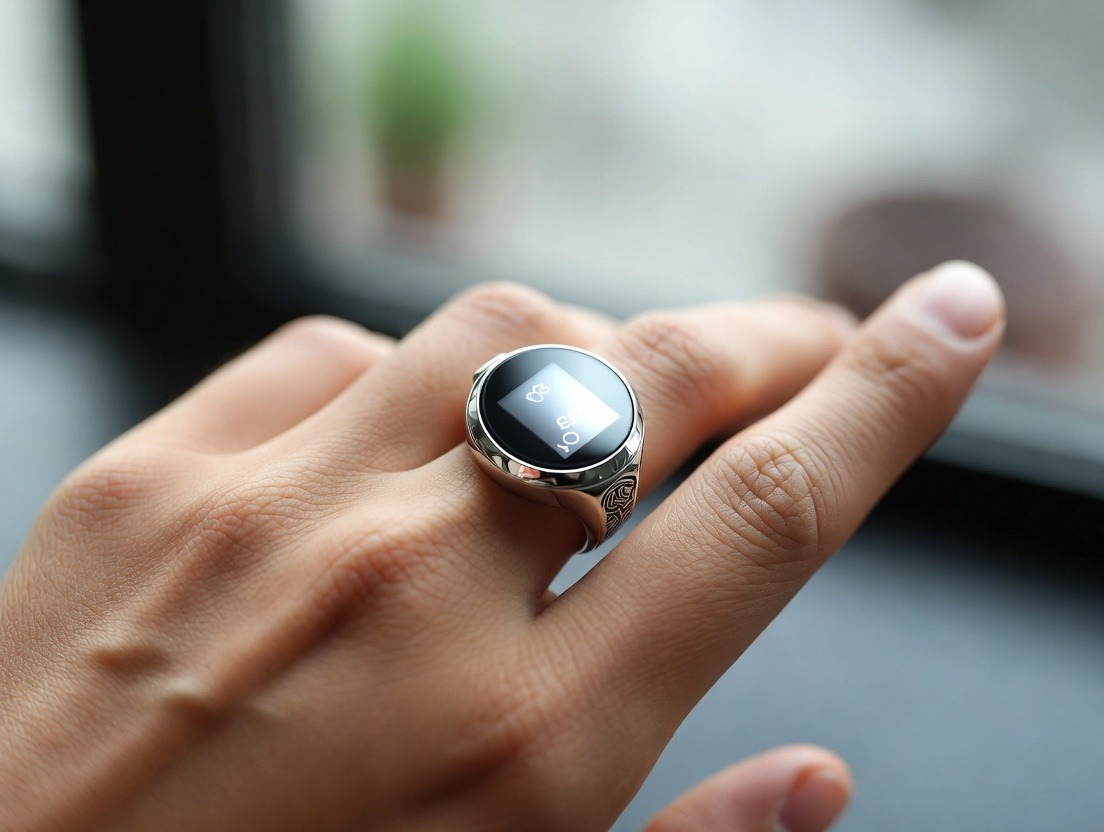
No single device or app is the complete solution for health. You might use a smart scale, a food logging app, a menstrual cycle tracker, your electronic health record from your doctor, and a mindfulness app. The danger is a fragmented health picture—data silos that don’t talk to each other. The most powerful wellness rings position themselves not as isolated islands, but as the central hub of a connected health ecosystem, synthesizing data from multiple sources to provide uniquely comprehensive insights.
This is achieved through interoperability—the ability of software systems to communicate. Leading wellness ring platforms offer integration with major health and fitness ecosystems like Apple Health (iOS) and Google Fit (Android). This means your ring’s biometric data automatically populates your phone’s central health repository. Conversely, other apps can write data to this repository for your ring’s app to consider. For example:
When your wellness ring’s algorithm has access to this consolidated data, its insights become exponentially richer. It can correlate a day of low caloric intake with a drop in nighttime body temperature. It can see how a high-intensity Peloton ride impacted your HRV recovery more than a yoga session did. It can even incorporate data from your electronic health records (an emerging frontier), allowing you to see how a change in medication might be affecting your resting heart rate or sleep.
This integrated view is the future of personalized health. It breaks down the artificial barriers between different aspects of wellness. You’re no longer looking at sleep data in one app, food in another, and exercise in a third. Instead, you have a unified dashboard that shows the interplay: *"Your intense workout yesterday, combined with a lower-carb day, contributed to a 15% increase in deep sleep last night."* By acting as the hub, your wellness ring transforms scattered data points into a symphony of insight, ensuring every tool in your health toolkit works in concert to support your singular, lifelong goal of vibrant well-being.
As your wellness ring collects the most intimate data possible—the continuous rhythm of your heart, the pattern of your sleep, the signature of your stress—a critical question arises: Who owns and controls this information? In an era of data breaches and commercial surveillance, ethical data stewardship is not a peripheral feature; it is a fundamental requirement for any device that aims to be a lifelong health partner. Understanding and demanding strong privacy protections is a non-negotiable aspect of using this technology for long-term good.
First, it’s essential to differentiate between data on the device, data on your phone, and data in the cloud. High-quality wellness companies employ a principle called data minimization and end-to-end encryption. This means:
You should look for clear, transparent privacy policies that state the company does not sell your personal health data to advertisers, insurers, or data brokers. The data should be used solely to improve your product experience and, with your explicit consent, for anonymized, aggregate research to advance health science. The principle must be user sovereignty: you decide if and when to share reports with your doctor, family, or other apps.
This matters for lifelong health because your biometric data is a proxy for your future. Patterns in this data could, in theory, be used to make inferences about your health risks. In the wrong hands, this could lead to discrimination or predatory marketing. In your own hands, with robust privacy protections, it is pure empowerment. You should regularly audit your privacy settings, use strong, unique passwords, and enable two-factor authentication for your account.
By choosing a company that prioritizes ethical data stewardship, you ensure that the profound journey of self-discovery facilitated by your ring remains a private, secure dialogue between you and your body. It allows you to engage with the technology with trust, which is the only sustainable foundation for a partnership that is meant to last for decades.
Viewing a wellness ring through the lens of consumer electronics—comparing its price to that of a smartwatch or a pair of wireless headphones—misses its true value proposition. When seen as a tool for preventive health and long-term performance optimization, the ring shifts from an expense to one of the highest-return investments you can make in yourself. It functions as a personal health auditor, identifying inefficiencies and risks in your biological "operations" long before they become costly medical bills or losses in life quality.
Consider the economics of chronic disease. Conditions like type 2 diabetes, hypertension, and cardiovascular disease develop over years, fueled by poor sleep, chronic stress, and inactivity—all factors the ring illuminates. The annual cost of managing diabetes can run into thousands of dollars. A one-time investment in a device that helps you improve sleep, manage stress, and maintain activity is a proactive financial strategy. It empowers you to take action during the pre-disease, modifiable phase, where lifestyle changes are most effective and least expensive.
Beyond disease prevention, the ring is an investment in daily performance and productivity. Poor sleep and unmanaged stress are primary drivers of presenteeism—being at work but not fully functional. They impair decision-making, creativity, and focus. By using the ring to optimize recovery and resilience, you enhance your cognitive and emotional capacity. For entrepreneurs, knowledge workers, or anyone whose livelihood depends on their mental sharpness, the ring pays dividends in output, clarity, and reduced burnout. The cost is negligible compared to the potential increase in professional effectiveness and career longevity.
Furthermore, it’s an investment in life experiences. The energy to travel, play with grandchildren, pursue hobbies, and fully engage in life is the ultimate currency. The ring helps you preserve and build that energy capital. When evaluated over a 3, 5, or 10-year horizon—its potential lifespan with proper care—the cost-per-day becomes minimal, while the return in healthspan, vitality, and avoided future costs is immense. It is a tangible commitment to prioritizing your well-being, framing health not as a cost center, but as the foundational asset upon which every other life goal depends.
The wellness ring you wear today is just the beginning. This form factor—discreet, sensor-rich, and always-on—is poised to become the primary interface for a wave of emerging health and biometric technologies. Looking ahead, the ring’s role in supporting lifelong health will become even more profound, predictive, and integrated into clinical care, transforming from a wellness companion into a true health guardian.
In the near term, we can expect the integration of new, non-invasive sensors. Continuous Glucose Monitoring (CGM) via interstitial fluid is a major frontier. Instead of a needle, optical or electrochemical sensors in a ring could estimate glucose trends, providing unparalleled insight into metabolic health and personalized nutrition for millions, not just diabetics. Electrodermal Activity (EDA) sensors to measure subtle changes in skin conductance, a direct marker of sympathetic nervous system arousal, could provide even finer-grained stress and emotional tracking. Blood pressure estimation from pulse wave velocity analysis is another active area of research, promising cuffless, continuous monitoring.
The processing of this data will also leap forward with more sophisticated on-device AI. Future rings will perform more complex analysis locally on the chip, requiring less cloud dependency and providing even faster, more private insights. These algorithms will move from descriptive analytics ("you had poor sleep") to truly prescriptive coaching ("To improve your sleep tonight, consider a 15-minute walk before 5 PM and avoid caffeine after 2 PM based on your past responses").
Perhaps the most significant evolution will be the bridging of consumer wellness and professional healthcare. With user permission, longitudinal ring data could be securely shared with physicians via integrated platforms. This would provide doctors with a rich, continuous dataset between sparse annual check-ups, enabling earlier intervention and more personalized treatment plans. The ring could detect atrial fibrillation (AFib) through irregular heart rhythm analysis, monitor post-operative recovery, or track the effectiveness of a new medication in real-world conditions.
The road ahead points to a future where your wellness ring is an FDA-cleared (or equivalent) health device, a constant companion that not only guides your daily choices but also serves as a vital node in a connected, preventive healthcare system. It will solidify its position as the most personal piece of technology you own, eternally dedicated to the single mission of extending and enhancing your healthspan.
We have traversed a comprehensive landscape, exploring how a simple ring evolves from a fitness tracker into a holistic health partner. We’ve seen it decode the nervous system, perfect sleep, personalize fitness, connect nutrition to physiology, and provide early warnings. We’ve understood its role as a habit engine, a social connector, and a guide through life’s stages. We’ve peered into its technology, its integration potential, and its exciting future.
The unifying thread is integration. The wellness ring succeeds where other devices have fallen short because it doesn’t just add another metric to your life; it synthesizes the metrics you already care about into a coherent, personal narrative. It bridges the gap between body and mind, between daily choices and long-term outcomes, between personal awareness and professional healthcare. It turns the overwhelming flood of modern health information into a clear, actionable stream tailored to the individual that is you.
This journey is not about achieving a perfect score every day. It is about cultivating body literacy—the profound understanding of your unique physiological language. It’s about progress, not perfection. There will be days of low recovery, poor sleep, and high stress. The ring’s value is that it provides the context for those days without judgment, and the data to navigate back to balance more efficiently.
Embracing this tool is an act of commitment to a lifelong journey of well-being. It is a decision to move from guessing to knowing, from reacting to anticipating, from fragmented efforts to a unified strategy. Your wellness ring is more than technology; it is a reflection of a modern philosophy: that the best health outcomes arise from continuous, intelligent partnership with our own bodies. As you wear it, you carry with you not just a device, but a compass—one that points steadily toward a future of sustained vitality, resilience, and health.
The ultimate promise of the wellness ring is not merely to provide data, but to facilitate the creation of a Personalized Health Blueprint—a living, breathing protocol unique to your physiology, lifestyle, and long-term aspirations. This blueprint moves beyond generic health advice (“drink eight glasses of water,” “get eight hours of sleep”) and evolves into a dynamic set of rules and practices calibrated by your own biometric feedback. Your ring is the architect and auditor of this blueprint, turning the art of self-care into a precise science.
The first phase is Discovery and Baselines. For the initial 30-60 days, you simply wear the ring consistently, allowing it to learn your natural rhythms without major intervention. This establishes your true baselines for sleep, HRV, resting heart rate, and activity. It reveals your inherent patterns: Are you a night owl with a naturally later temperature minimum? Do you see a weekly stress pattern? This phase answers the question, “What is normal for me?”
The second phase is Correlation and Experimentation. Here, you become an active scientist of self. Using the ring’s data, you begin controlled experiments. For one week, you implement a strict 10 PM digital sunset. The next, you test a 20-minute afternoon walk. You note changes in caffeine timing, meal composition, or workout intensity. The ring provides the objective outcome measure: Did deep sleep increase? Did afternoon HRV improve? Did resting heart rate trend down? This process, detailed in resources like our guide on what sleep trackers can teach you about your health, helps you identify your most powerful levers for change.
The final phase is Protocolization and Refinement. You synthesize your discoveries into a personal protocol—your daily and weekly non-negotiables. This isn’t a rigid, punishing schedule, but a flexible framework. For example: *“My blueprint prioritizes sleep onset before 11 PM (when my temperature starts to drop), a 10-minute breathing exercise if my daytime stress score exceeds 70, and weight training only on days with a Recovery Score above 85.”* This blueprint becomes your health operating system. The ring then acts as a continuous monitoring system, alerting you when you deviate from your own proven protocol and helping you refine it as your life and body change over years. It transforms health from a series of guesses into a masterful, self-authored plan.
Any meaningful lifelong journey encounters setbacks, plateaus, and periods of regression. This is inevitable in fitness, stress management, and sleep. The danger is that these phases can lead to frustration and abandonment of healthy habits. A unique strength of your wellness ring is its ability to reframe these challenges not as failures, but as essential, informative parts of the process. It serves as a compassionate, data-driven coach that helps you navigate these periods with perspective and strategy.
During a plateau—say, your HRV has stopped improving despite consistent habits—the ring’s long-term trend view is crucial. Zooming out to a 6-month or yearly view can reveal that what feels like a stagnation is actually a consolidation of gains above your original baseline. The data provides objective proof that you haven’t “lost” progress; you’ve established a new, higher normal. This perspective alone can renew motivation. Furthermore, the ring can prompt productive changes: a plateau might signal the need for a deload week, a change in workout stimuli, or an investigation into new stress sources.
When facing a setback—a period of illness, a stressful life event, or a vacation that disrupts routine—the ring shifts from a performance tool to a recovery guide. Its early-warning capabilities can help you catch illness sooner, and its data provides clear permission to rest. Watching your metrics plummet and then slowly climb back can be a powerful lesson in resilience and the body’s ability to heal. You learn the “shape” of your recovery. This data prevents the common mistake of rushing back to intense activity too soon, which can prolong the setback.
Most importantly, the ring removes moral judgment from the data. A low sleep score isn’t a “bad grade”; it’s a physiological report. This objectivity fosters self-compassion. Instead of thinking, “I’m lazy for sleeping poorly,” you can think, “My body shows high stress and poor recovery. What support does it need today?” This shift from self-criticism to curious problem-solving, guided by concrete data, is perhaps the most powerful psychological benefit for sustainable, lifelong health. The ring helps you build a relationship with your body based on partnership, not punishment.

For all its benefits, the constant stream of data from a wellness ring can, ironically, become a source of stress—a phenomenon known as “analysis paralysis” or even “orthosomnia” (an unhealthy preoccupation with perfect sleep data). The goal is to use the ring as an empowering guide, not an anxiety-inducing report card. Success lies in knowing what to focus on, when to glance, and when to ignore the numbers entirely.
First, adopt a trends-over-tweets mentality. Do not obsess over a single night’s poor sleep score or a single low HRV reading. These are data points, not destiny. Instead, make your primary review a weekly one. Look at the weekly averages and trends in your app. Is your average sleep duration slowly increasing? Is your resting heart rate trending downward over the month? These long-term directional moves are what truly matter for health. A single bad day is noise; a weekly trend is a signal.
Second, focus on one or two key metrics at a time. Trying to optimize sleep, HRV, activity, and temperature simultaneously is a recipe for overwhelm. During a stress-management phase, focus solely on your daily stress score and its correlation with your activities. During a sleep-optimization period, focus on sleep consistency and deep sleep percentage. Our guide to sleep tracking metrics can help you understand what to prioritize.
Third, schedule your data review, don’t compulsively check. Designate a specific, calm time—perhaps with your morning coffee—to check your previous night’s scores and daily readiness. Then, close the app. Avoid checking it repeatedly throughout the day, as this can create anxiety and amplify the nocebo effect (where expecting to feel bad because of a number actually makes you feel bad).
Finally, practice periodic data vacations. Once your habits are well-established and you trust your bodily signals, it can be incredibly healthy to take a weekend or even a week off from looking at the data. Simply wear the ring to maintain its longitudinal record, but live purely by feel. This reinforces your innate body awareness and prevents the device from becoming a crutch. The ring is a tool to enhance your intuition, not replace it.
While profoundly personal, the insights from a wellness ring can ripple outward, positively influencing the health of your family and community. By modeling data-informed habits and creating shared understanding, this technology can foster environments where collective well-being becomes a natural byproduct of individual awareness.
Within a family unit, rings can be transformative. Couples can use shared data to improve sleep synchrony, understanding how one partner’s restlessness affects the other. They can make collaborative decisions—opting for a quiet night in if both show low recovery scores. For parents, understanding their own stress and recovery is critical for patient, present parenting. Furthermore, while not typically designed for children, the principles learned can be applied to establish healthy family routines: consistent bedtimes, shared active time, and tech-free wind-down periods that benefit everyone.
In a broader community or team setting, the shared language of biometrics can depersonalize health conversations. In a corporate wellness program, aggregated, anonymized data can reveal organizational stress patterns (e.g., poor recovery spikes after major deadlines), leading to systemic changes like meeting-free days or mindfulness programs. On a sports team, shared readiness metrics (with individual privacy respected) can help a coach manage collective training loads to prevent team-wide overtraining.
Perhaps most powerfully, your ring can make you an advocate for health-conscious environments. When you see your physiological stress spike in a noisy, crowded space, you gain evidence for seeking out or creating calmer environments. You can advocate for better sleep policies at work, for walking meetings, or for healthier food options in your community, backed by the understanding of how these factors tangibly impact human biology. In this way, the ring moves from a self-improvement tool to a catalyst for creating a world that is more conducive to human well-being, amplifying its impact far beyond the individual wearer.
The pinnacle of the lifelong health journey supported by a wellness ring is the pursuit of healthspan—the number of years we live in good health, free from chronic disease and disability. Modern medicine has excelled at extending lifespan, but often at the cost of adding frail, dependent years at the end. The ring’s mission is to compress that period of morbidity, to ensure that our later years are characterized by vitality, independence, and engagement. This is the ultimate “longevity dividend.”
The ring contributes to this goal by addressing the pillars of aging at a cellular and systemic level. Chronic sleep disruption accelerates cellular aging and increases inflammation (inflammaging). By perfecting sleep, the ring supports glymphatic clearance (the brain’s waste-removal system) and reduces systemic inflammation. Chronic psychological stress shortens telomeres, the protective caps on our chromosomes. By enabling effective stress management, the ring helps protect these cellular aging clocks. Sedentary behavior leads to sarcopenia (muscle loss) and metabolic decline. The ring’s activity and readiness coaching helps maintain muscle mass and metabolic flexibility deep into later life.
This isn’t about chasing immortality; it’s about functional vitality. It’s about having the energy to travel at 70, the cognitive clarity to learn a new skill at 80, and the physical resilience to recover from a fall at 90. The ring provides the daily feedback necessary to make the micro-decisions that compound into a healthier aging trajectory. It helps you answer the question: “Are the habits I’m building today creating a biological foundation for a vibrant future, or am I borrowing health from tomorrow?”
By framing your daily data within this decades-long context, the wellness ring transforms mundane choices into meaningful investments. That choice to go to bed early, to take a walk instead of scrolling, to practice mindfulness, is no longer just about feeling better tomorrow. It is a deliberate deposit into your “healthspan account,” earning compound interest in the form of resilience, energy, and autonomy for all the years to come. This long-term perspective is the most profound motivator of all, turning the ring into a beacon guiding you toward a future not just of longer life, but of better life.
As we conclude this comprehensive exploration, it becomes clear that the most significant impact of a wellness ring may not lie in its sensors or algorithms, but in the philosophical shift it engenders. It represents a move away from a passive, symptom-focused model of health toward an active, participatory model of biometric self-awareness and stewardship. The ring is the physical manifestation of a new covenant with ourselves: a promise to listen deeply, respond intelligently, and invest continuously in our most fundamental asset.
This philosophy is built on three core tenets:
Embracing this philosophy through the tool of a wellness ring is an act of profound self-respect. It acknowledges that you are worth the attention, the curiosity, and the care. It is a commitment to showing up for yourself daily, not with harsh discipline, but with informed kindness.
Your lifelong health journey is just that—a journey. It is unique, winding, and entirely your own. A wellness ring is not a magic bullet, but it is perhaps the most sophisticated compass ever created for this personal expedition. It won’t walk the path for you, but it will illuminate the terrain, warn of coming storms, and confirm when you’re heading in the right direction.
Start where you are. Wear it. Observe without judgment. Experiment with curiosity. Let the data inform you, not define you. Build your Personalized Health Blueprint one insight at a time. Navigate setbacks with compassion, using data as your guide back to balance. And always remember that the ultimate goal is not a perfect score on an app, but a life lived with energy, resilience, and joy for all the years you are given.
The technology is on your finger. The philosophy is in your hands. The future of your health begins with your very next heartbeat.
Your Trusted Sleep Advocate: Sleep Foundation — https://www.sleepfoundation.org
Discover a digital archive of scholarly articles: NIH — https://www.ncbi.nlm.nih.gov/
39 million citations for biomedical literature :PubMed — https://pubmed.ncbi.nlm.nih.gov/
Experts at Harvard Health Publishing covering a variety of health topics — https://www.health.harvard.edu/blog/
Every life deserves world class care :Cleveland Clinic - https://my.clevelandclinic.org/health
Wearable technology and the future of predictive health monitoring :MIT Technology Review — https://www.technologyreview.com/
Dedicated to the well-being of all people and guided by science :World Health Organization — https://www.who.int/news-room/
Psychological science and knowledge to benefit society and improve lives. :APA — https://www.apa.org/monitor/
Cutting-edge insights on human longevity and peak performance:
Lifespan Research — https://www.lifespan.io/
Global authority on exercise physiology, sports performance, and human recovery:
American College of Sports Medicine — https://www.acsm.org/
Neuroscience-driven guidance for better focus, sleep, and mental clarity:
Stanford Human Performance Lab — https://humanperformance.stanford.edu/
Evidence-based psychology and mind–body wellness resources:
Mayo Clinic — https://www.mayoclinic.org/healthy-lifestyle/
Data-backed research on emotional wellbeing, stress biology, and resilience:
American Institute of Stress — https://www.stress.org/


