


12 Healthy Lifestyle Tips Your Wellness Ring Proves Are Working
Twelve lifestyle improvements that will be clearly reflected in your ring's data.
Twelve lifestyle improvements that will be clearly reflected in your ring's data.
%402x.svg)
For generations, the pursuit of a healthier life was a journey taken largely in the dark. We relied on vague feelings—less tired, more energetic, vaguely "better"—or sporadic check-ins like annual physicals and bathroom scale showdowns. Our daily choices, from the food we ate to the stress we managed, created ripples in our biology that we could only guess at. We hoped our efforts were paying off, but the feedback loop was slow, subjective, and often discouraging.
Today, that has all changed. We stand at the dawn of a new era in personal wellness, one defined not by hope, but by data; not by guesswork, but by genuine insight. At the forefront of this revolution is a deceptively simple piece of technology: the modern wellness ring. Worn silently on your finger, it acts as a 24/7 guardian of your physiology, translating the subtle whispers of your body—heart rate, temperature, movement, and more—into a clear, actionable language.
This isn't about obsessive tracking or achieving a perfect score. It’s about validation and visibility. It's about finally having proof that the small, consistent changes you’re implementing are weaving together to create a tangible, measurable impact on your most fundamental asset: your health.
The following guide explores twelve cornerstone principles of a healthy lifestyle. But this isn't just another list of advice. For each tip, we will dive deep into how your wellness ring proves it's working. We'll move beyond the "what" and into the "how you know," exploring the specific metrics and patterns that transform abstract wellness concepts into a living, breathing, data-backed reality. This is the story of your health, told in numbers and graphs, and it’s the most empowering tool you’ve ever owned.
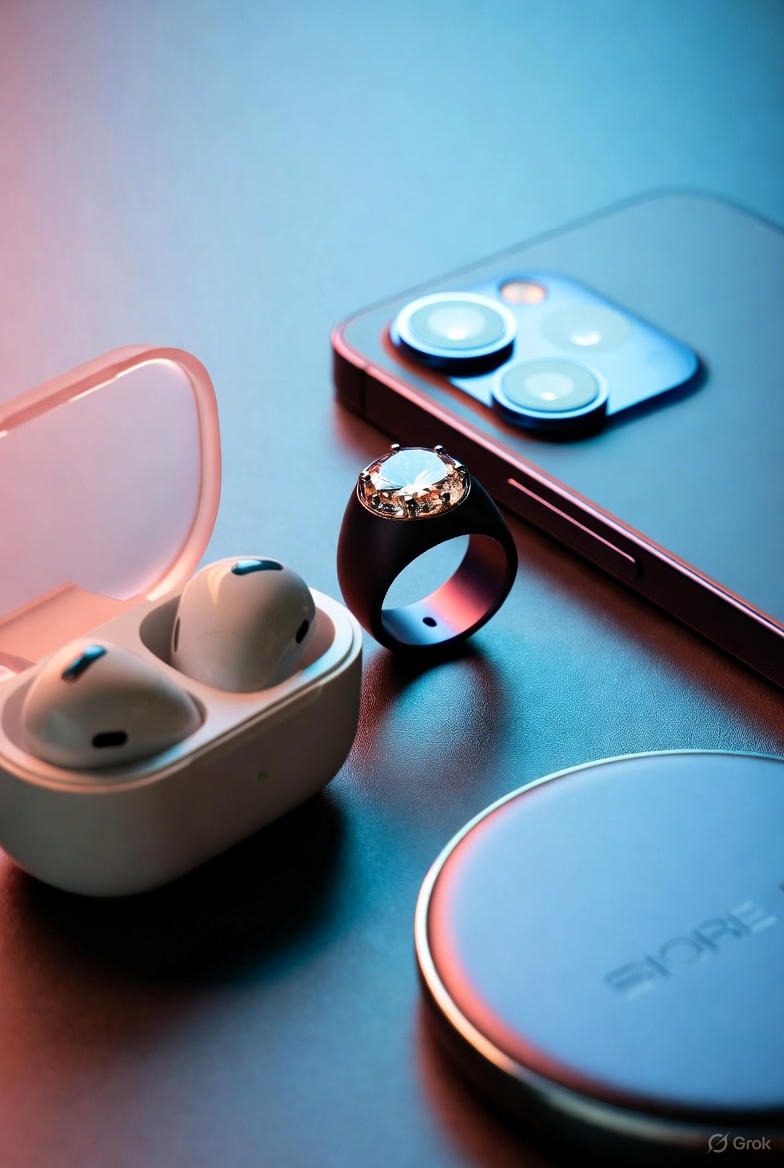
We’ve all heard it: success in health, as in anything, is about consistency over intensity. A single perfect day of eating, sleeping, and exercising means little if it’s followed by a week of chaos. The grand gesture is less powerful than the humble, daily habit. But in the noise of daily life, how can you truly know if your routines are building the resilient foundation you seek? Your wellness ring provides the architectural blueprint.
The Science of Stability
Your body’s autonomic nervous system (ANS), which governs everything from your heartbeat to your digestion, craves predictability. When your sleep, meals, and activity follow a rough schedule, your ANS operates efficiently. This stability is reflected in a powerful, composite metric most rings provide: Heart Rate Variability (HRV). Contrary to what the name might imply, a higher HRV is generally better—it indicates a responsive, resilient nervous system that can easily adapt to stress and recover effectively. When your life is erratic, your HRV graph will look like a seismograph during an earthquake—jagged, unpredictable, and low. But as you build consistency, you’ll see that graph begin to smooth into a higher, more stable wave pattern.
Proof in the (Circadian) Rhythm
Your ring tracks more than just sleep duration; it maps your circadian rhythm alignment. By monitoring your core body temperature and resting heart rate (RHR) trends throughout the 24-hour cycle, it can tell if you’re going to bed and waking up at consistent times. The evidence? Look for a predictable, nightly dip in your core temperature (a key signal for sleep initiation) and a RHR that follows a smooth, daily curve—lowest during sleep, rising gently upon waking. Inconsistency scrambles these signals. You might see a delayed temperature drop on nights you stay up late, or a elevated nighttime RHR after an unusually large, late dinner. The ring doesn’t judge; it simply shows you the physiological cost of unpredictability.
Building a Feedback Loop
The magic happens when you use this data proactively. For instance, you can experiment with a wind-down routine. Notice that on nights you follow a dedicated nighttime wellness routine, your sleep latency (time to fall asleep) decreases and your deep sleep percentage increases? That’s your ring proving the routine’s value. It turns an abstract "I should relax before bed" into a concrete, data-supported habit. Similarly, consistent morning light exposure and meal times will tighten the peaks and troughs of your daily readiness score. The ring’s message is clear: your body loves a predictable rhythm, and it will reward you with better recovery, sharper focus, and a stronger sense of baseline well-being. It shows you that the "boring" consistency is, in fact, the most dynamic thing you can do for your health.

You can’t cheat the sleep bank. This is the one non-negotiable pillar of health, and for too long, we’ve measured it with only one flawed metric: duration. "I got 8 hours" became the badge of honor, even if those hours were fragmented, restless, and shallow. Your wellness ring shifts the paradigm entirely, moving from counting sheep to analyzing sleep architecture—and proving why quality trumps quantity every time.
Beyond the Clock: The Stages of Sleep
A advanced wellness ring uses a combination of heart rate, movement, and heart rate variability to delineate your night into light sleep, deep sleep (Slow-Wave Sleep), REM (dream) sleep, and awakenings. Each stage has a vital function:
Seeing this breakdown is transformative. You might discover you’re getting a full 8 hours but only 45 minutes of deep sleep—explaining why you still wake up exhausted. The data provides the "why" behind the groggy feeling.
The Golden Metrics: Efficiency and Restfulness
Two key scores from your ring offer instant proof of sleep quality:
Connecting the Dots for Better Sleep
Your ring becomes a detective, helping you identify the culprits of poor sleep. Did your deep sleep plummet after an evening of scrolling social media in bed? The blue light likely suppressed your melatonin. Did you see a spike in nighttime awakenings after a glass of wine with dinner? That’s the infamous "rebound effect" as alcohol metabolizes. By identifying these patterns, you can craft a personalized sleep protocol. Resources like our guide on how nighttime routines signal your body it's time to sleep become actionable strategies, not just advice. The ring’s proof empowers you to defend your sleep sanctuary with scientific authority.
We often speak of stress as a binary state: "I'm stressed" or "I'm relaxed." But stress is a complex, physiological cascade that occurs on a continuum, and its most damaging form is often the chronic, low-grade variety you stop consciously noticing. Your wellness ring acts as an unbiased witness to your total stress load, measuring what your mind has learned to ignore.
HRV: The North Star of Nervous System Health
Again, Heart Rate Variability (HRV) takes center stage. Think of your heart not as a metronome, but as a sophisticated jazz drummer. The tiny, millisecond variations between beats are a direct readout of the balance between your sympathetic ("fight or flight") and parasympathetic ("rest and digest") nervous systems. High HRV indicates balance and resilience—your body can respond to a challenge and then quickly return to baseline. A downward trend in your HRV, especially your nighttime average, is one of the earliest and most reliable signs that your cumulative stress load is too high. It’s proof that your body is working harder just to maintain equilibrium.
Resting Heart Rate (RHR) Trends
While a single day’s RHR isn’t overly informative, the trendline is revelatory. A creeping elevation in your baseline RHR over days or weeks is a classic sign of systemic stress, be it from overtraining, emotional strain, or an impending illness. Your ring’s longitudinal tracking makes this invisible rise visible, giving you a chance to intervene before burnout or sickness strikes.
The Stress of Sleeplessness and Overtraining
Your ring connects disparate aspects of your life into a coherent stress picture. For example:
By visualizing stress as data, your ring helps you move from reactive coping to proactive management. It validates the importance of true recovery days, mindfulness practices, and setting boundaries. It proves that a "calm" day on your calendar can still be a physiologically stressful one for your body, allowing you to make smarter choices about what you take on.
Nutrition advice is famously contradictory. Your wellness ring cuts through the noise by showing you the direct, physiological impact of your dietary choices—not on your weight, but on your metabolism, recovery, and sleep. It turns your body into a real-time biofeedback lab.
The Metabolic Night Shift
One of the most powerful features is nocturnal core body temperature tracking. After you eat, especially a large or metabolically challenging meal, your body temperature rises due to the thermic effect of digestion. If this happens too close to bedtime, it can interfere with the natural cooling process essential for sleep onset. Your ring will show you this: a higher starting temperature at sleep onset and a less pronounced cooling curve on nights with late dinners or sugary snacks. This is irrefutable proof that your meal timing matters for sleep quality.
Resting Heart Rate and Inflammation
Certain foods, particularly those high in refined sugars, unhealthy fats, and sodium, can provoke a low-grade inflammatory response. This inflammation creates extra work for your cardiovascular system. How does it show up? Often as an elevated Resting Heart Rate (RHR) during the night or upon waking. If you notice a consistent pattern where your morning RHR is 3-5 beats per minute higher after days of poor dietary choices, that’s your ring providing direct feedback. Conversely, a period of clean, anti-inflammatory eating will often be reflected in a gradual downward drift of your baseline RHR.
Hydration’s Subtle Signature
Even mild dehydration stresses the body. It can make your heart work harder to maintain blood pressure, leading to a subtle increase in heart rate. While rings don’t measure fluid intake directly, a slightly elevated daytime RHR coupled with a lower HRV can sometimes be a clue to check your hydration levels. It encourages you to drink water and see if the metrics improve, creating a personal hydration experiment.
Personalized Experimentation
This is where the ring shines. You can conduct n=1 experiments:
This data-driven approach removes dogma and guesswork. It proves what works for your unique biology, empowering you to tailor your nutrition for optimal recovery and energy, not just calorie management.
The fitness world has long been obsessed with outputs: calories burned, steps taken, miles run. While these have their place, they tell an incomplete story. An intense workout is a controlled stressor—it breaks you down. True fitness is built in the recovery that follows. Your wellness ring shifts the focus from sheer output to the balance between strain and gain, ensuring your movement is truly medicinal.
The Readiness Score: Your Daily Green Light
The cornerstone of this approach is the Daily Readiness or Recovery Score. This isn't a random number; it’s an algorithm synthesizing your sleep data, HRV trend, RHR, and recent activity. A high score doesn’t mean you’re lazy; it means your body has rebuilt itself and is primed for performance. A low score is a clear, objective signal that your system is taxed and would benefit more from gentle movement or complete rest. Following this score is proof that you’re listening to your body’s true needs, not just your ego’s ambitions.
HRV and Training Response
As discussed, HRV is your resilience gauge. Applying it to fitness is revolutionary. After a hard training session, it’s normal for your HRV to dip slightly the next morning—that’s the stress signal. The key is that it should bounce back within a day or two. If your HRV remains suppressed for multiple days, your ring is proving that you’re not recovering adequately. This is objective evidence to deload, focus on sleep and nutrition, or incorporate more active recovery like walking or yoga.
The Power of Low-Intensity Steady State (LISS)
Your ring validates the immense benefit of non-strenuous movement. A 30-60 minute walk might not register as a significant "workout" in calorie terms, but its positive impact is profound. You’ll often see it reflected in:
This proves that movement’s goal isn’t always to exhaust. It can be to circulate, to de-stress, and to prime your body for repair. For those with hectic schedules, understanding this can be liberating—a walk counts and the data shows it.
Avoiding the Junk Mile Trap
For runners and cyclists, the ring helps avoid "junk miles"—going through the motions when your body isn’t ready. If your readiness score is low but you push through a planned long run, you’ll likely see a deeper, longer suppression of HRV and a higher RHR for days. The ring provides the hard proof that this session was counterproductive, potentially increasing injury risk and hampering progress. It teaches you that the smartest workout is sometimes the one you skip or modify.
In a culture that glorifies busyness, deliberate recovery is often seen as idleness. Your wellness ring redefines recovery as an active, measurable, and essential component of health. It proves that strategic rest is where the magic of adaptation happens—where muscles rebuild, the nervous system resets, and resilience is fortified.
Physiological Signatures of Deep Recovery
True recovery isn’t just the absence of work; it’s a distinct physiological state. Your ring identifies this state through several converging metrics:
When these metrics are optimal, your ring’s readiness score will soar. This is quantifiable proof that you have successfully recovered.
Active vs. Passive Recovery
Your ring helps you distinguish between these two critical types:
The Impact of Mental and Digital Recovery
Recovery isn’t just physical. An hour of anxious scrolling is not recovery, even if you’re sitting still. The ring captures this through stress metrics and HRV. You can run a simple test: compare an evening spent reading a book versus an evening spent in heated online debates. The physiological aftermath, visible in your pre-sleep HRV and your sleep graph, will be starkly different. This validates the need for mindful technology use as part of a nighttime routine. It proves that calming the mind is a tangible, measurable component of physiological recovery.
Meditation and breathwork can sometimes feel abstract—are you really "doing it right"? Is it making a difference? Your wellness ring removes the mystery by providing immediate, physiological feedback. It turns an internal practice into an external observation, proving that calming the mind directly calms the body.
The Real-Time HRV Response
This is the most direct proof. During a mindful breathing session (like coherent breathing at 5-6 breaths per minute), you can often watch your HRV increase in real-time on the ring’s companion app. This isn't delayed; it’s instantaneous. You take a slow, deep breath, and you see the graph rise, indicating a shift toward parasympathetic dominance. This biofeedback is incredibly powerful. It confirms the technique is working and motivates consistent practice. You’re not just hoping you’re more relaxed; you can see it.
Lowering the Resting Heart Rate Baseline
While the acute effect is visible in real-time, the chronic effect is seen in your baseline. A consistent meditation or breathwork practice, especially before bed, trains your nervous system to default to a calmer state. Over weeks and months, this often manifests as a lower average resting heart rate (RHR) and a higher average HRV. Your ring’s long-term trends will show this gradual shift. It’s proof that you’re not just managing stress in the moment, but actually building a more resilient, less reactive system.
Improving Sleep Onset
Struggling with a racing mind at bedtime? A short, guided breathing exercise can be the perfect solution. The proof is in your sleep latency metric. On nights you use breathwork to wind down, you’ll likely see a shorter time to fall asleep compared to nights you jump straight into bed from a stimulating activity. This tangible result validates the practice and encourages you to make it a non-negotiable part of your essential nighttime routine.
Quantifying the "Unquantifiable"
Emotions like anxiety and calm have concrete physiological correlates. A spike of anxiety often comes with a quickened heart rate and lowered HRV. A mindful pause to breathe can reverse this. By seeing the data change, you create a powerful neuro-association: "This feeling of anxiety has a physical signature, and this breathing technique can alter it." This demystifies emotional regulation and provides a tool you can trust, because the proof is on your finger.
Water is the solvent of life, and even mild dehydration can impair nearly every system in your body. Yet, it’s easy to neglect until you feel parched. Your wellness ring, while not a hydration sensor, provides compelling indirect evidence of dehydration’s impact, encouraging you to stay ahead of your thirst.
The Cardiovascular Strain of Dehydration
When you’re low on fluids, your blood volume can decrease slightly. To maintain blood pressure and deliver oxygen, your heart has to work harder, beating more frequently. This often shows up as an unexplained elevation in your resting heart rate (RHR), both during the day and sometimes even at night. If you see a higher-than-normal RHR without an obvious cause like intense exercise, stress, or illness, dehydration is a prime suspect.
Hydration and Heart Rate Variability (HRV)
Dehydration is a physiological stressor. Stress, as we know, can suppress HRV. Therefore, a day of poor fluid intake may be reflected in a lower-than-expected HRV reading. The link isn't as direct as with RHR, but it’s part of the overall picture your ring paints of your body’s stress load.
The Sleep Connection
Perhaps the most surprising proof is in your sleep. Dehydration can disrupt sleep by causing nocturnal leg cramps, a dry mouth and throat, and potentially raising core body temperature (as water is essential for thermoregulation). You might notice this as increased restlessness (awakenings) or a less efficient sleep score on days your fluid intake was lacking. It’s a clear signal that your pre-bed hydration habits matter.
Creating a Personalized Hydration Protocol
Your ring enables smart experimentation. Try this:
Your body isn’t designed to run at a constant pace 24/7. It thrives on a predictable, light-dark cycle-driven rhythm known as your circadian rhythm. "Social jetlag"—the mismatch between your internal clock and your life’s schedule—is a major, silent source of stress. Your wellness ring is a precision tool for detecting this misalignment and proving the benefits of getting back in sync.
Core Body Temperature: Your Internal Sundial
Your core body temperature is one of the best proxies for your circadian phase. It follows a reliable wave: lowest in the early morning hours (around 4-5 AM), then rising to peak in the late afternoon, before falling again in the evening to initiate sleep. Your ring tracks this minute-by-minute. A healthy, aligned rhythm shows a smooth, predictable curve. Proof of misalignment looks like:
Resting Heart Rate Rhythm
Similarly, your Resting Heart Rate (RHR) has a circadian rhythm. It’s typically lowest during sleep, begins to rise before you wake (part of the cortisol awakening response), peaks during the day, and declines in the evening. A disrupted sleep schedule or poor sleep hygiene will scramble this smooth rhythm, resulting in a higher-than-expected RHR at night or a sluggish morning rise.
The Proof of Morning Light and Evening Darkness
Your ring validates the most powerful circadian hacks:
Fixing Social Jetlag
By observing your temperature minimum and RHR rhythm, you can gently nudge your schedule. Gradually moving your bedtime earlier, coupled with consistent morning light, will shift your temperature curve earlier. The ring provides the feedback, showing you when your new schedule is truly becoming your body’s preferred rhythm. This alignment is proven to improve everything from metabolic health to mood, and your ring puts that proof directly in your hands.
A glass of wine to unwind is a cultural norm, often perceived as a tool for relaxation. Your wellness ring tells the unvarnished truth about the physiological impact of alcohol and other substances, providing objective proof that what feels like relaxation in the moment is often a net stressor on your system.
The Sleep Sabotage Signature
Alcohol is a sedative, not a sleep aid. Its disruptive effect on sleep architecture is one of the clearest patterns your ring will ever show.
The Multi-Day Recovery Hangover
The impact isn’t confined to the night of consumption. The proof extends into the next day (or two):
Personalized Tolerance Insights
Your ring allows for personalized insight. One person might see their sleep demolished by a single drink, while another shows minimal disruption. There is no judgment—only data. This empowers you to make informed choices. Is the perceived evening relaxation worth the quantifiable hit to your recovery, next-day focus, and emotional regulation (tied to REM sleep)? The ring provides the evidence, allowing you to decide with clarity. It proves that true recovery and resilience are built on sobriety and quality sleep, not chemical sedation.
Your health isn’t created in a vacuum. It’s profoundly influenced by your immediate environment: the temperature of your bedroom, the light you’re exposed to, and the noise around you. Your wellness ring acts as a personal environmental auditor, proving how small tweaks to your habitat can yield significant improvements in your core metrics.
The Thermoregulation Imperative
Sleep initiation is tightly linked to a drop in core body temperature. Your ring’s temperature sensor is key here. If your bedroom is too warm, you’ll see a flattened or insufficient cooling curve. The proof that a cooler environment helps? Experiment by lowering your thermostat by 2-3 degrees Fahrenheit. The resulting steeper temperature drop will likely correlate with a shorter sleep latency and more deep sleep. For those who naturally sleep hot, this is especially critical, as outlined in our guide for the nighttime wellness routine for hot sleepers.
Light Exposure: The Day-Night Proof
As covered, light is the primary driver of your circadian rhythm. Your ring proves the effect of your light environment through your temperature and RHR rhythms. But you can get even more granular:
Noise and Restlessness
While not a sound meter, your ring detects restlessness and micro-awakenings. If you live on a noisy street and notice frequent, brief awakenings on your graph, try using white noise or earplugs. The proof of their effectiveness is a cleaner, more consolidated sleep graph with fewer interruptions. This turns a suspicion ("I think the traffic wakes me up") into a verified problem with a data-backed solution.
Creating Your Bio-Haven
By responding to this feedback, you can iteratively design a personal environment that supports your biology. The ring validates each change. A blackout curtain leads to longer sleep? Proof. A consistent, cool room temperature improves deep sleep? Proof. Reducing evening light lowers your pre-sleep heart rate? Proof. This transforms your home from a passive backdrop into an active, therapeutic tool for wellness, with your ring as the chief engineer providing the performance reports.
We often compartmentalize emotional health as separate from physical health. Yet, a growing body of science confirms what poets have long known: the heart and mind are inextricably linked. Loneliness, conflict, and lack of social support are potent stressors, while connection, joy, and love are powerful healers. Your wellness ring, perhaps surprisingly, provides tangible, physiological proof of this mind-body connection, measuring the impact of your emotional world on your physical state.
Stress Metrics as Emotional Barometers
Your body processes emotional distress similarly to physical threat. A stressful work meeting, a heated argument, or a day of loneliness can trigger the same "fight or flight" cascade as a near-miss accident. Your ring captures this through its stress proxies:
Positive Connection as a Recovery Tool
Conversely, positive social interactions and feelings of safety have a measurable, calming effect. The proof is in the patterns:
Using Data to Prioritize Emotional Hygiene
This feedback is empowering. It moves emotional well-being from a vague concept to a measurable component of your health dashboard. If you see a pattern of poor recovery metrics after socially draining events, it’s proof you need to set better boundaries or incorporate more decompression time. If you notice your best readiness scores follow days rich with positive connection, it validates the importance of prioritizing those relationships. Your ring doesn’t tell you who to spend time with, but it objectively shows you how those choices affect your fundamental biology. It proves that nurturing your social and emotional world is not a luxury; it’s a critical pillar of metabolic and nervous system health.
With the foundational principles mastered, your wellness ring evolves from a reporter to a co-pilot for advanced optimization. This stage is for those who wish to fine-tune performance, solve stubborn plateaus, or tailor their health strategies with laboratory-level precision.
Personalized Chronotype Refinement
Beyond basic circadian alignment lies your unique chronotype—your genetic predisposition for being an early bird or night owl. While society favors early risers, fighting your innate type is a losing battle. Your ring helps you discover and honor it.
Nutrient and Supplement Protocol Testing
The supplement industry thrives on anecdote. Your ring introduces objectivity. Want to test if a new magnesium supplement improves your sleep? Or if an adaptogen like ashwagandha lowers your stress response?
Women’s Health and Cycle Syncing
For women, the menstrual cycle is a central, often overlooked, bio-rhythm that affects everything from metabolism to recovery capacity. A advanced wellness ring can be revolutionary for tracking these phases.
Long-Term Trend Analysis for Proactive Health
The most profound use of your ring may be as an early warning system. Subtle, long-term trends can signal shifts in underlying health.
Sometimes, the ring’s data may seem to contradict how you feel. A high readiness score on a day you feel exhausted, or a poor sleep score after a night you thought was restful. These moments are not failures of the technology, but opportunities for deeper learning.
"My Readiness Score is High, But I Feel Drained"
"My Sleep Score is Low, But I Slept Like a Rock"
"My HRV is Low, But I’m Not Stressed"
Navigating these discrepancies builds a sophisticated dialogue between your subjective experience and objective data. It teaches you to interpret the numbers within the full context of your life, moving from rigid data-following to intuitive, data-informed living.

The technology embodied in the wellness ring is just the beginning. As sensors become more sophisticated and algorithms more personalized, the fusion of data and daily living will become seamless, predictive, and profoundly transformative.
Predictive Analytics and Proactive Nudges
Future iterations will move beyond describing the past to predicting the future. Imagine your ring analyzing your HRV, temperature, and activity trends to predict: "Based on your current recovery debt and stress load, you have an 80% chance of catching a cold in the next 48 hours. Prioritize sleep and vitamin C." Or: "Your physiological data suggests your performance peak will occur at 2 PM today. Schedule your most important work then." These proactive, health-preserving nudges will make wellness technology an indispensable guardian.
Integration with a Broader Health Ecosystem
The true power lies in connectivity. Your ring’s data won’t live in a siloed app. It will integrate seamlessly with:
This creates a fully responsive health ecosystem that works in the background to support your biology.
The Democratization of Deep Health Insights
What once required a lab and a white coat is now available on your finger. This democratization puts unprecedented power in the hands of individuals. It enables population-scale health studies with rich, real-world data, potentially accelerating medical research. More personally, it empowers you to advocate for your health with concrete evidence, to experiment safely, and to take ownership of your well-being journey in a way never before possible.
Your wellness ring is more than a gadget; it’s the key to a new relationship with your body. It offers proof, provides insight, and, ultimately, returns authority over your health to where it has always belonged: with you. As you wear it, remember—you are not just tracking data. You are listening to the story of your life, written in the silent language of your physiology, and you now have the tools to make it a masterpiece.
To move from theory to tangible understanding, let's explore hypothetical but data-rich case studies. These stories illustrate how individuals used their wellness ring to diagnose hidden issues, validate solutions, and transform their health.
Case Study 1: The "Healthy" Over-Trainer
Case Study 2: The "Unexplained" Fatigue
Case Study 3: The Circadian Misfit
Case Study 4: The Hidden Food Sensitivity
Interpreting wellness ring data can raise questions. Here are detailed answers to some of the most common and nuanced queries.
Q: Which is more important to track: Heart Rate Variability (HRV) or Resting Heart Rate (RHR)?
A: They are complementary vital signs, like blood pressure's systolic and diastolic numbers. Think of them as different lenses:
Q: My ring says I got 8 hours of sleep but my score is only 70/100. Why the disconnect?
A: This is the core value of the technology—it goes far beyond duration. A 70/100 with 8 hours means the quality of those hours was compromised. Dive into the breakdown:
Q: Is it normal for my metrics to be worse on the weekends?
A: This common phenomenon, sometimes called "social jetlag rebound," is normal but not ideal. It happens when you use weekends to dramatically shift your schedule (staying up late, sleeping in) and/or engage in recovery-hindering behaviors (more alcohol, rich foods).
Q: Can my menstrual cycle affect my ring's data, and should I adjust my goals?
A: Absolutely. For menstruating individuals, the cycle is a dominant biological rhythm that must be accounted for. Ignoring it leads to confusion.
Q: How do I know if a low readiness score means I'm sick vs. just tired?
A: This is a crucial distinction. Look for clustering and severity of signals:
Your wellness ring is the hub of your personal health observatory. To build a complete system around it, consider integrating these practices and resources.
Building Your Personalized Routine Library
Data is useless without action. Use your ring's insights to build routines that work for you.
Complementary Tracking for a Holistic Picture
While the ring is powerful, it doesn't measure everything. Consider these tools for a 360-view:
Further Reading and Scientific Exploration
To ground your self-experimentation in science:
Creating Your Health Command Center
Designate a time each week—perhaps Sunday evening—for a 5-Minute Data Review. Don't get lost in daily noise. Look at the weekly trends: Is my average HRV trending up or down? Is my sleep score improving? Did my RHR react to my new workout? Use this calm review to plan the week ahead: schedule hard workouts on high-readiness days, plan light activity on low days, and reaffirm your commitment to the habits that move your metrics in the right direction.
Your journey with a wellness ring is a partnership between human intuition and machine insight. It is a dialogue where your lived experience provides the context, and the data provides the unbiased feedback. This guide has equipped you with the language to understand that feedback. Now, you are ready to write the next chapters of your health story—not with hope, but with proof.
The journey through these twelve pillars reveals a fundamental shift. We are no longer passive passengers in our own bodies, guessing at what works and reacting to problems only when they become symptoms. With the continuous, nuanced data from a advanced wellness ring, we become active stewards, scientists of our own lived experience.
This isn’t about achieving a perfect score every day. In fact, the data often teaches the opposite lesson: variability is human. A dip in HRV during a stressful project, a night of poor sleep before a big event, a temporary RHR rise after a hard workout—these are not failures. They are the expected rhythms of a life fully lived. The power lies in seeing these rhythms, understanding their causes, and knowing how to guide your system back to balance.
The ultimate proof your ring provides is the proof of agency. It shows you, beyond doubt, that your choices matter. That going for a walk instead of scrolling, choosing water over a late-night drink, prioritizing a wind-down routine, or calling a friend instead of ruminating alone—these are not small things. They are the levers that move the mountains of your metabolism, your nervous system resilience, and your long-term vitality.
Your wellness ring translates the silent language of your physiology into a story you can read. It’s the story of how you recover, how you adapt, how you thrive. And with that story in hand, you are equipped not just to follow healthy lifestyle tips, but to master the art of living well, with proof as your guide and vitality as your reward. The path to optimal health is no longer invisible; it’s on your finger, and it’s yours to walk with confidence.
Your Trusted Sleep Advocate: Sleep Foundation — https://www.sleepfoundation.org
Discover a digital archive of scholarly articles: NIH — https://www.ncbi.nlm.nih.gov/
39 million citations for biomedical literature :PubMed — https://pubmed.ncbi.nlm.nih.gov/
Experts at Harvard Health Publishing covering a variety of health topics — https://www.health.harvard.edu/blog/
Every life deserves world class care :Cleveland Clinic - https://my.clevelandclinic.org/health
Wearable technology and the future of predictive health monitoring :MIT Technology Review — https://www.technologyreview.com/
Dedicated to the well-being of all people and guided by science :World Health Organization — https://www.who.int/news-room/
Psychological science and knowledge to benefit society and improve lives. :APA — https://www.apa.org/monitor/
Cutting-edge insights on human longevity and peak performance:
Lifespan Research — https://www.lifespan.io/
Global authority on exercise physiology, sports performance, and human recovery:
American College of Sports Medicine — https://www.acsm.org/
Neuroscience-driven guidance for better focus, sleep, and mental clarity:
Stanford Human Performance Lab — https://humanperformance.stanford.edu/
Evidence-based psychology and mind–body wellness resources:
Mayo Clinic — https://www.mayoclinic.org/healthy-lifestyle/
Data-backed research on emotional wellbeing, stress biology, and resilience:
American Institute of Stress — https://www.stress.org/


