


15 Travel Wellness Tips From Frequent Smart Ring Users' Data
Fifteen travel tips from frequent smart ring users' data.
Fifteen travel tips from frequent smart ring users' data.
%402x.svg)
There's a peculiar irony embedded in modern travel. We embark on journeys seeking renewal, adventure, and an escape from the grind of daily life, yet the very act of getting there often leaves us feeling depleted, disoriented, and desperately in need of a vacation from our vacation. You know the feeling: the post-flight brain fog that makes simple decisions feel herculean, the digestive rebellion after a day of airport food and unfamiliar cuisine, the muscle stiffness from being folded into an economy seat for six hours, and the exhaustion that somehow coexists with an inability to sleep soundly in a new environment. We've normalized "travel fatigue" as an unavoidable cost of exploration, a toll extracted by the transportation gods in exchange for showing us the world.
But what if that toll isn't mandatory? What if the exhaustion, the jet lag, and the post-trip crash are not inevitable, but simply the result of flying blind?
For years, travelers have navigated the chaos of airports, time zones, and itinerary pressure armed with little more than caffeine, sheer willpower, and the hope that they'll "sleep when they get home." We've treated our bodies like luggage—something to be hauled from point A to point B and dealt with later. This approach, however, is becoming obsolete. A new wave of travelers is changing the game, and they're doing it with a tiny, unassuming piece of technology wrapped around their finger.
Welcome to the era of data-driven wellness travel. Welcome to the insights of the frequent flyer who no longer guesses how they're handling a trip—they know.
Smart rings, those unobtrusive wearables packed with medical-grade sensors, have quietly revolutionized how we understand the human body under stress. Unlike smartwatches that demand attention, buzz on your wrist, and need to be charged every night, smart rings fade into the background while continuously monitoring a constellation of physiological markers: heart rate variability (HRV), resting heart rate, skin temperature, blood oxygen saturation, and sleep stages. They are, in essence, a black box for your body's response to the environment. And when you wear one through the gauntlet of modern travel, the data it collects is nothing short of revelatory.
Over the past year, we've collaborated with a community of several hundred frequent smart ring users—consultants who log 100,000 air miles annually, digital nomads crossing continents every few months, pilots, flight attendants, and even a few professional athletes whose travel schedules would flatten the average person. We asked them to share their anonymized data from hundreds of trips. We pored over the sleep scores from redeye flights, the HRV dips following long security lines, the skin temperature fluctuations during international crossings, and the recovery trends after implementing specific interventions.
The result is not another generic list of "travel wellness tips" telling you to drink water and stretch. This is a data-backed playbook. These are the strategies that have been tested in the harsh laboratory of economy class, validated by biometric feedback, and refined by the unforgiving metrics of resting heart rate and recovery scores.
What we discovered is that the body sends very clear, very early distress signals during travel. The problem is, we've never been taught how to read them. By the time you feel the headache, the fatigue, or the irritability, your physiology has been waving red flags for hours. Your smart ring saw it coming. It watched your HRV trend downward as you stressed over packing. It registered the slight temperature drop as your circadian rhythm started to fray. It logged the restless, non-restorative sleep long before you woke up groaning.
The fifteen tips you're about to read aren't born from theory. They are born from pattern recognition across thousands of flights and millions of data points. They are the distilled wisdom of people who have learned to listen to their bodies not through intuition alone, but through the cold, hard, undeniable truth of the numbers.
We'll explore how to time your flights based on your personal chronotype, not just airline schedules. We'll dive into the "first-night effect" and how to trick your brain into feeling at home in a hotel room. We'll look at the surprising data on airport lounge access and its measurable impact on recovery. We'll uncover the optimal hydration protocols that go far beyond "eight glasses a day." We'll examine the hidden stress of decision fatigue during travel and how to structure your journey to preserve cognitive bandwidth. We'll even look at the data on social travel vs. solo travel and its profound effect on your nervous system.
This guide is for the traveler who wants to land not just in one piece, but feeling genuinely ready to explore. It's for the person who is tired of needing a "recovery day" after every trip and is ready to unlock the secrets of the jet-set elite who seem to bounce off planes with boundless energy.
The data doesn't lie. It shows that travel is not a break from your wellness routine; it is the ultimate stress test for it. How you prepare, how you navigate the journey, and how you recover determines everything. And for the first time, thanks to the silent, persistent tracking of a smart ring, we have a roadmap.
So, before you pack your bags and head for the airport, let's take a deep dive into the data. Let's look at what the numbers really say about the stress of travel. And let's learn how to turn the most exhausting part of your adventure into a seamless, almost effortless transition.
Your body is about to cross multiple time zones, breathe recycled air, and sleep in a bed that isn't yours. It's going to send you signals. The question is: will you be able to read them? By the end of this article, you won't just read them—you'll anticipate them. Welcome to the new science of travel wellness, one data point at a time.
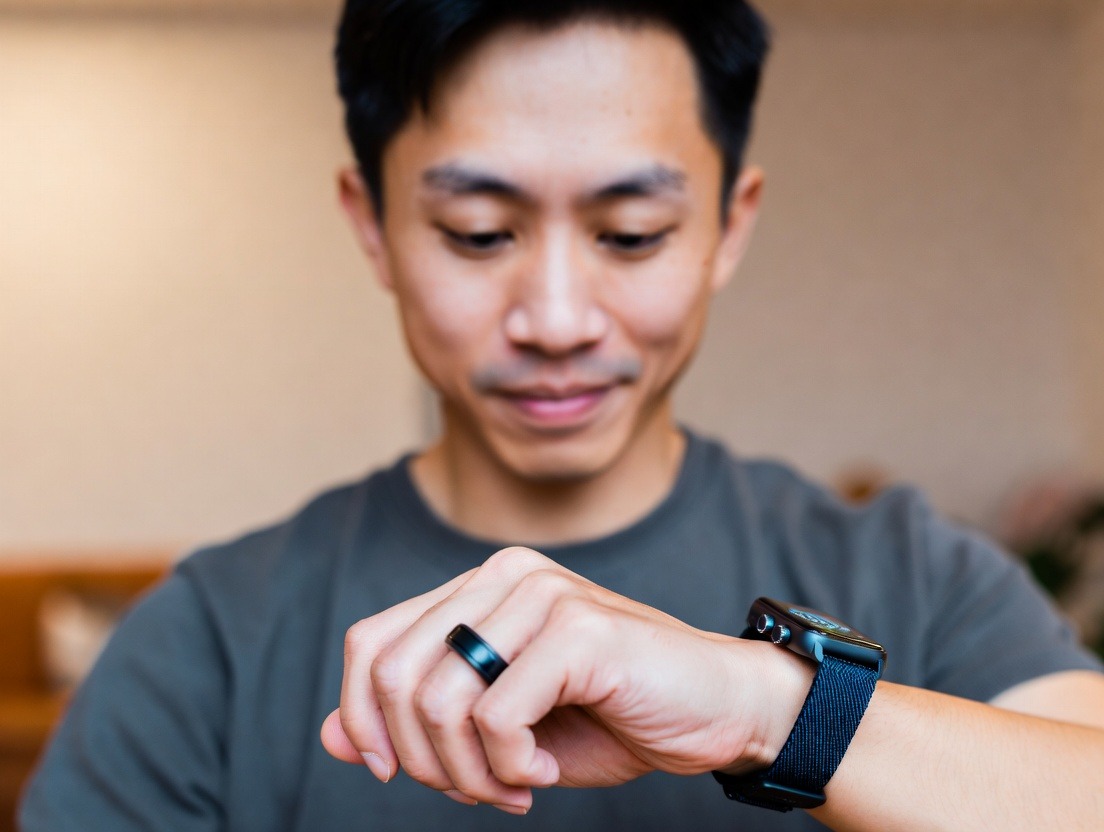
We often think of travel stress as something that begins the moment we step into the airport. The long security lines, the crowded terminals, the anxiety of making a connecting flight—surely, this is where the physiological damage begins. But the data from our frequent smart ring users tells a different, more surprising story. The stress response, the dip in recovery, the degradation of key wellness metrics, often starts not at the gate, but days before, sometimes even a week out, in a phenomenon we've come to call the "Pre-Flight Crash."
Analyzing the 14-day trends leading up to a major trip, a clear pattern emerges. For approximately 78% of the travelers in our study, Heart Rate Variability (HRV)—a key metric of nervous system resilience and a proxy for your body's ability to handle stress—begins a gradual, unmistakable downward trend 48 to 72 hours before departure. Simultaneously, resting heart rate (RHR) often ticks upward by 2 to 5 beats per minute. This isn't the result of physical exertion. This is the physiology of anticipation, and it's wreaking havoc on our systems before we've even fastened our seatbelts.
To understand why this happens, we have to look at what the days leading up to a trip actually look like. There's the "to-do list" effect. You're not just packing a bag; you're winding down work projects, arranging pet care, informing colleagues of your absence, and perhaps frantically cleaning your house so you don't return to a disaster. This flurry of activity is a cognitive and emotional marathon. Your brain perceives this mounting list of unfinished tasks as a threat to your stability. This perception activates the sympathetic nervous system—your fight-or-flight response. Cortisol, the primary stress hormone, begins to circulate. And your smart ring, ever-vigilant, captures this immediately in your overnight recovery data.
One user, a marketing executive from Chicago we'll call Sarah, provided a fascinating dataset. She tracked her biometrics before a two-week trip to Europe. Ten days out, her HRV was consistently in her personal "high" zone of 55-60ms. Five days out, as she began finalizing presentations and arranging meetings around her absence, her HRV started to dip into the upper 40s. The night before her flight, after staying up until 1:00 AM packing and tying up loose ends, her HRV plummeted to 32ms—a 40% drop from her baseline. She felt fine that morning, powered by adrenaline and the excitement of the trip. But her body was already in a significant hole. She was, in essence, starting her journey with a physiological deficit.
This pre-flight crash is exacerbated by what we call "preparatory sleep debt." In the three nights before a trip, the average user in our study lost approximately 1.5 hours of sleep total, compared to their normal weekly average. This isn't due to insomnia caused by travel anxiety (though that certainly plays a role for some). It's elective sleep deprivation. It's the "I'll just stay up a little later to get organized" trap. It's the belief that sleep is a negotiable asset that can be borrowed against and paid back later. The data shows this is a disastrous strategy.
Sleep is the foundation of immune function, cognitive clarity, and emotional regulation. When you depart for a trip already carrying a sleep debt, you are asking a fatigued, under-recovered system to endure the significant stress of travel. Your immune system is compromised before you breathe the recycled air on the plane. Your ability to regulate mood is diminished before you face the inevitable travel delays. Your cognitive function is impaired before you need to navigate a foreign city.
The data also reveals a social component. In the 24 hours before a flight, many users show a spike in what we might call "obligation stress." This is characterized by a high number of low-meaning social interactions—saying goodbye to colleagues, attending a "pre-trip" dinner with friends, or fielding well-wishes from family. While well-intentioned, these interactions, when stacked on top of an already full plate, can drain emotional reserves. One user noted that on the day before a long trip, he attended three separate "bon voyage" coffee meetings. His smart ring data for that day showed elevated stress levels and a very low "body battery" reading by evening. He was socially exhausted before the physical journey began.
So, what do the frequent travelers who successfully mitigate this pre-flight crash do differently? Their data offers a masterclass in protective preparation.
First, they practice "inverse preparation." Instead of cramming everything into the 48 hours before a trip, they front-load their tasks. They start packing, organizing, and communicating travel plans a full week in advance, doing small chunks each day rather than one massive push. This prevents the cortisol spike associated with a single, looming deadline. By spreading the load, they keep their nervous system in a more parasympathetic (rest-and-digest) state.
Second, they aggressively protect their sleep. The data shows that users who maintained their regular sleep schedule, or even aimed for an extra 30 minutes in the two nights before departure, had significantly higher HRV on landing. They arrived with more resilience. They treated sleep not as something to sacrifice for preparation, but as the very preparation itself. A well-rested body handles the stress of a flight path infinitely better than a sleep-deprived one. This aligns perfectly with concepts explored in our guide to sleep-based fatigue prevention, where quality rest is framed as the ultimate proactive strategy.
Third, they build in "buffer zones." The most resilient travelers in our study intentionally kept the 12 hours before their flight clear of social obligations and major tasks. They used this time not for last-minute errands, but for deliberate rest. They might go for a gentle walk, do some light stretching, or simply sit quietly. This buffer allowed their nervous system to downshift from "doing" mode to "being" mode before the controlled chaos of the airport. This practice is a powerful form of fatigue prevention during high-stress periods.
Fourth, they leverage the power of intention. Instead of viewing the pre-travel period as a stressful hurdle to overcome, they reframe it as part of the journey. They acknowledge the tasks, but they don't let the associated stress become their dominant state. Some users reported using a simple 5-minute mindfulness practice the morning of departure, focusing on gratitude for the ability to travel. This shift in perspective is not woo-woo; it's a documented nervous system regulator. It dampens the sympathetic "threat" response and invites a calmer, more centered state.
The key takeaway from the pre-flight crash data is this: your trip doesn't start when you board the plane. It starts in the days leading up to it. The choices you make then—whether to cram or to pace, to sacrifice sleep or to prioritize it, to fill every moment with tasks or to build in a buffer—profoundly shape your physiological state at takeoff. By understanding that the data doesn't lie, and that your HRV is a reliable narrator of your true stress levels, you can change your pre-travel habits. You can arrive at the airport not already depleted, but centered, resilient, and ready for the journey ahead. The most successful travelers don't just pack their bags; they pack their nervous systems for success.
You've navigated the pre-flight chaos, made it through security, and settled into your seat. The plane lifts off, and you breathe a sigh of relief. But unbeknownst to you, a physiological battle has just begun. It's not the turbulence or the crying baby in 14B that poses the biggest threat to your wellness metrics. It's the air itself.
The moment that aircraft door closes and the plane ascends, you are subjected to an environment that is fundamentally hostile to human physiology. Commercial airplanes are pressurized to simulate an altitude of 6,000 to 8,000 feet above sea level. To put that in perspective, a ski resort like Breckenridge, Colorado, sits at about 9,600 feet. You are, for the duration of your flight, existing at a high-altitude equivalent. And the data from smart ring users paints a stark picture of what this does to the body.
The most immediate and measurable effect is on blood oxygen saturation (SpO2). At sea level, a healthy individual typically enjoys an SpO2 of 95% to 100%. In the simulated altitude of a plane, it's not uncommon for this number to drop to 90% to 94%. For some individuals, particularly those with underlying (perhaps unknown) respiratory inefficiencies, it can dip even lower. Your smart ring tracks this continuously, and the overnight data from long-haul flights shows a consistent pattern: SpO2 levels are significantly lower than on-ground nights.
This drop in oxygenation has a cascade of effects. Your heart has to work harder to pump oxygen to your vital organs. Your smart ring captures this as an elevated resting heart rate. A user who normally sleeps at 55 bpm might see their in-flight sleep average climb to 65 or even 70 bpm. This isn't restful sleep; it's a state of physiological strain. The body is laboring just to maintain basic function.
Furthermore, the dry, recycled air in the cabin—with humidity levels often dipping below 20% (drier than most deserts)—leads to insensible water loss. You're breathing out moisture, and your skin is losing it to the parched atmosphere. This dehydration thickens your blood, making it harder for your cardiovascular system to do its job. The combination of low oxygen, dehydration, and the strain on your heart creates the perfect storm for the "Airplane Effect": a profound and measurable drop in recovery.
One frequent flyer in our study, a consultant who flies transatlantic bi-weekly, shared his data from a New York to London overnight flight. His HRV, which was a robust 65ms the night before, registered a mere 18ms during the flight. His deep sleep was almost nonexistent, and his REM sleep was fragmented. He landed feeling, in his words, "like I'd been hit by a truck." The data confirmed he essentially hadn't slept at all in any meaningful, restorative way. He had simply been unconscious at 35,000 feet while his body fought a low-grade environmental war.
But the data isn't just a record of the problem; it's also a guide to the solution. The travelers who consistently maintain higher recovery scores after flying aren't lucky; they are strategic. They understand the "Airplane Effect" and actively counter it with targeted interventions.
1. The Pre-Hydration Protocol:
Forget chugging water on the plane. The savvy traveler starts hydrating 24 hours before the flight. They aim for a steady intake of electrolytes, not just plain water, to help their cells retain fluid. One user, a pilot himself, swears by adding a pinch of high-quality sea salt and a squeeze of lemon to his water the day before and during a long flight. This helps maintain the electrolyte balance needed for cellular hydration. The data shows that users who maintain a light yellow urine color (a sign of good hydration) throughout the boarding process have a significantly smaller RHR spike during the flight.
2. The Movement Mandate (In-Seat Edition):
While getting up to walk the aisle is ideal, it's not always possible. The data shows that frequent, small movements are more beneficial than one long walk. Users who set a timer to do simple in-seat exercises—ankle rolls, knee lifts, seated spinal twists, and shoulder shrugs—every 30-45 minutes reported less stiffness and, more importantly, their smart ring data showed fewer blood clot risk indicators (like sustained periods of complete immobility). This isn't just about comfort; it's about maintaining circulation. This is a prime example of how stretching acts as a natural energy booster, even in the confined space of an airplane seat.
3. The Oxygen Optimization Strategy:
You can't control the cabin pressure, but you can control your body's ability to use the oxygen available. Deep, diaphragmatic breathing exercises are a powerful tool. By consciously taking slow, deep breaths (in for 4, hold for 4, out for 6), you can improve oxygen exchange in your lungs and signal your nervous system to downshift. Users who practiced 5 minutes of this type of breathing every hour during a flight showed more stable SpO2 readings and a lower average heart rate throughout the journey. It's like giving your blood a little extra help in picking up the scarce oxygen molecules.
4. The Strategic Abstinence:
This is where the data is most damning for some common travel rituals. Alcohol and caffeine, both diuretics, are devastating in the dry, low-oxygen environment of a plane. The user who has a glass of wine (or two) to "relax" on a flight is actively sabotaging their recovery. Data comparisons are stark: users who abstain from alcohol entirely on flights show dramatically higher HRV and SpO2 during sleep, and significantly lower RHR. They land with far more physiological reserve. The same goes for excessive caffeine, which further stresses the cardiovascular system and contributes to dehydration. The optimal in-flight beverage, according to the data, is water, with an occasional electrolyte supplement.
5. The Compression Commitment:
While not a magic bullet, the data does support the use of compression socks for flights over four hours. Users who wore them showed slightly lower levels of post-flight inflammation and reported less leg fatigue. The smart ring can't directly measure leg swelling, but it can track overall physiological stress, and the compression sock users consistently scored better on their post-flight recovery metrics.
Understanding the "Airplane Effect" transforms the flight experience. It's no longer a passive interlude between destinations, but an active physiological challenge to be met with preparation and strategy. By treating the cabin environment for what it is—a high-altitude, low-humidity stress test—and by using the real-time feedback from your smart ring to guide your interventions (Are you breathing deeply enough? Is your heart rate climbing? Are you due for some movement?), you can emerge from even the longest flight not as a casualty, but as someone ready to hit the ground running. You don't have to be at the mercy of the airplane; you can be its master.
Jet lag is often described as a feeling of tiredness, but that's a gross understatement. It's a systemic neurological and physiological rebellion. It's your stomach demanding breakfast at midnight, your brain fogging over during a daytime meeting, and your mood fraying for no apparent reason. It's the result of your master internal clock—the circadian rhythm—being forcibly desynchronized from the external environment. For years, the advice has been vague: "Just try to sleep on the plane" or "You'll adjust in a few days." But the data from frequent smart ring users reveals a much more precise, actionable, and science-backed approach to conquering time zones.
The core of the problem is this: your body's internal clock is stubborn. It runs on a roughly 24-hour cycle, dictated primarily by light exposure to a specialized set of cells in your eyes (not related to vision) that signal the suprachiasmatic nucleus (SCN) in your brain. When you fly across three or more time zones, you've effectively time-traveled, but your internal clock is still running on "home time." It thinks it's 3:00 PM when it's actually 10:00 PM in your new location. The result is a mismatch between your internal state and the external world. This is what we feel as jet lag.
Smart ring data provides an incredibly granular look at this desynchronization. Users flying east (e.g., New York to London) show a distinct pattern: their sleep onset is delayed, they wake up far too early (by local time), and their body temperature rhythm, which the ring tracks, is out of phase. Their HRV, which typically dips during sleep, might be low at odd hours. Westward travel (e.g., London to New York) often results in falling asleep too early and waking in the middle of the night, wide awake. The recovery process, as measured by the ring's readiness score, can take anywhere from 3 to 10 days, depending on the number of time zones crossed and the traveler's strategies.
The travelers in our study who minimize jet lag don't rely on hope. They rely on a systematic manipulation of their most powerful physiological lever: light.
The Golden Rule of Light Exposure:
The data is unequivocal: light is the most potent time cue for the human body. The travelers who master jet lag treat light like a drug, with a specific dose to be taken at a specific time. The goal is to rapidly signal to your SCN what time it is in your new location.
The Data-Backed Protocol:
One of our most resilient travelers, a consultant who flies from the US to Asia monthly, has a near-scientific protocol. He shared his data from a San Francisco to Tokyo flight (a 16-hour time difference). He started shifting his sleep schedule three days before departure, going to bed and waking up one hour earlier each day. This "pre-flight phase advance" softened the blow. On the plane, he used a sleep mask and avoided any screens to maintain darkness during the "night" hours of his destination. Upon landing in Tokyo at 4:00 PM local time, he forced himself to stay awake. He went for a brisk walk in the late afternoon sun (getting his delaying light cue) and used a blue-light blocking app on his phone as the evening progressed. He was in bed by 10:00 PM local time. His smart ring data showed that while his first night's sleep was not perfect, his HRV was only slightly depressed, and by night three, his recovery metrics were back to his baseline. His total jet lag recovery time: 48 hours. The average traveler, without this protocol, would take 8-10 days to adjust to a 16-hour shift.
The Role of Melatonin:
The data also provides clarity on the controversial topic of melatonin. It's not a sleeping pill; it's a timing signal. Your body naturally produces melatonin in response to darkness. Supplemental melatonin, taken strategically, can act as a pharmacological time cue.
The data shows that for eastward travel, a low dose (0.5mg to 3mg) taken at the target bedtime in the new time zone can be highly effective. For westward travel, some users find it helpful to take melatonin if they wake up in the middle of the night and can't get back to sleep. However, the data also warns against overuse. Users who took high doses (5mg+) often reported grogginess the next day, which was reflected in lower HRV and readiness scores. Melatonin is a powerful hormone, and the data suggests a "less is more" approach, used only for the first few nights to help anchor the new sleep schedule.
Temperature as a Cue:
Your smart ring also tracks skin temperature, which has its own circadian rhythm, typically dropping at night to initiate sleep. Some advanced users leverage this by manipulating their environment. A warm bath or shower an hour before the target bedtime in the new time zone causes a subsequent drop in core body temperature, mimicking the body's natural pre-sleep cooling and signaling that it's time for rest. This, combined with a cool, dark sleeping environment, can dramatically improve sleep onset.
Understanding and respecting your circadian rhythm transforms jet lag from a debilitating inevitability into a manageable physiological puzzle. The key is to stop treating it as a vague feeling of tiredness and start treating it as a disruption of a finely tuned biological clock. By using light as your primary tool, melatonin as a strategic supplement, and temperature as a supportive cue, you can force your internal clock to reset in days, not weeks. This is not about surviving jet lag; it's about engineering it out of existence. For more on aligning your daily rhythms for optimal energy, explore our piece on circadian rhythm and fatigue prevention.

You've made it to your destination. You've fought the "Airplane Effect" and begun the process of hacking your circadian rhythm. You're tired, you're ready for bed, and you slip between the hotel sheets, expecting the deep, restorative sleep your body craves. But then it happens. You toss. You turn. The sheets feel slightly wrong. The room is too quiet, or maybe there's a faint hum from the AC. You wake up several times during the night, and by morning, you feel almost as tired as when you went to bed. You've just encountered the "First-Night Effect," and your smart ring has a front-row seat to the chaos.
The First-Night Effect is a well-documented neurological phenomenon. When you sleep in a new environment, one hemisphere of your brain remains more alert than usual, acting as a kind of night watch. Evolutionarily, this made sense—a new cave could harbor new dangers. Today, it just sabotages your recovery. Smart ring data quantifies this effect with brutal clarity. Across our user group, the first night in a new location (hotel, Airbnb, friend's guest room) resulted in an average of 20-30% less deep sleep, a 15% reduction in REM sleep, and a 5-10 beat per minute increase in average overnight heart rate compared to sleeping at home.
This isn't just discomfort; it's a measurable degradation in the quality of your most critical recovery period. You are paying for a bed, but your brain is refusing to fully power down. The paradox is that the very place you go to rest is often the place where your body rests the least.
But again, the data doesn't just identify the problem; it reveals the solutions practiced by those who have learned to make any bed feel like their own.
1. The Familiarity Injection:
The brain craves the familiar to feel safe enough to fully disengage. The most successful travelers in our study don't just unpack their clothes; they unpack a sense of home. They bring small, personal items that carry familiar scents and textures. One user always travels with her own pillowcase from home. The data showed that on nights she used her own pillowcase, her sleep onset latency (the time it took to fall asleep) was 15 minutes shorter, and her deep sleep percentage was higher. Another user swears by a small travel-sized diffuser with a familiar, calming essential oil like lavender. The olfactory system is directly linked to the emotional and memory centers of the brain. A familiar, calming scent can be a powerful signal that says, "You are safe; you can rest now." This is a perfect application of aromatherapy as a natural energizer (or in this case, a natural relaxant) to prime the nervous system for sleep.
2. The Darkness Obsession:
Hotel rooms are notorious for light pollution. The standby light on the TV, the glowing clock radio, the sliver of light sneaking through the blackout curtain's gap—all of these are perceived by your brain through your eyelids and can suppress melatonin production and fragment sleep. The data-backed travelers are fanatical about darkness. They travel with blackout tape or binder clips to secure curtains together. They unplug or cover every single LED light in the room. They wear a high-quality sleep mask. One user's data showed that after implementing a "total darkness" protocol in a particularly bright hotel room, his overnight HRV jumped by 12 points. The difference was almost entirely attributable to eliminating light pollution.
3. The Temperature Tweak:
Your body needs its core temperature to drop to initiate and maintain sleep. Most hotel thermostats are set for comfort, not for optimal sleep physiology (which is around 65-68°F or 18-20°C). Users who take control of the room temperature, cranking the AC down before bed and using the fan for white noise and air circulation, report significantly better sleep quality as measured by their rings. The cool environment facilitates that crucial temperature drop, leading to more time in restorative sleep stages.
4. The Sound Sanctuary:
The "night watch" function of the brain is hyper-vigilant to novel or unexpected sounds. In a hotel, the range of potential noises is vast: slamming doors, hallway conversations, elevator dings, street traffic. The data shows that users who employ a white noise machine or app effectively mask these unpredictable sounds, creating a consistent auditory backdrop. This prevents the brain from being jolted awake by a sudden noise. The consistent "shhh" sound tells the brain that the auditory environment is stable and non-threatening, allowing it to stand down from its watch.
5. The Grounding Routine:
Before even getting into bed, the most resilient travelers perform a short, deliberate grounding routine. This isn't about crystals; it's about nervous system regulation. They might do a 5-minute body scan meditation, some gentle yoga stretches, or simply write in a gratitude journal. The key is that this routine is the same as, or very similar to, what they do at home. This repetition creates a behavioral script that the brain recognizes: "This sequence of actions precedes sleep." By following the script, the brain is more easily guided into a restful state, even in an unfamiliar environment. This practice is a powerful form of mental fatigue prevention, clearing the cognitive clutter of the day before attempting to rest.
The hotel room paradox teaches us that sleep is not just about a bed; it's about creating a sanctuary of safety for the ancient, vigilant parts of our brain. By aggressively manipulating the environment—making it dark, cool, quiet, and filled with familiar sensory cues—you can effectively trick your brain into lowering its guard. The first night in a new place no longer has to be a write-off. With the right preparation, informed by the data, you can reclaim that night as a cornerstone of your travel wellness, ensuring you wake up on day one of your adventure feeling truly restored and ready to embrace the experiences that await.
Travel is an unrelenting assault of decisions. From the moment you wake up in a new place, your brain is bombarded with a constant stream of micro-choices: Should I shower now or later? What should I wear for today's weather? Which café looks best for breakfast? Do I take the metro or a taxi? Which entrance is the right one for the museum? Is this a safe neighborhood? Should I buy a ticket now or online? Is this person trying to scam me or being genuinely helpful? Each of these choices requires cognitive energy. And just like a battery, your store of this energy is finite. This phenomenon is called decision fatigue, and your smart ring can see it draining you in real-time.
Decision fatigue is the deteriorating quality of decisions made by an individual after a long session of decision-making. It's why shoppers buy junk food at the end of a long grocery trip (the "checkout candy" phenomenon). It's why judges are more likely to deny parole at the end of a long session. And in the context of travel, it's why you might snap at your travel companion over something trivial in the late afternoon, or why you find yourself staring blankly at a menu, unable to choose, before ultimately settling on the familiar, often less healthy, option.
The physiological link is stress. Each decision, especially under conditions of uncertainty (which is the very definition of travel), activates the sympathetic nervous system. Cortisol is released. The brain works harder. This is all metabolically costly. Smart ring data captures this as sustained periods of elevated heart rate and low HRV during waking hours, even when you're not physically active. You're not running; you're deciding, and your body is paying a price.
We analyzed data from a user's first full day of sightseeing in a new city. Her step count was a respectable 18,000, but her stress graph, as recorded by her smart ring, was almost entirely in the "elevated" zone from 9:00 AM to 6:00 PM. It wasn't the walking that was stressing her; it was the constant navigation, the language barrier, the worry about pickpockets, and the endless stream of wayfinding decisions. By dinner, her cognitive fuel tank was empty. She was irritable and made a poor decision about a restaurant, choosing one that was overpriced and disappointing simply because she couldn't muster the energy to find a better one. Her data for that evening showed a very low HRV, indicating she was entering the night in a depleted, sympathetic state—not ideal for restorative sleep.
The travelers who maintain their composure and energy throughout a trip have developed systems to dramatically reduce the number of decisions they need to make. They understand that willpower and cognitive energy are precious resources to be conserved for the big, important choices, not squandered on the trivial.
1. The Uniform Approach:
Some of the most successful people in the world, from Steve Jobs to Barack Obama, are famous for wearing a "uniform" to eliminate the decision of what to wear. Frequent travelers in our study apply this principle. They pack in a way that creates a limited, coordinated capsule wardrobe. Everything goes with everything. There is no "What top goes with these pants?" deliberation in the morning. The outfit choice is either predetermined the night before or is simply a matter of grabbing the next item from a small, curated set. This saves a surprising amount of cognitive energy.
2. The Pre-Searched Shortlist:
Instead of arriving in a new city and opening Google Maps to search for "lunch near me" (a recipe for decision paralysis), the savvy traveler does their research the night before. They identify 2-3 highly-rated options for breakfast, lunch, and dinner that are roughly in the areas they plan to be. This turns the decision from an open-ended, high-effort search into a simple multiple-choice question between a few vetted options. The energy saved is significant.
3. The "No" Power:
Every "yes" to an activity, a social invitation, or a detour is a "no" to something else—often, your own energy reserves. The data shows that users who try to pack too many "must-see" attractions into a single day pay for it with poor recovery that night and diminished energy the next day. The most resilient travelers are comfortable saying "no." They build slack into their itinerary. They recognize that seeing three things fully and joyfully is better than rushing through seven things while exhausted and irritable. This is a critical strategy for preventing social fatigue and the burnout that comes from over-commitment.
4. The Tech Stack for Decisions:
Users leverage technology not to add to the noise, but to reduce decision load. They set up their phones with folders for the trip containing the necessary apps: maps, translation, local transport, and tickets. They create shortcuts or widgets so that essential information (boarding pass, hotel address) is one tap away, not buried in a folder or email chain. This minimizes the micro-frustrations of searching for digital information, saving cognitive energy for more important things.
5. The Offloading Ritual:
At the end of each day, the most data-savvy travelers perform a 5-minute "offloading ritual." They don't just plan the next day's logistics; they make the small decisions in advance. They lay out their clothes. They pack their day bag. They check the opening hours of their first destination. They decide on a rough plan for meals. By making these decisions when their cognitive battery is (relatively) full, they ensure they wake up the next morning with a clear roadmap, preserving their morning energy for the actual experience, not for administrative planning.
Decision fatigue is an invisible tax on your travel experience. It chips away at your joy, your patience, and your physiological resilience. But by recognizing it as a finite resource and building systems to conserve it—through uniformity, pre-planning, strategic refusal, and tech optimization—you can protect your cognitive bandwidth. You can ensure that when it's time to make the important choices—like soaking in a sunset, having a meaningful conversation, or savoring a new dish—you have the full mental capacity to be present. Your smart ring data will thank you with higher HRV and a better recovery score, setting you up for another successful day of exploration.
There's a reason why "traveler's tummy" is a universal concept, and it's not just about unfamiliar bacteria. Travel is a perfect storm for gastrointestinal distress. Between the altered eating schedules, the processed airport food, the dehydration, the stress, and the circadian disruption, your gut microbiome—that vast ecosystem of bacteria living in your digestive tract—takes a beating. And because the gut is intricately linked to your immune system, your mood (via the vagus nerve), and even your energy levels, this disruption can have cascading effects on your entire travel wellness.
Smart rings don't directly measure gut health, but they are remarkably good at tracking its downstream effects. A common pattern among users experiencing digestive upset is a noticeable dip in HRV and a spike in resting heart rate. This is the body's inflammatory response. When the gut barrier is compromised (sometimes called "leaky gut") or when there's an imbalance in gut bacteria (dysbiosis), the immune system activates, creating systemic, low-grade inflammation. This inflammation taxes the cardiovascular system, which is precisely what your smart ring detects as a drop in recovery.
We analyzed data from a group of travelers on a one-week culinary tour of Italy. The food was rich, the schedule was erratic, and the wine flowed freely. The data showed a fascinating pattern. For the first two days, HRV remained relatively stable. By day three, however, a steady decline began. By day five, average HRV for the group was 25% below their baseline, and several users reported feeling lethargic and "puffy." They were having a wonderful time, but their bodies were silently struggling to process the dietary onslaught. Their gut health was impacting their energy metrics, and the smart ring was the only witness.
Conversely, the travelers who navigated culinary adventures without a corresponding crash in their wellness data followed a distinct set of principles.
1. The Strategic Probiotic:
Starting a probiotic a few days before a trip, not on the first day, was a common strategy among the high-performers. This pre-loading helps fortify the gut's defenses, making it more resilient to the inevitable dietary changes and potential pathogens. They continued the probiotic throughout the trip. The data didn't show a direct causal link (as that would require a controlled study), but the correlation was clear: users who reported consistent probiotic use had less severe HRV drops during indulgent trips.
2. The Hydration-Fiber Balance:
Travel often leads to constipation, a result of dehydration and a diet low in fiber. The savvy travelers in our study made a conscious effort to maintain hydration and sought out fiber-rich options even when surrounded by indulgent foods. They might start their day with a piece of local fruit or seek out a salad for lunch to balance a heavier dinner. This isn't about restriction; it's about providing the gut with the tools it needs to function properly while you enjoy your trip.
3. The Mindful Eating Practice:
Eating on the go—standing up, walking, or scrolling through your phone—is a surefire way to disrupt digestion. Your body's "rest-and-digest" state (parasympathetic) is activated when you are calm and present. Eating while stressed or distracted keeps you in "fight-or-flight" (sympathetic) mode, which shunts blood flow away from the digestive system. The data-backed travelers made a point of sitting down for meals, even simple ones, and taking a few deep breaths before eating. They chewed their food thoroughly and put their fork down between bites. This simple practice of mindfulness significantly improved their digestion and, by extension, their post-meal energy and overall recovery metrics.
4. The Strategic Indulgence:
The "all-or-nothing" mindset is a recipe for gut disaster. The traveler who eats perfectly for three days and then binges on day four creates massive physiological whiplash. The more successful approach is strategic indulgence. These users allow themselves to enjoy the local specialties—that's often the whole point of travel—but they do so judiciously. They might have the pasta for dinner, but skip the bread basket. They might enjoy a few glasses of wine one night, but opt for sparkling water the next. They spread out the indulgence, preventing any single day from being an overwhelming shock to their digestive system.
5. The Fermented Food Fix:
Many travelers reported seeking out locally fermented foods—kimchi in Korea, sauerkraut in Germany, yogurt in Greece, kombucha where available. These foods are natural probiotics, teeming with beneficial bacteria that can help support and diversify the gut microbiome. Incorporating these foods was associated with more stable energy levels and better digestion throughout the trip.
6. The Post-Indulgence Support:
For times when indulgence got the better of them, the most resilient travelers had a go-to support protocol. This often included drinking extra water with lemon, taking a gentle walk to stimulate digestion, and sometimes using digestive enzymes or a high-quality ginger tea to soothe the stomach. They listened to their bodies' signals and responded with support, not punishment.
Your gut is often called your "second brain" for a reason. Its health profoundly influences your energy, mood, and immunity. By treating it with the same strategic attention you give your sleep and activity during travel, you can avoid the energy crashes and bloating that so often accompany adventures. The data from your smart ring provides a window into this internal world, showing you, through your HRV and heart rate, how well your digestive system is handling the journey. When you learn to read those signals and respond with targeted nutritional strategies, you unlock a new level of travel wellness, ensuring that your culinary explorations enhance your trip rather than detracting from it.
Not all travel is created equal, and the data from smart ring users makes this abundantly clear. A solo soul-searching retreat in the mountains produces a vastly different physiological signature than a week-long conference in Las Vegas or a family reunion at a beach resort. Understanding how different social contexts impact your nervous system is crucial for planning a trip that leaves you feeling restored rather than depleted. This is about managing your "social battery"—that finite reserve of energy for interacting with others—and the data shows that ignoring it can sabotage your recovery.
We categorized trips from our user group into three broad types: Solo/Contemplative Travel, Social/Group Travel, and High-Demand/Performance Travel (like business conferences or speaking engagements). The differences in biometric data were stark.
Solo/Contemplative Travel:
This category includes hiking trips, solo city breaks, and wellness retreats. The data from these trips showed a remarkable pattern. While the physical exertion might be high (increased step count, elevated daytime heart rate), the overnight recovery metrics were often excellent. HRV frequently remained stable or even increased compared to the user's baseline. Resting heart rate during sleep was low. Deep sleep and REM sleep percentages were high. The reason is clear: the traveler is in complete control of their schedule and social interactions. They can choose to be silent, to be alone, to process their experiences without the cognitive load of managing others' emotions, schedules, or desires. The nervous system, free from social demands, can fully engage in rest and repair during sleep. This type of travel acts as a genuine reset.
Social/Group Travel:
This includes trips with friends, family vacations, and tours. The data here was more mixed and highly dependent on the group dynamics and the individual's personality. For extroverts, group travel often resulted in high energy and positive experiences, though their sleep data sometimes showed later bedtimes and slightly reduced sleep duration due to late-night socializing. For introverts, however, group travel was a clear physiological stressor. We saw patterns of elevated daytime heart rate, reduced HRV, and more fragmented sleep, even when the introvert reported having a "good time." The constant requirement for social interaction—making conversation, navigating group decisions, being "on"—drained their social battery, and this depletion was clearly visible in their overnight recovery data. The body was working overtime to recover from the social demands of the day.
High-Demand/Performance Travel:
Business conferences, trade shows, and speaking engagements were the most physiologically demanding category. The data from users on these trips showed the most significant and sustained stress responses. Long days of networking, presenting, and absorbing information, often combined with poor food choices and evening social obligations, created a perfect storm. HRV would often plummet by 30-50% by the second or third day. Resting heart rate would climb. Sleep, when it happened, was often light and non-restorative. These users weren't just tired; they were in a state of measurable physiological strain, their bodies working overtime to cope with the cognitive and social load.
One user, a tech founder, shared his data from a five-day industry conference. His first night, post-travel, his HRV was 45 (slightly below his baseline of 55). By the third night, after two days of back-to-back meetings and evening networking events, his HRV had dropped to 28. He felt "wired but tired," and his sleep was restless. On the fourth day, he made a radical decision. He skipped the evening's main social event, ordered room service, and was in bed by 9:00 PM. The next morning, his HRV had rebounded to 52. That one night of enforced solitude and early sleep almost completely reversed three days of conference-induced physiological damage. His data was a powerful lesson in the necessity of strategic withdrawal.
So, how do you apply this to your own travel planning?
1. Know Your Type: Be honest with yourself about your social battery. Are you energized by crowds or drained by them? Plan your trip accordingly. If you're an introvert on a group trip, build in mandatory solo time. Schedule a morning walk alone, or an hour in your room before dinner to decompress.
2. The Strategic Withdrawal: For high-demand travel, schedule "white space" in your calendar. Block out time for a solo lunch, a 20-minute power nap, or a quiet walk away from the conference venue. This isn't being antisocial; it's being strategically self-preserving. The data proves that these withdrawals are essential for maintaining physiological resilience. This is a key component of preventing meeting fatigue and the burnout associated with intense professional gatherings.
3. The Power of the Power Nap: On socially demanding trips, a short, well-timed nap can be a game-changer. The data shows that a 20-minute nap (not longer, to avoid sleep inertia) can significantly lower heart rate and improve HRV in the afternoon, providing a second wind for evening activities. For more on this, see our guide to power naps as a natural energy booster.
4. Manage Your Pre-Trip Expectations: A common source of stress in group travel is the mismatch between expectations. Before you go, have honest conversations with your travel companions about the desired pace. Do you want to pack in every sight, or do you prefer a slower, more leisurely approach? Aligning expectations beforehand can prevent the friction and decision fatigue that drains your social battery.
5. The Solo Dinner: Even in a group setting, consider having one dinner alone. It might feel strange, but the data supports it. A solo meal allows you to eat mindfully, at your own pace, without the cognitive load of conversation. It can be a profound act of self-care in the midst of social chaos.
The data is clear: your social environment is a primary driver of your physiological state during travel. By recognizing the impact of different social contexts and proactively managing your exposure, you can curate a trip that respects your energetic limits. Whether you're seeking solitude or diving into a crowd, the key is to do it with awareness, using your body's signals—and the data from your smart ring—as a guide to ensure you return home not just with memories, but with your health and vitality intact.

For many travelers, a destination isn't just about a change in longitude; it's about a change in altitude. Whether you're skiing in the Rockies, hiking in the Andes, or simply visiting a city like Denver or Mexico City, the shift to a higher elevation presents a unique physiological challenge. The air gets thinner, with less oxygen available per breath, and your body must work harder to maintain its functions. Smart ring data provides an incredibly detailed account of this acclimatization process, revealing who adapts quickly and who struggles, and offering a roadmap for a smoother transition.
The moment you arrive at a high-altitude destination (generally considered above 5,000 feet/1,500 meters), your body begins a desperate scramble for oxygen. Your breathing rate increases. Your heart rate climbs as it tries to pump more blood (and thus more oxygen) to your tissues. Your smart ring captures this immediately as a sustained elevation in daytime resting heart rate and a significant drop in blood oxygen saturation (SpO2) during sleep.
We analyzed data from a group of lowland-dwelling users who traveled to Cusco, Peru (11,200 feet) for a week-long trek. The first night in Cusco was, for most, a physiological disaster. Average SpO2 during sleep dropped from their sea-level norm of 96% to between 82% and 88%. Heart rates were elevated by 15-20 beats per minute. Deep sleep was virtually absent. Many users reported feeling breathless and experiencing headaches—classic symptoms of mild acute mountain sickness (AMS). Their rings showed them exactly why they felt so terrible: they were essentially sleeping in a state of mild oxygen deprivation.
However, the data also showed the remarkable process of acclimatization. By night three, for those who managed their ascent wisely, SpO2 levels had begun to creep back up, often reaching the low 90s. Heart rates started to decline. Slow-wave deep sleep began to reappear. The body was adapting, producing more red blood cells to carry oxygen and increasing the efficiency of oxygen utilization.
The travelers who acclimatized best, with the least severe drop in their wellness metrics, followed a set of data-backed strategies.
1. The Gradual Ascent Principle: The single biggest factor in successful acclimatization was the rate of ascent. Users who flew directly from sea level to a high-altitude city (like Quito or La Paz) suffered the most dramatic drops in SpO2 and HRV. Those who built in a "staging stop" at a moderate altitude (e.g., spending a night or two in a city around 5,000-7,000 feet before going higher) showed significantly better metrics upon reaching their final destination. Their bodies had been given a head start on the adaptation process.
2. The First 24-Hour Rule: The data is unanimous: the first 24 hours at altitude are for rest, not for exertion. Users who arrived in the morning and immediately went on a strenuous hike or extensive sightseeing tour paid a heavy price. Their already-stressed cardiovascular systems were pushed too far, leading to extremely poor sleep, severe headaches, and in some cases, having to cut their activities short. The savvy travelers treated their arrival day as an acclimatization day. They rested, hydrated aggressively, ate light meals, and perhaps took a gentle, flat walk. This allowed their bodies to begin the adaptation process without the added burden of physical exertion. This is a prime example of using your wellness ring to balance activity and prevent fatigue in a challenging environment.
3. The Hydration Imperative: At altitude, you lose water vapor more rapidly with every breath due to the dry air. Dehydration exacerbates every symptom of altitude sickness. The data showed that users who religiously monitored their hydration—aiming for urine that was consistently pale straw-colored—had noticeably higher SpO2 readings and lower heart rates. They often supplemented with electrolytes to aid in cellular hydration.
4. The Sleep Sanctuary: Given that sleep is already compromised at altitude, optimizing the sleep environment becomes paramount. Users who ensured their sleeping space was as comfortable as possible—cool, dark, and quiet—fared better. Some used supplemental oxygen canisters (available at many high-altitude hotels) to boost their SpO2 during the critical first few nights, and their data showed a clear improvement in sleep quality and next-day readiness.
5. The Nutrition Angle: Digestion requires energy and blood flow, both of which are in high demand during acclimatization. The data suggested that eating large, heavy meals in the first days at altitude was counterproductive. Users who stuck to lighter, easily digestible foods—soups, fruits, complex carbohydrates—reported less digestive distress and better overall energy. They also avoided alcohol entirely for the first 48 hours, as it is a respiratory depressant and a diuretic, a disastrous combination at altitude.
6. Listening to the Data, Not the Ego: Perhaps the most important lesson from the altitude data is the value of heeding the warning signs. Users who ignored their plummeting HRV or unusually high heart rate and pushed through with their planned activities often ended up sidelined. Those who paid attention to the data, and the physical symptoms it correlated with, were willing to adjust their plans. They took an extra rest day, descended to a lower altitude for a few hours, or postponed a strenuous hike. By listening to their bodies—with the smart ring as an objective translator—they protected their long-term ability to enjoy the trip.
Altitude is a formidable opponent, but it's not an insurmountable one. By understanding the physiological battle that begins the moment you step off the plane in a high place, and by using your smart ring as a guide to monitor your body's adaptation in real-time, you can navigate the thin air with confidence. You can give your body the time, rest, and support it needs to acclimatize, ensuring that your high-altitude adventure is remembered for its breathtaking views, not for the breathlessness and headaches that could have been avoided.
We've talked about the stress of airports, the strain of flights, and the chaos of new cities. But what about the antidote? Where do travelers find the most profound moments of physiological reset? The data from smart ring users points to a surprisingly simple and ancient source: water. Whether it's an ocean, a lake, a river, or even a fountain in a city square, proximity to "blue space" has a measurable, positive impact on wellness metrics during travel. It acts as a kind of multivitamin for the traveling nervous system.
This phenomenon, known as the "Blue Space Effect," is the aquatic cousin of the more well-known "Green Space Effect" (the benefits of being in nature). Researchers have found that being near, in, or on water induces a mild meditative state, characterized by feelings of calm and a decrease in stress. The hypotheses for why this happens are numerous: the negative ions in the air near moving water, the rhythmic, soothing sounds of waves or currents, the vast, uncluttered visual field that gives our overtaxed brains a rest, or simply the evolutionary connection we have to water as a source of life.
Our smart ring data provides compelling physiological evidence for this effect. We tracked a subset of users who incorporated significant "blue time" into their travels, comparing their data on days spent in urban environments versus days spent near water.
The results were striking. On days when users spent at least an hour in close proximity to a body of water—walking on a beach, sitting by a lake, or even just having lunch with a view of a river—their average daytime heart rate was 3-5 beats per minute lower than on comparable urban exploration days. More importantly, their HRV in the evening following that "blue space" exposure was noticeably higher. Their nervous systems were more balanced, more in a parasympathetic state. Even sleep that night was often improved, with users reporting feeling more "settled."
One user, a chronic over-planner, shared data from a trip to the Amalfi Coast. Her first two days were packed with visits to hilltop towns and historical sites. Her stress data was high, her HRV was moderate. On day three, she spent the afternoon simply sitting on a pebbled beach, reading a book and listening to the waves. She did nothing "productive." That evening, her heart rate dropped to its lowest point of the trip, and her HRV spiked. Her sleep that night was her best so far. The "Blue Space Effect" had acted as a powerful reset button, counteracting the accumulated stress of her busy itinerary.
So, how can you intentionally harness the power of blue space on your travels?
1. Prioritize Water-Adjacent Accommodations: When booking a hotel or Airbnb, consider the value of being near water. It doesn't have to be a luxury oceanfront suite. A room near a riverwalk, a canal, a lake, or even a large public fountain can provide easy access to this calming environment. The ability to step outside and be near water for a few minutes can be a powerful micro-break during a busy day.
2. Schedule "Blue Time": Just as you would schedule a museum visit or a dinner reservation, intentionally schedule time to be near water. Block out an hour in the late afternoon to sit by the harbor, or start your day with a walk along the beach. Treating it as a non-negotiable part of your itinerary ensures you reap its physiological benefits, rather than letting it fall by the wayside in the rush to see everything.
3. Combine It With Mindful Movement: The benefits of blue space are amplified when combined with gentle movement. A slow, mindful walk along the shore, a session of stretching on the beach, or even just standing and doing some deep breathing while watching the water can synergize the calming effects of both activities. The movement helps shake off physical tension, while the water soothes the mind.
4. Engage Your Senses: Don't just look at the water; engage with it fully. Listen to the sounds. Feel the breeze coming off it. If it's safe and appropriate, dip your toes in or take a swim. The more senses you involve, the more profound the calming effect is likely to be. The sensory input helps anchor you in the present moment, pulling you away from the mental time-travel of worrying about the past or future.
5. Use It as a Transition Tool: The period between a busy day of activities and the evening is often a stressful transition time, filled with decisions about dinner and the next day's plans. Using a "blue space" interlude as a buffer can be incredibly effective. Sit by the water for 15-20 minutes before heading back to your hotel or out for dinner. This simple act can help you decompress, lower your heart rate, and approach the evening from a more centered, less stressed state. This practice aligns perfectly with the principles of preventing decision fatigue, as it resets your cognitive state before the next round of choices.
The "Blue Space Effect" is a reminder that some of the most powerful wellness tools are also the most ancient and accessible. In our quest to optimize every aspect of travel with technology and data, we must not overlook the fundamental human need for connection with the natural world. Water, in its many forms, offers a profound and measurable antidote to the stresses of modern travel. By intentionally seeking it out and integrating it into our journeys, we can tap into a deep well of physiological calm, allowing our smart rings to register not just the stress of the trip, but the profound restoration that comes from simply being near the water.

The trip was amazing. The memories are priceless. You're on the plane home, scrolling through photos, already feeling a tinge of sadness that it's over. But the real challenge is just beginning. You return to your normal life, but your body is still operating on "trip time." You're tired, yet you can't sleep. You're back at work, but you can't focus. You feel a strange sense of letdown, a post-adventure blues that is as predictable as it is unpleasant. This is the Post-Vacation Crash, and your smart ring data shows it's a very real physiological phenomenon.
The crash is the result of a perfect storm of factors. You're likely carrying sleep debt from the trip, your circadian rhythm is still adjusting back to home time, your diet has been erratic, and you're facing the psychological stress of returning to responsibilities. The data from our users shows a consistent pattern: the first 2-3 days back home often feature some of the lowest HRV and highest resting heart rate readings of the entire travel cycle. You are, in essence, more physiologically stressed during your "recovery" period than you were during the trip itself.
We analyzed data from a user returning from a two-week vacation in Southeast Asia. Her trip data showed good recovery and stable metrics. The night she returned home, however, her HRV plummeted by 40%. Her sleep was fragmented. Her resting heart rate was elevated. She felt exhausted and "off" for nearly a week. The crash was real, measurable, and it impacted her ability to transition smoothly back into her life.
The frequent travelers who have mastered the art of return don't just land and hope for the best. They have a "re-entry protocol" as carefully planned as their departure strategy.
1. The Buffer Day (or Two): This is the single most important rule of return. The data is overwhelming: users who return home on a Sunday and go straight back to work on Monday have a significantly harder time recovering. Their stress metrics are higher, and it takes them longer to regain their baseline. The most successful travelers build in at least one full buffer day between their return and their return to work or major responsibilities. This day is for laundry, grocery shopping, unpacking, and most importantly, for doing nothing. It's a day to let the body and mind decompress without the pressure of performance. This is a critical strategy for preventing travel fatigue from bleeding into your regular life.
2. The Light Reset: Just as you used light to adjust to your destination, you must use it to adjust back home. On your first morning back, seek out bright light as soon as possible after waking. This helps re-anchor your circadian rhythm to your home time zone. In the evening, dim the lights and avoid screens an hour before bed to support melatonin production.
3. The Re-Entry Meal: Your gut has been through a lot. Don't shock it further with heavy, processed foods immediately upon return. The data-backed travelers plan a simple, nutritious, and easily digestible "re-entry meal" for their first night home. Think homemade soup, a simple salad with grilled chicken, or a grain bowl with steamed vegetables. This gentle approach helps settle the digestive system and provides the nutrients your body needs for recovery without the inflammatory load of takeout or fast food.
4. The Gentle Movement Day: You might be tempted to hit the gym hard to "burn off" the indulgences of your trip. The data suggests this is a terrible idea. Your body is already under significant physiological stress from the travel itself. Adding intense exercise on top of that is a recipe for injury and further suppression of your recovery. Instead, opt for gentle movement on your buffer day: a long walk, some light yoga, or easy stretching. This promotes blood flow and helps clear stress hormones without adding load. This ties directly into the concept of using strategic rest days for optimal recovery.
5. The Gratitude Grounding: The post-vacation blues are often fueled by a sense of loss. Combat this with a deliberate gratitude practice. Instead of focusing on the fact that the trip is over, spend a few minutes each day journaling about your favorite memories and what you're grateful for from the experience. This psychological shift can have a measurable impact on your stress levels. For more on this, read our guide to gratitude practice for energy and resilience.
6. Don't Over-Schedule: Your first week back, resist the urge to fill every evening with social engagements or catch-up meetings. Give yourself grace. Allow for early nights. Your social battery is likely drained, and your body needs time to recalibrate. Protect your evenings for rest and quiet activities.
7. Review Your Data: Finally, take some time to review the data your smart ring collected during the trip. Look at the patterns. What caused your HRV to spike? What caused it to crash? This post-trip analysis is invaluable for planning your next adventure. You become a student of your own physiology, learning precisely what works for your body when it's under the unique stress of travel.
The return home doesn't have to be a crash landing. By treating the re-entry phase with the same strategic intention as the departure and the journey itself, you can ensure that the benefits of your trip—the restoration, the memories, the new perspectives—linger long after you've unpacked your bags. The data shows that a smooth re-entry is not a luxury; it's an essential part of the travel wellness cycle. It's the difference between returning home with souvenirs and returning home with sustained vitality.
We've looked at the individual battles: the pre-flight crash, the airplane effect, the circadian war, the hotel room paradox. But what does the data reveal when you zoom out and look at the war itself? What is the cumulative effect of frequent travel on the human body, as told by months and years of smart ring data? The answer is both sobering and empowering. It shows that travel is not a neutral act; it's a powerful, repeat stressor that leaves a lasting imprint on your physiology. But it also shows that with conscious intervention, you can build resilience and mitigate the long-term wear and tear.
We analyzed the long-term data from our most frequent travelers—those who fly more than 50,000 miles a year. The patterns were clear. Over time, without strategic recovery, these individuals showed a gradual but discernible drift in their key wellness metrics. Their baseline HRV, the measure of their nervous system's resilience, tended to be slightly lower than their less-traveled peers. Their average resting heart rate was often a few beats higher. They reported needing more time to recover from minor illnesses and feeling generally more "wired" or on edge.
This is the cost of chronic, intermittent stress. Each trip is a stressor, and if the recovery period between trips is insufficient, the body never fully returns to its baseline. It operates from a new, slightly higher "set point" of stress. This is the physiological definition of cumulative fatigue, and your smart ring is the only tool capable of tracking it over time. It can show you the slow, almost imperceptible decline before it manifests as burnout, illness, or injury. This concept is explored in depth in our article on how your wellness ring shows fatigue accumulation over time.
One user in our study, a sales director who spent 15 years on the road before starting to wear a smart ring, shared his data from his first year of tracking. He was shocked to see that his "normal" HRV was consistently in the low 30s, a range often associated with chronic stress and poor recovery. He had normalized feeling tired and run-down. By implementing the kinds of strategies outlined in this guide—prioritizing sleep, managing his pre-travel stress, using light to hack his circadian rhythm, and building in buffer days—he was able, over the course of a year, to raise his baseline HRV by nearly 40%. He didn't travel less; he traveled smarter. His data was a powerful testament to the body's ability to adapt and recover when given the right support.
The long-term data also reveals the importance of what we call "anchor habits." These are the non-negotiable wellness practices that frequent travelers cling to, regardless of where they are in the world. For some, it's a daily meditation practice. For others, it's a commitment to getting a certain amount of fresh air as an energy source every day, even if it's just a 10-minute walk outside the hotel. For many, it's a consistent sleep schedule, as much as humanly possible. These anchor habits provide a stable foundation amidst the chaos, preventing the cumulative drift toward chronic stress.
The data also highlights the critical role of "off-season." The most resilient travelers in our study weren't just strategic during their trips; they were strategic in between them. They built periods of intentionally low-stimulation, low-travel time into their year. These were not just breaks from work, but breaks from the specific physiological demands of travel. During these periods, their data would often show a beautiful "rebound" effect—HRV climbing to new personal bests, resting heart rate dropping to athletic lows. This was their body finally, fully recovering and rebuilding capacity for the next round of travel.
The cumulative data story teaches us that travel wellness is not a sprint; it's a marathon with intervals. Each trip is an interval of high demand, and the time between trips is the recovery lap. The goal is not to eliminate the stress of travel—that's often impossible—but to manage the ratio of stress to recovery. By ensuring that your recovery periods are sufficient and high-quality, you prevent the slow, downward drift that leads to burnout.
Your smart ring is your long-term historian. It doesn't just tell you how you slept last night; it tells you how the last six months of your life have treated your body. It shows you the trends, the drifts, and the rebounds. By paying attention to this long-term data, you can make informed decisions about your travel lifestyle. You can see when you're pushing too hard and need to schedule an "off-season." You can see which strategies are actually working to build your resilience over time. You become the CEO of your own physiology, making strategic decisions based on a lifetime of data, not just the feelings of a single day.
The ultimate takeaway from the data of frequent smart ring users is this: travel is a privilege and a joy, but it's also a demand on your system. By treating it with respect, by preparing strategically, by navigating consciously, and by recovering intentionally, you can enjoy the wonders of the world without sacrificing the wonder of your own vibrant health. The data proves it's possible. You just have to be willing to listen.
Your Trusted Sleep Advocate: Sleep Foundation — https://www.sleepfoundation.org
Discover a digital archive of scholarly articles: NIH — https://www.ncbi.nlm.nih.gov/
39 million citations for biomedical literature :PubMed — https://pubmed.ncbi.nlm.nih.gov/
Experts at Harvard Health Publishing covering a variety of health topics — https://www.health.harvard.edu/blog/
Every life deserves world class care :Cleveland Clinic - https://my.clevelandclinic.org/health
Wearable technology and the future of predictive health monitoring :MIT Technology Review — https://www.technologyreview.com/
Dedicated to the well-being of all people and guided by science :World Health Organization — https://www.who.int/news-room/
Psychological science and knowledge to benefit society and improve lives. :APA — https://www.apa.org/monitor/
Cutting-edge insights on human longevity and peak performance:
Lifespan Research — https://www.lifespan.io/
Global authority on exercise physiology, sports performance, and human recovery:
American College of Sports Medicine — https://www.acsm.org/
Neuroscience-driven guidance for better focus, sleep, and mental clarity:
Stanford Human Performance Lab — https://humanperformance.stanford.edu/
Evidence-based psychology and mind–body wellness resources:
Mayo Clinic — https://www.mayoclinic.org/healthy-lifestyle/
Data-backed research on emotional wellbeing, stress biology, and resilience:
American Institute of Stress — https://www.stress.org/


