


The Beginner-Friendly Guide to Stretching as Natural Energy Booster
Stretching as a simple, natural energy booster.
Stretching as a simple, natural energy booster.
%402x.svg)
Have you ever experienced that soul-crushing afternoon slump? The one where your eyelids feel like they’re weighted with sand, your brain turns to fog, and the only solution seems to be another cup of coffee or a sugary snack? You’re not alone. In our modern, chair-bound world, fatigue has become a chronic companion for millions. We spend billions on energy drinks, caffeine, and stimulants, seeking a quick fix that often leaves us more jittery and depleted than before.
But what if the most powerful, sustainable, and accessible energy source has been hiding in plain sight—or rather, in your own muscles and fascia? What if the simple, ancient act of stretching could be the circuit breaker for your fatigue, flipping the switch from drained to dynamic?
Welcome to a paradigm shift in energy management. This guide isn’t about contorting yourself into pretzel-like poses or adding another grueling workout to your schedule. This is about rediscovering stretching as a fundamental biological reset—a direct, natural, and profoundly effective energy booster. Forget everything you think you know about stretching as a mere prelude to "real" exercise. We’re about to explore it as a core wellness fundamental, a daily practice that enhances circulation, releases muscular tension, improves oxygen flow to your brain, and tells your nervous system it’s safe to relax and recharge.
The beauty of this approach is its universal accessibility. You don’t need equipment, a gym membership, or special clothes. You only need your body and a few minutes. Whether you’re a desk warrior, a busy parent, a stressed student, or someone simply feeling the weight of low-grade exhaustion, this guide will provide the science, the strategies, and the simple sequences to help you harness stretching as your personal, on-demand energy source.
Imagine starting your day feeling alert and loose, navigating your afternoon without the desperate need for caffeine, and unwinding in the evening with a body that’s relaxed rather than racked with tension. This isn’t a fantasy—it’s the physiological reward for giving your body the movement and space it inherently craves. Let’s begin the journey to unlock that vibrant, natural energy.
We live in an era of unprecedented convenience, yet chronic fatigue is at an all-time high. The World Health Organization has even classified burnout as an occupational phenomenon. This isn’t just about being “a little sleepy.” It’s a pervasive state of physical, mental, and emotional depletion that coffee can’t cure. To understand why stretching is such a potent antidote, we must first diagnose the true culprits behind our modern energy crisis.
The Physiology of Fatigue: More Than Just Sleep Debt
While poor sleep is a major contributor, fatigue is a complex signal from your body. It’s your biology’s way of saying, “Something is out of balance.” Key physiological drains include:
The Vicious Cycle of Sedentary Stress
These factors create a vicious, energy-sapping loop. You’re stressed, so your muscles tense and your breathing becomes shallow. This tension causes discomfort, so you move less and sit more, further stagnating circulation. Poor circulation and oxygen delivery lead to fatigue, which makes you crave stimulants and reduces your resilience to stress, starting the cycle anew. Breaking this loop requires an intervention that addresses all these components simultaneously. This is where intelligent stretching shines.
It’s crucial to view your energy not as a finite resource to be rationed, but as a flow to be optimized. The foundational elements of health—sleep, movement, nutrition, and stress management—are the pillars that support this flow. For a deep dive into building this unshakable foundation, our guide on wellness fundamentals that prevent 90% of health problems explores how mastering the basics creates a reservoir of vitality that makes you resistant to daily drains. Stretching is a direct, actionable tool within that fundamental movement pillar.
Most of us were taught that stretching is something you do for five minutes before a run to avoid pulling a hamstring. This limited view sells short its profound systemic benefits. Think of stretching not as a preparation for activity, but as a vital form of maintenance and optimization for your entire mind-body system—a direct conduit to sustainable energy.
From Local Muscle Release to Global Energy Shift
When you perform a purposeful stretch, you’re initiating a cascade of positive physiological events:
The Immediate vs. Cumulative Energy Payoff
The energy benefits of stretching operate on two timelines:
This systemic perspective aligns perfectly with a modern, data-informed approach to health. Just as a smart ring tracks the connection between all body systems, intelligent stretching acknowledges that tugging on your hamstring affects your lower back, your breathing, and even your mental state. It’s a holistic practice for holistic energy.
To fully embrace stretching as an energy booster, it helps to understand the elegant biological dialogue happening beneath your skin. This isn’t just about pulling on tissue; it’s about communicating with your nervous system and cellular energy factories.
The Stretch Reflex and the Golgi Tendon Organ: Your Body’s Safety Dialogue
Your muscles are equipped with sophisticated sensors that prevent them from overstretching and tearing. The primary player in our energy story is the Golgi Tendon Organ (GTO). When a muscle contracts with significant force or is stretched under tension for a sustained period (around 15-30 seconds), the GTO is stimulated. It sends a signal to the spinal cord that says, “Hey, ease up!” This triggers an autogenic inhibition—a relaxation of the very muscle being stretched.
Why does this matter for energy? Chronic tension is essentially your muscles being stuck in a low-level state of contraction, ignoring the “ease up” signals. By consciously holding a gentle stretch, you’re directly engaging this relaxation reflex. You’re manually telling your guarding muscles to stand down. The metabolic energy that was being wasted on maintaining that tension is suddenly freed up.
Mitochondria, Oxygen, and the Energy Chain
Your cells produce energy (ATP) in their mitochondria, primarily using oxygen. Two of the biggest bottlenecks for this process are 1) the delivery of oxygen and nutrients to the cells, and 2) the removal of waste products.
As we’ve established, stretching acts as a circulatory pump. Enhanced blood flow means more oxygen and glucose are delivered to your muscle cells and, crucially, to your brain. Simultaneously, improved lymphatic and venous flow cart away the acidic byproducts of metabolism (like carbon dioxide and hydrogen ions) that can cause feelings of fatigue and heaviness. You are literally cleaning the metabolic slate and delivering fresh fuel.
Cortisol Reduction and the Hormonal Landscape
The link between chronic stress, high cortisol, and fatigue is well-documented. Cortisol mobilizes energy in the short term but depletes it over the long term. Research shows that mindful stretching practices, especially when combined with deep breathing, significantly reduce salivary cortisol levels. By dampening this stress response, you prevent one of the most pervasive drains on your systemic energy reserves. You shift from a catabolic (breaking down) state to a more anabolic (building up) one.
This scientific foundation empowers you to stretch with intention. You’re not just “touching your toes”; you’re triggering a relaxation reflex, enhancing cellular energy production, and downregulating stress hormones. It’s a potent trifecta for vitality. To see how this kind of fundamental practice fits into a complete system for thriving, our resource on daily health optimization mastery provides a framework for integrating these powerful habits into a sustainable lifestyle.

While a full-body approach is ideal, certain areas of the body act as primary “energy switches” or “drain plugs” due to their role in posture, breathing, and major blood flow. Releasing tension in these key zones often yields the most dramatic and immediate energy returns. Think of these as your high-leverage points for vitality.
1. The Posterior Chain: Your Body’s Energy Highway
This is the network of muscles running up your entire backside: calves, hamstrings, glutes, lower back, and upper back. In our seated world, these muscles are chronically lengthened yet tense (like overstretched rubber bands), leading to a phenomenon called “gluteal amnesia” and lower back pain. Tightness here impairs your ability to stand and move powerfully.
2. The Hip Flexors: The Hidden Stress Reservoirs
The hip flexors (like the psoas) are the muscles that lift your thighs. They become short and tight from excessive sitting. A tight psoas is famously called “the muscle of stress” as it directly connects to your diaphragm and is intricately linked to your fight-or-flight response.
3. The Chest and Shoulders (Pectorals & Anterior Deltoids):
Hunching over devices creates a rounded shoulder, tight chest posture. This physically compresses your lungs and heart and strains the muscles of your upper back and neck.
4. The Neck and Jaw (Suboccipitals & Masseters):
This is ground zero for stress tension. Clenching your jaw and tightening your suboccipital muscles (where your skull meets your neck) can lead to tension headaches and further exacerbate poor breathing patterns.
5. The Diaphragm and Intercostals:
Your breath is your most fundamental rhythm of energy. Restrictions in the muscles of respiration—the dome-shaped diaphragm and the intercostals between your ribs—force you into shallow, inefficient breathing.
Focusing on these areas is a strategic way to start. It’s about understanding your body’s unique tension patterns. Modern tools like a wellness ring can help you understand your personal baseline for stress and recovery, giving you clues about which of these energy maps might be most critical for you to address first.
Before you dive into any sequence, internalizing these core principles will transform your practice from a random series of pulls into a safe, effective, and deeply rewarding ritual. This is the “how” that ensures you gain energy, not injuries.
1. Warm is Better Than Cold (The Concept of Warm-Up)
Never force a stretch on cold muscles. Cold muscle fibers and connective tissue are less pliable and more prone to micro-tears. The ideal time to stretch for energy is:
2. Sensation vs. Pain: Listening to Your Body’s True Language
This is the most critical principle. Stretching should involve a mild to moderate sensation of tension or pull in the target muscle. It should feel like a release, an “ahh” moment.
3. The Power of Breath: Your Neurological Key
Your breath is the remote control for your nervous system. Never hold your breath while stretching.
4. Hold Time and Consistency Over Intensity
For the goal of energy release and nervous system calm, longer, gentler holds are far more effective than short, aggressive ones. Aim to hold a static stretch for 30 to 60 seconds. This gives the GTO time to engage and the muscle fascia time to relax and rehydrate. Consistency—a short daily practice—is infinitely better than an hour-long brutal session once a month.
5. Symmetry and Balance
Always stretch both sides of your body. Note if one side is significantly tighter—this is common. Give that side a little more attention, but don’t force it to match the other. The goal is progress toward balance, not perfect symmetry.
6. Posture and Alignment
Pay attention to the position of your joints. For example, in a hamstring stretch, keep a slight micro-bend in your knee to protect the joint and focus the stretch on the muscle belly, not the connective tissue. In a chest stretch, keep your shoulders down away from your ears. Quality of movement trumps depth of stretch every time.
Mastering these fundamentals is what makes the practice sustainable and powerful. It aligns with the broader philosophy that wellness fundamentals consistency beats intensity every time. Showing up for a mindful 10 minutes a day will do more for your energy levels than a heroic but sporadic hour.
Forget jolting awake to a blaring alarm. This sequence is designed to gently ignite your nervous system, increase blood flow, lubricate your joints, and release the stiffness of sleep. It sets a tone of spaciousness and vitality for the day ahead. Perform it right after you get out of bed, preferably in natural light.
Intention: To awaken the body mindfully, stimulate circulation, and establish calm alertness.
Focus: Breath integration, spinal movement, and opening the front of the body.
1. Deep Belly Breathing (1-2 minutes)
2. Supine Spinal Twists (2 minutes total)
3. Cat-Cow Stretch (2 minutes)
4. Low Lunge with Chest Opener (3 minutes total)
5. Standing Forward Fold with Bent Knees (2 minutes)
Transition: Slowly roll up vertebra by vertebra. Take a final deep breath, feeling alert, loose, and ready for the day. You’ve just used movement, not caffeine, to find your morning energy.
This ritual is a perfect example of a non-negotiable wellness fundamental. It’s the kind of daily foundational practice that, when tracked, shows you how small investments yield big returns in how you feel. A tool like a smart ring can help you see how this morning routine impacts your daily health optimization by improving your heart rate variability (HRV) and readiness scores throughout the day.
When the post-lunch fog rolls in and your focus wanes, this is your secret weapon. These stretches can be done discreetly at your desk (or in a quiet corner) to instantly reboot your system without needing a yoga mat or workout clothes.
Intention: To break the cycle of sedentary stagnation, relieve tension from static postures, and refresh mental focus.
Focus: Counteracting the “desk posture,” stimulating blood flow, and quick nervous system resets.
1. Seated Spinal Lengthening (1 minute)
2. Seated Figure-Four Stretch (1 minute per side)
3. Chair-Assisted Chest Opener (1 minute)
4. Neck and Trap Release (1 minute)
5. Seated Forward Fold (1 minute)
Transition: Sit up slowly. Roll your shoulders back. Take three deep, diaphragmatic breaths. Notice the renewed sense of space in your body and clarity in your mind. You’ve successfully hacked your energy slump. For more strategies on building these micro-habits into a sustainable system for office wellness, explore our guide on how to build wellness fundamentals into your daily routine.
The transition from day to night is crucial for energy restoration. This sequence is designed to discharge the physical and mental tension accumulated throughout the day, activate the parasympathetic nervous system, and prepare your body for deep, restorative sleep—which is the ultimate energy booster for tomorrow.
Intention: To signal safety and closure to the nervous system, release muscular holding patterns, and prime the body for sleep.
Focus: Forward folds, gentle twists, and supported poses that promote inward focus and letting go.
1. Legs-Up-The-Wall (5-7 minutes)
2. Reclined Butterfly (2-3 minutes)
3. Supine Knee-to-Chest (1-2 minutes per side)
4. Seated Wide-Legged Forward Fold (2-3 minutes)
5. Final Corpse Pose (Savasana) with Breath Awareness (3-5 minutes)
Transition: Roll gently to your side and push yourself up slowly. Move mindfully to your bedtime routine. You have effectively used stretching not as exertion, but as a tool for energy conservation and preparation for renewal. This practice directly supports one of the most critical wellness fundamentals: the role of a consistent sleep schedule, by creating a powerful physical ritual that cues your body for rest.

We’ve mentioned breath throughout, but it deserves its own spotlight. Without conscious breathing, stretching is merely a mechanical maneuver. With it, stretching becomes a moving meditation and a direct dial to your autonomic nervous system—the master controller of your energy states.
The Physiology of Breath and Stretch
When you hold a stretch and take a slow, deep inhale, you’re slightly loading the muscle. When you exhale slowly and completely, two things happen:
This exhale is where the magic happens. It’s the moment of surrender, the release of the “grip,” both physically and mentally.
Practical Breathing Techniques to Pair with Stretching:
Making it a Habit: Let your breath be your guide. If you find yourself holding your breath, you’ve pushed too far. Ease back until you can maintain a smooth, steady breath. This breath-stretch connection is a cornerstone of mind-body integration, reminding us that energy is not just physical, but deeply tied to our state of mind.
A one-size-fits-all approach doesn’t work for energy, because your energy is not the same every day. Some days you wake up feeling stiff and heavy. Others, you might feel wired but tense. Your stretching practice should be a responsive dialogue, not a rigid script. This is where the concept of intuitive stretching comes in.
Reading Your Body’s “Energy Dial”
The Role of Technology in Listening
While internal awareness is paramount, technology can provide valuable external feedback. A wearable like a smart ring that tracks heart rate variability (HRV) and sleep stages can give you objective data on your recovery status. If your HRV is low and your sleep was poor, your body is signaling a need for a gentler, more restorative practice. This is how we can use a smart ring to master wellness fundamentals, by letting data inform our intuitive choices, helping us tailor our stretching to our true physiological state, not just our mental desire to “push through.”
The profound energy benefits of stretching reach their full potential when the practice is not seen as an isolated task, but as a synergistic component of a complete energy ecosystem. Stretching is the physical key that unlocks better breathing, improves sleep quality, and enhances movement efficiency. To treat it as a standalone "hack" is to miss its true power as a foundational habit that amplifies every other aspect of your health.
The Synergistic Loop: Stretch → Breathe → Recover → Energize
Imagine a positive feedback loop for vitality:
This loop illustrates why focusing on fundamentals in isolation has limits. True energy optimization comes from recognizing and nurturing these connections. For a comprehensive map of how sleep, movement, recovery, and stress interact as the core pillars, our analysis of wellness fundamentals: sleep, movement, recovery, stress provides the blueprint for building this interdependent system. Stretching is a direct action you can take to positively influence all four.
Nutritional Support for Tissue Health
Your fascia and muscles require specific nutrients to stay hydrated, elastic, and resilient. While stretching provides the mechanical stimulus for health, nutrition provides the building blocks.
Think of stretching and nutrition as a partnership: stretching asks your tissues to adapt and release, and nutrition provides the resources for them to do so effectively. This integrated view is central to an approach that seeks to create sustainable health, not just temporary fixes.
Many people try stretching and don't feel the promised energy boost, leading them to abandon the practice. Often, this is due to subtle misconceptions or execution errors that neutralize the benefits. Let's dismantle the most common myths and correct the frequent mistakes.
Myth 1: "No Pain, No Gain" Applies to Stretching.
Reality: Pain is your body's distress signal, not a benchmark of effectiveness. Pain triggers the stretch reflex (the muscle spindle), which causes the muscle to contract to protect itself—the exact opposite of your goal. Chasing pain creates micro-tears, inflammation, and neural guarding that increase tension over time. Correction: Seek a sensation of "productive discomfort" or tension that eases as you breathe. It should feel like a release, not an injury.
Myth 2: Bouncing ("Ballistic Stretching") is the Best Way to Get Loose.
Reality: Ballistic stretching uses momentum to force a muscle beyond its normal range. This almost guarantees the protective stretch reflex will fire, increasing your risk of strain. It does not allow the connective tissue time to adapt. Correction: For energy and release, use static (held) or dynamic (controlled, movement-based) stretching. Save ballistic stretches for specific sport preparation under expert guidance.
Myth 3: You Only Need to Stretch Before a Workout.
Reality: This reduces stretching to a mere precaution. Its value as a standalone practice for energy, stress relief, and recovery is far greater. Furthermore, static stretching before strength or power workouts may temporarily reduce muscle output. Correction: Use dynamic movements to warm up for exercise. Use static/developmental stretching for post-workout cool-downs, energy breaks, or dedicated mobility sessions.
Myth 4: Flexibility and Energy Are the Same for Everyone.
Reality: Genetic predisposition, age, past injuries, and daily activities create vast differences in baseline flexibility. Comparing your toe-touch to someone else's is irrelevant to your personal energy goals. Correction: Focus on your own functional range of motion—can you move through the ranges needed for your daily life without pain or restriction? Measure progress against your own past stiffness, not an external ideal.
Common Execution Mistakes:
Understanding these pitfalls is key to building a practice that actually works. It aligns with the principle that in health, wellness fundamentals matter more than advanced tactics. Doing the simple things—like stretching correctly and consistently—is the advanced tactic.
"How do I know it's working?" This is a critical question for sustaining motivation. While the feeling of lightness and alertness is a primary indicator, having tangible, objective markers can powerfully reinforce your new habit. This is where the art of mindful awareness meets the science of modern biotracking.
Subjective Markers: Your Personal Energy Journal
Before diving into data, cultivate internal awareness. Keep a simple note (digital or analog) and ask yourself daily:
After 2-3 weeks of consistent practice, review your notes. You’re likely to see patterns: higher morning energy scores, less severe afternoon slumps, a shift in tension from "high in shoulders" to "mild in hips," and improved subjective sleep quality. This qualitative data is incredibly valuable.
Objective Markers: Leveraging Technology
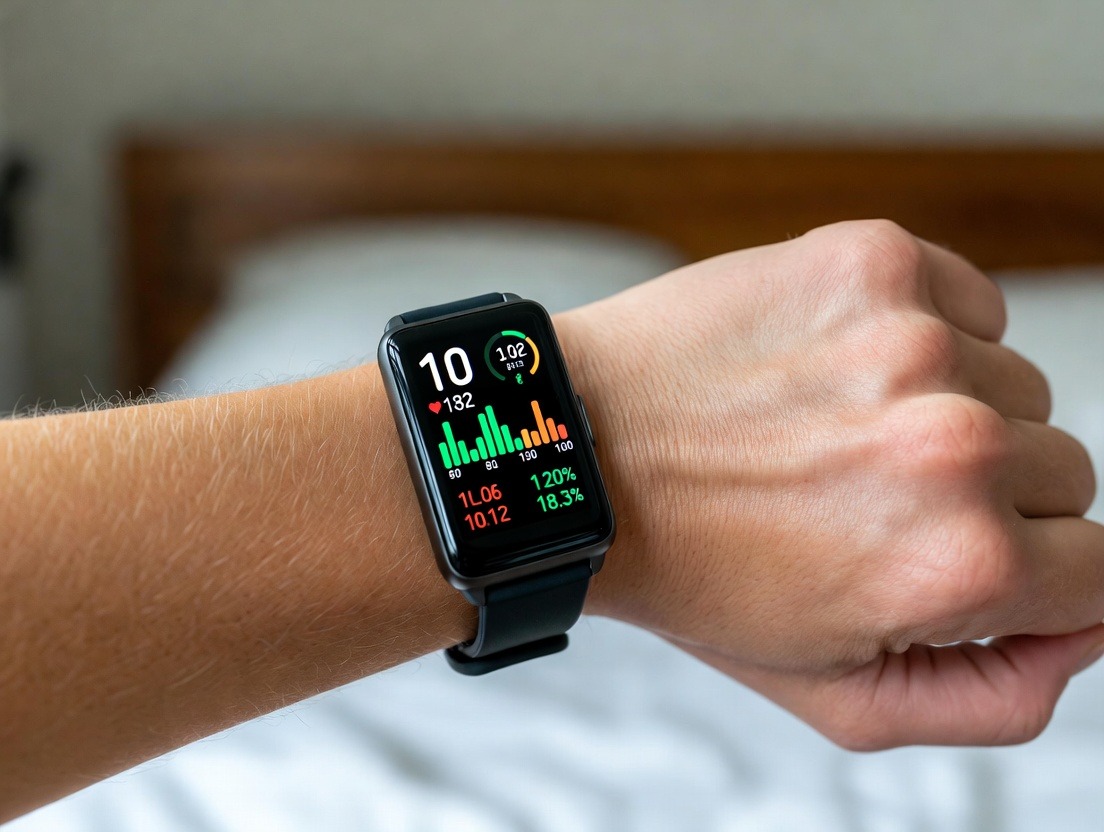
For those who love data, wearable technology can provide fascinating validation and insights:
The goal of tracking is not to become obsessive, but to create a feedback loop that validates your fundamental health practices. When you see a correlation between your evening stretch routine and a higher HRV or better sleep score the next morning, it transforms the practice from a "should-do" to a "want-to-do." This is the power of using a device that can validate fundamental health practices with personal data. It turns intuition into insight.
Knowledge is power, but implementation is results. This 14-day challenge is designed to systematically introduce the practice, build habit circuitry, and allow you to experience the cumulative energy benefits without overwhelm. Each day builds on the last, focusing on consistency over complexity.
The Core Philosophy: 5-15 minutes max. Quality over quantity. Listen to your body.
Pre-Challenge Prep:
The 14-Day Plan:
Days 1-3: Foundation & Awareness
Days 4-7: Introducing Key Energy Zones
Days 8-10: Building a Mini-Routine
Days 11-14: Integration & Personalization
Post-Challenge Reflection:
On Day 15, revisit your pre-challenge intention and your energy journal. Ask:
This structured start is how you begin building wellness fundamentals from zero. It provides the scaffolding until the habit becomes self-sustaining and intuitive. The challenge isn't about perfection; it's about proving to yourself that a small, consistent investment yields a noticeable return in how you feel every single day.
Even with the best intentions, you may hit roadblocks. Your body might feel resistant, you might not notice immediate changes, or old injuries might whisper warnings. This is a normal part of the process. Let's troubleshoot common challenges so they become stepping stones, not stop signs.
Challenge 1: "I'm Too Tight to Stretch Properly."
This is perhaps the most common—and most surmountable—objection. Feeling "tight" is not a contraindication for stretching; it's the primary reason to stretch.
Challenge 2: "I Don't Have Time."
This is a prioritization challenge, not a time challenge. We make time for what we value.
Challenge 3: "I Have an Old Injury/Specific Pain."
Safety first. Chronic pain or past injuries require a modified, intelligent approach.
Challenge 4: "I Don't Feel Any Different Afterwards."
Sometimes the effects are subtle, especially at the beginning.
Challenge 5: "I Get Bored."
Monotony can kill any habit.
Once you’ve established a consistent static stretching habit, you can explore complementary modalities that offer different—and sometimes more potent—pathways to releasing tension and boosting energy. Think of these as tools in your expanded energy toolkit.
Dynamic Stretching/Mobility: The Art of Moving Through Range
Unlike holding a position, dynamic stretching involves controlled movement through your range of motion.
Myofascial Release (MFR): Addressing the "Web" of Tension
Your fascia is a continuous web of connective tissue that surrounds every muscle, bone, nerve, and organ. Adhesions or "knots" (trigger points) in this web can create stiffness and refer pain, contributing to a global feeling of being "locked up."
Integrating the Triad:
A complete "energy body maintenance" session might look like this:
This integrated approach ensures you're not just pulling on tight ropes (static stretch), but also warming the rope (dynamic) and unkinking it (MFR) first. It’s a sophisticated way to optimize energy levels by addressing the physical system from multiple angles.
The energy we seek isn't purely physical. Mental fog, emotional turbulence, and anxiety are profound drains on our vitality. Here, stretching transcends the physical realm and becomes a powerful practice of somatic awareness—reconnecting the mind with the body to regulate the emotional and energetic state.
Stretching as a Moving Meditation
The required focus on breath and subtle sensation pulls you out of ruminative thought loops and into the present moment. This is a form of mindfulness. When you’re concentrating on the feeling in your right hamstring and the rhythm of your breath, you cannot simultaneously fret about a work deadline or replay an awkward conversation. This break from cognitive chatter is deeply restorative for mental energy.
The Physical Release of Emotional Holding
The body keeps the score. Stress, anxiety, and unresolved emotions often manifest as physical tension—the clenched jaw, the tight shoulders ("carrying the weight of the world"), the guarded hips. Purposeful stretching of these areas can sometimes trigger an emotional release—a sudden sigh, a wave of calm, or even tears. This isn't a flaw; it’s a feature. You are literally stretching out the physical armoring of stress, which in turn lightens the emotional load. Releasing a tight psoas (a core hip flexor linked to fear) can lead to a tangible feeling of being more grounded and secure.
Improved Interoception: Hearing Your Body's Wisdom
Regular stretching sharpens your interoception—your sense of the internal state of your body. You become better at distinguishing between the fatigue of needless tension and the fatigue of genuine need for rest. You start to notice the early signs of stress clenching in your shoulders before it becomes a headache. This early awareness allows you to intervene with a quick stretch or some breaths, effectively "nipping" an energy drain in the bud. This skill of listening is foundational to wellness fundamentals that support mental health.
The Confidence of Embodiment
When you move with more ease and less pain, your relationship with your body changes. You move from seeing it as a source of aches and limitations to appreciating it as a capable, responsive vessel. This sense of agency and connection is a potent source of psychological energy. It reduces the background noise of bodily dissatisfaction and frees up mental resources for creativity, focus, and joy.
In this way, your stretching mat becomes a training ground not just for flexible hamstrings, but for a flexible, resilient mind. You are practicing how to meet discomfort with breath, how to find ease within effort, and how to listen to the quiet signals beneath the noise—skills that translate directly into how you manage your mental and emotional energy throughout the day.
Your body's needs and energy dynamics are not static. A practice that serves you at 25 may need refinement at 45 or 65. Honoring these changes is key to maintaining stretching as a lifelong source of vitality. This isn't about doing less, but about doing differently—with more intelligence and self-compassion.
In Your 20s & 30s: Building the Foundation
In Your 40s & 50s: Maintaining and Refining
In Your 60s and Beyond: Prioritizing Function and Vitality
Across All Stages: The Universal Principles
Regardless of age, the core tenets remain: listen to your body, breathe, avoid pain, and prioritize consistency. The tools and emphasis simply evolve. This adaptive approach ensures that stretching remains a joyful contributor to your energy, not a rigid chore that clashes with your body's current reality.
Now that you have the knowledge, principles, and troubleshooting skills, it's time to synthesize everything into a living, breathing practice that is uniquely yours. Your Personalized Energy-Stretch Blueprint is not a fixed prescription, but a flexible framework you can adjust daily based on your energy signals, schedule, and needs.
Step 1: Define Your "Why" and Set Intentional Goals
Go beyond "I want more energy." Get specific.
Step 2: Audit Your Daily Energy Landscape
For one week, simply observe without judgment:
Step 3: Select Your Core "Anchor" Practices
Choose 1-2 micro-routines you will commit to nearly every day, no matter what. These are your non-negotiables, your anchors.
Step 4: Build Your "Menu" of Optional Practices
Create a list of stretches and mini-sequences you can draw from based on how you feel. This is where you personalize.
Step 5: Establish Your Feedback Loop
How will you know it's working? Choose your tracking method.
Step 6: Schedule Quarterly "Blueprints Reviews"
Every 3 months, revisit your blueprint. Is it still working? Have your goals changed? Has your body adapted, requiring new challenges? Tweak your anchors and menu as needed. This keeps the practice evolving with you.
Your blueprint empowers you. On a high-energy day, you might choose a longer dynamic menu. On a drained day, you just do your anchors and call it a win. You are no longer following a generic plan; you are responding to and cultivating your unique vitality with intelligence and compassion. This is the ultimate application of understanding your body's basic needs and learning to meet them skillfully.
We stand at a fascinating crossroads. On one path lies ancient, embodied wisdom—the intuitive understanding that to move freely is to live fully. On the other lies cutting-edge technology that can quantify our internal states with astonishing precision. The future of true energy optimization lies not in choosing one path, but in walking both simultaneously, allowing them to inform and elevate each other.
From Intuition to Insight: The Role of Biometric Feedback
Imagine finishing your evening wind-down stretch sequence. In the past, you'd simply hope it helped you sleep better. Now, you can wake up and see the objective data: your wearable shows an increase in deep sleep duration and a higher HRV for the night—quantifiable proof that your practice is effectively driving recovery. This feedback loop is transformative. It turns subjective feeling into objective insight, reinforcing the value of the fundamental habit. It answers the question "Is this worth my time?" with a resounding, data-backed "Yes." This is how smart ring data proves wellness fundamentals work.
Personalized Stretch Recommendations: The AI Coach
The next evolution is predictive personalization. A smart wearable that understands your baseline could, in the future, analyze your morning readiness score, last night's sleep data, and your daily stress load (via heart rate trends) and suggest: *"Based on your high stress load and low recovery score, a 10-minute parasympathetic-focused stretch sequence is recommended today, with emphasis on hip and chest openers."* It could even guide you through that specific sequence. This moves us from generic advice to truly personalized programming, making the ancient practice hyper-relevant to your modern, fluctuating life.
Tracking the "Energy ROI" of Your Practice
Beyond sleep and HRV, future integrations could track more direct correlates. Optical sensors might one day measure peripheral blood flow changes before and after a stretching session. Accelerometers could assess improvements in movement smoothness and gait efficiency over time—tangible markers of how freeing your body frees up your energy for movement. This allows you to see stretching not as a cost, but as an investment with a clear, measurable return in your functional capacity.
The Symbiosis: Tech Informs, Wisdom Embodies
The crucial balance is this: Technology provides the what and the when—the data and the suggestions. But the ancient wisdom of stretching teaches the how—the quality of attention, the connection to breath, the feeling of release that no algorithm can yet quantify. The technology might tell you to stretch your hips, but only your mindful awareness can find the edge of sensation and use the breath to soften into it.
This synergy represents the pinnacle of modern self-care: using objective data to motivate and guide us, while using subjective, mindful practice to actually implement the change in our lived experience. It’s about leveraging a smart ring that personalizes fundamental recommendations while remembering that the ultimate intelligence resides in your own breathing, feeling body. The future of energy is not in a pill or a potion; it's in this powerful marriage of silicon and soul, data and breath, guiding you back to your natural, vibrant state of being.
We have traveled from diagnosing the modern energy crisis to understanding the profound, multi-system science of stretching as an antidote. We've moved through practical sequences for every part of your day, troubleshooted common hurdles, and explored how to adapt this practice through a lifetime. We've positioned stretching not as a solo act, but as a keystone habit in a holistic energy system, amplified by mindful breathing and even modern technology.
The central thesis is clear: Natural energy is not something you find in a cup or a capsule; it is something you cultivate by systematically removing the physical and neurological barriers that block its flow. Chronic tension, stagnant circulation, shallow breathing, and a frazzled nervous system are those barriers. Stretching, practiced with intelligence and consistency, is a master key that addresses them all.
You now hold the blueprint. You understand that a 5-minute morning ignition sequence can set a better tone than caffeine. You know that a 3-minute desk circuit breaker can reclaim your afternoon from the slump. You have the tools to use an evening wind-down to convert stress into recovery. You are equipped to listen to your body, adapt your practice, and track your progress in ways that matter.
This is not about adding more to your to-do list. It is about transforming inevitable pauses and transitions in your day—the wake-up, the slump, the wind-down—into opportunities for renewal. It is about reclaiming small moments to invest in your fundamental vitality.
The journey to sustained, natural energy is one of gentle, persistent return. Return to your breath. Return to your body's sensations. Return to the simple, powerful act of creating space within yourself—space for blood to flow, for nerves to calm, for energy to circulate freely. Start not with an hour-long commitment, but with a single, conscious, deep breath followed by one gentle stretch. Let that be the catalyst. Your body's innate intelligence and capacity for vitality are waiting. All you have to do is begin the conversation.
Your Trusted Sleep Advocate: Sleep Foundation — https://www.sleepfoundation.org
Discover a digital archive of scholarly articles: NIH — https://www.ncbi.nlm.nih.gov/
39 million citations for biomedical literature :PubMed — https://pubmed.ncbi.nlm.nih.gov/
Experts at Harvard Health Publishing covering a variety of health topics — https://www.health.harvard.edu/blog/
Every life deserves world class care :Cleveland Clinic - https://my.clevelandclinic.org/health
Wearable technology and the future of predictive health monitoring :MIT Technology Review — https://www.technologyreview.com/
Dedicated to the well-being of all people and guided by science :World Health Organization — https://www.who.int/news-room/
Psychological science and knowledge to benefit society and improve lives. :APA — https://www.apa.org/monitor/
Cutting-edge insights on human longevity and peak performance:
Lifespan Research — https://www.lifespan.io/
Global authority on exercise physiology, sports performance, and human recovery:
American College of Sports Medicine — https://www.acsm.org/
Neuroscience-driven guidance for better focus, sleep, and mental clarity:
Stanford Human Performance Lab — https://humanperformance.stanford.edu/
Evidence-based psychology and mind–body wellness resources:
Mayo Clinic — https://www.mayoclinic.org/healthy-lifestyle/
Data-backed research on emotional wellbeing, stress biology, and resilience:
American Institute of Stress — https://www.stress.org/


