


How Your Wellness Ring Shows Wellness Fundamental Progress
How a wellness ring shows your progress in fundamental health areas.
How a wellness ring shows your progress in fundamental health areas.
%402x.svg)
For centuries, the pursuit of wellness was a journey taken in the dark. We relied on vague feelings of fatigue, the anecdotal "I slept well," or the blunt force of a scale to guess at our body’s inner state. Wellness was reactive, often pursued only after something felt wrong. Today, a quiet revolution is happening not on our wrists, but on our fingers. The modern wellness ring, a sleek, unassuming piece of wearable technology, is transforming this guesswork into precise, actionable knowledge. It’s moving us from simply tracking metrics to understanding the fundamental progress of our holistic health.
This isn't about obsessing over a single night's sleep score or a momentary spike in heart rate. It's about uncovering the profound, interconnected narratives written in the language of your physiology. Your body is constantly communicating its baseline, its stressors, its recoveries, and its adaptations. A wellness ring acts as a constant, compassionate translator. It shows you not just data points, but trends, patterns, and the subtle shifts that indicate whether your lifestyle choices are building you up or quietly wearing you down.
The true power of this technology lies in its ability to illuminate wellness fundamental progress—the foundational, often slow-moving changes in your core physiological systems that dictate your energy, resilience, and long-term health. It answers the critical questions: Are my new meditation habits actually lowering my nervous system's baseline stress? Is my consistent early bedtime improving the restorative quality of my sleep, not just its duration? Is my training regimen effectively building fitness, or am I chronically overreaching?
In this article, we will embark on a deep exploration of how this elegant device on your finger serves as a window into your body’s most fundamental processes. We’ll move beyond the dashboard and decode how the symphony of data—from heart rate variability and resting heart rate to skin temperature and blood oxygen—orchestrates a complete picture of your wellness trajectory. This is the beginning of a new relationship with your health: one based on evidence, empowerment, and a clear vision of the progress you’re making every single day.
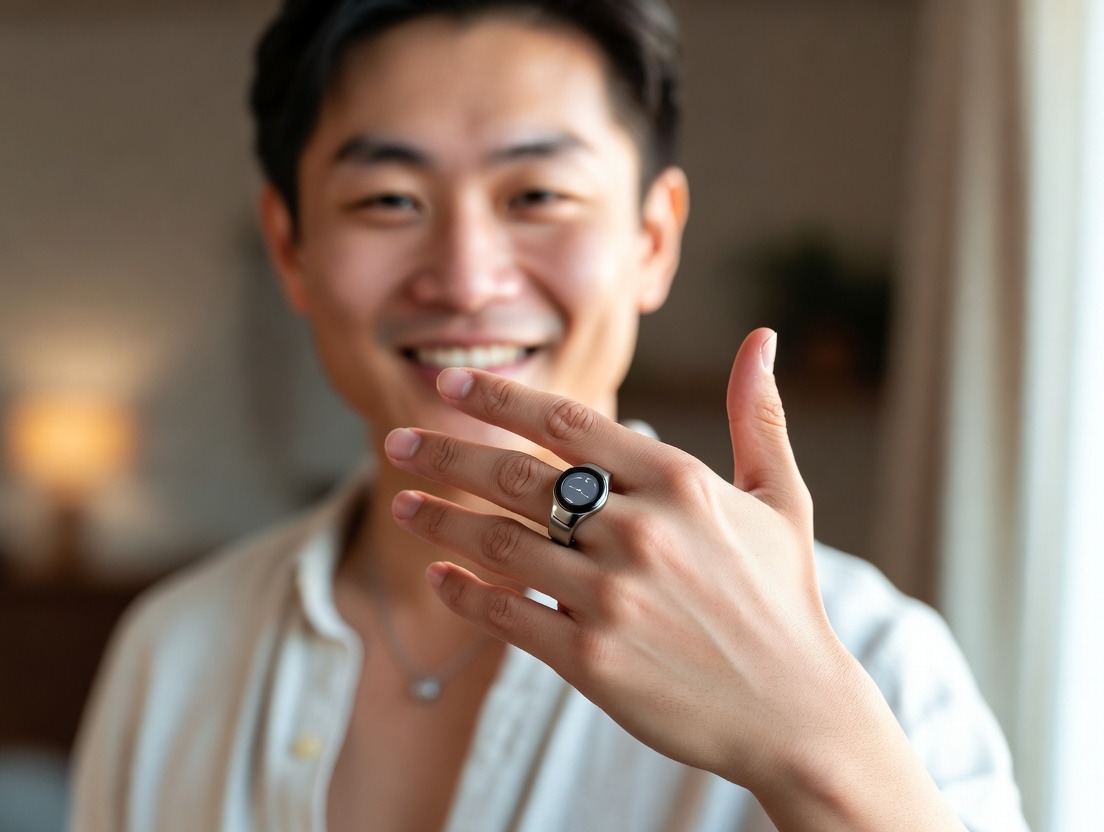
Your body is a ceaseless broadcaster, sending out a flood of physiological signals every second. A racing pulse, clammy hands, a deep sigh—these are the overt signs we can consciously perceive. But beneath this surface lies a far richer, more nuanced stream of data: the subtle dip in heart rate as you drift into deep sleep, the micro-fluctuations in heart rate variability (HRV) that signal your nervous system’s balance, the gradual nocturnal drop in core body temperature that is essential for sleep initiation. For most of human history, this language was silent to us, its profound meanings lost.
The wellness ring earns its title as a translator by employing a suite of miniaturized sensors to listen in. Primarily, it uses photoplethysmography (PPG)—a light-based technology that measures blood volume changes in the capillaries of your finger. A tiny LED light shines onto your skin, and a sensor measures the amount of light reflected back. With each heartbeat, blood pulses through these vessels, causing subtle changes in light absorption. This primary signal becomes the Rosetta Stone, allowing the ring’s algorithms to derive not just your heart rate, but through the analysis of the intervals between beats, your Heart Rate Variability (HRV), a gold-standard marker for autonomic nervous system function and recovery status.
But the translation goes further. A 3-axis accelerometer and gyroscope detect the slightest movements, distinguishing the rhythmic breathing of sleep from the stillness of deep slumber or the fidgeting of light sleep. This is crucial for sleep stage estimation. A sensitive skin temperature sensor tracks the ebb and flow of your body’s thermal regulation—a drop is necessary for sleep onset, while disruptions can indicate inflammation, illness, or hormonal changes. Some advanced rings also include a red LED or infrared sensor to measure blood oxygen saturation (SpO2) overnight, identifying potential breathing disturbances.
The magic, however, isn't just in the collection, but in the contextual synthesis. Alone, a single night’s low HRV is just a data point. But when the ring’s processor correlates it with poor sleep efficiency, elevated nighttime heart rate, and a elevated skin temperature, it begins to translate a clear message: "Your body is under significant stress and is struggling to recover." This is the core of its value. It connects disparate signals into a coherent narrative, transforming raw biometrics into intelligible insights about your fundamental wellness state. It tells you the "what" and begins to hint at the "why," empowering you to connect these physiological readings to your daily life—that stressful meeting, that extra glass of wine, that intense workout, or that new calming bedtime routine.
Understanding this translation process is key to trusting and using the data effectively. For a deeper look into the fascinating technology that makes this possible, including the specifics of PPG and motion sensing, you can explore our detailed explanation on how sleep trackers actually work.
In the early days of wearables, progress was a simple, linear equation. More steps meant a better day. A higher sleep score meant a victory. While these metrics serve as useful behavioral nudges, they are often superficial markers, the tip of the wellness iceberg. Fundamental progress is different. It is the slow, steady, and profound strengthening of the underlying physiological systems that make everything else possible. It’s the bedrock upon which energy, mood, cognitive function, and physical performance are built.
Think of it this way: Your sleep score is like your grade on a daily test. Fundamental progress is the increase in your underlying knowledge and capability over a semester that allows you to consistently ace those tests, even when they’re unexpectedly hard. A wellness ring shifts your focus from the daily grade to the semester-long learning curve.
So, what does this fundamental progress look like in practice? It is not a single number, but a constellation of trends moving in a positive direction:
This kind of progress is often silent. You might not "feel" your HRV increasing by 5 milliseconds week over week. But you will start to notice the downstream effects: waking up more refreshed, bouncing back faster from a stressful day, finding more consistent energy in the afternoon, and feeling generally more resilient. The wellness ring makes this invisible progress visible, providing the objective evidence that your healthy habits are paying dividends at the most fundamental level. For those just beginning to interpret these deeper metrics, our guide on sleep tracking metrics decoded is an essential primer.

If wellness fundamental progress is a symphony, sleep is its conductor. Every aspect of your physiological and mental restoration is orchestrated during these critical hours. Consequently, your sleep data, when viewed through the longitudinal lens of a wellness ring, becomes the single most comprehensive report card on your foundational health. It is a protected, predictable window where external variables are minimized, and your body’s innate regulatory processes take center stage.
A wellness ring moves far beyond simple duration tracking. It maps your sleep architecture—the cyclical journey through light, deep, and REM sleep stages. Fundamental progress is vividly displayed here. Over time, as you prioritize sleep hygiene and manage life stress, you should see your deep sleep (the physically restorative phase) and REM sleep (the mentally and emotionally restorative phase) become more robust and stable. The ring visualizes this, showing less fragmentation and more consolidated blocks of these vital stages. This is a direct sign that your body is successfully completing its essential nightly repair work.
Crucially, the ring captures what happens around sleep. Your Sleep Latency—the time it takes you to fall asleep—is a direct reflection of your nervous system’s ability to wind down. A consistent decrease in latency suggests effective pre-sleep routines and good sleep pressure. Your Sleep Heart Rate and its dipping pattern are profound indicators. A lower, steadily declining nighttime heart rate is a hallmark of strong parasympathetic activation and efficient recovery. An elevated or erratic sleep heart rate is one of the clearest signals your ring can give that something is amiss, whether it’s illness, overtraining, or chronic stress.
Furthermore, the ring monitors your Sleep Stability. How many times do you briefly wake up or toss and turn? Fewer disruptions mean your sleep is more continuous and efficient, leading to better next-day function even with the same total time in bed. This is fundamental progress in action: your sleep environment and internal state are aligning to create undisturbed restoration.
By aggregating this data nightly, the ring doesn't just tell you if you slept "good" or "bad." It shows you the trajectory of your sleep quality. Are you spending a higher percentage of your night in restorative stages than you were three months ago? Is your sleep heart rate trend gently downward? These are the quiet victories of fundamental wellness, and they are perfectly captured in the detailed analysis of your nightly rest. To build this kind of high-quality sleep from the ground up, understanding the natural sleep foundation is the perfect place to start.
In our quest for wellness, stress is often the antagonist. But not all stress is bad; it’s our body’s response and recovery from stress that defines its impact. This is where the autonomic nervous system (ANS)—the automatic control system for your heart, digestion, respiration, and more—plays the lead role. It has two primary branches: the sympathetic ("fight-or-flight") and the parasympathetic ("rest-and-digest"). Wellness fundamental progress is, in many ways, the story of achieving a dynamic, healthy balance between these two forces.
Your wellness ring provides an unprecedented window into this balance through its measurement of Heart Rate Variability (HRV). Contrary to popular belief, a healthy heart does not beat with the monotonous regularity of a metronome. The tiny, millisecond variations in the time interval between each heartbeat are a sign of a responsive, adaptable system. High HRV (within your personal range) generally indicates strong parasympathetic tone and good resilience: your body can quickly ramp up to meet a challenge and then efficiently downshift to recover. Low HRV suggests your sympathetic system is dominant, your body is under strain, and your recovery resources are depleted.
This makes HRV your most sensitive Stress Compass. It doesn't just measure psychological stress, but the total physiological stress load on your system—from work deadlines and emotional turmoil to intense exercise, poor sleep, and even subclinical illness. By tracking your HRV trend, your ring shows you your fundamental capacity to handle life.
Positive fundamental progress is clearly visible here. As you implement consistent recovery practices—like quality sleep, mindful breathing, proper nutrition, and balanced training—you should see a gradual upward trend in your baseline HRV over weeks and months. Your daily readings will still fluctuate (they should!), but the overall floor rises. This means you are building a bigger "buffer." You can handle the same stressful event with less physiological disruption and bounce back faster.
Conversely, a sustained downward trend in HRV is one of the earliest and most critical warnings your ring can provide. It’s your body whispering, "I am overwhelmed," long before you might consciously feel burnt out or get sick. By heeding this warning, you can proactively dial back, prioritize rest, and prevent a minor dip from becoming a major crash. Thus, HRV tracking transforms your ring from a passive observer into an active guide for sustainable living, helping you navigate life’s demands without depleting your foundational reserves.
While HRV speaks to the balance of your nervous system, your Resting Heart Rate (RHR) is a powerful indicator of its baseline effort. Measured most accurately during periods of true rest like sleep, your RHR is the minimum number of times your heart needs to beat per minute to sustain your body’s basic functions. It is a beautifully simple yet profoundly informative metric for tracking fundamental cardiovascular and systemic health.
A lowering RHR over time is a classic sign of positive physiological adaptation. As your cardiorespiratory fitness improves through consistent, sensible exercise, your heart muscle becomes stronger and more efficient. With each beat, it pumps a larger volume of blood (increased stroke volume), so it doesn’t need to beat as often at rest. This is a core component of wellness fundamental progress. Your most vital organ is operating with less strain, which is linked to greater longevity and reduced risk of cardiovascular disease.
However, the story your RHR tells is more nuanced than "lower is always better." The stability and responsiveness of your RHR are equally important.
Therefore, tracking RHR with a wellness ring gives you a dual benchmark. The long-term downward trend celebrates the gains from your fitness and wellness efforts. The daily vigilance over unexplained spikes serves as an early-warning system, allowing you to act preemptively. It turns RHR from a static number in a doctor’s office into a dynamic, daily conversation with your body about its recovery status and overall strain. For a comprehensive view of how all your sleep data interconnects, our complete guide to understanding your sleep tracking data delves into the relationship between RHR, HRV, and sleep stages.
Our bodies are master regulators of temperature, maintaining a strict internal environment for optimal function. This circadian rhythm of temperature is not just a byproduct of our metabolism; it is a central driver of our sleep-wake cycle and a subtle indicator of internal balance. A wellness ring, with its sensor in constant contact with the skin, is uniquely positioned to track this intimate dance, offering clues about metabolic health, hormonal fluctuations, and even immune activity.
The expected pattern is a key sign of fundamental wellness. As evening approaches and you prepare for sleep, your core body temperature should begin to drop—a process facilitated by increased blood flow to the extremities to dissipate heat. This drop is a critical signal to your brain that it’s time for sleep onset. A wellness ring tracking skin temperature (a proxy for this process) should show this predictable decline. A consistent, smooth cooling trend at night is a marker of a well-regulated circadian rhythm and effective sleep initiation.
When this pattern deviates, it provides powerful insights:
Tracking this metric over months reveals your personal temperature rhythm and what "normal" looks like for you. Fundamental progress, in this context, is seen as the regularization of this rhythm. As you stabilize your sleep schedule, manage stress, and improve overall metabolic health, your nocturnal temperature curve should become more predictable and show a more pronounced, consistent dip. This silent metric, often overlooked, is a profound testament to the body finding its harmonious, regulated state. Understanding these nuanced signals is part of moving beyond basic tracking, a topic we explore in our article on what sleep trackers can teach you about your health.
Breathing is the most fundamental rhythm of life, yet we are almost entirely unconscious of its quality during sleep. Disruptions in this rhythm—from gentle snoring to full pauses in breathing (apnea)—can have profound impacts on sleep quality, cardiovascular health, and daily energy. Many advanced wellness rings now incorporate pulse oximetry (SpO2) sensors, typically using red and infrared light to measure the oxygen saturation of your blood. Overnight tracking of this metric transforms your ring into a discreet breathing barometer.
During healthy, stable sleep, your blood oxygen levels should remain in a high, tight range (generally 95-100%). Your ring’s graph will show a relatively flat line with minor, insignificant fluctuations. This is a sign of optimal respiratory function and efficient oxygenation throughout the night.
The value of this tracking lies in identifying deviations from this stable pattern. The ring can detect desaturation events—dips in blood oxygen levels that often correspond to breathing disturbances. While it is not a medical-grade diagnostic tool for sleep apnea, it is an exceptionally powerful screening and awareness tool.
Fundamental progress in this domain is clear: a stabilization of your overnight SpO2 levels. It signifies that your breathing is unobstructed and regular, allowing for continuous, restorative sleep without the repeated, stressful micro-awakenings that characterize breathing issues. This metric alone can unlock a revelation about the root cause of chronic fatigue and set you on a path to truly restorative sleep. For anyone starting to notice unusual patterns in their sleep data, it's crucial to avoid common pitfalls; learn about the sleep tracking mistakes that give you false data to ensure you're interpreting signals correctly.
The true genius of a wellness ring lies not in any single metric, but in the sophisticated interplay between them all. Your body is a complex, interconnected system, and it communicates through correlated signals. Isolating heart rate or HRV gives you a sentence; seeing how they interact with sleep stages and temperature writes the full chapter. This holistic, contextual analysis is what separates a advanced wellness tool from a simple fitness tracker.
Consider a real-world scenario: Overtraining or Under-Recovering.
You might look at your sleep duration and see a solid 8 hours, giving you a false sense of security. But when you connect the dots:
Conversely, let's look at positive Fundamental Progress:
You've been meditating nightly and prioritizing a consistent sleep schedule for two months. The proof isn't in a single great sleep score. It's in the confluence of trends:
This contextual intelligence is what allows the ring to provide meaningful "Readiness" or "Recovery" scores. These scores are algorithmic syntheses of all these interacting metrics, giving you a single, data-informed recommendation on whether to tackle an intense day or prioritize restoration. By learning to read these interconnections yourself, you become an expert in your own physiology, capable of making nuanced decisions that support long-term fundamental wellness. To master this skill of interpretation, moving from beginner to expert, our resource on sleep tracking for beginners provides the perfect foundation.
With a constant stream of biometric data at your fingertips, a subtle but significant risk emerges: the potential to slip from empowered awareness into anxious obsession. The goal of tracking fundamental progress is to build a healthier relationship with your body, not to become enslaved by daily scores. The data is a guide, not a gospel. The shift from data to wisdom involves learning to observe trends without judgment, understand your body's unique patterns, and use the information to make kinder, more informed choices—not to punish yourself for a "bad" night.
The first step is to zoom out. The daily fluctuations are noise; the long-term trends are the signal. A single night of low HRV and poor sleep is meaningless. It happens to everyone. What matters is the trajectory over weeks and months. Did that bad night quickly rebound? Is your baseline still moving in a positive direction? Your ring’s weekly and monthly trend views are your most important screens for assessing fundamental progress, not the daily score.
Secondly, practice correlation, not just collection. When you see a deviation, become a detective. Can you connect the physiological data to your lived experience? That low recovery score likely correlates with the hard workout you did yesterday, the difficult conversation you had, or the late meal you ate. This process turns data into personal insight. You learn your unique triggers and levers. You discover that for you, alcohol destroys deep sleep, or that a 20-minute afternoon walk improves sleep latency. This is wisdom.
Finally, use the data for positive action, not negative reinforcement. Instead of thinking, "My score is low, I failed," reframe it as, "My body is asking for support today." Let the data guide you toward restorative behaviors: choosing a gentle yoga session over HIIT, preparing a nutrient-dense meal, committing to a digital sunset, or using a guided wind-down routine. The ring’s most profound purpose is to foster this responsive self-care, creating a feedback loop where you listen to your body’s signals and it rewards you with greater resilience.
This mindful approach ensures your wellness ring remains a tool for liberation—freeing you from guesswork and connecting you more deeply to your innate rhythms. It helps you move beyond the tyranny of the daily number and into the empowering space of understanding your body's unique, ever-unfolding story of progress.
In the age of social media and leaderboards, the temptation to compare is innate. When you learn your average HRV is 45 ms, a quick online search might lead you to forums where people boast of averages in the 80s or 100s. This is perhaps the most counterproductive thing you can do with your wellness ring data. Fundamental progress is an exclusively personal journey. Your biometric numbers are profoundly influenced by genetics, age, sex, and even the specific device you're using. Comparing your absolute values to anyone else’s is not just meaningless—it can be actively demotivating and misleading.
Your wellness ring’s primary mission is to establish your Personal Baseline. This is the range—unique as your fingerprint—within which your metrics naturally fluctuate when you are in a state of relative balance and health. It takes roughly two to four weeks of consistent wear for the ring to understand this baseline. Once established, every new data point is interpreted in relation to your own norm, not a population average.
This is where the magic happens for tracking progress. Progress is not defined by reaching an arbitrary "good" HRV number. It is defined by positive deviations from your own baseline. If your personal HRV range has historically been 30-50 ms, and after six months of consistent training and sleep hygiene, that range shifts to 40-60 ms, you have made monumental fundamental progress. Your system has become more resilient. Similarly, if your personal baseline resting heart rate drops from 58 bpm to 54 bpm, that 4 bpm change is a significant improvement in cardiovascular efficiency for you.
The ring’s algorithms are designed for this self-referenced analysis. Its readiness scores and trend arrows are all calculated based on how today’s data compares to what is normal for you. This personalization is its greatest strength. It celebrates your victories, no matter how small they might seem on an absolute scale, and it alerts you to deviations that are significant for your body, even if they would be "normal" for someone else.
Embrace this individuality. Let go of comparison. Your wellness journey is about becoming a better version of yourself, not a copy of someone else. Your ring is the tool that helps you map that singular, personal path to a stronger, more resilient foundation. For those navigating different life stages, which profoundly affect your personal baseline, our article on better sleep naturally through seasons of life offers essential perspective.
Data without action is merely trivia. The ultimate value of your wellness ring is its ability to close the loop, transforming passive observations into an Actionable Feedback Loop. This loop is the engine of fundamental progress: you experiment with a behavior, your ring measures the physiological outcome, you learn from the result, and you adapt. This creates a powerful, personalized system of biofeedback that accelerates positive change.
The process is elegantly simple:
For example, you might decide to stop using your phone in bed. The next week, your data shows a 15% reduction in sleep latency and fewer mid-night awakenings. The ring has just provided concrete proof that this habit significantly improves your sleep continuity, reinforcing your motivation to maintain it.
Conversely, you might start intense early morning workouts. After two weeks, you notice your HRV trend is down and your sleep heart rate is up. The data suggests this timing is adding strain rather than building fitness. You could experiment with moving the workout to the afternoon and watch how your metrics respond.
This feedback loop turns wellness from a game of blind darts into a process of skilled archery. You see where your arrows land and adjust your aim accordingly. It fosters a sense of agency and demystifies health, showing you the direct cause-and-effect relationship between your daily choices and your physiological state. This is how sustainable, lifelong habits are built—not on fleeting willpower, but on the solid foundation of personal, data-driven evidence.
Owning a wellness ring is an exercise in cultivating patience and perspective. In a world conditioned for instant gratification, fundamental physiological progress operates on a different timescale. It is not a straight line ascending to the heavens; it is a gently rising tide, with daily waves and occasional storms. The profound insights come not from reacting to every ripple, but from learning to step back and observe the majestic, slow-moving current of your overall trend. This is the "Long View," and it is the only view that reveals true, lasting transformation.
Your daily scores will vary—sometimes wildly. A perfect 90/100 readiness score on Monday can be followed by a 65/100 on Tuesday. This is not failure; it is biology. These fluctuations are the expected responses to a dynamic life: a strenuous workout, a celebratory meal, a stressful work deadline, or even a minor immune system skirmish. The wellness ring’s raw data feed is a mirror of lived experience. If it were a flat, unchanging line, it would mean the device is broken or you are not truly living.
The critical skill is learning to differentiate signal from noise.
Your ring’s app is designed for this analysis. The weekly view is for managing your training and recovery cycles. The monthly and quarterly views are for assessing habit efficacy. The annual view is for celebrating your progress and understanding your body's seasonal rhythms. By focusing on these longer horizons, you liberate yourself from daily score anxiety. A "red" recovery day becomes a single data point in a sea of green, a necessary valley that makes the subsequent peaks possible. It teaches resilience not just in your body, but in your mindset, reinforcing that wellness is a marathon of consistent choices, not a sprint of perfection.
This long-view analysis is where you'll discover your most personal and powerful insights. You might see that your sleep is consistently most restorative during periods of regular, moderate exercise versus intense training. You might learn that your body’s resilience dips predictably during the dark winter months, prompting you to proactively implement a light therapy or better sleep naturally plan ahead of time. The long view turns data into self-knowledge, allowing you to plan your life in harmony with your physiology, not in conflict with it.
Your wellness ring is a brilliant reporter, but it doesn't create the news. The story it tells is authored by your daily choices—the tangible, controllable inputs that pull the levers of your physiology. Understanding how these primary lifestyle domains—Nutrition, Movement, and Mindset—directly manifest in your biometric data is the key to moving from passive observation to active authorship of your wellness narrative.
Nutrition as Foundational Fuel: What and when you eat sends immediate signals to your autonomic nervous system and profoundly impacts sleep architecture.
Movement as a Dual-Edge Sword: Exercise is a keystone habit, but its impact is deeply nuanced. It is a controlled stressor meant to stimulate positive adaptation (fitness), but it requires adequate recovery to be beneficial.
Mindset and the Stress Response: Your thoughts and emotional state are not ephemeral; they have direct electrochemical consequences. Chronic mental stress triggers a sustained sympathetic nervous system response.
By experimenting with these levers and observing the correlated data in your app, you build a personalized blueprint for what optimal living looks like for you. It transforms wellness from a generic prescription into a customized, evidence-based practice. For instance, if you struggle with sleep maintenance, experimenting with these levers while learning about natural sleep maintenance can provide a targeted strategy for improvement.
Beneath the daily fluctuations of your biometrics lies a powerful, predictable rhythm: your circadian clock. This innate, roughly 24-hour cycle governs not just sleep and wakefulness, but also hormone secretion (like cortisol and melatonin), core body temperature, digestion, and cellular repair. Your wellness ring is a master cartographer of this internal rhythm, and aligning your life with it is perhaps the most potent strategy for accelerating fundamental progress.
Your ring captures the objective outputs of your circadian rhythm. The evening drop in skin temperature is a direct command from your brain's suprachiasmatic nucleus (SCN). The rise in melatonin (indirectly inferred by sleep onset and quality) prepares your body for rest. The lowest point of your heart rate and body temperature in the early morning hours is your circadian trough. A strong, stable rhythm produces smooth, predictable curves in these metrics. A disrupted rhythm creates jagged, erratic graphs.
Signs of Circadian Disruption in Your Data:
Using Your Ring to Reinforce Your Rhythm: This is where the ring shifts from diagnostician to coach.
Fundamental Progress as Circadian Strength: Over time, as you align your habits with your rhythm, the progress is unmistakable. Your temperature curve becomes a smooth, predictable wave. Your sleep onset becomes rapid and reliable. Your energy levels and cognitive performance become more consistent throughout the day. You are no longer fighting your biology, but surfing its natural, powerful wave. This alignment reduces systemic stress (improving HRV), enhances metabolic function, and creates the stable foundation upon which all other wellness goals are built. A powerful, natural tool to aid this wind-down process and signal your brain that it's time for sleep can be found in unexpected places, like the concept of natural bedtime stories for adults.
To move from abstract concepts to tangible reality, let’s follow a hypothetical—yet data-informed—journey. Meet Alex, a 38-year-old knowledge worker who started wearing a wellness ring six months ago, feeling perpetually tired, irritable, and "off."
The Baseline (Month 0):
Alex’s initial data painted a clear picture of chronic stress and poor recovery:
The Interventions:
Guided by the data, Alex made three key changes:
The Data-Driven Progress:
The Fundamental Progress Unveiled:
Alex’s ring didn't just show better sleep scores. It documented a systemic recalibration. The elevated, stable HRV indicated a stronger, more balanced autonomic nervous system. The lowered, stable RHR showed improved cardiovascular efficiency. The consolidated deep sleep proved his body was achieving more physical repair. The data provided objective proof that the lifestyle changes were not just "feel-good" practices, but were enacting deep, physiological change. Alex was no longer hovering near burnout; he had built a foundation of resilience. This journey from fragmented data to cohesive health is the ultimate goal, and understanding the full scope of what's possible is outlined in resources like the honest look at is sleep tracking worth it.
While a wellness ring provides an unparalleled, continuous stream of personal data, it exists within a larger ecosystem of health. Its true power is magnified when its insights are used to inform conversations with healthcare professionals and complement other holistic practices. It serves as a bridge between quantitative biometrics and qualitative, whole-person care.
Informing Medical Dialogues:
Your ring’s longitudinal data is a treasure trove for doctors, moving consultations from "How have you been feeling?" to "Here is the objective data on my sleep and stress over the last three months."
It is critical to remember that the ring is a wellness device, not a medical device. It screens and suggests; it does not diagnose. Any concerning patterns should always be discussed with a qualified healthcare provider.
Complementing Holistic Practices:
The ring also excels as a feedback tool for modalities that prioritize mind-body connection.
By positioning your ring data as one vital piece of your health puzzle, you avoid the trap of techno-solutionism. It becomes a powerful partner to both Western medicine's diagnostic power and Eastern medicine's holistic framework, creating a truly integrated and personalized approach to well-being. To ensure the data you're bringing to these conversations is as reliable as possible, it's worth understanding the nuances of sleep tracking accuracy.
We are currently in the era of descriptive and diagnostic wearables—they tell us what happened and, to some degree, why. The next frontier, already being pioneered, is the shift into predictive and prescriptive intelligence. The future of your wellness ring lies in its evolution from a brilliant historian to a proactive partner, using artificial intelligence to not only track fundamental progress but to forecast it and guide you toward optimal outcomes.
Predictive Analytics: Seeing the Future of Your Health
By analyzing your long-term data patterns against vast, anonymized datasets, future algorithms will identify risks and opportunities long before you feel them.
Personalized AI Coaching: Your 24/7 Wellness Partner
Beyond prediction, the system will offer tailored guidance—a true prescriptive partner.
This future turns the actionable feedback loop into an intelligent, automated, and deeply personal conversation. Your fundamental progress is not just recorded but actively cultivated by a system that learns your unique biology and helps you navigate life in a way that continuously strengthens it. The goal is a seamless partnership where technology amplifies your intuition, providing a data-backed compass for every wellness decision you make.

The graph of fundamental wellness progress is not a clean, exponential curve. It is a story of peaks, valleys, and frustratingly long plains. Setbacks—a week of poor sleep due to a sick child, a stress-induced HRV crash, a vacation that disrupts all routines—are inevitable. Plateaus, where despite consistent effort, the numbers stubbornly refuse to budge for weeks, are a universal part of the journey. How you interpret and respond to these phases through the lens of your ring’s data determines whether they become derailments or merely chapters in a longer success story.
Reframing Setbacks as Data Points, Not Failures:
When your metrics take a sudden negative turn, your first instinct might be frustration. The skilled ring user instead gets curious.
Decoding the Plateau:
A plateau is not a sign that things have stopped working. It is often a sign that your body has adapted to your current routine and is waiting for a new stimulus—or that it has reached a new, stable set point that represents genuine improvement from your starting point.
By expecting and accepting these non-linear phases, you build psychological resilience alongside physiological resilience. Your ring becomes a compass that keeps you oriented toward true north during the foggy patches, reminding you that the long-term trend is what matters, and that even flat lines at a higher elevation represent profound fundamental progress.
We have journeyed through the first layers of understanding how a simple ring on your finger can reveal the deepest truths of your well-being. From decoding the raw language of your physiology to connecting the interplay of complex metrics, we've seen how this technology illuminates the slow, steady march of wellness fundamental progress. It shifts the paradigm from reactive healthcare to proactive self-care, from vague intuition to precise insight.
You now hold the keys to interpreting not just what your body did last night, but what it is fundamentally becoming over time. You understand that the quiet upward drift of your HRV baseline is a triumph of resilience. The gentle downward slope of your resting heart rate is a testament to a stronger heart. The consolidation of your deep sleep is proof of improved restoration. These are not mere numbers; they are the biometric signatures of a life being lived in greater alignment.
The path forward is one of empowered partnership. Your wellness ring is a tool of unparalleled awareness, but you are the author of your health story. Use its data not as a source of anxiety, but as a source of intelligence. Let it guide your experiments, validate your efforts, and warn you of unseen strain. Pair its quantitative insights with the qualitative wisdom of how you feel.
Remember, the goal is not to optimize every metric to perfection, but to build a foundation of such robustness that you can fully engage with the vibrant, unpredictable, and beautiful chaos of life—and recover from it with grace. It’s about having the energy for your passions, the resilience for your challenges, and the vitality for your relationships.
This is just the beginning. As you continue to wear your ring and live your life, you will write your own unique data story. The subsequent sections of this deep exploration will build upon this foundation, delving into even more advanced correlations, the science of habit formation with biofeedback, community and shared data insights, and the evolving ethics of knowing ourselves this intimately. The journey toward fundamental wellness is a lifelong one, and now, you have a faithful, intelligent companion for the road ahead.
If we continue our metaphor of the body as a complex system, sleep is not merely its nightly shutdown; it is its essential, non-negotiable maintenance and upgrade period. A wellness ring does more than tell you this period happened—it provides the detailed engineering report. Understanding sleep architecture—the cyclical pattern of light, deep, and REM sleep stages—is where you move from counting hours to optimizing the quality of cellular repair, memory consolidation, and emotional processing. This is the symphony of restoration, and your ring is the conductor's score, showing you if the orchestra is in harmony or disarray.
Each sleep stage plays a distinct, vital role in fundamental progress:
Your wellness ring uses movement and heart rate variability (the subtle changes in beat-to-beat intervals become more regular in deep sleep and more chaotic in REM) to estimate these stages. While not as precise as a clinical polysomnogram, it provides remarkably accurate trend data for personal use.
How to Read Your Architectural Progress:
By focusing on architectural quality, you stop chasing arbitrary sleep durations. You might find that 7 hours of well-architected sleep leaves you more refreshed than 8.5 hours of fragmented rest. Your ring provides the evidence, allowing you to fine-tune your environment and habits—like temperature, alcohol, and evening light—to build the most restorative night possible. This deep architectural understanding is the logical next step after grasping the basics, a journey that begins with a solid sleep tracking 101 foundation.
Breathing is the most fundamental rhythm of life, and its quality during sleep is a bellwether for systemic health. While a wellness ring’s SpO2 sensor is not a medical diagnostic tool, its nightly tracking of blood oxygen saturation provides a continuous, non-invasive window into your respiratory efficiency and its downstream effects on every cell in your body. Stable oxygenation is not just about breathing; it’s about ensuring the foundational process of cellular energy production can proceed unimpeded.
A healthy, well-regulated system will maintain SpO2 levels in a high, narrow range (typically 95-100%) throughout the night, with a graph that looks like a calm, flat line. This indicates that your respiratory drive, airway, and cardiovascular system are working in seamless harmony to deliver oxygen where it needs to go, even as your metabolism and brain activity cycle through sleep stages.
When this line becomes a jagged mountain range of desaturation events (dips below your baseline, often defined as drops of 3-4% or more), it tells a story of disruption. Each dip signifies a moment where oxygen delivery faltered, often due to a breathing obstruction (like snoring or apnea), a breathing pause (hypopnea or apnea), or even positional restriction.
The Ripple Effect of Disruption:
The impact of these desaturations is not isolated. Your ring’s ability to correlate data reveals the systemic cascade:
Tracking Progress in Oxygen Stability:
Fundamental progress in this domain is beautifully simple: a stabilization of your SpO2 graph. As you implement interventions—whether it’s side-sleeping, weight management, nasal breathing exercises, or using a mandibular device—you can track their efficacy.
This metric powerfully connects sleep quality to long-term health risks associated with chronic oxygen deprivation. By using your ring to identify potential issues and track the impact of positive changes, you take proactive steps not just toward better sleep, but toward supporting cardiovascular, metabolic, and cognitive health. It turns an invisible nightly process into a manageable, improvable component of your fundamental wellness. For a comparative look at how different devices handle this crucial measurement, our analysis of how accurate is sleep tracking: smart rings vs watches offers valuable insights.
In the modern world, one of the most significant obstacles to fundamental progress is also one of the most pervasive: our digital devices. The impact of screens, notifications, and information overload is often felt subjectively as "feeling wired." Your wellness ring transforms this vague feeling into objective, quantifiable data, showing you the exact physiological cost of digital intrusion and the measurable benefits of a disciplined digital detox.
The mechanisms are well-understood, and your ring measures their consequences:
Conducting a Data-Backed Digital Detox Experiment:
This is where you can use your ring for a powerful week-long experiment.
Fundamental Progress Through Digital Boundaries:
The long-term trend is one of increased physiological separation between your waking stress and your sleeping rest. Your pre-sleep period becomes a true buffer zone. Your ring’s data will show a clearer, more pronounced deceleration of your biology as you approach sleep. The transition from sympathetic to parasympathetic dominance becomes smoother and faster. This isn't just about sleep; it's about teaching your nervous system that it has a guaranteed, protected period of downtime each day, which in turn strengthens its resilience during waking hours. By creating this sacred space, you directly support the regeneration that fuels all other progress. For those struggling with the implementation, exploring the intersection of technology and tradition, like using sleep tracking apps vs wearables or even non-digital wind-down tools, can help find the right balance.
Your bedroom is not just a room; it’s the primary habitat for one-third of your life and the control center for your most profound recovery. While your wellness ring measures your internal state, that state is in constant dialogue with your external environment. By treating your sleep space as a bio-hackable cockpit, you can use your ring’s data to engineer conditions that maximally support fundamental progress. This turns passive sleeping into active restoration.
The key environmental levers—light, temperature, and sound—have direct, measurable impacts on your core biometrics.
1. Temperature: The Thermostat of Sleep
Your body needs to drop its core temperature by about 1-2°F to initiate and maintain sleep. A room that’s too warm hinders this process.
2. Light: The Master Circadian Signal
Even small amounts of light, especially blue-spectrum light, can disrupt melatonin and sleep architecture.
3. Sound: The Disruption Dynamo
Intermittent noise, even if it doesn’t fully wake you, triggers micro-arousals and shifts you into lighter sleep stages.
By methodically testing changes to each of these variables and observing the correlated data in your ring’s app, you move from generic sleep advice to creating a personalized Sleep Sanctuary calibrated for your physiology. The progress is seen in the smoothening of your biometric curves—the hallmarks of an organism resting in a perfectly supportive environment. This meticulous environmental tuning is a cornerstone of natural sleep foundation.
For nearly half the population, a critical layer of biological complexity rhythms alongside the circadian clock: the infradian rhythm of the hormonal cycle. For women and people with menstrual cycles, this monthly wave of estrogen and progesterone is not a side note to wellness; it is a central driver of energy, recovery, and metabolic state. A wellness ring, worn continuously, becomes an extraordinary tool for mapping this internal landscape, revealing how fundamental progress must be interpreted through the lens of these predictable physiological phases.
The cycle can be clearly divided into phases, each with a distinct biometric signature:
Tracking Fundamental Progress WITHIN the Cycle:
This is the revolutionary insight. You don’t compare your luteal phase HRV to your follicular phase HRV and feel discouraged. Instead, you track progress within each phase over months.
By honoring these phases, you can align your lifestyle—scheduling intense projects and workouts in your follicular phase, and prioritizing restorative practices, flexibility, and more sleep in your luteal phase. Your ring provides the objective map, freeing you from fighting your biology and instead teaching you to surf its natural, powerful waves. This cycle-aware approach is a profound example of adapting wellness strategies through the different seasons of life.
The pursuit of wellness is a lifelong journey, and the definition of "progress" gracefully evolves with each passing decade. A 25-year-old’s data will tell a different story than a 55-year-old’s, not because one is "better," but because the physiological priorities and adaptive capacities of the body change. Your wellness ring helps you reframe progress in an age-appropriate context, focusing on maintaining function, resilience, and vitality rather than chasing the metrics of your youth.
Key shifts in biometric baselines and what progress looks like:
At every stage, the ring personalizes the journey. It doesn't judge you against a 25-year-old athlete; it shows you how you are doing relative to your own past and helps you maximize your healthspan. The most profound progress at any age is the consistent, daily choice to listen to your body’s data and respond with care, building a legacy of health that evolves beautifully with time.
Human beings are not isolated biological systems; we are inherently social creatures wired for connection. The quality of our relationships—from intimate partnerships to broader community ties—acts as a powerful modulator of our nervous system, with effects so significant they register on the sensitive sensors of a wellness ring. This is the often-overlooked "social synapse" in the story of fundamental progress. Loneliness and conflict are stressors; connection and belonging are recovery aids.
The Data of Disconnection and Conflict:
The Data of Connection and Support:
Using Your Ring to Foster Social Wellness:
By acknowledging the social dimension, your wellness model becomes holistic. It’s not just about you and your ring; it’s about you, your ring, and the web of connections you cultivate. Fundamental progress, therefore, can also be measured in the cultivation of a social environment that supports, rather than depletes, your physiological resilience. This broader perspective is part of what advanced wearables can teach us about holistic health, a topic explored in what sleep trackers can teach you about your health.
Travel is the ultimate stress test for your fundamental wellness. It assaults your circadian rhythm with time zone changes, disrupts your routines with unfamiliar environments and foods, and strains your system with dehydration and prolonged sitting. For the frequent traveler or even the occasional vacationer, a wellness ring transforms from a nice-to-have into an essential travel companion. It provides real-time, objective feedback on your body’s state of disarray and guides your actions to minimize jet lag and maximize enjoyment or performance.
Pre-Travel: The Preparation Phase
Your ring’s data can inform a smarter pre-travel strategy.
In Transit & Upon Arrival: The Adaptation Phase
This is where the ring’s live feedback is invaluable.
Using Data to Choose Interventions:
The Ultimate Metric: Recovery Velocity
The fundamental progress of a seasoned traveler isn’t the absence of jet lag, but the speed of recovery from it. Over time, as you learn your body’s patterns and refine your strategies, your ring will show that your "travel recovery curve" steepens. You return to your baseline HRV and sleep quality in 4 days instead of 7. This resilience—the ability to withstand disruption and bounce back quickly—is a pinnacle of well-honed physiological adaptability, perfectly quantified by the device on your finger. This kind of real-world testing truly answers the question for many: is sleep tracking worth it?
Your Trusted Sleep Advocate: Sleep Foundation — https://www.sleepfoundation.org
Discover a digital archive of scholarly articles: NIH — https://www.ncbi.nlm.nih.gov/
39 million citations for biomedical literature :PubMed — https://pubmed.ncbi.nlm.nih.gov/
Experts at Harvard Health Publishing covering a variety of health topics — https://www.health.harvard.edu/blog/
Every life deserves world class care :Cleveland Clinic - https://my.clevelandclinic.org/health
Wearable technology and the future of predictive health monitoring :MIT Technology Review — https://www.technologyreview.com/
Dedicated to the well-being of all people and guided by science :World Health Organization — https://www.who.int/news-room/
Psychological science and knowledge to benefit society and improve lives. :APA — https://www.apa.org/monitor/
Cutting-edge insights on human longevity and peak performance:
Lifespan Research — https://www.lifespan.io/
Global authority on exercise physiology, sports performance, and human recovery:
American College of Sports Medicine — https://www.acsm.org/
Neuroscience-driven guidance for better focus, sleep, and mental clarity:
Stanford Human Performance Lab — https://humanperformance.stanford.edu/
Evidence-based psychology and mind–body wellness resources:
Mayo Clinic — https://www.mayoclinic.org/healthy-lifestyle/
Data-backed research on emotional wellbeing, stress biology, and resilience:
American Institute of Stress — https://www.stress.org/


