


Wellness Fundamentals: Understanding Your Personal Baseline
Understanding your personal normal baseline for health metrics.
Understanding your personal normal baseline for health metrics.
%402x.svg)
You’ve decided to take your health seriously. Maybe you’ve downloaded a meditation app, stocked up on organic greens, or invested in a sleek new wearable that promises to unlock the secrets of your body. You’re ready for transformation. Yet, within weeks—or even days—a familiar frustration sets in. The generic advice feels off. The “eight hours of sleep” mandate leaves you groggy. The “10,000 steps” goal doesn’t account for your achy knees. The recommended morning routine clashes with your natural night-owl energy. You’re chasing a blueprint for a “standard human” that simply doesn’t exist.
This is where most wellness journeys stumble: at the starting line, equipped with a map for someone else’s territory. True, lasting well-being isn’t found in blindly following universal rules. It’s discovered by becoming the world’s leading expert on one subject: you. It begins not with a drastic overhaul, but with a profound and often overlooked step: establishing your Personal Baseline.
Your Personal Baseline is the unique, multidimensional signature of your body and mind in their current state. It’s the cohesive story told by your sleep rhythms, your stress responses, your energy fluctuations, your recovery capacity, and your metabolic patterns. It is the objective foundation upon which all effective, personalized change must be built. Without this understanding, you are navigating in the fog, guessing at what “better” looks like for you.
In this comprehensive guide, we will embark on the most critical wellness project you’ll ever undertake: decoding your own operating manual. We’ll move beyond one-size-fits-all dogma and into the empowering realm of data-driven self-knowledge. By the end, you will have a clear framework for measuring where you are today across all key pillars of health, enabling you to craft a lifestyle that doesn’t fight your biology, but flows with it.

Imagine a skilled mechanic tuning a high-performance engine. Before adjusting a single component, they run a comprehensive diagnostic. They measure compression, check spark timing, analyze exhaust output, and listen for subtle irregularities. This diagnostic establishes a baseline—a precise snapshot of the engine’s current functioning. Only with this data can they make targeted, effective adjustments that enhance performance without causing damage.
You are that high-performance system, infinitely more complex. Your Personal Baseline serves the same purpose: it is your foundational diagnostic. It is the objective, multi-parameter snapshot of your physiological and psychological state before any new intervention, diet, or fitness regimen.
Why is this so revolutionary? Because the multi-billion dollar wellness industry is largely built on a premise of deficiency. It tells you what you lack—more sleep, less stress, better nutrition—without first helping you understand your starting point. This leads to the “wellness whiplash” phenomenon: jumping from trend to trend, seeing minimal results, and attributing failure to a lack of willpower rather than a lack of strategy.
Establishing your Personal Baseline changes the game in three fundamental ways:
Without a baseline, you are essentially trying to hit a moving target in the dark. You might stumble upon improvements, but you won’t understand why they worked or how to replicate them. Your baseline turns on the lights and holds the target steady. It transforms wellness from a game of chance into a science of the self.
As we begin to measure, we’ll rely on both subjective awareness and objective technology. While tuning into your body’s signals is irreplaceable, modern tools like advanced smart rings provide the consistent, passive, and precise data needed to build a truly accurate picture. They help answer questions you can’t always feel: How restorative was your sleep really? How is your nervous system handling daily stressors? These devices act as a continuous feedback loop, helping you connect actions to outcomes. For those new to this concept, our sleep tracking for beginners guide offers a perfect primer on using data to enhance self-awareness.
Your health is not a single metric but a symphony of interconnected systems. To understand your baseline, you must listen to each section of the orchestra. Isolating one—like diet—while ignoring another—like sleep—gives you a distorted, incomplete picture. The modern approach to baseline assessment focuses on several core, data-rich pillars that form the bedrock of your daily well-being.
1. Sleep Architecture: This is far more than just duration. Your baseline sleep profile includes your consistency (bed/wake times), latency (how long it takes to fall asleep), architecture (balance of light, deep, and REM sleep), and fragmentation (how often you wake up). It answers: Is your sleep truly restorative? For instance, you could sleep 9 hours but get minimal deep sleep, leaving you unrefreshed. Understanding these nuances is the first step to improvement, a topic we explore in depth in our guide on the natural sleep foundation.
2. Stress & Recovery (ANS Balance): This pillar measures the balance of your Autonomic Nervous System (ANS)—the interplay between your “gas pedal” (sympathetic nervous system, for stress) and your “brake” (parasympathetic nervous system, for recovery). Key metrics include Heart Rate Variability (HRV), a powerful indicator of your body’s resilience and recovery capacity, and resting heart rate (RHR). Your baseline here tells you your default state: are you predominantly in a stressed, “fight-or-flight” mode, or a recovered, “rest-and-digest” state?
3. Daily Energy & Activity Rhythms: When do you naturally have peak physical energy and mental clarity? When do you experience an afternoon slump? Your baseline isn’t just about how much you move, but when and what type of movement aligns with your body’s circadian rhythm. It includes non-exercise activity thermogenesis (NEAT), step count, and patterns of vigorous activity.
4. Metabolic Patterns: How does your body process fuel? Baseline clues come from tracking energy levels in relation to meals, cravings, and stable mood. While continuous glucose monitors (CGMs) offer detailed data, you can start by noting subjective feelings of satiety, focus, and energy crashes two to three hours after eating.
5. Cognitive & Emotional Tone: This subjective pillar involves your baseline mood, mental clarity, focus capacity, and emotional resilience. Are you generally optimistic or anxious? How does your focus fluctuate throughout the day? Tools like daily journaling or mood logging apps can help quantify this.
These pillars do not exist in isolation. Poor sleep (Pillar 1) directly lowers HRV and raises resting heart rate (Pillar 2), sabotages your energy the next day (Pillar 3), disrupts hunger hormones (Pillar 4), and impairs emotional regulation (Pillar 5). Your Personal Baseline is the dynamic map of these connections. By measuring them concurrently, you begin to see the cause-and-effect chains that define your unique health ecosystem. To see how this data translates into actionable insight, our article on what sleep trackers can teach you about your health provides compelling examples.
If your Personal Baseline is a symphony, sleep is the conductor. It is the single most potent regulator of nearly every other physiological and cognitive system. You cannot establish a reliable baseline for anything else if your sleep is chaotic and unmeasured. It is the non-negotiable foundation.
During sleep, your body isn’t passive; it’s in a state of intense, targeted activity. Deep sleep (slow-wave sleep) is when physical restoration peaks—tissue repair, muscle growth, and immune system strengthening occur. REM sleep, rich with brain activity, is crucial for memory consolidation, emotional processing, and cognitive function. When you shortchange or fragment these cycles, you don’t just wake up tired; you wake up with a body and brain that are fundamentally under-repaired and under-processed.
How Sleep Dictates Your Daily Baseline:
Therefore, the first and most critical step in establishing your overall Personal Baseline is to rigorously measure your Sleep Baseline. This goes beyond “I slept okay.” It requires tracking consistency, quality, and architecture over a minimum of two weeks to establish a true pattern. You’re looking for your average sleep duration, your typical sleep efficiency (percentage of time in bed actually asleep), and the structure of your sleep cycles. This data becomes the cornerstone for interpreting everything else. For example, if you see a day with low HRV and high cravings, you can check your sleep data from the night before—chances are, you’ll find the root cause. Understanding the mechanics of this tracking is key, which is why we explain how sleep trackers actually work.
To build an accurate Sleep Baseline, you must expand your definition of “good sleep.” Duration is just the opening chapter. A comprehensive sleep assessment involves multiple chapters, each revealing a different aspect of your restorative process.
Key Metrics for Your Sleep Baseline:
Gathering the Data:
By tracking these metrics for a minimum of 14 consecutive nights—covering weekdays and weekends—you will move from anecdotes to evidence. You will see your normal. Maybe you discover you’re a natural short sleeper who thrives on 6.5 hours. Perhaps you see that alcohol, even one glass, demolishes your deep sleep. Or you might find that your sleep is consistently fragmented after 4 AM, pointing to potential stress or blood sugar dips. This is the power of your Sleep Baseline: it turns the mystery of fatigue into a solvable equation.
While sleep provides the foundation, Heart Rate Variability (HRV) offers a real-time readout of your nervous system’s balance and your body’s readiness to perform. If you only track one metric alongside sleep, HRV should be it. It is arguably the most insightful and sensitive component of your stress and recovery baseline.
What HRV Actually Is: Contrary to intuition, a healthy heart does not beat with the monotonous regularity of a metronome. The time interval between successive heartbeats varies by milliseconds. This variation is controlled by your autonomic nervous system. When your parasympathetic (“rest-and-digest”) system is dominant, it subtly slows the heart, creating more variability between beats—a higher HRV. When your sympathetic (“fight-or-flight”) system is engaged, it speeds up the heart and makes its rhythm more rigid and uniform—a lower HRV.
Therefore, a higher HRV generally indicates better cardiovascular fitness, stronger stress resilience, and a greater capacity for recovery. A lower HRV suggests your body is under some form of stress—be it physical (from a hard workout, illness), mental (anxiety, work pressure), or environmental (poor sleep, junk food).
How to Use HRV in Your Personal Baseline:
HRV and Lifestyle Feedback: This is where baseline knowledge becomes actionable. If you see your HRV is chronically low, you can investigate: Is my sleep baseline poor? Is my training load too high? Is my diet inflammatory? Am I emotionally overwhelmed? Conversely, when you see your HRV trending upward or holding stable in a high range, it’s objective feedback that your current lifestyle—your sleep, nutrition, exercise, and stress management—is working for you.
HRV demystifies the vague concept of “stress.” It gives you a number that reflects your body’s total allostatic load. By including it in your baseline, you gain a compassionate, data-driven guide that tells you when to push forward and, more importantly, when to pull back and prioritize recovery. It is your inner biofeedback coach.

If HRV is the nuanced whisper of your nervous system, Resting Heart Rate (RHR) is its steady drumbeat. While simpler, it is a profoundly informative metric for your cardiovascular fitness and overall metabolic health. When combined with activity data, it completes the picture of your daily energy expenditure and readiness.
Resting Heart Rate (RHR) in Your Baseline: Your RHR is the number of times your heart beats per minute when you are completely at rest—best measured after waking, before any activity. For most adults, a healthy RHR ranges from 60 to 100 bpm, but well-conditioned athletes often have RHRs in the 40s. Like HRV, the absolute number is less important than your personal trend.
Tracking your RHR each morning alongside HRV gives you a dual-signal check on your recovery status. A rising RHR and a falling HRV is a strong combination signal that your body is under significant strain.
Activity & Movement: The Output Side of the Equation: Your baseline isn’t just about rest; it’s about your capacity for action. Activity tracking moves beyond the simplistic 10,000-step goal to create a profile of your daily movement patterns.
By combining RHR (a readiness input) with activity data (an output), you create a feedback loop. You can observe: Does a day of high activity lead to a spike in RHR the next morning? How long does it take to return to baseline? This teaches you about your personal recovery needs. It turns exercise from a random act of discipline into a calibrated component of your overall health strategy, perfectly tuned to your unique system’s capacity.
Food is information. Every meal sends instructions to your genes, hormones, and nervous system. Your nutritional baseline isn’t about adhering to a specific diet like Keto or Vegan; it’s about understanding how your body uniquely responds to the fuel you provide. It’s the process of decoding your personal metabolic patterns to discover what foods make you feel energized, satiated, and mentally clear versus what leaves you sluggish, craving, and foggy.
Building Your Subjective Nutrition Log: Before diving into advanced biometrics, the most powerful tool is mindful observation. For 1-2 weeks, keep a simple log with these columns:
This practice alone can reveal profound patterns. You may discover that your “healthy” oatmeal breakfast leads to a mid-morning energy crash and intense sugar cravings, suggesting a blood sugar rollercoaster. You might find that a lunch rich in protein and healthy fats keeps you focused and steady all afternoon.
Key Metabolic Patterns to Identify in Your Baseline:
From Subjective to Objective: For those seeking deeper data, technologies like Continuous Glucose Monitors (CGMs) can provide real-time, objective feedback on your blood sugar responses to different foods, meals, and lifestyle factors (like how poor sleep affects your glucose control the next day). While not necessary for everyone, a short-term CGM can be a revolutionary educational tool to truly see your unique metabolic fingerprint.
Your nutritional baseline’s ultimate goal is to identify the foods and meal patterns that provide stable, sustained energy and satiety for you. This creates a positive feedback loop: stable energy supports better activity choices, stable blood sugar supports deeper sleep, and reduced inflammation supports higher HRV. It turns nutrition from a source of stress and restriction into a source of stable, predictable energy—the clean-burning fuel for the high-performance system that is you.
Your Personal Baseline is not merely physiological. Your thoughts, emotions, and perceived stress directly orchestrate your body’s chemical environment through the hypothalamic-pituitary-adrenal (HPA) axis and the autonomic nervous system. Ignoring this pillar is like a pilot ignoring the cockpit’s warning lights. Your subjective mental and emotional state is primary data.
Quantifying the Subjective: We can use simple scales to bring objectivity to our inner world. Each evening, rate the following on a scale of 1-10:
After 14 days, you have a quantified Mood & Stress Baseline. You’ll see patterns: maybe Mondays are consistently low-mood/high-stress days, or perhaps your focus plummets every afternoon at 3 PM.
The Critical Link to Physical Data: This is where the magic of a holistic baseline happens. Now, cross-reference your subjective scores with your objective biometrics.
These connections aren’t coincidental; they are causal. Chronic stress (a high subjective score) elevates cortisol, which can raise RHR, lower HRV, disrupt sleep, and trigger cravings for high-energy foods. This creates a self-reinforcing negative cycle. Conversely, a good night’s sleep (high objective scores) lowers cortisol, improves HRV, and sets you up for better mood and focus, creating a positive cycle.
Establishing Your Cognitive Baseline: Beyond mood, note your natural cognitive rhythms. Through simple self-observation or using focus timer apps, identify:
This cognitive map allows you to design your day in harmony with your brain’s natural flow, scheduling demanding work during peak times and administrative tasks or breaks during troughs. It’s the antithesis of forcing productivity through willpower alone.
By integrating this mind-body data, you stop seeing “stress” or “brain fog” as character flaws or immutable facts. You see them as outputs of a system—outputs you can influence by adjusting the inputs of sleep, nutrition, and recovery. You become the engineer of your own state of mind.
Gathering data for a week is a snapshot; gathering it for 90 days is a documentary. The most common mistake in establishing a Personal Baseline is drawing conclusions from too little data. Our bodies operate on cycles—circadian (daily), ultradian (90-120 minute), infradian (monthly, especially for women), and seasonal. To see your true, underlying patterns, you must observe across these cycles.
Why 90 Days?
The Protocol for Your Baseline Phase:
Tools for Consistency:
This 90-day observation window is an act of self-research. You are both the scientist and the subject. The goal is not perfection, but pattern recognition. By the end of this period, you will no longer be guessing about your health. You will have an evidence-based, deeply personal understanding of your unique operating manual. This foundational knowledge is what makes all subsequent changes—whether for fitness, weight management, or peak performance—targeted, effective, and sustainable.
The path to a meaningful Personal Baseline is paved with good intentions, but it’s easy to stumble into pitfalls that render your data misleading or stressful. Avoiding these common mistakes ensures your self-research yields clear, actionable insights, not confusion or anxiety.
Mistake 1: Obsessing Over Single Data Points.
Mistake 2: Inconsistent Measurement Conditions.
Mistake 3: Ignoring Subjective Data.
Mistake 4: Making Too Many Changes at Once.
Mistake 5: Data Overload and Burnout.
By sidestepping these pitfalls, you ensure that your journey to establish a Personal Baseline is one of empowerment and discovery, not anxiety and obsession. The data serves you, not the other way around.
In the quest to establish your Personal Baseline, technology is a powerful ally, but it is not the oracle. The most effective approach is a hybrid one, blending the objectivity of sensors with the nuance of subjective self-awareness. Choosing the right tools and using them intentionally is key.
The Wearable Ecosystem: Smart Rings vs. Watches
The core of your objective data will likely come from a wearable device. The two primary contenders are smartwatches and the newer category of smart rings.
For the specific purpose of establishing a comprehensive, 24/7 health baseline, a smart ring is often the superior tool due to its unobtrusive nature and focus on recovery metrics. The consistency of wear is paramount, and a device you don’t have to think about removes a major barrier. You can delve deeper into the technical comparison in our analysis of smart rings vs. watches for sleep tracking accuracy.
The Role of Apps and Journals
Your wearable provides the “what,” but apps and journals provide the “why.”
Creating Your Centralized Dashboard:
The goal is to avoid data silos. Use a platform like Apple Health (iOS) or Google Fit (Android) as a central aggregator. Most wearables, nutrition apps, and mood trackers can write data to these hubs. While they may not create perfect correlations for you, having all your data in one place allows you to manually look for connections on days that stand out.
Remember the Principle of Proportional Effort: The technology should reduce cognitive load, not increase it. If tracking feels like a burdensome part-time job, simplify. Maybe just wear the ring and do a weekly journal review. The technology’s purpose is to provide gentle, automatic feedback and reveal hidden patterns, not to become a source of performance anxiety. It is a lens to see yourself more clearly, not a hammer to judge yourself with. For a balanced look at the value proposition, consider reading our honest take on the pros and cons of sleep tracking.

After 30, 60, or 90 days of consistent tracking, you will have amassed a significant amount of data: graphs of sleep stages, lines charting HRV, tables of mood scores, notes on energy crashes. This can feel overwhelming. The final, and most critical, step is to move from data aggregation to insight synthesis. You must translate the numbers into a coherent story about you.
The Synthesis Process: Your Quarterly Review
Set aside an hour for a deep dive. Ask yourself these narrative-forming questions:
Identifying Your Levers and Limiters:
Through this synthesis, you will identify your most powerful wellness levers—the few changes that create positive ripple effects across multiple pillars. For one person, the lever might be consistently sleeping 7.5 hours, which then stabilizes HRV, improves mood, and regulates appetite. For another, it might be a daily 20-minute walk, which improves sleep quality and reduces afternoon anxiety.
Conversely, you’ll identify your key limiters—the vulnerabilities or triggers that most effectively derail your system. A common limiter is late-night screen time, which sabotages sleep onset, which then impacts every other metric. Another might be skipping breakfast, leading to an energy crash and poor decision-making at lunch.
Creating Your Personal Baseline Statement:
Now, distill your insights into a written summary—your Personal Baseline Declaration. It should sound something like this:
*"My current baseline shows I function optimally on 7 hours and 15 minutes of consistent sleep (10:30 PM - 5:45 AM). My HRV baseline range is 45-65 ms; a dip below 40 for two consecutive days signals I need to prioritize recovery. I am a morning person with peak cognitive focus between 7 AM and 11 AM. My energy crashes predictably at 3 PM, which is mitigated by a protein-rich lunch and a 10-minute walk. My biggest limiter is alcohol—even one drink reduces my deep sleep by 30% and lowers my next-day HRV. My most powerful lever is a consistent bedtime routine, which improves all metrics."*
This document is your foundational truth. It is the benchmark against which all future experiments and lifestyle changes will be measured. It marks the end of guessing and the beginning of intentional, self-aware living. With this clarity, you are no longer a passenger in your health journey; you are the navigator, with a detailed map of your own terrain.
Theory is essential, but application is everything. Let’s visualize how a deeply understood Personal Baseline transforms an ordinary day from a series of reactions into a curated experience of well-being. Meet Alex, who has completed a 90-day baseline assessment. Here’s how her knowledge informs her choices.
6:00 AM – Wake-Up: Data-Informed Start
Alex’s wearable gently vibrates at her optimal wake time, chosen because it aligns with the end of a sleep cycle (per her sleep architecture data). She doesn’t grab her phone. Instead, she notes her subjective energy (7/10) and then checks her morning metrics: HRV: 58 ms (stable in her upper range), RHR: 52 bpm (at her personal low). This objective data confirms her feeling: she is well-recovered. She knows that on days when her HRV is below 45, she should prioritize gentle movement and stress management; today, she’s clear for a more challenging workout. This immediate feedback replaces morning guesswork with strategic clarity.
7:00 AM – Focused Work: Riding the Cognitive Wave
Alex’s baseline identified her peak focus window as 7-11 AM. She guards this time fiercely. Instead of starting with reactive emails, she dives into her most demanding creative project. She uses a focus timer, knowing her data shows she works best in 90-minute blocks followed by a true break. She drinks water but delays coffee until 9:30 AM, having learned that caffeine before 9 AM can induce afternoon anxiety for her personally.
12:30 PM – Lunch: Fueling for Stability
Past data showed Alex’s 3 PM energy crash was directly tied to high-carb lunches. Her nutritional baseline taught her that a plate with lean protein, healthy fats, and fibrous vegetables provides steady fuel. Today, she chooses a salmon salad. She eats mindfully, stopping at 80% fullness—a habit that improved her digestive comfort scores in her journal.
3:00 PM – The Afternoon: Proactive Management
The clock hits her known energy trough. Instead of fighting through fog with candy and coffee, she employs her pre-emptive strategies: a 15-minute walk outside (boosting NEAT and light exposure) and a large glass of water. This simple intervention, derived from her activity and mood correlation data, reliably lifts her energy without disrupting her sleep later.
6:30 PM – Exercise: Right Time, Right Dose
Alex is not a morning exerciser. Her performance and recovery data consistently showed that moderate evening strength training (concluding 2 hours before bed) did not harm her sleep and was when she felt strongest. She follows her programmed workout, and her device tracks her exertion. She knows that if her nighttime HRV plummets after this workout, she may need to adjust the volume.
9:30 PM – Wind-Down: Honoring the Sleep Lever
Alex’s most powerful wellness lever is her sleep consistency. At 9:30 PM, her phone automatically enters Do Not Disturb mode, and she begins her personalized routine: 5 minutes of light stretching (which improved her sleep latency scores) and reading fiction (not work-related material). She’s in bed by 10:15, aiming for her sweet spot of 7+ hours. She avoids alcohol, knowing it’s her #1 sleep limiter, as clearly shown in her sleep stage breakdowns.
The Outcome:
Alex ends the day not drained, but settled. She made dozens of micro-decisions, but they required minimal willpower because they were aligned with her proven personal blueprint. She didn’t follow generic rules; she followed the data-backed narrative of her own body. This is the ultimate power of a Personal Baseline: it turns daily life from a battle against your biology into a collaborative partnership with it. For Alex, understanding her natural rhythms was transformative, much like the principles explored in our article on adapting to seasons of life for better sleep.
We have now laid the essential groundwork. You’ve moved from the abstract concept of “getting healthier” to the concrete, empowering practice of self-measurement. You understand that your Personal Baseline is the critical, missing first step in any meaningful transformation. It is the “control group” in the experiment of your life—the stable reference point that allows you to see if any change you make is truly beneficial.
In this first portion, we have covered:
You now possess the framework and the rationale. The journey ahead involves deepening this knowledge, learning to experiment wisely, and ultimately using your baseline to build a resilient, vibrant, and deeply personalized state of well-being that evolves with you over a lifetime. The goal is not to become a slave to data, but to use data to become the master of your own experience—free from trends, attuned to your body’s wisdom, and capable of crafting a life that feels not just healthy, but truly yours.
The path forward is about evolution, not revolution. With your baseline established, you have the only tool you ever needed: a clear understanding of where you stand. Now, every step you take will be intentional, measurable, and yours alone.
You have done the foundational work. Your Personal Baseline—that rich, multidimensional portrait of your sleep, stress, energy, and metabolism—is no longer a mystery. It sits before you, a detailed map of your unique physiological terrain. This is a monumental achievement, but it is not the final destination. It is, in fact, the launchpad.
The true power of your baseline is not in the snapshot it provides, but in the dynamic, iterative process it enables. With this map in hand, you are no longer wandering in the wellness wilderness, hoping to stumble upon improvement. You are now equipped to become a skilled explorer—a scientist of the self—conducting targeted, insightful experiments to optimize your well-being. This phase moves us from understanding what is to discovering what could be.
The common pitfall at this stage is the "scattergun approach": changing your diet, sleep, and exercise routine all at once in a burst of enthusiasm. When you feel better (or worse), you have no idea which variable was responsible. Your baseline allows you to employ the scientific method on your own life: forming hypotheses, testing single variables, and measuring outcomes against your established control group—you.
This is the art and science of personalized wellness experiments. It is a methodical, curious, and compassionate practice of self-discovery where data meets intuition, and where every choice becomes an opportunity to learn more about the magnificent, complex system that is you.
To transform your lifestyle from a series of guesses into a curriculum of learning, you need a structured framework. The classic scientific method provides the perfect, adaptable blueprint.
1. Observe & Ask a Question (Informed by Your Baseline):
Your baseline data naturally raises questions. Look for your "low-hanging fruit" or most curious patterns.
2. Form a Hypothesis (Your Educated Guess):
A good hypothesis is specific, testable, and based on your personal insights.
3. Design the Experiment (The One-Variable Rule):
This is the most critical step. To get clear answers, you must change only one significant variable at a time while holding all others as constant as possible. The experiment should last a minimum of two full weeks (to account for your body's adaptation cycles and to smooth out daily fluctuations).
4. Collect Data (Track Diligently):
Continue tracking all your baseline metrics (sleep, HRV, RHR, mood, energy) just as you did during your observation phase. Add a specific note for your experimental variable. The combination of your wearable's objective data and your subjective journal is your results sheet.
5. Analyze Results & Draw Conclusions:
At the end of the 2-3 week period, compare your experimental data to your original baseline.
Be objective. Did the data support your hypothesis? Maybe it didn't, and that's a valuable result too—it tells you that this particular lever isn't powerful for your system.
6. Iterate and Refine:
Use your conclusion to inform your next question. If the digital sunset helped, what happens if you also make your room cooler? That becomes your next single-variable experiment. This process is never-ending and always refining, leading you closer and closer to your personal optimal state.
This framework turns self-improvement from a vague, stressful obligation into a curious, engaging game of discovery. Each experiment, whether it "succeeds" or "fails," adds to your personal database of knowledge.
Your sleep baseline has given you the "what." Now, let's experiment with the "how." Your sleep environment is arguably the easiest and most impactful variable to test, as it is entirely within your control. Even with a perfect sleep schedule, a poor environment can sabotage quality.
The Hypothesis: "If I optimize my bedroom for darkness, cool temperature, and quiet, then my sleep efficiency will increase by 5%, and my deep + REM sleep duration will increase by 15 minutes per night."
The Constants: Maintain your consistent bedtime/wake time, caffeine and alcohol limits, and pre-sleep routine as established in your baseline.
Variables to Test (One at a Time!):
Measuring Success: After testing one variable (e.g., temperature), analyze the data. Did your sleep efficiency budge? Did you wake up less often? Improvements may be subtle but meaningful. A 3% increase in sleep efficiency translates to about 14 more minutes of actual sleep per 8-hour night—over a year, that’s an extra 85 hours of rest. For deeper insights into creating the perfect sleep sanctuary, our guide on natural sleep maintenance offers advanced strategies.
Your baseline has likely hinted at your natural energy patterns. Now, it's time to formalize that understanding and align your life with it. This experiment is about respecting your chronotype—your genetically influenced propensity to be a morning lark, a night owl, or somewhere in between (a "hummingbird"). Fighting your chronotype is a surefire way to increase stress and decrease performance.
The Hypothesis: "If I schedule my most demanding cognitive work and intense exercise during my biologically primed peak periods, then my productivity scores and workout performance will increase, and my perceived stress will decrease."
The Process:
The Power of Syncing: When your external schedule syncs with your internal clock, you reduce circadian friction. This lowers systemic stress (improving HRV), enhances cognitive function, and can even improve metabolic health. You stop wasting willpower trying to be productive when your biology is begging for rest. This alignment is a profound form of self-respect that pays dividends across all pillars of your baseline. For those whose rhythms shift with life stages, the principles in our article on sleep through seasons of life are highly relevant.
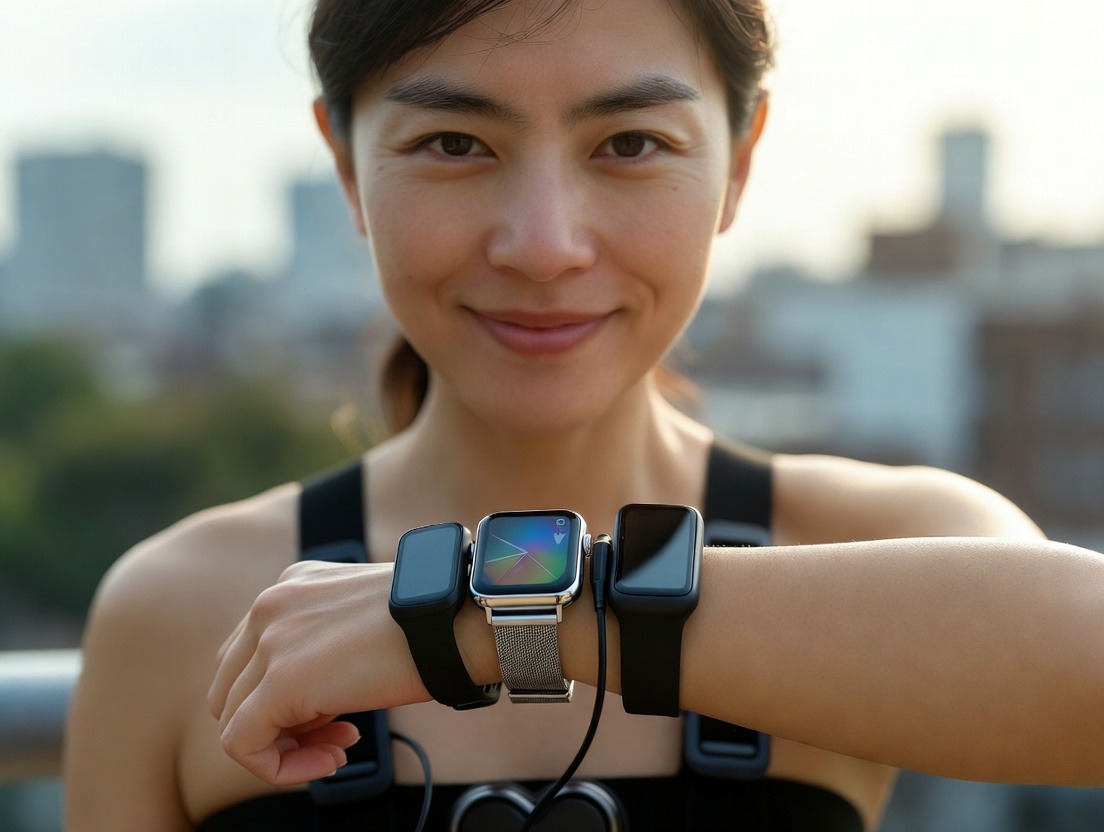
"Eat clean." "Go keto." "Be plant-based." Nutritional dogma is loud. Your Personal Baseline allows you to mute the noise and listen to your body's unique responses. This experiment is about moving from following a diet to designing your fuel formula.
The Hypothesis: "If I shift my largest meal to lunch and ensure it contains 30+ grams of protein, then my 3 PM energy crash will disappear, and my afternoon focus scores will improve."
The One-Variable Nutritional Experiments:
The Role of Continuous Glucose Monitors (CGMs): For a deep dive, a short-term CGM can be revolutionary. It visually shows you how your blood glucose responds to different foods, meals, sleep, and stress. You might learn that your "healthy" oatmeal spikes your blood sugar more than a slice of pizza. This objective feedback allows for ultra-precise personalization of your fuel formula for metabolic stability.
The goal is not a lifetime of restrictive testing, but a focused period of discovery. After 3-6 months of thoughtful experiments, you will emerge with a short list of nutritional principles that work spectacularly for you and a list of foods to generally avoid. You are no longer on a diet; you are following your personal fuel protocol.
Modern life often treats recovery as an afterthought—something you do when you're broken. Your HRV baseline shows that recovery is a daily, active process that determines your capacity for everything else. This set of experiments focuses on finding the most efficient ways to flip your nervous system from "fight-or-flight" (sympathetic) to "rest-and-digest" (parasympathetic).
The Hypothesis: "If I incorporate a 10-minute guided breathing exercise (4-7-8 or box breathing) twice daily, then my average HRV will increase by 10% over four weeks, and my resting heart rate will decrease."
Experiments in Recovery Modalities:
Measuring the "Downshift": The success of these experiments is seen in both subjective and objective data. Do you feel calmer? More resilient? Objectively, look for a gradual upward trend in your HRV, a lower resting heart rate, and perhaps an improvement in your sleep depth scores as your nervous system learns to downshift more effectively. These practices build stress resilience—not the absence of stress, but the capacity to recover from it quickly. For a creative and gentle approach to winding down, consider the unconventional method explored in our piece on natural bedtime stories for adults.
More is not always better. The fitness industry often glorifies "no days off," but your baseline data (HRV, RHR, sleep quality) tells the true story of your recovery. This experiment is about finding the minimum effective dose and optimal timing of exercise for your body to build fitness without burning out your system.
The Hypothesis: "If I replace one of my high-intensity interval training (HIIT) sessions per week with a gentle yoga or mobility session, my weekly average HRV will improve, and my motivation to exercise will remain higher."
Key Variables to Test:
Using HRV as Your Coach: This is where HRV-guided training shines. The principle is simple: let your daily readiness dictate your exertion.
This approach prevents overtraining and injury by making your training responsive, not rigid. It acknowledges that your capacity to handle stress (exercise is a controlled stressor) fluctuates daily based on sleep, life stress, and nutrition.
By experimenting with these variables, you move from a generic workout plan to a responsive movement practice that builds fitness and resilience, honoring the fact that the goal of exercise is to enhance your life, not detract from it.
Personalized wellness is not a linear path with a fixed endpoint. It is an iterative, cyclical process of learning and adaptation. With each controlled experiment, you gather more data, refine your understanding, and update your personal operating manual. Over time, this process evolves from discrete experiments into a fluid, dynamic protocol—a living system that changes as you do.
The Iterative Wellness Cycle:
Your Evolving Protocol: After a year of this practice, you won't be "on a diet" or "following a workout plan." You will have a deeply personalized, integrated protocol that might look like:
This protocol isn't rigid dogma; it's your default, evidence-based setting. It’s what you return to after travel, illness, or busy periods. And it remains open to new experiments as your life, goals, and biology evolve.
This iterative cycle is the essence of sustainable wellness. It cultivates a mindset of curiosity over criticism, of experimentation over expectation. It turns the journey of health into a lifelong practice of self-discovery, where you are both the student and the master, forever learning the beautiful, intricate language of your own body. For a structured approach to implementing these changes, our 12-week transformation plan provides a perfect roadmap to guide this iterative process.
Your Trusted Sleep Advocate: Sleep Foundation — https://www.sleepfoundation.org
Discover a digital archive of scholarly articles: NIH — https://www.ncbi.nlm.nih.gov/
39 million citations for biomedical literature :PubMed — https://pubmed.ncbi.nlm.nih.gov/
Experts at Harvard Health Publishing covering a variety of health topics — https://www.health.harvard.edu/blog/
Every life deserves world class care :Cleveland Clinic - https://my.clevelandclinic.org/health
Wearable technology and the future of predictive health monitoring :MIT Technology Review — https://www.technologyreview.com/
Dedicated to the well-being of all people and guided by science :World Health Organization — https://www.who.int/news-room/
Psychological science and knowledge to benefit society and improve lives. :APA — https://www.apa.org/monitor/
Cutting-edge insights on human longevity and peak performance:
Lifespan Research — https://www.lifespan.io/
Global authority on exercise physiology, sports performance, and human recovery:
American College of Sports Medicine — https://www.acsm.org/
Neuroscience-driven guidance for better focus, sleep, and mental clarity:
Stanford Human Performance Lab — https://humanperformance.stanford.edu/
Evidence-based psychology and mind–body wellness resources:
Mayo Clinic — https://www.mayoclinic.org/healthy-lifestyle/
Data-backed research on emotional wellbeing, stress biology, and resilience:
American Institute of Stress — https://www.stress.org/


