The Beginner-Friendly Guide to Daily Wellness Habits: How Your Smart Ring Tracks Success
A beginner's guide to establishing daily wellness routines, using your ring to track consistency and success.
The Beginner-Friendly Guide to Daily Wellness Habits: How Your Smart Ring Tracks Success
The quest for better health often begins with grand intentions. We envision dramatic transformations: a rigid new exercise regimen, a complete dietary overhaul, a complete re-engineering of our lifestyle. Yet, more often than not, these sweeping ambitions collide with the realities of daily life—a busy schedule, unexpected stressors, and the simple, draining force of inertia. The result? A cycle of starting strong, losing momentum, and feeling like you’ve failed before you’ve truly begun.
What if the problem isn't your willpower, but your approach? Modern wellness science points decisively to a powerful truth: sustainable health is not built on monumental, occasional effort, but on small, consistent, daily habits. These are the microscopic building blocks of vitality, the quiet repetitions that compound over time into profound change. The challenge has always been that these habits—and their effects—are often invisible. How do you know if that extra hour of sleep truly improved your recovery? Did that mindful breathing session actually lower your stress? Was your workout yesterday effective, or merely exhausting?
This is where the silent, intelligent companion on your finger changes everything. The smart ring, a minimalist piece of wearable technology, is revolutionizing personal wellness by making the invisible, visible. It moves beyond step-counting to provide a continuous, nuanced stream of data about your body's core operating systems: sleep, recovery, stress, and activity. It’s not about fostering an obsession with numbers; it’s about providing objective feedback, the kind that turns guesswork into a guided journey.
This guide is your roadmap to building a foundational daily wellness practice, supported not by guesswork, but by knowledge. We will demystify the key pillars of holistic health, break them down into achievable beginner-friendly habits, and illuminate exactly how a smart ring tracks your progress, validates your efforts, and helps you course-correct in real time. This is the end of flying blind on your health journey. Welcome to a new era of informed, intentional, and sustainable well-being.
The Philosophy of Micro-Habits: Why Small Wins Build Unshakable Wellness
We live in a culture obsessed with the breakthrough, the overnight success, the 30-day extreme makeover. This "all-or-nothing" mindset is the single greatest derailer of wellness journeys. It sets an impossible standard, where any deviation from a perfect plan is perceived as a total failure, leading to the infamous "what the hell" effect—the decision to abandon all efforts because of one small slip.
The antidote is the micro-habit: a behavior that is so small, so easy, it requires almost no motivation to complete. Dr. B.J. Fogg of Stanford University’s Behavior Design Lab encapsulates this with his foundational model: Behavior (B) = Motivation (M) + Ability (A) + Prompt (P). For a behavior to happen, all three elements must converge at the same moment. When motivation is fickle (as it naturally is), the key is to make the ability so high (the action so easy) that even low motivation is enough.
The Micro-Habit in Action: Instead of "exercise more," a micro-habit is "do two push-ups after I brush my teeth." Instead of "meditate for 20 minutes daily," it’s "take three deep, intentional breaths when I sit down at my desk." The barrier is so low that resistance crumbles.
This is where your smart ring transitions from a tracker to a coach. It excels at providing the Prompt (P) and measuring the Ability (A) component.
How Your Smart Ring Tracks and Supports Micro-Habits:
The Unforgettable Prompt: Your ring can deliver gentle, haptic vibrations for habit cues. A soft buzz at 10 PM can be your prompt to start a wind-down routine. A midday nudge can remind you to hydrate or stand up. This external trigger bridges the gap between intention and action.
Objective Measurement of "Ability": Did you actually go to bed 15 minutes earlier? Your sleep timeline data shows it. Did your three deep breaths lower your physiological stress? Your Heart Rate Variability (HRV) and resting heart rate graphs will reflect the calming shift. The ring provides immediate, positive feedback—a "win" that reinforces the behavior loop.
Celebrating Consistency, Not Perfection: The ring’s app dashboard often features "streaks" or consistency metrics. Seeing a 7-day streak of meeting your sleep goal is powerfully motivating. It shifts your focus from a single perfect day to a pattern of consistent effort, which is where true change resides.
The philosophy is simple: stop trying to climb the mountain in a single leap. Focus on laying one brick perfectly every day. Your smart ring is your level, ensuring each brick is placed correctly, showing you the wall you’re building one day at a time. This foundation of small wins creates the psychological resilience and behavioral scaffolding upon which a truly healthy life is built. As you build this foundation, understanding your starting point is crucial, which is why assessing your baseline—particularly in foundational areas like sleep—is the essential first step. A great way to begin is with a simple self-assessment of your current sleep patterns.
Decoding Your Body's Dashboard: What Your Smart Ring Actually Measures (And Why It Matters)
To the uninitiated, a smart ring’s data can look like a bewildering array of graphs and numbers: HRV, SpO2, skin temperature, resting heart rate, sleep stages. These aren't just vanity metrics; they are vital signs of your autonomic nervous system (ANS), the unconscious control center regulating your recovery, stress, and energy. Learning to read this dashboard is like learning the language of your own body.
Let’s translate the key metrics:
Heart Rate Variability (HRV): This is the North Star metric for recovery and resilience. HRV measures the subtle variations in time between each heartbeat. A higher HRV generally indicates a more relaxed, resilient nervous system (parasympathetic, or "rest-and-digest" dominance), while a lower HRV can signal stress, fatigue, or illness. Your smart ring tracks HRV trends overnight, giving you a daily readiness score.
Resting Heart Rate (RHR): Your heart's idle speed. A well-rested, fit body typically has a lower RHR. Spikes in your RHR trend can be early warnings of impending illness, excessive stress, or insufficient recovery from training.
Sleep Architecture: Beyond just duration, your ring analyzes the quality of your sleep by estimating time spent in Light, Deep, and REM sleep. Each stage has a critical function: Deep sleep is for physical restoration and immune function, while REM sleep is essential for memory consolidation and emotional processing. A good smart ring shows you not just that you slept, but how you slept.
Blood Oxygen Saturation (SpO2): Measured overnight, this indicates the percentage of oxygen in your blood. Consistently low levels can be a flag for issues like sleep apnea or respiratory problems.
Skin Temperature & Body Battery: Nighttime skin temperature trends can reveal menstrual cycle phases, the onset of illness, or sleep disturbances. Some devices synthesize multiple metrics (HRV, sleep, stress) into a single "Body Battery" or "Readiness Score"—a simple number advising you on how hard to push or how much to rest.
Why This Data is a Game-Changer for Beginners:
Before wearables, you only knew you were run down when you got sick or hit a wall of burnout. This data provides early-warning signals. A steadily declining HRV and rising RHR over three days is your body whispering, "Ease up," long before it starts screaming with exhaustion.
Storytelling with Data: Imagine you start a new habit of a 10-minute evening meditation. Subjectively, you might feel a bit calmer. But objectively, your smart ring data could show:
A 5% increase in your average overnight HRV within a week.
A slight decrease in your time to fall asleep (sleep latency).
A more stable heart rate during the first few hours of sleep. This tangible proof reinforces the value of your new habit, moving it from a "nice-to-do" to a "must-do" because you see its direct, physiological impact. To fully appreciate the power of this data, it helps to understand the core principles of good sleep health](https://oxyzen.ai/blog/the-foundation-of-good-sleep-health-core-principles), as sleep is the bedrock upon which all other metrics depend.
Habit 1: The Non-Negotiable Foundation – Mastering Sleep Hygiene
If daily wellness is a pyramid, sleep is the base. Every other habit—nutrition, exercise, stress management—is built upon it. Compromised sleep undermines willpower, cognitive function, hormonal balance, and metabolic health. For the beginner, there is no single more impactful intervention than improving sleep. It’s the ultimate wellness force multiplier.
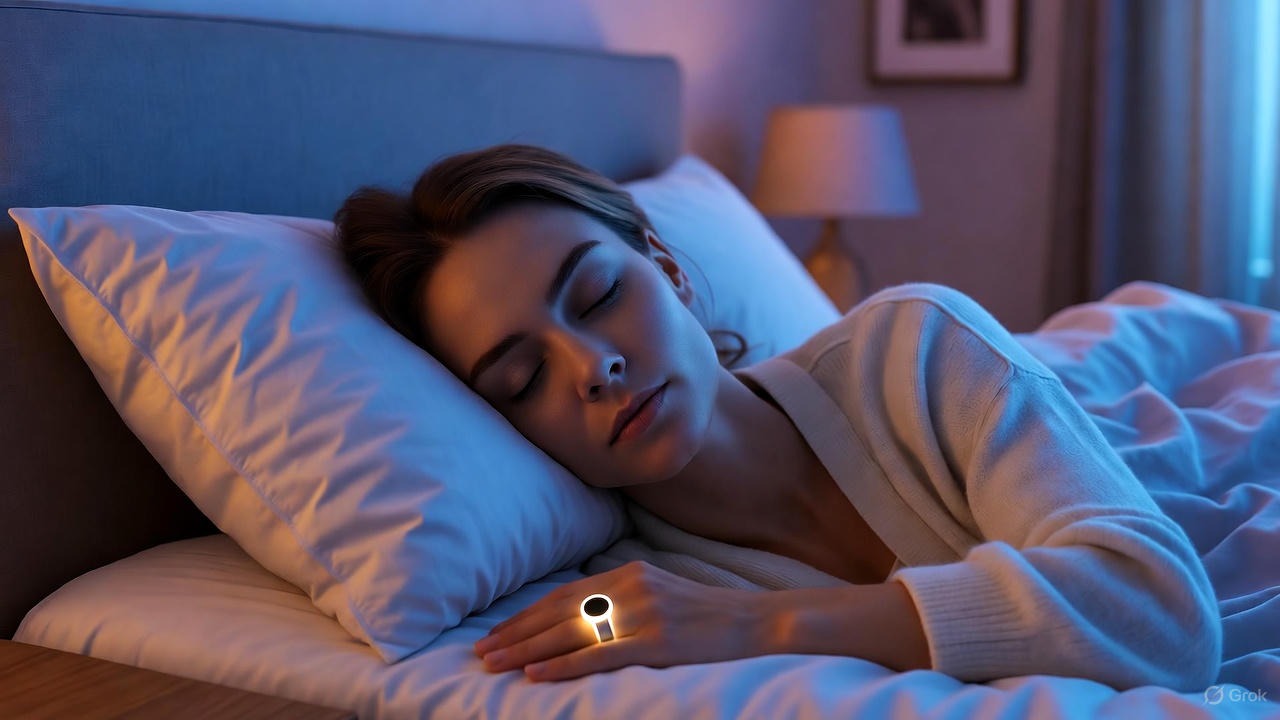
Smart rings have become the ultimate sleep truth-tellers. They move beyond "I got 8 hours" to reveal the nuanced reality of your rest.
Beginner-Friendly Sleep Hygiene Habits (& How Your Ring Tracks Them):
Habit: Create a Consistent Sleep Schedule. Aim to go to bed and wake up within the same 30-minute window every day, even on weekends.
Ring Tracking: Your sleep timeline graph becomes a visual record of your consistency. The app will show your "sleep consistency" score. You’ll see firsthand how a regular schedule improves your Sleep Score and increases the proportion of restorative Deep and REM sleep.
Habit: Craft a 60-Minute Digital Sunset. Dim lights and power down blue-light-emitting screens (phones, TVs, laptops) at least an hour before bed.
Ring Tracking: Observe your "time to fall asleep" (sleep latency) metric. With a proper wind-down, this number should decrease. You may also see fewer mid-sleep awakenings and a lower resting heart rate throughout the night.
Habit: Optimize Your Sleep Environment. Keep your bedroom cool (65-68°F), dark, and quiet.
Ring Tracking: Your ring’s skin temperature sensor can correlate nighttime wake-ups with temperature spikes. A stable, cool environment should result in a smoother, more stable sleep graph and better sleep stage continuity.
Interpreting the Data: Don't just look at the single sleep score. Dive into the trends.
Is your Deep sleep percentage higher on nights you finish eating 3 hours before bed?
Does your REM sleep dip after an evening of alcohol consumption, even if you slept a long time?
Does a late workout spike your core temperature and disrupt your first sleep cycle?
Your ring answers these questions, transforming sleep from a mysterious black box into a system you can understand and optimize. For a deep dive on separating fact from fiction in your quest for better rest, be sure to explore the common sleep health myths every beginner needs to unlearn.
Habit 2: Fueling for Function – Building Mindful Eating Patterns
Nutrition for wellness isn't about restrictive dieting; it's about building sustainable eating patterns that stabilize energy, support cognition, and fuel recovery. For beginners, the goal is to establish a positive relationship with food, using it as foundational energy rather than an emotional salve.
While smart rings don't track calories consumed, they provide powerful contextual data on how your body responds to your eating habits.
Beginner-Friendly Nutrition Habits (& How Your Ring Provides Context):
Habit: Prioritize a Protein-Rich Breakfast. Starting your day with 20-30 grams of protein promotes satiety and stabilizes blood sugar, curbing mid-morning cravings.
Ring Context: Observe your daytime stress and energy metrics. A stable energy morning may lead to fewer stress spikes (as indicated by elevated heart rate) compared to mornings fueled by sugary carbs. Better-regulated blood sugar can also contribute to more stable sleep later.
Habit: Practice Time-Restricted Eating (Gentle Version). Aim for a 12-hour eating window (e.g., 8 AM to 8 PM), giving your digestive system a prolonged nightly rest.
Ring Context: This is where data shines. Does closing your eating window 3 hours before bed correlate with an increase in your HRV or a higher Deep sleep percentage? Your ring will show you the direct impact of this habit on your recovery metrics.
Habit: Hydrate Strategically. Drink water consistently through the day, but taper intake 1-2 hours before sleep to minimize nighttime disruptions.
Ring Context: A simple correlation: On days your activity data shows you were more active (and likely needed more hydration), did you have more restless sleep if you didn't drink enough? Conversely, did chugging water before bed lead to a spike in nighttime bathroom trips visible on your sleep graph?
The Ring as a Biofeedback Tool: Perhaps you try eliminating processed foods for a week. Subjectively, you may feel less bloated. Objectively, your ring might show a 3-point drop in your average resting heart rate and a more stable HRV trend—clear signs of reduced systemic inflammation and improved autonomic balance. This feedback loop turns nutritional choices from abstract "good vs. bad" into concrete cause-and-effect learning. What you eat profoundly impacts how you sleep, and understanding this connection is key. Learn more about how sleep health affects every aspect of your daily life, from your food choices to your mood.
Habit 3: Strategic Movement – From "Exercise" to Daily Activity
The word "exercise" can conjure images of grueling hour-long gym sessions. For beginners, this is intimidating and unsustainable. The goal is NEAT (Non-Exercise Activity Thermogenesis)—the energy expended for everything that isn't sleeping, eating, or sports-like exercise. It’s the walking, taking the stairs, gardening, and fidgeting. For most, NEAT accounts for a larger portion of daily calorie expenditure than dedicated workouts.
Beginner-Friendly Movement Habits (& How Your Ring Tracks Them):
Habit: The Daily Step Goal (Make it Realistic). Start with a goal you can hit 80% of the time, like 5,000 steps. Consistency here is infinitely more valuable than hitting 12,000 steps once a week.
Ring Tracking: Your ring automatically tracks steps and active minutes. The daily goal-completion haptic buzz is a potent positive reinforcement.
Habit: Implement the "Every-Hour" Rule. Set a reminder to stand up and move for 2-3 minutes every hour you’re sedentary.
Ring Tracking: Some rings provide "inactivity alerts." Use this feature. Over time, check your stress graph—these movement snacks often break up periods of high-stress focus, leading to a more balanced daytime heart rate.
Habit: Embrace Strength Training (Micro-Dosed). Twice a week, perform one set of bodyweight exercises (squats, push-ups, planks) to muscular fatigue. Keep it under 15 minutes.
Ring Tracking: This is where recovery metrics become essential. On nights after a strength session, your HRV may dip slightly and your RHR may rise—this is a normal sign of acute stress and repair. The key is watching the rebound. Does your HRV recover to baseline or higher within 1-2 days? This shows you're adapting positively. If not, it's a sign to reduce volume or intensity.
The Readiness Score: Your Guide to Training Intuitively. Your ring’s daily readiness or recovery score is your permission slip to listen to your body. A high score after good sleep means it’s a great day for that extra walk or a more vigorous session. A low score, despite adequate sleep, is your body asking for a gentler day—perhaps just stretching or walking. This prevents the common beginner mistake of pushing through fatigue and risking injury or burnout. Balancing activity with recovery is a skill, and avoiding common pitfalls is part of the journey. Discover the sleep health mistakes beginners make and how to avoid them to ensure your movement habits are supported by proper rest.
Habit 4: Taming the Invisible Force – Daily Stress Management
Stress is not the enemy; it's an inevitable part of life. The enemy is chronic, unmanaged stress—the kind that keeps your nervous system in a constant low-grade "fight-or-flight" (sympathetic) state. This dysregulates hormones, impairs digestion, and fragments sleep. Daily stress management is the practice of regularly downshifting your nervous system.
Beginner-Friendly Stress Management Habits (& How Your Ring Quantifies Calm):
Habit: The 3-Minute Breathing Break. Three times daily—upon waking, after lunch, before bed—take one minute to focus solely on slow, deep diaphragmatic breathing (5-second inhale, 7-second exhale).
Ring Tracking: This is direct biofeedback. Do a breathing session and immediately watch your live heart rate on the app. You will likely see it drop in real-time. Over weeks, this practice should contribute to a higher average HRV and a lower resting heart rate trend.
Habit: The Digital Detox Hour. Designate one hour each evening (e.g., 8-9 PM) as a no-phone, no-screen zone. Read a book, talk, or listen to music instead.
Ring Tracking: Correlate this habit with your "time to fall asleep" and your first sleep cycle's stability. The reduction in cognitive and emotional stimulation should lead to a quicker, smoother transition into sleep, reflected in your sleep graph.
Habit: Gratitude Journaling. Each night, write down three specific things you were grateful for that day.
Ring Tracking: While psychological, the physiological effect is measurable. A practice that cultivates a positive mindset can reduce nighttime cortisol. Look for correlations between this habit and improvements in your deep sleep percentage or fewer early morning awakenings.
The Stress Metric: Seeing the Unseen. Many rings now offer a continuous "stress" score throughout the day, derived from heart rate variability and movement. This allows you to become a detective of your own stress patterns.
Do your stress spikes coincide with back-to-back meetings?
Does a walk outside immediately lower your stress score?
Does that third cup of coffee create a sustained elevated stress state?
With this data, you stop wondering what stresses you and start knowing. You can then proactively deploy your micro-habits (like breathing breaks) to intervene, turning a reactive relationship with stress into a proactive one.
Habit 5: The Rhythm of Recovery – Listening to Your Body’s Signals
Recovery is not passive; it's the active process during which adaptation occurs. It's when muscles repair, the nervous system resets, and memories consolidate. Ignoring recovery is like constantly withdrawing from a bank account without ever making a deposit—eventually, you go bankrupt (injured, ill, or burnt out).
Your smart ring is essentially a dedicated recovery accountant. Its primary job is to measure how well your body is replenishing its resources.
Beginner-Friendly Recovery Habits (& How Your Ring Defines Readiness):
Habit: Honor Your Rest Days. Schedule at least one full day of rest or very gentle movement (like stretching or a slow walk) per week.
Ring Tracking: Your readiness score should peak on the morning after a true rest day, indicating full system recharge. This visual proof helps overcome the cultural guilt associated with "doing nothing."
Habit: Prioritize Post-Workout Refueling. Consume a mix of protein and carbohydrates within 45 minutes of a vigorous workout to aid muscle repair and glycogen replenishment.
Ring Tracking: Observe your overnight recovery metrics after workouts where you refueled properly vs. when you didn't. Proper refueling can lead to a faster HRV rebound and less disturbance in sleep architecture.
Habit: Incorporate Passive Recovery. Activities like foam rolling, gentle yoga, or even a warm bath can enhance circulation and promote parasympathetic activation.
Ring Tracking: Take a warm bath 90 minutes before bed. Your ring may show a noticeable drop in your pre-sleep heart rate and a faster descent into deep sleep, as the rise and subsequent fall in core temperature is a strong sleep signal.
The Ultimate Feedback Loop: A beginner starts a new running program. Week 1: They run three times, sleep well, and see their readiness score stay high. Week 2: Enthusiastic, they run four times and add intensity. Their readiness score begins to trend down, their RHR creeps up, and their deep sleep decreases. This is the ring's early warning: "You're overreaching. Consolidate before progressing." Without this data, the beginner might push into Week 3 and develop a nagging injury or a cold. The ring enables planned progression, not guesswork. To build a sustainable practice, it's helpful to visualize the process as a structured progression. Consider the sleep health pyramid: building from the bottom up as a model for how to layer your recovery habits effectively.
Designing Your Personalized Daily Wellness Blueprint
Now that we understand the core habits and the metrics that define them, the task is synthesis. How do you take these five pillars—Sleep, Nutrition, Movement, Stress, Recovery—and weave them into a single, cohesive daily routine that feels effortless, not overwhelming? The key is stacking, sequencing, and personalization.
Step 1: The Baseline Week – Observe, Don't Judge. Before changing anything, wear your ring consistently for one full week. Live your normal life. The goal is to establish your personal biometric baseline. What is your actual average sleep duration and quality? What does your typical daily stress graph look like? What’s your resting HR and HRV range? This data is your neutral starting point, free from judgment.
Step 2: The Micro-Habit Stack – The Power of "After [Current Habit], I will [New Habit]." Habit stacking, coined by James Clear, ties a new micro-habit to an existing routine.
Example Stack for a Morning Routine:
After my alarm goes off, I will sit up and take three deep breaths (Stress).
After I take those breaths, I will drink a full glass of water (Nutrition/Hydration).
After I drink water, I will put on my walking shoes and go for a 10-minute walk (Movement).
Example Stack for an Evening Wind-Down:
After I finish dinner, I will start my "digital sunset" (Sleep).
After I put my phone away, I will write down three things I'm grateful for (Stress).
After I write in my journal, I will do 5 minutes of light stretching (Recovery).
Your smart ring’s reminders can be the initial prompt for the first habit in a stack until it becomes automatic.
Step 3: Sequencing for Synergy. Arrange your habits to support your body's natural rhythms (circadian biology).
Morning: Light exposure, movement, and protein intake set a strong circadian signal and energize you.
Afternoon: Use movement snacks to combat the post-lunch dip. Hydrate well.
Evening: Prioritize stress-lowering, digital-free, and digestion-friendly activities to prime the body for sleep.
Step 4: Personalize Based on Data. This is where your ring transitions from a tracker to a co-pilot. Your blueprint is not static.
Scenario: Your readiness score is low two days in a row.
Personalized Adjustment: Your blueprint for that day automatically shifts. The 10-minute walk becomes a 10-minute meditation. The strength session is postponed. You prioritize an extra 30 minutes in bed.
Scenario: Your data shows you consistently have high stress between 2-4 PM.
Personalized Adjustment: You proactively schedule a 5-minute breathing break or a walk outside at 1:45 PM. You observe if this intervention flattens the stress spike on your graph.
Your Daily Wellness Blueprint is a living document, authored by you and edited by the objective feedback from your body, communicated through your smart ring. To ensure your personalized plan is on the right track, you can use a sleep health checklist to confirm you're getting the fundamentals right.
Overcoming the Inevitable Hurdles: The Smart Ring as Your Accountability Partner
No wellness journey is a straight line upward. There will be days of travel, social events, illness, and sheer lack of motivation. The difference between long-term success and another abandoned effort is how you navigate these hurdles. Here, your smart ring’s data provides compassion and context, not criticism.
Hurdle 1: "I Fell Off Track – My Streak is Broken!"
The Old Mindset: "I missed one day, I’ve failed. I might as well give up."
The Data-Informed Mindset: Look at the weekly or monthly trend view in your app. One red day is a blip in a sea of green. The ring shows you that consistency is about the trend line, not the data point. It helps you practice self-compassion, which is crucial for resilience. Simply resume your micro-habits the next day.
Hurdle 2: "I'm Too Busy – I Don't Have Time!"
The Data Solution: Your ring’s data often reveals the cost of busyness. A week of poor sleep and high stress scores is a quantifiable productivity drain. The data makes the case that investing 10 minutes in a breathing break or prioritizing 30 extra minutes of sleep isn't a cost—it's an investment that pays dividends in clearer thinking, stable energy, and better performance. It reframes "taking time" as "creating efficiency."
Hurdle 3: "I Don't Feel Any Different – Is This Working?"
The Data Solution: This is the placebo-killer and the motivation-saver. Feelings are subjective and lagging indicators. Your ring provides leading indicators. You may not feel more resilient, but if your average HRV has increased by 8% over six weeks, your nervous system is objectively stronger. This objective proof during periods of subjective doubt is invaluable for maintaining commitment.
Hurdle 4: Social & Travel Disruption.
The Strategy: Use your ring to navigate, not judge, these periods.
Before a trip: Prioritize sleep in the days leading up to it to build a "recovery buffer."
During an event: You might let sleep slide, but hold onto one keystone micro-habit (like your morning breathing). This maintains a thread of routine.
After a disruption: Your recovery score will tell you exactly how much it impacted you. Use that data to guide your re-entry—don't jump back into intense training; follow your ring’s recovery recommendations.
The smart ring transforms hurdles from demoralizing failures into interesting data points in your personal wellness experiment. It fosters a mindset of curiosity—"What does my body do when...?"—rather than one of harsh self-judgment.
From Data to Wisdom: Cultivating Your Body Literacy
The ultimate goal of using a smart ring is not to become dependent on a device, but to develop a refined internal sense of your own body's signals—a skill we can call Body Literacy. The ring is the training wheels. The data educates your intuition.
Stages of Body Literacy Development:
The Novice (Data-Dependent): You rely entirely on the ring's scores to tell you how you feel. "My readiness is 85, so I must feel good!" You follow its recommendations without question.
The Apprentice (Data-Informed): You start to cross-reference the data with your subjective feelings. "My score is high, but I feel fatigued. Let me check my sleep stages—ah, I got very little Deep sleep. That explains it." You learn the nuanced language of the metrics.
The Practiced (Intuitive Integration): You begin to predict what the data will show. "I had a terrible night's sleep and feel wired. I bet my HRV is low and my RHR is high." You check the app for confirmation. The ring validates and refines your intuition.
The Literate (Embodied Wisdom): You can often sense your state without the device. You use the ring periodically for check-ins, during new training phases, or when life gets chaotic. It's a diagnostic tool, not a daily crutch. You have internalized the connection between habits and sensations.
How to Accelerate This Journey:
Daily Check-In: Spend 2 minutes each morning reviewing your sleep and readiness data. Then, pause and ask yourself: "How do I feel?" Note any discrepancies or alignments.
Conduct Mini-Experiments: "If I drink caffeine after 2 PM this week, what happens to my sleep latency?" "If I do 10 minutes of yoga before bed, does it affect my HRV?" Use the ring to document the results. This turns wellness into a personal science project.
Look at Trends, Not Dailies: Shift your focus from the single day's score to the 7-day and 30-day trend lines. This teaches you to see the forest, not just the trees.
Developing body literacy means you are no longer outsourcing your health understanding to a device. You are using technology to become more connected to, and trusting of, your own innate wisdom. This is the pinnacle of a beginner's journey—transitioning from following a guide to becoming your own expert. As your literacy grows, you'll start to see how these principles apply across your lifespan. Explore how sleep health changes throughout your life to plan for long-term well-being.
The First 30 Days: A Practical Implementation Plan
Theory is essential, but action creates change. Here is a concrete, phased 30-day plan to launch your data-informed wellness journey without overwhelm. Remember, the goal is consistency, not perfection.
Days 1-7: The Observation Phase
Action: Wear your ring 24/7. Do not try to change any habits.
Focus: Simply explore the app. Learn where your sleep data, heart rate, and readiness scores live. Note your averages. This is your baseline.
Days 8-14: Layer in Foundation – Sleep & One Micro-Habit
Action 1 (Sleep): Choose ONE sleep hygiene habit from Section 3. Implement it every day (e.g., digital sunset at 9 PM).
Action 2 (One Stack): Create one micro-habit stack for your morning or evening. Keep it to 2-3 tiny habits that take less than 5 minutes total.
Focus: Use your ring to track the sleep habit's impact. Did your "time to fall asleep" improve? Celebrate the tiny wins.
Days 15-21: Add Fuel and Movement
Action 1 (Nutrition): Implement the "protein-rich breakfast" or "12-hour eating window" habit.
Action 2 (Movement): Set a realistic daily step goal. Implement the "every-hour" rule for 3 days this week.
Focus: Observe correlations. Does the eating habit affect your afternoon energy or sleep? Does hitting your step goal correlate with a better stress graph?
Days 22-30: Introduce Stress Management & Review
Action 1 (Stress): Implement the "3-minute breathing break" once per day.
Action 2 (Review): At the end of the week, look at your 30-day trend view for Sleep Score, Resting HR, and HRV. Compare Week 4 to your baseline Week 1.
Focus: What has improved? What was easiest to maintain? What one thing will you carry into Month 2? Solidify your one or two most impactful habits.
This gradual layering allows your brain and body to adapt. The smart ring’s role throughout is to provide positive feedback, making the invisible benefits of these small changes undeniably visible on your dashboard. For a more detailed roadmap on establishing this crucial foundation, you can follow a dedicated 30-day plan for beginner sleep health.
The Social & Environmental Dimension: Optimizing Your World for Wellness
Your daily habits don't exist in a vacuum. They are constantly influenced by—and in turn, influence—your environment and social circles. A beginner can have perfect intentions, but if their home is filled with processed snacks, their work demands constant digital immersion, and their friends prioritize late-night parties, their journey becomes an uphill battle against the current. The smart ring provides the objective data needed to identify these external friction points and advocate for changes in your surroundings.
Environmental Audit with Data:
The Light Environment: Your circadian rhythm is primarily set by light. Your ring’s sleep and readiness data can reveal misalignments.
Experiment: For one week, get 10 minutes of morning sunlight immediately upon waking. Note the impact on your daily stress graph and your evening sleepiness. Does your sleep score improve? The data helps you justify the small change of starting your day outside.
Evening Fix: Use your ring’s sleep latency metric to prove the value of dimming lights. If your "time to fall asleep" drops when you use amber-toned bulbs after sunset, you have a data-backed reason to invest in smart lighting.
The Nutritional Environment: "Out of sight, out of mind" is powerfully true for food.
Data-Backed Strategy: Notice a correlation between days you keep a fruit bowl on your counter and a lower afternoon resting heart rate (less sugary crash)? Or between clearing the kitchen of processed foods and a steady rise in your HRV trend? This isn't just willpower; it's designing an environment that makes the healthy choice the easy choice. Your ring quantifies the physiological calm that comes from a stable nutritional environment.
The Social Environment: Wellness can feel isolating, but your data can help communicate your needs.
Scenario: Friends want to meet for late-night drinks, but you have a big day tomorrow. Instead of a vague "I'm tired," you can share (if comfortable) the data-informed truth: "My ring data shows I really need to protect my sleep tonight—my recovery score has been low all week. Can we do an early dinner instead?" This frames it as respecting your body's needs, not rejecting the social offer.
Finding Your Tribe: Use your data to find aligned communities. Online groups focused on sleep optimization or HRV training will understand your journey. Sharing data trends can lead to powerful support and accountability.
How Your Ring Informs Your "Wellness Infrastructure": Think of your ring as a diagnostic tool for your life design. A week of poor recovery scores after starting a new, open-office job might point to sensory overload. The data gives you the evidence to request noise-canceling headphones or a different desk location. It transforms subjective complaints ("I'm always distracted and tired here") into objective feedback ("My daytime stress metrics are 40% higher in this environment, impacting my sleep"). This empowers you to become the architect of a world that supports, rather than sabotages, your daily habits. To see how subtle environmental factors can manifest, read about how poor sleep health shows up in your daily life, from your work performance to your social interactions.
Advanced Tracking: Interpreting Complex Biomarkers for Proactive Health
Once you’ve mastered the fundamentals of sleep, activity, and daily readiness, your smart ring’s data opens a deeper layer of understanding: complex biomarkers that act as early-warning systems and fine-tuning tools. For the committed beginner moving into an intermediate phase, learning to interpret these signals is the key to proactive, rather than reactive, health management.
1. Heart Rate Variability (HRV) Trends – Beyond the Daily Number. While your daily HRV score is useful, the trend tells the real story. Advanced interpretation involves looking at the direction and stability of this trend over weeks and months.
Upward Trend: A gradual, steady increase in your average HRV is one of the strongest signs of improving overall fitness and resilience. It indicates your nervous system is becoming more adaptable.
Downward Trend: A sustained decline, especially when coupled with a rising RHR, is a major red flag. It can signal overtraining, chronic stress, poor recovery, or the onset of illness days before symptoms appear.
HRV Balance & Deep Sleep: Some advanced metrics analyze the balance between your sympathetic (stress) and parasympathetic (rest) systems overnight. You may see a correlation between high parasympathetic activity and the duration of your Deep sleep. This explains why practices that boost HRV (like meditation) directly improve physical restoration.
2. Respiratory Rate (RR) & Blood Oxygen (SpO2) – The Nighttime Vital Signs. These are critical, often underutilized metrics for overall health.
Respiratory Rate: Your resting breaths per minute. A normal range is 12-20. A consistently elevated nighttime RR can be a subtle sign of stress, anxiety, or respiratory issues. A sudden, unexplained change is worth noting.
Blood Oxygen (SpO2): Normally 95-100%. The ring tracks this overnight, looking for significant dips (desaturations). Frequent desaturations below 92-93% can be an indicator of sleep apnea or other breathing disturbances. While not a medical diagnosis, this data is incredibly valuable to bring to a healthcare professional. It moves the conversation from "I'm tired" to "My device recorded 15 oxygen dips per hour last night."
3. Skin Temperature – The Subtle Messenger. Nighttime skin temperature is a proxy for core temperature regulation, which is crucial for sleep initiation and immune function.
Circadian Rhythm: Your temperature should naturally drop in the evening to initiate sleep and rise in the morning to wake you. A flattened temperature curve can indicate circadian disruption.
Illness Prediction: A sustained elevation in your nighttime temperature trend, even by half a degree, is often the very first sign of an oncoming cold or viral infection, appearing 24-48 hours before you feel sick.
Hormonal Insights: For those who menstruate, the temperature graph can clearly show the post-ovulation rise and pre-menstrual drop, providing personal insight into cyclical changes in energy and recovery needs.
Using Complex Data Proactively: Imagine your HRV trend dips for 3 days, your RHR is up 5 bpm, and your skin temp shows a slight sustained rise. Your ring’s readiness score will be low. This is your body’s "check engine" light. The proactive response isn't to push through. It's to:
Dial back training intensity.
Prioritize extra sleep and hydration.
Maybe even take a rest day.
Be extra vigilant with hand-washing and nutrition.
This is the pinnacle of using the technology: moving from tracking what you did (steps, sleep hours) to understanding how your body is responding, and using that knowledge to make preemptive, supportive decisions. For a comprehensive look at how all these metrics come together to form a complete picture of your well-being, consider a structured sleep health assessment to rate your current sleep.
The Long Game: Setting Sustainable Goals & Avoiding Burnout
The initial excitement of new data and new habits is powerful. But wellness is a marathon, not a sprint. The true test comes after the first few months, when novelty wears off and life's complexities return. The smart ring is uniquely positioned to help you navigate this phase by shifting your focus from short-term targets to long-term, sustainable patterns.
From Rigid Goals to Flexible Ranges:
The Pitfall: "I must get a Sleep Score of 85 every single night." This sets you up for frustration. Life happens—a sick child, a work deadline, a social event.
The Sustainable Approach: "My goal is to maintain a 7-day average Sleep Score between 75-85." This allows for off-nights without derailing your sense of progress. Your ring’s weekly and monthly averages are your best friends here. They smooth out the noise and show the true trajectory.
Using Data to Define Your "Seasonal" Rhythms: Your body isn't a machine meant to perform at peak year-round. Ancient practices aligned with seasons, and your data will reflect natural ebbs and flows.
Winter/Stressful Periods: Your readiness scores may naturally be lower. Your HRV might dip. The sustainable goal is maintenance, not improvement. Use the data to give yourself permission to focus on rest, gentle movement, and nourishment rather than intense fitness goals.
Spring/Stable Periods: This is the time for building. When your baseline metrics are strong and stable, that's the signal to gradually increase training load, try new habits, or work on performance goals.
The Anti-Burnout Dashboard: Burnout is a state of chronic dysregulation. Your ring’s data provides the early-warning signs long before you hit the wall emotionally.
Chronic Sleep Debt: Your sleep duration consistently below your personal need (shown by tracking what duration correlates with high readiness).
HRV Suppression: A flatlined or consistently downward-trending HRV, indicating a nervous system stuck in a stressed state.
Elevated Resting Heart Rate: A RHR that remains elevated even on rest days.
Poor Stress Recovery: Daytime stress scores that remain high and don't recover overnight.
When you see this constellation of data, the goal is not to "do more wellness." It's to do less. The ring’s data becomes your permission slip to radically prioritize recovery. It provides the objective evidence that "pushing through" is not strength—it's a direct path to breakdown.
Celebrating Non-Linear Progress: True wellness journeys are not straight lines. They are sawtooth patterns—peaks of great progress, plateaus of integration, and occasional valleys of setback. Your ring’s long-term trend view teaches you to appreciate this rhythm. A 90-day view showing an overall upward trend in HRV, despite weekly fluctuations, is a story of profound success. This long-view perspective, facilitated by your data, is the ultimate antidote to burnout and quitting. For a realistic outlook on what long-term progress looks like, read about the sleep health journey and what to expect in your first year.
Troubleshooting Common Data Discrepancies: When the Ring and Your Feelings Don't Match
A common point of confusion—and sometimes frustration—for new users is when the data seems to contradict subjective experience. "I feel amazing, but my readiness score is low!" or "I slept terribly, but my sleep score is 82." These moments are not failures of the technology; they are rich opportunities to deepen your body literacy.
Scenario 1: "I Feel Great, But My Readiness Score is Low."
Potential Interpretations & Actions:
Latent Physical Stress: You may be fighting off a pathogen your immune system hasn't yet announced with symptoms. The low score is an early warning. Action: Take it easy today, prioritize sleep and hydration. Thank your ring for the heads-up.
CNS Fatigue from Intense Training: You had a great workout yesterday, and the endorphins have you feeling buoyant, but the deep neurological cost of the session is reflected in a depressed HRV. Action: The score is advising that today is for active recovery, not another intense session. Listen to it.
Metric-Specific Issue: Sometimes one metric (e.g., a slightly elevated nighttime heart rate due to a warm room) can drag down a composite score. Action: Look at the individual metrics. Is HRV still strong? Is RHR only slightly up? You might decide to feel confident in a light workout, but you do so with more awareness.
Scenario 2: "I Feel Terrible, But My Sleep/Readiness Score is High."
Potential Interpretations & Actions:
Psychological vs. Physiological State: The ring measures physiological recovery. You can be physiologically restored (good HRV, low RHR) but psychologically stressed or anxious about a life event. The ring can't measure your inbox or your relationship worries. Action: Acknowledge that your body is ready, but your mind needs care. Focus on stress-management habits like journaling or talking to a friend.
Poor Sleep Perception: Sometimes we remember the brief moments of wakefulness and forget the long stretches of solid sleep. The ring's objective measurement can be comforting here—it shows you got more quality rest than you thought. Action: Trust the data over the groggy feeling, which can be influenced by sleep inertia. See if your energy improves after being up for an hour.
Anemia or Other Non-Sleep Related Issues: Fatigue can stem from nutritional deficiencies (like low iron or B12) that don't directly affect sleep architecture or HRV. Action: The ring has ruled out sleep and recovery as the primary causes. This is valuable intel to discuss with a doctor, steering the investigation toward blood work or other factors.
The Golden Rule: Data Informs, You Decide. Your smart ring is an advisor, not an autocrat. Its data is one critical input into your daily decision-making. The final choice—to train or rest, to push or pull back—always rests with you, informed by the combined wisdom of the data and your subjective feelings. Learning to synthesize these sometimes conflicting signals is the mark of a truly advanced user. If discrepancies persist, it may be helpful to review the difference between sleep health and sleep hygiene to ensure you're interpreting the correct metrics.
Integrating with Your Healthcare Team: Becoming an Informed Patient
One of the most powerful, yet underutilized, applications of smart ring data is in the doctor's office. Moving from vague descriptions to concrete data transforms you from a passive patient into an active, informed partner in your own healthcare.
Preparing for an Appointment:
Identify the Concern: Are you discussing fatigue? Poor sleep? Unexplained daytime stress?
Gather Relevant Data: Export or screenshot trends from your app.
For fatigue/sleep issues: Show 2-4 weeks of sleep duration, sleep scores, and SpO2 graphs. "As you can see, my oxygen saturation dips below 90% several times a night, and I have almost no deep sleep."
For stress/anxiety: Show your daytime stress graph. "My physiological stress remains elevated from 9 AM to 5 PM daily, regardless of activity."
For general wellness: Show your HRV and RHR trends. "I've noticed a steady decline in my HRV over the last three months, despite good sleep habits."
Correlate with Symptoms: Keep a brief journal note. "On these nights with the lowest SpO2, I wake up with a headache."
How This Changes the Dialogue:
From Subjective to Objective: Instead of "I'm always tired," you can say, "My device shows my average sleep efficiency is 78%, and I get less than 45 minutes of deep sleep per night."
Provides Diagnostic Clues: Showing repeated oxygen desaturations gives a doctor a concrete reason to order a sleep study. Demonstrating a perpetually elevated resting heart rate can prompt investigation into thyroid function or anemia.
Tracks Treatment Efficacy: If prescribed a CPAP for sleep apnea, your ring data can show the improvement in SpO2 and deep sleep. If starting an anti-anxiety medication or meditation practice, you can track the normalization of your HRV and stress scores.
A Note on Limitations: Always present the data as a consumer wellness tool providing trends and indications, not as a medical device providing diagnoses. Say "My ring suggests I may have periods of low oxygen at night," not "My ring says I have sleep apnea." This frames it as useful information that warrants professional investigation, not as self-diagnosis.
By bringing this data, you empower your healthcare provider with a continuous stream of information collected in your natural environment, which is often more revealing than a single snapshot in a clinical setting. It makes you a collaborative member of your own health team. For guidance on how to start this conversation, review our guide on how to talk to your doctor about sleep health.
The Future of Personalized Wellness: Where Smart Rings Are Heading
The technology on your finger is just the beginning. The real evolution lies in the sophistication of the algorithms and the integration of this data into a holistic life-management system. For the forward-thinking beginner, understanding these trends helps you see your current device as the first step in a lifelong journey of self-optimization.
1. Advanced Predictive Analytics & True Early Warnings. Future algorithms won't just tell you how you recovered from yesterday; they will predict your capacity for tomorrow, next week, or even how susceptible you might be to seasonal illness based on longitudinal trends. Imagine a notification: "Based on your declining HRV trend and elevated skin temp, you have a 65% likelihood of developing cold symptoms in 48 hours. Recommended action: Rest, hydrate, increase Vitamin C."
2. Deep Integration with Other Data Streams. The true power of biometric data is unlocked when combined with other layers of your life.
Nutritional Integration: Syncing with food-logging apps to identify how specific foods or meal timings affect your sleep HRV or next-day readiness.
Calendar & Productivity Integration: Your ring could analyze how different types of meetings (one-on-one vs. large presentations) affect your stress physiology, then suggest optimal scheduling or recovery breaks.
Environmental Integration: Pulling in local pollen, air quality, or weather data to explain changes in respiratory rate or sleep quality.
3. Personalized, Adaptive Coaching. Beyond generic tips ("get more sleep"), the AI behind your ring will learn what works specifically for you.
It will recognize that for you, a 20-minute afternoon walk boosts evening HRV more than morning meditation.
It will learn that your optimal sleep duration is 7 hours and 15 minutes, not a generic "8 hours."
It will provide hyper-personalized micro-habit suggestions: "Given your low readiness and a busy day ahead, we recommend a 5-minute box-breathing session at 10 AM and a 15-minute walk at 2 PM."
4. Non-Invasive Glucose & Blood Pressure Trends. The holy grail of wearable tech is non-invasive, continuous biomarker monitoring. While not yet mainstream in rings, the trajectory is clear. Future devices may offer trend-based insights into glucose variability or blood pressure, providing unparalleled data for metabolic and cardiovascular wellness without needles or cuffs.
Embracing the Journey: Your current smart ring is the gateway to this future. By engaging with it now, learning its language, and building habits based on its feedback, you are not just improving today's wellness. You are training yourself to be an adept, literate participant in the coming revolution of truly personalized, predictive, and preventative health care. You are building the foundational habits and the data-literacy skills that will allow you to harness ever-more-powerful tools to live with greater vitality and intention. To ensure you have the right tools for this journey, explore the beginner's sleep health toolkit: what you actually need.
Your Invitation to Begin: The First Step is the Data Point
We have traversed the landscape of modern wellness—from the philosophy of micro-habits to the science of biomarkers, from designing your daily blueprint to envisioning a data-informed future. The volume of information can feel immense, but remember the core principle we began with: small, consistent actions compound into profound change.
Your smart ring is the catalyst that makes this principle not just a hope, but a measurable, trackable reality. It turns the abstract concept of "feeling better" into a graph with an upward trend. It transforms the vague notion of "being stressed" into a daily pattern you can see and, therefore, manage. It replaces the guilt of "falling off the wagon" with the curiosity of a scientist reviewing their experiment.
Your assignment, should you choose to accept it, is simple:
Put on the ring.
Live your normal life for seven days. Observe without judgment.
At the end of that week, ask one question: "What is one tiny, frictionless change I can make to improve my lowest metric?"
That is the entire algorithm. Observe, learn, act, measure. Repeat.
The journey of a thousand miles begins not with a single step, but with the data from that step. It begins with knowing your resting heart rate, understanding your sleep cycles, and seeing the direct line between your evening habits and your morning energy. This is empowerment. This is moving from being a passenger in your own body to becoming its skilled pilot, with a sophisticated dashboard at your fingertips.
Welcome to the beginning of a more intentional, more informed, and more vibrant way of living. Your data—and your potential—await. For those ready to take immediate action, start with our quick-start guide to better sleep health and begin building your foundational habit tonight.
Beyond the Numbers: Cultivating Mindfulness and Subjective Awareness
In our data-driven exploration, we've focused extensively on the objective metrics provided by your smart ring. Yet, the most sophisticated dashboard in the world is useless without the operator's awareness. The ultimate goal of biometric tracking isn't to create a dependency on external validation, but to enhance your internal, subjective connection to your body—a practice often called interoception. This is the art of feeling your heartbeat, noticing your breath, and sensing the subtle signals of fatigue, hunger, and stress before they become overwhelming.
The Data-Mindfulness Feedback Loop: Your smart ring can serve as a powerful training tool for this internal awareness. Here's how to create a symbiotic relationship between the objective numbers and your subjective experience:
The Morning Check-In Ritual:
Step 1 (Subjective First): Upon waking, before you even look at your phone or ring data, take 60 seconds. Close your eyes. Ask yourself: How did I sleep? On a scale of 1-10, what's my energy? Where do I feel tension or ease in my body? Assign a number to your subjective readiness.
Step 2 (Objective Validation): Then check your ring's sleep score and readiness metric. Compare. Was your subjective feeling aligned with the data? If your score is 85 but you feel like a 60, ask why. Is it mental anxiety? If you feel great but your score is low, as discussed earlier, consider physiological factors you might be missing.
This practice trains you to honor your feelings while using data to investigate discrepancies, deepening both self-trust and body literacy.
Mindful Movement with Biofeedback: Use your ring's real-time heart rate display during a workout or a yoga session. Don't chase a number. Instead, use it as biofeedback.
During a sun salutation, notice how your heart rate climbs with exertion and descends in child's pose.
In a meditation, watch your heart rate slow as you settle into your breath. This turns exercise and meditation into direct experiments in nervous system regulation, making the internal effects of movement undeniably visible and reinforcing mindful practice.
The Evening Reflection: At day's end, briefly review your daily stress graph. Can you correlate the peaks with specific events? That spike at 2 PM—was it that difficult meeting, or the second coffee? That calm period in the morning—was it your walk? This isn't about judgment; it's about pattern recognition. It connects external events to internal states, helping you design a life that minimizes unnecessary stressors and maximizes periods of flow and calm.
This integration ensures your smart ring remains a tool for enlightenment, not estrangement, from your own body. It prevents "analysis paralysis" and keeps the human experience—your feelings, intuition, and lived experience—at the center of your wellness journey.
Navigating Life Stages: Adapting Your Habits from Your 20s to Your 60s and Beyond
Wellness is not a static destination; it's a dynamic journey that must evolve with your body's changing needs and life's shifting priorities. The habits that serve a 25-year-old training for a marathon are not the same as those for a 45-year-old managing career and family stress, or a 65-year-old focusing on longevity and mobility. Your smart ring provides the age-specific feedback necessary to adapt intelligently.
Your 20s & 30s: Building Resilience and Foundation.
Characteristics: High natural recovery capacity, often more variable sleep and social schedules, building career foundations.
Key Ring Metrics: HRV Trend (building high resilience), Sleep Consistency (combating lifestyle variability), Activity Load vs. Recovery (preventing early burnout).
Adapted Habits: Use the ring to establish non-negotiable sleep windows even after social events. Leverage high recovery capacity for building fitness, but use the readiness score to avoid chronic overreaching. Data here helps build lifelong protective habits before health issues arise.
Your 40s & 50s: Managing Stress and Prioritizing Recovery.
Characteristics: Often peak career and family responsibilities, metabolic shifts may begin, recovery capacity naturally starts to decline.
Key Ring Metrics: Resting Heart Rate (watch for creeping increases), Sleep Quality (deep sleep becomes more precious), Stress Score (managing chronic stress is critical).
Adapted Habits: Your ring becomes essential for guarding recovery. A low readiness score must be heeded. Focus on strength training (tracked via HRV recovery) to combat muscle loss, and use data to fiercely protect sleep quality. The ring provides the objective evidence needed to set boundaries and say "no" to protect your health.
Your 60s and Beyond: Optimizing for Longevity and Vitality.
Characteristics: Focus on healthspan, mobility, cognitive function, and social connection. Sleep architecture changes (lighter sleep, earlier wake times).
Key Ring Metrics: Overnight SpO2 (monitoring for sleep-disordered breathing), Heart Rate Variability (a key marker of biological age), Daily Activity (preventing sedentary patterns).
Adapted Habits: Use the ring to ensure gentle daily movement targets are met. Pay close attention to the correlation between social engagement (a key longevity factor) and positive next-day metrics. The data validates that a consistent routine, good nutrition, and stress management are your most powerful medicines.
The Universal Constant: Across all ages, the smart ring’s most valuable function remains the same: providing objective feedback on the impact of your lifestyle choices. It allows you to gracefully pivot your habits as your life changes, ensuring your wellness practice always serves your current self, not a past version. For a detailed look at how your needs will shift, read our guide on how sleep health changes throughout your life.
The Community Factor: Leveraging Social Features for Accountability and Motivation
While wellness is deeply personal, it doesn't have to be solitary. One of the most underappreciated features of many smart ring ecosystems is the ability to connect with a trusted community. When used intentionally, these social features can transform your journey from a private grind into a shared, supported experience.
Constructive Ways to Use Community Features:
The Accountability Partnership: Connect with one friend or partner who also uses a ring or fitness tracker. Instead of competing for steps or sleep scores, use the connection for gentle accountability.
Example Agreement: "We'll both aim for a 7-day sleep consistency of 85%. We check in every Sunday." The shared goal, visible in the app, provides positive peer motivation without the toxicity of direct comparison.
The Challenge Group: Join or create a short, theme-based challenge within the app's community. The key is to frame it around effort and consistency, not extreme performance.
Healthy Example: "The 7-Day Wind-Down Challenge: Everyone aims to start their digital sunset by 9 PM. Share what you do instead of scrolling!"
Unhealthy Example: "Who can get the highest step count this week?" (Avoids this, as it can encourage injury and ignore recovery needs.)
Data-Sharing for Problem-Solving: In a private group, you can share anonymized data trends to get advice.
Post: "Has anyone else seen their HRV drop like this when they started a new training program? How did you adjust?" This leverages collective experience for troubleshooting, turning your data puzzle into a collaborative learning opportunity.
The Critical Warning: Comparison is the Thief of Joy. Your biometric data is as unique as your fingerprint. Comparing your absolute HRV number (e.g., 45 ms) to someone else's (e.g., 80 ms) is meaningless and can be demoralizing. The only valid comparison is you vs. your past self. Community features are healthiest when they focus on sharing strategies, celebrating each other's consistency streaks, and offering support during low-readiness periods, not on ranking individual scores.
Your smart ring community, when curated well, provides the missing piece in the habit loop: social reinforcement. It reminds you that you're not alone in the struggle to go to bed earlier or to take a rest day, making the path to sustainable wellness feel more connected and less arduous.
Debunking Smart Ring Myths: Separating Hype from Reality
As with any popular technology, misconceptions about smart rings abound. For a beginner to use this tool effectively and maintain realistic expectations, it's crucial to separate the marketing promises from the practical, scientifically-grounded reality.
Myth 1: "It Provides Medical-Grade Accuracy."
Reality: Smart rings are consumer wellness devices. They provide exceptionally valuable trend data collected in your natural environment. While the sensors (PPG for heart rate, accelerometers) are sophisticated, they are not equivalent to clinical polysomnography (sleep studies) or ECG machines. Their power lies in showing you changes and patterns over time, not in providing a single, definitive diagnostic data point. Use them to track your personal trends and bring concerning patterns to a doctor, not to self-diagnose.
Myth 2: "The Sleep Stage Data is 100% Accurate."
Reality: Estimating sleep stages (Light, Deep, REM) from wrist or finger-based sensors is a complex algorithmic challenge. While these estimates are highly useful for tracking personal trends (e.g., your deep sleep percentage went up after you stopped eating late), the absolute precision for a single night should not be taken as gospel. Focus on the multi-night averages and the direction of change, not fixating on why you got 72 minutes of REM instead of 90 on a particular Tuesday.
Myth 3: "More Data Always Equals Better Health."
Reality: Data is only as good as your ability to interpret it and take appropriate action. An obsession with perfect scores can lead to orthosomnia—a unhealthy preoccupation with perfecting sleep data, which ironically creates anxiety that worsens sleep. The ring is a guide, not a judge. The goal is improved well-being, not a perfect dashboard. If checking your data causes more stress than insight, it's time to take a break from the app and practice subjective sensing.
Myth 4: "It's Only for Athletes and Biohackers."
Reality: This is perhaps the most limiting myth. While elite athletes were early adopters, the core function of a smart ring—measuring recovery, sleep, and stress—is arguably more valuable for the everyday person. The busy parent, the stressed professional, the retiree focusing on healthspan—all benefit immensely from understanding their nervous system state and recovery needs. It democratizes access to the kind of physiological awareness once available only in labs.
By understanding these realities, you can harness the true, transformative power of the device: as a consistent, objective mirror reflecting the impact of your daily life on your biology, empowering you to make incremental, sustainable changes. Just as we unlearn sleep myths, it's vital to have realistic expectations about tracking technology.
Financial Wellness & Sleep: The Surprising Connection Your Ring Can Reveal
Wellness is holistic, encompassing not just physical and mental health, but also financial health. Stress about money is one of the most pervasive and damaging forms of chronic stress, and it directly manifests in your biometric data. Conversely, poor sleep and decision-fatigue from low recovery can lead to impulsive financial choices. Your smart ring can help you spot and break this vicious cycle.
How Financial Stress Shows Up in Your Data:
Elevated Nighttime Resting Heart Rate: Worrying about bills or financial future can keep your sympathetic nervous system activated even during sleep.
Reduced Heart Rate Variability (HRV): Chronic financial anxiety suppresses HRV, a clear sign your system is under constant strain and has less resilience for other stressors.
Fragmented Sleep: You may see more frequent awakenings (visible as spikes on your sleep graph) or less deep sleep during periods of high financial worry.
How Poor Recovery Impacts Financial Decisions:
The Impulse Control Link: The prefrontal cortex—responsible for executive function, impulse control, and long-term planning—is severely impaired by sleep deprivation and high stress. When your ring shows a low readiness score, you are neurologically more vulnerable to impulsive purchases, poor investment decisions, or avoidance of important financial tasks.
Decision Fatigue: A low HRV indicates a taxed nervous system. Making many small decisions (like what to buy online) becomes depleting, potentially leading to either decision paralysis or rash choices just to end the mental strain.
Using Your Ring to Build Financial Wellness Habits:
Schedule Money Tasks for High-Readiness Mornings. Check your ring’s readiness score. If it's high, that's the day to sit down and pay bills, review your budget, or research investments. Your brain is primed for clear, forward-thinking decisions.
Create a "Financial Wind-Down." If checking your bank account at night spikes your anxiety (and your heart rate), ban it after 7 PM. Use your ring's stress graph to prove to yourself that this habit disrupts your sleep onset. Replace it with a non-financial, calming activity.
Correlate Spending with Stress Data. Review a week where you had high discretionary spending. Now look at your daily stress scores for that week. Was your spending a coping mechanism for elevated stress? The data provides non-judgmental insight into behavioral patterns, allowing you to address the root cause (stress) rather than just the symptom (spending).
By viewing your financial health as an integral component of your overall well-being, tracked through the lens of physiological stress, you can create a virtuous cycle: better sleep and lower stress lead to wiser financial behaviors, which in turn reduce financial anxiety, leading to even better sleep and recovery.
The Traveler's Guide: Maintaining Wellness on the Road with Your Smart Ring
Travel—whether for work or pleasure—is a notorious disruptor of wellness routines. Different time zones, unfamiliar foods, disrupted sleep schedules, and the sheer exhaustion of transit can leave you feeling wrecked. Your smart ring is the ultimate travel companion, helping you navigate these disruptions strategically and recover faster.
Pre-Travel Preparation (The "Banking" Phase):
Action: In the 3-4 days before your trip, use your ring to ensure you are entering travel at peak recovery.
Strategy: Prioritize sleep, hit your hydration goals, and maybe even do a lighter training week. Watch your readiness scores climb. You're building a "recovery buffer" to withdraw from during the journey.
During Transit (The "Survival" Phase):
Action: Wear your ring during the journey.
Strategy:
Hydration Tracking: Use the activity reminders to get up and move on long flights/rides. Your elevated heart rate data will visually show the stress of travel.
Sleep Tracking: If you sleep in transit, the ring will capture it (even if it's poor quality), adding it to your total sleep "debt" calculation for the day. This prevents you from overestimating how rested you are.
Managing Jet Lag (The "Adaptation" Phase): This is where your ring shines. Jet lag is a circadian mismatch. Your ring’s data, especially skin temperature and sleep timing, provides a personal map of your adaptation.
Use Light Strategically: Upon arrival, use morning light exposure to reset your clock. Your ring will show how this improves that night's sleep latency and structure.
Track Your Progress: Don't expect to adapt in one day. Watch your sleep graph gradually shift to align with the local time zone over 2-3 days. Your readiness score will be your guide for activity—go easy until it stabilizes.
Making Smart Choices On the Ground:
The Readiness Check: Before scheduling a big meeting or intense activity on a trip, check your score. A low score might mean you should opt for a walking tour instead of a high-intensity hike.
The Alcohol Experiment: Travel often involves social drinking. Use your ring to see the dramatic effect of even one or two drinks on your sleep architecture (notably, it suppresses REM sleep) and next-day HRV. This data can empower you to make more mindful choices, like having that glass of wine with dinner instead of right before bed.
Post-Travel Recovery (The "Rebound" Phase):
Action: Your ring will clearly show the cost of the trip in suppressed metrics.
Strategy: Follow the data. Don't jump back into your normal intense routine. Give yourself 1-3 days of gentle movement, strict sleep hygiene, and good nutrition until your HRV and RHR return to baseline. The ring provides the compassionate, objective evidence that you need this recovery period.
Travel becomes less depleting and more enjoyable when you have a tool that helps you manage its impact with intelligence, not just willpower.
The Minimalist's Approach: Essential Habits When You Can't Do It All
There will be seasons of life—a new baby, a major work project, a family crisis—when maintaining a full-spectrum wellness routine is impossible. In these times, the "all-or-nothing" mindset is catastrophic. The minimalist approach, guided by your smart ring, is about identifying the keystone habits that deliver the most significant protective benefit for the least amount of time and energy.
The 80/20 Rule of Wellness: In any crisis or overload period, focus on the 20% of habits that deliver 80% of the benefit. For nearly everyone, this is:
Protect Sleep Timing (Not Just Duration). When hours are scarce, consistency is king. Use your ring to enforce a non-negotiable bedtime and wake time, even if it's only for 6 hours. A consistent, shorter sleep schedule is far more restorative than a longer, erratic one. Your ring’s sleep consistency metric is your target.
Hydrate Relentlessly. Dehydration massively stresses the body and brain, compounding existing stress. It's a simple, zero-time habit (keep a water bottle with you). Your ring’s resting heart rate and HRV will show the negative impact of dehydration, motivating you to drink.
Walk for 10 Minutes. When formal exercise is impossible, commit to a single 10-minute walk outside. This provides light, movement, and a mental break. Your ring’s activity log and stress graph will validate its immediate positive effect.
Practice the 5-Breath Reset. When you feel overwhelmed, stop and take five slow, deep breaths. Do this 3x per day. Use your ring's real-time heart rate display to see it drop. This is micro-meditation for maximal nervous system payoff.
How Your Ring Supports Minimalism: During these periods, simplify your app view. Hide all the advanced metrics and focus only on:
Sleep Consistency Score
Resting Heart Rate (Trend)
Daily Readiness/Recovery Score
Let these three numbers guide your day. A green readiness score? You have capacity to handle the crisis. A red score? Your only job is to execute the four minimalist habits above. The ring becomes a triage tool, telling you clearly when you are in the danger zone and need to pull back to the absolute essentials.
This approach ensures that even in life's most demanding chapters, you do not completely abandon your well-being. You maintain the foundational pillars, preventing total collapse and making recovery much faster when the storm passes. For a focused approach during busy times, see our guide on how to prioritize sleep health when life gets busy.
From Consumer to Contributor: Participating in Wellness Research
As a smart ring user, you are generating a continuous stream of valuable, real-world physiological data. Beyond personal benefit, this data has the potential to contribute to the larger scientific understanding of human health. Many device manufacturers and independent research institutions run large-scale studies that users can opt into.
The Value of Contributing:
Advancing Science: Pooled, anonymized data from thousands or millions of users can reveal patterns about sleep, disease onset, stress, and recovery that are impossible to see in small, short-term clinical studies.
Driving Better Algorithms: Your data helps train the machine learning models that make devices smarter. By contributing, you help improve the accuracy and personalization of the insights for everyone.
Personal Insight: Some studies provide you with additional analysis or feedback about how your data compares to aggregated norms (always anonymized), offering another layer of understanding.
How to Participate Ethically and Safely:
Read the Fine Print: Only opt into studies from reputable organizations (often universities or the device makers themselves). Read the data privacy policy thoroughly. It should clearly state that your data will be fully anonymized and aggregated before analysis.
Understand the Scope: Know what data is being collected (e.g., heart rate, sleep, activity) and for how long. Ensure you can opt out at any time without penalty.
Ask the Right Questions: Will you receive any results or summaries from the study? How will the findings be used? Reputable studies are transparent about their goals.
The Future of Citizen Science: Imagine a future where opt-in data from wearables helps public health officials track the physiological impact of heat waves in real-time, or helps researchers identify early biometric signatures of seasonal affective disorder. By choosing to contribute, you become part of a movement that uses technology not just for personal optimization, but for the collective good.
Your smart ring is more than a personal dashboard; it's a node in a potential network of human health understanding. Using it with this perspective adds a layer of purpose to the daily act of tracking your own well-being.
Creating Your Personal Wellness Narrative: A Final Reflection
At the end of this exploration, the most important output is not a perfect set of daily metrics, but a new story you tell about yourself and your health. The narrative shifts from "I'm someone who always fails at New Year's resolutions" to "I'm someone who learns from data and makes incremental improvements." From "I'm just a bad sleeper" to "I'm learning how my habits influence my sleep architecture."
Weaving Your Data into Your Story: Every month, take 15 minutes to review your long-term trends. Write a few sentences in a journal or notes app:
"This month, my average sleep score increased by 5 points after I started my digital sunset. I feel less groggy in the morning."
"My HRV dipped for two weeks during that stressful project, but rebounded quickly when I took a weekend off. I'm learning to recognize overreach."
"I see a direct link between my afternoon walks and a calmer evening stress graph."
This practice of narrative-building does two powerful things:
It reinforces identity-based habits. You start to see yourself as a person who values recovery, who listens to their body, who uses tools intelligently. This identity makes future healthy choices feel more automatic and authentic.
It provides a record of resilience. During future challenging periods, you can look back at these narratives and see proof that you have navigated difficulty before and have the tools to do it again.
Your smart ring provides the chapters; you are the author of the book. Let the data inform the plot, but never let it dictate the theme. The theme is always your lived experience—your energy, your joy, your presence in the world.
The journey of wellness with a smart ring is ultimately a journey back to yourself. It's a process of using external technology to foster internal connection, of employing objective numbers to nurture subjective wisdom. You are not optimizing a machine; you are cultivating a life. Wear your ring, watch your trends, build your habits, but always remember to look up, breathe deeply, and feel the sun on your skin. The data is there to serve that feeling, not replace it. You now have the knowledge and the tool. The next data point, and the next chapter of your story, begins now.



%402x.svg)