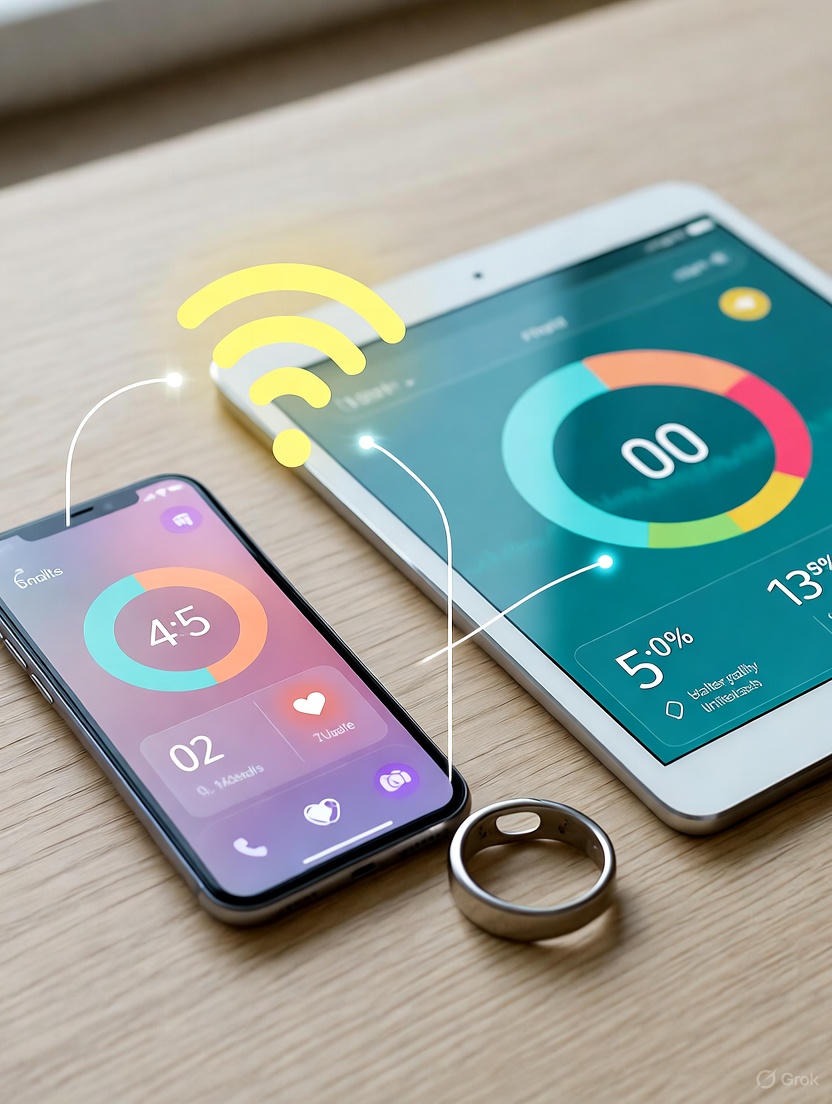
The Complete Beginner-Friendly Guide to Using Your Smart Ring During Life Transitions
A complete guide for beginners on using a smart ring during major life changes (new job, moving, etc.).
The Complete Beginner-Friendly Guide to Using Your Smart Ring During Life Transitions
We live in a world of constant change. A new job, a big move, the start or end of a relationship, becoming a parent, shifting fitness goals, or navigating periods of stress—these life transitions, while often exciting, can send shockwaves through our physical and mental well-being. Our sleep suffers, our stress levels spike, our energy plummets, and our routines dissolve. We’re left feeling out of sync with our own bodies, reacting to changes instead of understanding them.
But what if you had a personal, 24/7 wellness guide on your finger, silently observing the subtle biological shifts these transitions create? Welcome to the era of the smart ring—a discreet, powerful tool that moves beyond simple step counting to provide deep insights into your readiness, recovery, and resilience.
This guide is your roadmap to harnessing that power, especially when life is in flux. A smart ring isn't just another gadget; it's a lens through which you can view your body's objective response to change. Whether you're a complete beginner who just unboxed their ring or someone considering using one through a major life shift, this guide will transform you from a passive wearer into an active, empowered participant in your own well-being journey. We’ll move beyond the graphs and charts to show you how to interpret the data, make actionable adjustments, and build a lifestyle that doesn't just cope with transition, but thrives within it.
Why Life Transitions Demand a New Kind of Self-Awareness (And How a Smart Ring Provides It)
Life transitions are more than just logistical challenges; they are profound stressors on your autonomic nervous system—the unconscious control center regulating your heart rate, digestion, breathing, and stress response. During a calm period, this system operates in a balanced state. But introduce a major change—like relocating for a new job—and the balance is disrupted. You might feel fine, even excited, while your body is quietly signaling distress through fragmented sleep, an elevated resting heart rate, or a nervous system stuck in "fight or flight" mode.
Traditional self-awareness—checking in with your feelings—is crucial, but it has a blind spot: the subconscious physiological burden. You might think you’re handling the pressure of planning a wedding beautifully, but your body’s metrics could reveal a buildup of strain that, left unchecked, leads to burnout or illness weeks later. This is where quantitative self-awareness, provided by a smart ring, becomes your greatest ally.
A smart ring, like those from Oura, Ultrahuman, or RingConn, acts as a continuous biofeedback device. By measuring key physiological signals from the vasculature in your finger—a rich source of data—it translates your body’s whispers into clear, actionable insights:
Heart Rate Variability (HRV): Your body's ultimate readiness score. A higher HRV generally indicates a resilient, recovered nervous system ready to handle stress. A downward trend is often the earliest sign of overtraining, poor recovery, or emotional strain.
Resting Heart Rate (RHR): Your metabolic idling speed. A lowered RHR over time indicates improved cardiovascular fitness. A sudden, sustained increase can signal illness, dehydration, or excessive stress.
Sleep Architecture: It breaks down your night into light, deep, and REM sleep stages. Transitions often wreak havoc on sleep, but seeing how—are you missing crucial deep sleep? Is your REM (linked to emotional processing) fragmented?—provides a specific target for intervention.
Body Temperature: Continuous temperature sensing can reveal subtle shifts, like a rising baseline that may predict illness or hormonal changes, or a dip that confirms your body is optimally preparing for sleep.
Activity & Recovery: It balances your daytime exertion with your body’s plea for rest through a "Readiness" or "Recovery" score.
During a transition, this data is your objective truth. It cuts through the noise of "I should be fine" and shows you your biological reality. For example, if your HRV plummets and your RHR climbs during your first week in a new role, it's not a judgment—it's a data point. It tells you, "Your system is under novel load. Prioritize gentle movement, nutrient-dense food, and sleep hygiene tonight." This guide will show you exactly how to listen and respond.
Unboxing Your Potential: A Beginner’s First 14 Days with a Smart Ring
Your ring has arrived. The temptation is to strap it on, sync the app, and immediately dive into the deep end of the data ocean. Resist it. The most critical phase with your new tool is the baseline period—typically the first 7-14 days. This isn't a passive waiting game; it's an active calibration phase where the ring learns your unique normal.
Week 1: Observation, Not Intervention Your only goal this week is to wear the ring consistently (day and night, removing only to charge) and live your current life. Don’t try to "perform" or immediately optimize your habits. Go to bed at your usual time, have your typical workouts, and manage stress as you normally do. This allows the ring’s algorithm to establish a personalized baseline for you. Is your normal HRV 35 ms or 85 ms? Is your typical deep sleep 1.5 hours? This personal benchmark is far more valuable than any population average. During this phase, familiarize yourself with the app’s layout. Learn where your daily scores (Readiness/Recovery, Sleep, Activity) are, and where to find the deeper metrics.
Week 2: Introducing Gentle Curiosity Now you have initial baselines. This week, start connecting dots. Begin a simple habit: each morning, before checking your phone for emails or social media, open your ring’s app. Look at your scores and ask gentle, non-judgmental questions:
"My readiness score is lower today. What contributed? Did I sleep less? Was my HRV lower?"
"I feel tired, but my sleep score is high. Did I get more deep sleep than I realized?"
"My resting heart rate is up 5 BPM. Was I more stressed yesterday, or could I be fighting something off?"
Avoid the trap of obsessing over single data points. Look for trends over time. The ring is exceptional at showing you directional changes, which are infinitely more meaningful than any single day's number.
Setting Up for Success: The Fundamentals
Fit is Everything: The ring should be snug but not tight. You should feel a slight resistance when twisting it off. A poor fit leads to inaccurate data.
Charge Routine: Establish a simple habit. Charge it while you shower and get ready in the morning. 20-30 minutes is often enough to keep it going.
Data Hygiene: Ensure your app is updated and your phone’s Bluetooth is on for regular syncs. Some rings also allow you to note daily behaviors (like caffeine intake, alcohol, or meditation)—start using these tags sparingly to build context.
Remember, you are building a partnership with this device. The goal of these first two weeks is to establish trust and understanding. You are learning its language, and it is learning your body’s unique signature. This foundational knowledge is what will make it an indispensable companion when life inevitably shifts.
The Language of Your Body: Decoding Key Metrics for Transition Times
To navigate transition with your smart ring, you must become fluent in the language it speaks. Think of HRV, RHR, and Sleep not as isolated numbers, but as interconnected characters in the story of your daily resilience. During stable times, they follow a predictable script. During transition, the plot twists—and your job is to understand why.
Heart Rate Variability (HRV): The Symphony Conductor If your body is an orchestra, your heart is the drummer. HRV is the subtle, millisecond variations in the time between each beat. A high, stable HRV is like a skilled, adaptable drummer listening to the whole orchestra—it signifies a nervous system that can smoothly switch between effort (sympathetic "fight or flight") and recovery (parasympathetic "rest and digest"). A low or plummeting HRV is a drummer stuck on a single, frantic beat—a nervous system locked in stress mode.
During Transition: Expect volatility. A big new project, emotional stress, or intense travel will likely drive your HRV down. This is normal. The red flag is not a single low day, but a sustained downward trend over 5-7 days. That’s your body waving a white flag, signaling that its recovery resources are depleted. Conversely, as you adapt positively to a new healthy routine, you may see your HRV baseline gradually rise.
Resting Heart Rate (RHR): The Body's Idle Speed Your RHR is your heart’s beats per minute when you are truly at rest (optimally measured during deep sleep). Fitness improvements lower it over time. Acute spikes are powerful alerts.
During Transition: A elevated RHR (5+ BPM above your baseline) for 2-3 days can be one of the earliest signs of:
Oncoming Illness: Your body is ramping up its immune response.
Dehydration/Overtraining: Common in the hustle of a new routine.
Chronic Stress: The constant low-grade anxiety of change. Tracking RHR during a move, for instance, can alert you to slow down before you physically crash.
Sleep: The Non-Negotiable Foundation Transitions are the arch-nemesis of quality sleep. Your smart ring breaks sleep into stages:
Deep Sleep: The physical restoration phase. Critical for immune function and cellular repair.
REM Sleep: The mental and emotional processing phase. Essential for memory consolidation and mood regulation. When life is chaotic, these stages are often the first casualties. The ring shows you what you're missing. Are you getting almost no deep sleep? Your body isn't repairing itself. Is your REM fragmented? You’re not processing the day's emotional events, which can lead to feeling overwhelmed. This data moves you from "I slept badly" to "My deep sleep was 40% lower than usual last night; I need to prioritize wind-down routine tonight."
Body Temperature & Respiratory Rate: The Subtle Signals
Temperature: A rising baseline temperature can indicate inflammation, illness, or hormonal shifts (like ovulation). A significant dip at night is essential for initiating sleep.
Respiratory Rate: The number of breaths per minute during sleep. A stable rate is good. A significant increase can sometimes indicate stress or respiratory issues.
The Art of Synthesis: Reading the Story The magic happens when you combine these metrics. A low readiness score with low HRV, high RHR, and poor sleep tells a coherent story of systemic overload. A low score with good sleep but high activity tells a different story—you might be physically overreaching. In transition, learn to read the ensemble, not the soloist. This holistic view is what empowers your next, most important step: taking action.
Your First Major Transition: Starting a New Job or Career Path
The first Monday at a new job. The mix of excitement, anticipation, and anxiety is palpable. While your mind is focused on learning names and software, your body is undergoing a massive, unseen adaptation. The new commute, the mental load of learning, the social dynamics, the altered daily schedule—it all adds up to a significant allostatic load. Your smart ring is the perfect tool to manage this load intelligently, helping you show up as your best self without burning out in the first month.
Pre-Start Preparation: The Proactive Baseline In the week before you start, be intentional. Use your ring to ensure you enter this transition from a place of strength.
Prioritize Sleep Banking: Aim for consistently high sleep scores. This isn't about one early night; it's about building a reservoir of recovery. Implement a consistent wind-down routine to signal to your body that it's safe to rest deeply.
Monitor Readiness: If your readiness score is low in the days leading up to Day 1, don't add extra stress. Opt for light movement like walking or yoga instead of intense workouts.
Establish Rituals: Start practicing the morning and evening routines you want to maintain during your new job. This builds automaticity before your willpower is taxed.
Weeks 1-4: Navigation and Pattern Recognition This is your live calibration phase. Your daily morning check-in with your ring data becomes your strategic planning session.
The Commute Effect: Note how your different commute (time, mode, stress) impacts your nightly stress metrics (like a high nighttime heart rate) and morning readiness. Does driving in traffic spike your stress more than the train? The data will show you.
The Learning Curve Drain: Intense mental work is exhausting. You may see your body temperature slightly elevated from brain metabolism and your HRV suppressed even without physical exertion. This is normal. On days with deep learning, honor that by prioritizing recovery. A 20-minute walk at lunch can do more for your afternoon focus than another hour at your desk.
Social Integration Stress: New social interactions, while positive, are cognitively demanding. A week of constant meetings and "getting to know you" chats may show up as poorer sleep efficiency. This is your cue to protect your evenings. After a highly social day, give yourself the gift of a quiet, low-stimulation evening. Explore ideas for a simple, 15-minute power nighttime routine for exactly these kinds of busy days.
Long-Term Strategy: Sustainable Performance Beyond survival, use the ring to build sustainable habits in your new role.
Optimize Meeting Times: If your data shows you are most recovered and focused in the late morning, could you block that time for deep work and schedule routine meetings for other times?
Fuel for Performance: Use activity tags to note days you have lunch meetings or eat differently. Do certain foods lead to an afternoon energy crash reflected in higher stress metrics later?
The Weekend Rebound: Watch your weekend recovery. If your readiness score consistently recovers on Saturday, you’re finding balance. If it doesn’t, your workweek strain is too high, and you’re using the weekend just to catch up—a fast track to burnout. This is a critical signal to reassess boundaries, delegation, or workload.
By treating your first month as a collaborative experiment between you and your data, you move from being a passive participant in a stressful transition to an active architect of your sustainable success.
Navigating Relocation and Travel: Maintaining Wellness in Unfamiliar Territory
Relocating to a new city or even adapting to frequent travel for work represents one of the most comprehensive assaults on your routine. Everything changes: your sleep environment, your food sources, your social network, your light exposure, and your activity patterns. This "environmental transition" can leave you feeling completely unmoored. Your smart ring serves as your portable anchor, a constant that provides continuity and insight amidst the chaos.
The Pre-Move/Travel Audit: Know Your Baseline Before the transition, pay extra attention to what "good" looks like for you at home. What’s your average sleep duration and quality in your own bed? What’s your typical HRV on a calm Sunday? This knowledge is your compass. When you’re in a hotel or new apartment, you’ll know how far you’ve drifted from your true north.
Mastering the Sleep Sanctuary, Anywhere Sleep is the pillar that holds everything else up, and it’s the most vulnerable during travel. Your ring’s sleep data is your diagnostic tool for recreating your ideal conditions.
Light and Temperature: These are the two biggest disruptors. Use your ring to see the impact. Did your deep sleep plummet in the hotel with thin curtains and loud AC? That’s actionable feedback for next time. Proactively, use blackout masks, white noise apps, and adjust the thermostat. The effort to set up your bedroom for sleep is a skill you can apply anywhere. For specific travel tips, our guide on maintaining nighttime routines in hotels is invaluable.
Jet Lag and Schedule Disruption: Crossing time zones? Your ring will vividly show the disconnect between your internal clock (circadian rhythm) and the external day. Use its data to guide your adjustment. If your body temperature rhythm is still on home time, expose yourself to bright light during the new location’s morning to help shift it. Observe how your HRV and RHR normalize as you adapt.
The "First Night Effect": It’s normal for sleep to be poor the first night in a new place. Don’t panic. Use relaxation techniques and trust that your data will improve over the next few nights as your sense of safety recalibrates.
Activity and Nutrition in Flux Your normal gym is gone, and your kitchen is a suitcase or a box.
Movement Snacks: Don't let the absence of a routine kill all activity. Use your ring’s activity goal as a motivator. A 20-minute bodyweight workout in your hotel room, a long walk to explore the new neighborhood—these "movement snacks" maintain metabolic health and reduce travel-related stress, which will reflect positively in your recovery metrics.
Listening to Hunger & Energy Cues: Travel often means different foods and meal times. Use your energy levels and afternoon readiness scores as a guide. Does a heavy, late business dinner consistently ruin your sleep score? The data provides the impartial evidence you need to make different choices next time, like opting for a lighter meal.
Building a Portable Routine The ultimate goal is to build a "routine of rituals" that are location-agnostic. This might be a 5-minute meditation using an app, a specific stretching sequence, or a cup of herbal tea before bed. Your smart ring helps you validate these rituals. Does doing your 5-minute breathing exercise before bed correlate with a lower nighttime heart rate? If so, you’ve found a tool you can use anywhere to signal "safety" to your nervous system. For the solo traveler, developing these independent rituals is especially crucial for mental well-being, as discussed in our piece on nighttime wellness for solo travelers.
Relationship Shifts: Using Data to Understand Emotional and Physical Syncing
The beginning of a serious relationship, moving in together, marriage, or navigating a breakup—these intimate transitions create a profound biological ripple effect. Our physiology is deeply intertwined with our emotional bonds. A smart ring provides a unique, objective window into this connection, helping you understand the impact of relationship dynamics on your well-being and even improve synchronicity with a partner.
The New Relationship Energy (and Exhaustion) The early, passionate phase of a relationship is a biochemical rollercoaster. While thrilling, it can be physiologically taxing with late nights, altered routines, and high emotional arousal. Your ring might show:
Elevated Resting Heart Rate: From constant low-grade excitement/anxiety.
Suppressed HRV: Your nervous system is in a frequent, though pleasant, state of stimulation.
Irregular Sleep Patterns: Later bedtimes, more fragmented sleep. Seeing this data isn't a reason to avoid joy! It’s a reminder to balance novelty with recovery. Schedule a "recovery date"—a quiet night in with a home-cooked meal and an early bedtime. Use the ring to confirm that these calm connections are just as vital for your system, showing up as improved HRV and deep sleep.
Cohabitation and Sleep Syncing Moving in together is a major test of sleep compatibility. Different schedules, temperatures, and habits collide.
The Data-Driven Conversation: Instead of "you're moving too much," you can have a collaborative conversation based on data. "My ring shows my deep sleep is much lower when the room is above 70 degrees. Can we try 68 tonight?" or "My readiness score is tanking when we watch intense shows right before bed. Could we try reading instead?" This depersonalizes the issue and focuses on collaborative problem-solving. The role of temperature control in sleep is a fantastic topic to explore together.
Creating Shared Wind-Down Rituals: Use your combined data as motivation to build a shared pre-sleep routine. Maybe it’s 10 minutes of talking (no screens), followed by light stretching. Track how implementing this affects both of your sleep scores. This turns wellness into a shared project that strengthens your bond.
Navigating Conflict and Stress All relationships have conflict. Your ring can be an early-warning system for unhealthy stress patterns.
Post-Argument Recovery: A major argument will almost certainly show up as a spike in RHR, a crash in HRV, and poor sleep that night. Observing this can foster self-compassion—"No wonder I feel awful today, my body is in recovery mode." It can also motivate post-conflict repair. A genuine reconciliation, a hug, or a calm conversation should, over hours, help those metrics start to normalize.
The Silent Strain: Sometimes stress isn't acute but chronic—a lingering disconnect. A sustained, low-grade dip in your HRV baseline might be your body signaling unresolved emotional strain before your conscious mind has fully acknowledged it. This data can be a catalyst for a caring check-in with your partner.
Breakups and the Path to Recovery A breakup is a profound physiological stressor, akin to withdrawal. Your ring can be a compassionate guide through the grief process.
Validating the Grief: You will see the impact: terrible sleep, chaotic HRV, high RHR. This data validates your experience. It’s not "just in your head"; it’s a full-body event.
Tracking the Healing Arc: Over weeks and months, as you engage in self-care, the data will tell a story of gradual recovery. The first night you see your HRV return to its pre-relationship baseline, or your deep sleep duration normalize, is a powerful, objective marker of healing. It shows that your nervous system is relearning safety and autonomy. During this time, supporting your mental health through intentional nighttime wellness rituals can be profoundly helpful.
By providing a shared, non-judgmental language of the body, a smart ring can deepen intimacy, improve communication, and guide you through the complex emotional landscape of relationship transitions.
Fitness Evolution: From Couch to 5K to Marathon – Optimizing Every Step
Whether you're taking your first running steps or training for an endurance event, fitness journeys are defined by adaptation. The principle is simple: stress + recovery = growth. But the delicate balance is easily upset, leading to plateaus, injury, or burnout. Your smart ring transforms this guessing game into a precise science, ensuring your training load is always in sync with your body’s readiness to adapt.
Phase 1: The Beginner’s Launch – Listening Over Pushing When starting from a low baseline of activity, enthusiasm can outpace recovery capacity. The ring is your governor.
The Readiness Rule: Make it a non-negotiable policy: if your readiness/recovery score is "Low" or in the red, your workout is automatically downgraded. A planned run becomes a walk. A heavy strength session becomes mobility work or rest. This prevents you from digging a recovery hole in the critical first weeks.
Celebrating Non-Scale Victories: Before you see physical changes, you’ll see data changes. A downward trend in your sleeping RHR over 4 weeks is a massive win for cardiovascular health. A gradual rise in your HRV baseline shows your nervous system is becoming more resilient. These are your true milestones.
Sleep as Your Secret Weapon: Muscle repair and cardiovascular adaptation happen during deep sleep. For a beginner, prioritizing sleep quality is more impactful than any pre-workout supplement. Observe how a poor night’s sleep affects your next-day workout performance and perceived effort.
Phase 2: Building Consistency – Finding Your Personal Pattern As you settle into a routine, use the ring to identify your ideal workout timing and recovery needs.
Chronotype and Performance: Does your data show you have higher readiness scores and better workout outcomes in the afternoon versus the morning? The ring provides personal evidence to schedule your key sessions when you’re biologically primed.
The Impact of Different Modalities: Tag your workouts. Do heavy strength sessions crush your HRV for two days, while a moderate cycling class leaves you ready for more the next day? This helps you periodize your week intelligently, placing demanding sessions when you’re freshest and allowing for adequate recovery afterward.
Phase 3: Training for an Event – Precision Periodization This is where a smart ring shines brightest. Training plans are generic; your recovery is personal.
Dynamic Adaptation: A plan might say "10k tempo run today," but if your readiness is low from poor sleep or work stress, that run could be counterproductive—adding fatigue without fitness. Use the readiness score to dynamically adjust: shorten the distance, reduce the intensity, or swap it for recovery.
Tracking Overtraining Syndrome (OTS): OTS isn't just feeling tired; it's a systemic breakdown. The ring’s hallmarks of OTS are unmistakable: a persistently elevated RHR, a chronically suppressed HRV that won't bounce back, and deteriorating sleep quality despite fatigue. Spotting this trend early allows you to insert a deload week or complete rest, preventing months of setback.
The Taper & Peak: As you taper before race day, your ring provides confidence. You should see your HRV climb to its highest levels, your RHR dip to its lowest, and your sleep scores soar. This is objective proof that your body has absorbed the training and is ready to perform. Seeing this data can alleviate pre-race anxiety.
The Role of Non-Exercise Recovery Your ring highlights that recovery isn’t passive. It’s what you do between workouts.
Stress is Cumulative: A hard workout plus a stressful workday plus an argument is a massive triple load. The ring’s readiness score reflects the total load. On high-life-stress days, your training stress must be lower.
Nutrition and Hydration: Use tags. Do you see a correlation between low-carb days and poor recovery scores? Does alcohol, even just one drink, fragment your sleep and trash your HRV? The data provides clear feedback to optimize fueling for your goals.
By making your training responsive rather than rigid, you work with your body, minimizing injury risk and maximizing results. It’s the ultimate personal coach.
Parenthood Transitions: From Pregnancy to Sleepless Nights and Beyond
Few life transitions are as physiologically and emotionally all-consuming as becoming a parent. From the metamorphosis of pregnancy to the circadian chaos of a newborn, your previous notions of routine and self-care are rewritten. A smart ring becomes less of a performance optimizer and more of a survival compass, offering validation, insight, and micro-opportunities for recovery during this extraordinary chapter.
Pregnancy: Tracking a Dynamic Baseline Pregnancy is a state of profound, intentional physiological adaptation. Tracking this with a ring can be fascinating and reassuring.
The New Normal: Watch as your resting heart rate steadily climbs (increased blood volume) and your HRV may naturally trend downward as your body works harder. This isn’t a sign of poor health; it’s your new, temporary baseline. The key is to watch for deviations from this pregnant baseline that might signal issues like dehydration or excessive stress.
Sleep and Discomfort: As pregnancy progresses, sleep disruption is inevitable. The ring can show you how positional changes, pillow fortresses, or specific relaxation practices affect your sleep quality score and restfulness. This data can help you and your healthcare provider discuss sleep strategies.
Temperature Trends: The sustained elevation in basal body temperature is clearly visible, and some women even observe subtle patterns correlating with fetal movement or other pregnancy milestones.
The Fourth Trimester: Survival Mode Metrics The first 3-6 months postpartum are about triage. Abandon all previous score expectations.
Sleep in Fragments: Your "sleep" score will be a casualty. Reframe its use. Instead of aiming for a high score, use the ring to capture and quantify every minute of rest. When the baby finally sleeps, put your ring on and close your eyes. Seeing even 45 minutes of "light sleep" logged can be psychologically encouraging—it proves you are getting some recovery. It can also help you and your partner strategize shifts by showing who got more aggregated rest.
The Power of Micro-Recovery: A 20-minute nap while the baby contact sleeps may not feel like much, but if it nudges your HRV up a few points and lowers your RHR, it had a real, measurable systemic impact. This validates the "sleep when the baby sleeps" mantra with hard data.
Monitoring for Depletion: A persistently and extremely low HRV, coupled with a high RHR and relentless fatigue, could be an objective signal of postpartum depletion or the onset of a mood disorder. While not a diagnostic tool, this data can empower you to seek help earlier, framing your experience not as "just being tired" but as a measurable biological state that needs addressing. Our dedicated guide for new parents' nighttime routines offers practical, data-informed strategies for this phase.
The Long Haul: Rebuilding Your Foundation As sleep consolidates (somewhat), the ring shifts back to a tool for rebuilding your own health.
Returning to Movement: Use readiness scores to guide the intensity of your return to exercise. A "fair" score might mean a gentle walk, not a high-intensity class. This protects your pelvic floor and joints while respecting your still-recovering system.
The Impact of Constant Alertness: Even with more sleep, the psychological load of caregiving keeps the nervous system on alert. You may see your nighttime heart rate and respiratory rate remain higher than pre-baby levels. This insight can motivate you to practice deliberate nervous system down-regulation techniques, like brief meditation during naptime, knowing you are directly targeting a measurable state of hyper-arousal.
Syncing with a Child’s Sleep: As you work to establish healthy sleep habits for your child, your own consistent wind-down routine becomes doubly important. The principles of how nighttime routines help children apply to adults as well—consistency is key for regulating the entire household's circadian rhythm.
Through the haze of parenthood, the smart ring offers glimmers of objective reality, helping you navigate with slightly more grace, self-compassion, and strategic self-care.
Managing Stress and Preventing Burnout: Your Early-Warning System
In our modern world, stress is often a slow burn, not a sudden blaze. Burnout creeps in—a state of emotional, physical, and mental exhaustion caused by prolonged or excessive stress. By the time you feel burned out, you are often deeply in its grip. Your smart ring’s greatest superpower may be its ability to serve as an objective, pre-symptomatic early-warning system, giving you the chance to course-correct long before you crash.
The Biometric Signature of Chronic Stress Acute stress (a work deadline) causes a temporary spike in RHR and dip in HRV, followed by a rebound. Chronic, unmanaged stress creates a different, more dangerous pattern:
HRV Suppression: Your HRV baseline begins a sustained, downward drift. Your nervous system is losing its flexibility and spending more time in "fight or flight."
RHR Elevation: Your resting heart rate trends upward, even during sleep. Your engine is idling too high.
Sleep Degradation: Despite exhaustion, your sleep becomes shallow and fragmented. You struggle to fall asleep (racing thoughts) or wake up frequently. Deep and REM sleep are reduced.
Temperature Dysregulation: You may see a less pronounced nighttime temperature dip, indicating your body is struggling to enter its full restorative state.
This quartet of metrics paints an undeniable picture of a system under too much load for too long.
From Detection to Action: The Data-Driven Stress Protocol When you see this pattern emerging over a 7-10 day period, it’s time to activate a structured response—not with more willpower, but with strategic recovery.
Radical Sleep Prioritization: This is non-negotiable. Protect your sleep time fiercely. Implement a strict digital sunset, optimize your bedroom environment, and consider a targeted wind-down routine designed to lower cortisol naturally. Watch your ring for the return of deep sleep as your first sign of recovery.
The "Green Zone" Workout Mandate: Force yourself to swap intense workouts for parasympathetic-nervous-system-stimulating activities. This means walks in nature, gentle yoga, stretching, or foam rolling. The goal is to signal "safety" to your body, not add more strain. Your ring will show this working as your HRV begins its slow climb back up.
The Power of the Pause: Schedule deliberate pauses in your day. Use your ring’s inactivity alerts not as a scold, but as a cue for a 3-minute breathing break. Data shows that even brief moments of mindful breathing can improve HRV in real-time.
Audit and Eliminate: With the evidence from your ring, have the courage to audit your life. What commitments, when logged, correlate with your worst recovery scores? The data provides the objective rationale to set boundaries, delegate, or say no.
Building Resilience Proactively Beyond crisis management, use your ring to build daily habits that buffer against stress.
Find Your Recovery Levers: Experiment and use tags. Does a 10-minute meditation before bed correlate with a higher sleep score? Does disconnecting from email after 7 PM lead to a better morning readiness? Your ring will identify your most effective levers.
Practice Cyclical Living: Your data will show you are not a machine. You have natural cycles of higher and lower energy/resilience. Schedule demanding cognitive work during your high-readiness phases and administrative tasks during lower phases. This alignment reduces friction and wasted energy.
Embrace True Rest: Understand that rest is not the absence of work; it’s the presence of restorative activities. Let your ring define what true rest is for you. For one person, it’s reading fiction (see a HRV rise); for another, it’s a social outing (see a HRV drop). Personalize your rest based on biometric feedback.
By treating your ring’s metrics as a dashboard for your nervous system, you move from being a victim of stress to an empowered operator of your own well-being.
Health and Hormonal Shifts: Tracking Menstrual Cycles, Perimenopause, and General Wellness
Our hormonal landscape is a powerful, often under-appreciated director of our daily well-being. For women, the menstrual cycle creates a recurring monthly transition. For everyone, aging brings gradual hormonal shifts. A smart ring, with its continuous, passive tracking, is uniquely positioned to reveal the intricate connection between these internal rhythms and your measurable physiology, turning confusion into clarity.
Cyclical Living: Syncing with Your Menstrual Rhythm Instead of fighting your cycle, you can learn to flow with it, using your ring’s data to validate and plan.
The Follicular Phase (Post-Period to Ovulation): Often aligned with rising estrogen, this phase frequently correlates with higher energy, better workout performance, and more social motivation. Your ring data may show higher HRV, lower RHR, and excellent recovery scores. This is the time to schedule demanding projects, intense workouts, and social events.
The Luteal Phase (Post-Ovulation to Period): With rising progesterone and then falling hormones, this phase can bring lower energy, increased need for recovery, and heightened sensitivity to stress. Your ring will likely reflect this: HRV may dip, RHR may rise slightly, sleep may become more fragile, and your body temperature will be noticeably elevated (a key biomarker). This isn’t a flaw; it’s data. This is the time to schedule more rest, gentle movement, solo work, and intentional recovery practices. Planning a gentle, cortisol-lowering nighttime routine is particularly powerful during this phase.
Menstruation: The drop in hormones brings the period. Observe how your body responds. Some women see a immediate improvement in sleep and recovery scores as progesterone plummets; others feel fatigued. Your personal pattern is what matters. This data helps you advocate for yourself—if you know your luteal phase consistently crushes your recovery metrics, you can plan a lighter workload accordingly.
Navigating Perimenopause and Menopause This multi-year transition is marked by hormonal volatility that can feel chaotic. A smart ring provides stable, objective grounding.
The Temperature Tells the Tale: The hallmark of perimenopause is erratic ovulation and progesterone production. This shows up vividly as wildly irregular temperature patterns—peaks and troughs with no predictable rhythm, unlike the clear biphasic pattern of a fertile cycle. Seeing this can be surprisingly validating, confirming that the experience is real and biological.
Tracking Symptom Triggers: Does that evening glass of wine now destroy your sleep (hot flashes, fragmentation)? Does stress now impact your HRV more dramatically? Use tags alongside your metrics to identify new triggers and adjust your habits. You might find that adjusting your nighttime routine as you age with earlier bedtimes or different supplements becomes essential.
Establishing a New Baseline: Post-menopause, hormones settle at a new, low level. Your ring helps you establish what "healthy" looks like in this new chapter. What’s your normal HRV now? What’s your optimal sleep duration? This becomes your new compass for well-being.
General Health Monitoring for All Genders Hormones aren't just a female concern. Testosterone, cortisol, thyroid hormones, and insulin all influence core metrics.
Illness Prediction: One of the most valued features is early illness detection. A sustained elevation in RHR and/or body temperature, coupled with a drop in HRV, often appears 24-48 hours before you feel symptoms. This allows you to proactively rest, hydrate, and potentially shorten the illness's duration.
Lifestyle Intervention Feedback: Starting a new diet, supplement, or meditation practice? Your ring provides near-immediate feedback on whether it’s helping or harming your systemic resilience. For example, starting a mindfulness practice might show a gradual upward trend in your HRV baseline. Considering supplements? Understanding how timing fits into your nighttime routine can be informed by your personal recovery data.
The Big Picture of Aging: Gently, your ring will show the long-term trends of aging—a very gradual rise in RHR, a slow decline in HRV. This isn’t alarming; it’s natural. However, the rate of this decline is heavily influenced by lifestyle. Excellent sleep, consistent movement, and stress management, all tracked and encouraged by your ring, can help you age with vastly greater resilience and vitality.
By making the invisible visible, your smart ring empowers you to respect your body’s innate rhythms, turning hormonal transitions from sources of frustration into maps for personalized, empowered living.
Integrating It All: Building Your Personalized, Transition-Proof Lifestyle System
You now possess a deep understanding of how your smart ring illuminates the path through various life transitions. The final, and most important, step is synthesis. We move from reactive data-checking to proactive lifestyle design. This is about weaving the insights from your ring into a flexible, resilient system—a personalized operating manual for your well-being that holds strong even when life changes.
The Morning Review: Your Daily Strategic Briefing Transform your morning app check from a passive glance into an active planning session. Create a simple 3-step ritual:
Assess: Look at your Readiness/Recovery score and its contributing factors (sleep, HRV, RHR, temperature). Acknowledge the state without judgment. "My body is signaling depleted resources today."
Accept: Based on the score, accept your realistic capacity for the day. A high score means you can lean into demanding tasks and workouts. A low score means your primary goal is recovery, not achievement. Your to-do list must adapt.
Adjust: Make one tangible adjustment to your day based on the data.
Low Readiness? Schedule a 20-minute walk instead of a gym session. Block an extra 30 minutes for sleep tonight. Say no to an optional evening commitment.
High Readiness? Tackle that big project you’ve been avoiding. Have that important conversation. Do your most challenging workout.
Creating Your "If-Then" Playbook for Transitions Anticipate future transitions and write your own rules. This turns decision-making into an automatic, low-stress process.
"If I'm starting a new job next month, then... I will prioritize sleep banking for the two weeks prior, and during the first month, I will not schedule any workouts after 7 PM to protect my wind-down time."
"If my readiness score is 'Low' for two days in a row, then... I will automatically convert my next two scheduled workouts to walking or yoga, and I will implement a 15-minute power-down routine before bed."
"If my travel schedule shows more than 3 nights in hotels, then... I will pack my blackout mask and portable white noise machine, and plan to optimize my hotel room upon arrival."
The Quarterly Audit: Tracking Your Evolution Every 3 months, take a longer view. Most ring apps offer trend views over 90 days.
Look for Directional Shifts: Has your HRV baseline gently risen? Has your average sleep duration improved? These are signs your system is becoming more resilient.
Identify Recurring Challenges: Do you see a pattern of poor recovery every third week? Could it be linked to your work cycle or hormonal phase? This insight allows for proactive planning.
Celebrate Progress: We often forget how far we’ve come. Seeing a tangible graph of improved sleep efficiency or a lowered RHR since you started using the ring is a powerful motivator to continue your positive habits. This is the ultimate form of nighttime routine optimization using your sleep data.
Balancing Data with Intuition: Avoiding Obsession The goal is informed intuition, not data slavery. Implement these guards:
The "One-Metric" Rule: On any given day, choose only one primary metric to focus on improving (e.g., sleep duration, or reducing alcohol to see its effect). Ignore the rest.
The Weekly Break: Consider taking the ring off for a day on the weekend. This breaks the compulsion to constantly check and reconnects you with pure bodily feeling.
Trends Over Points: Drill into your mind: a single day’s number is meaningless noise. Only patterns over 5-7 days are meaningful signal.
Your smart ring is the most objective friend you’ll ever have—one that tells you the truth about your body’s state without criticism or agenda. By following the principles in this guide, you’ve learned its language. You now know how to listen when it tells you to push, to rest, to adapt, and to celebrate. As you face the inevitable and beautiful transitions of life, you do so not as a passive passenger, but as a skilled navigator, equipped with a profound understanding of your own vessel, ready to sail through calm and stormy waters alike with resilience and grace.
The Art of the Wind-Down: Designing Your Data-Informed Nightly Ritual
You’ve seen the data: a poor night’s sleep crushes your readiness score. You know the theory: wind-down routines are essential. But how do you design one that actually moves the needle on your biometrics? This is where you move from generic advice to creating a personalized, sensor-validated ritual that reliably prepares your nervous system for restoration. Your smart ring is the perfect tool to A/B test your way to the perfect evening.
The Biometric Goal of a Wind-Down A successful routine isn't about checking boxes; it's about triggering a physiological shift from sympathetic (alert) to parasympathetic (rest) dominance. Your ring measures this shift through:
A decrease in your heart rate in the hour before bed.
An increase in HRV as you relax.
A drop in your skin temperature as your body prepares for sleep.
Improved sleep latency (time to fall asleep) and sleep efficiency scores.
Building Your Routine: The Core Components Think in layers, adding one element at a time and observing its impact over a week.
The Digital Sunset (The Non-Negotiable): Blue light from screens delays melatonin production and keeps your brain in "daytime" mode. Use your ring to see the proof. Compare a night where you put devices away 90 minutes before bed to a night of scrolling until lights-out. The difference in sleep latency and deep sleep percentage will be stark. Make this your foundation.
The Environmental Cue:
Light: Shift to warm, dim lights. Use smart bulbs that automatically dim at sunset. This supports your natural circadian rhythm, which your ring tracks through body temperature trends.
Temperature: A cool room (65-68°F) is critical. Your ring’s temperature graph should show a clear dip as you sleep. If it’s flat, your room is likely too warm. The science behind how temperature control completes your nighttime routine is directly visible in your own data.
The Active Relaxation Practice (Choose Your Lever): This is where personalization shines. Test one of these for a week and tag it in your app.
Gentle Movement: 10-15 minutes of yoga or stretching. Does it correlate with a lower pre-sleep heart rate?
Mindfulness or Meditation: Even a 10-minute guided session. Look for a post-session rise in your live HRV reading on the app.
Journaling: Downloading worries or practicing gratitude. This can directly quiet the "monkey mind" that causes high sleep latency. See how journaling fits into the perfect nighttime routine by tracking its impact on your "time to fall asleep" metric.
Reading Fiction: A powerful mental escape into a narrative that isn't your own life.
The "Routine Fading" Technique Your routine should act as a series of cues that become automatic. Start 60-90 minutes before your target bedtime and follow the same sequence each night. Over time, simply beginning the first step (e.g., dimming the lights) will trigger a physiological relaxation response. Your ring will show this through faster reductions in evening heart rate over time.
Weekends and Variability Should your routine be rigid? Data says: consistent, but flexible. A radically different weekend schedule (very late nights) will cause "social jet lag," visible in poor Sunday night sleep and low Monday readiness. However, a slightly modified, more relaxed weekend ritual—perhaps sleeping in a bit but maintaining the same wind-down principles—can be sustainable. Consider if your weekend nighttime routine should be different by experimenting and watching your recovery metrics.
Nutrition, Hydration, and Your Ring: Seeing the Direct Impact of What You Consume
You are what you eat—and your smart ring proves it. Beyond calories and macros, the timing and quality of your food and fluid intake have a dramatic, measurable effect on your recovery metrics. This turns nutritional choices from abstract concepts into clear cause-and-effect relationships.
The Mealtime Micro-Experiments Use your ring’s tagging feature to conduct clean, two-variable tests.
The Late Dinner Test: For three nights, eat your last meal 3+ hours before bed. For the next three, eat within 90 minutes of bed (keeping the meal similar). Compare:
Sleep Scores: Late meals often lead to more fragmented sleep, less deep sleep, and a higher nighttime heart rate as your body digests instead of rests.
Morning Readiness: Poor sleep from digestion usually translates to lower recovery scores.
The Alcohol Audit: This is often the most revealing. Tag nights with 1-2 drinks. Expect to see, even with "just a drink":
HRV Annihilation: A dramatic plunge, often by 30-50%.
REM Sleep Blockade: Alcohol suppresses crucial REM sleep. Your ring will show a disproportionately low REM duration.
Elevated RHR: Your heart works harder all night.
Restless Sleep: Increased wakefulness and light sleep in the second half of the night as your body metabolizes the alcohol. This data provides objective motivation for moderating intake, especially before important days.
Hydration: The Silent Performance Driver Dehydration is a stealth stressor. It increases plasma cortisol (stress hormone) and reduces blood volume, forcing your heart to work harder.
Ring Signature of Dehydration: A sudden, unexplained spike in your resting heart rate, often accompanied by a lower HRV. If you see this pattern, your first intervention should be to drink water, not assume you're getting sick.
The Morning Hydration Bump: Track if drinking a large glass of water first thing impacts your daytime heart rate stability. Many users see a mild, positive effect on HRV from consistent hydration.
Caffeine Timing and Your Chronotype Caffeine has a 6-8 hour half-life. Your ring can pinpoint your personal sensitivity.
The Experiment: For a week, have your last caffeine at 2 PM. The next week, cut it off at noon. Compare your sleep latency (time to fall asleep) and deep sleep scores. The data may show that your "3 PM pick-me-up" is costing you the first hour of restorative sleep. If you work late, finding the optimal cutoff is even more critical; explore nighttime routines for people who work late for tailored strategies that account for later caffeine consumption.
Using Data for Empowerment, Not Disorder The goal is insight, not orthorexia. Don't tag every morsel. Instead, use tags to investigate specific questions or break through plateaus. The evidence your ring provides helps you make intentional, empowered choices—like choosing an earlier dinner to protect your sleep score before a big meeting—rather than relying on willpower alone.
When the Data Seems "Wrong": Troubleshooting Common Smart Ring Dilemmas
There will be days when you feel fantastic but your readiness score is low, or nights you slept terribly but the ring says your sleep was "good." This dissonance is frustrating but normal. It's a chance to deepen your understanding, not distrust the tool.
Scenario 1: "I Feel Great, But My Score is Low." This is your ring acting as a pre-symptomatic radar.
Possible Cause: Lingering Systemic Strain. Your conscious mind has moved on from a stressor (a big project, an argument), but your nervous system is still recovering. The low HRV and elevated RHR reflect that recovery debt. This is a warning to take it easy today to prevent feeling terrible tomorrow.
Possible Cause: Incipient Illness. Your immune system may be mounting a response to a pathogen you haven't yet felt. The elevated RHR and temperature are the clues. Heed the warning, rest, and hydrate.
Action: Trust the data over momentary feeling. Opt for a recovery day. You may avoid a crash or shorten an illness.
Scenario 2: "I Slept Terribly, But My Sleep Score is High."
Possible Cause: Perception vs. Reality. You may have woken up frequently but fallen back asleep quickly. The ring logs "awake" time only if you're up for a sustained period (e.g., 5+ minutes). Your perception of a restless night may be worse than the objective fragmentation.
Possible Cause: You Got More Deep Sleep Than You Realize. Deep sleep is the most restorative but also the stage where you're least conscious. A night with high deep sleep percentage can leave you feeling disoriented if awakened from it, even if the total quantity was excellent.
Action: Look beyond the score. Examine the breakdown: was your deep sleep high but your REM low? That could explain feeling physically restored but mentally foggy. Use the detailed graph, not just the headline number.
Scenario 3: Sudden, Unexplained Metric Shifts.
Check the Basics First: Is the ring fully charged? Is it fitting properly? A loose ring leads to poor signal quality and erratic data.
Consider Medication/Supplement Changes: Many substances (antihistamines, new supplements, even NSAIDs) can affect HRV, RHR, and sleep architecture.
Environmental Extremes: Unusually hot or cold sleeping environments, high altitude, or significant changes in humidity can impact metrics.
Action: Use tags to note any of these changes. Look for a return to baseline over the next few days. If a negative shift persists for over a week without explanation, it's worth a conversation with a healthcare provider.
The Golden Rule of Data Interpretation Context is king. A single data point is noise. A trend over 3-7 days is a signal. Always combine ring data with your subjective feeling and life context. The ring tells you the "what"; your job is to deduce the "why."
Beyond the Self: Using Your Ring for Empathy and Connection
The data from your smart ring is intensely personal, but its insights can profoundly improve your relationships and empathy. By understanding your own stress signatures, you become more attuned to the unspoken experiences of those around you.
The Language of Non-Verbal Stress You now know that a stressful day has a biometric footprint: higher RHR, lower HRV, fragmented sleep. When a partner, family member, or close friend is going through a tough time—even if they say "I'm fine"—you can apply this understanding.
Action: Instead of pressing with "Are you sure you're okay?", offer recovery-oriented support. "You've had a huge week. Let me handle dinner tonight so you can relax," or "Why don't we just have a quiet night in?" This approach addresses the biological reality of their stress, which they may not even be fully conscious of.
Shared Goals and Friendly Competition If you and a partner or friend both wear trackers, you can foster connection through shared wellness goals.
Focus on Collaboration, Not Comparison: Compare baselines, not daily scores. "It's fascinating that your normal HRV is higher, but my deep sleep is longer. What can we learn from each other's habits?"
Create Joint Challenges: "Let's both aim for a sleep score of 85+ for 5 nights this week." or "Let's see if doing a 10-minute wind-down meditation together improves both our sleep latencies."
Support During Partner's Transitions: When your partner is undergoing a major stress (e.g., a parent's illness, a work crisis), use your own ring data to manage your stress so you can be a more stable, present source of support for them. Your self-care becomes an act of love.
Modeling Behavior for Family For parents, your ring can help you model the importance of self-care and recovery.
Verbalize the Connection: "Mom's ring says my body needs extra rest tonight, so I'm going to read instead of watching that loud movie. It helps me be more patient tomorrow."
Normalize Recovery: Letting kids see you prioritize sleep and manage stress teaches them that health is holistic and that listening to your body is smart, not weak.
This outward-facing application transforms your smart ring from a self-optimization tool into a lens for greater compassion and a catalyst for healthier relationships.
The Long Game: Tracking Macro-Transitions and Aging Gracefully
Your smart ring is not just for navigating this month's crisis; it's for mapping the multi-year journey of your life. It provides a longitudinal dataset that reveals the slow, powerful tides of aging, lifestyle changes, and long-term habit formation.
Documenting Lifestyle Upgrades Making a major, sustained change? Your ring is your proof of concept.
Starting a Consistent Meditation Practice: Don't expect overnight change. Look for a gradual, month-over-month upward trend in your HRV baseline and a downward trend in your sleeping RHR. This is concrete evidence of improved autonomic nervous system resilience.
Committing to Strength Training: Over 6-12 months, you should see your resting heart rate decrease significantly. You may also see improvements in deep sleep as your body works harder to repair tissue.
Quitting Alcohol or Improving Diet: Expect dramatic improvements in sleep consistency (fewer disturbances), REM sleep rebound, and stabilization of daily readiness scores.
The Natural Arc of Aging Aging brings predictable physiological changes: a gradual decrease in HRV, a slight increase in RHR, and changes in sleep architecture (often less deep sleep). Your ring documents your personal arc.
The Power of the Baseline: Knowing your metrics at 35 gives you context for your metrics at 45. The question isn't "Is my HRV 40?" but "Has my HRV declined faster than expected given my lifestyle?"
Optimizing for Your Age: Your data will guide you to adjust your routines as you age. You may find you need more sleep, earlier bedtimes, or different types of recovery. The ring provides the feedback loop to make those adjustments effectively.
Health Advocacy and Prevention Your long-term data is a powerful health record.
Establishing Your "Normal": If you ever need to see a doctor for fatigue, sleep issues, or unexplained symptoms, being able to say, "My normal sleeping HRV is 50, and for the last month it's been at 30," is far more useful than "I feel tired."
Noticing Deviations: A sustained, unexplained shift in your long-term trends can be an early prompt to seek medical advice, potentially catching issues early.
By viewing your ring data through a multi-year lens, you cultivate patience and appreciate the compound interest of small, daily habits on your long-term vitality.
From Beginner to Advanced: Progressive Overload for Your Recovery
Just as you progressively overload muscles to get stronger, you can apply the same principle to your recovery capacity. An "advanced" user isn't someone who ignores their low scores; they're someone who uses the data to strategically stress and recover, thereby expanding their resilience threshold.
The Concept of "Recovery Capacity" Think of your recovery metrics (HRV, RHR) as a bank account. Stress (work, workouts, life) makes withdrawals. Sleep, nutrition, and relaxation make deposits. Your goal is to increase your account's size and the speed of deposits.
Beginner Phase: Focus on consistent deposits. Prioritize sleep, manage stress, avoid overdrawing the account (overtraining).
Advanced Phase: Strategically make larger withdrawals (e.g., a harder training block, taking on a demanding project) while simultaneously optimizing deposit strategies to handle the load.
Advanced Tactics for Expansion
Strategic Stress + Strategic Recovery: Plan a 3-week intense work or training block. Intentionally pair it with impeccable recovery hygiene: strict bedtime, nutrient-dense food, digital curfews, and daily mindfulness. Watch your metrics. The goal is to see them hold steady or dip only slightly under the increased load, then bounce back quickly during a deload week. This proves you've increased your capacity.
Biofeedback Training: Use the live HRV or heart rate display in your ring's app during relaxation practices. Actively try to lower your heart rate or raise your HRV through paced breathing. This turns your ring into a real-time meditation coach, strengthening your mind-body connection.
Circadian Rhythm Fasting: Align eating windows with daylight. Observe if time-restricted eating (e.g., 12-8 PM) improves your nighttime metabolic drop (visible on temperature graph) and morning readiness scores compared to late eating.
Cold Exposure & Heat Therapy: After safely consulting a doctor, experiment with brief cold showers or sauna use. Tag these sessions. Many see a significant boost in HRV and deep sleep on nights following such practices, indicating a positive hormetic stress response. Follow a nighttime routine progression from beginner to advanced to safely integrate these powerful tools.
Knowing Your Limits The advanced user also knows when not to push. If, after a strategic overload, your metrics don't recover within a planned deload period, that's critical data. It means the overload was too much, and you need a longer, more intentional recovery phase. This prevents the one-step-forward-two-steps-back cycle.
Travel Hacks 2.0: Advanced Strategies for Frequent Flyers and Digital Nomads
For those in perpetual transition, standard travel advice isn't enough. You need a system.
The Multi-Time-Zone Playbook
Pre-Flight: If traveling east, start going to bed 30 minutes earlier each night for 3-4 nights before departure. If west, go later. Use your ring to see if this micro-adjustment softens the jet lag impact on your first few nights.
In-Flight Rituals:
Hydration Hyperdrive: Drink water relentlessly. Set a timer. The cabin air is brutally dehydrating.
Light Manipulation: Use a light therapy glasses (like those from Luminette) or simply seek/turn away from light based on your destination's time. Your goal is to shift your temperature rhythm, which your ring tracks.
The "No-Alcohol" Flight Rule: The combined effect of altitude and alcohol on sleep metrics is catastrophic. Make this an ironclad rule.
Upon Arrival: Force yourself into the local light-dark cycle immediately. Use your ring's body temperature minimum (usually about 2 hours before your natural wake time) as a guide. Getting bright light exposure after this temperature nadir helps lock in the new time zone.
Creating a "Go-Bag" of Sleep Cues Your travel kit should contain non-negotiable items that recreate your sleep sanctuary:
Portable White Noise Machine or Earplugs: Consistent sound masking.
True Blackout Mask: Not all are equal. Find one that creates total darkness to protect your melatonin production.
Your Own Pillowcase or a Familiar Scent: A small olfactory cue of "home" can lower pre-sleep anxiety.
A Dedicated "Travel Only" Wind-Down Playlist: Music or a podcast you only listen to while preparing for sleep in unfamiliar places. This becomes a powerful conditioned cue.
The "Reset Day" After Major Travel Schedule a recovery day after a long trip. Even if you feel okay, your ring will likely show residual strain. Use this day for gentle movement, sunlight, home-cooked food, and an early, protected bedtime. This day is an investment that prevents travel burnout from accumulating. Solo travelers, in particular, can benefit from a structured post-travel reset ritual to reconnect with a home base.
Syncing with Other Tech: Creating Your Personal Biometric Dashboard
Your smart ring is a cornerstone, but not the entire castle. Integrating its data with other apps creates a holistic dashboard, revealing connections you'd otherwise miss.
Fitness App Integration (Apple Health, Google Fit, Strava)
The Big Picture: Seeing your ring's "Readiness" score alongside your planned workout on Strava provides immediate context. A low readiness score layered on top of a high-intensity workout can explain poor performance or excessive fatigue.
Activity Adjustment: Some rings can use activity data from these apps to inform daily goals. Ensure this is enabled for the most accurate picture of your total load.
Menstrual Cycle Trackers (Clue, Natural Cycles)
Syncing Cycles with Metrics: This is a game-changer. By allowing your ring app to read cycle data, you can see your biometrics (HRV, RHR, temperature, sleep) graphed directly alongside your cycle phase. This visually confirms how your physiology shifts and allows for truly cyclical planning.
Mindfulness Apps (Calm, Headspace)
Quantifying Calm: Tag your meditation sessions in your ring app. Over time, look for correlations. Do days with meditation show higher afternoon HRV? Does a before-bed meditation improve your sleep latency metric? This turns a subjective practice into an objectively reinforced habit.
The Power of Manual Journaling Don't underestimate a simple notes app or journal. Once a week, review your ring's trends and write a few sentences: "HRV was low all week despite good sleep. Noticed high work stress. Next week, I'll try a daily afternoon walk to break up the stress." This act of synthesis—combining data with subjective narrative—is where the deepest insights and lasting behavior change occur.
Ethical Use and Digital Wellness: Avoiding the Trap of Quantified-Self Anxiety
With great data comes great responsibility. It is possible to become a slave to the scores, fostering anxiety that defeats the tool's purpose. The final mastery is using the ring to support your well-being, not undermine it.
The Signs of Unhealthy Obsession
Checking the app compulsively, especially in the middle of the night.
Feeling genuine anxiety or self-worth depletion when scores are low.
Ignoring bodily signals in favor of the data ("I feel hungry, but my calorie burn says I shouldn't eat").
Becoming rigid and inflexible, refusing social occasions or spontaneous joy because it might "hurt my sleep score."
Building a Healthy Relationship with Your Data
Designate Check-In Times: Once in the morning, once maybe in the evening. That's it. Turn off unnecessary notifications.
Embrace the "Bad" Data: A low score is not a failure. It's the most valuable data you can get. It's your body communicating a need. Thank it for the information and adjust accordingly.
Take Regular Breaks: Consider taking the ring off for a full 24-48 hours every month or two. Reconnect with how you feel without the numbers. This resets your relationship and prevents dependency.
Focus on the Feeling, Use the Data as a Guide: Start with "How do I feel?" Then, consult the data to understand why. Not the other way around.
Remember the Goal: The goal is not a perfect score every day. The goal is resilience—the ability to withstand life's stresses and bounce back. Sometimes, resilience is built by having a late, joyful night with friends and then using your ring's data to recover intelligently over the next two days.
Your smart ring is a mirror, reflecting your body's state. But you are not the reflection. You are the person looking into it, with the power to act, adapt, and live fully. Use it to enhance your human experience, not to reduce yourself to a set of graphs.



%402x.svg)