


Daily Wellness Habits for Professionals: Maintaining Health Despite Work Demands
Daily wellness habits for professionals to maintain health despite the demands of a career.
Daily wellness habits for professionals to maintain health despite the demands of a career.
%402x.svg)
The relentless ping of notifications. The calendar back-to-back from 8 AM to 6 PM. The "just one more email" at 10 PM. For today’s professional, work isn’t just a place you go—it’s a state of being that bleeds into evenings, weekends, and what was once sacred personal time. In this always-on culture, our health has become the silent casualty, quietly traded for deadlines and deliverables. We experience the consequences not as a dramatic crash, but as a slow leak: dwindling energy, creeping weight gain, fractured sleep, and a mind that feels perpetually foggy.
Yet, what if the narrative could be flipped? What if your demanding career didn’t have to be the antithesis of your wellbeing, but could actually coexist with—and even fuel—a state of vibrant health? The secret isn’t found in radical overhauls or month-long wellness retreats. It’s woven into the fabric of your daily routine through intentional, sustainable habits. This is the art of micro-wellness: small, science-backed actions, consistently applied, that compound into profound results.
For the modern professional, technology is no longer just the source of the drain; it can be a powerful ally in this reclamation project. This is where the evolution of wearable technology, particularly sophisticated devices like smart rings, changes the game. Unlike wrist-worn devices that can be bulky or inaccurate during sleep, a smart ring is a discreet, always-on wellness companion. It provides continuous, nuanced biometric tracking—from heart rate variability (HRV) and resting heart rate to skin temperature and sleep architecture—offering you an objective, data-rich mirror of your body’s true state. It moves you from guessing about your health to knowing, transforming abstract concepts like "stress" and "recovery" into tangible, actionable metrics.
This guide is your blueprint for building an unshakeable foundation of health that can withstand, and even thrive under, professional pressure. We will move beyond generic advice and delve into the specific, tactical habits that fit into a busy schedule, supported by the insights only precise biometric data can provide. Your career is a marathon, not a sprint. Let’s ensure your body and mind are optimally fueled for the long run.
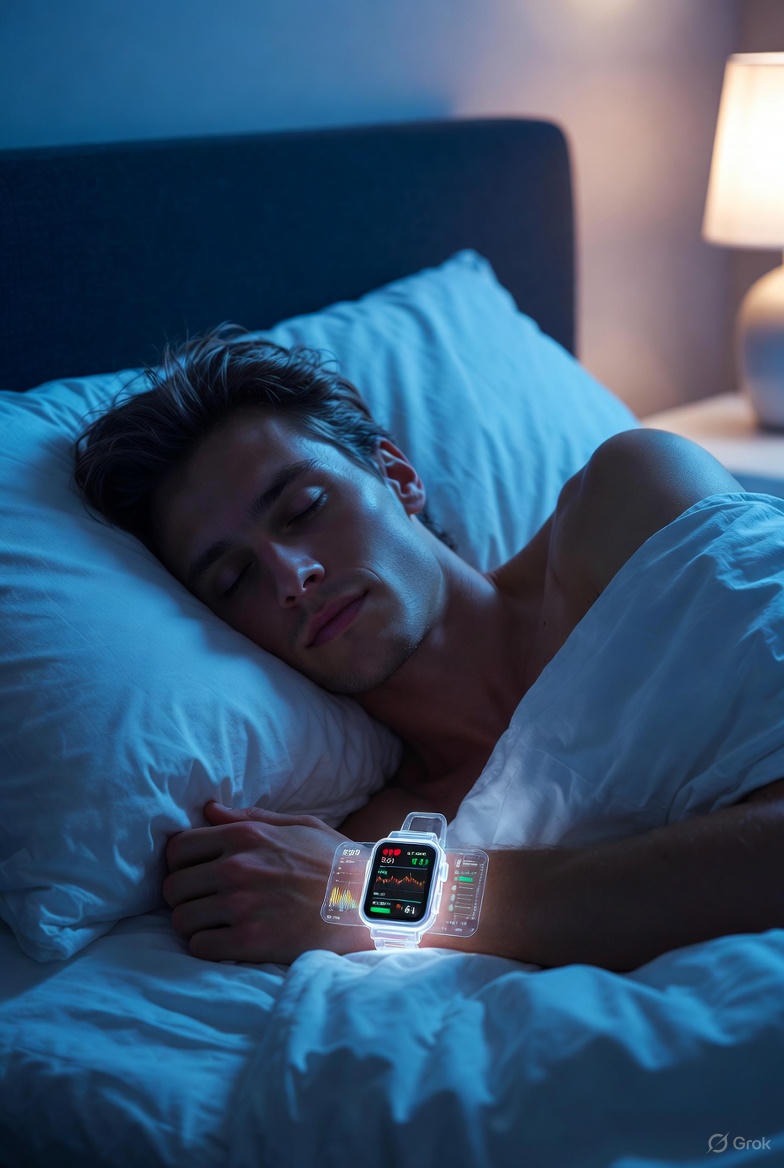
In the high-stakes professional world, sleep is often worn as a badge of honor—a sacrifice made on the altar of productivity. "I'll sleep when I'm dead" is not just a quip; it's a prevailing ethos. But this mindset is fundamentally flawed and counterproductive. Sleep is not downtime; it is critical uptime for your brain and body. It is the single most effective performance-enhancing, decision-sharpening, and creativity-boosting "tool" at your disposal, and it requires zero subscription fee.
During sleep, your brain isn't offline; it's in a state of intense activity. It's consolidating memories, transforming short-term learnings from the day into long-term knowledge—essential for any professional acquiring new skills or information. It's also conducting a nightly "clean-up," flushing out neurotoxic waste products that accumulate during waking hours, including beta-amyloid, a protein linked to Alzheimer's disease. Skimping on sleep literally leaves your mind cluttered and toxic.
For your body, sleep is the prime time for repair. Growth hormone is released, repairing muscle tissue (critical if you incorporate any fitness), and your immune system releases cytokines, proteins that help fight infection and inflammation. Chronic sleep deprivation makes you significantly more susceptible to illnesses, leading to more sick days and reduced resilience. Furthermore, sleep is the master regulator of your hormones, including those that control hunger (ghrelin and leptin). Poor sleep reliably increases cravings for high-calorie, high-carb foods, directly undermining nutrition goals.
The goal isn't just more sleep; it's better sleep health. This encompasses the quality, timing, and consistency of your sleep, not just the quantity. This is where data becomes empowering. A smart ring tracks your sleep stages (light, deep, and REM sleep), your sleep latency (how long it takes to fall asleep), and your restlessness. You might discover you're getting 7 hours in bed but only 5.5 hours of actual sleep, with very little restorative deep sleep. This objective insight is the first step toward meaningful change. For a foundational understanding of what quality rest truly entails, our sleep health 101 guide breaks down everything a professional needs to know to start optimizing this crucial pillar.
Building Your Professional Sleep Protocol:
The return on investment for protecting your sleep is immense. You will think clearer, manage emotions better, and communicate more effectively. It is the ultimate competitive advantage in a tired world. To understand just how far-reaching these benefits are, consider why sleep health matters more than you might think, impacting everything from your boardroom decisions to your long-term cognitive health.
Professionals are master time managers. We live by our calendars, blocking meetings, dedicating focus hours, and scheduling tasks. Yet, we often fail to manage our one finite, internal resource: energy. Time is constant; energy fluctuates. You cannot create more hours in a day, but you can significantly influence the quality of your energy throughout those hours. Strategic energy management is the practice of aligning your tasks with your natural biological rhythms and proactively renewing your mental and physical fuel.
The human body operates on ultradian rhythms—90-120 minute cycles throughout the day where we naturally move from high alertness into a physiological dip. Ignoring these dips by powering through with caffeine and willpower leads to burnout, errors, and chronic stress. The modern "grind" culture celebrates ignoring these signals, but high performers work with them.
The Core Principle: Oscillation. Peak performance is a pulse, not a plateau. It requires cycles of focused work followed by intentional renewal. This isn't about slacking off; it's about working smarter by respecting your biology.
Tactics for the Workplace:
Your wearable data is crucial here. A consistently low recovery score, despite adequate sleep, is a red flag. It could indicate underlying stress, subclinical illness, or overtraining. It’s your body’s early warning system, prompting you to dial back intensity and prioritize recovery before you get sick or exhausted. Learning how to assess your current sleep health with a simple self-test is a complementary skill that helps you correlate your subjective feelings with objective data, fine-tuning your energy management approach.
For busy professionals, nutrition often defaults to convenience: the quick pastry in the morning meeting, the high-carb takeout at your desk, the sugary snack for the 3 PM slump. We tend to view food through the lens of weight management or fleeting taste, neglecting its most immediate impact: brain function. Your brain, which constitutes only about 2% of your body weight, consumes roughly 20% of your daily energy. The quality of that fuel dictates your focus, mood, decision-making, and resilience to stress.
The goal of professional nutrition is stable blood sugar. When you eat a sugary muffin and coffee for breakfast, your blood sugar spikes, providing a short burst of energy followed by a sharp crash. This crash triggers brain fog, irritability, and cravings for more quick fuel, trapping you in a cycle of highs and lows that destroy productivity and willpower. Conversely, meals balanced with protein, healthy fats, and fiber lead to a slow, steady release of glucose, providing sustained mental energy.
Habits for All-Day Mental Clarity:
Your smart ring can provide subtle feedback on your nutrition habits. Notice how your resting heart rate and HRV respond after certain meals. A large, heavy meal at night might lead to a higher nighttime heart rate and poorer sleep quality, visible in your morning data. A day of poor hydration might correlate with a lower recovery score. It’s a feedback loop that encourages mindfulness, helping you connect the dots between what you eat and how you perform and feel.
The human body was designed for movement, not for 10-hour stints in a chair. The modern office is a physiologically hostile environment, contributing to back pain, poor posture, cardiovascular disease, and metabolic slowdown. "Sitting is the new smoking" is more than a catchy phrase; prolonged sedentary behavior is an independent risk factor for poor health, even if you exercise for an hour after work. The key for professionals is not just adding structured exercise, but dramatically reducing total sedentary time through movement integration.
This approach reframes movement from a scheduled task to a constant background process. The goal is to break up sitting frequently, increasing non-exercise activity thermogenesis (NEAT)—the calories you burn from everything that isn't sleeping, eating, or sports. This constant, low-grade movement improves circulation, lubricates joints, prevents muscle stiffness, and keeps your metabolism engaged.
From Desk-Bound to Dynamic:
Your smart ring is an excellent accountability partner for this pillar. It tracks your general activity and can remind you to move if you’ve been sedentary too long. More importantly, by monitoring your heart rate variability, it can help you understand how different types of movement affect your nervous system. You might see that a midday walk improves your afternoon focus and lowers your stress, while an intense late-evening workout harms your sleep. This allows you to time your exercise for maximum benefit, using it as a tool for energy generation, not just exhaustion. Understanding the foundation of good sleep health and its core principles is directly relevant here, as the timing and intensity of your movement are foundational to how well you recover overnight.

The professional mind is under constant assault: a torrent of emails, shifting priorities, political nuances, and the pressure to perform. This leads to a state of chronic "cognitive load," where your working memory is overwhelmed, leading to stress, anxiety, and decreased effectiveness. Mental fitness is no longer a luxury for monks; it’s a critical skill for any leader or knowledge worker. It’s the practice of training your attention and managing your internal state, just as you would train a muscle.
Mindfulness, at its core, is simply the practice of paying attention, on purpose, to the present moment without judgment. It’s not about emptying your mind, but about observing the chaos of your thoughts from a slight distance, which reduces their emotional charge. This creates a "gap" between a stimulus (a critical email) and your reaction (firing off an angry reply), allowing for a more measured, professional response.
Practical Mindfulness for the Busy Professional:
Your biometric data provides powerful validation for these practices. After a few minutes of deep breathing or meditation, you can literally watch your heart rate drop and your HRV increase in real-time on your smart ring’s app. Over time, a consistent mindfulness practice will show up as an improved baseline HRV and a lower resting heart rate—objective markers of a more resilient nervous system that can handle stress without collapsing into burnout. For professionals struggling with a racing mind at night, learning about common sleep health myths every beginner needs to unlearn can be particularly liberating, debunking the pressure to "force" sleep and instead embracing winding down practices that include mindfulness.
Our devices are engineered to be addictive. Every ping, like, and notification delivers a variable reward that triggers a dopamine hit, conditioning us to check constantly. For the professional, this creates a state of continuous partial attention—you’re never fully focused on any one thing, leading to shallow work, more errors, and profound mental exhaustion. Digital hygiene is the practice of intentionally managing your technology use so that it serves you, not the other way around. It’s about creating boundaries to protect your most valuable professional asset: your deep focus.
The cost of constant interruption is staggering. Research shows it can take over 23 minutes to fully refocus on a task after an interruption. If you’re checking email or Slack every 10 minutes, you are never achieving a state of deep, productive flow. The goal is to move from being reactive (responding to every digital demand) to being proactive (batching communication and defending focus time).
Tactics for a Tamer Digital Life:
The correlation between digital overuse and poor health metrics is clear. Late-night screen time suppresses melatonin, directly harming sleep quality, which you’ll see reflected in your smart ring’s sleep stage data. Chronic digital stress can keep your nervous system in a sympathetic (fight-or-flight) state, lowering your HRV. By practicing digital hygiene, you’re not just being more productive; you’re actively lowering your physiological stress load, creating space for recovery and higher-level thinking. If you find your screen habits are directly impacting your rest, our guide on the beginner's sleep health toolkit—what you actually need offers practical, non-technological solutions to create a sleep-conducive environment.
In performance psychology, recovery is not the absence of work; it is an active, essential component of sustained high achievement. Professional cultures often glorify "pushing through," but this ignores a biological truth: growth and adaptation do not happen during the stress of work or exercise; they happen during the recovery period that follows. Without adequate recovery, you enter a state of diminishing returns, where more effort yields poorer results, eventually leading to overtraining, burnout, or injury. Strategic recovery is the planned, intentional process of allowing your body and mind to repair, adapt, and strengthen.
For the knowledge worker, the "muscle" being trained is your brain and nervous system. The stress of complex problem-solving, emotional labor in meetings, and constant decision-making creates micro-tears in your mental resilience, just as lifting weights creates micro-tears in muscle fibers. Recovery is what repairs these tears, making you stronger and more resilient for the next challenge.
Types of Recovery for the Professional:
Your smart ring is your ultimate recovery coach. Its Recovery Score is a quantitative measure of your body’s readiness to perform. Treat it with respect. A consistently low score is not a challenge to ignore; it’s a mandate to prioritize rest. Use it to guide the intensity of your workdays and workouts. Did a full day of back-to-back meetings tank your score? Maybe tomorrow should be a lighter, administrative day. This data-driven approach prevents the boom-bust cycle and promotes sustainable performance. Learning how poor sleep health shows up in your daily life will help you recognize the subtle signs of inadequate recovery before they become major issues, allowing for proactive course correction.
For generations, we've relied on subjective, vague metrics to gauge our health: "I feel tired," "I'm stressed," "I slept okay." This guessing game is over. The advent of sophisticated, consumer-accessible wearables like smart rings has democratized deep health insights, moving us from anecdote to evidence. For the analytical professional, this is a paradigm shift. Biometric data transforms your body from a black box into a transparent system, providing objective feedback on the impact of your lifestyle choices.
The true power of this data lies not in the numbers themselves, but in the patterns and correlations they reveal over time. It’s about connecting the dots between your behaviors (inputs) and your physiological state (outputs).
Key Metrics and What They Tell You:
How to Use This Data Wisely:
We are profoundly shaped by our environments, often in ways we don't consciously perceive. The professional spends the majority of their waking hours in two primary environments: the workspace and the home (especially the bedroom). These spaces can either passively drain your energy and health or actively support and enhance it. Environmental optimization is the deliberate design of these spaces to promote the habits we've discussed—focus, movement, recovery, and sleep.
This isn't about expensive ergonomic overhauls (though those help); it's about small, intelligent tweaks that remove friction from healthy choices and add friction to unhealthy ones.
Optimizing Your Workspace (Home or Office):
Optimizing Your Sleep Sanctuary (The Bedroom):
By intentionally crafting your environments, you set yourself up for success automatically. Healthy choices become the default, the path of least resistance. This reduces decision fatigue and willpower drain, preserving your mental energy for the professional challenges that truly require it. For a comprehensive look at building this environment from the ground up, explore the sleep health pyramid: building from the bottom up, which starts with the foundational layer of your sleep environment.

In the pursuit of professional success, social connection is often relegated to "networking"—a transactional activity aimed at career advancement. However, genuine social connection and a sense of community are fundamental human needs with direct, measurable impacts on our health and performance. Loneliness and social isolation are potent stressors, linked to increased inflammation, higher risks of heart disease and stroke, and impaired cognitive function. For the remote or hybrid professional, this risk is amplified.
Conversely, strong social ties provide a buffer against stress. Sharing challenges with trusted colleagues or mentors reduces the perceived burden. Positive social interactions release oxytocin, a hormone that reduces anxiety and improves calmness. A sense of belonging within a team or professional community fosters psychological safety, which is the bedrock of innovation and risk-taking.
Building Health-Supporting Professional Connections:
The impact of social health can even be seen in your biometrics. A day filled with positive, collaborative interactions may correlate with a better recovery score. Conversely, a day of conflict and isolation may show up as a heightened stress response. Viewing community not as a soft "extra" but as a hard component of your wellness strategy reframes how you invest your time and energy. The support you give and receive becomes part of your resilience infrastructure.
Motivation is fleeting. Willpower is exhaustible. Relying on them to maintain your wellness amidst a demanding career is a recipe for failure. The solution is to move from relying on motivation to designing intelligent systems. Your daily habits should not be a constant battle of choice; they should be automatic behaviors, triggered by cues in your environment and stacked onto existing routines. This is the concept of habit stacking and system design, popularized by authors like James Clear and popular in behavioral science.
A "system" is a set of recurring processes that, when followed, lead to a desired outcome. Instead of the goal "be healthier," your system is "every weekday at 7 AM, I put on my workout clothes, which are laid out the night before, and do a 20-minute home workout." The system runs on autopilot, removing the need for daily negotiation with yourself.
How to Build Your Wellness Systems:
Your smart ring and its app can be integrated into this system. Make checking your Recovery Score part of your morning ritual stack (After I wake up and silence my alarm, I will check my Oxyzen app score to guide my day's intensity). Use the activity reminders as cues to stand up and move. Let the data flow become a seamless, informative part of your daily operating system, not an extra chore. For those ready to move beyond basics and ensure they are on the right track, the sleep health checklist: are you getting it right? provides a systematic way to audit and reinforce the foundational habits that support everything else.
To master wellness as a professional, you must first understand the language your body speaks under pressure. Stress isn't just a feeling of being "stressed out"—it's a precise, physiological cascade known as the hypothalamic-pituitary-adrenal (HPA) axis response. When your brain perceives a threat (a looming deadline, a difficult conversation, an overflowing inbox), it triggers the release of cortisol and adrenaline. These hormones prepare your body for action: heart rate increases, blood pressure rises, glucose floods the bloodstream for quick energy, and non-essential functions like digestion and immune response are temporarily suppressed. This is the "fight-or-flight" response, and in acute doses, it's beneficial—it helps you meet a challenge.
The modern professional's problem isn't acute stress; it's chronic, low-grade stress. The HPA axis is constantly mildly activated by perpetual digital notifications, back-to-back meetings, and an "always-on" mentality. This is like leaving your car engine idling at high RPM all day. The consequences are systemic: sustained high cortisol disrupts sleep, impairs cognitive function (particularly memory retrieval), promotes abdominal fat storage, suppresses immune function, and increases inflammation. It literally accelerates aging at the cellular level.
The Critical Role of the Parasympathetic Nervous System: Your body has a counterbalancing system: the "rest-and-digest" parasympathetic nervous system (PNS). This is the state of calm, connection, and recovery. HRV is the best proxy measure for the balance between your stress (sympathetic) and recovery (parasympathetic) systems. A high HRV indicates a flexible, resilient system that can mount an appropriate stress response and then quickly return to baseline. A low HRV indicates a system stuck in either high alert or exhaustion.
Strategic Stress Management for Professionals:
Your smart ring data provides the ultimate dashboard for your stress physiology. Watching your live heart rate spike during a tense meeting gives you biofeedback to consciously breathe deeply. Seeing a downward trend in your HRV over a week is an objective signal to prioritize restorative activities before you feel burnt out. By understanding this internal language, you move from being a passive victim of stress to an active manager of your nervous system. When stress begins to systematically undermine your recovery, it's crucial to recognize common sleep health mistakes beginners make and how to avoid them, as poor sleep is both a cause and a consequence of a dysregulated stress response.
In an economy driven by knowledge and creativity, your most valuable output comes not from hours spent at your desk, but from periods of intense, uninterrupted focus—a state psychologist Mihaly Csikszentmihalyi termed "flow." Flow is characterized by complete absorption in a task, a loss of self-consciousness, and a distortion of time. In this state, productivity and innovation skyrocket. Yet, the modern office, with its open floor plans and constant digital interruptions, is practically designed to prevent flow. Engineering conditions for deep work is therefore a non-negotiable professional wellness habit, as it reduces the time needed for high-value work, decreasing total work stress.
The Neurobiology of Focus: Focus requires the prefrontal cortex, your brain's executive control center. This region is metabolically expensive and fatigues quickly—it's like a muscle. Every context switch (checking Slack, glancing at email) consumes precious glucose and neural resources, leading to "attention residue" where part of your mind remains stuck on the previous task. Protecting your prefrontal cortex from unnecessary switches is key to sustaining mental energy.
Tactics to Cultivate Deep Work:
The connection to overall wellness is direct. Achieving flow is deeply satisfying and can be a source of positive "eustress." It also allows you to complete cognitively demanding work more efficiently, freeing up mental space and time for recovery activities. Conversely, chronic distraction and shallow work lead to a sense of futility and anxiety, keeping your stress response simmering. Protecting your focus is protecting your mental energy reserves.
We've entered a new era of wearable technology. The first generation was about tracking steps and sleep duration—basic activity logging. The current generation, epitomized by advanced smart rings, is about monitoring and interpreting physiological states. This shift is profound: it moves wellness from a behavioral game ("I moved this much") to a physiological one ("My nervous system is in this state, so I should act accordingly"). For the professional, the value isn't in the data pile; it's in the actionable insight that leads to better daily decisions.
From Data to Wisdom: The Insight Hierarchy
Advanced Applications for the Professional:
To make this technological partnership work, you must periodically assess and rate your current sleep health using both subjective and objective tools. This creates a feedback loop where your feelings ("I feel rested") are correlated with your data ("My deep sleep was 22% last night"), refining your ability to intuitively understand your body's signals. The technology becomes a teacher, not a taskmaster.

For many professionals, travel is not an exception; it's part of the job. Whether it's a quarterly business trip, a multi-city tour, or international conferences, travel represents one of the greatest assaults on your carefully crafted wellness routine. It disrupts sleep, nutrition, movement, and circadian rhythms all at once. The goal here is not perfection, but resilience and intelligent mitigation. With strategy, you can reduce the performance dip and recovery time significantly.
The Core Challenge: Circadian Disruption (Jet Lag)
Crossing time zones confuses your internal clock, which is regulated by light exposure. Your body thinks it's one time, but the local environment says another. This misalignment causes fatigue, brain fog, digestive issues, and poor sleep. The key to mitigating jet lag is to deliberately manipulate light exposure to reset your clock quickly.
Pre-Travel and In-Transit Tactics:
On-the-Ground Professional Wellness:
Your wearable is indispensable here. It will clearly show the disruption in your sleep architecture and resting heart rate. It can help you answer: "Am I adapting? How many days does it take my body to settle?" This data informs future planning, allowing you to schedule important meetings for when your data shows you’ll likely be back to baseline. Understanding that sleep health changes throughout your life and in response to stressors like travel helps you approach these disruptions with curiosity and strategy, not frustration.
Even with perfect systems, professionals face inevitable high-pressure periods: product launches, fiscal year-end, audit season, major presentations. These "crunch modes" test your wellness foundation. The mistake is to abandon all healthy habits during these times, assuming you'll "get back to it later." This leads to a crash that can undermine the very success you worked for. The skilled professional instead modulates their habits, focusing on the non-negotiables that preserve core function.
The Crunch Mode Philosophy: Shift from "optimization" to "preservation." Your goal is not to hit new personal bests in fitness or sleep; it's to maintain a baseline of health that allows you to perform under pressure without destroying yourself.
The Tiered Priority System for High-Stress Weeks:
The Planned Recovery: As critical as the crunch period itself is the mandatory recovery period you schedule immediately after. Block out the first 2-3 days post-deadline on your calendar. This time is for full system reboot: extra sleep, gentle movement, nourishing food, and digital detox. Do not jump immediately into the next project. This controlled recovery prevents burnout and allows you to integrate the learning from the intense period.
Your smart ring data is your guardian during this time. It will show the physiological cost of the crunch. Watch your HRV dip and RHR rise—this is expected. The key is to ensure these metrics begin recovering swiftly during your planned recovery period. If they don't, it's a sign the stress was too extreme or the recovery insufficient, and you must adjust your approach for next time. This is about managing energy like a finite project budget. For guidance on maintaining even a basic level of care during chaos, our resource on how to prioritize sleep health when life gets busy offers practical, non-negotiable strategies.
Ultimately, the summit of professional wellness is not a collection of checked-off habits, but a transformation of identity. You are not someone who "does wellness things"; you are a healthy, high-performing professional. This shift in self-concept is powerful because it makes healthy choices automatic and aligned with who you believe yourself to be. The disciplined CEO doesn't "force" herself to prepare for an important speech; she prepares because that's what a prepared CEO does. The identity-based approach is rooted in the question: "What would a healthy, resilient, long-term successful person in my role do?"
This long-game perspective also requires you to reframe success. Peak performance is not a constant, year-round state. It's a series of peaks and valleys, with strategic periods of intense focus followed by deliberate recovery. Sustainable performance acknowledges the cyclical nature of energy and creativity.
Building Your Wellness Identity:
The Role of Continuous Learning: The field of wellness science is evolving. What you know about nutrition, sleep, or stress management today may be refined tomorrow. Adopt a learner's mindset. Read research, listen to experts, and use your own biometric data as a personal lab. Your smart ring becomes a lifelong companion in this learning journey, providing feedback on how new findings apply to you specifically.
As you solidify this identity, the need for external tracking may evolve. You'll develop a keen interoceptive awareness—the ability to sense your internal state. You'll know you're tired before your ring tells you. You'll feel stress building in your body and proactively address it. The technology transitions from a coach to a periodic check-in tool, a validation of your own refined intuition. This is the hallmark of true mastery: when the habits are so ingrained they become an invisible, effortless part of who you are and how you operate at your professional best. For those embarking on this transformative journey, it's helpful to know what to expect in your first year of a sleep health journey, as it mirrors the broader path of building a resilient wellness identity—full of learning, adjustments, and compounding rewards.
Individual wellness, while powerful, has a ceiling when practiced in a vacuum. For maximum impact—both for your own sustainability and for organizational performance—wellness must become a cultural value, modeled from the top and woven into the fabric of your team. As a leader or influential professional, your habits don't exist in isolation; they send powerful signals about what is valued, rewarded, and possible. A burned-out leader inevitably cultivates a burned-out team. Conversely, a leader who models boundaries, recovery, and sustainable high performance gives their team permission and a blueprint to do the same.
This isn't about policing your team's habits or forcing wellness programs. It's about creating an environment of psychological safety where health is seen as a component of professional excellence, not a distraction from it. When you reduce the friction for your team to make healthy choices, you boost collective resilience, creativity, and output.
Leadership Actions That Cultivate a Wellness-Positive Culture:
The Business Case for Team Wellness:
The data is unequivocal. Teams with high psychological safety and lower burnout rates demonstrate greater innovation, higher retention, and better bottom-line results. They experience fewer sick days and less "presenteeism"—where people are physically at work but mentally disengaged. By investing in a culture of wellness, you are directly investing in operational resilience, talent retention, and long-term innovation capacity. Your role is to create the container where both the individual and the collective can thrive.
As you grow more accustomed to your wellness data, you can move beyond reacting to daily scores and into the realm of predictive and diagnostic analysis. This is where you become your own "N=1" researcher, uncovering the unique relationships between your lifestyle inputs and physiological outputs. Advanced interpretation isn't about more complexity; it's about seeing deeper patterns and asking better questions of your data.
Key Correlation Analyses for the Professional:
Long-Term Trend Analysis for Health Forecasting:
Look at your data quarterly and annually. Are your baselines improving? Is your average HRV on a gentle upward slope? Is your average RHR trending downward? These are powerful indicators of improving cardiovascular fitness and autonomic resilience. Conversely, a gradual worsening of these baselines, despite no change in habits, could be an early signal to consult a healthcare professional. Your wearable data becomes a longitudinal health record, providing context that a single doctor's visit snapshot cannot.
This deep dive into your own physiology fosters a profound sense of agency. You stop seeing your body's responses as random or mysterious and start seeing them as a logical, if complex, system you can learn to navigate with skill. For those ready to take this analytical approach to their rest, a sleep health assessment for rating your current sleep provides a structured framework to correlate subjective feelings with the objective stages and scores from your device.
Professionals are adept at calculating return on investment for business initiatives. It's time to apply the same rigorous mindset to your personal wellness. Viewing the time, money, and energy spent on healthy habits as an "expense" is a critical error. It is, in fact, a high-yield investment in your human capital—the very asset that generates your income, creativity, and career trajectory. The ROI manifests in both tangible financial terms and intangible (but invaluable) professional currency.
Quantifiable Financial Returns:
Intangible Professional ROI:
Justifying the Investment:
Frame the purchase of a smart ring, a standing desk, a healthier meal delivery service, or a mindfulness app not as a luxury, but as essential professional equipment. A graphic designer invests in high-quality monitors; a consultant invests in a reliable laptop. For the modern knowledge worker, the most important piece of equipment is your own body and mind. Optimizing its performance with data and supportive tools is the ultimate act of professional pragmatism. To begin optimizing the most foundational lever of performance, consider a quick-start guide to better sleep health as one of your highest-ROI initial investments.
For the professional who is also a parent or caregiver, the concept of "work-life balance" can feel like a cruel joke. The demands are not two competing spheres, but a tangled, all-consuming web of responsibilities. In this context, traditional, time-intensive wellness advice often falls flat. The strategy must shift from adding wellness activities to integrating wellness into the very acts of caregiving and family life, and learning to seize micro-opportunities for self-renewal.
The Philosophy of Integrated Wellness: Let go of the ideal of the "perfect" hour-long workout or silent meditation session. Embrace the concept of "wellness snippets" and see caregiving moments as opportunities for connection, movement, and presence that benefit both you and your dependents.
Tactical Integrations for Caregiver-Professionals:
The Critical Importance of Partner/Support Negotiation: For partnered caregivers, explicit negotiation is non-negotiable. Schedule "wellness shifts" for each other. "On Tuesday evenings from 7-8 PM, I am off-duty for a yoga class. On Thursday, it's your turn." This creates guaranteed, guilt-free windows for self-care that prevent resentment and burnout. Your wearable data can be an objective mediator in these discussions, showing when your recovery reserves are depleted and you need that protected time.
Redefining "Good Enough": The wellness standard for a caregiver-professional is sustainability, not optimization. Some days, wellness will mean getting through the day with your sanity intact, having eaten something vaguely nutritious, and having exchanged a few kind words with your partner. That is a victory. The data from your smart ring can help you practice self-compassion during these seasons, showing you the tangible impact of this life stage on your physiology and reminding you that baselines can be rebuilt when circumstances shift. It’s a powerful reminder that wellness is not a straight line, but an adaptive journey.
We stand at an inflection point in the history of work. The pandemic shattered old paradigms, and as we rebuild, there is a profound opportunity to center human sustainability in the new model. The future of high performance is not about extracting more hours from employees; it's about creating conditions for sustainable excellence. This future will be characterized by a deeper integration of technology and biology, a focus on outcomes over presence, and a recognition that the whole human must show up to do whole, creative work.
Emerging Trends and Their Wellness Implications:
Your Role in Shaping This Future: As a professional, you are not a passive recipient of workplace trends. You are a co-creator. By deliberately cultivating your own sustainable performance, you become a proof point. By advocating for policies that protect focus time and respect recovery, you shift culture. By using technology like a smart ring not as a self-optimization trap, but as a tool for self-knowledge and advocacy, you demonstrate a mature, integrated approach to human-tech collaboration.
The goal is a world where "professional success" and "human thriving" are not opposing forces, but synonymous. It starts with the individual habits we've detailed, ripples out to the teams we lead, and ultimately redefines the organizations we build. The journey is both deeply personal and profoundly collective. It begins with the decision, today, to listen to your body's data, honor its needs, and show up for your demanding career not as a depleted resource, but as a renewable, resilient, and ever-evolving source of energy and innovation.
Your Trusted Sleep Advocate: Sleep Foundation — https://www.sleepfoundation.org
Discover a digital archive of scholarly articles: NIH — https://www.ncbi.nlm.nih.gov/
39 million citations for biomedical literature :PubMed — https://pubmed.ncbi.nlm.nih.gov/
Experts at Harvard Health Publishing covering a variety of health topics — https://www.health.harvard.edu/blog/
Every life deserves world class care :Cleveland Clinic - https://my.clevelandclinic.org/health
Wearable technology and the future of predictive health monitoring :MIT Technology Review — https://www.technologyreview.com/
Dedicated to the well-being of all people and guided by science :World Health Organization — https://www.who.int/news-room/
Psychological science and knowledge to benefit society and improve lives. :APA — https://www.apa.org/monitor/
Cutting-edge insights on human longevity and peak performance:
Lifespan Research — https://www.lifespan.io/
Global authority on exercise physiology, sports performance, and human recovery:
American College of Sports Medicine — https://www.acsm.org/
Neuroscience-driven guidance for better focus, sleep, and mental clarity:
Stanford Human Performance Lab — https://humanperformance.stanford.edu/
Evidence-based psychology and mind–body wellness resources:
Mayo Clinic — https://www.mayoclinic.org/healthy-lifestyle/
Data-backed research on emotional wellbeing, stress biology, and resilience:
American Institute of Stress — https://www.stress.org/


