


How to Build Evening Wellness Rituals That Your Smart Ring Validates Nightly
You can build evening rituals and have your ring validate their effectiveness nightly.
You can build evening rituals and have your ring validate their effectiveness nightly.
%402x.svg)
The day’s final chapter isn't just about ending; it's about preparing. Preparing your body, mind, and nervous system for the night's essential work of restoration. Yet, for many of us, evening "wind-down" is a frantic race against a midnight deadline, filled with screen glare, mental clutter, and one last email check. We collapse into bed, hoping for sleep, but our biology is stuck in high gear. The result? Tossing, turning, and waking up feeling as if we never truly powered down.
But what if you could transform your evenings from a state of exhaustion into a sacred ritual of renewal? And what if you had a personal, data-driven coach on your finger, quietly validating that your efforts are working—not just subjectively, but in the hard metrics of your physiology?
Welcome to the new frontier of evening wellness: the intentional ritual, validated by your smart ring. This isn't about adding more to-dos to your list. It's about a strategic, personalized sequence that signals safety to your nervous system, unlocking deeper sleep, better recovery, and a more resilient tomorrow. Your smart ring—tracking heart rate variability (HRV), skin temperature, respiratory rate, and sleep stages—moves you from guessing to knowing. It turns abstract concepts like "relaxation" into tangible, optimizable data.
This guide is your blueprint. We will journey through the neuroscience of the evening transition, deconstruct the pillars of a powerful ritual, and show you how to align your habits with your body's innate rhythms. You’ll learn to read the biometric story your ring tells each morning, using it not for judgment, but for gentle, intelligent course correction. This is where ancient wisdom meets modern technology, creating an evening practice so effective, your own physiology will thank you for it.

From the moment light begins to fade, a sophisticated biological ballet unfolds within you. Governed by your circadian rhythm—an internal 24-hour clock housed in the brain's suprachiasmatic nucleus—your body initiates a cascade of hormonal changes designed to transition you from wakefulness to sleep. Cortisol, the alertness hormone, should naturally decline. Melatonin, the sleep-signaling hormone, should begin its gentle rise. Core body temperature starts a subtle drop, a critical cue for sleep onset.
The modern evening, however, is a masterclass in circadian disruption. Blue light from screens mimics midday sun, halting melatonin production in its tracks. The psychological stress of unfinished work or tomorrow’s deadlines keeps cortisol elevated. Late, heavy meals force your digestive system into overtime, raising core temperature when it should be cooling. We are, quite literally, fighting our biology.
This is where the ritual—and the smart ring—become essential. A consistent evening ritual acts as a "zeitgeber," a German term meaning "time giver." These are external cues that synchronize your internal clock. While light is the most powerful zeitgeber, behaviors are remarkably potent secondary ones. By performing the same relaxing sequence each night, you are training your nervous system to recognize the prelude to sleep. You are creating a conditioned response: When I do X and Y, sleep is next.
Your smart ring provides the crucial feedback loop. It answers the question: Is my ritual actually working to calm my physiology? You might feel relaxed after a hot bath, but is your resting heart rate lower than on nights you skip it? Is your heart rate variability (HRV)—a key metric of nervous system recovery—showing an upward trend week-over-week? This data transforms your ritual from a nice idea into a precision tool. For instance, you might discover that while reading fiction is calming, reading work-related nonfiction on a tablet keeps your respiratory rate suspiciously high, sabotaging the very relaxation you seek. This kind of insight is the unique power of biometric validation.
Understanding this science is the first step toward compassionately overriding the habits of the hyper-connected world. It shifts the evening from a time of passive consumption to one of active, intelligent preparation for one of life's most vital functions: restoration. As we delve deeper, remember that the goal is not perfection, but a progressive alignment with the elegant biological truth that you are designed to transition, not crash.
Before we build the ritual, we must understand the tool that will measure its success. Your smart ring is far more than a sleep tracker; it is a continuous, minimally invasive biosensor that reads the subtle language of your autonomic nervous system (ANS). The ANS has two primary branches: the sympathetic (fight-or-flight) and the parasympathetic (rest-and-digest). Your evening ritual aims to gracefully shift the balance toward the parasympathetic state. Here’s how your ring interprets that shift:
Heart Rate Variability (HRV): This is the gold standard metric for recovery and resilience. It measures the tiny, millisecond variations between each heartbeat. A higher HRV generally indicates a more adaptable, resilient nervous system that can smoothly transition between stress and recovery. A low HRV often suggests your system is stuck in a stressed or fatigued state. A successful evening ritual should, over time, contribute to a higher nightly HRV average. It’s the ultimate validation of your body’s ability to find deep rest.
Resting Heart Rate (RHR): As you relax physically and mentally, your resting heart rate should decrease in the hours before sleep. Your ring tracks this trend. A noticeable drop in the 1-2 hours before bed is a strong sign your ritual is effectively calming your cardiovascular system.
Skin Temperature & Body Battery: A drop in core body temperature is a key signal for sleep. Your ring tracks distal skin temperature, which often inversely correlates with core temperature changes. Many devices also synthesize data into a simple "readiness" or "body battery" score each morning. Consistently higher scores after nights you follow your ritual offer immediate, gratifying feedback.
Sleep Stages & Restlessness: The end goal: more deep sleep (physical restoration) and REM sleep (mental and emotional processing), and less time awake after sleep onset. Your ritual directly impacts these metrics by improving sleep latency (how fast you fall asleep) and sleep continuity.
The magic lies in the correlation. Did your HRV spike on the night you tried a 15-minute guided meditation? Did your deep sleep duration increase after you started using blue-light blocking glasses at 8 PM? Your smart ring turns your evening into a personal science experiment, where you are both researcher and subject. This moves you beyond generic advice. You’re no longer just "taking a bath because it's relaxing"; you’re taking a bath because your data shows it raises your HRV by an average of 8ms. This is personalized wellness at its most powerful.
This biometric awareness also helps you practice strategic emotional disengagement in the evenings. By seeing how a stressful conversation directly impacts your physiological readiness for sleep, you become more motivated to establish firm boundaries and transition practices, protecting your inner peace as a non-negotiable component of health.
The single most disruptive element in the modern evening is also the most ubiquitous: artificial light, especially the blue spectrum emitted by our devices. Engaging with screens after dark is like yelling "WAKE UP!" directly at your pineal gland, the tiny brain structure that produces melatonin.
A true evening ritual must begin with a "Digital Sunset"—a conscious, gradual disconnection from the digital world. This isn't just about putting your phone away 30 minutes before bed (though that’s a great start). It's about a systemic wind-down of digital stimulation that allows your brain to shift from an external processing mode to an internal, reflective one.
Implementing Your Digital Sunset:
The psychological benefit is profound. Constant connectivity blurs the lines between work, social life, and private rest. A digital sunset carves out a sacred space that is entirely yours. It’s a boundary that declares your recovery time is valuable. This practice is a cornerstone of mindful living in the digital age, allowing you to use technology with intention rather than being used by it.
Smart Ring Validation: Watch your "time to fall asleep" (sleep latency) metric. After implementing a consistent digital sunset, you should see this number decrease. You may also see improvements in sleep consistency (less wakefulness) as your brain is no longer subconsciously awaiting the next ping. This data-driven proof makes the initially difficult habit of disconnecting feel immediately rewarding and sustainable.
Once you’ve quieted the digital noise, you can consciously design an environment that appeals to your senses and whispers "safety" to your primal brain. Our surroundings have a direct, physiological impact on our nervous system. An evening ritual is about intentionally shaping those surroundings.
Sight: After your digital sunset, opt for warm, dim, indirect lighting. Use lamps with amber or red-toned bulbs instead of overhead lights. Candles (real or battery-operated with a warm glow) are excellent, as their flickering light is inherently calming. This supports your natural melatonin production.
Sound: Replace the jarring silence or random noise with intentional soundscapes. Consider:
Smell: The olfactory system has a direct pathway to the brain's limbic system, which governs emotion and memory. Harness this with aromatherapy.
Touch: This is about tactile comfort and temperature regulation.
Your smart ring will track the results of this sensory curation. Look for a steadier overnight skin temperature graph and lower resting heart rate during your first sleep cycles. You are effectively using your environment as a non-invasive, pleasurable tool to guide your biology. This attentiveness to your sensory experience is a foundational practice of mindful living for beginners, teaching you to find calm through deliberate presence in your immediate surroundings.
A quiet room means little if your mind is a roaring concert hall. The "cognitive load" of the day—unfinished tasks, unresolved worries, future planning—is the most common barrier to sleep. An effective ritual must include a practice to download and process these thoughts, clearing the mental cache.
The Evening Brain Dump: Keep a notebook (paper is ideal, to avoid screens) by your bed. Each evening, spend 5-10 minutes writing down everything on your mind. Don’t edit or judge; just download. Lists of tasks, fragments of conversations, worries, ideas. The act of externalizing them onto paper tells your brain, "It’s safe to let this go for now. It’s captured and can be handled tomorrow." This is a potent form of using journaling for emotional balance and regulation.
Gratitude Journaling: Following or instead of the brain dump, list 3-5 specific things you are grateful for from the day. Neuroscience shows that gratitude practice activates the hypothalamus and floods the brain with dopamine, directly regulating stress. It forces a positive cognitive reframe, shifting focus from what's lacking or stressful to what is abundant and good.
Mindful Meditation & Breathwork: This is the active training of your mind to settle.
Smart Ring Validation: This is where you might see the most dramatic impact on HRV. Practices like journaling and meditation are designed to reduce psychological stress, which is a major suppressor of HRV. Over weeks, a consistent cognitive unload practice should correlate with a rising HRV trend, indicating improved nervous system resilience and a greater capacity to handle next-day stress. It’s a direct feedback loop: calm mind, calm body, validated by data.
Evening is not the time for intense physical exertion, but deliberate, gentle movement can be a powerful tool to release physical tension that harbors mental stress. Similarly, what and when you consume in the evening sets the stage for either restorative sleep or digestive disruption.
Movement: From Tension to Release
Nutrition: Fueling Sleep, Not Disruption
Hydration: Strategic Sipping
Hydrate well throughout the day, but taper fluid intake 60-90 minutes before bed to minimize sleep-disrupting trips to the bathroom. A small sip of water if thirsty is fine.
Smart Ring Validation: Pay close attention to your "restlessness" metric and skin temperature graph on nights after late or heavy meals versus lighter, earlier ones. You may see more frequent awakenings and a less smooth temperature curve due to the metabolic work of digestion. Similarly, nights after even mild evening alcohol consumption often show a sharp spike in resting heart rate and a significant reduction in REM sleep. This objective feedback can be the motivation needed to tweak habits for tangible gain.
There is no universal, one-size-fits-all evening ritual. An effective ritual is deeply personal, aligning with your unique temperament, lifestyle, and biometric feedback. The goal is to create a sequence that feels like a gift, not a chore.
The Personality Test: Are you naturally a "Type A" who needs to actively decelerate, or a "Type B" who might need gentle structure? A high-drive individual might benefit from more active practices like journaling or breathwork to engage their mind, while someone prone to lethargy might prioritize gentle movement or a warm shower to stimulate the wind-down process. The key is to live mindfully without losing your drive.
Start Small & Stack: Do not attempt to implement all these elements at once. You will burn out. Instead, practice "habit stacking." Start with your Digital Sunset as the non-negotiable anchor. Once that feels automatic (after 1-2 weeks), add a 5-minute Cognitive Unload (journaling). The next week, incorporate a Sensory Wind-Down element like dimming lights. Build slowly.
The 45-Minute Framework: A sample, phased ritual might look like this:
Smart Ring as Your Guide: This is where personalization becomes data-driven. Experiment with one variable at a time. Try a week with a warm bath, a week without. Compare the HRV and deep sleep data. Try meditation before bed versus reading. Your ring will tell you what your nervous system responds to best. It removes the guesswork and the influence of trending wellness fads, grounding your practice in your own biology.
You wake up. Before you even get out of bed, you check your smartphone for the sleep score from your ring. This moment is critical—it can set the tone for your entire day. The goal is to move from a judgmental, score-chasing mindset ("Ugh, only 72!") to a curious, investigative one ("Interesting, 72. What can I learn?").
Adopt a Researcher's Mindset: Your data is a story, not a verdict. Look for trends over three days, a week, a month—not nightly fluctuations. A single bad night is noise. A downward trend is a signal worth investigating.
Key Correlations to Investigate:
Avoid Data Anxiety: Set boundaries with the data itself. Perhaps you only check your full report once per week for a trend analysis, and simply glance at your readiness score each morning for a general gauge. Let the ritual be about the experience of winding down. The data is merely a helpful guide, not the purpose. The purpose is feeling more restored, calm, and resilient.
Even with the best intentions, life gets in the way. Social obligations, travel, family duties, and sheer exhaustion can derail your ritual. The key is resilience, not rigidity. View your ritual as a flexible framework, not a brittle set of rules.
"I don't have 90 minutes!" → The 20-Minute Micro-Ritual.
On chaotic nights, condense the essence into a shortened sequence: 5 min of device-free breathing, 5 min of writing down your top 3 worries/tasks, 5 min of washing your face and brushing teeth in a dim bathroom, 5 min of reading in bed. The core elements—digital disconnection, cognitive unload, sensory shift—are still present.
"I share my space with a partner/kids/roommates." → Negotiate and Isolate.
Communicate the importance of your wind-down. Use headphones for soundscapes. Negotiate for 30 minutes of "quiet time" in the living space. Create a portable ritual kit: an eye mask, earplugs, a notebook, and a small lavender balm can signal your brain to wind down even in a shared environment.
"My mind just won't shut off!" → Embrace Acceptance and Anchor in Sensation.
Instead of fighting thoughts, try the "5-4-3-2-1" grounding technique: Name 5 things you can see, 4 things you can feel, 3 things you can hear, 2 things you can smell, and 1 thing you can taste. This pulls you out of your racing mind and into your immediate sensory reality. It's a direct application of mindfulness to break the cycle of rumination, a skill explored in depth in our guide on building emotional stability.
"I fall asleep on the couch watching TV." → Reset Your Cues.
This is a classic case of conditioned response—your body associates the couch with sleep. Break this by strictly reserving your bed (or a specific chair) for your wind-down reading/breathing. If you feel sleepy, get up and go directly to bed. You need to re-train the association that bed equals sleep.
Your smart ring data is compassionate here, too. A "bad" night after a roadblock isn't a failure; it's a data point. It shows what happens when life intervenes. The next night, you return to your ritual with more motivation, not guilt.
The ultimate validation of your evening ritual won't just be in your sleep score. It will be in the quality of your waking life. This is the compounding interest of nightly investment. By consistently supporting your nervous system's recovery, you are fundamentally upgrading your capacity to handle life.
Enhanced Emotional Regulation: A well-rested, recovered brain has a more robust prefrontal cortex—the CEO of your brain responsible for impulse control, decision-making, and emotional regulation. You become less reactive, more responsive. You can navigate stress without tipping into overwhelm, a state of emotional balance that means movement, not stillness.
Improved Cognitive Performance: Sleep, particularly deep and REM sleep, is when memories are consolidated, learning is integrated, and creative connections are formed. A solid ritual leading to better sleep directly translates to sharper focus, better problem-solving, and enhanced creativity the next day.
Greater Physical Resilience: Consistently high HRV and good sleep are linked to stronger immune function, better hormonal balance, and more efficient metabolic health. Your body's repair systems work optimally.
Deeper Self-Knowledge: The practice of checking in with yourself each evening—What do I need to let go of? What am I grateful for?—fosters profound self-awareness. You become the expert on your own needs and rhythms. This journey is, at its heart, a long-term project of patience and progress.
Your smart ring becomes the chronicle of this transformation. The month-over-month HRV graph isn't just a line; it's a map of your increasing resilience. The steady sleep duration isn't just a number; it's a record of your commitment to your well-being. You are no longer just living your days; you are curating your recovery, night by intentional night.
The ripple effects of a mastered evening ritual extend far beyond the bedroom, subtly enhancing every domain of your life. When you are rested and regulated, you show up differently in the world.
Stress Becomes Manageable: Chronic sleep deprivation lowers your stress threshold, making minor irritants feel like crises. By securing quality sleep, you raise that threshold. You have a larger "buffer zone" before you feel overwhelmed. The evening ritual itself is a proactive stress management technique, preventing the accumulation of daily tension. For those navigating specific challenges, this foundational stability is crucial for recovering emotional balance after intense events and for managing the complex emotions tied to chronic illness.
Mood Stabilizes: Sleep and mood are inextricably linked via neurotransmitters like serotonin and dopamine. Disrupted sleep is a hallmark of and contributor to anxiety and low mood. A consistent ritual promotes a stable emotional baseline, helping you understand and work with your natural emotional set point rather than fighting against it from a place of depletion.
Relationships Flourish: When you are well-rested and emotionally balanced, you have more patience, empathy, and presence for the people you love. You communicate more clearly and react less defensively. This is vital for the delicate balance of independence and intimacy in romantic relationships and for the immense task of modeling emotional regulation for children.
Professional Edge: In the workplace, this translates to greater focus, better decision-making under pressure, and enhanced creativity. The calm, centered demeanor of someone in control of their energy is a powerful professional asset, contributing directly to emotional balance and superior work performance.
In essence, the hour you invest in your evening is not time lost; it's a leverage point that amplifies the quality of the next sixteen waking hours. It is the ultimate act of self-care that enables you to care for your work, your passions, and your people from a place of abundance, not depletion. Your smart ring, in validating this process, becomes more than a tracker—it becomes a witness to your holistic growth, a silent partner in building a more resilient, balanced, and vibrant life.

A universal ritual is a myth because our biology and life demands are not universal. The core principles of wind-down remain, but their application must flex to accommodate profound hormonal shifts, non-traditional schedules, and the beautiful chaos of caring for others. Your smart ring becomes an even more critical ally here, helping you navigate these unique physiological landscapes.
For Hormonal Transitions (Pregnancy, Perimenopause, Menopause, Andropause):
Hormones like estrogen, progesterone, and testosterone have a direct dialogue with your sleep-wake cycle and thermoregulation. Hot flashes, night sweats, restless legs, and heightened anxiety are common disruptors.
For Shift Workers & Non-9-to-5 Schedules:
When you must sleep during daylight hours, your ritual’s job is to create an artificial “night” that convinces your confused circadian rhythm.
For New Parents & Caregivers:
This stage is about radical self-compassion and micro-rituals. The goal is not a perfect hour of wind-down, but seizing tiny pockets of restoration.
In all these scenarios, your smart ring’s data should be read with immense grace. The goal during life-stage challenges is not to hit perfect scores, but to observe what small, consistent practices prevent the scores from completely plummeting. It’s about damage control and finding the minimal effective dose of ritual that keeps your nervous system afloat during turbulent times.
Moving beyond the basic scores, your smart ring holds a rich narrative in its granular data. Learning to read this story transforms you from a passive viewer of graphs into an active participant in your own biohacking journey. Let’s decode the key chapters.
Chapter 1: The Pre-Sleep Dip (The Ritual’s First Test)
In the 1-2 hours before you fall asleep, your resting heart rate (RHR) should show a clear, gradual decline. This is the cardiovascular expression of your parasympathetic nervous system taking the wheel.
Chapter 2: The Deep Sleep Pulse (The Mark of Physical Repair)
During deep (Slow-Wave) sleep, your heart rate should be at its lowest and most steady for the night. Your ring estimates this stage through a combination of motionlessness and heart rate patterns.
Chapter 3: The REM Rollercoaster (The Theater of the Mind)
REM sleep is characterized by rapid eye movements, dreaming, and a brainwave state similar to wakefulness. Your heart rate and respiratory rate become variable and can even spike.
Chapter 4: The HRV Arc (The Story of Recovery)
Your Heart Rate Variability doesn’t stay static all night. It often follows an arc: rising as you enter deep sleep (maximal parasympathetic activation) and sometimes dipping during REM (due to the sympathetic bursts of dreaming).
By learning this language, you stop chasing a single “sleep score” and start cultivating the physiological conditions that create great sleep naturally. It turns each morning’s data review into a brief, insightful consultation with your inner workings.
Knowledge is powerless without implementation. This 21-day program is designed to systematically build your personalized, validated evening ritual without overwhelm. We will phase it in three one-week blocks, focusing on foundation, refinement, and personalization.
Days 1-7: The Foundation Week – Master the Digital Sunset
Days 8-14: The Refinement Week – Add Sensory & Cognitive Anchors
Days 15-21: The Personalization Week – Experiment and Optimize
By Day 22, you will have a 60-minute, multi-layered ritual that you have personally validated with data. It will feel less like a program and more like your new, natural way of ending the day.
For anyone who menstruates, a static evening ritual ignores a powerful biological reality: your infradian rhythm. Your nervous system’s needs, temperature regulation, and capacity for stress change dramatically across the four phases of your cycle. A dynamic, phase-aware ritual is the key to consistent monthly recovery.
Phase 1: Menstrual (Days 1-5-ish) – The Ritual of Deep Restoration
Phase 2: Follicular (Days 6-14-ish) – The Ritual of Gentle Buildup
Phase 3: Ovulatory (~Day 14) – The Ritual of Social Wind-Down
Phase 4: Luteal (Days 15-28-ish) – The Ritual of Progressive Calming
By tuning your evening ritual to this 28-day rhythm, you work with your body, not against it. Your smart ring helps you track this cyclical pattern, allowing you to see your own unique baseline in each phase and celebrate when your ritual helps you move through them with greater ease.
You’ve been consistent for a month. Your ritual feels good, but your smart ring metrics are stagnant. Your sleep score, HRV, and readiness aren’t improving. Don’t be discouraged; this is a call for detective work, not defeat. Here are common hidden saboteurs and how to address them.
Saboteur 1: The Hidden Stressor
Your ritual is perfect from 9 to 10 PM, but your day is a constant state of sympathetic overdrive. A 1-hour oasis cannot offset a 16-hour desert of stress.
Saboteur 2: Subclinical Health Issues
Sometimes, the barrier is physiological. Excellent sleep hygiene cannot fully compensate for certain conditions.
Saboteur 3: Overtraining or Under-Recovering
If you’re highly active, your ritual might be fighting against an unsustainable training load.
Saboteur 4: Ritual Rigidity
Paradoxically, the ritual itself can become a source of performance anxiety. “I must do all the things perfectly or I’ve failed.”
Troubleshooting is where your role shifts from student to master. You are now using both subjective feeling and objective data to iteratively refine a system that is uniquely, perfectly tuned for the complex organism that is you.
The smart ring on your finger today is just the beginning. The future of evening wellness technology lies in moving from validation—telling you what already happened—to anticipation and integration. Imagine a world where your environment collaborates with your physiology to craft the perfect evening.
The Predictive Wind-Down: Future devices, with more advanced AI and longer data history, will be able to predict your recovery needs. Based on your daytime stress load, workout, menstrual phase, and historical data, your ring could send a gentle nudge at 6 PM: *“High stress load detected. Consider starting your wind-down 20 minutes earlier tonight and prioritizing the 4-7-8 breathing exercise.”*
The Responsive Smart Home: Your ring will communicate seamlessly with your environment. As your heart rate begins its pre-sleep dip, the lights in your home could automatically dim to a warmer hue. Your smart speaker could queue up your evening meditation playlist. The thermostat could begin its gradual cooldown precisely timed to your usual bedtime. The line between your internal rhythm and your external world will blur.
Biometric-Guided Content: Instead of you choosing a meditation, an app could analyze your real-time HRV and respiratory rate and serve you a breathwork session specifically calibrated to bring your nervous system from its current state to a target zone of calm. Your journaling app might prompt you with questions tailored to your emotional state, gleaned from voice tone or physiological markers, helping you process the day’s specific stressors more effectively.
The Holistic Health Dashboard: Your sleep and readiness data won’t live in a silo. It will be part of a integrated dashboard that includes your nutrition (from food logging), your mental health (from periodic check-ins), and your fitness. This will allow for stunning correlations: “On days you consume over 25g of added sugar, your deep sleep decreases by an average of 18%,” or “Your HRV consistently peaks two days after your therapy sessions.”
This future is not about more screen time or complexity; it’s about technology becoming so intuitive and integrated that it fades into the background, actively supporting your intentionality rather than distracting from it. Your evening ritual will become a dynamic, intelligent dialogue between your conscious choices and your unconscious physiology, all facilitated by a device that understands both. It is the ultimate realization of personalized wellness: a world that adapts to you, helping you become the most restored, resilient version of yourself, night after night.
An evening ritual is more than a sleep aid; it is a daily practice in emotional architecture. It's the process of decluttering the day's emotional residue and laying a stable foundation for the next day's potential storms. By consistently engaging in this practice, you're not just improving sleep—you're actively constructing a more resilient emotional baseline, which your smart ring quantifies through metrics like Heart Rate Variability (HRV).
The autonomic nervous system doesn't differentiate between physical, mental, or emotional stress. A difficult conversation, a looming deadline, and a hard workout all trigger a similar physiological cascade. The evening ritual is your dedicated maintenance window for this system. When you use breathwork to lower your heart rate, you're physically practicing down-regulation. When you journal to process worries, you're cognitively signaling safety to the amygdala, your brain's fear center. This nightly maintenance prevents the accumulation of unresolved stress, which is the bedrock of anxiety and burnout.
Your smart ring provides the structural integrity report. A rising HRV trend is the clearest biometric evidence that your "emotional architecture" is becoming more sound. It shows your nervous system can withstand stressors and return to baseline more efficiently—a state often described as high vagal tone. This resilience directly translates to your waking life. You'll find you have a larger window of tolerance before frustration tips into anger, or before surprise tips into anxiety. You are effectively using your evenings to build emotional stability through research-based architecture.
Consider this: a night of poor sleep, validated by low deep sleep and high resting heart rate on your ring, often leads to a day of heightened emotional reactivity. The reverse is also true. A chaotic, emotionally charged day often leads to poor sleep. The evening ritual is the circuit breaker in this negative feedback loop. It creates a non-negotiable buffer—a sacred space where the day's emotions are acknowledged and released, preventing them from hijacking the night's restoration, which in turn prevents tomorrow's fragility. This makes the ritual a powerful tool for anyone looking to understand and work with their natural emotional set point and baseline mood.
Wellness is often portrayed as a solitary pursuit, but our evenings are frequently shared. How do you build a restorative ritual when you share your space and time with a partner, children, or roommates? The answer lies in moving from "my ritual" to "our rhythm," creating shared practices that foster connection and mutual recovery.
For Couples: Syncing Your Sundown
A couple's ritual can become a profound source of connection and co-regulation, where two nervous systems learn to calm together.
For Families with Children: Modeling the Wind-Down
A family ritual teaches children the invaluable skill of self-regulation through modeling. Your calm becomes their cue.
Creating a social ritual requires communication and compromise, but the payoff is immense: a shared culture of restoration in your home, where everyone's nervous system is respected and nurtured.
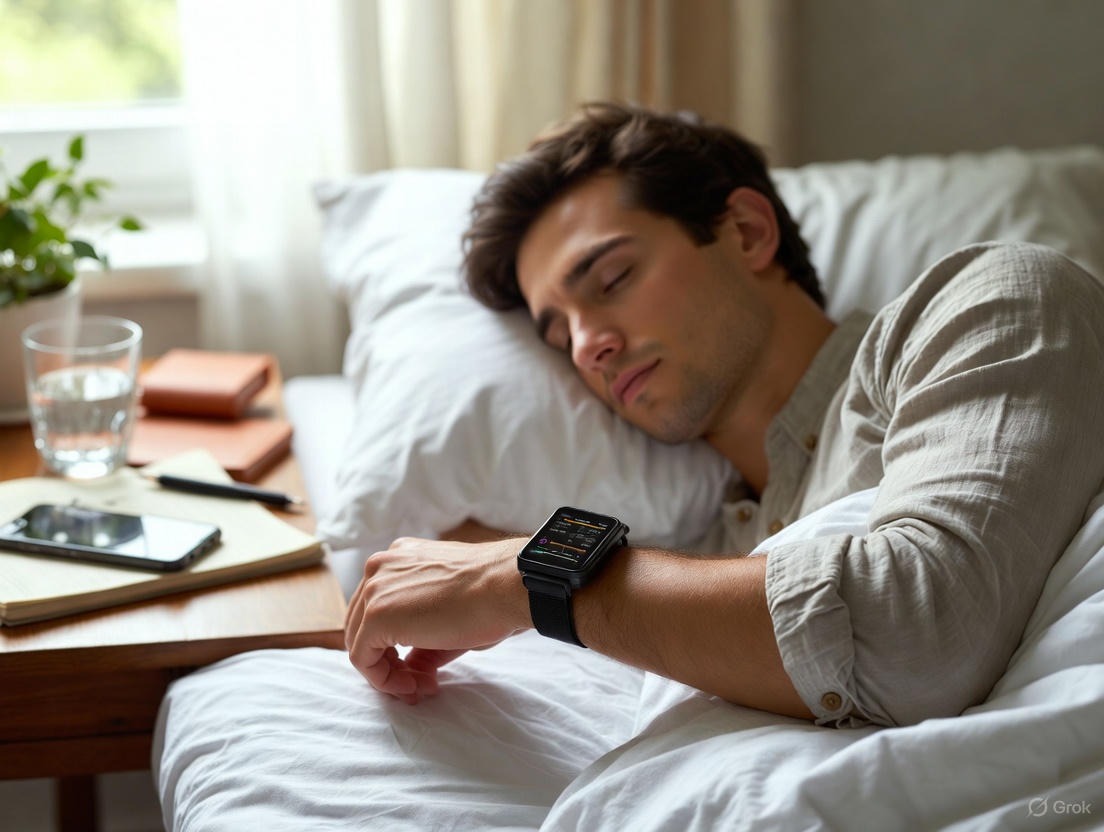
For those who experience clinical insomnia or high nighttime anxiety, the standard "wind-down" advice can feel futile, even stressful. The pressure to sleep can itself become the enemy of sleep. Here, the ritual must be re-framed. The goal is not to force sleep, but to cultivate a state of restful wakefulness. Your smart ring can help shift this mindset by providing objective data that values rest, even without unconsciousness.
Decouple the Ritual from Sleep Pressure: If the bedroom is a place of anxiety, perform the majority of your ritual outside of it. Do your journaling, stretching, and breathing in the living room. Enter the bedroom only when you feel physically drowsy. This helps re-associate the bed with sleep, not with the struggle to sleep.
Embrace the "Resting Heart Rate" Goal: For someone with anxiety, lying in bed focusing on sleep can cause heart rate to spike. Instead, use your smart ring's live heart rate display (if it has one) or simply focus on the sensation of your pulse. Make the goal of your in-bed practice to gently lower your heart rate through diaphragmatic breathing. This gives you a tangible, achievable mission that is correlated with sleep onset but doesn't demand it. It’s a concrete application of building emotional balance without numbing the feelings of frustration or fear about being awake.
Implement Strategic Stimulus Control: This is a core component of Cognitive Behavioral Therapy for Insomnia (CBT-I) and works beautifully with smart ring validation.
Practice Radical Acceptance: Use part of your evening journal to write down, "It is okay if I don't sleep perfectly tonight. Rest is still restorative." This cognitive reframe can lower the performance anxiety around sleep. Your ring can support this by showing you that even on a "bad" sleep night, your body still cycled through some restorative phases. Seeing that you got some deep sleep, even if less than ideal, can mitigate catastrophic thinking.
For those managing anxiety, this tailored approach transforms the evening from a battleground into a practice ground for self-compassion and nervous system training, with your ring as a neutral, validating coach.
The true power of a smart ring isn't in daily scores, but in the long-term narrative. Over months and years, your data becomes a personalized biography of your resilience, revealing powerful trends that daily fluctuations obscure. This is where you transition from habit-building to profound self-knowledge.
The HRV Trend Line: Your Resilience Transcript
Plot your weekly average HRV on a graph over six months. What you're looking for is not a straight line up, but a general upward trend with seasonal or cyclical variations.
Sleep Consistency vs. Life Events:
Overlay your sleep consistency score with your personal calendar. You'll see the direct impact of travel, holidays, work projects, and family events on your sleep architecture. This isn't for self-critique; it's for pattern recognition. You might learn that it takes you exactly three nights to recover from a weekend of social late nights, or that your sleep is surprisingly stable during work stress if your ritual remains intact. This knowledge allows for better planning and self-compassion.
Correlation Causation Mapping:
This is the advanced class in your personal biometrics. After six months, you can start to see clear correlations that feel like causation.
These aren't generic health stats; they are your operational manual. They tell you what your unique organism needs to thrive. This long-view turns health from a daily chore into a fascinating, lifelong journey of discovery, perfectly aligning with the philosophy that emotional balance is a long-term project of patience and progress.
Modern biometrics don't invalidate ancient wellness systems; they can provide a fascinating, data-driven dialogue with them. Framing your evening ritual through the lens of traditions like Ayurveda or Traditional Chinese Medicine (TCM) can add a layer of intuitive sense-making to the numbers on your screen.
Ayurveda and the Doshas:
Ayurveda, the 5,000-year-old "science of life" from India, categorizes physiology into three doshas: Vata (air/ether), Pitta (fire/water), and Kapha (earth/water). An imbalanced dosha can manifest in specific sleep issues, which your ring can detect.
Traditional Chinese Medicine and the Body Clock:
TCM associates different two-hour periods of the day with specific organ systems and energies. The evening hours are crucial for containment and storage.
By viewing your smart ring data through these ancient frameworks, you gain not just numbers, but a story. A high resting heart rate at 1 AM isn't just a data point; it might be your "Liver fire" acting up, prompting you to explore herbal teas or earlier dinners. This fusion of ancient intuition and modern quantification creates a deeply holistic and personalized path to evening wellness.
Not every night allows for a 60-minute curated experience. Life delivers late work nights, travel delays, and unexpected responsibilities. The key to long-term ritual adherence is having a "minimum viable ritual" (MVR)—a stripped-down, 10-15 minute sequence that preserves the core neurological signals of wind-down when time is scarce. This prevents the "all-or-nothing" thinking that derails habits.
The 5-3-2-1 MVR Framework:
This can be done in almost any environment—a hotel room, an office after a late shift, or a quiet corner at home after putting the kids down.
Why It Works & How to Validate It:
This MVR covers all bases: mental closure, physical release, physiological down-regulation, and a clear transition cue. It’s a complete system in a tiny package.
Your smart ring is crucial here. On nights you only have time for the MVR, check your data the next morning. You will likely find that while your scores may not be as high as on a full-ritual night, they are significantly better than on nights you did nothing at all. This proves the Pareto Principle (80/20 rule) of your ritual: 20% of the actions (your MVR) give you 80% of the benefit. This data-driven insight prevents you from abandoning your practice on busy days, making it truly sustainable for the fast-paced, modern life most of us lead.
Your smart ring is the validator, but your ritual is the practice. To create a truly holistic environment for sleep and recovery, consider integrating these complementary practices that synergize with your ring's data.
Acupressure and Sleep Pressure Points:
A few minutes of gentle pressure on specific points can enhance relaxation. Two powerful points to incorporate while reading or listening to music in bed:
Progressive Muscle Relaxation (PMR):
This is a systematic, data-friendly alternative to meditation for those who find it hard to "clear the mind." You tense and then relax muscle groups progressively from toes to head. The deep physical contrast makes the state of relaxation unmistakable. Your ring will often show a marked drop in heart rate during and after a PMR session, providing clear validation of its effectiveness.
Evening Gratitude Beyond Journaling:
Move gratitude from the page into action. Send a short, heartfelt text to a friend or family member expressing appreciation for them (do this before your digital sunset!). This act of outward-focused positivity creates a warm emotional state that counteracts the day's stressors and primes the brain for a positive, connected state before sleep.
The "Tomorrow, Today" Setup:
Part of cognitive closure is reducing decision fatigue for the next morning. As part of your ritual, spend 2 minutes setting up for tomorrow: layout your clothes, prep the coffee maker, place your work bag by the door. This simple act tells your brain, "Tomorrow is handled. You can let go now." It’s a practical form of mindful decision-making that preserves mental energy.
These practices add texture and depth to your ritual. When you try a new one, like acupressure, observe its effect on your "time to fall asleep" metric. When you do a thorough PMR, check your deep sleep percentage. This turns your holistic exploration into a continuous, data-informed learning loop, ensuring you invest your time in the practices that deliver the most tangible return for your unique biology.
Your Trusted Sleep Advocate: Sleep Foundation — https://www.sleepfoundation.org
Discover a digital archive of scholarly articles: NIH — https://www.ncbi.nlm.nih.gov/
39 million citations for biomedical literature :PubMed — https://pubmed.ncbi.nlm.nih.gov/
Experts at Harvard Health Publishing covering a variety of health topics — https://www.health.harvard.edu/blog/
Every life deserves world class care :Cleveland Clinic - https://my.clevelandclinic.org/health
Wearable technology and the future of predictive health monitoring :MIT Technology Review — https://www.technologyreview.com/
Dedicated to the well-being of all people and guided by science :World Health Organization — https://www.who.int/news-room/
Psychological science and knowledge to benefit society and improve lives. :APA — https://www.apa.org/monitor/
Cutting-edge insights on human longevity and peak performance:
Lifespan Research — https://www.lifespan.io/
Global authority on exercise physiology, sports performance, and human recovery:
American College of Sports Medicine — https://www.acsm.org/
Neuroscience-driven guidance for better focus, sleep, and mental clarity:
Stanford Human Performance Lab — https://humanperformance.stanford.edu/
Evidence-based psychology and mind–body wellness resources:
Mayo Clinic — https://www.mayoclinic.org/healthy-lifestyle/
Data-backed research on emotional wellbeing, stress biology, and resilience:
American Institute of Stress — https://www.stress.org/


