


How Your Wellness Ring Validates Natural Energy Boosters Over Artificial Ones
Your ring validates natural energy sources over artificial ones like sugar or caffeine.
Your ring validates natural energy sources over artificial ones like sugar or caffeine.
%402x.svg)
We live in an era of energy crisis—but not the kind that powers our cities. This crisis is personal, biological, and pervasive. It’s the 3 PM crash that turns your productive day into a fog. It’s the morning fatigue that lingers despite a full night’s sleep. It’s the reliance on that fourth cup of coffee just to feel baseline functional. In response, a massive industry has risen, promising quick fixes in the form of energy drinks, nootropics, stimulant-laden supplements, and prescription medications. These artificial boosters create a temporary illusion of vitality, often at a hidden cost to your long-term health, sleep, and nervous system.
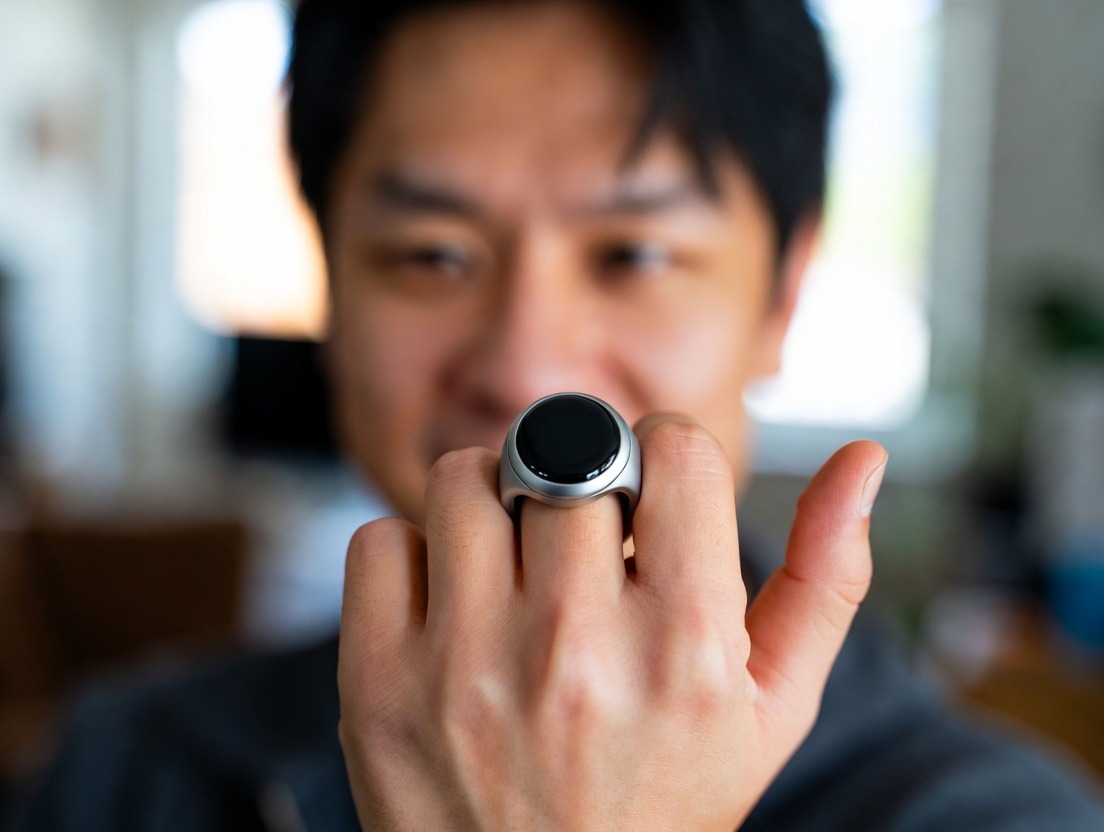
But what if the most sophisticated energy management system wasn't found in a can, pill, or prescription, but on your own finger? The modern wellness ring represents a paradigm shift in how we understand and cultivate energy. It moves us from guesswork and marketing claims to personal, biometric truth. This device doesn't just track steps; it monitors the very foundations of human vitality—sleep architecture, heart rate variability (HRV), resting heart rate, body temperature, and stress biomarkers. It provides an objective, real-time audit of what actually works for your unique biology.
The central revelation from millions of data points collected by these rings is clear and consistent: sustainable energy is not something you can synthetically create. It is something you must cultivate from within by honoring your body’s fundamental needs. The data validates that the ancient, natural pillars of health—deep sleep, circadian alignment, mindful movement, nutritional balance, and stress recovery—are not just lifestyle suggestions. They are the non-negotiable prerequisites for genuine, lasting energy. This article will explore how the continuous, passive data from your wellness ring becomes the ultimate arbiter in the debate between natural vitality and artificial stimulation, proving definitively that the path to true energy is built, not bought.

We are a society hooked on the promise of instant energy. The global energy drink market alone is projected to surpass $110 billion by 2026, while the nootropics and cognitive enhancer market continues its rapid expansion. The appeal is undeniable: swallow a pill or down a drink, and within minutes, feel the fog lift, the focus sharpen, and the fatigue recede. This is the synthetic energy paradigm—a model based on external stimulation, primarily through caffeine, sugar, proprietary stimulant blends, and pharmaceuticals like modafinil.
This paradigm, however, is fundamentally extractive. It borrows energy from your future self, creating a debt that must be paid with interest. It works by hijacking your adrenal system, flooding your body with stress hormones like cortisol and adrenaline, or blocking the neural signals that indicate fatigue. The result is a state of heightened alertness that your body interprets as an emergency "fight or flight" response. While useful in actual emergencies, chronic induction of this state is catastrophic for long-term health, leading to adrenal fatigue, hormonal disruption, sleep fragmentation, anxiety, and burnout.
Contrast this with the natural energy paradigm, which is regenerative. This model views energy as the output of a well-tuned biological system. When you provide the system with the right inputs—consistent, high-quality sleep; nutrient-dense food; rhythmic movement; and periods of deep recovery—it generates abundant, stable energy as a byproduct. This energy is not jittery or anxious but calm, focused, and sustainable. It doesn't crash; it gently ebbs, signaling a need for rest and refueling.
The core problem for most people has been a lack of visibility. When you take an artificial booster, the cause (the pill) and effect (alertness) are immediate and obvious. The costs—disrupted sleep that night, a lower HRV the next morning, a higher resting heart rate—are invisible without the right tools. The benefits of natural practices are often subtle and cumulative. Going to bed an hour earlier for one night might not yield a dramatic change. But do it for a week, and the compound effect becomes significant, though still hard to quantify subjectively.
This is where the wellness ring shatters the old paradigm. It makes the invisible, visible. It translates the subtle benefits of natural living into clear, objective data and exposes the hidden costs of artificial shortcuts. It moves the conversation from "How do I feel right now?" to "What is the systemic state of my energy-generating biology?" By tracking your wellness fundamentals—sleep, movement, recovery, and stress—around the clock, it provides irrefutable proof that the natural path is not just philosophically better, but physiologically superior. For a deeper dive into establishing these core habits, our complete guide to wellness fundamentals for 2025 offers a comprehensive system.
Human perception of energy is notoriously unreliable. We are influenced by mood, motivation, distractions, and the placebo effect. You might "feel" energized after a triple-shot espresso, but is your body truly in a state of healthy, sustainable vitality? Or is it in a state of sympathetic nervous system overdrive? Conversely, you might feel sluggish on a rest day, yet your body could be undergoing critical cellular repair and glycogen replenishment that will fuel higher performance tomorrow.
The wellness ring cuts through this subjective noise with objective biometric data. It functions as a continuous, non-invasive monitor of your autonomic nervous system (ANS)—the control center for your energy expenditure and recovery. The ANS has two primary branches: the sympathetic (gas pedal, stress, alertness) and the parasympathetic (brake pedal, rest, digest, repair). True, resilient energy comes from a balanced, responsive ANS that can shift appropriately between these states.
Key metrics your ring tracks that serve as direct energy audits include:
This continuous stream of data transforms you from a passive consumer of energy products into an active scientist of your own biology. The ring doesn't just give you an answer; it shows you the evidence. When you see your HRV plummet and your RHR spike after a day of energy drinks, the correlation is undeniable. When you observe your readiness score soar after a week of consistent sleep and morning sunlight, the validation is empowering. It proves that wellness fundamentals actually work, moving them from abstract concepts to measurable, personal truth.
Caffeine is the most widely used psychoactive drug on the planet, and for many, it’s the first-line solution for low energy. In moderation, and when used strategically, caffeine from sources like coffee and tea can offer benefits—enhanced focus, improved athletic performance, and even some antioxidants. But the line between tool and crutch is thin, and for millions, daily caffeine consumption becomes a vicious cycle of artificial peaks and natural troughs that destabilizes their entire energy ecosystem.
Your wellness ring acts as a forensic auditor of your caffeine relationship. It doesn't just tell you that coffee "might" affect your sleep; it shows you the exact physiological impact, personalized to your metabolism and timing.
Here’s what the data typically reveals:
The ring’s value is in enabling experimentation and personalization. You can run a self-experiment:
The ring validates that caffeine is not an energy source; it is an energy mask. It covers up fatigue but does nothing to address its root cause. True energy management, as shown by your biometrics, involves aligning with your circadian biology so that you feel naturally alert in the morning and naturally tired at night, minimizing the need for chemical overrides. This process of personalization is at the heart of how a wellness ring personalizes fundamental recommendations.
If energy is currency, sleep is the mint where it is printed. No supplement, drug, or wellness trend can compensate for a deficit in high-quality sleep. This is the most unequivocal finding from wellness ring data across millions of users. Sleep is not passive downtime; it is an active, essential process of restoration, memory consolidation, metabolic regulation, and hormonal rebalancing.
Your ring transforms sleep from a vague concept of "hours in bed" into a detailed performance report, validating exactly why it is the ultimate natural energy booster.
The ring provides the ultimate feedback loop. When you prioritize a cool, dark, quiet sleep environment and a consistent bedtime, you are rewarded with tangible data the next morning: a higher sleep score, a balanced sleep stage graph, and a soaring readiness metric. This positive reinforcement is far more powerful than a generic health tip. It proves, with your own biology, that investing in sleep yields a higher energy return than any stock on the market. For a systemized approach to mastering this, explore our resource on daily health optimization mastery.
Your body is not designed to produce a flat, constant level of energy throughout the day. It is designed to flow in a wave, orchestrated by your circadian rhythm—a master biological clock in your brain that responds primarily to light and darkness. This rhythm dictates the optimal times for alertness, digestion, physical performance, and sleep. Fighting this rhythm is a guaranteed path to fatigue. Aligning with it is the secret to unlocking effortless, natural energy.
Your wellness ring is a powerful tool for achieving and maintaining circadian alignment. It doesn't just track time; it tracks your body's internal timing.
When you live in sync with your circadian rhythm, you ride the wave of your own natural energy. The morning alertness feels clean and calm. The afternoon dip is mild and manageable, perhaps solved by a walk, not a latte. The evening wind-down happens effortlessly. Your ring validates this alignment not through a fleeting feeling, but through the hard metrics of excellent sleep, robust HRV, and consistently high readiness. This holistic understanding is part of a broader mind-body integration approach to health.
The conversation about food and energy has been dominated by macronutrients and calories. While important, your wellness ring introduces a more nuanced layer: how does what you eat affect your nervous system and recovery capacity? Food is not just fuel; it is information that can either promote inflammation and stress or support repair and resilience.
Artificial energy boosters often come in the form of nutritionally empty calories—sugary drinks, refined carbs, and processed snacks that cause a rapid spike and crash in blood glucose. This rollercoaster is a significant source of oxidative stress and inflammation, which your ring detects as a state of physiological distress.
Here’s how your ring decodes the energy value of your nutrition:
By using your ring’s recovery metrics (HRV, RHR) as a daily report card, you can conduct personalized nutrition experiments. Try a week of focusing on whole, anti-inflammatory foods—lean proteins, vegetables, healthy fats, and complex carbs—while minimizing processed foods and sugar. Observe the trend in your biometrics. The data will likely show a gradual improvement in baseline HRV and a decrease in RHR, translating to more stable energy levels throughout the day without the need for snacks or stimulants to prop you up. This approach to eating supports the foundational concept that wellness fundamentals optimize energy levels.
Exercise is a paradoxical energy modulator. In the right dose, timing, and type, it is arguably the most potent natural energy booster available, enhancing mitochondrial function, improving cardiovascular efficiency, and regulating hormones. In the wrong dose (overtraining) or at the wrong time (too late in the evening), it can become a massive energy drain, pushing your nervous system into prolonged stress.
The fitness world is full of generic prescriptions: "Work out 5 times a week for 60 minutes at high intensity." But what's optimal for a 25-year-old athlete may be destructive for a 40-year-old professional with high stress. Your wellness ring provides the personalization key, shifting the question from "Did I work out?" to "How did my workout affect my system's recovery and readiness for tomorrow?"
The validated insight is that movement should generate energy, not deplete it. When you finish a workout, you should feel invigorated, not shattered for the rest of the day. Your ring's data helps you find that exact prescription, proving that a 20-minute walk on a low-recovery day can be more beneficial for your energy system than a brutal HIIT session you had to force. It moves fitness from a performance metric (burned calories, lifted weight) to a system-wide energy metric.
Stress is not inherently bad. It is a biological response designed to help you overcome acute challenges—the "stress" of a workout that makes you stronger, the deadline that focuses your mind. The problem in the modern world is chronic, unrelenting psychological stress—from work, relationships, finances, and the 24/7 news cycle. This type of stress keeps your sympathetic nervous system engaged, diverting energy away from long-term repair, digestion, and immune function toward immediate survival. It is the ultimate energy thief.
Artificial energy boosters often worsen this cycle. Using stimulants to power through fatigue is like whipping a tired horse—you get a short burst, but you drive the system closer to collapse. True energy management requires not just generating energy but also mastering the art of recovery, the deliberate activation of the parasympathetic "rest and digest" system.
Your wellness ring is an expert stress and recovery accountant. It doesn't ask you how stressed you feel (which can be distorted); it shows you how stressed your body is.
By quantifying stress and recovery, the ring empowers you to move from a "grind" mentality to a "rhythm" mentality. It shows that strategic periods of deep recovery are what allow for sustained periods of high performance and energy. It proves that the most productive thing you can do for your energy some days is absolutely nothing—and it gives you the biometric permission slip to do so. This philosophy is central to understanding that wellness fundamentals support mental health through this essential balance.
The market for engineered energy and cognitive enhancement is sleek, scientific, and compelling. Drinks promise "focus without the crash," while nootropic stacks offer "limitless" mental clarity. They often contain complex blends of caffeine derivatives (like theacrine, dynamine), amino acids (L-theanine, taurine), adaptogens, and novel synthetic compounds. Subjectively, they can create a potent feeling of enhanced alertness and concentration.
But what is the objective cost to your energy system? Your wellness ring provides a sobering post-mortem, analyzing the physiological aftermath long after the subjective buzz has faded.
The ring's verdict is clear: these products create a bioenergetic illusion. They trade a brief, subjectively pleasant peak in mental arousal for a longer, objectively measurable trough in physiological recovery and resilience. They invalidate themselves by degrading the very systems—sleep and autonomic balance—that are required for authentic energy. This stark contrast is a perfect example of why wellness fundamentals beat biohacking trends in the long run.
Armed with the continuous feedback from your wellness ring, you graduate from following generic advice to engineering a personalized energy protocol. This is where theory becomes transformative practice. Your unique biology, lifestyle, stress load, and genetics mean there is no universal "best" schedule. But there is a best-for-you schedule, and your ring is the tool to discover it.
This protocol is built not on willpower, but on validation. You experiment, observe the data, and keep what works. Here is a framework for building yours:
1. Establish Your Baseline (The Audit):
Wear your ring consistently for two weeks without making any major changes. Simply observe. What is your average sleep duration and quality? What's your typical HRV and RHR? What does your circadian temperature rhythm look like? This is your starting point. Understanding this is the first step in the wellness fundamentals hierarchy of health priorities.
2. Prioritize the Foundation - Sleep & Circadian Rhythm:
3. Optimize Fueling (Nutrition & Hydration):
4. Intelligently Dose Movement:
5. Schedule Active Recovery:
6. Conduct Elimination Experiments:
This is the most powerful step. For 7-10 days, eliminate a suspected energy drain (e.g., after-dinner snacks, alcohol, late caffeine, a stressful evening news habit). Observe the delta in your data. Then reintroduce it and note the negative shift. This creates unshakeable personal conviction.
The result of this process is a deep, data-backed understanding of what actually fuels you. You will discover that the energy from a perfect night's sleep feels different and lasts longer than the energy from any pill. You will learn that a walk in the sun can reset your focus better than a chemical. Your ring provides the objective report card that turns these lifestyle choices from sacrifices into smart investments in your most valuable asset: your vitality. To see how this approach builds over a lifetime, consider exploring lifelong health strategies using a smart ring for decades.
The final, and perhaps most critical, validation from your wellness ring is a longitudinal one. It reveals the profound difference between a strategy of sustainable energy cultivation and one of energy debt financing.
Artificial boosters operate on a debt model. You are borrowing alertness from your future self, and the interest rate is high: degraded sleep, nervous system imbalance, hormonal disruption, and increased systemic inflammation. This debt compounds. What starts as an occasional afternoon pick-me-up can evolve into a daily dependency just to feel normal, while your underlying energy capacity—your HRV, your sleep quality—slowly erodes. You might maintain performance for a while through sheer force of chemical will, but the risk of a major crash—burnout, illness, chronic fatigue—increases exponentially.
Natural practices, validated and refined by your ring's data, operate on an investment model. Every night of good sleep is a deposit. Every bout of mindful movement is a deposit. Every period of deliberate recovery is a deposit. These deposits compound in the opposite direction: your baseline HRV slowly trends upward, your resting heart rate trends downward, your sleep becomes more efficient, and your resilience to stress improves. Your energy capacity expands.
Your ring's long-term trend graphs are the visual proof of this advantage. Over months and years, you can see:
This is the ultimate validation. The data shows that by focusing on fundamentals, you are not just managing daily energy; you are upgrading your entire energy infrastructure. You are building a body that generates energy easily, recovers quickly, and adapts resiliently. This is the opposite of the fragile, stimulus-dependent state created by chronic artificial booster use.
The wellness ring, therefore, becomes more than a tracker. It becomes a compass, guiding you away from the seductive shortcuts of modern stimulant culture and toward the ancient, proven path of working with your biology. It provides the hard evidence that the most powerful energy booster isn't found in a lab or a store. It's built every day, through the cumulative, data-validated choices of sleep, light, movement, nourishment, and recovery. In the final analysis, your ring proves that true energy isn't something you consume. It's something you become. This journey of building a lasting foundation is what we outline in our resource on building wellness fundamentals for a daily routine.

We have moved from an era of anecdote to an age of evidence. For decades, the wellness industry was a battleground of conflicting claims: "This supplement changed my life!" versus "That's just placebo." "Coffee is a health tonic!" versus "Coffee drains your adrenals!" Without personal, objective data, individuals were left to navigate these waters based on marketing, charismatic influencers, or trial-and-error guided solely by subjective feeling—which, as we've established, is deeply flawed.
The wellness ring ends this confusion by making you the authority on your own body. It provides what psychologists and behavior change experts call "self-generated evidence." This is a far more powerful motivator than any external advice. When you see the correlation between a 10 PM bedtime and a 95 Sleep Score, that knowledge becomes a personal truth. When you observe your HRV nosedive after three days of back-to-back energy drinks, that lesson is seared into your consciousness more effectively than any warning label.
This shift from persuasion to proof is the cornerstone of lasting change. The ring doesn't tell you what to do; it shows you what happens when you do it. This creates an intrinsic feedback loop where healthy behaviors are naturally reinforced because their benefit is made viscerally clear. You're not avoiding late-night scrolling because an article said to; you're avoiding it because you've seen the jagged, restless sleep graph that follows. You're drinking water not because you "should," but because you've noted the corresponding dip in your resting heart rate when you're hydrated.
This data-driven conviction is what finally allows people to break free from the cycle of artificial boosters. It replaces the vague guilt of "this probably isn't good for me" with the specific, quantified cost: "This 250mg caffeine dose at 4 PM cost me 22 minutes of deep sleep and dropped my morning HRV by 12 milliseconds." That specificity is empowering. It turns health from a moralistic pursuit into an engineering challenge, where you are both the scientist and the subject, continuously optimizing for your desired output: boundless, sustainable energy. For a structured system to harness this self-knowledge, our guide on daily health optimization mastery provides a complete framework.
The human mind is a powerful modulator of perception. The placebo effect—where an inert substance creates a real perceived benefit due to belief—is well-documented. Its dark twin, the nocebo effect, is where the expectation of harm causes negative symptoms. In the realm of energy, these effects run rampant. You might feel a incredible surge of focus from a new "brain booster" supplement, largely because you paid $80 for it and believe in its promises. Conversely, you might feel lethargic after quitting coffee, partly due to withdrawal, but also amplified by the belief that you "can't function" without it.
Your wellness ring acts as a reality check against these cognitive biases. It separates the biochemical signal from the psychological noise.
By grounding your experience in objective metrics, the ring helps you build a health practice based on reality, not marketing or myth. It fosters a nuanced understanding: sometimes a placebo benefit is worth it for mental well-being, but for foundational energy systems, you want interventions that move the needle on your biometrics. This journey begins with understanding your body's basic needs at a physiological level.
At the cellular level, energy is currency, and mitochondria are the power plants. These tiny organelles within your cells convert nutrients and oxygen into adenosine triphosphate (ATP), the molecule that fuels every cellular process. The health, density, and efficiency of your mitochondria determine your energy ceiling. Artificial stimulants do nothing for mitochondria; they merely increase the demand for ATP while potentially increasing oxidative damage that harms the mitochondria.
While no consumer wearable can directly count your mitochondria, your wellness ring tracks several key proxies for mitochondrial health and efficiency. It gives you a window into the performance of your cellular power grid.
Therefore, the ring's longitudinal data paints a picture of your cellular energy infrastructure. A positive trend—lower RHR, higher HRV, better recovery—is a biomarker of improving mitochondrial efficiency. This is the antithesis of the artificial buzz: it's not about flooding the system with stimulants; it's about upgrading the power plants themselves so they produce more clean, sustainable energy around the clock. This process is a perfect example of how wellness fundamentals create health momentum.
Energy is hormonally orchestrated. Cortisol, insulin, adrenaline, thyroid hormones, melatonin, and sex hormones (testosterone, estrogen) engage in a complex, circadian dance that dictates when you feel alert, hungry, tired, and strong. Artificial energy boosters are like a clumsy guest who walks in and blasts an airhorn during a symphony. They violently elevate cortisol and adrenaline, disrupt insulin sensitivity, and suppress melatonin. This creates a jarring, discordant state that may feel like energy but is actually hormonal chaos.
Your wellness ring tracks the downstream effects of this hormonal symphony (and its disruption). By monitoring outputs of the endocrine system, it helps you live in harmony with your natural rhythms instead of fighting them.
By aligning your daily habits—light exposure, meal timing, exercise timing, and sleep schedule—with your innate hormonal rhythms, you create a symphony of vitality. Your ring's data confirms when you're in tune: your energy is high when it should be (morning and afternoon), your wind-down is natural, and your sleep is deep and restorative. It shows that hacking hormones with external chemicals is a crude and ultimately self-defeating strategy compared to the elegant approach of simply giving your endocrine system the conditions it needs to thrive. This alignment is a key part of a lifelong health strategy.
Your energy is not solely determined by what you put in your body (food, supplements) or do with it (exercise). It is profoundly influenced by your environment and social interactions. A stressful commute, a tense meeting, a cluttered workspace, or even negative news consumption can trigger a subtle but cumulative stress response that depletes your energy reserves. These drains are often invisible because they are "just part of life." Your wellness ring brings them into stark relief.
Because it tracks your autonomic nervous system continuously, it acts as a canary in the coal mine for environmental and social stressors. It helps you identify and mitigate the hidden energy thieves in your daily life.
By identifying these external drains, you can move from a passive victim of your environment to an active architect of it. The ring empowers you to make changes based not on a hunch, but on biometric evidence. You learn to protect your energy with the same diligence you might protect your finances, because you can now see the withdrawals being made in real-time. This awareness is foundational to stress management as a cornerstone of health.
The first generation of wearables was retrospective: they told you what you did yesterday. The modern wellness ring, powered by sophisticated algorithms and artificial intelligence, is becoming predictive and prescriptive. It doesn't just report on your sleep; it analyzes your sleep, recovery, and activity data to forecast your energy capacity for the coming day. This is a game-changer in the quest for natural energy.
The "Readiness," "Recovery," or "Energy" score generated each morning is the culmination of this predictive intelligence. It synthesizes multiple data streams—last night's sleep quality, your HRV trend, resting heart rate, body temperature deviation, and recent activity load—into a single, actionable number. This score is your daily directive for energy management.
This predictive guidance flips the script on energy management. Instead of reacting to fatigue with a stimulant, you proactively manage your energy based on your body's readiness state. It teaches you that energy is a finite resource that must be budgeted. On high-readiness days, you can spend liberally on demanding tasks. On low-readiness days, you need to conserve and invest in replenishment. This intelligent system makes the concept of natural energy boosting dynamic and responsive, far surpassing the blunt instrument of a chemical "on" switch. To build the habits that lead to consistently high readiness, our checklist for daily health is an invaluable tool.
Grand, sweeping changes are hard to sustain. The true power of the natural energy paradigm lies in the compound effect of small, consistent habits—what we might call "wellness micro-habits." Individually, their impact might be too small to feel subjectively. But your wellness ring is sensitive enough to detect these micro-shifts, and over time, it shows how they synergize to create a massive transformation in your energy baseline.
This is the concept of biometric compound interest. A 1% daily improvement in recovery, stacked over months, leads to a doubling or tripling of your energy capacity. Your ring is the ledger that tracks this interest.
Examples of Synergistic Micro-Habits Validated by Your Ring:
The ring's magic is in showing you that these small actions are never wasted. Each one is a deposit into your energy account. On days when you do all of them, your readiness score soars. On days you miss a few, you might see a slight dip. This creates a gentle, positive pressure to maintain the habits because their value is made explicit.
This approach demystifies "high energy." It's not a mystical state granted to a lucky few. It's the inevitable output of a system that is consistently cared for at a fundamental level. The ring proves that you don't need to find more energy; you need to stop leaking it through a thousand small cuts—poor sleep hygiene, dehydration, circadian misalignment, chronic stress—and then invest consistently in the micro-repairs. This is the essence of building a foundation for lifelong health.
To solidify the argument, let's walk through a hypothetical but data-rich case study comparing two distinct 72-hour periods for the same individual, "Alex." Alex uses a wellness ring and is moderately healthy but relies on artificial boosters to manage a demanding job.
Period A: The Artificial Booster Cycle
Period B: The Natural Fundamentals Cycle
The Ring's Verdict: The data is unambiguous. The artificial booster strategy created a negative feedback loop, degrading the very systems needed for energy. The natural fundamentals strategy created a positive feedback loop, strengthening those systems. The ring provided the objective evidence that allowed Alex to see the stark contrast, making the healthier choice the obvious, data-backed choice. This case study exemplifies why wellness fundamentals beat health trends every time.
Ultimately, the journey with a wellness ring transcends metrics and scores. It leads to the development of a personal energy philosophy—a set of core beliefs about vitality, grounded not in dogma, but in the empirical evidence of your own body. This philosophy becomes your internal compass, guiding decisions even when you're not wearing the ring.
Core Tenets of a Data-Backed Energy Philosophy:
This philosophy changes your relationship with energy permanently. You stop seeing yourself as a machine that needs the right fuel (a pill) and start seeing yourself as a garden that needs the right conditions (sunlight, water, nutrients, rest) to flourish. The ring is your soil tester and sunlight meter, helping you provide exactly what your garden needs.
It empowers you to navigate a world saturated with artificial energy promises with confidence and discernment. You can look at a new "super-booster" and think, "What would my HRV and sleep data say about this?" You can feel afternoon fatigue and think, "Do I need caffeine, or do I need a walk and some water?" This is the ultimate validation: not just a collection of graphs, but a transformed mindset that prioritizes sustainable vitality for life. This wisdom is the goal of achieving true wellness fundamentals mastery.
Your Trusted Sleep Advocate: Sleep Foundation — https://www.sleepfoundation.org
Discover a digital archive of scholarly articles: NIH — https://www.ncbi.nlm.nih.gov/
39 million citations for biomedical literature :PubMed — https://pubmed.ncbi.nlm.nih.gov/
Experts at Harvard Health Publishing covering a variety of health topics — https://www.health.harvard.edu/blog/
Every life deserves world class care :Cleveland Clinic - https://my.clevelandclinic.org/health
Wearable technology and the future of predictive health monitoring :MIT Technology Review — https://www.technologyreview.com/
Dedicated to the well-being of all people and guided by science :World Health Organization — https://www.who.int/news-room/
Psychological science and knowledge to benefit society and improve lives. :APA — https://www.apa.org/monitor/
Cutting-edge insights on human longevity and peak performance:
Lifespan Research — https://www.lifespan.io/
Global authority on exercise physiology, sports performance, and human recovery:
American College of Sports Medicine — https://www.acsm.org/
Neuroscience-driven guidance for better focus, sleep, and mental clarity:
Stanford Human Performance Lab — https://humanperformance.stanford.edu/
Evidence-based psychology and mind–body wellness resources:
Mayo Clinic — https://www.mayoclinic.org/healthy-lifestyle/
Data-backed research on emotional wellbeing, stress biology, and resilience:
American Institute of Stress — https://www.stress.org/


