


Lifestyle Improvement Strategies That Show Results in Your Smart Ring Within 30 Days
Strategies that show positive results in your smart ring data within one month.
Strategies that show positive results in your smart ring data within one month.
%402x.svg)
For years, the quest for self-improvement was shrouded in ambiguity. You’d start a new routine—earlier workouts, stricter diets, promised meditation sessions—and your only metrics were a vague sense of feeling "better" or the discouraging stillness of the bathroom scale. The feedback loop was slow, subjective, and often disheartening. But a quiet revolution is changing the game, and it’s sitting on your finger. The modern smart ring has evolved from a mere step-counter to a continuous, clinical-grade bio-data hub, measuring everything from your heart rate variability (HRV) and resting heart rate (RHR) to your sleep stages, skin temperature, and blood oxygen levels.
This article isn't about another set of generic wellness tips. It’s a dedicated, data-driven manual for the individual who owns a smart ring and is ready to use its objective feedback as their personal compass. Over the next 30 days, you will learn to engineer your lifestyle with precision, implementing strategic changes that translate directly into the biometric language your ring speaks. You’ll move from guessing to knowing, from hoping to seeing. We will delve into eleven foundational lifestyle pillars, providing you with actionable, evidence-based strategies designed to deliver visible, quantifiable improvements in your ring’s data—and by extension, your overall well-being—within a single month. Your ring is the witness; let’s give it a compelling story to tell.
Before you change a single habit, you must learn to speak your ring’s language. Your smart ring isn't a fortune teller or a critic; it's a biofeedback instrument. The core philosophy of this 30-day journey is establishing a closed feedback loop: Action → Measurement → Interpretation → Adjusted Action. Without understanding the "Interpretation" phase, the data is just noise.
Start by establishing your baselines. For the first three days, live your normal life while your ring collects data. Pay particular attention to these five key metrics:
The goal for Days 1-3 is observation without judgment. On Day 4, you begin your first intervention. The critical skill is learning to connect the dots. For example, if you have a stressful workday (Action), you might see a lower HRV that night and a higher RHR the next morning (Measurement). This isn't a failure; it's confirmation of your body's honest communication. The interpretation is: "My system found that day taxing." The adjusted action might be: "Tonight, I will prioritize a wind-down routine with no screens."
This process of connecting cause and effect turns your ring from a passive tracker into an active guide. It empowers you to become a scientist of your own life, running iterative 30-day experiments to see what truly moves the needle for your unique biology. For a deeper exploration of how to assess your starting point, conducting a thorough emotional audit assessing your current balance level can provide parallel insights into your psychological baseline, which is often reflected in physiological metrics like HRV.
Sleep is the non-negotiable pillar of health and the most direct influencer of your smart ring’s data. “Getting more sleep” is not the strategy. “Sleep engineering” is. This is about systematically optimizing the quality and architecture of your sleep to maximize recovery, which your ring quantifies through HRV, deep/REM sleep duration, and restfulness.
Strategy 1: Light as Your Primary Zeitgeber. Your circadian rhythm is set by light. Within 30 days, you can drastically improve sleep quality by managing light exposure.
Strategy 2: Temperature Regulation. Your core body temperature needs to drop by about 1-3 degrees Fahrenheit to initiate and maintain sleep.
Strategy 3: Consistency is King. Going to bed and waking up at the same time every day—even on weekends—is more powerful than any supplement. It reinforces your circadian rhythm, leading to more predictable and higher-quality sleep. Your ring’s "sleep consistency" metric will show dramatic improvement within two weeks of steadfast adherence.
The 30-Day Result: By engineering your light, temperature, and timing, you should see tangible improvements in your ring’s sleep score within 7-10 days. By Day 30, expect a measurable increase in deep and REM sleep minutes, a more stable overnight HRV pattern, and a lower waking RHR. This foundational work creates the biological bedrock for all other improvements. To complement this physical regulation, strategic implementation of mindfulness in modern life can provide the mental tools to quiet the mind for sleep, turning off the internal chatter that often disrupts restfulness.

The fitness world often glorifies "harder, faster, stronger," but your smart ring reveals a more nuanced truth: optimal fitness is a balance between stress and recovery. Overtraining appears in your data as a suppressed HRV, elevated RHR, and restless sleep. The 30-day goal is to learn how to use movement to boost your recovery metrics, not sabotage them.
The HRV-Guided Training Principle: Let your HRV trend be your guide. Many advanced ring apps now offer readiness scores based on HRV, RHR, and sleep.
Strategic Implementation for the Next 30 Days:
Within 30 days, this intelligent approach to movement should lead to a clearer correlation between your activity and your recovery data. You’ll see your body adapt more efficiently, with fewer dramatic crashes in your readiness scores. This teaches you that sometimes, the most strategic workout is the one you don’t do—or the one you do with mindful gentleness. This principle of listening to your body’s signals extends beyond physical training; it's a core tenet of learning how to build emotional balance without numbing feelings, where acknowledging internal states without reactive suppression is key to long-term stability.
Food is information that programs your metabolism, inflammation levels, and nervous system. Your smart ring, particularly through HRV, skin temperature, and sleep quality, provides real-time feedback on how your diet is working for you. The goal is to move beyond calories and identify eating patterns that elevate your physiological resilience.
Focus on When and What for Nervous System Calm:
Nutrient Strategies for Ring Metrics:
Hydration is a Bio-Metric: Dehydration thickens blood, forcing your heart to work harder (raising RHR) and impairing recovery. Your goal is consistent, clear hydration throughout the day, tapering off 1-2 hours before sleep to avoid disruptions. A simple 30-day challenge: drink a large glass of water upon waking and observe its effect on your morning RHR reading.
By the end of the month, you should begin to see clear patterns. Does a later meal correlate with a restless sleep segment? Does a day of poor food choices lead to a hotter, more unsettled night? This biofeedback turns nutrition from a moralistic pursuit into an empirical one, focused solely on what makes your unique system perform and recover best. This mindful approach to consumption is closely related to the practice of mindful eating and why it changes everything, which trains you to engage with food in a way that respects both physical and emotional satiety.
Chronic stress is physiological chaos. It keeps your sympathetic nervous system ("fight-or-flight") idling high, manifesting as a higher RHR, lower HRV, and poor sleep. Your smart ring is a stress exposure monitor. The 30-day mission is to install daily "brakes" on your stress response, actively engaging your parasympathetic ("rest-and-digest") system to improve your metrics.
Breathing: The Direct Line to Your Autonomic Nervous System. This is the fastest way to influence HRV and RHR in real-time.
Strategic Disengagement: High stress is often perpetuated by rumination. You need tools to break the cycle.
Implementing just one of these techniques consistently for 30 days can yield measurable results. You are training a physiological skill: the ability to downshift from high gear. The data will show you what works. For instance, after two weeks of daily coherent breathing, you may notice your daytime RHR is a few beats lower on average, or that you recover faster from a stressful event. For a more comprehensive framework on managing emotional turbulence, consider the principles behind the time-out method for strategic emotional disengagement, a vital skill for creating space between stimulus and reaction.
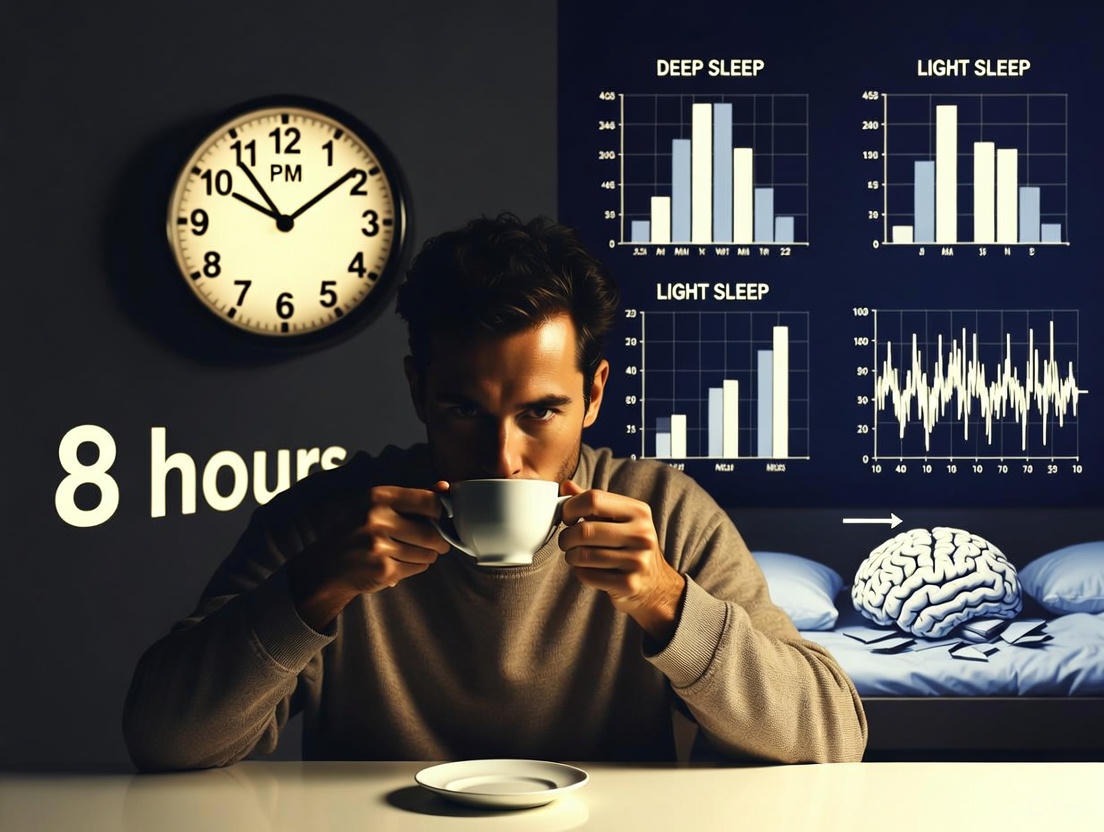
No discussion of a 30-day biofeedback experiment is complete without addressing the two most common psychoactive substances: caffeine and alcohol. Your smart ring provides unflinching, objective data on their impact, often revealing effects that subjective feeling overlooks.
Caffeine: The Long Shadow of a Morning Buzz. Caffeine has a half-life of 5-6 hours. That means at 5 pm, half of your 8 am coffee is still active in your system.
Alcohol: The Recovery Saboteur. Alcohol is a sedative, not a sleep aid. It demolishes sleep architecture and ravages recovery metrics.
By the end of this month, your relationship with these substances will be informed by hard evidence rather than habit or social convention. You learn that a 3 pm coffee isn't just a pick-me-up; it's a direct trade with your deep sleep. You see that a glass of wine isn't just relaxing; it's a documented stressor on your cardiovascular system for the next 8 hours. This clear-eyed view is a form of mindful decision-making, choosing with clarity, where you weigh immediate gratification against measurable, long-term physiological cost.

Your environment is an extension of your nervous system. In our modern world, it's filled with hidden stressors that your smart ring can help you identify and eliminate. This 30-day focus is on curating your physical and digital spaces to be conducive to recovery.
The Digital Sunset Protocol: The barrage of information and blue light from screens is a profound disruptor of circadian biology and mental calm.
The Bedroom as a Recovery Sanctuary: Optimize this single room for sleep and restoration.
Daytime Environment: Don't neglect your workspace.
By treating your environment as a system to be engineered, you remove invisible drains on your resilience. After 30 days, these changes become habitual, and your ring’s data will reflect a system under less constant assault, with more room for genuine recovery. This conscious curation of your external world is a practical extension of learning to set boundaries for protecting your peace, creating literal and figurative space for well-being.
The grandest failure of self-improvement is the "all-or-nothing" mentality. You launch into a radical new regimen on Monday, and by Thursday, you're burned out and have abandoned it. Your smart ring excels at showing the power of the opposite approach: the compounding effect of small, non-negotiable daily habits. Intensity shocks the system; consistency transforms it.
The "1% Better" Philosophy Applied to Bio-Metrics: Instead of trying to add 90 minutes of workout time, focus on a daily 10-minute mobility routine. Instead of a complete dietary overhaul, start by consistently eating a protein-rich breakfast and finishing dinner 3 hours before bed. The goal is sustainable adherence, not heroics. Your ring is the perfect tool to validate this approach because it measures subtle, incremental shifts in your physiology.
Designing Your 30-Day Micro-Habit Stack:
How the Ring Provides Positive Reinforcement: This is where the magic happens. After 10-14 days of consistent micro-habits, you will likely see a positive inflection point in your data. Maybe your sleep score average ticks up by 5 points. Perhaps your weekly average RHR drops by a beat. This objective, positive feedback is incredibly reinforcing. It proves your small efforts are working, fueling motivation to continue. You learn to trust the process because you have data that validates it.
This shift from seeking quick fixes to engineering daily routines is the cornerstone of lifelong wellness. It’s the understanding that the body improves through repeated signal, not single events. This patient, process-oriented mindset is perfectly aligned with viewing wellness as a long-term project of emotional balance, patience and progress, where small, daily investments compound into profound change.
Two of the most basic, yet most overlooked, physiological levers are hydration and core temperature management. Your smart ring provides direct and indirect feedback on both, making them perfect for 30-day optimization experiments.
Hydration: It’s Not Just About Water. Chronic low-grade dehydration is incredibly common and forces your cardiovascular system to work harder.
Temperature Regulation: A 24-Hour Cycle. Your body’s temperature rhythm is central to energy, performance, and sleep.
Your Ring as a Thermostat: Pay close attention to the Sleeping Skin Temperature trendline. A sudden, sustained upward drift over several nights is one of the earliest and most sensitive indicators your ring provides. It can signal:
Mastering these fundamental elements is like tuning an engine. You ensure the basic fluids and operating temperatures are optimal, which allows all other, more complex systems (like stress response and metabolism) to function at their best. This foundational tuning creates the stable internal environment necessary for more advanced practices, such as those explored in the science of mindful living and what happens to the brain over time, where neuroplasticity requires a supportive physiological base.
Humans are social animals, and the quality of our connections has a direct, measurable impact on our physiology. Loneliness and chronic relational stress are potent activators of the sympathetic nervous system and inflammatory pathways. Conversely, positive, supportive connections promote feelings of safety and calm, mediated by the vagus nerve—a key influencer of HRV. Your smart ring can help you quantify the "physiology of connection."
The Data of Disconnection vs. Connection:
30-Day Experiments in Intentional Connection:
By the end of 30 days, you will have gathered personal data on what types of social interactions serve as stressors or rejuvenators. This empowers you to be more intentional with your social energy, investing it in connections that truly support your physiological well-being. Navigating the complexities of intimacy and independence is a key part of this, which is why understanding emotional balance in romantic relationships: independence and intimacy is so valuable for maintaining connections that are sustaining, not draining.
The final and most empowering strategy is to synthesize all the others by mastering the art of the self-experiment. Your smart ring provides the "what"—the raw numbers. Your conscious journaling and analysis provide the "why" and the "so what." This turns a tracking device into a profound tool for self-knowledge.
Creating a 30-Day Experiment Framework:
The Power of the "Why" Journal: Beyond metrics, keep a brief note each evening. How did you feel? What was your energy like? Did you notice anything different? This qualitative data is the connective tissue. Perhaps your HRV didn't move much, but your journal reveals you felt more mentally clear and satiated. That's a win the number didn't capture.
Iterate and Refine. Based on your findings, you design your next 30-day experiment. Maybe TRE was great, but you wonder if finishing dinner earlier would help sleep more. Your next experiment: "8-hour eating window from 12 pm to 8 pm vs. 10 am to 6 pm." You are now in a continuous, personalized cycle of optimization, guided by your own data.
This process of mindful self-experimentation fosters a deep, collaborative relationship with your own body. You move from being a passive passenger to an engaged pilot, with your ring as the instrument panel. This journey of self-discovery through data is complemented by the introspective practice of learning to use journaling for emotional balance and regulation, where putting pen to paper (or fingers to keyboard) creates clarity and insight from the chaos of internal experience.
Building upon the foundational 30-day strategies, we now delve into the art of integration and long-term progression. This is where the true transformation occurs—not in a month of novelty, but in a lifetime of refined, intelligent living. The smart ring becomes less of a novelty and more of an integrated sixth sense, a part of your subconscious awareness of self. Over the next sections, we will explore advanced concepts in nervous system training, environmental mastery, and the nuanced balance between pushing your limits and honoring your recovery. We'll move from simply seeing the data to orchestrating it, using the insights to craft a lifestyle that is not just healthy, but resilient, vibrant, and sustainable.
You’ve learned that HRV is your north star for resilience. Now, let's move beyond basic breathing to targeted "vagus nerve workouts." The vagus nerve is the main conduit of your parasympathetic nervous system. By stimulating it directly, you can increase its tone—meaning it becomes more responsive and effective at calming your system, which is reflected in a higher, more stable HRV.
Cold Exposure as a Controlled Stressor: Brief, acute cold exposure is one of the most potent ways to stimulate the vagus nerve. It’s a hormetic stressor—a small dose of something challenging that makes you stronger.
Humming and Singing: The vagus nerve is physically connected to your vocal cords. Activities that vibrate the larynx can stimulate it.
Advanced Breathwork Patterns: Progress from coherent breathing to more dynamic patterns.
By incorporating one or two of these advanced techniques consistently, you are no longer just managing stress reactivity; you are fundamentally upgrading your hardware’s capacity to handle stress. This leads to a gradual but tangible lift in your HRV baseline over months—a true measure of enhanced biological resilience. This deep nervous system work is the physiological counterpart to the psychological work of building emotional stability: the research-based architecture for long-term equilibrium.
Not all 5 a.m. wake-ups are created equal. Your chronotype—your genetically influenced propensity to be a morning person (lark), evening person (owl), or somewhere in between—is a powerful determinant of when you are best suited for focus, creativity, physical performance, and rest. Fighting your chronotype creates internal friction, which your ring will show as suboptimal sleep, higher daytime stress, and poor recovery. Aligning with it creates flow.
Identifying Your Chronotype (Beyond Feeling): Use your ring data as a guide over a week of free sleep (no alarms if possible).
Strategic Scheduling for Your Type:
The 30-day assignment here is one of observation and gentle adjustment. Don’t try to change your type; work with it. For one month, schedule your most important tasks and workouts during your suspected peak windows. Use your ring’s “stress” or “recovery” scores throughout the day and your sleep data to validate if you’re aligning correctly. The reduction in internal friction can be profound. This respect for your innate rhythms is a form of living mindfully without quitting your job or moving to a monastery—it’s about working with your nature, not against it.
Overtraining isn't just for athletes. It’s a state of cumulative fatigue that can affect anyone who consistently pushes their physical, mental, or emotional limits without adequate recovery. Your smart ring’s readiness score (a composite of HRV, RHR, sleep, and temperature) is your early-warning system. But the advanced approach is to become proactive, not reactive, by scheduling "deload" periods.
What is a Deload? A deliberate, planned reduction in training volume, intensity, or life stress to allow for supercompensation—where the body recovers and rebuilds stronger than before. It’s planned, strategic rest.
How to Implement a Lifestyle Deload Based on Ring Data:
Listening to the Subtle Signals: Beyond the readiness score, watch for trends:
By learning to deload strategically, you break the brutal cycle of push-crash-push. You become a masterful manager of your energy capital, investing and withdrawing with intention. This cyclical approach to effort and recovery is essential for sustainable high performance in all areas of life, mirroring the natural emotional pendulum: why balance means movement, not stillness.
You’ve mastered the basics of sleep hygiene. Now, let's optimize for the 1% gains that separate good sleep from truly restorative, elite-level recovery.
Temperature Precision: Beyond a cool room.
Sound for Brainwave Entrainment: White noise is good; pink or brown noise is often better. These deeper, more consistent sound profiles can improve sleep continuity by masking variable environmental noises more effectively. Even more advanced are binaural beats or isochronic tones designed to encourage delta (deep sleep) or theta (REM sleep) brainwaves. While research is ongoing, a 30-day self-experiment is easy. Use a free app to play brown noise or a “deep sleep” frequency track. Tag those nights in your ring journal and compare your “deep sleep” and “REM sleep” durations to nights without it.
Ultradian Rhythm Alignment: Sleep occurs in ~90-minute cycles alternating between light, deep, and REM sleep. Waking up at the end of a cycle (in light sleep) feels far better than being jarred from deep sleep.
The Pre-Sleep “Brain Dump”: For those whose minds race, a journaling technique 60 minutes before bed is powerful. Write down not just tomorrow’s tasks, but all the swirling thoughts, worries, and ideas. The physical act of transferring them from your mind to paper signals to your brain, “This is stored safely. You can let go now.” This can directly improve your “time to fall asleep” metric. This practice is a cornerstone of learning how to recover emotional balance after emotional outbursts, by creating a structured outlet for processing the day’s emotional residue.
The gut is often called the "second brain," and for good reason. It communicates directly with your central nervous system via the vagus nerve and produces a multitude of neurotransmitters (like serotonin, a precursor to melatonin). Gut inflammation can trigger systemic inflammation, which your ring detects through elevated skin temperature and depressed HRV.
The 30-Day Gut-Brain Experiment:
Timing and Fasting Revisited: The gut needs rest. The practice of time-restricted eating (TRE) gives the digestive system a prolonged break, reducing the metabolic work of digestion and allowing resources to shift to cellular repair (autophagy) and reducing gut permeability ("leaky gut"). If you’ve mastered a 10-hour window, try compressing it to 8 hours for a week and monitor your HRV and inflammation markers (like skin temperature). For some, this is beneficial; for others, it may be too stressful. Let your data guide you.
By nurturing your gut, you are directly calming your brain and modulating systemic inflammation. The result over 30 days can be not just better digestion, but calmer moods, clearer skin, and most notably, cleaner recovery data on your smart ring. This holistic view underscores the connection between physical systems and emotional states, a link explored in depth regarding emotional balance and chronic illness: managing disease emotions.
Life happens. Parties, travel, shift work, and social obligations can throw your carefully crafted rhythm into chaos. This creates "social jet lag"—the difference between your biological clock and your social clock. The advanced skill is learning to navigate these disruptions with minimal damage to your metrics, and to recover from them swiftly.
Strategies for the Late Night Out:
Strategies for Travel (Especially Across Time Zones):
The Role of Your Ring: During travel, your ring is your anchor. It will show the brutal impact of jet lag (elevated RHR, crushed HRV, terrible sleep). Your goal isn't to avoid this entirely—it's to minimize its depth and duration. Use the data to see how well your mitigation strategies are working. How quickly do your metrics return to baseline? This becomes a game of resilience benchmarking.
Mastering these navigation skills means you can participate fully in life without fearing it will derail your wellness for a week. You develop confidence in your body’s ability to handle disruption and bounce back, because you have the data that proves it can. This flexibility is key to a sustainable practice of mindful living in a fast-paced urban environment.
Step counts are a crude, often misleading metric. Ten thousand distracted, shuffling steps while stressed do not equal the physiological benefit of a purposeful 30-minute walk in nature. Furthermore, Non-Exercise Activity Thermogenesis (NEAT)—the energy you burn from all activity except sleeping, eating, and sports—is a massive lever for metabolic health. Your ring’s heart rate and activity data can help you optimize for quality movement, not just quantity.
From Passive to Purposeful Movement:
Maximizing NEAT Throughout Your Day:
Letting Go of the Step Idol: For one week, hide your step count on your app dashboard. Focus solely on your daily Zone 2 heart rate walk and your consistent NEAT breaks. At the end of the week, check your average RHR and HRV. You will likely find they are better than a week where you hit 10k steps through fragmented, stressed movement. This shift in focus—from arbitrary volume to intentional quality—is a game-changer. It aligns with the principle of mindful living and productivity: the counterintuitive connection, where intentional pauses and purposeful action create greater overall output and well-being.
This is the most critical advanced lesson. The smart ring is a tool for empowerment, not a source of anxiety. Data obsession—checking your HRV every hour, feeling defeated by a poor sleep score, becoming a slave to the readiness score—is counterproductive and itself a stressor that will degrade your metrics. The goal is to move from dependence to informed intuition.
Establish Healthy Data Routines:
Practice Data Detachment: Remember, the number is not you. It is a single, imperfect measurement of a complex biological system at one point in time. A low HRV score doesn't mean you are failing; it means your body is communicating it is under strain. Thank it for the information, and respond with compassion, not criticism.
Reconnect with Subjective Feeling: Before you look at your ring each morning, ask yourself: “How do I feel?” Rate your energy, mood, and muscle soreness on a scale of 1-10. Then look at the data. Over time, you will calibrate your subjective sense with the objective data. Sometimes they align; sometimes you feel great despite poor data (maybe you’re psychologically energized), or vice-versa (you feel tired but your recovery data is solid, indicating you may just need mental, not physical, rest). This builds body literacy beyond the device.
Cultivating this healthy relationship ensures the tool serves you, not the other way around. It turns the ring from a scorekeeper into a trusted advisor. This psychological balance is the ultimate goal of all self-tracking, and it mirrors the journey of learning to develop emotional balance through therapy and counseling, where external guidance helps you build internal frameworks for understanding yourself without judgment.
Your smart ring tracks proxies for biological age—the rate at which your cells and systems are actually aging, as opposed to your chronological age. Two of the most important are Resting Heart Rate (RHR) and Heart Rate Variability (HRV). A lower RHR and a higher HRV are consistently associated with greater longevity and reduced risk of all-cause mortality. Now, we look at other levers you can pull with your lifestyle to move these markers in the right direction over years, not just weeks.
The Power of VO2 Max (Estimated): Some advanced rings now provide a VO2 Max estimate based on heart rate response to activity. VO2 Max is the gold-standard measure of cardiovascular fitness and a powerful predictor of longevity. The best way to improve it? Zone 2 cardio and high-intensity interval training (HIIT).
Muscle as a Longevity Organ: Sarcopenia (age-related muscle loss) is a primary driver of frailty. Muscle is metabolically active, regulates blood sugar, and supports mobility. Your ring doesn’t directly measure muscle mass, but it measures the outcomes of building it: improved metabolic rate, better blood sugar regulation (indirectly inferred from more stable energy and HRV), and better sleep.
Inflammation Management (via Skin Temperature): Chronic, low-grade inflammation ("inflammaging") is a key driver of age-related disease. Your sleeping skin temperature trend is one of your best windows into this. Long-term strategies to lower baseline inflammation include:
By viewing your ring data through the lens of longevity, every positive choice is compounded. A good night’s sleep isn’t just about tomorrow’s energy; it’s about cellular repair. A strength session isn’t just about looks; it’s about maintaining metabolic youth. This long-term perspective is essential, as explored in the context of emotional balance during hormonal transitions: pregnancy, menopause, andropause, where the focus shifts to navigating profound biological shifts with grace and strategic support.
After months of experimentation, observation, and iteration, you arrive at the pinnacle of smart ring mastery: the creation of your Personal Wellness Algorithm. This is your unique set of rules, triggers, and responses based on how your body reliably reacts. It’s the operational manual for you, written by you, with data as the co-author.
What Goes into Your Algorithm?
Living by Your Algorithm: This shifts your decision-making from impulsive or dogmatic (following a generic plan) to intelligent and responsive. You are no longer guessing what your body needs. You have a data-informed framework. You consult your algorithm, not just your mood or willpower.
The Algorithm Evolves: As you age, as your life circumstances change (new job, parenthood), your algorithm will need updates. Continue the 30-day self-experiment cycle to test new variables. Your ring provides the continuous feedback loop to keep your personal operating system up to date.
This is the ultimate empowerment. You have graduated from being a consumer of wellness trends to the architect of your own sustainable well-being. Your smart ring was the tool that made it possible, providing the objective language to translate your body’s whispers into a clear, actionable plan for a lifetime of vitality.
Your Trusted Sleep Advocate: Sleep Foundation — https://www.sleepfoundation.org
Discover a digital archive of scholarly articles: NIH — https://www.ncbi.nlm.nih.gov/
39 million citations for biomedical literature :PubMed — https://pubmed.ncbi.nlm.nih.gov/
Experts at Harvard Health Publishing covering a variety of health topics — https://www.health.harvard.edu/blog/
Every life deserves world class care :Cleveland Clinic - https://my.clevelandclinic.org/health
Wearable technology and the future of predictive health monitoring :MIT Technology Review — https://www.technologyreview.com/
Dedicated to the well-being of all people and guided by science :World Health Organization — https://www.who.int/news-room/
Psychological science and knowledge to benefit society and improve lives. :APA — https://www.apa.org/monitor/
Cutting-edge insights on human longevity and peak performance:
Lifespan Research — https://www.lifespan.io/
Global authority on exercise physiology, sports performance, and human recovery:
American College of Sports Medicine — https://www.acsm.org/
Neuroscience-driven guidance for better focus, sleep, and mental clarity:
Stanford Human Performance Lab — https://humanperformance.stanford.edu/
Evidence-based psychology and mind–body wellness resources:
Mayo Clinic — https://www.mayoclinic.org/healthy-lifestyle/
Data-backed research on emotional wellbeing, stress biology, and resilience:
American Institute of Stress — https://www.stress.org/


