


The Science Behind Modern Health Monitoring Technology
Examines the scientific and technological foundations that enable today's health monitoring devices.
Examines the scientific and technological foundations that enable today's health monitoring devices.
%402x.svg)
Imagine a world where your first warning of an impending health issue isn’t a sharp pain or a visit to the doctor, but a gentle, proactive nudge from a device you wear every day. This is no longer the realm of science fiction. We are living through a profound shift in healthcare—from reactive to proactive, from episodic to continuous, from generalized to deeply personal. At the heart of this quiet revolution is a convergence of advanced sensor technology, artificial intelligence, and biomechanical science, all miniaturized into devices so seamless they’ve become a part of us. Chief among these are smart rings, the unassuming, always-on sentinels of our well-being.
This article delves deep into the intricate science that powers modern health monitoring. We’ll move beyond the marketing buzzwords and into the physics, biology, and data science that allow a ring on your finger to trace the story of your heart, the depth of your sleep, and the state of your stress. This is the foundation upon which the future of personalized wellness is being built.

The journey to the smart ring began not in a tech lab, but in the sterile, beeping environments of intensive care units. For decades, the gold standard of health monitoring involved bulky, wired machines that tracked vital signs in real-time but tethered the patient to a hospital bed. Electrocardiogram (ECG) machines, pulse oximeters, and polysomnography (sleep study) setups provided life-saving data, but they were inaccessible, uncomfortable, and prohibitively expensive for daily life.
The first seismic shift came with the advent of the consumer fitness tracker. These wrist-worn devices introduced the masses to the concept of step counting and rudimentary heart rate monitoring, primarily using optical sensors. They were motivational tools, focused on activity, but their data was often inconsistent and their health insights limited. The science was basic, and the interpretation simplistic.
The true revolution began when the medical-grade principles of photoplethysmography (PPG) and electrocardiography were successfully miniaturized. Engineers and physiologists faced a monumental challenge: how to shrink hospital-grade sensing capabilities into a device that could be worn 24/7 without interference, with battery life measured in days, not hours. This required breakthroughs in low-power microchips, energy-efficient LEDs, and sophisticated algorithms that could extract clean signals from the noisy data of daily life.
The smart ring represents the current pinnacle of this miniaturization journey. The finger, as it turns out, is a superior site for specific biometrics compared to the wrist. It has a denser network of capillaries, less variability in skin tone and tissue density, and is less prone to motion artifacts during sleep. By choosing the finger, designers weren’t just making a stylistic choice; they were making a scientific one, opting for a location that often provides a stronger, cleaner physiological signal. This evolution—from the hospital, to the wrist, to the finger—marks our transition from occasional health check-ups to a state of continuous, ambient awareness.
At its core, a modern health monitoring device like a smart ring is a marvel of micro-engineering, housing an array of tiny sensors that act as its eyes and ears into your body. Understanding these technologies is key to appreciating the data they provide.
Photoplethysmography (PPG): The Light-Based Lifeline
This is the most critical sensor in most wearable devices. The principle is elegantly simple: a small LED shines green, red, or infrared light into the skin. A photodetector then measures the amount of light that is reflected back. Why does this matter? Because blood absorbs light. With each heartbeat, a pulse of blood surges through your capillaries, momentarily increasing blood volume and thus absorbing more light. The photodetector sees a slight dip in reflected light. Between beats, blood volume decreases, and more light is reflected. This rapid, rhythmic oscillation in light absorption is the PPG signal—a direct optical correlate of your heartbeat.
But PPG is far more than just a heart rate monitor. The shape, strength, and timing of the PPG waveform contain a treasure trove of information. The time interval between successive peaks can be used to calculate Heart Rate Variability (HRV)—a critical marker of nervous system balance and recovery. The amplitude of the signal can relate to blood flow and peripheral circulation. Advanced algorithms can even derive blood oxygen saturation (SpO2) by comparing the absorption of red and infrared light, as oxygenated and deoxygenated hemoglobin absorb these wavelengths differently.
The 3D Accelerometer and Gyroscope: Mapping Motion in Space
While PPG listens to your blood, inertial sensors watch your movement. A 3-axis accelerometer measures linear acceleration—the movement of your hand forward, backward, up, down, side-to-side. The gyroscope complements this by measuring angular velocity—the rotation or twist of your hand. Fused together, these sensors create a precise, three-dimensional map of your physical activity.
Their role extends far beyond counting steps. They are the primary tool for sleep staging. The profound stillness of deep sleep, the periodic twitches of REM sleep, and the frequent shifts of light sleep all produce distinct motion signatures. They differentiate between a brisk walk, a slow cycle, and a weightlifting session by analyzing the pattern, intensity, and periodicity of movement. They are also crucial for detecting falls in elderly users and for providing context to heart rate data (e.g., a high heart rate during motion is expected; a high heart rate at rest may indicate stress).
Skin Temperature Sensor: The Body’s Silent Thermometer
A tiny, high-precision thermistor pressed against the skin monitors its temperature continuously. While it doesn’t measure core body temperature like a medical thermometer, skin temperature trends are incredibly informative. It follows a natural circadian rhythm, typically dropping in the evening to initiate sleep and rising in the morning to promote wakefulness. A sustained elevation from your personal baseline can be one of the earliest signs of oncoming illness, infection, or even overtraining in athletes. For women, tracking this subtle metric, combined with other data, can provide insights into menstrual cycle phases and ovulation.
The Emerging Frontier: Bioelectrical Impedance Analysis (BIA) and Electrodermal Activity (EDA)
Some advanced rings are now incorporating additional sensing modalities. BIA works by sending a tiny, imperceptible electrical current between two electrodes on the ring. The opposition (impedance) this current meets as it passes through tissues gives clues about body composition, like hydration levels and, with less precision, changes in fat vs. lean mass. EDA sensors measure minute changes in the skin's electrical conductivity, which is controlled by sweat gland activity linked to your sympathetic nervous system. This provides a direct window into moments of stress, excitement, or emotional arousal, even before you're consciously aware of them.
Together, this sensor suite forms a multi-modal perception system. No single sensor tells the whole story, but in fusion, they cross-validate and enrich each other, building a multidimensional picture of your physiology that is far greater than the sum of its parts.
If resting heart rate is the volume of your life’s music, then Heart Rate Variability is its complex, intricate rhythm. It is arguably the single most insightful metric derived from a continuous wearable, and its science is fascinating.
HRV is a measure of the subtle variation in time between each heartbeat. Contrary to what one might assume, a healthy heart does not tick like a metronome. It is under the constant, dynamic tug-of-war between two branches of your autonomic nervous system: the sympathetic ("fight-or-flight") which accelerates the heart, and the parasympathetic ("rest-and-digest") which slows it down. This millisecond-level interplay creates a naturally irregular rhythm. High HRV indicates a heart that is responsive and resilient, able to adapt quickly to stress and recover efficiently. Low HRV suggests a dominance of the sympathetic system and is associated with fatigue, chronic stress, and increased risk of cardiovascular issues.
Modern wearables calculate HRV by analyzing the PPG signal to detect the precise timing of each pulse wave (a method called pulse rate variability, or PRV, which closely approximates true HRV). The most common time-domain metric is RMSSD, which is particularly good at reflecting parasympathetic activity.
But the true power of HRV lies in its longitudinal tracking. Your absolute HRV number is less important than its trend relative to your personal baseline. A smart ring tracks this nightly, often during deep sleep to get the cleanest reading. A significant drop below your baseline is a powerful, objective flag from your body. It can indicate:
By paying attention to this biomarker, you can make informed decisions. A low HRV score might prompt you to prioritize a restorative nighttime wellness routine instead of an intense workout, opt for a relaxing evening, or ensure you're following a science-backed nighttime routine for better sleep. It transforms subjective feelings of "being rundown" into an objective, actionable data point, empowering you to adjust your behavior in real-time to support your body's needs.
For generations, understanding sleep required an overnight stay in a lab, covered in wires. Today, the smart ring performs a sophisticated, albeit simplified, version of this analysis every night you wear it. The process is a masterpiece of algorithmic inference.
Sleep is not a monolithic state. It cycles through stages: Light Sleep (N1/N2), Deep Sleep (N3 or Slow-Wave Sleep), and REM (Rapid Eye Movement) sleep. Each has distinct physiological signatures.
The ring’s sensors work in concert to identify these stages:
Advanced algorithms, often trained on thousands of hours of clinical polysomnography data, take these parallel data streams—motion, heart rate, HRV, and temperature—and run them through probabilistic models. The output is a hypnogram: a detailed timeline estimating when you were in each sleep stage.
This data moves us far beyond simple "sleep duration." You can see if you’re getting enough crucial deep sleep (vital for physical restoration and immune function) and REM sleep (critical for memory consolidation and emotional processing). You can see your sleep efficiency—the percentage of time in bed actually spent asleep. You can identify disruptions and their potential causes. Perhaps you see a spike in heart rate and a temperature rise at 2 AM—was it stress, a late meal, or alcohol? This objective feedback is the first step toward improvement, allowing you to build a nighttime routine that actually sticks and experiment to see what truly optimizes your unique sleep architecture.

Stress is not just a feeling; it is a measurable, physiological cascade. Modern health monitors are becoming adept at detecting its signature in real-time, offering a powerful tool for managing our high-pressure world.
The primary pathway for detection is through the autonomic nervous system (ANS). When the brain perceives a stressor—be it a work deadline, an argument, or even too much caffeine—it triggers the sympathetic nervous system. This leads to a cascade of effects: the release of hormones like cortisol and adrenaline, an increase in heart rate, a decrease in HRV (as the rhythmic balance is lost), and often, activation of the sweat glands (increasing electrodermal activity).
A smart ring with comprehensive sensors acts as a polygraph for your body's stress response:
By combining these signals, the device can flag moments of acute stress throughout the day. More importantly, it can assess your chronic stress load by looking at trends in your resting heart rate and HRV. A baseline elevation in resting heart rate and suppression of HRV over days or weeks is a clear sign your body is under sustained pressure.
This objective feedback is transformative. It creates awareness of stressors you may have normalized or even failed to consciously register. It allows you to connect physical sensations (like feeling jittery or tired) to an actual physiological state. Most crucially, it enables you to test the efficacy of your de-stressing techniques. Did that 10-minute meditation actually lower your physiological stress markers? Does your nighttime wellness ritual for anxious minds measurably improve your readiness for the next day? By moving from guesswork to data, you can cultivate a lifestyle that builds resilience, not just manages crises.
The sensors collect raw voltage, light, and motion signals. The true magic—the transformation of this raw data into understandable, actionable health insights—happens in the realm of algorithms and artificial intelligence.
The first layer is signal processing. This is the digital "cleaning" of the data. Algorithms filter out the "noise": the motion artifact from typing, the temporary signal loss if the ring is loose, the interference from bright ambient light on the PPG sensor. They identify valid heartbeats and discard false ones.
The second layer is feature extraction. From the clean signal, the algorithms calculate the metrics: heart rate, HRV (RMSSD), respiration rate (often derived from the rhythmic oscillations in the PPG signal), SpO2, and sleep stages. This is complex biomechanical modeling, translating physics into physiology.
The third and most advanced layer is contextualization and personalization through machine learning. This is where the system evolves from a tracker to a intelligent health companion. Machine learning models are trained on vast, anonymized datasets to recognize patterns. They learn what a "normal" sleep transition looks like, what combination of signals indicates a potential illness, or how your personal physiology typically responds to exercise.
Over time, the system learns your normal. It establishes your personal baselines for resting heart rate, HRV, sleep duration, and temperature. This is critical, because health is not a universal number. A resting heart rate of 50 might be normal for an athlete but concerning for someone else. By comparing your daily data to your own baseline, the insights become exponentially more meaningful. The AI can detect subtle deviations—a temperature uptick of 0.3°C above your norm, or an HRV drop of 15%—that would be invisible in a one-size-fits-all model.
These algorithms are what power the "Readiness" or "Recovery" scores offered by advanced devices. They synthesize last night's sleep data, your HRV, your temperature, and your recent activity load into a single, personalized number that answers the fundamental question: "Is my body ready to perform today, or does it need rest?"
Blood oxygen saturation (SpO2) is a vital sign that, until recently, was almost exclusively measured in clinical settings. Its integration into wearables represents a significant leap in accessible health monitoring.
The science relies on a principle called pulse oximetry, an application of PPG. Hemoglobin, the protein in red blood cells that carries oxygen, changes color depending on whether it's oxygenated (oxyhemoglobin) or not (deoxyhemoglobin). Oxyhemoglobin absorbs more infrared light and allows more red light to pass through. Deoxyhemoglobin does the opposite: it absorbs more red light and allows more infrared light to pass through.
A smart ring equipped for SpO2 measurement uses two LEDs: one red (around 660 nm wavelength) and one infrared (around 940 nm). The photodetector measures the pulsatile (AC) component of the light absorption for each wavelength. The ratio of these AC components is then plugged into a pre-calibrated algorithm to derive the percentage of hemoglobin that is oxygenated.
It's important to understand the context of this measurement. Clinical-grade pulse oximeters, clipped to the fingertip or earlobe, are highly accurate because they are used in controlled, stationary conditions. A smart ring takes measurements intermittently, often during sleep, and must contend with motion, poor fit, and other variables. Therefore, its strength is not in diagnosing acute hypoxemia, but in tracking trends over time.
For example, monitoring nocturnal SpO2 can be invaluable for spotting signs of sleep apnea. In sleep apnea, breathing repeatedly stops and starts, causing periodic dips (desaturations) in blood oxygen. A smart ring can track the number of these significant dips per hour (similar to a clinical Desaturation Index). While not a diagnostic tool, a trend showing frequent nocturnal desaturations is a powerful piece of evidence to bring to a sleep specialist. It can also help users understand the impact of factors like alcohol or sleeping at altitude on their oxygen levels during rest.
As mentioned, the skin temperature sensor is a trend-spotter, not a fever thermometer. Its value is unlocked through longitudinal analysis.
Your body follows a circadian thermoregulatory rhythm, orchestrated by your brain's suprachiasmatic nucleus (SCN). In the late afternoon, your core temperature is at its highest. As bedtime approaches, your body begins to shed heat—a process called distal vasodilation, where blood flow increases to your hands and feet, releasing heat. This drop in core and skin temperature is a critical signal for melatonin release and sleep initiation. A smart ring tracking finger temperature can clearly chart this evening decline.
When you view your temperature data, you’re not looking for a specific number, but for deviations from your established pattern. Key insights include:
This is the epitome of personalized health: your body talking to you in its own unique thermal language. A change that is insignificant for one person can be a major flag for another, which is why understanding your own baseline is paramount. Creating a stable routine, like a minimal nighttime wellness routine of 5 essential steps, can help stabilize these rhythms, making deviations easier to spot and interpret.
No single sensor is infallible. PPG can be corrupted by motion. The accelerometer can't distinguish between lying still awake and being asleep. Temperature can be affected by a cold room. The true robustness and intelligence of a system come from sensor fusion.
Advanced algorithms use statistical models (like Kalman filters) and machine learning to weigh the inputs from each sensor in real-time, based on confidence and context. For example:
This synergistic approach massively reduces false positives and provides a richer, more accurate portrait of your state. It allows the device to tell a cohesive story: "Last night, you fell asleep quickly (motion + HR + temp), achieved strong deep sleep (motion + low/stable HR), but had a period of elevated heart rate and motion during your second REM phase (likely a disturbance). Your morning temperature is slightly elevated from your baseline, and your HRV is low. Your body may be fighting something or is in need of more recovery." This is the power of multi-modal fusion—it turns disparate data points into narrative insight.
It is crucial to approach this technology with informed optimism. A smart ring is a powerful wellness tool, but it is not a medical device.
Where It Excels:
Its Inherent Limitations:
The informed user understands this. They use the data as a guide, not a gospel. They know that a low recovery score is a suggestion to take it easy, not a medical order. They use trends to have more productive conversations with healthcare professionals, bringing data, not just symptoms. The goal is health awareness, not amateur diagnosis. This technology is most powerful when it guides you toward better, more attuned daily habits, like those found in a realistic nighttime routine for busy professionals, rather than fueling health anxiety.
The science we've described is the foundation of today's devices. The frontier of tomorrow is even more transformative, moving from descriptive analytics to predictive and prescriptive health.
Near-Future Advancements:
The ultimate vision is a closed-loop wellness ecosystem. Your ring detects rising stress and automatically dims your smart lights and plays calming music. It sees your sleep was poor and suggests a lighter workout on your connected fitness app. It notices a deviation pattern consistent with an allergy flare-up and prompts you to take your prescribed medication. This is the move from passive tracking to active, context-aware health stewardship.
The science of modern health monitoring is a testament to human ingenuity. It has taken the monumental knowledge of human physiology and the relentless march of micro-technology and woven them into a form that fits on a finger. As we continue this exploration, we will delve into how to apply these insights—how to build actionable daily rituals, optimize performance, and truly partner with technology for a healthier life. The data is the map, but you are the navigator. The journey toward personalized, proactive wellness has just begun.

Having explored the fundamental science that allows a smart ring to listen to your body's subtle languages, we now turn to the critical question: What does this symphony of data mean for your daily life? The transition from raw metrics to meaningful action is where the promise of this technology is truly fulfilled. This is the domain of personalized insight, behavioral change, and the move from merely tracking to actively optimizing your well-being.
The single most important concept in personalized health monitoring is the personal baseline. In a world obsessed with comparing absolute numbers—"My friend's HRV is 80, mine is only 45!"—this is the paradigm shift that empowers true understanding. Your body is unique. Your genetics, age, fitness level, and lifestyle create a physiological fingerprint. The power of continuous wearables lies in their ability to define your normal, so you can intelligently detect your abnormal.
The process of baseline establishment is a continuous learning period, typically spanning two to four weeks. During this time, the device's algorithms are quietly observing. They are not just averaging your data; they are learning the patterns, rhythms, and ranges that constitute your typical state. This includes:
Only after this baseline is established do metrics like "Readiness" or "Recovery" scores gain profound meaning. A score of 75/100 isn't a grade; it's a statement: "Compared to your own optimal state, your body is currently functioning at 75% of its capacity." This personalized frame of reference is what turns a gadget into a genuine health partner. It allows you to see if that new seasonal nighttime routine, adapted to your body's needs, is actually moving your baseline in a positive direction over weeks and months, rather than just offering a one-night improvement.
Most advanced wellness platforms synthesize the night's data into a single composite score each morning. While brands use different names—Readiness, Recovery, Body Battery—the underlying logic is similar: to answer the question, "What is my body's capacity to handle stress, physical exertion, and cognitive demand today?"
This score is not a simple average. It is a weighted algorithmic synthesis of key biomarkers, often prioritizing those most sensitive to strain and recovery:
Interpreting this score requires nuance. A high score (e.g., 85-100) is a green light. It suggests your body is resilient, recovered, and primed for performance. This is the day to tackle that intense workout, important work presentation, or demanding social engagement.
A moderate score (e.g., 70-84) is a yellow light. Your body is functional but not at its peak. It may be managing mild stress, suboptimal sleep, or lingering fatigue. The optimal approach is "steady-state": maintain your routine, but perhaps opt for a moderate workout instead of a peak one, and be mindful of stress management.
A low score (e.g., <70) is a red light—a clear signal from your body that it is under strain and needs support. This is not a day to push through. It’s a day to prioritize recovery: gentle movement like walking or yoga, extra hydration, nutrient-dense foods, stress-reduction techniques, and absolutely prioritizing a nighttime routine that maximizes recovery while you rest. Ignoring a consistently low score is the fastest way to invite burnout, injury, or illness.
The true art lies in using this daily guidance not as a dictator, but as a dialogue. It empowers you to align your actions with your actual physiological state, moving from a rigid, prescriptive schedule to a flexible, responsive, and sustainable approach to wellness.
For most people, sleep data is the most immediately impactful revelation from continuous monitoring. Seeing the cold, hard graphs can be a wake-up call (pun intended). But data alone is pointless without action. The smart ring becomes a powerful sleep lab, allowing you to run experiments on your own behavior.
The Optimization Cycle:
Common data-driven interventions include:
This scientific, iterative approach demystifies sleep. It replaces frustration with agency, allowing you to become the architect of your own rest.
Subjective stress is elusive. We acclimate to chronic pressure, often only recognizing its toll in hindsight through burnout or illness. Objective physiological monitoring breaks this cycle by providing an external, unbiased measure of your nervous system's state.
Practical Applications of Stress Data:
For those with high anxiety, this can be particularly transformative. Seeing a concrete metric that validates your internal state ("My body is stressed") can be paradoxically calming. It externalizes the problem and provides a clear feedback loop for management strategies, such as those outlined in a nighttime wellness routine designed for anxious minds.
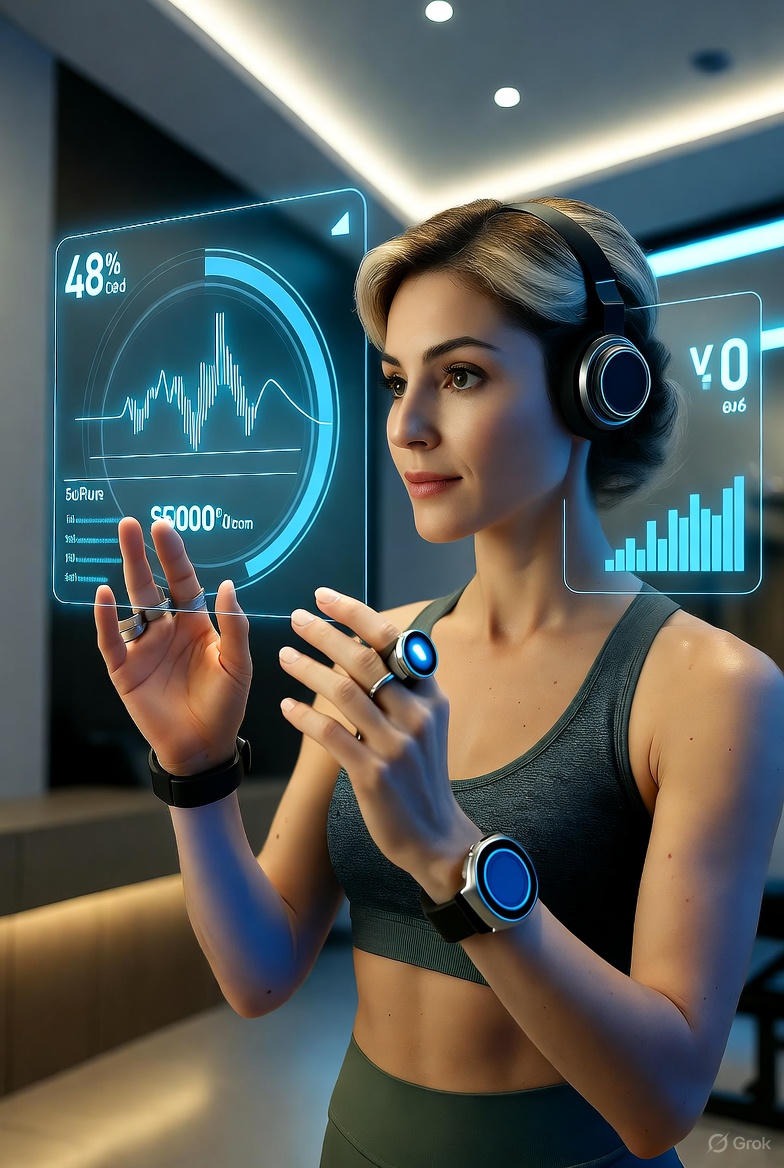
The era of "no pain, no gain" is being replaced by "train smart, recover harder." For athletes and fitness enthusiasts, continuous biometrics provide a revolutionary dashboard for optimizing performance and preventing overtraining.
Key Performance Applications:
This data-driven approach transforms training from a guessing game into a science. It empowers you to periodize your training effectively, time peak performance, and extend your athletic longevity by honoring your body's need for repair, a principle central to any nighttime routine for athletes focused on recovery.
Women's bodies operate on a complex, multi-phase hormonal cycle that profoundly influences energy, metabolism, recovery, and sleep. Traditional fitness trackers treat every day as physiologically identical—a significant oversight. Modern health rings, with their continuous temperature and biomarker tracking, are uniquely suited to provide cycle-aware insights.
How It Works:
By tracking basal skin temperature (BST) trends overnight, along with resting heart rate and HRV patterns, the device can often:
Practical Implications for Cycle Syncing:
With this physiological map, you can align your lifestyle with your cycle's natural rhythms:
This insight is empowering. It reframes "off days" as "different days" and provides a biological explanation for fluctuations in mood, energy, and performance. It encourages a more intuitive, compassionate, and effective approach to monthly planning, from workouts to workload to social commitments.
The most profound value of continuous monitoring may reveal itself not day-to-day, but year-over-year. By creating a long-term biometric record, you and your healthcare provider gain an unprecedented tool for preventive health.
The Power of Longitudinal Data:
A Tool for Partnership, Not Panic:
It is vital to reiterate: these devices are for trend-spotting and awareness, not diagnosis. If you see a sustained, unexplained change in your biomarkers, the appropriate action is not to consult Dr. Google, but to schedule a visit with your healthcare professional—armed with concrete data. You can say, "For the past three weeks, my resting heart rate has been 8 bpm above my 2-year average, my sleep efficiency has dropped 15%, and my temperature is elevated. I feel run down. What could we investigate?" This is proactive, data-informed healthcare.
Data is useless—or even harmful—if it leads to obsession, anxiety, or a fragmented view of health. The ultimate goal is to integrate these insights into a calm, holistic, and sustainable wellness practice. The technology should serve your life, not the other way around.
Principles for Healthy Integration:
The smart ring and its data should fade into the background of a well-lived life. It’s there to occasionally whisper insights, confirm your intuitions, and course-correct you before you veer too far off your unique path to wellness. It is the modern tool for an ancient practice: knowing thyself.
As we invite these devices deeper into our lives, collecting our most intimate physiological data, questions of privacy and security rightly move to the forefront. This data is highly sensitive—a digital blueprint of your body's inner workings.
Key Considerations for the Informed User:
Best Practices:
Using this technology is a choice that involves a trade-off: sharing some data for profound personal insight. By being an informed consumer, you can maximize the benefit while minimizing the risk, ensuring your journey to self-knowledge remains private and secure.
We have journeyed from the microscopic science of sensors to the practical application of daily insights. Now, we arrive at the synthesis: how to weave this continuous stream of self-knowledge into the very fabric of a modern, balanced, and thriving life. This is about moving beyond metrics and into a state of informed intuition, where technology amplifies your innate ability to listen to and care for your body. It's the art of creating a symbiotic relationship with your data, where it serves as a calm, objective co-pilot on your lifelong wellness journey.
The pinnacle of using health technology is not becoming dependent on it, but using it to refine your own internal sensing—your intuition. Over time, the goal is to calibrate your subjective feelings ("I feel drained") with objective data ("My HRV is 30% below baseline and my resting heart rate is up"). This creates a powerful feedback loop that heightens your body awareness.
Stages of Developing Informed Intuition:
This cultivated intuition is resilience. It allows you to navigate life's pressures with grace, making proactive adjustments before small issues become crises. You become the expert on your own body, with technology as your trusted reference manual.
Armed with deep self-knowledge, you can move away from generic, one-size-fits-all health advice and design a Personal Wellness Protocol (PWP). This is not a rigid set of rules, but a dynamic, flexible system built on your unique data, goals, and lifestyle. Think of it as your operating manual.
Components of a Personal Wellness Protocol:
This protocol turns you from a passive consumer of health trends into an active scientist and architect of your own well-being. It brings intention and clarity to daily choices, reducing decision fatigue and increasing the efficacy of every action you take for your health.
While health is personal, motivation and sustainability are often social. The rise of health technology has fostered new forms of community and accountability that can powerfully support long-term change.
Positive Social Applications:
The Pitfalls to Avoid:
The healthiest approach is to use the social dimension selectively for support and connection, while keeping your primary focus on your own personal trends and baselines. Your journey is yours alone, but it can be walked alongside others.
The aggregation of billions of data points from consumer wearables represents a seismic shift not just for personal health, but for population health and medical research. We are entering the era of "real-world evidence" (RWE) on an unprecedented scale.
Transformative Potential for Healthcare:
Ethical and Practical Challenges:
This future is not without its hurdles. It raises critical questions about:
The path forward requires collaboration between tech companies, medical professionals, regulators, and ethicists. The goal must be to harness this data democratization to create a more preventive, personalized, and equitable healthcare system for all.
As with any powerful tool, the line between use and abuse is fine. The very features designed to empower—constant feedback, detailed metrics, scores—can, for some, become sources of fixation and anxiety. Maintaining an ethical, balanced relationship with your data is the final, and perhaps most important, skill to cultivate.
Warning Signs of Unhealthy Engagement:
Principles for Ethical Self-Tracking:
The device is a mirror, reflecting your physiology. But you must choose whether to look at that reflection with kindness and wisdom, or with criticism and fear. The former leads to empowerment; the latter, to obsession.
We have traversed a vast landscape—from the photons of a PPG sensor to the philosophy of self-care in a data-rich world. This first third of our exploration has laid the essential groundwork:
We have learned the Science: How light, motion, and electrical signals are transformed into a digital representation of your heart, sleep, and stress.
We have learned the Application: How to interpret daily scores, optimize sleep, manage stress, train intelligently, and respect the unique rhythms of the female cycle.
And we have now learned the Integration: How to cultivate intuition, design a personal protocol, engage socially with wisdom, and navigate the ethical landscape to build a truly symbiotic relationship with technology.
This marks not an end, but a foundation. You now understand the how and the why. In the next portions of this comprehensive guide, we will dive into the what now. We will build upon this knowledge of your inner state to master your external environment and behaviors. We will explore:
The journey from tracking to transformation continues. You have equipped yourself with the knowledge to understand your body's language. Now, let's learn how to have a conversation with it and write a new, healthier story for your life, one data-informed day at a time.


