


How Your Smart Ring Validates Daily Health Optimization Efforts
How a smart ring confirms that your daily health efforts are working.
How a smart ring confirms that your daily health efforts are working.
%402x.svg)
For decades, the pursuit of optimal health has been shrouded in a fog of subjectivity. You eat the salad, you go for the run, you turn off the lights by 10 PM. You feel better… you think. But that feeling is a fleeting, fragile thing, easily dismissed by a stressful Tuesday or a single night of poor sleep. We’re left wondering: Is any of this actually working? Are my efforts translating into tangible, physiological improvement, or am I just navigating by guesswork and good intentions?
This gap between effort and evidence has been the fundamental flaw in personal wellness. Until now. Enter the smart ring: an unassuming piece of wearable technology that is fundamentally rewriting the rules of health optimization. This isn’t just another step counter on a different body part. It’s a 24/7 biometric observatory, a silent validation engine that transforms subjective feeling into objective fact. It closes the feedback loop, providing the hard data that turns hope into strategy and effort into proven progress.
Gone are the days of wondering if your new meditation app is calming your nervous system or if that extra hour of sleep truly made a difference. The smart ring quantifies the previously unquantifiable—your sleep stages, your resting heart rate variability (HRV), your body’s readiness for stress, and its temperature rhythms—all from the most consistent point of measurement on your body: your finger. This continuous stream of personalized data does more than track; it validates. It confirms that the early morning yoga session lowered your daytime stress. It proves that cutting off caffeine at 2 PM deepened your REM sleep. It shows, in clear, undeniable graphs, that your health optimization efforts are not in vain.
This article is your deep dive into this new era of validated wellness. We will explore exactly how this elegant device moves beyond simple tracking to become your personal confirmation system, turning daily choices into a compounding portfolio of health gains. We’ll dissect the core metrics, unveil the stories they tell, and demonstrate how, with a smart ring on your finger, you’re no longer just participating in your health—you’re empirically engineering it.

We have all been conditioned to use a flawed internal dashboard. “How do you feel?” is the default question from doctors, coaches, and even ourselves. The answers—“Tired,” “Stressed,” “Pretty good today”—are abstract and maddeningly imprecise. They are filtered through layers of perception, mood, and comparison to yesterday’s fog. This subjective experience creates what scientists call the “introspection illusion,” where our own sense of our internal state is often unreliable.
Consider sleep. You might “feel” you slept through the night, yet wake unrefreshed. Subjectively, it was a 7/10 sleep. Objectively, a smart ring might reveal you spent only 8% of the night in crucial deep sleep (when physical restoration occurs) and experienced 22 restless periods. Your feeling was a crude summary; the data is the forensic report.
This gap has real consequences. It leads to:
The smart ring bridges this chasm. It provides an external, impartial reference point against which to calibrate your internal sense. It answers the critical question: Is what I’m experiencing aligned with what is actually happening inside my body?
For instance, you might feel anxious before a big presentation. Your smart ring’s stress score, derived from heart rate and HRV data, can confirm that your nervous system is indeed in a state of high arousal. More powerfully, it can later show you how quickly you recovered afterward—a tangible metric of your resilience. This transforms an amorphous feeling of “stress” into a measurable event with a beginning, peak, and end, allowing you to validate the effectiveness of your recovery techniques, be it a breathing exercise or a walk outside.
This objective validation is the bedrock of modern health optimization. It shifts the paradigm from “I hope this works” to “I know this works, and here’s the proof.” It empowers you to become the lead scientist in your own personal health lab, where every action is a hypothesis and every night’s data provides the results.
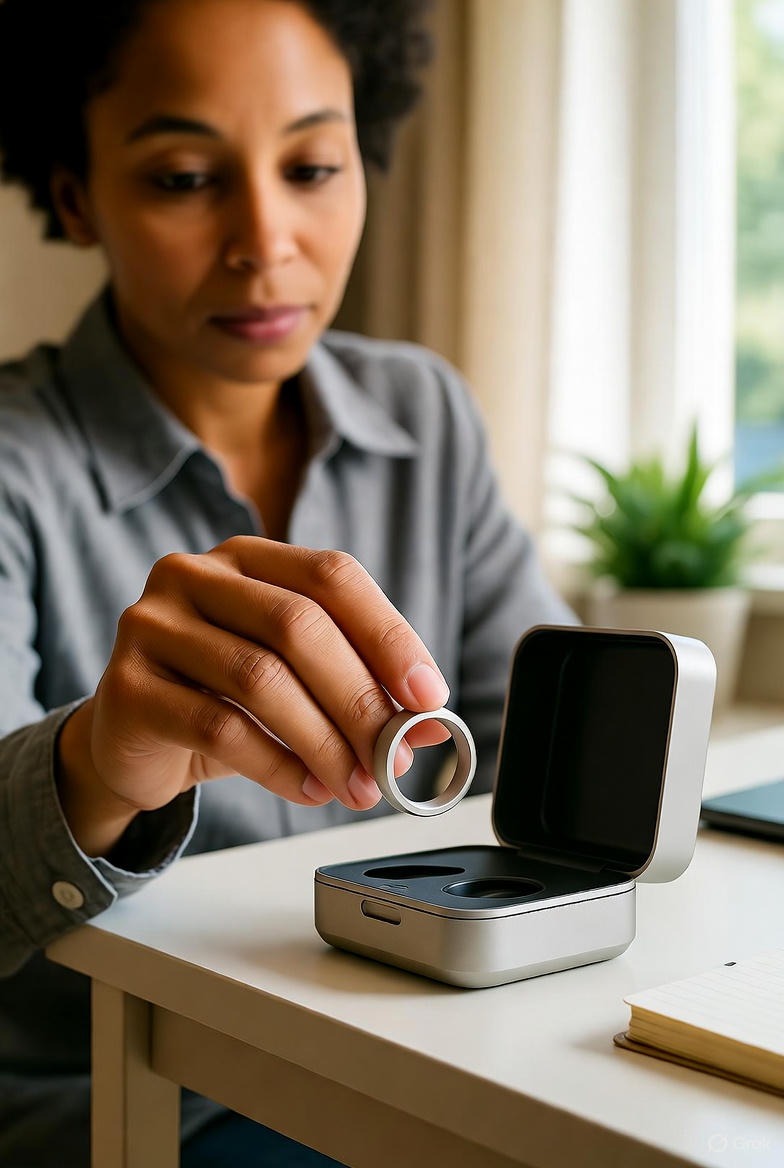
At first glance, a ring might seem an unlikely hero for health tracking. We’re accustomed to wrist-based wearables. But the finger is, biomechanically, a superior vantage point for the kind of continuous, clinical-grade data required for true validation.
The secret lies in the finger’s unique vascular access. The palmar digital arteries running along the sides of your fingers are rich, peripheral vessels that provide a strong and consistent pulse waveform signal. This signal is the raw material for almost every critical metric a smart ring provides. Compared to the wrist, the finger offers:
From this prime location, the ring’s sophisticated sensors—typically LEDs for PPG, a 3D accelerometer for motion, and often a skin temperature sensor—work in concert to create a holistic biometric profile.
Together, this suite of sensors transforms your finger into a personal data streaming station. It leverages its ideal anatomical position to gather the foundational signals that, when processed by advanced algorithms, tell the detailed story of your sleep, recovery, and readiness. It’s not just a convenient form factor; it’s a deliberate and superior choice for the mission of 24/7 health validation.
The validation your smart ring provides is structured around three interdependent pillars. These are not isolated metrics but a dynamic trio, each informing and validating the others, creating a complete picture of your daily health economy.
Sleep is not downtime; it is your body’s essential maintenance and regulatory cycle. A smart ring validates your sleep optimization efforts by moving far beyond simple duration. It breaks the night into its architecturally critical stages:
Your ring provides a score and a detailed timeline. Did that natural sleep preparation and perfect evening wind-down routine actually help you fall asleep faster? The “Time to Sleep” metric validates it. Did avoiding blue light after 9 PM increase your deep sleep? The stage breakdown graph proves it. This turns abstract sleep “quality” into an engineerable system. For those struggling with consistency, establishing a natural sleep hygiene guide for beginners can be the first validated step toward better rest.
“Readiness” or “Recovery” scores are the smart ring’s masterpiece of synthesis. This single, validated number each morning answers the ultimate question: “Based on what my body did last night, how prepared am I for the stress of today?”
It is calculated by weighing:
A high readiness score validates that your previous day’s management of stress, nutrition, and exercise was effective. It gives you permission to push hard in your workout or tackle a demanding project. A low score is not a judgment but a crucial validation of strain—a scientifically-grounded suggestion to prioritize recovery with gentler movement, stress management, and perhaps an earlier bedtime guided by a natural sleep routine that delivers real results.
Activity tracking completes the loop. It validates that you are applying the right kind of stress to your recovered system. Smart rings track active calories, steps, and movement intensity. The validation comes from contextualizing this activity against your readiness.
Going for a long run on a high-readiness day? The ring validates that choice as aligned with your body’s capacity. Feeling compelled to hit a high-intensity workout on a low-readiness day? The data might validate taking a restorative walk instead, preventing overtraining and honoring your body’s need for repair. This pillar ensures your activity is strategic, not just cumulative.
In essence, the ring validates the balance. Good sleep validates and enables higher readiness. High readiness validates the capacity for productive activity. Smart activity, in turn, promotes better sleep. Break the cycle on any pillar, and the data provides the immediate, objective feedback needed to correct course.
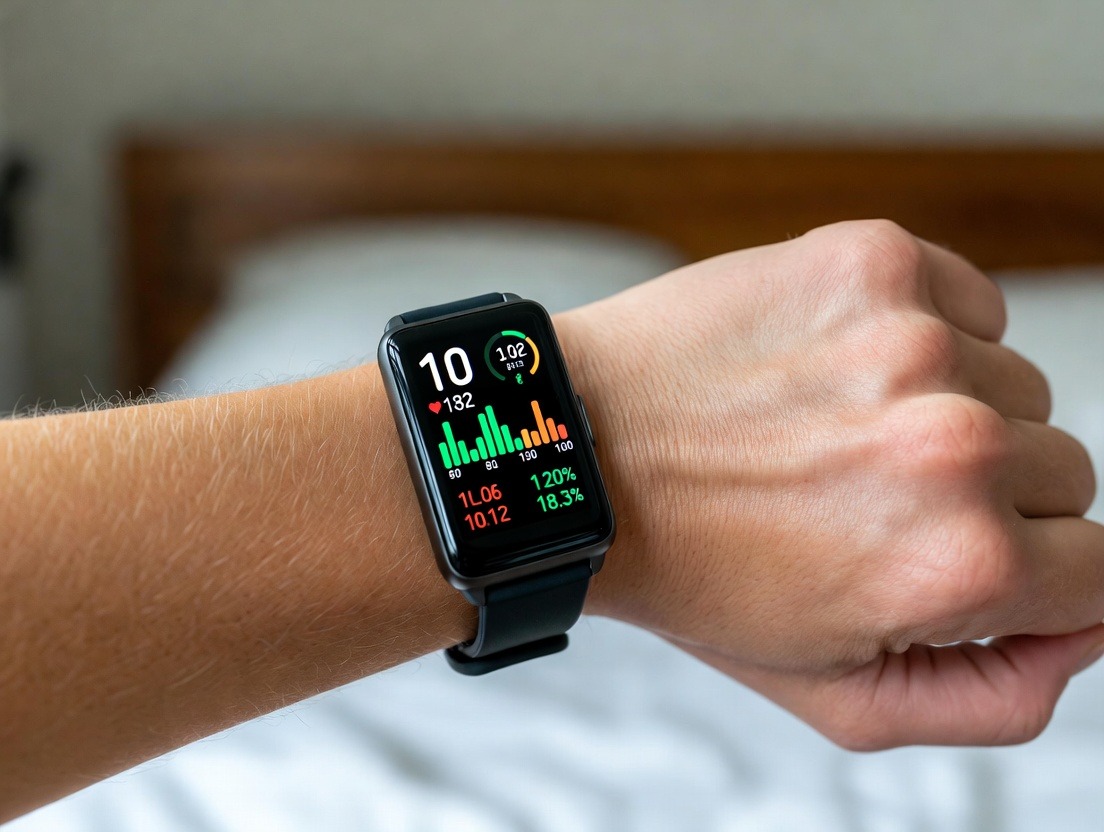
If you take one concept from the world of biometric tracking, let it be Heart Rate Variability. HRV is not just another metric; it is the closest thing we have to a real-time, non-invasive window into the conversation between your brain and your body. It is the premier tool for validating your nervous system state, and thus, your overall health optimization efforts.
Contrary to intuition, a healthy heart is not a metronome. The milliseconds between each heartbeat are constantly fluctuating. When you inhale, your heart rate slightly increases; when you exhale, it decreases. This subtle dance is orchestrated by your autonomic nervous system (ANS)—the dual-mode control system comprising the stress-inducing sympathetic branch (“fight or flight”) and the restorative parasympathetic branch (“rest and digest”).
A higher HRV indicates a dominant, resilient parasympathetic state. Your body is calm, recovered, and adapts fluidly to change. It’s like having a wide emotional range; your system can respond appropriately to stress and then return quickly to baseline.
A lower HRV indicates sympathetic dominance. Your body is under strain, whether from physical training, emotional stress, illness, or poor sleep. Resources are diverted to immediate survival, not long-term repair. The system is rigid, less adaptable.
Your smart ring validates your daily life through the lens of HRV.
The power of HRV tracking lies in its pre-symptomatic insight. It often drops before you “feel” run down, giving you validated data to preemptively adjust your behavior. By monitoring your personal baseline and trends, you move from guessing about your resilience to knowing it with empirical certainty. It turns the abstract goal of “managing stress” into a measurable, optimizable system.
The old paradigm of sleep tracking was a binary switch: asleep or awake. The new paradigm, validated by the smart ring, is a rich, multidimensional analysis. Simply logging 8 hours in bed tells you very little. True validation comes from understanding the architecture and continuity of your sleep, which the ring measures with precision.
Sleep Stages: The Architecture of Restoration
Waking up feeling “unrefreshed” after a full night’s sleep is a common mystery solved by stage analysis. Your ring validates:
Sleep Continuity: The Fragmentation Factor
You could have perfect stage distribution in theory, but if it’s constantly interrupted, the restorative value plummets. Your ring tracks:
This validates your sleep hygiene. Did that natural sleep diet of specific evening foods reduce mid-night awakenings? Did optimizing your natural sleep environment in your bedroom decrease restlessness? The “Awake Time” and fragmentation index provide the answer. For those plagued by interruptions, learning how to sleep through the night naturally becomes a goal with clear, data-driven milestones.
Sleep Timing & Consistency: Aligning with Circadian Biology
Going to bed and waking up at wildly different times each day (social jetlag) is like constantly giving your body minor time zone changes. Your ring validates alignment by tracking:
The data might validate that a consistent 10:30 PM bedtime, even on weekends, leads to higher readiness scores than sleeping in until noon. It objectively proves the value of circadian rhythm discipline, showing that when you work with your natural sleep patterns, not against them, your whole system functions more smoothly.
This granular validation transforms sleep from a black box into a transparent, optimizable process. You’re no longer just “trying to sleep better.” You are specifically targeting deeper sleep, protecting REM, reducing fragmentation, and aligning your schedule—with a ring on your finger to validate every incremental victory.
In the age of “no days off” fitness culture, the smart ring introduces a critical, validating voice of reason: It’s not about how hard you can go; it’s about how effectively you can strain and recover. This pillar moves you from blind effort to intelligent exertion.
Traditional fitness trackers often celebrate volume—steps taken, calories burned, minutes of “activity.” The smart ring contextualizes this strain against your body’s readiness to receive it. It validates whether your activity is productive or destructive.
The Validation of Productive Strain:
You complete a demanding weight training session or a long run. The next morning, you see:
The Validation of Excessive Strain (Overtraining):
You push through fatigue for a week straight with intense daily workouts. The ring’s trend data begins to sound alarms:
The Validation of Active Recovery:
On a low-readiness day, you choose a gentle walk or yoga session instead of a HIIT class. The ring validates this intelligent choice by showing:
This transforms your relationship with movement. The ring helps you see that the most effective fitness regimen is not linear but wave-like, with periods of strain strategically followed by periods of validated recovery. It elevates your decision-making from “Should I work out?” to “What type of movement will my body benefit from most today, based on the objective data?” This is the essence of validated training.
One of the most profound, yet under-discussed, features of advanced smart rings is the continuous skin temperature sensor. This isn’t for telling you if you have a fever (though it can hint at that); it’s for mapping the subtle, daily rhythm of your body’s core temperature—a direct proxy for your master circadian clock.
Your body temperature follows a reliable 24-hour cycle, orchestrated by the suprachiasmatic nucleus (SCN) in your brain. It typically reaches its lowest point in the early morning hours (around 4-5 AM) and its peak in the late afternoon or early evening. This rhythm is the engine of your circadian biology, governing the release of hormones like melatonin (for sleep) and cortisol (for wakefulness).
How the Ring Validates Rhythm Alignment:
Your ring tracks your personal nocturnal temperature baseline and its nightly dip. Consistency here is key.
Validating Lifestyle Interventions:
This metric provides incredible validation for chronobiology-based health efforts.
Beyond Daily Rhythm: Longer-Cycle Validation
For women, temperature tracking provides powerful validation of menstrual cycle phases. A sustained shift in basal temperature validates the onset of the post-ovulatory luteal phase. For anyone, a sustained elevation from your personal baseline can be an early, validated indicator of an oncoming infection or inflammatory response, often 1-2 days before symptoms appear.
In essence, temperature tracking validates your body’s timing. It answers: “Is my internal rhythm strong and stable?” In a world of constant circadian disruptors (screens, erratic schedules, jet lag), having this objective feedback allows you to defend and fortify your biological rhythm, which is foundational to every aspect of health from metabolism to mood to immune function. It’s the ultimate validation of living in harmony with your nature.
The stress of modern life is often a silent, chronic hum rather than acute emergencies. We become acclimated to it, losing the ability to perceive its true toll. Smart ring “Stress” or “Daytime Stress” scores (different from the Readiness score) solve this by providing a real-time, validated narrative of your nervous system’s journey throughout the day.
This score is typically derived from a combination of heart rate data and HRV. When you are calm and parasympathetic-dominant, your heart rate is lower and HRV higher. During a stress response, your heart rate rises and HRV drops. The ring’s algorithms process these signals to assign a stress level throughout your waking hours.
Validating Stressors and Stress Resilience:
This transforms stress from an abstract monster into a series of measurable events. You can identify your personal stress triggers with data-backed confidence. More importantly, you can validate the effectiveness of your recovery techniques.
Did that 5-minute breathing exercise actually calm your physiology, or did you just go through the motions? The stress score before, during, and after provides the answer. Did listening to a podcast on the way home help you detach from work stress better than checking emails? Compare the stress graphs on different days to find out. For those with busy minds, finding better sleep naturally for anxious minds with calming strategies is a goal that can be validated by both lower nighttime stress scores and improved sleep data.
The Recovery Validation:
The stress score seamlessly integrates with the recovery (Readiness) pillar. A day full of validated high stress, even if “managed,” will likely result in a lower readiness score the next morning, if you did not provide adequate recovery countermeasures. This creates a powerful cause-and-effect ledger:
This daily narrative of strain and recovery is perhaps the most personalized validation a smart ring offers. It proves that your body keeps a precise, unbiased score of every demand and every act of repair. By reading this score, you learn not just what stresses you, but what truly helps you recover, moving from generic wellness advice to a personally validated playbook for resilience.
Raw data—graphs, numbers, percentages—can be overwhelming. The true magic happens in the interpretation, where you become a detective connecting your life’s inputs to your body’s validated outputs. This is the process of turning cold data into warm, personal insight. Here’s a framework for doing just that.
1. Establish Your Personal Baselines (Not Averages).
Forget comparing your 45 ms HRV to someone else’s 60 ms. Your baseline is your own normal. Spend 2-4 weeks wearing your ring consistently without making drastic changes. Observe:
2. Look for Trends, Not Isolated Data Points.
A single night of poor sleep or a low HRV reading is noise. The signal is in the trend. Use the weekly and monthly views in your app.
3. Practice Correlation, Not Just Observation.
This is the core detective work. When you see a significant dip or spike in a metric, cross-reference it with your life log.
4. Run Single-Variable Experiments.
The best way to get clear validation is to change one thing at a time.
By following this process, you move from passive data consumption to active insight generation. The ring stops being a reporter and starts being a collaborator. It provides the validated feedback, and you provide the context and hypotheses. Together, you build an irrefutable case for what optimizes—or degrades—your unique biology.
The smart ring’s validation power reaches its zenith when you use it to assess the complex interplay of lifestyle factors beyond sleep and exercise. It becomes a tool for holistic biofeedback, showing how your choices in nutrition, mental training, and environmental design ripple through your entire system.
Nutritional Validation:
You are what you eat, and your ring validates the timeline of that transformation.
Mindfulness & Mental Training Validation:
Does meditation “work” for you? The ring provides physiological proof.
Environmental Validation:
Your surroundings are not a passive backdrop; they are an active input.
In this holistic view, every choice becomes a potential experiment. The smart ring removes the dogma from wellness. It doesn’t tell you that kale is good and sugar is bad. It shows you, with your own data, how your specific body responds to kale, to sugar, to meditation, to light. This is personalized, validated health optimization at its most powerful.

Understanding your body is one thing. Consistently acting in its best interest is another. This is the infamous "knowing-doing gap" that derails most wellness journeys. The smart ring bridges this gap by creating a tight, positive feedback loop that makes healthy behaviors intrinsically rewarding and their effects viscerally real.
From Abstract Benefit to Tangible Reward:
Telling someone "meditation reduces stress" is abstract. Showing them a graph where their real-time stress score plummets from "High" to "Resting" during a 10-minute session is powerfully concrete. The immediate, validated reward (seeing the data change) reinforces the behavior far more effectively than a distant, promised benefit. This is the principle of biofeedback, clinically proven to help people gain control over physiological processes.
Closing the Intention-Action Gap:
Consider the intention: "I should go to bed earlier." It’s a vague, guilt-laden thought easily overruled by one more episode. Now, imagine your ring app shows a notification at 8:30 PM: "Your body temperature has begun its natural decline. For optimal sleep, begin winding down now to align with your circadian rhythm." This is a validated, personalized prompt, not a generic scold. It connects your immediate action (starting your wind-down) to a specific, physiological process happening right now in your body. This contextual validation makes the action feel purposeful and timely.
The Compound Interest of Validated Micro-Choices:
Health is built on micro-choices. The ring validates each one, creating a sense of momentum.
Individually, these are small wins. But the ring’s data shows their cumulative, compounding effect on your weekly readiness scores and sleep balance. This transforms health from a punishing regimen of "shoulds" into a rewarding game of stacking validated victories. You start seeking out behaviors that "make my numbers better," because you’ve directly experienced the tangible payoff in how you feel and perform. For those building new habits, starting with a natural sleep routine that changed my life offers a blueprint for creating such a positive, self-reinforcing cycle.
Daily and weekly data is crucial for tactical adjustments. But the grand narrative of your health journey—the macro-progress—is written in long-term trends. This is where the smart ring delivers its most profound validation, moving beyond the weather report to show you the climate shift of your own biology.
Seeing the Forest, Not Just the Trees:
Month-over-month and year-over-year views in your app filter out the noise of a bad night or a stressful week. They reveal the directional movement of your core biomarkers.
Validating Life’s Major Transitions:
Long-term data becomes an invaluable diary of physiological adaptation.
The Power of Retrospective Analysis:
When you experience a peak in performance, energy, or well-being, you can look back at the preceding weeks of data to understand why. What was the sleep pattern? What was the readiness trend? What was your activity-strain balance? This retrospective validation helps you identify and then recreate the precise conditions for peak states. Conversely, after a slump or illness, you can often trace back to early-warning signs in the data (e.g., a week of declining HRV, elevated temperature), learning to recognize these patterns for the future.
This long-view validation is antidote to short-termism and discouragement. It teaches you to trust the process, because the data shows you the process is working on a timeline that matters. It transforms health from a daily chore into a legacy you are building, with every validated metric a brick in a stronger foundation.
With great data comes great responsibility. The constant stream of biometric feedback, if misinterpreted, can lead to "orthosomnia" – a unhealthy preoccupation with perfect sleep data – or performance anxiety tied to daily scores. The key is to wield validation as a compassionate guide, not a punitive scorekeeper. Here’s how to maintain a healthy relationship with your data.
Embrace Range, Not a Single Number.
Your health is not a single point but a dynamic range. A "good" HRV for you might be 45-65 ms. A "good" sleep duration might be 7-8.5 hours. Obsessing over hitting a specific number (e.g., 8.5 hours exactly, 60 ms HRV) is a recipe for stress, which itself will worsen the metrics. Use the ring to understand and respect your healthy range. A night with 7 hours of solid sleep within your normal range is a success, not a failure for missing 8.
Focus on Trends and Context, Not Isolated Dips.
A single low readiness score is information, not an indictment. Before feeling defeated, ask: What was the context? Did you have a late work night? A hard workout? A social event? The data is validating your body’s honest response to life, not judging your worth. The appropriate response to a low score isn’t anxiety; it’s curiosity and self-compassion. It’s a validated signal to prioritize recovery, perhaps by exploring natural sleep hacks busy professionals swear by.
Use Data for Self-Understanding, Not Self-Criticism.
The tone of your internal dialogue matters. Shift from:
The ring provides the "what." Your job is to explore the "why" with kindness. It’s a tool for self-awareness, not for beating yourself up.
Know When to Look Away.
There will be days, or even weeks (during travel, illness, major life events), when looking at the data is counterproductive. If you know you had a terrible night because your child was sick, you don’t need a graph to tell you. Give yourself permission to detach. The data will be there when you’re ready to return and re-establish your baselines. The goal is to train your body to sleep better naturally over the long run, not to achieve a perfect score every single night.
Prioritize Subjective Feeling Alongside Objective Data.
The ultimate validation is a combination of both. If your readiness score is an 85/100 but you feel exhausted, listen to your body. The data is one input. Your lived experience is another. The ring is meant to enhance your intuition, not replace it. Sometimes, the most validated action is to ignore the device and take a nap because you feel you need one.
By adopting this balanced mindset, you prevent data anxiety and harness the ring’s true power: to foster a respectful, informed, and responsive dialogue with your own body, using validation as a language of care, not control.
Theory is compelling, but real-world stories cement understanding. Let’s walk through three anonymized case studies that illustrate how smart ring validation transforms confusion into clarity and effort into evidence.
Case Study 1: The "Tired but Wired" Professional
Case Study 2: The Overtraining Athlete
Case Study 3: The Shift Worker Seeking Stability
These cases demonstrate that validation is not about achieving perfection. It’s about replacing guesswork with cause-and-effect understanding, empowering individuals to make precise, effective changes that are personally proven to work.
We’ve explored how smart rings validate the past and present. The next frontier is using this accumulated, validated data to predict the future—shifting from reactive to truly proactive health management. This is where AI and machine learning transform a tracking device into a predictive health companion.
From Descriptive to Predictive Analytics:
Current rings excel at descriptive analytics: "This is what happened." The future lies in predictive analytics: "Based on what’s happening and what has happened, here’s what is likely to happen next."
Hyper-Personalized Benchmarking and "N of 1" Medicine:
As data accumulates over years, your ring builds the world’s most comprehensive study of a single subject: you. This "N of 1" dataset allows for hyper-personalized insights that generic population studies can never provide.
Integration with the Broader Health Ecosystem:
The ultimate validation will come from synthesis. Future smart rings will not be siloed. With your permission, their data could:
This future moves us beyond validation of discrete actions to validation of a holistic life strategy. The smart ring becomes the central hub of a predictive, personalized health operating system, where every piece of data from the past is used to optimize your wellbeing in the present and safeguard it for the future. It’s the culmination of the validation journey: using evidence not just to understand your body’s story, but to intelligently write its next chapters.
While the smart ring is a powerhouse of continuous, passive validation, it operates most powerfully as part of an ecosystem. No single device is omniscient. Corroborating its data with other specialized tools creates a multi-faceted, cross-validated picture of your health, turning insights into certainties.
Validating Metabolic Health with Continuous Glucose Monitors (CGM):
The ring tracks your body’s response; a CGM tracks a key metabolic driver. Pairing them is a masterclass in cause-and-effect validation.
Validating Cardiovascular Load with Chest-Strap Monitors:
For the dedicated athlete, the ring’s heart rate data during intense exercise is good, but a chest-strap ECG monitor is clinical-grade. Using them in tandem provides validation across contexts.
Validating Subjective States with Journaling and Mood Tracking:
Biometric data is objective, but meaning is subjective. Correlating your ring’s data with a daily journal entry or mood log provides profound psycho-physiological validation.
Validating Environmental Factors with Smart Home Data:
Your ring validates your internal state; smart home devices quantify your external environment.
This multi-tool approach moves you from having data to having evidence. When your sleep, glucose, heart rate, and journal all tell the same story, you have achieved a level of validated self-knowledge that is transformative. It allows you to engineer your health with the confidence of a researcher who has replicated their findings across multiple experiments.
As with any powerful tool, misconceptions arise. To use your smart ring as a true validator, it’s crucial to understand what it is not, and to navigate its limitations with clarity. This ensures your trust in the data is well-placed and your insights are sound.
Myth 1: "The Ring is a Medical Device."
Myth 2: "Higher Numbers are Always Better."
Myth 3: "The Data is 100% Accurate All the Time."
Limitation 1: It Doesn't Measure Everything.
The ring doesn’t track blood pressure, blood oxygen saturation (SpO2) continuously, glucose, or electrolytes. It validates downstream effects. For example, it can’t measure your cortisol level, but a suppressed HRV and poor sleep can validate that your body is likely experiencing a high cortisol burden. This is why corroboration with other tools, as discussed, is so powerful.
Limitation 2: The "Why" Requires Your Detective Work.
The ring is exceptional at the "what": "Your HRV dropped 15% last night." It is silent on the "why." This is your crucial role. You must be the investigator connecting the data to your life log: Was it the intense workout? The difficult conversation? The spicy dinner? The late-night screen time? The validation is in making the connection yourself. This process itself builds profound self-awareness. For example, if sleep is disrupted, you become a detective testing hypotheses from a guide on natural ways to combat sleep deprivation.
Limitation 3: It Can't Account for Everything.
Emotional stressors—grief, heartbreak, existential anxiety—can create massive physiological signatures that look identical to physical overtraining. The data validates the strain but cannot distinguish its origin. This is where human interpretation is irreplaceable. A period of low readiness after a personal loss is not a sign of failing health; it’s a validated sign of a human experience, and the ring’s data can guide you to be extra gentle with yourself during that time.
Understanding these myths and limitations doesn’t diminish the ring’s power; it grounds it. It turns you from a passive consumer of numbers into a sophisticated interpreter of biometric signals. You learn to trust the trends, question the outliers, and always contextualize the data within the rich, complex story of your life.
The principles of validation apply to everyone, but the specific insights and priorities differ dramatically based on life stage and goals. Let’s explore how the smart ring delivers targeted, life-changing validation for three distinct groups.
1. The Perimenopausal Journey: Validating the Transition
For women navigating perimenopause, the body’s rules seem to change overnight. Subjective symptoms (hot flashes, sleep disruption, mood swings) are often dismissed. The smart ring provides objective validation and a roadmap through the chaos.
2. The Endurance Athlete: Validating the Balance Between Strain and Supercompensation
For endurance athletes, the margin between peak performance and overtraining is razor-thin. The ring is the ultimate validation tool for managing this balance.
3. The Student: Validating the Impact of Lifestyle on Cognitive Performance
For students, health choices directly fuel (or drain) academic performance. The ring validates the non-negotiable link between lifestyle and cognition.
For each of these populations, the smart ring does more than track—it translates. It translates confusing symptoms into clear biomarkers, grueling training into precise adaptation signals, and academic stress into manageable physiological events. It provides the personalized, validated playbook that generic advice never can.
At its deepest level, a smart ring does more than optimize physiology; it cultivates a new psychological relationship with your own body. This journey moves through distinct stages, from external motivation to a grounded, intrinsic trust in your body’s signals—a state often lost in modern life.
Stage 1: External Validation and Gamification (The "Honeymoon Phase")
Initially, the ring is a game. You chase higher scores, feel a hit of dopamine from a green "Good" readiness notification, and are motivated by the external validation of seeing your efforts reflected in data. This is a powerful and necessary entry point. It makes the invisible visible and rewards positive behaviors, helping to train your body to sleep better naturally through immediate feedback. This stage builds consistency.
Stage 2: Internalized Learning and Pattern Recognition (The "Apprenticeship Phase")
As the novelty wears off, you stop chasing scores and start seeking understanding. You internalize the connections: "When I do X, my data shows Y." You begin to recognize patterns before checking the app—you feel the elevated resting heart rate of poor recovery, or the calm nervous system of a high-HRV day. The ring’s data now serves to confirm your growing internal awareness. It validates your intuition, strengthening the connection between subjective feeling and objective state. You are learning your body’s unique language.
Stage 3: Intuitive Trust and Autonomous Action (The "Integration Phase")
This is the ultimate goal. The ring transitions from a daily crutch to a periodic check-in. You have internalized the lessons so thoroughly that you make choices aligned with your body’s needs without constantly consulting the data. You know you need an early night. You sense that a hard workout today would be too much. When you do check the data, it’s often a formality—a confirmation of what you already feel.
Overcoming the "Data-Disconnect" Anxiety:
The journey isn't always smooth. Sometimes, you feel great but the data is poor, or vice-versa. This "disconnect" is not a failure of the device or of your feelings; it’s a crucial learning opportunity.
By navigating these psychological stages and disconnects, you cultivate something more valuable than any metric: biometric literacy. You become fluent in the language of your own physiology, using the smart ring not as a dictator, but as a trusted translator and confidant, ultimately leading you back to a place of innate self-trust.
Knowledge is theory. Protocol is practice. This section provides a concrete, actionable framework to transform your smart ring from a passive observer into the engine of your personal health optimization system. Follow these steps to build your own Validation Protocol.
Phase 1: The Foundation Month (Weeks 1-4) – Establish Your Baseline
Phase 2: The Discovery Quarter (Months 2-4) – Run Single-Variable Experiments
Phase 3: The Integration Phase (Ongoing) – Build Your Personalized Stack
The Golden Rule of the Protocol:
Let the data validate, not vilify. A low score is not a red "F." It is a yellow flag saying, "Check in with yourself." It is data prompting compassionate curiosity, not self-criticism. This protocol gives you the structure to respond to that data with effective, personalized action, closing the loop from insight to validated outcome, day after day, year after year.
Your Trusted Sleep Advocate: Sleep Foundation — https://www.sleepfoundation.org
Discover a digital archive of scholarly articles: NIH — https://www.ncbi.nlm.nih.gov/
39 million citations for biomedical literature :PubMed — https://pubmed.ncbi.nlm.nih.gov/
Experts at Harvard Health Publishing covering a variety of health topics — https://www.health.harvard.edu/blog/
Every life deserves world class care :Cleveland Clinic - https://my.clevelandclinic.org/health
Wearable technology and the future of predictive health monitoring :MIT Technology Review — https://www.technologyreview.com/
Dedicated to the well-being of all people and guided by science :World Health Organization — https://www.who.int/news-room/
Psychological science and knowledge to benefit society and improve lives. :APA — https://www.apa.org/monitor/
Cutting-edge insights on human longevity and peak performance:
Lifespan Research — https://www.lifespan.io/
Global authority on exercise physiology, sports performance, and human recovery:
American College of Sports Medicine — https://www.acsm.org/
Neuroscience-driven guidance for better focus, sleep, and mental clarity:
Stanford Human Performance Lab — https://humanperformance.stanford.edu/
Evidence-based psychology and mind–body wellness resources:
Mayo Clinic — https://www.mayoclinic.org/healthy-lifestyle/
Data-backed research on emotional wellbeing, stress biology, and resilience:
American Institute of Stress — https://www.stress.org/


