


Daily Activity Insights for Desk Workers: What Your Ring Shows
For desk workers, it reveals crucial insights about sedentary patterns and opportunities for movement.
For desk workers, it reveals crucial insights about sedentary patterns and opportunities for movement.
%402x.svg)
You know the feeling. That 3 PM fog that descends like a thick blanket, the stiff lower back that greets you when you stand, the inexplicable fatigue after a day spent… sitting. The modern knowledge worker’s paradox is this: we are mentally exhausted yet physically underutilized. We chase productivity with sophisticated software and efficient workflows, yet we remain blind to the most fundamental instrument of our performance: our own biology.
For decades, the data of our daily office lives was limited to keystrokes, completed tasks, and calendar appointments. Our physical state was a mystery, measured only by the vague sense of being "burnt out" or the annual biometrics from a rushed doctor's visit. We lacked a continuous, personal feedback loop for our most valuable asset—our health.
Enter the smart ring. This unassuming piece of wearable technology has quietly revolutionized personal biometrics by going where we are always paying attention: our finger. Unlike wrist-worn devices that can be bulky or forgotten, a ring provides a unique, stable point for gathering high-fidelity physiological data 24/7. For the desk worker, it becomes a silent, insightful partner, translating the subtle whispers of your nervous system into a clear narrative about how your workday is truly affecting you.
This isn't just about counting steps you didn’t take. It’s about understanding the profound physiological cascade triggered by prolonged stillness. It’s about seeing the direct line from your 9 AM sit-down to your 11 PM restlessness. Your smart ring measures heart rate variability (HRV)—a key marker of your nervous system's resilience and stress load. It tracks your resting heart rate, which can creep up after days of inactivity and poor recovery. It monitors your skin temperature and blood oxygen levels, painting a picture of your body’s metabolic and circulatory state. Crucially, it measures your activity—or lack thereof—with a sobering, objective precision.
The story this data tells is often startling. It reveals the "invisible activity gap"—the chasm between how we feel we’re doing and what our physiology actually endures during eight hours at a desk. This article will guide you through that story. We’ll decode the specific metrics your ring is tracking throughout your workday, explain what they mean for your immediate focus and long-term health, and provide actionable strategies to rewrite the narrative. By the end, you’ll see your workday not as a static block of time, but as a dynamic physiological journey that you can actively optimize. Let’s begin by understanding the core technology that makes this insight possible. To see how this technology captures data even while you sleep, which sets the stage for your entire day, you can read our complete guide on how sleep trackers actually work.
We often frame sedentary work as "easy" on the body, especially compared to manual labor. But from a physiological standpoint, prolonged sitting is not a state of rest—it's a state of low-grade, chronic stress. Your smart ring data exposes this reality by moving beyond simple motion to measure your body's internal response to stillness.
The human body is designed for rhythmic, variable movement. Our circulatory system relies on muscular contraction to pump blood and lymph efficiently. Our metabolism is tuned to periodic fuel intake and expenditure. Our spine craves dynamic loading and positional changes. When we sit for 60-90 minute blocks, we disrupt all these systems. The result is a series of subtle but significant physiological shifts that your ring detects.
First, consider circulation. Sitting, especially with legs bent, increases vascular resistance. Your heart has to work slightly harder to pump blood against gravity back up from your lower extremities. Over hours, this can lead to blood pooling, which your ring may interpret as a slight elevation in your resting heart rate during the workday compared to a weekend morning. It’s a sign of cardiovascular system strain, not dissimilar to the effect of mild dehydration.
Second, and perhaps most critically for mental performance, is the impact on your autonomic nervous system (ANS). The ANS has two main branches: the sympathetic ("fight or flight") and the parasympathetic ("rest and digest"). Health and resilience lie in a dynamic balance between the two. Prolonged sitting, combined with cognitive load and digital screen exposure, can create a state of low-grade sympathetic dominance. You’re mentally alert, but physiologically, you’re in a mild, sustained stress response.
Your smart ring’s most powerful metric for detecting this is Heart Rate Variability (HRV). HRV measures the subtle variations in time between each heartbeat. High HRV generally indicates a robust, adaptable parasympathetic system—you recover well and handle stress effectively. Low HRV suggests sympathetic dominance and lower resilience. For many desk workers, a ring will show a noticeable dip in HRV as the workweek progresses, with a partial recovery overnight that may not be complete by Monday morning. This creates a cumulative stress debt.
Furthermore, sustained postural stasis leads to muscular fatigue in the core and back as your stabilizer muscles tire, causing subtle compensation patterns that can trigger stress responses. The cognitive load of multitasking and decision-making itself has a direct physiological cost, elevating cortisol and adrenaline, which your ring infers through trends in heart rate and HRV.
In essence, your ring shows that a day at your desk is not a calm, steady state. It’s a physiological obstacle course of micro-stressors: circulatory sluggishness, nervous system tension, and metabolic stagnation. The data doesn't lie. As one user shared on our testimonials page, "Seeing my HRV tank every Tuesday and Wednesday was a wake-up call. I thought I was managing stress, but my physiology told a different story." Understanding this foundational stress is key before we dive into the first major data point your day provides: the critical morning routine.
You haven’t yet opened your laptop, but your smart ring has already been working for hours, compiling a report on the most important foundation of your workday: your sleep and morning routine. The data from these early hours is not a standalone snapshot; it’s the launchpad that determines how high—or how hard—you’ll fly once you hit your desk.
The most critical number waiting for you each morning is your Sleep Score or Recovery Score. This composite metric, derived from your night’s deep sleep, REM sleep, resting heart rate, HRV, and sleep disturbances, is your body’s readiness report. A high score (often above 80) indicates your systems are recharged, inflammation is low, and your nervous system is primed for adaptability. A low score is a flashing warning light: your body is carrying residual stress, has not repaired fully, and your cognitive and emotional buffers are already depleted before your first meeting.
For the desk worker, a low recovery score has direct, tangible consequences:
Beyond the sleep score, your ring tracks your waking physiological markers. Your Resting Heart Rate (RHR) upon waking is a key indicator. If it’s 5-10 beats per minute higher than your personal baseline, it’s a sign of systemic stress, potential dehydration, or incomplete recovery. Your HRV reading first thing in the morning is arguably the gold standard for assessing autonomic nervous system balance. A consistently low morning HRV across a workweek is a clear signal of cumulative stress that your current routines are not mitigating.
So, what can you do with this data? It empowers you to craft a physiologically intelligent morning. Instead of jolting awake to a blaring alarm and diving straight into emails, you can use your ring’s data to guide a more gradual, supportive transition into work mode.
If your score is low, it’s a cue for gentleness: perhaps a 10-minute walk in daylight (which helps regulate cortisol) instead of an intense workout, a hydrating electrolyte drink, and prioritizing the most important task first while your willpower is highest. If your score is high, it’s an opportunity to capitalize on your readiness: tackle that big project, schedule your most demanding creative work, or engage in a vigorous workout to further boost resilience.
Your morning ring data moves you from guessing about your energy to knowing your capacity. It replaces the generic "I slept okay" with a quantified, personal assessment. This allows for proactive day-planning, not reactive crisis management. As we’ll explore next, this readiness directly impacts the first major challenge of the desk-bound day: navigating the post-lunch energy crash. For a deeper dive into optimizing the sleep that powers your mornings, explore our complete guide to increasing deep sleep.

This is where the rubber meets the road—or rather, where the body meets the chair. Your smart ring’s activity tracking for a desk worker tells a profoundly different story than it does for someone with an active job. It’s not about reaching 10,000 steps by noon; it’s about illuminating the stark, often uncomfortable truth of your movement (or lack thereof) patterns.
Forget the simple step count for a moment. Advanced smart rings like those from Oxyzen track active minutes, inactivity alerts, and metabolic equivalents (METs). These metrics are far more revealing for the office worker. An inactivity alert after 50 minutes of continuous sitting is your ring’s polite but firm tap on the shoulder, telling you that your physiology has entered a state of stasis with negative consequences. It’s not nagging you; it’s highlighting a biological threshold.
When you see these alerts pile up in your app’s timeline, it paints a visual story of your day: long, unbroken blocks of blue (inactivity) punctuated by short spikes of green (movement to the kitchen or bathroom). This pattern, researchers call it "active couch potato" behavior, is uniquely harmful. It means you can meet a generic step goal with your evening walk, but still suffer the metabolic and circulatory consequences of 8+ hours of sustained sitting.
Your ring’s MET data is crucial here. METs measure the intensity of your activity relative to rest. Sitting at your desk is roughly 1.5 METs—barely above baseline. A brisk walk is 3-4 METs. The goal for a desk worker isn’t to be at 4 METs all day (that’s impossible), but to break up the 1.5 MET periods frequently and incorporate short bursts of higher MET activity. This is called "movement snacking."
Here’s how to translate the data into action:
A powerful practice is to schedule "movement snacks": 2-3 minutes of bodyweight squats, calf raises, or a brisk walk up and down a flight of stairs every 60-90 minutes. Your ring will record these as small bursts of higher MET activity, breaking the destructive pattern of continuous sedentary blocks. This isn't just for fitness; it’s for immediate cognitive renewal. Studies show a short bout of movement can boost focus, creativity, and problem-solving ability for the subsequent 60-90 minutes.
Your activity data, therefore, is a real-time feedback loop for managing your most precious work resource: your attention and mental clarity. It transforms the abstract advice to "move more" into a precise, personal, and data-driven practice. This distributed movement strategy also directly combats the next major desk-worker challenge we’ll explore—the infamous afternoon energy crash. For more ideas on integrating movement into a busy life, our blog offers a wealth of practical strategies.
The 3 PM crash is a near-universal office experience, but it is not an inevitable law of nature. It is a physiological event, and therefore, it leaves a clear signature in your smart ring’s data. By learning to read the precursors, you can shift from being a victim of the crash to becoming the architect of your afternoon energy.
In the hours leading up to the crash, your ring is likely picking up subtle warning signs:
The crash itself is a perfect storm: circadian dip (a natural tendency for alertness to wane in the early afternoon), compounded by metabolic diversion from lunch, further compounded by hours of muscular and circulatory stasis. Your brain is essentially running low on oxygenated blood and glucose while being bathed in stress hormones from sustained focus.
Your smart ring empowers you to build a defensive strategy:
The goal is to use the data to create a flatter, more sustainable energy curve. Instead of a peak-crash-recovery cycle, you aim for a plateau of focused energy. As one Oxyzen user noted, "I used to lose the entire hour between 3 and 4 PM. Now, my ring reminds me to move at 2:45. That one alert saves me an hour of productive time every single day." This proactive management of your circadian rhythm and metabolism seamlessly leads us to the next critical dataset: how your workday stress manifests in your nervous system, and what your ring’s HRV is really telling you.
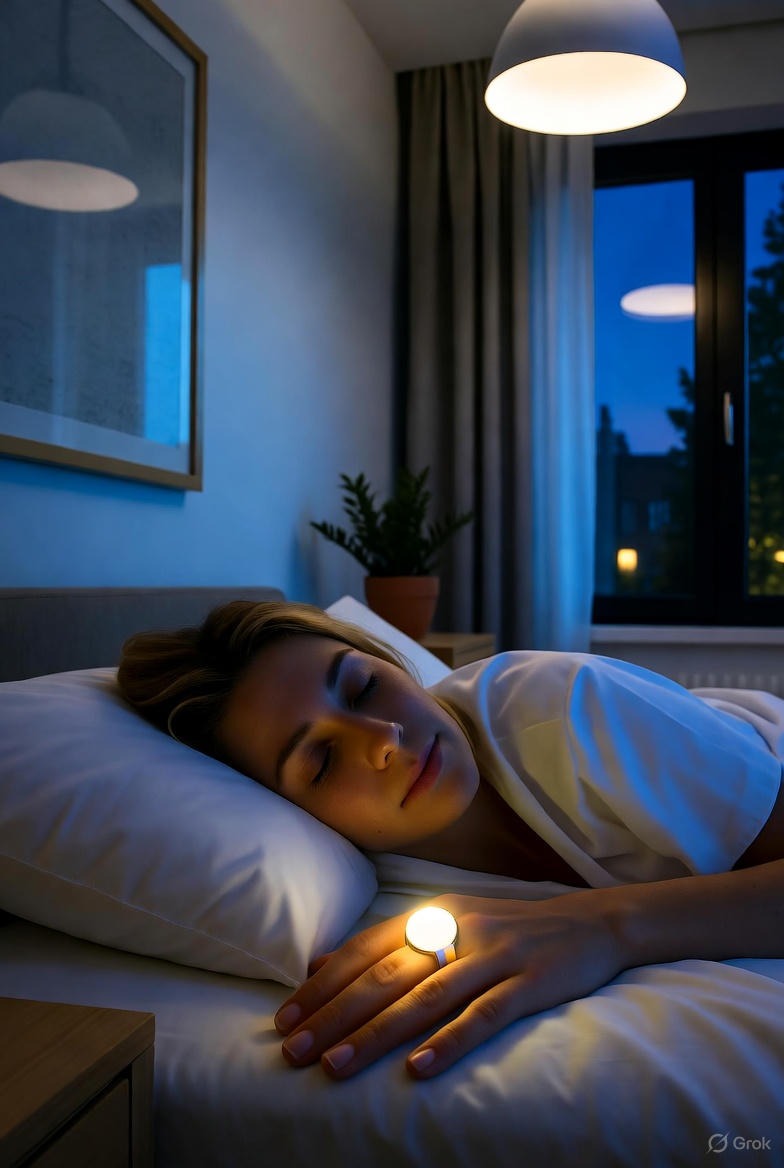
If your smart ring had a single "stress oracle," it would be Heart Rate Variability (HRV). For the desk worker navigating a sea of deadlines, emails, and video calls, HRV is the most nuanced and insightful metric for understanding your body's internal response to external pressure. It moves far beyond the simplistic notion of "stress" to reveal your capacity to withstand it.
Let's demystify it. When we say your heart beats 60 times per minute, we imagine a steady, metronomic tick-tick-tick. In reality, a healthy heart beats with subtle, millisecond variations: tick...tick..tick....tick. This variability is controlled by your autonomic nervous system. The parasympathetic ("rest and digest") branch applies the brakes, causing slight slowing between beats. The sympathetic ("fight or flight") branch hits the accelerator, preparing for action.
High HRV indicates a strong, dominant parasympathetic tone and high vagal tone—meaning your heart can rapidly and efficiently respond to changing demands. You are physiologically resilient. Low HRV indicates sympathetic dominance—your system is in a more guarded, reactive state, with less capacity to adapt. Think of HRV as your body's "buffer" against stress. A large buffer (high HRV) means you can handle a big project or a difficult conversation without your physiology going haywire. A small buffer (low HRV) means even minor irritations can trigger a significant stress response.
For the desk worker, HRV trends are revelatory:
The actionable insight here is to use HRV as a guide for workload and recovery planning.
Your ring’s HRV data transforms stress from a vague, emotional concept into a measurable, manageable physiological parameter. You learn what truly drains you and what truly restores you. This deep understanding of your nervous system's ebb and flow is foundational for the next frontier of desk worker health: optimizing the work environment itself based on biometric feedback. To learn more about the science behind this critical metric, you can dive into the brain-boosting connection of deep sleep and memory, as sleep quality is the primary driver of HRV.
Your cubicle or home office is not a neutral container; it's an environmental chamber that directly influences the biometrics on your smart ring. Beyond your chair and your schedule, factors like light exposure, ambient temperature, and noise levels are constantly sending signals to your nervous system. Your ring’s data, particularly skin temperature, heart rate, and HRV trends, can help you conduct a personal audit of your workspace.
Light: The Circadian Director
Light is the most potent regulator of your circadian rhythm. The blue-rich light from screens and overhead LEDs during the day can be beneficial for alertness, but prolonged exposure, especially in the late afternoon and evening, suppresses melatonin and can fragment your sleep. Your ring measures the outcome: sleep latency (how long it takes you to fall asleep) and sleep efficiency. If these metrics are poor, your daytime light environment may be a culprit.
Temperature: The Metabolic Thermostat
Your ring’s skin temperature sensor is a window into your thermal comfort and metabolic state. An office that is too warm (often the case in shared spaces) can increase skin temperature and resting heart rate, promoting lethargy. One that is too cold can cause subtle stress and muscular tension. Furthermore, the natural overnight dip in core body temperature is essential for initiating and maintaining deep sleep. A room that’s too warm disrupts this.
Noise: The Unseen Stressor
Intermittent, unpredictable noise—chatty colleagues, construction, street sounds—is a potent disruptor. It triggers micro-arousals in your nervous system, even if you’re not consciously annoyed. This can manifest as elevated resting heart rate during work hours and lower HRV overnight, as your brain stays in a state of heightened alertness.
By treating your ring as an environmental sensor, you move from passively enduring your workspace to actively engineering it for physiological harmony. The data provides an objective basis for changes, turning subjective complaints ("It's too loud in here") into measurable observations ("My daytime heart rate is 12 bpm higher in the open office, impacting my focus"). This holistic optimization of your day sets the stage for the ultimate recovery period: your sleep. But first, we must understand the crucial transition between work and rest.
For the modern desk worker, the "off switch" is broken. We close our laptops but our minds race with unfinished tasks, and our bodies still hum with the residual physiological charge of the day. Your smart ring exposes this failed transition in stark data: a resting heart rate that fails to drop in the evening, a skin temperature that doesn't follow its natural cooling curve, and ultimately, poor sleep readiness scores.
The period between 6 PM and 10 PM is not downtime; it's biological preparation time. It's when you must actively guide your nervous system out of sympathetic dominance and into the parasympathetic state required for restorative sleep and recovery. Your ring's evening data is the feedback mechanism to see if your rituals are working.
Key metrics to monitor:
Creating an effective "Work-to-Windown" ritual based on your data might include:
This transition period is the bridge you build each night to connect a demanding day to a restorative night. Its quality determines not just how you sleep, but how you will perform tomorrow. It closes the loop on the 24-hour cycle. Now, with the day complete, we arrive at the final and most critical dataset: the overnight report that grades your recovery and prepares you to start the cycle anew. For a comprehensive look at what your overnight numbers should be telling you, our guide on deep sleep tracking benchmarks is an essential resource.
Your sleep is not an escape from your day; it is the final, non-negotiable chapter of it. Every choice, every stressor, every minute of movement or stagnation from the prior 16 hours echoes in the theater of the night. Your smart ring’s sleep data is the comprehensive summary report, grading how well your body managed the physiological load of your desk-bound day and how effectively it executed the vital repair work.
For the desk worker, several key metrics in the overnight report are of paramount importance:
1. Sleep Stages & The Deep Sleep Deficit:
This is the crown jewel of recovery. Deep sleep (Slow-Wave Sleep) is when your body performs physical repair: tissue growth, muscle recovery, immune system strengthening, and the clearing of metabolic waste from the brain. For someone who has been sitting for hours, possibly with poor posture, this is when the musculoskeletal system gets its renewal. A lack of deep sleep means you wake up with residual physical stiffness and systemic inflammation.
2. Resting Heart Rate (RHR) During Sleep:
Your sleeping RHR is your truest baseline. A low, stable sleeping heart rate indicates efficient cardiovascular function and strong parasympathetic activity. For the desk worker, a trend of elevated sleeping RHR across the workweek is one of the clearest signs of cumulative stress and insufficient recovery. It means your body is literally working harder overnight, leaving fewer resources for repair.
3. Heart Rate Variability (HRV) During Sleep:
Nighttime HRV is a purer measure than daytime, free from conscious movement. High HRV during sleep indicates a relaxed, resilient nervous system that is cycling efficiently between sleep stages. Low sleep HRV is a red flag for overtraining (from exercise) or, more likely for the knowledge worker, under-recovery from chronic cognitive and sedentary stress.
4. Sleep Latency & Efficiency:
Sleep Latency (time to fall asleep) of more than 20-30 minutes often points to a failed work-to-windown transition—your mind is still at your desk. Sleep Efficiency (time asleep vs. time in bed) below 85% indicates frequent wake-ups or restlessness, which can be linked to environmental factors (temperature, noise, light) or internal stress.
The Actionable Narrative:
Don't just look at your sleep score. Read the story. If you see:
This overnight report is your daily performance review from your own biology. It provides the critical feedback needed to iteratively improve the entire 24-hour cycle that begins again at dawn. By connecting the dots from your morning readiness, through your daily activity and stress, to your final sleep score, you gain a powerful, closed-loop system for managing your health and performance in the sedentary modern world. This holistic view is at the core of the mission behind Oxyzen's approach to wellness technology.
Understanding your smart ring data is not about examining isolated metrics; it's about tracing the continuous, interconnected narrative of your physiology across the full day and night. For the desk worker, this 24-hour cycle reveals powerful cause-and-effect relationships that turn abstract health advice into personalized, actionable wisdom. When you view your day as a single, holistic loop, you can identify the precise points where small interventions create cascading positive effects.
Think of it as a physiological domino chain. A day that begins with a low Recovery Score (due to poor sleep) sets the first domino falling: you start with lower cognitive resilience. This makes you more likely to succumb to sedentary inertia, skipping movement breaks because you feel mentally foggy (domino two). The prolonged sitting increases muscular stiffness and circulatory sluggishness, which elevates your stress response (domino three). This heightened sympathetic state makes you crave high-carb, sugary snacks for quick energy (domino four), leading to a pronounced post-lunch crash that tanks your afternoon productivity (domino five). Exhausted, you rely on caffeine late in the day or alcohol in the evening to artificially modulate your energy (domino six), which then fragments your sleep, suppressing deep sleep and elevating your overnight heart rate (domino seven). You wake up with another low Recovery Score, and the cycle repeats, digging a deeper hole of cumulative stress and fatigue each day.
Your smart ring data makes this vicious cycle visible. The beautiful corollary is that it also makes a virtuous cycle possible. By strategically "catching" a domino early, you can reverse the momentum. For instance:
The goal is to create positive feedback loops. Better sleep (improved overnight data) leads to higher morning readiness. Higher readiness leads to more consistent movement and better stress management during the day (improved daytime data). Better daytime management leads to easier, more effective relaxation in the evening (improved transition data), which feeds back into better sleep. Your ring provides the evidence that your changes are working, creating a powerful reinforcement mechanism.
This systems-thinking approach is what transforms data from a passive report card into an active management tool. It empowers you to stop blaming "a bad day" and start understanding the specific, sequential physiological events that created it. With this holistic framework in mind, we can now dive into the most powerful application of this data: using it to fuel meaningful, sustainable behavior change. For inspiration on how others have used their data to break negative cycles, the real-world stories on our testimonials page can be incredibly motivating.
Data is fascinating, but it is meaningless without translation into action. The greatest pitfall for any wearable user is "data paralysis"—being overwhelmed by numbers without a clear path forward. For the desk worker, the key is to leverage smart ring insights to build micro-habits: tiny, almost effortless behaviors that are so small they feel trivial, but whose compound effect, reinforced by positive biometric feedback, is transformative.
The strategy is to start with one data point that bothers you most and design a single, hyper-specific habit to address it. Your ring provides the objective measure of success, not your fleeting motivation.
Habit-Building Framework: The Biometric Feedback Loop
Desk-Worker Specific Micro-Habit Ideas Driven by Ring Data:
The magic of this approach is that it uses external, objective validation (your ring's improved data) to reinforce the habit, making it more sustainable than willpower alone. You're not just "trying to be healthier"; you are running a personal experiment with clear results. This builds self-efficacy and turns health management into a engaging process of discovery. To find more science-backed strategies for improving the recovery side of this equation, our blog post on proven strategies to get more deep sleep offers excellent habit-based approaches.

The cultural hallmark of the dedicated knowledge worker has long been the uninterrupted, deep work sprint. We wear our long, unbroken focus sessions as a badge of honor. Yet, your smart ring data reveals a profound paradox: the most productive thing you can do for your focus is to break it—with movement. This isn't just wellness advice; it's a cognitive performance strategy backed by your own biometrics.
When you sit focused on a task for 90 minutes, several detrimental physiological processes unfold, all measurable:
A scheduled movement break acts as a "system reset." Here’s what happens, visible in your data:
The Data-Driven Productivity Protocol:
The outcome is not less time working, but higher-quality output per working minute. You trade shallow, distracted, painful hours for shorter periods of genuine, sustainable flow. Your ring proves it: the days you respect your movement breaks are likely the days your stress metrics (like HRV) look better in the evening, and your sleep that night is more sound. This creates a direct link between tactical daily choices and strategic long-term health, which is essential for preventing the most common endpoint of poor desk hygiene: repetitive stress and injury.
While wrist-worn wearables are common, the smart ring occupies a unique and arguably superior niche, especially for the desk worker. The finger provides a biomechanical and practical advantage that translates into more accurate, relevant, and comfortable data collection for the sedentary professional.
1. The Vascular Advantage:
The arteries in your finger (the digital arteries) are closer to the skin's surface and are narrower than those in your wrist. This allows photoplethysmography (PPG) sensors in a ring to get a stronger, cleaner signal for measuring heart rate, heart rate variability (HRV), and blood oxygen saturation (SpO2). For metrics like HRV, which relies on detecting millisecond variations between heartbeats, a stronger signal means greater accuracy. This is critical when you're trying to discern subtle stress responses during a tense video call versus a calm work period.
2. The Practicality of Wearability:
A ring is inherently less obtrusive. For desk workers who type extensively, a wrist device can clack against the keyboard, get caught on sleeves, or simply feel bulky during fine motor tasks. A ring sits passively, unnoticed. This leads to a crucial outcome: higher compliance. You're more likely to wear it 24/7, which is essential for capturing the full picture—your workday stress, your evening wind-down, and your sleep. You cannot get a accurate Recovery Score if you remove your device at night, and many people find sleeping with a watch uncomfortable.
3. Reduced Motion Artifact at the Desk:
This is a major, underappreciated point. A wrist-based device is subject to tremendous motion artifact during typing and mouse work. These small, rapid movements can generate noise in the optical sensor, confusing the algorithm and leading to less reliable heart rate data during the very activities you want to measure. A ring on your finger experiences far less of this specific type of movement during computer work, providing a more stable platform for continuous daytime measurement.
4. Consistent Skin Contact:
A properly fitted ring maintains consistent skin contact and positioning. A watch can slide up and down the wrist, especially during movement, potentially breaking contact or changing the sensor's alignment with blood vessels. The ring's fit ensures the sensor is always in the optimal location, improving data consistency.
For the desk worker specifically, this means:
The choice of form factor is not just aesthetic; it's fundamentally about data fidelity and user compliance. The smart ring, by virtue of its design, is uniquely positioned to be the continuous, reliable biometric companion for the modern, desk-bound professional. This superior data foundation gives you the confidence to make decisions, leading us to perhaps the most sensitive application: managing the blurred lines between work and life.
For the remote or hybrid desk worker, the smart ring is both a supreme ally and a stark whistleblower. It grants the freedom to design an ideal physiological workday—flexible movement, optimal lighting, personalized temperature control. Yet, it also ruthlessly exposes the dark side of boundary-less work: the "always-on" culture that can silently dismantle health. Your ring’s data doesn't care if you're in an office or your living room; it shows the physiological truth of your work habits.
The Edge: Optimizing Your Personal Workspace
Remote work allows for unparalleled environmental control, which you can now optimize with data.
The Pitfall: The Disappearing Work-Life Threshold
The major danger is the erosion of the physiological line between "work mode" and "home mode." When your office is always ten feet away, it's easy to:
Your smart ring provides the objective boundaries you lack:
For the remote worker, the smart ring transforms from a simple tracker into a personal chief of staff for your health. It provides the external structure and objective feedback that the flexible work environment lacks. By heeding its data, you can capture the immense benefits of remote work while building fortress-like boundaries against its inherent risks. This disciplined approach to managing energy and stress is the ultimate defense against the long-term toll of desk work, which we must now confront directly.
The daily fluctuations in your smart ring data—the low HRV on a stressful Wednesday, the poor sleep after a late dinner—are meaningful not just for how you feel tomorrow, but for the trajectory of your health over years. For the desk worker, the real power of continuous monitoring is in uncovering the correlation between daily habits and long-term physiological trends that are precursors to chronic disease. This is where the device transitions from a productivity tool to a preventative health guardian.
Sedentary behavior is an independent risk factor for a host of conditions: cardiovascular disease, type 2 diabetes, certain cancers, and all-cause mortality. But "sedentary" is not a binary state. Your ring quantifies it, allowing you to see the gradient of risk in your own life and modify it proactively.
Key Long-Term Markers Your Ring Tracks:
The Actionable Long-View Strategy:
By playing the long game with your data, you shift from reactive healthcare ("I need to see a doctor for this back pain") to proactive health building. You get early, gentle nudges—a trending metric—long before a symptom or diagnosis appears. This is the ultimate promise of personal biometrics: to compress the feedback loop between our choices and their consequences from years into days, giving us the power to course-correct in real time. For a deeper understanding of how one crucial sleep stage impacts long-term brain health, our exploration of deep sleep and memory consolidation is highly relevant.

With great data comes great responsibility—and the potential for great confusion. It’s easy to become obsessed with daily scores, discouraged by a single bad night, or lost in a sea of metrics. The goal of a smart ring is to empower, not enslave. For the desk worker seeking sustainable change, developing a sane, strategic relationship with your data is as important as the data itself.
Common Pitfalls & Healthy Mindset Shifts:
Practical Management Strategies:
Your smart ring is a tool for building self-awareness and agency, not anxiety. By managing your relationship with the data, you ensure it serves you, not the other way around. This balanced approach is the final piece in mastering your desk-bound physiology, empowering you to move forward with confidence and make your data truly work for you. For common questions about getting the most from wearable technology, our comprehensive FAQ page is an excellent resource for both new and experienced users.
You now possess a deep understanding of the biometric story your smart ring tells—from the morning readiness score that sets your day's trajectory to the overnight sleep data that grades your recovery. You've seen how inactivity manifests as stress, how movement resets focus, and how the remote work environment can be both a sanctuary and a trap. The final, and most empowering, step is to synthesize these insights into a Personalized Desk Worker Blueprint—a living, breathing protocol based on your unique data, not generic advice.
This blueprint isn't a rigid set of rules. It's a flexible framework of "if-then" statements derived from your own physiological patterns. It turns you from a passive recipient of data into an active biohacker of your own work life.
Step 1: Establish Your Personal Baselines
Before you can spot meaningful deviations, you need to know your normal. Spend two "typical" workweeks simply wearing your ring and observing without making major changes. At the end, note:
These numbers are your north stars. They are not "good" or "bad" compared to population averages; they are your starting point.
Step 2: Identify Your Unique Triggers and Levers
Now, mine your data for personal cause-and-effect relationships over the past few weeks. Ask:
Step 3: Draft Your "Physiological User Manual"
Using your findings, create a simple one-page guide for yourself. Structure it around your day's phases:
A.M. Protocol (Based on Morning Score):
Workday Protocol (Guided by Live Alerts & Historical Data):
Evening Wind-Down Protocol (Informed by Sleep Latency & Quality):
Step 4: Implement, Review, and Revise Quarterly
Put your blueprint into practice for one month. At the month's end, review your trends, not your daily drama. Did your average morning score improve? Did your average sleeping RHR decrease? Did you reduce your weekly inactivity alerts?
Then, revise. Perhaps you discovered that your 2:30 PM walk is even more effective if you listen to music, not a podcast. Maybe you found that magnesium supplementation improved your sleep consistency. Update your blueprint. This document should evolve as you do.
This personalized approach is the antidote to one-size-fits-all wellness. It acknowledges that the desk worker who thrives on early mornings differs from the night owl, that the person with high anxiety needs different levers than the one with low energy. Your ring provides the empirical evidence to build the system that works for you. For those looking to see what's possible with a dedicated approach, the journey chronicled in our story reflects this same ethos of personalized, data-informed design.
The smart ring technology you use today is just the beginning. The true frontier for the desk worker lies in predictive analytics—where your device doesn't just report on what happened, but forecasts what will happen, allowing for truly proactive intervention. This moves us from managing health reactively to orchestrating it preemptively.
Imagine these future-state scenarios, all built upon the continuous data stream your ring already collects:
For the employer and employee, this shifts the paradigm from corporate wellness programs (often one-off challenges) to integrated wellness infrastructure. The data, owned by the individual but optionally shared in anonymized aggregates, could help design healthier workplaces: optimizing building temperature and lighting based on collective biometric feedback, justifying dynamic work schedules, or validating the ROI of ergonomic investments.
The ethical considerations are profound—data privacy, ownership, and the potential for misuse are paramount. The value, however, is a future where work supports human flourishing in a data-informed way, preventing burnout and chronic disease before they take root. The smart ring is the sensor platform that makes this future possible. To stay at the forefront of how this technology is evolving, our blog regularly covers the latest in wearable science and practical applications.
The story of the desk worker has long been a tale of the mind triumphing over the body. We've celebrated the intellectual labor while ignoring the physical cost. We've treated our bodies as mere transportation devices for our brains, parking them in chairs for hours on end. Your smart ring changes this narrative irrevocably. It gives a voice to your physiology, translating its silent pleas into a language of data you can understand and act upon.
This isn't about achieving perfect biometrics or becoming a slave to scores. It's about reclaiming agency. It's about using objective feedback to break the cycle of sedentary stress that feels inevitable. You now have the tools to see that:
The journey from data to insight to action is a journey back to yourself. It's a process of re-integrating the mind and body that office life has so effectively divided. By honoring the alerts, respecting your recovery scores, and experimenting with micro-habits, you stop working against your biology and start working with it.
The goal is sustainable performance and lasting health. It's to reach the end of a workweek feeling tired in a good way—from meaningful effort, not from systemic depletion. It's to protect your most valuable professional asset: a resilient, energized, and healthy human being.
Your ring is more than a piece of technology. It's a lens, a compass, and a mirror. Look through it to see the hidden impact of your workday. Use it to navigate toward better daily choices. And let it reflect back to you the profound truth that your best work, your clearest thinking, and your most creative ideas emerge not from a body at war with its environment, but from a body in harmony with itself. The path to that harmony is now on your finger, waiting to be read.
Ready to start listening to what your body has been trying to tell you? Explore how a device designed for this precise purpose can become your partner in wellness. Discover the technology and design philosophy behind it at Oxyzen, or begin your journey by visiting the main storefront to find the right tool for your life. For any remaining questions on how to integrate this into your routine, our comprehensive FAQ is a great place to start.
Your Trusted Sleep Advocate (Sleep Foundation — https://www.sleepfoundation.org/)
Discover a digital archive of scholarly articles (NIH — https://www.ncbi.nlm.nih.gov/
39 million citations for biomedical literature (PubMed — https://pubmed.ncbi.nlm.nih.gov/)
experts at Harvard Health Publishing covering a variety of health topics — https://www.health.harvard.edu/blog/)
Every life deserves world class care (Cleveland Clinic -
https://my.clevelandclinic.org/health)
Wearable technology and the future of predictive health monitoring. (MIT Technology Review — https://www.technologyreview.com/)
Dedicated to the well-being of all people and guided by science (World Health Organization — https://www.who.int/news-room/)
Psychological science and knowledge to benefit society and improve lives. (APA — https://www.apa.org/monitor/)
Cutting-edge insights on human longevity and peak performance
(Lifespan Research — https://www.lifespan.io/)
Global authority on exercise physiology, sports performance, and human recovery
(American College of Sports Medicine — https://www.acsm.org/)
Neuroscience-driven guidance for better focus, sleep, and mental clarity
(Stanford Human Performance Lab — https://humanperformance.stanford.edu/)
Evidence-based psychology and mind–body wellness resources
(Mayo Clinic — https://www.mayoclinic.org/healthy-lifestyle/)
Data-backed research on emotional wellbeing, stress biology, and resilience
(American Institute of Stress — https://www.stress.org/)


