


The Wearable Wellness 101 Guide to Understanding Your Data
A guide to understanding what the numbers and graphs from your wearable actually mean for your health.
A guide to understanding what the numbers and graphs from your wearable actually mean for your health.
%402x.svg)
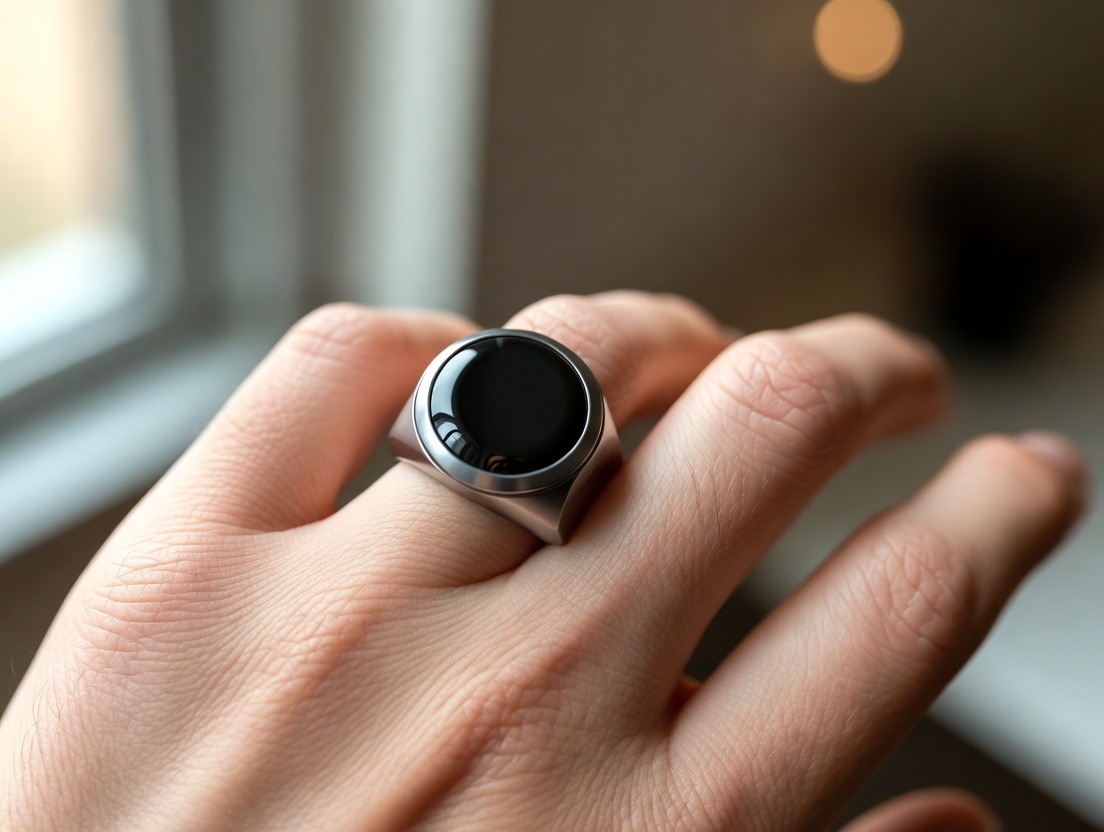
You slip on a sleek, unassuming ring. To the world, it's a piece of minimalist jewelry. But on your finger, it’s a silent guardian, a personal biometrist, a window into the hidden rhythms of your body. Welcome to the era of the smart ring—a device that promises to decode the cryptic language of your health through a constant stream of data: heart rate, sleep stages, readiness scores, and more. This influx of information is empowering, but let's be honest, it can also be utterly overwhelming. What does it all mean? Is a resting heart rate of 58 better than 62? Why did your "sleep score" plummet despite feeling rested? How do you move from passive data collection to actionable wisdom that genuinely improves your life?
This guide is your essential translator. We’re moving beyond the flashy graphs and abstract numbers to build a foundational understanding of your wearable data. Think of this not as a technical manual, but as a masterclass in self-awareness. We’ll demystify the key metrics, explain their profound connections to your overall well-being, and provide a clear framework for turning insights into sustainable habits. Whether you’re a biohacker seeking optimization or someone simply wanting to feel more balanced and energized, understanding your data is the first, most critical step on the path to a healthier, more intentional you.
Your data is a story—the story of your body’s response to stress, recovery, nourishment, and life. Let’s learn how to read it.

The journey into wearable wellness began on the wrist, with devices focused primarily on activity. They shouted at us to move, celebrated every flight of stairs, and turned exercise into a game. But health isn't just about output; it's about balance, recovery, and the nuanced input our bodies receive. Enter the smart ring. Its location on the finger is a strategic masterstroke, providing access to a rich vascular bed for highly accurate, continuous physiological monitoring, especially during the critical period when most insights are generated: while you sleep.
Unlike a watch you remove at night or during intense activity, a ring is unobtrusive, comfortable, and always on. This allows for seamless 24/7 data collection, painting a complete, unbroken picture of your daily and nightly rhythms. It shifts the paradigm from fitness tracking to whole-being wellness monitoring. The core promise is no longer just "how many miles did you run?" but "how well did your body recover from that run?"; not just "how long did you sleep?" but "what was the quality of that sleep and its impact on your nervous system?"
This transition represents a deeper understanding of human performance and health. We are complex systems where stress, rest, nutrition, and mental state are inextricably linked. A smart ring, by its constant, passive presence, gathers the biometric threads of this system—heart rate variability (HRV), skin temperature, respiratory rate, and blood oxygen saturation. It weaves them into a narrative about your resilience, your metabolic health, and your body’s silent pleas for care. Before we dive into each specific metric, it's vital to appreciate this holistic view. You are not a collection of separate data points. A low HRV isn't just a number; it’s a flag that might connect to poor sleep, which might connect to dietary choices, which might connect to unmanaged stress. The ring shows you the dots; this guide will teach you how to connect them.
Embracing this holistic mindset is the first step toward restful living, a state where your actions and your body’s needs are in harmony. By understanding the full story your data tells, you can begin to make choices that support sustained energy and long-term health, rather than just short-term outputs.
Your heart beats approximately 100,000 times a day. Each beat is a precise, coordinated effort, and the pace at which it occurs—your heart rate (HR)—is one of the most fundamental vital signs. In the context of your wearable, you’ll encounter it in three primary modes: Resting Heart Rate (RHR), Active Heart Rate, and Nightly Heart Rate.
Resting Heart Rate (RHR) is your heart’s idling speed, typically measured when you are awake but completely at rest, often first thing in the morning. A lower RHR (generally, for adults, between 60-100 bpm is "normal," but fit individuals often sit in the 50s or 40s) usually indicates more efficient heart function and better cardiovascular fitness. Think of your heart as a muscle: a stronger heart can pump more blood with each beat, requiring fewer beats per minute to sustain the body. Your smart ring tracks RHR trends over time, and this is where the magic lies. A sudden, sustained increase in your RHR can be one of the earliest and most sensitive indicators that something is off. It could signal:
Active Heart Rate is exactly what it sounds like—your heart rate during movement. Monitoring this during exercise helps you train in specific zones (e.g., fat-burning, cardio, peak) for targeted goals. But its post-exercise behavior is equally telling. "Heart Rate Recovery" (HRR)—how quickly your heart rate drops after intense exercise—is a powerful marker of fitness and autonomic nervous system health. A faster drop (e.g., a decrease of 20+ beats in the first minute) is a sign of good fitness and recovery.
Nightly Heart Rate is your RHR’s more consistent cousin. During deep, restorative sleep, your heart rate should dip to its lowest, most peaceful point of the 24-hour cycle. Your wearable charts this nocturnal dip. A shallow dip or an unusually high or erratic nightly heart rate is a glaring red flag that your body is not entering a truly restorative state. It could be due to late meals, alcohol, an overly warm room, or intense psychological stress playing out in your physiology.
Actionable Insight: Don't fixate on a single day’s number. Look at your trend line. Establish your personal baseline over a few weeks of normal routine. Then, watch for deviations. If your RHR is 5-10+ bpm above your baseline for several days, treat it as your body’s request for gentleness. Prioritize hydration, prioritize sleep, consider lighter exercise, and manage stress. It’s a foundational metric that whispers what your conscious mind might be ignoring.
If heart rate is the drumbeat, Heart Rate Variability (HRV) is the subtle, complex rhythm between the beats. It is a measure of the tiny variations in time between each heartbeat, measured in milliseconds. Counterintuitively, a higher HRV is generally better. It indicates a robust, adaptable autonomic nervous system (ANS)—the automatic control center for your body.
Your ANS has two key branches in a constant, dynamic tug-of-war:
A high HRV means your body can switch smoothly between these states—mobilizing energy effectively when needed and then powerfully switching into recovery mode. It’s a sign of resilience and cardiovascular fitness. A low HRV suggests your system is stuck in a dominant state, often sympathetic overdrive (chronic stress), leaving less capacity to respond to new challenges.
Your wearable uses HRV as a cornerstone for broader metrics like "Readiness" or "Recovery" scores. It is exquisitely sensitive to everything in your life:
How to Use Your HRV Data: Like RHR, the trend is everything. Your absolute number is personal—comparing yours to others is meaningless. Establish your baseline. A rising trend over weeks or months suggests your lifestyle and training are improving your resilience. A sharp drop is a clear signal to pull back. Many experts recommend using HRV to guide daily training intensity: if your HRV is significantly below baseline, opt for a restorative day—a walk, yoga, or complete rest—instead of a high-intensity workout. This practice, often called "HRV-guided training," helps prevent overtraining and injury.
Think of HRV as your body’s most honest confidant. It can’t be fooled by caffeine or a brave face. It reflects your true internal state, making it an invaluable tool for anyone seeking to balance achievement with recovery. For those in high-pressure environments, learning to manage stress to support HRV is non-negotiable for sustained performance, a concept deeply explored in our resource on restful living for high achievers.

You know sleep is important. But with a smart ring, you move beyond simple duration into the profound realm of sleep architecture—the cyclical structure of sleep stages your brain travels through each night. Understanding these stages transforms "I got 8 hours" into a detailed report on your brain’s maintenance activities.
The Four Stages of Sleep:
A healthy sleep cycle lasts about 90 minutes and repeats 4-6 times per night. Early cycles have more deep sleep; later cycles have more REM. Your wearable estimates your time in each stage, providing a "sleep score" that weighs the balance and continuity of this architecture.
Key Metrics to Watch:
Connecting the Dots: Your sleep data doesn’t exist in a vacuum. That poor sleep architecture with low deep sleep? Check your HRV and RHR from that night—they’ll likely be depressed. That late-night heavy meal or stressful argument likely suppressed your REM. By viewing sleep as a dynamic, structured process, you can make targeted interventions. Creating an environment and routine conducive to full sleep cycles is a pillar of health, directly supporting the principles of restful living and longevity.
Your body maintains a tight internal temperature range, but it follows a predictable daily rhythm, called the circadian temperature rhythm. This rhythm is a master regulator of your sleep-wake cycle, metabolism, and hormone release. Your smart ring, measuring subtle changes in skin temperature from the finger’s arterial blood flow, provides a unique window into this rhythm.
Typically, your core body temperature drops in the evening, reaching its nadir in the middle of the night. This drop is a critical signal for melatonin release and sleep initiation. In the morning, it begins to rise, helping you wake up feeling alert. A well-defined, predictable rhythm is a sign of a robust circadian clock.
Why Temperature Data is Powerful:
Actionable Insight: Don't expect your temperature to be a flat 98.6°F. Look at the curve over 24 hours. Is there a clear, smooth decline at night and rise in the morning? Is your baseline creeping up? For women, tracking the cyclical pattern can reveal powerful information about your hormonal cycle. By syncing your lifestyle—light exposure, meal timing, and bedtime—to support a strong circadian rhythm, you optimize a fundamental biological process. This harmonization of your life with your body’s natural cycles is a key aspect of adapting restful living through the seasons and the demands of modern life.
Respiratory Rate (RR)—the number of breaths you take per minute—is a vital sign often overlooked in daily life but meticulously tracked by your smart ring. While normal at rest ranges from 12-20 breaths per minute, your personal trend is what matters most. Like heart rate, it should decrease during deep sleep as your body enters its most relaxed state.
What Your Breathing Pattern Reveals:
Connecting to Practice: Your breath is the only autonomic function you can easily consciously control. This makes RR data a powerful bridge to actionable techniques. If you see a pattern of high resting RR, it’s a direct invitation to integrate breathwork into your day. Practices like coherent breathing (aiming for 5-6 breaths per minute) or extended exhalations can actively stimulate the parasympathetic nervous system, lowering RR, HR, and increasing HRV. It’s a tangible way to use data to drive a positive behavioral change that directly calms your physiology. For a deep dive into specific techniques, explore how breathwork supports restful living daily.
Blood Oxygen Saturation (SpO2) measures the percentage of hemoglobin in your blood that is carrying oxygen. At sea level, a normal reading is typically 95-100%. While it’s a stable metric for most healthy people during the day, its nocturnal measurement is where your smart ring provides unique value.
During sleep, it’s normal for SpO2 to dip slightly, but consistent, significant drops below 92-90% can be a cause for attention. Your ring tracks these trends, looking for patterns of noctuurnal desaturation.
Key Insights from Nocturnal SpO2:
How to Use This Data: Do not self-diagnose based on ring data. Its sensors are informative but not medical-grade. However, a pattern of frequent, significant desaturations is a strong, objective piece of evidence to bring to a healthcare provider or a sleep specialist. It can help articulate symptoms like unexplained daytime fatigue or morning headaches. It turns a subjective feeling of "I’m tired" into an objective observation: "My data shows my blood oxygen drops an average of 15 times per hour at night." This empowers more informed conversations about your health.
While smart rings de-prioritize the step-count frenzy, they still provide crucial activity and movement data. The focus, however, shifts from mere volume to patterns and balance in relation to recovery metrics.
Key Activity Metrics:
The revolutionary shift with a smart ring is the ability to view activity in the context of recovery. Your "Readiness" or "Recovery" score is a synthesized metric (heavily influenced by HRV, RHR, and sleep) designed to answer one question: "Is my body prepared for stress today?"
The Readiness-Activity Feedback Loop:
This dynamic guidance moves you away from rigid, pre-planned workout schedules and toward a responsive, body-led approach. It teaches you to differentiate between laziness and genuine need for recovery—a critical skill for long-term sustainability in any health or performance journey. Applying this principle in a professional context is essential, as explored in our guide to restful living at work.
We’ve alluded to it throughout, but the Readiness or Recovery Score deserves its own focus. This is the pinnacle metric, the algorithmically synthesized "verdict" your wearable provides each morning. It is not a single measurement but a weighted composite of your sleep data (quality, architecture), your physiological markers (HRV, RHR, temperature, respiratory rate), and sometimes your recent activity load.
Think of it as your body’s daily performance budget. A high score (e.g., 85-100) means you have a large budget—your resilience is high, and you can "spend" energy on intense exercise, demanding cognitive work, and social engagements with a strong ability to recover. A low score (e.g., below 70) means your budget is depleted. Your system is dealing with residual stress from illness, poor sleep, overtraining, or emotional strain. "Spending" heavily on a tough workout today would be like taking a loan you can’t repay, leading to debt (fatigue, injury, burnout).
How to Truly Use This Score:
This score is the ultimate tool for cultivating body awareness. It externalizes your internal state, providing an objective check against the stories you tell yourself ("I'm fine, I can push through"). Honoring its guidance is the practice of sustainable wellness, preventing the boom-and-bust cycles that derail so many health journeys. It formalizes the need for boundaries with yourself, a principle that extends to all areas of life, as discussed in restful living boundaries.

A newer frontier for wearables is the direct measurement of stress states. This isn't about logging feelings in an app; it's about detecting the physiological signature of stress in real-time. Using a combination of HRV, heart rate, skin temperature, and sometimes galvanic skin response, the device estimates moments of high sympathetic nervous system activation.
You might see this as a "stress score" for the day, or as live notifications prompting you to take a mindful minute when an acute stress episode is detected.
Understanding Stress Data:
Turning Data into De-Stressing: This feature turns your wearable into a biofeedback device. The goal isn't to eliminate stress—that’s impossible—but to improve your stress recovery ratio. When you get a "high stress" notification, use it as a cue for a 60-second reset: three deep belly breaths, looking out a window at the horizon, or simply acknowledging the state without judgment. Over time, this practice can train your nervous system to unwind faster, improving your overall HRV and readiness. Integrating these micro-moments of calm is a powerful strategy, part of a larger philosophy of creating the weekly restful living plan for a balanced life.
You now have a foundational understanding of the key players in your biometric symphony: the steady drum of Heart Rate, the complex rhythm of HRV, the structured journey of Sleep, the metabolic signal of Temperature, the efficient flow of Oxygen, the balanced equation of Activity, the guiding North Star of Readiness, and the nervous system narrative of Stress. But information is not transformation. The final and most important step is synthesis.
Creating Your Personal Biometric Narrative: This is where you become the author of your own health story. Start asking connective questions:
The 80/20 Rule of Data: You will not optimize every metric every day. That way lies madness. Instead, focus on the one or two levers that most powerfully move your overall state. For most people, the highest-impact levers are, in order:
Embrace the Journey, Not the Daily Score: Your wellness is a long-term trend, not a daily stock price. There will be low-score days—from illness, travel, celebration, or life’s inevitable stresses. That’s not failure; it’s data. The goal is resilience: the speed and ease with which you return to your baseline after a disturbance. Over months, you should see your baseline HRV gradually rise, your sleep become more consistent, and your body’s signals become more intelligible.
You have begun a profound dialogue with your body. Your smart ring provides the vocabulary. This guide has provided the grammar. Now, go and have the conversation. Listen closely, respond with kindness, and watch as data transforms into self-knowledge, and self-knowledge blossoms into a life of greater balance, vitality, and restful vitality.
Your biometrics exist in a vacuum of meaningless perfection without the context of your lived experience. A dip in HRV is just a number. But a dip in HRV paired with your log of "two client presentations, skipped lunch, three coffees, and a late dinner" becomes a crystal-clear cause-and-effect lesson. This practice of contextual logging is the single most powerful habit you can build to accelerate your learning curve.
What to Log (The Non-Negotiables):
The Art of Pattern Recognition: After 2-4 weeks of consistent logging alongside your wearable data, step back. Don't look at single days; look for patterns.
This investigative work transforms you from a passenger to a pilot. You stop wondering "Why do I feel tired?" and start knowing: "My data shows my deep sleep drops below 1 hour when I eat within 3 hours of bed, and that's why I feel tired." This knowledge is empowering and forms the basis for personalized, effective habits. Understanding these personal rhythms is the first step toward designing a sustainable lifestyle, much like the framework suggested in our guide to the weekly restful living plan.
With patterns identified, you can now pull specific levers to move your metrics in a positive direction. Think of these as dials you can adjust on your personal wellness dashboard.
1. The Sleep Lever: This is the most powerful dial.
2. The Stress Recovery Lever: This is about improving your ability to downshift.
3. The Nutrition & Hydration Lever: You can't out-track a poor diet.
4. The Activity Lever: Work smarter, not just harder.
Pulling these levers isn't about perfection; it's about incremental influence. Changing one small habit—like moving your dinner 30 minutes earlier or adding a 5-minute breathing session—can create a measurable ripple effect across your entire biometric profile.
While sleep is a critical data goldmine, the daytime story is equally important. Modern wearables provide insights that help you optimize your waking hours for sustained energy and focus.
Daytime Heart Rate & HRV Trends: Observe your resting heart rate at different times of day. A sudden, unexplained spike in HR during a calm period could indicate dehydration, an immune response, or hidden stress. Some devices now offer a kind of "live" HRV snapshot during the day—taking a few minutes to sit quietly and measure can give you a point-in-time gauge of your nervous system state before an important meeting or decision.
Activity Snacking and Focus Sessions: Use your device to structure productive flow. The Pomodoro Technique (25 minutes of focus, 5 minutes of movement) is biomechanically sound. Your device can remind you to take these movement breaks, which boost circulation, clear metabolic waste from the brain, and help maintain stable glucose levels, all contributing to more consistent cognitive performance. This practice of intentional rhythm is a form of creating calm within productivity, a key tactic for restful living at work.
Stress Moment Detection and Intervention: As mentioned, the real-time stress notification feature is a game-changer for emotional regulation. It’s an objective, non-judgmental observer saying, "Your physiology is in a stress state." This allows you to intervene in the moment with a breathing technique, rather than realizing you're stressed hours later when you have a headache. This builds emotional intelligence from the body up.
The Power of the "Body Budget": Think of your daytime energy and focus as a finite budget. Your morning readiness score tells you your starting balance. Each stressful event, meeting, or cognitive task is a withdrawal. Each mindful break, nutritious meal, or moment of connection is a deposit. Your wearable data helps you track these transactions in real-time, empowering you to make conscious "spending" decisions to avoid an overdraft by afternoon.
This is a crucial, often overlooked chapter in data mastery: knowing when to disengage. Data is a servant, not a master. Obsessive checking, anxiety over a single day's low score, and the pursuit of perfect metrics can become a new form of stress—literally defeating the purpose.
Signs You're Becoming Data-Obsessed:
Healthy Data Hygiene Practices:
The ultimate goal of this journey is embodied awareness—where you can sense a rising heart rate or shallow breathing without needing a device to tell you. The wearable is a training tool to get you there. Once the lessons are internalized, the data becomes a periodic check-in, not a constant crutch.

Life isn't lived in a perfectly controlled lab. Travel, especially across time zones, is one of the most disruptive events for your circadian biology and biometrics. Your wearable becomes an invaluable ally here, not for maintaining perfect scores, but for navigating the disruption strategically and recovering faster.
Pre-Travel Preparation (The "Pre-Hab"):
During Travel (The "Mitigation"):
Post-Travel Recovery (The "Rebound"):
Travel data is fascinating because it vividly illustrates your body's resilience. The steep drop and subsequent recovery curve are a real-time lesson in your adaptive capacity. By working with your data during disruption, you reduce suffering and bounce back more efficiently.
For about half the population, a critical, often overlooked layer of context exists: the menstrual cycle. Hormonal fluctuations across the month create a predictable, powerful pattern in biometric data. Understanding this cycle is not just about fertility; it's about honoring the natural rhythms of energy, recovery, and capability.
Phases of the Cycle & Biometric Correlates:
Actionable Cycle Syncing:
Ignoring this cycle is like trying to understand the weather while ignoring the seasons. For women, embracing this data layer is a profound act of self-knowledge, allowing for a compassionate, optimized approach to month-long wellness. It is the ultimate practice of adapting restful living through the seasons of your own biology.
The true, transformative power of wearable data isn't in daily optimization; it's in the longitudinal dataset you build over years. This personal health timeline becomes an irreplaceable asset, moving you from reactive healthcare to proactive, predictive self-care.
What Long-Term Trends Reveal:
Creating Your Health Legacy: Think of your data as a continuous personal health record. In a world of fragmented healthcare, you become the keeper of your most consistent health story. This empowers you in medical settings. Instead of saying "I'm tired," you can say, "Over the past three months, my deep sleep has decreased by 40%, and my resting heart rate has increased by an average of 8 BPM." This is actionable, clinical-grade information.
This long-view fosters a mindset of stewardship rather than hacking. You're not optimizing for a peak next week; you're cultivating a resilient system for decades. This perspective is deeply connected to the principles of restful living and longevity, where sustainable daily habits compound into a lifetime of vitality.
Your body is not an isolated system; it's in constant dialogue with its environment. Your wearable data often reflects this external world with surprising clarity, teaching you how to craft surroundings that support, rather than sabotage, your well-being.
Environmental Levers in Your Data:
Your Data as a Guide for Minimalism: When you see how clutter—be it digital, physical, or social—creates cognitive load and stress that registers physiologically, the desire to simplify becomes data-driven. Creating a calm, ordered, intentional environment reduces the background "noise" on your nervous system. This connection between external simplicity and internal calm is a key tenet of how minimalism enables restful living. Your wearable provides the proof that it works.
By reading your data as a reflection of your total environment, you gain the power to shape a world that actively nourishes you. It turns wellness from a series of personal chores into a holistic practice of life design.
True data fluency requires seeing the body as a dynamic system, not a dashboard of independent gauges. A change in one metric is never an isolated event; it sends ripples throughout your entire physiological network. Understanding these biometric feedback loops is the hallmark of advanced interpretation.
The Cascade of Poor Sleep:
Imagine a night of poor sleep, characterized by high sleep latency and low deep sleep (as shown in your sleep architecture data). This single event triggers a cascade:
The Positive Feedback Loop of Recovery:
Conversely, a series of good habits creates a virtuous, self-reinforcing cycle:
Actionable Insight: When you see a negative deviation in one key metric (e.g., HRV), immediately check its common partners. Look at last night’s sleep efficiency and RHR. Then, ask what behavioral input 24-48 hours prior might have been the initiating trigger. This systems-thinking approach prevents you from trying to “fix” the HRV in isolation and guides you to address the root cause, which often lies in sleep, nutrition, or stress management. Mastering this interconnected view is what allows you to create the sustainable, positive loops that characterize a truly restful living plan.
The mind-body connection is not a metaphor; it is a biochemical and neurological reality. Your wearable, tracking the physical outputs of your nervous system, often serves as a startlingly accurate mirror of your mental and emotional state. Learning to read this reflection can foster profound emotional intelligence and prompt timely self-care.
Anxiety and the Physiological Signature: Chronic anxiety or a panic attack isn't just a feeling; it has a clear biometric profile. You will see:
Depression and Circadian Rhythms: Depressive states are strongly linked to circadian disruption. Your data may reveal:
Joy, Connection, and Positive Metrics: The flip side is equally important. Moments of deep connection, laughter, awe in nature, or creative flow have a physiological signature, too:
While your data is intensely personal, you do not have to interpret it in a vacuum. The rise of wearables has created opportunities for shared biometric intelligence—not for comparison, but for context, support, and discovery.
The Value of Group Baselines: Understanding that women in the luteal phase often see a 3-5 BPM rise in RHR is reassuring. Knowing that HRV naturally declines with age provides context for your long-term trends. This collective knowledge, often shared in informed communities or through research summaries, helps you separate personal pathology from normal human variation.
Challenges and Shared Solutions: Engaging with a community of thoughtful wearable users can be a treasure trove of actionable strategies. When you ask, “My HRV crashes every Sunday night, any ideas?” you might discover it’s a common “Sunday Scaries” phenomenon linked to work anxiety, and learn specific wind-down routines others use to combat it. Or you might find solidarity in navigating the data disruptions of travel or menopause.
The Caveat: Comparison is the Thief of Joy. This communal approach requires discipline. Your absolute HRV number is meaningless compared to anyone else’s. A community is useful for discussing trends, patterns, and strategies, not for ranking scores. The goal is collective wisdom, not competition.
Partner and Family Insights: On a micro-scale, sharing general trends with a partner or family can foster empathy and support. If your partner can see that your poor sleep score correlates with your shared late-night TV habit, it becomes a team effort to adjust. It transforms personal health into a collaborative project for a healthier household.
As we embrace the power of biometric data, we must also pause to consider its implications. Wearing a device that continuously monitors your intimate physiology is a significant act. Navigating this landscape with intention requires an ethical and philosophical framework.
Data Privacy and Ownership: Who owns your data? What is the company’s privacy policy? Is your aggregated, anonymized data being sold or used for research? These are critical questions. Become an informed consumer. Understand where your data flows and what controls you have. Opt out of unnecessary data sharing when possible. Your biometrics are not just numbers; they are a digital fingerprint of your being—guard them with the seriousness they deserve.
The Risk of External Validation: There’s a danger in outsourcing your sense of well-being to an algorithm. “My ring says I’m ready, so I am.” “My ring says I’m stressed, so I must be.” This can erode interoception—your innate ability to sense your body’s internal state. The goal is to use the data to refine your interoception, not replace it. Regularly check in with yourself before checking the app. How do you feel? Let that be your primary guide, with the data as a curious secondary opinion.
Avoiding Orthosomnia: A term coined by sleep researchers, orthosomnia is the paradoxical condition of becoming so preoccupied with perfect sleep data that it creates anxiety and insomnia. The pursuit of the perfect “sleep score” becomes the very thing that ruins your sleep. This is a clear sign to step back, practice data hygiene, and remember that the metric is a proxy for the experience, not the experience itself.
The Philosophy of Enough: Wearable data, with its constant feedback loop, can fuel a never-ending optimization mindset. You can always sleep a bit more, get your HRV a bit higher, lower your RHR a bit more. At some point, you must embrace the philosophy of “good enough.” Is your data stable and within a healthy range for you? Are you functioning, thriving, and enjoying your life? If yes, then perhaps it’s time to shift from optimization to appreciation. Use the data as a maintenance monitor, not a constant crucible for improvement. This balanced approach prevents wellness from becoming another source of performance anxiety.
The technology on your finger is just the beginning. The field of personal biometrics is advancing at a breathtaking pace. Looking forward, we can anticipate integrations that will make our current data look like a black-and-white television compared to an IMAX screen.
Multi-Modal Sensing: The future lies in combining data streams. Imagine your smart ring data syncing with:
Predictive Analytics and AI Health Coaches: As algorithms improve and datasets grow, the shift will move from descriptive (“You had poor sleep”) to diagnostic (“Your poor sleep is likely linked to your late-afternoon caffeine based on your historical data”) to predictive (“Based on your declining HRV trend and elevated RHR, you have a 70% likelihood of catching a cold in the next 48 hours. Recommended action: Rest, hydrate, and increase Vitamin C”).
AI-driven “health coaches” could synthesize all your data—biometrics, logged nutrition, calendar—to provide hyper-personalized, real-time recommendations.
Integration with Healthcare: The ultimate frontier is the seamless, secure integration of longitudinal wearable data into your electronic health record. Your doctor could see a year of your heart rate trends before prescribing a medication, or monitor your recovery from surgery through your nightly SpO2 and activity data. This turns episodic “sick care” into continuous health partnership.
Preparing for the Future: As a user today, you are building the foundational literacy and dataset that will allow you to harness these future technologies effectively. The habit of contextual logging, the understanding of your personal baselines, and the critical thinking about data interpretation are skills that will only become more valuable. You are not just tracking your health; you are participating in the citizen-led future of medicine.
With all this knowledge, you graduate from a passive observer to an active scientist of your own life. The final skill is designing and running Personal N=1 Experiments. This is the systematic method to answer your specific questions and find what works uniquely for you.
The Structure of a Good Self-Experiment:
Example Experiment Log:
This methodical approach removes guesswork and emotion from habit formation. It turns wellness into a curious, evidence-based practice. It is the ultimate expression of using data not just to understand yourself, but to intentionally evolve yourself.
You began this journey with a ring and a stream of enigmatic numbers. You now possess the map to navigate that stream, not as a bewildering flood, but as a source of deep and continuous revelation. You have learned the language of your heart rate, the poetry of your sleep cycles, the subtle signals of your temperature, and the profound story told by your stress and recovery.
Remember this: The numbers are not the goal. The perfect score is not the destination. The true purpose of this entire endeavor is wholeness.
It is the wholeness that comes from listening to your body’s whispers before they become screams. It is the wholeness of aligning your daily choices with your long-term vitality. It is the wholeness of understanding that your physical, mental, and emotional health are a single, intertwined system. Your wearable data is the bridge to that understanding.
Use this tool with curiosity, not obsession. Use it with compassion, not criticism. Let it guide you toward more restful nights, more mindful days, more nourishing food, and more authentic connections. Let the data illuminate the path, but let your own lived experience—your joy, your energy, your sense of peace—be the final measure of success.
You are now equipped not just to wear a device, but to wear it wisely. You are no longer just a user of technology; you are an active author of your own well-being story. Go forward with this knowledge, and write a story of resilience, balance, and profound health.
Your Trusted Sleep Advocate: Sleep Foundation — https://www.sleepfoundation.org
Discover a digital archive of scholarly articles: NIH — https://www.ncbi.nlm.nih.gov/
39 million citations for biomedical literature :PubMed — https://pubmed.ncbi.nlm.nih.gov/
Experts at Harvard Health Publishing covering a variety of health topics — https://www.health.harvard.edu/blog/
Every life deserves world class care :Cleveland Clinic - https://my.clevelandclinic.org/health
Wearable technology and the future of predictive health monitoring :MIT Technology Review — https://www.technologyreview.com/
Dedicated to the well-being of all people and guided by science :World Health Organization — https://www.who.int/news-room/
Psychological science and knowledge to benefit society and improve lives. :APA — https://www.apa.org/monitor/
Cutting-edge insights on human longevity and peak performance:
Lifespan Research — https://www.lifespan.io/
Global authority on exercise physiology, sports performance, and human recovery:
American College of Sports Medicine — https://www.acsm.org/
Neuroscience-driven guidance for better focus, sleep, and mental clarity:
Stanford Human Performance Lab — https://humanperformance.stanford.edu/
Evidence-based psychology and mind–body wellness resources:
Mayo Clinic — https://www.mayoclinic.org/healthy-lifestyle/
Data-backed research on emotional wellbeing, stress biology, and resilience:
American Institute of Stress — https://www.stress.org/


