


The All-Day Fitness Tracking Your Wellness Ring Provides Automatically
The ring provides automatic, all-day fitness tracking without you needing to remember.
The ring provides automatic, all-day fitness tracking without you needing to remember.
%402x.svg)
For generations, the pursuit of optimal health was a story told in fragments. A yearly check-up snapshot. A post-workout feeling. The groggy assessment of a night's sleep. We pieced together a narrative of our well-being from isolated, often subjective, moments, missing the continuous, data-rich story unfolding in our bodies every second. The arrival of wearable technology promised a revolution, yet wrists were burdened with bulky screens, and pockets with forgettable devices. The true breakthrough wasn't just in miniaturizing sensors, but in seamlessly integrating them into the fabric of our lives—literally, onto a finger.
Enter the modern wellness ring. This unassuming piece of advanced wearable technology represents a paradigm shift in personal health monitoring. It moves beyond the episodic tracking of workouts or the passive logging of steps. Instead, it functions as an all-day, automatic fitness and wellness guardian, silently compiling a holistic, dynamic, and profoundly personal biography of your body's rhythms, efforts, and recoveries. No buttons to press, no sessions to start. It simply knows, because it's always listening.
This is the era of ambient health intelligence. A ring like the one pioneered by Oxyzen isn't just a gadget; it's a continuous health audit. From the moment you slide it on, it begins its silent vigil, tracking a symphony of physiological signals to paint a complete picture of your readiness, strain, and restoration. This article delves deep into the first crucial chapters of that story—the automatic, all-day fitness tracking that forms the foundational layer of true wellness intelligence. We'll explore how this constant, effortless data collection transforms random numbers into actionable insights, empowering you to live not just more actively, but more intelligently.
Before we marvel at the outputs—the sleep scores, recovery indices, and activity summaries—it’s critical to understand the invisible, automated workflow happening on your finger. A wellness ring’s power isn't in a single sensor, but in a sophisticated dance of hardware and software that operates 24/7.
The Sensor Symphony: More Than Meets the Eye
Glance at a sleek ring, and you see jewelry. But within its compact form resides a clinical-grade laboratory. The primary actors are Photoplethysmography (PPG) sensors, which use tiny LED lights to detect blood volume changes in the capillaries of your finger. This is the core technology for measuring heart rate and, by extension, heart rate variability (HRV). A 3D accelerometer and gyroscope track micro-movements—not just your steps, but the quality of your gait, the tosses and turns of sleep, and periods of absolute stillness. A skin temperature sensor provides a crucial baseline of your body's thermal regulation, and some advanced models even include sensors for blood oxygen saturation (SpO2).
From Raw Signal to Refined Metric: The AI Crucible
The raw data from these sensors is a torrent of numbers. This is where artificial intelligence becomes the unsung hero. Advanced algorithms, often developed through machine learning on massive anonymized datasets, clean this signal. They distinguish between a heart rate spike from climbing stairs and one from a moment of anxiety. They filter out the "noise" of a bumpy car ride to accurately assess activity levels. This processing happens both on the device and in secure cloud analytics, transforming flickering lights and motion data into clean, interpretable metrics like continuous heart rate, sleep stages, and calorie expenditure. For a deeper dive into the fascinating technology behind this, our blog offers a detailed explainer on how these trackers actually work.
The Power of Passive Collection: Building Your Unique Baseline
The magic word is passive. Unlike a smartwatch that requires you to start a "running" session, the ring’s default state is "on." This passive, all-day collection is revolutionary because it builds a personal baseline. The system learns your normal resting heart rate, your typical sleep duration, your daily activity patterns. It doesn't compare you to population averages alone; it compares you to yourself. This baseline becomes the reference point for all insights. Is your resting heart rate 5 BPM higher than your baseline this morning? That’s a meaningful flag, potentially indicating stress, illness onset, or inadequate recovery. Without this continuous, automatic tracking, such personalized detection would be impossible.
This foundational workflow—sensing, processing, baselining—sets the stage for everything that follows. It turns a piece of wearable tech into a personal health observatory, always on duty, quietly compiling the data that empowers you to make smarter decisions about movement, rest, and ultimately, your long-term vitality.
The old paradigm of morning health assessment was brutally simplistic: open your eyes, and subjectively decide if you feel "rested." The wellness ring replaces this guesswork with a quantified, multidimensional Readiness Score—a comprehensive report card on your body's preparedness for the day ahead. This isn't a single metric pulled from thin air; it's a sophisticated synthesis of key recovery data collected automatically while you slept.
Deconstructing Your Readiness Score: The Key Pillars
Your morning readiness is typically calculated from three to five core physiological markers, each telling a part of the recovery story:
From Score to Strategy: Making Your Data Actionable
A high readiness score (e.g., 85-100) is a green light. It suggests your body has recovered effectively and is primed for physical or mental challenge. This is the day to tackle that intense workout, important presentation, or demanding project. A moderate score (e.g., 70-84) suggests proceeding with awareness—perhaps opting for a moderate workout or focusing on maintenance tasks. A low score (<70) is your body’s data-driven plea for rest. It’s a signal to prioritize recovery: choose gentle movement like walking or yoga, hydrate thoroughly, manage stress, and aim for an early bedtime. This system moves you from "I feel okay, I guess" to "My body has recovered to 82% capacity, so I will plan a strength session but skip the high-intensity intervals."
This personalized morning briefing fundamentally changes your relationship with your day. It empowers you to align your ambitions with your body's actual capacity, reducing the risk of burnout and injury while maximizing performance on the days you are truly ready to shine. It’s the first and most critical piece of all-day fitness intelligence your ring provides automatically.
For decades, heart rate was a momentary snapshot—a finger on the wrist, a chest strap during a run. The wellness ring transforms this sporadic measurement into a continuous, living narrative of your cardiovascular system. This isn't just about counting beats; it's about interpreting their story across waking hours, rest, and every state in between.
The Three Critical Heart Rate Zones: Automatic & Always-On
Your ring automatically categorizes your heart rate into meaningful zones throughout the day, providing a granular view of your metabolic and cardiovascular engagement without you ever setting a "zone" target.
Heart Rate Variability (HRV): The Ultimate Nervous System Whisperer
While heart rate tells you how fast the engine is running, HRV tells you how well the driver (your autonomic nervous system) is controlling it. High HRV indicates a heart that is responsive and adaptable—a sign of good recovery, resilience, and fitness. Low HRV suggests a heart on "autopilot," often a marker of stress, fatigue, or poor recovery.
The ring’s supreme advantage is measuring nocturnal HRV. By taking readings during stable sleep, it eliminates the "noise" of daily movement, food intake, and caffeine, providing the cleanest possible signal of your recovery status. Watching your HRV trend over time is like having a direct line to your nervous system's balance. It’s a primary driver of your readiness score and an invaluable tool for athletes and anyone managing stress. For those looking to optimize this critical metric, our resources on deep sleep optimization for athletes and the science of deep sleep explore its foundational connection to restorative rest.
Real-World Applications: From Stress Detection to Illness Onset
This continuous heart data shines in practical scenarios:
By providing a 24/7 cardiovascular biography, your wellness ring turns your heart from a silent organ into a constant, communicative partner in your health journey.
The quest to "burn calories" has long been plagued by oversimplification. Generic formulas based on age, weight, and height are notoriously inaccurate. The wellness ring, through its 24/7 sensor fusion, aims to provide a personalized, dynamic estimate of your total daily energy expenditure (TDEE) that evolves with you and your daily context.
The Multi-Sensor Methodology for Metabolic Estimation
The ring doesn't rely on a single input. It creates its estimate by synthesizing several continuous data streams:
Active Calories vs. Total Calories: Understanding the Difference
Your daily report will typically break this down clearly:
The Power of a Personalized Baseline
This is where automatic tracking triumphs. A static online calculator gives you a fixed BMR. But your ring learns. Over time, it can observe that on days you are completely sedentary, your actual burn is X calories. This becomes your de facto personalized resting metabolic rate. It can then more accurately attribute additional burn to activity. This personalization is key for the data to be meaningful for weight management or performance nutrition.
Applications: From Nutritional Strategy to Fitness Validation
By automatically weaving together heart rate, movement, and personal baselines, the wellness ring demystifies your metabolism. It moves you away from generic, often demoralizing calculators and toward a responsive, personal understanding of how your body expends energy in the real world, in real-time. To discover the device that delivers this level of insight, the journey starts at our main shop and discovery portal.

Data is only as valuable as the actions it inspires. The final, transformative layer of all-day automatic tracking is the ring’s ability to synthesize everything it learns about you into personalized, adaptive guidance. It moves from being a passive monitor to an active, intelligent partner in your wellness journey.
Dynamic Goal Setting: Goals That Breathe With You
Instead of imposing a one-size-fits-all 10,000-step mandate, sophisticated wellness platforms use your data to set dynamic goals.
Intelligent, Context-Aware Nudges
The ring and its app can provide timely, automated suggestions based on real-time and historical data:
The Learning Feedback Loop: The System That Knows You
The true magic lies in the closed loop. You wear the ring automatically. It collects data automatically. It processes and provides insights and suggestions. You respond (or don't). It observes the outcome. Did following the wind-down prompt improve your sleep efficiency? Did taking a rest day when readiness was low lead to a higher score and a better subsequent workout? The system learns from these patterns, refining its understanding of what works for you.
From Generic to Genuinely Personal
This transforms the user experience:
This automated, intelligent guidance system is the culmination of all-day tracking. It’s where raw physiological signals are distilled into wisdom, empowering you to live in greater harmony with your body's true needs and potential. This philosophy of personalized, data-informed care is at the heart of our story and mission.
The first portion of our journey revealed the remarkable, silent symphony of sensors and algorithms that work 24/7 to paint a complete picture of your physiological baseline. We’ve seen how automatic tracking of readiness, heart rate, activity, sleep, temperature, and stress creates an unprecedented autobiography of your body. But raw data, no matter how comprehensive, is just the beginning. The true revolution of the modern wellness ring lies in its capacity for personalization and contextual intelligence.
This next layer of understanding explores how this foundational, automatic data stream is expertly channeled to serve you—not a generic user. It’s the difference between a weather report and a personalized farming almanac; one tells you the temperature, the other tells you the optimal time to plant your specific crops based on soil conditions, rainfall history, and seasonal patterns. Your wellness ring does precisely this for your health. It takes the universal metrics and interprets them through the lens of your unique lifestyle, ambitions, biology, and challenges.
Here, we transition from "what your ring tracks" to "what your ring understands." We will explore how this device morphs to become a dedicated athletic coach, a stress resilience trainer, a sleep optimization consultant, and a long-term health guardian, all by intelligently applying the same core stream of automatic data. This is where the device earns its place not just on your finger, but as an integral part of your daily decision-making framework, providing tailored insights that evolve as you do.
For the athlete—whether a marathoner, a strength enthusiast, or a weekend warrior—fitness is a deliberate, periodized project. The stakes are higher: insufficient recovery leads to injury, misjudged intensity wastes training cycles, and peak performance is a narrow window that must be precisely hit. The wellness ring’s automatic tracking becomes the cornerstone of a scientific training methodology, moving beyond feel and guesswork into quantified self-optimization.
Training Load & Strain: Quantifying the Work Done
The ring automatically calculates a Training Load or Strain Score by analyzing the duration and intensity (via heart rate and heart rate zones) of your activities. Unlike a simple "active minutes" count, this metric weighs a 60-minute zone 4 run much more heavily than a 60-minute walk. It answers the critical question: "How much physiological stress did my workout actually apply?" By tracking this daily and weekly load, you can follow the fundamental principle of progressive overload without tipping into overtraining. You can see if this week’s total load was appropriately higher than last week’s, ensuring you’re stimulating adaptation.
Recovery Metrics: The Other Half of the Equation
Performance isn’t built in the gym; it’s built during recovery. The ring’s automatic overnight metrics are the athlete’s most important data:
Performance Readiness & Daily Prescription
This is where the magic happens. Each morning, the athlete doesn’t just check how they "feel." They consult their Readiness Score—a synthesis of last night’s recovery data (sleep, HRV, RHR). This score dictates the day’s prescription:
Automatic Recognition of Sport-Specific Patterns
Advanced devices can learn the physiological signature of your primary sports. The heart rate and motion profile of a swimmer differs from a cyclist or a weightlifter. Over time, the ring can more accurately categorize and assess the load from these specific activities, even providing insights into efficiency within a discipline (e.g., a lower average heart rate for the same cycling power output over time indicates improved fitness).
For the athlete, the ring transforms from a tracker into a vital member of the coaching team. It provides the objective, physiological truth that complements subjective feel, enabling smarter, safer, and more effective training that maximizes results while systematically minimizing the risk of burnout and injury.
Biohacking is the practice of employing science, technology, and n=1 experimentation to take deliberate control of one’s own biology. For the biohacker, the wellness ring isn't just a monitor; it’s the primary data acquisition tool for a continuous personal experiment. It provides the feedback loop necessary to test interventions, measure their physiological impact, and iterate toward an optimized state of performance, cognition, and longevity.
Establishing a Tight Feedback Loop: Intervention → Data → Insight
The core biohacking workflow is simple: manipulate an input, measure the output. The ring automates the measurement phase with staggering granularity.
Quantifying the Impact of Lifestyle "Hacks"
Countless biohacking staples can be validated or debunked with ring data:
Tracking Long-Term Healthspan Markers
Beyond acute experiments, biohackers are obsessed with longevity—slowing biological aging. The ring provides proxy markers for healthspan:
The N=1 Mindset: Your Data is Your Truth
The biohacker understands that population averages are merely a starting point. The ring empowers this n=1 (single subject) science. What works for a podcast host may not work for you, and the only way to know is to measure your own response. The automatic, passive data collection removes observer bias and creates a rigorous log of your physiological journey.
For the biohacker, the ring is the most important tool in the kit. It turns the body from a black box into an open-source system, where inputs can be tweaked and outputs measured with laboratory-grade precision in the context of real life. It’s the ultimate tool for becoming the architect of your own biology.
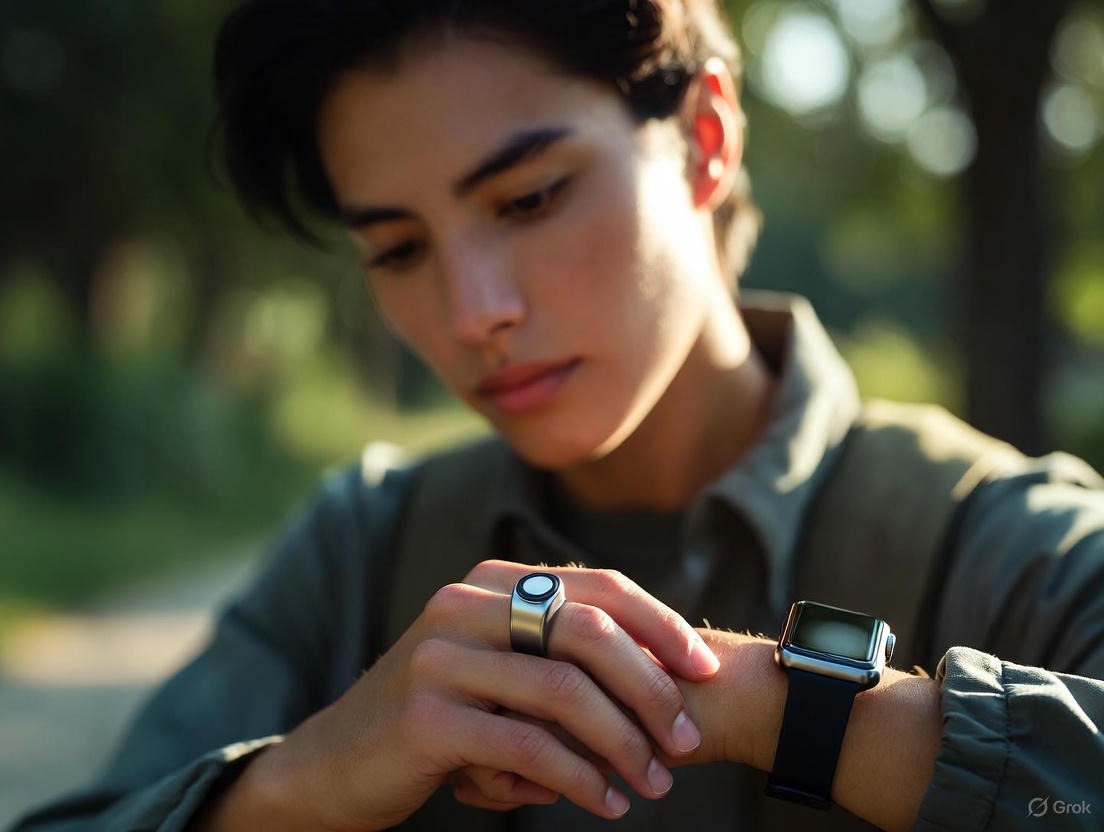
In the knowledge economy, the primary "workout" is cognitive, and the primary "injury" is burnout. For the high-performing professional, stress isn't an occasional event; it's the ambient condition of modern work. The wellness ring shifts the focus from post-hoc symptom management to proactive, physiological stress regulation. It acts as an early-warning system for cognitive overload and emotional fatigue, providing data-driven boundaries to protect mental performance and long-term health.
From Subjective Overwhelm to Objective Metrics
A professional might say, "I'm stressed." The ring quantifies it: "Your average heart rate was 12 BPM above baseline for 3 hours during back-to-back meetings, and your HRV dropped into the 'low' zone, indicating sympathetic nervous system dominance." This objectivity is powerful. It validates experience, removes guilt ("Am I just not resilient enough?"), and most importantly, points to specific, high-stress periods that require intervention.
Identifying Stress Signatures & Triggers
Automatic tracking reveals personalized stress patterns:
Enforcing Intelligent Breaks & Recovery Micro-practices
The ring enables a new model of work: not by hours clocked, but by cognitive energy managed. Using the data, you can institute practice like:
Preventing Burnout: The Long-Term View
Burnout is not a bad week; it's the cumulative erosion of recovery capacity. The ring tracks the markers of this erosion over weeks and months:
Seeing these trends allows for pre-emptive action: using vacation time strategically, renegotiating workloads, or seeking professional support before reaching a crisis point. The ring provides the hard data needed to have objective conversations with yourself and others about sustainable performance.
For the professional, the ring becomes a guardian of sustainability. It transforms the intangible concept of "work-life balance" into a manageable set of physiological parameters. It teaches you to work with your body's rhythms and limits, protecting your most valuable professional asset: your functioning, creative, and resilient mind. For more strategies on managing the load, our blog offers a wealth of resources on sleep, recovery, and performance.
For those plagued by poor sleep, the quest for rest can become a source of anxiety itself. "I need to sleep" becomes a counterproductive mantra. The wellness ring reframes this struggle by providing objective, automatic diagnostics. It moves the conversation from "I feel tired" to "My data shows I’m getting only 45 minutes of deep sleep, my sleep latency is 40 minutes, and I have 12 wake events per night." This specificity is the first step toward effective solutions.
Pinpointing the Type of Sleep Disruption
Not all poor sleep is the same. The ring’s automated analysis categorizes the problem:
Testing Behavioral Interventions with Data
Armed with a diagnosis, you can systematically test solutions:
Linking Sleep to Daytime Outcomes
The ring closes the loop by showing the direct cost of poor sleep:
This cause-and-effect visibility is immensely motivating. It turns sleep from a passive state you hope for into an active performance domain you can manage and improve, with direct, visible returns on your investment.
For the sleep seeker, the ring is both diagnostician and coach. It demystifies the night, replacing worry with actionable insight. It empowers you to become an expert on your own sleep, experimenting with confidence because you have an objective way to measure success. For a comprehensive starting point, our Sleep Tracking 101 guide is an invaluable resource.
Beyond performance and optimization, the most profound application of continuous health monitoring is in the management of chronic conditions and significant lifestyle transitions. For individuals managing diabetes, hypertension, anxiety, Long COVID, menopause, or significant weight loss, the wellness ring serves as a daily log of systemic well-being, providing insights that complement clinical care and empower personal agency.
Providing Context for Clinical Metrics
A person with hypertension checks their blood pressure a few times a week. The ring provides the 24/7 context around those snapshots:
This context helps identify lifestyle triggers and the efficacy of non-pharmaceutical interventions, providing richer data for conversations with healthcare providers.
Tracking Inflammation & Immune Response
Nocturnal body temperature and resting heart rate are sensitive, if non-specific, indicators of inflammatory activity. For individuals with autoimmune conditions or those recovering from illness (like Long COVID), these trends can be invaluable:
Hormonal Transition Mapping
For individuals navigating perimenopause and menopause, the body is a landscape of shifting baselines. The ring’s data helps map this new territory:
Supporting Significant Weight Management
For those on a weight loss journey, the ring moves the focus from the scale (an outcome metric) to the behavioral and physiological process metrics:
Empowerment Through Data
The common thread is empowerment. A chronic condition can make one feel at the mercy of an unpredictable body. The ring gives that body a data-driven voice. It shows patterns, reveals triggers, and validates the positive impact of healthy behaviors. It turns a patient into an informed, active participant in their own care, fostering a sense of control and hope. This aligns deeply with our mission at Oxyzen, which you can learn more about on our About Us page.
For anyone on a health journey, the ring is a compassionate, objective companion. It bears witness to the small daily victories—a slightly lower resting heart rate, a more stable night’s sleep, a successful stress recovery—that together chart the course toward better long-term health.
Aging is not merely the passage of time; it is the gradual decline in physiological resilience and function. While we cannot stop time, we can profoundly influence the rate of this decline—a concept known as your "healthspan." The wellness ring, worn consistently over years, becomes a longitudinal study of your personal aging process. It automatically tracks the very biomarkers that define biological (as opposed to chronological) age, allowing you to benchmark your vitality and intervene to slow the clock.
Tracking the Decline (or Maintenance) of Key Biomarkers
Research links several measurable physiological metrics to biological aging. The ring provides a continuous readout of these:
Early Detection of Deviations from Personal Baseline
The most powerful aspect of long-term wear is the establishment of a multi-year personal baseline. A doctor might see a single data point (e.g., a resting heart rate of 68) and say it's "normal for your age." But your ring knows that your normal baseline for the past five years has been 58. A sustained 10 BPM increase is a significant personal deviation, potentially signaling an underlying issue long before it crosses a clinical threshold. This enables hyper-personalized, early preventative action.
Informing Lifestyle Interventions for Longevity
The data directs your efforts toward what matters most for your long-term vitality:
For the aging well advocate, the ring is a truth-teller and a motivator. It replaces fears about aging with a clear, data-driven dashboard of your biological vitality. It empowers you to take concrete steps today that will directly influence your health, independence, and quality of life decades from now. It transforms aging from a passive process into an active, managed journey.
The Data-Savvy Parent: Automatic Family Wellness & Activity Insights
In the whirlwind of family life, personal health tracking often falls by the wayside. Yet, parents are the chief wellness officers of their households. The modern wellness ring, particularly when adopted as a family tool, provides an automatic, objective dashboard for household health. It shifts the focus from nagging ("get more sleep!") to shared, data-informed goals and insights, fostering a collective culture of well-being.
Modeling Healthy Habits with Data
Children learn by observation. When a parent uses their ring data to say, "My body needs an early bedtime tonight because my recovery score is low," or "Let's go for a family walk—I haven't hit my movement goal yet," they are teaching mindful self-care. The ring provides the concrete language and rationale for healthy choices, making them seem less arbitrary and more like smart, science-based decisions.
Understanding Family Stress & Recovery Rhythms
A family operates as a unit, with shared stressors (moving, holidays, school exams) and shared recoveries (weekends, vacations). Ring data can reveal these patterns:
Activity as Family Fun & Connection
The ring’s activity tracking can be gamified for the family:
Sleep Hygiene for the Whole Household
Parents often struggle to enforce consistent bedtimes. The ring data provides the "why":
Early Health Insights
For older children and teenagers who may use simpler trackers or rings, the data can provide early insights into the importance of sleep for academic and athletic performance, and the physiological impact of stress. It opens a dialogue about health based on biology, not just parental authority.
For the data-savvy parent, the wellness ring becomes a tool for family health leadership. It depersonalizes health nudges, provides a neutral ground for discussing well-being, and turns the pursuit of vitality into a shared, supportive family project. It helps create a home environment where health is monitored, understood, and actively nurtured for every member. To explore how others have integrated this into family life, our testimonials page shares real user experiences.

Travel is a profound stress test for the human body. It disrupts the foundational pillars of health: circadian rhythm, sleep, nutrition, and routine. For the frequent traveler—whether for business or pleasure—the wellness ring transforms from a daily health tracker into an adaptive navigation system for well-being on the move. It automatically documents the impact of travel and provides data to guide faster, smarter adjustment.
Quantifying Jet Lag: The Circadian Data Dive
Jet lag is not just feeling tired; it’s a measurable desynchronization between your internal clock and the external environment. The ring captures this in detail:
Data-Driven Strategies for Faster Adaptation
Armed with this insight, you can employ targeted tactics and measure their effectiveness:
Monitoring the "Traveler’s Triad": Sleep, Activity, Recovery
Travel often means poor sleep, erratic activity, and compromised recovery. The ring keeps a running tally:
Post-Travel Recovery Planning
The journey isn't over when you get home. The ring reveals the hidden recovery cost of the trip. Your readiness score may remain low for several days as your body works to repay sleep debt, reduce inflammation, and re-sync its rhythms. This data allows you to plan a gentle re-entry: light work schedules, easy workouts, and early bedtimes until your metrics return to your personal baseline.
For the traveler, the ring is an indispensable co-pilot. It takes the mystery out of jet lag, replaces "I feel off" with specific physiological data, and provides a clear roadmap to resynchronize your body with your new surroundings, ensuring you perform and enjoy your travels to the fullest. It turns global mobility from a health disruptor into a managed, optimized part of your life.
The final, and perhaps most profound, frontier of automatic wellness tracking is the bridge it builds between the physical and the mental. While a ring cannot read your thoughts, it is exquisitely sensitive to the physiological echoes of your emotional and cognitive states. By tracking the body’s response, it provides unprecedented, objective insight into the well-being of the mind, fostering greater self-awareness and emotional regulation.
The Physiology of Emotion: Data as a Mirror
Every emotion has a correlating physiological signature. Anxiety can cause heart rate spikes and HRV drops. Sadness or depression may manifest as low energy expenditure (calorie burn) and a flattened circadian rhythm. Focus and "flow states" might correlate with a stable, moderate heart rate and higher HRV. The ring automatically captures these signatures, serving as a non-judgmental mirror to your inner state.
Identifying Stress Triggers & Patterns
This moves stress management from generic advice ("meditate more") to personalized insight:
Validating the Impact of Mindfulness Practices
For those who meditate, practice breathwork, or use therapy, the ring provides tangible, immediate feedback on efficacy:
The Long-Term View on Mental Resilience
Over time, trends in your HRV and resting heart rate become a proxy for your overall mental and emotional resilience. A sustained period of low HRV may correlate with periods of burnout, grief, or chronic worry. A recovery and upward trend in HRV can visually represent emerging from a difficult period, providing hope and objective evidence of healing.
For the mind-body seeker, the ring closes the loop between feeling and physiology. It teaches you to listen to your body’s signals as messengers of your mental state. It fosters a compassionate self-awareness, where you learn not to judge emotions, but to understand their physical impact and develop tools to navigate them. It is a powerful step toward true holistic health, where the mind and body are seen as the inseparable, communicating system they truly are. This integrated philosophy is core to our vision, detailed in our story.
The Unified Dashboard: Synthesizing Data, Predicting Health, and Choosing Your Path Forward
We have traversed the landscape of automatic, all-day tracking, witnessing how a simple ring meticulously records the rhythms of heart, movement, sleep, and temperature. We have seen this raw data stream channeled into personalized insights for every facet of modern life, from athletic performance to mental well-being. Now, we arrive at the summit of this journey: synthesis and foresight.
This final portion of our exploration addresses the highest purpose of continuous health monitoring. It’s not about drowning in a sea of disconnected metrics but about discovering the profound connections between them. It’s about moving from retrospective analysis ("My sleep was poor last night") to predictive intelligence ("My data suggests I'm at risk for burnout in two weeks if I continue this pattern"). And ultimately, it’s about equipping you with the knowledge to choose the right tool and integrate it meaningfully into your life, transforming data into lasting wisdom and actionable change.
Here, we examine how the most advanced wellness platforms weave individual data threads into a cohesive tapestry—a Unified Health Dashboard. We’ll delve into the emerging frontier of predictive health analytics, where algorithms don’t just report, but forecast. We’ll address the critical questions of privacy, accuracy, and scientific validation that any savvy user must consider. Finally, we’ll provide a clear framework for selecting the device that aligns with your unique physiology and aspirations.
This is where the story culminates: in the empowerment that comes from truly understanding your body’s language, anticipating its needs, and partnering with technology to write the next, healthiest chapters of your life.
The greatest risk of sophisticated tracking is data fragmentation—a sleep score here, a stress graph there, activity circles somewhere else. This confuses more than it clarifies. The most valuable wellness platforms solve this by creating a Unified Health Dashboard: a single, intuitive interface where all automatic metrics are synthesized to tell one coherent story about your current state of being. This is the difference between reading individual instrument panels and viewing an integrated flight deck.
The Principle of Convergence: Metrics in Conversation
On a holistic dashboard, metrics don’t live in isolation; they are in constant dialogue. The platform’s intelligence lies in interpreting these conversations:
The "Why" Behind the Score: Contextual Layering
Advanced dashboards don’t just give you a readiness score of 72; they explain why it’s 72. They might display: "Your score is lowered due to slightly elevated resting heart rate (+3 BPM) and reduced deep sleep duration (-15 min from your average). However, your HRV was stable, indicating good nervous system balance." This contextual layering turns a number into a narrative, guiding your response. Should you focus on sleep hygiene tonight, or is the elevated RHR a sign to take a full rest day?
Trends Over Time: The Macro View
The ultimate power of a unified dashboard is the Trend View. This is where you move from daily weather reports to understanding the climate of your health.
This holistic view fosters self-compassion and strategic thinking. You stop fretting over a single bad data point and start managing the long-term trends. It turns the ring from a critic into a strategic partner in your lifelong health project. To see how this philosophy is put into practice, exploring the Oxyzen approach provides a clear example of integrated health intelligence.

The logical, thrilling evolution of 24/7 health tracking is prediction. We are moving from descriptive analytics ("what happened") to diagnostic ("why it happened") and now into the realm of prescriptive and predictive analytics. By applying machine learning to vast, aggregated datasets of longitudinal physiological information, the next generation of wellness intelligence will not just report on your health—it will forecast it.
From Reactive to Proactive: The Algorithmic Crystal Ball
Today, you see you’re getting sick when your temperature spikes. Tomorrow’s systems will alert you 24-48 hours in advance. By analyzing subtle, pre-symptomatic deviations—a slight, sustained elevation in resting heart rate, a dip in HRV, a minor temperature creep, combined with reduced heart rate variability during sleep—algorithms can identify patterns that reliably precede illness. This isn’t science fiction; it’s the application of pattern recognition to physiological data, similar to how meteorologists predict storms. This "early warning system" allows you to rest, hydrate, and boost your immune response proactively, potentially shortening or even averting illness.
Predicting Overtraining & Burnout
For athletes and high-performers, predictive analytics is a game-changer. Current tools tell you you’re currently overtrained. Predictive models will tell you you’re on a path to overtraining in 10-14 days if current load and recovery trends continue. By analyzing the relationship between your training strain, sleep quality, HRV trend, and lifestyle stress, the algorithm can project your recovery capacity into the future. It can then prescribe adjustments: "Reduce planned workout intensity by 20% this week to maintain positive adaptation," or "Schedule an extra rest day on Thursday."
Personalized Habit Nudges: The Right Intervention at the Right Time
Future AI won’t just send generic "move more" alerts. It will deliver hyper-personalized, context-aware suggestions:
The Long-Term Forecast: Healthspan Projection
The most profound application is in longevity. By modeling how your key biomarkers (RHR, HRV, sleep quality, activity levels) are changing over time relative to population data and known health outcomes, AI could provide a personalized healthspan projection. It could answer, in a data-driven way: "Based on your current physiology and trends, what is your predicted biological age in 5 years if you maintain your current lifestyle? What if you improve your deep sleep by 10%?" This creates a powerful motivational tool for long-term behavior change.
The ethical considerations of such predictive power are significant—requiring robust privacy, transparency, and user control. But the potential is staggering: a shift from healthcare that reacts to disease to a system of true health engineering that works continuously to maintain and optimize well-being. This forward-looking vision is what drives innovation in the field, a journey you can learn more about in our company narrative.
As the capabilities of wellness rings become more impressive, a critical, discerning eye is essential. Not all data is created equal, and understanding the limits of accuracy and validation is key to using these devices effectively and avoiding misinterpretation. A savvy user is an informed user, who knows when to trust the trend and when to question the absolute number.
Clinical-Grade vs. Consumer-Grade: Understanding the Spectrum
It is vital to distinguish between clinical diagnostic devices and consumer wellness tools. A ring is the latter. It provides immensely valuable trending data and relative measurements for personal insight, but its absolute numbers should not be used for medical diagnosis.
The Golden Rule: Trust the Trend, Not the Absolute Number
This is the most important principle for users. A single night of "30 minutes of deep sleep" may not be perfectly accurate. But if that number drops from your personal average of 90 minutes to a consistent 30 minutes over two weeks, that trend is real and meaningful. The ring’s supreme value is in detecting changes in your own physiology relative to itself.
The Importance of Sensor Fusion and Algorithm Maturity
Accuracy is heavily dependent on two factors:
Using Your Ring as a Guide, Not a Gospel
Your ring is a powerful guidance system, not an infallible oracle. It provides clues and directions. If it suggests a potential issue—like consistent low HRV or possible sleep disturbances—it is a signal to listen to your body more closely and potentially seek professional validation. It empowers a more informed conversation with your doctor, but it does not replace their expertise. For common questions on these topics, our FAQ section is a helpful resource.
By understanding its strengths and limits, you can harness the ring’s power without being misled by it. You become a partner with the technology, using its insights to ask better questions and make more informed decisions about your health.
When you wear a device that collects your heart rate, sleep patterns, location data (if connected to GPS), and potentially sensitive biomarkers related to menstrual cycles or illness, you are entrusting a company with your physiological blueprint. This data is profoundly personal. Therefore, a critical, non-negotiable aspect of choosing and using a wellness ring is understanding its policies on privacy, security, and data ownership.
The Value of Your Data: More Precious Than Financial Information
Your health data is uniquely sensitive. It can reveal intimate details about your life, habits, and body. In the wrong hands, it could theoretically be used for discrimination (by employers or insurers), targeted advertising, or other exploitative purposes. Any company asking for this data must be held to the highest standards of stewardship.
Key Questions to Ask Any Wellness Tech Company:
The Business Model Matters
Be wary of companies that offer devices at suspiciously low prices. The old adage applies: "If you’re not paying for the product, you are the product." A company’s primary revenue stream should come from selling hardware and/or software subscriptions, not from monetizing user health data. A transparent company will clearly state its business model and data policies.
Your Role: An Active Participant in Data Governance
Your responsibility is to be an active participant:
Choosing a wellness ring is an act of trust. Prioritize companies that are transparent, have a clear ethical stance on data, and treat your physiological information with the gravity it deserves. This ensures that your journey to better health doesn’t come at the cost of your personal privacy. We believe this trust is fundamental, which is why we are open about our principles, detailed on our About Us page.
With a growing market of smart rings, selecting the right one can be daunting. It’s not about finding the "best" ring in a vacuum, but the best ring for you. This decision should be guided by a clear understanding of your primary goals, your lifestyle, and the physiological signals most relevant to you. Here is a practical framework to guide your choice.
Step 1: Define Your "North Star" Metric
What is the single most important thing you want to learn or improve? Your answer will point you toward the device that excels in that area.
Step 2: Evaluate Critical Hardware & Design Factors
Step 3: Assess the Software & Ecosystem
The hardware collects data; the software delivers insight. The app experience is half the product.
Step 4: Consider the Intangibles: Brand & Support
By working through this framework, you move beyond marketing hype and make a choice grounded in your personal needs. The right ring will feel less like a piece of tech and more like a natural extension of your quest for better health. To begin exploring specific options that embody these principles, a great starting point is our main shop and discovery portal.
The final, and most important, step is translating the river of data into lasting behavior change. A wellness ring’s ultimate success is not measured by your adherence to the device, but by the device’s success in helping you build sustainable, intuitive health habits that eventually make constant checking less necessary. The goal is to internalize the insights, so you become your own best guide.
Start Small: The One-Percent Rule
Avoid the temptation to overhaul your entire life based on week one of data. This leads to burnout. Instead, use the data to identify one small, manageable lever you can pull.
Use Data for Positive Reinforcement, Not Self-Criticism
The data should be a compassionate coach, not a punitive critic. Celebrate the positive correlations!
This positive reinforcement makes healthy behaviors feel rewarding on a physiological level, strengthening the habit loop.
Listen to the Contradictions: When Data and Intuition Collide
Sometimes, the data will conflict with how you feel. A high readiness score when you feel tired, or a low score when you feel energetic. These are golden learning moments. Don’t blindly follow the data; use it as a prompt for curiosity.
The ring provides the "what"; you must provide the "why." It adds a powerful layer of objective information to your subjective experience, leading to wiser, more holistic decisions.
The End Goal: From Dependence to Informed Intuition
With months or years of consistent wear and observation, a profound shift occurs. You start to predict what your data will say. You begin to feel the subtle elevation in resting heart rate that signals an oncoming cold. You recognize the bodily sensation of low HRV. The ring trains your interoceptive awareness—your sense of the internal state of your body.
At this point, you may find yourself checking the app less frequently. You’ve absorbed its lessons. The device has successfully upgraded your own internal operating system. You use it periodically for check-ins, for planning training cycles, or when something feels "off" and you need objective clues. It becomes a trusted reference tool, not a dependency.
This is the pinnacle of the human-tech partnership: using technology to deepen your connection to your own biology, so you can live with greater awareness, resilience, and vitality, fully empowered as the author of your own health story.
As we stand at the convergence of sensor miniaturization, artificial intelligence, and a growing cultural focus on preventative health, the trajectory of the wellness ring points toward an even more seamless, powerful, and integrated future. The ring is not the end point, but a pivotal early node in a future ecosystem of ambient health intelligence.
Multi-Sensor Fusion and New Biomarkers
Future rings will incorporate more clinical-grade sensors in a consumer-friendly form. Continuous, non-invasive blood glucose monitoring (through spectroscopic methods) is a holy grail that would revolutionize metabolic health management. More advanced hydration and electrolyte sensors could be invaluable for athletes and in hot climates. Electrodermal activity (EDA) sensors, which measure tiny electrical changes on the skin associated with stress and emotion, could provide even deeper insight into the nervous system.
True Ecosystem Integration: The Ring as Your Health Hub
The ring will evolve from a standalone device into the central authentication and data hub for your personal health ecosystem.
Advanced AI and Personalized Health Avatars
We will see the rise of true AI health coaches. These won’t be chatbots, but sophisticated models trained on your multi-year dataset, understanding your unique responses better than any human coach could. They will run continuous simulations, offering personalized, dynamic advice on everything from micronutrient timing to optimal vacation schedules for maximal recovery. You might interact with a visual "health avatar" that represents your systemic state.
Proactive Healthcare Integration
The most significant shift will be bridging the gap between consumer wellness and the clinical healthcare system (with appropriate privacy safeguards). Imagine a future where you can securely share a subset of your long-term trend data—with your explicit consent—with your doctor before an annual physical, providing a year’s worth of context rather than a snapshot. Algorithms could flag significant, sustained deviations and suggest you schedule a check-up, enabling truly preventative medicine.
The Invisible Ideal: Technology That Fades Away
The ultimate goal is for the technology to become so seamless, so intuitive, and so integrated that it fades into the background. The ring itself may become even lighter, more durable, and powered by renewable energy (kinetic or solar). Insights will be delivered contextually and unobtrusively—a gentle haptic nudge to breathe, a light on your desk that changes color to suggest a break, a summary that appears only when you ask for it.
This future is not about being constantly monitored, but about being continuously supported. The wellness ring of tomorrow will be an invisible guardian, a part of your environment working silently to create the optimal conditions for your health to flourish, freeing you to focus on living your life to the fullest. It is an exciting horizon, and it begins with the step of understanding and embracing the power of the data that is already, quietly, telling your story today.
Conclusion: Your Body’s Story, Finally Told in Full
We began this exploration with a simple premise: for too long, the story of our health has been written in fragments, missing the rich, continuous narrative that unfolds within us every moment. The modern wellness ring, through its silent, automatic, all-day tracking, has given us the pen to write that story in full.
We have seen how it faithfully records the foundational chapters: our readiness upon waking, the steady rhythm of our heart, the silent burn of our daily movement, the sacred architecture of our sleep, the quiet pulse of our circadian rhythm, and the physiological echoes of our stress. We have witnessed how this data stream is not a generic report, but a living document that tailors its insights to the athlete seeking an edge, the professional guarding against burnout, the parent fostering a healthy home, and every individual on a unique journey toward better health.
We have learned to look for the connections between these metrics, to trust the trends over the absolute numbers, and to value platforms that unify this information into a coherent, actionable narrative. We’ve peered into a near future where this data doesn’t just describe our past but helps forecast and optimize our future well-being.
The invitation now is to move from passive reader to active author. This technology offers an unprecedented opportunity—not for obsessive self-tracking, but for profound self-knowledge. It is a tool to quiet the noise of guesswork and generic advice, and to amplify the subtle, intelligent signals your body has been sending all along.
Your health is not a destination to be reached, but a landscape to be understood and nurtured day by day. With the insights from a device like a wellness ring, you are no longer navigating in the fog. You have a map, a compass, and a deep understanding of the terrain that is you. The story of your well-being is being written with every heartbeat. Now, you have the clarity to make it a masterpiece.
Your Trusted Sleep Advocate (Sleep Foundation — https://www.sleepfoundation.org/)
Discover a digital archive of scholarly articles (NIH — https://www.ncbi.nlm.nih.gov/
39 million citations for biomedical literature (PubMed — https://pubmed.ncbi.nlm.nih.gov/)
experts at Harvard Health Publishing covering a variety of health topics — https://www.health.harvard.edu/blog/)
Every life deserves world class care (Cleveland Clinic -
https://my.clevelandclinic.org/health)
Wearable technology and the future of predictive health monitoring. (MIT Technology Review — https://www.technologyreview.com/)
Dedicated to the well-being of all people and guided by science (World Health Organization — https://www.who.int/news-room/)
Psychological science and knowledge to benefit society and improve lives. (APA — https://www.apa.org/monitor/)
Cutting-edge insights on human longevity and peak performance
(Lifespan Research — https://www.lifespan.io/)
Global authority on exercise physiology, sports performance, and human recovery
(American College of Sports Medicine — https://www.acsm.org/)
Neuroscience-driven guidance for better focus, sleep, and mental clarity
(Stanford Human Performance Lab — https://humanperformance.stanford.edu/)
Evidence-based psychology and mind–body wellness resources
(Mayo Clinic — https://www.mayoclinic.org/healthy-lifestyle/)
Data-backed research on emotional wellbeing, stress biology, and resilience
(American Institute of Stress — https://www.stress.org/)


