


Wearable Wellness 101: Making Sense of Your Health Dashboard
Helps users navigate and make sense of the main screen or dashboard in their wearable's app.
Helps users navigate and make sense of the main screen or dashboard in their wearable's app.
%402x.svg)
For a generation that tracks packages, finances, and social media metrics with obsessive detail, a shocking blind spot remains: our own biology. We live in an era of unprecedented self-quantification, yet the most important dataset—the one that determines our energy, resilience, mood, and longevity—has remained largely elusive. Enter the modern health wearable, no longer a simple step counter but a sophisticated biometrical command center. The smart ring, in particular, has emerged as a discreet, powerful ally in this quest, offering a 24/7 window into the inner workings of your body.
But data, in isolation, is just noise. The magic—and the challenge—lies in the translation. A resting heart rate of 52 BPM, a heart rate variability (HRV) of 35ms, a core body temperature dip of 0.5°C: What do these numbers mean for your tomorrow? This article is your definitive guide to moving from data deluge to empowered insight. We will demystify every metric on your health dashboard, explore the profound connections between them, and provide a practical framework for using this knowledge to build a more resilient, energized, and balanced life. This is not just about tracking health; it’s about understanding the language of your body so you can finally have a coherent conversation with it.
Think of your body as a complex, beautiful ecosystem. Your wearable is the network of sensors monitoring that ecosystem’s vital signs: stress levels, recovery status, energy reserves, and sleep quality. We’ll start by exploring the cornerstone of it all—sleep—before diving into the dynamic world of daytime physiology, stress, activity, and the foundational metrics that tie it all together. By the end, you won’t just read your dashboard; you’ll interpret its story and write a better next chapter.
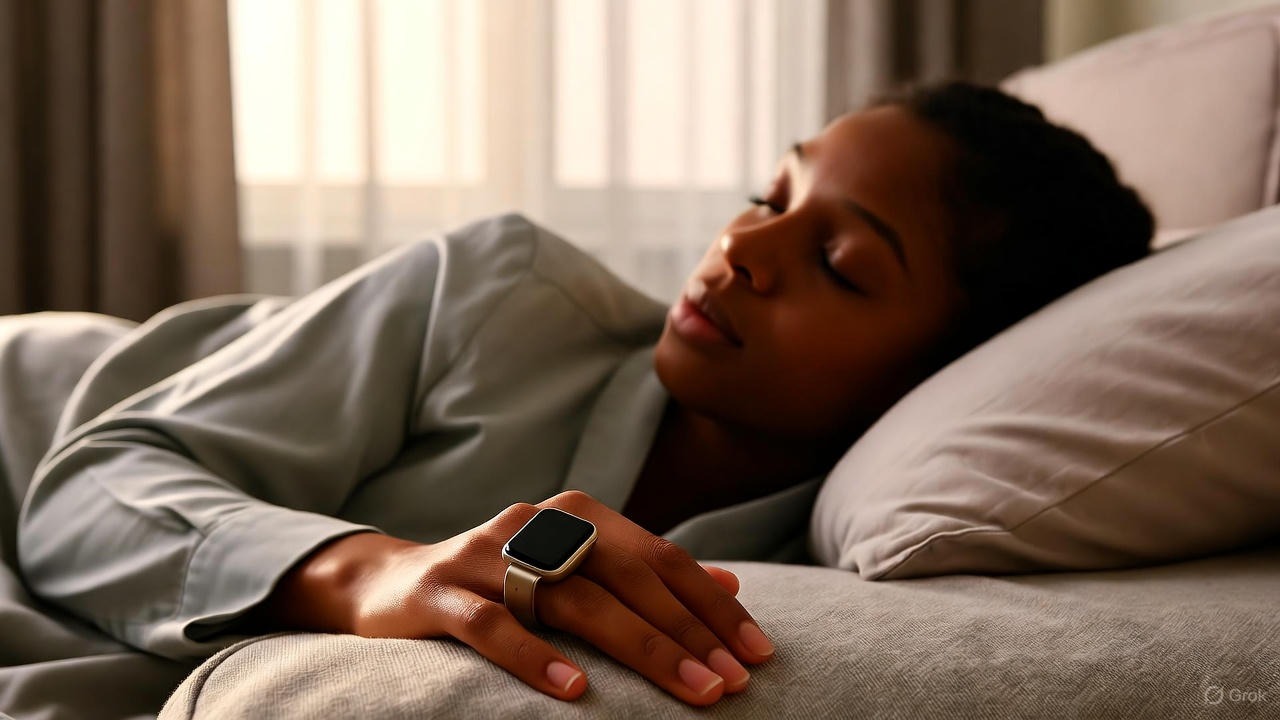
Every health journey that begins anywhere other than sleep is building on unstable ground. Sleep is not passive downtime; it is an intensive, non-negotiable renovation project your body undertakes each night. It’s when tissue repairs, memories consolidate, hormones rebalance, and the brain’s glymphatic system flushes out metabolic debris. Your wearable’s sleep data is the nightly report card on this critical process.
Modern devices like smart rings track far more than just duration. They analyze sleep architecture—the cyclical journey through light, deep, and REM (Rapid Eye Movement) stages. Each stage has a distinct purpose:
Your wearable scores your sleep by synthesizing metrics like total time, efficiency (time asleep vs. time in bed), the balance of stages, and disturbances. Waking up with a high sleep score doesn’t just mean you’ll feel less groggy; it means your body has successfully completed its essential maintenance, setting a positive cascade in motion for the day ahead. Conversely, a poor sleep score is the first and most critical red flag, impacting everything from your stress resilience to your metabolic health. For a deeper dive into optimizing this fundamental pillar, our guide on restful living and how it enhances physical health markers explores the direct, measurable links between quality rest and your body’s vital statistics.
But sleep doesn’t exist in a vacuum. The quality of your waking hours dramatically influences the quality of your sleep. This creates a powerful feedback loop: good sleep enables better daytime function, and mindful days promote more restorative sleep. To break a cycle of poor rest, sometimes you need a structured approach. Taking the Restful Living Assessment to understand how calm your life truly is can provide the starting insight needed to rebuild this foundation from the ground up.
If you were to monitor only one metric for overall wellness and resilience, Heart Rate Variability (HRV) would be a top contender. Despite its name, HRV has nothing to do with how fast your heart beats. Instead, it measures the subtle, millisecond variations in the time intervals between each heartbeat. Contrary to intuition, a higher HRV is generally better. It indicates a robust, adaptable autonomic nervous system (ANS).
Think of your ANS as your body’s autopilot. It has two main branches:
A healthy, resilient body smoothly modulates between these two systems like a skilled driver navigating traffic. HRV is the measure of this flexibility. High HRV suggests your body can quickly ramp up to meet a challenge (like a workout) and then efficiently downshift into recovery mode. Low HRV suggests a stressed, fatigued, or overwhelmed system that is stuck in a sympathetic-dominant state, lacking the flexibility to relax and restore.
Your wearable tracks your HRV, typically presenting a nightly average or a morning baseline. It’s crucial to track the trend rather than fixate on a single day’s number. A downward trend over several days can be a powerful early warning sign of overtraining, impending illness, or chronic stress accumulation. It’s your body whispering, "I need a break," before it starts screaming. Learning to listen to these whispers is a core tenet of sustainable wellness. For those building a business or a career, ignoring HRV trends is a fast track to burnout. The principles in restful living for entrepreneurs focused on sustainable business building are directly applicable here, teaching you how to align ambition with physiological sustainability.
For centuries, a fever has been a recognized sign of illness. Now, wearable technology allows us to detect far more subtle, yet equally significant, shifts in core body temperature. Tracking this metric moves us from reactive medicine to proactive insight.
Your body tightly regulates its core temperature around a set point, typically near 37°C (98.6°F). This circadian rhythm is a key component of your biological clock. A healthy pattern shows a natural dip at night, facilitating the onset and maintenance of deep sleep. Temperature begins to rise in the early morning, helping you wake up alert.
Deviations from your personal baseline are where the story gets interesting:
By establishing your personal temperature baseline, your wearable can alert you to these subtle shifts. Seeing a sustained elevation might be the nudge you need to prioritize rest, hydrate, and bolster your immune support before full-blown symptoms appear. This is the ultimate in body literacy—understanding the early signals of imbalance. Managing your environment to support this natural rhythm is key, a topic explored in depth in our resource on designing a restful living workspace for focus and calm.

The word "stress" is loaded with negativity, but not all stress is harmful. Eustress is the positive, motivating stress of a challenge—the pressure before a presentation that sharpens your focus, or the physical stress of a workout that makes you stronger. Distress is the chronic, unmanaged strain that depletes you. Your wearable’s job is to help you tell the difference and quantify your total "stress load."
Most advanced devices estimate stress through a combination of metrics: heart rate, HRV, and sometimes skin temperature and electrodermal activity. They don’t measure emotional feelings but the physiological footprint of stress—the activation of your sympathetic nervous system.
A daytime stress graph isn’t meant to show a flat line. That would be both impossible and undesirable. Healthy patterns show peaks and valleys:
The problem arises when the graph looks like a relentless mountain range with no valleys, or a persistently elevated plateau. This indicates chronic sympathetic activation, a state where your body cannot effectively engage the parasympathetic brake. Over time, this drains your resilience bucket, leading to fatigue, poor sleep, and lowered immunity.
The goal, therefore, is not to eliminate stress but to manage your stress-recovery balance. Your dashboard helps you identify which activities are truly draining and, crucially, whether you are allowing for adequate recovery. It makes the invisible visible. For many, the inability to create these recovery valleys stems from a deeper relationship with productivity and guilt. If you struggle to switch off, our piece on restful living without guilt and giving yourself permission to rest is an essential read.
Each morning, after synthesizing a night’s worth of data—sleep quality, HRV, temperature, and resting heart rate—your wearable presents a single, powerful number: your Recovery Score or Readiness Score. This is not a judgment but a recommendation. It’s your body’s answer to the question: "Based on how well I restored last night, what am I capable of today?"
A high recovery score (e.g., 85-100) suggests your body is well-rested, resilient, and primed for physical and mental challenge. It’s a green light to tackle that intense workout, a big project, or a demanding social schedule.
A moderate score (e.g., 70-84) suggests adequate recovery. It’s a yellow light—proceed, but with awareness. Maybe opt for a moderate workout instead of a peak performance one, or be mindful to schedule breaks.
A low score (below 70) is a clear red light. It signals incomplete recovery, potentially from poor sleep, illness, dehydration, or excessive stress. This is your body’s strong recommendation for a gentle day: prioritize light movement like walking, focus on hydration and nutrition, and aim for an early night.
The revolutionary power of this metric is its ability to guide daily decisions based on objective internal feedback, moving you away from rigid, arbitrary schedules (e.g., "I must work out every day") and towards an adaptive, responsive approach to wellness. Honoring a low recovery score by taking a true rest day is not a failure; it’s a sophisticated strategy for long-term progress and injury prevention. To make the most of your downtime, consider implementing the Restful Living Checklist of daily non-negotiables to ensure your rest days are actively restorative, not just passive.
While much of the magic happens at rest, the active part of your day provides critical data on your fitness, efficiency, and cardiovascular health. Your wearable tracks exercise, of course, but the insights go far beyond calories burned.
Resting Heart Rate (RHR): This is your heart rate when you are completely at rest, best measured first thing in the morning. A lower RHR generally indicates stronger cardiovascular fitness and efficient heart function. An upward trend in your RHR can be a sign of overtraining, dehydration, stress, or illness.
Exercise Heart Rate: During activity, your device tracks how your heart responds. This allows you to train in specific heart rate zones (e.g., fat-burning, aerobic, anaerobic). More importantly, it shows your cardiovascular efficiency. Over time, as your fitness improves, your heart should be able to do the same work (e.g., run a 10-minute mile) at a lower heart rate.
Post-Exercise Recovery: One of the most telling fitness metrics is how quickly your heart rate drops after you stop exercising. A rapid drop (e.g., a decrease of 20+ beats in the first minute) is a strong sign of good cardiovascular health and fitness. A slow recovery can indicate fatigue, overtraining, or underlying stress.
This data transforms exercise from a blind routine into a guided dialogue. It can tell you if you’re pushing too hard on a low-recovery day or not hard enough when you’re fully charged. It provides objective proof of your fitness improvements, which can be a massive motivator. Balancing this activity with genuine recovery is the key to sustainability, a concept especially important for high performers who might view rest as time wasted. The philosophy outlined in how restful living changes your relationship with time can help reframe recovery as an investment, not an expense.
As you sleep, your wearable becomes a silent sentinel, monitoring vital signs that are difficult to track during the day. Two of the most important are respiratory rate and blood oxygen saturation.
Respiratory Rate (Breaths Per Minute): This is simply how many times you breathe each minute. Like resting heart rate, a lower sleeping respiratory rate can indicate good cardiovascular and respiratory fitness. Your device establishes a personal baseline (typically between 12-18 breaths per minute). Significant, sustained deviations from your baseline—especially an increase—can be an early indicator of respiratory issues, sleep apnea, or other disturbances.
Blood Oxygen Saturation (SpO2): This measures the percentage of oxygen-carrying hemoglobin in your blood. A healthy, waking level is typically 95-100%. During sleep, it’s normal for it to dip slightly. However, frequent or significant dips (below 90%) can be a primary indicator of sleep-disordered breathing, such as obstructive sleep apnea (OSA), where breathing repeatedly stops and starts.
While these metrics are not medical diagnoses, they are powerful screening tools. Persistent anomalies in your nighttime breathing or SpO2 are strong signals to discuss with a healthcare professional. They complete the picture of sleep quality, explaining why you might have slept for 8 hours but still feel unrefreshed—your body may have been fighting for oxygen all night. Ensuring your sleep environment supports optimal breathing is part of a holistic approach, which includes managing stress that can even impact financial decisions, as discussed in the link between restful living and financial wellness.
To paint a complete picture of your nervous system’s activity, some advanced wearables look beyond the heart to your skin.
Skin Temperature: While core body temperature follows a circadian rhythm, the temperature at your skin (often measured at the finger or wrist) is more volatile and responsive to your nervous system. Sudden drops in skin temperature can occur due to vasoconstriction (narrowing of blood vessels), which is a classic sympathetic "fight-or-flight" response to stress or a startling event. Tracking skin temperature trends alongside stress metrics can provide a more nuanced view of your nervous system’s reactions throughout the day.
Electrodermal Activity (EDA) or Galvanic Skin Response (GSR): This metric measures subtle changes in the skin’s electrical conductivity, which is controlled by sweat gland activity. Since your sweat glands are innervated by the sympathetic nervous system, EDA is a direct, sensitive measure of its arousal. A spike in EDA doesn’t necessarily mean you’re sweating visibly; it detects micro-fluctuations that correspond to emotional arousal, stress, excitement, or cognitive load.
When combined with heart rate and HRV data, EDA helps to differentiate between types of arousal. Was that spike in heart rate due to physical exertion (minimal EDA change) or an anxiety-provoking email (significant EDA spike)? This biofeedback is invaluable for developing greater somatic awareness—connecting physical sensations to emotional states—which is the first step in managing them.

Now comes the most critical skill: synthesis. No single metric tells the whole story. The true power of your health dashboard is revealed in the relationships between the data points. They form a complex, interconnected web where a change in one inevitably affects the others.
The Classic Negative Cascade:
The Positive Virtuous Cycle:
Learning to read these stories in your data is what transforms a gadget into a true wellness partner. It moves you from "I’m tired" to "My low HRV and high resting heart rate suggest my body is under-recovered from a high-stress week; I will prioritize sleep and gentle movement today." This level of insight is transformative, particularly for those in caregiving or leadership roles where their well-being impacts others. For instance, parents can learn how to teach restful living principles to their family, creating a healthier home ecosystem for everyone.
Perhaps the most important principle in wearable wellness is this: Compare yourself to yourself, not to others. Your optimal HRV, resting heart rate, sleep duration, and temperature are deeply personal. They are influenced by genetics, age, fitness level, and even lifestyle.
A marathon runner might have a resting HRV of 80ms, while a healthy, moderately active person might have a baseline of 40ms. The runner’s 80ms is not "better"; it is simply their normal. If the runner’s HRV drops to 50ms, that is a significant warning sign for them. If the moderately active person’s HRV rises from 40ms to 50ms over months of consistent training and stress management, that is a significant victory.
This is why the first few weeks with a new wearable are a "baseline period." The goal is not to achieve perfect scores but to discover your normal. What does your body look like when you feel good? What does your data show on a typical Tuesday vs. a relaxed Saturday? Once you know your baseline, you can identify meaningful deviations.
Your device’s algorithms learn your personal ranges over time, making their scores and recommendations more accurate. Embrace this period of discovery without judgment. It’s about building a longitudinal self-portrait in data, one that reveals your unique patterns, triggers, and pathways to recovery. For students navigating intense academic pressures, this personalized data can be a lifeline, a topic explored in our guide to restful living for students and academic success through balance.
Data without action is merely trivia. The final step is to use your dashboard’s insights to create personalized, responsive protocols—small, sustainable adjustments that nudge your physiology in a positive direction.
Scenario 1: Low Recovery Score + High Resting Heart Rate
Scenario 2: Good Sleep Score but Low Daytime Energy
Scenario 3: Elevated Nighttime Temperature Trend
The goal is to build a "menu" of evidence-based actions you can choose from based on what your data tells you. This is biohacking at its most practical and personalized. It turns wellness from a generic concept into a daily, dynamic practice of self-care informed by self-knowledge. A powerful tool in this action phase is cultivating gratitude, which has a measurable calming effect on the nervous system. Learn more in our exploration of how gratitude practices directly support a restful living state.
This concludes the first third of our comprehensive guide. We have laid the essential groundwork, exploring the core biometrics your wearable tracks and how to interpret their individual and collective stories. In the next portion, we will dive deeper into advanced applications: using this data for specific goals like weight management, cognitive performance, and emotional health; navigating the limitations and pitfalls of wearable technology; and integrating this high-tech feedback with timeless, low-tech wellness wisdom to craft a truly holistic and sustainable health strategy. The journey from data to wisdom continues.
With a solid understanding of your core biometrics—sleep, HRV, stress, recovery, and activity—you now possess the raw vocabulary of your body's language. But fluency requires more than just knowing the words; it requires the ability to form sentences, tell stories, and, most importantly, navigate towards a desired destination. This next phase of our exploration moves from interpretation to integration and application. We will transform your health dashboard from a passive report into an active, daily compass, guiding you toward specific, tangible wellness goals with precision and personalization.
The true potential of wearable data is unlocked not in reactive observation but in proactive, protocol-based living. It empowers you to move beyond generic advice ("get more sleep," "reduce stress") and into the realm of personalized prescription ("prioritize sleep extension by 45 minutes tonight because my HRV trend is down 15%," or "schedule a breathing break at 3 PM when my stress metrics typically peak"). This is where the quantified self meets the qualified life.
We will explore how to leverage your unique data to optimize for specific outcomes: sustained energy, improved body composition, sharper cognitive function, and enhanced emotional balance. We'll also address the critical pitfalls and limitations of wearable technology, ensuring you maintain a healthy, empowered relationship with your data. Finally, we'll connect this high-tech feedback loop to timeless, low-tech pillars of wellness, creating a synergistic approach where ancient wisdom and modern technology work hand-in-hand.
"Get healthier" is a vague aspiration. "Increase my average HRV by 10% over the next 90 days through improved sleep hygiene and targeted stress management" is a data-informed goal. The shift from vague to specific is the first step in using your wearable as a true tool for transformation.
Start by identifying your primary wellness vector. What is the one area where improvement would most positively impact your life? Common vectors include:
Once you choose your vector, use your dashboard to establish a 2-4 week baseline for 2-3 key related metrics. For example:
The goal is not to hyper-optimize every number but to select 1-3 "North Star" metrics that serve as reliable proxies for your desired outcome. Track these weekly, looking for trends, not daily fluctuations. Celebrate the trend line, not the data point. This methodical approach prevents you from becoming overwhelmed by the sheer volume of data and focuses your efforts where they will have the greatest impact. For remote workers, whose home environment is both sanctuary and workplace, this targeted approach is crucial. Our guide on restful living for remote workers, creating a home sanctuary provides essential context for managing the unique stress vectors of this lifestyle.
Chronic fatigue is the hallmark of modern life, but its causes are often a mystery. Your wearable can demystify it by breaking down the "Energy Equation" into its core components: Sleep Deposition minus Daily Withdrawals.
Sleep Deposition: This is the quality and quantity of restoration you bank each night. Your Sleep Score, Deep/REM sleep, and resting heart rate are direct measures of this deposit. A high score means a full "energy bank" to start the day.
Daily Withdrawals: These are the stressors that deplete that bank. They are tracked through your:
The goal is to ensure your Daily Withdrawals do not exceed your Sleep Deposition. When you end the day feeling drained, check the equation. Was your sleep deposit insufficient (low score)? Or were your withdrawals too high (a stress graph with no valleys)? This framework moves you from "I'm so tired" to actionable insight: "My sleep was good, but my stress was elevated from 10 AM to 4 PM without a break. Tomorrow, I will schedule a 15-minute walk at 2 PM to create a recovery valley."
Optimizing this equation often requires protecting your sleep deposition fiercely. This isn't just about duration; it's about honoring your chronotype and winding down effectively. For a comprehensive look at structuring your time off to truly refill your energy bank, explore our article on designing the perfect restful living weekend for true recovery in two days.

While no wearable can directly measure blood glucose or calories digested, it provides powerful indirect feedback on your metabolic state through your nervous system and circadian rhythms. Your body's response to food is, in large part, a stressor—a complex physiological process to manage.
The Postprandial Dip: It's normal and healthy to see a slight increase in stress (a sympathetic nudge) and a dip in HRV after a large meal as your body directs energy to digestion. However, a severe or prolonged stress spike and HRV crash, especially after a meal high in refined carbohydrates or sugars, can indicate a significant glucose spike and inflammatory response. This is your body working overtime to regain homeostasis.
Resting Metabolic Signature: Trends in your core metrics speak volumes about your metabolic health over time. A gradually decreasing resting heart rate and increasing HRV can indicate improved metabolic efficiency and insulin sensitivity. Conversely, a creeping RHR and falling HRV may suggest chronic inflammation, poor metabolic health, or consistent dietary triggers.
Circadian Eating Alignment: Your body is primed to metabolize food most efficiently during daylight hours. Late-night eating often conflicts with your body's natural temperature drop and preparation for sleep, leading to elevated nighttime temperatures, restless sleep, and impaired next-morning recovery. Your wearable can show you this direct correlation—a late dinner followed by a poor sleep score and elevated morning RHR.
Use this feedback not for obsessive meal-by-meal tracking, but for pattern recognition. Notice which meals leave you feeling energized and which cause an afternoon crash correlated with physiological stress. Experiment with meal timing: try finishing dinner 3 hours before bed for a week and observe the impact on your sleep temperature and recovery score. This biofeedback turns your body into its own nutritionist, guiding you toward foods and patterns that promote metabolic calm rather than chaos. The profound downstream effects of this metabolic calm extend to hormonal balance, a critical connection explained in restful living and its impact on hormone balance.
Your brain is your most energy-hungry organ, and its performance is inextricably linked to the state of your body. The metrics of physical recovery are, in fact, the foundational metrics of cognitive readiness.
The Sleep-Cognition Link: Deep sleep is crucial for clearing metabolic waste from the brain (via the glymphatic system), while REM sleep is essential for memory consolidation and emotional processing. A night low in deep or REM sleep will manifest as brain fog, poor concentration, and impaired memory the next day, often accompanied by a low recovery score.
HRV as a Cognitive Resource: High HRV is correlated with better executive function—the brain's ability to plan, focus, remember instructions, and juggle multiple tasks. It reflects a nervous system with ample resources for top-down cognitive control. Low HRV is associated with impulsivity, distractibility, and poorer decision-making. In fact, chronic stress that depletes HRV can lead directly to decision fatigue, which restful living practices are uniquely suited to prevent.
The Focus-Stress Paradox: Focused work requires a mild sympathetic state. However, unbroken focus for hours leads to sustained sympathetic activation, draining HRV and eventually leading to cognitive depletion. Your stress graph can show you when you've hit a point of diminishing returns. A rising stress line with no break is a signal that your cognitive "engine" is overheating and needs to idle.
Actionable Protocol: Use your wearable to practice "cognitive pacing." Work in 90-minute focused blocks, and use your stress metric as a guide. When you see a sustained elevated period, take a true break—5 minutes of looking out a window, a short walk, or some deep breathing—until you see your stress line begin to dip. This is not procrastination; it's performance optimization, ensuring you have the neural resources for creativity and complex problem-solving. For those whose work depends on creative flow, this balance is non-negotiable. Discover more in our piece on the vital connection between restful living and creativity.
Emotions are not just fleeting feelings; they are full-body events with distinct physiological signatures. Anxiety can feel like a racing heart, anger like a hot flush, and calm like a deep, slow breath. Your wearable makes this connection explicit and quantifiable, offering a powerful tool for emotional awareness and regulation.
The Physiology of Emotion: A sudden spike in your stress graph and a simultaneous dip in HRV might coincide with receiving a difficult email. A gradual elevation in skin temperature and resting heart rate over an hour might map onto a period of simmering worry. This objective feedback is invaluable. It allows you to catch emotional escalation early, often before you're consciously aware of its intensity, by noticing the physiological precursor.
Biofeedback for Regulation: This is where wearables shift from monitoring to intervention. By observing your stress metrics in real-time (if your device allows) or in review, you can test which regulation techniques actually work for your body.
This turns emotional regulation from an abstract concept into an empirical practice. You build a personal toolkit of proven, physiological "downshifts." Over time, this practice strengthens your vagal tone (the activity of the main parasympathetic nerve), leading to greater emotional resilience and a higher HRV baseline. You're not just managing emotions; you're training your nervous system to return to calm more efficiently.
The very power of biometric data carries a shadow risk: the potential for orthosomnia (an unhealthy preoccupation with perfect sleep data) and general data anxiety. Watching your HRV drop or your stress spike can itself become a stressor, creating a negative feedback loop. It’s crucial to establish a healthy relationship with your data.
1. Embrace Trends, Not Dots: A single day’s bad score is meaningless noise. Biology is not a machine; it has daily variability. Always look at the 7-day and 30-day trend lines. Is the overall direction positive? That’s what matters.
2. Let Go of Perfection: Chasing a perfect 100 sleep score or an ever-rising HRV is a fool’s errand. The goal is optimization within the natural rhythm of your life, which includes parties, late nights, tough workouts, and stressful periods. Resilience is about navigating these dips, not avoiding them entirely.
3. Use Data as a Guide, Not a Gospel: Your subjective feeling is paramount. If you wake up feeling fantastic with a 72 recovery score, trust your feeling. If you feel drained with an 85, listen to your body. The data is one input, not the ultimate truth. It should explain your feelings, not invalidate them.
4. Take Data Holidays: Consider taking your ring off for a day on the weekend or during a vacation. This breaks the cycle of constant monitoring and reconnects you with your intrinsic sense of well-being. The data should serve your life, not the other way around.
Cultivating this balanced perspective is a core component of sustainable wellness. It’s about using technology to enhance your intuition, not replace it. For a broader philosophical take on this balance, consider how the principles of restful living fundamentally change your relationship with time and achievement.
For women and people with menstrual cycles, wearable data adds a profound layer of insight by revealing the distinct physiological phases of the infradian rhythm—the 28-35 day cycle that operates alongside the daily circadian rhythm.
Phase-Locked Patterns: Your baseline metrics will naturally fluctuate throughout your cycle.
By tagging your cycle phases in your app, you can see these patterns unfold in your own data. This allows for cycle-syncing your life: planning challenging tasks and intense workouts for your high-resilience follicular phase, and scheduling more rest, gentle movement, and administrative work during your more recovery-focused luteal phase.
This bio-data erases the notion that something is "wrong" when your recovery dips in the week before your period. Instead, it frames it as a natural, intelligent part of your rhythm. Honoring this rhythm is the ultimate act of body literacy, moving from fighting your physiology to flowing with it. Tracking this calm, cyclical rhythm is a form of restful living measurement that goes far beyond daily scores.
Your wearable is a sensor not only for your internal state but also for your external environment. It can help you diagnose and optimize the spaces where you live and work.
The Sleep Sanctuary Audit: Use your sleep data to test environmental changes.
The Workday Environment Scan: Your daytime stress data can reveal environmental stressors.
By using your body as a bioassay, you can make data-driven decisions to create environments that support, rather than sabotage, your well-being. Your home should be a sanctuary that actively promotes recovery—a principle especially vital for remote workers who must design a home that serves both productivity and peace.
The most profound value of wearable data often reveals itself not in weeks, but in seasons and years. This longitudinal view turns your app into a personal health journal, showing you the impact of life’s major transitions and habits.
Seasonal Shifts: You may notice a dip in HRV and sleep quality during dark winter months (potentially linked to Seasonal Affective Disorder) or improvements in the summer with more sunlight and activity.
Lifestyle Changes: Starting a meditation practice, changing your diet, taking a new job, or beginning a relationship—all of these will leave a signature in your data over time. You can see the tangible, physiological impact of these life choices.
Aging Gracefully: By tracking your trends, you can distinguish between natural, age-related changes in metrics (e.g., a very gradual decrease in HRV) and precipitous drops that may indicate a health issue. The goal becomes optimizing your personal baselines for healthspan, not chasing the metrics of a 20-year-old.
This long-term record is empowering. It provides concrete evidence of what works for you, strengthening your commitment to positive habits. It also fosters self-compassion, as you see your body’s remarkable capacity to recover and adapt through life’s ups and downs. You are building a legacy of self-knowledge.
The final, and perhaps most important, step is to ensure your wearable serves as a bridge back to your innate bodily wisdom, not a replacement for it. The most sophisticated health strategy combines cutting-edge data with timeless practices.
Pair Data with Sensation: Before checking your morning score, ask yourself: "How do I feel?" Then, see if the data matches. This practice hones your interoception—your ability to sense your internal state.
Let Data Validate Rituals: Use your metrics to confirm the value of ancient practices. Does 10 minutes of morning sunlight lower your daytime stress average? Does a weekly digital Sabbath boost your weekend recovery score? Does a gratitude journal before bed improve your sleep latency? This is the scientific method applied to self-care.
Community Over Comparison: While comparing your data to others is futile, sharing journeys and insights with a supportive community can be incredibly motivating. Finding your tribe, whether in person or online, provides accountability and shared learning. Explore the value of finding your restful living community and support system.
Your smart ring and its dashboard are a remarkable lens through which to view the intricate workings of your life force. But the lens is not the landscape. The ultimate goal is to use the clarity provided by the data to live more fully, more consciously, and more vibrantly in the unquantifiable moments of human experience: connection, joy, creativity, and peace. The data informs the life; the life gives meaning to the data.
In the final portion of this guide, we will look to the horizon, exploring the future of wearable wellness, the emerging metrics on the cusp of mainstream use, and how to build a truly holistic, sustainable lifestyle plan that uses technology as a faithful guide on your lifelong journey to well-being.
We have journeyed from foundational metrics to daily application, transforming raw biometric data into a personal compass for navigating energy, cognition, and resilience. This final portion of our guide looks forward. We explore the horizon of wearable technology, where the line between sensor and sentinel continues to blur. More importantly, we focus on the ultimate goal: integration. How do we synthesize this continuous stream of self-knowledge into a coherent, sustainable, and joyful lifestyle? The future of wearable wellness isn't about more data points; it's about deeper wisdom, proactive prediction, and seamless support that empowers you to live well without thinking about it.
This section moves beyond the dashboard of today to the wellness partner of tomorrow. We will investigate emerging biometrics on the cusp of mainstream use, delve into the promise of personalized AI health coaching, and confront the ethical landscape of our most intimate data. Finally, we will assemble all we've learned into a dynamic, living framework—a personalized wellness protocol that is both data-informed and soul-nourishing. The aim is to leave you not just literate in your body's language, but fluent enough to co-author a healthier, more vibrant future.
The smart ring on your finger today is a marvel, but it is merely the first chapter. Sensor technology is advancing at a breathtaking pace, promising to unlock even deeper layers of physiological insight in the coming years. These are not science fiction; they are in active development and early testing.
Continuous Glucose Monitoring (CGM) Integration: While current CGMs are separate patches, the race is on to non-invasively measure blood glucose through optical sensors (like those already measuring SpO2). Why does this matter? Glucose is the primary fuel for every cell. Seeing your real-time glucose response to different foods, meals, and stressors provides unparalleled insight into metabolic health, energy crashes, and even cognitive function. It moves nutrition from guesswork to personalized fuel mapping.
Advanced Hydration & Electrolyte Status: Future sensors may use bioimpedance or optical methods to estimate fluid balance and key electrolyte levels like sodium and potassium. This would be a game-changer for athletes, those in hot climates, or anyone struggling with energy and headaches linked to subclinical dehydration.
Cortisol Trend Detection: Cortisol, the primary stress hormone, follows a diurnal rhythm. Disruption of this rhythm is linked to chronic stress, burnout, and metabolic disease. While a ring cannot provide a serum cortisol reading, researchers are exploring ways to correlate patterns in heart rate, HRV, skin temperature, and EDA with cortisol rhythms, offering a proxy for this critical hormonal axis.
Blood Pressure Trends: While not providing a clinical systolic/diastolic reading, some technologies are exploring pulse wave velocity and analysis to estimate changes in blood pressure over time, offering trend data for cardiovascular wellness.
The Promise of Multimodal Sensing: The real power will come from the fusion of these data streams. Imagine your device correlating a glucose spike with a subsequent dip in HRV and a rise in skin temperature, painting a complete picture of a meal's inflammatory impact. This multimodal analysis will move us from tracking symptoms to understanding root-cause physiological chains. As these tools evolve, the foundational practice of tracking your calm and measuring your restful living state will become ever more precise and actionable.

Data is passive; coaching is active. The next evolutionary leap for wearables is embedded artificial intelligence that transitions from reporting your state to guiding your behavior in real-time. This isn't about a robot telling you what to do; it's about a contextual, learning system that provides the right nudge at the right moment.
Predictive Analytics: By analyzing your long-term trends alongside daily inputs, AI could predict a likely outcome. "Based on your elevated resting heart rate and low HRV, you have a 70% probability of a poor recovery score tomorrow if you maintain your current activity level." This shifts the focus from reacting to preventing downturns.
Context-Aware Notifications: Instead of a generic "You seem stressed" notification, imagine a tailored suggestion based on time, location, and your data history: "Your stress is elevated. You usually find a 10-minute walk in the park at this time lowers it by 40%. Would you like directions?" Or, "Your temperature trend suggests you may be fighting something off. Your sleep priority tonight is 8.5 hours. Would you like to set a bedtime reminder?"
Personalized Protocol Generation: An AI coach could learn what works specifically for you. Does ice baths spike or crash your HRV? Does yoga nidra before bed improve your deep sleep more than reading? Over months, it could synthesize this learning into a custom "Optimization Protocol" tailored to your physiology and goals, dynamically adjusting it based on your recovery status and life events. For entrepreneurs juggling relentless demands, such a system could be the key to sustainable business building without sacrificing health.
The Human-in-the-Loop: The most effective systems will emphasize collaboration. The AI handles pattern recognition and suggestion generation, while you, the human, provide subjective feedback ("I felt great after that workout despite the low score") and ultimate veto power. This preserves human agency while leveraging machine-scale data analysis.
As these devices collect increasingly intimate data—potentially capable of inferring your mental state, predicting illness, or revealing lifestyle choices—the ethical stakes skyrocket. Your biometric data is not like your search history; it is the digital signature of your very life force. Protecting it is paramount.
Ownership and Control: Who owns your sleep architecture data? You? The device company? The app developer? Scrutinize terms of service. Seek companies with transparent, user-centric data policies that allow you to control sharing, download your raw data, and delete it permanently.
Anonymization and Aggregation: While anonymized, aggregated data drives valuable health research, the line between anonymized and identifiable can be thin. Understand how your data might be used for "research and development" and what safeguards are in place.
Insurance and Employer Implications: This is the most sensitive frontier. While current laws like HIPAA in the U.S. offer some protection, the voluntary sharing of wellness data with employers or insurers in exchange for premium discounts is a growing area. The potential for discrimination based on physiological predispositions is a serious concern. Advocacy for clear legal frameworks is essential.
Psychological Security: Beyond digital hacking, there is the risk of psychological "hacking"—having your most vulnerable physiological data (a period of deep depression signaled by sleep and HRV collapse, for instance) exposed or used against you. Choosing a platform you trust is a profound act of self-care.
As a user, your power lies in choice and awareness. Support companies that are leaders in privacy-by-design. Use strong, unique passwords and two-factor authentication. Be selective about third-party app connections. Your wellness journey should empower you, not expose you. This need for a secure, calm foundation extends to your digital life as much as your physical one, a component of modern restful living that is often overlooked.
Now, we synthesize everything into a living document: Your Personal Dynamic Wellness Protocol. This is not a rigid set of rules, but a flexible playbook informed by your data, tailored to your goals, and adaptable to your life's rhythm.
Step 1: Define Your Core Pillars.
Based on your goal vector (Energy, Metabolism, etc.), select 2-3 non-negotiable daily practices that support it, regardless of your data. These are your anchors.
Step 2: Create Your "If-Then" Decision Matrix.
This is where your dashboard directly informs your daily choices. List common data scenarios and your pre-committed response.
Step 3: Design Your Weekly Rhythm.
Use your long-term data to structure your week, not just your day. This is cycle-syncing applied to your schedule.
Step 4: Quarterly Review and Iteration.
Every 3 months, review your long-term trends. Are your North Star metrics moving in the desired direction? Which "If-Then" rules are you using most? Which aren't working? Tweak your protocol. This turns wellness into an iterative design project for your life.
Paradoxically, the pinnacle of data literacy is knowing when to ignore the data. Your wearable is a tool for enhancing lived experience, not a replacement for it. There are moments when the most wellness-promoting choice is to disconnect.
During Deep Connection: A heartfelt conversation with a loved one, playing with a child, or sharing a meal. The physiological benefits of "co-regulation" and joy may not be perfectly captured, but they are real. Be present, not measured.
In Flow States: When you are lost in creativity, art, music, or a hobby, the last thing you need is a notification. These states are vital for mental health and often involve a beautiful, unmeasured neurological symphony.
On True Vacation: Consider leaving your wearable behind, or at least disabling notifications. Let your body's innate senses—feeling rested, hungry, energized—be your only guide. This resets your intrinsic connection and prevents data from becoming an omnipresent taskmaster.
These unquantifiable experiences are the very texture of a well-lived life. They remind us that the goal of all this optimization is to have more energy for love, more resilience for challenges, and more presence for joy. For students immersed in academic pressure, learning this balance is critical for academic success through sustainable balance.
Ultimately, your wearable is a partner for the long journey of your life. Its greatest gift may be the cultivation of profound body awareness—or interoception—that persists even when the device is off. You begin to feel the early signs of stress in your shoulders before the graph spikes. You sense the need for an early night in your bones before the score drops. The technology trains your innate intelligence.
As you age, this partnership evolves. The focus may shift from performance optimization to healthspan preservation—monitoring for deviations that could indicate emerging issues, tracking the stability of your circadian rhythm, and ensuring the quality of your recovery. The data provides agency, allowing you to have informed conversations with healthcare providers and make lifestyle choices that support vitality at every decade.
This journey fosters a new relationship with your body: one of curiosity instead of criticism, collaboration instead of control. You are no longer a passenger in your physiology; you are the co-pilot, with a sophisticated instrument panel guiding the way.
We began this exploration by learning to decode the cryptic numbers on a screen. We progressed to using those numbers to navigate daily decisions, optimize for goals, and understand our deepest rhythms. We've looked ahead to a future of even deeper insight and more personalized guidance.
But let us end by remembering the ultimate purpose. The health dashboard is a map. It is an extraordinarily detailed, real-time, and personalized map. But the map is not the territory. The territory is your life—your morning coffee, your challenging work, your laughter with friends, your quiet moments of reflection, your dreams pursued.
Use the map to avoid unnecessary pitfalls, to find the most efficient routes to your wellness destinations, and to understand the landscape of your own being. But never let staring at the map cause you to miss the beauty of the landscape itself. The goal of wearable wellness is not a perfect score. It is a life lived with more energy, less unnecessary suffering, greater resilience, and the freedom that comes from truly understanding and partnering with the incredible, dynamic organism that is you.
May your data lead you to greater wisdom, and may that wisdom lead you to a life fully lived. The dashboard is a powerful tool, but you are the journey.
Continue Your Journey: For more on integrating these principles into every facet of your life, explore our deep dives on cultivating calm through gratitude in how gratitude practices support restful living and creating foundational stability in your home environment with restful living for remote workers: home as sanctuary.
Your Trusted Sleep Advocate: Sleep Foundation — https://www.sleepfoundation.org
Discover a digital archive of scholarly articles: NIH — https://www.ncbi.nlm.nih.gov/
39 million citations for biomedical literature :PubMed — https://pubmed.ncbi.nlm.nih.gov/
Experts at Harvard Health Publishing covering a variety of health topics — https://www.health.harvard.edu/blog/
Every life deserves world class care :Cleveland Clinic - https://my.clevelandclinic.org/health
Wearable technology and the future of predictive health monitoring :MIT Technology Review — https://www.technologyreview.com/
Dedicated to the well-being of all people and guided by science :World Health Organization — https://www.who.int/news-room/
Psychological science and knowledge to benefit society and improve lives. :APA — https://www.apa.org/monitor/
Cutting-edge insights on human longevity and peak performance:
Lifespan Research — https://www.lifespan.io/
Global authority on exercise physiology, sports performance, and human recovery:
American College of Sports Medicine — https://www.acsm.org/
Neuroscience-driven guidance for better focus, sleep, and mental clarity:
Stanford Human Performance Lab — https://humanperformance.stanford.edu/
Evidence-based psychology and mind–body wellness resources:
Mayo Clinic — https://www.mayoclinic.org/healthy-lifestyle/
Data-backed research on emotional wellbeing, stress biology, and resilience:
American Institute of Stress — https://www.stress.org/


