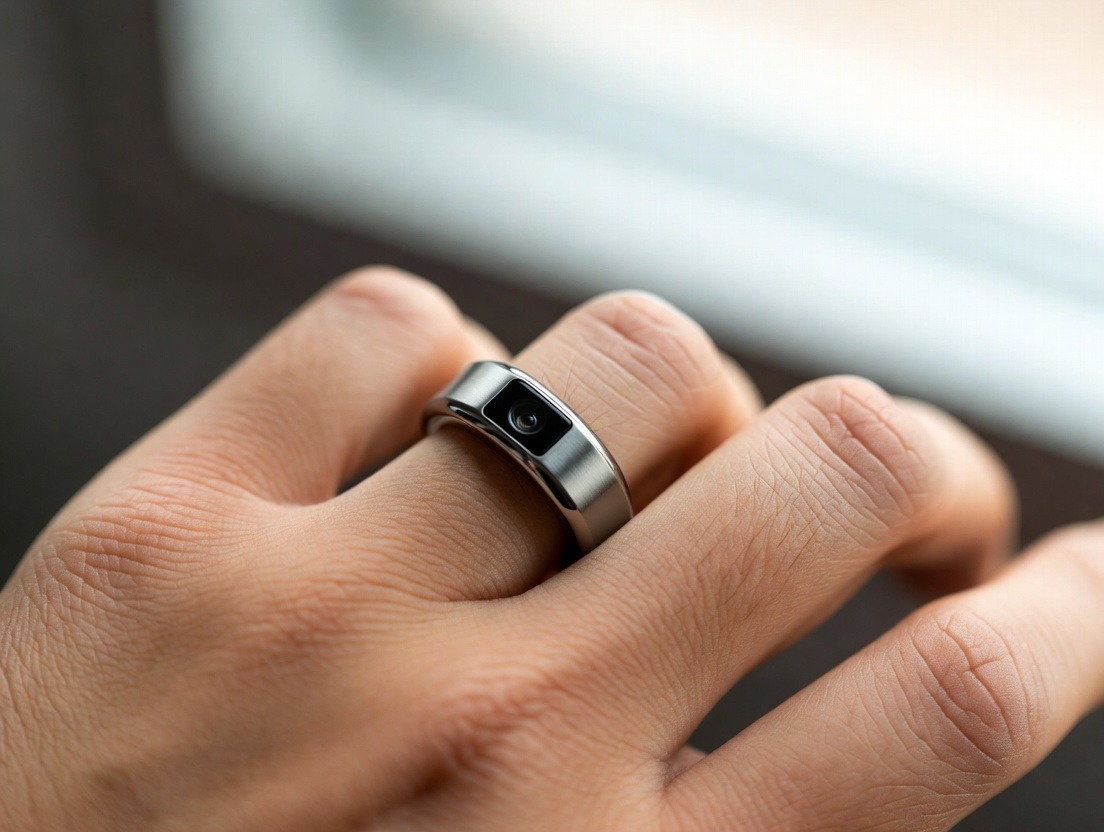
How Your Wellness Ring Validates Small Daily Habits Over Big Occasional Efforts
Shows how your ring validates that small, consistent daily efforts are more effective than occasional intense efforts.
How Your Wellness Ring Validates Small Daily Habits Over Big Occasional Efforts
We live in a culture obsessed with the grand gesture. The 90-day transformation. The crash diet before the wedding. The heroic all-nighter to meet a deadline. We’re conditioned to believe that monumental effort, concentrated in short, intense bursts, is the only path to meaningful results. We burn out on Monday, then reward ourselves with lethargy by Friday, stuck in a cycle of intense effort and recovery that leads nowhere sustainable.
But what if our entire understanding of progress is backwards?
Emerging from the confluence of wearable technology, behavioral science, and data analytics is a quiet revolution that is fundamentally shifting this narrative. At the heart of this shift is an unassuming device on your finger: the modern wellness ring. This sophisticated piece of technology is not merely a tracker; it is a validation engine, a continuous feedback loop, and a personal biometrical historian. Its most profound revelation is not found in celebrating the occasional 10-mile run or the rare perfect night of sleep. Instead, its true power lies in its relentless, gentle affirmation of the smallest, most mundane daily choices.
The wellness ring illuminates a powerful, evidence-based truth: lasting vitality, resilience, and health are not built in the dramatic, infrequent leap. They are forged in the compound interest of tiny, consistent deposits. Your 10-minute morning walk, your decision to turn off screens 30 minutes earlier, your mindful hydration throughout the day, your moment of deliberate breathwork before a meeting—these are the true architects of your well-being.
This article will explore how this elegant piece of technology acts as your personal advocate for the power of micro-habits. We’ll delve into the science of consistency, the psychology of feedback, and the specific ways your ring’s data transforms abstract intentions into tangible, validated victories. We will move beyond the generic step-count and into the rich narrative your biometrics tell about the profound impact of daily discipline. This is a journey from chasing peaks to nurturing a fertile, sustainable landscape of well-being, guided by the most personal data stream you’ve ever owned.
The Myth of the "Big Effort" and Why It Fails Us
We’ve all been sold the same story. It’s plastered across magazine covers, distilled into two-hour motivational seminars, and embedded in New Year’s resolution culture: radical change requires radical action. This "big effort" mindset is seductive. It promises a clear, albeit painful, path to a desired outcome. It feels heroic, decisive, and satisfying in its simplicity. We tell ourselves, "If I just push hard enough for a short time, I can fix everything."
But why does this approach so often lead to frustration, burnout, and regression?
From a physiological standpoint, our bodies are homeostasis machines. They resist sudden, drastic change. A crash diet triggers starvation mode, slowing metabolism and increasing fat-storage hormones. An intense, unaccustomed workout leads to injury and inflammation. An all-nighter devastates cognitive function and hormonal balance for days. The "big effort" is often an act of violence against a system designed for adaptation, not shock.
Psychologically, the model is equally flawed. It relies on unsustainable willpower, a finite resource famously prone to depletion. Each massive effort creates a "willpower debt" that must be repaid, often in the currency of backlash behavior—the dieter’s binge, the exerciser’s week-long couch hiatus. Furthermore, it creates a binary, pass/fail mentality. If you miss a day on your extreme plan, the entire edifice feels compromised, making it easier to abandon altogether. The emotional cost of a single misstep is catastrophically high.
Your wellness ring acts as the ultimate myth-buster to this paradigm. It doesn’t care about your one-off 5 a.m. gym session if the preceding week was marked by chronic sleep deprivation. Its data reveals the truth: that heroic workout likely spiked your stress (cortisol) and provided poor recovery, negating much of its potential benefit. The ring shifts the focus from the intensity of a single point to the quality of the continuous line that is your health timeline.
The data consistently shows that the person who sleeps seven hours nightly, manages daily stress through micro-breaks, and moves consistently throughout the day will outperform—in energy, body composition, immune function, and mental clarity—the person who oscillates between weekend warrior extremes and weekday collapse. The ring validates this not through opinion, but through the impartial language of heart rate variability, resting heart rate trends, and sleep stage consistency. It proves that the big effort is often just noise. The small, daily signal is what builds the future you.
How a Wellness Ring Transforms Invisible Efforts into Visible Data
For generations, the connection between our daily habits and our inner physiological state was shrouded in mystery and subjective feeling. You might feel better after a week of early bedtimes, but by how much? Was it the sleep, the reduced caffeine, or just a good week? The feedback loop was slow, fuzzy, and easily dismissed. This uncertainty is the breeding ground for habit abandonment. Without clear, objective validation, our motivation withers.
The modern wellness ring is a bridge across this feedback gap. It acts as a translator, converting the silent language of your autonomic nervous system—the system governing your heartbeat, breath, digestion, and recovery—into a visual, understandable data stream. It makes the invisible, visible.
Consider the humble act of going to bed 20 minutes earlier. Subjectively, you might notice feeling slightly more alert the next day. But your ring captures the multidimensional impact:
It shows an increase in Total Sleep Time, a straightforward metric.
More importantly, it reveals a potential increase in Deep Sleep (Slow-Wave Sleep), the critical phase for physical repair and immune function, which is often prioritized in the earlier sleep cycles you now capture.
It may show an improvement in Heart Rate Variability (HRV) the following morning, a key biomarker of recovery and resilience, indicating your nervous system is better balanced.
It can display a lower Resting Heart Rate (RHR), suggesting improved cardiovascular efficiency.
One small habit—earlier bedtime—is now validated by four distinct, objective data points. This is transformative. Instead of relying on a vague sense of "feeling good," you have a dashboard showing why and how much.
This principle applies across the spectrum of micro-habits:
Five minutes of morning meditation: Validated by a lower daytime stress graph and a more stable heart rate during work challenges.
A 15-minute afternoon walk: Validated by improved post-lunch glucose response (a proxy some rings estimate via heart rate and movement) and a positive blip in your activity timeline.
Switching to decaf after 2 p.m.: Validated by more time in REM sleep, the sleep stage crucial for memory and emotion processing, which is highly sensitive to caffeine's long half-life.
Consistent hydration: Validated by more stable heart rate metrics and potentially better sleep quality, as mild dehydration can disrupt sleep.
The ring removes the guesswork. It provides the "proof of concept" for your personal experiments in living better. This tangible proof is the fuel that turns a fleeting intention into a cemented habit. When you can see the direct line between your 10-minute evening stretching routine and a higher sleep readiness score, the habit ceases to be a chore and becomes a non-negotiable investment, a daily deposit into your physiological bank account. To understand how foundational these small sleep adjustments are, our Sleep Health 101 guide for beginners breaks down exactly where to start.
The Compound Interest of Consistency: What Your Ring's Long-Term Trends Reveal
If daily validation is the spark, long-term trend analysis is the blazing fire that illuminates your true path. A wellness ring’s greatest analytical power isn't in its daily scores, but in its ability to chart your biometrical journey over weeks, months, and years. This is where you witness the principle of compound interest applied to human biology.
Financial compound interest rewards small, regular investments with exponential growth over time. Biological compound interest operates on the same principle. A single night of great sleep is a dollar in your pocket. A month of consistently good sleep is an investment earning interest in the form of improved hormonal regulation, cognitive function, and emotional stability.
Your ring’s trend graphs are the financial statements of your health. Let’s explore what these long-term views can teach you:
The Resting Heart Rate (RHR) Downward Slope: As you commit to consistent cardio (even just daily brisk walking) and better sleep, you may see your RHR slowly but steadily decline over months. A drop of even 5-10 beats per minute signifies profound improvements in cardiovascular efficiency and parasympathetic (rest-and-digest) tone. This trend is a powerful, slow-motion victory no single workout could ever show you.
The Heart Rate Variability (HRV) Upward Climb: HRV is a key marker of your body's resilience and adaptability. It’s notoriously noisy day-to-day, but its long-term trend is pure gold. A gradual upward trend in your HRV baseline indicates that your nervous system is becoming more robust, better at handling stress, and recovering more effectively. This is the compound interest of daily stress-management micro-habits paying out.
The Sleep Consistency Graph: This might be the most telling trend of all. The ring doesn't just track if you sleep well, but when you sleep. A graph showing consistent bedtimes and wake-up times (even on weekends) will almost perfectly overlay with graphs showing higher sleep scores, better recovery, and more stable energy. The ring validates the non-negotiable importance of rhythm itself. For a deeper look at why this rhythm is so critical, read our analysis on why sleep health matters more than you think.
The Activity "Floor" Elevation: Instead of just celebrating peak activity days, a trend view shows how you've raised your "floor." You'll see fewer and fewer completely sedentary days. The baseline of your movement has crept upward, a sure sign that daily non-exercise activity (taking the stairs, walking calls, evening strolls) has become ingrained.
These trends are the antidote to discouragement. On a day when your sleep score is low or you missed a workout, you can zoom out. You see the overall trajectory is still pointing upward because 80% of your days are filled with positive micro-habits. The ring teaches you to think in aggregates and averages, not single data points. It shows you that you are not what you do occasionally; you are what you do consistently.
Sleep: The Ultimate Keystone Habit Validated by Your Ring
Of all the metrics a wellness ring tracks, sleep stands as the undisputed keystone—the central habit upon which nearly every other aspect of well-being hinges. You cannot supplement, diet, or exercise your way out of chronic poor sleep. Your ring understands this intimately, dedicating immense analytical power to decoding your nights. In doing so, it validates sleep as the most impactful daily habit you can cultivate.
A wellness ring moves far beyond simple duration tracking. It dissects your sleep architecture, providing a validation layer for habits you never could have measured before:
Wind-Down Routine Validation: That 30-minute screen-free reading period before bed? Your ring validates it by showing a quicker onset of sleep (less time tossing and turning) and a more stable heart rate as you drift off. The data proves your nervous system is actually decelerating.
Caffeine & Alcohol Cessation Impact: The ring is a merciless auditor of substance timing. That afternoon coffee or evening glass of wine shows up in the data as reduced deep sleep, fragmented REM sleep, or increased nighttime wakefulness. Seeing this direct correlation is a powerful motivator to adjust timing or quantity. It answers questions many beginners have, which we cover in our common sleep health questions for beginners.
Consistency Over Perfection: The ring powerfully demonstrates that going to bed and waking up at roughly the same time every day is often more important than getting a perfect 8 hours on an erratic schedule. Your Sleep Consistency score becomes a key metric, and its correlation with higher Readiness scores the next day is a clear, data-driven argument for routine.
Environmental Tweaks: Is your room cool enough? Is there too much light or noise? Experimentation is validated by data. A cooler room temperature might lead to more deep sleep. Blackout curtains might decrease nighttime wakefulness. The ring turns your bedroom into a lab for optimizing your most important biological function.
The sleep data transforms your relationship with rest. It moves sleep from a passive state you "get" to an active performance you can "build." Each evening habit is a brick in that night's architecture. The ring’s morning report—with its sleep stages, disturbances, and overall score—isn't a grade. It's a feedback report on the quality of your daily preparation. It validates that the small, seemingly insignificant choices of your evening directly write the story of your next day's energy, focus, and mood. For a structured approach to building these habits, our first 30 days guide for sleep health beginners provides a step-by-step plan.
From Static Numbers to a Dynamic Story: Interpreting Your Daily Readiness Score
Many wearables give you a sleep score and an activity score. The groundbreaking insight from advanced wellness rings is the synthesis of these and other metrics into a single, holistic Daily Readiness or Recovery Score. This is not just another number; it is a data-driven narrative about your body’s current capacity to perform, adapt, and thrive. It is the ultimate validation tool for listening to your body over blindly following a rigid plan.
Your Readiness Score is typically a complex algorithm that weighs:
Sleep Quality & Quantity: The foundation.
Heart Rate Variability (HRV): Your body's readiness to take on stress.
Resting Heart Rate (RHR): Compared to your personal baseline.
Sleep Consistency: Your recent rhythm.
Body Temperature Trends: An early indicator of illness or hormonal shifts.
Previous Day's Activity Load: Have you fully recovered?
This score tells a dynamic story that changes daily, validating the need for flexibility:
A High Readiness Score (e.g., 85+): This is your ring validating a series of good daily habits. It’s saying, "Your sleep was solid, your nervous system is resilient, and you're recovered. Today is a day you can safely push harder in a workout, tackle a big project, or handle extra stress. Your small habits have prepared you for a big day." It’s permission to be vigorous.
A Moderate or Low Readiness Score (e.g., <70): This is not a failure; it’s crucial, protective feedback. It’s your ring saying, "You didn't recover fully. Maybe sleep was short, HRV is low, or you're fighting off something. The data suggests today is a day for gentleness—prioritize recovery, choose a walk over HIIT, manage stress, and get to bed early." It’s permission to rest.
This is where the ring transcends tracking and becomes coaching. It validates the wisdom of listening to your body. That voice that says, "I'm just too tired for the gym today," is now backed by objective data. Conversely, on days you feel sluggish but your score is high, it can motivate you to get moving, knowing your physiology is actually primed for it.
The Daily Readiness Score shatters the "more is always better" mentality in fitness. It validates that a rest day, when your body needs it, is a more productive habit for long-term progress than a grinding workout that digs you into a deeper recovery hole. It teaches you that the most intelligent daily habit is checking in with your body’s true state—and your ring provides the translator for that conversation. To learn how to accurately assess your own starting point, you can use our simple self-test for current sleep health.
Stress and Recovery: Validating the Micro-Moments of Peace
We often think of stress management as a weekly yoga class or a monthly massage. While valuable, your wellness ring reveals a more immediate truth: stress is managed—or mismanaged—in the micro-moments. The five minutes before a meeting, the commute home, the scroll through social media before bed. Your ring's stress-tracking feature (usually based on heart rate and heart rate variability) validates the power of small, interstitial recovery habits.
The ring’s stress graph isn't just about identifying major panic attacks; it's about mapping the topography of your day. It shows the peaks (meetings, difficult conversations, intense work sessions) and, more importantly, it reveals the valleys—or lack thereof.
This data validates interventions so small they once seemed insignificant:
The 3-Minute Box Breath: Before a scheduled stressful event, you do a breathing exercise. The validation comes when you see your stress graph spike less dramatically and return to baseline more quickly than on days you didn't breathe. The habit is proven effective.
The Lunchtime Walk vs. Desk Scrolling: On days you take a true break and move, your afternoon stress graph shows lower, more stable readings. On days you eat while working, the graph remains elevated. The ring validates disengagement as a performance habit.
The "Tech Curfew": You notice your stress graph remains oddly elevated for hours after a late-night work session or an argument on social media. Implementing a digital wind-down is validated when that evening baseline slowly lowers, paving the way for better sleep.
The ring also introduces the critical concept of daytime recovery. It identifies moments—sometimes just minutes—where your heart rate dips and your nervous system finds a semblance of calm even during a busy day. You can start to ask: What was I doing then? Was I making a cup of tea? Looking out the window? Having a genuine laugh with a colleague?
By highlighting these micro-valleys of recovery, the ring does two things: First, it validates the activities that create them, encouraging you to intentionally schedule more. Second, it reframes success. A "good day" isn't necessarily a day with no stress; it's a day with a healthy rhythm of stress peaks followed by recovery valleys. The ring validates the habit of consciously creating those valleys through tiny, deliberate acts of pause. Understanding this rhythm is a core principle explored in the foundation of good sleep health.
Movement Beyond the Workout: How Your Ring Celebrates Non-Exercise Activity
The fitness industry has long glorified the structured, sweaty, hour-long workout. While important, this has inadvertently devalued the other 23 hours of the day. Your wellness ring corrects this imbalance by celebrating and validating Non-Exercise Activity Thermogenesis (NEAT)—the energy you expend on everything that isn't sleeping, eating, or sports-like exercise. This includes walking, standing, fidgeting, gardening, and household chores.
NEAT is arguably more important for long-term metabolic health and weight management than a daily gym session, because it’s sustainable and constant. Your ring validates this all-day movement in powerful ways:
The Active Minute Counter: Unlike a step counter that can be cheated by shaking your wrist, advanced rings use multi-sensor data to identify when you are genuinely active. Hitting a goal of, say, 250 active minutes per week is a validation of a lifestyle rich in micro-movements, not just isolated workouts.
The Inactivity Alerts: A gentle nudge to move after an hour of sitting isn't a scolding; it's a habit-trigger. Responding to it validates the choice to take a two-minute stretch, refill your water, or do a lap around the house. Each response is a tiny win logged against sedentary default mode.
The Post-Meal Walk Validation: You make a habit of a 10-15 minute walk after lunch. Over time, your ring may show more stable afternoon energy (via lower heart rate variability stress readings) and even correlate it with slightly better sleep. This chains small habits (eating, moving) into a positive cycle.
The "Workout" of Daily Life: A Saturday spent gardening, cleaning, or playing with kids may not log as a "workout," but your ring validates its immense value through high active minutes, elevated calorie burn, and often, a great night's sleep that follows. It legitimizes life itself as a form of training.
By giving you credit for these activities, the ring shifts your identity from "someone who works out" to "someone who is actively alive." It validates the decision to park farther away, take the stairs, walk during a phone call, or do calf raises while brushing your teeth. These are not lesser activities; they are the constant, low-grade fuel that keeps your metabolic fire burning brightly all day long, making the benefits of your bigger workouts more accessible and sustainable.
The Psychology of Validation: How Data Reinforces Habit Formation
At its core, habit formation is a neurological loop: Cue -> Routine -> Reward. The "reward" is what tells your brain, "Remember this for next time." Traditionally, the rewards for health habits are delayed and intangible (better health in the future) or vague ("I feel good"). This weak reinforcement is why habits fail.
Your wellness ring supercharges the Reward phase of the habit loop with something potent: immediate, personalized, objective data. This transforms the psychological game of building habits.
From Delayed to Immediate Gratification: The reward for a week of good sleep is no longer a vague future benefit. It's a high Sleep Score and a green, high Readiness Score you see the very next morning. This instant positive feedback creates a powerful dopamine hit, wiring your brain to associate the evening routine (the habit) with a pleasurable reward.
From Subjective to Objective Proof: "I think this is working" is weak. "My HRV has increased 12% over the last four weeks since I started my evening meditation" is undeniable proof. This objectivity bypasses the cynical, self-sabotaging inner voice that dismisses subjective feelings.
Gamification and Micro-Victories: Rings often use scores, badges, and trend lines. These elements tap into our innate love for games and progress. Closing your "activity circle" or achieving a "sleep streak" provides a clear, visual victory. Each day becomes a level to beat, not a pass/fail test.
The "Don't Break the Chain" Effect: Popularized by Jerry Seinfeld, this method is about maintaining a visible chain of success. Your ring's data creates a perfect, unbreakable chain. You don't want to see a poor sleep score break your streak of greens. The data itself becomes the motivation to maintain the habit, not an abstract ideal.
This constant validation builds self-efficacy—the belief in your own ability to execute behaviors leading to desired outcomes. When you see, time and again, that your actions (early bedtime) directly cause positive outcomes (high readiness), you stop hoping you can be healthy. You know you can, because you have the data that proves you are already doing it, one small habit at a time. This psychological shift, from wishful thinking to confident action, is perhaps the ring's greatest gift.
Case Study: A Month in the Data – Comparing "Perfect" Days vs. Consistent Days
Let's move from theory to a concrete, data-driven narrative. Imagine two hypothetical users, Alex and Sam, over a 30-day period.
Alex (The "Big Effort" Archetype):
Pattern: Lives for the weekend. Weekdays are high-stress, late nights, poor food choices, and minimal movement. Saturday is for a punishing 2-hour gym session and meal prepping. Sunday involves a long run. Sleep is erratic.
Ring Data Story:
Sleep: Very inconsistent graph. Weekday scores average 65. Weekend scores might spike to 85 after exhaustion, but often show poor efficiency due to late weekend socializing.
Readiness: Low on most Mondays-Fridays (avg. 68). Spikes on some Saturdays, but often Sundays show low readiness due to poor recovery from Saturday's extreme workout.
HRV Trend: Erratic, with no clear upward direction. Shows frequent crashes.
Stress: High, sustained weekday graphs with few recovery valleys.
The Takeaway: The data shows a body in constant shock and recovery, with no stable baseline. The big efforts are undermined by daily neglect. The trend lines are flat or jagged, indicating no real physiological adaptation is occurring.
Sam (The "Micro-Habit" Archetype):
Pattern: Focuses on daily keystones. Aims for 7.5 hours of sleep with a consistent bedtime/wake-up within a 30-minute window. Takes a 20-minute walk daily. Does 10 minutes of mobility and breathwork each morning. Stays hydrated. Workouts are moderate, 3-4 times a week, and adjusted based on daily readiness.
Ring Data Story:
Sleep: A tight, consistent graph. Scores average 82 with low variability.
Readiness: Consistently high and stable (avg. 81). On a rare lower day, Sam takes it as a signal for a walk and early bed.
HRV Trend: A clear, gentle upward slope over the 30 days.
Stress: Graphs show clear peaks during work but deep valleys in evenings and mornings, indicating effective daily recovery.
Activity: Shows a high "floor" of active minutes every single day, with structured workouts layered on top.
The Takeaway: The data shows a system building resilience. The small, daily habits create a high, stable baseline. The body is in a state of positive adaptation. The trend lines are smooth and upward.
The ring’s data makes the winner indisputable. Sam, with no "heroic" days, has built a vastly superior physiological position by month's end. The case study validates that the sum of small, smart daily decisions utterly dwarfs the impact of sporadic, intense efforts undermined by daily dysfunction. Sam's journey is what we outline in our sleep health journey for the first year.
Beyond Sleep & Steps: Validating Nutrition, Hydration, and Mindset Through Proxy Metrics
While no ring directly measures what you eat or think, the most advanced devices use your physiological responses as powerful proxy metrics, creating validation loops for habits in these domains.
Nutritional Choices (via Glucose Response Proxy): Some rings use heart rate data, heart rate variability, and skin temperature to estimate your body's reaction to meals. A large, high-carb, low-fiber meal may cause a detectable "stress" response or a rise in resting heart rate as your body works hard to digest. Over time, you can experiment:
Habit: Adding vegetables and protein to your lunch.
Validation: The post-meal physiological "stress" spike is lower and shorter. Your afternoon energy feels more stable, corroborated by better stress graph readings.
Habit: Finishing dinner 3 hours before bed.
Validation: Improved sleep onset latency and deeper sleep scores, as your body isn't busy digesting overnight.
Hydration: Mild dehydration increases heart rate and can reduce HRV. It can also disrupt thermoregulation, affecting sleep.
Habit: Drinking a glass of water first thing in the morning and consistently using a large water bottle.
Validation: More stable daytime heart rate metrics, and potentially better sleep continuity scores. If you have a day of poor hydration, you may see the negative correlation in your data, validating the importance of the habit.
Mindset & Mindfulness: This is validated through the most direct channel: your nervous system's signature.
Habit: A daily 10-minute gratitude journal or meditation session.
Validation: A measurable, gradual increase in your baseline HRV—the clearest biomarker of a resilient, less reactive nervous system. You may also see your stress graph's baseline lower over weeks.
Habit: A digital sunset or tech-free hour before bed.
Validation: A calmer, quicker descent into sleep shown in your sleep onset data and lower pre-sleep heart rate.
The ring teaches you that every habit has a physiological signature. By connecting the dots between your actions (drinking water, eating mindfully, practicing gratitude) and your body's data (stable HR, higher HRV, better sleep), you build a comprehensive, validated lifestyle system. It proves that wellness is not compartmentalized; the small habit of mindfulness directly improves the metric of sleep, which in turn improves the capacity for exercise. For a toolkit to start connecting these dots, explore the beginner's sleep health toolkit.
Creating Your Personal Feedback Loop: Turning Ring Data into Actionable Habit Refinement
Owning a wellness ring is not a passive experience. The final, and most crucial, step is closing the feedback loop. The data is not an end in itself; it is the beginning of a conversation with yourself. This is where you move from being tracked to becoming an active participant in your own biohacking journey.
Here is a framework for using your ring's data to refine and reinforce your small daily habits:
Observe Without Judgment (The Scientist Mindset): For the first 1-2 weeks, simply wear the ring and live your life. Gather baseline data. Don't try to change everything. Just observe the correlations. Notice: What does my sleep look like after a stressful day? How does my heart rate respond to coffee after 2 p.m.?
Form a Single, Tiny Hypothesis (The Experiment): Based on observation, pick ONE micro-habit to test. Make it absurdly small and specific. Not "sleep better," but "turn off all screens at 10:15 p.m. for one week." Not "reduce stress," but "do a 2-minute breathing exercise at my desk after lunch each day."
Implement and Let the Ring Validate (The Trial): Commit to your tiny habit for 7-10 days. Let the ring collect the data.
Analyze the Correlation (The Results): After the trial period, look at the relevant metrics. Did your sleep onset time decrease? Did your post-lunch stress graph show a deeper valley? Look for even a slight positive shift. This is your validation.
Iterate or Pivot (The Refinement):
If validated: The habit gets cemented. You can now "stack" another tiny habit onto it (e.g., "After I turn off the screens at 10:15, I will read a physical book for 10 minutes").
If no change: Don't view it as failure. It's valuable data. Perhaps the timing was wrong, or the habit wasn't the right lever. Pivot. Try a different variable (e.g., instead of screen time, experiment with room temperature).
This continuous loop—Observe -> Hypothesize -> Test -> Validate -> Refine—is how you become the architect of your own well-being, using your ring as both your measuring tool and your validation engine. It turns health from a destination into a fascinating, personal science project, where every day offers a new opportunity to learn and improve through small, validated steps. To avoid common pitfalls in this process, be aware of the sleep health mistakes beginners often make.
The Social Fabric of Habits: How Shared Data and Community Amplify Consistency
Human beings are not designed for isolation. Our behaviors, for better or worse, are profoundly influenced by those around us. While the wellness journey is deeply personal, the path to consistency is often paved with social reinforcement. Modern wellness technology has begun to tap into this powerful force, moving beyond the solitary dashboard to create communities of validation. Your ring’s data, when shared in the right contexts, transforms from a private metric into a tool for connection, accountability, and shared growth.
The "big effort" model is often a solo act—a grueling personal test of will. The micro-habit model, however, thrives in a social ecosystem. This is because small habits are the stuff of daily life, and sharing our daily lives is inherently human.
Accountability Partnerships, Evolved: Gone are the days of simply texting a friend "Did you work out?" Now, with permission, you can form private circles where you see not just if someone worked out, but how they recovered from it. This fosters smarter, more empathetic accountability. Instead of shaming someone for missing a workout, you might say, "I see your readiness was low yesterday—smart move taking that rest day. How can I support your sleep tonight?" The data shifts the conversation from performance to holistic support.
Validating Shared Rituals: A couple using wellness rings can validate shared habits. Committing to a joint 9:30 p.m. digital curfew becomes an experiment. The next morning, both partners can see the correlated improvement in their sleep scores, reinforcing the habit as a team. A family challenge to increase daily active minutes turns into a game, with the ring providing impartial scoring. The shared data validates the collective effort, making the habit stickier and more enjoyable.
The Power of Normative Comparison (Done Right): Leaderboards with strangers can be demotivating. But small, trusted groups create a healthy normative environment. Seeing that your friend with a similar lifestyle maintains a higher HRV might spark curiosity, not jealousy. You can ask, "What's your wind-down routine?" This leads to the exchange of validated, small-habit tips—"I started reading fiction instead of news before bed, and my deep sleep increased." The data becomes a conversation starter for meaningful habit exchange.
Celebrating Micro-Victories Together: The true joy of the micro-habit philosophy is in celebrating small wins. A community that "gets it" is essential. Sharing a "Sleep Streak: 7 Days" badge or a "New HRV High Score" with a supportive group provides a social reward that supercharges the neurological habit loop. The congratulatory emoji or comment adds a layer of social dopamine to the data validation, making the positive behavior feel even more rewarding.
This social layer protects against the attrition that often dooms solo efforts. On days when personal motivation wanes, the gentle, data-informed nudge from a friend or the desire to contribute to a group streak can provide the necessary catalyst to maintain the chain of small habits. The ring ceases to be just a personal biometrical device; it becomes a node in a network of mutual support, proving that while health is built daily, it can be sustained communally.
From Data to Wisdom: How Long-Term Ring Use Teaches You Your Unique Patterns
In the first few months, a wellness ring is a revelatory teacher, showing you basic cause and effect. But as seasons turn and the data accumulates into years, its role evolves from teacher to sage. It moves beyond validating general principles ("sleep is important") to revealing your personal constitution—the unique, nuanced ways your body responds to the world. This is the graduation from following generic advice to cultivating personalized wisdom.
This long-term data unveils patterns invisible on a weekly scale:
Seasonal Rhythms: You may discover your average HRV dips in the deep winter and peaks in early autumn. Your sleep needs may lengthen by 20-30 minutes in January compared to July. This isn't a failure; it's your body's alignment with natural cycles. The ring validates the habit of adjusting expectations and self-care with the seasons—prioritizing more rest in winter, perhaps more vigorous activity in spring.
Hormonal Mapping (For All Genders): For individuals with menstrual cycles, the ring becomes an unparalleled tool for validation. The data vividly charts the physiological reality of the cycle: a rise in resting heart rate and often a dip in HRV in the luteal phase; changes in basal body temperature; variations in sleep architecture. This validates the need to cycle habits, not just repeat them robotically. It supports the habit of scheduling demanding workouts in the follicular phase when recovery is stronger, and prioritizing gentle movement and extra sleep in the luteal phase. It turns a subjective experience into an objectively validated rhythm to work with, not against.
Stress Resilience Benchmarking: After a year or two, you have a true baseline. You can weather a stressful period—a work project, a family illness—and actually watch your metrics dip. The wisdom comes in the recovery trajectory. You now know, based on past data, that it typically takes you X days of deliberate recovery habits (early nights, meditation, gentle movement) to return to your baseline after a stressor of Y magnitude. This turns recovery from a guessing game into a predictable, managed process.
Aging Gracefully, with Data: The long-term trends become a compassionate map of aging. A very gradual, slight increase in resting heart rate or a gentle decline in HRV baseline over years is normal. The ring helps you differentiate between this graceful decline and a precipitous drop that might indicate illness or overtraining. It validates the increasing importance of recovery habits, strength training to preserve metabolism, and sleep consistency as you age. The goal shifts from "optimizing peak performance" to "maximizing healthspan," and the data shows you exactly which daily habits contribute most to that goal.
This deep self-knowledge is the ultimate validation of the micro-habit approach. It proves that there is no universal "perfect day." There is only your perfect day for this season, this cycle, this chapter of your life. The ring’s historical data gives you the confidence to adapt your small daily habits intelligently, building a resilient well-being that is as dynamic and unique as you are. To see how these patterns evolve over a lifetime, our article on how sleep health changes throughout your life offers valuable perspective.
The Silent Coach: How Your Ring Nudges You Toward Better Decisions in Real-Time
The most profound impact of a technology often lies not in its detailed reports, but in its subtle, ambient influence on behavior. This is the realm of the "nudge"—a concept from behavioral economics where choice architecture is designed to predictably alter behavior without forbidding options. Your wellness ring, through its alerts and seamless integration into your life, becomes a silent, compassionate coach offering real-time nudges that reinforce small habits at the moment they matter most.
Unlike a blaring alarm or a judgmental notification, an effective nudge is timely, context-aware, and easy to act upon. It bridges the gap between intention and action.
The Inactivity Nudge: The gentle buzz after 50 minutes of sitting isn't just a reminder to move; it's a habit trigger placed at the precise moment of transition. It interrupts autopilot (sitting continuously) and creates a decision point. The action required is simple: stand up and move for a minute or two. This nudge, repeated daily, validates the habit of breaking up sedentary time, a micro-habit with massive long-term metabolic benefits.
The Sleep Window Reminder: Receiving a notification that says, "Your ideal sleep window begins in 30 minutes" is a powerful nudge. It doesn't command you to go to bed. It simply makes your intention (getting better sleep) salient at the exact time you need to start winding down. It helps you make the conscious choice to put down the phone, start your tea, or pick up your book, validating the first step of your evening routine.
The Recovery-Paced Workout: Some rings can now send real-time, heart-rate-based pacing guidance during a run. A gentle pulse might suggest you're pushing too hard for a recovery day, nudging you to slow down to stay in your intended zone. This validates the habit of training by feel and physiology, not just by a rigid plan, preventing overtraining and reinforcing the link between daily readiness and daily performance.
The "Check Your Stress" Prompt: On a day when your stress graph shows sustained elevation, a well-designed app might surface a prompt: "You've had a period of high stress. Try a 1-minute breathing exercise?" This nudge offers an immediate, tangible off-ramp from the stress spiral. Acting on it provides instant feedback—you can often watch your real-time heart rate dip on the screen—validating the micro-habit of acute stress interruption.
The power of these nudges lies in their consistency and neutrality. They don't shout. They whisper. They don't judge a "bad" day; they simply offer a better next choice. Over time, these repeated nudges rewire your default behaviors. You start to feel restless after an hour of sitting before the buzz. You begin to feel tired as your sleep window approaches. The silent coach externalizes your healthy intentions until they become internalized habits. The ring’s data provides the validation that these nudges are working, creating a virtuous cycle of gentle prompts and positive, measurable outcomes.
Breaking Through Plateaus: Using Granular Data to Refine, Not Abandon, Your Habits
Every journey encounters flat terrain. In fitness, it's the strength or weight-loss plateau. In wellness, it can be a feeling that despite good habits, you're not seeing further progress in energy or recovery scores. The instinctive reaction of the "big effort" mindset is to radically change course: double workout intensity, slash calories further, push harder. This often leads to frustration and burnout.
The micro-habit philosophy, backed by granular ring data, offers a smarter path. A plateau isn't a signal to abandon your habits, but to refine them with surgical precision. Your ring provides the microscope to see what tiny adjustments can re-ignite progress.
The Sleep Quality Plateau: You're consistently getting 8 hours, but your Sleep Score is stuck at 78. Drilling into the data reveals the issue: you're getting sufficient Deep and REM sleep, but your "Sleep Latency" (time to fall asleep) is high, and you have frequent, brief "Awake" periods. This isn't a sleep duration problem; it's a sleep continuity problem.
Granular Refinement: Instead of trying to sleep longer, you focus on micro-habits for calmness and continuity. You experiment with a heavier blanket (validated by reduced wake-ups), a strict 60-minute pre-bed no-screen rule (validated by reduced sleep latency), or addressing a subtle nighttime dry mouth with a humidifier. Small tweaks, validated by specific data points, break the plateau.
The HRV Plateau: Your HRV has been stable for months, not climbing. The "big effort" response might be to add more intense meditation or cardio. But your ring’s trend data, combined with other metrics, might tell a different story. You notice your resting heart rate is creeping up slightly, and your sleep is slightly more fragmented.
Granular Refinement: This pattern could indicate low-grade systemic stress or insufficient recovery. The refinement isn't adding more, but strategically subtracting. You experiment with reducing caffeine from two cups to one, or swapping one high-intensity workout for a yoga or nature walk session. The validation comes if, after a few weeks, your HRV trend resumes its climb and your RHR stabilizes.
The Activity Plateau: You hit your step goal every day, but your "Active Minutes" or calorie burn aren't increasing.
Granular Refinement: The data shows you're getting steps, but perhaps at a low intensity. The micro-habit adjustment is to incorporate "walking snacks" of higher intensity. Habit: "On my afternoon walk, I will power-walk for two of the 15 minutes." Or, "I will take the stairs at a brisk pace instead of an ambling one." The ring validates this by showing higher heart rate during those periods and a slight uptick in your daily activity calorie burn.
The ring transforms plateau-breaking from a blunt-force endeavor into a process of curious, data-informed self-experimentation. It asks you to look closer, not push harder. Each small, refined habit is tested and validated, ensuring you are always moving forward on the path of most efficient, sustainable progress. This approach prevents the yo-yo cycles of overexertion and collapse, embedding the principle that optimization is a gentle, continuous process of leaning into the data.
The Holistic Dashboard: Connecting the Dots Between Sleep, Activity, Readiness, and Stress
A fundamental flaw of single-metric tracking (like a step counter or a basic sleep app) is that it views the body in silos. It can encourage you to hit your step goal at the expense of sleep, or chase a perfect sleep score while ignoring chronic stress. The advanced wellness ring’s supreme value is its integrated Holistic Dashboard—a view that doesn't just show you separate metrics, but visually and algorithmically demonstrates how they are inextricably intertwined.
This dashboard is the command center for validating the ecosystem of your habits. It shows you that no habit exists in a vacuum.
The Sleep-Activity Feedback Loop: Your dashboard makes the two-way street undeniable.
Path A (Sleep -> Activity): A night of poor sleep (low score, high resting heart rate) leads to a low Readiness Score. The dashboard visually links these. It validates the decision to take a lighter day, perhaps a walk instead of heavy weights. Ignoring this link and pushing hard is often validated by poor workout performance and further impaired recovery the next night.
Path B (Activity -> Sleep): A day with appropriate, well-timed activity (validated by a good Activity Score that aligns with your Readiness) is visibly correlated with faster sleep onset and more deep sleep that night. Overtraining, however, shows up as elevated nighttime heart rate and restless sleep.
The Stress Multiplier Effect: The dashboard illustrates how stress acts as a lens, magnifying the impact of other choices.
A moderate workout on a low-stress day might be perfectly recovered from.
The same workout on a high-stress day (shown by an elevated stress graph) might tank your readiness and sleep. The dashboard validates the habit of "stress-checking" before deciding on workout intensity.
The Readiness Score as the Unifying Narrative: As discussed, the Readiness Score is the synthesis. But on the holistic dashboard, you can click into it and see the weighted contribution of each factor: "Sleep: +35, HRV: +30, Activity Load: -10, RHR: +15." This breakdown is revolutionary. It tells a precise story: "You slept great and your nervous system is resilient (+65), but you're still carrying fatigue from yesterday's big workout (-10). Net: you're ready to go, but be mindful of cumulative load."
Living with this holistic view fundamentally changes your relationship with your body. You stop asking, "Did I get my steps?" and start asking, "Is my system in balance?" You learn that the perfect day isn't 10,000 steps, 8 hours of sleep, and a 20-minute meditation achieved in isolation. The perfect day is when these elements harmonize: good sleep fuels mindful activity, which manages stress, which promotes better sleep. The ring’s dashboard validates the most important habit of all: the habit of seeking balance and integration in your daily choices. For a structured way to build this balanced foundation, consider the sleep health pyramid approach.
From Self-Tracking to Self-Awareness: The Mindfulness Revolution on Your Finger
At its most profound, the journey with a wellness ring transcends biohacking and enters the realm of mindfulness and interoception—the perception of sensations from inside the body. The ring starts as an external validator, but its ultimate goal is to help you become your own validator. It trains you to connect external data with internal feeling, cultivating a deep, intuitive self-awareness.
Bridging the Data-Feeling Gap: In the beginning, you learn correlations: "When my HRV is below X, I usually feel irritable." "A sleep score below 75 correlates with intense afternoon cravings." Over time, you begin to sense these states before checking the data. You notice a subtle, wired-but-tired feeling and guess, correctly, that your HRV dipped. You feel a certain kind of morning grogginess and know your deep sleep was likely fragmented. The ring’s data provides the feedback that sharpens your internal compass.
Validating Intuition: How often have you pushed through a workout because the schedule said so, only to feel terrible? Or ignored tiredness to binge a show, ruining the next day? The ring validates the wisdom of listening to subtle cues. On days you feel off and the data confirms low readiness, it reinforces trust in your intuition. Conversely, on days you feel sluggish but the data shows high readiness, it can gently challenge a limiting mindset and motivate you to get moving, often resulting in the energy shift you needed.
The Habit of Checking-In: The most valuable micro-habit the ring instills is the periodic "check-in." Not a obsessive data glance, but a mindful pause. It’s the habit of asking, mid-afternoon: "What does my body need right now? A glass of water? A walk? A 5-minute break from the screen?" You can use the ring’s real-time stress or heart rate as an initial prompt, but the goal is to internalize the question. This transforms wellness from a scheduled task list into a fluid, responsive dialogue with your present-moment needs.
Reducing Anxiety, Increasing Agency: For some, data can cause anxiety. But used wisely, the long-term, trend-focused view of a ring actually reduces health anxiety. A single bad night’s sleep is just a point on a long, stable trend line. It provides context that neutralizes catastrophizing. More importantly, it gives you a sense of agency. You are no longer a passive victim of fatigue or stress. You have a dashboard showing levers you can pull (sleep, movement, breathing) and data that validates their effect. This shifts your mindset from "I am so tired" to "My data shows I'm recovering from a stressor; I will prioritize sleep tonight."
In this way, the wellness ring becomes a tool for embodiment. It helps you leave the abstract world of "shoulds" and inhabit the real, data-informed, feeling world of your body. The final validation is no longer on the screen; it’s in the cultivated sense of confidence and attunement you carry with you, knowing that you can understand and care for the complex, amazing system that is you. This journey begins with understanding your starting point, which you can gauge with our sleep health assessment guide.
The Future of Habit Validation: Where Wearable Technology is Heading Next
The current capabilities of wellness rings are impressive, but they represent just the beginning of a deeper integration of technology and personal habit formation. The future points toward even more seamless, predictive, and context-aware systems that will further validate and simplify the micro-habit path. Understanding this trajectory helps us see the current ring not as an endpoint, but as a foundational piece of a lifelong wellness partnership.
Continuous Glucose Monitoring (CGM) Integration: The next frontier is metabolic awareness. While current rings use proxies, future iterations may integrate non-invasive glucose sensing. This would provide direct validation for nutritional micro-habits in real-time. You would see the direct impact of adding fiber to your meal, taking a post-meal walk, or choosing a complex carb over a simple sugar. The validation loop for food choices would become as immediate as it is for sleep today.
Advanced Environmental Sensing: Future devices may measure ambient light quality, noise pollution, and air quality (VOCs, particulates) alongside your biometrics. This would validate environmental micro-habits with stunning clarity. It could show how working near a window boosts your daytime alertness score, or how an air purifier in your bedroom improves sleep-related heart rate stability. Your habits would expand to curating your surroundings.
Predictive Nudging and "Habit Automation": With enough longitudinal data and advanced AI, your device could move from reactive to predictive. It might learn that on days you have back-to-back meetings, your stress spikes at 3 p.m. It could then proactively nudge you at 2:45 p.m.: "Based on your patterns, a 5-minute breathing exercise now could smooth your afternoon." It could suggest an ideal bedtime based on your current sleep debt and next day's calendar, or recommend a walking meeting when it detects creative block and low movement.
Deeper Health Marker Integration: Research into non-invasive sensing for blood pressure, hydration status, and even certain blood biomarkers is advancing. A future ring could provide a holistic health snapshot each morning, validating how your daily habits are influencing not just recovery, but long-term disease risk factors. This would ground micro-habits in the most powerful validation of all: their role in preventing chronic illness and extending healthspan.
The Truly Invisible Interface: The ultimate goal is for the technology to fade into the background. The ring itself may become smaller, battery-free, or even embedded in other ordinary objects. The validation would become ambient—delivered through subtle haptics, integrated into your smart home environment (lighting that adjusts to your circadian read), or summarized in brief, conversational AI updates. The focus would remain entirely on the habit and the feeling, with the technology acting as an invisible, validating scaffold.
This future solidifies the core premise: the power lies not in the technology's complexity, but in its ability to make the cause-and-effect of our smallest choices brilliantly, undeniably clear. It will continue to champion the truth that your health is a daily creation, built not in the occasional dramatic renovation, but in the perpetual, validated upkeep of a thousand tiny, loving repairs. For a look at the essential tools you need to start this journey now, explore the beginner's sleep health toolkit.
Conclusion of This Portion: Embracing the Journey of Cumulative Micro-Wins
We began by challenging the cultural idol of the "big effort"—the exhausting, all-or-nothing sprint toward health goals that inevitably leads to burnout and reversion. In its place, we have explored a paradigm validated by the continuous, impartial data from a device on your finger: the paradigm of small daily habits.
Your wellness ring is more than a tracker; it is a validator, a coach, a historian, and a mirror. It proves with heartbeats and sleep waves that:
Consistency trumps intensity.
Rhythm is more powerful than rare feats.
Recovery is an active skill, not passive luck.
Your body speaks a quantifiable language of readiness and need.
True well-being is a mosaic, assembled one tiny, validated tile each day.
This journey is not about perfection. It is about direction. It is about ending the war with your body and starting a conversation, facilitated by data. It’s about replacing guilt with curiosity, and judgment with experimentation. Each green sleep score, each upward-trending HRV line, each mindful response to a stress nudge is a micro-win. These wins compound, not just in your physiology, but in your psychology, building a resilient identity as someone who cares for themselves consistently and intelligently.
The ring’s final, most important validation is this: you are capable. You are capable of change. Not through Herculean willpower, but through the gentle, daily application of attention and small, correct actions. It shows you that you are not stuck. You are in a process, and every day is a new page of data, a new opportunity to learn, adjust, and affirm the profound power of showing up for yourself in the smallest of ways.
The path forward is not a straight line toward a distant peak. It is a spiral of increasing self-knowledge and refined habits, illuminated by the gentle, constant light of your own data. Embrace the micro-wins. Trust the trends. Let your ring validate what your body has always known: that you are built not for occasional heroism, but for the beautiful, cumulative power of daily, loving consistency.
Practical Implementation: Building Your Personal Micro-Habit Ecosystem
Understanding the philosophy and science is one thing; living it is another. This is where theory meets the messy, beautiful reality of daily life. Your wellness ring is the compass, but you are the navigator. Building a personal micro-habit ecosystem is not about copying a checklist; it’s about designing a sustainable, personalized suite of tiny routines that interlock to support your unique life. Here’s how to move from inspiration to implementation, using your ring’s data as your guide.
Step 1: The Foundational Audit – Start With One Keystone Do not attempt to change ten things at once. Begin with a one-week, non-judgmental audit. Wear your ring and observe your baseline, but pay particular attention to the data point that calls to you. Is it chronically low sleep scores? A flatlining HRV? A resting heart rate that feels high? Choose one keystone area—most often, this is Sleep. As covered in our complete guide to understanding sleep health, sleep is the bedrock. Improving it will have cascading positive effects on everything else. Commit to focusing your first month of micro-habits here.
Step 2: The Micro-Habit Stack – Linking Tiny Actions Habit stacking, a concept popularized by James Clear, involves anchoring a new, tiny habit to an existing one. This leverages your brain’s existing neural pathways. Your ring helps you design and validate effective stacks.
Example Stack for Sleep:
Existing Habit: I brush my teeth every night.
New Micro-Habit: After I put down my toothbrush, I will plug my phone in to charge outside the bedroom.
Ring Validation: In 1-2 weeks, check your sleep data for reduced "Time Awake" or improved "Sleep Latency." This one tiny action removes the temptation for late-night scrolling and blue light exposure, directly validating the habit.
Example Stack for Daily Movement:
Existing Habit: I make a cup of coffee/tea every morning.
New Micro-Habit: While the kettle boils, I will do 10 bodyweight squats or calf raises.
Ring Validation: Watch your "Active Minutes" graph start the day with a tiny blip. Over time, this contributes to a higher daily activity "floor."
Step 3: Environment Design – Making Good Habits Effortless Your ring’s data often highlights how your environment sabotages you. Use it to redesign your spaces. This is "habit validation" through removal of friction.
Data Insight: Your stress graph spikes every evening around 7 p.m. in the living room.
Environmental Redesign: Create a "charging station" for all devices in another room. Place a book you’re enjoying on the couch instead. Leave your walking shoes by the front door.
Validation: The evening stress spike diminishes, and you may see an increase in time spent in "light activity" or a slightly lower pre-sleep heart rate.
Step 4: The Weekly Review – Data-Informed Reflection Set 15 minutes each Sunday to review your ring’s weekly summary. Don’t just look at scores; look for correlations and patterns.
Ask: On the days my Readiness Score was highest, what did the preceding 48 hours look like?
Ask: Did my afternoon walk correlate with a calmer stress graph on workdays?
Ask: How did my sleep respond to the one night I had alcohol vs. the nights I didn’t? This weekly review turns data into personal insight. It’s where you validate what’s working and form hypotheses for the next week’s tiny experiments. For a structured way to conduct this review, our sleep health checklist can be a helpful tool.
Step 5: Iteration, Not Perfection – The 80/20 Rule Your micro-habit ecosystem is a living garden, not a cemented statue. Aim for an 80% adherence rate. If you hit your tiny habits 4 out of 5 days, that’s a massive victory. The ring’s long-term trends will show progress even with this flexibility. On the 20% of days you miss—the late night out, the skipped walk—the ring provides crucial feedback. Observe without judgment how your data responds. This isn’t failure; it’s a learning data point that reinforces the value of your usual 80%. It validates why your habits matter by showing you what happens in their absence.
Overcoming Psychological Barriers: When Your Mind Resists Your Data
Even with the most compelling data in the world, the human psyche is adept at resistance. We rationalize, we procrastinate, we succumb to the "all-or-nothing" fallacy. Your wellness ring can be an ally in overcoming these very barriers, providing objective counterarguments to your subjective excuses.
Barrier 1: "I Don't Have Time for Healthy Habits."
The Mind's Story: "I'm too busy. A 30-minute workout, meal prep, and an 8-hour sleep block are impossible."
The Ring's Data-Driven Reframe: Your ring validates the power of micro-durations. It shows that a 7-minute YouTube mobility routine can improve your sleep readiness score. It proves that a 10-minute walk can lower your stress graph for an hour. The data dismantles the myth that only big time blocks matter. It validates that three 5-minute breathing breaks are a legitimate, impactful health habit. Start by tracking just 5 minutes a day of anything—stretching, breathing, walking—and let the ring show you its tangible effect.
Barrier 2: "One Bad Day Ruins Everything" (The "What-the-Hell" Effect).
The Mind's Story: You sleep poorly, see a low readiness score, and think, "My day is ruined, I might as well skip the gym, eat poorly, and start fresh tomorrow."
The Ring's Data-Driven Reframe: The ring’s holistic view actively fights this. A low readiness score is not a judgment; it's a prescription. It’s the data saying, "Today, the most productive health habit you can choose is recovery." It validates choosing a walk over HIIT, a salad over fast food, and an early bedtime. This transforms a "bad" day into a strategically smart "recovery" day, keeping you in the game and preventing the single slip from becoming a week-long slide.
Barrier 3: "I'm Not Seeing Results Fast Enough."
The Mind's Story: After two weeks of improved habits, the scale hasn’t moved, and you don’t "feel" different. Discouragement sets in.
The Ring's Data-Driven Reframe: This is where you must consciously zoom out. Pull up your HRV trend line or your Sleep Consistency graph. The magic is in the trend, not the daily number. Show yourself the evidence: "Look, my average nightly HRV has increased from 45ms to 52ms over the last month. My nervous system is literally becoming more resilient." Or, "I now have 15 consecutive nights with over 7 hours of sleep, whereas last month I had 5." The ring provides the objective, incremental "results" that subjective feeling often misses, validating your patience and persistence.
Barrier 4: "Tracking Makes Me Anxious."
The Mind's Story: Obsessing over the daily score feels stressful and counterproductive.
The Ring's Data-Driven Reframe: This requires a intentional shift in perspective, facilitated by the ring’s design. First, disable daily score notifications if needed. Second, use the ring not as a daily report card, but as a pattern-discovery tool. Tell yourself, "I am collecting data for my weekly review, not judging today." Focus on the experiment: "Let’s see what happens to my deep sleep if I read fiction instead of news before bed." This frames the data as curious, not critical. The ring, over time, actually reduces health anxiety by providing context—a single red score is meaningless against a sea of green trends. For guidance on discussing these patterns with a professional, see how to talk to your doctor about sleep health.
By allowing the objective data to challenge your subjective, often distorted, narrative, the ring becomes a tool for cognitive behavioral therapy. It helps you build a new, evidence-based story about yourself: not as someone who lacks willpower, but as someone who is consistently, intelligently experimenting and improving.
The Role of Rest: Validating Deliberate Recovery as an Active Habit
Our productivity-obsessed culture often frames rest as the absence of work—a void, or even laziness. Your wellness ring provides irrefutable evidence that rest is not passive; it is an active, physiological process that is as vital as exercise. It validates deliberate recovery as one of the most important daily habits you can cultivate.
The ring measures the quality of your rest, moving far beyond simply being inactive:
Validating "Stress-Free" Downtime: Collapsing on the couch to binge-watch a stressful thriller may be physically still, but your ring often tells a different story—an elevated heart rate and a stress graph that remains active. Conversely, it validates truly restorative activities: gentle yoga, reading a novel, a quiet conversation, a nature walk. These show up as decreased heart rate and positive HRV readings. This teaches you that the quality of your leisure is a habit worth curating.
The Non-Negotiable Sleep Debt Repayment: The ring’s Sleep Score and Sleep Debt calculations (if available) are direct validators of recovery. They quantify your body’s nightly repair work. Going to bed early to "pay down" sleep debt after a short night is no longer a soft concept; it’s a data-informed strategy. Seeing your readiness score bounce back after a recovery night validates that choice as powerfully as a PR validates a hard workout.
Active Recovery Days: The ring is the perfect coach for these. On a planned recovery day, the goal might be to keep your heart rate in a low, steady zone and achieve a high HRV the next morning. The ring validates a leisurely bike ride or a gentle swim while cautioning you against turning it into a max-effort session. It reinforces that a recovery day is a success when the data shows improved metrics, not when you’ve logged intense activity.
The Power of the Mini-Rest: The ring’s stress tracking validates the micro-habit of the strategic pause. A 3-minute breathing exercise that lowers your real-time heart rate is a successful act of recovery. A 5-minute walk outside between meetings is recovery. These are not breaks from productivity; they are the essential maintenance that makes sustained productivity possible. The data shows they work, moving them from optional luxury to non-negotiable practice.
By framing recovery through data, the ring helps dismantle the guilt associated with rest. It proves that strategic recovery is what allows your big efforts (in workouts, work, or life) to actually yield results. It validates the habit of listening to the need for rest with the same respect as the urge to move.
Integrating with Professional Healthcare: Your Ring as a Communication Tool
The wellness ring exists in the realm of lifestyle and prevention, but its data can serve as a powerful bridge to professional healthcare when needed. It transforms you from a patient reporting subjective symptoms ("I'm tired all the time") into a partner providing objective, longitudinal data. This can lead to more precise diagnoses and personalized treatment plans.
Pre-Appointment Data Logging: If you’re seeing a doctor for fatigue, insomnia, suspected hypertension, or anxiety, prepare a summary from your ring. Screenshot key trends over the past 1-3 months: your sleep architecture, resting heart rate trend, heart rate variability, and nightly heart rate dips (or lack thereof). This provides a quantitative picture of your daily experience that a snapshot in-office blood pressure reading or a verbal sleep description cannot match.
Validating Treatment Efficacy: If a healthcare professional recommends a intervention—a new sleep medication, a CPAP machine for sleep apnea, a meditation protocol for anxiety—your ring becomes a tool to measure its real-world impact. You can track if the new therapy improves your deep sleep percentage, lowers your nighttime heart rate, or raises your HRV baseline. This provides feedback to your doctor and validates whether the treatment is effectively translating into daily-life improvement. For insights on conditions like sleep apnea, our article on sleep health vs. sleep hygiene explains the distinction.
Motivational Adherence: For physical therapists, cardiologists, or trainers, having a patient with a wellness ring can be a boon. They can set data-informed goals: "Aim to get your average resting heart rate below 60 BPM over the next 8 weeks," or "Focus on achieving a sleep consistency score above 85 before your next surgery." The patient’s daily micro-habits are then directly validated by progress toward these clinical markers, improving adherence.
Important Caveats: It is crucial to remember that a wellness ring is a wellness device, not a medical device. It should not be used to diagnose conditions. Its data should be used to inform conversations with professionals, not replace them. A high resting heart rate trend warrants a doctor’s visit, not self-diagnosis. Used responsibly, however, it empowers you to be a proactive, informed participant in your own health journey.
Building a Lifetime Philosophy: Beyond the Ring to Intrinsic Motivation
The ultimate goal of any tool is to become so integrated into your life that its lessons become second nature. The hope with a wellness ring is not that you wear it forever, but that it teaches you to "wear" its principles forever. The journey moves from external validation (the ring’s scores) to intrinsic validation (the deep, felt sense of alignment and energy).
This transition happens in stages:
Dependence: In the first 3-6 months, you check the app daily. You need the scores, the graphs, the green circles to feel you’ve "succeeded." The ring’s validation is primary.
Integration: After 6-18 months, the habits become routine. You check the app less for motivation and more for weekly pattern-checking and fine-tuning. You start to feel the correlation between a 10 p.m. bedtime and a great tomorrow without needing to see the data. The ring’s validation confirms what you already sense.
Embodiment: Eventually, the principles are internalized. You might take the ring off for a vacation and still live by its rhythms because you know how good it feels. You listen to your body’s cues for rest, movement, and nourishment with confidence. If you put the ring back on, it serves not as a coach, but as an occasional audit—a way to check that your intrinsic sense is still aligned with your physiology.
The ring facilitates this by proving the cause-and-effect link until it becomes an unshakable belief. It builds trust in yourself. You no longer need external motivation to go for a walk; you know from a thousand data points that it will regulate your mood and improve your sleep. You don’t need a notification to go to bed; you feel the gentle pull of your circadian rhythm.
This is the final, lasting validation: the transition from "I should do this because my ring says it’s good" to "I choose to do this because it makes me feel like me at my best." The ring’s data becomes the foundation for a lifelong philosophy of gentle, consistent self-care, where well-being is not a goal to be reached, but a daily practice to be lived. For a quick reference on establishing this practice, our quick-start guide to better sleep health offers actionable first steps.
Final Conclusion: The Unshakeable Case for the Small and Steady
We have journeyed from deconstructing the societal myth of the heroic effort to building a complete, data-validated framework for a life built on micro-habits. The evidence, as presented through the lens of advanced wellness technology, is overwhelming and clear: Sustainable health and vitality are the products of daily discipline, not periodic drama.
Your wellness ring is the perfect companion for this era, not because it enables biohacking extremes, but because it reveals the profound power of the ordinary. It validates the truth that:
A thousand 10-minute walks create a more resilient cardiovascular system than ten sporadic 10-mile runs.
Thirty consecutive nights of 7.5 hours of sleep rebuilds your hormonal landscape more effectively than a single "perfect" 9-hour night after a week of burnout.
Daily moments of mindful breath rewire a nervous system more permanently than an annual meditation retreat followed by chronic stress.
This is not a sedate or unambitious path. It is the most intelligent and ambitious path of all—the path of compound interest, where small, smart investments made consistently yield a wealth of energy, resilience, and longevity that no short-term, high-risk gamble ever could.
Let your ring be the mirror that shows you the power you already hold in your daily choices. Let its data silence the inner critic that says you need to do more, and instead, affirm the wisdom of doing the right small things, consistently. Embrace the validation it provides for your early bedtimes, your lunchtime walks, your intentional pauses, and your glass of water.
In a world shouting for bigger, faster, more intense effort, have the quiet confidence to commit to the small, the steady, and the sustainable. Your body’s data—the most personal data there is—is on your side. It proves, with every heartbeat and every sleep wave, that the marathon of well-being is won not by sprinting, but by the relentless, loving consistency of your very next step.



%402x.svg)