


8 Daily Energy Management Mistakes Your Wellness Ring Data Exposes
The relationship between effective energy management and overall productivity.
The relationship between effective energy management and overall productivity.
%402x.svg)
You know the feeling. The mid-afternoon crash that turns your brain to fog. The restless nights that bleed into groggy mornings. The inexplicable fatigue that descends just as you’re about to tackle your most important work. We chase energy with caffeine, sheer willpower, and a revolving door of wellness trends, often feeling like we’re guessing in the dark.
But what if you could stop guessing? What if you had a personal energy auditor, working 24/7 to show you not just that you’re drained, but why—and, more importantly, exactly where you’re leaking precious vitality every single day?
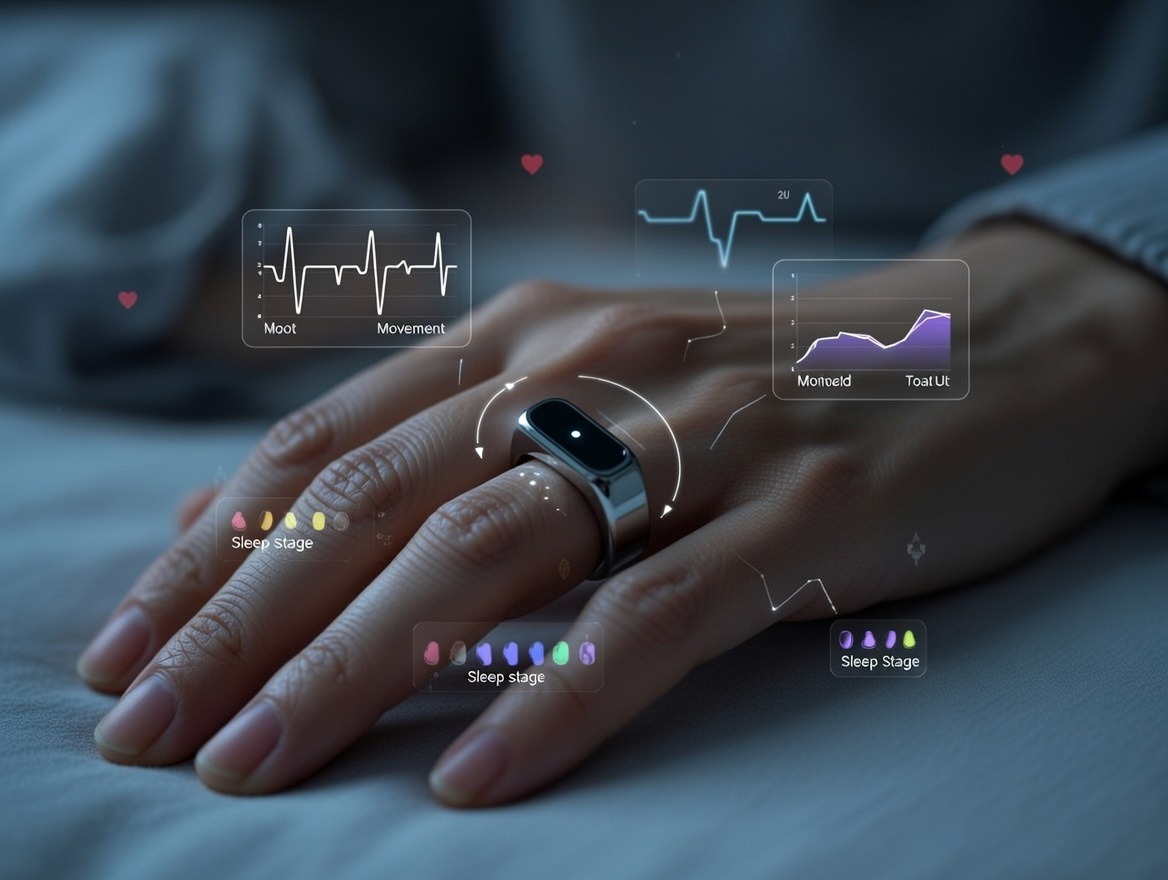
This is the revolutionary power hidden in the continuous data from your wellness ring. It’s not just a sleep tracker or a step counter; it’s a high-resolution lens focused on your body’s most fundamental currency: energy. By translating subtle physiological whispers—heart rate variability (HRV), skin temperature, resting heart rate, and movement—into a clear narrative, it exposes the hidden patterns and quiet mistakes that sabotage our days.
We are remarkably poor at subjectively gauging our own internal states. We override tiredness with adrenaline, mistake dehydration for hunger, and confuse chronic stress for normalcy. Your wellness ring cuts through this noise with objective, biometric truth. It reveals the gap between how you think you manage your energy and how your body is actually experiencing it.
In this exploration, we will delve into eight critical daily energy management mistakes that your ring’s data is likely exposing right now. These aren’t failures of character, but blind spots in our modern lives. By learning to read this biometric story, you can move from reactive energy crisis management to proactive energy cultivation, building days that feel sustainably vibrant, focused, and resilient.

Before we dive into the specific mistakes, it’s crucial to understand the foundational flaw in most personal energy management: we rely on subjective feeling, which is often misleading. Our conscious perception of energy is a lagging indicator, a final report filed long after the bodily events that created it.
Think of your body’s energy system like a sophisticated national grid. Your conscious mind is the resident in one house, only aware of whether the lights are on or off. Your wellness ring, however, is the central monitoring station for the entire grid. It sees the power surges, the inefficiencies at specific substations, the slow drain on certain lines, and the periods of peak demand that strain the system.
This is the core concept of body awareness—but supercharged with data. True awareness isn’t just a vague sense of being tired; it’s the ability to connect specific inputs (like a poor night's sleep, a stressful meeting, or a late meal) to precise physiological outputs (like a depressed HRV or elevated resting heart rate). As we explore in our guide on how smart rings teach body awareness through data, this technology acts as a real-time feedback loop, helping you calibrate your internal senses.
For generations, we’ve been disconnected from our body’s language. Your ring is the translator. It takes metrics like a sudden dip in your nocturnal heart rate dip (a key marker of nervous system recovery) or a subtle elevation in your skin temperature (which can signal inflammation or an impending illness) and presents them as clear, actionable insights. It’s the difference between knowing you’re “run down” and knowing that your body failed to enter deep restorative sleep phases for the third night in a row following your late-evening workouts.
This objective data is the key to moving from guesswork to strategy. Let’s begin by looking at the first and perhaps most common mistake your data is shouting about.
You’ve heard of the circadian rhythm—the body’s roughly 24-hour internal clock. But most of us treat it as a generic concept: “be consistent with sleep.” Your wellness ring data reveals a far more personal truth: you have a unique Circadian Code, and violating it is one of the fastest ways to drain your energy reserves systematically.
Your ring tracks this code through a symphony of metrics:
The Data-Driven Story of Disruption:
Imagine your data shows a pattern: your nighttime HRV remains suppressed, your skin temperature drop is minimal and delayed until 2 AM, and your morning resting heart rate is 8-10 BPM higher than its baseline. Subjectively, you might say, “I have trouble falling asleep.” Objectively, your ring is reporting: “Your body’s signal for sleep onset is being systematically ignored. Your system is stuck in a low-grade ‘fight or flight’ mode all evening, preventing the cellular repair and metabolic reset that should be happening now.”
This isn’t about being a “night owl” or “early bird” in a societal sense. It’s about identifying your body’s ideal windows for deep work, social activity, physical training, and winding down. Forcing intense cognitive work during your body’s natural afternoon dip (visible in a rising RHR and falling HRV) is like trying to sprint uphill in mud. You’ll expend three times the energy for half the result.
The Energy Fix:
Stop fighting a generic schedule. Use your ring’s historical data to map your unique code over 2-3 weeks.
By aligning your life with your personal circadian code, you stop wasting energy fighting your biology and start riding its natural waves of vitality.
In our high-performance culture, we often wear stress like a badge of honor. We push through fatigue, ignore tension, and mistake a constantly elevated nervous system for productivity. Your wellness ring serves as an impartial judge, clearly distinguishing between productive stress (eustress) and destructive, unrecovered strain. It exposes the critical mistake of conflating “being busy” with “being effective,” and it does so through one paramount metric: Heart Rate Variability (HRV).
HRV is your body’s most honest communicator about the balance between your sympathetic (“fight or flight”) and parasympathetic (“rest and digest”) nervous systems. A higher HRV generally indicates better resilience and recovery capacity. A lower or trending-downward HRV is a flashing dashboard light warning of accumulated stress and inadequate recovery.
The Data-Driven Story of Strain:
Consider this scenario: You’re “crushing it” at work, putting in 12-hour days and intense workouts. You feel amped, even if tired. But your ring data tells a different story:
Subjectively, you feel “in the zone.” Objectively, your body is filing a formal complaint: “The stress load you are applying is exceeding my capacity to repair. I am compensating by keeping the emergency systems partially engaged at all times, which is energetically expensive and unsustainable.” You are running a debt on your energy account, and the interest compounds daily.
This is where moving from vague body awareness to recognizing stress signals early becomes a superpower. Your ring quantifies the vague feeling of “being fried.”
The Energy Fix:
Treat HRV and resting heart rate as your daily energy balance sheet.
Learning to obey the “recovery signals” from your data prevents the boom-and-bust energy cycles that leave you chronically depleted.
Water is fundamental to every cellular process that generates energy. Even mild dehydration—far before you feel thirsty—can impair cognitive function, increase perceived effort, and destabilize mood. Yet, we often mistake these signals for hunger, fatigue, or simple irritability. Your wellness ring exposes this mistake through subtle but telling patterns in your cardiovascular data.
While no consumer wearable directly measures hydration, it provides powerful proxies:
The Data-Driven Story of Thirst:
You have a long, meeting-heavy afternoon. You drink coffee in the morning and maybe a glass of water with lunch. By 3 PM, you’re struggling to focus, have a slight headache, and feel sluggish. You might reach for a snack. But your ring data from that afternoon might show a heart rate that’s 10-15 BPM higher than usual during sedentary activity and a lower-than-average HRV reading in the hours post-lunch.
Your body wasn’t craving calories; it was desperately signaling for water to maintain basic metabolic and cognitive function. You misinterpreted the signal, leading to an energy dip. This is a classic example of a gap in understanding your body's basic language, which technology can help bridge.
The Energy Fix:
Use your ring’s data to build a hydration hypothesis.
By connecting hydration to objective data, you move from reactive thirst-quenching to proactive hydration strategy—a simple shift with profound effects on steady-state energy.
We’re good at identifying the big energy vampires: a horrible night’s sleep, a flu, an intense workout. But your wellness ring is exquisitely sensitive to the cumulative toll of “micro-stressors”—the small, frequent irritants that keep your nervous system in a state of low-grade alert. These are the silent energy leaks that, over a day, can drain your battery as much as one major event.
What counts as a micro-stressor?
Your ring detects these through acute, short-term physiological shifts:
The Data-Driven Story of the Death by a Thousand Cuts:
Your day looks “fine” on paper. But your heart rate chart looks like a rocky mountain range—dozens of small, sharp peaks throughout the day. Each peak represents a micro-stressor. While each one alone may be manageable, the cumulative effect is a nervous system that never gets a true break. It’s like revving your car engine at stoplights all day long; by evening, you’ve wasted a tremendous amount of fuel (energy) without having gone anywhere meaningful.
This pattern directly erodes your resilience, making you more susceptible to the next stressor and impairing your sleep quality, which we’ll explore next. Learning to spot these patterns is a key body-awareness skill for preventing chronic stress and illness.
The Energy Fix:
Become a curator of your nervous system’s daily experience.
By minimizing these micro-drains, you preserve vast amounts of mental and emotional energy for what truly matters.

This is one of the most pervasive myths in wellness: “I got my 8 hours.” Your wellness ring shatters this oversimplification by revealing the complex architecture of your sleep. You can be unconscious for 8 hours yet barely touch the deep, restorative stages your brain and body desperately need for energy renewal. Mistaking time in bed for quality sleep is a catastrophic energy management error.
Your ring analyzes sleep through multiple biometric layers:
The Data-Driven Story of Empty Sleep:
You go to bed at 11 PM and wake at 7 AM—8 hours. You feel okay. But your sleep report shows:
Subjectively, you “slept.” Objectively, your body’s report card reads: “Inefficient. Failed to complete critical repair (Deep Sleep) and memory/emotional processing (REM) cycles. Nervous system remained overly active. You will be operating at a deficit today.” This deficit manifests as sugar cravings, poor focus, emotional reactivity, and low physical energy.
Improving this requires moving beyond just bedtime and into the realm of understanding the deep sleep-body connection that your ring illuminates.
The Energy Fix:
Optimize for sleep output (data), not just sleep input (time in bed).
By chasing sleep quality metrics, you ensure those hours in bed are actually depositing energy into your account, not just pausing the withdrawal.
Nutrition is energy logistics. Yet, we often eat based on clock time, social cues, or emotional cravings, completely divorced from our body’s actual metabolic state. Your wellness ring provides a non-invasive window into how your food choices and their timing impact your energy systems, exposing mistakes like eating too late, consuming inflammatory foods, or mis-timing carbohydrates.
The ring detects these nutritional impacts primarily through:
The Data-Driven Story of a Late-Night Bite:
You have a business dinner at 8 PM. You eat a rich meal and have a dessert. You go to bed at 11 PM, thinking, “It’s fine, I’ll sleep it off.” Your night’s data shows: your heart rate, instead of dipping to its usual 52 BPM, plateaus at 65 BPM all night. Your HRV is 25% lower than average. Your skin temperature is elevated. Your sleep stage data shows restless light sleep and little Deep or REM.
The next day, you feel puffy, tired, and sluggish. The ring’s data explains why: your body spent the night in a state of digestive labor and metabolic stress, not in restoration. You started the new day with an energy debt. This experience is a direct lesson in understanding the gut-brain awareness connection that drives so much of our daily vitality.
The Energy Fix:
Use your overnight recovery metrics as a food diary feedback mechanism.
By letting your recovery data guide your fueling strategy, you ensure food becomes a source of sustained energy, not a nightly tax on your system.
Exercise is a paradoxical energy investment: you expend energy to build more capacity. But done incorrectly—at the wrong time, intensity, or volume—it becomes a net drain. The fitness world is full of generic advice (“just do 30 minutes a day!”), but your wellness ring provides a personalized report card on how your body actually responds to movement, exposing mistakes in workout timing, intensity, and recovery.
Key metrics for exercise analysis:
The Data-Driven Story of Overtraining:
You’re committed to fitness. You do high-intensity interval training (HIIT) 5 days a week. You feel perpetually sore and a bit flat, but you push through. Your ring data, however, shows a alarming trend: your nightly HRV has been on a steady decline for three weeks. Your morning RHR is 8-10 BPM above baseline. Your sleep quality scores are dropping. You are constantly in a “strained” or “recovery” state according to your app.
Subjectively, you’re “working hard.” Objectively, your body is screaming: “You are not recovering from the stress you are applying. We are breaking down, not building up. This is unsustainable.” You are withdrawing more energy from the recovery bank than you are depositing with sleep and nutrition. This is where an objective body awareness approach to exercise and movement is critical to avoid burnout.
The Energy Fix:
Let your daily readiness guide your exertion, not your calendar.
By making movement responsive to your body’s daily readiness signals, you ensure exercise is an energy generator, not an energy predator.
Our final mistake is the meta-mistake: treating the body as a machine separate from the mind. Anxiety, rumination, negative self-talk, and unresolved emotional states are not just “in your head”—they are profound drivers of physiological stress that your wellness ring measures with perfect objectivity. Ignoring this feedback loop means you might be medicating a physiological symptom (elevated heart rate, poor sleep) while ignoring its psychological cause.
The ring captures the somatic footprint of mental states:
The Data-Driven Story of Worry:
You have a big presentation tomorrow. You spend the evening mentally rehearsing and worrying. Subjectively, you feel “nervous.” Your ring data from that evening shows your heart rate hovering 15 BPM above your normal relaxing rate. Your HRV is in the tank. Your sleep that night is fragmented with high resting heart rate. The next morning, your readiness score is in the red.
The presentation itself was a 30-minute event, but the anticipatory stress levied a 12-hour tax on your nervous system. This is the cost of an unmanaged mind-body loop. Learning to see this connection is the essence of developing emotional and somatic awareness.
The Energy Fix:
Use your biometric data to prove the power of psychological interventions.
By closing the mind-body loop, you stop the invisible drain of mental chatter and emotional turbulence, freeing up massive reserves of focused, calm energy.
We’ve explored eight critical mistakes, each illuminated by the unbiased data from your finger. But information without application is just noise. The final step is to synthesize these insights into a Personal Energy Protocol—a dynamic, living set of guidelines informed by your unique biometric feedback.
This is not about creating a rigid, oppressive schedule. It’s about developing a flexible framework that allows you to make empowered choices in real-time. Think of it as your body’s user manual, written in collaboration with your wellness ring.
Start with the Foundation: Sleep and Circadian Alignment.
Your daily energy potential is set the night before. Use your sleep quality data (Deep/REM sleep, HRV, RHR dip) to non-negotiably protect and optimize your wind-down routine and sleep environment. This is the bedrock. Align your waking activities with your personal circadian code, scheduling demanding work during your biometric peak and respecting the natural afternoon dip.
Layer in Strategic Stress and Recovery Management.
Use your HRV and RHR trends as your guide. A rising HRV trend grants you permission to strategically push—in work, relationships, or fitness. A falling trend is a mandate to pull back, prioritize recovery, and say “no.” Become adept at spotting and buffering micro-stressors with micro-recoveries. This builds resilience.
Fuel and Move with Intention.
Let your overnight recovery metrics guide your nutritional experiments, particularly around meal timing. Use your morning readiness score to decide the day’s movement prescription—not the day of the week. Remember, the goal of exercise is to elevate your baseline energy, not deplete it.
Close the Loop with Awareness.
Finally, use the data to deepen your mind-body connection. Let a spike in heart rate be a cue for a breath, not just a statistic. Prove to yourself the physiological power of calm. This transforms your ring from an external tracker into an integrated part of your journey to trusting your body's innate wisdom.
Your protocol will evolve. What works in summer may shift in winter. Stress at work will change your needs. The power lies in having a responsive system—your ring and your growing self-awareness—to continuously adapt.
Exposing these eight mistakes is just the beginning. The true journey is one of deepening curiosity and refinement. As you master these fundamentals, your awareness will sharpen. You’ll start to notice more subtle patterns: how your menstrual cycle phases affect your temperature and recovery, how different types of travel impact your nervous system, or how specific social interactions fuel or drain you.
This path leads to a profound shift: from managing energy crises to cultivating energy abundance. It moves you from being a passive passenger in your body to becoming its skilled pilot, with a full dashboard of reliable instrumentation. You stop blaming “a lack of willpower” for afternoon slumps and start understanding the precise, actionable levers you can pull to design a life that feels sustainably energized, focused, and vibrant.
The data from your ring is the map. Your willingness to observe, experiment, and act is the compass. The destination is a more energized, resilient, and intentional you.
You’ve identified the eight fundamental leaks in your daily energy system. Armed with this knowledge, you begin to adjust: you eat earlier, you respect your sleep data, you watch your HRV. Yet, something still feels incomplete. The data shows improvement, but you sense there are deeper currents at play—subtle, interconnected patterns that a surface-level fix can’t address.
This is where the journey from basic energy management to true energy mastery begins. Your wellness ring’s data doesn’t just expose discrete mistakes; it reveals a hidden architecture, a complex web of physiological systems that influence each other in profound ways. To build a truly resilient and abundant energy base, we must move beyond plugging leaks and start reinforcing the foundational pillars themselves.
In this next phase of exploration, we’ll uncover three deeper, systemic patterns your data is hinting at and introduce the advanced practices that allow you to harness them. These are not mistakes in the traditional sense, but sophisticated blind spots in our understanding of how human energy is generated, stored, and deployed. Addressing them transforms your protocol from a defensive strategy into an offensive, life-enhancing blueprint.
The first advancement in understanding comes from shifting your perspective. It’s tempting to look at each metric in isolation: “My HRV is low today,” or “My sleep was restless.” But your body does not operate in silos. Your nervous system, immune system, digestive system, and endocrine system are in constant, dynamic conversation. Your ring’s true genius lies in its ability to show you the connections between these systems.
For example, a single night of poor sleep (nervous system stress) doesn’t just make you tired. It can:
Your ring data captures the downstream effects of this cascade. You’ll see the poor sleep score, followed by a higher daytime resting heart rate, potentially a higher skin temperature (suggesting inflammation), and a lower HRV during your afternoon meditation attempt.
The mistake here is treating each data point as its own problem with its own solution. The mastery is in learning to see the primary driver. Was the poor sleep caused by late eating (digestive system), an anxious mind (nervous system), or an overly intense workout (muscular/immune system)? The pattern of data across metrics points the way.
This is the art of biometric synthesis. It’s about asking: “What story are these metrics telling together?” Developing this skill is the logical next step after mastering the basics of understanding your body's individual signals.
Inflammation is the body’s natural healing response. But low-grade, chronic inflammation—often silent and symptomless—is a massive and stealthy energy thief. It forces your immune system to remain perpetually on low-grade alert, an energetically expensive state that diverts resources from other functions like brain power, muscle repair, and cellular renewal.
Your wellness ring can be an early-warning system for this cycle through two key, correlated metrics:
The Data-Driven Story of Silent Inflammation:
You feel generally “achy and fatigued” but can’t pinpoint why. Your workouts feel harder, recovery takes longer, and brain fog is common. You check standard blood work, and it’s “normal.”
Your ring data over the past month, however, shows:
This constellation of data paints a picture not of acute illness, but of a chronic, low-grade inflammatory load. The causes could be dietary (sensitivities, high sugar intake), lifestyle (chronic stress, poor sleep hygiene), environmental (toxins, allergens), or even from overtraining. The energy drain comes from your body constantly fighting a silent war. Learning to interpret this is a powerful body-awareness skill for detecting illness early.
The Mastery Practice: The Anti-Inflammatory Reset Protocol
When you spot this pattern, it’s time for a targeted reset.
By using your ring to identify and address silent inflammation, you plug one of the largest and most insidious drains on your long-term energy reserves.
We’ve discussed HRV as a marker of recovery and stress. At a deeper level, HRV—and specifically its pattern—is a direct measure of your Autonomic Nervous System (ANS) flexibility. Your ANS has two main branches: the sympathetic (gas pedal) and parasympathetic (brake). Health and resilience are not about being in one state or the other, but about having a highly adaptable system that can shift states powerfully and efficiently when needed.
ANS Rigidity is when this system becomes stuck or sluggish. It manifests in two ways:
Your ring exposes rigidity not just through static numbers, but through responsiveness.
The Data-Driven Story of a Stuck System:
You’ve been under prolonged work stress. You now feel numb and chronically tired. You try to exercise, but your performance is poor. You look at your data:
This isn’t just burnout; it’s a sign of a nervous system that has down-regulated into a rigid, conservation state. It’s given up on mounting appropriate responses. This level of insight moves far beyond simple stress tracking into the realm of understanding the intricate mind-body connection at a physiological level.
The Mastery Practice: Nervous System “Cross-Training”
The goal is to rebuild flexibility, not just force relaxation.
By training for nervous system flexibility, you build an energy system that can meet intense demands and then fully, quickly recover—the hallmark of true resilience.
You know the feeling of a “light” workout that leaves you wiped for days, or a “hard” day that doesn’t seem to impact your data. This mismatch between what you feel and what your body is actually experiencing is a major blind spot. Your subjective perception of exertion (how hard something feels) can be wildly influenced by mood, caffeine, music, or motivation. Your ring’s physiological data provides the ground truth.
This mismatch manifests in critical ways:
The Data-Driven Story of Deceptive Effort:
It’s a busy workday with back-to-back Zoom calls. You’re sitting all day. By 5 PM, you feel mentally drained but physically fine. You force yourself to the gym for a HIIT class because “it’s on the schedule.” You get through it, fueled by caffeine and willpower.
The next morning, your data is a disaster: your resting heart rate is through the roof, your HRV has crashed, and your readiness score is in the red. Why? The physiological cost of the high-stress workday (visible in a higher-than-normal daytime heart rate average you ignored) was already high. Layering intense physical stress on top was the final straw. Your perceived exertion of the workday (“just sitting”) was low, but its physiological exertion was high.
Learning to calibrate your perception with this data is a foundational body-awareness skill that improves all outcomes.
The Mastery Practice: Calibrating Your Internal Gauge
Use your ring to re-calibrate your sense of “effort” and “recovery.”
By aligning perception with physiology, you ensure your energy expenditures are intelligent investments, not wasteful drains.
Spotting these deeper patterns is transformative, but the ultimate goal is integration. You must learn to conduct a weekly 360-Degree Energy Audit, where you synthesize all layers of data—the basic mistakes, the systemic patterns, and your personal life context—into a coherent narrative about your energy capital.
This is not a tedious data review. It’s a strategic planning session with your most trusted advisor: your own body’s objective data.
The Audit Process:
From this audit, you set your Energy Intentions for the coming week. Not rigid goals, but flexible focuses:
This process turns data into wisdom and wisdom into empowered, personalized action.
The final frontier of using your wellness ring is moving from reactive and adaptive management to predictive energy management. This is where you use your historical data and growing self-awareness to forecast your energy needs and proactively design your life to meet them.
Your ring’s data holds predictive clues:
The Predictive Protocol in Action:
You check your data on a Sunday night. You see a slight but consistent elevation in your sleeping heart rate over the past three nights and a dip in HRV. Your calendar shows a critical, high-stakes project week ahead.
You are not waiting for the storm to hit; you are reinforcing the roof based on the barometric pressure drop your ring detected. This is the pinnacle of using smart ring feedback to build unshakeable body awareness habits.
Mastering your energy is not a destination with a finish line. It is an ongoing, fascinating dialogue with yourself, facilitated by technology and guided by curiosity. The mistakes your ring exposes are not judgments; they are invitations. The deeper patterns are not diagnoses; they are maps to richer territories of well-being.
As you progress, your relationship with the data changes. You become less a slave to the daily score and more a connoisseur of the long-term trend. You learn to act on the data with compassion, not rigidity. The ring becomes less of a “tracker” and more of a trusted partner in your lifelong project of crafting a vital, engaged, and resilient life.
You began by plugging leaks. Now, you are designing the entire irrigation system for your personal garden of vitality. The water—your energy—flows more abundantly, to the places that need it most, allowing everything to flourish.
You have navigated the landscape of common mistakes and descended into the depths of systemic patterns. You possess the knowledge to plug leaks and reinforce foundations. Yet, a final, crucial transformation remains: moving from a mindset of energy management to one of energy alchemy. This is the art of not merely conserving your existing resources, but of actively transforming your daily habits, environment, and even challenges into sources of renewable vitality. Your wellness ring is the crucible where this transformation is measured and proven.
This stage is about empowerment and personalization. It’s where you stop following generic wellness advice and start engineering a life that feels uniquely energizing to you, using objective data as your blueprint. We will explore three advanced frameworks for energy alchemy and address the subtle psychological traps that can arise when living closely with data. This is the content that separates those who track their metrics from those who are fundamentally transformed by them.
A manager operates from scarcity, constantly allocating a limited budget. An alchemist operates from abundance, believing in the possibility of transformation and generation. With your ring data, you have the tools to make this shift tangible.
The scarcity mindset sees a low HRV score and thinks, “I’m depleted. I have nothing to give.” The alchemist mindset sees the same score and thinks, “My body is signaling a need for specific restoration. What transformation can I perform today to convert this signal into future resilience?” The data is not a verdict; it’s the first ingredient in a formula.
This requires reframing every metric as feedback for an experiment, not as a grade. A poor night’s sleep isn’t a failure; it’s data on the efficacy of your evening protocol. A high stress score after a social event isn’t bad; it’s insight into what types of interaction are draining versus fueling for your unique physiology. This experimental, curious mindset is the cornerstone of developing a profound, data-validated body awareness.
Sophisticated financial advisors preach portfolio diversification to manage risk and ensure growth. Your energy is your most valuable asset, and the same principle applies. Relying on a single source of energy renewal (e.g., just sleep, or just coffee) is high-risk. Your ring data helps you build a diversified portfolio of energy-generating activities across four key asset classes:
1. The Physical Asset (Body): Investments here yield returns in stamina, strength, and cellular energy (ATP) production.
2. The Mental Asset (Mind): Investments here yield returns in focus, clarity, and cognitive endurance.
3. The Emotional Asset (Heart): Investments here yield returns in resilience, motivation, and psychological safety.
4. The Spiritual Asset (Purpose): Investments here yield returns in meaning, direction, and stress resilience.
The Alchemical Practice: The Weekly Portfolio Rebalance
Each Sunday, review your data not just for deficits, but for the balance of your deposits.
We’ve discussed using data for review. Biofeedback loop mastery is about using data in real-time to consciously steer your physiological state. Your wellness ring, especially when paired with a app that offers real-time heart rate or HRV visibility, becomes a powerful biofeedback device.
The principle is simple: You can consciously influence your autonomic nervous system, but you need feedback to know if you’re succeeding. The ring provides that feedback, turning an abstract practice into a precise skill.
Application 1: Real-Time Stress Interruption
You feel anxiety rising before a presentation. You glance at your ring’s companion app and see your heart rate at 95 BPM and climbing.
Application 2: Optimizing the Work-Recovery Cycle (The Pomodoro 2.0)
The classic Pomodoro Technique uses a timer. The biofeedback version uses your physiology.
Application 3: Sleep Onset Engineering
You get into bed but your mind is racing.
This mastery turns your ring from a passive recorder into an active tool for moment-to-moment self-regulation.
You now understand your circadian code and your energy portfolio. Contextual Energy Budgeting is the tactical application: planning your days and weeks not by the clock alone, but by aligning your energy demands with your predictable energy supply.
This involves creating different “budget templates” for different types of days, informed by your historical data.
Template A: The Deep Focus Day (Your Peak Cognitive Day)
Template B: The Social Connection Day
Template C: The Recovery & Integration Day
By planning your life with these templates, you work with your physiology, not against it. This is the practical application of understanding your body's specific needs and signals.
As you become adept at energy alchemy, you must be vigilant of the psychological shadows that can emerge. Data is a tool, not a tyrant. The goal is empowerment, not obsession.
Pitfall #1: Metric Myopia (Losing the Forest for the Trees)
Pitfall #2: The Suppression of Intuition
Pitfall #3: Rigidity and Loss of Spontaneity
Pitfall #4: Comparative Despair
Mastering energy alchemy means mastering your relationship with the tool itself. It must serve your humanity, not diminish it.
What does life look like when you integrate all of this—when you move from fixing mistakes to understanding patterns to practicing daily alchemy?
It looks like resilience. You encounter a stressor, and instead of being derailed for days, you have a toolkit and the data to guide a efficient recovery. You understand the cost, and you know how to pay it back.
It feels like agency. You no longer feel like a passive victim of your energy levels. You have levers to pull. You know that if you are feeling a certain way, there are investigable, physiological reasons and actionable paths to change.
It sounds like compassion. You stop berating yourself for being tired. You learn to listen to the data as a form of your body communicating its needs. You respond with nurturing action, not frustration.
This is the ultimate transformation your wellness ring facilitates: a shift from being externally driven by schedules and demands to being internally guided by wisdom—a wisdom validated by objective data. You become the author of your energy narrative.
The journey never truly ends, because you are a dynamic, living system. Your needs at 30 are different from your needs at 45 or 60. Your data will evolve, and your protocols will adapt. But the skill—the ability to engage in this compassionate, curious, data-informed dialogue with your own vitality—is permanent. It is the foundation for a life not just of longevity, but of enduring vibrancy.
You are no longer just managing energy. You are alchemizing your daily choices, your challenges, and your experiences into the gold of a life fully lived and fully energized.
Your Trusted Sleep Advocate: Sleep Foundation — https://www.sleepfoundation.org
Discover a digital archive of scholarly articles: NIH — https://www.ncbi.nlm.nih.gov/
39 million citations for biomedical literature :PubMed — https://pubmed.ncbi.nlm.nih.gov/
Experts at Harvard Health Publishing covering a variety of health topics — https://www.health.harvard.edu/blog/
Every life deserves world class care :Cleveland Clinic - https://my.clevelandclinic.org/health
Wearable technology and the future of predictive health monitoring :MIT Technology Review — https://www.technologyreview.com/
Dedicated to the well-being of all people and guided by science :World Health Organization — https://www.who.int/news-room/
Psychological science and knowledge to benefit society and improve lives. :APA — https://www.apa.org/monitor/
Cutting-edge insights on human longevity and peak performance:
Lifespan Research — https://www.lifespan.io/
Global authority on exercise physiology, sports performance, and human recovery:
American College of Sports Medicine — https://www.acsm.org/
Neuroscience-driven guidance for better focus, sleep, and mental clarity:
Stanford Human Performance Lab — https://humanperformance.stanford.edu/
Evidence-based psychology and mind–body wellness resources:
Mayo Clinic — https://www.mayoclinic.org/healthy-lifestyle/
Data-backed research on emotional wellbeing, stress biology, and resilience:
American Institute of Stress — https://www.stress.org/


