


The Beginner-Friendly Guide to Building a Healthy Lifestyle: How Your Smart Ring Tracks Progress
A beginner's guide to improving your lifestyle, using your smart ring's data to track your progress.
A beginner's guide to improving your lifestyle, using your smart ring's data to track your progress.
%402x.svg)
You wake up, reach for your phone, and check the numbers. Sleep Score: 78. Readiness: 73. Resting Heart Rate: 58 bpm. A decade ago, these metrics would have required a lab, a white coat, and a hefty bill. Today, they’re delivered silently to your wrist—or more discreetly, to your finger—by a piece of technology you barely notice. The pursuit of health has transformed from a vague aspiration into a quantified, personalized journey. Yet, for the beginner, this explosion of data can feel less like a map and more like a tangled web of confusing signals. What do these numbers mean? More importantly, how do you translate them into a sustainable, healthy life you actually enjoy?
This is the central paradox of modern wellness: we have more information about our bodies than ever before, but often lack the fundamental framework to use it. Building a healthy lifestyle isn’t about chasing a perfect score or punishing yourself for a "bad" day of data. It’s about understanding the subtle, interconnected language of your body and creating supportive habits that compound over time. It’s a gentle, evidence-based progression, not a brutal overhaul.
Enter the smart ring: the quiet, continuous, and deeply personal health companion. Unlike wrist-worn devices that can be bulky and socially conspicuous, a smart ring operates in the background, gathering a rich tapestry of data while you live your life. It tracks your sleep with clinical-grade precision, monitors your heart rate and heart rate variability (HRV) around the clock, senses your temperature fluctuations, and even maps your movement and activity. It’s not just a fitness tracker; it’s a 24/7 biometric watchdog.
This guide is your decoder ring for that data. We’ll move beyond the overwhelm and build your healthy lifestyle from the ground up, using the insights from your smart ring not as a judgmental scorecard, but as a compassionate guide. We’ll start with the non-negotiable foundation—sleep—and then systematically explore nutrition, movement, recovery, and mindset. At every step, you’ll learn exactly how your smart ring illuminates your progress, spots your blind spots, and validates your successes. This is the beginner-friendly blueprint for turning intention into transformation, with your smart ring as your most trusted advisor.
Let’s begin.

The typical health advice narrative sounds like a demolition project: "Overhaul Your Life in 30 Days!" "Completely Transform Your Body!" This approach is not only intimidating but fundamentally flawed. It’s based on a shock-and-awe strategy that triggers our body’s stress responses and our mind’s resistance. We white-knuckle our way through a restrictive diet and punishing workouts, only to find ourselves exhausted, miserable, and inevitably sliding back to old patterns. The "all-or-nothing" mentality is the single greatest reason why New Year’s resolutions fail by February.
Building a healthy lifestyle, in contrast, is an architectural endeavor. You start with a solid foundation, then carefully add supportive structures, one brick at a time. It’s incremental, it’s mindful, and it’s designed to last. This philosophy aligns perfectly with how our brains form habits—through repetition, reward, and gradual integration into our identity. You’re not becoming a different person; you’re upgrading the systems of the person you already are.
This is where objective data becomes your most powerful ally. Without it, you’re guessing. You might feel tired, but is it from poor sleep, nutritional deficiency, dehydration, or stress? You might feel like you had an active day, but did you achieve the right balance of movement and rest for your body’s current needs? Subjective feeling is important, but it’s easily clouded by mood, expectations, and the chaos of daily life.
Your smart ring cuts through the noise. It provides an unbiased, physiological report card. It can tell you that despite sleeping 8 hours, your deep sleep was severely disrupted (likely explaining your fatigue). It can show that your resting heart rate is elevated for the third morning in a row, a potential early sign of illness or overtraining. This data shifts the conversation from self-criticism ("I’m so lazy today") to curious problem-solving ("My body is showing signs of strain; what do I need to provide it?").
The goal is not to become a slave to the data, but to use it to foster a deeper, more intuitive connection with yourself. Over time, you’ll start to notice the correlations: "Ah, when my HRV is high, I feel more resilient to stress." or "I see that on days after I eat late, my sleep score drops." The smart ring accelerates this learning process, turning years of vague self-awareness into months of precise understanding. It transforms health from a mystery into a manageable, buildable project—one small, smart step at a time.
Before we can build, we need to understand our tools. Your smart ring is a sophisticated biotracker, but its output is a set of key metrics. Think of these as the gauges on your body’s dashboard. You don’t need to be a mechanic to drive a car, but knowing what the fuel gauge, speedometer, and check-engine light mean is essential for a safe, efficient journey. Let’s break down these core biometrics.
Sleep Stages & Sleep Score: This is far more than just tracking hours in bed. Using a combination of accelerometry, heart rate variability, and pulse oximetry, your ring distinguishes between light sleep, deep sleep (slow-wave sleep), REM (dream) sleep, and awake periods. Each stage has a critical function: deep sleep is for physical restoration and immune function, while REM sleep is for memory consolidation and emotional processing. Your ring synthesizes this data—along with factors like sleep duration, timing, and restlessness—into an overall Sleep Score. This single number is a powerful benchmark for your nightly recovery. A consistent high score indicates you’re giving your body the restorative rest it needs. A low score is a clear signal to investigate your nighttime wellness routine.
Resting Heart Rate (RHR): Measured typically during your deepest sleep or first thing upon waking, this is the number of times your heart beats per minute at complete rest. A lower RHR generally indicates more efficient cardiovascular fitness and stronger parasympathetic ("rest-and-digest") nervous system activity. Your smart ring tracks your personal baseline. A sustained upward trend can be an early warning sign of stress, illness, dehydration, or insufficient recovery.
Heart Rate Variability (HRV): This is the gold standard metric for measuring your body’s resilience and readiness. HRV is the subtle variation in time between each heartbeat. Contrary to intuition, a higher HRV is better—it means your autonomic nervous system is flexible and can adapt to stress effectively. A low or dropping HRV suggests your system is under strain, whether from physical, mental, or emotional load. It’s your body’s most honest "How are you really?" signal. Tracking HRV trends helps you decide: is today a day to push hard in a workout, or to prioritize gentle movement and recovery?
Body Temperature (Skin Temperature): Your ring measures subtle shifts in your peripheral skin temperature. A significant deviation from your personal baseline, especially a sustained elevation at night, can be one of the earliest indicators of oncoming illness, hormonal changes, or a reaction to overexertion. It’s a profoundly personal metric that highlights your unique physiological patterns.
Activity & Movement: Beyond simple step counts, advanced rings use a 3-axis accelerometer to gauge your overall movement patterns throughout the day—including periods of inactivity. This helps paint a picture of your Non-Exercise Activity Thermogenesis (NEAT), the calories you burn from fidgeting, walking, and general daily movement, which is a huge component of total energy expenditure.
Blood Oxygen Saturation (SpO2): While not a medical-grade device, the ring’s pulse oximeter can track trends in your blood oxygen levels during sleep. Significant, consistent dips could point to sleep disturbances and are valuable data to discuss with a healthcare professional.
Watching these metrics in concert is where the magic happens. Seeing a low Sleep Score coincide with a high resting heart rate and low HRV creates an undeniable, data-driven case for prioritizing rest. This objective feedback loop is what makes building a healthy lifestyle with a smart ring so effective for beginners—it replaces guesswork with guidance.
If building a healthy lifestyle is like constructing a skyscraper, sleep is the bedrock upon which everything else stands. You can have the most pristine nutrition and the most rigorous workout regimen, but without quality sleep, you are building on sand. Sleep is not passive downtime; it is an intense period of biological activity essential for every system in your body.
During deep sleep, your body releases growth hormone, which repairs tissues, builds muscle, and strengthens bones. Your brain flushes out metabolic waste products via the glymphatic system, a process crucial for long-term cognitive health and potentially lowering the risk of neurodegenerative diseases. Your immune system releases cytokines, proteins that help fight infection and inflammation. Poor sleep, therefore, directly impairs your physical recovery, weakens your immune defense, and muddies your mental clarity.
REM sleep, often called "emotional first aid," is where your brain processes the events and emotions of the day, solidifies memories, and fosters creativity. Deprive yourself of REM, and you may find yourself emotionally reactive, forgetful, and struggling with problem-solving.
This is why your smart ring’s sleep data is the most critical starting point. It answers the foundational question: Is my body getting the basic recovery it needs to function, let alone improve? A beginner’s first and most impactful health win is almost always improving sleep. It has cascading benefits: better energy for exercise, improved willpower and decision-making for nutrition, and a more balanced stress response.
Your ring provides the evidence to move sleep from a negotiable luxury to a non-negotiable pillar. Seeing a concrete Sleep Score of 65 after a night of poor sleep, compared to an 88 after a solid night, creates a tangible cause-and-effect relationship. You can start to experiment: What happens to my score if I stop screens 90 minutes before bed? What if I keep my room cooler? What if I establish a consistent wind-down ritual?
To truly master this pillar, understanding the science behind sleep quality is key. It transforms your approach from random tips to a strategic practice. By learning how specific behaviors influence your sleep architecture, you can create a personalized routine that reliably delivers deep, restorative rest. For a deep dive into the mechanisms, you can explore our article on the science-backed nighttime routine for better sleep.
Improving your sleep is the highest-leverage action you can take. It makes every other aspect of building a healthy lifestyle easier, more effective, and more sustainable.
Knowing sleep is important is one thing. Making it better is another. This is where you move from theory to practice, using your smart ring as both your guide and your proof of concept. Let’s build your personal sleep sanctuary with actionable steps.
Step 1: Establish Your Baseline. Wear your ring consistently for at least a week without making major changes. Observe your average Sleep Score, deep/REM sleep percentages, resting heart rate, and sleep timing. This is your starting line. Don’t judge it—just document it.
Step 2: Master Sleep Hygiene—The Non-Negotiables. These are environmental and behavioral factors proven to impact sleep. Implement them one by one and watch your data.
Step 3: Build a Wind-Down Ritual. A sudden stop from busyness to bed is jarring for your nervous system. Create a 30-60 minute buffer zone for relaxation. This could include:
For those with busy schedules, a realistic, time-efficient wind-down is crucial. You don’t need hours to signal to your body that it’s time to rest. Discover practical, short rituals in our guide on nighttime wellness rituals that take less than 30 minutes.
Step 4: Optimize Based on Data. After a week of implementing a new habit (e.g., no screens after 9 PM), check your ring’s data. Did your Sleep Score improve? Did your deep sleep increase? Did your resting heart rate trend lower? This biofeedback is incredibly motivating. It turns abstract advice into personal, proven fact.
If you’re struggling to make a routine stick, the problem is often in the design, not your willpower. Learn the behavioral science behind building a nighttime routine that actually sticks and transforms from a chore into an automatic, cherished part of your day by reading our dedicated resource on how to build a nighttime routine that actually sticks.
Remember, perfection is not the goal. The goal is progress. One night of poor sleep data is just a data point, not a failure. Look for the weekly and monthly trends. Is your baseline improving? That’s the true mark of building a solid foundation.
With a solid sleep foundation, we now turn to nutrition—the fuel for your machine. In the age of smart rings, nutrition tracking is evolving beyond tedious food logging and restrictive calorie counts. While mindfulness about what you eat is vital, your ring provides a powerful, complementary layer of data: it shows you how your body responds to the fuel you provide.
Nutrition is deeply personal. A diet that leaves one person energized might cause inflammation and brain fog in another. Your smart ring helps you uncover your unique nutritional needs by monitoring the downstream physiological effects of your food choices.
The Sleep-Nutrition Connection: This is one of the clearest correlations your ring will reveal. Pay close attention to how late-night eating affects your sleep data. A large meal close to bedtime forces your body to prioritize digestion over deep restoration, often leading to a lower Sleep Score, less deep sleep, and an elevated resting heart rate overnight. Your ring provides objective evidence to support the classic advice to finish eating 2-3 hours before bed.
Similarly, monitor how different types of evening snacks or alcohol impact your sleep architecture. You might see that even a single glass of wine in the evening, while it may help you fall asleep initially, severely suppresses your REM sleep and leads to a higher nighttime heart rate.
HRV as a Food Sensitivity Barometer: Heart Rate Variability is a fantastic proxy for systemic stress and inflammation. After eating a meal, observe your HRV trends over the following 12-24 hours. If you notice a consistent, significant dip in your HRV after consuming certain foods (e.g., dairy, gluten, processed sugars, or heavy, fried meals), it may indicate that those foods are creating an inflammatory or stressful response in your body. Conversely, meals rich in vegetables, healthy fats, and quality protein that align with your body often correlate with stable or even improved HRV.
Energy Levels & Macronutrient Balance: While your ring doesn’t track glucose directly, your activity and readiness scores post-meal can be telling. Do you experience an afternoon crash (visible in your movement data as a long period of inactivity)? It might be linked to a lunch high in refined carbohydrates. Pairing your subjective feeling of energy with your objective movement data can guide you toward a more balanced intake of protein, fats, and complex carbs for sustained fuel.
Hydration & Physiological Stress: Even mild dehydration can elevate your resting heart rate and lower your HRV, mimicking the signs of stress. Your ring can’t measure water intake, but if you see an unexplained uptick in RHR or a drop in HRV, one of the first and easiest interventions is to consciously increase your water intake and observe if the metrics normalize.
The goal here is to cultivate a mindful, investigative relationship with food. Use your ring’s data to move away from rigid, external diet rules and toward an intuitive understanding of what truly nourishes your unique body. It turns nutrition from a confusing set of commandments into a personal science experiment where you are both the researcher and the subject.

The word "fitness" often conjures images of grueling hour-long gym sessions, dripping sweat, and muscle soreness. For a beginner, this can be a daunting barrier. But what if fitness, in the context of building a sustainable healthy lifestyle, is simply about consistent, purposeful movement that supports your body’s needs? Your smart ring is the perfect tool to reframe fitness in this way.
The modern health crisis isn’t just a lack of structured exercise; it’s a pandemic of inactivity. We sit at desks, in cars, and on couches. Your smart ring’s activity tracking shines a light on this. It’s not just about hitting 10,000 steps; it’s about breaking up long periods of sedentariness. Many rings will gently notify you if you’ve been still for too long. This simple feedback is a powerful nudge to take a 5-minute walk, do some light stretching, or just stand up—actions that improve circulation, metabolism, and focus.
Using Readiness Scores to Guide Intensity: This is where smart rings truly revolutionize fitness. Instead of following a pre-set calendar (e.g., "Tuesday is leg day"), you can let your body’s daily readiness guide you. Check your ring’s composite readiness or recovery score (often based on sleep, HRV, and RHR) each morning.
Tracking Progressive Overload: When you do engage in dedicated exercise, your ring tracks the cardiovascular load. You can see your heart rate zones during a workout and the estimated calorie expenditure. Over weeks and months, you can observe a beautiful trend: for the same workout (e.g., a 3-mile run at a 9-minute/mile pace), your average heart rate begins to drop. This is concrete, quantifiable proof that your cardiovascular fitness is improving. Your heart is becoming a more efficient pump.
The 24-Hour Movement Picture: Ultimately, your ring helps you see fitness as a full-day endeavor. It values the 30-minute walk with a friend as much as the 30-minute spin class. It rewards you for taking the stairs and gardening. This holistic view is immensely freeing for beginners. It means every bit of movement counts, and your "fitness" is the sum of all these parts, guided by your body’s intelligent feedback.
In a culture that glorifies "hustle," the concept of deliberate recovery can feel counterintuitive, even lazy. But in the physiology of building a healthy body and mind, rest is not the opposite of work; it’s the necessary partner that makes work effective. You do not get stronger during the workout; you get stronger during the recovery after the workout, as your body repairs the microscopic damage and adapts. Your smart ring is the ultimate advocate for this critical phase, providing undeniable data that rest is a productive, active state.
Passive vs. Active Recovery: Recovery isn't just lying on the couch (though that has its place).
Your ring helps you distinguish between the two and understand when each is needed. A day after an intense leg day, a gentle walk (active recovery) might actually improve how you feel and help clear metabolic byproducts, which could be reflected in a less elevated RHR the next morning.
The Metrics of Recovery: Your smart ring quantifies recovery through several key lenses:
Scheduled Deloads: Even with perfect daily recovery, the body benefits from planned periods of reduced training volume, known as deload weeks. Every 4-8 weeks, depending on your intensity, plan a week where you reduce your workout volume or intensity by 40-60%. Watch your ring’s data during this week. You’ll likely see your HRV climb, your RHR drop, and your readiness scores soar. This sets you up for a new peak in performance in the following training block.
Mental and Emotional Recovery: Recovery isn’t just physical. Chronic mental stress activates the same physiological pathways as physical strain. A difficult work project or emotional conflict can depress your HRV just as effectively as a hard workout. Your ring doesn’t know the source of the stress, but it faithfully reports the physiological impact. This data gives you permission to prioritize mental recovery—through meditation, time in nature, digital detox, or hobbies—with the same seriousness as you would an ice bath for sore muscles. For individuals whose minds are constantly active, designing a wind-down ritual that addresses this is critical. Discover strategies in our guide on the nighttime wellness routine for anxious minds.
By honoring the data your ring provides on recovery, you break the cycle of chronic stress and perpetual fatigue. You learn to work with your body’s rhythms, not against them, creating a sustainable path where progress is not only possible but predictable.
Stress is not an abstract feeling; it is a measurable, physiological cascade. When your brain perceives a threat (be it a work deadline, a traffic jam, or an argument), it triggers the sympathetic nervous system—the "fight-or-flight" response. Hormones like cortisol and adrenaline flood your system, raising your heart rate, diverting blood flow, and tensing your muscles. In acute, short-lived doses, this is healthy and adaptive. The problem for modern humans is chronic, low-grade stress—the constant background hum of over-scheduling, digital overload, and societal pressure. This keeps the sympathetic nervous system subtly but persistently activated, eroding your health over time.
Your smart ring is a brilliant, objective stress detector because it measures the downstream effects of this nervous system activity.
Heart Rate Variability (HRV): The Stress Compass: As discussed, HRV is your most direct window into autonomic nervous system balance. High stress (sympathetic dominance) causes your heart to beat in a more rigid, metronomic pattern, lowering your HRV. A calm, relaxed state (parasympathetic dominance) allows for more variability between beats, raising your HRV. By tracking your HRV trends, you can see the physiological footprint of your stress load, even if you’ve become numb to feeling it subjectively.
Resting Heart Rate (RHR): The Stress Gauge: Chronic stress keeps your body in a state of heightened alert, which can manifest as a sustained elevation in your resting heart rate. If you see your RHR creeping up over several days without a change in exercise, it’s a strong indicator that your total stress load—physical, mental, or emotional—is too high.
Sleep Disruption: The Stress Symptom: Stress and poor sleep are a vicious cycle. Stress makes it hard to fall and stay asleep, and poor sleep lowers your resilience to stress. Your ring will show this as increased nighttime awakenings, less deep sleep, and a lower overall Sleep Score on high-stress days.
Using the Data for Stress Management: The power of this data is in intervention.
By making the invisible force of stress visible, your smart ring empowers you to manage it proactively. Instead of waiting until you feel burnt out, you can take a "stress rest day" when your metrics indicate systemic strain. This proactive approach is the cornerstone of building long-term resilience and preventing the health consequences of chronic stress.
Human beings are not machines that perform identically every day. We are rhythmic organisms, influenced by powerful internal clocks. The most obvious is the circadian rhythm, your ~24-hour sleep-wake cycle. But there are other crucial cycles, like the ultradian rhythm (90-120 minute cycles of alertness and fatigue throughout the day) and, for half the population, the infradian rhythm—the menstrual cycle. A truly intelligent, healthy lifestyle respects and syncs with these natural ebbs and flows. Your smart ring provides the data to do exactly that.
Honoring Your Daily (Circadian) Rhythm: Your ring already tracks this through sleep. But you can optimize your waking hours too. Your body has natural peaks and troughs in energy, focus, and physical capacity.
Your ring’s activity and heart rate data can help you identify your personal daily pattern. When do you naturally feel most energetic and move more? When does your heart rate show a calm, restful state? Align your tasks with these states.
The 90-Minute Ultradian Rhythm: Throughout the day, your brain moves through cycles of about 90 minutes of higher alertness followed by 20 minutes of lower alertness. Instead of working for 3 hours straight, try working in focused 90-minute "sprints," then taking a true break—away from screens, moving, hydrating—for 15-20 minutes. This "rhythmic work" aligns with your biology and prevents burnout. Your ring can show you the benefits: a more stable heart rate and less sympathetic nervous system activation than during prolonged, frazzled work sessions.
The Menstrual Cycle (Infradian Rhythm): For women and people who menstruate, this is a game-changer. Hormonal fluctuations across the cycle (follicular phase, ovulation, luteal phase, menstruation) profoundly impact energy, metabolism, recovery, and temperature.
Syncing your lifestyle—your workout intensity, nutrition, work focus, and social calendar—with these innate rhythms is the pinnacle of personalized health. It’s the opposite of forcing your body to conform to a rigid, one-size-fits-all schedule. Your smart ring provides the personalized map to navigate your unique biological landscape, reducing friction and maximizing vitality throughout the month and year. To take this a step further and adapt your wind-down practices as your body's needs change, explore our guide on seasonal nighttime routines.
You now have the foundational knowledge: the philosophy of building, the key metrics, and the core pillars of sleep, nutrition, movement, recovery, and rhythm. The final step in this first portion of our guide is to integrate these elements into a seamless, self-reinforcing system—your personal health feedback loop. This is the process of transforming raw data into actionable wisdom.
A feedback loop has four stages:
Building Your Weekly Review Ritual: To operationalize this loop, create a weekly health review. Set aside 20-30 minutes each week (Sunday evening is perfect) to look at your ring’s weekly summary.
Avoiding Data Anxiety: It is vital to use the data as a guide, not a gospel. Do not chase daily perfection. Biometrics have natural variability. Look at the trend line over weeks and months, not the daily fluctuations. If you find yourself feeling anxious or obsessive about the numbers, it’s a sign to take a step back. Put the app away for a few days and reconnect with how you feel. The data is there to serve you, not to enslave you.
The Ultimate Goal: Embodied Awareness: Over time, as you consistently engage in this feedback loop, something profound happens. You start to internalize the correlations. You begin to feel when your HRV is likely low, or when you’ve had a restorative night’s sleep, before you even check the app. The external data has trained your internal sensing. This embodied awareness—the seamless integration of objective data and subjective feeling—is the true marker of having built a healthy, intelligent lifestyle. Your smart ring becomes less of a crutch and more of a trusted consultant, a tool you check in with for confirmation and nuanced insight as you confidently navigate your own path to lasting wellness.
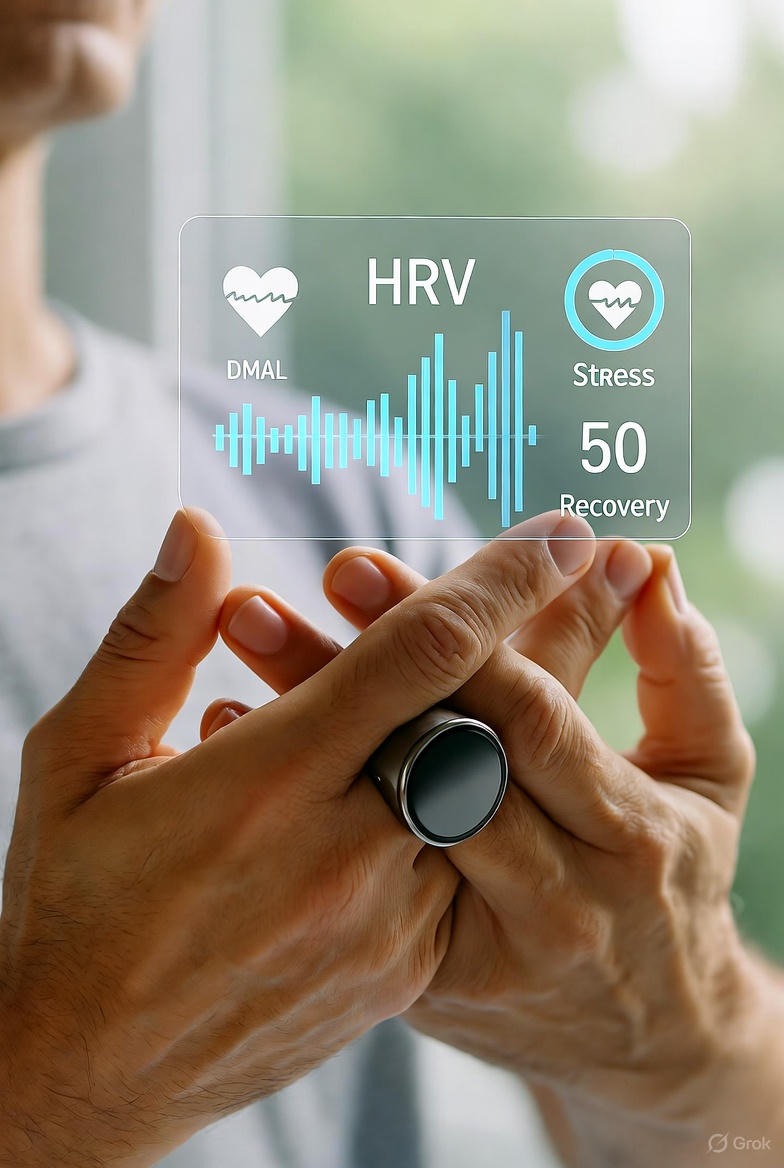
We’ve discussed stress as a measurable force, but what about its opposite: calm, focus, and emotional balance? This isn't just a "feel-good" concept; it's a physiological state with distinct signatures, often referred to as heart coherence or psychophysiological coherence. While your smart ring doesn't display a dedicated "coherence" score like some specialized biofeedback devices, the raw data it provides—specifically Heart Rate Variability (HRV) in its waveform—is the key to accessing this powerful state.
What is Heart Coherence? During typical stress or even neutral states, the rhythm of your heart is somewhat irregular and chaotic when viewed on a detailed graph. During coherence, the heart’s rhythm becomes smooth, ordered, and wave-like. This pattern reflects optimal communication between your heart and brain (via the vagus nerve) and is associated with:
Your Ring as a Coherence Trainer: You can use your ring’s real-time heart rate data (available in most companion apps) as a simple biofeedback tool to actively cultivate this state.
Tracking the After-Effects: The true power for lifestyle building is in the residual impact. After a coherence practice, check your ring’s data over the subsequent hours. You will often see:
By scheduling short coherence breaks—before a big meeting, during an afternoon slump, or as part of your nighttime routine—you’re not just managing stress reactively. You’re proactively training your nervous system to default to a more resilient, resourceful state. This makes every other health endeavor, from choosing healthy food to sticking to a workout, feel easier and more intuitive.
Your body does not exist in a vacuum. It is in constant dialogue with its environment. One of the most enlightening uses of your smart ring is as a personal environmental sensor, helping you identify external factors that subtly enhance or degrade your well-being. This turns your home, office, and daily routines into a lab for optimized living.
Sleep Environment, Quantified: You already know a cool, dark, quiet room is better for sleep. Your ring provides the proof and the precision.
The Social Biometrics: People as Environment. Humans are social creatures, and interactions have a direct physiological impact. Your ring can offer fascinating, non-judgmental insights into your social well-being.
Digital Environment & Dopamine: The constant ping of notifications, endless scrolling, and blue light bombardment is a novel environmental stressor. Experiment with digital boundaries.
By treating your ring as an environmental probe, you move from generic advice to personalized environmental design. You learn to curate the spaces and interactions that your physiology thrives in, creating a world that actively supports your health goals.
Traditional goal setting often fails because the feedback loop is too long and vague. "Lose 20 pounds" or "get fit" are distant peaks with no clear path. They lack the small, daily wins that fuel motivation. Your smart ring enables a revolutionary approach: biometrically-validated micro-goals. These are tiny, daily or weekly objectives directly tied to your body's signals, providing constant, positive reinforcement.
Shift from Outcome Goals to Process Goals (Fueled by Data):
The ring provides the validation for the process goal. Every morning, you see your RHR. Over weeks, you watch the trend line fall. Each data point is a tiny win, proving your walk is working. This is infinitely more motivating than waiting months for a cholesterol test.
Examples of Biometric Micro-Goals:
The "Why" Behind the Goal: Your ring data helps you connect emotionally to the why. Seeing that a poor night's sleep directly leads to a day of high cravings and low energy makes "prioritize sleep" a deeply personal mission, not a bland prescription. Reading about how nighttime routines reduce morning grogginess is one thing; seeing your own sharp, data-backed transition from groggy to alert after improving your sleep ritual makes it an unshakable personal truth.
Celebrating the Data Points: Learn to celebrate the positive data point as much as the checked-off to-do list. A new personal best Sleep Score calls for a moment of acknowledgment. A consistently high HRV week is a sign of great resilience—celebrate it! This positive reinforcement wires your brain to associate healthy behaviors with immediate, tangible rewards (good data), making them more likely to stick.
This approach transforms the journey from a grueling marathon into a series of enjoyable, successful sprints. Each week becomes an experiment, each day provides feedback, and your smart ring is the lab notebook proving you’re making progress, one validated micro-step at a time.
No health journey is a straight, upward line. There will be sick days, stressful weeks, busy periods where routines falter, and frustrating plateaus where progress seems to halt. This is normal. The critical difference when you have a smart ring is that setbacks become data, not drama. A plateau becomes a puzzle to solve, not a reason to quit.
The Sick Day Protocol: Your ring is often your first alert. A sustained elevation in skin temperature, a rising RHR, and a plummeting HRV can signal oncoming illness 24-48 hours before symptoms hit. When this happens:
The Stress Storm: When life delivers a major stressor—a work crisis, a family emergency—your metrics will reflect it. Sleep scores drop, HRV crashes, RHR climbs. The key here is to disengage from performance goals and engage in maintenance mode.
The Fitness Plateau: You’ve been consistent with workouts, but your resting heart rate won’t budge lower, or you’re not seeing improved heart rate data during runs. This is a classic plateau. Your ring provides the clues to break through:
The Data Divorce: If you find yourself becoming anxious or obsessive, it’s time for a short "data divorce." Take the ring off for a weekend. Reconnect with how you feel in your body—your energy, your mood, your innate hunger and fatigue signals. The ring is a tool to enhance embodiment, not replace it. Return to it when you can see it again as a helpful guide, not a stern judge.
By reframing setbacks as rich sources of biometric feedback, you cultivate resilience. You learn that a "bad" week of data isn't a failure; it's a chapter in your ongoing health story, full of information that makes you wiser and your approach more robust.
The true power of a smart ring isn't revealed in a day or a week, but over months, seasons, and years. In the noise of daily fluctuations lies the signal of long-term trends. This macro view is where you witness the compound interest of healthy habits—the slow, steady, and ultimately transformative accrual of small, consistent actions.
Moving Beyond the Daily Snapshot: Stop judging your health by today's Sleep Score alone. Instead, open your ring’s app and look at the monthly or quarterly view.
Seasonal Rhythms and Annual Planning: Your body changes with the seasons. You may naturally sleep longer in winter and be more active in summer. Your ring’s year-long data set helps you embrace and plan for these rhythms, not fight them. You can see clear patterns, like a dip in average HRV during the hectic holiday season, or a peak in activity during summer. This allows for intuitive annual planning: perhaps you focus on strength gains in the spring and fall, maintenance in the summer, and deep recovery and reflection in the winter. Embracing seasonal nighttime routines is a perfect example of this harmonious adaptation.
The "Before and After" of Life Changes: Your ring creates an invaluable biometric journal of your life.
This long-term log provides profound self-knowledge. It answers questions like: "What does my body truly need during times of change?" and "What habits have had the most lasting positive impact on my physiology?"
Celebrating the Trend, Not the Datum: Learn to take joy in the upward-trending line on a graph. That line represents hundreds of conscious choices—the early nights, the nutritious meals, the managed stressors, the moments of calm. It is the quantifiable story of your commitment to yourself. When motivation wanes, reviewing these long-term trends can be the most powerful reminder of how far you've come and why continuing is worthwhile.
This long-game perspective is the final piece of mindset mastery. It teaches patience, reinforces consistency, and provides the deep satisfaction of seeing your healthy lifestyle not as a temporary project, but as a sustainable, evolving, and data-validated way of being.
A healthy lifestyle is rarely a solo endeavor; it thrives in a supportive ecosystem. For those with partners, children, or aging parents they care for, the principles of biometric awareness can be gently extended to create a culture of shared wellness at home. This isn't about surveillance or pressure, but about fostering collective understanding and support.
Leading by Example (with Data): Simply wearing your ring and occasionally sharing non-judgmental, curious insights can pique family interest. "My ring showed I slept really poorly after we had that big late dinner. I'm going to try eating a bit earlier tonight," is a gentle way to introduce the concept of body awareness. It models using data for self-understanding, not self-criticism.
Sleep Syncing for Parents & Partners: Disrupted sleep is a major family stressor. If both adults wear smart rings, you can compare data to optimize routines.
Teaching Teens Body Awareness: For teenagers navigating puberty, social pressure, and academic stress, a smart ring can be a powerful tool for empowerment, not control. Framed correctly, it can help them:
Caring for Aging Parents (with Caution): For older adults, particularly those living independently, trends in biometrics can be helpful indicators of overall well-being. A gradual, sustained change in resting heart rate or a significant shift in sleep patterns could warrant a gentle check-in or a conversation with a doctor. This must be done with explicit consent, transparency, and respect for autonomy. The goal is peace of mind and early conversation, not intrusion.
The key to family integration is consent, curiosity, and collaboration. It’s about creating a shared language of wellness where data serves as a neutral starting point for supportive conversations, helping everyone in the home build habits that contribute to a healthier, more harmonious life together.
Once you've mastered the foundational metrics and established your personal feedback loops, you may be ready to explore the deeper, more advanced layers of data your smart ring can provide. These insights move from general wellness into the realms of optimized performance, personalized health forecasting, and a finer-grained understanding of your physiology.
Respiratory Rate: This is the number of breaths you take per minute, typically measured during sleep. It’s a remarkably stable vital sign for a healthy individual. A sustained increase in your average nighttime respiratory rate can be a very early, sensitive indicator of oncoming illness, respiratory issues, or even cardiovascular strain. Tracking this trend helps you catch deviations from your personal norm long before you feel unwell.
Blood Oxygen (SpO2) Trends: While not for medical diagnosis, observing trends in your overnight blood oxygen saturation can be enlightening. Consistent, minor dips might correlate with snoring or mild sleep disturbances. A significant, ongoing downward trend is important data to bring to a healthcare professional, as it could be related to sleep apnea or other conditions.
Exercise Load & Training Effect: Advanced algorithms analyze your heart rate data during activity to estimate the overall physiological load of a workout. They may assign a score (like a "Training Effect" of 3.0 or 5.0) that indicates whether the session was primarily aerobic, anaerobic, or highly taxing. This helps you balance your workout week, ensuring you have a mix of stimulating and recovery-oriented sessions.
Physiological Age & Fitness Metrics: Some platforms use your resting heart rate, HRV, sleep, and activity data to estimate a "body age" or "fitness age." While a broad metric, seeing this number drop below your chronological age as you build healthy habits can be a hugely satisfying long-term motivator.
The Future: Personalized Health Nudges & Predictive Insights The frontier of this technology is predictive analytics. Imagine your ring’s app learning your patterns so well that it can say:
This is the shift from retrospective tracking to prospective guidance. The ring becomes not just a historian of your body, but a strategic advisor for your health and performance. As these algorithms improve, they will offer hyper-personalized recommendations for everything from the timing of your caffeine intake to the ideal length of your afternoon walk based on that day’s unique physiological state.
Engaging with these advanced metrics requires a firm grasp of the basics. They are the fine-tuning dials for someone who has already built a solid, data-aware lifestyle. They represent the exciting promise of this technology: a future where our devices don't just tell us what we did, but help us intelligently decide what to do next for our optimal well-being.

In the science of habit formation, a keystone habit is a single, foundational practice that, when established, creates a positive ripple effect, automatically triggering and supporting other good habits while shifting your self-identity. Examples include daily exercise, meditation, or family dinners. The simple, consistent act of wearing and reviewing your smart ring can become a powerful keystone habit for your entire healthy lifestyle.
How the Tracking Habit Catalyzes Change:
Building the Ritual: To harness this power, formalize the habit.
The Data-Backed "Why": The ring provides the undeniable "why" that fuels habit persistence. When you understand physiologically why a habit works—when you can see your deep sleep increase after a week of no screens before bed—the habit stops being a chore and becomes a valued tool. You're not blindly following rules; you're executing a proven personal strategy.
By elevating the simple act of wearing and engaging with your smart ring to a non-negotiable keystone habit, you install a gentle, continuous, and intelligent guide at the center of your daily life. It becomes the touchstone that keeps all your other healthy habits aligned, validated, and connected to the ultimate goal: a life of sustained vitality and well-being.
Your Trusted Sleep Advocate: Sleep Foundation — https://www.sleepfoundation.org
Discover a digital archive of scholarly articles: NIH — https://www.ncbi.nlm.nih.gov/
39 million citations for biomedical literature :PubMed — https://pubmed.ncbi.nlm.nih.gov/
Experts at Harvard Health Publishing covering a variety of health topics — https://www.health.harvard.edu/blog/
Every life deserves world class care :Cleveland Clinic - https://my.clevelandclinic.org/health
Wearable technology and the future of predictive health monitoring :MIT Technology Review — https://www.technologyreview.com/
Dedicated to the well-being of all people and guided by science :World Health Organization — https://www.who.int/news-room/
Psychological science and knowledge to benefit society and improve lives. :APA — https://www.apa.org/monitor/
Cutting-edge insights on human longevity and peak performance:
Lifespan Research — https://www.lifespan.io/
Global authority on exercise physiology, sports performance, and human recovery:
American College of Sports Medicine — https://www.acsm.org/
Neuroscience-driven guidance for better focus, sleep, and mental clarity:
Stanford Human Performance Lab — https://humanperformance.stanford.edu/
Evidence-based psychology and mind–body wellness resources:
Mayo Clinic — https://www.mayoclinic.org/healthy-lifestyle/
Data-backed research on emotional wellbeing, stress biology, and resilience:
American Institute of Stress — https://www.stress.org/


