


The Beginner-Friendly Guide to Circadian Health: Using Your Wellness Ring Effectively
A beginner's guide to improving your daily rhythm (circadian health) using feedback from your ring.
A beginner's guide to improving your daily rhythm (circadian health) using feedback from your ring.
%402x.svg)
For centuries, humans lived by the unerring rhythm of the sun. We rose with its light and retired with its setting, our bodies orchestrated by an ancient, internal timekeeper. Today, in our world of perpetual illumination, endless scrolling, and 24/7 connectivity, that primordial rhythm is under siege. We feel it in the persistent fatigue that coffee can't cure, in the stubborn weight that won't budge, in the foggy brain that hampers our focus, and in the restless nights that leave us drained. This isn't just about "getting more sleep"—it's about something far more foundational: circadian health.
Your circadian rhythm is your body's master 24-hour clock, regulating everything from hormone release and metabolism to cognitive function and cellular repair. When it’s in sync, you thrive. When it’s disrupted, your entire biology suffers. The good news? We now possess a tool of remarkable precision to not only understand this rhythm but to reclaim it: the modern wellness ring.
This guide is your personal roadmap. We’ll demystify the science of circadian biology and translate it into actionable, daily wisdom. More importantly, we’ll show you how to transform your wellness ring from a passive data collector into an active, intelligent partner in your health. You’ll learn to interpret its signals, trust its feedback, and build habits that align your life with your biology’s deepest needs. This is not about another restrictive biohacking protocol; it’s about returning home to your natural rhythm, empowered by technology. Let’s begin.
Before you can conduct an orchestra, you must understand the score. Your circadian rhythm is that score—a complex, genetically programmed cycle that operates on a roughly 24-hour schedule. It’s conducted by a tiny region in your brain called the suprachiasmatic nucleus (SCN), your "master clock." But the SCN doesn’t work alone. It synchronizes countless "peripheral clocks" in your organs, from your liver and pancreas to your heart and muscles. Imagine a symphony: the SCN is the conductor, and every organ is an instrument section, each with its own critical part to play at the precise right moment.
This symphony governs your core temperature, telling it to dip at night for sleep and rise in the morning for alertness. It commands the release of cortisol to wake you up and melatonin to usher you into sleep. It tells your digestive system when to be most active and when to rest. It even influences your genes—thousands of them switch on and off in a circadian pattern.
The conductor, however, needs light cues to stay in time. Specialized cells in your eyes detect light (specifically, blue-wavelength light) and send a direct signal to the SCN. Morning light screams "DAY!" resetting your clock for wakefulness and activity. As light fades, the signal weakens, allowing melatonin production to begin, whispering "NIGHT!" and preparing your body for restoration.
Our modern environment bombards this delicate system. We expose ourselves to bright artificial light long after sunset, eat at erratic hours, and keep irregular sleep schedules. This creates circadian misalignment—a state where your internal clocks are out of sync with each other and with the external world. The consequences are profound: impaired metabolism, compromised immune function, reduced cognitive performance, and heightened risk for chronic diseases.
This is where your wellness ring becomes your chief acoustician. By continuously tracking metrics like body temperature, heart rate, and movement, it infers the state of your internal symphony. It doesn't just tell you that you slept poorly; it helps you understand why by showing you if your temperature rhythm was flattened or if your nighttime heart rate was elevated. Understanding this foundational biology is the first step to using your ring not as a judge, but as a guide back to harmony.
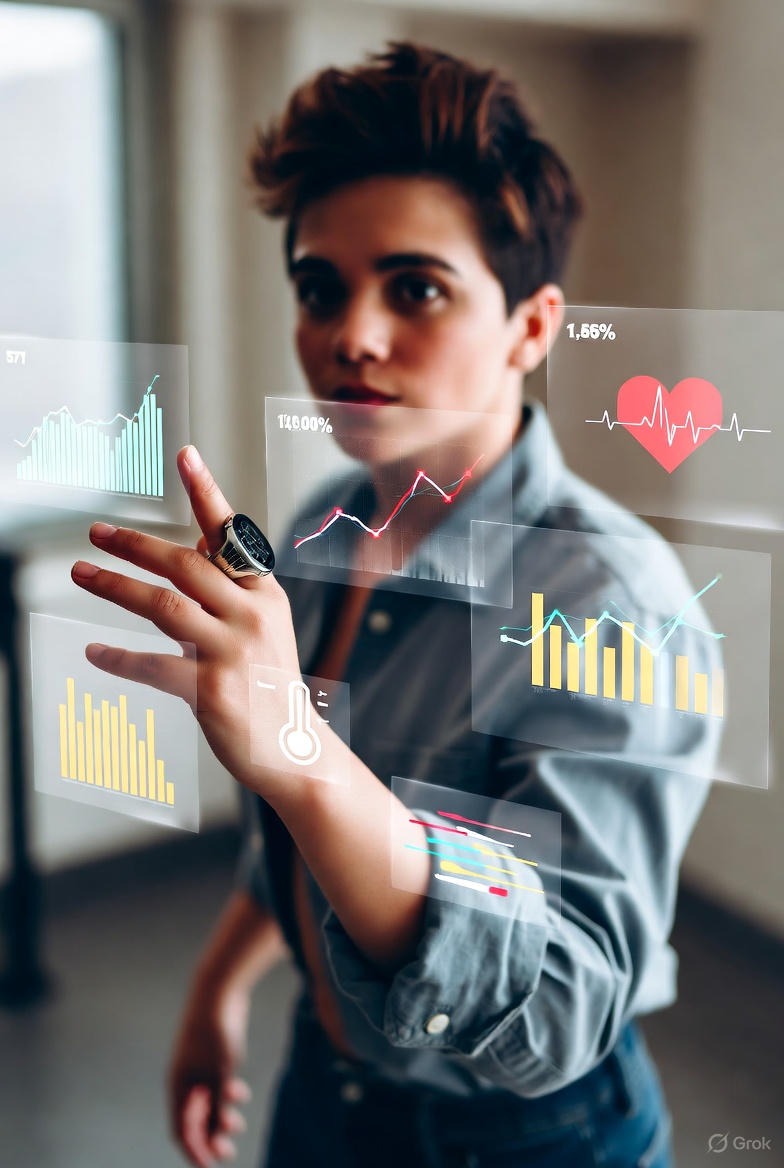
A fitness tracker tells you what you did—steps taken, calories burned, minutes exercised. A wellness ring tells you how you are—and, more specifically, when you are in your biological cycle. It’s a subtle but revolutionary shift from tracking external activity to monitoring internal state.
These sleek, finger-worn devices are uniquely positioned for this role. The finger provides a rich, central pulse point, offering a reliable signal for key physiological metrics. The most advanced rings use a combination of sensors: photoplethysmography (PPG) to measure heart rate and heart rate variability (HRV), a 3D accelerometer for movement and sleep staging, and a skin temperature sensor. It’s this last metric—continuous core body temperature—that is the circadian goldmine.
Your body temperature isn’t static. It follows a distinct circadian wave, typically peaking in the late afternoon and hitting its nadir in the early morning hours. This curve is a direct readout of your master clock’s strength. A robust, high-amplitude rhythm (a clear peak and trough) indicates a well-synchronized system. A flattened, erratic curve is a red flag for circadian disruption. Your ring tracks this curve silently, every minute of every day.
Beyond temperature, the ring synthesizes other data points into circadian insights:
The magic happens in the algorithms. The ring’s software weaves these threads—temperature, HRV, RHR, movement—into a coherent story about your circadian health. It gives you scores like Readiness or Recovery, which are essentially summaries of how well-tuned your internal orchestra is for the day ahead. It can pinpoint your body’s natural bedtime window and wake-up window. By learning your personal baselines, it can alert you to deviations caused by late meals, evening workouts, stress, or an incalling illness. Your ring becomes your personal circadian translator, turning raw physiological data into a language of daily choices.
You have your ring. The excitement is real. But before you dive into the data ocean, a successful launch is critical. A poorly set-up ring is like a misaligned compass—it will give you data, but it may not point you in the right direction.
The Physical Fit is Paramount. This isn't a bracelet. The ring must be snug enough to not spin freely and to maintain consistent sensor contact, but not so tight that it causes discomfort or leaves a deep imprint. Most manufacturers provide a sizing kit—use it diligently. The ideal fit is on a finger where it won’t be bumped excessively (the index finger is often less ideal than the middle or ring finger). Remember, fingers swell slightly at night and can change with temperature; a fit that’s perfect at noon should not be constricting at midnight.
Syncing and App Configuration. Download the companion app and pair your ring. This is where you lay the groundwork for personalization.
The Critical First Two Weeks: Baseline, Don’t Chase. Here is the most important principle for beginners: For the first 14 days, ignore the scores. Do not try to "game" your recovery score. Your primary job is to wear the ring consistently (yes, even in the shower if it’s waterproof, but check your model’s guidelines) and live your typical life. Let the ring observe you without judgment. This period allows its algorithms to learn your unique normal—your personal temperature curve, your average HRV, your typical sleep duration. Establishing this baseline is what makes all future data meaningful. A "poor" score against a properly set baseline is useful feedback. A "poor" score when you were trying to cheat the system by going to bed early just for the ring is meaningless noise.
Battery & Hygiene. Develop a simple routine. Perhaps you charge it for 20 minutes while you shower and get ready in the morning. Keep the sensor clean with a soft, dry cloth. This initial setup phase is about building trust and consistency with your device, so it can begin its real work: building a mirror for your biology. For insights on optimizing the environment where you’ll be using this data, our guide on nighttime wellness routine setting up your bedroom offers essential reading.
Your morning ritual now includes a new, powerful step: reviewing your circadian dashboard. This isn't about getting a "grade," but about gathering intelligence for the day. Think of it as a weather report for your internal landscape. Let’s break down the key metrics you’ll likely encounter.
The Readiness/Recovery Score (The Big Picture). This composite score (often 0-100) is the headline. It synthesizes your sleep data, nighttime HRV, RHR, and temperature deviation into a single number indicating your body’s capacity to handle stress, perform, and adapt today. A high score suggests your systems are primed. A low score is not a failure; it’s vital feedback that your body needs more recovery. Don’t fetishize the number. Instead, tap into it to see the contributing factors. Was it low because of a late temperature peak? A elevated resting heart rate? Short sleep? This is your starting point for inquiry.
Body Temperature Trend (The Circadian Compass). This is your most direct circadian readout. Look for the curve over the last 24 hours. Is it a smooth wave? Is the nighttime trough clearly defined? Has the overall baseline shifted upwards (a potential sign of immune system activation or poor recovery)? The ring may provide a metric like "Temperature Deviation" – a positive deviation often correlates with physiological stress. Tracking this trend over time is more valuable than any single day’s point.
Sleep Analysis: Beyond the Hours.
Heart Rate Variability & Resting Heart Rate (The Nervous System Snapshot). Your overnight HRV average and your lowest nighttime RHR are key recovery markers. HRV is highly personal—compare yourself to your own baseline, not others. A trend of declining HRV or rising RHR over several days is a strong signal from your autonomic nervous system that cumulative stress (physical, mental, or emotional) is mounting and needs addressing.
Your morning review should take two minutes. Ask: "What is my body telling me it needs today?" A low score might mean prioritizing an early dinner, a gentle walk instead of an intense workout, or a nighttime routine that lowers cortisol naturally. A high score is permission to engage fully, train hard, and be socially active. This daily check-in builds self-awareness and turns data into deliberate action.
Light is the most powerful "zeitgeber" (time-giver) for your circadian clock. Using light intentionally is the single most effective thing you can do to strengthen your rhythm, and your wellness ring provides the ultimate feedback loop to prove it.
The Morning Anchor: 0-60 Minutes After Waking. Your mission is to tell your master clock, in no uncertain terms, that the day has begun. Get bright, natural light into your eyes within the first hour of waking. This suppresses residual melatonin, boosts cortisol (healthily), and sets your circadian phase for the day. Aim for at least 10-30 minutes of outdoor light. Cloudy day? It’s still far brighter than indoor lighting. Can’t get outside? Position yourself near a sunny window. Watch how this habit, over a week, begins to stabilize your sleep midpoint and improve your morning alertness scores on your ring.
Daylight: The Sustaining Fuel. Don’t let light exposure end with the morning. Consistent bright light throughout the day, especially in the afternoon, reinforces the daytime signal, improves mood and focus, and builds "sleep pressure" (the buildup of adenosine that makes you sleepy at night). Take walking meetings, eat lunch outside, or simply work near a window.
The Evening Unwind: 2-3 Hours Before Bed. This is about subtraction. As the sun sets, you must consciously reduce light exposure, especially from the blue-rich wavelengths emitted by LEDs, screens, and overhead lights. This allows your natural melatonin production to rise. Strategies include:
Your Ring as Your Light Auditor. This is where the magic happens. As you implement these light hygiene practices, watch your ring’s data. You will likely see:

Your liver, pancreas, and gut have their own powerful circadian clocks. When you eat is as metabolically important as what you eat. Time-restricted eating (TRE), aligned with your circadian rhythm, is one of the most impactful levers you can pull for metabolic health, weight management, and even sleep quality. Your wellness ring is the perfect tool to personalize this practice.
The Core Principle: Daytime Feasting, Nighttime Fasting. Your body is primed to process food during daylight hours when insulin sensitivity is highest, digestion is strongest, and energy expenditure is greatest. At night, your metabolism naturally slows, and your body wants to focus on repair, not digestion. Eating late at night sends conflicting signals to your peripheral clocks, disrupting metabolism and fragmenting sleep.
What is Time-Restricted Eating (TRE)? TRE involves consuming all your daily calories within a consistent window of time, typically 8-12 hours, and fasting for the remaining 12-16 hours. For most people, aligning this window with daylight is optimal (e.g., eating from 8 AM to 6 PM).
Using Your Ring to Find Your Perfect Window. A one-size-fits-all eating window doesn't exist. Your ring provides biofeedback to tailor it.
Important Nuances.
By syncing your eating with your circadian rhythm and using your ring to validate the effects, you move from following a diet trend to practicing personalized metabolic hygiene. This synergy between timing and technology is a cornerstone of modern wellness. For those with unpredictable schedules, adapting these principles is still possible, as detailed in our guide for the nighttime routine for people who work late.
Exercise is a potent circadian signal. It can reinforce your daily rhythm, boost mood, and deepen sleep—but its effects are heavily influenced by when you do it. Your wellness ring helps you identify the exercise timing that harmonizes with, rather than disrupts, your internal clock.
Morning Movement: The Syncing Signal. Exercising in the morning, especially in natural light, provides a powerful one-two punch for circadian alignment. It further elevates your core body temperature and cortisol (complementing the morning light cue), sharply reinforcing the "daytime" signal. This can lead to improved daytime energy, earlier melatonin onset in the evening, and more robust sleep. For many, morning workouts correlate with higher and more stable readiness scores.
Afternoon Power: Peak Performance. From a pure performance standpoint, your body often hits its stride in the late afternoon. Core body temperature and muscle strength peak, reaction time is quickest, and the risk of injury may be lower. A hard workout here can be highly effective. The key is allowing sufficient wind-down time before bed, as intense exercise too late can elevate core temperature and stimulate the nervous system, interfering with sleep onset for some individuals.
Evening Exercise: Proceed with Awareness. The conventional wisdom to avoid evening exercise isn't a hard rule, but it requires strategy. High-intensity interval training (HIIT) or heavy weightlifting close to bedtime may disrupt sleep for many, reflected in a higher nighttime heart rate and reduced deep sleep on your ring. However, gentle, rhythmic movement like walking, easy cycling, yoga, or stretching in the evening can actually promote relaxation and aid sleep by supporting the natural temperature decline.
Let Your Ring Be Your Guide. This is highly individual. Here’s how to use your data:
Your ring transforms exercise from a simple calorie burn into a strategic circadian tool. It moves you from asking "Did I burn enough?" to asking "Did this activity make my biological rhythm stronger?"
Your evening is not merely the prelude to sleep; it is the essential preparation phase where you protect your circadian rhythm from the chaos of the day. A intentional wind-down routine signals to every system in your body that it is time to shift from sympathetic (alert) to parasympathetic (restorative) dominance. Your wellness ring measures the success of this transition every single night.
The 90-Minute Sanctuary. Begin your wind-down approximately 90 minutes before your target bedtime. This isn't about being inactive; it's about engaging in deliberately low-arousal activities.
The Digital Sunset. This is non-negotiable for circadian health. Set a firm time to turn off all non-essential screens (phones, tablets, TVs). The light is disruptive, but the content—emails, news, social media—is equally stimulating to the mind and nervous system. Notice how implementing a digital sunset correlates with a lower resting heart rate during the first hours of your sleep, as seen on your ring’s graph.
The Environment of Rest. This is where you curate your physical space for sleep.
Conscious Relaxation Practices. Actively engage your parasympathetic nervous system.
Your Ring as Your Routine Auditor. After establishing a consistent wind-down, watch your data. You are looking for:
Sleep is the grand reveal of your circadian health. Each morning, your wellness ring presents a detailed report card of the night’s restoration. Moving beyond just the score to understand the underlying metrics empowers you to make precise adjustments. Let’s decode the key elements.
Sleep Stages: The Architecture of Restoration. Your sleep cycles through light, deep, and REM stages roughly every 90 minutes. Each has a vital purpose:
Your Ring’s Interpretation. The ring uses movement, heart rate, and HRV patterns to estimate these stages. Look at the percentages over time, not in isolation. A consistent lack of deep sleep is a different signal than a single night of low REM.
Sleep Latency & Efficiency: The Metrics of Transition.
Nighttime HRV & RHR: The Autonomic Ticker Tape. As you sleep, your ring continuously reads your heart. The trend lines are what matter.
The Power of Correlation. The true genius of the ring is in connecting cause and effect. Use the app’s tagging or journal feature to note: "late dinner," "evening workout," "stressful day," "drank alcohol," "slept in a hotel." Over time, you’ll see clear patterns. You might discover that a glass of wine with dinner, while helping you fall asleep faster, reliably cuts your deep sleep by 20% and raises your resting heart rate by 5 beats per minute. This personalized feedback is far more compelling than generic advice. To dive deeper into using this data for systematic improvement, explore our resource on nighttime wellness routine optimization using your sleep data.
A perfect circadian rhythm in a perfect world is a fantasy. Real life involves time zones, deadlines, social obligations, and unexpected stress. The goal is not perfection, but resilience—the ability to bend without breaking and to recover quickly. Your wellness ring is your indispensable tool for navigating these disruptions with grace.
Conquering Jet Lag. Travel across time zones is the ultimate circadian challenge. Your ring can be your co-pilot.
Managing Social Jetlag. This is the chronic misalignment between your biological clock (your body’s preferred sleep time) and your social clock (work, family, social life). You might be an "owl" forced to live as a "lark," or vice-versa.
Stress: The Invisible Disruptor. Mental and emotional stress activate the sympathetic nervous system, flooding your body with cortisol and adrenaline. This directly opposes the parasympathetic state required for sleep and recovery.
By using your ring to navigate disruptions intelligently, you build circadian resilience. You learn that the path to health isn't a straight line, but a series of skilled corrections, guided by your own biological feedback.
One of the most liberating insights modern circadian science offers is the concept of the chronotype—your genetically influenced, personal tendency to be a morning person, an evening person, or somewhere in between. This isn't about discipline or laziness; it's about hardwired biology. Forcing an Owl to wake at 5 AM for a bootcamp class can be as counterproductive as forcing a Lark to perform complex cognitive tasks at midnight. Your wellness ring is the key to discovering and, more importantly, honoring your unique chronotype for sustainable health.
Beyond Early Bird vs. Night Owl. While we often simplify chronotypes to these two categories, it’s more of a spectrum. Researchers often refer to them as:
How Your Ring Reveals Your Chronotype. You don’t need a DNA test. Your ring’s long-term data paints a clear picture:
Working With Your Chronotype, Not Against It.
Your ring validates your experience. It turns "I’m just not a morning person" from an excuse into a data-supported fact, allowing you to design a life that works with your biology, not against it. This self-knowledge is the foundation of personalized, effective circadian health.
Circadian rhythm optimization isn't just for better sleep—it’s the engine for superior daytime functioning. When your internal clocks are synchronized, every aspect of your life improves. Your wellness ring tracks the inputs (habits) and the outputs (daily states), allowing you to draw powerful connections between your circadian hygiene and how you feel and perform in the real world.
Predicting Your Daily Energy Curve. Your alertness and energy don’t remain static. They follow a biphasic rhythm: a peak after waking, a post-lunch dip (circadian, not just food-induced), and a second, often lower, peak in the late afternoon/early evening. Your chronotype shifts this curve earlier or later. By understanding your personal curve (which your ring helps infer from temperature and activity data), you can schedule tasks strategically:
Mood Regulation and Emotional Resilience. Your circadian system is intricately linked to the regulation of neurotransmitters like serotonin (precursor to melatonin, influences mood) and hormones like cortisol. Disruption is a known contributor to low mood, irritability, and anxiety.
Physical Performance & Recovery. As discussed, timing your workouts can enhance performance. But your ring’s daily readiness score is your ultimate guide for day-to-day training decisions. This is the essence of heart-rate variability-based training applied to the broader populace.
The Holistic Feedback Loop. By paying attention to this full spectrum—energy, mood, performance, and sleep—you stop seeing your ring as just a "sleep tracker." It becomes a holistic health dashboard. You learn that the evening you skipped your wind-down to binge a show didn’t just cost you 10 minutes of deep sleep; it likely made the next day’s work more sluggish, your patience thinner, and your workout less powerful. This comprehensive feedback is what creates lasting motivation for circadian-friendly habits. For those times when life gets overwhelmingly busy, having a 15-minute power nighttime routine when time is tight can be a lifeline to maintain this crucial rhythm.
The true power of a wellness ring isn't revealed in daily fluctuations, but in the long-term trends. Day-to-day data can be noisy, influenced by a hundred small variables. But over weeks and months, clear patterns emerge that tell the story of your overall circadian health trajectory. This is where you move from reactive corrections to proactive mastery.
What to Look For in Your Trends.
Avoiding Data Obsession and Anxiety. A common pitfall for new users is "orthosomnia"—an unhealthy preoccupation with perfect sleep data. This anxiety itself can lower your HRV and ruin your sleep! Remember these principles:
Celebrating Non-Linear Progress. Health journeys are not linear. You’ll have setbacks—a period of work stress, an illness, a vacation—that will show in your data. The key is the recovery rate. After a disruption, how quickly do your metrics return to baseline? As you become more circadian-resilient, your recovery rate will improve. That’s a huge victory.
Setting Personal Milestones. Use your ring’s trend data to set and celebrate meaningful goals that aren’t about weight or appearance, but about vitality:
By focusing on trends, you cultivate patience and perspective. Your wellness ring becomes a long-term journal of your biological resilience, showing you not just where you are, but how far you’ve come and the profound impact of your daily choices on your foundational health. To continue refining your approach as you accumulate data, the principles of nighttime wellness routine optimization using your sleep data become increasingly relevant.
Even with the best intentions, you’ll encounter puzzling data. A great night of sleep yields a low score. You feel exhausted but your ring shows high readiness. These discrepancies aren't failures of the technology or your body; they’re puzzles to be solved. Here’s a guide to diagnosing and acting on common data dilemmas.
Scenario 1: "I Slept 8 Hours But My Recovery Score is Low."
Scenario 2: "I Feel Terrible But My Ring Says I'm Recovered."
Scenario 3: "My Data is All Over the Place, With No Consistency."
Scenario 4: "My Deep Sleep is Consistently Low."
By learning to troubleshoot, you become an expert in your own biology. The ring provides the clues; you become the detective, using context and experimentation to solve the mystery of your own energy and health.
Your circadian rhythm is the foundational layer of health, but it doesn't exist in a vacuum. It interacts powerfully with other pillars of well-being: nutrition, mindfulness, fitness, and social connection. Your wellness ring can be the integrating hub that shows you how these pillars support or strain your biological rhythm.
Nutrition & Supplement Timing. We've covered meal timing, but what you eat also matters. A diet high in processed foods and sugar can promote inflammation and blood sugar dysregulation, which disrupts sleep and circadian signals. Your ring may show this as elevated nighttime heart rate and lower HRV. Conversely, anti-inflammatory, whole foods support stable energy and recovery.
Mindfulness & Stress Management. Chronic stress is a circadian disruptor. Practices like meditation, breathwork, and yoga nidra actively stimulate the parasympathetic nervous system, lowering cortisol and preparing the body for rest.
Temperature & Environment Optimization. Your body's core temperature drop is the sine qua non of good sleep. You can assist this through your environment.
Social Connection and Joy. Loneliness and lack of social support are significant stressors. Meaningful connection releases oxytocin and dampens cortisol. However, late-night socializing that involves alcohol, rich food, and bright lights can be disruptive. The balance is key.
By viewing your circadian rhythm as the central pillar that interacts with all other health practices, you create a synergistic, sustainable approach to well-being. Your ring provides the feedback loop to see what truly works for you, making your health journey uniquely personal and powerfully effective. This holistic approach is especially important during life transitions, which is why we have resources like how to adjust your nighttime routine as you age and the nighttime routine for new parents sleep when possible.
You’ve now been equipped with the foundational knowledge and practical strategies to transform your relationship with your circadian rhythm and your wellness ring. This is not the end of learning, but the beginning of a profound practice—a practice of listening to the ancient, intelligent rhythms of your body with the aid of modern technology.
Remember the core philosophy: Your ring is a guide, not a judge. Its data is a conversation starter with your own biology, not a verdict. The numbers are there to empower you, not to enslave you. The goal is not to achieve a perfect 100 score every day, but to cultivate a strong, resilient rhythm that allows you to enjoy life fully, recover effectively, and perform at your best.
Start with the fundamentals:
Be patient. Your rhythm didn't become disrupted overnight, and it won't heal overnight. Look for trends over weeks, celebrate small victories like a more stable sleep midpoint or a higher HRV average, and learn from the setbacks without self-criticism.
This guide has provided you with the map. The territory is your own life. As you continue, you’ll develop an intuitive sense—a "circadian intelligence"—that goes beyond the data. You’ll feel when your body needs an early night, when you can push for a personal best, and how to navigate disruptions with grace. Your wellness ring will be there, silently validating your choices and deepening your self-knowledge.
The journey to circadian health is a journey back to your natural state of vitality. It’s about aligning your daily life with the deep wisdom of your biology. There is no more worthwhile investment. Now, go forth and sync. Your best, most energized, and resilient self awaits.
If you had to choose just one metric from your wellness ring to pay attention to, for many experts, it would be Heart Rate Variability (HRV). It is the most sensitive, real-time biomarker of your autonomic nervous system (ANS) balance and your body’s readiness to handle stress. While your sleep score tells you what happened, HRV helps explain why and predicts what’s next. Mastering its interpretation is a quantum leap in using your ring effectively.
What HRV Really Is (And Isn't). Contrary to popular belief, HRV is not about your heart rate being "variable" in an erratic, unhealthy way. It is the variation in time between consecutive heartbeats, measured in milliseconds. A higher HRV generally indicates a healthy, resilient heart and nervous system that can adapt quickly to changing demands. Think of it as your body's "flexibility." A lower HRV suggests a stressed, fatigued, or overtaxed system stuck in a more rigid, "fight-or-flight" (sympathetic) dominant state.
Why It’s a Circadian Super-Metric. Your ANS follows a strong circadian rhythm. During the day, sympathetic tone is naturally higher to support activity and alertness. At night, a healthy shift to parasympathetic ("rest-and-digest") dominance should occur, allowing for recovery and repair. This shift is reflected in a rise in nocturnal HRV. Therefore, your nighttime HRV average is a pure readout of how well this recovery phase is functioning. It is the clearest signal of whether your daily habits are supporting or sabotaging your biological need for restoration.
How to Interpret Your HRV Data.
Actionable Insights from HRV.
Factors That Influence HRV (The Detective Work):
By moving HRV to the center of your analysis, you graduate from tracking sleep outcomes to managing the inputs that create them. It turns your ring into a true biofeedback device, guiding you toward a more resilient, adaptable state of being.
We’ve covered when to eat. Now, let’s explore a profound frontier: the direct, two-way communication between your gut, your brain, and your circadian system. Your gut has its own extensive nervous system (the "enteric nervous system") and contains more circadian clock genes than any other organ outside the brain. Disrupting your gut rhythm disrupts your entire body, and your wellness ring can detect the fallout.
Your Gut Has a Clock (In Fact, Millions of Them). The cells lining your intestines, your liver, and your pancreas all operate on circadian schedules. They regulate:
Eating at Night: The Double Disruption.
The Microbiome Connection. Your gut bacteria produce crucial neurotransmitters and metabolites that influence your brain and circadian rhythm. For example, certain bacteria help produce serotonin (95% of which is made in the gut), which is then converted to melatonin in the brain. A disrupted, dysbiotic microbiome produces different signals—often inflammatory ones—that can disrupt sleep and mood. The ring sees the downstream effects of this in your sleep and HRV data.
Using Your Ring to Cultivate a Circadian-Friendly Gut.
By honoring your gut’s circadian nature, you don’t just improve digestion; you create a cascade of positive effects that stabilize your entire system. Your ring provides the objective proof, turning abstract concepts about "gut health" into tangible, nightly feedback on your recovery.
Light and temperature are the heavyweight champions of circadian cues, but your environment speaks to your biology in other subtle languages. Optimizing sound, air quality, and electromagnetic fields (EMF) can remove invisible stressors, allowing your rhythm to strengthen further—and your wellness ring will note the difference.
The Soundscape of Sleep: Silence vs. Noise vs. Sound Masking. Your brain continues to process sound while you sleep. Sudden, intrusive noises (a door slam, a siren) can cause micro-arousals, shifting you out of deep sleep stages even if you don’t fully wake. This sleep fragmentation is a silent killer of sleep quality and is vividly captured by your ring as increased restlessness and reduced deep/REM sleep.
Air Quality: The Invisible Inhalable. The air you breathe while sleeping directly impacts inflammation, recovery, and cognitive function.
Navigating the EMF Question. The science on low-level non-ionizing EMF (from Wi-Fi routers, cell phones, smart meters) and health is ongoing and complex. While not conclusively proven to be a major direct circadian disruptor for most, it is an environmental factor some choose to minimize on a precautionary principle. More concretely, the behavior associated with EMF devices—having your phone next to your bed—is categorically disruptive due to the temptation to check it, causing light exposure and mental stimulation.
Validating the Changes with Your Ring. As you implement these "secondary" hacks—adding a white noise machine, an air purifier, and banning phones—watch your data over a month. The cumulative effect of removing these micro-stressors often shows up as:
It’s the process of creating a profoundly passive supportive environment, so your body doesn’t have to waste resources fighting invisible adversaries while it tries to restore itself.
For millions, working 9-to-5 is a fantasy. Nurses, pilots, factory workers, tech support, and entrepreneurs often operate in a world antagonistic to the solar cycle. This doesn’t mean circadian health is forfeit; it means the strategy shifts from alignment to strategic management and superior recovery. Your wellness ring becomes your most critical ally in this challenging environment.
Understanding the Challenge. Shift work, especially rotating or night shifts, forces chronic misalignment. You are fighting both the external light-dark cycle and often, your own social/family obligations. This leads to a state of persistent "circadian disruption," linked to higher risks for metabolic disorders, cardiovascular disease, and mood issues. The goal is to mitigate harm and maximize adaptation where possible.
Tactical Light Management: Your Most Powerful Tool.
Meal Timing for Shift Workers. The principle "eat during your biological day" still applies—it just redefines "day."
Sleep Strategy: Quality Over Single-Block Duration. You may need to adopt segmented sleep (two shorter blocks). The key is protecting at least one of those blocks for core sleep (ideally 4+ hours) where you get your deep sleep. Use your ring to identify which sleep block is most restorative and protect it fiercely.
How Your Ring Guides a Shift Worker.
This is the most demanding use case for circadian health. Success is measured not in perfect alignment, but in managed disruption, preserved resilience, and the strategic use of recovery to maintain long-term health. Every piece of advice in guides like the nighttime routine for people who work late becomes mission-critical in this context.
Your circadian rhythm evolves throughout your life. Understanding these natural shifts allows you to set realistic expectations, tailor strategies for different ages, and use your wellness ring’s data within the appropriate context. This knowledge is also powerful for caring for loved ones.
Childhood and Adolescence: Setting the Foundation.
Adulthood (20s-50s): The Performance and Resilience Phase.
Middle Age and Beyond (50s+): The Shift Towards Earlier Rhythms.
The Intergenerational Lesson: A wellness ring can provide fascinating insights across ages. It teaches respect for biological differences, fosters empathy (seeing a teen’s delayed rhythm as biology, not defiance), and provides a common language for discussing family health. It turns circadian health from a personal pursuit into a legacy of vitality.
The cutting edge of longevity science is pointing squarely at circadian health as a foundational mechanism for aging well—a concept called "circadian aging." The integrity of your daily biological rhythms is increasingly seen not just as a marker of current health, but as a predictor of future healthspan and lifespan. Your wellness ring, therefore, becomes a window into your biological age.
How Circadian Disruption Accelerates Aging.
Your Ring’s Metrics as Aging Biomarkers.
Using Your Ring for "Circadian Longevity" Strategies. This shifts the goal from feeling good tomorrow to functioning vibrantly for decades.
Your wellness ring provides the feedback loop to practice preventive circadian medicine. By maintaining robust rhythms today, you are directly investing in your cognitive clarity, metabolic health, and physical resilience for decades to come. It makes the daily choices tangible, connecting the dots between tonight’s sleep and your future self.
Theory and data are meaningless without action. This section is your workbook. We’re going to design a structured, 90-day experiment to reset and strengthen your circadian rhythm, using your wellness ring as your lab instrument and guide. The goal is not perfection, but measurable, data-driven progress.
Phase 1: Baseline & Awareness (Days 1-30).
Phase 2: Optimization & Experimentation (Days 31-60).
Phase 3: Integration & Resilience (Days 61-90).
The Mindset for the Experiment.
By the end of this experiment, you will have moved from a passive consumer of data to an active architect of your own circadian health. You’ll have a personalized protocol, validated by your own physiology, that you can carry forward for life. For ongoing refinement, the principles of nighttime wellness routine optimization using your sleep data will serve you indefinitely.
Your wellness ring is a powerful personal health tool, but it is not a medical device. Its greatest value in the healthcare landscape is as a detailed, longitudinal record of your physiology that can inform and enhance conversations with healthcare professionals. Used correctly, it can bridge the gap between the 15-minute office visit and your 24/7 lived experience.
Preparing for a Doctor's Visit: From Data to Insight.
Do not walk in and dump 90 days of raw graphs on your doctor. Instead, synthesize.
This approach transforms you from a passive patient into an engaged partner. You provide context and objective data that can guide testing (e.g., suggesting a sleep study) or treatment plans.
Areas Where Ring Data is Particularly Relevant.
Setting Boundaries and Managing Expectations.
The Future: Collaborative Care. The ideal scenario is a healthcare provider who is curious about your data and incorporates it into your care plan. This might mean adjusting medication timing based on your circadian temperature trough or using your sleep consistency as a metric for treatment adherence. You are at the forefront of this participatory medicine movement. Your ring equips you with the knowledge to be your own best health advocate, creating a powerful synergy between self-care and professional care.
We began this journey by recognizing a deep-seated modern ailment: our disconnection from the natural rhythm of life. We end it with a powerful antidote: knowledge, tools, and a practice. Through the lens of your wellness ring, you have learned to see the invisible—the ebb and flow of your hormones, the balance of your nervous system, the silent, diligent work of nightly repair. You are no longer a passenger in your body; you are its informed steward.
Embracing a circadian-centric life is not about adding more to your to-do list. It is about a fundamental shift in perspective. It is about recognizing that timing is a nutrient, and rhythm is a foundation of health as critical as food, water, and air. It asks the question not just "What should I do?" but "When is the right time for my body to do it?"
This paradigm transforms everyday choices:
Your wellness ring is the compass for this new way of living. It provides the feedback that turns intuition into knowledge and hope into results. It shows you that when you align with your rhythm, you gain more than sleep—you gain energy, emotional balance, mental clarity, and long-term resilience.
The path is not linear. There will be late nights, periods of stress, and times when the data is confusing. That’s okay. The goal is progress, not perfection. It’s about building a resilient rhythm that can withstand life’s inevitable disruptions and snap back with grace.
You now hold the map. You have the translator. The journey to reclaiming your natural vitality is yours to begin. Start with one anchor habit. Observe the data with curiosity. Be patient with the process. Trust that your body, guided by millions of years of evolution and now illuminated by the gentle light of modern technology, knows the way home to health.
Your Trusted Sleep Advocate: Sleep Foundation — https://www.sleepfoundation.org
Discover a digital archive of scholarly articles: NIH — https://www.ncbi.nlm.nih.gov/
39 million citations for biomedical literature :PubMed — https://pubmed.ncbi.nlm.nih.gov/
Experts at Harvard Health Publishing covering a variety of health topics — https://www.health.harvard.edu/blog/
Every life deserves world class care :Cleveland Clinic - https://my.clevelandclinic.org/health
Wearable technology and the future of predictive health monitoring :MIT Technology Review — https://www.technologyreview.com/
Dedicated to the well-being of all people and guided by science :World Health Organization — https://www.who.int/news-room/
Psychological science and knowledge to benefit society and improve lives. :APA — https://www.apa.org/monitor/
Cutting-edge insights on human longevity and peak performance:
Lifespan Research — https://www.lifespan.io/
Global authority on exercise physiology, sports performance, and human recovery:
American College of Sports Medicine — https://www.acsm.org/
Neuroscience-driven guidance for better focus, sleep, and mental clarity:
Stanford Human Performance Lab — https://humanperformance.stanford.edu/
Evidence-based psychology and mind–body wellness resources:
Mayo Clinic — https://www.mayoclinic.org/healthy-lifestyle/
Data-backed research on emotional wellbeing, stress biology, and resilience:
American Institute of Stress — https://www.stress.org/


