


The Beginner-Friendly Guide to Morning Wellness Habits: What Your Ring Tracks Overnight
A beginner's guide to optimizing your morning based on the data your ring collected overnight.
A beginner's guide to optimizing your morning based on the data your ring collected overnight.
%402x.svg)
You wake up, scroll through your phone, check the weather, maybe glance at the news. But before your feet even hit the floor, you’ve already generated a comprehensive health report. You just haven’t read it yet. That report wasn’t written by a doctor; it was written by you, your body, and a simple piece of technology you wore while you slept. Welcome to the new dawn of personal wellness, where your most powerful morning ritual begins not with what you do, but with what you understand.
For generations, the morning routine was a prescription: drink water, meditate, exercise, journal. While these practices remain powerful, they represent a one-size-fits-all approach to a deeply personal frontier—your own biology. What if, instead of blindly following generic advice, your morning could start with a personalized briefing on your physical and mental state? What if you knew, with data-backed clarity, that your body genuinely needed gentle yoga over a high-intensity run, deep hydration over caffeine, or a focused work block over a scattered to-do list?
This is the promise of the modern smart ring and the overnight data it collects. It moves wellness from guesswork to guidance, from ritual to responsive strategy. The silent hours of sleep are not a blank space in your health timeline; they are a rich, diagnostic window. Your heart rate, heart rate variability (HRV), skin temperature, blood oxygen saturation, and movement patterns tell a detailed story about your recovery, stress, immune function, and readiness for the day ahead.
This guide is your decoder ring for that story. We will bridge the gap between the complex biometrics tracked overnight and the simple, actionable morning habits that can transform your day. This isn’t about adding more to your plate; it’s about making what you already do infinitely more intelligent and effective. By learning to interpret your overnight data, you can build a morning wellness practice that is truly beginner-friendly because it is, above all, yours.
Let’s begin with the most critical, and often misunderstood, foundation: the science of sleep itself. To build effective morning habits, we must first understand what happens at night.
Before you can act on your data, you need to know what you’re reading. Your smart ring’s morning report isn’t just a single number; it’s a summary of a complex, cyclical journey your brain and body take every night. Sleep is not a monolithic state of unconsciousness. It’s an active, structured process composed of distinct stages, each with a unique physiological purpose. Tracking these stages is the first step in moving from feeling “well-rested” or “tired” to knowing why.
Sleep is broadly divided into two categories: Non-Rapid Eye Movement (NREM) sleep and Rapid Eye Movement (REM) sleep. NREM sleep is further broken down into three stages (often called N1, N2, and N3), which represent a progression into deeper, more restorative sleep.
N1 (Light Sleep): This is the transition phase between wakefulness and sleep, lasting several minutes. Your heartbeat, breathing, and eye movements slow, and your muscles may twitch. It’s easy to be woken up during this stage. Think of it as your body’s “system shutdown” sequence.
N2 (Light Sleep): You spend nearly half your night in this stage. Your body goes into a more subdued state: your body temperature drops, eye movements stop, and your heart rate and breathing become regular. This stage is crucial for memory consolidation and learning. Your brain begins to process and file away the information from the day.
N3 (Deep Sleep or Slow-Wave Sleep): This is the most physically restorative phase. It’s harder to be awakened, and if you are, you’ll likely feel disoriented. During deep sleep, tissue growth and repair occur, energy is restored, and critical hormones for growth and development are released. Your immune system is fortified here. This stage is non-negotiable for physical recovery.
REM Sleep: Typically occurring about 90 minutes after falling asleep, REM sleep is where dreaming happens. Your eyes dart rapidly behind closed lids, your brain activity increases to near-waking levels, but your voluntary muscles become temporarily paralyzed (a safety mechanism). This stage is essential for cognitive functions: memory consolidation, learning, creativity, and emotional processing. It’s like your brain’s nightly therapy and filing session.
A full night of healthy sleep involves cycling through these stages multiple times, with each cycle lasting about 90-120 minutes. The proportion of each stage shifts as the night progresses. Early cycles contain more deep N3 sleep, while later cycles feature longer periods of REM sleep.
Your smart ring uses a combination of sensors—like accelerometers for movement, photoplethysmography (PPG) for heart rate, and temperature sensors—to estimate these sleep stages. It doesn’t read your brainwaves like a clinical polysomnogram, but through sophisticated algorithms, it provides a highly accurate proxy for your sleep architecture.
Why does this matter for your morning? Because the quality and structure of your sleep are far more telling than simple duration. Waking up feeling groggy (sleep inertia) is often tied to being abruptly pulled from deep sleep. Consistently low deep or REM sleep, as shown on your ring’s report, is a direct signal. It tells you that your body or mind didn’t get the specific type of recovery it needed. This insight becomes the bedrock of your morning choices. For a deep dive into these cycles and their impact, our resource on the foundation of good sleep health core principles breaks down the essential science.
Your sleep stage summary is built from a suite of raw biometric data points. Each metric is a vital sign of your nocturnal health, offering a unique lens into your body’s internal workings. Let’s translate the technical jargon into practical insights you can use by 8 AM.
Resting Heart Rate (RHR): This is your heart’s beats per minute (BPM) while you are fully at rest. A lower RHR generally indicates better cardiovascular fitness and more efficient heart function. Overnight, your RHR should drop significantly from your daytime average, typically reaching its lowest point during deep sleep. A trend of elevated overnight RHR can be a sign of physical stress (like fighting off an illness), dehydration, psychological stress, or overtraining. Seeing a higher-than-normal RHR on your morning report is a cue to take it easy.
Heart Rate Variability (HRV): This is arguably the most insightful—and misunderstood—metric. HRV is not your heart rate; it’s the variation in time between each heartbeat. Contrary to intuition, a higher HRV is better. It indicates a resilient, adaptable nervous system. Your body is adept at shifting between sympathetic (“fight or flight”) and parasympathetic (“rest and digest”) states. A low HRV suggests your nervous system is stuck in a stressed, sympathetically dominant mode, with less capacity to recover. Overnight HRV is a pure measure of your recovery status. A high score suggests you recovered well; a low score is a red flag that you need a gentler day.
Skin Temperature: Your core body temperature naturally dips at night to initiate and maintain sleep. Your smart ring tracks the subtle changes in the temperature of your finger. A predictable, downward trend is a sign of healthy circadian rhythm alignment. A consistently elevated or erratic nighttime skin temperature can indicate inflammation, the onset of illness, hormonal fluctuations, or a disrupted sleep environment (a room that’s too warm).
Blood Oxygen (SpO2): This measures the percentage of oxygen-saturated hemoglobin in your blood. It should remain stable and high (typically above 95%) throughout the night. Significant, repeated dips (desaturations) can be a sign of sleep-disordered breathing, like sleep apnea, or respiratory issues. While a smart ring is not a medical device, tracking this trend can provide valuable information to discuss with a healthcare professional.
Movement & Restlessness: This isn’t just about counting how many times you toss and turn. The pattern of movement helps the device distinguish sleep stages. Furthermore, consistent periods of restlessness can correlate with stress, discomfort, an unsuitable sleep environment, or even dietary choices (like a heavy meal too close to bedtime).
When viewed in isolation, each metric tells a part of the story. But the true magic—and the key to your morning strategy—lies in the intersection of these data points. For instance, a high RHR paired with a low HRV and elevated skin temperature paints a clear picture of your body under significant strain, perhaps fighting an infection. That morning, your wellness habit should be rest, hydration, and nourishment—not a punishing workout. On the other hand, a low RHR, high HRV, and stable temperature signal a “green light” for a more demanding or productive day.
Understanding this language is the first step toward a responsive wellness practice. If you’re curious about how these nighttime metrics manifest in your daytime energy and mood, you can explore how poor sleep health shows up in your daily life for a clear connection.

Most advanced wellness platforms synthesize your overnight biometrics into a single, easy-to-grasp number: a Readiness Score, Recovery Score, or Body Battery. This is your at-a-glance morning directive. But what’s really behind that number? Treating it as a simple “good” or “bad” grade misses its profound utility. Let’s deconstruct it.
A robust Readiness Score is a weighted algorithm that typically prioritizes HRV as the most significant input, followed by RHR, sleep quality/duration, and sometimes body temperature and previous day’s activity. The exact formula varies by platform, but the principle is universal: it quantifies your body’s capacity to handle stress—be it physical, mental, or emotional—for the coming day.
A High Score (e.g., 80-100): The Green Light
This is your body’s way of giving you a thumbs-up. It suggests:
A Moderate Score (e.g., 50-79): The Yellow Light
This is the most common score and represents a state of balance. Your body is saying, “I’m functional, but I’m not at my peak.” There may be minor imbalances: slightly lower HRV, slightly higher RHR, or somewhat fragmented sleep.
Your Morning Strategy: This calls for a balanced and mindful approach. Listen closely. It’s a day for moderate, steady-state exercise like brisk walking or cycling, for focused but not exhaustive work, and for maintaining consistency with your nutrition and hydration. The focus should be on supportive habits that won’t dig a deeper recovery hole.
A Low Score (e.g., below 50): The Red Light
This is a clear signal from your body that it is in a state of strain or deficit. It’s shouting for rest, not exertion. Common drivers include illness, severe stress, poor sleep, alcohol consumption, or excessive physical strain the day before.
Your Morning Strategy: This is a day to pull back and restore. Your primary wellness habit becomes active recovery. Prioritize gentle movement (like stretching or a slow walk), extra hydration, nutrient-dense foods, stress-management techniques (like meditation), and, if possible, an earlier bedtime. Pushing through a low score is the fastest way to burnout, injury, or illness.
The revolutionary habit shift here is learning to defer to the score. It’s about having the discipline to swap your planned HIIT class for yoga when you see a 45, or to clear your calendar for deep work when you see a 90. This score turns intention into intelligent action. For beginners looking to apply this in a structured way, our quick start guide to better sleep health offers a perfect 30-day framework to connect these dots.
You’ve checked your report. You understand your score. Now, what’s the first physical action you should take? For decades, the reflexive answer has been: drink a big glass of water. And while hydration is paramount, the how and how much can be intelligently tailored using your overnight data. A one-size-fits-all eight glasses is a good start, but your ring’s metrics provide a personalized hydration prescription.
Your body loses a significant amount of water overnight through respiration and perspiration. This is called insensible water loss. Several of your biometrics can indicate your specific hydration status upon waking:
The Data-Driven Hydration Ritual:
This isn’t just drinking water; it’s replenishing a measured deficit. By linking hydration to your recovery metrics, you transform a generic habit into a precise, biological recalibration. It sets every cell in your body up for optimal function for the day ahead. Proper hydration is a cornerstone of the broader system, which you can explore in our guide on the sleep health pyramid building from the bottom up.
Your eyes open. What’s the very next thing they see? The answer is one of the most powerful levers you have for daytime energy, mood, and subsequent night’s sleep. Light is the primary Zeitgeber (“time giver”) for your circadian rhythm—your body’s internal 24-hour master clock. Your overnight data, particularly your sleep consistency and timing, is a direct report card on how well that clock is running. Your morning light exposure is the key that winds it.
The Science of Morning Light:
Exposure to bright, ideally natural, light within the first hour of waking does several critical things:
Interpreting Your Data for a Light Strategy:
The Practice:
Make viewing morning light a non-negotiable, screen-free habit. Step outside with your glass of water. Look toward the sky (not directly at the sun). Breathe deeply. This 5-10 minute practice does more for your immediate alertness and long-term sleep health than any cup of coffee could. It’s a direct dialogue with your biology, using the data from your restless night to guide a corrective action. For those struggling with inconsistent sleep timing, the strategies in our post on how to prioritize sleep health when life gets busy offer practical ways to protect this critical rhythm.
Perhaps the most common mistake in fitness is exercising based on a pre-set schedule while ignoring the body’s daily signals. You’ve paid for the Tuesday/Thursday/Saturday bootcamp, so you go, regardless of feeling run-down. Your smart ring data provides the objective intelligence to break this cycle. Your morning movement should be a response to your recovery status, not a rigid obligation.
Your overnight HRV and RHR are the most direct indicators of your physiological readiness for physical stress. Exercise is a controlled, beneficial stressor—but only if your body has the capacity to adapt to it. Training on top of existing strain leads to diminishing returns, injury, and burnout.
Creating Your Data-Driven Movement Matrix:
The Mindset Shift:
This approach requires reframing “rest” as a strategic, high-level component of your fitness regimen, not as laziness. A low-score day where you choose a walk over deadlifts isn’t a missed workout; it’s an investment in your body’s long-term ability to perform. You are building fitness by allowing for adaptation. This intelligent autoregulation leads to more consistent progress and fewer setbacks. To understand how to avoid common pitfalls in this new approach, our article on sleep health mistakes beginners make and how to avoid them is an invaluable companion.

For many, the morning ritual is synonymous with caffeine. It’s the engine starter. However, caffeine is a powerful psychoactive stimulant, and its use—or misuse—is intimately tied to your sleep data. Using caffeine to bulldoze through fatigue is a vicious cycle: it masks sleep debt, potentially disrupts the next night’s sleep, leading to more debt, requiring more caffeine. Your overnight report gives you the information to use caffeine strategically, not desperately.
The Data Points That Dictate Your Dose:
The Strategic Caffeine Protocol:
Caffeine becomes a tool, not a crutch. You are using data to decide: Do I need a single espresso or a large cold brew? Should I have it now or in an hour? Should I skip it entirely and rely on light and movement? This is informed consumption. For a holistic look at evening habits that set up morning success, our guide on sleep health vs sleep hygiene understanding the difference clarifies these critical complementary concepts.
“Breakfast is the most important meal of the day” is an outdated mantra. A more modern, personalized take would be: “The right breakfast for your body’s current state is incredibly important.” Your overnight biometrics offer profound clues about your metabolic and hormonal status, allowing you to choose foods that support, rather than stress, your system.
Your body’s needs after a night of high recovery are different from its needs after a night of high strain. Let’s translate the data into a meal plan.
Breakfast Strategies for Your Recovery Profile:
This approach moves you from eating a standard breakfast to breaking a fast in a way that specifically supports the body you have today. It’s a cornerstone of building a resilient system from the ground up, a theme explored in the beginner's sleep health toolkit what you actually need.
Your morning sets the emotional and neurological tone for the entire day. A high-stress, frantic morning often leads to a high-stress, reactive day. Your overnight HRV is the single best objective measure of your nervous system’s balance. A low HRV is a flashing indicator that your stress reservoirs are full. Therefore, your most important morning habit on a low-HRV day is deliberate down-regulation.
The goal isn’t to eliminate stress (an impossibility), but to increase your capacity to handle it—to build a wider “stress container.” Morning mindfulness practices do exactly that by stimulating the vagus nerve and enhancing parasympathetic (“rest and digest”) tone.
Data-Informed Mindfulness Practices:
The key is to let your data dictate the type and intensity of your practice. Don’t force a 30-minute silent meditation on a day you’re buzzing with anxiety; start with box breathing. This isn’t another task to master; it’s a responsive tool for self-regulation, using the clear feedback from your night to guide your morning mind. Understanding the deep connection between nightly recovery and daily resilience is further explained in how sleep health affects every aspect of your life.
Your brain does not operate at a constant, high-functioning level from 9 to 5. It has natural ultradian rhythms—cycles of roughly 90 minutes where you swing between higher and lower alertness. Your overnight data provides a master key to understanding your cognitive starting point each day. A high readiness score suggests your prefrontal cortex (the seat of executive function: decision-making, focus, and complex thought) is well-rested and primed. A low score suggests it's depleted and needs protection.
Instead of attacking your to-do list in a linear fashion, use your morning report to strategically sequence your day’s cognitive demands. This is often called “eating the frog,” but a smarter approach might be “feeding the brain what it can best digest.”
The Data-Driven Workday Blueprint:
The Morning Ritual: As you review your readiness score, take 5 minutes to glance at your task list. Assign a cognitive load rating (High, Medium, Low) to each. Then, literally drag and drop your tasks on your calendar based on your energy forecast. This simple act of intentional planning prevents the demoralizing cycle of banging your head against a complex problem when your biology isn’t up for it. It’s a form of self-respect, powered by data. For those navigating high-stress careers, this alignment is a non-negotiable skill, part of the broader journey detailed in the sleep health journey what to expect in year one.
Your nighttime skin temperature data isn’t just a retrospective metric; it’s a forward-looking clue about your body’s thermal regulation needs for the day and a critical feedback tool for your sleep environment. The ambient temperature of your bedroom is one of the most significant yet overlooked factors in sleep quality, and your morning data holds the evidence.
Decoding Nighttime Temperature Data:
The Morning Action: Environmental Audit & Adjustment
From Night to Day: Thermal Consistency
Your circadian rhythm is also cued by temperature changes. Just as a cool room signals sleep, a slight rise in temperature supports daytime alertness.
By treating temperature as a central pillar of your wellness—both as a metric to read and a lever to pull—you create a 24-hour environment that supports your biology. This granular attention to your sleep setting is a core part of building a solid foundation, as outlined in sleep health basics where to start for better rest.
The moment you wake up and reach for your phone, you initiate a neurological sequence with profound consequences for your stress, focus, and even your sleep the following night. The barrage of emails, news, social media comparisons, and work notifications triggers a premature cortisol and dopamine surge. It puts your brain into a reactive, scattered, and often anxious state before you’ve had a chance to set your own internal tone.
Your overnight HRV data is a direct measure of your nervous system’s recovery. Flooding it with digital stress first thing in the morning is like taking a fragile, newly repaired vase and immediately throwing it into a tornado. The habit of a “digital dawn” often correlates with lower morning HRV readings and a sense of starting the day behind.
The Data-Backed Digital Detox Protocol:
The Payoff: The calm, centered focus you cultivate in that first hour becomes a buffer against the day’s stressors. You approach your digital world from a place of purpose, not panic. Over time, you may see this reflected in a more stable, higher overnight HRV, as your nervous system isn’t being bombarded from the moment consciousness begins. Managing this digital relationship is a critical, modern component of sleep hygiene, a distinction explored in depth in sleep health vs sleep hygiene understanding the difference.
Humans are social creatures, and our interactions are a major source of both stress and reward. Your overnight data, particularly HRV and sleep quality, can be significantly impacted by the emotional residue of the previous day’s social interactions—and it can predict your capacity for healthy connection today.
A low readiness score, driven by low HRV, doesn’t just mean you’re physically tired; it often means your emotional and social battery is low. You are more likely to be irritable, less empathetic, and more reactive. Pushing yourself into demanding social situations in this state can drain you further and lead to conflict.
Setting Your Social-Emotional “GPS” for the Day:
By aligning your social expectations with your physiological readiness, you protect your relationships and your own energy. You move from being passively buffeted by social demands to actively navigating your social ecosystem in a way that supports your overall wellness. This holistic view is part of understanding how sleep health affects every aspect of your life, from the boardroom to the living room.
The final, and perhaps most transformative, morning habit is the act of synthesis. It’s the practice of connecting the dots between your biometric data, your chosen habits, and your subjective experience. Technology provides the numbers, but wisdom comes from reflection. This is where a simple 5-minute data journaling practice completes the feedback loop and accelerates your learning.
You are running a single-subject scientific experiment every day: If my input metrics are X, and I implement morning habits A, B, and C, what is my output in terms of energy, mood, and performance? Without recording your observations, the patterns remain fuzzy.
How to Create Your Personal Wellness Feedback Journal:
Pattern Recognition Over Time:
After a few weeks, review your journal. You will start to see powerful, personal correlations that no generic article could provide.
This journal transforms you from a passive consumer of data into an active architect of your own well-being. It turns anecdotes into evidence. It provides the “why” behind the habit, making you more likely to stick with the choices that truly serve you. This process of self-assessment and iteration is the ultimate goal, mirroring the guidance in how to assess your current sleep health simple self-test, but in an ongoing, daily format.
You now possess the map and the compass. The journey from a generic, disconnected morning to a personalized, data-responsive wellness launchpad is laid out before you. It begins not with willpower, but with curiosity—a simple glance at the story your body told while you slept.
Remember, the goal is not to execute all eleven of these habits perfectly every single morning. That would be overwhelming and counterproductive. The goal is to use your overnight data as a daily guide, selecting the 3-4 habits that your body is signaling it needs most.
Your 5-Step Morning Implementation Flow:
This approach makes the system beginner-friendly because it is adaptive and forgiving. It meets you where you are, every day. Some mornings, your wellness habit will be a 20-minute nap. Others, it will be a hard workout and a tackled project. Both are correct, because both are responses.
The true power of the smart ring is not in the tracking itself, but in the conversation it starts. It gives a voice to your physiology. By learning its language—through heart rate variability, sleep stages, and temperature—you move from guessing about your health to knowing. You transition from following external rules to honoring internal wisdom.
As you embark on this practice, be patient. The most valuable insights come from trends over weeks and months, not daily fluctuations. Look for the gradual upward trajectory in your baseline HRV, the increasing consistency of your sleep, and the growing sense of alignment between how you feel and how you live. This is the promise of modern wellness technology: not a score to chase, but a deeper connection to cultivate. For a comprehensive roadmap to begin this connection, from night to day, our complete guide for beginners is the perfect starting point.
For the dedicated wellness beginner who has mastered reading the daily score, the next frontier lies in pattern recognition. A single night’s data is a snapshot; a week or month of data is a documentary. Your smart ring’s true analytical power is unlocked when you shift from reacting to today’s number to understanding the long-term narratives written in your biometric trends. These trends reveal the subtle undercurrents of your health that a daily score might miss.
The Four Critical Long-Term Trends to Monitor:
Actionable Insight from Trends:
By learning to read these stories, you transition from being a passenger to a pilot. You’re no longer just putting out daily fires; you’re navigating the long-term climate of your health. This level of insight is what transforms data into durable wisdom, a core outcome of the process described in the sleep health journey what to expect in year one.
Your morning report is not an isolated event; it is the direct product of the previous 24 hours. The choices you make in the evening are the levers you pull to set up tomorrow’s success. Your data provides irrefutable, personal evidence of what works and what doesn’t. Let’s connect common evening actions to their morning biometric signatures.
The Data Signatures of Common Evening Choices:
The power here is in personal validation. You can see the impact of that late-night glass of wine on your HRV. This creates a powerful feedback loop that motivates better evening choices, not through willpower alone, but through a desire to “win” tomorrow’s morning report. Understanding this cause-and-effect is the essence of good sleep health vs sleep hygiene—the habits (hygiene) create the measurable outcome (health).
One of the most common yet insidious issues revealed by smart ring data is circadian misalignment, often called “social jetlag.” This is the disconnect between your body’s internal biological clock and your socially imposed sleep-wake schedule. It’s what happens when you stay up late on Friday and Saturday but try to wake early on Monday. Your ring doesn’t just see this as less sleep; it sees a confused biology, and the data is clear.
How Your Ring Detects Social Jetlag:
The Morning Consequences & Correction Protocol:
Waking with social jetlag feels like true jetlag: grogginess, brain fog, digestive irregularity, and low mood. Your morning habits must therefore focus on resetting and re-anchoring, not pushing performance.
The Data-Driven Goal: Look for a tightening of your sleep midpoint graph over weeks. As your circadian rhythm stabilizes, you should see a corresponding stabilization and likely an improvement in your HRV and RHR trends, along with more consistent sleep quality scores. Correcting this is foundational, and often the first major win for beginners, as outlined in the quick start guide to better sleep health.
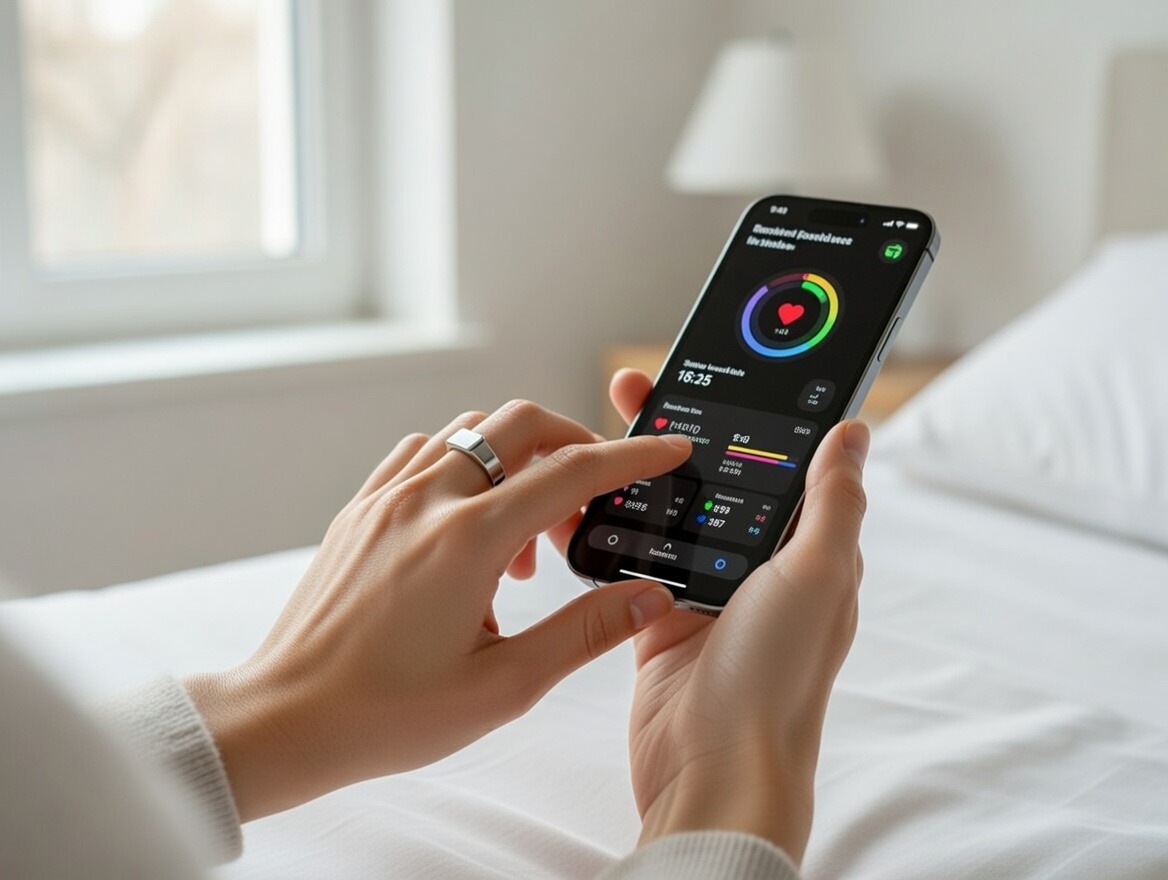
Your biometrics are the downstream outputs of your hormonal symphony. While a smart ring can’t directly measure hormone levels, it provides brilliant proxy readings for their rhythmic dance. Understanding this connection elevates your interpretation from “my HRV is low” to “my cortisol rhythm may be blunted” or “my melatonin onset might be delayed.”
Key Hormonal Correlations:
Morning Habits for Hormonal Harmony:
This understanding informs smarter choices. If your data suggests a blunted cortisol rhythm (low energy despite “enough” sleep), you double down on morning light and movement. If it suggests poor melatonin function (trouble falling asleep), you audit your evening light exposure and temperature. You’re no longer just tracking sleep; you’re indirectly nurturing the endocrine system that governs energy, mood, metabolism, and recovery. The profound systemic impact of this is explored in how sleep health affects every aspect of your life.
One of the most valuable applications of continuous biometric tracking is its role as an early warning system. Often, your body will show signs of an impending illness—or be actively fighting one—long before you feel classic symptoms like a sore throat or cough. Your overnight data is a frontline report from your immune system.
The Biometric Signature of an Immune Response:
Your Morning Action Plan When Data Suggests Illness:
This is where a responsive wellness practice proves its worth. Your job is not to “push through.”
By heeding these early warnings, you can often mitigate the severity or duration of an illness. It turns your wellness device into a personal bio-surveillance system, allowing you to care for your body proactively. Learning to distinguish these signals from normal daily fluctuations is a key skill, part of the advanced self-assessment covered in how to assess your current sleep health simple self-test.
A one-size-fits-all approach to biometrics fails because our bodies are not static. Your “normal” is a moving target influenced by life stage, hormonal cycles, and periods of acute stress. The savvy user doesn’t compare their daily score to a fixed ideal, but rather observes how their data shifts predictably within their own unique biological context.
Menstrual Cycle Correlation:
For those who menstruate, the cycle creates a clear, repeating pattern in biometric data.
Aging and the Evolution of "Normal":
As we age, several biometric shifts are normal and should be anticipated, not feared.
Periods of Acute Life Stress:
During a divorce, job loss, or family crisis, your biometrics will reflect the load. Expect sustained lower HRV, higher RHR, and poor sleep scores. The crucial practice here is self-compassion via data. Don’t berate yourself for “bad” numbers. Instead, use them as objective proof that you are under strain, validating your need for extra care, support, and simplified routines. It’s data-backed permission to focus on the fundamentals: sleep, nourishment, and gentle movement.
Recognizing these patterns prevents discouragement and fosters a nuanced, compassionate relationship with your health data. You learn to flow with your biology, not fight it. This journey of understanding your body’s unique language over time is beautifully mapped in how sleep health changes throughout your life.
The ultimate goal of biometric tracking is not to become a slave to numbers, but to achieve a state of sensibility—where your subjective feelings and the objective data are in close alignment. You feel energetic, and your HRV is high. You feel drained, and your readiness score is low. The disconnect between how we think we should feel and how our body actually feels is where poor decisions are made. Your ring helps bridge that gap.
Common Disconnects and What They Teach You:
The Practice of Correlation:
At the end of each week, spend 10 minutes reviewing. For each day, note: “How did I FEEL upon waking (1-10)?” and “What was my READINESS SCORE?” Over time, you’ll calibrate your internal gauge. You’ll learn that a “5/10 feeling” with a “90 score” means you just need to get moving, while a “5/10 feeling” with a “40 score” means you need genuine rest.
This synthesis is where true self-awareness is born. You stop dismissing your fatigue as laziness or pushing through warning signs as weakness. You develop an integrated, respectful dialogue with your body. This mindful integration is the culmination of the beginner’s path, leading to the confidence discussed in sleep health for beginners common questions answered.
With all this knowledge in hand, the final step is to move from theory to a personalized, automated practice. You will not consult this full guide every morning. Instead, you will internalize a simple decision tree—your own Morning Algorithm—that turns data into immediate action.
Here is a template to build your own. Fill in the blanks with the habits that work best for you, based on your experimentation and journaling.
My Personal Morning Algorithm
Step 1: Data Input (The Scan)
Upon waking, I check my wellness app. I note my:
Step 2: Primary Directive (The Assessment)
Step 3: Habit Selection Matrix (The Execution)
(Customize each column with your preferred habits)
Category
PERFORMANCE Day (Score > 75)
MAINTENANCE Day (Score 50-75)
RECOVERY Day (Score < 50)
Hydration
16 oz water + pinch of salt/lemon
16 oz water
16 oz water + full electrolyte mix
Light
15 min outdoor walk in sunlight
10 min on balcony/deck
5 min by window, gentle stretching
Movement
Scheduled intense workout or run
Moderate cardio or strength training
20 min gentle walk or yoga stretch
Mindfulness
5-min gratitude journal
5-min breathwork (box breathing)
10-min guided meditation or body scan
Nutrition
High-protein, complex carb breakfast
Balanced breakfast
Anti-inflammatory, high-fat/protein
Cognitive
Deep work block first 2 hours
Admin/communication tasks
Low-stakes organizing/learning
Social
Initiate contact, schedule meetings
Maintain connections, limit new
Protect space, quiet time
Step 4: The 60-Minute Launch Sequence
My first hour looks like this, chosen from the matrix above:
Step 5: Evening Tune-Up (Setting Up Tomorrow)
Based on today’s energy and score, my evening priority is:
Putting It Into Practice:
Print this algorithm. Put it on your fridge or save it as a phone note. For the first two weeks, follow it consciously. By week three, it will start to become second nature. You will have graduated from a beginner following advice to an expert executing a personalized, dynamic wellness protocol.
This systematic approach is the antidote to overwhelm. It is the final piece that ties everything together, creating the sustainable system promised at the start of this guide. For a comprehensive list of tools and tactics that support this algorithm, from tracking to environment, refer to the beginner's sleep health toolkit what you actually need.
You have journeyed from the microscopic details of sleep stages and heart rate variability to the macroscopic view of life cycles and personal algorithms. This knowledge transforms the smart ring from a fancy pedometer into a compass, a confidant, and a coach. It demystifies the inner workings of your body, providing a language for needs that were once expressed only as vague cravings, fatigue, or mood.
Remember, the data itself is inert. Its power is unleashed only through your consistent, curious, and compassionate engagement. Some mornings you will follow your algorithm perfectly. Others, life will intervene. That’s not failure; it’s part of the dataset. The goal is progressive refinement, not perfection.
Start simply. For the first week, just observe. Link your daily score to one simple question: “Based on this number, should my day be more about pushing or restoring?” In the second week, add one data-informed habit—perhaps strategic hydration or light exposure. Gradually build your algorithm, habit by habit, always using your subjective feeling and daily outcomes as your guide.
This is not a destination, but a lifelong practice of tuning in. As you continue, you’ll find that the ultimate metric of success is not a number on a screen, but a growing sense of alignment—where your energy, your actions, and your purpose flow together, guided by the quiet intelligence of your own biology, whispered to you each morning by the ring on your finger.
The night’s report is in. Your personalized morning awaits. You are no longer a beginner guessing at wellness; you are a practitioner, equipped with knowledge. Now, go build your day.
Your Trusted Sleep Advocate: Sleep Foundation — https://www.sleepfoundation.org
Discover a digital archive of scholarly articles: NIH — https://www.ncbi.nlm.nih.gov/
39 million citations for biomedical literature :PubMed — https://pubmed.ncbi.nlm.nih.gov/
Experts at Harvard Health Publishing covering a variety of health topics — https://www.health.harvard.edu/blog/
Every life deserves world class care :Cleveland Clinic - https://my.clevelandclinic.org/health
Wearable technology and the future of predictive health monitoring :MIT Technology Review — https://www.technologyreview.com/
Dedicated to the well-being of all people and guided by science :World Health Organization — https://www.who.int/news-room/
Psychological science and knowledge to benefit society and improve lives. :APA — https://www.apa.org/monitor/
Cutting-edge insights on human longevity and peak performance:
Lifespan Research — https://www.lifespan.io/
Global authority on exercise physiology, sports performance, and human recovery:
American College of Sports Medicine — https://www.acsm.org/
Neuroscience-driven guidance for better focus, sleep, and mental clarity:
Stanford Human Performance Lab — https://humanperformance.stanford.edu/
Evidence-based psychology and mind–body wellness resources:
Mayo Clinic — https://www.mayoclinic.org/healthy-lifestyle/
Data-backed research on emotional wellbeing, stress biology, and resilience:
American Institute of Stress — https://www.stress.org/


