


The Complete Beginner-Friendly Guide to Building Resilience: Ring-Tracked Strategies
A complete beginner's guide to building mental and physical resilience, tracked by your ring.
A complete beginner's guide to building mental and physical resilience, tracked by your ring.
%402x.svg)
Resilience is not an inborn trait reserved for the lucky few. It is not stoic indifference, nor is it the rugged individualism our culture so often celebrates. True resilience is a dynamic, learnable process—a muscle you can systematically strengthen with the right feedback. It’s your nervous system’s ability to encounter stress, bend without breaking, and return to a state of equilibrium, wiser and more adaptable than before.
For years, building this capacity felt intangible. We relied on vague advice like "think positive" or "just push through," without concrete data on how our bodies were actually responding to life's pressures. We were flying blind.
Today, a revolution in personal biometrics has changed the game. The advent of sophisticated, comfortable smart rings provides a 24/7 window into the very physiological foundations of resilience: your sleep architecture, your heart rate variability (HRV), your stress load, and your recovery capacity. This continuous, objective data transforms resilience from a philosophical concept into a trackable, optimizable system.
This guide is your roadmap to that system. Whether you're navigating career burnout, personal upheaval, or simply the relentless pace of modern life, we will demystify resilience. Using the unparalleled data from your smart ring as your guide, you’ll learn to interpret your body's signals, apply science-backed strategies, and measure your progress in real-time. Forget guesswork. Welcome to the era of precision resilience.
We often mistake resilience for endurance—the ability to white-knuckle our way through endless hardship. We praise the person who works 80-hour weeks on minimal sleep as "tough." But this is a dangerous mischaracterization. That isn’t resilience; it’s depletion in slow motion. True resilience is not about avoiding stress or never falling. It’s about the speed and quality of your recovery.
Scientifically, resilience is deeply rooted in your autonomic nervous system (ANS)—the control center for your fight-or-flight (sympathetic) and rest-and-digest (parasympathetic) responses. A resilient nervous system is like a skilled surfer: it can ride the massive wave of a stressful event (a work deadline, a difficult conversation, an illness), feel the impact, and then efficiently return to calm waters. A non-resilient system gets wiped out by the same wave and struggles to surface, left thrashing in the aftermath.
Your smart ring provides the most direct proxy for this internal dance: Heart Rate Variability (HRV). Contrary to popular belief, a healthy heart does not beat with the monotonous regularity of a metronome. The tiny, millisecond variations between each heartbeat are a sign of a heart and nervous system that are responsive and adaptable. A higher HRV typically indicates strong parasympathetic tone and recovery capacity—the hallmarks of resilience. A lower, less variable HRV often signals a nervous system stuck in a state of chronic sympathetic arousal, or one that is simply depleted.
Therefore, the foundational principle of this guide is this: You cannot manage what you do not measure. Asking yourself "How stressed am I?" is subjective and flawed. Our perception is clouded by habit, denial, and societal pressure. Your ring’s data—tracking your HRV trends, your sleep stages, your resting heart rate (RHR), and your body temperature—answers the objective question: "What is my body’s current stress and recovery status?"
This data moves you from narrative to truth. You might feel "fine," but if your ring shows a week-long plummet in HRV, a rising RHR, and poor deep sleep, your body is telling a different story. It’s signaling a resilience deficit. Recognizing this early is your superpower. It allows you to intervene with targeted strategies before you hit a wall of burnout, anxiety, or illness.
Building resilience, therefore, becomes a conscious practice of applying stress (the "load") and then prioritizing recovery (the "adaptation"). Your ring is your coach, showing you when you’ve pushed enough and, most critically, when and how you need to pull back to rebuild stronger. It shifts the goal from surviving to thriving, with data as your unwavering guide.
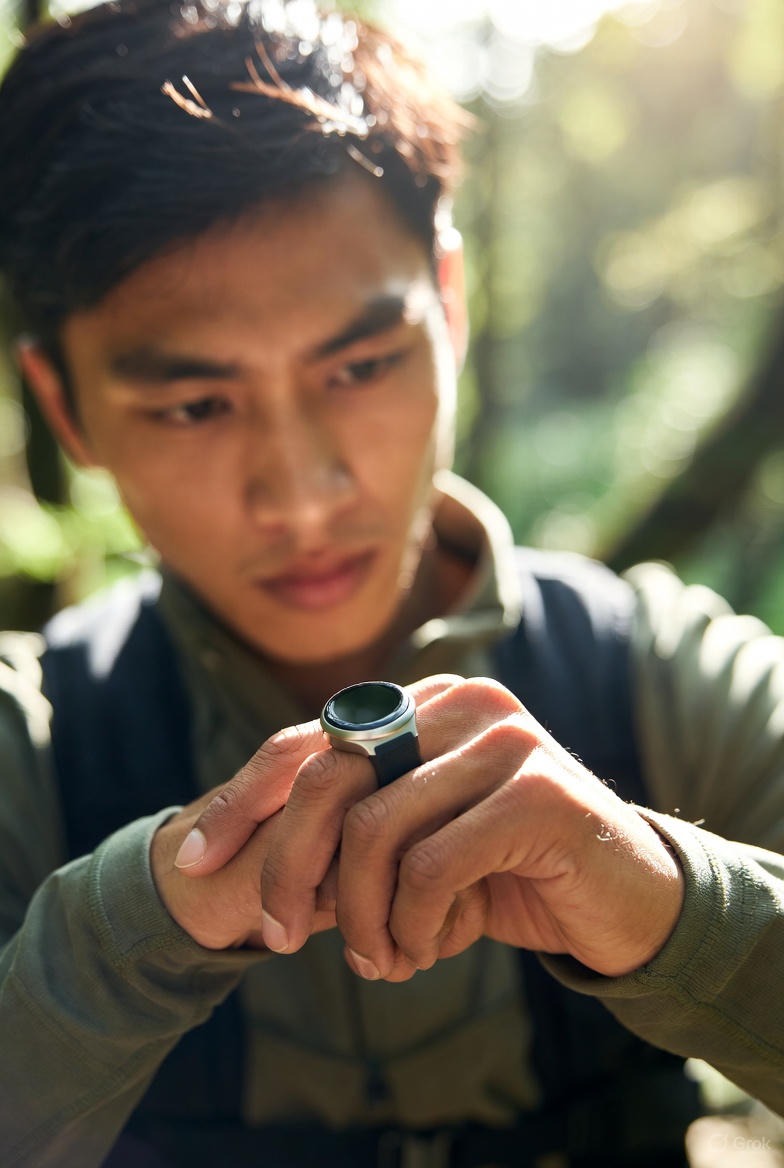
Before we can build, we must learn to read the blueprint. Your smart ring is a powerhouse of physiological data, but raw numbers are meaningless without interpretation. Think of your daily readiness or recovery score as the headline, but the underlying metrics are the full story. Let’s break down the core biomarkers of resilience and what they’re telling you.
1. Heart Rate Variability (HRV): The North Star of Resilience
As introduced, HRV is your most direct insight into autonomic nervous system balance. It’s sensitive to everything: sleep, nutrition, exercise, emotional stress, and even your thoughts.
2. Resting Heart Rate (RHR): Your Engine’s Idle Speed
Your RHR is exactly what it sounds like—your heart’s beats per minute when you are truly at rest (best measured during deep sleep). A well-recovered, resilient body has a lower, more efficient idle. Chronic stress, poor sleep, illness, or dehydration can cause your RHR to elevate.
3. Sleep Stages (Deep, REM, Light): The Recovery Theater
Sleep is non-negotiable for resilience. It’s when your body performs critical repair, memory consolidation, and hormonal regulation. Each stage plays a role:
4. Body Temperature & Respiratory Rate: The Subtle Signals
Less discussed but equally important are your nocturnal body temperature and breathing rate.
Your mission is to start viewing these metrics not as isolated numbers, but as an interconnected dashboard. For example, a night of poor sleep (low deep sleep) will almost certainly lead to a lower HRV and higher RHR the next morning, lowering your readiness score. That’s your signal to prioritize gentle recovery over intense stress. By learning this language, you begin a dialogue with your body, using your ring as the translator. This is the foundation of data-driven resilience.
If resilience is a fortress, sleep is its deepest, most secure foundation. You cannot build atop a crumbling base. Every strategy in this guide will be less effective—or entirely futile—without prioritizing this non-negotiable biological process. Your smart ring transforms sleep from a black box into a transparent, optimizable system.
Sleep is when your brain clears metabolic waste via the glymphatic system, when growth hormone (crucial for repair) is released, and when your nervous system downshifts into its most profound state of parasympathetic recovery. It’s not passive; it’s an active state of healing. Your ring’s sleep stage data is the proof of that work being done (or not).
Actionable Strategies for Ring-Optimized Sleep:
1. Honor Your Chronotype with Consistent Timing.
Your ring will show you your natural sleep patterns. Do you get your deepest sleep before midnight? Do you consistently wake up just before your alarm? Use this data to set a consistent sleep and wake time, even on weekends. This regularity is the bedrock of circadian rhythm, which governs not just sleep, but hormone release, digestion, and mood. Inconsistency is a major source of physiological stress. For those with irregular schedules, the nighttime routine for people who work late offers tailored strategies to maintain circadian alignment.
2. Engineer Your Environment for Deep Sleep.
Your ring’s temperature data is a direct feedback loop for your bedroom environment. The ideal temperature for most people is between 60-67°F (15.5-19.5°C). A cool room facilitates the core body temperature drop necessary to initiate and maintain deep sleep. This is a pillar of how temperature control completes your nighttime routine. Beyond temperature, ensure your room is pitch dark (consider blackout curtains or a sleep mask) and as quiet as possible (use white noise if needed).
3. Craft a Powerful, Consistent Wind-Down Ritual.
Your nervous system needs a clear signal that it’s time to shift from "doing" to "being." A 60-90 minute wind-down routine is not a luxury; it’s a resilience protocol. This is where behavioral data (your routine) meets physiological data (your sleep scores).
4. Use Data to Diagnose Sleep Disruptors.
Your ring is a brilliant detective. Notice a correlation between:
By tracking these variables and observing their impact on your sleep metrics the next morning, you can make precise, personalized adjustments. For a comprehensive approach to creating the ideal space for rest, explore our guide on nighttime wellness routine setting up your bedroom.
Remember, one night of poor sleep is a blip. The power is in the trend. Use your ring’s longitudinal data to see how changes in your behavior shift your sleep quality over weeks. This turns sleep from a mystery into a mastered skill, directly fueling your resilience reservoir.
The goal of resilience is not to live a stress-free life—that’s impossible and, ironically, undesirable. The goal is to become anti-fragile: a system that improves and grows stronger from the right kind of stress. This process is called stress inoculation, and your smart ring is the perfect tool to guide you through it safely and effectively.
Think of it like strength training. You deliberately place a controlled stressor (weight) on your muscles. This creates micro-tears. Then, with proper nutrition and rest, your body repairs those tears, building back stronger muscle fibers. The same principle applies to your nervous system. Controlled, acute stressors—when followed by adequate recovery—build a more robust, adaptable system. The peril lies in the dose: too much stress without recovery leads to breakdown (overtraining, burnout). Too little leads to stagnation and fragility.
How to Use Your Ring for Precision Stress Inoculation:
1. Identify Your Current Baseline.
You cannot safely apply stress if you don’t know your starting point. Spend 1-2 weeks establishing your baseline metrics while living your "normal" life. What’s your average HRV? Your average RHR? Your typical sleep score? This is your foundational data.
2. Apply a Controlled Stressor.
Choose one deliberate, acute stressor to "inoculate" yourself with. This could be:
3. Monitor the Acute Response.
This is where the ring shines. The morning after your applied stressor, check your data.
4. Prioritize Recovery Based on Data.
Based on the response, you decide your next move.
5. Watch for the Adaptation.
The true sign of building resilience is trend improvement. Over 4-6 weeks of this deliberate cycle (apply stress → recover based on data → repeat), you should see your baseline HRV begin to trend upward and your baseline RHR trend downward. This means your nervous system is not just bouncing back to where it was; it’s building back stronger. It’s adapting.
This data-driven cycle removes ego and guesswork. You’re no longer pushing yourself because you "should." You’re either pushing because your data says you can safely absorb the stress, or you’re pulling back because your data says you must. This turns stress from a feared enemy into a measured tool for growth. It’s the core practice of modern resilience.

While sleep and stress inoculation are foundational, long-term strategies, you also need tools for the moment—when stress hits suddenly in a meeting, during a commute, or in the middle of the night. Your breath is the most direct, accessible, and powerful remote control you have over your autonomic nervous system. And with advanced smart rings tracking your HRV and respiratory rate in real-time, you can now see the immediate, physiological impact of your breathing.
The science is clear: slow, deliberate, diaphragmatic breathing stimulates the vagus nerve, the superhighway of the parasympathetic nervous system. This directly counters the fight-or-flight response, lowering heart rate, blood pressure, and cortisol. It’s resilience in action, on demand.
Ring-Verified Breathing Techniques:
1. The Resonance Frequency Breath (The HRV Maximizer).
This is the gold-standard breath for boosting HRV and creating instant calm. Everyone has a specific breathing rate (typically between 4.5 and 6.5 breaths per minute) where the rhythm of the breath creates a "resonance" with the natural rhythms of the cardiovascular system, maximizing HRV.
2. The Physiological Sigh (The 30-Second Stress Interrupter).
Discovered by Stanford researchers, this is the fastest, most effective way to reduce acute stress and arousal.
3. Box Breathing (The Navy SEAL Focus Breath).
Excellent for calming anxiety and sharpening focus. The equal ratios make it easy to remember.
Integrating Breath with Your Ring Data:
Breathing is not just "taking deep breaths." It is a precise, measurable biohack. Your ring provides the feedback loop, showing you which techniques work best for your unique physiology and proving that you are actively shifting your state. This builds agency—the confident knowledge that you can modulate your stress response, which is perhaps the most resilient mindset of all.
Exercise is a classic double-edged sword in the resilience equation. It is one of the most potent forms of beneficial stress (hormesis), driving adaptations that improve cardiovascular health, mood, and metabolic function. Yet, it is also one of the most common causes of chronic stress and overtraining when applied without recovery. The line between building and breaking is thin. Your smart ring’s recovery metrics are the guardrails that keep you safely on the productive side of that line.
The goal is to align your movement intensity with your recovery capacity on any given day. This is the essence of personalized, responsive training.
Creating a Ring-Guided Movement Protocol:
1. Categorize Your Workouts by Stress Load.
2. Let Your Morning Readiness Score Guide Your Day's Intensity.
This is the paradigm shift. Instead of following a rigid calendar-based plan ("Today is HIIT day, no matter what"), you let your body's data dictate the plan.
3. Use HRV & RHR Trends for Weekly/Monthly Planning.
Look beyond the daily score.
4. Embrace "Non-Exercise" Movement.
Never underestimate the resilience benefits of consistent, low-grade movement throughout the day—walking, taking the stairs, gentle stretching. This promotes circulation, aids lymphatic drainage, and reduces the inflammatory and stressful impact of prolonged sitting, without imposing a significant recovery burden. On low-readiness days, this is your primary movement goal.
By tethering your movement choices to your biometric data, you stop fighting your body and start collaborating with it. You train smarter, reduce injury risk, and ensure that your exercise habit is unequivocally building—not eroding—your foundational resilience. Your ring becomes your personal coach, telling you not just to "go hard," but, more importantly, when to "go easy."
You cannot out-breathe, out-sleep, or out-think a poor diet. The food you consume provides the raw materials for every neurotransmitter, hormone, and cell membrane involved in your stress response and recovery. Nutritional psychiatry is a burgeoning field, and the data is clear: what you eat directly influences mood, anxiety levels, cognitive function, and, as seen in your ring’s metrics, sleep quality and HRV.
Think of food as information for your cells. Inflammatory, nutrient-poor foods send signals of crisis, stressing the system. Anti-inflammatory, nutrient-dense foods send signals of safety and abundance, supporting repair. Your ring’s data, particularly sleep and HRV, will often reflect these choices with surprising speed.
Dietary Principles for a Stress-Resistant Physiology:
1. Stabilize Blood Sugar Like Your Resilience Depends On It (It Does).
Blood sugar rollercoasters are a primary source of physiological stress. A spike causes an insulin surge, often followed by a crash that triggers the release of cortisol and adrenaline—your body’s stress hormones—to mobilize more glucose. This constant hormonal ping-pong keeps your nervous system on edge.
2. Prioritize Magnesium: The Original Chill Pill.
Magnesium is involved in over 300 enzymatic reactions, including those that regulate the nervous system. It acts as a natural NMDA receptor blocker, calming neural excitability. Deficiency is linked to anxiety, poor sleep, and muscle tension.
3. Fuel Your Gut-Brain Axis.
The vagus nerve provides a direct communication line between your gut and your brain. An inflamed, imbalanced gut microbiome can send pro-inflammatory signals to the brain, exacerbating stress and anxiety. A healthy gut supports a calm brain.
4. Time Your Caffeine for Resilience, Not Jitters.
Caffeine blocks adenosine, a neurotransmitter that promotes sleep drive. It also stimulates cortisol release. Consuming it too late can fragment sleep architecture, which your ring will clearly show as reduced deep sleep and lower HRV.
5. Practice Conscious Hydration.
Even mild dehydration increases cortisol. Water is essential for every cellular process, including neurotransmitter production and waste removal.
Using Your Ring for Nutritional Biofeedback:
Become a detective. Notice the correlation between:
Your body’s data doesn’t lie. It will show you which foods are truly "stressors" and which are "supports." This turns nutrition from a set of restrictive rules into an empowering experiment in self-optimization, where the goal is a calm, resilient nervous system reflected in your daily scores.
Resilience is not just a physical phenomenon. Your thoughts, emotions, and beliefs directly trigger physiological cascades that your smart ring measures. A cycle of anxious rumination can elevate your daytime stress score and lower your nighttime HRV just as effectively as a hard workout. Therefore, building cognitive and emotional resilience is non-negotiable. It’s about developing emotional agility—the ability to encounter your inner experiences with curiosity and compassion, rather than being hijacked by them.
Data-Backed Cognitive Strategies:
1. Cognitive Defusion: Watching Your Thoughts, Not Being Your Thoughts.
This is a core concept from Acceptance and Commitment Therapy (ACT). Instead of fusing with a thought ("I'm a failure"), you learn to observe it ("I'm having the thought that I'm a failure"). This creates psychological distance, reducing the thought’s emotional and physiological impact.
2. Scheduled Worry & The Power of Journaling.
Ruminating thoughts often spiral out of control because we try to suppress them or they hit us at vulnerable times (like when trying to fall asleep). "Scheduling" your worry contains it.
3. Cultivate Awe and Gratitude.
These are not just fluffy concepts; they have measurable physiological effects. Experiencing awe (in nature, art, music) can lower inflammatory markers. Practicing gratitude has been shown to improve HRV and promote better sleep.
4. Develop a Self-Compassion Mantra.
During times of failure or stress, our inner critic can be our harshest enemy, activating threat circuits in the brain. Self-compassion activates caregiving and safety circuits.
Connecting Mind to Ring Data:
The ultimate feedback loop is seeing how these practices affect your biomarkers. After a mindfulness meditation or a session of cognitive reframing, check your ring’s stress score or live heart rate. You will often see a tangible drop. This proves that changing your mental state changes your physical state. Conversely, after a period of obsessive worry or negative self-talk, you might see a higher resting heart rate or a lower sleep efficiency score.
This integration is powerful. It moves mindfulness from an abstract practice to a concrete, measurable tool for resilience. You are not just "feeling" calmer; your body’s data is proving you are calmer. This reinforces the practice, creating a virtuous cycle where mental strategies become as trusted and tangible as physical ones for managing your resilience reserves.
Beyond daily sleep and nutrition, there are potent, focused practices that can accelerate nervous system recovery, especially when your ring data shows you’re in a depleted state (chronically low HRV, high RHR, poor sleep). Think of these as "advanced repair protocols" for your resilience infrastructure.
1. Strategic Heat & Cold Exposure: Hormetic Powerhouses.
Both sauna and cold plunge are forms of hormetic stress—short, acute stressors that trigger powerful adaptive responses when followed by recovery.
2. Vagus Nerve Stimulation (VNS) Practices.
The vagus nerve is the command center of the parasympathetic system. Directly stimulating it is a direct line to calm.
3. Intentional Digital Detox & Sensory Fasting.
Our modern environment is a constant barrage of information, notifications, and sensory input—a chronic, low-grade stressor on the nervous system. Periodically fasting from this input is a profound recovery tool.
4. The Power of Non-Sleep Deep Rest (NSDR).
Pioneered by Dr. Andrew Huberman, NSDR (like Yoga Nidra or guided hypnosis) is a state of conscious, deep relaxation that is not sleep. A 10-20 minute NSDR session can lower cortisol, increase dopamine, and provide a significant boost in mental and physical recovery, similar to a short nap but without sleep inertia.
Integrating these advanced tools into your routine, guided by your ring’s data on when you need deep recovery versus when you can handle more stress, creates a sophisticated, personalized resilience ecosystem. You are no longer passively hoping to recover; you are actively and strategically engineering it.
By this point, you have a comprehensive toolkit: the knowledge of key biomarkers, and strategies for sleep, stress inoculation, breathing, movement, nutrition, mindset, and advanced recovery. Now, we synthesize this into a living, breathing, personalized resilience protocol—a dynamic system that evolves with you, guided by your ring’s continuous feedback.
This is not a rigid, one-size-fits-all plan. It is a framework for intelligent self-experimentation.
Step 1: Establish Your Non-Negotiables (The Foundation).
These are the daily habits that run regardless of your data score. They are your baseline investment in resilience.
Step 2: Define Your Daily Decision Matrix (Let Data Drive).
This is where you use your morning readiness score to choose your behaviors for the next 24 hours. Create a simple chart for yourself:
Morning Readiness Score
Movement
Work Intensity
Evening Priority
High (85+)
Planned intense workout.
Tackle most demanding cognitive tasks.
Social activity or skill development. Maintain standard wind-down.
Moderate (70-84)
Moderate exercise or skill work.
Focus on medium-priority tasks.
Gentle recovery. Consider a sauna or long walk. Prioritize wind-down.
Low (<70)
Recovery only. Walk, stretch, rest.
Light administrative tasks only. Avoid high-stakes decisions.
Aggressive recovery. Early bedtime. NSDR. Digital detox. Consider the nighttime routine that lowers cortisol naturally.
Step 3: Conduct Weekly Reviews (Spot Trends, Not Just Dots).
Every Sunday, spend 15 minutes reviewing your weekly data in your ring’s app.
Step 4: Embrace the Quarterly "Resilience Audit."
Every 3 months, do a deeper audit.
The Ultimate Mindset: You Are Both Scientist and Subject.
Your life is the experiment. Your ring is the lab equipment. Each strategy is a hypothesis ("If I do X, my Y metric should improve"). You test, observe the data, and adapt. This process removes judgment and installs curiosity. A low readiness score isn't "bad"; it's crucial information. A failed habit isn't a "failure"; it's an eliminated variable that brings you closer to what truly works for your unique biology.
By following this protocol, you stop chasing arbitrary wellness trends and start building a resilient life, data point by data point. You are no longer at the mercy of stress. You are the architect of your recovery.
The previous sections equipped you with the science, the metrics, and the personal protocols for building resilience. But resilience isn’t built in a vacuum. It’s forged in the messy, unpredictable reality of daily life—through travel, social obligations, life transitions, and inevitable setbacks. This is where your smart ring transitions from a nice-to-have tracker to an essential lifeline, providing objective grounding when your subjective world feels chaotic. True resilience isn’t about maintaining perfect scores; it’s about navigating imperfection without losing your way.
Travel—whether for work or pleasure—is a profound resilience stress test. It disrupts every pillar we’ve built: sleep, nutrition, routine, and circadian rhythms through time zones. Jet lag is, physiologically, a state of severe internal dissonance. Your ring doesn’t take vacations, making it the perfect companion to mitigate the damage and help you adapt faster.
Pre-Travel Preparation (The Proactive Protocol):
The Travel Day & Arrival Strategy:
The Ring as Your Anchor:
Your data provides sanity. You’ll see your HRV plummet and your RHR spike. This isn’t a personal failing; it’s a predictable physiological response. By watching these metrics, you can make smarter decisions: "My HRV is still 30% below baseline, so I’ll skip the conference happy hour and prioritize an early bedtime instead." This objective feedback helps you resist social pressure and listen to what your body genuinely needs to recover. For business travelers, maintaining any semblance of routine is key, as outlined in nighttime wellness routine in hotels maintaining consistency.
Humans are inherently social beings, and our relationships are a double-edged sword for resilience. Strong social connections are one of the most powerful predictors of long-term health and resilience, buffering against stress. However, toxic relationships, social exhaustion, and a lack of boundaries can be massive resilience drains. Your ring can help you navigate this complex landscape.
Quantifying the Impact of Socializing:
Setting Data-Informed Boundaries:
Your ring gives you the courage to say "no" with evidence. If you see a consistent pattern of depleted metrics after certain types of events or interactions, you have objective proof of their cost.
This isn’t antisocial; it’s pro-resilience. It allows you to invest your finite social energy into the connections that truly replenish you, making your social life a net positive in your resilience bank account. For new parents, whose social and physical resources are utterly transformed, finding these micro-boundaries is essential, as explored in the nighttime routine for new parents sleep when possible.
Setbacks are not deviations from the resilience path; they are part of the path. A period of burnout, a bout of illness, a grief event, or a major life change (new job, move, relationship shift) will crater your metrics. This is not failure. This is the most critical time to lean on your ring’s data, not as a judge, but as a compassionate guide back to equilibrium.
The Phases of a Setback (Seen Through Data):
A Data-Driven Recovery Protocol for Setbacks:
This process teaches the ultimate resilience lesson: respecting the cycle. Recovery is not optional; it’s the phase where growth is solidified. For those navigating the specific stressors that impact mental health, integrating supportive practices is key, as discussed in nighttime wellness rituals for mental health support.
Your resilience protocol is not a static document. Your body, your life, and your stressors evolve. What worked at 25 may not work at 45. The postpartum period, perimenopause, a career change, or entering retirement all represent fundamental shifts in your physiological and psychological landscape. Your smart ring is essential for guiding these transitions, helping you tune into your changing needs.
Listening to the Data Through Life Stages:
The Quarterly "Protocol Pivot":
During your quarterly resilience audit, ask bigger questions:
This long-term view prevents stagnation and ensures your resilience practice grows and matures with you. It turns aging and change from things to fear into fascinating processes of continuous self-optimization.

Resilience is contagious. When one person in a household prioritizes sleep, manages stress, and navigates emotions with agility, it creates a ripple effect. Your data-driven journey can become a powerful tool for fostering resilience in your family or community, moving from self-optimization to system optimization.
Modeling with Data (For Partners & Roommates):
Share your insights in a non-judgmental way. "My ring showed my HRV was really low after we argued late last night, and my sleep was terrible. Can we agree to table difficult conversations before 8 PM?" This frames the need as a biological imperative, not a personal criticism. It invites collaboration on creating a home environment that supports everyone’s nervous systems.
Creating Family Rhythms:
The Resilience-Oriented Social Circle:
Your journey can inspire your community. Suggest a "walk and talk" instead of drinks. Host a dinner where the focus is on connection and ending early. Share an article about the science of sleep. By subtly shifting social norms toward ones that support recovery, you build a microenvironment that sustains your own resilience and supports others. This is especially helpful for new parents building a support network, a theme in the nighttime routine for new parents sleep when possible.
Building a resilient community creates a positive feedback loop: a supportive environment makes it easier for you to maintain your habits, and your stable, regulated presence makes the environment more supportive for others. It elevates resilience from a private pursuit to a shared value.
We are on the cusp of a paradigm shift in personal health: moving from reactive to predictive. Currently, your smart ring is a superb reactive and real-time tool—it tells you how you responded to yesterday and what state you’re in today. The near future lies in its ability to forecast.
The Predictive Potential:
Advanced algorithms are beginning to analyze your longitudinal data (weeks and months of HRV, sleep, RHR, temperature) to identify patterns that precede a setback. Could a specific combination of a 3-day HRV trend, a slight temperature rise, and increased sleep fragmentation predict the onset of a cold 48 hours before you feel symptoms? Early research suggests yes.
Personalized AI Coaches:
Imagine your ring data integrated with an AI that knows your calendar, your historical responses to stress, and your goals. It could nudge you: "Based on your low recovery score and your big presentation tomorrow, consider a 10-minute NSDR session at 3 PM," or "Your data suggests you adapt well to early workouts, but your meeting schedule is light tomorrow afternoon. Consider moving your workout to the morning for optimal performance."
The Ethical, Human-Centric Future:
This powerful technology must serve human wisdom, not replace it. The goal of predictive analytics is not to make you a slave to an algorithm, obsessed with optimizing every minute. The goal is to create more agency and freedom. By offloading the cognitive load of interpreting complex physiological signals to a trusted system, you free up mental and emotional energy to actually live—to be present with loved ones, immersed in creative work, or engaged in your community. You use the predictions to make intelligent choices, then you put the device down and live out those choices fully.
This future positions your smart ring not as a critic, but as a truly intelligent partner in resilience—one that learns your unique patterns, warns you of storms on your horizon, and guides you toward the practices that will keep you not just afloat, but sailing steadily toward your chosen destination. The journey of resilience then becomes a graceful dance between human intuition and machine intelligence, each making the other more powerful.
You’ve mastered interpreting your ring’s dashboard and applying targeted strategies. Now, we elevate the practice by integrating this biometric data stream with the other systems that govern your life: your calendar, your to-do list, and your environment. This creates a seamless, automated ecosystem for resilience, reducing decision fatigue and making supportive choices the default.
1. Calendar Blocking with Biometric Intelligence.
Your time is your most precious resource for resilience. Use your historical ring data to inform how you schedule it.
2. Environmental Cues and Automation.
Your environment should work for your resilience, not against it. Use smart home technology to create triggers based on your ring data or time-based routines.
3. The Habit-Data Feedback Loop.
Use a habit-tracking app alongside your ring’s data. Record not just “did I meditate?” but “what type of meditation did I do?” Then, correlate it. You may discover that a body-scan meditation before bed correlates with 10% more deep sleep than a loving-kindness meditation. This level of granularity allows for ultra-precise protocol refinement. You’re not just “doing wellness”; you’re engineering it.
This level of integration turns resilience from a series of discrete actions into a living, breathing aspect of your lifestyle. Your space and schedule actively support your biology, creating a frictionless path toward recovery and growth.
Initial enthusiasm is easy. The hard part is maintaining this data-informed practice through busy seasons, periods of low motivation, and the plain monotony of daily life. This is where we move from tactics to psychology. Sustaining resilience requires understanding your own drivers and building a system that withstands fluctuation.
1. Shift from Goal-Oriented to System-Oriented Thinking.
2. Leverage “Precision Celebrations.”
Celebrate actionable inputs, not just optimal outcomes. Your sleep score might be low because of factors outside your control (a neighbor’s dog, a child’s nightmare). But you can control your wind-down.
3. Implement the “Two-Day Rule” for Data Tracking.
Never miss checking your data two days in a row. Life happens. You might forget to wear your ring one night or be too rushed to check your score one morning. The Two-Day Rule prevents a single miss from becoming a week-long lapse, which can easily spiral into abandoning the practice altogether. Consistency in observation is more important than perfection in execution.
4. Cultivate Curiosity Over Judgment.
This is the most important mindset shift. When you see a poor score, your inner critic might say, “You failed. You’re lazy.” The resilient practitioner asks:
5. Build a “Resilience Reservoir” Through Tiny Habits.
On days when you have zero capacity for a full protocol, have a set of 2-minute “reservoir filling” actions:
While data is our guide, the ultimate destination is a state of being—a Resilient Mindset. This is the internal software that runs regardless of the hardware (your ring) or temporary fluctuations in your metrics. It’s the quiet confidence that you can handle what comes, not because you’ll always be at peak readiness, but because you know how to return to equilibrium.
Core Tenets of the Resilient Mindset:
1. Non-Attachment to Perfect Scores.
You will have low HRV days. You will have terrible sleep nights. The resilient person does not see this as a catastrophe or a sign the system is broken. They see it as a data point in a long, meaningful trend. They understand that resilience is the ability to recover from low points, not the ability to avoid them entirely. This allows you to live life—to have the late night with friends, to take the red-eye flight, to experience grief—without guilt or anxiety, trusting in your ability to guide yourself back.
2. Self-Compassion as a Biological Imperative.
Research shows self-criticism activates the same threat networks in the brain as physical danger, raising cortisol and inflammatory markers. Self-compassion, conversely, activates the caregiving system, releasing oxytocin and promoting feelings of safety. The resilient mindset understands that speaking kindly to yourself is not “soft”; it’s a direct intervention on your stress physiology. It’s the mental equivalent of a high-HRV state.
3. The Paradigm of “And” vs. “Or.”
A non-resilient mindset sees dichotomies: “I’m stressed OR I’m relaxed.” “I’m succeeding OR I’m failing.” The resilient mindset embraces “and.”
4. Viewing the Ring as a Compass, Not a Shackle.
The final stage of mastery is knowing when to look and when to look away. There are times to deeply analyze your weekly trends to solve a problem. And there are times—on vacation, during a sacred holiday, in a flow state of creativity—to simply wear the ring, let it collect data in the background, and be fully immersed in the human experience. You trust that the habits are ingrained, and you can return to the data later for reflection. This prevents the practice from becoming an obsessive burden, ensuring it remains a liberating tool. This balanced approach is key for sustaining rituals long-term, a theme in the weekend nighttime routine should it be different.
We began this journey by redefining resilience: not as grit or stoicism, but as the dynamic, measurable capacity of your nervous system to withstand stress and return to balance. We equipped you with the translator for your body’s language—the smart ring—and a comprehensive toolkit of strategies for sleep, stress, movement, nutrition, and mind.
You’ve learned to read the dashboard, apply the protocols in the real world, navigate setbacks with data as your guide, and integrate these practices into the fabric of your life and community. You’ve looked toward a future where this knowledge becomes predictive and seamlessly automated.
But as we conclude, it’s vital to zoom out. The ultimate metric of your resilience is not a number on a screen. It is the quality of your life.
It is found in these moments:
Your smart ring provides the feedback loop that makes this possible. It turns the invisible visible. It converts the subjective into the objective. It empowers you to make choices that are not based on societal “shoulds,” but on the deep, biological truth of what you need to thrive.
This journey is iterative, personal, and never finished. There is no final destination of “perfect resilience.” There is only the ongoing, curious, compassionate practice of listening to your data, applying wisdom, and returning, again and again, to a state of capacity and strength.
So, wear your ring. Observe without judgment. Experiment with curiosity. Celebrate the tiny wins. Navigate the setbacks with grace. Let the data inform you, but let your lived experience—your joy, your connections, your contributions—be the ultimate measure of your success.
You are no longer at the mercy of stress. You are the architect of your recovery, the scientist of your own well-being, and the author of a resilient life. Now, go live it.
Your Trusted Sleep Advocate: Sleep Foundation — https://www.sleepfoundation.org
Discover a digital archive of scholarly articles: NIH — https://www.ncbi.nlm.nih.gov/
39 million citations for biomedical literature :PubMed — https://pubmed.ncbi.nlm.nih.gov/
Experts at Harvard Health Publishing covering a variety of health topics — https://www.health.harvard.edu/blog/
Every life deserves world class care :Cleveland Clinic - https://my.clevelandclinic.org/health
Wearable technology and the future of predictive health monitoring :MIT Technology Review — https://www.technologyreview.com/
Dedicated to the well-being of all people and guided by science :World Health Organization — https://www.who.int/news-room/
Psychological science and knowledge to benefit society and improve lives. :APA — https://www.apa.org/monitor/
Cutting-edge insights on human longevity and peak performance:
Lifespan Research — https://www.lifespan.io/
Global authority on exercise physiology, sports performance, and human recovery:
American College of Sports Medicine — https://www.acsm.org/
Neuroscience-driven guidance for better focus, sleep, and mental clarity:
Stanford Human Performance Lab — https://humanperformance.stanford.edu/
Evidence-based psychology and mind–body wellness resources:
Mayo Clinic — https://www.mayoclinic.org/healthy-lifestyle/
Data-backed research on emotional wellbeing, stress biology, and resilience:
American Institute of Stress — https://www.stress.org/


