


The Complete Beginner-Friendly Guide to Sustainable Health: Your Ring as Long-Term Partner
A complete beginner's guide to long-term health, using your ring as a partner for sustainable habits.
A complete beginner's guide to long-term health, using your ring as a partner for sustainable habits.
%402x.svg)
In a world saturated with quick fixes and fad diets, the pursuit of lasting health can feel exhausting. We bounce from one trending superfood to the next, download fitness apps we abandon in a week, and buy gadgets that end up in a drawer, collecting dust alongside our motivation. This cycle of intense effort followed by inevitable burnout isn't just ineffective—it’s disheartening. It makes us feel like sustainable wellness is a destination only for the superhuman, governed by relentless discipline and sacrifice.
But what if the secret to lasting health isn’t about more effort, but better insight? What if, instead of another demanding taskmaster, you had a gentle, insightful partner on your journey? This is the paradigm shift offered by the modern smart ring. It’s not another piece of tech to manage; it’s a companion for understanding your body’s unique language.
This guide is not about a 30-day crash course. It’s about building a lifelong relationship with your health, supported by continuous, personalized data. We’ll move beyond generic steps-per-day goals and into the profound metrics that truly govern how you feel, think, and live: the quality of your sleep, the resilience of your nervous system, your body’s readiness for stress, and the subtle rhythms of your daily energy.
Your smart ring is the key to unlocking this personal bio-feedback loop. It turns the abstract concept of “health” into a tangible, daily conversation with your own physiology. From the absolute beginner taking their first steps toward awareness to someone looking to deeply optimize their wellbeing, this guide will show you how to let this discreet piece of technology become your most trusted advisor. We’ll explore how to interpret its signals, translate data into actionable habits, and ultimately, build a sustainable health practice that evolves with you for life. Let’s begin the journey from chaotic effort to coherent, data-informed harmony.
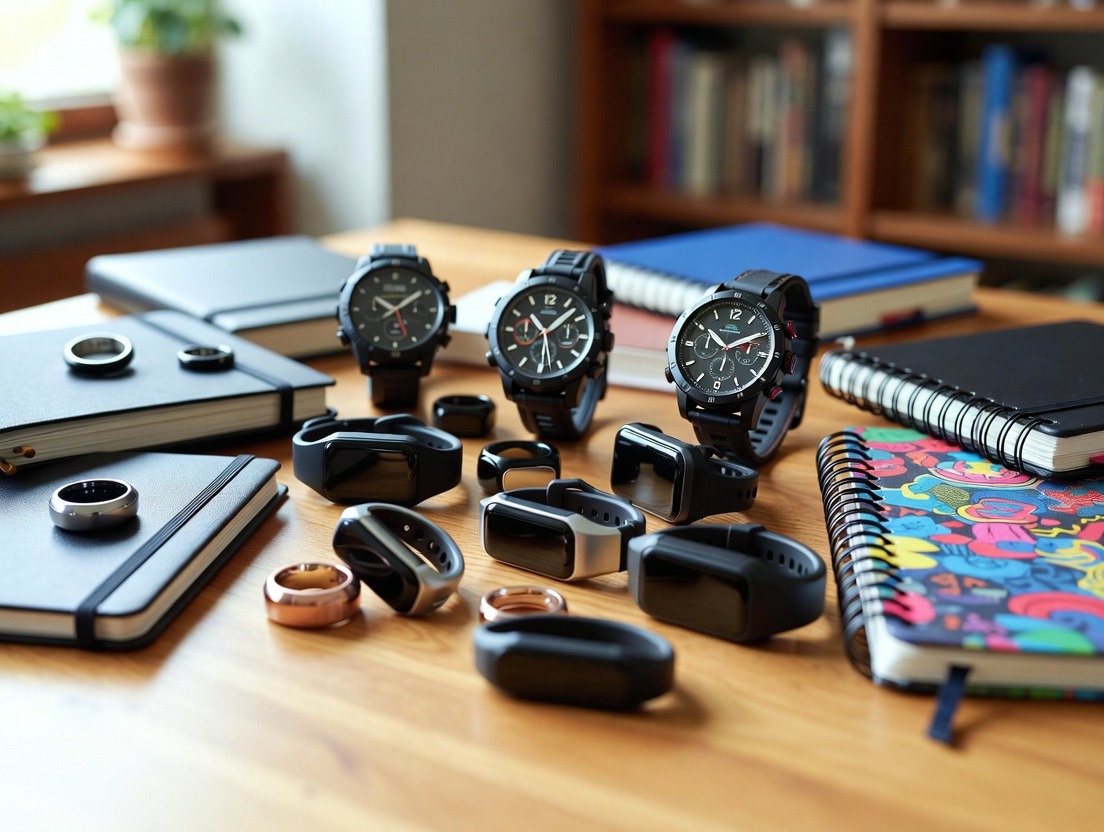
You’re familiar with smartwatches—the chunky screens on your wrist that notify, nag, and track. A smart ring is a fundamentally different proposition. It’s a minimalist, unobtrusive device worn on your finger, typically packed with medical-grade sensors, designed for one primary purpose: to be your body’s quiet, constant listener. While it sleeps when you sleep and moves when you move, its core function is to gather the most intimate, health-critical data with minimal interference in your life.
Think of it as the difference between a loud, opinionated friend and a wise, observant confidant. The watch often interrupts; the ring understands. Its form factor is its genius. The finger provides an excellent point for measuring key physiological signals. Using photoplethysmography (PPG) sensors—tiny lights that measure blood volume changes—it can track:
But raw data is just noise. The magic happens in the companion app, where algorithms transform these signals into intuitive scores: a Sleep Score, a Readiness Score, and an Activity Score. These become your daily, at-a-glance health vitals. For the beginner, this demystifies wellness. You no longer have to wonder, "Did I sleep well?" or "Should I push hard in my workout today?" Your ring, through trends and baselines it learns specifically for you, gives you evidence-based guidance.
The smart ring is your missing wellness link because it closes the feedback loop between action and effect instantly. You have a late, stressful work night? Don’t guess at the impact—see your Sleep Score and HRV dip the next morning. You start a new meditation practice? Watch your nighttime resting heart rate gradually trend downward over weeks. It turns the invisible visible, making the complex science of your body accessible, personal, and profoundly actionable. It’s the foundation for every sustainable habit you’ll build from here.
Stepping into the dashboard of your smart ring app for the first time can feel like looking at the cockpit of a spaceship—flashing numbers, graphs, and terms like “HRV” and “REM latency.” The immediate instinct might be to ignore it all and just look at the simple score. But to truly partner with your device, a basic understanding of these core metrics is empowering. Let’s translate them from clinical jargon into the story of your day.
Sleep Score: The Foundation of Everything
This composite score is your nightly report card. It’s not just how long you were in bed. It weighs:
Readiness Score (or Recovery Score): Your Daily Green Light
This is perhaps the most revolutionary metric for the beginner. Your Readiness Score, often derived heavily from Heart Rate Variability (HRV), resting heart rate, and sleep data, answers the critical question: "Is my body prepared to handle stress today?"
Activity Score: Moving with Purpose
This moves you beyond meaningless step counts. It measures how your movement aligns with your body’s needs. On high-readiness days, it encourages you to meet your targets. On low-readiness days, it may celebrate lighter, restorative movement. It connects what you do directly to how you are, promoting balanced, not compulsive, activity.
Respiratory Rate & Blood Oxygen: The Silent Health Guardians
Your breathing rate during sleep is a remarkably stable, insightful metric. Significant increases can be an early sign of stress, illness, or respiratory issues. Similarly, nocturnal blood oxygen dips can reveal sleep disturbances. Tracking these creates a powerful baseline; you know your normal, so you can instantly see when something is off.
Understanding these metrics turns overwhelm into agency. You’re not just looking at numbers; you’re reading a daily narrative of your physical state, written by your own body. This clarity is the first, essential step toward sustainable change.
Now that you have your ring and understand the language, the most critical phase begins: the baseline period. This is not a time for drastic changes, intense interventions, or self-judgment. It is a time for gentle, curious observation. Think of it as a scientist quietly collecting data before forming a hypothesis. For the next 30 days, your only job is to wear your ring consistently (especially at night) and live your normal life.
Why This Step Is Non-Negotiable
Every body is unique. The textbook "good" HRV of 60 ms might be dangerously low for one person and a celebration-worthy high for another. Your personal baseline is your truth. By tracking your metrics across your regular routine—with all its ups, downs, late nights, good meals, and stressful meetings—the app learns your normal ranges for sleep, HRV, resting heart rate, and more.
What to Observe Without Judgment:
The Power of “Before” Data
This baseline period creates your personal health benchmark. After 30 days, you have a solid, data-backed answer to "How am I really doing?" This makes every future change measurable. If you decide to improve sleep, you’ll know exactly where you started. Without this baseline, you’re optimizing in the dark.
Patience as a Practice
It’s tempting to see a low score and immediately try to “fix” it. Resist this. The goal here is pattern recognition, not instant optimization. This mindful observation phase itself is a foundational wellness practice. It cultivates body awareness and divorces you from the daily chase for a “perfect” score. You are gathering the map that will guide every sustainable step you take afterward. For those eager to start optimizing but short on time, establishing small, consistent habits is key, as outlined in the 15-minute power nighttime routine when time is tight.
With your personal baseline established, you now graduate from passive observer to active interpreter. Each morning, your ring’s data delivers a message. Learning to read this message is the art of becoming your own best health advocate. It’s about moving from “My score is 75” to “My body is telling me it needs a gentler day today.”
The Morning Check-In: A 60-Second Ritual
Make reviewing your app scores part of your morning routine, right after brushing your teeth. Don’t just glance—ask questions:
Beyond the Scores: Reading the Subtext
Look at the interplay of metrics:
The Goal: Responsive, Not Reactive Living
The purpose isn’t to become a slave to the scores, anxiously chasing highs. It’s to develop a responsive dialogue. A low score is an invitation to self-compassion and curious investigation, not self-criticism. “What does my body need today?” becomes a data-informed question. This practice builds profound somatic awareness—you start to feel the low readiness before you even check the app. The ring trains your intuition.

If health were a pyramid, sleep would be the foundation. No amount of organic food or intense exercise can compensate for chronic sleep deprivation. Your smart ring elevates sleep from a passive state to a measurable, optimizable pillar of wellness. It shows you that not all sleep is created equal and gives you the tools to improve its architecture.
Why Sleep Tracking is a Game-Changer
Before rings, we had crude estimates. Now, you see a detailed breakdown:
Seeing this data makes the abstract concept of “poor sleep” concrete. You can pinpoint if your issue is lack of deep sleep (maybe you need more physical activity or cooler temperature) or insufficient REM (potentially linked to stress or alcohol).
Building Your Personalized Sleep Sanctuary
Your ring’s data guides targeted improvements:
Using Data to Solve Sleep Puzzles
By treating sleep as your primary health metric, you build everything else on a solid, recovered foundation. It’s the ultimate sustainable health practice, and your ring is your dedicated sleep coach.
Modern culture glorifies busyness and often treats rest as laziness. Your smart ring provides irrefutable, physiological evidence that this mindset is backwards. Recovery is not the absence of productivity; it is the essential process that enables sustained high performance, creativity, and health. Your Readiness Score and HRV are the direct metrics of this recovery process.
Active Recovery vs. Passive Rest
Recovery isn’t just about doing nothing. It’s about strategic activities that shift your nervous system from “fight-or-flight” (sympathetic) to “rest-and-digest” (parasympathetic) mode.
Your ring helps you distinguish between them. A day of passive rest after extreme exhaustion might yield a big Readiness bounce. On other days, gentle movement might be more effective at reducing soreness and improving mood without impairing recovery.
Scheduling Rest Based on Data
Instead of arbitrarily taking a rest day every week, let your data guide you. A planned rest day when your Readiness is 85 is a wasted opportunity for growth. An unplanned, intense workout when your Readiness is 62 is an invitation for injury and burnout. The sustainable approach is dynamic scheduling: let your morning Readiness Score help you decide the day’s intensity.
Recovery Modalities You Can Track:
By reframing recovery as a positive, data-validated component of your health regimen—not as a failure to be active—you break the exhaustion cycle. You start to see a low Readiness day not as a setback, but as a strategic opportunity to invest in your resilience, leading to higher, more consistent performance in the long run.
Armed with insights, it’s time to build. But sustainable habit formation is where most journeys fail. We aim too high, change too much at once, and lack immediate feedback. This is where your smart ring transforms the process. It creates a closed feedback loop: Action -> Measured Effect -> Adjustment. This loop turns vague resolutions into precise, self-reinforcing rituals.
Step 1: Pick ONE Keystone Habit
Start microscopically small, focused on one of your foundational pillars: sleep. Don’t try to fix your diet, workout plan, and meditation practice simultaneously. Choose a single, data-informed habit. For example: “I will start a 20-minute wind-down routine every night, beginning at 10:00 PM.”
Step 2: Define & Implement
Design your wind-down. Maybe it involves dimming lights, reading a physical book, and 5 minutes of gentle stretching. The specific nighttime routine progression from beginner to advanced can guide your journey. The key is consistency in the action.
Step 3: Measure the Effect (The Magic Loop)
This is the revolutionary part. You don’t have to wait to feel different. You have immediate, objective data.
Step 4: Tweak and Optimize
The data tells you what’s working. If your deep sleep improved but you’re still waking up at 3 AM, your habit is good but incomplete. Maybe you need to explore how temperature control completes your nighttime routine. You now iterate based on evidence, not guesswork.
Why This Loop is Unbeatable:
Start with sleep. Master this one feedback loop. Prove to yourself that you can change your physiology with a small, consistent action. This builds the confidence and the methodological blueprint for every health habit you will ever build. It’s the core engine of sustainable change.
The diet world is a minefield of conflicting advice: keto, paleo, intermittent fasting, plant-based. Your smart ring cuts through the noise by providing a simple, personal metric: How does this food make my body feel and function? It moves the focus from external rules (calories, macros) to internal outcomes (energy, recovery, sleep).
Tracking the Non-Scale Victories (NSVs) of Nutrition
Forget weighing yourself daily. Use your ring to track these far more meaningful indicators:
Conducting Personal Food Experiments
Use your ring to become your own nutrition scientist.
Hydration: The Simplest Performance Enhancer
Dehydration is a silent stressor. It elevates heart rate, lowers HRV, and impairs cognitive function and recovery. Your ring can show you this in real-time. Try drinking an extra liter of water for a few days and watch your resting heart rate potentially drop and your sleep become less restless.
By connecting food choices directly to your core biomarkers, you build an intuitive, sustainable relationship with nutrition. You’re not dieting; you’re choosing foods that make your body resilient, energetic, and well-recovered. It’s nutrition guided by your body’s own feedback, making it impossible to ignore.
The “no pain, no gain” mentality is unsustainable and often counterproductive. It leads to injury, burnout, and a hatred of exercise. Your smart ring champions a smarter philosophy: mindful movement. It helps you find the sweet spot where activity builds you up instead of breaking you down, using your Readiness and Recovery metrics as your guide.
Ditching the Dogma for Data
You don’t have to do HIIT because it’s trendy. The goal is to move in a way that supports your long-term health and joy. Your data helps answer:
The Concept of “Productive Strain”
Effective training applies just enough stress to trigger adaptation, followed by adequate recovery. Your ring is the perfect tool to navigate this.
Tracking the Right Fitness Metrics
Move beyond calories burned. Focus on metrics that matter for healthspan:
The Joy Factor
Your ring can also track the stress of obligation. If you dread your workout and your data shows it’s consistently harming your recovery, it’s a sign to change activities. Sustainable movement is movement you can love and maintain for decades. Let your data guide you to forms of activity that leave you feeling strong, energized, and happy—not drained and defeated.

Stress is often called the “silent killer” because its effects accumulate insidiously. You might feel “used to it,” but your physiology tells a different story. Your smart ring makes this invisible burden visible, quantifiable, and manageable. It transforms stress from a vague feeling of overwhelm into specific, trackable biomarkers you can address.
Your Ring’s Stress Signatures
Chronic stress leaves a clear fingerprint in your data:
Seeing these metrics shift during a stressful week at work or a difficult life period provides powerful validation. It confirms you’re not “just being weak”—you’re under a real physiological load.
Using Data to De-Stress Effectively
This is where you move from observation to intervention. Use your ring to test which stress-management techniques actually work for your body.
Creating Your Stress-Resilience Dashboard
Over time, you’ll identify your personal “levers.” Maybe daily meditation is your anchor, weekly nature walks are your reset, and journaling as part of your perfect nighttime routine is your release valve. Your ring’s data shows you which levers have the biggest impact on your HRV and sleep, allowing you to build a personalized, non-negotiable resilience protocol.
By treating stress management as a measurable component of health—as important as nutrition or exercise—you build proactive defenses. You learn to spot the early-warning signs in your data and deploy your tools before you feel completely overwhelmed, creating a sustainable buffer against life’s inevitable pressures.
You’ve gathered the data, learned the language, and tested small changes. Now, it’s time to synthesize it all into a living, breathing blueprint—a flexible framework for your unique, sustainable health. This isn’t a rigid set of rules, but a dynamic system built on self-knowledge, guided by your ever-present partner: your ring.
The Three Pillars of Your Blueprint
Sustainable health rests on a tripod. If one leg is weak, the whole structure wobbles. Your ring provides the metrics for each:
Making It Personal: The “If-Then” Rulebook
Use your accumulated insights to create simple, personalized guidelines:
The Blueprint Evolves with You
This is the most important part. Your life isn’t static. You’ll age, change jobs, start families, face new challenges. Your blueprint must be adaptable. Your ring is the tool for this continuous adaptation.
The Ultimate Goal: From Tracking to Trusting
In the beginning, you check the app constantly. The ultimate goal of this blueprint is to internalize its wisdom. Over months and years, the data trains your intuition. You start to feel your readiness level. You sense the need for an early night. The ring becomes less of a crutch and more of a trusted consultant you check in with periodically for a system diagnostic and to optimize using your long-term sleep data.
Your personalized blueprint is your lifelong health operating system. It’s informed by data, tailored to your body, and flexible enough to last. It marks the transition from being a beginner following guidelines to becoming the expert on your own sustainable wellbeing.
Life is not a controlled laboratory experiment. It’s a messy, beautiful journey filled with travel, holidays, deadlines, celebrations, and unexpected stresses. In the old paradigm, these disruptions were the death knell for health goals—a weekend away meant abandoning all progress, a stressful week led to total burnout. With your smart ring as your partner, you shift from a rigid, all-or-nothing mindset to a flexible, resilient one. Your data becomes the compass that helps you navigate any terrain while protecting your core wellbeing.
The Philosophy of the 80/20 Rule, Guided by Data
A sustainable health practice is not about perfection; it’s about consistency with grace. Aim for adherence to your foundational habits (sleep, mindful movement, stress management) 80% of the time. The other 20% is for life—weddings, vacations, family emergencies, late work nights. Your ring makes this balance intelligent. It shows you the real cost of that 20%, so you can indulge consciously and recover strategically.
Travel: Maintaining Rhythm in New Time Zones
Travel is one of the biggest disruptors to circadian rhythm and recovery. Your ring is an invaluable travel companion.
Holidays and Social Events: Conscious Celebration
A holiday meal or a night out with friends doesn’t have to be a derailment. It’s a data point.
Work Stress and Busy Periods: Preventing Burnout
When a big project hits, your instinct might be to grind: sacrifice sleep, live on caffeine, and stop moving. This is a recipe for collapse. Your ring provides the early-warning system to navigate busy periods sustainably.
By using your ring to navigate disruptions, you build resilience. You learn that you can enjoy life’s peaks and weather its valleys without losing your health baseline. You become adaptable, confident that you have the tools and feedback to always find your way back to balance.
Once you have a firm handle on the foundational pillars—sleep, recovery, nutrition, movement, and stress—your smart ring opens the door to more nuanced optimization. This isn’t about extreme biohacking; it’s about fine-tuning the dials of your biology based on deeper layers of personal data. It’s the transition from general wellness to personalized peak functioning.
Chronotype Alignment: Living in Sync with Your Biology
Your genetic predisposition to be a morning lark or a night owl is your chronotype. Forcing an early workout when you’re biologically wired for evening energy is counterproductive. Your ring helps you discover and honor yours.
Temperature Tracking for Hormonal & Circadian Insights
The subtle changes in your nocturnal skin temperature are a treasure trove of information.
HRV Biofeedback Training: Direct Nervous System Control
Heart Rate Variability isn’t just a metric to read; it’s a lever you can actively pull. HRV biofeedback is a technique where you use paced breathing to see, in real-time, how you can increase your own HRV.
Nutrient and Supplement Timing
You can use your ring’s recovery metrics to test the efficacy and timing of supplements like magnesium, ashwagandha, or melatonin. For example, take a magnesium supplement 60 minutes before bed for a week and observe if your deep sleep percentage or time to fall asleep improves. Does taking adaptogens in the morning lead to a more stable HRV throughout a stressful day? Always consult a healthcare professional before starting supplements, but use your ring to gather personalized evidence on their impact for you. Explore ideas on how supplements and their timing fit into your nighttime wellness.
This stage is about curiosity and personalization. It turns health from a maintenance chore into an exploration of your unique human potential, all guided by the objective feedback on your finger.
The journey to sustainable health can sometimes feel solitary. While your data is intensely personal, integrating a social or community element can provide powerful motivation, accountability, and shared learning. The key is to share wisely, focusing on support over comparison.
Choosing Your Data Sharing Circle
Not all data is for public consumption. Your core metrics are private. However, sharing trends or general insights can be beneficial.
Creating Friendly, Data-Informed Challenges
Step-count challenges can foster unhealthy competition. Instead, create sustainable, health-positive challenges with friends or family:
Using Data to Communicate Your Needs
Your ring provides an objective language to communicate your boundaries and needs, which can be incredibly empowering.
By thoughtfully integrating the social dimension, you create an ecosystem of support. Your ring’s data stops being a private secret and becomes a tool for building understanding, setting healthy boundaries, and fostering collective wellbeing, turning a personal practice into a shared value.
In the daily and weekly check-ins, it’s easy to get caught up in the micro-fluctuations—a bad night’s sleep, a low readiness day. The true power of your smart ring as a lifelong partner is revealed in the long-term trend view. Zooming out to review months, quarters, and years of data shows you the macro story of your health, providing profound insights that daily scores cannot.
What Long-Term Data Reveals:
How to Conduct a Quarterly “Health Review”
Set a calendar reminder every 3 months for a 30-minute data review session.
The Ring as a Preventive Health Diary
Long-term data creates a powerful health diary you can bring to medical appointments. Instead of saying “I’ve been tired,” you can say, “Over the last three months, my nocturnal resting heart rate has increased by 5 BPM on average, and my deep sleep has decreased by 15%, despite no change in my routine.” This objective data can help a healthcare provider identify issues earlier and more accurately.
By regularly reviewing long-term trends, you shift from being a reactive manager of daily symptoms to a strategic steward of your lifelong health trajectory. You see the compounding benefits of your consistent efforts, which is the ultimate motivation for sustainability.
Even with the best partner, your journey will have flat spots and confusing moments. The data might seem contradictory, or you might hit a plateau where despite your efforts, your scores stop improving. This is normal and part of the process. Here’s how to troubleshoot like a pro.
Challenge 1: “My Sleep Score is Good, But I Still Feel Tired.”
This disconnect between data and feeling is a signal to dig deeper.
Challenge 2: “My HRV is Consistently Low, No Matter What I Do.”
A persistently low HRV can be frustrating.
Challenge 3: “I’ve Hit a Plateau. My Scores Aren’t Improving.”
Plateaus mean your current habits have taken you as far as they can. It’s time for a strategic change.
Challenge 4: “The Data Is Making Me Anxious.”
This is a critical challenge. If checking your app causes stress, you’ve lost the plot.
Troubleshooting with curiosity, not criticism, turns obstacles into the most valuable learning opportunities on your sustainable health path.

Your smart ring is a powerhouse of raw physiological data. But its true potential is unlocked when it speaks to the other apps and devices in your life. This integration creates a holistic, centralized dashboard of your wellbeing, automating insights and creating seamless habit support.
The Synergy of Data Layers
Think of each app as a different lens on your health:
When these layers integrate, magic happens. Your ring’s Readiness Score could automatically adjust your daily Move goal in Apple Health. A hard workout logged in Strava could be analyzed alongside that night’s deep sleep data. A week of poor nutrition logged in MyFitnessPal could be correlated with a dip in your HRV trend.
Practical Integration Setups:
The Future of Integrated Wellness
This ecosystem approach is the future of personalized health. Imagine:
By building this connected ecosystem, you minimize manual tracking and maximize intelligent, automated support. Your ring becomes the central, sensing device that informs a responsive, health-supportive environment around you.
As we invite this powerful technology deeper into our lives, it’s imperative to pause and consider the ethical and privacy implications. The data collected by your smart ring is among the most personal possible—a continuous readout of your inner state. Being an informed user means understanding how this data is used, stored, and protected.
Your Data, Your Ownership: Understanding the Terms
Before you sync your first night of sleep, read the privacy policy. Key questions to answer:
Protecting Your Most Personal Insights
Take proactive steps to guard your privacy:
The Bigger Picture: Data and Insurance
A common concern is whether this data could be used by health or life insurance companies to raise rates or deny coverage. Currently, in most regions, this is prohibited by law (like HIPAA in the US for health insurance), and insurers cannot demand access to your wearable data. However, wellness programs offered by employers or insurers that provide incentives (like discounts or rewards) for healthy activity often integrate with wearables. Participation is voluntary, but it’s crucial to understand what data you are sharing in these programs and what the terms are.
Using Your Data for Good
On the flip side, contributing anonymized data to legitimate medical research can be a powerful way to advance human health. Many large-scale studies on sleep, heart health, and disease progression now use aggregated wearable data. If you choose to opt into such programs, ensure you understand the research purpose and feel comfortable with the level of anonymity.
Being a conscientious user of a smart ring means enjoying its profound benefits while consciously managing its risks. It empowers you to make informed choices about one of your most valuable assets in the digital age: your biological data.
The smart ring on your finger is not the end point; it’s a fascinating beginning. The field of personal health sensing is accelerating at a breathtaking pace. Understanding where this technology is headed helps you see your current device as the first chapter in a lifelong story of deepening self-knowledge and proactive health management.
On the Horizon: Next-Generation Sensors
Future wearables will move beyond PPG and temperature to become true clinical-grade monitors on your finger:
The Rise of the AI Health Coach
Raw data is useless without interpretation. The next leap is in artificial intelligence that synthesizes all your data streams—ring, nutrition, calendar, genetics—to provide hyper-personalized, predictive coaching.
Your Role in This Future: An Active Participant
This future isn’t about technology controlling you. It’s about you wielding ever-more sophisticated tools. Your role evolves:
The Unchanging Core: Your Wisdom
No matter how advanced the sensor or AI becomes, the core principle of this guide remains: technology is a tool to enhance your own somatic awareness and wisdom. The goal is not to outsource your health to an algorithm, but to use data to sharpen your intuition, validate your feelings, and make empowered choices. The ring of the future will be a more eloquent translator, but you will always be the author of your health story.
By starting your journey today, you are not just buying a gadget; you are building the foundational literacy and habits that will allow you to harness the incredible potential of this technology for decades to come. You are becoming future-ready.
Your Trusted Sleep Advocate: Sleep Foundation — https://www.sleepfoundation.org
Discover a digital archive of scholarly articles: NIH — https://www.ncbi.nlm.nih.gov/
39 million citations for biomedical literature :PubMed — https://pubmed.ncbi.nlm.nih.gov/
Experts at Harvard Health Publishing covering a variety of health topics — https://www.health.harvard.edu/blog/
Every life deserves world class care :Cleveland Clinic - https://my.clevelandclinic.org/health
Wearable technology and the future of predictive health monitoring :MIT Technology Review — https://www.technologyreview.com/
Dedicated to the well-being of all people and guided by science :World Health Organization — https://www.who.int/news-room/
Psychological science and knowledge to benefit society and improve lives. :APA — https://www.apa.org/monitor/
Cutting-edge insights on human longevity and peak performance:
Lifespan Research — https://www.lifespan.io/
Global authority on exercise physiology, sports performance, and human recovery:
American College of Sports Medicine — https://www.acsm.org/
Neuroscience-driven guidance for better focus, sleep, and mental clarity:
Stanford Human Performance Lab — https://humanperformance.stanford.edu/
Evidence-based psychology and mind–body wellness resources:
Mayo Clinic — https://www.mayoclinic.org/healthy-lifestyle/
Data-backed research on emotional wellbeing, stress biology, and resilience:
American Institute of Stress — https://www.stress.org/


