


Fatigue Prevention Tips for Entrepreneurs: Ring-Guided Sustainability
For entrepreneurs, ring-guided strategies to sustain energy and prevent burnout.
For entrepreneurs, ring-guided strategies to sustain energy and prevent burnout.
%402x.svg)
You know the feeling. It’s 3 PM, the third video call of the day has blurred into the fourth, and a fog descends that no amount of cold brew can pierce. Your once-sharp focus is now a dull thrum of exhaustion, your motivation a distant memory. You’re not just tired; you’re entrepreneurially burnt out. This fatigue isn't a sign of weakness—it’s your biology screaming for a system change.
For the visionary building a company, fatigue is the silent equity partner nobody wants. It steals your creativity, erodes your decision-making, and turns passion into obligation. The old playbook of "grind harder" is a one-way ticket to diminished returns, both personally and professionally. But what if your greatest competitive advantage wasn't working longer hours, but working smarter, in harmony with your body's own signals?
Enter the era of quantified sustainability. We're moving beyond generic wellness advice into a world of hyper-personalized, data-driven vitality. This is where the modern smart ring, a discreet powerhouse of biometric insight, becomes the entrepreneur's most crucial tool. It’s not about tracking steps; it’s about decoding your personal blueprint for energy, resilience, and sustained performance.
This guide is your roadmap out of chronic depletion. We’ll dismantle the myth that fatigue is an inevitable cost of success and replace it with a sustainable, ring-guided strategy. You’ll learn how to interpret your body's data to prevent burnout before it starts, optimize your energy across decades, and build a business that thrives because you do. This is more than fatigue prevention; it's about architecting a lifetime of high-performance vitality. Let's begin.

The startup landscape glorifies the grind. Sleepless nights, back-to-back meetings, and living on adrenaline are often worn as badges of honor. Yet, beneath this facade of productivity lies a silent crisis: an epidemic of chronic fatigue that's crippling innovation and destroying well-being. Entrepreneurial fatigue is distinct. It’s not just physical tiredness; it's a compound exhaustion—mental, emotional, and creative—that stems from constant high-stakes decision-making, financial pressure, and the blurred lines between personal and professional life.
Research from the Journal of Business Venturing Insights indicates that over 70% of entrepreneurs report significant levels of mental fatigue, directly correlating with reduced venture growth and increased likelihood of failure. The cost isn't merely personal; it's a direct hit to the bottom line. When you're fatigued, your prefrontal cortex—the brain's CEO, responsible for complex thinking, impulse control, and strategic planning—is the first to suffer. You become reactive, prone to cognitive shortcuts, and more likely to make risky or poor decisions. The very skills that make a great founder are compromised.
The core flaw in the "hustle" mentality is its fundamental misunderstanding of human biology. The human body is not a machine that can run indefinitely at redline. It's a complex, biological system governed by rhythms and requiring restoration. Each time you "push through" on cortisol and caffeine, you borrow energy from your future self at a usurious interest rate. The debt manifests as burnout, illness, anxiety, and a loss of passion for the venture you once loved.
This is where the paradigm must shift. Instead of ignoring fatigue until it forces a shutdown, the modern entrepreneur must adopt a prevention-first approach. Think of it as the strategic pivot from crisis management to sustainable performance optimization. The goal is to build a reservoir of resilience so deep that daily stressors don't deplete it. This requires moving from subjective guesswork about your energy levels ("I feel okay, I guess") to objective, biometric intelligence. It requires data.
For a foundational understanding of why prevention is the only sustainable path, consider the principles behind a lifelong health strategies prevention-first approach, which argues that guarding your energy is the ultimate high-return investment.
Most people think of wearable tech as a fancy step counter or sleep tracker. For the entrepreneur, a sophisticated smart ring is something far more profound: a continuous, personal biometrical lab on your finger. Its power lies in its location and its persistence. The vasculature in your finger provides a rich, reliable data source for metrics that are the true indicators of systemic stress and recovery capacity—far beyond what a wrist-based device can consistently capture.
So, what exactly is this silent advisor measuring to combat fatigue?
Heart Rate Variability (HRV): Your Resilience Metric
HRV is the gold standard for measuring your autonomic nervous system's balance—the tug-of-war between stress (sympathetic "fight or flight") and recovery (parasympathetic "rest and digest"). A higher, stable HRV generally indicates strong resilience and good recovery. A downward trend or sudden drop is a glaring red flag from your body, signaling accumulated stress, impending illness, or insufficient recovery. For an entrepreneur, monitoring HRV is like having a direct readout of your biological readiness to lead, create, and solve complex problems. Spotting a dip allows you to proactively schedule a light day, meditate, or prioritize sleep instead of plowing into a critical negotiation already depleted.
Resting Heart Rate (RHR): Your Metabolic & Stress Barometer
Your RHR is a beautifully simple yet powerful metric. A lower RHR typically indicates better cardiovascular fitness and efficient autonomic function. A sustained elevation of 5-10 beats per minute above your baseline is one of the clearest signs your body is fighting something—be it stress, dehydration, poor sleep, or the onset of illness. It’s an early-warning system long before you consciously feel "run down."
Body Temperature & Blood Oxygen (SpO2): The Systemic Health Signals
Basal body temperature trends can reveal hormonal shifts, inflammation, and metabolic efficiency. Nocturnal blood oxygen saturation (SpO2) is critical for understanding sleep quality. Frequent dips (desaturations) can indicate sleep-disordered breathing, which fragments sleep and destroys restorative deep and REM cycles, leaving you exhausted no matter how long you're in bed. A smart ring tracks this seamlessly night after night, providing evidence far more reliable than "I slept like a rock."
Activity & Sleep Staging: The Balance Equation
It tracks not just how long you sleep, but how well—breaking down the night into light, deep, and REM sleep. It quantifies your daily movement, not as a generic step goal, but in relation to your sleep and stress data. This creates a holistic picture: Did your intense workout aid recovery or add to an already high stress load? Was your "8 hours in bed" actually 6.5 hours of quality sleep?
By synthesizing these data points, a smart ring doesn't just give you numbers; it reveals your Personal Energy Blueprint. It shows you when you are biologically primed for deep work (high HRV, low RHR), when you need to schedule less demanding tasks (lower HRV), and when your body is begging for a true recovery day. It transforms fatigue prevention from a guessing game into a data-driven science.
To see how this continuous data stream informs big-picture health strategy, explore how smart ring data guides lifelong health decision-making.
Collecting data is pointless without a framework for action. The following five principles form the foundation of a ring-guided strategy to prevent fatigue and build sustainable energy. These are not one-time fixes but ongoing practices informed by your unique biometric feedback.
1. Respect Your Rhythms, Don't Fight Them
Your body operates on circadian and ultradian rhythms. The circadian rhythm is your 24-hour sleep/wake cycle, heavily influenced by light. Ultradian rhythms are the 90-120 minute cycles throughout the day where your brain alternates between high focus and a need for rest. Your ring data makes these rhythms visible. You'll see your HRV and body temperature follow predictable patterns. The action is to align your work with these rhythms. Schedule your most demanding, creative "deep work" during your biological peak (often late morning for many). Use the natural dips for administrative tasks, meetings, or a true break. Forcing complex strategy during a biological trough is inefficient and drains energy rapidly.
2. Prioritize Sleep Quality Over Sleep Guilt
Entrepreneurs often brag about little sleep, but this is a catastrophic fallacy. Sleep is non-negotiable biological maintenance. Your ring shifts the focus from duration (which can be misleading) to quality. It shows you your deep sleep (physical restoration) and REM sleep (mental and emotional processing) totals. The action is to use this data to optimize your sleep hygiene. If your deep sleep is low, perhaps you exercised too close to bedtime or consumed alcohol (which suppresses REM). If your sleep is fragmented, your SpO2 data might prompt a conversation with your doctor. The goal is to make adjustments based on evidence, not anecdotes, to achieve truly restorative sleep.
3. Interpret Stress as Data, Not an Enemy
Stress is not inherently bad; it's the physiological cost of adaptation. A challenging workout or an exciting pitch causes acute stress, followed by growth. Chronic, unmanaged stress is the problem. Your HRV and RHR are your direct stress gauges. The action is to reframe stress spikes. A low HRV score isn't a failure; it's critical information. It tells you, "Your system is overloaded. Choose recovery today." This might mean swapping a high-intensity interval training (HIIT) session for walking, saying no to an extra commitment, or practicing 10 minutes of diaphragmatic breathing. It's about responsive, not reactive, stress management.
4. Fuel for Function, Not Just Convenience
What you eat directly impacts your biometrics. Large, heavy meals can cause a noticeable dip in HRV as energy is diverted to digestion. Blood sugar spikes and crashes affect energy and focus. While a ring doesn't track glucose directly (yet), you can see the systemic effects of nutrition. The action is to conduct self-experiments. Notice how your HRV and RHR respond to different foods and meal timings. Do you see a pattern of poor sleep after a late, sugary snack? Does a high-protein breakfast lead to more stable energy? Use your body's data as feedback to fuel in a way that supports sustained mental performance.
5. View Recovery as Strategic, Not Lazy
In high-performance cultures, recovery is often seen as downtime to be minimized. Data flips this script. Recovery is when adaptation and growth happen. A ring quantifies recovery through nighttime HRV, deep sleep, and morning RHR. The action is to schedule recovery as proactively as you schedule meetings. If your data shows a multi-day slump, plan a "reboot day" with light activity, nature exposure, and digital disconnection. Understand that active recovery (like walking, stretching, foam rolling) often yields better biometric signals than complete inactivity. Make recovery a deliberate, data-informed pillar of your performance strategy.
Applying these principles consistently is the essence of building habits that endure. For a deeper dive into the mechanics of habit formation with tech support, learn how to build lifelong health habits that actually stick.
Your circadian rhythm is the master clock orchestrating nearly every physiological process—from hormone release and metabolism to cognitive function and cell repair. For an entrepreneur, ignoring this rhythm is like trying to surf against the tide; it's exhausting and largely ineffective. A smart ring provides the personal data needed to crack your unique circadian code and schedule your life in harmony with it, not in conflict.
The Data-Driven Day: A Blueprint for Energy
By structuring your day around these biological imperatives, you stop wasting precious mental energy trying to force productivity at the wrong times. You work with your body, not against it, turning what was a daily grind into a sustainable flow.
Optimizing these daily cycles is a micro-strategy within a macro plan. For the decade-by-decade framework that ensures this alignment lasts a lifetime, read about lifelong health strategies to optimize every decade.
If you view sleep as lost productivity, you have fundamentally misunderstood productivity. For the entrepreneur, sleep is the single most potent performance-enhancing, creativity-boosting, and fat-burning "activity" you can do. It's when your brain clears metabolic waste (like beta-amyloid, linked to Alzheimer's), consolidates memories, solves problems offline, and regulates the emotions critical for leadership. Poor sleep doesn't just make you tired; it makes you less intelligent, less empathetic, and more impulsive. Your smart ring moves you from subjective sleep perception ("I slept okay") to objective sleep analysis, allowing for precise optimization.
Decoding Your Sleep Architecture:
Actionable, Ring-Informed Sleep Hygiene:
By treating sleep as a strategic investment in your cognitive capital, you unlock levels of clarity, resilience, and creativity that caffeine can never provide. It is the bedrock upon which sustainable entrepreneurial energy is built.
Quality sleep is the cornerstone of long-term brain health. To understand its critical role in preserving your most important business asset—your mind—see how lifelong health strategies protect cognitive function.
The entrepreneurial diet is often a minefield of convenience foods, skipped meals, and caffeine overdoses—a surefire recipe for energy crashes and brain fog. Food is information that directly programs your energy, focus, and mood. Your smart ring, by revealing your body's stress (HRV) and recovery state, provides real-time feedback on how your nutrition choices are affecting your systemic biology. This allows you to move from dieting to strategic fueling.
The Entrepreneur's Energy Plate: Principles for Mental Fuel
The Caffeine Conundrum: Data-Driven Intake
Caffeine is a powerful adenosine-blocker, but its half-life is 5-6 hours. Consuming it after noon can significantly fragment sleep architecture, reducing deep sleep even if you fall asleep easily. Your ring’s sleep staging data is the ultimate accountability partner. If you see poor deep sleep, look at your afternoon latte habit. The action is to set a hard caffeine curfew (e.g., 2 PM) and observe the changes in your sleep scores over a week. You may find your natural morning energy becomes more stable without the afternoon crash-and-rebound cycle.
By eating with the intention of supporting your biometric signals—high HRV, low RHR, stable energy—you turn nutrition into a precise tool for sustaining the mental endurance required to build a visionary company.
Managing inflammation through diet is a long-term strategy for vitality. For a comprehensive view, delve into the lifelong health strategies for inflammation control.
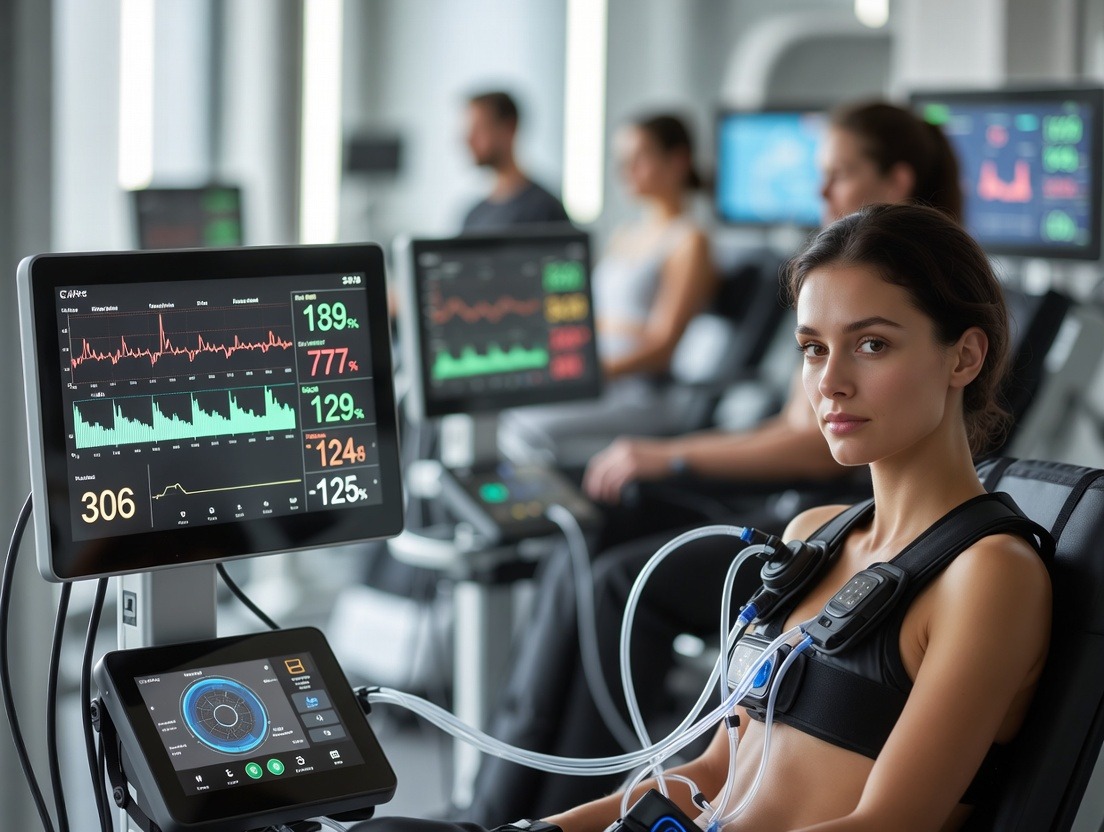
The entrepreneur's dilemma: sitting for 12 hours building a business while knowing movement is essential. The solution is not to add punishing workouts to an already overloaded schedule, but to use movement strategically—as a form of energy cultivation and system regulation. Your smart ring's activity and readiness data help you strike this perfect balance, ensuring exercise aids recovery instead of contributing to fatigue.
The Principle of "Stress + Rest = Growth"
Every workout is a stressor on the body. The adaptation and strength come during the recovery period afterward. If you apply another stressor (hard workout) before full recovery, you dig a deeper hole of fatigue. Your Readiness Score (a composite of HRV, RHR, sleep, and previous activity) is your guide. A high readiness score means your body is primed for a challenging session. A low score is a directive to choose recovery: a walk, yoga, stretching, or complete rest.
Ring-Guided Movement Strategies:
By listening to your body's readiness signals, you transform movement from another draining obligation on your calendar into a responsive, energy-generating tool that directly supports your cognitive and entrepreneurial performance.
Preserving your physical capability is a lifelong endeavor. To ensure your mobility supports you for decades to come, consider the strategies in lifelong health strategies to preserve mobility.
In a culture obsessed with output, recovery is stigmatized as laziness. This is a catastrophic error in judgment for anyone whose performance is their product. For the entrepreneur, strategic recovery is not time off; it's the essential process during which your body and brain convert the stress of work into growth, learning, and resilience. It's where the compound interest on your efforts is earned. Your smart ring provides the hard data to legitimize and optimize this non-negotiable pillar.
Quantifying the Need for Recovery: The Red Flags
Your biometrics give you unambiguous signals that your system is overloaded and recovery is overdue:
Ring-Informed Recovery Modalities:
By scheduling recovery based on data, not guilt, you reframe it as a skill essential to leadership. You model sustainable performance for your team and build an antifragile physiology capable of weathering the inevitable storms of entrepreneurship.
Understanding recovery as a long-term investment is key. For a deeper exploration of its compounding benefits, read about lifelong health strategies where recovery is a long-term investment.
Crisis mode is inevitable in entrepreneurship. A product launch, a funding round, a PR incident—these periods demand extreme focus and output. The old model was to white-knuckle through on adrenaline and sacrifice everything else. The ring-guided model is to navigate these periods with tactical precision, using data to deploy your energy strategically and buffer the damage, ensuring you emerge on the other side resilient, not broken.
The Pre-Phase: Fortification
If you know a high-stress period is coming (e.g., a quarterly board meeting), use the preceding week to "bank" resilience.
The During-Phase: Energy Allocation & Micro-Recovery
During the high-stress event itself:
The Post-Phase: Mandated Decompression
The work is done. The instinct is to collapse or immediately jump to the next thing. This is a critical juncture. Your biometrics will likely be in the red (low HRV, high RHR).
This approach transforms you from a passive victim of circumstance to a tactical leader of your own physiology. You demonstrate that true strength isn't about never feeling stress, but about managing your response and recovery with intelligence and discipline.
Building this kind of resilience over decades is what separates those who burn out from those who lead with vitality for a lifetime. The framework is outlined in lifelong health strategies for stress resilience over decades.
The ultimate goal of this ring-guided system is not merely to avoid crashing this quarter. It's to build a foundation of health so robust that it supports not just your current venture, but a lifetime of creative output, leadership, and impact. Entrepreneurial fatigue prevention is the entry point to a much larger vision: Lifelong Entrepreneurial Vitality. This is the state where your energy, cognition, and passion are not limiting factors, but ever-present assets that compound over time.
Your smart ring transitions from a fatigue monitor to a vitality compass. The trends it reveals over months and years become your most valuable strategic dataset—more telling than any quarterly financial report about your long-term capacity. You begin to see how lifestyle choices today impact your biomarkers tomorrow, reinforcing the power of consistency.
The Compounding Interest of Wellness:
Think of every high-HRV morning, every night of quality sleep, every nutrient-dense meal as a deposit into your Biological Capital Account. The returns on this account are paid out as clearer thinking decades into your career, the physical ability to enjoy the fruits of your labor, and the emotional resilience to lead through multiple business cycles. This is the true meaning of lifelong health strategies and the compound interest of wellness—where small, daily investments in sustainability yield exponential life-long dividends.
Adapting Your Strategy for Every Life Stage:
The energy strategy that works at 30 may need refinement at 45 or 60. Hormonal shifts, changing recovery needs, and evolving priorities are all normal. Your ring provides the objective data to adapt intelligently. It helps you answer: Should my training focus shift from intensity to mobility? How is my sleep architecture changing? Is my stress resilience evolving? This proactive adaptation is the core of sustainable performance, a concept explored in depth in lifelong health strategies for adapting to every life stage.
The Ultimate ROI: Independence and Impact
At its heart, this journey is about preserving your most cherished asset: your independence. The ability to think for yourself, move under your own power, and contribute on your own terms for as long as you choose. By preventing fatigue and building vitality, you are not just optimizing for business success; you are designing a life of agency and purpose. This profound connection is detailed in lifelong health strategies to preserve independence.
The narrative for the modern entrepreneur must change. The hero is no longer the one who burns out spectacularly, but the one who endures with clarity, energy, and passion. By leveraging the objective intelligence of a smart ring, you gain the self-knowledge to work with your biology, not against it. You move from surviving the grind to thriving within a sustainable rhythm. You stop fearing fatigue and start cultivating an inexhaustible vitality that powers not just a business, but a legendary life.
Moving from principles to practice requires creating a streamlined system—a Personal Energy Command Center. This isn't about becoming a slave to data, but about creating efficient rituals that transform biometric information into immediate, actionable insight. For the time-starved entrepreneur, this system must be frictionless and yield clear directives for the day ahead.
The 5-Minute Morning Audit: Setting the Day's Strategy
Your most important decision-making session of the day shouldn't be about work; it should be about your capacity to do great work. Upon waking, before checking email, spend five minutes with your ring's companion app.
The Mid-Day Bio-Check: Course Correction
Set a silent alarm for 2:30 PM, the typical circadian trough. Take 60 seconds.
The Evening Wind-Down Review: Closing the Loop
Before beginning your pre-sleep ritual, take two minutes to review.
This daily rhythm—audit, check, review—takes less than 10 total minutes but creates a profound feedback loop. It builds self-awareness and turns intention into biology-informed action. For a comprehensive guide on creating a full life strategy with this tool, see how to create a lifelong health strategy using a wellness ring.

Entrepreneurship is not a marathon of uniform effort; it's a series of sprints requiring different kinds of intelligence: deep creativity, analytical strategy, empathetic leadership, and logistical execution. Your biometrics can tell you which mode your brain is best primed for at any given time, allowing you to match task to biology for maximum quality and efficiency.
Matching Cognitive Modes to Biomarker States:
Leveraging the "Sleep on It" Phenomenon with Data:
The old adage is backed by neuroscience. During REM sleep, your brain integrates memories and solves problems subconsciously. You can hack this process. Before bed, if you're wrestling with a strategic dilemma or creative block, briefly jot down the core question. Then, let it go. In the morning, before opening your eyes, see what insights arise. Check your sleep data: did you get strong REM? Often, the combination of intention and quality sleep yields unexpected clarity, a process your ring can validate by showing the sleep architecture that facilitated it.
By consciously aligning your work type with your physiological state, you stop forcing square pegs into round holes. You respect that your brain has different "gears," and you use your biomarkers to know which gear is currently engaged. This is the essence of working smarter, not harder.
This kind of cognitive alignment is a long-term protective strategy. To understand how to maintain this sharpness for decades, explore lifelong health strategies to protect cognitive function.
A founder's energy sets the cultural tone. If you're perpetually burnt out, you implicitly endorse that as the standard. Conversely, by modeling and promoting ring-guided sustainability, you can build a team that is more resilient, creative, and loyal. This isn't about mandating wearables; it's about fostering principles of energy stewardship that elevate collective performance.
Modeling the Behavior (The "Why"):
Share your framework, not necessarily your personal data. Explain to your leadership team and then your company: "My priority is our long-term performance and innovation. I've learned that my best strategic thinking comes when I'm well-rested and managing my energy. I'll be protecting my deep work blocks and being deliberate about recovery. I encourage you to find your own rhythm for sustainable high performance." This frames it as a performance strategy, not a wellness perk.
Implementing Ring-Guided Principles at Team Level:
Providing Resources, Not Mandates:
Consider offering a wellness stipend that can be used for a smart ring, fitness classes, meditation apps, or nutrition counseling. Offer educational workshops on sleep science, circadian rhythms, and stress management. This provides tools for those interested without creating a surveillance culture.
By building this culture, you reduce collective burnout, lower turnover, and foster an environment where sustained innovation can thrive. You attract and retain talent that values a thoughtful, sustainable approach to building something great. The team's collective energy becomes a competitive moat.
The social component of wellness is a powerful, often overlooked factor in longevity. For more on this, see the insights in lifelong health strategies and the social connection factor.
For the entrepreneur, travel is often synonymous with disruption: jet lag, poor food, irregular sleep, and back-to-back meetings demolish routine. This is where a smart ring becomes indispensable, providing an objective anchor in a chaotic environment. With a proactive protocol, you can minimize the performance tax of travel.
Pre-Travel Preparation (The 72-Hour Fortification):
During Transit: Damage Control
On the Ground: The Rapid Reset Protocol
The Return Home: The Critical Re-Entry
The post-trip crash is where many founders lose a week. Be proactive.
Travel becomes less of a performance killer and more of a manageable logistical variable when you have a data-informed plan to guide your recovery at every step.
Maintaining metabolic health through such disruptions is a key to long-term vitality. Learn more about lifelong health strategies to maintain metabolic health.
Entrepreneurial stress is as much emotional as it is cognitive. The anxiety of uncertainty, the pressure of payroll, the sting of rejection—these take a physiological toll that feeds back into mental state. Your smart ring provides a crucial "third-person" perspective on this mind-body loop, allowing you to break negative cycles and build emotional resilience.
Catching the Anxiety Feedback Loop:
A stressful thought triggers a release of cortisol and adrenaline, causing a physiological stress response: increased heart rate, decreased HRV. If you're wearing a ring, you might see this real-time spike. The crucial insight is that your body is now in "fight or flight," which primes your brain to perceive more threats, creating more anxious thoughts. It's a vicious cycle. The ring's data acts as an interrupt signal: "Your physiology is in stress mode. Your thoughts are following." This creates the space for intervention.
Biofeedback and Mindfulness: The Data-Driven Reset
This is where technology meets ancient practice. Use your biometrics for biofeedback.
Reframing with Evidence:
When you feel overwhelmed, check your historical data. Look back to a previous high-stress period and see that your HRV recovered and your RHR normalized. This visual proof builds psychological resilience. It becomes a narrative: "This feels intense, but my body has bounced back from similar stress before. This is temporary. I have data that proves my resilience."
Detecting the Onset of Burnout (Beyond Fatigue):
Burnout is characterized by emotional exhaustion, cynicism, and reduced efficacy. Biometrically, it often looks like a flattening of signals. Your HRV may not just be low; it may show little variability, stuck in a depressed state. Your RHR may be chronically elevated. Your sleep graph may show little deep or REM sleep, night after night. This data is a critical alarm bell that emotional and physical systems are nearing depletion. It's the objective signal that you need more than a day off; you may need a significant intervention—coaching, therapy, or a complete disconnection—to rebuild your emotional capacity.
By using your ring to observe the mind-body connection, you gain agency. You learn that you can manage your emotional state not just through thoughts, but through breath, movement, and recovery. You build the emotional resilience required to lead through uncertainty without sacrificing your well-being.
The mind-body connection is the core of enduring wellness. For a comprehensive look, read about lifelong health strategies for mind-body wellness connection.
The daily and weekly data is for tactics. The true power of a smart ring is revealed over months and years. This longitudinal dataset is a mirror reflecting the cumulative impact of your lifestyle choices. It allows you to move from reactive fatigue prevention to proactive lifestyle design, optimizing for lifelong vitality.
Identifying Your Personal Baselines and Triggers:
After 90 days, you move beyond population averages to your personal norms. What is your typical HRV range? What is your resting heart rate? This is your baseline. From there, you can identify clear triggers:
Conducting Self-Experiments with Clear Outcomes:
Use the data to run n=1 experiments.
Watching the Macro-Trends: The Ultimate Feedback
Over a year or more, you can ask profound questions:
This long-term view fosters a growth mindset about your own health. You are no longer a passive occupant of your body, but its active curator and scientist. The ring provides the lab notes.
Seeing your progress validated is incredibly motivating. Learn how a smart ring validates lifelong health choices and reinforces positive behavior.
While we've discussed HRV as a key metric, understanding its nuances transforms it from a simple number into a sophisticated leadership dashboard. For the entrepreneur, mastering HRV interpretation is like learning to read the vital signs of your company's most important asset: you.
HRV vs. HRV Trend: The Snapshot and the Story
Using HRV for Load Management:
This is a concept borrowed from elite athletes, perfectly suited to the entrepreneurial arena. "Load" is the total stress on your system (work, emotional, training, travel). "Capacity" is your ability to handle load (determined by recovery, fitness, resilience).
The HRV "Bank Account" Metaphor:
Think of your average HRV as your balance. Stressful activities are withdrawals. Sleep, meditation, laughter, and proper recovery are deposits. Your goal is never to overdraft. A low daily HRV is a low balance warning. A downward trend is going into debt. You must make immediate deposits (prioritize recovery) to avoid bankruptcy (burnout/illness).
HRV and Cognitive Performance: The Direct Link
Studies consistently show that higher HRV is correlated with:
By moving beyond "higher is better" to a nuanced understanding of trends and personal baselines, you turn HRV into a dynamic management tool for your most complex project: your sustainable performance.
Understanding these biological systems is key to a science-backed approach. For the foundational research, explore the science behind successful lifelong health strategies.
For the analytically-minded founder, the ultimate question is: "What's the return on investment?" Framing vitality as a financial case moves it from the "soft skills" column to the core strategy ledger. The costs of fatigue and burnout are quantifiable, as are the returns on a ring-guided sustainability system.
The Direct and Indirect Costs of Founder Fatigue:
The Quantifiable Returns on a Ring-Guided System:
The Investment Calculation:
The "investment" is the cost of a smart ring (a one-time hardware fee) and the time spent on daily rituals (approx. 10 minutes/day). The "return" is measured in: fewer sick days, higher-value work output, better decisions, lower team turnover, and the extended, healthy lifespan of your leadership tenure. When viewed through this lens, the ROI is overwhelmingly positive. It is perhaps the highest-leverage investment a founder can make.
This connection between financial wellness and physical wellness is profound. For a detailed analysis, read about lifelong health strategies and the financial wellness connection.
Adopting this system isn't always seamless. Entrepreneurs, often skeptical and action-oriented, may face internal resistance or practical hurdles. Anticipating and addressing these objections is key to successful adoption.
Objection 1: "I don't have time to look at more data."
Objection 2: "It's just another thing to be obsessive/anxious about."
Objection 3: "The data isn't 100% accurate or medical-grade."
Objection 4: "I feel fine, but my ring says I'm not recovered."
Objection 5: "It's too expensive."
Objection 6: "I tried a wearable before and it didn't change anything."
By confronting these objections head-on, you move past the friction of adoption into the flow state of integrated, intelligent self-management. The ring becomes not a taskmaster, but a trusted advisor in your pursuit of enduring success.
The journey requires continuous learning and adaptation. Embrace the mindset outlined in lifelong health strategies and the role of continuous learning.
The ring on your finger today is just the beginning. We are at the frontier of a revolution in personal biometric intelligence. For the forward-thinking entrepreneur, adopting this technology now is about building a data foundation for the even more powerful tools of tomorrow. It's about cultivating a longevity mindset—not just adding years to life, but adding life, creativity, and impact to your years.
The Near-Future Integration:
The Longevity Mindset for Entrepreneurs:
This goes beyond quarterly goals. It asks: How do I build a business and a biology that allows me to operate at a high level for 50 years, not 5? It views healthspan as your ultimate runway.
Your smart ring is the foundational tool for this mindset. It provides the feedback loop that makes the abstract concrete. It turns "I should take care of myself" into "My data shows my resilience is improving, which means I'm building a foundation for the next 30 years of work I'm passionate about."
This is the ultimate destination of fatigue prevention: a life of sustained purpose and capacity. It's about joining the ranks of those who design their lives for enduring impact, as explored in lifelong health strategies for people who live to 100.
Your Trusted Sleep Advocate: Sleep Foundation — https://www.sleepfoundation.org
Discover a digital archive of scholarly articles: NIH — https://www.ncbi.nlm.nih.gov/
39 million citations for biomedical literature :PubMed — https://pubmed.ncbi.nlm.nih.gov/
Experts at Harvard Health Publishing covering a variety of health topics — https://www.health.harvard.edu/blog/
Every life deserves world class care :Cleveland Clinic - https://my.clevelandclinic.org/health
Wearable technology and the future of predictive health monitoring :MIT Technology Review — https://www.technologyreview.com/
Dedicated to the well-being of all people and guided by science :World Health Organization — https://www.who.int/news-room/
Psychological science and knowledge to benefit society and improve lives. :APA — https://www.apa.org/monitor/
Cutting-edge insights on human longevity and peak performance:
Lifespan Research — https://www.lifespan.io/
Global authority on exercise physiology, sports performance, and human recovery:
American College of Sports Medicine — https://www.acsm.org/
Neuroscience-driven guidance for better focus, sleep, and mental clarity:
Stanford Human Performance Lab — https://humanperformance.stanford.edu/
Evidence-based psychology and mind–body wellness resources:
Mayo Clinic — https://www.mayoclinic.org/healthy-lifestyle/
Data-backed research on emotional wellbeing, stress biology, and resilience:
American Institute of Stress — https://www.stress.org/


