


Modern Health Monitoring: The Role of AI and Machine Learning
Examines the growing role of artificial intelligence in analyzing health data for insights and predictions.
Examines the growing role of artificial intelligence in analyzing health data for insights and predictions.
%402x.svg)
For centuries, the primary method of understanding our health was reactive: we waited for symptoms to appear, then sought a diagnosis. The stethoscope, the thermometer, the blood pressure cuff—these tools, while revolutionary in their time, offered only a snapshot of a single moment, often within the sterile, unnatural environment of a clinic. Today, we stand at the precipice of a paradigm shift. Health monitoring is shedding its passive, episodic nature and becoming continuous, predictive, and profoundly personal. This transformation is powered by two inextricably linked forces: the proliferation of wearable sensors and the ascent of Artificial Intelligence (AI) and Machine Learning (ML).
Imagine a health guardian that learns the unique rhythm of your life—your heartbeat at dawn, your stress resilience during a challenging workday, the subtle shifts in your body temperature that precede illness, the quality of your deep sleep cycles. This is no longer science fiction. From smart rings nestled on your finger to watches on your wrist and patches on your skin, a new generation of devices is generating a torrent of biometric data. But data alone is just noise. The true magic, the transformative intelligence, comes from AI and ML algorithms that sift through this data deluge to find meaning, identify patterns, and whisper insights about your well-being long before your conscious mind is aware of them.
This is the dawn of a new era in preventive health and personalized wellness. It’s an era where your device doesn’t just tell you you had a restless night; it analyzes your heart rate variability, respiratory rate, and sleep stages to suggest a personalized nighttime wellness routine that actually sticks. It doesn’t just count steps; it understands the relationship between your daytime activity, your evening cortisol levels, and your readiness for the next day. This article will delve deep into the intricate dance between sensor hardware and learning software, exploring how AI and ML are not merely adding features to health monitoring but fundamentally redefining what it means to know ourselves and care for our well-being in the modern world.
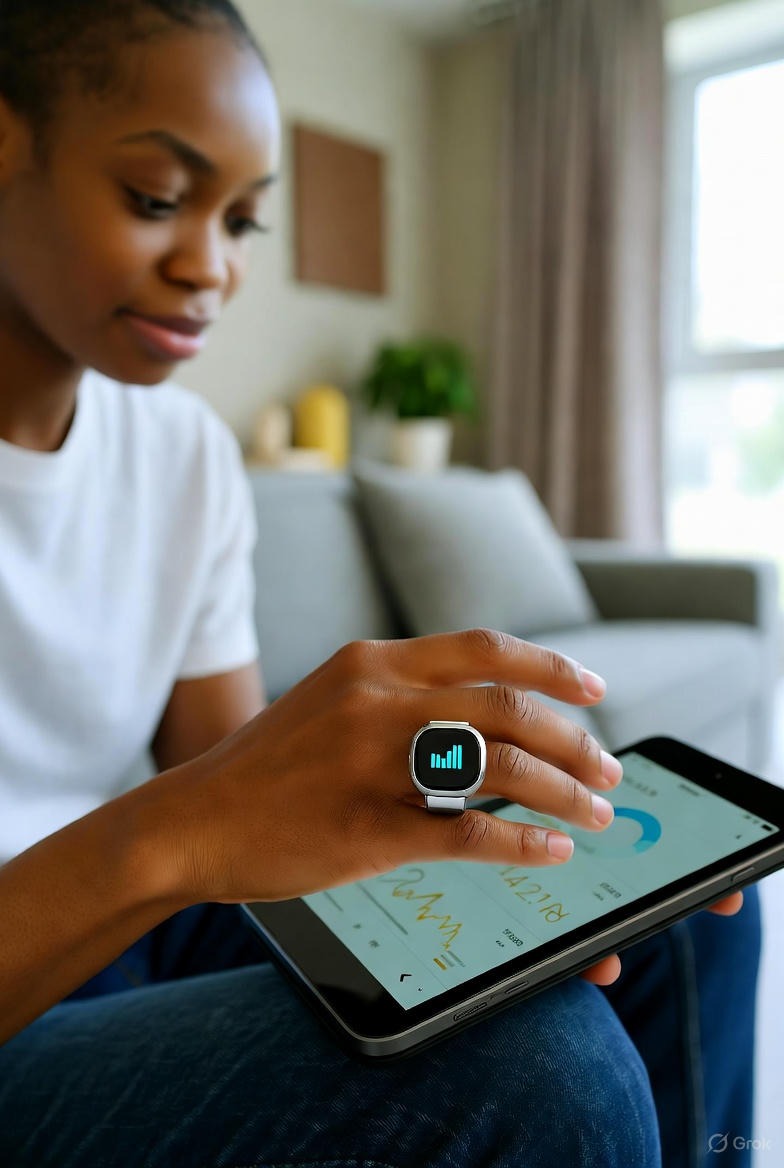
The journey of modern health monitoring begins with data—its collection, its nature, and its unprecedented scale. For decades, the "gold standard" of health data was the episodic measurement: a blood pressure reading taken in a doctor's office, a fasting glucose test performed quarterly, a cholesterol panel during an annual physical. These data points, while valuable, are isolated fragments. They are snapshots taken in an artificial context (the often-stressful clinical setting) that fail to capture the dynamic, flowing narrative of the human body as it interacts with the real world—commuting, working, eating, exercising, sleeping, and stressing.
The first critical shift was the move from episodic to continuous monitoring. The advent of consumer wearables like heart rate monitors and early fitness trackers began painting a line graph instead of a scatter plot. Suddenly, we could see heart rate over a 24-hour period, not just at rest. The introduction of photoplethysmography (PPG) sensors—the little green lights on the back of your watch or ring—made it possible to optically measure blood flow and derive heart rate continuously and non-invasively. This was a revelation, but it was just the opening act.
Today’s advanced health wearables, particularly discreet devices like smart rings, are multimodal data factories. They don’t just track one thing; they capture a symphony of physiological signals simultaneously:
The result is a rich, multivariate, timestamped data stream. For a single user, this can amount to millions of data points per day. This is the raw material of the health monitoring revolution. But herein lies the fundamental challenge: No human, not even the most dedicated physician, can manually review, interpret, or find meaning in this relentless river of data. This is precisely where the limitations of conventional programming end and the extraordinary capabilities of Artificial Intelligence and Machine Learning begin. The data revolution created the problem of abundance; AI provides the toolkit for intelligent distillation.
The terms "AI" and "Machine Learning" are often used interchangeably in marketing, leading to a cloud of mystery and sometimes hype around what these technologies actually do. For a clear understanding of modern health monitoring, it’s essential to distinguish between them.
Artificial Intelligence (AI) is the broad, overarching field of computer science focused on creating systems capable of performing tasks that typically require human intelligence. This includes reasoning, problem-solving, perception, and understanding language. In the context of your smart ring or health app, AI is the "smart" in smart device. It’s the umbrella concept that enables the device to do more than just display raw numbers—it allows it to make judgments, offer insights, and trigger alerts.
Machine Learning (ML) is a subset of AI and is the primary engine driving today’s health innovations. If AI is the goal of creating intelligent systems, ML is the most successful method for achieving it. The core principle of ML is simple yet powerful: instead of being explicitly programmed with rigid rules for every scenario, a machine learning model is trained using large amounts of data. It learns patterns and relationships from the data itself.
Think of it like teaching someone to recognize a cat. The old, rules-based programming approach would involve writing thousands of lines of code: "If it has two pointy things at the top (ears), fur, whiskers, four legs, and a tail, it might be a cat." This is brittle and fails with variations. The ML approach is to show the system millions of pictures labeled "cat" and "not cat." The algorithm (often a neural network) iteratively adjusts its internal parameters to develop its own complex, statistical representation of "cat-ness." It learns from examples.
In health monitoring, this translates to profound capabilities:
In essence, AI is the promise of intelligent health guidance, and Machine Learning is the learn-by-example machinery that makes that promise a reality, turning sensor data into personalized, actionable knowledge.
A common misconception is that AI-powered health devices are static, pre-programmed gadgets. The reality is far more dynamic. The most sophisticated systems operate on a continuous learning loop, a virtuous cycle of data collection, user feedback, and model refinement that makes your device increasingly personalized and accurate. This process embodies the core principle of ML: performance improves with more and better data.
The loop typically follows these stages:
1. The Foundation: Pre-Training on Large, Diverse Datasets
Before a model ever encounters your data, it undergoes extensive pre-training. Developers gather anonymized data from thousands or even millions of users, often in conjunction with clinical validation studies. For a sleep staging algorithm, this dataset would include synchronized raw sensor data (PPG, accelerometer) and the ground-truth labels from medical-grade polysomnography tests. The model learns the universal patterns that distinguish sleep stages across a broad population. This creates a robust "general" model that works reasonably well for most people right out of the box.
2. Personalization: On-Device Adaptation
This is where the magic of personalization begins. Once you start using the device, it begins the process of adaptation. Your body is unique. Your heart's signature, your movement patterns during sleep, your physiological responses to stress—they have a personal fingerprint. The device’s ML models start to compare the predictions of the general model against your actual outcomes and behaviors.
For example, the general model might predict "sleep" based on prolonged motionlessness. But maybe you lie very still while reading in bed. As you use the device and confirm (explicitly or implicitly through your behavior) that you were awake during those periods, the model fine-tunes its parameters. It learns that for you, the heart rate signature during reading is different from the heart rate signature during true sleep onset. This on-device learning happens locally, often preserving your privacy, and continuously refines the algorithms to fit you better.
3. Feedback Integration: The Human-in-the-Loop
User feedback is the fuel for personalization. This can be explicit, such as logging a cup of coffee, rating your stress level, or confirming an illness. It can also be implicit, derived from your interactions. If you consistently dismiss "poor sleep" notifications when you feel rested, the system may learn that its threshold for "poor" is too sensitive for your personal experience of recovery. By integrating this feedback, the ML system moves from a one-size-fits-all health assessment to a true personal health companion that understands your subjective experience.
4. The Outcome: Evolving Baselines and Predictive Insight
The ultimate output of this loop is not just better data for today, but deeper insight for tomorrow. Your "baselines" are not static numbers pulled from a population table; they are dynamic ranges that evolve with your fitness, age, lifestyle, and season. The system learns how you respond to a hard workout, a late meal, or a stressful deadline. This allows it to move from simple reporting ("your HRV was low last night") to contextualized insight ("your HRV dropped after your intense workout, but your recovery is slower than usual, suggesting you might benefit from an extra rest day"). This continuous adaptation is what transforms a tracking device into a truly intelligent health partner, one that can even help you adapt your nighttime rituals to your body's seasonal needs.
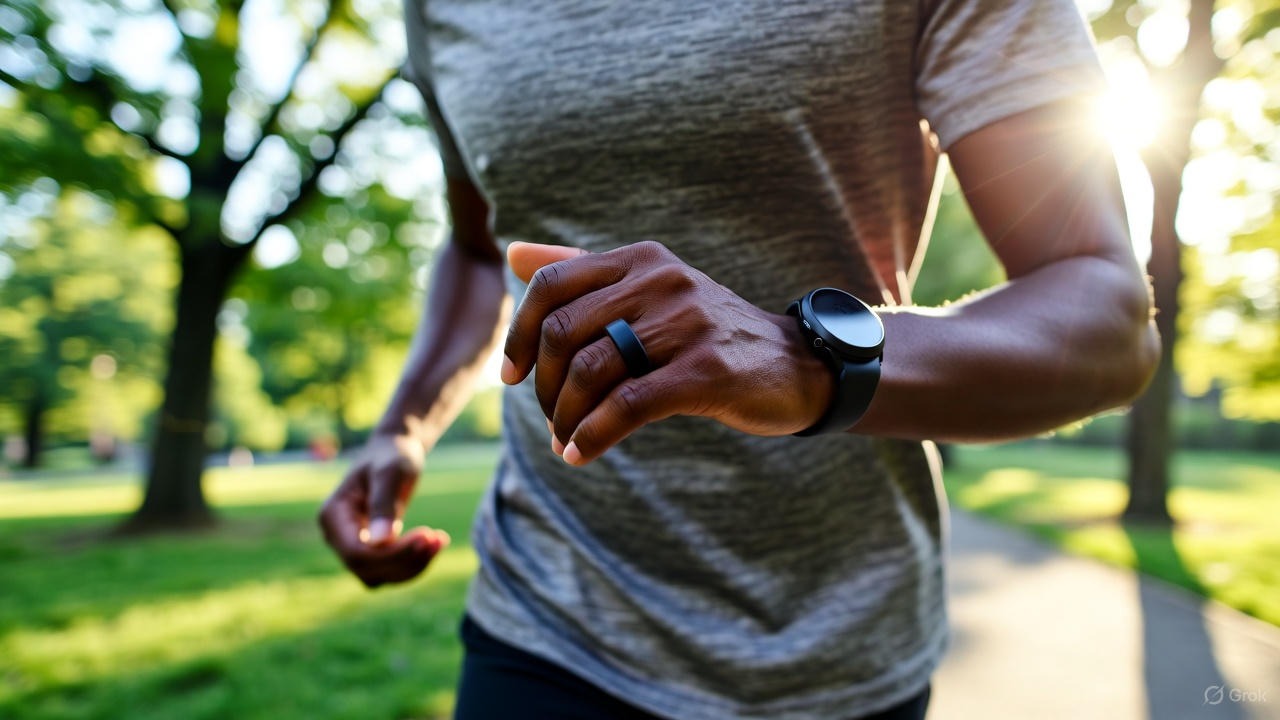
The true power of AI in health monitoring is not in analyzing individual metrics in isolation, but in synthesizing them. This process, known as multimodal data fusion, is where the most profound and holistic insights are born. A single data stream is a solo instrument; fused data is a symphony, revealing harmonies and dissonances that would otherwise be inaudible.
Consider the challenge of accurately assessing sleep quality. If you only looked at movement (actigraphy), you might mistake a period of lying still while anxious for deep sleep. If you only looked at heart rate, you might miss the micro-wake-ups that fragment sleep architecture. An AI system uses data fusion to build a much more complete picture:
The ML model is trained to weigh and correlate all these signals simultaneously. It learns that the specific combination of low movement, low heart rate, high HRV, stable low temperature, and slow breathing is the signature of Deep Sleep. Another distinct combination signals REM. This fusion creates a robust sleep analysis that is far superior to any single-metric approach.
This principle applies to nearly every aspect of modern health AI:
Multimodal data fusion, orchestrated by machine learning, is what elevates health monitoring from a collection of interesting graphs to a coherent, contextual story about your body's daily and nightly journey.
The most transformative application of AI in health is its shift from a descriptive to a predictive and prescriptive mode. This transforms your wearable from a historian that documents the past into a sentinel that watches for the future. This predictive capability is built on the foundations we've already discussed: continuous multimodal data and machine learning models that learn personal baselines.
Predictive analytics in health wearables operates on a simple but powerful statistical premise: significant deviations from your established personal norms often precede measurable health events. AI's job is to detect these deviations with sensitivity and specificity, separating true signals from random noise.
Real-World Predictive Applications:
The key to ethical and useful predictive alerts is context and humility. The best systems do not declare "You are getting sick." They say, "Your body is showing signs of physiological stress that often precede illness." They empower with information, not diagnose with authority. This turns the device into a proactive partner in health maintenance, helping you intervene at the earliest, most manageable stage of a disruption.

Sleep is not a monolithic state of unconsciousness. It is a complex, architecturally structured process critical for cognitive function, emotional regulation, and physical repair. Understanding your sleep architecture—the cyclical progression through Light, Deep, and REM sleep stages—is one of the most significant benefits AI brings to personal health monitoring. Traditionally, mapping this architecture required an expensive and intrusive overnight stay in a sleep lab, covered in wires (a polysomnogram). AI has democratized this insight.
Here’s how machine learning performs this nightly decoding act:
The Training Ground: First, ML models are trained on massive datasets where PPG, accelerometer, and temperature data from wearables (or prototype sensors) are time-synchronized with gold-standard polysomnography (PSG) results. The algorithm is shown, millions of times over, what the raw sensor signals look like during each professionally scored stage of sleep.
Feature Extraction: The raw signals are processed to extract meaningful "features." From the heart rate signal, features like rate, variability, and rhythm are calculated. From the accelerometer, features describing the magnitude and frequency of movement are derived. Skin temperature provides its trend line.
Pattern Recognition & Classification: The trained neural network then takes your night's data and analyzes it in short epochs (typically 30-second windows). For each epoch, it evaluates the ensemble of features against its learned model. It calculates the probability that the pattern of your heart rate, movement, and temperature at that moment corresponds to Wake, Light Sleep (N1/N2), Deep Sleep (N3), or REM Sleep. The stage with the highest probability is assigned. This happens iteratively, building your nightly sleep stage chart.
Beyond Staging: The Insight Layer
But AI’s role goes beyond just coloring a graph. It analyzes the architecture to provide actionable insights:
This granular understanding transforms sleep from a vague concept of "good" or "bad" into a detailed report card on your brain's nightly activities. It allows you to see the direct impact of lifestyle choices: how alcohol suppresses REM sleep, how evening screen time delays sleep onset, how consistent bedtimes stabilize architecture, and how a well-structured nighttime routine transforms your underlying sleep quality. You're no longer guessing; you're observing the cause and effect through data.
Stress is a universal human experience, yet it has remained frustratingly subjective to quantify. We rely on self-reporting ("I feel stressed"), which is susceptible to bias, habituation, and blind spots. AI-powered wearables are changing this by providing an objective, physiological lens into our stress response, primarily through the analysis of the autonomic nervous system (ANS).
The ANS has two main branches: the sympathetic ("fight or flight") and the parasympathetic ("rest and digest"). Their balance is reflected in your heart's rhythm. When you are calm and recovered, the parasympathetic system is dominant, resulting in a higher Heart Rate Variability (HRV)—meaning there is healthy, natural variation in the milliseconds between heartbeats. During stress, the sympathetic system takes over, pushing the heart to beat more regularly and rapidly, lowering HRV.
How AI Detects and Interprets Stress:
From Detection to Management:
The power of this objective measurement is in breaking the cycle of unconscious stress. You might believe you're "handling everything fine," while your physiology tells a different story of chronic sympathetic activation. Seeing a tangible "stress score" or a dipped HRV graph can be the wake-up call needed to take a breath, go for a walk, or practice a few minutes of meditation.
This data becomes a foundation for building resilience. You can run experiments: Does a 10-minute evening meditation improve your overnight HRV? Does a brief, sub-30-minute nighttime wellness ritual lower your resting heart rate before bed? The AI provides the feedback loop, turning stress management from an abstract concept into a measurable, improvable skill. For those with anxious minds, this objective feedback can be particularly empowering, forming the basis for a targeted nighttime routine designed to calm an active mind.
The greatest promise of AI in health is not just intelligence, but personalized intelligence. This moves us beyond the era of population-based health guidelines ("adults need 7-9 hours of sleep") and into the era of "N-of-1" medicine, where insights are tailored to the individual. Personalization at scale is the complex challenge of making a mass-produced device feel like it was built for you alone, and it's where machine learning truly shines.
The Limits of Population Averages: General health advice is a starting point, but it can be misleading. The average resting heart rate is 60-100 BPM, but a fit individual might have a healthy RHR of 45. An HRV of 40 ms might be low for one person and high for another. Applying broad benchmarks can cause unnecessary anxiety or, conversely, complacency.
How ML Enables Deep Personalization:
This level of personalization turns generic health tracking into a confidential dialogue with your own body. The insights it offers are relevant, actionable, and meaningful specifically to you. It helps you optimize not for the textbook ideal, but for your personal best, preventing the frustration that comes from following advice that doesn't fit your unique biology.
In the relentless pursuit of fitness and productivity, we have historically undervalued a critical component of performance: recovery. Recovery is not passive; it's the active process during which the body repairs, adapts, and grows stronger. Pushing without adequate recovery leads to plateaus, injury, burnout, and illness. AI is now giving us a powerful, objective metric for this crucial state: often called a Readiness Score, Recovery Index, or Body Battery. This isn't a single measurement; it's a sophisticated algorithmically derived score that integrates multiple data streams to answer a simple but vital question: "How prepared is my body to take on today's physical and mental demands?"
The Pillars of the Recovery Algorithm:
A robust readiness score is typically built by fusing data from three key pillars:
The AI's Synthesis:
The machine learning model is trained to weigh and combine these sometimes-contradictory signals. For example:
This integrated score provides a clear, actionable starting point for each day. A low score isn't a judgment; it's vital information. It tells you today is a day for gentle movement, hydration, good nutrition, and perhaps prioritizing an early bedtime to reduce morning grogginess tomorrow. A high score is your green light to tackle a challenging workout or a demanding project. By quantifying recovery, AI helps us respect our body's need for repair, turning recovery into a deliberate, optimized component of a high-performance life, rather than an afterthought.
As we embrace the tremendous benefits of AI in health monitoring, we must also navigate a complex landscape of ethical considerations with clear eyes. The intimacy of the data involved—a continuous digital readout of our very physiology—demands the highest standards of responsibility from device makers, algorithm developers, and users alike. Three core ethical pillars stand out: Privacy, Bias, and Explainability.
1. Data Privacy and Security: Your Body's Data, Your Rights
The data generated by a health wearable is among the most sensitive personal data that exists. It can reveal sleep disorders, stress patterns, potential illnesses, and lifestyle habits. The ethical imperative is to treat this data not as a corporate asset, but as a sacred trust.
2. Algorithmic Bias: Ensuring Health Equity
Machine learning models are only as good as the data they are trained on. If a sleep staging algorithm is trained predominantly on data from healthy, middle-aged men of a certain ethnicity, it may be less accurate for women, the elderly, or people with different physiological characteristics or health conditions. This is algorithmic bias, and it can perpetuate health disparities.
3. The "Black Box" Problem and Explainable AI (XAI)
Many advanced ML models, especially deep neural networks, are often called "black boxes." We can see the input (your last night's data) and the output ("78 Sleep Score"), but the reasoning path the AI took to get there is opaque. This lack of explainability is problematic for health. If an AI says you're not recovered, you deserve to know why.
The field of Explainable AI (XAI) is working to solve this. The goal is to create systems that can provide human-understandable reasons for their outputs: "Your readiness score is low primarily because your resting heart rate was 8 BPM above your baseline for the last two nights, and your deep sleep was 30% below average." This transparency builds trust and makes the insights actionable. Instead of a mysterious score, you get a guided interpretation of your own data.
Navigating these ethical waters is not optional; it is fundamental to building a sustainable and trustworthy future for AI in health. As users, we should demand this level of ethical rigor from the companies creating these powerful tools.
Citations
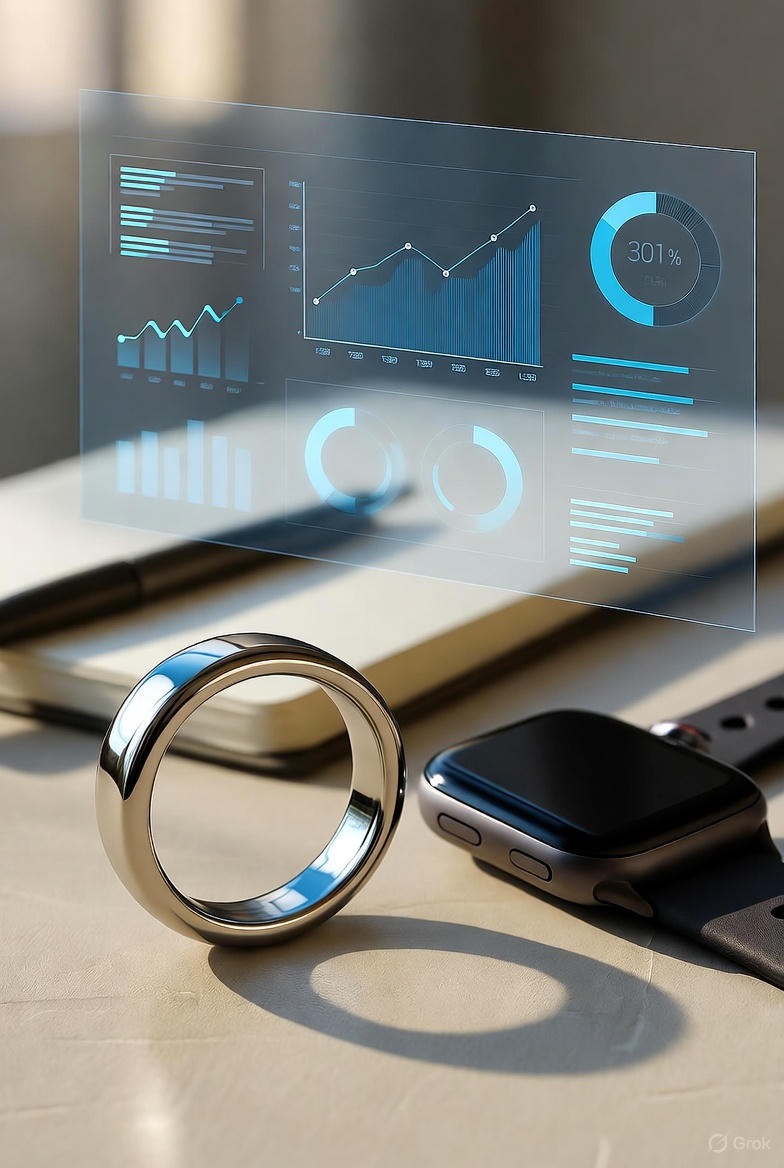
The sophistication of AI-driven health insights is inextricably linked to the quality and capabilities of the hardware that collects the raw data. This is a symbiotic relationship: better sensors provide richer data streams, which enable more complex and accurate AI models. In turn, smarter AI can extract more signal from existing sensors, pushing the hardware to its theoretical limits. They are co-architects of the modern health monitoring experience.
The Sensor Suite: More Than Meets the Eye
Modern health wearables, particularly the sleek and continuous form factor of the smart ring, pack a remarkable array of micro-sensors:
AI as a Force Multiplier for Hardware:
This is where the magic happens. AI doesn't just use sensor data; it enhances it.
The relentless innovation in miniaturized, low-power sensors creates the data foundation. The creative and rigorous application of AI builds the intelligence palace upon it. This harmonious partnership is what allows a device worn on your finger to provide insights that were once confined to a hospital room, seamlessly integrating into your life and empowering you with knowledge to build healthier habits, from daily activity to a realistic nighttime routine for busy professionals.
The most advanced AI and the most precise sensors are ultimately just tools. Their true value is realized only when they successfully inform and inspire positive, sustainable human behavior change. This is the final frontier of AI in health: moving from being a passive data repository to an active behavioral co-pilot. The goal is not to create a dependency on the device, but to use its insights to foster lasting health literacy and intuitive self-awareness. This requires a design philosophy known as human-centered AI, where technology adapts to human psychology, not the other way around.
The Challenge of Health Behavior Change:
We all know the abstract goals: sleep more, stress less, move regularly. Yet, change is famously difficult. Information alone is insufficient. Traditional health apps often fall into the trap of "data dumping"—presenting users with overwhelming dashboards and graphs that lead to "alert fatigue" or passive observation without action.
How Human-Centered AI Facilitates Change:
By focusing on the human in the loop, AI transforms from a black-box oracle into a collaborative partner. It helps users build not just better data, but better habits—habits that are informed by deep personal insight and reinforced through intelligent, compassionate design. The ultimate success metric is not user engagement with the app, but the user's improved health and well-being independent of it. This journey often starts with small, consistent evening rituals, which is why many find that building a nighttime routine that actually sticks is one of the most impactful first steps toward sustainable change.
The line between consumer wellness technology and certified medical devices is beginning to blur, creating a new frontier often called "connected health" or "digital medicine." This represents the most significant potential impact of AI in health monitoring: creating a continuous, data-rich bridge between the daily lives of patients and the clinical insights of healthcare providers. It moves healthcare from a reactive, episodic model to a proactive, continuous partnership.
From Wellness to Clinical Utility:
Consumer wearables are classified as "general wellness" products under regulatory frameworks like the FDA's. They are not intended to diagnose, treat, or cure disease. However, the physiological signals they measure—heart rhythm, blood oxygen, temperature, activity—are undeniably clinically relevant. The path to clinical acceptance involves rigorous validation studies and, for some applications, seeking regulatory approval as a Software as a Medical Device (SaMD).
Current and Emerging Clinical Applications:
The Challenges of Integration:
Bridging this gap is not trivial. It requires:
The promise is a future where your physician has access to a continuous narrative of your health, not just a chapter written during your annual 15-minute visit. This empowers more personalized, preventive, and participatory care, where the patient is an informed partner armed with data from their daily life.
As we look beyond the current horizon, the role of AI in health monitoring is set to expand from a personal advisor to the orchestrator of a predictive health ecosystem. This vision involves the seamless integration of your wearable data with other smart devices, environmental data, and even genomic information, all processed by AI to move from reactive insights to truly proactive health management.
The Interconnected Health Ecosystem:
Imagine your smart ring communicating not just with your phone, but with your home environment.
The Rise of True Predictive Health:
With a richer, ecosystem-wide dataset, AI's predictive power will grow exponentially. The goal shifts from "You seem to be getting sick" to "Based on your current sleep debt, stress load, and exposure (e.g., from location data indicating you were at an airport), your probability of developing a respiratory infection in the next 48 hours is elevated. Recommended actions: prioritize 8 hours of sleep, take 500mg of Vitamin C, and use your nasal saline spray."
This is prescriptive analytics—not just forecasting, but suggesting the precise interventions most likely to alter the forecast for the better. It turns health management into a dynamic, daily optimization problem tailored uniquely to you.
The Ultimate Goal: Invisible Wellness
The end state of this technological evolution is not more screen time or more notifications. It is invisible wellness. The AI and the sensors fade into the background of your life, working silently. They learn your preferences and patterns so deeply that their interventions become subtle and automatic—adjusting your environment, suggesting the optimal time for your workout, or reminding you to wind down only when you've truly deviated from the patterns that make you feel your best. It empowers you to live your life fully, with the confidence that an intelligent, compassionate system is vigilantly monitoring the foundational elements of your well-being, ensuring your daily habits—from your morning routine to your family's shared nighttime wellness practice—are consistently aligned with your long-term health vision.
This future is not without its challenges—ethical, regulatory, and social—but the trajectory is clear. AI and machine learning are fundamentally reshaping our relationship with our own health, turning subjective feeling into objective understanding, and transforming that understanding into intelligent, personalized action. The journey from the snapshot to the streaming narrative of our health is well underway, and it promises a future where we are all the primary authors of our own well-being, guided by insights drawn from the deepest language of all: the silent, continuous signals of our own bodies.
The "Quantified Self" movement of the early 2000s was built on a simple premise: if you measure it, you can improve it. Early adopters manually logged everything from sleep hours to caffeine intake, painstakingly building spreadsheets in search of correlations. Today, AI-powered health monitoring represents Quantified Self 2.0—a seismic leap from manual tracking and guesswork to automated, intelligent interpretation. It’s the difference between collecting dots and having an AI connect them into a coherent, actionable picture of your life.
This evolution addresses the core failing of the first wave: data overload without insight. A human can look at a week's worth of sleep graphs, step counts, and food logs and perhaps spot one or two obvious patterns. But we are incapable of perceiving the subtle, multivariate interactions that truly govern our physiology. AI excels at this. It can analyze hundreds of variables simultaneously over months or years, uncovering hidden relationships that form the bedrock of our unique biology.
The New Layer of Understanding:
This depth of understanding transforms self-knowledge from a philosophical concept into a practical dashboard. You're no longer just tracking; you're learning the operating manual for your own body, written in the language of data and interpreted by a compassionate machine intelligence.
Sleep disorders represent a massive, under-diagnosed public health crisis. Conditions like insomnia, sleep apnea, and circadian rhythm disorders affect hundreds of millions worldwide, degrading quality of life and elevating the risk for cardiovascular disease, diabetes, and depression. The traditional diagnostic path—self-reporting symptoms to a primary care doctor, followed by a referral for an intimidating, expensive overnight sleep study (polysomnography)—is fraught with barriers. AI in consumer wearables is poised to revolutionize this landscape by acting as a ubiquitous, silent screening tool.
How AI Acts as a First-Line Sentinel:
By unmasking these patterns, AI-powered wearables empower individuals with evidence. Walking into a doctor's appointment with a three-month graph showing nightly SpO2 dips or consistent 2 AM awakenings transforms the conversation. It provides a concrete starting point for clinical evaluation, potentially speeding up diagnosis and treatment for millions suffering in the dark. For those beginning to address identified sleep issues, starting with a science-backed nighttime routine is often the first, most actionable step recommended by sleep specialists.
We've discussed stress detection, but the next frontier is stress deconstruction. AI is moving beyond a single "stress score" to create a multidimensional stress blueprint—identifying not just that you're stressed, but the likely type, source, and physiological pathway of that stress. This granular understanding is key to effective management, as the remedy for metabolic stress (from poor diet) differs from that for oxidative stress (from overtraining) or psychological stress.
AI's Multidimensional Stress Analysis:
From Blueprint to Action Plan:
With this blueprint, AI can move beyond generic "de-stress" advice to personalized interventions.
This deconstruction turns the vague, monolithic enemy of "stress" into a set of identifiable, manageable components. It empowers users to target their interventions with precision, using their own physiological data as the guide.
While continuous glucose monitors (CGMs) are the spearhead, AI's role in personalized nutrition extends far beyond glucose. The ultimate goal is to understand how your unique metabolism responds to the complex interplay of food, timing, activity, and sleep. AI acts as the integrator and interpreter of these signals, moving us toward truly individualized eating strategies.
Beyond the Glucose Spike: A Multifactor Model
Even without a CGM, AI can infer metabolic health through proxies and user logging:
The Logging Evolution: From Burden to Automation
Manual food logging is a major barrier. AI is reducing this friction through:
The Future: The N-of-1 Nutrition Experiment
The end state is an AI that helps you run safe, personal "N-of-1" experiments. You pose a question: "Does skipping breakfast improve or harm my energy?" The AI helps design the experiment (e.g., try two weeks on, two weeks off), controls for confounding variables (it notes your sleep and stress were comparable in both periods), and delivers a data-driven verdict specific to your biology: "For you, skipping breakfast led to a 5% improvement in afternoon focus but a 10% increase in evening cravings. Here's the net effect on your weekly recovery score."
This personalized, evidence-based approach to nutrition, powered by AI and physiological data, has the potential to cut through the noise of conflicting diet trends and deliver eating strategies that work for the individual, not the average.
Modern life is a series of stressors. The goal of optimal health is not to eliminate stress—an impossible task—but to build resilience: the capacity to withstand, adapt to, and recover from stressors. AI is emerging as a master coach for resilience engineering, providing the feedback loop necessary to systematically strengthen your psychological and physiological buffers.
Quantifying the Building Blocks of Resilience:
Resilience isn't abstract; it's built on measurable pillars that AI can track:
AI as a Resilience Training Platform:
Antifragility: Beyond Bouncing Back
The ultimate concept is antifragility—systems that gain from disorder. An antifragile body becomes stronger from the right kind of stress. AI's role is to identify the "right kind" and the "right dose" for you.
By providing clear feedback on what makes you stronger versus what depletes you, AI transforms resilience from a vague trait into a trainable skill. It empowers you to strategically design a life that doesn't just avoid breaking, but actively builds a more robust, adaptable, and vibrant version of yourself.
Historically, deep physiological insight was the exclusive domain of elite athletes with access to sports lab testing and the wealthy who could afford concierge medicine. AI-powered consumer wearables are democratizing this access, putting lab-grade insights on the wrists and fingers of millions at a fraction of the cost. This shift has profound implications for health equity, preventative care, and personal empowerment.
Bridging the Access Gap:
The Data Literacy Imperative:
With democratization comes responsibility—the need for data literacy. A graph of HRV is meaningless without interpretation. This is where AI must be an educator as much as a tool.
The Future of Crowdsourced Health Discovery:
Anonymized, aggregated data from millions of users becomes a powerful tool for public health research. AI can analyze this massive dataset to discover new population-level patterns:
This democratization, guided by ethical AI and a focus on user education, has the potential to create a more informed, proactive, and empowered global population when it comes to personal health. It shifts the balance of power from solely within the clinic to a shared model between the individual and the healthcare system.
Amidst the excitement, it is crucial to maintain a realistic understanding of what AI in health monitoring can and cannot do. Uncritical adoption can lead to "cyberchondria"—anxiety fueled by data—or a dangerous over-reliance on technology. Establishing clear guardrails is essential for safe and effective use.
What AI Cannot Do (And Should Not Claim To):
Essential Guardrails for Users and Developers:
Your Trusted Sleep Advocate: Sleep Foundation — https://www.sleepfoundation.org
Discover a digital archive of scholarly articles: NIH — https://www.ncbi.nlm.nih.gov/
39 million citations for biomedical literature :PubMed — https://pubmed.ncbi.nlm.nih.gov/
Experts at Harvard Health Publishing covering a variety of health topics — https://www.health.harvard.edu/blog/
Every life deserves world class care :Cleveland Clinic - https://my.clevelandclinic.org/health
Wearable technology and the future of predictive health monitoring :MIT Technology Review — https://www.technologyreview.com/
Dedicated to the well-being of all people and guided by science :World Health Organization — https://www.who.int/news-room/
Psychological science and knowledge to benefit society and improve lives. :APA — https://www.apa.org/monitor/
Cutting-edge insights on human longevity and peak performance:
Lifespan Research — https://www.lifespan.io/
Global authority on exercise physiology, sports performance, and human recovery:
American College of Sports Medicine — https://www.acsm.org/
Neuroscience-driven guidance for better focus, sleep, and mental clarity:
Stanford Human Performance Lab — https://humanperformance.stanford.edu/
Evidence-based psychology and mind–body wellness resources:
Mayo Clinic — https://www.mayoclinic.org/healthy-lifestyle/
Data-backed research on emotional wellbeing, stress biology, and resilience:
American Institute of Stress — https://www.stress.org/


