


Productivity and Health Synergy for Remote Workers: Ring-Optimized Schedules
Advice for remote workers on creating an optimized daily schedule using ring data.
Advice for remote workers on creating an optimized daily schedule using ring data.
%402x.svg)
The dream of remote work has become a reality for millions. The promise was seductive: reclaim your time, ditch the commute, and design a life that bends to your will, not your boss’s schedule. For many, this promise has delivered profound freedom and flexibility. Yet, a silent struggle is unfolding in home offices around the globe. The line between “work” and “life” has not just blurred—it has vanished. The kitchen table became the boardroom, the living room couch a productivity hub, and the bedroom, far too often, an extension of the inbox.
This erosion of boundaries has created a paradox. We gained autonomy but lost structure. We saved hours in traffic but spilled them into late-night work binges. We sought better health but found ourselves more sedentary, more stressed, and more disconnected from our own physiological needs than ever before. The result? A workforce facing unprecedented levels of burnout, chronic stress, and a nagging feeling that while they are busy, they are not truly productive or well.
The central flaw in our approach is the persistent belief that productivity and health exist on a seesaw—that investing in one requires stealing from the other. We push through afternoon slumps with caffeine, sacrificing sleep for a deadline. We skip movement to finish a report, trading physical vitality for perceived professional gain. We treat our bodies as inconvenient vessels for our brains, ignoring the biological rhythms that govern our energy, focus, and creativity.
But what if this is a false dichotomy? What if the most powerful productivity tool isn’t a new app, a fancy planner, or a ruthless time-management hack, but your own well-optimized biology? The emerging truth, backed by neuroscience and performance physiology, is that peak productivity is an output of peak health, not a competitor for it. You cannot sustainably extract elite cognitive performance from a fatigued, stressed, and misaligned system.
This is where the old, rigid "9-to-5" schedule, blindly transplanted to the home, fails us completely. It ignores our individual chronobiology—the unique internal timekeeper that dictates when we are sharp, when we are creative, when we need to move, and when we must rest. A one-size-fits-all schedule is a productivity and health tax rolled into one.
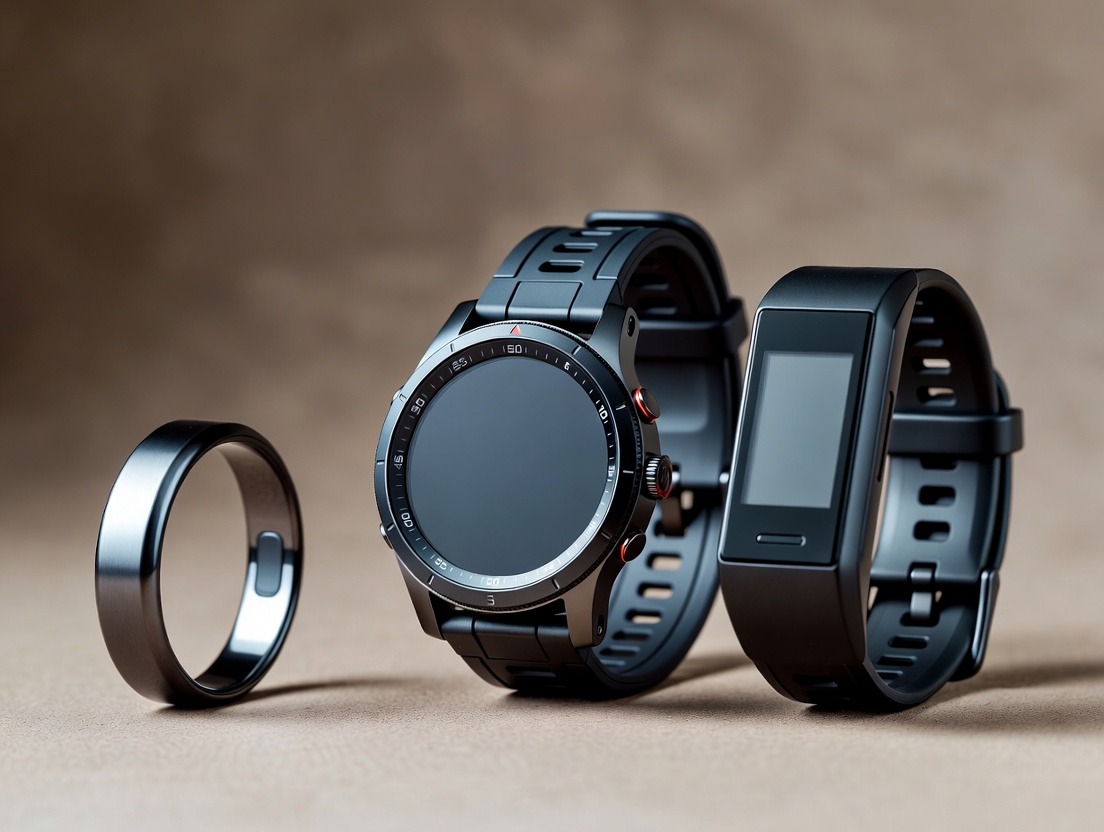
The future of sustainable, high-performance remote work isn't about working more hours in isolation. It's about working in synergy with your body. It's about creating a dynamic, responsive schedule that bends to your unique biology, not breaks it. And for the first time in history, we have the technology to make this not just a philosophical ideal, but a precise, data-driven practice. Enter the smart ring: an unassuming, 24/7 wearable that is poised to become the remote worker’s most essential co-pilot.
This article is your deep dive into the art and science of crafting Ring-Optimized Schedules. We will move beyond generic advice into the realm of personalized, data-informed strategy. We’ll explore how continuous biomarkers like sleep quality, heart rate variability (HRV), body temperature, and activity levels—all seamlessly tracked by a device you simply wear—can illuminate the path to a workday where you accomplish more by stressing less. This is the blueprint for a new way of working: one where your schedule is a living, breathing system that protects your health to amplify your output. The revolution isn't just about where we work. It's about how we work—in harmony with ourselves.

The initial surge of remote work was powered by a potent cocktail of necessity and idealism. Freed from the physical office, many envisioned a utopia of deep work, seamless collaboration, and balanced lives. Yet, the reality for countless remote workers has morphed into a paradoxical "always-on" grind that is eroding the very productivity gains it promised.
The core of the problem is the collapse of spatial and temporal boundaries. In a traditional office, the act of leaving the building provides a clear psychological signal that work has ended. At home, your workplace is always a few steps away. The laptop glows enticingly (or accusingly) from the corner of the living room. Notifications bleed into evenings and weekends. This constant accessibility creates a culture of implied urgency and hyper-responsiveness. A 2023 study published in the Journal of Occupational Health Psychology found that remote employees, on average, work 2.5 more hours per day than their in-office counterparts, primarily through this "time creep" into personal hours.
This grind mentality is fueled by several interconnected myths:
Myth 1: More Hours = More Output. We conflate presence with productivity. The remote worker, anxious to "prove" they are working, often falls into the trap of visible busyness—constant email replies, instant messaging green dots, and long hours logged. Yet, neuroscience tells us that cognitive performance is not linear. After a certain point of mental fatigue, the quality of our work plummets. We make more errors, think less creatively, and require exponentially more time to complete tasks that would take minutes in a focused state.
Myth 2: Willpower Can Override Biology. The remote work culture champions the "hustle"—the ability to power through fatigue, ignore hunger cues, and burn the midnight oil. We treat the body's signals for rest, nourishment, and movement as distractions to be suppressed, not data to be heeded. This is a catastrophic miscalculation. Willpower is a finite neurological resource that depletes with use (a concept known as ego depletion). By midday, the remote worker fighting their natural energy dips has often exhausted their willpower reserves, leaving none for the important, high-cognitive tasks.
Myth 3: Self-Care is Separate from Work. We schedule "wellness" as a discrete event—a 30-minute workout slot, a meditation session—and then return to a work environment and schedule that actively undermines it. We fail to see that true self-care is the architecture of the workday itself. It’s the strategic break, the alignment of tough tasks with peak mental acuity, and the protection of sleep above all else.
The cost of buying into these myths is staggering. Burnout rates have soared, with the World Health Organization now classifying it as an occupational phenomenon characterized by "feelings of energy depletion or exhaustion; increased mental distance from one’s job, or feelings of negativism or cynicism related to one's job; and reduced professional efficacy." Furthermore, the chronic stress associated with the always-on grind elevates cortisol, disrupts sleep, weakens the immune system, and is a primary contributor to a host of lifestyle diseases.
The remote work experiment has exposed a fundamental truth: The industrial-era model of productivity is biologically incompatible with human performance. We are not machines that produce a consistent output per hour. We are complex, rhythmic organisms whose cognitive and creative capacities fluctuate dramatically based on a symphony of internal biological signals. To unlock sustainable, high-quality productivity, we must stop fighting our biology and start designing our workdays in concert with it. This requires a shift from managing our time to managing our energy states—and that requires data we've never had such intimate access to before.
If managing our energy is the new key to productivity, then we must first learn to read our own internal gauges. For decades, this was guesswork. We relied on subjective feelings of "tiredness" or "stress," which are easily misinterpreted and often noticed only when it's too late—when we're already in a crash or a burnout.
Modern wearable technology, particularly the smart ring, has changed the game. By sitting on your finger—a vascular-rich area with a consistent skeletal connection—it provides a 24/7 window into your autonomic nervous system (ANS), the unconscious control center that regulates everything from your heartbeat to your digestion, stress response, and recovery. This is your body's invisible dashboard, and the key metrics it displays are your core biomarkers.
Let's demystify the four critical biomarkers that form the foundation of a Ring-Optimized Schedule:
1. Heart Rate Variability (HRV): Your Real-Time Stress & Resilience Score
HRV is arguably the most important metric for the modern knowledge worker. Contrary to what you might think, a healthy heart does not beat with the monotonous regularity of a metronome. The tiny, millisecond variations in the time interval between each heartbeat are what we call HRV. A higher HRV (more variability) indicates a flexible, resilient nervous system. Your body is adept at shifting between "gas" (sympathetic activity, for focus and action) and "brake" (parasympathetic activity, for rest and digest). A lower HRV suggests your system is under strain—chronically stuck in "fight-or-flight" mode, leaving you fatigued, frazzled, and with poor recovery.
2. Sleep Architecture: Beyond Just Hours in Bed
Sleep is the non-negotiable foundation of cognitive function, emotional regulation, and physical health. A smart ring moves beyond simplistic sleep duration tracking to analyze sleep architecture: the cyclical progression through light, deep, and REM (Rapid Eye Movement) sleep stages. Each stage plays a unique role:
3. Body Temperature & Readiness Score
Your core body temperature follows a circadian rhythm, typically dipping to its lowest point in the early morning (around 4-5 AM) and rising throughout the day. A smart ring tracks distal body temperature (from your finger), which provides a reliable proxy for these circadian shifts and can also indicate onset of illness, stress, or hormonal changes. Many ring algorithms combine temperature, HRV, sleep data, and activity into a single "Readiness" or "Recovery" score.
4. Activity & Rest: The Dynamic Balance
Constant sitting is a silent productivity killer. The ring tracks non-exercise activity thermogenesis (NEAT)—the calories burned through all movement outside of formal exercise—as well as periods of sustained inactivity. It also monitors your actual workout intensity and duration.
By learning to interpret this dashboard, you shift from being a passenger in your workday to becoming its pilot. You have real-time, objective data on your capacity. The next step is to use this data not just for observation, but for intelligent action—to build a dynamic schedule that responds to what your body is telling you.
Armed with the real-time data from your body's dashboard, we can now abandon the flawed paradigm of the rigid, calendar-blocked schedule. Ring-optimization isn't about creating a prettier version of your old Google Calendar. It's a fundamental philosophical shift: from time-management to energy-state management.
Think of it this way. A traditional schedule treats all hours as equal units of potential output. It assumes that 9 AM on Monday is functionally the same as 3 PM on Wednesday for performing a complex task. Your biomarker data proves this is false. Your energy, focus, and creative capacity are fluid, changing with your circadian rhythms, sleep quality, and stress load.
The philosophy of ring-optimization is built on three core principles:
1. Respect Your Biological Prime Time (BPT).
Everyone has a unique chronotype—a genetically influenced propensity for being a morning person (lark), an evening person (owl), or somewhere in between. Your smart ring data helps you objectively discover your BPT. It's not about when you wish you were productive; it's about when your data shows you consistently have your highest HRV, clearest thinking, and most stable energy. For a lark, BPT might be 8 AM - 12 PM. For an owl, it could be 2 PM - 6 PM. Ring-optimization demands you defend this time ferociously. This is when you do your Deep Work—the cognitively demanding, high-value tasks that move the needle. All meetings, admin, and low-energy tasks are ruthlessly scheduled outside of this window.
2. Treat Recovery as a Strategic Input, Not a Passive Outcome.
In the old model, rest was what happened when work stopped. In the new model, recovery is a scheduled, non-negotiable strategic input that determines your future output. Your ring's readiness score and sleep data dictate the intensity of your workday. A low readiness score after a poor night's sleep doesn't mean you call in sick. It means you strategically downgrade your day's ambition. You swap the planned deep work session for a "Shallow Work" day: clearing the backlog, organizing files, and handling communications. You might schedule an extra recovery break or a mindful walk. This prevents digging a deeper biological hole and allows for a faster return to high performance.
3. Implement Micro-Rhythms, Not Just Macro-Blocks.
Beyond the macro-scheduling of your BPT, ring-data encourages the optimization of your ultradian rhythms. These are the 90-120 minute cycles of alertness and fatigue that pulse throughout the day. Pushing through these natural dips with caffeine and willpower leads to burnout. The optimized schedule honors them. It uses the Pomodoro Technique not as an arbitrary timer, but in sync with your energy. A 90-minute focused sprint, followed by a true break where you step away from all screens, move your body, hydrate, or simply gaze out a window. Your ring can even help you time these breaks based on rising stress indicators (like a dipping HRV trend during a long meeting).
This philosophy turns the traditional productivity advice on its head. Instead of fitting work into time, you are fitting work into your capacity. Some days, your capacity will be expansive—you'll crush your to-do list by 2 PM. Other days, it will be constrained—and the goal is to accomplish what is essential without degrading your health further. This dynamic, responsive approach is what makes remote work sustainable. It acknowledges that you are a human being, not a human doing, and that your best work emerges from a state of balance, not depletion. The goal is not to be busy from 9 to 5, but to be profoundly effective in the hours that align with your biological design.
The concept of "early bird gets the worm" is one of the most pervasive and damaging myths in productivity culture. It assumes a one-size-fits-all template for high performance, shaming night owls into believing they are lazy or undisciplined. In reality, your chronotype is a powerful, genetically-influenced part of your biological identity. Fighting it is a guaranteed path to friction, fatigue, and underperformance. Ring-optimization begins with hacking your chronotype—discovering it through data and then designing your schedule to exploit its innate advantages.
Your smart ring is the ultimate chronotype detective. While you can take questionnaires (like the Morningness-Eveningness Questionnaire), subjective feeling is often clouded by social obligations and habit. Objective data doesn't lie. By analyzing weeks of data, you can see clear patterns:
Based on this data, you can identify your type and optimize accordingly:
For the Lark (Morning Chronotype):
For the Owl (Evening Chronotype):
For the Hummingbird (Intermediate Chronotype):
The hack is not to change your chronotype, but to build your professional life around its strengths. An owl forcing deep work at 7 AM is like a Ferrari being used in first gear—it's inefficient and damaging to the engine. By scheduling in harmony with your innate rhythm, you reduce daily friction, increase the quality of your output, and protect your long-term energy reserves. It is the ultimate form of working smarter, not harder. For those struggling to fit their natural rhythm into a conventional world, exploring strategies to honor your sleep pattern in a 9-to-5 world can offer practical solutions.
For the remote worker, the first hour after waking is not just the start of the day; it's the launch sequence for your entire cognitive mission. Get it wrong, and you spend the rest of the day compensating, fighting against low energy and brain fog. Get it right, and you harness your natural circadian upswing to propel yourself into a state of focused flow. A Ring-Optimized morning is not a rigid checklist of "wellness hacks," but a responsive, data-informed ritual designed to align your physiology with your intentions.
Your smart ring provides the crucial pre-flight data: your Sleep Score and Readiness/Recovery Score. These are your mission briefings. Do not ignore them.
Scenario A: The "Green Light" Launch (High Readiness)
Your data shows excellent sleep (high deep/REM sleep, low disturbances) and a high readiness score. Your biological systems are primed. Your routine should be about activation and direction.
Scenario B: The "Amber Light" Launch (Moderate/Low Readiness)
Your data shows suboptimal sleep, a lower HRV, or a poor recovery score. Your body is signaling it's under strain or fighting something. The mission today is recovery and conservation, not aggressive output. Pushing will make tomorrow worse.
The Non-Negotiables (All Scenarios):
This launch sequence turns your morning from a frantic, reactive scramble into a strategic, calm initiation. It ensures you are working with your body's current state, setting the trajectory for a day of sustainable productivity, not forced output.
In a world of infinite distractions, the ability to perform "Deep Work"—the professional activities performed in a state of distraction-free concentration that push your cognitive capabilities to their limit—is becoming both increasingly rare and increasingly valuable. For the remote worker, creating these blocks is the difference between being busy and creating meaningful, career-advancing output.
Yet, simply blocking three hours on your calendar is not enough. The Ring-Optimized approach uses your biomarker data to ensure these blocks are strategically placed, effectively defended, and optimally executed.
Step 1: Strategic Placement Using Historical Data
Your ring's multi-week data is a goldmine for identifying not just your chronotype-based BPT, but the micro-conditions for your best deep work. Look for patterns:
Use this historical analysis to place your weekly Deep Work Blocks on the days and times you are biologically most likely to succeed. For a lark, this might be Tuesday, Wednesday, and Thursday mornings. An owl might protect Monday, Tuesday, and Wednesday afternoons.
Step 2: Real-Time Defense with Live Signals
The day-of data (your Readiness Score) gives you permission to proceed or forces a tactical pivot (as in the Amber Light launch). But defense continues during the block itself.
Step 3: The Strategic Deep Work Break
When the 90-minute timer ends, STOP. This is non-negotiable. The break is not for checking messages. It is for cognitive recovery. Your ring data validates this need—you will often see a dip in HRV after intense focus, signaling stress accumulation.
Step 4: The Iteration or Conclusion
After the break, assess. Do you have the biological capital for another 90-minute sprint? Check in with your energy. If yes, begin another block on the same or a related task. If not, this is a signal that your deep work capacity for this session is exhausted. Conclude the block and move to a different type of task (administrative, communication).
By using ring data to place, defend, and execute your Deep Work Blocks, you transform them from hopeful appointments on a calendar into high-probability, high-output events. You are no longer just "trying to focus." You are engineering the ideal internal and external conditions for genius-level work to emerge. This method ensures that the 10-15 hours per week of true deep work that Cal Newport advocates for are not only scheduled but are of the highest possible quality. For insights into how your brain's creative cycles are tied to these rhythms, explore our piece on sleep patterns and creativity.
If the Deep Work Block is the engine of high performance, the Strategic Break is its essential cooling system. Most remote workers take breaks haphazardly—when a meeting ends, when hunger strikes, or when they are already past the point of mental exhaustion. This is a reactive, suboptimal approach that leads to energy crashes and prolonged fatigue. The Ring-Optimized method makes breaks proactive, intentional, and restorative, timed to preempt depletion rather than respond to it.
The science guiding this is the Ultradian Rhythm. Just as we have a 24-hour circadian rhythm, we operate on 90-120 minute cycles throughout the day called ultradian rhythms. In each cycle, we move from a period of high alertness (the "peak") down into a trough of lower alertness and focus. Pushing through this natural trough with stimulants or sheer willpower leads to a phenomenon known as "ultradian stress response," releasing stress hormones and degrading the quality of subsequent work cycles.
Your smart ring provides the live data to spot these troughs before you feel completely fried.
How to Identify the Need for a Break Using Your Ring:
While direct, real-time access to raw data varies by device, many rings and their apps provide derived metrics or trends that signal accumulating stress:
Designing the Ring-Optimized Strategic Break:
Not all breaks are created equal. A 5-minute scroll through Twitter is not restorative. The goal is to shift your nervous system state and refresh your cognitive faculties.
The 5-Minute "Micro-Recharge" (Every 25-30 mins during non-deep work):
The 15-Minute "Cognitive Reset" (Every 90-120 mins, post-Deep Work or intense focus):
This is the core strategic break.
The 60-Minute "Macro-Recharge" (The Lunch Break Reinvented):
The remote work "sad desk lunch" is a productivity crime. A proper midday break is a massive performance lever.
By scheduling and honoring these breaks based on your body's rhythms and signals, you stop the day from being a slow drain of energy. Instead, you create a rhythm of sprint → recover → sprint. This maintains a high average energy level throughout the day, prevents the 3 PM crash, and protects your long-term resilience. The strategic break is where you invest minutes to gain hours of higher-quality focus. For those looking for a comprehensive system, our complete 90-day sleep improvement guide incorporates these principles into a holistic plan for sustained energy.
For the remote worker, nutrition is often reduced to convenience—quick snacks, skipped meals, or erratic delivery. Yet, food is not just calories; it's information and fuel for your most important asset: your brain. What and when you eat has a profound, immediate impact on your energy levels, focus, mood, and sleep. A Ring-Optimized schedule leverages nutrition timing as a precision tool to stabilize energy, enhance cognitive function, and support your biomarker goals.
The core principle is to align your eating patterns with your energy expenditure and circadian biology, not just your hunger pangs or meeting schedule.
1. The Circadian-Aligned Eating Window (Time-Restricted Feeding)
Emerging research suggests confining your daily food intake to a consistent 8-12 hour window (e.g., 8 AM to 6 PM) can improve metabolic health, energy regulation, and even sleep quality by aligning with your body's natural digestive rhythms. Your ring's temperature data can provide feedback—better sleep and more stable daytime energy can be signs this is working for you.
2. The Focus-Friendly Breakfast (Breaking the Fast)
After your overnight fast, breakfast sets the metabolic and cognitive tone for the day.
3. The Pre-Deep Work Meal (90 Minutes Prior)
The meal or snack before your scheduled Deep Work Block is critical.
4. The Strategic Snack (For the Mid-Afternoon Dip)
The post-lunch energy dip (around 2-3 PM) is a near-universal circadian phenomenon. Reaching for sugar or caffeine here can ruin your evening sleep.
5. The Recovery-Oriented Dinner
Your evening meal should support overnight repair and not hinder sleep.
Using Your Ring as a Feedback Loop:
Your nutritional experiments should show up in your data. Notice:
By treating food as strategic fuel and using your ring's biometric feedback, you move from eating for convenience to eating for consistent, high-level performance. It’s a powerful way to ensure your physical machine is optimally supporting your cognitive work. For more on how foundational health improvements compound, see our article on how small sleep improvements compound over time—the same principle applies to nutrition.
In the remote work lifestyle, the line between "not moving enough" and "overtraining" can be perilously thin. On one hand, the sedentary trap is real, leading to poor posture, low energy, and metabolic sluggishness. On the other, the temptation to use intense daily workouts as a penance for sitting, or as a misguided stress-relief tool, can backfire, adding to your allostatic load and undermining recovery. Ring-optimization reframes exercise from a calorie-burning obligation to a strategic tool for modulating energy, enhancing cognitive function, and improving sleep—to be deployed at the right time, intensity, and frequency based on live physiological data.
The Cardinal Rule: Let Readiness Guide Intensity.
Your morning Readiness/Recovery Score is your primary filter for deciding your workout for the day.
Strategic Timing Based on Chronotype & Goals:
Non-Exercise Activity (NEAT): The Silent Hero
Your ring tracks all-day movement. For the remote worker, maximizing NEAT is arguably more important than a single daily workout.
The Post-Workout Feedback Loop:
Your ring provides the ultimate feedback on whether your exercise regimen is truly serving you.
By letting your biomarkers guide the what and when of movement, you transform exercise from a guessing game into a precise component of your performance stack. You move to support your work and your health, creating a virtuous cycle where movement enhances your capacity for deep work, and the mental clarity from deep work allows you to be more present and effective in your movement.

The most important hours for a remote worker’s productivity are not spent at the desk; they are spent asleep. Sleep is the ultimate biohack—the non-negotiable period where your brain consolidates memories, clears metabolic waste, repairs tissues, and resets your hormonal and emotional balance. A poor night’s sleep doesn’t just make you tired; it degrades every biomarker critical for the next day’s performance: it lowers HRV, impairs glucose metabolism, and cripples executive function.
Therefore, the final act of a Ring-Optimized workday is not logging off. It is the deliberate, systematic wind-down protocol—a digital sunset engineered to transition your nervous system from the sympathetic “doing” state to the parasympathetic “being and restoring” state. This protocol uses your smart ring’s insights and simple environmental controls to consistently set the stage for high-quality sleep.
Phase 1: The Digital Sunset (90-120 Minutes Before Target Bedtime)
This is the hard line between your work life and your restoration life. The goal is to eliminate high-velocity, emotionally charged, and blue-light-dominant input.
Phase 2: The Light & Environment Transition (60 Minutes Before Bed)
Light is the primary regulator of your circadian rhythm. Your ring’s ability to track sleep onset is directly tied to your light exposure habits.
Phase 3: The Nervous System Downshift (30-60 Minutes Before Bed)
This is where you actively guide your physiology into rest mode. Your ring’s HRV sensor can show you the direct impact of these practices.
Phase 4: The Final Cues (Last 15 Minutes)
Using Your Ring as a Wind-Down Coach:
This wind-down protocol is not a luxury; it is the essential closing ceremony of your productive day. It is how you repay the biological debt incurred by focused mental effort and ensure you wake up with a fully charged cognitive battery. It turns sleep from a passive state you hope for into an active, engineered outcome you can rely on.
Collecting data is one thing; deriving actionable wisdom from it is another. The true power of a smart ring for the remote worker unfolds not in the daily glance, but in the weekly review. This dedicated time (30-60 minutes, perhaps on a Sunday evening) is where you shift from being a passive wearer to an active strategist, interpreting trends, spotting correlations, and making informed adjustments to your Ring-Optimized Schedule for the week ahead.
Here’s a framework for interpreting your key weekly reports:
1. The Sleep Performance Report: Look for Trends, Not Isolated Nights.
2. The Readiness/Recovery Trend Report: Understand Your Stress & Resilience Curve.
3. The Activity & Strain Balance:
4. The Heart Rate Variability (HRV) Trend: Your Resilience Baseline.
The Weekly Planning Session Integration:
This weekly ritual transforms abstract data into a concrete strategic plan. It turns your ring from a fancy pedometer into a true business intelligence dashboard for your most important asset: yourself.
No amount of optimization can make you a machine. Life happens. Stressors arrive uninvited: a looming deadline, a sick child, a personal conflict, or simply an off night of sleep. The rigid productivity guru would tell you to “push through.” The Ring-Optimized philosophy offers a smarter, more sustainable path: graceful adaptation.
Your ring’s low Readiness Score is not a failure; it is crucial information. It is your body whispering (or shouting) that its resources are depleted and its margin for error is thin. Ignoring this is how mistakes are made, burnout is accelerated, and illness takes hold. Here is how to adapt your schedule and expectations intelligently.
The Tiered Response System for Low-Readiness Days:
Tier 1: The Minor Dip (Slightly Lower than Average Score)
Tier 2: The Significant Drop (Clearly Low Recovery)
Tier 3: The Crash (Very Low Readiness, Often with Elevated RHR)
Adapting for Life Events:
The master of the Ring-Optimized schedule is not someone who never has a low-readiness day. It is someone who sees it coming, respects the data, and adapts without guilt. This flexibility is the hallmark of resilience. It prevents the boom-bust cycle and allows for high performance over a career, not just in sporadic, unsustainable bursts. By learning to adapt, you build a work-life system that is antifragile—it gets stronger because it knows how to bend without breaking.
We’ve covered the philosophy, the biomarkers, and the adaptive strategies. Now, it’s time to synthesize this knowledge into your own living, breathing schedule. This template is not a rigid cage, but a flexible framework you will populate and adjust weekly based on your ring’s data and your life’s demands.
Step 1: The Foundational Audit (Week 1-2: Observation)
Step 2: Identify Your Chronotype & Biological Prime Time (BPT)
Step 3: Design Your Ideal Daily Framework
Using your BPT as the anchor, build the skeleton of your day. Here is a sample for an Intermediate Chronotype (BPT: 10 AM - 1 PM):
Step 4: Integrate Strategic Breaks & Movement
Step 5: Create Your Weekly Rhythm
Step 6: The Weekly Review & Iteration (Every Sunday)
Step 7: Embrace the Fluid Mindset
By following this step-by-step process, you move from having a calendar to having a dynamic operating system for your life and work. It is a system that respects your humanity, leverages technology, and is designed for one purpose: to help you achieve your highest potential without sacrificing your health on the altar of productivity. This is the essence of the Ring-Optimized life.
Your Trusted Sleep Advocate: Sleep Foundation — https://www.sleepfoundation.org
Discover a digital archive of scholarly articles: NIH — https://www.ncbi.nlm.nih.gov/
39 million citations for biomedical literature :PubMed — https://pubmed.ncbi.nlm.nih.gov/
Experts at Harvard Health Publishing covering a variety of health topics — https://www.health.harvard.edu/blog/
Every life deserves world class care :Cleveland Clinic - https://my.clevelandclinic.org/health
Wearable technology and the future of predictive health monitoring :MIT Technology Review — https://www.technologyreview.com/
Dedicated to the well-being of all people and guided by science :World Health Organization — https://www.who.int/news-room/
Psychological science and knowledge to benefit society and improve lives. :APA — https://www.apa.org/monitor/
Cutting-edge insights on human longevity and peak performance:
Lifespan Research — https://www.lifespan.io/
Global authority on exercise physiology, sports performance, and human recovery:
American College of Sports Medicine — https://www.acsm.org/
Neuroscience-driven guidance for better focus, sleep, and mental clarity:
Stanford Human Performance Lab — https://humanperformance.stanford.edu/
Evidence-based psychology and mind–body wellness resources:
Mayo Clinic — https://www.mayoclinic.org/healthy-lifestyle/
Data-backed research on emotional wellbeing, stress biology, and resilience:
American Institute of Stress — https://www.stress.org/


