


How to Set Up Your Wellness Ring: The Basics Step-by-Step
Simple instructions for getting a new wellness ring out of the box, connected to an app, and ready for use.
Simple instructions for getting a new wellness ring out of the box, connected to an app, and ready for use.
%402x.svg)
There’s a quiet revolution happening on our fingers. Gone are the days when rings were merely ornamental symbols; today, they are sophisticated gateways to understanding our most fundamental rhythms. Your new wellness ring isn’t just another gadget—it’s a personal health observatory, a silent guardian of your vitality, and a compass guiding you toward a more balanced life. But its power isn't automatic. Like any precise instrument, its value is unlocked not when you take it out of the box, but when you set it up with intention.
This moment—the setup—is the foundational ritual that transforms a piece of advanced technology into your wellness partner. A proper setup is the difference between vague data and actionable insight, between frustration and seamless integration into your daily flow. It ensures that the sleep scores, readiness metrics, and stress indicators you’ll soon rely on are accurate, personalized, and truly reflective of your unique physiology. Think of this process not as a chore, but as the first act of self-care with your new tool: you are calibrating it to the most important subject it will ever study—you.
In this comprehensive guide, we will walk through every critical step, from initial unboxing to advanced personalization. We’ll demystify the companion app, ensure you’re wearing your ring for optimal data collection, and lay the groundwork for a rich, lifelong journey of health discovery. This is where your data becomes your wisdom. Let’s begin.
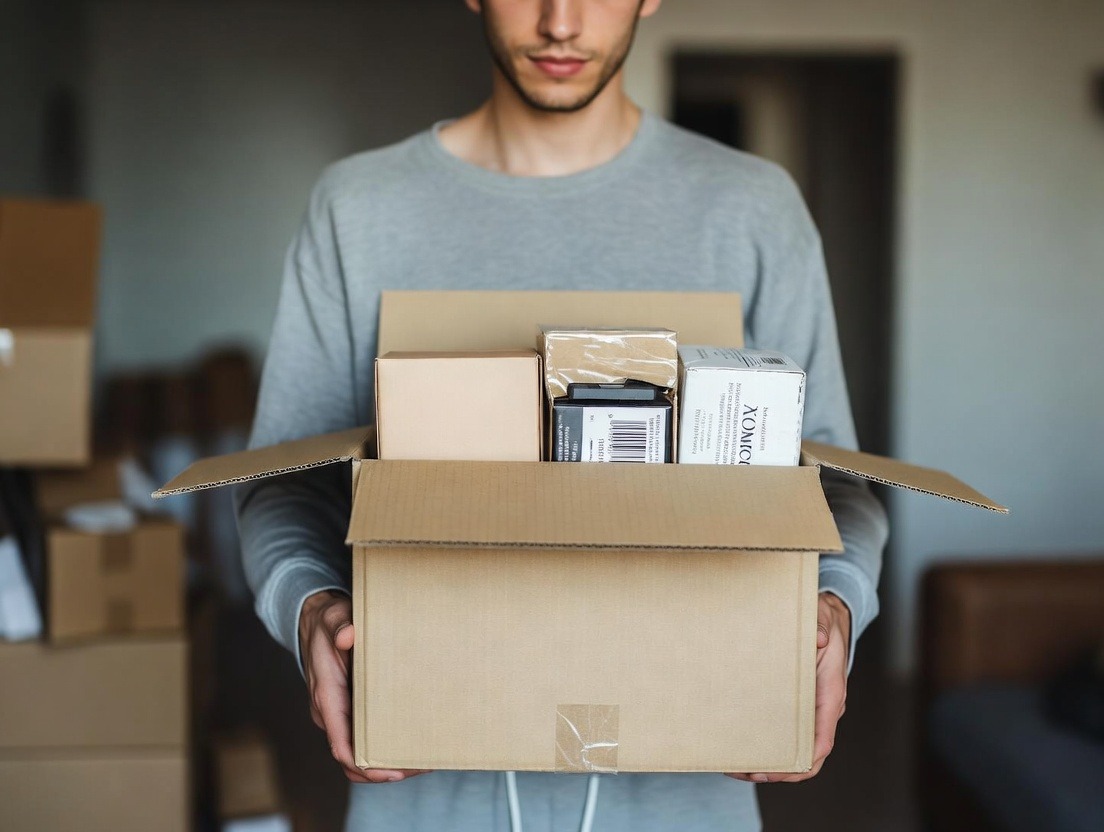
Before the ring even touches your finger, a little preparation sets the stage for a flawless experience. Start by creating an environment conducive to focus. Find a well-lit, clean space with a stable surface—your kitchen table, a desk, or a countertop will do perfectly. Have your smartphone, fully charged, nearby. This isn't just an unboxing; it's the initiation of a new health partnership.
Open the packaging carefully. Inside, you should find:
Your first task is the sizing check. A wellness ring must be snug but not tight. It should slide over your knuckle with a bit of resistance but sit comfortably at the base of your finger without leaving deep indentations or feeling loose enough to spin freely. The sensors on the inner band need consistent contact with your skin to read your pulse, temperature, and blood oxygen variations. An ill-fitting ring will give erratic, useless data. If you have a sizing kit, try the inserts on the finger you intend to wear it on (the non-dominant hand’s ring or index finger is often recommended) for at least an hour during different activities to test real-world comfort.
Next, perform a hardware inspection. Examine the ring for any obvious manufacturing defects. Check the charging pins or magnetic contacts for cleanliness. Plug in the charger to a power source (a computer USB port or low-power adapter is best for initial charge) and place the ring on it. A small LED indicator should light up, confirming it’s receiving power. Allow it to charge fully—this can take 60 to 90 minutes. A complete initial charge ensures the battery calibration is accurate from day one.
While it charges, this is the perfect time to download the companion app. Head to the Apple App Store or Google Play Store and search for your ring’s official app. Download it, but don’t open it just yet. Ensure your phone’s Bluetooth is turned on and its operating system is updated. These preliminary steps might seem minor, but they eliminate common frustrations, letting you move into the exciting setup phase with confidence and clarity. A smooth start here foreshadows the seamless integration of wellness tracking into your life.
With your ring charged and your phone ready, it’s time to awaken the brain of the operation: the companion app. This application is far more than a dashboard; it’s the interpreter, coach, and library for your health data. Finding the correct, official app is crucial—third-party apps can lead to security issues and poor functionality. Look for the developer name matching the ring’s manufacturer.
Open the app. You’ll typically be greeted with a welcome screen inviting you to create an account. Use a secure, dedicated email and a strong, unique password. This account is where all your sensitive biometric data will be stored and synced, so treat its credentials with care. You’ll often be asked to agree to privacy policies and terms of service. Take a moment to skim these—understanding how your data is used, stored, and protected is a key part of being an informed user in the wellness tech space.
Once logged in, the app will likely guide you through a pairing process. It will search for your ring via Bluetooth. When prompted, you may need to confirm a code on the ring (like a series of flashing LEDs) or in the app to establish a secure, one-to-one connection. This pairing is what allows the silent, continuous data collection on your finger to become meaningful information on your phone.
Now, explore the app’s main interface. Don’t worry about diving deep yet; just get oriented. Most wellness ring apps are built around a few core screens:
Familiarizing yourself with this layout now prevents feeling lost later when your data starts pouring in. The app is your primary interface for this entire journey, so comfort here is paramount. Think of it as learning the cockpit of your personal wellness aircraft before takeoff.
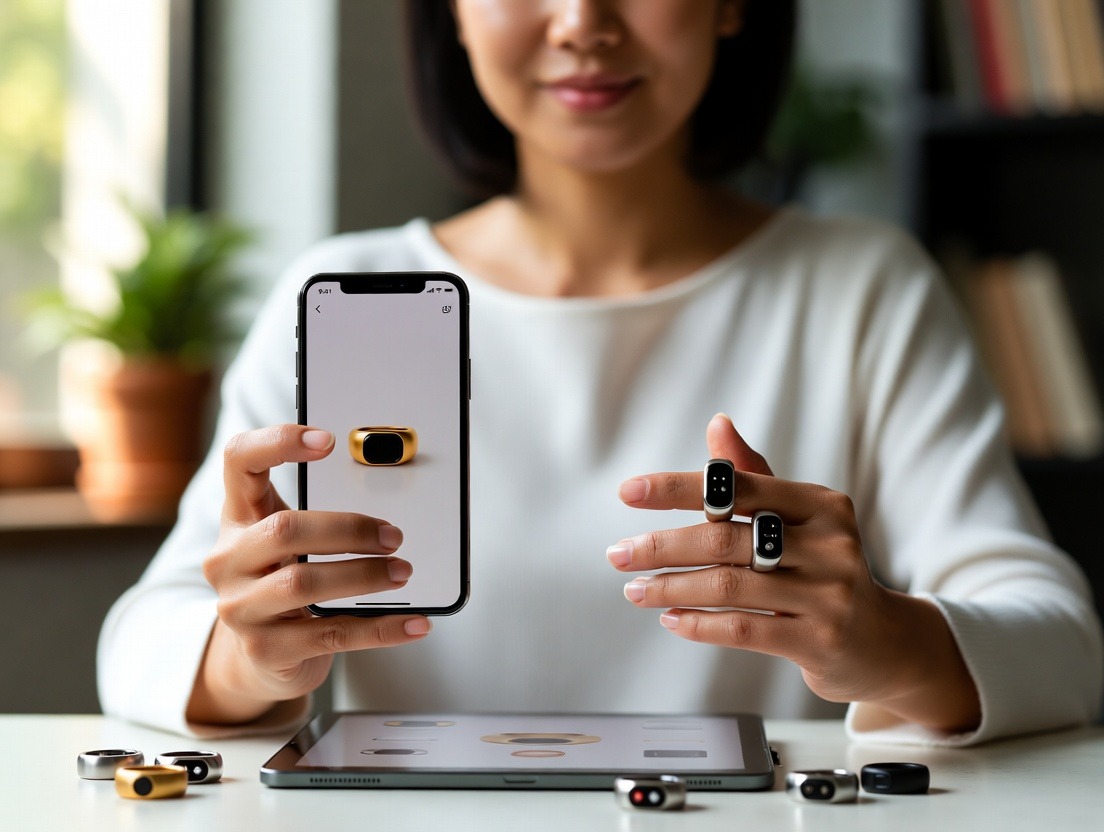
Pairing is the sacred handshake between your ring’s hardware and your app’s software. It’s a one-time process that establishes a trusted line of communication. Start by ensuring your ring has sufficient charge (at least 50% is recommended for setup) and is within three feet of your phone. Keep other Bluetooth devices temporarily away to avoid interference.
Within the app’s setup flow, you’ll hit a “Pair New Device” or similar button. The app will enter a discovery mode. You might be asked to place the ring on its charger to activate pairing mode, or to tap the ring’s surface in a specific pattern. Follow the on-screen instructions precisely. A successful pairing is usually confirmed with a clear message in the app and sometimes a haptic buzz or specific light pattern on the ring itself.
The next critical step is syncing the ring’s firmware. Like your phone’s operating system, the ring runs on internal software that occasionally needs updates to fix bugs, improve accuracy, or add new features. The app will almost certainly check for this immediately after pairing. If an update is available, do not skip it. Place the ring on its charger, ensure your phone remains nearby and connected to Wi-Fi, and let the update run its course. Interrupting a firmware update can potentially brick the device, so patience here is key.
Once paired and updated, perform a test sync. The app may do this automatically, pulling in its first bits of diagnostic data from the ring. You can often force a manual sync by pulling down on the home screen or going into the device settings. A successful sync confirms the communication line is robust.
Finally, this is the stage to enable crucial app permissions. For the ring to provide its full value, the app needs certain accesses:
Completing the pairing and permission process finalizes the technical marriage. Your ring is now fully integrated into your digital ecosystem, ready to begin its true work: observing you.
You could have the most advanced sensor array in the world, but if it’s not positioned correctly, the data is garbage. This principle is paramount for wearable technology, especially one as small as a ring. The placement and fit of your wellness ring are the unsung heroes of data accuracy.
Let’s start with finger selection. Most manufacturers recommend wearing the ring on your non-dominant hand. The reason is simple: your non-dominant hand generally experiences less pronounced, high-frequency movement and impact throughout the day, leading to cleaner heart rate and motion signals. Which finger? The index, middle, or ring finger are typically best. They tend to have better blood flow and a more consistent shape closer to the knuckle than the thumb or pinky. Avoid fingers with significant existing arthritis or swelling issues.
Now, for the fit itself. The golden rule: snug but not tight. You should be able to rotate the ring around your finger with a gentle, deliberate effort, but it shouldn’t spin freely from casual hand movements. When you push the ring down toward the base of your finger, the skin should lightly indent but immediately bounce back when you remove it. A ring that is too tight can restrict circulation, cause discomfort, and ironically, skew heart-related metrics. A ring that is too loose will move excessively, leading to motion artifacts in the data and poor sensor-skin contact for optical measurements like pulse oximetry.
Test the fit in different scenarios:
The sensors, usually located on the inner curve of the ring, must maintain consistent contact. If you have a larger gap between the ring and your skin on the palm-side of your finger, the photoplethysmography (PPG) sensor—which uses light to measure blood volume changes—will fail. This is why the sizing kit is not a suggestion; it’s a prerequisite for scientific-grade personal data.
Finally, consider daily wear habits. You should wear the ring continuously for the best data, especially to capture full sleep and recovery cycles. The only times you should consistently remove it are:
Getting the fit right is a one-time investment that pays dividends in data quality every single day. It’s the physical foundation upon which all digital insights are built.
Your wellness ring is now physically and digitally connected. But it still sees you as a generic human. The next step—personalizing your profile—is where you teach it to see you. This transforms its metrics from generic averages into personally contextualized, meaningful feedback.
Navigate to the Profile or Account settings in your app. Here, you’ll input your basic biostatistics:
Beyond the basics, delve into goal setting. What is your primary intention for using this ring?
Many apps allow you to set quantitative goals. Be realistic. If you currently average 6,000 steps, don’t set a daily goal of 15,000. Start with 7,500. If your sleep score averages 72, aim for a consistent 75. These goals should be motivating, not demoralizing. The app will use them to provide congratulatory nudges and constructive feedback.
Finally, explore notification and alert preferences. This is about managing the relationship with your device. Do you want a daily morning summary notification? A weekly report? Alerts for unusually high resting heart rate or low HRV? You might want these at first for awareness, but later choose to turn them off to reduce digital anxiety. You can also set quiet hours so the ring and app don’t buzz you during sleep or focused work.
This personalization process is a dialogue. You provide context; the ring provides personalized data. As you live with it, you may return to these settings to refine them. This stage ensures the stream of information you’re about to receive is filtered through the lens of your unique life, body, and ambitions.
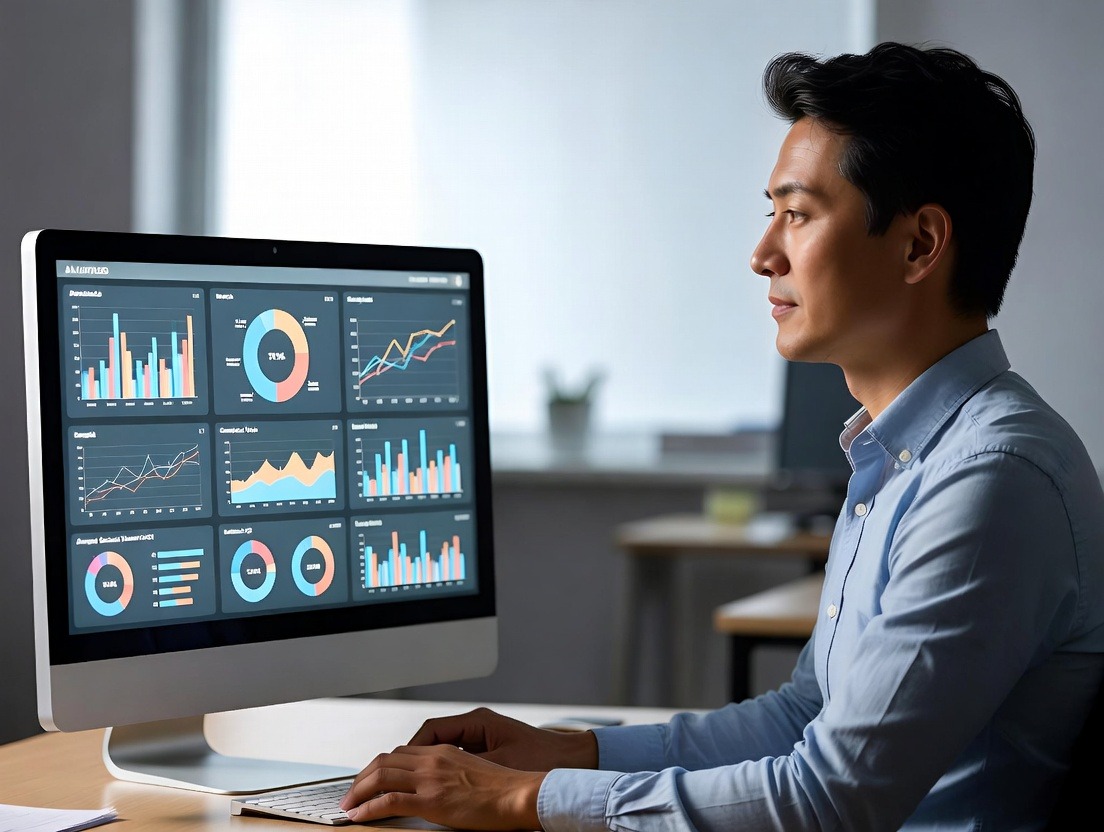
Now, with your ring fitted and profile set, data will begin to populate your app’s home screen—the dashboard. This can feel overwhelming at first glance, a sea of numbers and graphs. Let’s demystify the core metrics you’ll encounter, turning data points into stories about your body.
The Sleep Score (Typically 0-100): This is often the centerpiece of your morning review. It’s not just a measure of duration but a composite grade of your sleep’s quality. It synthesizes:
The Readiness/Recovery Score (Also 0-100): This is your body’s “weather report” for the day. It answers: “How equipped am I to handle physical and mental stress today?” It’s calculated from:
Activity Metrics: These are the more familiar companions:
The Stress/Relaxation Score: Some rings use HRV and heart rate data to estimate your autonomic nervous system state throughout the day, identifying periods of stress, focus, and relaxation.
Spend your first week simply observing. Don’t try to change anything. Just notice the correlations. Does a late coffee affect your sleep score? Does a stressful workday depress your next morning’s readiness? The dashboard isn’t a judge; it’s a mirror. Learning to read it is the first step in learning to respond to your body’s subtle language.
You have data flowing in, but what does it mean? A single day’s sleep score of 65 is just a number. Is it bad? Good? Normal for you? This is where the concept of a personal baseline becomes your most important tool. For the first 10-14 days, your primary job is not to optimize, but to observe and establish your norms.
Think of this as a scientific discovery phase. Wear your ring consistently, live your normal life, and let the ring collect data without judgment. The app’s algorithms are working quietly in the background, learning your unique patterns:
During this phase, resist the urge to “game” the scores. Don’t go to bed extra early just to boost duration, or avoid exercise to keep your RHR artificially low. The goal is an honest snapshot. To enrich this baseline, consider keeping a very simple notes log in the app (most have a feature for this) or in your phone’s notes. Jot down obvious variables:
After about two weeks, patterns will start to emerge in the app’s trends view. You’ll see your weekly average for sleep score, readiness, and RHR. This is your foundation. Now, any single day’s data can be contextualized: “My sleep score is 68, which is 5 points below my baseline. What was different last night?”
This baseline is dynamic, not static. It will change with age, fitness, season, and lifestyle. But establishing it initially provides the crucial reference point that makes all future data actionable. It turns random numbers into a coherent narrative about your body’s response to the world. Without this baseline, you’re interpreting your health in a vacuum. With it, you have a personalized compass.
Your wellness ring is a powerful soloist, but its true potential is realized when it joins the orchestra of your digital health ecosystem. By connecting it to your phone’s central health repository—Apple Health on iOS or Google Fit on Android—you create a synergistic loop of information that benefits every connected app.
Why integration is a game-changer:
How to set it up:
Usually, during the initial app setup or in the settings menu, you’ll find a section called “Connected Apps,” “Health Integrations,” or “Data Permissions.” Tap to connect to Apple Health or Google Fit. You’ll be presented with a detailed permission screen—a list of dozens of data types. The general best practice is to “Allow All” for both reading and writing initially. This opens the full pipeline. You can always revoke specific permissions later if you’re uncomfortable, but starting with full integration offers the most holistic view.
Explore other connections: Many ring apps also connect directly to popular fitness platforms like Strava, TrainingPeaks, or MyFitnessPal. If you use these, link them! This automates data flow and saves you manual entry.
Take 15 minutes to audit your health and fitness apps. See which ones are already connected to Apple Health/Google Fit, and consider downloading others that could benefit from your ring’s data (like a comprehensive health dashboard app). This step transforms your ring from an island of insight into the central hub of a personalized, interconnected health intelligence network. The whole becomes far greater than the sum of its parts.

A wellness ring is a miniature piece of cutting-edge electronics exposed to the harsh realities of daily life—sweat, soap, impacts, and temperature changes. A simple, consistent care routine will ensure it delivers reliable data and lasts for years, protecting your investment.
The Charging Ritual:
Battery life varies by model, but most last 4-7 days on a full charge. The key is to establish a routine. Pick a consistent, low-activity time to charge—perhaps while you’re showering and getting ready in the morning, or during a fixed 30-minute window while you’re at your desk in the evening. This prevents you from ever being caught without it during a full night of sleep tracking.
Daily and Weekly Cleaning:
Your ring’s sensors must be free of debris for accurate readings.
General Care:
By incorporating these simple habits, you’re not just maintaining a device; you’re honoring the tool that honors your health. A well-cared-for ring becomes a reliable, silent partner on your wellness journey, day after day, year after year.
Even with the most meticulous setup, you might encounter hiccups. Don’t let these early frustrations derail your journey. Most common issues have simple solutions. Here’s a guide to diagnosing and fixing them.
1. The Ring Won’t Pair/Connect to the App:
2. Data Isn’t Syncing/App Shows “No Device Connected”:
3. Battery Life is Much Shorter Than Advertised:
4. Inaccurate Heart Rate or Sleep Data:
5. Notifications Aren’t Working:
6. The Ring Feels Uncomfortable or Causes Irritation:
Remember, the manufacturer’s customer support is there for a reason. If you’ve tried basic troubleshooting without success, reach out. They have deeper diagnostic tools and can often resolve issues quickly or determine if a replacement is needed. A small hurdle at the start shouldn’t block the path to long-term wellness insights.
Your ring is now a seamless part of your life, delivering daily reports on your body’s state. But data alone is inert. The transformative magic happens when you use that data not just to track, but to act—to cultivate a lifestyle that supports deep recovery and vibrant energy. This is where the philosophy of Restful Living comes in. It’s the intentional practice of weaving periods of genuine restoration into the fabric of your day, counterbalancing the inevitable stresses of modern life.
Your ring’s readiness and sleep scores are direct feedback mechanisms for your restful living experiments. They answer the question: “Did that new habit help my body recover?” This turns wellness from a guessing game into an evidence-based practice.
Restful Living isn’t about doing nothing; it’s about doing the right things to recharge your nervous system. It starts with recognizing that constant "doing" is a recipe for burnout, and that strategic "being" is the source of sustainable performance. Your ring can guide you to discover simple daily habits for deeper calm that actually move the needle on your biometrics.
Consider how you bookend your day. A frantic morning and a screen-filled evening sabotage your body’s natural rhythms. Could you implement a restful living morning routine to start your day right, perhaps with five minutes of daylight viewing and slow breathing instead of immediately checking email? In the evening, how might specific evening rituals prepare you for sleep, signaling to your physiology that it’s time to wind down? Your ring will show you the impact on your sleep latency and deep sleep percentage.
This mindset extends to your environment. Is your home a place of recharge or chaos? Small changes informed by designing spaces for calm and restoration can lower your ambient stress levels, something your ring’s stress score may passively reflect over time.
For the perpetually busy, restful living is about micro-moments. It’s the practice of finding micro-recovery throughout the day—a 90-second breathing exercise between meetings, a mindful walk at lunch, a conscious transition out of work mode. These aren’t breaks from productivity; they are the fuel for sustained, focused productivity.
Let your ring’s data be your teacher. Notice what happens to your scores when you practice restful living principles. This is the true beginning of your journey: moving from passive tracking to active, intelligent living, using your biometric feedback to build a life that feels as good as the data says it could. The setup is complete. The experiment in living well has now begun.
The setup is complete. Your ring fits perfectly, your dashboard hums with data, and your personal baseline is established. Now comes the most exciting phase: transitioning from a passive observer to an active participant in your own wellbeing. This is where the raw numbers on your screen begin to whisper—and sometimes shout—actionable insights about your life. Living with your wellness ring is an ongoing dialogue, a continuous feedback loop where you propose changes through your habits, and your body responds through biometrics. This section is about learning that language and using it to craft a more vibrant, resilient you.
The key mindset shift here is to view your data not as a scorecard, but as a compass. A low sleep score isn’t a failing grade; it’s a clue pointing toward potential root causes. A dip in your readiness isn’t a condemnation of your fitness; it’s an invitation to practice kindness and recovery. The ring externalizes your internal state, giving you the objectivity needed to make smarter daily choices. As you integrate this tool into your long-term lifestyle, you’ll start to understand the restful living philosophy of less hustle and more health, using data to champion balance over burnout. Let’s explore how to navigate this new, informed way of living.
Your first full week of continuous wear is a treasure trove of initial insights. Resist the urge to overanalyze each individual metric. Instead, step back and look for the broader patterns and correlations that tell a story about your typical week.
Start by reviewing your Sleep and Readiness Trends. Most apps have a "Weekly" or "Trends" view. Observe:
Next, look at your Daily Stress/Relaxation Timeline. Many apps show a graph of your nervous system state throughout the day. Identify your natural peaks and valleys. Do you have a predictable stress spike during your morning commute or afternoon meetings? Is there a natural lull after lunch? Seeing this mapped objectively can be revelatory. It helps you identify periods where you could proactively insert a micro-recovery habit, like a short walk or breathing exercise, to blunt the stress response.
Finally, examine the Relationship Between Metrics. This is where the real wisdom lies. Use your simple notes log from the baseline period to connect the dots:
The goal of this first-week review is not to judge, but to cultivate curiosity. Every data point is an effect; your lifestyle is the cause. This review begins to illuminate the levers you can pull. You are no longer guessing about what "winds you up" or "winds you down"; you have a personalized map. The journey from data to actionable change starts with this non-judgmental observation, laying the groundwork for intelligent experimentation in the weeks to come.
Of all the metrics your ring provides, sleep is often the most profound. It’s the foundation upon which daily energy, mood, cognitive function, and long-term health are built. Your ring’s sleep analysis moves far beyond simple duration, offering a detailed breakdown of your sleep architecture. Understanding this report is key to improving not just your sleep, but your overall vitality.
Sleep Stages: The Nightly Symphony
Your sleep isn’t a monolithic state. It’s a cyclical journey through distinct stages, each with a critical purpose:
Your ring’s algorithm uses heart rate variability, movement, and sometimes respiratory rate to estimate your time in each stage. A "good" night isn’t just about totals; it’s about cycling through these stages smoothly, 4-6 times per night, with minimal disruptions.
Key Sleep Metrics and What They Mean:
Using the Data for Improvement:
Your sleep report is a diagnostic tool. If your deep sleep is consistently low, focus on evening routines that promote physical relaxation: avoiding intense exercise 3 hours before bed, ensuring your room is cool, and creating a restful home environment, especially in the bedroom. If REM sleep is lacking, it may be linked to stress or alcohol consumption, which suppresses REM early in the night. Prioritize stress management and habits that improve sleep quality naturally.
Remember, sleep is highly individual. Your optimal "recipe" of stages is unique. The goal is to feel rested and alert during the day. If you feel great but your deep sleep percentage is "below average," trust your subjective feeling. The ring provides the map, but you are the navigator of your own restoration. Over time, you’ll learn to read this nightly report as a guide to the science behind why this downtime matters so profoundly for every system in your body.
The Readiness or Recovery Score is perhaps the most revolutionary feature of a wellness ring. It synthesizes multiple overnight biomarkers into a single, actionable recommendation for the day ahead. It’s your body’s objective voice, cutting through the noise of "I should" or "I have to" with a data-driven "Here’s what you’re actually capable of today."
Deconstructing the Readiness Algorithm:
While each brand has its own secret sauce, readiness scores generally incorporate:
How to Use Your Readiness Score Intelligently:
The Long-Term Power of Trend-Watching:
A single low score is a snapshot. The real magic is in the trendline. Are your readiness scores gradually climbing over a training block, indicating positive adaptation? Are they on a steady decline, signaling overtraining or chronic stress accumulation? This longitudinal view allows for proactive adjustments long before you "feel" overtrained or hit a wall. It teaches you the subtle art of pacing your life, honoring your body’s need for ebb and flow, and ultimately, sustaining high performance without sacrifice. Learning to listen to and act on this daily cue is a masterclass in self-care that pays dividends in longevity and wellbeing.
Many modern wellness rings now offer a continuous stress score or a stress/relaxation graph. This isn't about measuring psychological feelings of anxiety, but about quantifying the physiological state of your autonomic nervous system. It measures the balance between the sympathetic ("fight-or-flight") and parasympathetic ("rest-and-digest") branches. This objective feedback is a powerful tool for breaking the cycle of chronic, hidden stress that undermines health.
Understanding the Physiology:
The score is primarily derived from Heart Rate Variability (HRV). When you're stressed (sympathetic dominant), your heart beats in a more regular, metronome-like pattern (low HRV). When you're relaxed and recovered (parasympathetic dominant), there's more healthy variability between beats (higher HRV). The ring tracks these subtle shifts throughout the day and night, assigning a state.
Reading Your Daily Stress Timeline:
Open the stress graph in your app. You'll likely see a line that fluctuates. Peaks indicate periods of physiological stress—this could be from a hard workout, a tense meeting, a frustrating commute, or even digesting a heavy meal. Valleys indicate periods of relaxation or recovery. The goal is not a flat line at zero stress; that’s impossible and undesirable (eustress, like from a good workout, is positive). The goal is to see a rhythm: appropriate stress peaks followed by sufficient recovery valleys.
Common Unhealthy Patterns to Identify:
Actionable Strategies Informed by Your Data:
By using this metric not as a source of anxiety ("I'm so stressed!") but as a neutral biofeedback tool, you gain agency. You can run experiments: *"Does my morning coffee spike my stress score? Does a 10-minute meditation at lunch create a deeper afternoon relaxation valley?"* This turns stress management from an abstract concept into a tangible, data-driven practice, directly showing you how to reduce chronic stress and prevent burnout. It empowers you to become the architect of your own nervous system balance.
Wellness rings elegantly bridge the gap between recovery and exertion. While they shine in measuring rest, their activity tracking capabilities ensure the "stress" side of the stress-recovery equation is also quantified. The goal here is to move away from arbitrary step counts and toward a nuanced understanding of how your movement fuels—or drains—your overall vitality.
Beyond Steps: Understanding Your Activity Profile
Modern rings track:
Integrating Activity with Your Recovery Data:
This is the critical synergy. Your ring doesn’t see activity in isolation; it sees it as a load placed on your system. The key questions become:
Setting Intelligent, Dynamic Goals:
Instead of a fixed, punishing step goal, consider setting dynamic, recovery-informed goals.
This approach, often called autoregulation, uses your body's feedback to guide your exertion. It prevents the common pitfall of forcing a workout when your body is begging for rest, which leads to injury, illness, or burnout. It also encourages you to push appropriately when you have the capacity, leading to better performance gains.
Using Activity for Non-Exercise Benefits:
Your ring can also highlight the power of NEAT (Non-Exercise Activity Thermogenesis)—the calories you burn from fidgeting, standing, walking to the printer, etc. If you have a sedentary job, your ring will show long periods of inactivity. Use this as a prompt to set gentle reminders to stand and move for 2-3 minutes every hour. These micro-movements improve circulation, metabolic health, and focus, and they subtly contribute to your daily activity profile without adding formal training stress.
By viewing activity through the lens of your recovery metrics, you transform exercise from a separate, sometimes punitive task into an integrated component of a holistic energy management system. You move with purpose, respecting your body's current state, and in doing so, you build sustainable fitness that enhances, rather than depletes, your overall wellbeing.
At the core of almost all your ring’s advanced metrics—sleep, readiness, stress—lie two fundamental cardiovascular signals: Resting Heart Rate (RHR) and Heart Rate Variability (HRV). Understanding what they are and how to interpret their trends is like learning to read the vital signs of your nervous system and cardiovascular fitness.
Resting Heart Rate (RHR): The Engine's Idle Speed
This is your heart rate when you are fully at rest, typically measured during deep sleep or immediately upon waking (before you get out of bed). A lower RHR generally indicates greater cardiovascular fitness and stronger parasympathetic tone, as a more efficient heart pumps more blood with fewer beats.
Heart Rate Variability (HRV): The Rhythm of Resilience
HRV is the subtle variation in the time interval between heartbeats, measured in milliseconds. It’s controlled by your autonomic nervous system.
Crucially, HRV is HIGHLY individual. Comparing your 45 ms to a friend’s 100 ms is meaningless. Your ring establishes your baseline, and you monitor deviations from you.
How to Use HRV and RHR Data Together:
Actionable Insights:
By learning the language of your heart, you gain an intimate, real-time understanding of your body’s inner state. These metrics cut through how you think you feel to show you how you actually are, providing an unparalleled foundation for making intelligent daily decisions for your health.
Beyond the heartbeat, your wellness ring tracks two other passive, yet profoundly informative, biomarkers: Skin Temperature and Respiratory (Breathing) Rate. These are the silent sentinels, offering clues about your metabolic health, immune function, and sleep quality that other devices often miss.
Skin Temperature: More Than Just a Number
Your ring measures the temperature at the skin’s surface on your finger, which is influenced by core temperature, blood flow, and your environment. It’s tracking the pattern, not an absolute clinical value.
Respiratory Rate: The Breath of Life, Quantified
This is the number of breaths you take per minute, measured passively during sleep. For adults, a typical sleeping respiratory rate is between 12-20 breaths per minute.
The Synergy of Subtle Signs:
These metrics are most powerful when combined. Imagine this scenario:
This sequence provides a multi-day heads-up, allowing you to act proactively. These subtle signs transform your ring from a sleep and activity tracker into a true early-warning health monitoring system. They deepen your self-knowledge, teaching you to recognize the faint biological whispers that precede louder health shouts, empowering you to take preventive action with grace and timing.
For women, the cyclical nature of hormones creates a distinct, ever-changing physiological landscape. A wellness ring, with its continuous, passive data collection, is uniquely positioned to illuminate this inner rhythm in ways that period-tracking apps alone cannot. It moves beyond calendar predictions to show the real-time biometric reality of your cycle, offering profound insights for training, nutrition, productivity, and overall wellbeing.
How Your Ring Sees Your Cycle:
The primary hormones—estrogen and progesterone—directly influence the biomarkers your ring tracks:
Syncing Your App for Powerful Predictions:
To unlock this feature, you must sync your ring’s app with your menstrual cycle data. This usually means granting permission to read data from Apple Health/Google Fit, where your preferred period tracker (like Clue, Flo, or Apple’s own cycle tracking) writes its data. Once connected, the magic happens:
Actionable Life & Training Planning (Cycle Syncing):
This data empowers you to work with your cycle, not against it.
By providing an objective, internal view of your cycle, the ring removes guesswork and shame. It validates that the fluctuations in energy, recovery, and mood are not "in your head" but are grounded in measurable physiology. This knowledge fosters self-compassion and allows for strategic planning that optimizes performance, health, and harmony throughout the entire month.
Living day-to-day with your ring’s data is valuable, but the transformational insights often reveal themselves over months and years. This is the shift from reactive daily management to proactive lifestyle design. Long-term trend analysis answers the bigger questions: Is my health improving? What is the cumulative effect of my job, my relationships, my habits? How am I aging?
Accessing and Interpreting Long-Term Views:
Navigate to the "Trends," "Overview," or "Monthly/Yearly" view in your app. Here, data is aggregated into smooth lines and averages. Look for:
Using Trends for Goal Setting and Motivation:
The Ultimate Benefit: Personalized Aging Trajectory:
Your ring is creating a longitudinal health record unique to you. You’re not comparing yourself to 25-year-old athletes; you’re comparing yourself to you last year. Are you maintaining your cardiovascular fitness (RHR)? Are you preserving your nervous system resilience (HRV) as you age? This data allows you to see if your lifestyle is leading to a trajectory of vitality or decline. It empowers you to make mid-course corrections, turning the abstract concept of "healthy aging" into a data-driven, personal project.
By regularly reviewing your long-term trends—perhaps once a month over a cup of tea—you elevate your perspective. You move from worrying about last night’s score to strategically investing in the habits that will raise your baseline for the next decade. This is where self-tracking evolves into self-mastery.
Once you’ve mastered the basics and lived with your ring for a few months, it’s time to explore the advanced settings and features that can fine-tune your experience. This is about moving from default configurations to a setup that’s meticulously tailored to your lifestyle and goals.
Notification & Alert Customization:
Revisit your notification settings. Now that you understand the metrics, you can set smarter alerts.
Data Sharing & Privacy Deep Dive:
Now that you’re reliant on this data, it’s wise to revisit privacy.
Battery Optimization Settings:
Extend time between charges.
Research & Beta Features:
Many companies run research studies or release beta features to engaged users. Check the app’s settings or website for an "Opt-In to Research" or "Beta Programs" section. By participating, you might get early access to new metrics (like glucose trend inference or new sleep staging algorithms) and contribute to the advancement of the science behind these devices.
Your Trusted Sleep Advocate: Sleep Foundation — https://www.sleepfoundation.org
Discover a digital archive of scholarly articles: NIH — https://www.ncbi.nlm.nih.gov/
39 million citations for biomedical literature :PubMed — https://pubmed.ncbi.nlm.nih.gov/
Experts at Harvard Health Publishing covering a variety of health topics — https://www.health.harvard.edu/blog/
Every life deserves world class care :Cleveland Clinic - https://my.clevelandclinic.org/health
Wearable technology and the future of predictive health monitoring :MIT Technology Review — https://www.technologyreview.com/
Dedicated to the well-being of all people and guided by science :World Health Organization — https://www.who.int/news-room/
Psychological science and knowledge to benefit society and improve lives. :APA — https://www.apa.org/monitor/
Cutting-edge insights on human longevity and peak performance:
Lifespan Research — https://www.lifespan.io/
Global authority on exercise physiology, sports performance, and human recovery:
American College of Sports Medicine — https://www.acsm.org/
Neuroscience-driven guidance for better focus, sleep, and mental clarity:
Stanford Human Performance Lab — https://humanperformance.stanford.edu/
Evidence-based psychology and mind–body wellness resources:
Mayo Clinic — https://www.mayoclinic.org/healthy-lifestyle/
Data-backed research on emotional wellbeing, stress biology, and resilience:
American Institute of Stress — https://www.stress.org/


