


The Beginner-Friendly Guide to Energy Allocation Throughout Your Day
Ten strategies for daily energy management are validated by your wellness ring.
Ten strategies for daily energy management are validated by your wellness ring.
%402x.svg)
Have you ever experienced a morning where you wake up feeling like you’ve already lost the day before it’s begun? Or an afternoon slump so profound that a cup of coffee feels like a life raft? You’re not alone. In our non-stop world, the common lament isn’t a lack of time—it’s a lack of energy. We meticulously manage our calendars, our to-do lists, and our finances, yet we leave our most fundamental resource—our personal energy—to chance. We operate as if we have an infinite battery, pushing through fatigue, ignoring our body’s signals, and wondering why we feel perpetually drained, unmotivated, and a step behind.
But what if you could manage your energy with the same precision you manage your time? What if, instead of fighting your natural rhythms, you could align with them to unlock sustained vitality, sharper focus, and a profound sense of well-being? This isn’t about hustling harder or drinking another green juice. It’s about the sophisticated, yet deeply intuitive, art and science of energy allocation.
Energy allocation is the conscious, dynamic process of directing your physical, mental, and emotional resources to the right task, at the right time, in the right way. It’s moving from being a passive consumer of a dwindling battery to becoming an active architect of your personal power grid. And for the modern individual, this isn't just a wellness trend—it's a foundational skill for thriving.
This guide is your first step toward mastering that skill. We’ll move beyond generic "get more energy" advice and delve into a practical, beginner-friendly framework. You’ll learn to read your body’s unique energy signatures, map your day to your natural biological tides, and make micro-adjustments that yield macro results. Crucially, we’ll explore how modern tools, like a sophisticated wellness smart ring, can accelerate this journey by providing the objective data needed to move from guessing to knowing.
Think of this not as another item on your to-do list, but as the user manual you never received for your most valuable asset: yourself. Let’s begin.
Before you can allocate your energy, you must first understand what it is, where it comes from, and how it uniquely flows through you. We often speak of energy as a singular, vague concept—“I have no energy today.” But in the realm of human performance and well-being, energy is a multi-dimensional currency. You wouldn’t manage your finances with only a vague sense of having “some money.” You’d want to know your balance, your income streams, and your expenditure categories. Your energy deserves the same clarity.
The Four Dimensions of Human Energy
Your total daily capacity is a dynamic blend of these four. A day of heavy physical labor drains one account, while a day of back-to-back strategic meetings drains another. True energy allocation requires you to become an accountant of all four.
Your Energy Baseline: The Role of Physiology
Your physical energy baseline is not static. It is orchestrated by a symphony of biological processes. Your circadian rhythm is your internal 24-hour master clock, priming you for alertness in the morning and winding you down for sleep at night. Hormones like cortisol (for alertness) and melatonin (for sleep) rise and fall in specific patterns. Your metabolism converts food into usable fuel. Understanding these invisible currents is the first step to riding them instead of swimming upstream.
This is where the journey from subjective feeling to objective understanding begins. While you can feel tired, modern technology allows you to see why. A wellness smart ring, worn continuously, acts as a personal energy auditor. It tracks the physiological proxies of your energy currency: heart rate variability (a key indicator of recovery and stress resilience), resting heart rate, sleep stages, body temperature, and even blood oxygen levels. By analyzing this data, you move from saying “I feel rundown” to observing, “My resting heart rate is 8 beats per minute higher than my baseline and my HRV has been low for three days, indicating my body is under strain and needs recovery.” This objective feedback is the cornerstone of intelligent energy management. For a deep dive into what these metrics mean, our complete health metrics data dictionary is an essential resource.
Your Unique Energy Signature
Crucially, there is no universal energy blueprint. Your friend might be a luminous morning person, while you find your peak focus arrives with the moonlight. Your personal energy signature is shaped by your chronotype (your genetic predisposition to being a morning lark, night owl, or something in between), your lifestyle, your stress load, and even your genetics.
The beginner’s first task is not to force yourself into a rigid mold but to become a curious observer of your own patterns. When do you feel most alert and focused? When does your energy dip? What activities drain you versus energize you? This practice of self-observation, sometimes called interoception, is a learnable skill. It’s about listening to the subtle language of your body. As we explore in Body Awareness Basics: Listening to Your Body's Daily Signals, developing this intuition is the foundation upon which all effective energy allocation is built. The data from a wearable doesn't replace this intuition; it validates and refines it, helping you build unshakable body awareness. You can discover more about this synergy in our article on how smart rings teach body awareness through data.
By understanding the multi-faceted nature of your energy and beginning to track its unique rhythms, you lay the essential groundwork. You are no longer a passive passenger in your day. You are gathering the map and the instruments needed to become the pilot.

You’ve likely heard of the circadian rhythm—your 24-hour sleep/wake cycle. But operating within that master clock is a more frequent, powerful pulse that directly governs your daily energy, focus, and creativity: your ultradian rhythms. These are biological cycles that repeat multiple times throughout a 24-hour day, and the most critical one for performance is the Basic Rest-Activity Cycle (BRAC), which averages 90 minutes.
Think of it this way: Your circadian rhythm is the ocean’s tide, slowly rising and falling. Your ultradian rhythms are the waves upon that tide. Throughout the day, your brain and body naturally move in waves of high alertness (approximately 90 minutes) followed by periods of lower alertness and a need for recovery (approximately 20 minutes). During the high-alertness phase, your brain is primed for focused, deep work. As the cycle winds down, your focus wanes, and your body sends subtle signals—fidgeting, hunger, thirst, loss of concentration, daydreaming—that it’s time for a brief rest.
Ignoring these natural breaks is the single biggest mistake in modern productivity. We try to power through with caffeine, willpower, or sheer grit, effectively fighting our own biology. This leads to a rapid depletion of mental and physical energy, increased stress hormones, and lower-quality output. It’s like sprinting through every single mile of a marathon.
Harnessing the 90-Minute Work Sprint
The most effective energy allocation strategy aligns your work with these natural cycles. This is the foundation of techniques like the Pomodoro Method, but with a biological basis.
This “work sprint + recovery break” cycle allows you to work with your biology, replenishing neurotransmitters and preventing the buildup of stress and fatigue. Over a day, you might complete 4-5 of these high-quality cycles, achieving more with less perceived effort and mental drain than 8 hours of forced, fragmented attention.
Technology as Your Rhythm Tracker
While you can learn to feel these rhythms, a wellness smart ring provides fascinating, objective validation. You may see subtle, cyclical variations in metrics like heart rate or heart rate variability corresponding to these focus and recovery periods. More importantly, by tracking your stress and recovery scores throughout the day, you can see the tangible cost of ignoring your breaks. Skipping recovery will manifest as elevated stress readings and a declining "energy budget" as the day progresses.
Understanding these rhythms also provides critical insight into your broader energy patterns. By aligning your tasks with your natural high-focus waves and scheduling meetings or administrative work during your natural dips, you create a flow state for your entire day. For a deeper exploration of how to recognize and work with these natural fluctuations, our guide on understanding your body's energy patterns is invaluable.
Mastering the ultradian rhythm transforms your relationship with work. It replaces the ethos of endurance with the science of sustainable performance. You stop measuring your day in hours spent and start measuring it in high-quality cycles completed. This fundamental shift is the first practical application of intelligent energy allocation.
With an understanding of your multidimensional energy and its natural 90-minute cycles, you can now move from theory to strategy. This is where you become the architect of your day. Energy allocation is proactive, not reactive. Instead of letting external demands dictate your focus, you design a daily blueprint that aligns tasks with your biological and psychological capacity.
The Core Principle: Task-Energy Fit
Every task on your to-do list requires a different blend of energy dimensions and intensity. Writing a strategic report demands high mental energy and focus. A difficult conversation requires high emotional energy and resilience. Cleaning your garage calls for physical energy. The key to effective allocation is matching the right task to the right energy state.
Creating Your Personal Energy Map
Your goal is to create a rough template for an ideal day. This isn’t a rigid prison, but a flexible guide that respects your natural rhythms. Here’s a framework based on typical circadian biology, which you will later personalize:
The Role of a Smart Ring in Dynamic Mapping
Your ideal template is a starting point. Real life is variable. Some mornings you wake up with low readiness; some afternoons you feel unexpectedly sharp. This is where a wellness ring transitions your blueprint from static to dynamic.
By checking your morning readiness score (a composite of your sleep, HRV, resting heart rate, and body temperature), you get an objective assessment of your energy budget for the day. A low score doesn’t mean you cancel the day—it means you re-allocate. You might swap your demanding MIT for a less cognitively intense task. You might schedule an extra recovery break. Conversely, a high readiness score is a green light to lean into ambitious work.
Throughout the day, live stress or body battery metrics can act as a fuel gauge, prompting you to take a break before you crash. This real-time feedback helps you develop the skill of recognizing your body's needs before they become urgent demands. It turns energy management from a theoretical exercise into a lived, responsive practice. To see how this works in practice, learn about building body awareness habits using smart ring feedback.
By mapping your day and using data to adapt that map in real-time, you move from being a victim of your energy levels to being a masterful conductor of them. You spend less time deciding what to do and more time actually doing it, in the state most conducive to success.
If energy is your daily currency, then sleep is your primary income stream. You cannot allocate what you do not have. Viewing sleep as optional or negotiable is the financial equivalent of trying to budget while constantly overspending your principal. No amount of clever time-blocking or caffeine can sustainably compensate for chronic sleep debt. For true energy mastery, prioritizing sleep is the first and most non-negotiable investment.
Sleep is Not Passive Downtime; It's Active Restoration.
During sleep, your body and brain engage in critical housekeeping that directly fuels every dimension of tomorrow’s energy:
The Architecture of Restorative Sleep
It’s not just about duration (though 7-9 hours for adults is the standard recommendation). Quality and consistency are paramount. Sleep occurs in cycles of approximately 90 minutes (another ultradian rhythm!), each containing stages:
A successful night of sleep means cycling through these stages multiple times, uninterrupted. Frequent awakenings, insufficient deep or REM sleep, or inconsistent bedtimes sabotage this restorative process, leaving you with a shallow energy reservoir for the next day.
Using Data to Optimize Your Sleep Capital
This is where subjective feeling ("I slept OK") often fails us. You might get 8 hours in bed but have low deep sleep due to alcohol consumption, or experience frequent disruptions from a partner or environmental noise. A wellness ring provides an objective audit of your sleep capital.
By analyzing this data, you can move from guessing to targeted optimization. You might discover that even one evening drink devastates your deep sleep, that your sleep is restless when your room is above a certain temperature, or that a consistent bedtime dramatically improves your sleep efficiency. This process of discovery is a powerful exercise in understanding the deep sleep-body connection.
Actionable Steps for Sleep Energy Investment:
By treating sleep as the foundational capital of your energy portfolio, you ensure you start every day with a full tank. This creates a surplus, giving you flexibility and resilience in your daily allocation. Without this foundation, all other energy management strategies are built on sand.
Food is fuel. But like any high-performance system, the quality, timing, and composition of that fuel determine whether you experience steady power or erratic surges and crashes. Strategic nutrition for energy allocation is about moving away from eating for convenience or emotion and toward eating as a deliberate strategy to stabilize your blood sugar, support cognitive function, and provide sustained physical vitality throughout your day’s unique demands.
The Blood Sugar Roller Coaster: The Primary Energy Saboteur
When you consume a meal high in refined carbohydrates and sugars (e.g., a sugary cereal, a white bread sandwich, a pastry), your blood glucose spikes rapidly. This gives you a short-lived surge of energy and focus. In response, your pancreas releases a large amount of insulin to shuttle that glucose into cells. This often leads to a reactive hypoglycemia—a sharp drop in blood sugar below your baseline. This crash manifests as brain fog, fatigue, irritability, cravings, and a desperate need for another quick fix. This cycle, repeated throughout the day, is a guaranteed way to derail any energy allocation plan.
The Goal: The Gentle Energy Wave
Instead of spikes and crashes, you want a gentle, sustained rise and gradual decline in blood sugar. This provides steady fuel to your brain and muscles, supporting stable mood, focus, and energy. The key is the macronutrient composition of your meals and snacks.
The Energy-Sustaining Plate Principle:
Build each main meal around a template that promotes satiety and slow energy release:
Strategic Timing: Aligning Food with Your Energy Map
Listening to Your Body's True Signals
Strategic nutrition requires tuning into your body’s language of hunger and satiety, not just eating by the clock or in response to emotional cues. This is a core component of interoceptive awareness. Are you eating because you’re physically hungry, or because you’re stressed, bored, or tired? Learning to distinguish true physiological hunger from other drives is a game-changer.
A smart ring can provide fascinating biofeedback here. You might notice that your heart rate variability (HRV) dips or your resting heart rate (RHR) rises after certain meals, indicating a significant metabolic stressor. Or, you might see that your body temperature follows a different pattern based on your eating schedule. This data helps you connect the dots between what you eat and how you actually feel and perform, moving beyond dogma to personalized insight. For a primer on this essential skill, see our guide on understanding hunger and fullness signals.
By treating food as strategic fuel and learning to listen to your body’s responses, you turn nutrition from a source of energy volatility into one of your most reliable tools for stable, all-day power.
The conventional view of exercise is as a costly expenditure of energy: you burn calories, you get tired. In the framework of intelligent energy allocation, this view is incomplete and often counterproductive. While intense exercise does require an acute energy outlay, the right kind of movement, at the right time, is a profound long-term energy investment. It enhances the efficiency of your entire system, boosts your baseline energy capacity, and can be used tactically to navigate daily energy dips.
Movement's ROI on Your Energy Portfolio
Regular, appropriate movement delivers dividends across all four energy dimensions:
The Golden Rule: Match Movement to Your Energy Budget
The biggest mistake is forcing a high-intensity workout when your body is signaling a deep need for recovery. This leads to injury, burnout, and further energy depletion. Intelligent allocation means having a movement menu and choosing the right "investment" for the day.
Tactical Movement: Using Activity to Navigate the Day
Beyond scheduled workouts, strategic movement can be your secret weapon for real-time energy allocation:
Data-Driven Movement Decisions
A wellness ring is an invaluable coach for this approach. Your daily readiness or recovery score should be the first thing you check before deciding on your workout intensity. Pushing through a hard workout when your HRV is low and your RHR is elevated is like ignoring a "Check Engine" light.
Furthermore, you can use your ring to measure the effect of different movement types. Does a morning yoga session lead to better stress resilience throughout your workday? Does an evening HIIT class disrupt your sleep? This objective feedback allows you to refine your personal movement strategy for maximum energy return on investment. This is a key part of a body-awareness approach to exercise and movement.
By reframing movement from a pure cost to a strategic investment, you ensure that every step, stretch, and sweat session contributes to your overall energy wealth, not depletes it.
Your brain is an energy-hungry organ, consuming about 20% of your body's resources despite being only 2% of its weight. Mental energy—the fuel for focus, decision-making, and problem-solving—is perhaps the most fragile and easily depleted dimension. Cognitive energy management is the practice of directing this precious resource with intention, minimizing waste, and creating conditions for deep, sustained focus.
The Enemies of Mental Energy: Context Switching and Decision Fatigue
Two of the biggest drains on your cognitive tank are invisible:
Strategies for Cognitive Energy Allocation
1. Design Your Environment for Mono-Tasking:
2. Build a "Decision-Free" Morning Routine:
Preserve your peak morning mental energy for your Most Important Task, not for trivial choices. Automate your morning: lay out your clothes the night before, have a standard breakfast option, and follow a set sequence of actions. This conserves willpower for the work that matters.
3. Leverage Different Types of Focus:
Not all cognitive work requires the same intensity. Learn to allocate different kinds of mental energy:
4. Use Technology to Audit Your Mental Load
While a smart ring doesn't read your thoughts, it measures the physiological consequences of mental strain. A sustained period of intense focus or stress will often manifest as:
Seeing this data can be your cue to take a mandated ultradian break before you feel completely fried. It provides an objective signal to step away, take a walk, or practice a minute of deep breathing to reset your nervous system. This bridges the gap between your internal state and observable biology, a core concept explained in our piece on the heart rate and emotion connection.
5. Practice Mental Detoxification:
Just as you need to stop eating to digest, you need to stop consuming information to process it. Allocate time for "mental silence"—periods without podcasts, audiobooks, or social media scrolling. This allows your brain to consolidate learning, make novel connections, and simply recharge. The evening wind-down period is ideal for this.
By managing your cognitive energy with the same rigor you apply to your time, you transform from being busy to being impactful. You accomplish more in fewer hours because you are working with a full, well-directed mental battery.

Emotional energy is the fuel for your motivation, empathy, patience, and resilience. It’s what allows you to navigate difficult conversations, bounce back from setbacks, and stay connected to your purpose. Chronic stress is the archenemy of this dimension. It doesn't just drain your emotional tank; it actively hijacks your physiological energy systems, redirecting resources toward survival and away from growth, repair, and higher-order thinking. Therefore, managing stress and building emotional resilience isn't just "feeling better"—it's a critical strategy for protecting and allocating your overall energy budget.
Stress: The Energy Thief in Disguise
When your brain perceives a threat (a tight deadline, a conflict, financial worry), it triggers the stress response (often called fight-or-flight). Hormones like cortisol and adrenaline flood your system. This is brilliant for short-term survival: it sharpens your senses, increases blood sugar for immediate energy, and primes you for action. However, when this state becomes chronic—a low-grade, persistent alarm—it becomes profoundly draining:
In energy allocation terms, chronic stress forces you to run your entire system in "high-alert mode," burning through your capital at an unsustainable rate.
Building Your Emotional Resilience Budget
1. Develop Early Detection Systems:
The key is to catch stress before it becomes overwhelming. This requires interoceptive awareness—noticing the subtle somatic signals of rising tension. These are personal but common:
A wellness ring acts as an external early detection system. A sudden drop in HRV or a spike in your stress score during a meeting or while working on a specific project is an objective, unbiased alert. It tells you, "Your nervous system is under strain," often before your conscious mind has registered it. This is the principle behind recognizing stress signals early.
2. Deploy Micro-Recovery Techniques:
You don't need an hour-long massage to counter stress. Strategic, 1-5 minute resets throughout the day can discharge tension and prevent it from accumulating. These are your "energy deposits":
Schedule these micro-resets after known stressors or during your ultradian recovery breaks.
3. Create "Emotional Boundaries":
Just as you protect your focus time, you must protect your emotional energy. This means:
4. Invest in Positive Emotional Deposits:
Proactively schedule activities that fill your emotional tank. This is energy allocation in its most positive form. What gives you joy, connection, or a sense of peace? It could be calling a friend, spending time in nature, playing with a pet, or engaging in a hobby. Treat these as non-negotiable appointments for maintaining your resilience.
Using Data to Validate Your Strategy
Your wellness ring provides the perfect feedback loop for your stress management efforts. After implementing a new practice—like a daily meditation or a strict digital sunset—you can observe its impact on your nighttime HRV, sleep quality, and daytime stress scores. This turns vague self-care into a measurable, optimized practice. You move from hoping something works to knowing it works for you. This process is detailed in our article on the body-awareness approach to stress management.
By actively managing your emotional energy and stress resilience, you protect your most vital reserves. You ensure that you have the fuel not just to get through the day, but to engage with it fully, connect meaningfully, and respond to challenges from a place of strength, not depletion.
Your digital devices are not neutral tools; they are sophisticated engines designed to capture and hold your attention. The constant barrage of notifications, the infinite scroll of social media, and the always-on expectation of communication constitute a massive, often hidden, drain on your energy portfolio. Digital hygiene is the practice of intentionally managing your technology use to reclaim your cognitive and emotional energy, protecting your focus and reducing stress.
The Cognitive Cost of Constant Connectivity
Every ping, buzz, or badge icon triggers a micro-interruption. Even if you don't check it, a part of your brain registers the potential novelty, creating a subtle cognitive load and pulling you out of a state of deep focus. This perpetual partial attention fractures your mental energy, making sustained thought difficult. Furthermore, the content we consume—especially negative news or social comparison on social media—can directly deplete emotional energy, triggering stress, anxiety, or inadequacy.
Principles of Energetic Digital Hygiene
1. Tame the Notification Beast:
Notifications are interruptions by design. Reclaim control.
2. Create Tech-Free Zones and Times:
Establish physical and temporal boundaries to allow your brain to recover.
3. Curate Your Digital Consumption Diet:
You are what you consume. Be as intentional about your information intake as you are about your food.
4. Embrace "Slow Tech" Moments:
Counteract the constant high-speed stimulus with deliberate low-tech practices.
Measuring the Impact of Digital Detox
The benefits of good digital hygiene are profound but can feel intangible. A wellness ring makes them visible. When you implement a "no phones in bed" rule, you can directly observe the impact on your sleep duration, deep sleep percentage, and resting heart rate. When you schedule notification windows, you may see a reduction in your daytime stress score and more stable heart rate variability during work blocks. This data validates your efforts and turns digital hygiene from a vague good idea into a measurable energy investment strategy. It reveals the hidden patterns, as discussed in how a wellness ring reveals patterns you can't feel.
By practicing deliberate digital hygiene, you stop leaking precious mental and emotional energy into the digital void. You reclaim your attention—the gateway to all focused energy—and create the mental space necessary for clarity, creativity, and calm.
Your environment is not a passive backdrop to your life; it is an active participant in your energy dynamics. Light, sound, temperature, clutter, and even air quality send constant signals to your nervous system, either supporting or sabotaging your energy allocation efforts. Environmental optimization is the practice of consciously designing your physical spaces—your home, your workspace—to promote the energy states you desire: focus, calm, creativity, and restoration.
The Pillars of an Energy-Supportive Environment
1. Light: Your Master Circadian Cue
Light is the most powerful regulator of your internal clock. Getting it right is fundamental.
2. Soundscape Engineering:
Noise pollution is a significant, often unrecognized, source of cognitive drain and stress.
3. The Thermoregulation Factor:
Your body expends energy to maintain its core temperature. An environment that's too hot or too cold adds to that metabolic load.
4. The Psychology of Space: Order vs. Chaos
Visual clutter competes for your attention at a subconscious level, contributing to cognitive load and stress. An organized, intentional space promotes mental clarity.
Using Biometric Feedback to Tune Your Environment
Your body's data is the ultimate judge of your environmental setup.
This process of using your body's signals to design your life is the essence of modern body awareness. It's about creating a feedback loop between you and your surroundings, as explored in the concept of how smart rings amplify your senses.
By taking ownership of your environment, you stop fighting against energy-draining conditions and start creating a habitat that actively fuels your vitality, focus, and peace throughout the day.
Understanding the principles of energy allocation is the first step. Mastering them is an ongoing practice of experimentation, observation, and refinement. You are the subject of the most important longitudinal study you'll ever conduct: the study of you. The final, and perhaps most critical, skill is learning to integrate all these strategies and review your progress with a curious, data-informed mindset. This turns a guide into a lived, evolving practice.
The Weekly Energy Audit: Your Ritual for Growth
Set aside 20-30 minutes once a week (Sunday evening or Monday morning is ideal) to review your energy portfolio. This is not about judgment, but about insight.
1. Review Your Quantitative Data:
Open your wellness ring app and look at the weekly trends:
2. Conduct a Qualitative Reflection:
Pair the numbers with your lived experience. Journal or mentally assess:
3. Plan and Experiment for the Coming Week:
Based on your audit, make one or two small, intentional adjustments. The key is to change only one variable at a time so you can accurately assess its impact.
Cultivating a Scientist's Mindset
Adopt an attitude of curiosity, not criticism. A "failed" experiment—where a change didn't have the desired effect—is not a failure; it's a valuable data point. It tells you something about your unique physiology. Perhaps afternoon caffeine doesn't affect your sleep, but evening screen time does. The goal is to move from generic advice to your personal energy algorithm.
The Role of the Smart Ring as a Lab Partner
In this self-study, your wearable is your indispensable research instrument. It provides the objective, consistent measurement that your subjective memory cannot. It helps you see correlations you might miss—like the fact that your best sleep follows days you exercise before 5 PM, or that your HRV is consistently lower after days with back-to-back meetings.
This process of guided self-discovery is how you truly build body awareness using smart ring feedback. The ring doesn't tell you what to do; it shows you the consequences of your choices, allowing you to learn your body's unique language of energy.
Embracing the Dynamic Flow
Finally, remember that energy allocation is not about creating a perfect, rigid schedule. It's about developing dynamic fluency. Some days, your energy will be low, and the intelligent allocation is to dial back, focus on recovery, and do less. Other days, you'll have a surplus, and you can lean in. The skill is in knowing the difference and having the flexibility to adapt your blueprint in real-time.
By committing to this weekly practice of integration and review, you close the loop. You turn daily living into a continuous learning cycle, where every week brings you closer to a deep, intuitive mastery of your personal energy—the ultimate resource for a vibrant, effective, and fulfilling life.
The foundational principles of energy allocation are transformative for daily life, but their true power is revealed when applied to high-stakes, high-pressure situations. Whether you’re facing a critical presentation, a competitive athletic event, a demanding creative project, or navigating a period of intense personal transition, a strategic approach to your energy can mean the difference between crumbling under pressure and achieving peak performance. Here, we move beyond the daily blueprint to tactical deployment for performance optimization.
The Peak Performance Triad: Energy, Focus, and Recovery
In high-stakes scenarios, performance is a product of three interdependent factors: the energy you bring in (your fuel), the focus you apply (your steering), and the recovery you integrate (your pit stops). Neglecting any one leads to suboptimal results.
1. The Pre-Event Phase: Strategic Buildup (Days/Weeks Before)
The week leading up to a major event is not business as usual. It is a deliberate energy accumulation phase.
2. The Event Day: Precision Energy Deployment
This is where your hourly energy map becomes a minute-by-minute battle plan.
3. The Post-Event Phase: Directed Recovery and Integration
The work isn’t over when the event ends. How you recover dictates your readiness for the next challenge.
Leveraging Technology for High-Stakes Preparation
A wellness ring becomes your mission control during these phases.
This high-stakes application demonstrates that energy allocation is not passive self-care; it is active performance engineering. It’s how elite athletes, top performers, and successful leaders manage their most critical asset under pressure.
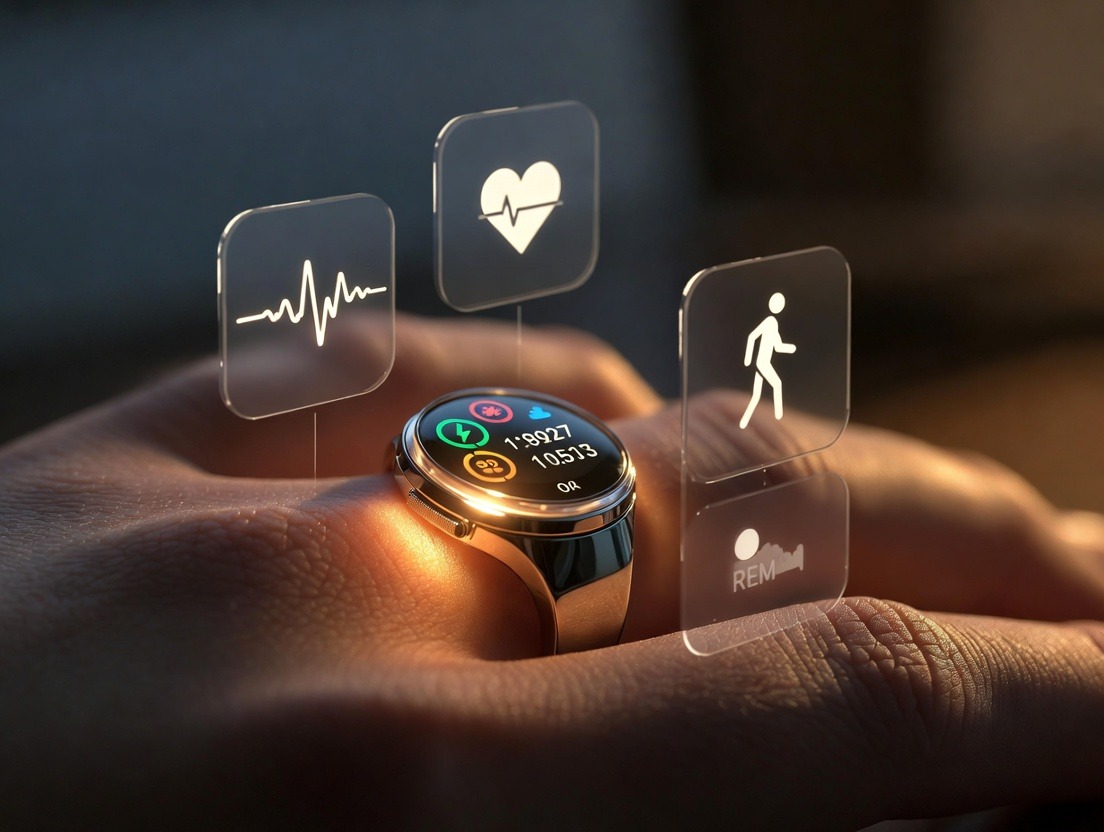
Even with the best intentions and a solid plan, you will encounter obstacles. Energy management is a practice, not a perfect state. Recognizing and navigating these common pitfalls is what separates a fleeting experiment from a lasting lifestyle.
Pitfall 1: The "All or Nothing" Mentality
The Trap: You have a perfect day planned, but you sleep through your alarm. Instead of adjusting, you declare the day "ruined" and abandon all energy-conscious practices, scrolling on your phone, skipping your workout, and eating junk food.
The Solution: Embrace the 80/20 Rule and the "Next Decision" Philosophy.
Pitfall 2: Ignoring Your Data (or Becoming a Slave to It)
The Trap (A): You have a wearable but never check the data, ignoring objective insights into your sleep and stress.
The Trap (B): You become obsessed with the numbers, feeling anxious if your HRV drops by a single point, turning a tool for self-compassion into a source of stress.
The Solution: Adopt a "Curious, Not Critical" Stance.
Pitfall 3: Underestimating the Energy Cost of "Invisible" Work
The Trap: You feel inexplicably drained even though you "didn't do much." You fail to account for the cognitive and emotional labor of tasks like planning, worrying, caregiving, or managing household logistics.
The Solution: Make the Invisible Visible and Allocate for It.
Pitfall 4: Neglecting the "Why" – Losing Connection to Purpose
The Trap: Your energy allocation plan becomes just another set of rigid rules. You’re optimizing for the sake of optimization, but you feel no more fulfilled. This drains spiritual energy.
The Solution: Regularly Reconnect to Your Deeper "Energy Vision."
Pitfall 5: Failing to Plan for Energy Dips (The "Should" vs. "Is" Problem)
The Trap: You schedule a demanding creative task for 3 PM because you should be able to do it then, ignoring your consistent biological dip at that time.
The Solution: Schedule Based on Reality, Not Idealism.
By anticipating these pitfalls and having strategies to navigate them, you build resilience into your energy practice. You learn to bend without breaking, adapting your approach while staying true to the core principles of honoring your body’s needs and allocating your life force with intention.
Your energy capacity, demands, and sources are not static throughout your life. A strategy that works in your 20s may be unsustainable in your 40s, and irrelevant in your 60s. Intelligent energy allocation requires adapting your approach to the biological, social, and psychological realities of each decade. This is a lifelong practice of listening and adjusting.
Your 20s & Early 30s: Building Foundations and Exploring Capacity
Your Late 30s & 40s: The Peak Demand Years
Your 50s & 60s: Strategic Conservation and Wisdom Application
Your 70s and Beyond: Energy as a Currency for Quality of Life
The through-line across all stages is awareness and adaptation. By understanding the shifting landscape of each life stage, you can proactively adjust your energy allocation strategy to not just cope, but to thrive, finding richness and vitality in every chapter.
We have now covered the theory, the tactics, the pitfalls, and the life-stage adjustments. The final step is synthesis: distilling this knowledge into a Personal Energy Allocation System (PEAS)—a simple, living framework that you own, understand, and can adjust as needed. This is not about copying someone else’s template; it’s about building your own operating manual.
Step 1: Define Your Energy Vision & Non-Negotiables
Start with the big picture.
Step 2: Conduct Your Personal Energy Audit (The "As-Is" Map)
For one week, be a neutral observer. Do not try to change anything yet.
Step 3: Design Your "Ideal Day" Blueprint
Using your audit and the principles in this guide, sketch your ideal energy-aligned day. Be realistic, not fantastical.
Step 4: Choose and Integrate Your Tools
Decide on the tools that will support your system.
Step 5: Implement, Review, and Iterate (The Flywheel)
The Role of Technology in Your PEAS
A wellness smart ring serves as the objective feedback loop in this system. It answers the question, "Is what I'm feeling aligned with what's happening in my body?"
Your Personal Energy Allocation System is your declaration of independence from the tyranny of burnout and busyness. It is the practical embodiment of the energy-centric mindset. It won’t be perfect, but it will be yours—a flexible, intelligent framework for designing days, and ultimately a life, filled with sustainable vitality and purpose.
Your Trusted Sleep Advocate: Sleep Foundation — https://www.sleepfoundation.org
Discover a digital archive of scholarly articles: NIH — https://www.ncbi.nlm.nih.gov/
39 million citations for biomedical literature :PubMed — https://pubmed.ncbi.nlm.nih.gov/
Experts at Harvard Health Publishing covering a variety of health topics — https://www.health.harvard.edu/blog/
Every life deserves world class care :Cleveland Clinic - https://my.clevelandclinic.org/health
Wearable technology and the future of predictive health monitoring :MIT Technology Review — https://www.technologyreview.com/
Dedicated to the well-being of all people and guided by science :World Health Organization — https://www.who.int/news-room/
Psychological science and knowledge to benefit society and improve lives. :APA — https://www.apa.org/monitor/
Cutting-edge insights on human longevity and peak performance:
Lifespan Research — https://www.lifespan.io/
Global authority on exercise physiology, sports performance, and human recovery:
American College of Sports Medicine — https://www.acsm.org/
Neuroscience-driven guidance for better focus, sleep, and mental clarity:
Stanford Human Performance Lab — https://humanperformance.stanford.edu/
Evidence-based psychology and mind–body wellness resources:
Mayo Clinic — https://www.mayoclinic.org/healthy-lifestyle/
Data-backed research on emotional wellbeing, stress biology, and resilience:
American Institute of Stress — https://www.stress.org/


