


The Complete Beginner-Friendly Guide to Managing Energy for Creativity
Energy management strategies while traveling, adapted using ring data.
Energy management strategies while traveling, adapted using ring data.
%402x.svg)
For generations, we’ve romanticized creativity as a bolt from the blue, a divine spark, or a trait reserved for the uniquely gifted. We picture the tortured artist burning the midnight oil, the writer fueled by boundless inspiration, or the innovator in a sudden "eureka!" moment. This mythology is not only misleading—it’s profoundly draining. It sets us up for a cycle of frantic bursts and exhausting crashes, leaving us wondering why our creative wells run dry so quickly.
The truth is far more practical, and far more empowering. Creativity isn't just an idea; it's a biological process. It demands a specific kind of fuel: energy. Not just the caffeine-and-adrenaline kind of energy that pushes you through a deadline, but a sustainable, renewable, and multidimensional energy that flows through your body, mind, and spirit. When this energy is mismanaged, creativity withers. When it’s nurtured, creativity flourishes.
But how do you manage something as intangible as "energy"? You can’t put it in a calendar or measure it with a traditional to-do list. This is where the modern creative meets a revolutionary tool: the smart wellness ring. By translating your body’s subtle, often-ignored signals into clear, objective data, this unassuming device becomes a personal energy auditor. It moves the conversation from guesswork to grounded strategy, from hoping for inspiration to architecting the conditions for it to thrive.
This guide is your foundational blueprint. We will dismantle the myth of the exhausted creator and rebuild a practice rooted in the science of sustainable energy. You’ll learn to see your creativity not as a finite resource to be spent, but as a renewable current you can learn to channel by first understanding and managing the physical vessel from which it springs: you.

We throw around the term "creative energy" loosely, but to manage it, we must first define it. This isn't about having the hyperactivity to brainstorm for hours. True creative energy is a composite state—a sweet spot where physical vitality, mental clarity, emotional equilibrium, and focused attention converge to allow for novel connections and expressive flow.
Think of it like an orchestra. For a beautiful symphony (your creative output), you need every section in tune and ready. The strings (your physical body) must be well-maintained. The wind section (your mental focus) needs controlled breath. The percussion (your emotional state) provides rhythm without overwhelming. If one section is off, the entire performance suffers.
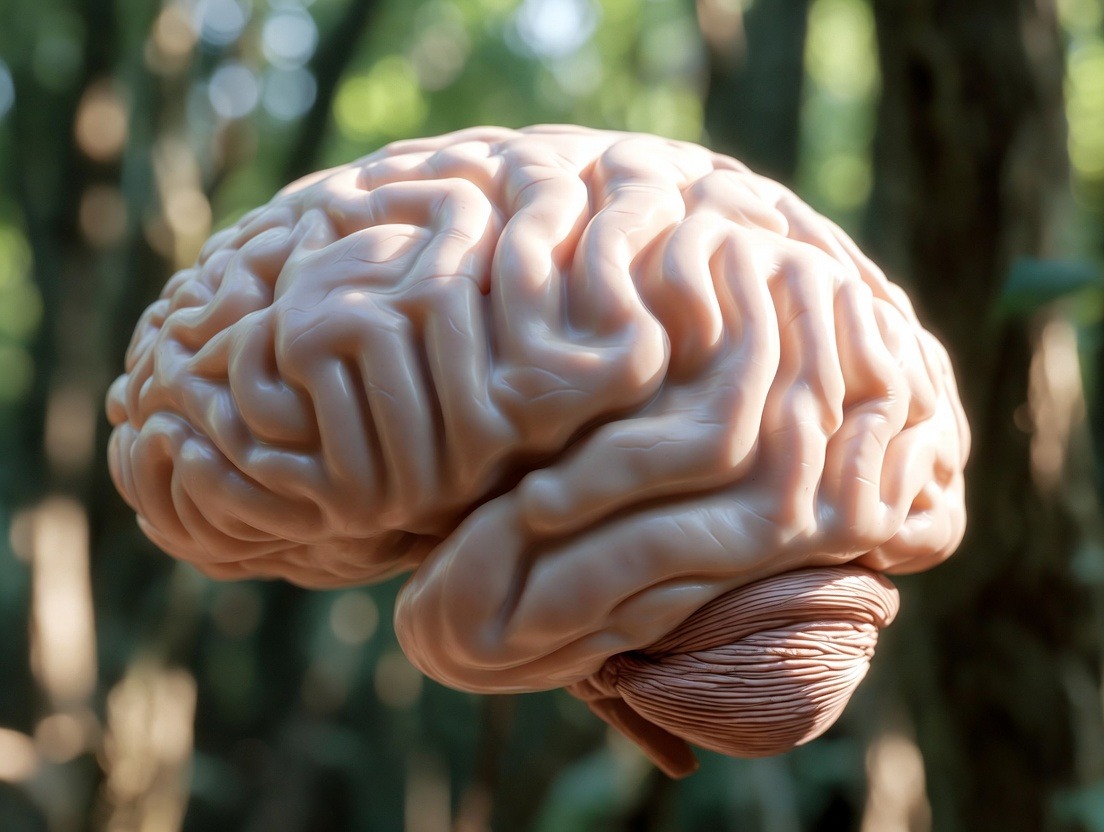
Scientifically, this symphony is conducted by your nervous system and fueled by your cellular metabolism. When you're in a state of low-grade stress or chronic fatigue—states often invisible to our conscious minds—your body prioritizes survival, not innovation. It shunts resources toward basic functions, leaving little for the prefrontal cortex, the brain's hub for complex thought, imagination, and problem-solving. Your "creative energy" is literally being biologically diverted.
This is why traditional time management often fails creatives. Blocking off four hours for "writing" or "design" means nothing if you sit down with a foggy brain, a tense body, and scattered attention. You're trying to draw water from an empty well.
The first, most critical step is shifting from output obsession to energy awareness. Before you ask, "What can I create today?" you must learn to ask, "What is my energy capacity today?" This requires listening to a language you may have forgotten: the language of your own body. Your heart rate variability, sleep stages, resting heart rate, and even your skin temperature are constant, real-time reports on your energy reserves and nervous system state. Learning to interpret these signals is the foundational skill for any creative who wants to build a lasting, fulfilling practice.
Tools like a wellness ring are invaluable here, as they bridge the gap between raw data and your subjective body awareness, helping you decode your body's unique dialect of energy and recovery.
Every creative knows the crash. It’s the heavy, foggy emptiness that follows a period of intense focus, the irritability after solving a complex problem, or the sheer exhaustion post-performance. This isn't a character flaw or a sign you're not cut out for the work—it's neurobiology and physiology in action.
Creative work is cognitively expensive. It engages the brain's default mode network (responsible for daydreaming and making connections) and the executive control network (responsible for focus and decision-making) in a demanding, energy-intensive dance. This process consumes glucose, oxygen, and neurotransmitters at a high rate. Literally, you are burning through your brain's fuel.
Furthermore, deep creative states often involve flow, a wonderful but metabolically costly condition. While in flow, time distorts, self-consciousness falls away, and output feels effortless. Yet, studies using neuroimaging show that the brain is working harder than usual, not less. The "effortless" feeling is a cognitive illusion; the metabolic bill always comes due.
On a physical level, intense mental work triggers a stress response—often a mild, chronic one. Your cortisol levels may rise, your sympathetic nervous system ("fight or flight") engages to maintain focus, and muscle tension builds, especially in the neck, shoulders, and jaw. You might forget to breathe deeply, eat, or hydrate. This state, if not punctuated by recovery, leads to systemic depletion.
The crash is your body's hard reset. It’s forcing the recovery you didn't schedule. The problem isn't the crash itself, but our failure to anticipate and manage the energy expenditure that leads to it. We see the creative act as the "work" and the recovery as "downtime," when in a sustainable practice, they are two equal, essential halves of the same cycle.
To prevent these debilitating crashes, you must start recognizing the early warning signs of depletion, which are often somatic (body-based) rather than cognitive. A rising resting heart rate over several days, poor sleep efficiency, or low heart rate variability are objective indicators that your system is under strain long before you consciously feel "burned out." By learning to recognize your body's stress signals early, you can intervene with micro-recoveries and prevent the total shutdown of a creative crash.
Managing creative energy isn't a single hack; it's a holistic architecture built on four interdependent pillars. Neglect one, and the entire structure becomes unstable. Think of these not as chores, but as the non-negotiable support system for your creative life.
1. The Physical Pillar: Your Biological Foundation
This is the bedrock. Your brain is an organ, and it is wholly dependent on the health of the body that houses it. Sleep, nutrition, hydration, and movement aren't just "good for you"—they are the direct precursors to neurotransmitter production, neural connectivity, and cellular energy (ATP) generation. Poor sleep doesn't just make you tired; it impairs memory consolidation, where many creative insights are forged. You can learn more about this critical link in our guide on the sleep-body connection.
2. The Mental Pillar: Cultivating Focused Space
This is about managing your attentional resources. The modern world is designed to fragment your focus with notifications, multitasking, and open-office noise. Creativity requires uninterrupted, deep attention. This pillar involves practices to tame distraction, structure your work in harmony with your natural focus cycles (like ultradian rhythms), and cultivate a mindset that can tolerate ambiguity and incubation—the essential "downtime" where ideas connect subconsciously.
3. The Emotional Pillar: Navigating Your Inner Landscape
Creativity makes you vulnerable. It involves risk, uncertainty, and exposure of your inner world. Unmanaged anxiety, fear of judgment, or unresolved emotional static will drain your energy faster than any intellectual task. This pillar is about developing emotional agility—the ability to acknowledge feelings without being hijacked by them, creating a safe inner environment for experimentation, and using practices to regulate your nervous system.
4. The Energetic Pillar: Rhythms, Rituals, and Renewal
This is the meta-layer that orchestrates the other three. It's your personal practice of observing and working with your natural energy fluctuations throughout the day, week, and season. It involves designing rituals to transition into and out of deep work, scheduling true renewal, and respecting the cyclical nature of creativity (which includes fallow periods). It’s about moving from a linear "push" model to a cyclical "flow and replenish" model.
A wellness ring is uniquely positioned to support the Physical and Energetic pillars by providing concrete data. When you see how your body's energy patterns fluctuate across a month, you can stop fighting your low-energy days and start planning for them, using them for administrative tasks or incubation instead of forcing breakthrough work.
If your body is the vessel for your creativity, then its signals are your most important navigational data. We’ve been trained to ignore these signals—to push through hunger, caffeine-stomp fatigue, and power past pain. For the creative, this is a catastrophic error. Your body's feedback is the earliest, most accurate report on your available energy capital.
Let’s translate some common "dashboard lights":
The goal is to move from seeing these as interruptions to valuing them as crucial information. This is the essence of interoceptive awareness—the sense of the internal state of your body. Developing this skill turns you from a passenger in your creative process to the pilot.
Technology can accelerate this learning. A smart ring provides an objective, 24/7 readout of key metrics like Heart Rate Variability (HRV)—a top-tier indicator of your nervous system's resilience and recovery status. A high HRV generally suggests your body is ready to handle stress (including the positive stress of deep creative work); a low or dropping HRV is a clear sign to prioritize rest. By developing your interoceptive connection through data, you begin to correlate the objective data ("my HRV dropped 15%") with your subjective feeling ("I feel fragile and irritable today"). This builds an intuitive, evidence-based understanding of your personal energy landscape.
You cannot manage creative energy without mastering sleep. This is the hill to die on. Sleep is not passive downtime; it is an intensely active period of neurological housekeeping, memory processing, and creative synthesis. During sleep, specifically during REM (Rapid Eye Movement) sleep, your brain engages in associative processing. It connects disparate ideas, solves problems you've been wrestling with, and consolidates emotional experiences. It's where the "aha!" moments of tomorrow are often assembled.
Neglecting sleep doesn't just make you tired; it specifically robs you of your ability to think imaginatively and make novel connections. Research shows that sleep deprivation severely impacts the prefrontal cortex and hampers divergent thinking—the very core of creativity.
But it's not just about duration. Sleep architecture—the cyclical progression through light, deep, and REM stages—is critical. You can sleep for 8 hours but get poor-quality, fragmented sleep with insufficient deep or REM stages, and you'll still wake up creatively impaired.
This is where personalized data becomes transformative. A wellness ring tracks your sleep stages, efficiency, and timing. You might discover:
With this data, you can move beyond generic "sleep hygiene" tips to targeted interventions. For instance, if your data shows you're consistently missing deep sleep, you might focus on evening routines to lower your core body temperature and reduce caffeine intake earlier in the day. If REM is lacking, you might look at managing alcohol (which suppresses REM) or addressing late-night screen time. By using a smart ring to build better sleep habits, you're not just getting more rest; you're actively investing in your creative brain's R&D department.

"Brain food" is more than a cliché; it's a biochemical reality. Every thought, every synaptic connection, requires specific nutrients. However, creative nutrition isn't about finding one superfood; it's about stabilizing the energy delivery system to your brain to avoid the crashes and fog that derail deep work.
The primary goal is blood sugar stability. When your blood sugar spikes and crashes, your focus, mood, and energy follow suit. A mid-afternoon creative block is often just a hypoglycemic nosedive in disguise.
Key nutritional principles for sustained creative energy:
Nutrition also deeply impacts your gut-brain axis—the constant communication between your digestive system and your brain. An inflamed or imbalanced gut can produce neurotransmitters and signals that directly promote brain fog and low mood. Learning about the gut-brain awareness connection can provide profound insights into why you feel mentally clear (or not) on certain days.
Listen to your body's true signals. Are you eating out of stress, boredom, or true hunger? Learning the difference between emotional cravings and physical need is a core body awareness skill. Tools that track physiological stress can help you identify patterns of stress-eating, allowing you to develop healthier coping mechanisms that truly fuel your creativity.
For the sedentary creative, movement is often seen as a separate activity—something you do after the work, if you have energy left. This is a fundamental misalignment. Movement is not an interruption to the creative process; it is a primary catalyst for it.
Physical activity does several critical things for the creative mind:
The key is to find movement that serves your energy, not depletes it. On a high-energy, high-recovery day, that might be a vigorous run or strength training. On a low-energy, depleted day, that might be a gentle walk, some stretching, or restorative yoga. The goal isn't fitness for fitness's sake; it's using your body to regulate your mental and energetic state.
Pay close attention to how different types of movement affect you. Does a morning walk make your afternoon writing session more fluid? Does an intense workout leave you buzzing with ideas or completely drained for hours? A wellness ring can help you track the impact by monitoring your stress and recovery metrics post-exercise. This personalized feedback allows you to develop a truly supportive body-awareness approach to exercise and movement, where movement becomes a precise tool in your creative energy toolkit, not a blind obligation.
You are not a machine with a constant power output. Your energy, focus, and creative capacity ebb and flow in predictable cycles throughout the day, governed by your circadian rhythm—an internal 24-hour clock influenced by light, temperature, and social cues. Fighting these rhythms is a surefire way to drain your energy. Aligning with them is like catching the tide.
Most people are familiar with being a "morning person" or a "night owl" (your chronotype), but the finer grain is even more powerful. Within your day, you experience ultradian rhythms—90-120 minute cycles where your brain can focus intensely, followed by a natural dip where it needs a brief rest.
A creative's ideal day aligned with biology might look like:
To master your rhythms, you need data. A smart ring tracks your skin temperature rhythm and resting heart rate dip—two of the most reliable proxies for your circadian alignment. Seeing this data can reveal if your lifestyle is in sync or conflict with your biology. Are you trying to do deep work at 10 PM when your body's temperature rhythm shows it's already winding down for sleep? By understanding these circadian signals, you can schedule your creative work with your biology, not against it, turning what feels like a daily struggle into a natural flow.
In a productivity-obsessed culture, recovery is often conflated with laziness. For the creative, this is a fatal error. Recovery is not the absence of work; it is the process that makes high-quality, sustainable work possible. It is the essential phase where your body repairs tissues, your brain consolidates memories, and your nervous system returns to balance.
Without deliberate recovery, you operate on a deficit, borrowing energy from tomorrow until you hit a wall. Strategic recovery is about proactively depositing energy back into your system. There are two main types:
1. Micro-Recoveries (Throughout the Day):
These are brief, intentional breaks to reset your nervous system and prevent cumulative fatigue. They are the antidote to the 4 PM crash.
2. Macro-Recoveries (Daily and Weekly):
These are longer periods dedicated to full system restoration.
How do you know if your recovery is effective? You can't just feel it subjectively when you're chronically depleted, as your baseline for "normal" becomes skewed. This is where objective data is revolutionary. Heart Rate Variability (HRV) is your best metric. A rising HRV trend over weeks indicates you are recovering well and building resilience. A consistently low or dropping HRV is a bright red flag that your recovery is insufficient for the stress (creative and otherwise) you are under.
Learning to understand your body's recovery signals through data allows you to personalize your recovery. You might learn that two intense creative workdays in a row require a very light third day, or that your ideal workout schedule leaves your HRV high, not crushed. You move from guessing to knowing, making recovery a strategic, non-negotiable pillar of your creative practice.
Creative work is inherently vulnerable. Putting something new into the world triggers what psychologists call "creative anxiety"—fear of judgment, imposter syndrome, the paralysis of the blank page. This emotional static is a massive energy drain. The mental energy spent on worrying, self-critiquing, and catastrophizing is energy directly stolen from the creative act itself.
Managing this emotional energy isn't about eliminating anxiety (which is often a companion to meaningful work) but about preventing it from becoming the dominant channel. It's about shifting from a state of reactivity (being hijacked by fear) to responsiveness (acknowledging the fear and choosing your focus anyway).
Practical strategies for emotional energy management:
Your body provides direct feedback on your emotional state. A spiking heart rate during a work session may not be from physical exertion, but from subconscious anxiety about the task. A wellness ring can make this visible, serving as an early warning system. You might see that your stress metrics skyrocket whenever you work on a particular project or client, revealing an emotional energy leak you weren't consciously aware of. By using these insights, you can develop targeted body-awareness practices to reduce anxiety and reclaim that energy for your creative work.
Your environment is not a passive backdrop; it's an active participant in your energy ecosystem. A cluttered, noisy, or distracting environment forces your brain to expend valuable energy on filtering and suppressing, leaving less for creative thought. Your environment should be consciously designed to conserve mental energy and cue desired states.
The Physical Workspace:
The Digital Workspace:
This is arguably more important for modern creatives, as it's the source of infinite potential distraction.
Your environment extends to your sensory experience. Notice how the temperature of the room affects your focus. Are you too cold, causing tension? Too warm, making you lethargic? Understanding the connection between body temperature and health can help you optimize this often-overlooked environmental factor. By intentionally designing both your physical and digital environments, you remove friction and create a space where your energy can be directed wholly toward creation, not constant compensation.
In the quest for managing creative energy, we often overlook the most immediate and powerful tool we possess: our breath. Breathing is unique—it's an automatic function we can also consciously control, making it a direct bridge between the conscious and unconscious, between the sympathetic (stress) and parasympathetic (rest) branches of your nervous system. Mastering your breath is like finding a dimmer switch for your entire creative system.
When stressed, anxious, or forcing creativity, your breath becomes shallow and rapid, anchored in the chest. This "thoracic breathing" signals to your brain that you're in danger, perpetuating a cycle of fight-or-flight physiology that is the antithesis of the open, receptive state needed for creativity. Conversely, slow, deep, diaphragmatic breathing stimulates the vagus nerve, triggering a relaxation response. It lowers your heart rate, reduces blood pressure, and quietens the mental chatter, creating the internal silence from which ideas can emerge.
Breath Practices for Specific Creative Needs:
You can actually see the impact of these practices. A smart ring will show your heart rate dropping and your HRV rising in real-time during a coherent breathing session. This biofeedback turns an abstract practice into a tangible skill. You learn which breathing pattern most effectively shifts your physiology out of stress and into a state conducive to creativity, allowing you to build body-awareness habits through direct feedback.
Our digital devices are incredible tools for creation, but they have also become the primary architects of our attention famine and energy drain. Every app, notification, and endless scroll is engineered to hijack your focus—a state psychologist Mihaly Csikszentmihalyi defined as essential for flow. Digital minimalism isn't about Luddism; it's about intentionality. It's the practice of strategically pruning your digital life to reclaim your scarcest creative resource: your uninterrupted attention.
The cost of constant connectivity is "attention residue"—when part of your cognitive capacity remains stuck on a previous task (like an unanswered email) even as you try to focus on a new one (like writing). This residue fragments your mental energy, making deep creative immersion nearly impossible.
A Creative's Digital Minimalism Protocol:
The goal is to create long stretches of uninterrupted time—the only condition in which the most demanding creative work can be done. Protecting this time is non-negotiable. You'll know it's working when you start to experience longer periods of flow and find that your mental energy reserves feel deeper by the end of the day. This practice of intentional focus is a direct investment in your creative capacity.
Willpower is a terrible foundation for a creative practice. It's finite, depletable, and unreliable. What's more effective than willing yourself to be creative? Cueing your brain to enter a creative state automatically. This is the power of ritual.
A pre-creative ritual is a consistent sequence of actions you perform before you begin your core creative work. It acts as a psychological trigger, signaling to your brain and body: "It is now time to shift modes." Over time, this ritual leverages classical conditioning (like Pavlov's bell) to induce a focused, open state more reliably than sheer force of will.
How to Build an Effective Creative Ritual:
Example Ritual for a Writer:
The data from a wellness ring can validate and refine your ritual. If your ritual is effective, you should see a measurable shift in your physiology afterward—a lower resting heart rate, an increase in HRV, or a drop in a "stress" metric. This tells you your ritual is successfully downshifting your nervous system into the optimal state for creative work. It turns ritual from a superstition into a data-validated practice for enhancing body awareness and intuition.
The blank page, the empty canvas, the limitless possibility—these are often framed as the ideal conditions for creativity. In reality, they are a recipe for decision fatigue and paralyzing energy drain. Paradoxically, creativity flourishes within constraints. Boundaries don't cage creativity; they give it a structure to push against, a problem to solve, which focuses mental energy rather than scattering it.
Think of haiku (17 syllables), sonnets (14 lines, specific rhyme scheme), or Twitter's original 140-character limit. These rigid formats have produced profound and inventive expression. Constraints provide a container, eliminating infinite options and forcing novel connections within a defined space.
How to Apply Strategic Constraints to Save Energy:
Constraints work because they reduce cognitive load. Instead of asking, "What could I possibly make?" you're asking, "How can I make something wonderful within these rules?" This is a much less taxing question for your brain. It channels your energy into execution rather than existential deliberation.
This principle applies to your energy management itself. Instead of vaguely wanting "more energy," impose a constraint: "I will protect my first 90 minutes of the morning for deep work, no matter what." Or, "I will take a true 5-minute break every hour." These are creative constraints you place on your time and behavior to safeguard your creative energy, turning management from an abstract goal into a concrete practice.
In our quest for optimized creative energy, we must guard against turning our entire lives into a productivity project. The relentless pressure to be "on," to always be generating value or output, is the fastest way to drain the well of authentic creativity. Play—activity done for its own sake, with no goal other than enjoyment—is not a distraction from your creative work; it is its essential nutrient.
Play does for the creative mind what fallow periods do for farmland. It restores. It allows the subconscious to work without pressure. It rekindles curiosity and delight—the very emotions that fuel creative exploration. When you engage in pure play, you are not being "unproductive"; you are engaging in a different, vital form of cognitive processing that makes your productive periods richer.
What Play Looks Like for a Creative Adult:
The hardest part for the achievement-oriented creative is giving yourself permission. Schedule it. Call it "Research & Development" or "Idea Incubation" in your calendar if you must. But protect it fiercely. This non-productive time prevents creative burnout by ensuring your identity isn't solely tied to your output. It reminds you that you are a human being who creates, not a creation machine.
Observing how your body responds to play can be insightful. After a genuine session of play, check your wellness metrics. You will likely see markers of low stress and high recovery. This is objective proof that play is not frivolous; it's a potent foundational practice for self-care and system restoration. It replenishes the energy you need for your more disciplined creative work.
You track your finances, your projects, maybe even your calories. But do you track your creative energy? Most of us rely on fallible memory and vague feelings ("I had a good week"). To master your energy, you need to become a student of your own patterns. This means moving beyond a to-do list of outputs to a practice of tracking your creative inputs and capacities.
A simple Creative Energy Journal can be transformative. It doesn't need to be elaborate. Each day, note:
When you combine this subjective journaling with objective biometric data from a wellness ring, the insights become powerful. You stop guessing and start seeing cause and effect.
Example Insight Patterns You Might Discover:
This integrated tracking allows you to move from reactive to predictive management. You can start to see in the morning data whether you have the energy capital for a demanding creative sprint or if you should plan a lighter, more exploratory day. It helps you understand your body's unique language of energy and needs, transforming you from a passive experiencer of energy swings to an informed manager of your creative ecosystem.
Creativity is often seen as a solitary act, but it exists within a web of relationships—clients, collaborators, audiences, family, friends. Each of these connections is an energy exchange. Some relationships are energizing; they inspire, challenge, and support you. Others are draining; they demand emotional labor, create drama, or disrespect your time and focus. Managing your creative energy is impossible without learning to manage these relational energy flows.
Identifying Energy Dynamics in Relationships:
The goal isn't to eliminate all "takers"—some are unavoidable (like a demanding but vital client). The goal is to become conscious of the exchange and establish boundaries to protect your core creative energy.
Setting Boundaries for Creative Preservation:
Saying "no" is the ultimate creative energy preservation skill. Saying no to a distracting invitation, a low-alignment project, or a last-minute request protects your "yes" for the work that truly matters. This isn't selfish; it's professional. You are the steward of your creative energy, and every "yes" is an investment of that finite capital.
Your body often knows the impact of a relationship before your mind admits it. A phone call with a certain person might consistently spike your heart rate. Seeing an email from a demanding client might trigger a physical tension response. Using a wellness ring can help you recognize these somatic stress signals early, giving you concrete data that a particular relationship or interaction is costing you more than you realized, empowering you to adjust your boundaries accordingly.
We apply industrial, linear thinking to a natural, cyclical process. We expect to produce consistently, like a factory. But creativity is more like farming or forestry. There are seasons of intense growth and harvest (projects, launches, prolific output), and there are essential seasons of fallow rest, where the field lies empty, restoring nutrients for the next planting.
Ignoring these natural cycles—trying to force harvest in winter—leads to creative burnout, the ultimate energy bankruptcy. A sustainable creative life requires honoring your personal creative seasons.
Understanding Your Creative Seasons:
The modern world privileges Summer and shames Winter. We valorize constant production. But trying to live in perpetual Summer will deplete your soil forever.
How to Align with Your Cycles:
By respecting your creative seasons, you stop fighting your natural rhythm and start cooperating with it. This reduces the immense energy waste of guilt and forcing, and allows you to bring your full, replenished power to each season when it arrives.
Up to this point, we've explored principles and practices. Now, let's ground them in your most powerful modern tool: the smart wellness ring. This unobtrusive device is more than a sleep tracker; it's a 24/7 creative energy auditor and a feedback loop for your body's wisdom. When used intentionally, it transitions from a gadget to a partner in your creative practice.
Key Metrics for the Creative and How to Use Them:
Creating Your Creative Energy Dashboard:
Don't get lost in the data. Choose 1-2 key metrics to focus on for a month. For example: "This month, I will make decisions based on my morning HRV." Or, "I will ensure my Sleep Score is above 85 before any major presentation day." This focused approach helps you develop concrete body-awareness skills rather than feeling overwhelmed.
The ring’s true power is in closing the loop. It provides the "why" behind the "what." Why did I feel foggy today? The data shows poor sleep. Why was that writing session so fluid? The data shows my HRV was high and my stress levels were low. This builds a profound, personal science of your own creativity, moving you from intuition to informed intuition.
Knowledge is only potential energy. The final step is integration—weaving these strands into a living, breathing, personalized practice: your Creative Energy Protocol. This isn't a rigid set of rules, but a flexible framework of non-negotiables, informed by your self-knowledge and data, designed to protect and cultivate your creative vitality.
Your protocol will be unique, but it should address the core pillars across the scales of time:
Daily Protocol (The Creative Day):
Weekly Protocol (The Creative Rhythm):
Project-Lifecycle Protocol (The Creative Season):
Your Protocol as a Living Document:
Use your smart ring data and journal to continuously refine this protocol. If a 5 AM wake-up time is crushing your HRV, adjust it. If you find your best writing happens after a 20-minute walk, codify it. The protocol exists to serve you, not enslave you. It is your personal operating system for a sustainable creative life.
This integration is where true body awareness meets creative practice. You begin to trust your body's wisdom, not as a vague feeling, but as a data-informed, deeply known reality. You move from hoping to be creative to reliably creating the conditions for creativity to emerge. You are no longer at the mercy of your energy; you have become its skilled, compassionate manager.
Every creator knows the peculiar weight of beginning. The cursor blinks on a blank document, the pristine canvas stares back, the silent instrument awaits the first note. This moment—the threshold between non-creation and creation—is where a tremendous amount of energy is lost to a phenomenon called initial resistance or "creative inertia." It's the mental friction of starting, and overcoming it is a skill that conserves more energy than almost any other.
The resistance isn't laziness; it's a neurobiological event. Your brain, wired for efficiency, perceives the undefined, challenging task ahead as a threat to its energy reserves. It would prefer the known, low-effort loop (checking email, scrolling). To cross this threshold, you must reduce the perceived threat and cognitive load of starting.
Strategies to Slay the Resistance Dragon:
Your physiological state directly impacts your ability to overcome resistance. If your body is in a high-stress state (low HRV, high RHR), the resistance will feel insurmountable because your nervous system is already in a protective, avoidant mode. Conversely, if you've done your breathing exercise or ritual and see your stress metric drop, you've biologically primed yourself for approach, not avoidance. Using a wellness ring provides this crucial readout, helping you understand the direct connection between your heart rate, your emotions, and your ability to take creative action.
Once you've started, the next challenge is staying in the state of deep work—the prolonged, undistracted concentration on a cognitively demanding task that pushes your abilities. Author Cal Newport, who coined the term, argues this is the source of true mastery and high-value creation in a distracted world. However, deep work is metabolically expensive. You cannot sustain it for 8 hours straight. The goal is to create sanctuary conditions for it and protect it ruthlessly.
Building Your Deep Work Sanctuary:
Respecting your biology is key to effective deep work. The 90-120 minute ultradian rhythm suggests that is the natural limit for sustained focus. Pushing beyond leads to diminishing returns and energy depletion. Your body will signal this need for a break with fidgeting, hunger, thirst, or loss of focus. A smart ring can give an even earlier warning through a rising stress metric, indicating cognitive strain. Honoring this break is not weakness; it's the practice that allows for another deep work session later. By learning to recognize your body's needs for breaks and renewal, you can structure your deep work in sustainable sprints, not marathon slogs that end in burnout.
A major source of creative fatigue is the internal civil war between two essential but incompatible modes: the Generator and the Editor. The Generator is wild, associative, non-linear, and prolific. It says "yes, and..." to every idea. The Editor is critical, logical, linear, and discerning. It says "no, but..." and seeks order and quality.
The energy drain occurs when we allow these two voices to speak at the same time. The Editor criticizes the Generator's half-formed ideas as they emerge, shutting down the flow. The Generator tries to keep creating while the Editor picks apart the last sentence, causing mental gridlock. The solution is temporal separation—giving each mode its own dedicated, protected time.
How to Implement Phase Separation:
This separation is profoundly liberating. It allows the Generator to work without fear, conserving the energy usually spent on self-censorship. It allows the Editor to work efficiently, with clear material to assess, rather than trying to create and judge simultaneously. It turns a chaotic, draining internal conflict into a smooth, energy-efficient production line.
Your physiological state can support this separation. The Generator often thrives in a slightly more relaxed, open state (higher HRV, lower stress). The Editor can often handle a slightly more alert, focused state. You might use a short breathing exercise to transition between them. Observing how your body responds to each type of work—does editing spike your stress more than generating?—can help you schedule them appropriately. This is a practical application of developing emotional and somatic awareness for creative ends.
A powerful metaphor from the chronic illness community can revolutionize how creatives view their energy: The Spoon Theory. Imagine you start each day with a certain number of "spoons," each representing a unit of energy. Every task—getting out of bed, making breakfast, answering emails, attending a meeting—costs a spoon. Demanding creative work might cost 3-5 spoons.
The key insight is that spoons are finite and non-transferable. You cannot borrow spoons from tomorrow without incurring debt (a crash). The goal of energy management is to know your daily spoon count and budget them wisely across your creative and life demands.
How to Apply Spoon Theory to Creativity:
This framework ends the guilt of "I should be doing more." If you've spent your spoons, you're done. It forces prioritization. Is scrolling social media worth a spoon that could go toward your creative project? It turns energy management into a concrete, almost financial practice, where you are the steward of your most valuable currency. Learning to understand your body's language of energy fluctuations through data makes this accounting precise, moving it from metaphor to measurable science.
Our culture often celebrates the multitasker as a paragon of productivity. For the creative, multitasking is not a skill but a catastrophic energy leak. What we call multitasking is almost always rapid context switching—and each switch carries a high cognitive "tax."
Research shows that shifting your attention from one task to another causes "attention residue," where part of your brain remains stuck on the previous task, and it takes significant time and energy to fully re-engage with the new one. This constant partial engagement means you are never fully present in any task, your work quality suffers, and you end the day feeling exhausted despite having accomplished very little deep work.
The True Cost for Creatives:
Strategies for Mono-tasking:
Your body's stress response is a direct indicator of context switching. You might notice that on days filled with back-to-back, fragmented tasks (jumping from email to writing to a call to Slack), your wearable shows a consistently elevated stress metric, even if you weren't feeling "stressed" emotionally. This is the physiological cost of cognitive fragmentation. By practicing mono-tasking, you allow your nervous system to settle into a task, reducing this systemic stress and freeing up energy for the work itself. It’s a direct method to approach stress management through body-aware practices.
One of the most energy-efficient creative processes is also the most passive: incubation. This is the stage where you consciously step away from a problem or project, allowing your subconscious mind to work on it. It's the "shower idea," the sudden insight on a walk, the solution that appears upon waking. Incubation isn't laziness; it's a vital phase of the creative process where connections are made below the level of conscious thought.
Trying to force a creative breakthrough through sheer conscious effort is like trying to dig a tunnel with a spoon—exhausting and inefficient. Incubation is like planting seeds and letting the soil do the work.
How to Actively Cultivate Incubation:
Incubation is directly tied to your physiological state. It thrives when your nervous system is in a relaxed, parasympathetic-dominant state. High stress, anxiety, or fatigue will block incubation because your brain is in survival mode, not connection mode. This is why insights often come during or after relaxing activities—they shift your state. A wellness ring can show you when you've successfully shifted into this receptive state (low stress score, higher HRV), confirming that you've created the ideal internal environment for incubation to occur. It helps you understand the tension-release cycle that underpins effective creative problem-solving.
Creative work is a journey paved with rejection, failure, criticism, and periods of doubt. A negative review, a rejected proposal, a project that flops, or simply a long stretch of uninspired work can drain your energy and motivation for months if you lack creative resilience—the ability to recover from setbacks and continue creating.
Resilience isn't about having a thick skin or ignoring pain. It's about having a robust personal framework that allows you to process the blow, learn from it, and re-engage without your energy systems being permanently crippled.
Strategies for Building Creative Resilience:
Your body holds the trauma of creative setbacks. A harsh critique can trigger a physical stress response that lingers for days, lowering your overall energy baseline. Practices that regulate your nervous system—like breathwork, meditation, or physical activity—are essential first aid after a setback. They help discharge the physiological charge of the event. Tracking your biometrics can show you the tangible impact of a setback on your system and, more importantly, show you your recovery. Watching your HRV climb back up over several days is objective proof that you are, physically and metaphorically, bouncing back. This builds a body-awareness approach to managing the emotional and somatic aspects of stress.
Burnout is not just being tired. It is a state of chronic physical, emotional, and mental exhaustion caused by prolonged stress and overwork, characterized by cynicism, detachment, and a sense of ineffectiveness. For the creative, burnout is the ultimate energy bankruptcy—the complete depletion of the reserves needed to imagine, connect, and express. Prevention is infinitely easier than cure.
Burnout doesn't happen because of one project; it's the slow drip of ignoring your energy limits, skipping recovery, and violating your own boundaries over months or years. It's the culmination of all the small energy leaks we've discussed.
Early Warning Signs of Creative Burnout:
The Burnout Prevention Protocol:
Your biometric data is an early-warning radar for burnout. A long-term, downward trend in HRV and Sleep Score, coupled with an elevated resting heart rate, is a biological red flag that you are depleting your reserves faster than you're replenishing them. This objective data can be the wake-up call you need before the subjective feeling of burnout becomes overwhelming. It allows for proactive course correction, helping you develop the body-awareness skills that prevent injury and illness to your creative spirit.
Theory is essential, but transformation happens through practice. This 30-day reset is designed to help you integrate these principles without overwhelm. It’s structured in weekly themes, each building on the last. You don't need to be perfect; you need to be consistent and curious.
Week 1: Foundation & Observation
Week 2: Rhythm & Focus
Week 3: Renewal & Boundaries
Week 4: Integration & Refinement
This reset isn't about adding more to your plate; it's about changing the plate itself. It’s about building the container—your energy—so that your creative work can fill it, naturally and sustainably. By the end, you will have moved from theory to lived experience, from hoping for energy to knowing how to cultivate it. You will have begun the lifelong, rewarding practice of trusting your body's wisdom as the ultimate guide to your creative vitality.
Your Trusted Sleep Advocate: Sleep Foundation — https://www.sleepfoundation.org
Discover a digital archive of scholarly articles: NIH — https://www.ncbi.nlm.nih.gov/
39 million citations for biomedical literature :PubMed — https://pubmed.ncbi.nlm.nih.gov/
Experts at Harvard Health Publishing covering a variety of health topics — https://www.health.harvard.edu/blog/
Every life deserves world class care :Cleveland Clinic - https://my.clevelandclinic.org/health
Wearable technology and the future of predictive health monitoring :MIT Technology Review — https://www.technologyreview.com/
Dedicated to the well-being of all people and guided by science :World Health Organization — https://www.who.int/news-room/
Psychological science and knowledge to benefit society and improve lives. :APA — https://www.apa.org/monitor/
Cutting-edge insights on human longevity and peak performance:
Lifespan Research — https://www.lifespan.io/
Global authority on exercise physiology, sports performance, and human recovery:
American College of Sports Medicine — https://www.acsm.org/
Neuroscience-driven guidance for better focus, sleep, and mental clarity:
Stanford Human Performance Lab — https://humanperformance.stanford.edu/
Evidence-based psychology and mind–body wellness resources:
Mayo Clinic — https://www.mayoclinic.org/healthy-lifestyle/
Data-backed research on emotional wellbeing, stress biology, and resilience:
American Institute of Stress — https://www.stress.org/


