


Daily Activity Insights for Seniors: Safe Movement Tracking
For seniors, it offers safe, effective tracking of daily movement to support healthy aging.
For seniors, it offers safe, effective tracking of daily movement to support healthy aging.
%402x.svg)
For decades, the golden years were often synonymous with slowing down. But a profound shift is underway. Today’s seniors are redefining aging, prioritizing vitality, independence, and a proactive approach to their health. At the heart of this wellness revolution is a simple, powerful concept: movement. Not the strenuous workouts of youth, but the consistent, safe, and purposeful daily activity that is the bedrock of longevity, cognitive sharpness, and joyful independence.
Yet, for many seniors and their concerned families, navigating this path comes with questions. How much activity is enough? What is truly safe? How can you tell if you're making progress or, crucially, if a subtle decline is beginning? Relying on memory or vague feelings is no longer sufficient. We live in an age of insight, where data can empower rather than intimidate.
This is where the quiet power of modern movement tracking enters the picture. Gone are the days of clunky, confusing devices. The latest innovation in personal health technology is discreet, elegant, and incredibly intelligent: the smart ring. Worn like ordinary jewelry, these devices provide a continuous, nuanced stream of data about your daily activity, from step count and active minutes to more sophisticated metrics like cardiovascular load and recovery need.
But this article isn't about technology for technology's sake. It's about translating data into actionable wisdom. It's about using tools like the Oxyzen smart ring to build a personalized, safe, and sustainable movement strategy. Whether your goal is to maintain your gardening hobby, keep up with grandchildren, manage a health condition, or simply ensure you’re doing enough to stay strong and steady, understanding your daily activity patterns is the first, most critical step.
We will embark on a comprehensive journey into safe movement tracking for seniors. We'll explore why meticulous activity monitoring matters more than ever after 65, demystify the key metrics that truly indicate wellness, and provide a blueprint for creating a safe and effective movement plan. We will delve into how activity data intertwines with other vital health signals like sleep—after all, the quality of your day profoundly affects the quality of your night, and vice versa. For a deeper understanding of this crucial relationship, our resource on how sleep trackers actually work explores the underlying technology.
This is more than a guide; it's an invitation to take the reins of your health with confidence and clarity. Let's begin.
The advice for seniors has long been encouragingly simple: "Just keep moving!" And while the sentiment is positive, it lacks the precision needed for optimal health in later life. The period after age 65 is characterized by unique physiological changes that transform movement from a general good into a specific, non-negotiable requirement for preserving function. Understanding why we track, not just that we track, is fundamental.
The aging body undergoes a silent process called sarcopenia—the progressive loss of muscle mass and strength. This isn't just about looking less toned; it's a direct threat to autonomy. Sarcopenia diminishes metabolic rate, increases the risk of type 2 diabetes, and, most critically, undermines balance and coordination. The resulting frailty is a primary predictor of falls, the leading cause of injury and injury-related death among older adults. However, this process is not a foregone conclusion. It is largely driven by disuse. Targeted, consistent movement is the only proven way to counteract it.
Furthermore, cardiovascular resilience changes. The heart and vascular system become less adaptable, making it harder to gauge exertion by feel alone. What feels like a "good workout" might be unnecessarily straining, while what feels "easy" might not be providing the stimulus needed to maintain heart health. Without insight, seniors often fall into one of two traps: overexertion with risk of injury or under-exertion leading to gradual decline.
Cognitive health is also intimately tied to physical activity. Research consistently shows that regular movement boosts blood flow to the brain, supports the growth of new neural connections, and is strongly correlated with a lower risk of dementia and Alzheimer's disease. But not all activity is equal. Emerging studies suggest that consistent, moderate daily activity may be more beneficial for brain health than sporadic, intense exercise.
This is where objective tracking becomes indispensable. It moves us from guesswork to guidance:
A device like the Oxyzen smart ring operates as a 24/7 wellness guardian. By passively collecting data, it creates a personal baseline. You learn what "normal" looks like for you. This baseline is powerful because it allows you to spot deviations—both positive and negative. A gradual dip in daily step count over several weeks could be an early warning sign of fatigue, low mood, or an underlying issue, prompting a conversation with a doctor before a crisis occurs. Conversely, seeing progress in your active minutes can be a tremendous motivator.
For families and caregivers, this data is a window into well-being that doesn't require intrusive questioning. It facilitates supportive, informed conversations centered on objective trends rather than worries or assumptions. To understand how such technology can be seamlessly integrated into daily life, you can discover how Oxyzen works through its elegant, non-intrusive design.
In essence, moving without insight in your senior years is like navigating a complex landscape without a map. You might be going in circles, or worse, heading toward an unseen cliff. Tracking provides the map and the compass, ensuring every step you take is a step toward sustained health and independence.
The humble step count has become a cultural icon of fitness. But for seniors aiming for holistic wellness and safety, it is merely the opening chapter of a much richer story. Focusing solely on steps is like judging a book by its cover—you miss the depth, nuance, and critical details inside. A safe and effective movement strategy requires monitoring a symphony of metrics that together paint a complete picture of your physical well-being.
Let's explore the key metrics that offer far more valuable insight for the 65+ demographic:
1. Active Minutes & Intensity Zones:
This is where we move beyond volume (steps) and into quality (effort). Not all minutes of movement are created equal. Modern trackers categorize activity into intensity zones, often based on heart rate:
2. Heart Rate (Resting & During Activity):
Your heart rate is a direct telegram from your nervous system. Resting Heart Rate (RHR), measured best during sleep or upon waking, is a powerful indicator of overall cardiovascular fitness and recovery. A lower RHR generally suggests a more efficient heart. A sustained increase in your RHR trend can be an early sign of dehydration, stress, onset of illness, or overtraining.
Monitoring heart rate during activity ensures you stay within your prescribed safe zones. It provides an objective check on perceived exertion, preventing you from pushing too hard on a "good day" or not enough on a "low energy" day.
3. Heart Rate Variability (HRV):
This is the unsung hero of wellness metrics, especially for recovery. HRV measures the subtle variations in time between each heartbeat. Contrary to intuition, a higher HRV is better—it indicates a resilient, adaptable nervous system that can smoothly switch between activity (stress) and rest (recovery). A lower or declining HRV trend is a clear signal from your body that it is under strain—whether from physical overexertion, emotional stress, poor sleep, or illness. For a senior, noticing a dip in HRV is a cue to prioritize rest, hydration, and gentle movement like stretching or walking, rather than intense activity. It’s a crucial metric for preventing burnout and injury.
4. Activity Consistency & Patterns:
This metric is about rhythm. Is your activity spread evenly throughout the week, or is it a "weekend warrior" pattern of intense activity followed by days of stagnation? Consistency is king for the aging body. Regular, daily movement maintains joint lubrication, muscle protein synthesis, and metabolic regulation far more effectively than sporadic bursts. Tracking your weekly pattern helps you build a sustainable routine.
5. Non-Exercise Activity Thermogenesis (NEAT):
This encompasses all the calories you burn outside of formal exercise: fidgeting, standing, gardening, puttering around the house. For many seniors, NEAT constitutes the majority of their daily energy expenditure. A decline in NEAT is often the first sign of slowing down. Tracking overall daily movement (of which steps are a part) helps you maintain this crucial, life-sustaining background activity level.
Why a Smart Ring Excels at This:
Unlike wrist-worn devices, a smart ring like Oxyzen, worn on the finger, provides clinical-grade heart rate and HRV data. The vasculature at the finger is rich and allows for highly accurate photoplethysmography (PPG) sensor readings. Furthermore, its 24/7 wearability means it captures your true resting metrics during sleep and your spontaneous daily activity (NEAT) without the need to remember to wear a device. This results in a profoundly accurate and holistic dataset.
By monitoring this dashboard of metrics, you shift from asking "Did I move enough?" to asking far more insightful questions: "Was my movement effective and safe?" "Is my body recovering well?" "Is my nervous system resilient?" This is the data-driven foundation for not just adding years to life, but life to years. To see how real users have integrated these insights into their lives, you can read their experiences in our collection of customer testimonials.

Embarking on a journey of detailed activity tracking is empowering, but it must be anchored in safety. The goal is to foster confidence and capability, not to introduce new risks or anxieties. Before you take your first data-informed step, a "Safety First" framework is essential. This involves a personal health audit and proactive collaboration with healthcare professionals.
Step 1: The Pre-Tracking Health Consultation
Your first and most important step is not with a device, but with your doctor or a licensed physical therapist. Schedule a visit specifically to discuss your plans to increase or formally track your activity. This consultation should cover:
Step 2: Defining Your Personal "Green, Yellow, Red" Zones
Work with your doctor or a physiotherapist to translate medical advice into practical tracking guidelines. Use your activity metrics to define:
Step 3: The Baseline Week – Observe, Don't Judge
Before setting any ambitious goals, simply wear your tracker (like the Oxyzen ring) for a typical week. Do not try to change your behavior. The objective is to establish your honest, personal baseline for:
This baseline is your truth. It eliminates comparison to arbitrary standards (e.g., "10,000 steps") and grounds your goals in your personal reality. You’ll often find our FAQ section helpful for technical questions about establishing these baselines with your device.
Step 4: Gear Up for Safety
The right equipment prevents injury:
Step 5: Embracing the "Trend Over a Day" Mindset
The greatest safety feature of tracking is the long-term trend. One day of low activity or higher heart rate is meaningless—it could be due to weather, a poor night's sleep, or a busy schedule. The power is in seeing the pattern over weeks and months. A consistent downward trend in activity or an upward trend in resting heart rate is a meaningful, objective signal to check in with yourself and your doctor. It turns reactive healthcare into proactive health care.
By following this framework, you integrate sophisticated tracking into your life not as a drill sergeant, but as a knowledgeable companion. It ensures the data you collect serves your ultimate goal: safe, sustainable, and joyful movement for years to come. For a deeper look at the philosophy behind creating technology that supports this kind of empowered, safe aging, you can explore Oxyzen's story and mission.
With a safety framework in place and a clear understanding of your personal baseline, you now have the tools to construct a truly personalized movement plan. This is where insight transforms into action. A generic "senior fitness" plan pales in comparison to a strategy built on the unique data of your own body. Let's build your plan, metric by metric.
Foundation: The Non-Negotiable Daily "Movement Snacks"
Instead of daunting "workout sessions," think in terms of "movement snacks"—short, manageable bouts of activity spread throughout the day. This approach is superior for joint health, metabolism, and adherence. Use your tracker to ensure you're getting up and moving for at least 5-10 minutes every hour you're awake. Set a gentle vibration alert on your device if it offers one. Your goal here is to boost your NEAT and break up prolonged sitting.
Component 1: Cardiovascular Endurance (Using Heart Rate Zones)
Component 2: Strength & Stability (Tracking Consistency, Not Weight)
Muscle strength is your armor against frailty and falls. Strength training should focus on functional movements.
Component 3: Balance & Flexibility (The Unseen Metrics)
While not always directly measured by a tracker, these are critical. They prevent the single most common senior injury: falls.
Component 4: Recovery & Adaptation (Listening to Your HRV & Sleep)
This is the most overlooked component of a senior movement plan. Your body strengthens and adapts during rest, not during the activity itself.
Putting It All Together: A Sample Week
This plan is dynamic. In week one, your "brisk walk" might only be 15 minutes. That’s perfect. The data from your Oxyzen ring allows you to calibrate and progress at the pace your own body dictates, making your movement plan a living, breathing entity that evolves with you. For more ideas on integrating wellness technology into a holistic routine, our blog offers a wealth of related articles.
For seniors, the fear of a fall is not an abstract concern; it's a daily reality that can limit life and instill caution that borders on restriction. However, caution uninformed by insight is merely anxiety. The revolutionary promise of advanced activity tracking is its ability to transform fall prevention from a game of hope into a strategy of empowered risk mitigation. By monitoring specific, interconnected metrics, you can create a personal "Fall Prevention Dashboard."
This dashboard doesn't predict a fall on a specific day. Instead, it identifies and alerts you to the gradual, often silent, risk factors that make a fall more likely, giving you time to intervene.
Risk Factor 1: Declining Leg Strength & Activity Volume
Weak leg muscles are a primary culprit in falls. A gradual, week-over-week decline in your overall daily step count or time spent in light/moderate activity is a major red flag. It signals disuse atrophy beginning to set in.
Risk Factor 2: Poor Sleep & Next-Day Impairment
Sleep is fundamental to cognitive function, reaction time, and balance. A night of poor sleep—indicated by low deep sleep and high restlessness—directly impairs your physical stability the next day.
Risk Factor 3: Elevated Resting Heart Rate & Low HRV (The Stress/Strain Signal)
An elevated resting heart rate and/or a depressed Heart Rate Variability indicate your nervous system is under strain. This strain could be from illness, dehydration, emotional stress, or overexertion. A stressed nervous system has slower reflexes and poorer motor control.
Risk Factor 4: Inconsistent Routine & "Boom-and-Bust" Patterns
The "weekend warrior" pattern—sedentary weekdays followed by overly active weekends—is a high-risk strategy. Inconsistent activity fails to maintain the neuro-muscular pathways essential for balance, leading to a higher risk of missteps during bursts of activity.
Risk Factor 5: Ignoring Environmental Data
While not a biometric, your confidence in moving through your environment is key. Do you avoid going out after dark? Do you hesitate on stairs? Use your tracking data to build confidence in controlled settings, which then translates to real-world safety.
Creating Your Dashboard:
Your Fall Prevention Dashboard is a mental checklist, informed by your weekly data review:
By monitoring this dashboard, you move from a passive fear of falling to an active practice of standing strong. The data empowers you to make small, timely adjustments that fortify your body against its greatest physical threat, preserving your independence and peace of mind.
One of the most profound insights from 24/7 wellness tracking is the undeniable, bidirectional link between sleep and daytime activity. They are not separate domains; they are two sides of the same physiological coin. For seniors, understanding this synergy is not just about optimization—it's a critical component of safety. Your sleep data is the instruction manual for how to approach movement the following day.
The Cycle: How Activity Fuels Sleep, and Sleep Enables Activity
Interpreting Your Sleep Metrics for Daily Safety:
Your smart ring provides a detailed sleep analysis. Here’s how to translate it into next-day movement decisions:
1. Deep Sleep Percentage: Your Physical Recovery Gauge.
Deep sleep is when tissue repair and immune function peak. For an active senior, it's non-negotiable.
2. Sleep Restlessness & Awakenings: Your Nervous System Barometer.
Frequent awakenings and high restlessness indicate fragmented sleep, often driven by pain, stress, or an unregulated circadian rhythm.
3. Sleep Duration & Consistency: Your Energy Reservoir.
Consistently short sleep (<6 hours) drains your physical and mental energy reserves.
Practical Application: The "Sleep-Informed" Morning Routine
By letting your night guide your day, you practice the ultimate form of body literacy. You honor your body's need for recovery, which in turn allows you to engage in activity more safely and effectively when you are truly recovered. This respectful dialogue between rest and action is the cornerstone of sustainable wellness. For a comprehensive look at improving this critical half of the equation, our Sleep Tracking 101 guide is an excellent resource.

For many seniors, the desire to stay active is tempered by the management of chronic health conditions. The beautiful truth is that appropriate movement is often a powerful component of managing these conditions, not something to be avoided. The key word is appropriate. This is where personalized activity data shifts from being informative to being therapeutic. It provides a objective guide for living well with specific health challenges.
Condition 1: Osteoarthritis & Joint Pain
Condition 2: Hypertension & Cardiovascular Disease
Condition 3: Type 2 Diabetes & Blood Sugar Management
Condition 4: Osteoporosis & Fracture Risk
The Unifying Principle: The "Medication" of Movement
For each condition, think of your daily movement data as the dosing and compliance record for a powerful medication. You are tracking the dose (intensity/duration), the frequency (consistency), and the side effects (impact on HRV, RHR, pain). Sharing this objective data with your specialist—showing them your heart rate during activity, your consistency—transforms the conversation from "Are you exercising?" to "Let's look at how your body is responding to this precise exercise prescription." It enables truly collaborative, personalized care. For support on using your device as part of this collaborative approach, our FAQ page can address common setup and data-sharing questions.
The initial enthusiasm for a new tracking device can fade. When the novelty wears off, the true challenge—and opportunity—begins: building sustainable, lifelong habits. For seniors, motivation must move beyond chasing arbitrary numbers. It must be rooted in meaning, safety, and the celebration of progress that may be invisible to the naked eye. This is where a deep understanding of your metrics becomes your most powerful motivational tool.
Shift the Goal: From Outcomes to Behaviors
Instead of "I want to walk 5,000 steps," which can feel like a pass/fail test, set behavior-based goals informed by your data:
These behavior goals are completely within your control and directly linked to positive health outcomes. Achieving them feels like a true accomplishment.
Leverage the Power of Trends: The "Big Picture" View
Daily fluctuations are noise. The trend line is the signal. Make it a weekly ritual to sit down and look at your 4-week or 12-week trend graphs for:
This long view helps you weather a bad day or a slow week without discouragement. You see that you are, overall, moving in the right direction.
Celebrate the Micro-Wins That Data Reveals:
Metrics allow you to celebrate what you'd otherwise miss:
Create a Personal "Wellness Narrative":
Use your data to tell a positive story about your health. Instead of "I'm getting old and slow," the narrative becomes: "The data shows I'm incredibly consistent. My heart is strong for my age (stable RHR), and I actively manage my recovery (HRV awareness). I've maintained my mobility for the past three months, which means I'm preserving my independence." This data-backed narrative is empowering and resilient.
Social Connection & Friendly Accountability:
Many platforms allow for safe, private sharing with family or friends. Sharing a "weekly wellness report" with a child or a walking buddy isn't about surveillance; it's about connection and supportive accountability. "Look, Mom, your activity trend is great this month!" or "Hey, I see you were consistent last week—inspired me to get out too!" This turns data into a conversation starter about shared values of health and longevity.
Ultimately, motivation is sustained by feeling competent and in control. Your activity and sleep data provide a continuous stream of evidence that you are competent, you are in control, and you are making a tangible difference in your own health trajectory. Every data point is a conversation with your body, and every positive trend is its reply. To see how others have found motivation and community through this process, the stories shared in our testimonials section can be very inspiring.
The market is flooded with wellness trackers: watches, clips, and phones. For the specific needs, safety priorities, and
comfort preferences of seniors, not all devices are created equal. When evaluating the ideal tool for safe movement tracking, we must consider wearability, accuracy, simplicity, and the specific focus on health rather than just fitness. This is where the smart ring, particularly a purpose-built device like Oxyzen, emerges as the superior choice for the 65+ demographic.
1. Unobtrusive, 24/7 Wearability – The Comfort & Compliance Factor
The most accurate tracker is useless if it’s not worn. Many seniors find wrist-worn devices bulky, uncomfortable during sleep, or prone to catching on clothing. A smart ring is the most discreet form factor available.
2. Clinical-Grade Accuracy from an Optimal Location
Accuracy is paramount when data informs health decisions. The finger is a superior location for optical heart rate sensing compared to the wrist.
3. Simplicity & Focused Data – Reducing Cognitive Load
Senior users often express frustration with complex apps and overwhelming data dashboards filled with irrelevant metrics (e.g., stair climbs, SpO2 during workouts). The ideal device should prioritize clarity.
4. The Holistic Health Perspective: Sleep as a Primary Metric
A senior’s movement safety is dictated by their recovery, and recovery is dictated by sleep. Unlike fitness-focused watches, a smart ring is inherently designed as a 24/7 wellness device, with sleep tracking as a core—not ancillary—function.
5. Safety & Durability Considerations
Making the Choice: It’s About Empowerment, Not Gadgetry
Choosing a smart ring is a decision to prioritize ease, accuracy, and holistic health. It’s a tool that respects the user’s need for simplicity while delivering profound depth of insight. It aligns perfectly with the core philosophy of senior wellness tracking: to provide quiet, continuous, and trustworthy data that empowers safer, more confident, and more joyful movement. It becomes not a piece of tech, but a partner in proactive health.
To explore the specific design and features of a ring built with this philosophy, you can visit the Oxyzen shop to see how form meets function. For those researching and comparing, our blog offers detailed comparisons and guides on navigating the wellness technology landscape.
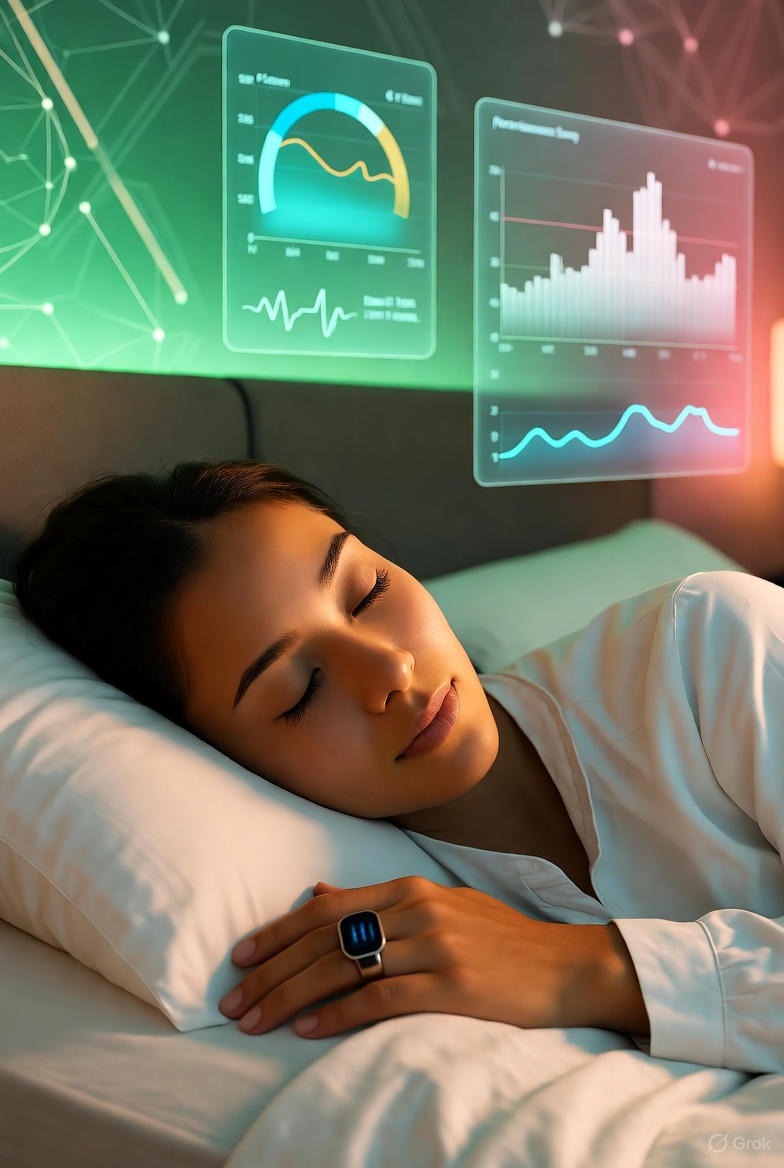
Week-to-week data provides the tactical guidance for daily movement, but the true transformative power of tracking lies in the long-term trends. Over months and years, your aggregated activity, heart, and sleep data stop being mere numbers and start forming a dynamic, personal health biography. For seniors, learning to read this story is the key to shifting from managing the present to proactively shaping the future. This is predictive wellness in its most practical form.
Moving Beyond the Daily Score: The 90-Day View
While checking your daily sleep score or step count is a good habit, it’s the 90-day (or longer) trend line that reveals your trajectory. Here’s how to analyze the major trends:
1. The Activity Trend Line: Maintaining Your Functional Baseline
2. The Cardiovascular Fitness Trend: Your Resting Heart Rate Narrative
3. The Resilience Trend: The Heart Rate Variability (HRV) Chronicle
4. The Sleep Architecture Trend: The Foundation of Everything
Connecting the Dots: The Inter-Trend Analysis
The real magic happens when you observe how these trends interact:
Actionable Insight from Long-Term Data:
Long-term trend analysis transforms you from a passive recipient of health data into an active historian of your own well-being. It provides the evidence-based confidence that you are on the right path, or the clear, early warning that a course correction is needed. This is the essence of empowered aging. For more on setting goals based on these insights, our guide on what your deep sleep numbers should look like provides a helpful framework.
You have become a curator of rich, continuous health data. The next, crucial step is integrating this self-knowledge into the formal healthcare system. The goal is to create a collaborative partnership with your doctor, where your lived, daily data complements their clinical expertise. Done well, this can lead to more personalized care, better management of chronic conditions, and earlier interventions. Here’s how to bridge the gap effectively.
1. Reframe the Purpose: You Are a Partner, Not a Challenger
Approach the conversation with the mindset of providing additional, valuable context. The goal is not to self-diagnose or challenge your doctor’s judgment, but to say, “Here is a detailed log of what happens in my body between our visits. Can this help us make better decisions together?”
2. Curate, Don’t Dump: Preparing a “Clinician’s Summary”
Walking into an appointment and handing your doctor 6 months of raw graph data is overwhelming. Your job is to synthesize and highlight.
3. Focus on Correlations and “Before/After” Scenarios
This is where your data becomes powerfully actionable. Note correlations between lifestyle changes and biometrics.
4. Use Data to Monitor Treatment Efficacy
For managing chronic conditions, your daily data is a continuous feedback loop.
5. Navigate Potential Provider Skepticism Gracefully
Some older-school providers may be wary of consumer health data. Your prepared, concise approach helps.
6. Empower Your Care Circle
Share your curated summaries with a trusted family member or caregiver who attends appointments with you. They can help advocate and ensure the data is discussed. The Oxyzen app allows for secure, view-only sharing with family, making this process seamless.
The Ultimate Goal: A Feedback Loop for Personalized Care
When done successfully, this process creates a virtuous cycle:
This transforms the traditional, episodic “sick care” model into a continuous, collaborative “health care” partnership. It gives your provider a window into the 99% of your life that happens outside their office, leading to care that is truly tailored to you. For support on the technical aspects of data export or sharing, our FAQ page is a practical resource.
A rigid fitness plan is destined to fail. This is especially true in our senior years, when health status, mobility, and energy levels can shift—sometimes gradually, sometimes overnight due to an event like a fall or surgery. The wisdom of a data-informed approach is not just in sticking to a plan, but in knowing how to adapt it intelligently and compassionately. Your activity tracker is the perfect guide for this fluid process, ensuring you keep moving safely through all of life’s chapters.
Principles of Adaptive Movement:
Scenario-Based Adaptation Guide:
Scenario 1: Managing Temporary Setbacks (Illness, Minor Injury, Surgery)
Scenario 2: Gradual Changes in Mobility (Increased Joint Stiffness, Arthritis Flare)
Scenario 3: Changes in Energy & Stamina (Often Related to Medication or Aging)
Scenario 4: Prolonged Inactivity (After a Hospitalization or Period of Illness)
The Role of the Smart Ring in Adaptation:
A device like Oxyzen is ideal for this adaptive journey. Its continuous wear provides the honest baseline you need to see declines, and its recovery metrics (HRV, RHR) give you the green or red light for progressing. Its comfort means you wear it through setbacks and recoveries, ensuring no gaps in your health record. It provides the objective feedback to be kind to yourself when you need to scale back, and confident when you are ready to gently push forward.
Adaptive movement is the practice of lifelong resilience. It acknowledges that change is the only constant and empowers you to flow with it, using data as your compass to always find a safe, beneficial path forward. For inspiration on adapting routines for specific goals, our article on deep sleep optimization for athletes , while geared towards athletes, contains principles of stress-recovery balance that apply to any adaptive process.

Human beings are social creatures, and this does not diminish with age. In fact, social connection becomes an even more critical determinant of health and longevity. When it comes to sustaining an active lifestyle, willpower and data alone can sometimes falter. Weaving your movement goals into a social fabric provides motivation, joy, accountability, and a powerful buffer against the isolation that can derail wellness efforts. Technology can be a bridge to this community, not a barrier.
1. Data-Sharing as Connection, Not Surveillance
Modern wellness platforms, including the Oxyzen app, often have secure, privacy-controlled sharing features. This can be used thoughtfully to foster support.
2. Finding or Forming a “Moving Community”
3. The Power of Shared Purpose and Ritual
4. Intergenerational Movement: The Ultimate Motivation
5. Accountability Partnerships Rooted in Empathy
Find a like-minded friend who also wants to stay active. The accountability isn’t punitive; it’s empathetic.
Mitigating the Risks of Social Comparison
While community is powerful, comparing your absolute numbers (steps, HRV, sleep score) to others is toxic and meaningless. The social focus should be on:
How a Smart Ring Facilitates Social Wellness
A ring is a subtle conversation starter. Unlike a watch that shouts “fitness tracker,” a ring often prompts curious questions: “What is that elegant ring?” This opens a natural dialogue about wellness, technology, and healthy aging, potentially connecting you to others interested in the same journey. It’s a symbol of a proactive mindset.
Building a social fabric around movement ensures your wellness journey is not a solitary trek but a shared voyage. It provides the laughter, support, and shared purpose that make an active lifestyle not just a health imperative, but a source of daily joy and connection. For stories of how others have built community and found support, the real-world experiences shared in our testimonials section can be a wonderful source of ideas and inspiration.
The most significant barriers to consistent, safe movement for seniors are often not physical—they are psychological. Fear of injury, frustration with changing abilities, boredom, loneliness, and the simple inertia of a long-standing routine can be formidable obstacles. A data-driven approach, coupled with conscious mindset work, provides the tools to overcome these mental hurdles and cultivate a sustainable, positive relationship with movement.
1. Transforming Fear into Informed Confidence
Fear of falling or causing pain is a rational, protective instinct. However, when it becomes paralyzing, it creates the very fragility it seeks to avoid. Data is the antidote to vague fear.
2. Reframing “Decline” as “Adaptation”
Our culture often frames aging as a story of loss. This narrative is demoralizing. Your data allows you to write a different story.
3. Combating Boredom and Monotony
Doing the same walk, every day, can become a chore. Boredom kills motivation.
4. Managing Frustration and Setting Compassionate Goals
Frustration arises when expectations clash with reality. A rigid goal like “10,000 steps” can become a source of daily failure.
5. Building Ritual and The “Non-Negotiable” Habit
Willpower is finite. Ritual is reliable.
6. Practicing Mindfulness in Movement
Movement is not just for the body; it’s for the mind. Turning it into a practice of presence enhances its benefits and makes it more enjoyable.
7. Embracing the “Good Enough” Day
Some days, the best plan falls apart. The mindset key is to avoid the “all-or-nothing” trap. Missing a walk doesn’t ruin a week.
By tending to the mental landscape, you ensure that your high-tech tool serves a deeply human purpose: to foster a kinder, more confident, and more joyful relationship with your own body as it journeys through time. The data isn’t a judge; it’s a companion on the path to mindful, resilient living. For further exploration of the mind-body connection in rest, which directly impacts this mindset, our article on deep sleep and memory delves into the cognitive benefits of a holistic approach.
Your Trusted Sleep Advocate (Sleep Foundation — https://www.sleepfoundation.org/)
Discover a digital archive of scholarly articles (NIH — https://www.ncbi.nlm.nih.gov/
39 million citations for biomedical literature (PubMed — https://pubmed.ncbi.nlm.nih.gov/)
experts at Harvard Health Publishing covering a variety of health topics — https://www.health.harvard.edu/blog/)
Every life deserves world class care (Cleveland Clinic -
https://my.clevelandclinic.org/health)
Wearable technology and the future of predictive health monitoring. (MIT Technology Review — https://www.technologyreview.com/)
Dedicated to the well-being of all people and guided by science (World Health Organization — https://www.who.int/news-room/)
Psychological science and knowledge to benefit society and improve lives. (APA — https://www.apa.org/monitor/)
Cutting-edge insights on human longevity and peak performance
(Lifespan Research — https://www.lifespan.io/)
Global authority on exercise physiology, sports performance, and human recovery
(American College of Sports Medicine — https://www.acsm.org/)
Neuroscience-driven guidance for better focus, sleep, and mental clarity
(Stanford Human Performance Lab — https://humanperformance.stanford.edu/)
Evidence-based psychology and mind–body wellness resources
(Mayo Clinic — https://www.mayoclinic.org/healthy-lifestyle/)
Data-backed research on emotional wellbeing, stress biology, and resilience
(American Institute of Stress — https://www.stress.org/)


