


How to Use Your Wellness Ring: Beyond the Basics
Tips and strategies for moving past basic tracking to use the ring's data for deeper health insights and habit formation.
Tips and strategies for moving past basic tracking to use the ring's data for deeper health insights and habit formation.
%402x.svg)
In an era where we can track a package across the globe in real-time, the desire to monitor our most precious asset—our health—with similar precision is a natural evolution. Enter the wellness ring: a sleek, unobtrusive piece of wearable technology promising a 24/7 window into our body’s inner workings. From sleep stages and heart rate to stress levels and recovery metrics, these devices package profound health insights into a band you barely feel. But as they inch from casual wellness gadgets toward the realm of health management, a critical question emerges: How accurate are they, really?
This isn't just about gadget envy. It's about trust. When a ring suggests you're stressed, is it a true physiological signal or a glitch? If it reports a night of poor sleep, can you trust that data to inform your day? The stakes are subtly high. We’re beginning to make lifestyle decisions—skipping a workout, adjusting a bedtime, managing stress—based on this constant stream of data. This makes understanding the capability and, crucially, the limitations of these devices paramount.
At the heart of the conversation is a fascinating comparison: the wellness ring versus the gold-standard medical device. One is a consumer product designed for convenience and continuous wear; the other is a clinical tool engineered for diagnostic precision, often used in controlled settings. They operate in different worlds with different goals, yet they are increasingly measuring the same things. This article will serve as your definitive guide, cutting through the marketing claims to explore the true accuracy of modern wellness rings. We’ll delve into the science behind the sensors, examine validation studies, and provide you with the context needed to become an informed, empowered user of your own health data. Think of this not as a debunking, but as an essential education in data literacy for your wellbeing.

The journey to the modern wellness ring began not on our fingers, but on our wrists. The first wave of consumer wearables was fundamentally about activity: step counters, pedometers, and early fitness trackers that celebrated movement. They were motivators, turning abstract health goals into tangible numbers. However, a significant limitation persisted: you had to remember to wear them. Watches were taken off for showers, charging, or simply because they were uncomfortable to sleep in, creating critical data gaps, especially during the vital period of sleep and recovery.
This gap in continuous, passive monitoring created the perfect niche for the ring form factor. A ring is something many people wear constantly; it’s less intrusive, waterproof, and easy to charge quickly. More importantly, the finger presents a unique anatomical advantage for certain types of sensing. It has a rich capillary bed, allowing for strong photoplethysmography (PPG) signals—the foundational technology for optical heart rate and blood oxygen sensing. This shift from wrist to finger marked a pivotal change in philosophy: from tracking what you do to monitoring how you are.
Today's leading wellness rings are no longer simple activity loggers. They are sophisticated biosensing platforms. Brands like Oura, Circular, and Ultrahuman have pushed the envelope, integrating accelerometers, temperature sensors, PPG sensors, and even electrodermal activity sensors. They promise insights into sleep architecture, heart rate variability (HRV), resting heart rate (RHR), body temperature trends, and stress indicators. The narrative has evolved from "how many steps" to "how recovered are you," "how well did you sleep," and "is your nervous system balanced?"
This evolution brings consumer wearables into a fascinating and complex intersection with medical technology. The ambition is clear: to provide clinically meaningful data in a consumer-friendly package. But to understand if they succeed, we must first explore the medical-grade benchmarks they are implicitly—and sometimes explicitly—compared against.
Before we can assess the accuracy of a wellness ring, we must define "accurate" against what standard. In medicine, specific devices and methods are recognized as the most reliable for diagnosing conditions or monitoring vital signs. These are the "gold standards," typically used in hospitals, sleep labs, and clinical studies. Their accuracy is paramount, as treatment decisions depend on them.
For sleep staging, the gold standard is polysomnography (PSG). Conducted in a sleep lab, PSG is a comprehensive test that records brain waves (EEG), eye movements (EOG), muscle activity (EMG), heart rhythm (ECG), and breathing effort. A trained sleep technician analyzes this multi-channel data to classify each 30-second epoch of sleep into Wake, Light Sleep (N1/N2), Deep Sleep (N3), or REM Sleep. It’s an incredibly rich, direct measurement of sleep physiology, but it’s expensive, intrusive, and impossible for long-term, at-home use.
For heart rate and rhythm, the clinical gold standard is the electrocardiogram (ECG or EKG). It measures the heart's electrical activity through electrodes placed on the skin, providing a millisecond-precise waveform of each heartbeat. It can diagnose arrhythmias, ischemia, and other cardiac conditions. Consumer devices that include an ECG function (like certain smartwatches) are considered "cleared" or "approved" for specific uses, like detecting atrial fibrillation, but their single-lead setup is less comprehensive than a clinical 12-lead ECG.
For blood oxygen saturation (SpO2), the gold standard is arterial blood gas (ABG) analysis, an invasive blood draw. The practical, non-invasive standard in clinical settings is the hospital-grade pulse oximeter, a device clipped to the finger, earlobe, or toe. These medical devices are rigorously validated and must meet strict FDA standards for accuracy (typically within ±2% to 3% of an ABG).
For core body temperature, the gold standard is often a rectal, esophageal, or urinary catheter thermometer, as they measure internal temperature directly. In practice, medical-grade tympanic (ear) or temporal artery thermometers are used for their balance of accuracy and practicality.
The critical takeaway is that these gold standards are direct or high-fidelity measurements. A wellness ring, in stark contrast, uses indirect and inferential methods. It uses an optical sensor (PPG) to detect blood volume changes in your finger to estimate heart rate, derives HRV from the intervals between those heartbeats, and uses movement and heart rate patterns to guess your sleep stage. It’s not measuring brain waves or electrical heart signals. Understanding this fundamental difference—direct measurement versus intelligent estimation—is key to setting realistic expectations for any consumer wearable, no matter how advanced.

So, how does a small ring generate so much data? The magic and the limitation lie in its sensor suite. The primary workhorse is the Photoplethysmography (PPG) sensor. This technology shines light (usually green and/or red/infrared LEDs) into the skin and measures the amount of light reflected back by blood flow. With each heartbeat, blood volume in the capillaries changes slightly, creating a rhythmic pattern in the reflected light. Algorithms analyze this PPG waveform to extract heart rate. By looking at the tiny time variations between beats, they calculate Heart Rate Variability (HRV). Using specific wavelengths of light (red/infrared), the sensor can also estimate blood oxygen saturation by comparing how much red and infrared light is absorbed by oxygenated versus deoxygenated blood.
The second critical sensor is the 3D accelerometer. It tracks movement in all directions. This is essential for activity tracking and, more importantly, for sleep detection. During sleep, periods of high movement are typically associated with wakefulness or light sleep, while stillness correlates with deeper sleep. The accelerometer also helps correct for motion artifacts—the biggest enemy of PPG accuracy. When you're moving vigorously, the blood flow signals from motion can drown out the heartbeat signals, leading to inaccurate readings.
The third key sensor is the negative temperature coefficient (NTC) sensor. This measures skin temperature, typically at the finger or under the ring. While not a direct measure of core temperature, it tracks relative changes very well. A sustained elevation in nocturnal skin temperature can indicate the onset of illness, inflammation, or, for women, ovulation.
Herein lie the core limitations:
The device’s true intelligence isn’t just in its hardware, but in the software that interprets the chaotic symphony of biological signals. This leads us to the most critical area of examination: validation.
When a wellness ring company claims its device is "validated" or "clinically accurate," what does that actually mean? This is the most crucial terrain for an informed consumer to navigate. The term "validation" can range from a rigorous, peer-reviewed study published in a reputable medical journal to an internal test never seen outside the company's marketing department.
High-quality validation involves comparing the wearable device directly against a medical gold standard in a controlled study with a significant number of participants. For example, a study might have participants wear a wellness ring and a PSG headset simultaneously for one or more nights in a lab. Researchers would then compare the ring's automated sleep stage predictions (Light, Deep, REM) against the expert-scored PSG data. The results are expressed in metrics like:
It’s vital to read past the headline. A company might boast "98% accuracy in sleep detection (sleep vs. wake)," which is relatively easy to achieve with movement data. However, accuracy in sleep staging (differentiating between Light, Deep, and REM) is far more challenging and typically much lower. Peer-reviewed studies for leading rings often show agreement rates with PSG in the 50-80% range for specific sleep stages—respectable for a consumer device, but a clear step below clinical precision. You can learn more about how these scores are derived and what constitutes a healthy range in our detailed analysis on sleep score standards and what the research truly indicates.
Furthermore, many studies are conducted on young, healthy populations. How does the device perform on older adults, people with sleep disorders, cardiac conditions, or darker skin tones (where PPG signal quality can vary due to melanin absorption)? Comprehensive validation across diverse populations is less common but incredibly important.
As a user, you should cultivate a healthy skepticism. Look for references to published studies, and if possible, find the study abstract yourself. Understand that "validated" for general trends (like noticing your HRV is lower than your baseline) is very different from "diagnostically accurate" for a specific condition. The former is the realistic and powerful use case for wellness rings; the latter remains (with few exceptions) the domain of regulated medical devices.
Let’s apply these principles to the most common metrics: Resting Heart Rate (RHR) and Heart Rate Variability (HRV). For resting heart rate, modern wellness rings are generally excellent—when you are truly at rest, especially during sleep. During nocturnal sleep, movement is minimal, and the PPG sensor on the finger can capture a clean, averaged RHR that is highly reliable for tracking trends over time. Studies comparing ring-derived nocturnal RHR to ECG have shown very high correlation (often >0.95). This makes your ring a superb tool for observing long-term cardiovascular fitness trends or noticing unusual spikes that might indicate illness, overtraining, or poor recovery.
Heart Rate Variability is a more nuanced story. HRV is the measure of the subtle variations in time between consecutive heartbeats. It's a key indicator of autonomic nervous system balance, with higher HRV generally associated with better recovery and resilience. Wellness rings calculate HRV from the PPG signal, a method known as pulse rate variability (PRV). While PRV is a very good proxy for HRV derived from ECG during rest, it is more susceptible to error. Any noise in the PPG signal—from slight finger movements, poor fit, or low perfusion—can create false beat detections or missed beats, artificially altering the interval calculations.
Therefore, the most reliable HRV reading from a ring is the nocturnal average, typically taken during deep sleep when conditions are most stable. A single, spot-check HRV measurement taken while you're sitting still can be useful, but the multi-night average trend is where the true insight lies. Seeing your HRV trend downward over a week can be a powerful, objective nudge to prioritize restful living and simple daily habits for deeper calm. The key is to trust the trend, not the absolute value of any single reading, and never to compare your HRV number directly with someone else’s from a different device or measurement method.
Where rings (and all optical HR devices) notably stumble is during high-intensity exercise. The combination of rapid motion and the physiological phenomenon of "venous pooling" in the hands during intense arm movement can severely degrade the PPG signal. While some rings are adding workout modes, a chest-strap ECG monitor remains the gold standard for accurate, beat-to-beat heart rate tracking during vigorous activity. For endurance athletes or those training with specific heart rate zones, this is a critical limitation.
This is perhaps the most debated area of wearable accuracy. As mentioned, a wellness ring has no EEG. It cannot see your brain waves. So how does it claim to know you were in REM sleep? It makes an educated guess based on a fusion of data: movement (from the accelerometer), heart rate, heart rate variability, and sometimes respiratory rate.
The algorithms are trained on large datasets where people simultaneously wore a ring and underwent PSG. The machine learning model learns patterns: "When heart rate is low, HRV is high, and movement is nil, that often corresponds to PSG-scored Deep Sleep." Or, "When heart rate is slightly elevated and variable, movement is very low, and breathing is irregular, that often corresponds to REM sleep."
The result is a probabilistic estimate. For many healthy sleepers, these estimates are reasonably good at a macro level—correctly identifying that you got a decent amount of deep and REM sleep across the whole night. The agreement on total sleep time and wake-after-sleep-onset is often quite strong. However, on a minute-by-minute, epoch-by-epoch basis, the accuracy is lower. The ring might mislabel a period of quiet wakefulness as light sleep, or confuse a REM period with light sleep.
This is why your Sleep Score is a more robust metric than the raw stage breakdown. The score is a composite algorithm that considers not just the estimated stages, but also factors like total sleep, timing, regularity, and efficiency. A high score reliably indicates a good night of rest by most biological proxies, even if the precise 90-minute cycle mapping is fuzzy. Tracking this score over months can reveal powerful insights into your lifestyle patterns, a process we explore in depth in the journey of tracking your sleep improvement over time.
For individuals with sleep disorders like insomnia or sleep apnea, consumer rings are not diagnostic tools. They may fail to capture the micro-wakefulness associated with apnea events or the hyperarousal of insomnia. They can, however, serve as a screening indicator—consistently poor sleep scores and high resting heart rates might warrant a discussion with a doctor and a referral for a real PSG study.
Of all the metrics, skin temperature might be the most underrated and powerfully unique feature of a wellness ring. Unlike a forehead thermometer seeking an absolute "fever" reading, the ring excels at establishing your personal baseline and detecting deviations from it.
The ring takes thousands of temperature measurements throughout the day and night. Over about a month of continuous wear, its algorithm learns your unique circadian rhythm of skin temperature—when it's typically higher in the evening and lower in the early morning. It also establishes your personal average.
The magic happens when you deviate from this baseline. A sustained elevation in your nocturnal temperature trend (often just 0.5 to 1.5 degrees Celsius above your norm) is a sensitive, early-warning signal. It can appear 1-3 days before you feel symptoms of a cold or flu, giving you a chance to rest and hydrate. For women, it reliably detects the biphasic pattern of the menstrual cycle, identifying the post-ovulatory temperature rise with high accuracy, which is invaluable for fertility awareness.
It’s critical to remember this is a relative measurement. The absolute number on your app is not your core body temperature. If you sleep in a hotter room, drink alcohol, or are fighting off an infection, your skin temperature will rise relative to you. This trend data, when combined with other metrics like elevated RHR and lowered HRV, creates a compelling picture of your body's state of stress or recovery, a concept detailed further in how your sleep score reflects total body recovery. This holistic view is where the ring's true value for preventative health lies.
Two of the newer and more advanced features pushing the boundaries of consumer wearables are continuous Blood Oxygen (SpO2) monitoring and stress detection.
Nighttime SpO2 monitoring on rings uses red/infrared PPG sensors to estimate oxygen saturation while you sleep. The goal is not to provide a medical-grade diagnosis of sleep apnea (which requires measuring breathing effort and airflow), but to screen for significant nocturnal desaturations—drops in blood oxygen. For general wellness, seeing stable, high-90s SpO2 every night is reassuring. Seeing frequent, repeated dips could be a flag for sleep-disordered breathing and a reason to consult a physician. Accuracy here is good for trend spotting, but the ±2-4% range of consumer devices means a reading of 94% could reflect a true value between 90% and 98%—a range that spans from normal to concerning. It’s a screening tool, not a diagnostic one.
Stress and Recovery Indices represent the pinnacle of algorithmic fusion. These scores (like "Body Battery" or "Stress Score") combine real-time and historical data—HRV, RHR, activity, sleep, and sometimes skin temperature or electrodermal activity—into a single, easy-to-grasp metric. The science behind them is rooted in the balance between the sympathetic ("fight or flight") and parasympathetic ("rest and digest") nervous systems.
When the algorithm detects patterns associated with sympathetic dominance (lower HRV, higher RHR, increased movement/agitation), it may indicate higher stress. These metrics can be surprisingly effective at capturing psychological stress you might not even consciously acknowledge. Seeing an objective "high stress" reading in the middle of a busy workday can be the prompt you need to engage in a micro-recovery practice designed for busy professionals. The accuracy of these composite scores is harder to validate against a single gold standard, but their utility lies in their ability to prompt mindful intervention, turning abstract feelings into actionable data.
Even the most perfectly engineered ring can fail if not worn correctly. The human element is a massive variable in data accuracy. Fit is paramount. The ring must be snug enough to prevent excessive movement (which creates motion artifact) but not so tight as to restrict circulation (which degrades the PPG signal). Most companies provide sizing kits for this reason. The specific finger you wear it on also matters. Studies and manufacturer guidelines often recommend the index, middle, or ring finger, as they typically have better blood flow than the pinky. Consistency is key—switching fingers can alter the sensor's contact and baseline readings.
Lifestyle factors directly impact sensor readings:
In essence, the ring measures your physiology as it is influenced by everything in your life. The data isn't "wrong" if you had a glass of wine—it's correctly reporting the physiological consequences of that choice. This underscores the need for the user to be an active interpreter, not a passive recipient, of the data.
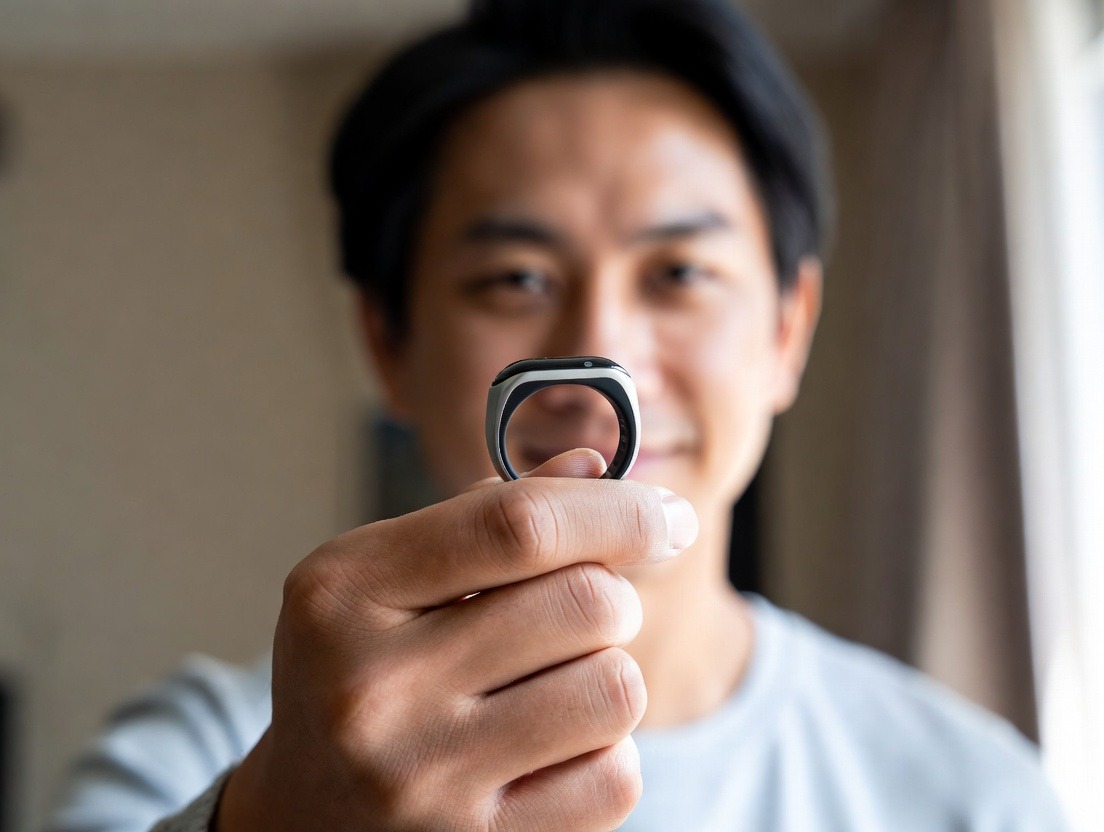
This brings us to the most important chapter: the philosophy of use. The greatest risk of any biometric tracker is the rise of "orthosomnia"—an unhealthy preoccupation with perfect sleep data that ironically leads to more anxiety and worse sleep. A wellness ring is a tool for insight and behavior change, not a judge and jury.
The goal is to move from chasing perfect scores to understanding meaningful trends and correlations. Don't fixate on why your Deep Sleep was 5 minutes less than yesterday. Instead, look at your 30-day average. Notice that your HRV trend dips every time you have back-to-back late work nights. Observe that your sleep score is consistently higher on days you finish eating 3 hours before bed. Use the ring as a biofeedback loop to run experiments: "If I practice a restful living evening ritual this week, what happens to my sleep stability score?"
The ring's true power is in revealing your personal patterns. It answers the question, "What does my body look like when it's well-rested and recovered?" Once you know that baseline, you can detect meaningful deviations. The data should inform decisions, not dictate them. If you feel great but your "readiness" score is low, listen to your body first. Use the low score as a cue to take it easy, not as an absolute truth that you must obey.
Ultimately, the most accurate device is the one you wear consistently, interpret intelligently, and use to foster a kinder, more attuned relationship with your own health. It’s a guide for cultivating a restful living philosophy that prioritizes health over relentless hustle, using objective data to support subjective well-being. In the final portion of our exploration, we will synthesize all this knowledge into a practical framework for choosing a ring, integrating it into your life, and looking toward the future of this transformative technology.
Having dissected the technology, the validation, and the nuances of each metric, we now arrive at the essential synthesis: a practical framework for you, the user. How do you translate this understanding of "accuracy" into daily, empowered decision-making? The goal is not to achieve clinical-grade precision from a consumer device, but to cultivate Personalized Data Trust—a confidence in the data's ability to reflect meaningful trends and correlations in your unique biology.
This framework rests on three pillars: Calibration, Correlation, and Context.
First, Calibration. Your ring needs time to learn you. The first 2-4 weeks of continuous wear are not for making major judgments. This is the baseline period where the device establishes your normal ranges for skin temperature, your average HRV, your typical sleep architecture. During this phase, wear it consistently (same finger, good fit), live your normal life, and let the algorithms build a picture of your personal physiology. Resist the urge to over-analyze daily scores. You are teaching the device what "you" look like.
Second, Correlation. This is the active, curious phase. Start a simple journal (digital or analog) and note lifestyle factors: stress levels, diet timing, alcohol consumption, workout intensity, and subjective feelings of energy and mood. Then, look for patterns against your ring data. Do you see a correlation between late meals and a depressed HRV the next morning? Does a high-stress workday consistently manifest as increased nighttime wakefulness on your sleep graph? This personal validation is more powerful than any generic study. You are moving from "Is this accurate?" to "Is this accurate for me, in my life?" For instance, you might discover that the data validates the need for balancing productivity with intentional rest, showing clear physiological costs when you don't.
Third, Context. This is the wisdom pillar. Always interpret your data through the lens of your life. A poor "recovery" score after an intentionally grueling athletic competition is not an error—it's a correct physiological measurement. A higher resting heart rate on the first day at a high altitude is expected. Context prevents you from pathologizing normal physiological responses. It also means understanding the device's known weaknesses: take workout heart rate with a grain of salt, view sleep stages as broad estimates, and remember that stress scores are measuring physiological arousal, which can be caused by excitement, anxiety, or even a gripping movie.
By applying this framework, you transform the ring from an oracle of health into a sophisticated mirror, reflecting the complex interplay between your lifestyle choices and your biological systems. The accuracy that matters most is its consistency in reflecting changes in your state.
With the market expanding, selecting a wellness ring requires looking past sleek design and generic feature lists to scrutinize factors that genuinely impact data reliability. Here’s what to investigate, framed by our deep dive into accuracy:
Your choice should align with your primary goal. Is it sleep optimization? Stress management? Athletic recovery? Let the validation studies and feature focus guide you to the tool best suited for your personal investigation.
The trajectory of wellness ring technology is not just toward more sensors, but toward smarter, more integrated, and more clinically relevant sensing. We are moving from generalized wellness tracking toward personalized, predictive health insights. Several key frontiers will define the next leap in accuracy:
The ring is evolving from a data collector to an intelligent health node in a broader network, with its accuracy continually refined by both technological advances and the depth of your personal data history.
As rings generate more sophisticated data, a crucial new skill emerges: effectively communicating this information to healthcare professionals. Walking into your doctor's office and presenting a month of sleep graphs can be overwhelming. Here’s how to bridge the gap between consumer wellness data and clinical practice:
The ideal outcome is a partnership. Your ring provides continuous, real-world data that fills the vast gap between annual check-ups. Your doctor provides clinical expertise and diagnostic capability. Together, you can create a more proactive, personalized, and data-informed approach to your long-term health.
Pursuing accuracy and insight cannot come at the cost of our privacy or mental well-being. As we invite these devices deeper into our lives, we must consciously address the ethical landscape they create.
Data Privacy and Ownership: When you wear a ring, you are generating a deeply intimate biometric blueprint—your sleep patterns, stress responses, menstrual cycle, and more. Who owns this data? How is it stored, encrypted, and used? Read the privacy policy carefully. Does the company anonymize and aggregate your data for research (which can drive scientific progress), or could it be sold to third parties, like insurers or employers? Opt for companies with transparent, "privacy-by-design" principles that give you clear control. Your health data should be a asset you control, not a product you unknowingly sell.
The Psychological Tightrope: Insight vs. Obsession: We've touched on orthosomnia, but the risk extends beyond sleep. An over-reliance on scores can externalize your sense of well-being, making you distrust your own feelings in favor of a number. It can fuel health anxiety, turning normal biological variability into a source of daily stress—the exact opposite of the "restful living" goal. It's crucial to establish healthy boundaries with the device. Designate "data-free" times. Perhaps you check your app only once in the morning to review sleep and plan your day, then not again until the next morning. Use the data to inform periods of intentional disconnection and being, not constant monitoring.
Equity and Accessibility: High-accuracy biometric tracking currently comes at a premium cost. This risks creating a "health data divide," where those who can afford these tools gain advanced insights to optimize their health, while others do not. Furthermore, as algorithms are often trained on homogeneous populations, their accuracy may be lower for people of different ethnicities, body types, or ages, perpetuating bias in health technology. Advocating for diverse research validation and supporting broader accessibility are important considerations for the ethical development of the field.
Using a wellness ring wisely means engaging with it not just as a consumer, but as a citizen—aware of the larger implications of the data economy and committed to using the technology in a way that supports, rather than undermines, your holistic health.
Let's move from theory to practical application with hypothetical but realistic scenarios that illustrate how accuracy, limitation, and interpretation play out in everyday life.
Case Study 1: The Overtrained Athlete
Case Study 2: The Stressful Work Project
Case Study 3: The Unexplained Fatigue
These cases highlight that accuracy is not a single number, but a spectrum of reliability that, when combined with intelligent human interpretation, leads to superior health decisions.
The ultimate test of your ring's accuracy is its usefulness in your life. Transform the next month into a personal science experiment to establish your own evidence base. Here’s a structured guide:
Week 1-2: Baseline Observation
Week 3: Single-Variable Intervention
Week 4: Analyze & Correlate
Metrics to Watch For This Experiment:
By conducting this self-experiment, you move from being a passive data receiver to an active health scientist. You are directly testing the ring's sensitivity to change and discovering what "accuracy" means in the context of your own behavioral levers. This process demystifies the data and builds a powerful, personal trust in the tool.
We have journeyed from the raw hardware in a wellness ring to the gold-standard devices in a hospital, through the murky waters of validation studies and into the deeply personal realm of daily interpretation. The clear conclusion is that the question "Are wellness rings accurate?" is both too simple and the wrong one to ask alone.
The more productive questions are:
For the metrics of resting heart rate, HRV trends, and sleep/wake patterning, the answer from modern devices is a confident yes. For sleep stage breakdown and continuous SpO2, the answer is yes, for trend spotting and screening, but not for medical diagnosis. For heart rate during intense exercise, the answer is largely no, and other tools are better suited.
The true power of the wellness ring lies in its unique position: it is the first device capable of providing continuous, longitudinal, multi-parameter health data from the utterly natural environment of your daily life. It fills the critical gap between sporadic clinical snapshots. It offers a language to understand the profound impact of lifestyle—of restful living, nutrition, stress, and movement—on our biological systems.
Embrace this technology not as an infallible authority, but as a sophisticated partner in curiosity. Let it be the mirror that reflects the consequences of your choices, the early-warning system for imbalance, and the motivator for positive change. Use it to cultivate a deeper connection with your body's signals, not to override them. In doing so, you harness the real promise of the wellness ring: not to give you a perfect score, but to guide you toward a more attuned, resilient, and healthier life, one night and one day at a time. The final measure of its accuracy will be the improvement in the quality of your lived experience.
The journey with a wellness ring doesn't end with understanding its accuracy. That knowledge is the foundation. The architecture built upon it is a personalized, dynamic system for living well. This is where data transcends numbers and becomes wisdom—where the ring evolves from a tracking device into a central component of a holistic health practice. It’s about creating a feedback loop so seamless and insightful that it fosters a profound sense of bodily awareness and intentional living.
This integration requires moving beyond the app as a destination and viewing it as one input among many in your daily consciousness. The goal is to develop what we might call Ambient Health Awareness—a state where you’re intuitively connected to your body's needs, with the ring’s data serving as a gentle, confirming nudge or a cautionary flag, not the sole source of truth. It’s the difference between constantly checking a map and developing a keen sense of direction, using the map only at confusing intersections.
This practice rests on three core habits: Ritualized Review, Proactive Experimentation, and Compassionate Detachment.
Ritualized Review means creating a consistent, non-obsessive time to engage with your data. For most, this is a 3-5 minute morning ritual with your coffee. You’re not diving into minute-by-minute graphs; you’re assessing the high-level takeaways: How was my sleep quality versus just duration? What’s my recovery score telling me about my capacity for the day? Is there a notable trend (like a rising RHR) to be mindful of? This review sets the tone for the day. It might lead you to schedule a hard workout, swap it for yoga, or block out time for a mindful walk. The key is to make this review brief, purposeful, and then close the app.
Proactive Experimentation turns life into a living laboratory. Once you have a baseline, you use the ring to test hypotheses. "If I practice diaphragmatic breathing for 10 minutes before bed, what happens to my HRV and sleep latency?" "If I stop eating by 7 PM, how does it affect my deep sleep and morning resting heart rate?" "Does my stress metric reflect the benefits of my new restful living morning routine?" This transforms you from a passive subject of your data to an active architect of your well-being. The ring provides the objective measures to see what truly works for your unique biology.
Compassionate Detachment is the essential counterbalance. It is the understanding that the data is a report on your past, not a destiny for your future. A poor sleep score is not a failure; it’s a data point. It’s information about what your body endured (stress, late nights, alcohol, an illness) and how it reacted. This mindset, aligned with the art of restful living in a fast-paced world, prevents the data from becoming a source of guilt or anxiety. You learn to observe the numbers with curiosity, not judgment, and to prioritize how you feel in the present moment over what a previous night’s algorithm determined.
When these three habits are in balance, the wellness ring ceases to be a gadget and becomes an extension of your self-care—a tool for tuning your instrument, so you can play the symphony of your life with greater resilience, joy, and vitality.

While health is deeply personal, humans are inherently social creatures, and motivation often flourishes in community. The next frontier of wellness ring integration leverages this by fostering data-informed connection. This isn’t about competitive comparison—whose HRV is higher—but about shared understanding, support, and collective experimentation.
Imagine partners using their rings to navigate life stages together. They might notice that a period of mutual stress is reflected in both their datasets, prompting a joint commitment to creating a restful home environment or scheduling digital detox weekends. They can see how their sleep synchronizes or disrupts each other, leading to more empathetic conversations about sleep habits. For new parents, tracking might reveal the shared physiological toll of newborn nights, validating their experience and helping them strategize tag-team recovery.
Athletic teams or training groups can use aggregated, anonymized trend data to optimize group recovery, identifying periods where the collective stress load is high and adjusting training schedules proactively. Friends embarking on a wellness challenge can share not just weight or steps, but trends in sleep quality or HRV, creating a deeper layer of accountability focused on recovery, not just output.
This social layer adds a powerful dimension of meaning to the data. It moves health from a solitary pursuit to a shared journey. It provides context—seeing that a friend is also experiencing lower HRV during a busy work period normalizes the experience. It also creates opportunities for positive peer influence; when your friend shares how a new meditation practice improved their sleep stability, you’re more likely to try it yourself. The ring becomes a conversation starter about well-being, breaking down the isolation that often accompanies health struggles and turning data into a language of mutual support.
The most undervalued feature of a wellness ring is not its nightly report, but its decade-long ledger. While most of us fixate on the 24-hour cycle, the revolutionary power of this technology lies in its ability to build a longitudinal health narrative. This is the multi-year, continuous record of how your body responds to life: to career changes, relationships, parenthood, aging, diet shifts, and fitness journeys.
This narrative is your ultimate personal health asset. It allows you to move from generic, population-based guidelines (“adults need 7-9 hours of sleep”) to personalized, age-specific baselines. What is your optimal sleep duration at age 30 versus 45? How does your resting heart rate naturally change with age when you’re fit and healthy? What does a normal, healthy stress response look like for your unique nervous system?
This long-term view transforms the ring into a guardian of your healthspan—the period of life spent in good health. By establishing your personal norms, you can detect deviations from your trajectory much earlier and with greater sensitivity than any annual physical can. A gradual, year-over-year creep in your resting heart rate, a slow decline in your average HRV, or a persistent change in your temperature rhythm could be early indicators of underlying metabolic, cardiovascular, or inflammatory shifts. Catching these trends early, when they are still reversible through lifestyle intervention, is the epitome of preventative medicine.
Furthermore, this data becomes invaluable during major life transitions. You can show your doctor: "Here is my sleep and heart rate data from before pregnancy, during, and now postpartum. This is my new baseline." Or, "Here is my data from before and after starting this new medication." This empowers more nuanced conversations with healthcare providers and helps you advocate for your health with a powerful, objective history at your fingertips. It turns aging from a mysterious process into a documented journey, where you have an active hand in shaping the curve.
For all its benefits, the path of quantified self is not without shadows. The very precision that empowers can also enslave. It is crucial to recognize the signs of when your wellness tool is tipping from ally into antagonist—a phenomenon we might term Metric Anxiety.
The symptoms are recognizable: checking your app compulsively throughout the day, feeling a spike of anxiety or defeat upon seeing a “low” score, basing your entire self-worth on a readiness number, or altering perfectly healthy behaviors because a device suggests you’re “not recovered.” This can create a vicious cycle where the anxiety over poor data leads to poorer sleep and higher stress, which in turn generates worse data. It’s the antithesis of the philosophy of less hustle, more health.
If you find yourself in this spiral, it’s time for a deliberate reset. Strategies include:
The ring should lower your cognitive load around health, not increase it. It should provide clarity, not clutter. Maintaining this healthy relationship is an ongoing practice of mindfulness, a continual check-in to ensure the tool serves you, and not the other way around.
No single device can capture the full spectrum of human health. The wellness ring excels at autonomic nervous system metrics, sleep, and recovery. But a holistic picture often requires complementary data streams. The savvy user creates a personal health stack—a curated set of tools that work in concert.
The goal isn’t to drown in data, but to make strategic connections. You might start with just the ring, and then, if a specific question arises (“Why do I crash every afternoon?”), you might add a CGM for two weeks to investigate. The ring acts as the central hub, the record of your body’s overall state, while other tools provide episodic, deep dives into specific systems. This integrated approach, guided by curiosity rather than compulsion, represents the cutting edge of personalized wellness.
This brings us to the grand, societal potential of this technology. Widespread, intelligent use of consumer-grade biometrics like wellness rings could fundamentally reshape our healthcare paradigm from a reactive “sick care” model to a truly proactive “health care” system.
Imagine a world where instead of waiting for symptoms to become severe enough to warrant a doctor’s visit, individuals are equipped with tools that provide early, objective signs of imbalance. Your ring data, shared securely with a healthcare provider through a dedicated portal, shows a six-week trend of declining HRV and elevated resting heart rate, despite adequate sleep. This triggers a proactive check-in—a virtual visit or message—where your doctor can explore potential causes: creeping stress, subclinical inflammation, overtraining, or the early stages of a condition like sleep apnea.
This model is continuous, contextual, and preventative. It moves intervention upstream, when problems are smaller, cheaper, and often lifestyle-addressable. It turns the annual physical from a snapshot into a review of a year’s worth of continuous data, making it infinitely more meaningful. Doctors can spend less time gathering a history and more time interpreting patterns and coaching behavior.
For chronic disease management, the implications are profound. A patient with hypertension can monitor how lifestyle changes affect nocturnal blood pressure (via trends in resting heart rate and pulse wave velocity, a future metric). Someone with diagnosed anxiety can see the physiological impact of therapy or medication in their daily stress scores and sleep metrics. This creates a tight feedback loop for managing health conditions in the context of real life.
Of course, this vision requires overcoming significant hurdles: data privacy standardization, clinician education on interpreting consumer data, and addressing equity of access. But the direction is clear. The wellness ring, and devices like it, are the vanguard of a movement to democratize health data and empower individuals to be the CEOs of their own well-being, with medical professionals acting as essential consultants and guides. It’s a future where healthcare is less about fixing what’s broken and more about continuously nurturing what is whole.
We have traversed a vast landscape—from the silicon sensors in a ring to the future of healthcare itself. Let’s return to you, the individual, standing at the intersection of technology and personal well-being. What is the final synthesis? What does it mean to be an empowered, data-literate user of a wellness ring?
It means embracing a new identity: The Conscious Observer. You are not a slave to the scores, nor are you dismissive of the data. You are an interested, compassionate scientist of your own life. You understand the technology well enough to know its strengths (trends in recovery, sleep/wake, autonomic tone) and its limitations (exercise HR, diagnostic sleep staging). You have moved past the question “Is it accurate?” to the more sophisticated practice of “How can I use this consistent stream of biological feedback to make better choices?”
This literacy manifests in specific behaviors:
Your ultimate metric is not your Sleep Score or your HRV. It is your quality of life: your energy, your resilience, your joy, your presence. The wellness ring is a sophisticated tool to help you optimize for that. It provides the missing objective link between your daily habits and your long-term vitality, illuminating the profound truth that downtime is not wasted time, but the essential foundation of a high-performing life.
In the end, the most accurate device is you. The ring is merely a mirror, reflecting back the story your body is telling. Learn its language, appreciate its insights, question its assumptions, and always, always listen to the deep wisdom of your own lived experience. That is the path to true, integrated, and lasting well-being.
Your Trusted Sleep Advocate: Sleep Foundation — https://www.sleepfoundation.org
Discover a digital archive of scholarly articles: NIH — https://www.ncbi.nlm.nih.gov/
39 million citations for biomedical literature :PubMed — https://pubmed.ncbi.nlm.nih.gov/
Experts at Harvard Health Publishing covering a variety of health topics — https://www.health.harvard.edu/blog/
Every life deserves world class care :Cleveland Clinic - https://my.clevelandclinic.org/health
Wearable technology and the future of predictive health monitoring :MIT Technology Review — https://www.technologyreview.com/
Dedicated to the well-being of all people and guided by science :World Health Organization — https://www.who.int/news-room/
Psychological science and knowledge to benefit society and improve lives. :APA — https://www.apa.org/monitor/
Cutting-edge insights on human longevity and peak performance:
Lifespan Research — https://www.lifespan.io/
Global authority on exercise physiology, sports performance, and human recovery:
American College of Sports Medicine — https://www.acsm.org/
Neuroscience-driven guidance for better focus, sleep, and mental clarity:
Stanford Human Performance Lab — https://humanperformance.stanford.edu/
Evidence-based psychology and mind–body wellness resources:
Mayo Clinic — https://www.mayoclinic.org/healthy-lifestyle/
Data-backed research on emotional wellbeing, stress biology, and resilience:
American Institute of Stress — https://www.stress.org/


