


The Wearable Wellness 101 Guide to Third-Party Integrations
Explains how to connect your wearable data to other third-party health and fitness apps.
Explains how to connect your wearable data to other third-party health and fitness apps.
%402x.svg)
Imagine a personal health advisor that never sleeps, tucked discreetly on your finger, whispering insights about your heart, your sleep, your very rhythm of life. Welcome to the era of the smart ring, where cutting-edge wellness technology has shrunk to a piece of minimalist jewelry. Once the domain of basic fitness trackers and chunky smartwatches, personalized health data has evolved into something elegant, continuous, and profoundly intimate. From the boardroom to the bedroom, these unassuming rings promise a 24/7 window into our physiological inner workings, tracking everything from your nightly REM cycles to your daytime stress load.
But with great data comes great responsibility—and a significant risk of misinterpretation. A single night of poor "readiness" score can sour a morning. A sudden dip in heart rate variability can spark unnecessary anxiety. The allure of quantified self can quickly curdle into a state of analysis paralysis, where we become beholden to the numbers rather than guided by them. The central promise of wearable wellness is not a diagnostic crystal ball, but a compass. It offers direction, not destiny. The true power lies not in the relentless collection of data points, but in the wisdom to interpret them within the grand, messy, beautiful narrative of your unique life.
This journey is about calibrating that compass. It's about forging a partnership with your device where technology serves your well-being, not the other way around. We will move beyond the hype to establish a grounded, sustainable, and truly empowering relationship with wearable health tech. Let’s begin by understanding the remarkable tools now at our fingertips and, more importantly, how to set expectations that lead to genuine, lasting wellness, not digital fatigue.
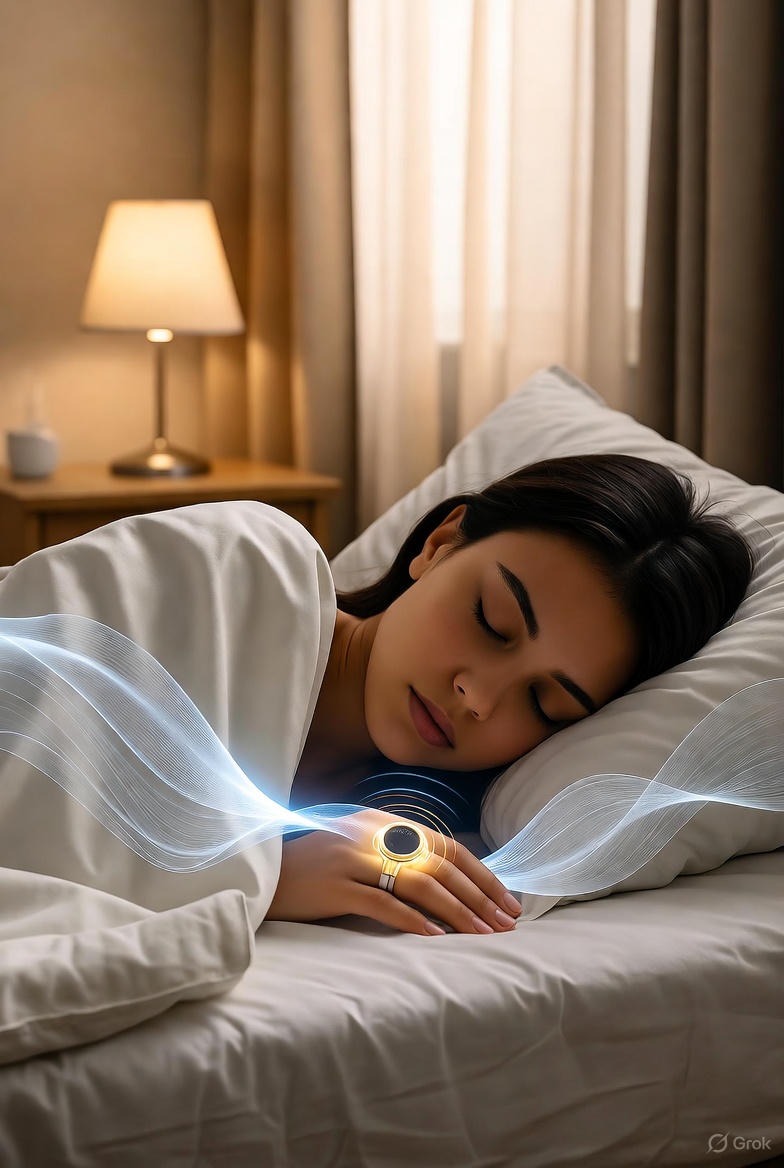
The journey of wearable wellness began with pedometers, evolved through wrist-worn heart rate monitors, and has now reached its most personal and unobtrusive form yet: the smart ring. This isn't merely a miniaturized smartwatch. It represents a fundamental shift in approach, leveraging the unique advantages of the finger to deliver a different class of data. The vasculature at the base of your finger is rich and close to the surface, allowing for strong photoplethysmography (PPG) signals—the technology that uses light to measure blood volume changes. This often results in more consistent heart rate and pulse oximetry readings, especially during sleep, compared to the wrist, which can be affected by arm position and loose fit.
But the innovation runs deeper. Advanced accelerometers and gyroscopes detect nuanced movement. Skin temperature sensors track subtle fluctuations that can indicate illness onset, stress, or hormonal changes. Galvanic skin response sensors measure minute changes in sweat, hinting at sympathetic nervous system arousal. By fusing these data streams with sophisticated algorithms, modern smart rings paint a holistic picture of your autonomic nervous system—the unconscious control center regulating your stress (sympathetic "fight or flight") and recovery (parasympathetic "rest and digest") states.
The core metrics have also matured. We've moved far beyond simple step counts and generic "sleep scores." Today's devices offer insights like:
The revolution is contextual. The best devices don't just throw numbers at you; they seek to explain them. Did your resting heart rate spike? The app might correlate it with a late, heavy meal logged the night before. Is your HRV chronically low? It may prompt you to reflect on your recent workout intensity or work stress. This shift from data reporting to data storytelling is what transforms a gadget into a genuine wellness partner. However, to build an effective partnership, we must first dismantle the most pervasive myth in wearable tech: the quest for perfection.
In a world addicted to optimization, wearable data can become just another arena for unhealthy competition—often with ourselves. The interface presents clean graphs, percentage scores, and color-coded feedback (green for good, red for bad). It’s psychologically seductive and perilously easy to start viewing your body’s complex states as a daily report card. You didn't hit 20% deep sleep? You failed. Your readiness score is 72% instead of 85%? The day is already tainted. This is the perfection pitfall, and it turns a tool for self-compassion into a source of constant self-critique.
The human body is not a machine striving for factory-set perfection. It is a dynamic, adaptive organism designed to respond to stress, recover, and build resilience. Variability is a sign of health, not failure. A "perfect" 90 HRV score every single day is not only unrealistic but would indicate a system not engaging with life's challenges. Fluctuations are the data points that matter most—they tell the story of how you are responding to training, emotional events, social interactions, and even the weather.
Consider sleep. The National Sleep Foundation provides ranges for healthy adults: 20-25% for deep sleep, 20-25% for REM. Fixating on hitting the exact top of that range every night ignores natural night-to-night variance influenced by countless factors. A smart ring’s sleep staging, while impressive, is also an estimate based on movement and heart rate patterns, not a clinical polysomnogram. Treating its breakdown as absolute truth can create sleep anxiety, ironically causing the very poor sleep you're trying to avoid—a phenomenon some experts call "orthosomnia."
The path to healthy wearable use begins with a mindset shift: from judgment to curiosity. Instead of asking, "Why is my score so bad?" ask, "What is my body trying to tell me with this data?" A low recovery score isn't a punishment; it's an invitation to choose a gentle yoga session over a high-intensity interval training workout. An elevated resting heart rate isn't a failure; it's a clue to check in—are you fighting off a bug, dehydrated, or processing a stressful situation? By releasing the need for perfect green graphs, you reclaim the power of the data. It becomes a narrative of your life's ebbs and flows, not its verdict. This foundational mindset is what allows us to interpret the first and most common daily metric: the sleep score.
For most users, sleep tracking is the cornerstone of the wearable wellness experience. Waking up to a detailed breakdown of your night feels like uncovering a secret diary of your unconscious hours. But to use this information wisely, we must become literate in its language and keenly aware of its limitations.
A typical smart ring sleep analysis includes several key components:
The true value lies not in any single night's data, but in the trends over time. One night of fragmented sleep is a blip. A two-week trend showing declining deep sleep percentage alongside a creeping resting heart rate is a meaningful pattern warranting attention. Perhaps it's time to evaluate your nighttime wellness routine or identify common mistakes that could be ruining your sleep.
It's critical to understand what this data cannot tell you. Consumer devices cannot diagnose sleep disorders like sleep apnea or insomnia, though they may flag potential risk patterns (like frequent blood oxygen dips) that warrant a conversation with a doctor. Their stage detection, while good, has error rates, especially in distinguishing between light sleep and quiet wakefulness. Therefore, if you feel refreshed despite a "poor" score, trust your subjective feeling. The ring measures physiological signals, not the subjective experience of restfulness.
The goal of sleep tracking should be to uncover actionable insights, not to achieve a perfect score. For instance, you might notice your deep sleep is consistently higher on nights you finish eating 3 hours before bed. Or your resting heart rate is lower when you implement a 30-minute wind-down ritual. This is the power of pattern recognition. By observing correlations between your behaviors and your sleep metrics, you can make incremental, evidence-based adjustments to your evening habits. For those with busy lives, this doesn't require a complete overhaul; often, small, realistic routines for busy professionals can yield significant improvements in sleep quality over time.

After sleep, the "Readiness" or "Recovery" score is often the second major data point users encounter each morning. This single, composite number aims to answer a deceptively simple question: How prepared is your body for the day ahead? While different brands use proprietary algorithms, these scores generally synthesize data from your previous night (sleep quality, duration, timing) with key physiological markers like morning HRV, resting heart rate, and skin temperature.
Think of your readiness score not as a directive, but as a weather report for your internal landscape. A high score (e.g., 85-100) suggests calm, clear skies: your nervous system is balanced, recovery is solid, and you’re likely well-equipped to handle physical or mental stress. A moderate score (70-84) might indicate partly cloudy conditions: you’re functional, but perhaps not at your peak resilience—a good day for steady work, not for setting personal records. A low score suggests stormy weather internally: your body is signaling a need for repair, caution, and extra care.
The crucial habit to cultivate here is responsive, not reactive, planning. A low score shouldn't trigger despair or defiance ("I'll push through anyway!"). Instead, it should prompt compassionate inquiry and adjustment. Can you swap the intense workout for a walk or gentle mobility session? Can you build in more quiet breaks during your workday? Can you prioritize an earlier bedtime tonight? Conversely, a high score isn't a mandate to max out; it's an opportunity to strategically engage in challenging tasks when you're most biologically primed for them.
This is where the partnership deepens. The ring provides the objective data; you provide the subjective context. Did you score a 65? Check your log. Did you have two glasses of wine, stay up late finishing a project, or start feeling a tickle in your throat? The number makes you aware; your reflection makes it meaningful. Over time, this practice builds a profound bodily awareness—an ability to sense internal states even without the device. The score becomes a training wheel for your own intuition, helping you structure your day in a way successful people often do, by aligning activity with capacity.
If there is one metric that sits at the throne of physiological insight, it is Heart Rate Variability. Despite a name that sounds like something to minimize, HRV is a powerful biomarker you want to maximize—within your unique baseline. Simply put, HRV is the variation in time between consecutive heartbeats, measured in milliseconds. A higher HRV generally indicates a more resilient, adaptable autonomic nervous system. It means your body can swiftly shift between stress (sympathetic) and relaxation (parasympathetic) modes as needed. A lower HRV suggests your nervous system is under strain, potentially stuck in a stressed state, and has less capacity to adapt.
Smart rings typically measure HRV during sleep, providing a nightly average that smooths out the noise of daytime activity. This is your most reliable reading. Watching your HRV trend is like listening to a daily briefing from your nervous system. A sustained upward trend suggests your lifestyle—sleep, nutrition, exercise, stress management—is supporting recovery and resilience. A pronounced downward trend is a clear flag that your system is under accumulating stress, which could be from overtraining, emotional burden, poor sleep, or illness onset.
The single biggest mistake with HRV is comparing your number to anyone else's. HRV is highly individual, influenced by age, genetics, fitness level, and even gender. My 55 ms might be my "high," while your 35 ms might be your robust baseline. The only comparison that matters is you vs. you. What's your personal range? What does a "normal" day look like? What lifestyle factors nudge it up or down?
To use HRV effectively:
By respecting HRV's message, you learn to train and live with your body's rhythms, not against them. This leads us directly to one of the most common applications of this data: optimizing physical activity.
The fitness industry has long been dominated by rigid schedules: "Push hard Monday, Wednesday, Friday." Wearable wellness introduces a more intelligent, responsive paradigm: autoregulated training. This means letting your daily physiological readiness guide the intensity, volume, and even type of your movement.
Your smart ring provides several key inputs for this approach:
With this data, you can move from a pre-planned workout to an informed conversation with your body. The framework is simple:
This approach prevents the common pitfall of chronic under-recovery, which leads to plateaus, burnout, and injury. It maximizes the return on your effort by aligning hard work with biological capacity. Importantly, it also validates rest as a productive, data-supported part of the process, not laziness. By autoregulating, you build fitness more sustainably and develop a deeper respect for your body's communication. This principle of responsiveness extends beyond the gym into the 24-hour cycle of stress and recovery, which is deeply influenced by the bookends of your day.
Wellness is not compartmentalized. The quality of your waking hours directly seeds the quality of your sleep, and the restoration of your sleep directly fuels your waking resilience. Your smart ring illuminates this continuous feedback loop, making the connection between daytime choices and nighttime metrics undeniable.
A key metric here is daytime stress or "body battery" depletion. Many devices now estimate this by tracking periods of elevated heart rate and low HRV outside of exercise. A day packed with back-to-back meetings, tight deadlines, and digital overload will show a steep, sustained decline in your energy reserves. The critical insight is this: you cannot "out-sleep" a frenetic, stressful day. If you drain your system to zero by 5 PM, even eight hours of good sleep may only recharge you to 70%. This creates a deficit cycle.
Conversely, intentional daytime habits can prime your body for deep recovery:
The transition from day to night is the most pivotal junction. This is where a deliberate science-backed nighttime routine acts as a "recovery catalyst." By using your ring's data, you can experiment and see what truly moves the needle for you. Does 15 minutes of reading instead of scrolling lower your resting heart rate before bed? Does a consistent bedtime, even on weekends, improve your sleep consistency score? Does avoiding late eating improve your deep sleep percentage?
This creates a virtuous cycle: Better daytime habits → easier transition to sleep → higher-quality recovery → higher morning readiness → more resilience for the next day. It turns wellness from a series of isolated tasks (workout, sleep) into an integrated, self-reinforcing lifestyle. To make this cycle stick, we must build systems that endure beyond initial motivation.
The novelty of a new smart ring can fuel a burst of obsessive optimization. Every metric is checked, every correlation is hunted. This intensity is unsustainable and is the fastest path to "wearable burnout"—the point where the device becomes a source of stress rather than a tool for alleviating it. The goal is not to live in the app, but to let the insights gradually infuse your lifestyle until they become unconscious habits.
The strategy is gradual, curiosity-driven experimentation. Don't try to change your sleep, diet, exercise, and stress management all at once based on day-one data. Here’s a sustainable framework:
This method turns wellness into a personal science project. It’s empowering, low-pressure, and driven by your own data. To help a new habit stick, anchor it to an existing one (a concept called "habit stacking"). After I brush my teeth (existing habit), I will do my 5-minute breathing exercise (new habit). This reduces reliance on willpower.
Remember, the ultimate aim of wearable data is to cultivate internal awareness. Use the numbers to learn the feelings they correspond to. What does a "75" readiness feel like in your body versus a "90"? Over time, you may find you need to check the app less frequently because you've internalized the feedback. The device becomes a periodic check-in tool, not a constant crutch. This mindful, integrated approach is what allows you to build a routine that actually sticks for the long term.

For all their sophistication, smart rings and their algorithms have inherent boundaries. They measure physiological outputs (heart rate, movement, temperature) and infer states (sleep, stress, recovery). They do not measure the full spectrum of human experience that defines well-being: joy, purpose, connection, love, and mental peace. A day filled with meaningful work and laughter with friends might show a high-strain graph, but it contributes to a different kind of "readiness"—emotional and psychological resilience.
There will be days when the data and your intuition directly conflict. You may wake up feeling vibrant and energized, only to see a low readiness score. Or you may feel drained despite the ring showing a "high recovery" green light. In these moments, you are the ultimate authority. The device is a single source of information; you are the conscious integrator of all sources—physical sensation, emotional state, mental clarity, and personal context.
Consider these common scenarios:
Therefore, use your wearable as a consultant, not a CEO. Let it provide its report, but you hold the final meeting where all factors are weighed. If your gut says "rest" but the ring says "go," maybe choose a modified "go." If your gut says "this workout will feel great" but the ring says "caution," perhaps start gently and see how your body responds in real-time. This respectful dialogue between human intuition and machine data is where the most profound wellness wisdom emerges.
As you live with your wearable, you will inevitably encounter perplexing data. A sudden, unexplainable spike in resting heart rate. A week of terrible sleep scores while you feel fine. A readiness score that plummets for no apparent reason. These anomalies can be a source of anxiety if you don't have a strategy to handle them.
First, employ a "Three-Day Rule" for concern. Isolated data points are noise. A trend over three or more days is a potential signal. Don't troubleshoot a single night.
When you identify a genuine anomaly, become a data detective. Run through a systematic checklist:
If you've ruled out obvious causes and a concerning trend persists (e.g., chronically elevated RHR, consistently low HRV, frequent oxygen dips), it's time to transition from self-monitoring to professional guidance. Your compiled wearable data can be an incredibly powerful tool for your healthcare provider. Instead of saying "I feel tired," you can show them: "Over the past month, my resting heart rate has increased by 10 bpm, my sleep efficiency has dropped to 80%, and I have these frequent awakenings." This objective data can facilitate more productive conversations and faster paths to appropriate care.
In our final reflection on this portion of our exploration, we must zoom out to the widest lens. The pursuit of health via data can subtly reinforce a transactional mindset: "If I do X, I will get Y score." But true wellness is non-linear, holistic, and deeply personal. It is a lifelong journey of becoming more attuned, more resilient, and more compassionate toward yourself.
Your smart ring is a companion on that journey. Its greatest gift may not be the optimization of any single metric, but the cultivation of mindful embodiment—the practice of being present in and attentive to the body. It teaches you that a deep breath literally slows your heart. It shows you that a calm evening translates into restorative sleep. It proves that recovery is as important as exertion.
Set your expectations not for linear improvement, but for informed awareness. Some seasons of life will show beautiful, green graphs. Others will be a sea of red and yellow as you navigate stress, change, or challenge. Both are valid data. The low-recovery period is not a failure; it is part of the human story the ring is documenting.
Embrace the journey with kindness. Let the data inform you, not define you. Use it to build rhythms that support your life, not rules that constrain it. Whether you're seeking peak performance or simply more energy for your family, let the insights guide you toward a life that feels as good as the data aims to look. As you continue, you'll discover how to extend these principles to every aspect of your life, creating a comprehensive ecosystem of well-being that honors both the numbers on your screen and the wisdom in your heart.
We've laid the groundwork on the "what"—the metrics, their meaning, and their limits. Now we turn to the "how"—how to shape a mindset and daily practice that transforms this stream of data from a potential source of anxiety into a profound tool for self-empowerment. The difference between a user who feels enslaved by their ring and one who feels enlightened by it comes down to philosophy. This is about cultivating a healthy, sustainable, and ultimately liberating relationship with your quantified self.
Think of your physiological data as a conversation. For too long, many of us have lived in a monologue with our bodies, often ignoring or overriding their signals until they scream in the form of burnout, injury, or illness. The smart ring initiates a dialogue. It gives a clear, objective voice to your body's whispers. Your heart rate variability trends are its way of saying, "I'm feeling resilient today," or "I need a break." Your sleep graph is its story of the night. The art lies in learning to listen, respond, and ultimately, to trust this dialogue so deeply that the technology can fade into the background.
This requires moving from a state of surveillance to a state of attunement. Surveillance is judgmental, external, and focused on control ("I must get my sleep score to 90"). Attunement is curious, internal, and focused on understanding ("My sleep was lighter last night; I wonder what my body is adjusting to?"). It's the shift from using data to grade yourself to using data to know yourself. In this section, we'll build the habits and mental frameworks that make this attunement not just possible, but effortless and rewarding.
The ultimate goal of any wellness tool should be to make itself obsolete—not by discarding it, but by internalizing its lessons. Your smart ring is a training device for your own interoceptive awareness, which is your perception of the internal state of your body. Can you feel your heart rate elevate with stress? Can you sense the diffuse tiredness of poor recovery versus the muscle soreness of good work? For many, this connection has been numbed by modern life's constant distractions.
Your wearable accelerates the re-wiring of this connection through a process called biofeedback. You see a concrete number (low HRV) and learn to associate it with a subjective feeling (that edgy, wired-but-tired sensation). Over time, you can begin to sense the "low HRV" state before you even check the app. The data validates your intuition, and your intuition gives context to the data.
To cultivate this, practice a daily "pre-check-in." Before you open your wellness app in the morning, ask yourself:
Then, and only then, open the app. Compare your subjective assessment with the objective scores. Don't seek a perfect match; seek understanding. If you feel a 7/10 but your readiness is 90, explore why the disconnect. Maybe you slept well but are mentally anxious about the day. If you feel a 5/10 but your score is 75, maybe you need some gentle movement to shake off sleep inertia. This 60-second ritual builds a bridge between the digital dashboard and your lived experience.
As this skill sharpens, you'll find your reliance on the device naturally decreases for everyday decisions. You'll know when to push and when to rest. You'll feel the optimal time for your workout. The ring becomes a periodic validator, a system check, rather than a constant crutch. This self-trust is the cornerstone of true wellness autonomy.
Raw data is meaningless without context. Two people with identical sleep graphs could have vastly different stories: one is recovering from a marathon, the other is fighting a virus. Your smart ring's algorithms make general assumptions, but you hold the key to the specific narrative. This is where the simple, often-overlooked habit of journaling or tagging within your wellness app becomes your most powerful interpretive tool.
Most apps allow you to tag your day with simple icons or notes. The disciplined use of this feature transforms your data from a generic report into a personalized diary of cause and effect. What should you log? Anything you suspect influences your system:
After a few weeks of consistent logging, patterns emerge with stunning clarity. You might tap on a cluster of low-readiness mornings and see they are all tagged with "Alcohol 1 glass." Or you might see your highest HRV readings consistently tagged with "Yoga" or "Beach day." This evidence-based feedback is far more persuasive and personalized than generic health advice. It shows you how your unique biology responds to your life.
This practice also combats catastrophic thinking. When you see a sudden readiness drop, instead of spiraling ("What's wrong with me?"), you can check your log. "Ah, I had that intense 3-hour workshop and only drank coffee all afternoon. This dip makes sense. My body is asking for hydration and real food today." The anomaly is explained, anxiety dissipates, and you have a clear, actionable path forward. It turns confusion into clarity.
In the age of social media shares and leaderboard fitness apps, it's dangerously easy to slip into data comparison. Seeing a friend post their "92 Sleep Score" or being in a community where users share their "HRV of 120" can inadvertently create a sense of inadequacy. It's critical to remember: Physiological data is not a measure of worth, virtue, or even absolute health. It is a snapshot of a complex, dynamic, and utterly individual system.
Comparing your data to someone else's is as irrational as comparing your fingerprint to theirs. Differences are driven by:
The only valid, productive comparison is you versus your past self. Your wellness journey is about moving your own needle, not reaching someone else's arbitrary benchmark. Focus on personal trends: "My average HRV this month is 5 points higher than last month," or "My sleep consistency has improved since I started my wind-down routine."
If you participate in communities, shift the focus from numbers to behaviors and insights. Instead of posting "Scored an 88!", try "Noticed my best recovery scores come on days I walk in the morning. Going to make that a habit." This fosters a culture of shared learning rather than hierarchical boasting. Your journey is unique. Your data is the manuscript of a book only you are writing. Keep the focus on authoring a better next chapter for yourself, not on copying someone else's story.
A rigid expectation for consistent, high scores year-round is a recipe for frustration. Your body is not a machine designed for static output; it is an organism designed to cycle, adapt, and weather seasons—both environmental and personal. Expecting your summer readiness scores during the dark days of winter, or your pre-holiday energy levels during a period of grief, is unrealistic and unkind.
Wearable data beautifully illustrates these natural fluctuations. You may notice:
The adaptive mindset asks: "What does my body need in this season?" Your nighttime routine in December might look different from your routine in June—perhaps involving more use of a light therapy lamp in the morning or a heavier blanket at night. By syncing your expectations and habits with life's inherent rhythms, you work with your nature, not against it. This leads to sustainable progress, not burnout.

Our culture is addicted to positive feedback. We crave the green scores, the upward trends, the congratulations from our apps. But some of the most valuable insights your wearable will ever provide come from the red numbers, the downward spikes, the "poor" ratings. These are not failures; they are your most pointed and personalized lessons.
A "bad" score is a focused experiment you didn't mean to run. It's your body's unequivocal feedback on a specific input. The learning process is straightforward:
For example, you might intellectually know that alcohol affects sleep, but seeing your own REM sleep utterly flatline on the graph after two drinks makes the connection visceral and unforgettable. You learn that "moderation" for you might mean one drink, or none after 7 PM.
Embrace these negative data points. They are the precise, personalized guidance you paid for. They highlight your unique sensitivities and recovery needs. By welcoming them as teachers, you strip them of their emotional power and harness their practical wisdom. This scientific approach naturally extends into how you manage one of the most common goals: improving sleep.
Let's apply all our principles to a universal goal: achieving more restorative sleep. Using your smart ring to "hack" sleep can be counterproductive if done aggressively. The optimal approach is patient, experimental, and holistic.
Phase 1: The Audit (Weeks 1-2)
Wear your ring and live normally. Gather baseline data. Don't change anything. Key questions: What's your average sleep duration? Consistency? Deep/REM percentages? What does your resting heart rate curve look like overnight (is it flat and low, or bumpy?)? This is your starting line.
Phase 2: The Environment Experiment (Weeks 3-4)
Address the lowest-hanging fruit: your sleep cave. For two weeks, focus solely on optimizing your environment. Make it cool (65-68°F), pitch black, and quiet (use earplugs or a white noise machine if needed). Observe the data. Did your sleep efficiency (time asleep vs. time in bed) improve? Did you have fewer wake episodes? This establishes the foundation.
Phase 3: The Ritual Experiment (Weeks 5-6)
Now, layer in a wind-down routine. Start with a minimal routine of just 5 essential steps. Perhaps it's: 1) Dim lights at 9 PM, 2) No screens after 9:30, 3) 10 minutes of light reading, 4) 5 minutes of deep breathing, 5) Consistent bedtime. Observe for two weeks. Did your sleep latency (time to fall asleep) decrease? Did your deep sleep increase?
Phase 4: The Timing & Fuel Experiment (Weeks 7-8)
Experiment with the timing of your last meal and last caffeine dose. Try finishing eating 3 hours before bed for a week. Note any changes in resting heart rate or sleep disturbances. Try moving your last coffee to before 2 PM. Watch for changes in sleep depth.
Throughout this process, you are not chasing a score. You are observing correlations. Maybe blackout curtains had a huge impact, but the reading ritual didn't change your metrics (though you may enjoy it subjectively). That's valuable! You've now identified your most potent levers.
Remember, the goal is not to manipulate your sleep into a "perfect" graph every night. It's to create conditions that consistently support your natural sleep biology. Some nights will still be poor, and that's okay. You're looking for a trend toward more stable, restorative sleep over months, not a victory every single day. This patient, evidence-based method is how you build a sleep-supportive lifestyle that lasts.
Your wearable provides a real-time dashboard for your autonomic nervous system (ANS). For too long, we've viewed "stress" as an amorphous enemy. The data reframes it: stress is a load, and resilience is your capacity to bear and recover from that load. Your ANS is the muscle managing that capacity. Like any muscle, it needs to be trained—through both controlled stress and dedicated recovery.
Your HRV is the premier metric for tracking this resilience training. Think of it this way:
The wearable helps you practice stress dosing. Just as you wouldn't walk into a gym and try to deadlift 400 pounds on day one, you shouldn't pile on life stress without building capacity. Use your readiness and HRV data to dose your stress:
This also applies to positive stress (eustress). A exciting first date, a fun but loud concert, or a stimulating trip are all stressors on the system. They may show up as elevated daytime heart rate and a temporary dip in recovery. This isn't "bad"; it's simply your body engaging fully with life. The key is to follow periods of high engagement (positive or negative) with deliberate recovery periods. This is the "workout and rest" cycle applied to your entire life.
By viewing your nervous system through this training lens, you become the coach of your own resilience. You learn when to push the pace and when to call for a rest day, leading to a more sustainable and vibrant life.
With all this talk of data-informed living, a crucial paradox exists: sometimes, the healthiest choice is to ignore the data completely. Wellness is not the point of life; it is the foundation that allows you to fully engage in the point of life—connection, joy, passion, love, and contribution.
There will be nights where staying up late laughing with old friends wrecks your sleep score, but feeds your soul. There will be days where a spontaneous hike throws off your training schedule and spikes your strain, but fills you with awe. There will be celebratory meals that send your glucose and heart rate soaring, but create core memories.
Your smart ring is a tool for your life, not your life's master.
The truly balanced user knows when to take the ring off—literally and figuratively. Maybe you don't wear it on your wedding day, or during a beach vacation where you want to be truly disconnected. Maybe you see a low readiness score on the morning of your child's birthday party and think, "Noted, but we're having cake and playing games anyway."
The data should enable spontaneity, not prevent it. How? By giving you the confidence that you have a system. Because you have been attentive to your recovery 80% of the time, you can afford to spend the other 20% fully immersed in life's messy, beautiful, unquantifiable moments. You can enjoy that extra glass of wine at the reunion because you know exactly how it will affect you and you have the tools (like a great next-day routine to reduce morning grogginess) to course-correct.
This is the final, most important expectation to set: your wellness journey includes detours, celebrations, and off-road adventures. The data is a map, but you are the traveler. Never let the map stop you from exploring an interesting, unmarked path.
By this point, you are no longer a passive consumer of data; you are an active interpreter and architect. The final step is to synthesize all these insights, habits, and mindsets into a Personal Wellness Framework—a flexible, living set of guidelines unique to you.
This is not a rigid set of rules, but a collection of "if-then" protocols based on your personal evidence. You might write it down in a note on your phone:
My Personal Wellness Framework (Example)
This framework becomes your touchstone. You review and update it every few months as you learn more about yourself. It turns hundreds of daily data points into a simple, actionable personal constitution for well-being.
We’ve journeyed through the fundamentals of understanding data and cultivating the right mindset. Now, we arrive at the synthesis: the art of integration. How does this intimate knowledge of your physiology leave the confines of an app and become woven into the very fabric of your daily life—your work, your relationships, your long-term goals, and your sense of purpose? This is where wearable wellness transcends self-tracking and becomes a catalyst for holistic, intentional living.
Imagine a life where your daily choices are not dictated by fleeting whims or external pressures, but are gracefully informed by a deep, compassionate understanding of your own rhythms. Your workdays have natural ebbs and flows of focus. Your social interactions are chosen with an awareness of their energetic cost and reward. Your fitness evolves not from rigid plans, but from a responsive dialogue with your body’s readiness. This is not a fantasy of biohacking optimization; it is the practical, grounded reality of someone who has mastered the art of using data as a guide, not a god.
This portion of our exploration moves from internal awareness to external application. We’ll examine how to structure your days, fuel your body, move with intention, connect meaningfully, and plan for a future of sustained vitality—all through the lens of personalized, physiological insight. The goal is no longer just to understand your data, but to let it help you design a life that feels as good as it functions.
Your body doesn’t operate on a static, 9-to-5 schedule. It runs on a circadian rhythm—a roughly 24-hour internal clock governing hormones, body temperature, alertness, and digestion. Your smart ring provides a personal readout of this rhythm. By observing your daily data patterns, you can design a daily schedule that aligns with your biology, a practice known as circadian alignment or biorhythmic scheduling.
Start by identifying your personal patterns over a month of typical life:
With this map, you can design your ideal day:
This isn’t about creating a rigid prison of productivity. It’s about reducing friction. By doing the right work at the right biological time, you accomplish more with less effort and stress, preserving your energy for the people and passions that matter most. It’s the ultimate application of “working smarter, not harder,” dictated by your own body’s data.
Wearable technology is on the cusp of revolutionizing how we understand personalized nutrition. While today’s smart rings don’t measure glucose or specific macros directly, they provide powerful proxy signals for how your body is responding to what you eat. This moves nutrition from generic rules (“eat low carb”) to personalized observations (“my body shows signs of stress when I eat a heavy meal after 8 PM”).
Key metrics to watch in relation to meals:
How to run a food experiment:
Over time, you build a Personal Food Journal. You might learn: “My body loves complex carbs at lunch but not at dinner.” Or “Dairy doesn’t bother my stomach subjectively, but my HRV consistently drops, so I’ll limit it.” Or “When I pair protein with my morning carbs, my daytime heart rate stays steadier.”
This data-informed approach fosters a neutral, curious relationship with food. It’s not about “good” or “bad” foods, but about “how does this fuel my unique engine?” It empowers you to make choices that support stable energy, calm digestion, and deep recovery, moving you closer to the ideal of eating for how you want to feel, not just how you want to look.
The fitness paradigm is shifting from scheduled, intense “workouts” to a more holistic view of movement nutrition—the idea that your body needs a varied diet of movement types throughout the day, just as it needs varied macronutrients. Your wearable is the perfect tool to quantify and balance this “diet.”
Think of movement in three tiers, all reflected in your data:
Your wearable helps you balance this ecosystem. A day with a high-strain workout might be followed by a day focused on high NEAT and recovery movement. A low-readiness day might mean swapping a planned run for a long walk. The data prevents you from living in only one tier—either sedentary (low NEAT) or chronically overreaching (too much high-intensity strain without recovery).
This balanced approach transforms movement from a discrete, sometimes punitive task into a continuous, nourishing dialogue with your body. It ensures you are not just fit for the gym, but vitally alive for all the moments in between.
Human beings are socially regulated organisms. Our nervous systems are constantly communicating and co-regulating with those around us—for better or worse. While your smart ring can’t measure love or joy, it can measure their profound physiological correlates and costs. This is the frontier of social biometrics.
Pay attention to how your metrics shift with social interaction:
Your data provides objective evidence for what you may subjectively know: some people and situations fill your cup, while others drain it. Use this insight not to avoid all draining interactions (life requires some), but to strategically buffer them.
This data empowers you to set boundaries with physiological justification. “I need to leave by 10 PM to protect my sleep” isn’t being boring; it’s honoring a biological need for which you have clear, personal evidence.
The most profound value of continuous wearables isn’t in daily nudges, but in the macro-trends visible over months and years. This longitudinal data is your early-warning system for the slow creep of imbalance that leads to burnout, chronic fatigue, and declining health.
Here’s what to watch for on a macro scale:
When you see these trends, it’s not time for a small tweak; it’s time for a life audit. The data is telling you that your current lifestyle—your workload, your responsibilities, your lack of true downtime—is unsustainable for your biology.
This is the moment to use the data as a non-negotiable conversation starter—with yourself, your partner, or even your employer. “The data from my wearable shows my nervous system has been in a state of elevated stress for the past quarter. I need to make some changes to my workload/commitments to reverse this trend for my long-term health.”
This shifts the narrative from “I feel tired” (which can be dismissed) to “I have objective, longitudinal data showing a dangerous trend toward physiological depletion.” It’s powerful, undeniable, and preventative. By catching these trends early, you can implement a season of dedicated recovery, reassess priorities, and change course long before reaching a crisis point. This proactive, long-view approach is the ultimate promise of wearable wellness: not just managing today, but safeguarding all your tomorrows.
Paradoxically, the tool meant to reduce stress can become a source of it. Constant app-checking, obsession over minute fluctuations, and notification anxiety are real risks. To prevent this, you must practice deliberate tech hygiene with your wearable.
Establish clear boundaries:
The principle is intentional engagement. You are in control of when and how you interact with the data. The device works in the background, silently collecting. You engage proactively during your chosen times to gather insights, then you close the app and live your life. This prevents the wearable from becoming a source of compulsive behavior and keeps it firmly in its role as a supportive tool.
Wellness is contagious, and it’s more sustainable when supported by your ecosystem. Sharing your wearable journey—judiciously—can foster understanding and create shared healthy habits.
The key is to share insights, not scores. Share what you’re learning, not the number you’re judging yourself against. This turns data into a language of self-awareness and need, rather than comparison or competition, strengthening your support network.
As we invite these devices deeper into our lives, we must be conscious consumers. The data generated—your heart rate patterns, sleep habits, temperature trends—is incredibly intimate. It’s a biometric diary of your life.
Using a wearable is a trade-off: profound personal insight for a slice of your biometric privacy. Being an informed user means understanding that trade-off and making conscious choices about the data you share and the companies you trust with it.
The technology we have today is merely the beginning. The next five years will see an explosion of non-invasive sensing capabilities integrated into wearables like smart rings:
This future is not about more data for data’s sake, but about richer context and earlier intervention. It will make the principles we’ve discussed even more critical: the need for a grounded mindset, the primacy of personal trends over absolute numbers, and the wisdom to remain the author of your own health story amidst a sea of algorithmic suggestions.
Your Trusted Sleep Advocate: Sleep Foundation — https://www.sleepfoundation.org
Discover a digital archive of scholarly articles: NIH — https://www.ncbi.nlm.nih.gov/
39 million citations for biomedical literature :PubMed — https://pubmed.ncbi.nlm.nih.gov/
Experts at Harvard Health Publishing covering a variety of health topics — https://www.health.harvard.edu/blog/
Every life deserves world class care :Cleveland Clinic - https://my.clevelandclinic.org/health
Wearable technology and the future of predictive health monitoring :MIT Technology Review — https://www.technologyreview.com/
Dedicated to the well-being of all people and guided by science :World Health Organization — https://www.who.int/news-room/
Psychological science and knowledge to benefit society and improve lives. :APA — https://www.apa.org/monitor/
Cutting-edge insights on human longevity and peak performance:
Lifespan Research — https://www.lifespan.io/
Global authority on exercise physiology, sports performance, and human recovery:
American College of Sports Medicine — https://www.acsm.org/
Neuroscience-driven guidance for better focus, sleep, and mental clarity:
Stanford Human Performance Lab — https://humanperformance.stanford.edu/
Evidence-based psychology and mind–body wellness resources:
Mayo Clinic — https://www.mayoclinic.org/healthy-lifestyle/
Data-backed research on emotional wellbeing, stress biology, and resilience:
American Institute of Stress — https://www.stress.org/


