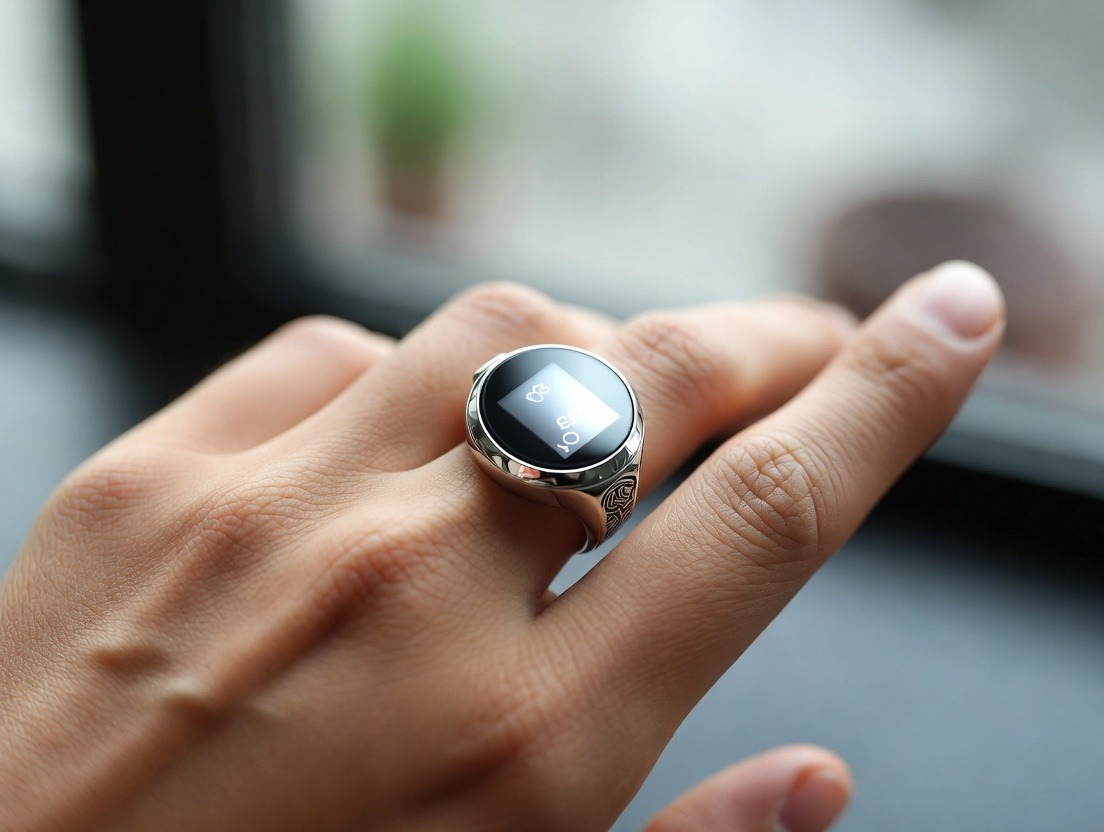
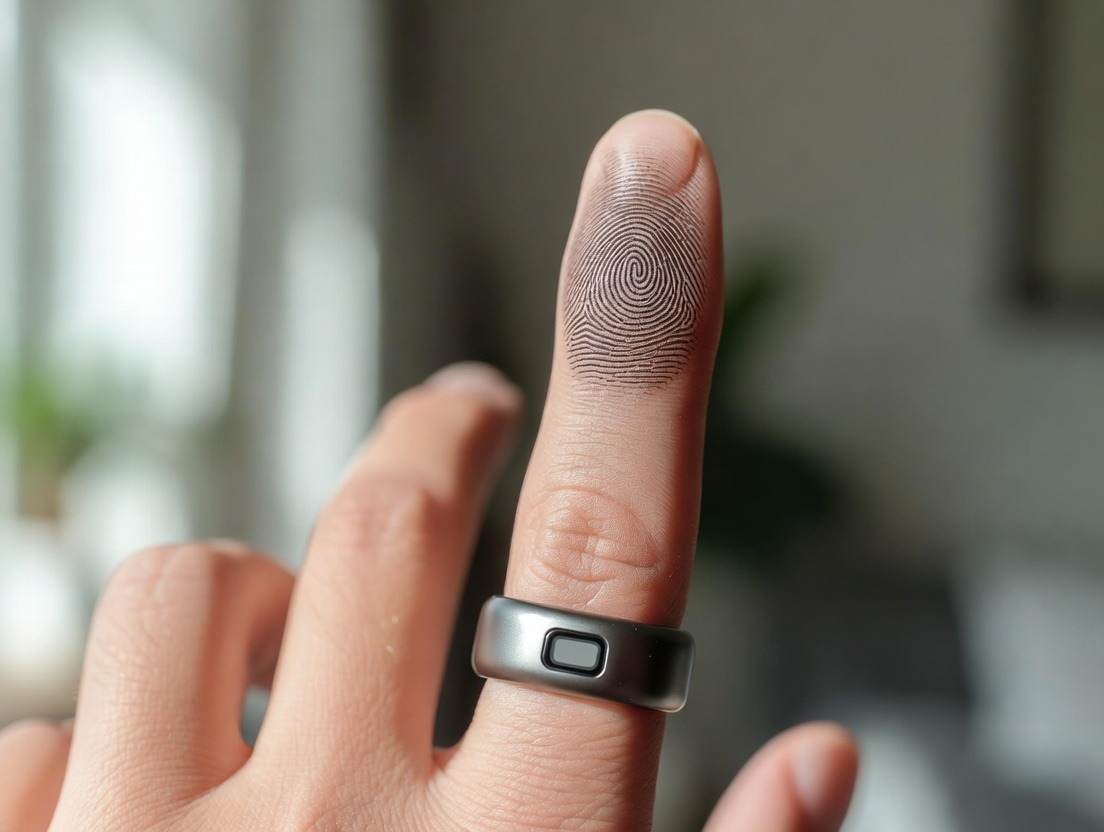
Wellness Ring Basics: Battery Life and Charging Explained
Information on how long the battery typically lasts, how to charge it, and tips for maximizing battery life.
Wellness Ring Basics: Battery Life and Charging Explained
In the quiet revolution of personal health technology, a new champion has emerged on the finger. Gone are the days of clunky wristbands and pocketable trackers that disrupt your daily flow. The modern wellness ring—sleek, intuitive, and always on—promises a seamless window into your body’s inner workings, from sleep depth and heart rate variability to stress resilience and recovery. It’s a personal health oracle, whispering insights gathered from your physiological data 24/7.
But this constant, intimate monitoring comes with a fundamental question, one that underpins the entire user experience: How does something so small keep going, and how do you keep it powered? Unlike a smartphone you can stow away or a smartwatch with a relatively generous canvas for a battery, a wellness ring faces the ultimate engineering tightrope walk. It must be compact and comfortable enough to forget you’re wearing it, yet robust enough to collect, process, and transmit a relentless stream of valuable health data. Its battery life and charging ecosystem aren’t just minor specs; they are the silent, often overlooked pillars that determine whether this device integrates into your life as a helpful companion or becomes a high-maintenance burden.
This deep dive is dedicated to unraveling the mysteries behind that small band of power on your finger. We’ll explore not just the "how long" but the "why" and "how" of wellness ring energy. From the chemistry of the tiny battery within to the clever software that stretches every milliampere-hour, from the elegance of wireless charging pucks to the real-world habits that can double your time between charges—we’re covering it all. Understanding this foundation is the first step to mastering your device, ensuring it serves you faithfully as you embark on a journey toward deeper self-knowledge and restful living. So, let’s power up and begin.
The Heart of the Matter: What Powers Your Wellness Ring?
Before we can talk about how long a charge lasts or how to best preserve it, we need to understand what we’re actually dealing with. Nestled within the polished titanium, ceramic, or composite resin casing of your wellness ring is a marvel of micro-engineering: a miniature, rechargeable lithium-based battery. This is the literal heart of the device, and its characteristics define everything about the ring's performance and lifespan.
The Chemistry of Compact Power Nearly all modern wellness rings utilize variations of Lithium-Polymer (Li-Po) or Lithium-Ion (Li-Ion) battery technology. You might be familiar with these terms from smartphones and laptops, but the implementation in a ring is a different beast entirely. The core advantage is energy density—the amount of energy stored in a given space. Lithium batteries offer the best energy density commercially available, which is non-negotiable for a device where every cubic millimeter is precious.
The battery itself is a flat, flexible pouch, often custom-shaped to fit the ring’s unique internal curvature. It’s not a standard cylindrical cell. This flexibility allows designers to maximize the use of the ring’s hollow interior. Capacity, measured in milliampere-hours (mAh), is astonishingly small. Where a smartphone might have a 3,000 to 5,000 mAh battery, a wellness ring typically houses a battery between 15 and 30 mAh. Yes, you read that correctly. It operates on roughly one percent of the capacity of your phone. This stark number highlights the phenomenal efficiency required from every other component.
The Energy Balancing Act This tiny powerhouse must feed a suite of sophisticated sensors and a brain to interpret their signals. Here’s what it’s powering:
Sensors: This is the primary draw. An array of photoplethysmography (PPG) sensors—those tiny green or red LED lights—emit light into the capillaries in your finger and measure the reflected light to track blood volume changes. This is how your ring detects heart rate, heart rate variability (HRV), and blood oxygen saturation (SpO2). An accelerometer and gyroscope track movement and sleep position. Some rings include a skin temperature sensor. Each of these requires power.
The Microprocessor: Raw sensor data is useless without processing. An ultra-low-power microcontroller chip runs algorithms to turn flickering light signals into a readable heart rate, movement into sleep stages, and temperature shifts into potential illness alerts.
Bluetooth Radio: The ring doesn’t store all your data forever. It regularly syncs with your smartphone via Bluetooth Low Energy (BLE), which is the critical link to the companion app where you see your insights, like your sleep score and its improvement over months. The sync process—waking the radio, finding the phone, and transmitting data—is one of the most power-intensive operations the ring performs.
Capacity vs. Longevity: A Critical Distinction When discussing battery, we must separate two concepts:
Capacity (mAh): The total "fuel in the tank" from a full charge. This diminishes very slightly with each charge cycle.
Battery Life (in days): How long that fuel lasts under normal use. This is determined by both capacity and the efficiency of the entire system—the "gas mileage."
A manufacturer can't simply stick a bigger battery in. A larger capacity battery means a larger, heavier, and less comfortable ring. Therefore, the relentless focus in wellness ring design is not just on the battery itself, but on system-wide efficiency: creating sensors that use less power, chips that process data with minimal energy, and software that intelligently manages when to collect data and when to rest. The battery is the seed, but the ring's design is the soil and sunlight that determine how well it grows into a lasting user experience.
Decoding the Spec Sheet: What "Up to 7 Days" Really Means
You’ve seen it on every product page: "Battery Life: Up to 7 Days." It’s the headline promise. But as any seasoned tech user knows, "up to" is a phrase laden with caveats. Your real-world experience is the only metric that matters, and it will hinge on a personal set of variables. Understanding these variables empowers you to set realistic expectations and get the most from your device.
The Manufacturer’s Testing Ground: Lab Conditions The "up to" figure is derived from controlled laboratory testing, which establishes a theoretical maximum. This test typically assumes a very specific, optimal usage profile that rarely mirrors real life. It might involve:
A standardized, simulated "user" with a perfect, consistent fit.
Default settings with moderate sensor use (e.g., SpO2 measured only during sleep, not continuously).
Minimal syncing (perhaps once or twice a day).
No exposure to extreme temperatures.
A perfectly functioning battery from day one.
It’s a benchmark, not a guarantee. Think of it like a car’s MPG rating from highway driving—your city commute will yield different results.
The Real-World Variables That Drain Your Ring Your personal "up to" number is calculated by a dynamic equation involving these factors:
Sensor Configuration: This is the biggest lever. Continuously monitoring SpO2 (blood oxygen) is exponentially more power-hungry than taking periodic heart rate readings. Enabling all-day temperature sensing or constant heart rate monitoring (instead of, say, every 5 minutes) will significantly reduce battery life.
Syncing Frequency & Distance: Every time your ring "phones home" to your app, it consumes energy. If you have your app open frequently, forcing live syncs, or if you often leave your phone in another room (forcing the ring’s Bluetooth radio to search harder and longer), you’ll see faster drain. A stable, close connection is more efficient.
Notification & Alert Settings: Does your ring vibrate for every phone notification? Does it buzz for high heart rate alerts or inactivity reminders? The haptic motor is a power drain, and each alert adds up.
Environmental Factors: Cold temperatures are a known enemy of lithium batteries, temporarily reducing their ability to hold a charge. Wearing your ring in very cold weather or during cold-water activities can cause a noticeable, though often recoverable, drop in perceived battery life.
Individual Physiology: Your unique body can play a role. A very prominent finger bone with less tissue can sometimes make it harder for the PPG sensors to get a clean reading, potentially causing them to work harder (use brighter LEDs) to acquire a signal. Tattoos, heavy pigmentation, or poor circulation in the fingers can have a similar effect.
Battery Age: Like all lithium batteries, the one in your ring has a finite number of full charge cycles (typically 300-500) before its maximum capacity begins to degrade. After a year or two of daily use, "up to 7 days" might realistically become "up to 5 days" as the battery’s total storage capacity very slowly diminishes.
By adjusting the factors within your control—primarily sensor settings and syncing habits—you can move your personal battery life closer to that advertised maximum. It’s about finding the sweet spot between the data richness you desire and the charging convenience you can tolerate, a key principle in creating a sustainable restful living philosophy with less hustle and more health.
The Charging Ecosystem: From Pucks to Portals
Once the battery depletes, the ritual of replenishment begins. How you charge your ring is as much a part of the user experience as wearing it. The charging system needs to be simple, reliable, and elegant enough to fit into your daily routine without friction. Wellness ring manufacturers have largely converged on a solution that balances these needs: wireless charging.
Why Wireless Charging Won the Ring Wired charging, with a tiny physical port on the ring itself, was a non-starter for several reasons:
Water Resistance: A port is a breach in the armor. It requires complex and potentially failure-prone sealing to maintain the high water resistance (often 5 ATM or more) needed for all-day, all-activity wear.
Durability: A port collects lint, sweat, and debris. Its small connectors are fragile.
Design and Comfort: A port would create an uncomfortable bump or require a thicker casing.
Enter the wireless charging puck. This small disc or dock uses the Qi standard or a proprietary variant of inductive charging. Inside the puck is a coil of wire that creates an alternating electromagnetic field when powered. A corresponding coil inside the ring converts this field back into electrical current to charge the battery. No ports, no contacts to clean, just simple alignment.
Anatomy of a Charging Session A typical ring charging system consists of:
The Charging Puck: A small, lightweight disc, often with a soft silicone surface to grip the ring and prevent scratches. It may have magnets or a shaped well to ensure correct alignment.
The Cable: A USB-A or USB-C cable that plugs into the puck. Some higher-end systems include a dedicated dock that houses the puck and cable neatly.
The Power Source: This can be a wall adapter, a computer USB port, a portable power bank, or even a wireless charging pad (for pucks that support it).
The process is straightforward: place the ring on the puck, ensure the alignment indicator (often an LED on the puck or a notification in the app) confirms a connection, and wait. A full charge from 0% to 100% typically takes 60 to 90 minutes for most wellness rings, thanks to their small battery capacity. Many rings support quick partial charging, where 20 minutes on the puck can provide enough power for a full day or more of use.
Travel and On-the-Go Charging Solutions The small size of the charging puck is a major advantage for travelers. It takes up negligible space in a bag. The most common strategy is to charge the ring during a consistent daily downtime—like while you’re showering and getting ready in the morning. This 30-60 minute window is often enough to maintain a healthy charge level without ever needing to leave the ring off overnight.
For those who forget, a portable power bank can be a lifesaver. You can charge the puck (and thus the ring) anywhere—on a train, at a cafe, or in a car (using a USB car adapter). This flexibility ensures that even the busiest professional, constantly navigating a fast-paced world, can keep their health tracking consistent without it becoming a source of stress.
Maximizing Your Battery Life: Proactive Habits & Settings
Knowledge is power, and in this case, knowledge literally conserves power. Moving beyond passive use to actively managing your wellness ring’s settings and habits is the single most effective way to extend the time between charges. This isn’t about deprivation; it’s about intelligent optimization, ensuring you get the data you need without unnecessary waste.
Sensor Triage: Choosing Your Data Priorities Your ring’s sensors are its hungriest components. Audit them in your companion app:
Blood Oxygen (SpO2): This is the top power consumer. Ask yourself: Do I need all-night, every-night SpO2 tracking? For most users, measuring SpO2 only during sleep (not 24/7) is sufficient and can add 1-2 days of battery life. If you’re not investigating specific sleep apnea symptoms, periodic monitoring may be enough.
Skin Temperature: Continuous temperature monitoring is also demanding. It’s invaluable for spotting illness trends or menstrual cycle shifts, but if you don’t need this feature, disabling it saves power.
Heart Rate & HRV Sampling: The interval matters. Sampling every second is overkill for daily wellness. A setting that takes a reading every 5 or 10 minutes during the day provides excellent trend data while being far more efficient. Nighttime monitoring should remain frequent for accurate sleep staging and recovery metrics like total body recovery reflected in your sleep score.
Syncing and Notification Strategy
Syncing: Allow your ring to sync automatically in the background. Manually opening the app and pulling down to refresh forces a sync and uses more power. Simply wearing your ring near your phone will let it sync naturally a few times an hour. Ensure Bluetooth is enabled on your phone.
Notifications: Every haptic buzz costs a tiny bit of energy. Disable smartphone notification mirroring to your ring if you don’t need it. Be selective with health alerts (e.g., keep high heart rate alerts on if medically relevant, but turn off general inactivity reminders).
Environmental and Usage Best Practices
The Fit is Fundamental: A ring that’s too loose will cause the sensors to work harder to find a signal, flashing their LEDs brighter and more often. A proper, snug (but not tight) fit ensures efficient sensor operation.
Temperature Management: Avoid leaving your ring or its charging puck in direct sunlight or in a hot car. Don’t charge it on a heat-retaining surface. As mentioned, very cold environments will temporarily reduce performance; the battery will "bounce back" at room temperature.
Partial Charge Habit: Lithium batteries experience less stress from partial top-ups than from constant deep discharges to 0%. If you have a routine, try charging during a predictable daily break (e.g., during your morning shower and coffee) to keep it between 30% and 80%. This is healthier for long-term battery longevity.
Firmware Updates: Always install firmware updates promptly. These often include optimizations to sensor algorithms and power management code, directly improving efficiency.
By adopting even a few of these habits, you transform from a passive user into an empowered one, extending the utility of your device and minimizing charging interruptions. This proactive approach mirrors the broader mindset of intentional restful living for busy professionals through micro-recovery—it’s about small, smart adjustments for a significantly better overall experience.
Troubleshooting Common Battery and Charging Issues
Even with the best habits, you may encounter hiccups. A sudden drop in battery life or a ring that refuses to charge can be frustrating. Before you contact support, here’s a systematic guide to diagnosing and solving the most common problems. Often, the solution is simpler than you think.
Problem 1: Sudden, Severe Battery Drain
The Culprit: A recent firmware update or app update can sometimes reset settings or introduce a bug. A new feature you enabled without realizing its power cost is also a prime suspect.
The Fix: First, check your sensor settings. Did SpO2 monitoring get switched to "Always On"? Did a workout mode get left activated? Revisit the settings menu. Second, restart your ring via the app (if the feature exists) or let it discharge fully, then charge it to 100% to recalibrate the battery gauge. Third, ensure your phone’s operating system is up to date, as Bluetooth compatibility issues can cause the ring to struggle to connect, wasting power searching.
Problem 2: The Ring Won’t Charge or Charges Intermittently
The Culprit: Connection issues between the ring and the charging puck.
The Fix:
Clean the Surfaces: Wipe the inner surface of the ring (where the sensors are) and the top of the charging puck with a dry, lint-free cloth. Even invisible oils from your skin can inhibit the connection.
Check Alignment: Ensure the ring is centered on the puck. Listen or feel for a magnetic "click" if your puck uses magnets. Look for the charging indicator (LED on the puck or icon in the app).
Inspect the Hardware: Examine the USB cable and puck for any physical damage. Try a different USB cable and a different power source (e.g., a wall adapter instead of a laptop port). The issue could be with the power supply, not the ring.
Reboot: Unplug the charging puck from power for 30 seconds, then reconnect it.
Problem 3: The Battery Life Has Gradually Declined Over a Year or More
The Culprit: Normal battery degradation. All lithium batteries lose capacity over time and through charge cycles. A 10-20% reduction in maximum lifespan after 18-24 months of daily use is normal.
The Fix: This is a management issue, not a solvable "problem." Recalibrate your expectations. If you used to get 6 days, expecting 4-5 days now is realistic. You can compensate by being more diligent with the power-saving habits outlined earlier. If the degradation is severe (e.g., less than 2 days of life) within the warranty period, contact the manufacturer.
Problem 4: The Ring Gets Abnormally Warm
The Culprit: During charging, slight warmth is normal. Excessive heat is not and is a sign of a problem, either with the ring’s battery or the charging source.
The Fix: Immediately remove the ring from the charger. Let it cool down completely. Attempt to charge it again with a different, certified USB power adapter and cable. If it gets hot again during charging, stop using it and contact customer support. Do not continue charging a device that becomes hot to the touch.
When to Contact Support: If you’ve methodically tried all troubleshooting steps—checked settings, cleaned contacts, tried alternative cables and power sources, and performed resets—and the problem persists, it’s time to reach out to the manufacturer’s support team. Have your device’s serial number and a clear description of the problem and the steps you’ve already taken ready. This demonstrates you’re an informed user and helps them provide a faster, more accurate solution.
Battery Longevity: Protecting Your Ring’s Lifespan
Your wellness ring is an investment in your health, and its battery is a consumable component with a finite life. While you can’t stop the aging process, you can absolutely influence its pace. Long-term battery care is about minimizing stress on the chemical components inside that tiny pouch, ensuring your ring remains a reliable companion for years, not just months.
Understanding Battery Stress Factors A lithium battery "ages" through two primary mechanisms: cycle aging (from use) and calendar aging (from time). Stress accelerates both:
Heat: The number one enemy. Exposing the battery to high temperatures, especially while at a high state of charge, rapidly degrades its chemistry. Avoid leaving the ring or charger in hot cars, in direct sunlight, or on heat-generating electronics.
Deep Discharges: Regularly running the battery down to 0% (a "deep discharge") is more stressful than smaller top-ups. The battery management system is designed to prevent true zero (it will shut off before catastrophic discharge), but consistently low levels are not ideal.
Storing at Full Charge: Keeping the battery at 100% charge for extended periods (like weeks in a drawer) also creates internal stress. For long-term storage, a partial charge is healthier.
Optimal Charging Practices for Long-Term Health Forget the old "memory effect" myths from nickel-cadmium batteries. Modern lithium batteries thrive on a different approach:
The 30-80% "Sweet Spot": While it’s perfectly fine to occasionally charge to 100% for a long day or trip, for daily maintenance, keeping your ring’s battery between 30% and 80% is ideal for minimizing long-term wear. This reduces internal voltage stress.
Use Slow, "Trickle" Sources When Possible: Charging from a low-power USB port on a computer or a standard 5W wall adapter is gentler than using a high-speed smartphone quick charger. Since the ring’s battery is so small, even a "slow" charger fills it quickly.
Don’t "Set and Forget": Try not to leave your ring on the charger for days on end once it’s full. The best practice is to integrate charging into a short, daily routine.
Storage Guidelines (For When You’re Not Wearing It) If you need to store your ring for a month or more—perhaps while traveling without it or switching to a different piece of jewelry—follow these steps:
Charge (or discharge) the ring to approximately 50-60%.
Power it down completely using the function in the companion app, if available.
Store it in a cool, dry place, away from direct sunlight and extreme temperatures.
Every 3-6 months, take it out, charge it back to 50-60%, and store it again. This prevents the battery from self-discharging to a dangerously low voltage.
By adopting these gentle practices, you’re not just preserving battery life; you’re cultivating a mindful relationship with your technology. This careful stewardship aligns with a broader ethos of intentionality, much like the care put into designing a restful living space for calm and restoration. You’re ensuring your tool remains effective and supportive for the long journey ahead.
Comparing the Landscape: Battery Performance Across Top Rings
The theoretical principles we’ve discussed play out differently on the fingers of users across various brands. While all wellness rings face the same fundamental constraints, their engineering choices, target use cases, and software philosophies lead to distinct battery life profiles and charging experiences. Let’s examine how some of the leading players approach this challenge.
The Ultra-Longevity Champions (7+ Days)
Oura Ring (Gen 3): Often the benchmark, Oura famously prioritized battery life from its inception. Its advertised "up to 7 days" is generally considered reliable for most users, often achievable with default settings (which include nightly SpO2). It achieves this through highly optimized, proprietary algorithms that efficiently process sensor data and aggressive power management during idle periods. Its flat, disc-shaped charger is simple and reliable.
Circular Ring Slim: This newer entrant boasts perhaps the most ambitious claims, with "up to 4 days" for its standard model and a target of longer life for future iterations. It uses a unique, slimmer form factor and focuses on continuous, real-time metrics, which makes its battery performance a key differentiator it actively engineers to maximize.
The Balanced Performers (3-5 Days)
Ultrahuman Ring Air: Positioned as a metabolic health tracker, the Ring Air offers a robust suite of sensors including continuous temperature and live workout tracking. This richer, more frequent data collection naturally trades off some battery longevity, with most users reporting 3-5 days per charge. Its charging case is notable—a sleek, portable capsule that also serves as a travel case, offering a more integrated unboxing experience.
RingConn Smart Ring: Another strong contender, RingConn promises up to 7 days but real-world reports often cluster in the 4-6 day range. It focuses on core metrics (HR, HRV, temperature, SpO2) with a clean app interface, aiming for efficiency without excessive frills.
The Feature-Rich & Power-Hungry Some rings prioritize maximum data density and real-time features above all else. They might offer:
Always-On Displays: A tiny LED or OLED screen showing time or metrics is a constant power draw.
Continuous, Second-by-Second Monitoring: For athletes or data enthusiasts who want granularity.
Advanced On-Board Processing: Less reliance on the phone for preliminary analysis.
These devices will almost invariably have shorter battery life, often in the 1-3 day range, necessitating a "charge every other night" mentality. This isn't a flaw but a deliberate design choice catering to a user who values data richness over set-and-forget convenience.
The Charging Experience as a Differentiator Beyond longevity, the how of charging matters:
Portability: Oura’s flat puck is ultra-portable. Ultrahuman’s case is more elegant but slightly larger.
Speed: Most charge fully in 60-90 minutes, but some may offer faster top-up capabilities.
Extra Features: Does the charger have a battery itself to act as a portable power bank? Does it include storage for the ring?
When choosing a ring, you must weigh this battery-charging matrix: How many days do I absolutely need between charges to avoid annoyance? Am I willing to charge more often for richer data or a specific feature? Does the charging solution fit my lifestyle (travel, routine)? Your answer will point you toward the right ecosystem for you, one that supports rather than disrupts your pursuit of a balanced life where productivity coexists with restful living.
The Future of Ring Power: Emerging Technologies
The current state of wellness ring batteries is a testament to brilliant engineering within tight constraints. But the horizon promises innovations that could fundamentally reshape the user experience, moving us from "battery life management" to "effortless, perpetual power." Let’s explore the technologies that might one day make charging your ring a forgotten chore.
Next-Generation Battery Chemistry Researchers are constantly working on successors to lithium-ion with higher energy density, faster charging, and better safety.
Solid-State Batteries: This is the holy grail for small electronics. By replacing the liquid or gel electrolyte with a solid, these batteries promise up to double the energy density in the same space, are less prone to overheating, and could have much longer lifespans. A wellness ring with a solid-state battery could theoretically last two weeks or more on a single charge.
Lithium-Sulfur (Li-S) and Silicon Anodes: Other chemistries aim to increase the amount of lithium ions that can be stored, again boosting capacity. While challenges with cycle life remain, progress is steady.
Energy Harvesting: The Dream of Self-Powering Rings This is the most exciting frontier: enabling the ring to scavenge tiny amounts of energy from its environment to supplement or even replace periodic charging.
Body Heat (Thermoelectric): Your finger is a natural heat source. Thermoelectric generators (TEGs) can convert the temperature difference between your skin and the ambient air into a small electrical current. The power output is minuscule (microwatts), but it could be enough to trickle-charge the battery during wear, dramatically extending time between plug-in charges.
Solar (Photovoltaic): Tiny, transparent solar cells could be integrated around the ring’s bezel or under a clear coating. Ambient indoor light and occasional sunlight could provide a small but meaningful energy boost throughout the day.
Kinetic Energy (Piezoelectric): The movement of your finger—typing, gesturing, walking—could be converted into energy via piezoelectric materials that generate charge when stressed or bent. While more challenging in a ring’s limited form factor, it’s a possibility.
Software and AI: The Invisible Efficiency Engine While hardware advances, artificial intelligence will play a bigger role in stretching every joule of energy.
Predictive Power Management: The ring’s software will learn your personal patterns. It will know you sleep from 11 PM to 7 AM, work out at 6 PM, and are sedentary from 9 to 5. It could then intelligently power down non-essential sensors or reduce sampling rates during predictable, low-value times, and ramp up precision exactly when you need it.
Ultra-Low-Power Modes: A "transport mode" that only wakes the ring when it’s put on a finger, or a "long-term storage mode" that reduces battery self-discharge to near-zero, could become standard.
The future wellness ring may not announce its battery level because you’ll simply never need to check it. It will be an always-ready, zero-maintenance health sentinel. This evolution from a device you manage to a truly ambient companion is the ultimate goal, perfectly aligning with the principle of restful living by reducing chronic stress and burnout—removing one more small, nagging task from your mental load.
Integrating Charging into a Wellness Routine
For all the talk of future perpetual power, today’s reality involves a charging ritual. The key to a seamless experience is to not fight this ritual, but to embed it gracefully into your existing daily flow. When charging becomes a mindful pause rather than an inconvenient interruption, it ceases to be a drawback and can even reinforce your wellness goals.
The "Micro-Recovery" Charge Session Your ring’s charging time is a built-in opportunity for you to recharge as well. Instead of seeing it as lost tracking time, reframe it.
The Morning Ritual: Place your ring on the puck while you shower, meditate, or enjoy your morning coffee. This 20-30 minutes is perfect for a partial top-up. It becomes a cue for your own restful living morning routine to start the day right. You step away from data collection and into mindful preparation for the day.
The Evening Wind-Down: If you charge overnight (and thus miss sleep tracking), consider a pre-bed charge. While you engage in restful living evening rituals that prepare you for sleep—like reading, light stretching, or journaling—let the ring power up. You then put on a fully charged device as part of your transition to rest.
Travel and Consistency The true test of any habit is travel. The small charging puck is a travel advantage.
Pack It With Your Toiletries: Since you likely charge during hygiene routines, store the puck with your toothbrush or razor. The visual cue helps you remember.
The "One-Hour Rule": Adopt a traveler’s mindset: "One hour of charge equals one full day of tracking." When you stop at a cafe, plug the puck into a portable battery in your bag. While you have lunch, your ring charges. It eliminates the need for long, dedicated charging sessions.
Managing Data Gaps Without Anxiety You will inevitably have times when the ring is off your finger. A healthy relationship with the data means not stressing over these gaps.
The App is Your Friend: Your wellness journey is tracked in long-term trends, not single data points. The companion app will show the gap in your timeline, but the surrounding days provide more than enough context. A missed night of sleep data doesn’t invalidate the previous month’s trend showing improved sleep quality through natural restful living habits.
Manual Logging: Many apps allow you to manually log sleep, mood, or activities for that period. This keeps your journal complete without sensor data.
Listen to Your Body: Use the charging time as an opportunity to practice intuitive self-awareness, free from the numbers. How do you feel today? This qualitative check balances the quantitative data the ring provides.
By making the charging process symbiotic with your own rhythms, you turn a technical necessity into a reinforcing pillar of your holistic practice. The ring is not the master of your routine; it is a tool that fits within it, supporting your journey toward greater awareness and balance.
Beyond the Battery: The Holistic Value of Unplugged Time
In our quest to optimize battery life and minimize charging gaps, we stumble upon a profound, almost ironic truth: the time your ring spends off your finger, powered down on its charger, is not a loss. It can be a gain. In a culture obsessed with quantification and constant feedback, these forced intermissions provide a vital space for something equally important: unmeasured being.
The Psychological Benefit of a Data Sabbath Continuous biometric monitoring, while insightful, can also lead to "data anxiety" or orthosomnia—an unhealthy preoccupation with perfecting sleep scores. The regular, short period when your ring is charging acts as a built-in "data Sabbath." It’s a time when you are not being quantified, judged, or nudged by an algorithm. This break can:
Reduce Performance Pressure: It allows you to simply experience sleep, rest, or a workout without the immediate post-activity check of your stats.
Reconnect with Intuition: It encourages you to ask, "How do I feel?" rather than "What does my ring say?"
Prevent Burnout on Tracking: It keeps the practice of self-tracking fresh and sustainable over years, not months.
A Tool, Not a Taskmaster This perspective is the culmination of understanding battery life. Your wellness ring is an extraordinary tool for generating awareness and revealing patterns. But its greatest value is realized when it empowers you to make better offline decisions. The data should inform your life, not become your life. The ring’s need to periodically recharge is a gentle, built-in reminder of this philosophy. It models the very restful living mindset of shifting from doing to being.
The Charging Ritual as a Mindfulness Cue Therefore, the act of placing your ring on its charger can be transformed into a mindful moment. It’s a tangible transition. As you set it down, you can consciously acknowledge: "For this next hour, I am free from metrics. I am present in my own experience." This tiny ritual can bookend a period of digital detox, however brief, fostering a healthier relationship with the technology that serves you.
In the end, mastering your wellness ring’s battery isn’t just about maximizing days or finding the fastest charger. It’s about integrating a powerful piece of technology into your human experience so seamlessly that it enhances your well-being without adding to your cognitive load. It’s about using the device to guide you toward a life where you are more in tune with your body’s natural rhythms—rhythms of activity and rest, of engagement and release, of measurement and intuition. And sometimes, the most insightful step on that journey begins when you take the ring off, set it gently on its puck, and remember that you, not the device, are the source of your own well-being.
The Deep Science: How Sensors Actually Consume Power
To truly master your wellness ring's battery life, we must descend from the realm of general tips into the precise mechanics of how these tiny devices measure your vital signs. Every piece of data has an energy cost, and understanding this cost at the sensor level reveals why certain settings are so impactful and why battery life claims vary so dramatically between features.
Photoplethysmography (PPG): The Heart of Power Consumption The PPG sensor is the star performer and the primary power user in your ring. It works by emitting light from an LED into your skin and measuring the amount of light reflected back with a photodetector. The pulsation of your blood vessels changes this reflection minutely, allowing the device to calculate heart rate, HRV, and blood oxygen.
The LED Factor: Not all light is equal. The common green LEDs (typically around 530nm) used for heart rate are relatively power-efficient and penetrate skin well to detect blood flow. Red and infrared LEDs, required for SpO2 (blood oxygen) measurement, are significantly more power-hungry. They must penetrate deeper into tissue to reach venous blood, requiring brighter, longer-duration pulses. An SpO2 reading can consume 5 to 10 times more power than a standard heart rate reading.
Sampling Frequency is Everything: A sensor taking a reading every second for a workout is in a high-power state continuously. The same sensor, configured to take a reading every 5 minutes during a sedentary day, spends most of its time in a deep sleep mode, waking only briefly. This is the single greatest lever for power management. The ring's firmware makes thousands of these micro-decisions daily.
The Accelerometer & Gyroscope: The Motion Managers These micro-electromechanical systems (MEMS) are surprisingly frugal. They detect movement, orientation, and acceleration. Their primary power role is in:
Activity & Workout Detection: Identifying when you've started a walk, run, or other exercise, triggering the PPG sensor to switch to a higher-frequency mode.
Sleep Staging: Discernment between REM, light, and deep sleep relies heavily on movement (or lack thereof). The accelerometer helps differentiate between a still, awake person and one in deep sleep.
Step Counting: A relatively low-power task for these sensors. The power drain here isn't from constant high use, but from being always "on watch." Their efficiency is why basic step tracking is a feature on almost all wearables with minimal battery impact.
Skin Temperature Sensor: The Low & Steady Monitor The skin temperature thermistor is a passive sensor in terms of active energy output—it doesn't emit anything like an LED. It measures tiny changes in the heat at your finger's surface. Its power consumption comes from the need for extremely precise, stable, and frequent readings to establish a reliable baseline and detect meaningful deviations (like the ~0.3°C rise at ovulation or the drop at illness onset). This requires a consistent, low-level draw and sophisticated signal processing to filter out "noise" from environmental changes.
The Synergy & The Tax: Sensor Fusion The real magic—and a hidden power cost—lies in sensor fusion. The ring's microprocessor doesn't just look at each sensor's data in isolation. It combines them in real-time to create accurate insights.
Example - Sleep: The accelerometer says you're still. The PPG shows a lowered, steady heart rate and elevated HRV. The temperature sensor shows a gradual drop. Fusion = high confidence you're in deep sleep. This constant cross-referencing and algorithmic processing requires the chip to be active and drawing power.
Example - Workout: The accelerometer detects rhythmic motion consistent with running. The PPG shows a rapid climb in heart rate. Fusion = auto-start a running workout mode. The processing behind this automatic detection is more computationally intensive (and thus uses more power) than if you simply manually started a workout in the app.
This intricate dance of sensors and silicon is why two rings with identical battery capacities can report wildly different battery lives. One might use a more efficient PPG sensor chipset, another might have a less optimized fusion algorithm, and a third might prioritize data richness over efficiency. It's a complex engineering trade-off happening on your finger, directly impacting how often you visit the charging puck. Understanding this helps you appreciate why turning off a single feature like continuous SpO2 has such a dramatic effect—you're essentially silencing the most demanding voice in the sensor choir.
Real-World User Stories: Battery Life in Action
Spec sheets and engineering principles tell one story. The lived experience of users tells another. By examining different archetypes—the Biohacker, the Casual Wellness Seeker, the Athlete, and the Traveler—we can see how personal priorities directly shape battery performance and charging rituals. These stories illustrate that the "optimal" battery life is deeply personal.
Case Study 1: The Data-Maximizing Biohacker
Profile: Sarah is obsessed with optimization. She wants every possible data point to correlate with her diet, supplements, and training.
Her Settings: SpO2 monitoring = Always On. Heart rate sampling = Every Second. Temperature = Continuous. Workout detection = Automatic for all activities. All notifications enabled.
Her Reality: Sarah's ring battery lasts 1.5 to 2 days. She has accepted this as the cost of maximal data density. Her charging ritual is strict: the ring goes on the puck during her evening shower and 30-minute meditation session. This gives it enough juice to track sleep and the next full day. For her, the inconvenience is worth the granular view into her physiology, which she uses to fine-tune her aggressive optimization routine.
The Trade-Off: Maximum data for minimum convenience. Her ring is a high-maintenance lab device.
Case Study 2: The Balanced, Consistency-Seeking Professional
Profile: David wants insights without obsession. His goal is to monitor sleep quality and stress trends to manage his demanding job.
His Settings: SpO2 = During Sleep Only. Heart rate = Every 5 minutes (day), Frequent (night). Temperature = On. Notifications = Off. Workout detection = On for walks/runs.
His Reality: David gets a reliable 5-6 days of battery life. He charges his ring every Sunday morning while reading the news. This weekly ritual is effortless and predictable. The data he gets—especially his sleep score and daytime stress alerts—helps him make decisions about when to push hard at work and when to prioritize restful living habits that transform energy levels. The long battery life means he almost never thinks about it.
The Trade-Off: Excellent balance. He gets the core insights that drive behavioral change without the device becoming a focus.
Case Study 3: The Endurance Athlete
Profile: Maya is training for a marathon. Her ring is a recovery tool, not an activity tracker (she uses a sports watch for workouts).
Her Settings: SpO2 = During Sleep Only (to monitor altitude training effects). Heart rate = Every 10 minutes (day), Frequent (night). Temperature = On (critical for spotting overtraining). Notifications = Recovery alerts only.
Her Reality: Battery life of 6-7 days. Maya’s usage is focused on rest, not activity. She charges the ring for an hour on her rest day. The ring’s primary value is its overnight metrics: HRV trend, resting heart rate, and sleep stages, which she uses alongside her training log to gauge her body’s readiness. The long battery life ensures she never misses a night of crucial recovery data during a heavy training block.
The Trade-Off: Specialized for recovery metrics. She sacrifices granular daytime data for unwavering overnight tracking, which is her non-negotiable.
Case Study 4: The Frequent Traveler
Profile: Alex is on planes 10 days a month across multiple time zones. Routine is elusive.
His Settings: SpO2 = Off (saves power, less relevant for him). Heart rate = Every 10 minutes. Temperature = On (to track immune response to travel). Notifications = Off.
His Reality: A predictable 7+ days of battery life, which is his safety net. Alex’s charging strategy is opportunistic. He carries the tiny puck in his dopp kit. He might charge the ring for 30 minutes while working from a hotel room, or plug the puck into a power bank at the airport. His focus is on maintaining enough charge to track his sleep and jet lag patterns, which helps him implement zero-cost wellness tips for restful living on a budget while on the road. The flexibility of the charging system is as important as the battery life itself.
The Trade-Off: Ultra-reliability and flexibility over data richness. The ring is a rugged, low-maintenance travel companion.
These stories reveal that there is no single "best" battery life. It is a function of the user's goals. When choosing and configuring your ring, ask yourself: "Which of these people am I most like?" Your answer will guide you to the perfect balance for your life.
The App’s Role: Software as a Power Manager
While the physical hardware captures the data, it is the software—the firmware on the ring and the companion app on your phone—that acts as the brain and chief energy officer. This software layer is responsible for the intelligent decisions that bridge raw battery capacity and your real-world experience. Its sophistication is a major differentiator between a basic tracker and a truly smart wellness device.
Firmware: The On-Device Intelligence The firmware is the permanent software programmed into the ring's microcontroller. It's the rulebook for how the device operates autonomously.
Adaptive Sampling: Advanced firmware doesn't just sample at fixed intervals. It can adapt. If the accelerometer detects you've been motionless for an hour (likely sitting at a desk or sleeping), it can tell the PPG sensor to sample less frequently. When it detects elevated heart rate from the PPG, it can tell the accelerometer to wake up and check if this is due to movement or stress.
Bluetooth Scheduling: Instead of trying to sync with your phone constantly, efficient firmware will wake the Bluetooth radio on a smart schedule—perhaps every 15 minutes for a brief connection attempt if the phone is nearby, and less frequently if it's not. It learns your patterns.
Low-Power States: Modern microcontrollers have complex sleep modes. The deepest sleep mode might turn off almost everything except a tiny trickle of power to the accelerometer, waiting for it to "shake awake" the system. Firmware manages the transitions between active, idle, and deep-sleep states millions of times a day to save power.
The Companion App: The Command Center & Synergy Hub The app on your phone is not just a data display; it's an active partner in power management.
Setting the Rules: This is where you, the user, dictate the high-level policy. When you toggle "SpO2 During Sleep Only," you're not just changing a display setting. You're sending a command to the ring's firmware that says, "Power down the infrared LEDs all day, and only activate them between 10 PM and 7 AM." This directive fundamentally changes the device's power profile.
Optimizing Syncing: A well-designed app will use efficient syncing protocols. It will bundle data into packets instead of sending tiny bits continuously, and it will perform more intensive data processing (like long-term trend analysis) on the phone's powerful processor, not the ring's limited one. This is known as edge computing—the ring does the minimum necessary processing, then sends raw data to the phone for the heavy lifting.
Battery Health Monitoring & Tips: Many apps now include a battery health section. It might show not just a percentage, but an estimate of days remaining based on your recent usage patterns. It may also offer contextual tips: "Turning off SpO2 increased your projected battery life by 1.8 days."
Updates: The Silent Efficiency Upgrades Firmware and app updates are critical for sustained battery performance. Developers are constantly finding ways to:
Refine Algorithms: Make sleep staging or workout detection more accurate using less sensor data.
Patch Bugs: Fix issues that might cause a sensor to get "stuck" in a high-power state.
Introduce New Power Modes: A "Battery Saver" or "Travel Mode" introduced via update can give users new tools to extend life for specific situations.
Ignoring updates can mean missing out on significant efficiency gains. The software is a living system, and its evolution is key to maintaining the ring's value over its lifetime. This intelligent collaboration between ring and app is what allows for the kind of seamless, insightful tracking that supports a deeper understanding of your health, moving beyond raw numbers to the kind of holistic insight explored in resources on the science behind why downtime matters for restful living.
Charging Technology Deep Dive: Induction, Resonance, and Safety
We've established that wireless charging is the standard, but the simple term "wireless" encompasses a spectrum of technologies with different implications for efficiency, speed, and convenience. Let's look under the hood of that charging puck to understand the forces at work and the safeguards that keep your ring safe while it powers up.
Inductive Charging: The Standard-Bearer This is the technology used in almost all current wellness rings and most smartphone wireless chargers. It operates on the principle of electromagnetic induction.
The Transmitter Coil: Inside the charging puck, an electric current is run through a coiled copper wire. This creates an oscillating magnetic field around the coil.
The Receiver Coil: Inside your ring, a much smaller, matching coil of wire is positioned.
Energy Transfer: When the ring is placed on the puck, the magnetic field from the transmitter coil induces an alternating current (AC) in the receiver coil. This is the same physics as a transformer.
Conversion: The ring's internal circuitry rectifies this AC into direct current (DC), which is then managed by a power management IC to safely charge the lithium battery.
Key Constraints of Induction:
Alignment is Critical: The coils must be closely aligned for efficient transfer. Misalignment causes energy loss (as heat) and slow or failed charging. This is why pucks often have magnets or physical guides.
Distance is the Enemy: The magnetic field strength drops rapidly with distance. The ring must be in direct, flush contact with the puck. A thick case or any obstruction disrupts charging.
Efficiency: Inductive charging is less efficient than wired charging. Some energy is always lost as heat during the transfer. This is why the puck and ring may feel warm.
Resonant Inductive Charging: The Next Step A more advanced form, beginning to appear in some consumer electronics, offers more flexibility. It uses electronically "tuned" circuits in both the transmitter and receiver that resonate at the same frequency.
The Benefit: Allows for slightly greater charging distances (a few millimeters) and is more tolerant of misalignment. You could potentially have a charging pad that powers your ring, phone, and earbuds without precise placement.
The Trade-off: Currently less efficient than tightly-coupled induction and more complex/expensive to implement. For a ring that needs perfect contact anyway, the benefits are marginal now but may matter for future multi-device charging stations.
Built-in Safety Protocols: Guarding Against the Worst Charging a lithium battery, especially in such a confined space, requires rigorous safety measures. Every reputable ring has multiple layers of protection:
Thermal Monitoring: A temperature sensor on the ring's charging circuit constantly monitors heat. If the ring or battery exceeds a safe threshold (often around 45°C / 113°F), charging is automatically throttled or stopped.
Overcharge Protection: The power management IC strictly regulates the charging process. It switches from constant current to a trickle charge as the battery nears 100%, and eventually cuts off completely to prevent "float charging" at full capacity, which stresses the battery.
Foreign Object Detection (FOD): More advanced charging pucks can detect if a metal object like a paperclip or coin (instead of a ring) is placed on them. If detected, the puck shuts down to prevent the metal object from heating up.
Voltage & Current Regulation: The system ensures the battery receives exactly the voltage and amperage it's designed for, even if you use a more powerful wall adapter.
Understanding this technology demystifies the process. The slight warmth is normal inefficiency. The need for a clean, aligned connection is physics. And the peace of mind that comes from leaving your ring to charge unattended is provided by a suite of silent, vigilant electronic guardians. This reliable, safe system is what makes the device a trustworthy part of your daily ecosystem, supporting—not complicating—your efforts to create a restful home environment room by room, where even a small charging station can be a tidy, intentional part of your space.
Environmental Impact & Sustainability: The Lifecycle of a Ring’s Power
In an era of conscious consumption, the environmental footprint of our gadgets is a valid concern. A wellness ring, while small, is still an electronic device with a battery, and its power lifecycle—from manufacturing to daily charging to eventual disposal—has an impact. Understanding this impact allows us to make more responsible choices as users and holds manufacturers to a higher standard.
The Manufacturing Footprint: The Hidden Battery Cost The greatest environmental cost of any electronic device is often embedded in its production.
Battery Materials: Lithium, cobalt, nickel, and graphite mining have significant ecological and human costs, including habitat destruction, water pollution, and challenging labor practices. The tiny battery in your ring contributes to this demand. Manufacturers who commit to ethically sourced minerals and transparent supply chains are leading the way.
Device Longevity as a Green Feature: The most sustainable device is the one you use the longest. A ring built with a high-quality battery designed for 500+ cycles, durable materials like titanium, and a company policy of supporting it with software updates for many years prevents premature replacement and e-waste. When choosing a ring, consider its repairability and the brand's update history. A device that becomes obsolete in 2 years due to software abandonment is inherently wasteful.
Operational Energy: The Daily Charging Draw The electricity used to charge your ring is negligible on an individual level. Let's quantify it:
A 20 mAh battery charged daily needs about 0.074 kWh of electricity per year (20mAh * 3.7V * 365 days / 1000 for Wh / ~90% charger efficiency).
That's less energy than running a modern refrigerator for one hour over an entire year.
The bigger operational impact comes from the manufacturing and powering of the infrastructure: the data centers that store and process your cloud-synced health data. Companies using renewable energy for their servers help mitigate this.
End-of-Life: The Critical Disposal Phase This is the most critical phase for environmental impact. A wellness ring contains a lithium battery and electronic circuits.
The Danger of Landfills: A lithium battery disposed of in general trash can cause fires in garbage trucks and landfills, and leach toxic chemicals into soil and groundwater.
The Responsibility: It is the user's legal and ethical responsibility, and the manufacturer's moral obligation, to ensure proper recycling.
Proper Recycling Channels: Wellness rings must be recycled as small electronics or specifically as devices with lithium batteries. Many electronics retailers (Best Buy, Staples) and municipal waste facilities have free drop-off bins. Never puncture or crush the device.
Choosing a Sustainable Brand & Practicing Green Habits As a consumer, you have power:
Support Companies with Take-Back Programs: The most responsible brands offer free mail-in or drop-off recycling programs for their old devices, ensuring they are properly handled.
Maximize Device Lifespan: Use the battery longevity tips in this guide. A ring that lasts 4 years instead of 2 effectively halves its lifetime environmental footprint.
Use a Green Power Source: If possible, charge your devices (phone, ring, puck) using electricity from renewable sources in your home.
Dispose of Thoughtfully: When the ring finally reaches its end of life, commit to recycling it properly.
The pursuit of personal wellness need not be at odds with planetary health. By choosing durable products, using them wisely, and disposing of them responsibly, we can ensure that the technology that helps us tune into our bodies doesn't lead us to tune out our responsibility to the environment. This holistic view is consonant with a philosophy of restful living that finds peace amidst chaos—a philosophy that seeks balance and sustainability in all things, from our daily routines to our global footprint.
The Evolution of Wearable Power: A Historical Perspective
To fully appreciate the engineering marvel on your finger, it's enlightening to look back at the path that led here. The quest to power wearable electronics is a story of relentless miniaturization, a battle against the laws of physics, and a fascinating parallel to the evolution of personal technology itself. The modern wellness ring stands on the shoulders of decades of innovation.
The Dawn of Wearables: Calculators & Digital Watches The journey began not with health, but with computation and timekeeping. The 1970s and 80s saw the rise of the calculator watch and early digital watches like the Casio F-91W.
Power Source: These devices used disposable silver-oxide or lithium coin-cell batteries (e.g., CR2016, CR2032).
Capacity & Lifespan: These batteries had relatively high energy density for their size and could last 1-5 years because the devices did very little: a simple LCD display and a basic microcontroller. There was no continuous sensing, no radio, and minimal processing.
The Paradigm: Power was a set-and-forget feature. You changed the battery every few years, much like a traditional watch. Recharging wasn't part of the user experience.
The Fitness Tracker Revolution: The Rechargeable Challenge The early 2000s introduced the first dedicated fitness wearables, like the Fitbit Classic (2009). These were clip-on devices focused on step counting.
The Shift: For the first time, wearables incorporated continuous sensing (an accelerometer) and periodic data sync (via a proprietary USB dock). This increased power demand necessitated rechargeable batteries.
The Form Factor: These devices were larger, allowing for a small, proprietary lithium-polymer pouch battery with capacities in the 100-200mAh range. They offered weeks of battery life because their sensing was simple (steps) and syncing was manual and infrequent.
The Paradigm: Power became a weekly or monthly maintenance task. The USB charging dock was a novel, sometimes clumsy, accessory.
The Smartwatch Explosion: The Constant Companion With the advent of the Apple Watch (2015) and Android Wear, wearables became true extensions of the smartphone. They featured bright always-on(ish) displays, constant heart rate monitoring, GPS, cellular radios, and vibrant apps.
The Power Crisis: This feature explosion created an enormous power appetite. Despite larger batteries (often 200-500mAh), battery life plummeted to 18-36 hours. The device had to be a "nighttime charger," creating a data gap for sleep tracking unless specifically charged during the day.
The Engineering Focus: Smartwatch innovation shifted heavily toward charging speed (fast charging) and wireless convenience (Qi charging pucks) to offset the daily charging necessity. Efficiency gains were constantly chasing new power-hungry features.
The Wellness Ring: The Philosophy of "Enough" The ring form factor forced a radical rethink. There was no space for a big battery or a bright screen. This constraint became its genius.
The Forced Efficiency: Engineers had to ask: "What is the minimum viable data for meaningful health insight?" Instead of adding features, they optimized for the core biomarkers: pulse, movement, and temperature. Every microjoule was scrutinized.
The Battery Breakthrough: The ability to deliver 5-7 days of life from a ~20mAh battery is a triumph of systems thinking. It's not about a better battery chemistry (though that helps), but about a ruthlessly efficient sensor fusion algorithm, ultra-low-power Bluetooth protocols, and the removal of the display—the single biggest power drain in a smartwatch.
The Modern Paradigm: Power management is ambient and intelligent. The user can influence it with settings, but the device is designed to sip power, making charging a brief, weekly ritual rather than a daily panic. It represents a maturation of wearable philosophy: from "do everything" to "do the important things, perfectly and sustainably."
This historical arc shows that the wellness ring didn't just appear; it is the logical culmination of wearable technology refining its purpose. It exchanges the constant notifications and apps of a smartwatch for the profound, continuous insight into your autonomic nervous system. It’s a tool designed not to interrupt your life, but to quietly illuminate it, supporting a lifestyle focused on genuine restoration, much like the principles behind how nature supports restful living.
Expert Insights: An Engineer’s View on the Tightrope Walk
To move beyond theory, we sought the perspective of those who design these devices. We spoke with a lead hardware engineer (who wished to remain anonymous due to company policy) from a prominent wellness ring manufacturer. Their insights reveal the daily compromises and triumphs behind the sleek device on your finger.
On the Primary Design Constraint: "The finger is a brutal environment. It's a small, curved, moving, sweating, variable-temperature cylinder that gets banged into doors. Our first slide in every design review is 'The Tyranny of the Finger.' The battery isn't just a component; it's a geometric puzzle piece that defines the internal architecture. We don't start with 'let's put in a big battery.' We start with 'what is the absolute thinnest, most comfortable profile we can achieve?' and then we back-calculate: given that volume, what capacity battery can we fit, and given that capacity, what features can we power for how long? The ring's internal layout looks like a city zoning map—every sensor, every chip, every wire is fighting for space with the battery pouch."
On Sensor Power Triage: "Users think of features as checkboxes. We think of them as current draws on a timeline. A 'feature' is a chain of power decisions. Let's take SpO2. The red LED is hungry. So, we don't just turn it on. We pulse it at a specific frequency and width to get a clean signal with the minimum light output. We then immediately power it down. The algorithm then decides: 'Was that signal clean? Do I need another reading in 30 seconds, or can I wait 5 minutes?' During sleep, we might sample more often because you're still, and the signal is good. During the day, with hand movement, it's noisy and inefficient, so we sample less. This dynamic management is where 80% of our firmware effort goes. It's invisible to the user, but it's the difference between 2-day and 7-day battery life."
On the Charging System: "Wireless charging wasn't just an aesthetic choice; it was a reliability imperative. A port on a ring is a guarantee of failure—sweat, lint, corrosion. But inductive charging has its own headaches. Alignment is critical. A 2mm misalignment can drop efficiency by 40%, turning energy into heat. That's why our puck has a specific texture and sometimes guides. We also spend a lot of time on the foreign object detection algorithm. We don't want the puck to even try to charge a paperclip or a loose coin. The safety circuitry is redundant and paranoid, and rightfully so."
On the Biggest Misconception: "People often equate a smaller battery number with inferiority. They'll say, 'My phone has a 4000mAh battery, this ring only has 22mAh, it must be cheap.' That's like comparing the fuel tank of a semi-truck to a Formula 1 car. It's not about the size of the tank; it's about the efficiency of the entire machine. Our 'car' is made of carbon fiber, has a hybrid engine, and coasts whenever possible. The milliampere-hour is a unit of potential energy, not a score. The real score is 'days of insightful data on a single charge.' That's the metric we design for."
On the Future: "The next big leaps won't be in battery chemistry alone—that's slow and incremental. They'll be in ultra-low-power sensing and contextual awareness. Imagine a ring that knows, based on your temperature and movement, that you're in a deep work focus and suppresses all but the most critical sensor reads. Or a ring that can harvest enough energy from the tiny temperature differential between your finger and the air to add 10% to its daily budget. We're moving from power management to energy neutrality as the ultimate goal."
This engineer’s perspective underscores that your wellness ring is a masterpiece of constrained design. Every decision, from the curve of the battery to the timing of an LED pulse, is a calculated trade-off aimed at delivering uninterrupted insight. It is technology distilled to its most essential purpose: to serve you without becoming a burden.
The Buyer’s Guide: Evaluating Battery & Charging Before You Buy
Armed with a deep understanding of the principles, history, and engineering, you are now equipped to be a discerning buyer. When comparing wellness rings, look beyond the headline "up to X days" claim. Ask strategic questions and examine the finer details to find the device whose power profile aligns perfectly with your lifestyle and expectations.
The Interrogation Checklist: Questions to Ask (and Where to Find Answers) Don't just read the marketing copy. Dig into support pages, independent reviews, and user forums.
What is the "Default Setting" Battery Life?
Why it matters: This is the most realistic baseline. Ask: "With all factory-default settings enabled (which usually include sleep SpO2 and periodic HR), what is the typical user-reported battery life?" Reviewers like DC Rainmaker or The Quantified Scientist often provide this real-world data.
Red Flag: If the company only talks about "up to" a number and no third-party can achieve anywhere near it with default settings.
What is the Minimum & Maximum Configurable Life?
Why it matters: This shows the range of control you have. "If I turn everything on (continuous SpO2, 1-sec HR), how short does it get? If I turn everything non-essential off, how long can I stretch it?" This tells you about the device's efficiency floor and ceiling.
Green Flag: A device that still lasts 2 days with everything on is incredibly well-engineered. A device that can stretch to 10+ days in a minimal mode is great for travel or emergencies.
What is the Full Recharge Time? 0% to 100%? And what about a "Quick Boost"?
Why it matters: A 90-minute full charge is standard. But does 15 minutes on the puck give you a day of life? This "quick boost" capability is invaluable for forgetful users or when your routine is disrupted.
Look For: Specific claims like "15-minute charge provides 24 hours of use."
What is the Charging System?
Is it proprietary or standard Qi? Proprietary isn't bad if the puck is well-made, but it means you can't use a generic wireless charger.
Does the puck have a cable or is it USB-C directly? A puck with a captive cable can break; a puck with a USB-C port allows cable replacement.
Is there a travel case that incorporates charging? Like the Ultrahuman case, this can be a neat all-in-one solution.
What is the Company's Track Record on Battery Longevity & Support?
Search forums for: "[Ring Name] battery degradation after 1 year."
Check the warranty: Does it specifically cover the battery if capacity drops below a certain threshold (e.g., below 70% within 2 years)?
Evaluate software support: A company that provides regular firmware updates for 3+ years is actively optimizing battery performance and fixing bugs over your device's lifetime.
Matching Device to Lifestyle: A Decision Matrix Use this framework to guide your choice:
For The "Forgetful Charger" / Minimalist:
Priority: Maximum days on a single charge.
Ideal Spec: 7+ days with default settings.
Action: Prioritize rings known for longevity (like Oura) and be willing to disable power-hungry features you don't absolutely need.
For The Data Enthusiast / Biohacker:
Priority: Feature richness and granular data.
Ideal Spec: High configurability, continuous sensing options.
Action: Accept shorter battery life (2-4 days). Ensure the charging ritual is quick and easy to integrate into your day. A fast top-up charge is key.
For The Frequent Traveler / Adventurer:
Priority: Reliability and flexible charging.
Ideal Spec: Long battery life + a portable, robust charging system. Water resistance is also critical.
Action: Look for rings with a compact, sturdy puck. Consider a ring with a "travel" or "airplane" mode that extends life further. A portable power bank is your best friend.
For The Budget-Conscious & Long-Term Thinker:
Priority: Total cost of ownership and durability.
Ideal Spec: Strong warranty, proven battery longevity, a company with a history of long-term software support.
Action: Invest in a ring from an established company less likely to abandon the product. Factor in potential subscription fees for data insights, as these are an ongoing cost.
Remember, the best device is the one you'll use consistently without friction. A ring with "only" 5 days of battery life that you happily charge every Sunday is infinitely better than a ring with "7 days" that you resent charging every Thursday because it never actually hits that mark. Choose based on your real life, not the spec sheet fantasy, ensuring your technology aligns with your personal journey of tracking improvement over months without becoming a source of stress.
Psychological Dimensions: Our Relationship with Charging & Data
The interaction with our wellness technology is not merely transactional; it's psychological. The ritual of charging and the constant presence of data subtly influence our mindset, our behavior, and even our self-perception. Understanding this dimension is crucial for fostering a healthy, productive relationship with your ring, ensuring it remains a tool for empowerment, not a source of anxiety.
The Charging Ritual as a Modern-Day Totem Placing your ring on its small, dedicated puck is a deliberate act. In a world of endless connectivity, it is a moment of physical disconnection from the stream of biometric data. This can be framed positively:
A Moment of Intentional Pause: Like plugging in your phone at night, it can serve as a bookend to your day—a signal that the period of measurement is over, and a period of pure being begins.
An Act of Care: Maintaining your tools is a form of self-respect. The minute spent aligning the ring on the charger can be a mindful practice, a small investment in your own wellness infrastructure.
A Built-In Sabbath: For those prone to data obsession, this forced offline period is a healthy break. It’s a reminder that you are not your metrics, and your worth is not determined by last night's sleep score.
Conversely, if the ritual feels like a chore or creates anxiety about "missing data," it indicates a relationship that needs rebalancing. The goal is for charging to feel as natural and non-disruptive as brushing your teeth.
Data Gaps and the Anxiety of Imperfection Wellness rings promise continuous insight. Therefore, a gap in the data—caused by charging, a forgotten wear, or a dead battery—can trigger a surprising amount of distress for some users. This is sometimes called "data anxiety" or "quantification-induced stress."
The Illusion of Completeness: We start to see our life as a perfect, unbroken line on a graph. A gap feels like a tear in the fabric of our self-knowledge.
The Fear of Missing Out (FOMO) on Self-Improvement: "If I don't track it, did it even count?" This is the cognitive distortion where measurement supersedes experience.
Managing the Gap: Healthy use involves accepting gaps as part of the human (and technological) experience. Use the app’s manual log feature if it helps, or simply practice letting it go. The long-term trend over weeks and months is what matters, not a single missing day. This acceptance is a cornerstone of a healthy restful living mindset: shifting from doing to being.
From External Validation to Internal Awareness The primary psychological shift facilitated by a well-integrated wellness ring is the movement from seeking external validation to cultivating internal awareness.
Stage 1: The Number is the Truth. The user takes the sleep score or HRV number as an absolute, definitive grade on their health.
Stage 2: The Number as a Clue. The user learns to correlate the number with how they feel. "My readiness is low today, and I do feel fatigued. The ring confirms it."
Stage 3: The Number as a Conversation Starter. The user uses the data to ask insightful questions of themselves. "My deep sleep was low. Was it the late dinner? The stress from that meeting? What can I adjust?" The ring doesn't provide the answer; it prompts the inquiry.
Stage 4: Integrated Intuition. Eventually, the user's own bodily awareness becomes sharper. They may feel their stress rising and, upon checking, see their HRV dipping. The device becomes a calibration tool for their own intuition, not a replacement for it.
The battery and charging cycle support this journey. The periodic disconnection (charging) prevents Stage 1 from becoming an addiction. It forces you to live in your body, not just on its dashboard. The ultimate goal is for the technology to become so seamlessly integrated and its insights so internalized that you need it less, not more—a true tool for liberation that supports your understanding of what research says is truly healthy for sleep and well-being.
Synthesis & Mastery: Unlocking the Full Potential of Your Device
We have journeyed from the microscopic chemistry of the battery to the grand psychology of human-device interaction. Now, we arrive at the point of synthesis: how to weave all this knowledge into a daily practice that unlocks the full, transformative potential of your wellness ring. Mastery is not about squeezing an extra 6 hours from a charge; it’s about aligning the device’s capabilities with your personal wellness philosophy to create sustainable, positive change.
Creating Your Personal Power Protocol Based on your lifestyle (from our earlier archetypes), design a deliberate protocol. This is your personalized rulebook for settings and habits.
Step 1: Define Your "North Star" Metric. What is the one insight you care about most? Is it sleep quality? Then prioritize overnight sensors (SpO2 during sleep, high-frequency HR). Is it daytime stress resilience? Then prioritize all-day HRV sampling and stress alerts. Is it recovery from training? Prioritize temperature and overnight HRV. Your North Star dictates your sensor budget.
Step 2: Configure for Your North Star. Go into your app and disable or reduce frequency for sensors that don't serve your primary goal. If sleep is your focus, you can likely reduce daytime heart rate sampling to every 10 minutes. This redirects power to where it matters.
Step 3: Design Your Charging Ritual. Attach it to an existing, non-negotiable habit. "I will place my ring on the puck when I plug my phone in at night" or "I will charge it while I shower and dress in the morning." Make it automatic.
Step 4: Schedule Quarterly Reviews. Every 3 months, review your settings. Has your goal changed? Are you training for a race now? Have you mastered sleep and want to focus on stress? Adjust your protocol accordingly. Check your app's battery health estimate.
The Ring as a Keystone Habit Catalyst A keystone habit is a small change that unintentionally drives other positive changes. A well-used wellness ring can become exactly this.
The Feedback Loop: You see poor sleep data → You experiment with an earlier dinner → Sleep improves → You feel better → You're motivated to try a morning walk → Your daily activity score rises... and so on.
The Role of Battery Reliability: This positive chain reaction is only possible if the ring is consistently on your finger, gathering data. A reliable, predictable battery life and charging routine remove the friction that breaks the chain. You're not demotivated by a dead device; you're consistently engaged by the feedback.
From Data to Wisdom to Action The final stage of mastery is closing the loop. The ring provides data. Your reflection and research turn that into knowledge. Your deliberate experiments turn knowledge into wisdom.
Data: "My HRV dropped 15% last night."
Knowledge: "I know HRV is a marker of recovery. A sharp drop can indicate physical strain, emotional stress, or illness onset. I also had two glasses of wine and a late work call."
Wisdom: "For my body, alcohol after 8 PM significantly impacts my recovery, even if I get 8 hours of sleep. I will experiment with cutting off alcohol 3 hours before bed and observe the HRV trend for two weeks."
Action: You implement the change. The ring then provides new data on the experiment.
This is where the device pays for itself a thousand times over. It moves you from guessing about your health to running informed, personal experiments. It turns abstract wellness advice into personalized, actionable truth.
The Ultimate Goal: Transcending the Tool Paradoxically, the highest form of mastery may be knowing when to ignore the tool. Your ring is a map, but you are the territory. There will be days when you feel fantastic despite a low readiness score. Listen to that feeling. There will be nights you choose connection or celebration over perfect sleep hygiene. Live those moments fully, without guilt.
The well-powered, reliably charged, and wisely used wellness ring becomes a silent mentor. It teaches you the language of your own body. And once you are fluent, you may find you need the translator less often. You have internalized the wisdom. The device has done its job, guiding you toward a more attuned, intentional, and restful way of living, where you are the ultimate authority on your own well-being.



%402x.svg)