


The Wellness Ring Basics of HRV and Heart Rate Monitoring
Explains the importance of Heart Rate Variability (HRV) and resting heart rate as indicators of recovery and stress.
Explains the importance of Heart Rate Variability (HRV) and resting heart rate as indicators of recovery and stress.
%402x.svg)
In an age where we track our steps, monitor our calories, and quantify our sleep, a deeper, more nuanced story of our health is waiting to be told. It’s not written in the grand gestures of our day, but in the quiet, rhythmic language of our heart—the subtle, millisecond variations between each beat. This is the domain of Heart Rate Variability (HRV), a profound biomarker of resilience, recovery, and overall well-being. For decades, this data was locked away in clinical settings, accessible only through cumbersome electrodes and medical-grade equipment. Today, a quiet revolution sits on your finger. The modern wellness ring, a marvel of miniaturized sensor technology and AI-powered insight, has unlocked this vital sign for daily life, transforming our understanding of our body's inner state.
This article is your definitive guide to the intersection of cutting-edge wearable technology and physiological insight. We will embark on a comprehensive journey, beginning with the fundamental science of heart rate and HRV monitoring. We’ll explore not just what these metrics mean, but how a sleek, unobtrusive ring can capture them with remarkable accuracy, and—most importantly—how you can apply this knowledge to cultivate a life of greater balance, resilience, and restorative health. This is more than data tracking; it's about learning the language of your nervous system and creating a personalized roadmap for restful living.

For most, the concept of a “healthy heart” is synonymous with a steady, unchanging rhythm. In reality, a perfectly metronomic heartbeat is a sign of distress, not health. A healthy, resilient heart dances to the tune of a dynamic autonomic nervous system (ANS). Your ANS is your body’s autopilot, comprising two opposing yet complementary branches: the sympathetic (“fight-or-flight”) and the parasympathetic (“rest-and-digest”). Their constant, subtle tug-of-war influences the precise interval between heartbeats, measured in milliseconds. This beat-to-beat variation is your Heart Rate Variability.
Think of it as your body’s built-in stress and recovery dashboard. A higher HRV generally indicates a stronger parasympathetic influence—meaning your body is in a state of calm, recovery, and adaptability. You are well-rested, resilient to stress, and physiologically primed for performance. A lower HRV suggests sympathetic dominance; your body is under strain, whether from physical overtraining, emotional stress, poor sleep, or illness. It’s running a marathon with the “fight-or-flight” engine constantly idling.
Unlike a singular heart rate number, which can be elevated by both a good workout and a stressful email, HRV provides context. It answers the why behind the what. For the wellness seeker, HRV becomes a non-negotiable metric because it offers predictive, personalized feedback. It can tell you if you’re fully recovered from yesterday’s workout or teetering on the edge of burnout. It can reveal the impact of that late-night dinner or the calming effect of a meditation practice. It shifts the focus from simply doing more to recovering better, which is the true cornerstone of sustainable health. By tuning into this signal, you begin to make choices that support your nervous system, moving you toward a philosophy of intentional, restful living for busy professionals.
The wearable market is dominated by wrist-based devices, but for continuous, medical-grade physiological monitoring, the finger presents a superior anatomical vantage point. This isn't merely a fashion statement; it's a matter of physics and physiology.
The arteries in your finger, particularly the palmar digital arteries, are rich with pulsatile blood flow and sit much closer to the skin's surface than the radial artery in your wrist. This allows photoplethysmography (PPG) sensors—the green LED lights that detect blood volume changes—to capture a stronger, cleaner signal with less motion artifact. Your wrist is in constant motion throughout the day (typing, gesturing, lifting), while your finger, especially your non-dominant ring finger, is relatively stable. This stability is critical for capturing the fine, millisecond-level data required for accurate HRV calculation.
Furthermore, the ring form factor solves a common problem with wristwear: inconsistent sensor contact. A well-fitted ring maintains constant, snug contact with the skin without needing to be uncomfortably tight. This ensures 24/7 data collection, even during sleep, which is arguably the most important period for recovery metrics. For sleep tracking specifically, a ring is far less intrusive than a bulky watch, leading to more natural sleep patterns and, consequently, more accurate data on your sleep architecture and overnight recovery—a direct link to understanding how your sleep score reflects total body recovery.
The wellness ring represents a paradigm shift from intermittent checking to continuous, passive monitoring. It works in the background, building a comprehensive, nuanced baseline of your physiology without requiring you to remember to take a measurement. This passive data collection is the key to moving from scattered data points to truly actionable, longitudinal health insights.
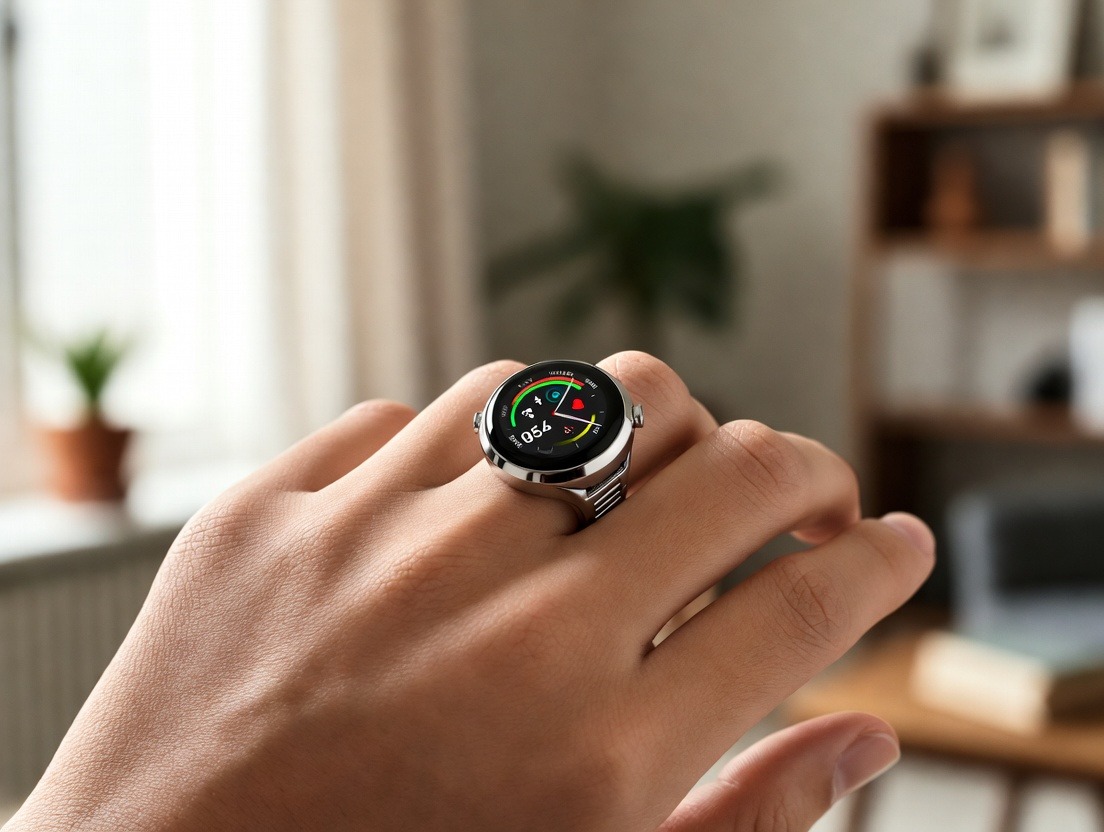
Peering inside a modern wellness ring reveals a breathtaking feat of micro-engineering. This tiny device houses a sophisticated laboratory dedicated to decoding your body's signals. The primary workhorse is the Photoplethysmogram (PPG) sensor. By emitting green and often infrared or red LED light into the skin and measuring the amount of light absorbed by blood vessels, the PPG sensor can detect the subtle, wave-like changes in blood volume with each heartbeat. This raw signal is the foundation for calculating heart rate, heart rate variability, and even blood oxygen saturation (SpO2).
But the best rings don't stop there. A 3-axis accelerometer and gyroscope act as the motion intelligence system. They distinguish between states of activity and rest, detect specific workout types, and—crucially—identify and filter out motion noise from the PPG signal to ensure cardiac data accuracy during movement. For sleep tracking, this motion data helps determine sleep stages (awake, light, deep, REM) by identifying periods of movement and stillness.
A skin temperature sensor adds another vital layer. Your peripheral body temperature follows a circadian rhythm, dipping at night to initiate sleep and rising toward morning. Continuous temperature monitoring provides insights into sleep onset, circadian rhythm regularity, and can even signal the onset of illness or, for women, track ovulation cycles.
All this raw data is meaningless without powerful algorithms. This is where the true magic happens. Onboard and cloud-based artificial intelligence processes the torrent of sensor data, filtering noise, identifying patterns, and translating electrical signals into health insights. It correlates your heart’s activity with your movement and temperature to paint a holistic picture of stress, recovery, and readiness. This seamless integration of hardware and software is what transforms a piece of jewelry into a powerful health guardian, providing the feedback necessary to design a restful living evening ritual that prepares you for sleep.
At its most basic, heart rate (HR) is the number of times your heart beats per minute (BPM). But when monitored continuously and contextually by a wellness ring, it transforms from a simple vital sign into a dynamic storyteller.
Your heart rate exists across a spectrum of states:
The context provided by a wellness ring is what makes heart rate data transformative. The ring knows when you're sleeping, exercising, or sitting at your desk. It can therefore tell you if an elevated heart rate is due to a vigorous workout (positive stress) or a stressful work meeting (negative stress). This contextual awareness allows for the calculation of more advanced metrics like Heart Rate Recovery (HRR)—how many beats your heart drops in the first minute after exercise. A faster recovery is a sign of good fitness and autonomic nervous system health.
By tracking these patterns over time, you begin to see your unique physiological fingerprint. You can identify what “normal” looks like for you, making it easier to spot meaningful deviations that may signal overtraining, impending illness, or chronic stress that needs addressing through simple daily habits for deeper calm.

While heart rate counts the beats, Heart Rate Variability (HRV) measures the timing between them. This is typically measured as the Root Mean Square of Successive Differences (RMSSD), expressed in milliseconds. If your heart beats at 60 BPM, it is not beating exactly once per second. The intervals might be 0.95 seconds, then 1.05 seconds, then 0.98 seconds. This variability is gold.
HRV is the single best non-invasive window into your autonomic nervous system's balance. A higher HRV indicates a heart that is responsive and adaptable, effortlessly modulated by the breathing-centric parasympathetic system. It’s a sign of resilience. A lower HRV suggests a heart under more rigid, sympathetic control—a system stuck in a state of high alert.
It is critical to understand that HRV is a highly personal metric. Comparing your raw HRV number to someone else’s is meaningless. A value of 45 ms might be excellent for one person and low for another. Age, genetics, fitness level, and even gender influence baseline HRV. Therefore, the paramount importance lies in tracking your own trends over time.
Your wellness ring excels here. By taking consistent, preferably morning, measurements (often a short, 2-5 minute reading while you’re still in bed), it establishes your personal baseline. The real insights come from observing deviations from this baseline. A sustained dip in your HRV trendline is your body’s early warning system. It could be telling you:
Conversely, a rising or stable high HRV trend suggests you are well-recovered, managing stress effectively, and making positive lifestyle choices. It’s the ultimate biofeedback tool, providing an objective measure of whether your pursuit of health is actually working, guiding you toward the restful living mindset of shifting from doing to being.
The night is not a blank space in your data; it is the most critical chapter. It’s when your body executes its most profound repair, consolidation, and reset. A wellness ring, worn continuously, provides an unparalleled view of this nocturnal landscape.
Key sleep metrics illuminated by a ring include:
The interplay between sleep and daytime HRV is a continuous feedback loop. High-quality sleep with sufficient deep and REM stages leads to a higher morning HRV, signaling good recovery. That high HRV, in turn, sets you up for better stress resilience, cognitive function, and emotional regulation the following day, which then promotes better sleep the next night. A breakdown in this cycle is where problems begin.
This is why your Sleep Score—a composite metric generated by most advanced rings—is so valuable. It distills complex sleep data into a simple, actionable number. But to truly understand that number, you must appreciate the science behind it. A high score isn’t just about hours in bed; it’s about the quality and architecture of those hours. For a deep exploration of what constitutes truly healthy sleep from a research perspective, you can explore the science behind sleep score standards. Tracking this score over weeks and months reveals the impact of lifestyle changes, helping you chart your personal sleep score journey of improvement.
Raw data—heart rate, HRV, temperature, sleep—is overwhelming. The genius of modern wellness platforms is their ability to synthesize this multi-dimensional data into a single, user-friendly metric: often called a Readiness Score, Recovery Score, or Body Battery. This score is your daily guide, a personalized recommendation on how hard to push or how much to rest.
The calculation is a sophisticated algorithm that weights various biomarkers based on their importance to overall recovery. While each brand has its proprietary formula, they generally incorporate:
The resulting score (often on a scale of 1-100) comes with interpretive guidance. A high score (e.g., 85+) suggests you are well-recovered, resilient, and primed for intense training or demanding cognitive work. A moderate score suggests a steady-state day—proceed with normal activity but maybe skip the high-intensity interval training. A low score is a clear signal from your body to prioritize rest, gentle movement like walking or yoga, hydration, and stress management.
This transforms the user from a passive data observer into an active participant in their health. Instead of guessing if you’re tired or just lazy, you have an objective measure of your physiological readiness. It teaches you to listen to your body’s subtle whispers before they become screams, embodying the core principle of the restful living philosophy: less hustle, more health.

While heart metrics get most of the attention, the continuous skin temperature sensor in a wellness ring is a silent sentinel, detecting shifts that other sensors might miss. It’s not measuring core body temperature like a medical thermometer, but the temperature at your finger. This peripheral temperature is a dynamic signal influenced by your circadian rhythm, environment, blood flow, and metabolism.
The primary application is circadian rhythm tracking. Your body temperature follows a predictable 24-hour cycle, controlled by your internal clock (suprachiasmatic nucleus). It typically peaks in the late afternoon and reaches its nadir in the middle of the night, around 4 a.m. This drop in core temperature, reflected at the skin, is a key signal that initiates sleep. A wellness ring can track the timing and amplitude of this dip, providing insight into the regularity of your circadian rhythm. Shift work, late-night screen time, or inconsistent bedtimes can disrupt this rhythm, and the temperature graph will show it.
Another critical use is ovulation tracking for women. Following ovulation, the hormone progesterone causes a sustained rise in basal body temperature (BBT). A ring’s continuous monitoring is far more reliable than a single morning oral temperature reading, as it captures the true nocturnal baseline. This makes it a powerful tool for women monitoring their cycles for family planning or simply understanding their hormonal health.
Perhaps most importantly, a sustained elevation in your nighttime temperature trend can be an early, pre-symptomatic indicator that your body is fighting something—a virus, an infection, or an inflammatory response. Seeing this trend, especially when correlated with a dip in HRV, can be your cue to double down on rest, hydration, and self-care, potentially mitigating the full force of an illness. It’s a prime example of how this technology supports proactive, rather than reactive, health—a key tenet of creating a lifestyle that prevents chronic stress and burnout, which you can learn more about in our guide to reducing chronic stress.
The ultimate power of a wellness ring is that it turns your life into a personal biohacking laboratory. It moves you beyond generic health advice to personalized, data-driven experimentation. You can finally answer questions like: “Does my 8 a.m. coffee really affect my sleep?” or “Is my evening yoga practice making a measurable difference?”
This process, often called n-of-1 testing, involves making a single, intentional change and observing its impact on your core biomarkers over days and weeks.
Example Experiments:
The key is to change only one variable at a time and give it at least a week to manifest in your data. Your ring provides the objective feedback, removing guesswork and placebo effect. It validates positive changes and highlights detrimental habits you might have been blind to. This scientific approach to self-care empowers you to build a lifestyle uniquely suited to your physiology, helping you balance productivity with truly restful living.
With great data comes great responsibility. The wealth of information from a wellness ring can lead to analysis paralysis, anxiety, or misinterpretation. Avoiding these pitfalls is crucial for a healthy relationship with the technology.
The goal is to use the ring as a compassionate guide, not a punitive judge. It’s there to educate and empower, not to foster health anxiety. By understanding these common mistakes, you can leverage the technology to support a sustainable, intuitive, and restful living approach that transforms your energy without creating new stressors.
Owning a sophisticated wellness ring is just the first step. The true transformation begins when its insights seamlessly integrate into the fabric of your daily decisions, moving you from passive observation to active co-creation of your health. This integration is less about rigid rule-following and more about cultivating a responsive, informed relationship with your body’s signals.
Start with the morning ritual. Instead of reaching for your phone to scroll, take the first minute upon waking to check your recovery score and key metrics in the app. This isn’t about judgment; it’s about setting an intention for the day. A high score might affirm your plan for an intense workout. A low score is a gentle invitation from your body to prioritize rest—perhaps swapping the spin class for a walk in nature, which is a powerful, research-backed method for how nature supports restful living. This simple daily check-in fosters a mindset of listening, a cornerstone of the restful living mindset of shifting from doing to being.
Throughout the day, use the ring’s silent monitoring to your advantage. Many rings offer daytime stress or "body battery" tracking, which uses heart rate variability and activity to estimate your nervous system load. When you see a notification of sustained stress, don’t dismiss it. See it as a cue for a two-minute "micro-recovery" break: step away from your desk, practice a few rounds of box breathing, or simply gaze out a window. These intentional pauses, woven into a busy schedule, are the essence of sustainable performance, preventing the drain that leads to burnout. For structured guidance, our blog details micro-recovery strategies for busy professionals.
Evening integration is perhaps the most powerful. Your ring’s data from the previous night provides the perfect feedback loop to design a wind-down routine that actually works for you. If your data shows poor sleep latency, you have objective evidence to commit to a digital curfew. If your sleep temperature is elevated, you might lower the thermostat or take a warm bath earlier to facilitate the core temperature drop needed for sleep. By aligning your evening habits with your physiological data, you create a powerful, personalized restful living evening ritual that prepares you for sleep. The ring turns abstract sleep hygiene advice into a tangible, results-driven practice.
For the dedicated athlete or fitness enthusiast, the wellness ring transitions from a health monitor to an essential piece of training equipment. It provides the missing data link between workout exertion and physiological recovery, offering a precise, individualized method to optimize performance while guarding against the cardinal sin of training: overtraining syndrome.
The principle is known as stress-recovery-adaptation. You apply a training stress (workout), your body recovers, and—if recovery is sufficient—it adapts by becoming stronger, faster, or more resilient. If recovery is inadequate, you enter a state of overreaching, which can quickly spiral into overtraining, characterized by performance plateaus, persistent fatigue, mood disturbances, and increased injury risk. Traditional training plans, based on generic schedules or how you "feel," are notoriously bad at identifying this line.
This is where HRV and readiness scores become game-changing. Here’s how an athlete can apply the data:
The ring also captures the often-neglected non-exercise stressors that impact an athlete’s capacity: work deadlines, poor sleep, travel, and emotional stress. By quantifying their impact on your readiness, you learn to view your total life stress as part of your training load. This holistic approach is the future of intelligent athletic training, ensuring that your pursuit of physical excellence enhances, rather than degrades, your overall well-being.
Our culture often vilifies stress, but not all stress is created equal. The human body is designed to handle acute, manageable stressors—they are the stimulus for growth, adaptation, and learning. The problem lies in chronic, unrelenting stress. Your wellness ring, through the lens of HRV and heart rate patterns, provides the critical tool to differentiate between the two.
Good Stress (Eustress) is acute, purposeful, and followed by adequate recovery. It’s the stress of a challenging workout, a stimulating project with a clear deadline, or a thrilling experience. Physiologically, this manifests as a temporary, sharp increase in heart rate and a decrease in HRV during the event, followed by a swift and complete rebound. Your nervous system is like a rubber band: it stretches powerfully and then snaps back to its resting state. Your ring will show this healthy pattern: a spike in activity heart rate and a dip in HRV during your workout, followed by a strong recovery curve and a normalized or even elevated HRV by the next morning, indicating successful adaptation.
Bad Stress (Distress) is chronic, pervasive, and lacks a recovery phase. It’s the stress of a toxic work environment, financial anxiety, or unresolved relationship conflict. This type of stress keeps your sympathetic nervous system in a constant state of low-grade activation. The physiological signature is more insidious: a resting heart rate that trends upward over weeks, a baseline HRV that trends downward, and a failure to achieve deep, restorative sleep. Your nervous system rubber band is held in a perpetually stretched state, losing its elasticity. The ring’s longitudinal data makes this distress visible long before it manifests as burnout or illness.
The power of this distinction is profound. It allows you to reframe your relationship with stress. You can consciously seek out and embrace short-term, productive stressors (like a new fitness class or a public speaking opportunity) because you have the tools to ensure you recover from them. Simultaneously, you can identify and mitigate sources of chronic distress. Seeing a sustained dip in your metrics can be the objective proof you need to initiate a difficult conversation, set a firmer boundary, or seek support. The ring’s data helps you become an architect of your stress landscape, designing a life with purposeful challenges and deep, intentional recovery, actively working to reduce chronic stress and prevent burnout.
The adage "you are what you eat" takes on a new, quantifiable dimension when you pair your dietary choices with continuous biometric monitoring. While wellness rings are not medical diagnostic tools, they are exceptional biofeedback devices for discovering how different foods and eating patterns influence your physiology, particularly your recovery and inflammation levels.
The process is one of structured observation. The ring’s sensors, especially skin temperature and heart rate variability, are sensitive to systemic inflammation, digestive load, and circadian rhythm disruption—all of which are impacted by food.
Key Patterns to Investigate:
By logging your meals and observing the subsequent 12-36 hours of biometric data, you move beyond fad diets and blanket rules. You become a detective of your own metabolism, learning which foods fuel your energy and recovery and which ones detract from it, paving the way for a truly personalized nutrition strategy that supports total body recovery.
Your body isn’t designed to run at a constant pace 24/7. It thrives on rhythm—the most powerful of which is the 24-hour circadian cycle that governs everything from hormone release and cell repair to cognition and mood. Disruption of this rhythm (through shift work, jet lag, or modern habits like late-night screen use) is linked to a staggering array of health issues. Your wellness ring, with its continuous temperature and activity monitoring, is a powerful tool for assessing and resynchronizing your circadian health.
The most reliable circadian biomarker the ring tracks is skin temperature rhythm. As discussed, your body temperature follows a distinct wave: it’s lowest in the pre-dawn hours, begins to rise upon waking, peaks in the late afternoon, and falls again in the evening to initiate sleep. A healthy, robust rhythm shows a clear, smooth wave. A disrupted rhythm appears flat, erratic, or phase-shifted (e.g., the lowest point occurs at noon instead of 4 a.m.).
Using Ring Data to Hack Your Circadian Rhythm:
By aligning your daily habits—light, food, activity, and sleep—with your innate circadian biology, you work with your body, not against it. This alignment reduces physiological stress, improves metabolic health, and enhances overall vitality, creating a foundation for effortless restful living that starts your day right.
The implications of widespread, continuous biometric monitoring extend far beyond personal optimization. When aggregated and anonymized, this rich, longitudinal data holds the potential to revolutionize our approach to public health and proactive medicine. Wellness rings represent a leap from episodic, symptom-driven healthcare to continuous, prevention-focused health stewardship.
Imagine a future where:
Of course, this future hinges on rigorous privacy safeguards, ethical data use, and the critical understanding that these devices are screening and guidance tools, not diagnostic instruments. They empower individuals with knowledge and provide healthcare professionals with a continuous data stream, fostering a collaborative model of care. This shift from reactive treatment to proactive, data-informed wellness is the ultimate promise of the technology, encouraging a societal move towards the restful living philosophy of less hustle, more health.
With several compelling options now on the market, selecting the right wellness ring is a personal decision that hinges on your specific goals, lifestyle, and aesthetic preferences. While all major players track core metrics (HRV, RHR, sleep, activity), key differences in sensor technology, battery life, app intelligence, and design can sway your choice.
Critical Factors to Consider:
Ultimately, the best ring is the one you’ll wear consistently, whose data you trust, and whose insights you’ll actually use to make positive changes. It should feel less like a gadget and more like a seamless extension of your commitment to understanding yourself.
As we invite these intimate data-gathering devices onto our bodies, we must engage in a conscious conversation about the ethics of biometric surveillance. The data collected by a wellness ring—your sleep patterns, stress levels, menstrual cycle, location during activity—is incredibly sensitive. Who owns this data? How is it stored, secured, and used? Can it be sold to third parties, such as insurers or employers? These are not hypothetical questions; they are essential considerations for any informed consumer.
Key Questions to Ask a Manufacturer:
Beyond corporate ethics, there is a personal ethical dimension: the risk of quantified-self anxiety. The pursuit of optimal metrics can become a source of stress in itself, a condition sometimes called "orthosomnia" (an unhealthy preoccupation with perfect sleep data). It’s crucial to maintain perspective. The numbers are guides, not gospel. They are meant to serve your well-being, not become its master. Regularly ask yourself: Is this data empowering me or making me anxious? Am I using it to build better habits, or am I obsessing over every fluctuation?
The goal is to use technology to foster a deeper, more intuitive connection with your body, not to replace your internal sense of feeling with external validation from an algorithm. This balanced approach is the heart of sustainable, restful living in a fast-paced world.
The final and most important stage of the wellness ring journey is the transcendence from tracking to true transformation. The ring is not the destination; it is the compass. The destination is a life lived with more energy, resilience, and presence. This requires moving beyond the novelty of data and embedding the learned principles into your identity.
This transformation follows a natural progression:
At this point, the ring has done its most profound work: it has re-educated your perception. You now interpret a low recovery score not as a failure, but as valuable information prompting self-care. You view a poor night’s sleep not as a ruined day, but as a reason to prioritize gentle restoration. This is the essence of building a lifestyle that doesn’t just avoid illness but actively cultivates vitality. It’s about creating an environment and rhythm that supports your biology, which you can explore further in our guide to designing restful living spaces for calm and restoration.
The journey with a wellness ring is, therefore, a journey back to yourself. It provides the external feedback loop needed to relearn your body’s innate language of need and recovery. In a world that glorifies constant output, it becomes a personal advocate for the essential, restorative pause—the very foundation of a long, healthy, and vibrant life.
To truly trust the data on your finger, it helps to understand the sophisticated science happening beneath the surface. The journey from a pulse of light to a meaningful "Readiness Score" is a multi-stage process of signal acquisition, noise filtration, and algorithmic interpretation. It begins with the Photoplethysmogram (PPG). The green LEDs shine into the capillary-rich tissue of your finger. With each heartbeat, a surge of oxygenated blood temporarily increases light absorption. The photodetector measures the resultant dips in reflected light, creating a waveform—the PPG signal. This waveform's peak-to-peak intervals are the raw material for calculating heart rate and, most importantly, the time between beats (the inter-beat intervals, or IBIs) needed for HRV.
But the body is a noisy environment. Finger movement, changes in grip pressure, and even ambient temperature can distort the PPG signal. This is where the inertial measurement unit (IMU), the accelerometer and gyroscope, comes in. It acts as a noise-canceling headset for your heart data. By simultaneously recording motion, advanced algorithms can identify and subtract motion artifacts from the PPG signal in real time. This is why a good ring can provide valid heart rate data during activities like typing or walking, where a wrist-based optical sensor might struggle.
Once a clean IBI stream is secured, the calculation of HRV begins. While there are many methods (Time Domain, Frequency Domain, Non-Linear), the most common in consumer wearables is the Root Mean Square of Successive Differences (RMSSD). It is calculated by taking each interval between beats, finding the difference between successive intervals, squaring those differences, averaging them, and then taking the square root. The result is expressed in milliseconds. RMSSD is favored because it is less affected by breathing patterns than other measures and is a robust indicator of parasympathetic (rest-and-digest) activity. Higher RMSSD = greater parasympathetic tone and, typically, better recovery.
This raw HRV number is then contextualized. It is compared against your personal rolling baseline (usually a 3-4 week average) to determine if it is high, low, or normal for you. This normalized HRV, combined with processed data from temperature (checked for circadian alignment), sleep (scored for quality and architecture), and previous day's activity, is fed into the proprietary Readiness Algorithm. This algorithm doesn't just average scores; it uses machine learning models trained on vast physiological datasets to weight each input based on its predictive power for your current physiological state. The final output—your simple, daily score—is thus the tip of a vast iceberg of continuous measurement and complex computation, all dedicated to answering one question: "Is my body ready for what today demands?"
For women, whose physiology follows a complex, multi-phase hormonal rhythm, the continuous monitoring of a wellness ring is particularly transformative. It moves women's health tracking beyond calendars and guesswork into the realm of objective, cycle-aware biofeedback. The key lies in the synergy of three metrics: resting heart rate (RHR), heart rate variability (HRV), and skin temperature.
Across a typical 28-day menstrual cycle, these biomarkers tell a clear story. In the follicular phase (post-menstruation to ovulation), estrogen rises. This often correlates with a lower RHR and a higher, more stable HRV—reflecting a physiological state of increased energy, resilience, and stress tolerance. Many women report feeling stronger and more sociable during this phase, and the data validates this subjective experience.
Around ovulation, there is frequently a distinct, subtle dip in RHR and a corresponding spike in HRV, followed by a rapid reversal. This pattern, visible in the app's trendlines, can serve as a secondary confirmation of ovulation alongside the primary sign: the biphasic temperature shift. After ovulation, the hormone progesterone rises, causing a sustained increase in basal body temperature (BBT) of about 0.3-1.0°F throughout the luteal phase. A wellness ring’s continuous nocturnal temperature tracking captures this shift with unparalleled ease and accuracy compared to a single morning oral reading.
The luteal phase is also where many women notice the impact of premenstrual symptoms. Progesterone can increase sympathetic nervous system activity, which may manifest in the data as a gradual rise in RHR, a decrease in HRV, and more fragmented sleep in the days leading up to menstruation. Seeing this pattern objectively can be empowering. It reframes difficult symptoms from being "in your head" to being a measurable, hormonally-driven physiological state. This awareness allows for proactive self-care: scheduling demanding tasks during the follicular phase, prioritizing stress-reduction and restful living habits in the luteal phase, and understanding that a temporary dip in recovery metrics is normal and cyclical, not a personal failing.
For women in perimenopause or menopause, the ring provides crucial insight into a period of great hormonal fluctuation. Erratic temperature graphs can visualize night sweats and vasomotor instability. Tracking HRV and sleep can help differentiate between symptoms caused by hormonal shifts versus other lifestyle stressors, guiding more effective interventions with healthcare providers. In all life stages, this data turns the female cycle from a mystery into a manageable rhythm, fostering a deeper, more compassionate understanding of the body's innate intelligence.
The link between our emotional state and our physical heart is not merely poetic; it is electrophysiological. The same autonomic nervous system that governs your heart's rhythm is directly influenced by your thoughts, emotions, and breath. This makes HRV a powerful, real-time mirror of your emotional landscape and a trainable pathway to greater resilience.
Chronic anxiety, rumination, and anger are associated with sympathetic dominance, which suppresses HRV. Your heart rhythm becomes more rigid, reflecting a state of defensive alert. Conversely, emotions like gratitude, contentment, and compassion are linked to parasympathetic activation, which promotes higher, more variable HRV—a state of social engagement and calm connection. Your wellness ring can make this invisible connection visible. You might notice a tangible dip in your live HRV reading during a stressful work call or a difficult conversation. Seeing this can be the cue to employ a regulation technique.
This is where HRV biofeedback comes in. It's a conscious practice of using breath to influence the nervous system. Slow, diaphragmatic breathing at a rate of 4.5 to 6.5 breaths per minute (often called resonant frequency breathing) synchronizes your heart rate with your breathing cycle—a phenomenon known as respiratory sinus arrhythmia. As you inhale, your heart rate slightly accelerates; as you exhale, it decelerates. This creates a smooth, wave-like pattern in your heart rhythm that maximizes HRV.
Many wellness ring apps now include guided breathing sessions that display your real-time HRV on screen. As you follow the pacer, you can literally watch your HRV number rise, providing immediate positive reinforcement. This trains your brain to associate controlled breathing with a state of physiological calm. Over time, this practice strengthens the "vagal tone"—the activity of the primary parasympathetic nerve—making you more resilient to stress. You learn to down-regulate your nervous system on demand, turning the ring into a tool for emotional mastery. This practice is a cornerstone of building a life that isn't just productive, but peaceful, helping to cultivate the essential restful living mindset.
Your nightly "Sleep Score" is a useful summary, but the true gold lies in the architectural details. A wellness ring uses the combination of heart rate, HRV, and movement to provide an educated estimate of your sleep stages: Wake, Light Sleep, Deep Sleep, and REM (Rapid Eye Movement) Sleep. Understanding each stage's purpose transforms your data from a report card into a repair log.
A healthy sleep cycle progresses through these stages in roughly 90-minute waves, with deep sleep dominating the first half of the night and REM periods lengthening toward morning. Your ring’s hypnogram (sleep stage graph) shows this architecture. Red flags include: very low deep sleep (suggesting poor recovery or sleep disruption), low REM (linked to stress and certain medications), or frequent, prolonged awakenings. By correlating lifestyle factors with these architectural details—like seeing how alcohol suppresses REM or how consistent bedtimes increase deep sleep—you gain precise levers to pull for better, more restorative rest.
Our physiology does not exist in a vacuum. It is in constant dialogue with our environment. A wellness ring, through its sensitive tracking of sleep, temperature, and stress, can become a diagnostic tool for your personal spaces, guiding you to create surroundings that actively support your well-being.
The Bedroom as a Recovery Chamber: This is the most critical environment. Your ring’s sleep and recovery data provide direct feedback on its quality.
The Workday Environment: Daytime stress metrics can illuminate problems with your workspace. If your "stress" readings are consistently high during work hours, consider: Is your chair uncomfortable (causing physical tension)? Is the lighting harsh fluorescent? Is there constant background noise? The ring’s data can motivate ergonomic improvements, the use of natural light or full-spectrum lamps, and the introduction of noise-canceling headphones. By treating your environment as a variable in your wellness experiment, you use technology to craft a world that nurtures, rather than depletes, your vital energy.
The real power of continuous monitoring is not in the daily snapshot, but in the panoramic view. By examining your data over months and years, you move from reactive adjustments to profound life insight. This longitudinal analysis can reveal slow-moving trends that are invisible in the weekly grind, telling the story of your overall health trajectory.
Key Trendlines to Watch Over 6+ Months:
This long-view perspective is the ultimate gift of the technology. It provides undeniable evidence of progress, motivates long-term adherence to healthy habits, and serves as an early-warning system for subtle declines. It transforms the ring from a fitness gadget into a lifelong health companion.
With such profound capabilities, it is imperative to understand the boundaries of this technology. A wellness ring is a revolutionary guide, but it is not a medical device. Recognizing its limitations is crucial for using it safely, effectively, and without unnecessary anxiety.
It Provides Trends, Not Diagnoses: A ring can tell you your heart rate is elevated or your HRV is low. It cannot tell you why. It cannot diagnose atrial fibrillation, sleep apnea, hypothyroidism, or clinical depression. While its patterns may suggest you consult a doctor, it cannot replace a medical professional’s expertise, diagnostic tests, and clinical context. Relying on it for diagnosis is dangerous.
Accuracy Has Constraints: While excellent for trends and relative changes, the absolute accuracy of optical PPG sensors, especially for HRV, is not equivalent to a medical-grade electrocardiogram (ECG). Factors like extremely cold fingers, poor fit, tattoos, or very dark skin pigmentation can occasionally degrade signal quality. The data is incredibly valuable for personal tracking, but it should not be used for making critical medical decisions.
It Measures Physiology, Not Psychology: The ring quantifies stress through physiological arousal (increased heart rate, decreased HRV). It cannot distinguish between the stress of an exciting first date and the stress of a traffic jam. It also cannot measure purely cognitive or emotional states that don't manifest in strong autonomic signals. You remain the expert on your subjective experience.
The Risk of Data Narcissism: There is a danger in becoming so focused on optimizing your own biomarkers that you disconnect from the present moment, from joy, and from spontaneity. Sometimes, staying up late laughing with friends is more important for your holistic well-being than protecting your sleep score. The data should serve your life, not the other way around.
Embracing these limits is a sign of sophisticated use. The ring is a partner in health, offering unparalleled insight into your body's responses. But you are the CEO of your well-being, integrating its data with your own wisdom, professional medical advice, and the understanding that health is a multidimensional state that includes connection, purpose, and joy—elements no sensor can quantify.
A wellness ring is not an island. Its data becomes exponentially more powerful when integrated with other digital health tools, creating a cohesive, holistic health ecosystem that paints a complete picture of your lifestyle. This interoperability is the future of personalized wellness.
Fitness Apps & Wearables: Syncing your ring with platforms like Strava, Apple Health, Google Fit, or Whoop allows for a unified activity view. Your ring provides the physiological readiness and recovery data, while a dedicated GPS watch or fitness tracker provides detailed workout metrics (pace, power, route). Combined, they answer: "Given my recovery state, how did my body actually perform today, and how much strain did that create for tomorrow?"
Nutrition & Hydration Trackers: Apps like MyFitnessPal, Cronometer, or even a simple water-tracking app can provide the "input" data to correlate with your ring's "output" biometrics. By reviewing logs together, you can definitively see how a high-sodium day affects your nocturnal heart rate or how hitting your protein goal supports next-day recovery after strength training.
Mindfulness & Meditation Apps: Connecting with apps like Calm, Headspace, or Insight Timer allows you to log your meditation sessions and then observe their direct impact on your HRV trends and sleep scores over time. This creates a powerful feedback loop that reinforces the value of your mental training.
Smart Home Integration: The frontier of environmental optimization. Imagine a future where your ring's rising nocturnal temperature triggers your smart thermostat to cool the bedroom, or where your ring detecting prolonged stress at your desk signals smart lights to gradually shift to a calming hue. This passive, responsive integration creates a world that adapts to support your well-being in real time.
By consciously building this ecosystem, you move from scattered data points to a coherent narrative. You close the loop between lifestyle choices (what you eat, how you move, how you rest) and physiological outcomes (how you recover, how you perform). This integrated approach is the epitome of modern, proactive self-care, leveraging technology not as a distraction, but as a symphony of tools conducting your overall vitality.
Human beings are motivated by connection and shared purpose. The rise of wellness rings has given birth to a new form of community: data-informed groups focused on collective improvement. Whether through brand-specific leaderboards, private groups of friends, or online communities, sharing aspects of this journey amplifies accountability, provides support, and accelerates learning.
Friendly Competition & Accountability: Many ring apps include optional, anonymized group challenges focused on consistency—like sleep duration or activity goals. Seeing friends' commitment can provide that extra nudge to stick to your bedtime or get out for a walk. This transforms healthy behavior from a private chore into a shared, gamified experience.
Normalization and Support: In private groups, sharing weekly trend graphs (with personal details removed) can be incredibly reassuring. Seeing that others also experience a cyclical HRV drop during stressful periods or have similar sleep architecture can reduce anxiety and "data shame." It normalizes the fluctuations, reinforcing that you're not broken, you're human. For parents, connecting with others using rings to navigate sleep deprivation can be a source of practical tips and much-needed empathy, a digital form of finding peace in the chaos.
Crowdsourced Wisdom: Communities become repositories of lived experience. Members share experiments: "I tried magnesium glycinate and here's my deep sleep change over 30 days," or "This specific breathing exercise raised my real-time HRV by 15 points." This crowdsourced biohacking accelerates everyone's learning curve far beyond what any individual could discover alone.
However, this comes with a critical caveat: comparison must be managed. Community is for shared learning and support, not for comparing raw scores. A reminder that baselines are personal must be central. Used wisely, this community aspect adds a rich, human layer of motivation and insight to the solitary act of self-tracking, making the journey toward better health a shared, and therefore more sustainable, endeavor.
The current generation of wellness rings is impressive, but it represents only the beginning. Research labs and tech companies are pushing the boundaries of what's possible from a form factor worn on the finger. The next 5-10 years promise innovations that will further blur the line between consumer wellness and clinical monitoring.
Non-Invasive Blood Glucose Monitoring: This is the holy grail of wearable tech. Several companies are developing spectroscopic sensors that use multiple wavelengths of light to attempt to estimate glucose levels through the skin. Success would be transformative for metabolic health tracking, fitness optimization, and diabetes management.
Continuous Blood Pressure Monitoring: Advanced PPG analysis, sometimes coupled with bioimpedance sensors, is being researched to derive pulse wave velocity—a proxy for blood pressure. A ring that could track blood pressure trends passively throughout the day and night would provide unprecedented insight into cardiovascular health.
Advanced Metabolic Markers: Through sophisticated analysis of the PPG signal and other sensors, future rings may provide estimates of metrics like lactate threshold during exercise, or even basic electrolyte balance, offering direct fueling and hydration guidance.
Enhanced Stress & Emotional AI: By combining HRV, EDA (electrodermal activity for sweat), temperature, and voice analysis (via connected mics), future devices may offer more nuanced interpretations of stress type and even emotional valence, suggesting tailored interventions.
Deeper Reproductive & Hormonal Health: For women, future sensors may track additional biomarkers to provide even more detailed insights into cycle phases, fertility windows, and menopausal transition states, integrating seamlessly with reproductive health care.
True Medical Device Certification: As sensor accuracy improves, we will likely see the first rings that receive regulatory approval (like FDA clearance) for specific medical purposes, such as atrial fibrillation detection or sleep apnea screening, prescribed by doctors and covered by insurance.
These advancements will bring new layers of responsibility regarding data privacy and interpretation. Yet, they point toward a future where proactive, personalized, and preventative health management is seamlessly integrated into our daily lives, all guided by a silent, intelligent companion on your finger.
We have journeyed from the fundamental biology of the heartbeat to the frontier of wearable technology, exploring how a wellness ring deciphers the complex language of your autonomic nervous system. The through line is empowerment. This technology demystifies the inner workings of your body, replacing guesswork with knowledge and generic advice with personalized insight.
You now understand that HRV is not just a number, but a conversation with your nervous system. You see how sleep architecture is the blueprint for repair, and how your daily choices—from the timing of your meals to the quality of your light exposure—write that blueprint each night. You are equipped to use this tool not as a source of anxiety, but as a compass for a more balanced, resilient, and intentional life.
The ultimate goal is not a perfect sleep score every night or an ever-rising HRV. It is sustainable vitality. It is having the energy for what matters, the resilience to handle life's inevitable stresses, and the wisdom to give your body the rest it needs to thrive. Your wellness ring is the guide on this path, providing the feedback to help you balance productivity with restful living, to design environments that calm you, and to cultivate daily habits that transform your energy.
The journey continues in the next portion of this guide, where we will delve into advanced applications: using your ring data to navigate specific life stages, manage chronic conditions, optimize cognitive performance, and build a legacy of health that extends well beyond the data on your screen. The path to mastering your well-being is now at your fingertips.
Your Trusted Sleep Advocate: Sleep Foundation — https://www.sleepfoundation.org
Discover a digital archive of scholarly articles: NIH — https://www.ncbi.nlm.nih.gov/
39 million citations for biomedical literature :PubMed — https://pubmed.ncbi.nlm.nih.gov/
Experts at Harvard Health Publishing covering a variety of health topics — https://www.health.harvard.edu/blog/
Every life deserves world class care :Cleveland Clinic - https://my.clevelandclinic.org/health
Wearable technology and the future of predictive health monitoring :MIT Technology Review — https://www.technologyreview.com/
Dedicated to the well-being of all people and guided by science :World Health Organization — https://www.who.int/news-room/
Psychological science and knowledge to benefit society and improve lives. :APA — https://www.apa.org/monitor/
Cutting-edge insights on human longevity and peak performance:
Lifespan Research — https://www.lifespan.io/
Global authority on exercise physiology, sports performance, and human recovery:
American College of Sports Medicine — https://www.acsm.org/
Neuroscience-driven guidance for better focus, sleep, and mental clarity:
Stanford Human Performance Lab — https://humanperformance.stanford.edu/
Evidence-based psychology and mind–body wellness resources:
Mayo Clinic — https://www.mayoclinic.org/healthy-lifestyle/
Data-backed research on emotional wellbeing, stress biology, and resilience:
American Institute of Stress — https://www.stress.org/


