


Wellness Ring Basics: Subscription vs One-Time Purchase Models
Compares the pros and cons of devices that require ongoing subscriptions versus those with a single purchase price.
Compares the pros and cons of devices that require ongoing subscriptions versus those with a single purchase price.
%402x.svg)
You slip a sleek, titanium band onto your finger. It’s unobtrusive, almost jewelry-like. Yet, this unassuming ring promises to be the compass for your well-being, tracking the invisible rhythms of your sleep, stress, recovery, and activity. The wellness ring has arrived, shifting health monitoring from our wrists to our fingers and into the fabric of our daily lives. It represents a profound leap in personalized health—a constant, gentle nudge toward a more balanced existence.
But as you proceed to checkout, a critical decision emerges, one that defines your long-term relationship with this powerful technology. Do you pay a single, upfront price and own the ring outright? Or do you enter into a monthly subscription, often with a reduced or even $0 initial hardware cost? This choice is far more than a financial calculation; it’s a decision about value, access, and your personal philosophy on health ownership.
The wellness ring market is rapidly maturing, and with it, a fundamental schism in business models has appeared. On one side, the traditional one-time purchase model, akin to buying a scale or a watch. On the other, the software-as-a-service (SaaS) subscription model, borrowed from the world of apps and streaming, now applied to physical hardware. Each model unlocks different doors, carries different long-term implications, and appeals to different visions of what a wellness device should be.
This article is your essential guide to navigating this modern crossroads. We will dissect the promises and pitfalls of both subscription and one-time purchase models for wellness rings. We’ll move beyond the sticker shock to analyze the total cost of ownership, the evolution of features, data ownership, and how each path aligns with specific wellness journeys. By the end, you’ll possess the clarity to choose not just a ring, but a partnership model that empowers your health for years to come, ensuring the tool on your finger truly serves the life you’re building.
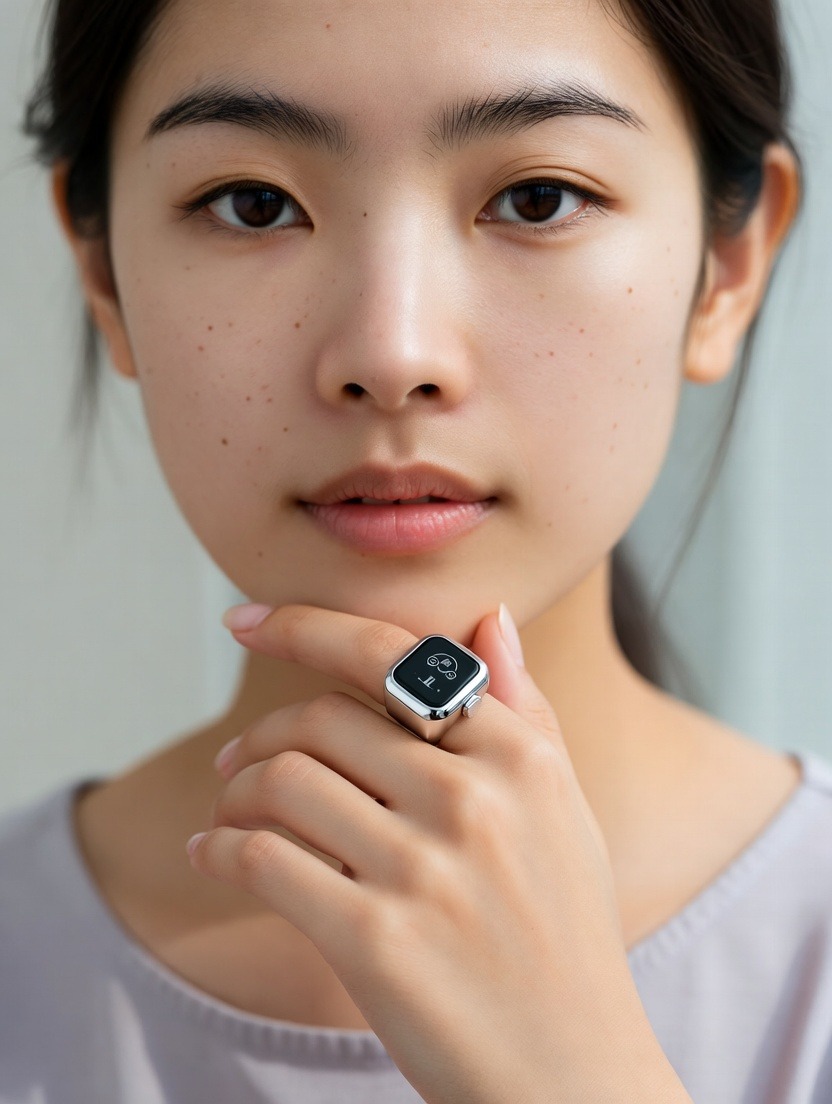
To appreciate the subscription versus ownership debate, we must first understand what we’re actually buying. The modern wellness ring is a masterpiece of miniaturized bio-sensing technology. It is not merely a pedometer for your finger. Its value proposition lies in its ability to provide a continuous, multi-dimensional picture of your autonomic nervous system—the silent operator behind your stress, energy, and recovery.
Unlike a smartwatch that may prioritize notifications and outward-facing functions, a wellness ring is an inward-looking device. Its form factor is intentional: worn on the finger, it has superior access to the vascular bed for more reliable heart rate, Heart Rate Variability (HRV), and blood oxygen (SpO2) readings than most wrist-based devices, especially during sleep. This positional advantage makes it a premier sleep tracking tool, offering insights far beyond simple duration.
The core metrics these rings provide form the pillars of modern biohacking and preventative health:
The magic, however, isn’t just in the raw data collection. It’s in the sophisticated algorithms and software that transform photons of light and electrical impulses into coherent, personalized insights. This software layer—the brain of the operation—is the epicenter of the business model debate. Is this intelligence a one-time feature of the hardware you buy, or is it a continuously evolving service you subscribe to? The answer to that question defines the entire market landscape and your experience within it.
The trajectory of consumer technology is a clear march from ownership to access. We once bought CDs and DVDs; now we subscribe to Spotify and Netflix. We purchased software suites on discs; now we pay monthly for Microsoft 365 and Adobe Creative Cloud. This shift, broadly termed the "subscription economy," is predicated on recurring revenue, continuous updates, and an ongoing relationship with the customer.
The wellness technology space, particularly the advanced biometric tracking segment, is the latest frontier for this model. Early fitness trackers were simple, one-time purchases. Their functionality was static; what you bought on day one was what you had forever. As sensors improved and algorithms became more complex, companies faced a dilemma. Developing cutting-edge software is expensive and continuous. A one-time purchase price must cover not only hardware manufacturing but also years of future software development, server costs for data storage and processing, and customer support—all while competing on an attractive upfront price.
Enter the "Health-as-a-Service" model. Pioneered by companies like Whoop and now embraced by many ring manufacturers, this approach decouples the cost of the hardware from the cost of the ongoing service. The hardware becomes the key that unlocks the service. This allows companies to:
For the consumer, this model transforms the relationship from a transaction into a membership. You are not buying a product; you are subscribing to a wellness insights platform that happens to include a wearable device. The promise is that your ring will get smarter over time, your insights more personalized, and your experience will evolve without needing to buy new hardware every 18 months.
Conversely, the traditional ownership model, upheld by companies like Oura (on its original plan) and others, makes a different promise: pay once, own forever. It appeals to our instinct for tangible property and financial finality. The value proposition is long-term cost certainty and full access. The risk is that the software and insights may stagnate without a recurring revenue stream to fuel their evolution, or that you may be pressured to upgrade hardware more frequently to access new software features.
This fundamental tension—between the dynamic, evolving service and the stable, owned product—sets the stage for every comparison that follows. It’s a choice between viewing your wellness ring as a gateway to an ever-improving health intelligence network, or as a sophisticated, finished tool that you master and rely upon.
Let's delve into the specifics of the subscription model, which is often structured as a tiered system. Typically, you encounter an initial period—maybe 1-6 months—where the core app and basic metrics are included with the hardware purchase. After this trial, to unlock the full suite of advanced insights, personalized guidance, and sometimes even the raw data access, a monthly or annual fee is required.
Common Tiers in Subscription Models:
The Psychology and Value of "The Service":
The subscription isn't just paying for an app. You’re paying for the continuous labor of data scientists and engineers refining algorithms. For example, the sleep score you see today might be updated next year based on new clinical research, making it more accurate. You’re paying for the security of your highly intimate biometric data in the cloud. You’re investing in a platform that can integrate with other health ecosystems (Apple Health, Google Fit, Strava) seamlessly.
The most significant psychological effect is engagement. A subscription service is incentivized to keep you logged in, checking your data, and finding new value. This can be a powerful positive feedback loop for habit formation. The constant drip of new features or insights can make you feel your investment is growing, not depreciating. For those on a dedicated sleep score journey, tracking improvement over months, this evolving platform can feel like a dedicated coach.
Potential Drawbacks:
The most obvious is the perpetual cost. A $20/month fee becomes $240 a year, and $720 over three years—often surpassing the one-time cost of a competitor's ring. There is also the risk of subscription fatigue. In a world crowded with monthly fees for everything, adding "your own body" to that list can feel burdensome or even dystopian to some. Furthermore, if the company fails to innovate or the service quality dips, you face the frustrating choice of paying for stagnation or abandoning your hardware investment. The hardware, without its subscription key, can become a "dumb ring."
The one-time purchase model is conceptually simple: you pay a single, typically higher, upfront price for the wellness ring. This purchase grants you lifetime access to the device, its companion app, and all current and future software updates for that hardware generation. There is no monthly tollgate to access your sleep breakdown or readiness score.
The Philosophy of Ownership:
This model appeals to a sense of autonomy and financial predictability. You have made a capital investment in a health tool, much like buying a quality blood pressure monitor or a set of weights. It is yours. The company’s incentive shifts from retaining you as a monthly subscriber to delighting you enough to recommend the product to others and to consider buying their next-generation hardware in the future. Your relationship is based on product excellence, not recurring billing.
The value proposition is long-term cost savings. While the initial outlay may be $300-$500, the total cost of ownership over 2, 3, or 5 years is fixed and finite. For users who are budget-conscious in the long run or philosophically opposed to subscriptions for core health tools, this is a decisive advantage.
How Companies Sustain This Model:
To fund ongoing software development without a subscription, companies rely on a few strategies:
Potential Drawbacks:
The primary risk is software stagnation. Without a guaranteed revenue stream from the existing user base, the company may be forced to prioritize new features for the latest hardware to drive sales, leaving older devices behind. The pace of innovation in your app may slow. There can also be less direct incentive for the company to engage with you daily through the app, as your monetary value to them has already been captured. For the user, the large upfront cost can be a significant barrier to initial adoption, potentially excluding a segment of the market.

This is where the theoretical models hit practical reality. The tier of features you can access is the most tangible difference between subscription and ownership models.
In a Subscription Model, feature access is dynamic and often used as the primary lever for the subscription's value. The company can:
The software updates in this model are frequent and substantial, as they are the lifeblood of the service. Your ring’s capabilities can meaningfully expand 12 or 24 months after you bought it, based on software alone.
In a One-Time Purchase Model, feature access is typically universal for your hardware generation. You bought the "complete" insight package. However, software updates can be a double-edged sword:
The user experience diverges here. A subscriber might log in one Tuesday to find a new "Recovery Coach" module powered by AI. An owner might log in and see the same, reliable dashboard they’ve seen for two years—which can be either comforting or disappointing, depending on one's expectations for innovation.
Making a financially sound decision requires looking beyond the price tag or the monthly fee. It requires calculating the Total Cost of Ownership (TCO) over the realistic lifespan of using the device.
Let’s construct a simplified comparative analysis. Assume two hypothetical, high-quality rings with similar hardware capabilities:
TCO Over 2 Years:
TCO Over 5 Years:
The Breakeven Point: In this example, the one-time purchase becomes cheaper than the subscription model almost immediately after the first year. The subscription model only makes financial sense if you replace Ring B every 2 years with a new $450 model.
Hidden & Long-Term Costs:
This analysis clearly favors ownership from a pure cost perspective. However, TCO doesn't measure value. If the subscription service provides exponentially better, life-changing insights that the static software does not, the higher cost may be justified for the user. It becomes an investment in a premium health coaching service, not just a data tool.
When you strap a device to your body that records your pulse, temperature, and sleep 24/7, you generate a biometric data stream of profound intimacy. Who owns this data, and what happens to it if you stop paying or the company changes direction?
The Subscription Model & Data Leverage:
In a subscription model, your ongoing access to your historical data and the insights derived from it is often tied to your active subscription. If you cancel, you may be downgraded to the free tier, losing access to your trend graphs, historical analysis, and personalized reports. Your data may still be stored on the company’s servers, but you cannot interact with it in a meaningful way. This creates a powerful lock-in effect. The fear of losing years of personal health trends can make it very difficult to leave, even if you’re dissatisfied.
From a privacy perspective, subscription-based companies have a continuous relationship with you, which can mean more robust, funded security practices. However, their business model may also incentivize them to anonymize and aggregate user data for research purposes or to sell insights to academic or corporate partners (always stated in their privacy policy). Your data’s utility to them extends beyond your individual fee.
The Ownership Model & Data Portability:
With a one-time purchase, the company has already been paid. There is less financial incentive to lock you in via data captivity. You are more likely to retain full access to your historical data dashboard even if you never give the company another dollar. This fosters a sense of true data ownership.
The privacy consideration is different. The company’s revenue from you is complete, so monetizing aggregated data might become a more important part of their long-term business strategy to support the "free" software updates. It’s crucial to read their data use policy carefully.
A Critical Question for Any Model: Can you export your raw data? The most user-empowering practice, found in some models of both types, is the ability to download your raw heart rate, HRV, temperature, and movement data as CSV files. This allows you to own your data footprint independently and use it with third-party analysis tools, future-proofing your investment regardless of the company’s fate.
Meet Alex. Alex is a dedicated biohacker whose life is a series of optimized experiments. They track macronutrients, use cold plunge therapy, follow a meticulously timed training program, and are always searching for the next 1% improvement in performance and recovery. For Alex, data is the language of progress.
Alignment with the Subscription Model:
For Alex, a subscription-based wellness ring is the obvious choice. Here’s why:
A static device that doesn’t evolve would frustrate Alex. They are not just buying a sensor; they are subscribing to a dedicated R&D team working to decode their biology. The ongoing cost is the price of a premium membership to the most exclusive club: understanding oneself.
Now meet Sam. Sam is a busy project manager, a parent of two, and is generally health-conscious but overwhelmed. Sam doesn’t want to biohack; they want to not burn out. Their goals are practical: sleep better, manage stress, and have enough energy for work and family. They see a wellness ring as a guide to establishing foundational habits, a tool for restful living in a fast-paced world.
Alignment with the One-Time Purchase Model:
Sam’s profile leans strongly toward the ownership model for several key reasons:
For Sam, the ownership model provides a stable, dependable, and financially predictable health anchor in a chaotic life. It’s a set-it-and-forget-it (but still learn-from-it) solution.
This emerging use case involves individuals using wellness ring data under the guidance of a healthcare provider, or clinics using them for remote patient monitoring. This could range from a cardiology patient tracking HRV trends post-surgery to a sleep clinic correlating ring data with journal entries.
Unique Needs & Model Considerations:
This user has specific, high-stakes requirements that don’t perfectly fit either consumer model:
Model Implications:
For clinical applications, the business model becomes secondary to robust data portability, accuracy, and specialized compliance features. The market is still developing formal solutions here, but it highlights how high the stakes can be when biometric data moves from lifestyle to lifeline.
Meet Jordan, a competitive amateur marathoner and strength athlete. For Jordan, training is a calculated science of stress and adaptation. The primary goal is to maximize performance gains while strategically avoiding injury, overtraining, and illness. Rest is not passive; it’s an active component of the training plan. A wellness ring isn't a lifestyle accessory—it's a vital piece of sports equipment.
The Critical Metric: Readiness
For the athlete, the single most important output from a wellness ring is an accurate, actionable Readiness or Recovery Score. This composite metric, typically derived from HRV, RHR, sleep quality, and temperature, tells Jordan whether their body is primed for a hard interval session or desperately needs an easy recovery day. Ignoring this data can lead to weeks of stalled progress or injury.
Subscription vs. Ownership for the Athlete:
This user type sits between the biohacker and the health-conscious professional, with unique demands.
The Verdict for Jordan: The decision hinges on their philosophy. If Jordan is a tech-forward athlete who believes the edge lies in the latest analytics and deep integrations, a vibrant subscription platform is compelling. If Jordan believes in minimalist, proven tools and trusts their own ability to interpret core metrics, an ownership model provides the reliable, unchanging data stream they need.
Our relationship with money is deeply psychological, and the payment model of our wellness tools can subtly—or not so subtly—shape how we use them and the value we derive from them. This is the often-overlooked behavioral economics of the wellness ring.
The Sunk Cost Fallacy & The Upfront Purchase:
When you pay $450 at once, you experience a significant sunk cost. This creates a powerful psychological incentive to use the device consistently to "get your money's worth." You’re motivated to wear it every night, check the app daily, and actively engage with the data to justify the large initial outlay. This can be a fantastic catalyst for habit formation in the first 3-6 months. However, once the habit is solidified or the novelty wears off, the ring might fade into the background as a passive tool. The lack of a recurring financial reminder can lead to decreased engagement over time.
The "Health Tax" & The Recurring Subscription:
A monthly fee acts as a constant, gentle nudge. It transforms the ring from a purchased product into an active service you are renting. This recurring financial touchpoint can drive higher long-term engagement. There’s a subconscious desire to "log in to get my money's worth this month." This model can foster a more consistent, reflective practice. You’re not just wearing a ring; you’re consciously participating in a health membership.
However, this can backfire. The monthly fee can also be perceived as a "health tax" or a "worry subscription." If the user feels pressured to engage out of financial guilt rather than genuine curiosity, it can breed resentment. If they go through a period of low engagement (e.g., a vacation where they don't wear it, or a life event that shifts their focus), seeing the subscription charge can feel like a waste, potentially leading to cancellation.
Accountability & The "Coach in Your Pocket" Effect:
The subscription model expertly leverages the principle of accountability. Because the service is always "on" and evolving, it can feel more like a living coach than a static tool. Push notifications that say, "Your recovery score is high—it's a great day for a challenging workout!" or "Your data suggests you're fighting something—consider rest," carry more weight when they come from a service you're actively funding. This perceived partnership can enhance compliance with the ring’s recommendations.
In contrast, the ownership model can feel more like a personal journal. The accountability is intrinsic. It’s up to you to open the journal, interpret the entries, and act on them. The relationship is more self-directed, which can be empowering for the disciplined user but less motivating for someone who needs external structure.
Ultimately, the "better" model from a behavioral perspective depends entirely on your personality. Are you driven by a large, upfront investment that pushes you to form a habit? Or are you better maintained by a small, recurring commitment that keeps a health partnership top-of-mind?
The long-term journey with a wellness ring is rarely a straight line. Life changes, financial situations shift, and technology improves. The flexibility (or rigidity) of your chosen model to accommodate these changes is a critical practical consideration.
The Subscription Model: Fluid by Design
The Ownership Model: Transactional Shifts
The "Lock-In" vs. "Freedom" Paradox:
It’s a fascinating contradiction. The subscription model offers low-commitment entry but can create high-friction exit due to data lock-in. You can start for "free" but leaving feels costly in terms of lost insights. The ownership model requires a high-commitment entry but offers total exit freedom. You pay a lot to get in, but you can walk away at any time with your data (or a static version of it) intact.
This has profound implications for your sense of control. Do you value the ability to easily try the ecosystem with minimal risk? Or do you value the absolute right to walk away cleanly, owning what you paid for? Your answer to that question may be as important as your analysis of the features themselves.
A modern wellness device is rarely an island. Its value is amplified by the community around it, the quality of support from the company, and its ability to connect with the other digital tools in your life.
Community & Social Features:
Customer Support & Service Expectations:
Ecosystem Integration (Apple Health, Google Fit, Strava, etc.):
This is a crucial differentiator. The ability for your ring to act as a premier biometric sensor for your entire digital health ecosystem is a massive value-add.
The ecosystem you choose extends the ring's utility. For example, if your ring data on how your sleep score reflects total body recovery automatically populates in Apple Health, it can be correlated with mindfulness app usage or nutrition data from another source, creating a holistic picture no single app could provide. The business model that best guarantees this ongoing, seamless integration should be a significant factor in your decision.
Buying a wellness ring is a decision with a multi-year horizon. Unlike a phone you might replace every two years, you likely expect this health tool to last and remain relevant. "Future-proofing" isn't just about hardware durability; it's about ensuring the intelligence of the system doesn't become obsolete.
The Innovation Trajectory:
Hardware Longevity & Planned Obsolescence:
All wearable batteries degrade. After 2-3 years, you may find yourself charging the ring every other day instead of once a week.
The Data Legacy Question:
What happens to your unique, multi-year biometric dataset if the company goes out of business or discontinues the product line?
Ultimately, future-proofing is an exercise in managed expectations. The subscription model promises a constantly evolving service but ties you to a single company's vision. The ownership model promises a stable, reliable tool but accepts that its intelligence may have a finite shelf life. Your choice reflects which type of uncertainty you are more comfortable with.
With all factors explored, how do you, as an individual, make the final call? It’s not about which model is objectively "better"—it’s about which is better for you. Let’s move from analysis to action with a personalized decision framework.
Step 1: Conduct a Personal "Wellness Audit"
Ask yourself these foundational questions:
Step 2: Score Your Priorities
Rate the following factors from 1 (Not Important) to 5 (Extremely Important):
Priority Factor
Rating (1-5)
Notes
Low Initial Cost
Getting started cheaply is key.
Long-Term (3+ year) Cost Savings
I want the cheapest option over many years.
Access to Cutting-Edge Features
I want new algorithms and insights as they release.
Data Ownership & Portability
I must be able to export and own my raw data forever.
Strong, Active Community
I want to be part of a group of engaged users.
Seamless Ecosystem Integration
It must work perfectly with my other apps (Apple Health, etc.).
Predictable, Simple Billing
I hate managing/subscription fatigue.
High Accountability & Coaching
I want the app to actively guide and nudge me.
Step 3: Interpret Your Scores
Step 4: The "Litmus Test" Questions
Answer these final, decisive questions honestly:
By working through this matrix, you move beyond hype and marketing to a choice grounded in your personal values, goals, and financial reality. The right ring is the one whose business model aligns with your life model.
The wellness ring dilemma is a microcosm of a massive shift occurring across the entire health and wellness landscape. We are moving from owning tools to subscribing to outcomes. Understanding this broader context helps make sense of the ring's specific crossroads.
The "Everything-as-a-Service" (XaaS) Invasion:
Wellness is now delivered through subscriptions. Consider:
The value proposition is consistent: continuous content, personalized guidance, and community access for a recurring fee. The wellness ring subscription is simply the logical extension of this trend to advanced biometric hardware.
The Promise of Hyper-Personalization:
The ultimate goal of these subscription ecosystems is hyper-personalization. A one-time purchase device gives you a generalized algorithm. A subscription-funded platform can, in theory, use your ever-growing data stream combined with machine learning to make its insights uniquely tailored to you. It learns that your ideal sleep HRV is different from the population average, or that your temperature spike always precedes a migraine. This is the holy grail—and it requires continuous investment in AI, which subscriptions fund.
The Risk of Wellness Fatigue & Digital Overload:
This trend has a dark side: subscription sprawl and decision fatigue. When your fitness, sleep, nutrition, meditation, and now your raw biometrics are all behind separate monthly paywalls, the collective cost and mental load can become oppressive. It can turn the path to well-being into a confusing, expensive maze of logins and fees. The choice of a one-time purchase for a core device like a ring can be a conscious act of digital minimalism—a decision to own a foundational sensor and be selective about which services you rent. It’s a commitment to simple, daily habits for deeper calm rather than complex, costly digital oversight.
The Future: Hybrid Models and New Paradigms
The market is already experimenting. We see:
The most user-centric future may lie in decoupling hardware and software entirely. Imagine buying a ring you truly own, and then choosing from a marketplace of different analytics apps (a "sleep-focused" app, an "athlete" app, a "clinical" app) that you could subscribe to independently, or even purchase outright. This would return true sovereignty to the user, letting them choose the intelligence layer that fits their current life chapter without being locked into a single company's ecosystem.
The ring on your finger is at the forefront of this revolution. Your choice between subscription and ownership is a vote for the kind of wellness future you want to live in—and pay for.

Beneath the practical and financial analysis of wellness ring business models lies a complex layer of ethical questions. When a company’s revenue model is tied to continuous access to our most intimate biometric data, it creates power dynamics and societal implications that demand scrutiny. This isn't just about cost and features; it's about the ethics of health monitoring in the 21st century.
Data as a Product: The Monetization of You
The core asset for any wellness tech company is data. Vast datasets of human physiology are used to train and refine the very algorithms that provide user insights. In a subscription model, your ongoing fee ostensibly pays for this R&D. However, there is often a secondary, less-visible data economy at play. Anonymized, aggregated user data is immensely valuable for medical research, pharmaceutical development, and even insurance modeling.
The Digital Health Divide: Who Gets to Be "Well"?
Pricing models have ethical ramifications for health equity. Wellness technology has the potential to democratize health insights, but business models can create new barriers.
Autonomy vs. Algorithmic Dependence: Who's in Charge?
There’s a subtle psychological shift that occurs when we outsource the interpretation of our bodily signals to a black-box algorithm. A subscription service, with its constant updates and coaching nudges, can accelerate this shift.
The choice between models, viewed ethically, is also a choice about the type of relationship you want with a corporate health entity. Is it an ongoing coaching partnership with inherent power imbalances? Or is it a one-time sale of a sophisticated measurement tool, after which the relationship reverts to simple support? Your comfort with that dynamic is an ethical consideration as much as a practical one.
To move from theory to lived experience, let's follow a hypothetical 90-day journal from two users: Taylor (using a subscription-first ring) and Morgan (using an ownership-model ring). Their parallel journeys reveal the day-to-day differences no spec sheet can capture.
Weeks 1-2: Onboarding & First Impressions
Weeks 3-8: Habit Formation & Routine
Weeks 9-12: The Plateau & The Evaluation
The 90-Day Verdict:
This real-world contrast highlights the experiential core of each model: dynamic engagement versus stable ownership. One feels like a journey with a guide; the other feels like acquiring a master tool for self-guided exploration.
To triangulate our understanding, let's incorporate perspectives from professionals who view this choice through different lenses.
The Tech Industry Analyst (Focus: Market Viability & Innovation)
The Integrative Medicine Physician (Focus: Clinical Utility & Patient Empowerment)
The Certified Financial Planner (Focus: Long-Term Personal Finance)
The Consensus: There is no unanimous expert verdict. The analyst sees subscriptions as the engine of the future. The doctor prioritizes unfettered data access for care. The planner demands a clear, justified ROI on any recurring cost. This reinforces that the "right" choice is deeply personal, intersecting technology, health philosophy, and personal finance.
At Oxyzen, we have observed this industry evolution closely and have formed a core philosophy that guides our own approach to technology and customer relationships. We believe the wellness ring should be a catalyst for empowerment, not a source of financial anxiety or digital dependency.
Our Stance on the Core Debate:
We see merit in the goals of both models—continuous innovation and customer autonomy—but we are critical of their extreme implementations. A model that locks vital health insights behind a perpetual paywall can feel exploitative. A model that sells a static device destined for rapid obsolescence is wasteful and disrespectful to the customer's investment.
We advocate for a Third Way: The "Empowered Ownership" Model. This philosophy is built on several pillars:
Sustainable Innovation Through Generational Honesty:
We are transparent that technological leaps will eventually require new hardware. When we release a new generation, we will clearly communicate the new sensor capabilities and support timelines for previous models. We will never "software-lock" a feature that existing hardware can technically support. Our goal is to build such trust and deliver such value that when a meaningful hardware advance arrives, our community is excited to upgrade, not forced to.
In essence, the Oxyzen philosophy is about restoring balance. We believe in the power of technology to illuminate the path to well-being, but we insist that you remain the author of your journey, holding both the map and the compass, free from tollbooths along the way.
You have now journeyed through the multifaceted landscape of wellness ring business models. From the granular details of feature access to the broad ethical implications and expert perspectives, you are equipped with more than just information—you have a framework for discernment.
Let's distill this into actionable next steps as you stand at the point of decision:
Your Pre-Purchase Checklist:
A Final Word on Restful Living in a Digital Age:
Remember, the ultimate goal of any wellness technology is not to create a perfect data stream, but to support a healthier, more balanced life. The most sophisticated ring is a failure if it makes you anxious about your sleep score or slaves you to a monthly fee. True well-being often comes from the unquantifiable: connection, presence, and peace.
The ideal device, regardless of its business model, should eventually fade into the background, its insights having helped you cultivate intrinsic habits. It should support a life where you can balance productivity with restful living, not one dominated by optimization metrics. The ring should be a servant to your well-being, not the master of it.
In the next portion of this deep dive, we will move beyond the point of purchase. We will explore the long-term journey: How to truly integrate your wellness ring into your life for maximum benefit, advanced interpretation of your data, troubleshooting common issues, and how to know when it’s time for an upgrade—all through the lens of both subscription and ownership experiences. The journey toward deeper self-knowledge is just beginning.
Your Trusted Sleep Advocate: Sleep Foundation — https://www.sleepfoundation.org
Discover a digital archive of scholarly articles: NIH — https://www.ncbi.nlm.nih.gov/
39 million citations for biomedical literature :PubMed — https://pubmed.ncbi.nlm.nih.gov/
Experts at Harvard Health Publishing covering a variety of health topics — https://www.health.harvard.edu/blog/
Every life deserves world class care :Cleveland Clinic - https://my.clevelandclinic.org/health
Wearable technology and the future of predictive health monitoring :MIT Technology Review — https://www.technologyreview.com/
Dedicated to the well-being of all people and guided by science :World Health Organization — https://www.who.int/news-room/
Psychological science and knowledge to benefit society and improve lives. :APA — https://www.apa.org/monitor/
Cutting-edge insights on human longevity and peak performance:
Lifespan Research — https://www.lifespan.io/
Global authority on exercise physiology, sports performance, and human recovery:
American College of Sports Medicine — https://www.acsm.org/
Neuroscience-driven guidance for better focus, sleep, and mental clarity:
Stanford Human Performance Lab — https://humanperformance.stanford.edu/
Evidence-based psychology and mind–body wellness resources:
Mayo Clinic — https://www.mayoclinic.org/healthy-lifestyle/
Data-backed research on emotional wellbeing, stress biology, and resilience:
American Institute of Stress — https://www.stress.org/


